Idigov Ahyad : Thank you for inviting the Chechen delegation to your meeting. President Aslan Maskhadov sent me here, realizing the importance of a political solution of the conflict in relations with Russia with the direct participation of the West in this process, we consider the work of the OWG as the beginning of the work to achieve peace with the participation of these three parties, without which it is not possible to achieve stability in general and in perspective. Of course, a significant disadvantage of the formation of the Joint Working Group, according to the PACE decision, is that today, under the pretext that the Chechen Republic of Ichkeria, in violation of international law, is an unrecognized state, our parliamentarians do not have been included in this important international body. If there are militarily opposing entities, the denial of the right of one of them to participate in the peace process is an unacceptable discrimination, in our case this happens in relation to the Chechen Republic of Ichkeria. We hope that the misunderstanding will be corrected soon. We have already presented proposals from the Chechen side to PACE on this.
As we know, the OWG should contribute to the implementation of resolutions no. 1444 and n. 1456 of 2000. and resolution no. 1221 of the same year, as well as some similar documents adopted at other times on the military situation in Chechnya. The resolutions call for peace between the belligerents and also indicate that Russia, a member of the Council of Europe, should follow the principles of this organization and not hesitate to find a political solution to the question. At the same time, they also ask the Chechen side for political dialogue, expressing protest against terrorism and extremism. You know that the president of the Chechen Republic of Ichkeria Maskhadov has declared his willingness to sit at the negotiating table, following the deliberations of the PACE , without any preconditions. However, this political process of peaceful settlement of the issue is interrupted by the Russian Federation-Russia. We ask: what will we do next? Will we call those who disturb the order in the European home to order, or will we say: “Everything is lawful for Russia”? This may therefore mean that the Council of Europe grants permission for violations of a similar nature to all other states. This may also mean that the Council of Europe no longer follows its basic principles.
Parliamentary gentlemen! The Chechen Republic of Ichkeria is part of Europe. More than 40 European commissions have visited Chechnya since the beginning of the second Russo-Chechen war. What have they done? Nothing has been done, people have been killed, tortured in concentration camps and all this is continuing …
I take this opportunity to hand over to the Secretary General of PACE Haller Bruno a document with my powers from President A. Maskhadov . Here too I offer a statement by the president of my country, Aslan Maskhadov , on the situation in and around Chechnya. In the statement, as can be seen, there are proposals on the world negotiation process between the Chechen Republic-Ichkeria and the Russian Federation-Russia. I am pleased to have the opportunity to present to you the legislative basis for the formation of the Chechen state since the collapse of the USSR. Along with this, I will try to present to you our vision of a way out of the deadlock in relations between Chechnya and Russia. All of this is of fundamental importance to us, since Russian propaganda brings false information to the whole world about the alleged illegality of the Chechen government’s actions.
Before the collapse of the Soviet Union (December 1991), the autonomous republics were transformed into union republics on April 26, 1990, in accordance with the law on the delimitation of powers between the USSR and the subjects of the Federation. And they began to be called the autonomous republics: the Soviet Socialist Republic of North Ossetia, the Soviet Dagestan, the Kalmyk Soviet Socialist Republic , etc. Thus, the republics that formed the USSR became – 35 (15 + 20). At the same time, almost simultaneously, the USSR recognized the independence of the three Baltic republics (Lithuania, Latvia and Estonia). The Chechen Republic was the one which, in addition to being renamed a trade union republic, also adopted all the attributes of an independent state. And he completed this process with the adoption of the Constitution on March 12, 1992. Everything was rigorously verified with international law, the laws of the RSFSR and the USSR. Declaration on State Sovereignty of the RSFSR of 12 June 1990.
And on March 31, 1992, when the Federal Treaty on the formation of a new state of the Russian Federation was signed – Russia between the RSFSR and the new union republics of the USSR, Chechnya did not participate in it.
On March 12, 1992, the Chechen Republic adopted a new constitution for an independent democratic state. All these processes took place in a coherent and peaceful way, although times were turbulent. Of course, they debated whether it was necessary to act in this way, because everyone in the world knows that Chechnya was included in the Russian Empire due to the colonial war. But the point was that the Russian empire – the USSR had collapsed. This gave them the right to self-determination. The very idea of independence was born because it is so far the only known mechanism in the world through which more or less all people can guarantee their safety. This is the main reason why the Chechen people were guided in choosing the right to build their own independent state.
After the end of the game in the “legal state” in the Russian Federation, the Supreme Soviet of the RSFSR was dissolved in October 1993. The new constitution of the Russian Federation was adopted illegally, arbitrarily inscribing an independent Chechen state! Basically, a “rule” was established in the constitution of the Russian Federation-Russia, which made it possible to wage war against an entire people, which is contrary to international law. It became clear that the new Russian Federation-Russia had deviated from the legal norms it was supposed to follow. Everything proceeded according to a new circle of imperial traditions, and this required the image of the enemy. The authorities have chosen the Chechen people as guilty of all the problems and shortcomings in the Russian Federation-Russia. And it will serve (according to them) as a unifying principle in the rebirth of the empire.
Hence the provocations of the Russian special services against the Chechen Republic until 1995, to start the first war, the explosions of houses in Moscow and other cities in the period 1996-1999, to start the second phase of the war. The Russian government needs war, so it continues to maintain the military situation in Chechnya, so the Russian Federation-Russia does not seek peace and refuses it to the West, which here wants stability in order to obtain favorable conditions for investments. But the Russian Federation-Russia is against it, so the war will continue until it becomes unprofitable for the Kremlin leadership, or until the West seriously demands an end to the genocide of the Chechen people and the establishment of peace on the basis of international law.
This is where, in our view, the roots of this bloody war lie. Any other peace-seeking method, regardless of the above, is doomed to fail early, as it provokes a new round of warfare, which plays into the game of the Russian army and Moscow itself as a whole. Flirting with numerous third and fourth forces means ignoring the resolution of the question of centuries of confrontation, which begins a new cycle of empire rebirth. And all this is an attempt to escape the solution of the problem of stability in the Caucasus. If the OWG can focus its attention on the areas that President Maskhadov talks about in his statement, the work of this respected international group of parliamentarians can be effective.
At the same time, we recognize that in all actions taken by the Chechen side to seek peace, there may be errors. In the course of the hostilities caused by the Russian aggression against Chechnya, there may be violations by the Chechen defense forces, and we do not approve of that. However, I would like to express myself on this in the words of Lohman Dietrich (Human Rights Watch), who gave a conference in the English Parliament on 28 February this year, in which I attended, as well as Lord Judd, who is here. These words were as follows: “The number of violations by Chechen fighters is negligible compared to what Russian troops are doing.”
I’m trying to talk about the fundamental things that everything else depends on.
How the OWG will act: the near future will show it and our collaboration with you in the future will depend on it. I wish it were fruitful and useful ….
Furthermore, Mr. Idigov spoke about the work done by the Parliament and the President of Chechnya in search of peace. On the creation and functioning in England of the “International Campaign for Peace and Human Rights in Chechnya” … He outlined the position of President A. Maskhadov and the Parliament on the events taking place in Chechnya.
There are people who know the recent history of Chechnya, and people who do not know it. The former will certainly have heard of Ilyas Akhmadov. The latter, perhaps, no. Yet this interview, as well as others that will follow, could be interesting for both categories of readers. The first will have the opportunity to read, after a long time, the words of one of the most brilliant exponents of independent Chechnya. The latter will be able to learn from his personal history, which is imbued with this interview, a great deal of things about themes that, in the West, seem to remain in the memory like scenes from an old film. I think about words like “idealism”, “sacrifice” “war” “exile”. Experiences that literally constitute the framework on which our societies have been built. But which, after so many years of apparent peace, seem to be difficult to visualize as real experiences. The following words are not the plot of a series airing on Netflix. These are the real experiences of a man who could look down on many of Western political leaders, strengthened by the gigantic proof that he, like thousands of his compatriots, have given to the world. And yet he accepted to share his memories with me with a disarming kindness and availability.
This interview is one of the conversations I am having with Akhmadov as part of the making of the second volume of “Freedom or Death! History of the Chechen Republic of Ichkeria ”. In the course of these conversations some of his memories emerged which, although they could not find a place in a historical monograph, in my opinion represent a human heritage that could not in any way be sacrificed.
FRANCESCO BENEDETTI INTERVIEWS
ILYAS AKHMADOV
Your “Baptism by Fire” was between the Elektropribor factory, and the 2nd Sovkhoz, close to Staropromislovsky highway. Could you tell me about that fight?
I actually did very little at this fight, I was just a spectator. By the time I got there with another Chechen the fight was basically over. The Chechens were shooting at Russian soldiers who were running away. From our family’s house, the fight was approximately two or three bus stops away. Staropromislovsky highway is the longest road in Grozny and goes through the entire district. To describe what the fighting area looked like: it was at the northern edge of a suburb and a big field approximately three or four miles long laid ahead. On the morning of the fight, my neighbor and I heard explosions. I only had two grenades and a pistol. He had a Kalashnikov. By the time we got there, there was a group of local volunteers and a unit of Gelayev’s men. I can’t recall who the leader of this volunteer group was, we had no time to ask –you often just ran from one unit to another trying to find someone that you knew.
We were at the end of the city and in front of us was a long field with state farms like Sovkhoz #2. The Russian column (under Pulikovsky’s command) had one self-propelled cannon 76 mm (самоходная артиллерийская установка САУ) several APCs, I don’t remember seeing any tanks. Their goal was to cross the long field and reach the highway which would allow them to move straight to the middle of the city. I don’t think they thought they would encounter any heavy resistance from us. They began shooting and crossing the field. The first ACP rolled forward and it was followed by a self-propelled cannon. They reached the avenue intersection and several guys with grenade launchers took them out. The rest of the Russian force stopped their advance and spread out. It was then that I arrived and saw our men shooting at the retreating Russians.
In total, it was not a big Russian column. There were around two or three platoons, several APCs. 3 APCs were destroyed –two that had actually entered the streets in addition to the ACP and self-propelled cannon that I just discussed. A combination of Gelayev’s men and a volunteer group were the ones who had taken them out with grenade launchers. The launchers were just basic RPG-7s and RPG-2s. I remember ten of fifteen Russian bodies at the north edge of the suburb. There were also probably some Russian bodies in the field that had been shot while trying to retreat. There was no ground attack again from that direction in the northwest on that day. A couple hours later though, helicopters attacked the area with rockets. Throughout the day, the Russians attacked along different sections of the long Staropromislovsky highway. In four or five other sections along the road I saw the same exact scenario as in the section I discussed. On the sections closer to the center of the city, however, I saw bigger columns and our resistance groups were greater too. There were a lot of Russian bodies and destroyed armored vehicles.
Earlier you referred to a group of “local volunteers”. How were these units organized?
During the war, there were a lot of local volunteer groups of five or six men, sometimes they were all relatives. It was very important to find a group that you knew. If you linked up with someone from your village, street, block, or family then you had a 90% guarantee that they would not leave your body if you were killed or wounded. If no one from a group knew you, they didn’t want you. It was understandable from both sides. If something happened they wouldn’t be able to locate your relatives to bury you. It was very important to make sure you’d be returned to your family.
What Memories do you he have about the so-called “New Year’s Onslaught?”
*Ilyas paused for an unusually long time before beginning to answer *
We ran like mad in those days. I was trying to reach the Presidential Palace. Shamil was there as the chief of the Grozny garrison, with his men acting in the center of the city. I still only had two grenades and a pistol. We were going through Staropromislovsky highway and hopped on a big truck with five or six fighters, one who was my relative under Gelayev’s command. He was a young man who died later form wounds.,. We reached the Printing House near the Red Hammer factory (Красный Молот) at the end of the highway. Everything was under heavy artillery. There was one civilian who had come to find his relatives and was on his way back to Shatoy. We went underneath the Printing House. There were many different groups. There was one commander, I can’t remember his name, but he asked if anyone wanted to step forward to help our sniper find the Russian sniper who was hitting our position. I volunteered and went up to the ninth floor with a borrowed Kalashnikov to protect our sniper. Just when we got to the top I remember the ground beneath me feet violently shaking. The artillery was battering the floor below us. We couldn’t find the enemy sniper because our sniper couldn’t properly work in that kind of chaotic situation. We went back downstairs. It’s a miracle we got back down.
The building was mostly empty but every now and then a Chechen would run up to the second or third floor and fire at Russian vehicles. When the Chechens took out an APC, and if was possible, they would run to find ammo in them. Also, the building was in the center of a lot of fighting and afforded an advantageous view in three directions. This is probably why the Russians worked so furiously to destroy it. Around 4 pm, the five fighters who I had hopped on the truck with and the civilian started towards the Presidential Palace only about 1.5 miles away. But, with the hell around us, that was a very long distance. It was difficult to understand where the Russians and Chechens were. You can imagine what it’s like when you put 100 hungry dogs in a cage, it was the same thing.
We slowly ran from street to street trying to reach the Palace. The Russian artillery was working furiously. Sometimes in a small yard you’d see two or three explosions at the same time. When we reached some courtyard, there were two Russian babushkas asking for bread. We wanted to help but didn’t have anything and we strongly advised them to return to the basement. To ask for bread in the middle of this hell was almost funny.
There was a row of buildings and we hopped from one to the other. Suddenly in front of us, two guys came out from behind a building. They both had black jeans and a black jean jacket. In those times, when someone didn’t have a uniform they would wear heavy duty jeans and a jean jacket. I was very surprised the way these two men jumped out from behind the corner, however. We stopped and looked. In those first few days, “Allah Akbar” became like a password to identify oneself as Chechen. It was very stupid because the Russians caught on and lured and killed some of our men this way. I was right behind of the men in my group, who was only able to let out “Allah–” to the two men who suddenly appeared, before my instinct kicked in and I tackled him to the ground.
The Chechen “uniform” was often just heavy-duty jeans, a jacket, and a wooly hat. These two men were wearing this uniform but something about their hat caught my eye. Hats have a folded band around their bottom but the band was very very thick on these two mens’ hats. I realized they were balaclavas which had been rolled up. They were the same balaclavas that the Russian spetsnaz especially used. The moment I tackled the friendly in front of me down, as he let out “Allah–”, these two Chechen men with rolled-up balaclavs started shooting and a platoon of Russians popped out from behind the corner and joined them. The knocked down man and I crawled into an open door of a government building on the right side of the street. The men who had been behind me ran into the same building but through a basement entrance. The Chechen collaborators and the Russians were ahead in the building diagonally from us on the left side of the street.
The Russian babushkas, who had just asked us for bread, started pointing and yelling “они там, они там!” (They are there! They are there!) They were helping the enemy find us. I was laying down and the Russians started firing machine guns at the door we had entered through. I still only had a pistol and the other man had a Kalashnikov. He was very confused about where we had been fired upon from. I pointed out it was from the direction of the two Chechens who suddenly appeared in front of us.
They started shooting into the building’s iron-bar windows one-by-one with the grenade launchers on their guns. We ran around inside the building as their hits got closer to us but everything was closed. The civilian we had met earlier when we were picked up on the way to the Printing House was actually killed by one of them in the basement. The grenade lodged into his chest and ripped everything open when it exploded. The Chechens who had run into the basement were able to escape under the cover of smoke. They recovered the civilians’ body later that night. I was furious with the Russian babushkas who had pointed out where we were hiding. As the grenade launchers were exploding all around the building, we finally found one window on the other side, where the iron bars had been bent or destroyed for an opening, and left. We returned to the Printing House that night. The civilians’ body was brought back too. There was still shooting all around. This is how I spent my New Year’s, in this Printing House.
I still think about those two babushkas…only ten minutes before they wanted our help and then wanted us dead moments later. I’m not sure what happened to them, we had a full-time job running. It took me three months to stop thinking about those two Chechens collaborators. It was a shock for me. It’s a miracle that in that mess my instinct caught onto their strange hats. This feeling saved my life. Unfortunately, that civilian had died in the fight. He was very calm and pleasant. When I had met him on the truck I observed him: very clean clothes and had just freshly shaven. We were all sweaty and muddied. He must have sensed he could die soon. It was important for Chechens to die clean. Poor guy, poor guy.
I remember when we had initially set out from the Printing House to the Presidential Palace there was a big square where mortars were falling heavily. We had to hit the ground and run a few times to cross it. When we had fully crossed I realized I was missing one of my nice leather gloves. It must have fallen out of my military cargo pants’ pocket. I could clearly see the dark glove on a white patch of snow. I had to run and hit the ground twice before I reached it. Mortars were still falling. No one understood what the hell I was doing. When I returned they asked me what I had run for, I smiled and held my glove up in the air. “Idiot!”
To sum up those days, it was a complete mess. You could pass a courtyard that was ours five minutes ago and now the Russians’. Nobody had any plan. When you saw the enemy, you shot him. The Russians were bewildered. I remember our first POWs said that their goal was just to reach the Presidential Palace and were promised that the second we saw their tanks we would run away. When they infiltrated the city with all their armor, the Chechens gave them hell. Imagine a bull entering a China shop and being teased from all directions, the Russians similarly went crazy and just shot everywhere, everywhere at anything that moved!
Between Janurary 19 and February 4, 1995, federal forces consolidated control on the left bank of the Sunzha., while the Chechen forced barricaded themselves on the right bank. Do you remember those days?
During the devastating crush of the Russian advance on New Year’s their troops were stopped from the north direction, which was under the command of General Rokhlin, at Pervomaiskaia Street. From the northwest direction General Pulikovsky was stopped and his forced were almost entirely wiped. From the west came Bibchev. He was stopped by peaceful civilians for a couple days. Surprisingly he didn’t act cruelly like other Russian generals. This slowed him down.
They understood their initial plan wouldn’t work. It was a crazy circus. The tanks were running in every direction disoriented. Some Russian troops were surrounded and tried to run out of the city. On every street, Chechens were darting around with grenade launchers and when they heard tanks they raced to destroy them. I even once saw two Chechen groups fist fighting each other over who had taken out a tank and who deserved the loot inside. It was hard to understand who specifically destroyed this or that tank because you had guys shooting down on them from many different floors, from different buildings, and directions.
Problems like that were symptoms of our disorganized volunteers. Two men: Basayev and Maskhadov went through tremendous trouble to organize the chaos. You must imagine without real communication –we had only a few Motorolas in those days. I think the chief of staff of Basayev’s battalion Eli aydayev whose nickname was “Lambada” he had a Motorola radio. After he was killed we stopped using them for some time because the Russians found his radio. He was killed in a train depot where there was terrible fighting and his body was never found. We had some military radios from destroyed APCs but it was very easy for the Russians to intercept our communications.
Even now, I can’t understand how Basyev and Maskhadov accomplished what they did. They were always on the frontlines, moving around and between all the troops, speaking with them, forcing them to organize. When Babichev and Rokhlin linked somewhere around Red Hammer Factory and the Printing House they cut the Staropromislovsky district from the rest of the city. By that point there was no point in defending the district because the main movement was moving towards the city, where the Presidential Palace was.
When the Russians linked, they started using bombs which cut through floors and can reach underground shelters. It was after they started using these bombs, which hit underground shelters where even Russian POWs were being treated, that Dudayev and Maskhadov made the decision cross to the other side of the Sunzha. They conducted a very organized crossing even as they faced heavy advancement from Russians. It was much more organized than the first few days of the war. In the New Year’s days, everyone was his own field marshal.
When our forced first crossed the Sunzhun Maskhadov established headquarters at City Clinic #4. Then the headquarters was moved to a massive branch of the Red Hammer factory. We later joked about it, because his staff had a habit of setting up HQ under very big and visible landmarks/buildings.
What did you do after Grozny fell in Russian hands?
After New Year’s I had a severe cold and was coughing up blood so I spent two weeks with some relatives in a village. When I came back to the city in the end of January I ran into Basayev. Shamil said to me, “What are you doing running around, you will probably die in 2-3 days. You can be much more profitable in some other way, Maskhadov is organizing headquarters and he could use someone like you to help.”
He told me to go to Argun and find Abu Mosayev, the head of our Department of State Security (Департамент государственной безопасности ДГБ) . I went and I knew no one there. After several hours, I noticed that security began looking at me suspiciously. They probably thought: “This guy, with ammunition, speaking with no one, and walking around the grounds is up to no good.” However, one afternoon came Basayev’s brother and he introduced me to Abu Movsayev. In the evening Basayev came himself. I remember he never had guards around him, he drove alone. During this time, the sky was on fire with non-stop Russian artillery. Basayev took me to Maskhadov, this was my first time seeing him in person.
I know Maskhadov and his staff continued to look at me a little suspiciously.Initially I wasn’t aware of the competition and rivalries between different commanders. I eventually understood that they thought Basayev had sent me to be his “fly on the wall” on Maskhadov. It was funny. I was insulted because I was very idealistic in my young days and this war –we had to fight together. Despite this, at that time Maskhadov and Basayev were quite close. You must admit these two men organized these chaotic –you can call them “tribe warriors” haha – into one of the best infantry in the world in just a couple weeks, all the while, dealing with one of the biggest armies in the world But yes, competitions eventually did begin to develop between the two of them.
Over the next few days, the Chechen garrison withdrew from grozny, while Basayev covered the barricaded retreat in the suburb of Chernorechie. Do you remember of those days?
Basayev did a great job with the retreat. There were many groups which did not have communications with the main forces and he checked every corner of the territory under his control, gathered all these men, and orchestrated an orderly retreat. The timing of our retreat from one bank of the Sunzha to the other was partly unintentional. We could have held out a little longer. There were many different groups running around shooting any enemy they could see. Some of these units were not from the city and they would come fight for 3-4 days then retreat home and relax for a week in their village. When a unit from the city would ask where they were going it was embarrassing to say, “we are going home” so they said, “we have orders from Maskhadov to retreat” instead. With no way to verify this and no reason to doubt their explanation, they also retreated across the Sunzha. This sped up the move to the other bank.
We only had a few walkie-talkies and some radios from APCs but they were useless. The Russians easily intercepted them and of course we did the same to them. We would sometimes trick them. Basayev took lessons from that retreat to the other side of the Sunzha and applied them to the major retreat out of Grozny. He went around to all the units, checked them, organized and grouped them in Chernorechie and took them through the forest. The Russians tried to mine the retreat from the air. Despite this, someone told me that Basayev was at the head of the column with a little stick in his hand, singing some funny Russian song and led the way. After they crossed the Chernorechie forest they split off into two directions. Those who fought under Gelayev went southwest. Baseyev’s group went to the Southeast.
Dudayev and Maskhadov made the right decision to retreat into the mountains. Just outside of the city, it was harder to fight the Russians. It was like position war: we built many trenches but had no artillery and the Russians were firing at the positions all the time. To describe the big picture: First we moved from one bank of the Sunzha to the other after causing devastating casualties for the Russians. Afterwards, the Russians used a new tactic: they bombarded blocks for 2-3 weeks before slowly moving in. When our fighters destroyed a tank and killed 10-15 of their men the Russians would retreat and resume their bombardment then slowly return. We ran out of ammunition after a while. Many Chechens died trying to retrieve trophies form Russians. We turned away many civilian volunteers who wanted weapons because we simply did not have enough to give out and we didn’t need people needlessly dying. We didn’t have real, organized communication.
It was obvious we could not keep the city for too long hence why we moved. Dudayev and Gelayev were doing a good job organizing in the Southwest direction. Maskhadov and Basayev were responsible in the Southeast. The retreat from Grozny was very well organized. It wasn’t a frantic run like the Russians pretend. You can really only appreciate how well executed it was if you could be there to see it and understand that 70% of out fighters hadn’t even served in the military. The Russian advancement was absolutely massive. Their artillery was raining down constantly. Except on some foggy days, their aviation was always working too. When I came back to Grozny 6 months later, for peace negotiations, I didn’t recognize the neighborhood I was raised in all my life. It was a half-empty desert. With only a few thousand men with Kalashnikovs, it was a miracle what was accomplished.
Есть люди, которые знают новейшую историю Чечни, и есть люди, которые ее не знают. Первые наверняка слышали об Ильясе Ахмадове. Последнего, пожалуй, нет. Тем не менее, это интервью, как и другие, которые последуют за ним, могут быть интересны обеим категориям читателей. У первых будет возможность прочесть спустя долгое время слова одного из самых ярких представителей независимой Чечни. Последний сможет узнать из своей личной истории, которой проникнуто это интервью, многое о темах, которые на Западе, кажется, остаются в памяти, как сцены из старого фильма. Я думаю о таких словах, как «идеализм», «жертва», «война», «изгнание». Опыт, который буквально составляет основу, на которой построено наше общество. Но которые, после стольких лет кажущегося покоя, трудно представить себе как реальные переживания. Следующие слова не являются сюжетом сериала, транслируемого на Netflix. Это реальный опыт человека, который мог смотреть свысока на многих западных политических лидеров, подкрепленный гигантскими доказательствами, которые он, как и тысячи его соотечественников, дал миру. И все же он согласился поделиться со мной своими воспоминаниями с обезоруживающей добротой и доступностью.
Это интервью — одна из бесед, которые я веду с Ахмадовым в рамках работы над вторым томом «Свобода или смерть! История Чеченской Республики Ичкерия». В ходе этих бесед всплыли некоторые его воспоминания, которые, хотя и не нашли места в исторической монографии, представляют собой, на мой взгляд, человеческое наследие, которым ни в коей мере нельзя пожертвовать.
РУССКАЯ ВЕРСИЯ
(translated by google translate)
ФРАНЧЕСКО БЕНЕДЕТТИ ИНТЕРВЬЮ
ИЛЬЯС АХМАДОВ
Ваше «Крещение огнём» было между заводом « Электроприбор » и 2- м совхозом, недалеко от Старопромысловского шоссе. Не могли бы вы рассказать мне об этом бое?
Я на самом деле очень мало сделал в этом бою, я был просто зрителем. К тому времени, когда я добрался туда с другим чеченцем, драка уже практически закончилась. Чеченцы стреляли по убегавшим русским солдатам. От дома нашей семьи драка была примерно в двух-трех автобусных остановках. Старопромысловский тракт — самая длинная дорога в Грозном и проходит через весь район. Чтобы описать, как выглядел район боевых действий: он находился на северной окраине пригорода, а впереди лежало большое поле примерно в три или четыре мили в длину. Утром в день боя мы с соседом услышали взрывы. У меня было только две гранаты и пистолет. У него был автомат Калашникова. К тому времени, как мы туда добрались, там была группа местных добровольцев и отряд гелаевцев . Не могу вспомнить, кто был лидером этой волонтерской группы, у нас не было времени спрашивать – часто просто бегали из одной части в другую, пытаясь найти кого-то, кого вы знали.
Мы были в конце города и перед нами было длинное поле с совхозами вроде Совхоза №2. Русская колонна (под командованием Пуликовского ) имела одну самоходную пушку калибра 76 мм ( самоходная артиллерийская установка САУ ) несколько БТРов, танков не помню. Их целью было пересечь длинное поле и добраться до шоссе, которое позволило бы им двигаться прямо в центр города. Я не думаю, что они думали, что столкнутся с сильным сопротивлением с нашей стороны. Они начали стрелять и переходить поле. Первый АКП покатился вперед, а за ним самоходная пушка. Они дошли до перекрестка проспекта, и несколько парней с гранатометами их вывели. Остальные русские силы остановили свое продвижение и рассредоточились. Именно тогда я приехал и увидел, как наши люди стреляют в отступающих русских.
В общем, это была не большая русская колонна. Там было около двух-трех взводов, несколько БТРов. Было уничтожено 3 БТР — два, которые действительно вышли на улицу, в дополнение к БТР и самоходной пушке, о которых я только что говорил. Уничтожили их из гранатометов сочетание людей Гелаева и группы добровольцев. Пусковыми установками были обычные РПГ-7 и РПГ-2. Я помню десять из пятнадцати русских тел на северной окраине пригорода. Также, вероятно, в поле было несколько русских тел, расстрелянных при попытке отступления. Наземных атак с этого направления на северо-западе в тот день больше не было. Однако через пару часов вертолеты обстреляли район ракетами. В течение дня русские атаковали на разных участках протяженного Старопромысловского шоссе. На четырех или пяти других участках дороги я видел тот же самый сценарий, что и на участке, который я обсуждал. Однако на участках ближе к центру города я видел большие колонны, и наши группы сопротивления тоже были больше. Там было много трупов русских и уничтоженной бронетехники.
Ранее вы упомянули группу «местных волонтеров». Как были организованы эти отряды?
Во время войны было очень много местных добровольческих отрядов по пять-шесть человек, иногда все они были родственниками. Было очень важно найти группу, которую вы знали. Если вы связывались с кем-то из вашей деревни, улицы, квартала или семьи, то у вас была 90% гарантия, что они не покинут ваше тело, если вас убьют или ранят. Если никто из группы не знал вас, они не хотели вас видеть. Это было понятно с обеих сторон. Если что-то случится, они не смогут найти твоих родственников, чтобы похоронить тебя. Было очень важно убедиться, что тебя вернут в семью.
Какие воспоминания у него остались о так называемом «Новогоднем натиске»?
*Ильяс непривычно долго помолчал, прежде чем начать отвечать*
Мы бегали как сумасшедшие в те дни. Я пытался добраться до Президентского дворца. Шамиль был там начальником грозненского гарнизона, а его люди действовали в центре города. У меня остались только две гранаты и пистолет. Мы ехали по Старопромысловскому шоссе и запрыгнули в большой грузовик с пятью-шестью бойцами, один из которых был моим родственником под командованием Гелаева . Это был молодой человек, который позже скончался от ран. Добрались до Типографии возле завода Красный Молот ( Красный Молот ) в конце шоссе. Все было под тяжелой артиллерией. Был один гражданский, который пришел за своими родственниками и возвращался в Шатой. Мы прошли под типографией. Было много разных групп. Там был один командир, я не помню его имени, но он спросил, не хочет ли кто-нибудь выйти вперед, чтобы помочь нашему снайперу найти русского снайпера, который бил по нашим позициям. Я вызвался и поднялся на девятый этаж с одолженным автоматом Калашникова, чтобы защитить нашего снайпера. Когда мы добрались до вершины, я помню, как сильно тряслась земля под моими ногами. Артиллерия била по полу под нами. Мы не могли найти вражеского снайпера, потому что наш снайпер не мог нормально работать в такой хаотической ситуации. Мы вернулись вниз. Это чудо, что мы вернулись вниз.
В основном здание было пустым, но время от времени чеченец забегал на второй или третий этаж и стрелял по российским машинам. Когда чеченцы доставали БТР, и если была возможность, то бегали искать в них патроны. Кроме того, здание находилось в центре многочисленных боев и открывало выгодный обзор в трех направлениях. Вероятно, поэтому русские так яростно работали над его уничтожением. Около 16:00 пятеро боевиков, с которыми я запрыгнул в грузовик, и гражданский двинулись к Президентскому дворцу всего в 1,5 милях от меня. Но с адом вокруг нас это было очень большое расстояние. Трудно было понять, где русские и чеченцы. Вы можете себе представить, каково это, когда вы сажаете в клетку 100 голодных собак, это было то же самое.
Мы медленно перебегали с улицы на улицу, пытаясь добраться до Дворца. Яростно работала русская артиллерия. Иногда в маленьком дворе можно было увидеть два-три взрыва одновременно. Когда мы дошли до какого-то двора, там две русские бабушки просили хлеба. Мы хотели помочь, но у нас ничего не было, и мы настоятельно посоветовали им вернуться в подвал. Просить хлеб посреди этого ада было почти смешно.
Там был ряд зданий, и мы прыгали от одного к другому. Внезапно прямо перед нами из-за здания вышли двое парней. У обоих были черные джинсы и черная джинсовая куртка. В те времена, когда у кого-то не было униформы, они носили плотные джинсы и джинсовую куртку. Однако меня очень удивило, как эти двое мужчин выскочили из-за угла. Мы остановились и посмотрели. В те первые дни «Аллах Акбар» стало паролем для идентификации себя как чеченца. Это было очень глупо, потому что русские спохватились, заманили и таким образом убили некоторых наших людей. Я был прямо позади мужчин в моей группе, которые смогли только выкрикнуть «Аллах-» двум мужчинам, которые внезапно появились, прежде чем мой инстинкт сработал, и я повалил его на землю.
Чеченская «униформа» часто состояла из плотных джинсов, куртки и шерстяной шапки. Эти двое мужчин были одеты в эту форму, но что-то в их шляпах привлекло мое внимание. Шляпы имеют загнутую ленту по низу, но на этих двух мужских шапках она была очень- очень толстой . Я понял, что это балаклавы, которые были свернуты. Это были те самые балаклавы, которые специально использовал русский спецназ. В тот момент, когда я сбил стоящего передо мной товарища, когда он выкрикнул «Аллах-», эти двое чеченцев в закатанных балаклавах начали стрелять, а из-за угла выскочил взвод русских и присоединился к ним. Сбитый с ног мужчина и я пролезли в открытую дверь правительственного здания на правой стороне улицы. Мужчины, которые были позади меня, вбежали в то же здание, но через подвальный вход. Чеченские коллаборационисты и русские были впереди в здании по диагонали от нас по левой стороне улицы.
Русские бабушки, которые только что попросили у нас хлеба, начали тыкать пальцем и кричать « они там , они там !” (Они там! Они там!) Они помогали врагу найти нас. Я лежал, и русские начали стрелять из автоматов по двери, через которую мы вошли. У меня по-прежнему был только пистолет, а у другого был автомат Калашникова. Он был очень озадачен тем, откуда нас обстреляли. Я указал, что это было со стороны двух чеченцев, внезапно появившихся перед нами.
Они начали по очереди стрелять в решетчатые окна здания из гранатометов на автоматах. Мы бегали по зданию, пока их снаряды приближались к нам, но все было закрыто. Гражданский, которого мы встретили ранее, когда нас подбирали по дороге в типографию, на самом деле был убит одним из них в подвале. Граната застряла в его груди и разорвала все вокруг, когда взорвалась. Забежавшим в подвал чеченцам удалось спастись под прикрытием дыма. Позже той же ночью они обнаружили тела мирных жителей. Я был в ярости от русских бабушек, указавших, где мы прячемся. Поскольку гранатометы взрывались по всему зданию, мы, наконец, нашли одно окно с другой стороны, где железные прутья были согнуты или разрушены для открытия, и ушли. В тот же вечер мы вернулись в типографию. Привезли и тела мирных жителей. Вокруг по-прежнему стреляли. Вот так я провел свой Новый год в этой типографии.
Я до сих пор думаю о тех двух бабушках… всего за десять минут до того, как им понадобилась наша помощь, а через несколько мгновений хотели, чтобы мы умерли. Не знаю, что с ними случилось, у нас была постоянная работа. Мне потребовалось три месяца, чтобы перестать думать об этих двух чеченских коллаборационистах. Это был шок для меня. Это чудо, что в этом беспорядке мой инстинкт уловил их странные шляпы. Это чувство спасло мне жизнь. К сожалению, этот гражданский погиб в бою. Он был очень спокойным и приятным. Когда я встретил его в грузовике, я увидел его: в очень чистой одежде и только что выбритым. Мы все были потные и грязные. Он, должно быть, чувствовал, что скоро может умереть. Чеченцам было важно умереть чистыми. Бедняга, бедняга.
Помню, когда мы сначала двинулись от Типографии к Президентскому дворцу, там была большая площадь, где сильно падали минометы. Нам пришлось удариться о землю и несколько раз пробежать, чтобы пересечь ее. Когда мы полностью перешли дорогу, я понял, что мне не хватает одной из моих красивых кожаных перчаток. Должно быть, он выпал из кармана моих армейских штанов. Я отчетливо видел темную перчатку на белом пятне снега. Мне пришлось бежать и дважды удариться о землю, прежде чем я добрался до нее. Минометы все еще падали. Никто не понимал, какого черта я делаю. Когда я вернулся, меня спросили, зачем я бежал, я улыбнулся и поднял перчатку в воздух. “Идиот!”
Если подытожить те дни, то это был полный бардак. Можно было пройти мимо двора, который пять минут назад был нашим, а теперь русским. Ни у кого не было никакого плана. Когда ты увидел врага, ты выстрелил в него. Русские были в недоумении. Помню, наши первые военнопленные сказали, что их цель — просто добраться до Президентского дворца, и нам пообещали, что, как только мы увидим их танки, мы убежим. Когда они проникли в город со всей своей броней, чеченцы устроили им ад. Представьте быка, входящего в посудную лавку и дразнящего со всех сторон, русские точно так же сходили с ума и просто стреляли везде, везде во все, что двигалось!
В период с 19 января по 4 февраля 1995 г. федеральные силы закрепили контроль на левом берегу Сунжи, а чеченцы вынуждены были забаррикадироваться на правом берегу. Вы помните те дни?
Во время сокрушительного разгрома наступления русских под Новый год их войска были остановлены с северного направления, находившегося под командованием генерала Рохлина, на улице Первомайской . С северо-западного направления генерал Пуликовский был остановлен и его силы были почти полностью уничтожены. С запада пришел Бибчев . На пару дней его остановили мирные жители. Удивительно, но он не действовал жестоко, как другие русские генералы. Это замедлило его.
Они поняли, что их первоначальный план не сработает. Это был сумасшедший цирк. Танки беспорядочно бежали во все стороны. Некоторые русские войска попали в окружение и попытались бежать из города. На каждой улице чеченцы шныряли с гранатометами и, услышав звуки танков, бросились их уничтожать. Я даже однажды видел, как две чеченские группировки дрались друг с другом на кулаках из-за того, кто подбил танк и кто заслужил награбленное внутри. Трудно было понять, кто именно уничтожил тот или иной танк, потому что по ним стреляли ребята с разных этажей, из разных зданий и направлений.
Подобные проблемы были симптомами неорганизованности наших волонтеров. Двое мужчин: Басаев и Масхадов приложили огромные усилия, чтобы организовать хаос. Вы можете себе представить без реального общения – у нас тогда было всего несколько Motorola . Кажется, у начальника штаба басаевского батальона Эли Айдаева по прозвищу «Ламбада» был радиоприемник «Моторола». После того, как его убили, мы на какое-то время перестали их использовать, потому что русские нашли его рацию. Он был убит в вокзале, где шли страшные бои, и его тело так и не нашли. У нас было несколько военных радиостанций с уничтоженных бронетранспортеров, но русским было очень легко перехватить наши сообщения.
Я до сих пор не могу понять, как Басиев и Масхадов сделали то, что сделали. Они всегда были на передовой, двигались вокруг и между всеми войсками, разговаривали с ними, заставляли их организовываться. Когда Бабичев и Рохлин соединились где-то в районе завода «Красный Молот» и Типографии, они отрезали Старопромысловский район от остального города. К этому моменту оборонять район уже не было смысла, так как основное движение двигалось в сторону города, где находился Президентский дворец.
Когда русские связались, они начали использовать бомбы, которые пробивают полы и могут достигать подземных укрытий. Именно после того, как они начали использовать эти бомбы, попавшие в подземные убежища, где лечили даже русских военнопленных, Дудаев и Масхадов приняли решение перебраться на другой берег Сунжи. Они провели очень организованную переправу, несмотря на сильное продвижение русских. Она была гораздо более организованной, чем в первые дни войны. В новогодние дни каждый был сам себе фельдмаршал.
Когда наши форсировали первый раз Сунжунь Масхадов создал штаб в городской поликлинике № 4. Затем штаб-квартира была перенесена в огромный филиал завода «Красный молот». Мы потом шутили по этому поводу, потому что у его сотрудников была привычка устраивать штаб под очень большими и заметными достопримечательностями/зданиями.
Что вы делали после того, как Грозный попал в руки русских?
После Нового года я сильно простудился и кашлял кровью, поэтому две недели провел у родственников в деревне. Вернувшись в город в конце января, я столкнулся с Басаевым. Шамиль сказал мне: «Что ты тут бегаешь, наверное, через 2-3 дня умрешь. Вы можете быть гораздо выгоднее как-то иначе, Масхадов занимается организацией штаба, и он мог бы использовать кого-то вроде вас в помощь».
Он сказал мне ехать в Аргун и найти Абу Мосаева , начальника нашего Департамента госбезопасности ( Департамент государственный безопасность ДГБ ). Я пошел, и я никого не знал там. Через несколько часов я заметил, что охрана начала подозрительно на меня смотреть. Они, наверное, подумали: «Этот парень, с боеприпасами, ни с кем не разговаривающий, а по территории гуляющий, никуда не годится». Однако однажды днем пришел брат Басаева и представил меня Абу Мовсаеву . Вечером пришел сам Басаев. Я помню, что вокруг него никогда не было охраны, он ездил один. Все это время небо непрерывно обстреливала русская артиллерия. Басаев повел меня к Масхадову , я впервые увидел его лично.
Я знаю, что Масхадов и его штаб продолжали смотреть на меня несколько подозрительно . Поначалу я не замечал конкуренции и соперничества между разными командирами. В конце концов я понял, что они думали, что Басаев подослал меня, чтобы быть его «мухой на стене» на Масхадове . Это было забавно. Меня оскорбили, потому что я был очень идеалистичным в молодости и на этой войне — мы должны были сражаться вместе. Несмотря на это, в то время Масхадов и Басаев были достаточно близки. Вы должны признать, что эти двое мужчин организовали этих хаотичных — можно назвать их «воинами племени», ха- ха , — одну из лучших пехотинцев в мире всего за пару недель, все это время имея дело с одной из самых больших армий в мире. мир Но да, соревнования со временем начали развиваться между ними двумя.
В течение следующих нескольких дней чеченский гарнизон отошел из Грозного , а Басаев прикрывал забаррикадированный отход в пригороде Черноречья . Вы помните те дни?
Басаев отлично справился с отступлением. Было много групп, не имевших связи с основными силами, и он проверил каждый уголок подконтрольной ему территории, собрал всех этих людей и организовал организованное отступление. Время нашего отступления с одного берега Сунжи на другой было отчасти непреднамеренным. Мы могли бы продержаться еще немного. Вокруг бегало много разных групп, стреляя в любого врага, которого они могли видеть. Некоторые из этих отрядов были не из города и приезжали воевать на 3-4 дня, потом отступали домой и неделю отдыхали в своей деревне. Когда часть из города спрашивала, куда они идут, было неловко говорить «мы идем домой», поэтому вместо этого они говорили: «у нас есть приказ от Масхадова отступать». Не имея возможности проверить это и не имея причин сомневаться в их объяснении, они также отступили за Сунжу. Этот ускорил переход на другой берег .
У нас было всего несколько раций и несколько радиостанций от БТРов, но они были бесполезны. Русские легко их перехватили, и мы, конечно, сделали с ними то же самое. Иногда мы их обманывали. Басаев извлек уроки из этого отступления на другой берег Сунжи и применил их к крупному отступлению из Грозного. Он обошел все части, проверил их, организовал и сгруппировал в Черноречье и провел через лес. Русские пытались заминировать отход с воздуха. Несмотря на это, кто-то сказал мне, что Басаев шел впереди колонны с палочкой в руке, пел какую-то веселую русскую песенку и шел впереди. После того, как они пересекли Чернореченский лес, они разделились на два направления. Те, кто воевал под Гелаевым, ушли на юго-запад. Группа Басеева ушла на юго-восток.
Дудаев и Масхадов приняли правильное решение отступить в горы. Только за городом бороться с русскими было сложнее. Это было похоже на позиционную войну: мы построили много окопов, но не имели артиллерии, и русские все время стреляли по позициям. Чтобы описать общую картину: сначала мы перебрались с одного берега Сунжи на другой, причинив русским огромные потери. После этого русские использовали новую тактику: они обстреливали кварталы в течение 2-3 недель, прежде чем медленно продвигаться вперед. Когда наши бойцы уничтожали танк и убивали 10-15 человек, русские отступали и возобновляли обстрел, а затем медленно возвращались. Через некоторое время у нас кончились боеприпасы. Многие чеченцы погибли, пытаясь отобрать трофеи у русских. Мы отказали многим гражданским добровольцам, которые хотели оружия, потому что у нас просто не было достаточно, чтобы раздать, и мы не нуждались в том, чтобы люди умирали без нужды. У нас не было настоящего организованного общения.
Было очевидно, что мы не сможем удерживать город слишком долго, поэтому мы переехали. Дудаев и Гелаев неплохо организовывали юго-западное направление. Масхадов и Басаев несли ответственность на Юго-Востоке. Отступление из Грозного было очень хорошо организовано. Это не был бешеный бег, как притворяются русские. Вы действительно можете оценить, насколько хорошо это было сделано, только если вы могли быть там, чтобы увидеть это и понять, что 70% наших бойцов даже не служили в армии. Русское продвижение было абсолютно массовым. Их артиллерия сыпалась постоянно. За исключением некоторых туманных дней, их авиация тоже всегда работала. Когда через полгода я вернулся в Грозный для мирных переговоров, я не узнал район, в котором воспитывался всю свою жизнь. Это была полупустая пустыня. Всего несколько тысяч человек с автоматами Калашникова совершили чудо.
Nei giorni in cui viene pubblicato questo articolo la guerra tra Russia e Ucraina è in pieno svolgimento. E’ notizia di poche settimane fa il ritrovamento di decine di cadaveri lungo le strade e in una fossa comune nella cittadina di Bucha. Secondo il sindaco della cittadina le vittime sarebbero centinaia, uccise a sangue freddo dai militari russi in ritirata e abbandonate sul luogo dell’esecuzione. Sono state riportate anche testimonianze riguardanti strupri, saccheggi e devastazioni. La tragedia, se confermata, non sarebbe tuttavia la prima a vedere le forze armate russe responsabili di atrocità e crimini di guerra. Il triste copione di Bucha è stato più volte realizzato in Cecenia, sia durante la Prima che durante la Seconda Guerra Russo – Cecena. E in questi casi la responsabilità delle truppe del Cremlino è acclarata, e consegnata alla storia. Forse il più tragico di questi avvenimenti è quello che accadde nella cittadina di Novye Aldy, alla periferia meridionale di Grozny, il 5 Febbraio 2000.
OPERAZIONE DI “PULIZIA”
All’inizio della Seconda Guerra Cecena la cittadina di Novye Aldy contava circa trentamila abitanti. Ali primi di Gennaio del 2000 le forze federali raggiunsero i sobborghi occidentali e meridionali dell’abitato, nell’ambito dell’operazione di accerchiamento della capitale della Repubblica Cecena di Ichkeria. La cittadina aveva subito un primo bombardamento da parte dell’artiglieria e dell’aereonautica, a seguito del quale quasi tutti i residenti erano sfollati, cosicché alla fine del mese appena duemila persone, per lo più troppo anziane o malate per potersene andare, rimanevano acquattate nei seminterrati delle abitazioni, mentre nel cimitero cittadino si erano contate 75 nuove tumulazioni, in parte dovute alle esplosioni dei giorni precedenti. Novye Aldy era considerata dai russi un punto strategico non soltanto perché si trovava immediatamente a sud di Grozny (all’epoca chiamata “Dzhokhar” in onore del primo Presidente della ChRI, Dudaev) ma anche perché allo scoppio delle ostilità la sua moschea aveva ospitato una preghiera alla quale avevano partecipato il Presidente Maskhadov, l’ex Presidente Yandarbiev ed altre figure di alto profilo dell’Ichkeria. Era quindi definita una “roccaforte” degli indipendentisti, pur non essendo di fatto né trincerata, né difesa dalle forze regolari cecene.
Secondo quanto riportato dalle testimonianze dei residenti sopravvissuti, Aldy era stata temporaneamente occupata da unità alle dipendenze del Generale di Brigata Akhmed Zakayev, ma prima che i bombardamenti avessero inizio tale reparto si era già ritirato fuori dal centro abitato. Tuttavia quando le forze federali raggiunsero i suoi sobborghi, iniziò un fitto bombardamento sulla cittadina, che proseguì quasi ininterrottamente tra il 2 ed il 5 Febbraio, provocando decine di morti. Soltanto dopo che una rappresentanza di residenti locali ebbe modo di parlare con il comando militare russo, garantendo che la città fosse completamente libera da uomini armati, il bombardamento cessò, ed il giorno successivo, 5 Febbraio 2000, forze della polizia militare, la famigerata OMON, penetrarono nel villaggio per effettuare una “operazione di controllo dei passaporti”. L’operazione fu condotta da due distinti reparti: il reparto OMON della Polizia di San Pietroburgo ed un reparto eterogeneo composto da poliziotti, soldati a contratto e coscritti. Le due unità penetrarono dentro Novye Aldy da Nord e da Sud, abbandonandosi fin da subito al sistematico saccheggio delle abitazioni, prassi tristemente usuale durante entrambe le guerre russo – cecene.
IL MASSACRO
Ben presto tuttavia la portata dei crimini divenne ancora più drammatica: lungo la via principale della cittadina militari russi penetrarono casa per casa, lasciando dietro di loro una scia di morti: il primo a cadere fu il cinquantenne Sultan Temirov, che abitava al numero 170 di quella strada. Il suo corpo, privato della testa (che non fu mai ritrovata) fu rinvenuto fatto a brandelli davanti alla porta di casa. Dopo di lui fu la volta di altre ventirè persone, per lo più donne e anziane. La vittima più vecchia, Rakat Akhmadova, aveva 82 anni, e fu freddata con due colpi sul marciapiede davanti alla sua abitazione. Tra le vittime si contarono almeno sei giovani donne, una delle quali incinta, ed un bambino di un anno, giustiziato con due colpi alla testa e bruciato in strada.
I militari russi andavano di casa in casa, chiedendo la consegna di tutti gli oggetti di valore, ed ammazzando a sangue freddo chiunque opponesse resistenza, o che non consegnasse un riscatto sufficientemente alto. In altri casi, secondo le testimonianze, anche coloro che possedevano qualcosa furono successivamente giustiziate, in quanto non avevano prodotto i documenti di identità richiesti. In almeno un caso si ebbe uno stupro di gruppo ai danni di sei donne, tre delle quali successivamente strangolate. La maggior parte delle case di proprietà delle vittime furono devastate e date alle fiamme, probabilmente nel tentativo di coprire i crimini commessi. Quando, al tramonto, i militari russi se ne andarono dal villaggio, i pochi superstiti uscirono dai loro nascondigli per spegnere gli incendi, prestare soccorso ai feriti e seppellire i cadaveri. Davanti a loro si palesò il dramma di una vera e propria strage, assimilabile ad un atto di genocidio, contro civili la cui unica colpa era quella di trovarsi nel villaggio al momento dell’operazione di “pulizia” e di non possedere sufficienti risorse per comprare la loro salvezza e quella dei loro cari. Nelle case e sulle strade rimasero tra i 56 e gli 82 cadaveri. Contrariamente a quanto prescritto dalla tradizione islamica, i superstiti non seppellirono immediatamente i corpi delle vittime, ma li mantennero nelle loro posizioni originarie affinché potessero essere filmati. Nel corso dei giorni successivi furono realizzati numerosi video amatoriali, molti dei quali sono visibili oggi nel documentario Aldy: A Past That Cannot Be Forgotten che riportiamo qui di seguito.
COPERTURE DI STATO
Malgrado l’evidenza del crimine commesso, le autorità federali si mossero con estrema lentezza ed inefficacia. Dapprima si negò che la strage fosse avvenuta: interrogato sull’argomento, il Tenente Generale Stanislav Kavun dichiarò: Queste affermazioni non sono altro che un intruglio non supportato da fatti o prove. Le dichiarazioni di questa organizzazione per i diritti umani, basate esclusivamente sui resoconti verbali di testimoni anonimi, dovrebbero essere viste come una provocazione il cui obiettivo è screditare l’operazione delle forze federali contro i terroristi in Cecenia. Nel frattempo, un secondo raid dell’OMON ebbe luogo a Novye Aldyh il 10 Maggio. L’azione fu verosimilmente orchestrata per costringere i sopravvissuti al silenzio: non si registrarono ulteriori vittime, ma si verificò un nuovo, sistematico, saccheggio, e gli abitanti del villaggio furono malmenati e minacciati.
Soltanto il 14 Marzo, su pressione dell’Osservatorio dei Diritti Umani, si presentarono nel villaggio i primi investigatori. Le prime dichiarazioni degli inquirenti resero subito chiaro che l’intento del governo di Mosca fosse quello di sminuire la gravita dell’evento, e se possibile di attribuirne la responsabilità agli stessi ceceni, i quali si sarebbero travestiti da soldati russi ed avrebbero compiuto la strage con l’intento di screditare le forze federali. Nel corso degli anni successivi, nessun responsabile fu mai individuato dalle autorità russe, e l’unico soldato riconosciuto colpevole di saccheggio ed omicidio, un poliziotto OMON dell’unità di San Pietroburgo, dopo essere stato condannato fece perdere le proprie tracce, dopo di che la sua condanna fu sospesa. Neanche l’intervento del Tribunale Internazionale, delle Nazioni Unite e del Consiglio d’Europa (OSCE) hanno permesso di accertare le responsabilità della strage.
Un resoconto completo della tragedia è riportato nel rapporto dell’Osservatorio per i Diritti Umani che alleghiamo di seguito:
Il 12 Maggio 1997 la Repubblica Cecena di Ichkeria e la Federazione Russa firmarono un trattato di pace con il quale intendevano porre fine alla Prima Guerra Russo – Cecena. Nonostante che in esso la Russia riconoscesse De Jure la Repubblica Cecena di Ichkeria, le clausole contenute nell’accordo furono interpretate in maniera assai differente dalle due parti. Il diverso approccio tenuto da Mosca e da Grozny rispetto al Trattato di Pace avrebbe impedito la risoluzione pacifica del conflitto, e creato le premesse per una nuova guerra.
Il testo del trattato in inglese e in russo
IL TRATTATO DI MOSCA
Il 12 Maggio1997 la delegazione cecena, composta da Maskhadov, Ugudov e Zakayev raggiunse Mosca, dove procedette alla firma solenne del Trattato di Pace tra la Federazione Russa e la Repubblica Cecena di Ichkeria. La firma del Trattato fu un evento epocale: per la prima volta in quattrocento anni di guerre e tensioni il governo di Mosca e quello di Grozny si promettevano ufficialmente la pace. Vennero firmati due documenti: il primo si intitolava “Trattato di Pace e Principi di Relazione tra la Federazione Russa e la Repubblica Cecena di Ichkeria”, il secondo si chiamava “Accordo tra il governo della Federazione Russa e il governo della Repubblica Cecena di Ichkeria sulla cooperazione economica reciprocamente vantaggiosa e la preparazione delle condizioni per la conclusione di un trattato su vasta scala tra la Federazione Russa e la Repubblica Cecena di Ichkeria”. I due documenti, dagli altisonanti titoli, avrebbero dovuto essere la base giuridica sulla quale si sarebbero costruiti i rapporti tra Russia e Cecenia. Il “Trattato di Pace” iniziava con un epico preambolo riguardo la reciproca volontà di “[…] Porre fine al confronto secolare, cercando di stabilire relazioni forti, uguali e reciprocamente vantaggiose […]”. Un iniziò di tutto rispetto, dal quale ci si aspetterebbe un lungo ed articolato Trattato. E invece niente di questo. Il Documento si costituiva di cinque articoli, e soltanto tre contenevano qualcosa di politicamente rilevante. In essi Russia e Cecenia si impegnavano:
A rinunciare in modo permanente all’uso ed alla minaccia dell’uso della forza come forma di risoluzione di eventuali controversie;
A Costruire le loro relazioni conformemente ai principi ed alle norme generalmente riconosciuti dal diritto internazionale, e ad interagire in aree definite da accordi specifici;
A considerare il Trattato come base per la conclusione di qualsiasi altra negoziazione.
Di per sé le tre affermazioni possono essere considerate solide basi di negoziazione politica, ma a ben guardare si prestano a molteplici interpretazioni, come tutti gli altri “documenti”, “dichiarazioni” e “protocolli” firmati fino ad allora dalla marea di delegazioni che fin dal 1992 avevano cercato di trovare un accordo tra le parti. In particolare Maskhadov considerò il Trattato come il riconoscimento dell’Indipendenza cecena, dichiarando che la sua sottoscrizione apriva “Una nuova era politica per la Russia, il Caucaso e l’intero mondo musulmano”. Uno dei funzionari della politica estera cecena, delegato in Danimarca per conto della Repubblica Cecena di Ichkeria, Usman Ferzauli, quando venne inviato da Maskhadov a firmare le Convenzioni di Ginevra, dichiarò: “[…] La Russia, firmando nel maggio 1997 il Trattato di Pace con la Repubblica Cecena di Ichkeria di fatto ha riconosciuto la Repubblica. Abbiamo il diritto di considerarci un soggetto di diritto internazionale. […].”. Anche alcuni ricercatori internazionali, come Francis A. Boyle, professore presso il College Law dell’Università dell’Illinos, produssero ricerche giuridiche sul Trattato. Nella discussione di Boyle si legge: “L’elemento più importante del trattato è il suo titolo: “Trattato sulla pace e i principi delle interrelazioni tra la Federazione russa e l’Ichkeria della Repubblica cecena”
Maskhadov ed Eltsin si stringono la mano
IL PARERE FAVOREVOLE
“Secondo i principi di base del diritto internazionale, un “trattato” è concluso tra due stati nazionali indipendenti. In altre parole, il CRI viene trattato dalla Federazione Russa come se fosse uno stato nazionale indipendente ai sensi del diritto e delle prassi internazionali. […] Allo stesso modo, l’uso del linguaggio “Trattato sui … principi di interrelazione” indica che la Russia sta trattando la CRI come uno stato nazionale indipendente anziché come un’unità componente della Federazione Russa. Normalmente, “i principi delle interrelazioni” tra uno stato federale come la Federazione Russa e un’unità componente sono determinati dalla Costituzione dello stato federale. Questo documento non dice nulla della Costituzione della Federazione Russa. […]Certamente l’elemento più importante del titolo del Trattato è l’uso del termine “Repubblica Cecena di Ichkeria”. Questo è il nome preciso che il popolo ceceno e il governo ceceno hanno deciso di dare al loro stato nazionale indipendente. In altre parole, ancora una volta, la Federazione Russa ha fornito ai Ceceni il riconoscimento di fatto (anche se non ancora di diritto) come stato nazionale indipendente alle loro condizioni. […] L’articolo 1 del trattato è sostanzialmente in linea con il requisito dell’articolo 2, paragrafo 4 della Carta delle Nazioni Unite secondo cui gli Stati membri “si astengono dalle loro relazioni internazionali dalla minaccia o dall’uso della forza ….” Allo stesso modo, la Carta delle Nazioni Unite Articolo 2, paragrafo 3, impone agli Stati membri di “risolvere le loro controversie internazionali con mezzi pacifici ….” Quindi, con questo Trattato, la Federazione Russa ha formalmente riconosciuto il suo obbligo di trattare la CRI in conformità con questi due requisiti fondamentali della Carta delle Nazioni Unite. […] Il secondo articolo dell’accordo è estremamente importante: “Costruire le nostre relazioni corrispondenti ai principi e alle norme generalmente accettati del diritto internazionale …” Secondo la mia opinione professionale, l’unico modo in cui l’articolo 2 del presente trattato può essere correttamente letto alla luce di tutto ciò che è stato detto in precedenza nel suo testo è che la Federazione russa sta trattando l’IRC come se fosse di fatto (anche se non ancora de jure) stato nazionale indipendente ai sensi del diritto e delle prassi internazionali, con una propria personalità giuridica internazionale. Solo gli stati nazionali indipendenti sono soggetti ai “principi e norme generalmente accettati del diritto internazionale”. […].”
Accordi di Khasavyurt: Maskhadov e Lebed si stringono la mano
IL PARERE CONTRARIO
Il governo Russo negò questa interpretazione, considerando l’assenza di qualsiasi affermazione chiara in merito. Rispetto a questo, negli anni successivi sarebbe sorto un lungo dibattito, il che già di per sé dimostra quanto generici fossero gli impegni assunti dalle parti e quanto poco chiaro fosse il documento in se. In una sua trattazione del tema, il ricercatore russo Andrei Babitski scrisse:
“L’essenza di questo documento è semplice. E’ solo un documento sulla cessazione delle operazioni militari. […] Non menziona la capitolazione da parte di nessuna delle parti, non proclama nessuno vincitore e non formula principi chiari per governare le relazioni tra Russia e Cecenia. La risposta a queste domande è stata rinviata. La cosa più importante era terminare la guerra.”.
Silvia Serravo, ricercatrice esperta in questioni caucasiche, specificò in un’intervista:
“Il documento contiene la possibilità di interpretazioni diverse. […] L’indipendenza della Cecenia non è stata riconosciuta. Tuttavia, il documento ha reso possibile, almeno per la parte cecena, interpretarlo come il riconoscimento da parte della Russia dell’indipendenza cecena. […] Il trattato può certamente essere considerato un risultato. […] Tuttavia si può sempre speculare sulla misura in cui le parti erano sincere quando fu firmato questo documento e se la conclusione del Trattato si basava su alcuni motivi fraudolenti.”
INDIPENDENZA “SOSPESA”
Il secondo documento, collaterale al primo, conteneva un altra generica serie di intese difficilmente realizzabili. In esso si definiva l’attuazione dei contenuti degli Accordi di Khasavyurt in fatto di ripristino dei servizi vitali per la popolazione civile, il regolare pagamento delle pensioni e degli stupendi pubblici da parte della Federazione Russa, il pagamento di un risarcimento alle vittime dei combattimenti, la “piena attuazione del programma di ripristino del complesso socioeconomico” del paese, il rilascio di ostaggi e prigionieri, e lo scioglimento della Commissione Governativa congiunta riguardo alla gestione del periodo interbellico, contemporaneamente all’entrata in vigore del Governo uscito dalle Elezioni del Gennaio precedente.
Se il primo documento, come abbiamo visto, poteva lasciar pensare che la Russia volesse trattare la Cecenia come uno Stato indipendente, il secondo assomigliava molto ad un accordo interfederale tra una repubblica autonoma bisognosa di aiuto ed un governo centrale che intendeva corrisponderglielo. Particolarmente evidente era l’impegno, da parte di Mosca, di erogare gli stipendi pubblici dell’amministrazione cecena. Questo passo è fondamentale, perchè accettandolo Maskhadov riconobbe implicitamente l’autorità di Mosca di mantenere la struttura amministrativa della Cecenia esattamente come faceva ai tempi dell’Unione Sovietica. Non un solo accenno era previsto riguardo al riconoscimento, anche formale, all’indipendenza del paese. Il Trattato di Pace firmato da Maskhadov fu un documento utile ad accreditare lui presso l’opinione pubblica ma fallì nel rappresentare uno strumento diplomatico utile a risolvere alcunchè. Certamente pose ufficialmente fine alla guerra e ad ogni palese ingerenza del governo federale sulla politica interna del paese, ma niente oltre a questo.
Il Trattato non riconobbe in maniera inequivocabile l’indipendenza del paese, ma si limitò a stabilire gli strumenti tramite i quali i due stati avrebbero comunicato tra loro. Dette ampia libertà di interpretazione sia al governo ceceno, che vide in quelle poche righe un implicito riconoscimento da parte di Mosca, che al governo russo, che ci riconobbe esclusivamente l’impegno assunto a riportare su binari politici il conflitto. Sul momento comunque sia Maskhadov che Eltsin poterono dirsi soddisfatti: il primo tornava in patria con un trattato di pace tra le mani, qualcosa che i Ceceni non avevano mai visto in tutta la loro storia. Il secondo tirava un sospiro di sollievo e metteva un temporaneo tampone a quella emorragia di consensi che era stata la Prima Guerra Cecena.
L’8 Aprile scorso la città ucraina di Kramatorsk è stata colpita da un attacco missilistico che, con molta probabilità, è stato messo a segno dalle forze separatiste filo – russe del Donbass. La vicenda non è ancora definitivamente chiarita, ma ciò che è certo è che almeno due missili ad alto potenziale distruttivo hanno colpito la stazione ferroviaria cittadina, in quel momento affollata da centinaia di profughi in fuga dai combattimenti, provocando almeno cinquanta morti ed un numero imprecisato di feriti. Il copione è tristemente simile a quello di molti altri bombardamenti missilistici occorsi in aree di guerra nelle quali le forze dell’esercito russo erano presenti, come operatori diretti o come consiglieri militari. C’è n’è uno, in particolare, che ricordiamo oggi: quello del 21 ottobre, passato alla storia come la “strage del mercato di Grozny”.
I PRIMI MISSILI DI PUTIN
Dalla fine di Agosto del 1999 l’aereonautica federale iniziò a bombardare Grozny, preparando il terreno per l’invasione di terra, la quale sarebbe scattata nell’Ottobre seguente. La città, già ridotta ad un cumulo di macerie dalla prima guerra, terminata appena tre anni prima, si trovò ad affrontare un secondo martellamento, che divenne ancora più catastrofico quando l’artiglieria campale russa occupò le colline del cosiddetto Terek Ridge, godendo così di una comoda postazione di tiro sulla capitale della ChRI. A dirigere l’invasione c’era un “giovane” Vladimir Putin, appena nominato Primo Ministro da un sempre più debilitato Boris Eltsin.
Artiglieria russa in bombardamento
Nonostante l’assedio imminente, decine di migliaia di civili erano ancora dentro Grozny quando l’artiglieria prese a cannoneggiare la città. Uno dei centri di aggregazione più importanti per i cittadini era il mercato centrale, nel quale si commerciava ogni sorta di prodotto, dai generi alimentari ai vestiti, fino alle armi da fuoco. Il 21 Ottobre una pioggia di missili SCUD si abbatté sulla città: due di questi esplosero poco lontano dall’unico reparto di maternità funzionante nella città, a pochi passi dal compound presidenziale e dall’ufficio postale centrale, uccidendo una trentina di persone tra le quali giovani madri con i loro neonati. Un altro colpì una moschea del sobborgo di Kalinina, uccidendo 41 fedeli intenti a pregare. Altri tre missili caddero nel quartiere del mercato centrale. La prima esplosione avvenne ad una cinquantina di metri dal bazar, e distrusse Mira Street, proiettando una pioggia di schegge che falciarono chiunque si trovasse in giro in quel momento. Poco dopo altri due missili caddero ad una distanza di circa 80 metri l’uno dall’altro, colpendo in pieno il mercato ed uccidendo una novantina di civili, molti dei quali residenti di etnia russa. I soccorsi raggiunsero prontamente il luogo della strage ma un’ora dopo sulla piazza cadde ancora un altro missile, falciando i soccorritori ed i giornalisti accorsi a documentare il disastro. Morirono altre decine di persone, tra le quali il giornalista del Groznensky Rabochy Supian Ependyev. Fu il primo di una lunga serie di giornalisti che avrebbero perso la vita nel tentativo di raccontare la seconda guerra cecena.
LA PRIMA STRAGE DI PUTIN
Oltre ai più di cento morti l’assalto provocò dai 250 ai 500 feriti, molti dei quali gravissimi. Alcuni, caricati su mezzi di fortuna si diressero in convoglio verso l’Inguscezia, ma i numerosi checkpoint russi lungo la strada impedirono alla maggior parte di questi di raggiungere celermente gli ospedali ingusci. Il bombardamento provocò una nuova ondata di profughi che dalla città iniziarono a defluire confusamente verso nord. Un convoglio di questi, dopo essere stato fermato e costretto a fare dietrofront, venne erroneamente bombardato dall’aereonautica federale, che lo aveva scambiato per un distaccamento militare.
I russi negarono qualsiasi coinvolgimento, dichiarando che le esplosioni fossero frutto di un regolamento di conti tra bande illegali o l’esplosione di un magazzino di armi adiacente al mercato, ma le numerose registrazioni video del luogo della strage, nelle quali erano ben presenti i resti di missili balistici ed i crateri da impatto delle loro testate, smentirono la versione del Cremlino. Si trattò a tutti gli effetti di un bombardamento su obiettivi prevalentemente civili: anche ammettendo che nel bazar fossero in vendita delle armi, la stragrande maggioranza degli stand vendevano generi alimentari e vestiario, ed in quel momento erano affollati da civili in cerca di beni di consumo. Il bombardamento sollevò la prima forte reazione da parte della comunità internazionale: il Presidente del Parlamento Europeo, Lord Russell – Johnston, si disse “scioccato” ed accusò il governo russo di violare i diritti umani e le leggi di guerra. Simili condanne giunsero dal Presidente dell’Unione Europea, il finlandese Paavo Lipponen, e dal Cancelliere tedesco Gerard Schroder. Il Consiglio d’Europa chiese a Putin di riferire quanto prima i suoi piani per porre fine al conflitto. Il Segretario di Stato americano Madeleine Albright definì l’azione “deplorevole ed inquietante”. Le proteste dei leader occidentali, blandamente supportate dall’ONU, non fermarono comunque l’invasione.
VIdeo che mostra il bombardamento del Mercato di Grozny del 21 Ottobre 1999
Tra il 20 ed il 22 Luglio del 2001 si tenne a Genova un vertice del G – 8 , il gruppo delle principali potenze economiche della Terra (G – 7) implementato (dal 1997 al 2013) dalla presenza della Russia. In vista di questo incontro, il Presidente della Repubblica Cecena di Ichkeria, Aslan Maskhadov, inviò una lettera ai rappresentanti di quei governi, che riportiamo integralmente, in italiano e in inglese.
Come nei riguardi delle parole di Dudaev sulla futura guerra in Ucraina, quelle di Maskhadov sull’ondivago rapporto delle democrazie occidentali con il regime di Vladimir Putin suonano tristemente concrete in questi giorni.
VERSIONE ITALIANA
Gentili Eccellenze,
Io, Aslan Maskhadov, presidente democraticamente eletto della Repubblica cecena di Ichkeria, scrivo questo appello disperato in nome del mio popolo, vittima di una guerra genocida il cui omicidio quotidiano deve ancora risvegliare la coscienza del mondo che guidate. Siamo miserabili, sanguinanti e schiavi come voi siete ricchi, potenti e liberi. Presto vi riunirete a Genova tra lo splendore e la cerimonia che si addice al vostro posto, in prima fila tra le nazioni. Guardie d’onore vi saluteranno, vi incontrerete nei palazzi e il mondo ascolterà ogni vostra parola. Io vi scrivo da un luogo di sterminio putrido, di carneficina, e come i miei fratelli rimango un braccato nel mio paese. Anch’io ho avuto dalle urne il privilegio e la responsabilità di guidare la mia nazione, ma Mosca mi definisce un bandito, un terrorista e un criminale. Al di là dei confini del mio piccolo paese, le mie parole sembrano contare poco, così come il grido angosciato del mio popolo vi lascia ancora sorprendentemente muti e sordi. Quindi continuerò a scrivere finché il silenzio non sarà squarciato.
Converrete al vostro vertice per considerare la riduzione del debito per i paesi poveri del mondo in via di sviluppo. Questo è un obiettivo lodevole, ed è senza dubbio la speranza di milioni di persone che la preoccupazione umanitaria motivi i forti a cercare di porre fine alla miseria a contratto per i deboli. Ma se riconoscete la silenziosa violenza della povertà sugli indigenti e sugli affamati, perché vi allontanate da noi? Noi che moriamo tra le fiamme della sporca guerra del Cremlino, siamo meno degni di compassione? Cosa ci ha reso invisibili a voi? Temo di conoscere la risposta. Temo che le fredde esigenze della realpolitik assicurino le vostre inazioni e condannino il nostro destino. Per non danneggiare una relazione incerta con una nuova Russia fragile e instabile, siete disposti a trascurare l’annientamento del mio popolo. Ai vostri occhi, per il bene di interessi più grandi, siamo una nazione sacrificabile. Quindi concedete un posto a tavola a un ospite d’onore, il presidente russo Vladimir Putin, e gli stringete la mano come leader di una grande democrazia, applaudendolo come un riformatore che condivide i vostri valori.
Aslan Mahadov (a sinistra) e Alexander Lebed (a destra) firmano gli Accordi di Khasavyurt
Se poteste sopportare di vedere il vero volto della Cecenia sotto l’agonia dell’occupazione russa, potreste sinceramente continuare a offrire tali lodi? Su una popolazione che un tempo contava un milione di persone, un ceceno su sette è ora morto. 250.000 dei nostri civili sono rifugiati. Privi dei beni di prima necessità, molti sono devastati da malattie e denutrizione, soprattutto anziani e giovani. Più di 20.000 civili e membri della resistenza subiscono la prigionia nei nuovi Gulag, i cosiddetti campi di filtrazione. Costretti in condizioni disumanizzanti e primitive con poche o nessuna assistenza medica, il che supera di gran lunga i peggiori standard del sistema penale russo, la vita nei campi improvvisati vede l’uso sadico e sistematico della tortura. Bruciature con le sigarette, percosse paralizzanti, soffocamento, annegamento negli escrementi umani, mutilazioni con coltelli, scosse elettriche ad alto voltaggio e abusi sessuali sono solo alcune delle pratiche comuni. Alla fine molti prigionieri vengono uccisi. Sicuramente per alcuni questa deve essere una gradita liberazione dall’inferno.
Le nostre donne vengono spesso radunate a caso e violentate in gruppo. In una politica comune sulla terra bruciata, i villaggi vengono saccheggiati, poi rasi al suolo e i maschi normodotati, compresi i ragazzi di età pari o inferiore a 15 anni, vengono portati via e scompaiono. Qualsiasi ceceno può essere arrestato senza accusa o ricevere la pena capitale senza processo. Le esecuzioni sommarie sono all’ordine del giorno per uomini, donne e bambini di tutte le età. I corpi dei morti vengono spesso mutilati deliberatamente e lasciati in mostra, la loro sepoltura vietata. I nostri morti servono anche come nuova forma di moneta, con i soldati russi che costringono i parenti a pagare ingenti riscatti prima che possano ottenere i resti dei loro cari. Innumerevoli fosse comuni giacciono nascoste in un paesaggio costellato da villaggi rasi al suolo e rovine in fiamme. Le nostre infrastrutture non esistono più. Solo nelle ultime due settimane una dozzina di villaggi nel sud-est e nell’ovest della Cecenia sono stati nuovamente terrorizzati, oltre 300 civili uccisi in una perquisizione sistematica e altre migliaia imprigionati, torturati e violentati. Abbiamo informato il Consiglio d’Europa, ma inutilmente. Questa è la verità più oscura della realpolitik. Terrore, macellazione e follia sono il prezzo che paghiamo per garantire il pragmatismo della diplomazia internazionale.
Grozny distrutta dai bombardamenti
Nel 1945 avete sconfitto i mali del militarismo, del fascismo e del nazismo. Quelle nazioni tra voi che avevano dato vita al mostruoso colosso e all’olocausto della guerra mondiale, hanno giurato di non ripetere mai gli stessi errori fatali e si sono forgiati con uno spirito nuovo per stare con orgoglio tra le democrazie più antiche. In oltre mezzo secolo di progressi insieme avete costruito nuove istituzioni per la comunità delle nazioni, l’ONU, la NATO, l’UE e l’OSCE, tra gli altri organismi regionali e globali, volte a un futuro più equo e più sicuro. Avete impedito il giorno del giudizio di un conflitto nucleare e il vostro esempio ha abbattuto il muro di Berlino, sollevando il giogo del comunismo e ponendo fine a una lunga guerra fredda. Avete smantellato i vostri imperi coloniali e avete permesso che i popoli ex sudditi fossero liberi. Avete combattuto il razzismo in patria e all’estero e le vostre voci hanno contribuito a sconfiggere la macchia dell’apartheid. Più e più volte avete incoraggiato le virtù della democrazia a trionfare sulla dittatura. Forse soprattutto, a Norimberga hai risposto ai tuoi più nobili istinti stabilendo lo stato di diritto ei diritti umani come principi inviolabili e universali che riterrebbero per sempre la barbarie responsabile di un codice di condotta civile.
Allora, com’è possibile celebrare Slobodan Milosevic che finalmente affronta il giudizio all’Aia ma abbracciare Putin come un partner credibile? Com’è possibile che vi siete mobilitati per affrontare la nuda aggressione durante la Guerra del Golfo, che siete intervenuti quando avete assistito alla pulizia etnica e alla ferocia in Bosnia, Kosovo, Timor e Sierra Leone e ora pronunciate raramente la parola Cecenia? Condannate e isolate il regime dello SLORC in Myanmar e i talebani in Afghanistan. Fate pressione sulla Cina per i suoi abusi in Tibet e la sua persecuzione di intellettuali dissidenti e seguaci religiosi, ma non dite nulla sull’omicidio di massa di civili ceceni. Praticate un’instancabile diplomazia cercando di assicurare la pace in Medio Oriente, Irlanda del Nord, Macedonia, Kashmir, Congo, persino in Sudan, dov’è la vostra iniziativa di pace cecena?
Artiglieria russa spara nei dintorni di Tolstoy – Yurt, Novembre 1999
In nome di una nazione morente vi prego di non abbandonarci più. Chiedo che adottiate collettivamente misure per favorire la ripresa dei negoziati di pace e l’emanazione di un cessate il fuoco immediato garantito e monitorato da parti neutrali. Vi prego inoltre di chiedere, in conformità con il diritto internazionale, il dispiegamento di aiuti umanitari, personale sanitario e medico disperatamente necessari. Vi imploro inoltre di chiedere il ritorno senza ostacoli degli investigatori dei diritti umani delle ONG, degli osservatori delle istituzioni internazionali e di tutti i membri della stampa mondiale attualmente esclusi dall’entrare in Cecenia. Mi rivolgo a voi, come leader del mondo libero, a raccogliere il coraggio morale in armonia con le tradizioni democratiche che rappresentate e che avete giurato di sostenere per fare pressione sulla Russia affinché cessi lo sterminio del mio paese, per ritenerlo responsabile del genocidio e per imporre sanzioni se Mosca non desisterà.
La ferocia che dobbiamo sopportare non è nuova. Ricordiamo le miniere di sale di Stalin, le sue torri di guardia, il filo spinato e le tombe anonime. Il dolore dell’esodo e del genocidio lo abbiamo già conosciuto. Così riconosciamo gli altri con i quali condividiamo una terribile fratellanza di orrore. Gli scheletrici ebrei e rom nei forni di Dachau e Auschwitz. La carne da baionetta di Nanchino. Gli antichi figli del Biafra dagli occhi sbarrati. La madre implorante e il bambino di fronte ai fucili a My Lai. Gli arabi di palude dell’Iraq soffocati dalle nuvole di gas mostarda. I tutsi del Ruanda massacrati sulla strada di Kigali dai coltelli dell’Interhamwe. Sono tutti i nostri fratelli e sorelle martiri nell’eredità di un omicidio senza senso. Solo il nostro massacro, la nostra morte non è di ieri, appartiene all’incubo vivente del presente. Quanti ceceni saranno morti nel tempo che impiegherete a leggere questa lettera? Quanti altri dovremo seppellire prima della fine del vostro vertice? Non mancate di parlare, per amore dell’umanità e della giustizia agite ora sulla vostra coscienza o nel tempo anche la storia vi segnerà con una pagina di vergogna. Se continuate a restare inerti mentre il mio popolo svanisce in un bagno di sangue, se non agite con convinzione e determinazione come avete fatto in Ruanda, i fantasmi ceceni macchieranno il vostro onore come fanno con quello russo.
Possa Dio concedervi la saggezza e la visione per servire la causa della pace e della giustizia
Rispettosamente
Aslan Maskhadov
Presidente della Repubblica Cecena di Ichkeria
ENGLISH VERSION
Dear Excellencies,
I, Aslan Maskhadov, the democratically elected President of the Chechen Republic of Ichkeria, write this desperate appeal in the name of my people, the victims of a genocidal war whose daily murder has yet to awaken the conscience of the world you lead. We are as wretched, bloody and enslaved as you are rich, mighty and free. You will soon gather in Genoa amidst the splendor and ceremony that befits your place in the front rank of nations. Guards of honour will salute you, you will meet in palaces and the world will listen to your every word. But I write you from a killing ground putrid with slaughter and like my brethren I remain a hunted man in my own country. I too won the privilege and responsibility of leading my nation from the ballot box, but Moscow calls me a bandit, a terrorist and a criminal. Beyond the confines of my tiny country, my words seem to count for little, just as the anguished cry of my people still astonishingly leaves you mute and deaf. So I will continue to write until the silence is pierced.
You will join in your summit to consider debt relief for the impoverished developing world. This is a laudable aim, and it is the hope no doubt of countless millions that humanitarian concern motivates the strong to seek an end to indentured misery for the weak. But if you acknowledge the quiet violence of poverty upon the destitute and the hungry why do you turn away from us? We who die in the flames of the Kremlin’s dirty war, are we less worthy of compassion? What has made us invisible to you? I fear I know the answer. I fear the cold exigencies of realpolitik ensure your inaction and seal our fate. Lest you damage an uncertain relationship with a fragile and volatile new Russia, you are willing to overlook the annihilation of my people. In your eyes, for the sake of larger interests we are an expendable nation. So you grant a seat at the table to an honoured guest, Russian President Vladimir Putin, and shake his hand as the leader of a great democracy, applauding him as a reformer who shares your values.
Fossa comune in Cecenia
If you could stand to see the true face of Chechnya under the agony of Russian occupation, could you sincerely continue to offer such praise? Out of a population that once numbered a million, one in seven Chechens is now dead. 250,000 of our civilians are refugees. Bereft of the most basic necessities, many are ravaged by disease and malnutrition, especially the elderly and the young. More than 20,000 civilians and resistance members endure imprisonment in the new Gulags, the so-called filtration camps. Held in dehumanizingly foul and primitive conditions with little or no medical care that far exceed the worst standards of the Russian penal system, life in the improvised camps sees the sadistic and systematic use of torture. Burning with cigarettes, crippling beatings, suffocation, drowning in human excrement, mutilation with knives, high voltage electric shock and sexual abuses are only some of the common practices. Many prisoners are ultimately killed. Surely for some this must be a welcome deliverance from hell.
Our women are often rounded up at random and gang raped. In a common scorched earth policy villages are looted then razed and the able bodied males including boys 15 and under are swept up and disappeared. Any Chechen can be arrested without charge or receive capital punishment without trial. Summary executions are an everyday occurrence for men, women and children of all ages. The bodies of the dead are often deliberately mutilated and left on display, their burial forbidden. Our dead also serve as a new form of currency, with Russian soldiers forcing relatives to pay large ransoms before they can obtain the remains of their loved ones. Countless mass graves lie hidden in a landscape dotted by flattened villages and burning ruins. Our infrastructure no longer exists. Only in the last two weeks a dozen villages in south eastern and western Chechnya were again terrorised, over 300 civilians murdered in a systematic sweep and thousands more imprisoned, tortured and raped. We informed the Council of Europe but to no avail. This is the darker truth of realpolitik. Terror, butchery and madness is the price we pay to ensure the pragmatism of international diplomacy.
In 1945 you defeated the evils of militarism, fascism and Nazism. Those nations among you that had given birth to the monstrous juggernaut and holocaust of world war, vowed never to repeat the same fatal errors and forged yourselves in a new spirit to stand proudly among the elder democracies. Over half a century of progress together you built new institutions for the community of nations, the UN, NATO, the EU, and the OSCE, among other regional and global bodies, aimed towards a more equitable and safer future. You prevented the doomsday of a nuclear conflict and your example brought down the Berlin Wall, lifting the yoke of communism and ending a long cold war. You dismantled your colonial empires and allowed former subject peoples to be themselves. You fought racism at home and abroad and your voices helped to vanquish the stain of apartheid. Time and again you fostered the virtues of democracy to triumph over dictatorship. Perhaps above all, at Nuremberg you responded to your most noble instincts establishing the rule of law and human rights as inviolable, universal principles that would forever hold barbarism accountable to a civilised code of conduct.
So how is it that you celebrate Slobodan Milosevic at last facing judgement at the Hague but embrace Putin as a credible partner? How is it possible that you mobilised to confront naked aggression during the Gulf War, intervened when you witnessed ethnic cleansing and savagery in Bosnia, Kosovo, Timor and Sierra Leone and now seldom even utter the word Chechnya? You condemn and isolate the SLORC regime in Myanmar and the Taliban in Afghanistan. You pressure China over its abuses in Tibet and its persecution of dissident intellectuals and religious followers, but you say nothing about the mass murder of Chechen civilians. You practice tireless diplomacy trying to secure peace in the Middle East, Northern Ireland, Macedonia, Kashmir, the Congo, even the Sudan, where is your Chechen peace initiative?
In the name of a dying nation I beg you not to forsake us any longer. I ask that you collectively take steps to foster the resumption of peace negotiations and the enactment of an immediate cease-fire guaranteed and monitored by neutral parties. I beseech you further to demand in accordance with international law the deployment of desperately needed humanitarian aid, health and medical personnel. I further implore you to seek the return without hindrance of NGO human rights investigators, observers from international institutions and all members of the global press currently being barred from entering Chechnya. I appeal to you as leaders of the free world to muster the moral courage in keeping with the democratic traditions you represent and have sworn to uphold to pressure Russia to cease its extermination of my country, to hold it accountable for genocide, and to impose sanctions if Moscow will not desist.
The savagery we must bear is not new. We remember Stalin’s salt mines, his guard towers, barbed wire and unmarked graves. The pain of exodus and genocide we have known before. So we recognise the others with whom we share a terrible kinship of horror. The skeletal Jews and Romany in the ovens of Dachau and Auschwitz. The bayonet fodder of Nanjing. The ancient, wide-eyed children of Biafra. The pleading mother and baby facing the rifles at My Lai. The marsh Arabs of Iraq choked by the clouds of mustard gas. The Tutsi of Rwanda butchered on the Kigali road by the knives of the Interhamwe. They are all our martyred brothers and sisters in the legacy of senseless murder. Only our slaughter, our death is not yesterday’s, it belongs in the living nightmare of the present. How many Chechens will have died in the time you take to read this letter? How many more must we bury by the time your summit is over? Do not fail to speak, for the sake of humanity and justice act now upon your conscience or in time history will also mark you with a page of shame. If you continue to stand idly by while my people vanish in a bloodbath, if you fail to act with conviction and resolve as you did in Rwanda, Chechen ghosts will stain your honour as surely as they do Russia’s.
May God grant you the wisdom and vision to serve the cause of peace and justice.
Respectfully,
Aslan Maskhadov President of the Chechen Republic of Ichkeria
Alcune settimane fa abbiamo affrontato una piacevole chiacchierata con Inna Kurochkina di NEP Prague. Il filmato, registrato in italiano, è stato caricato poche ore fa dall’emittente corredato di una traduzione in russo. Presto, grazie alla cortese collaborazione di Inna, potremo postarne una versione integrale in italiano.
L’intervista ha toccato diversi aspetti, dalla legittimità del percorso affrontato dai ceceni verso l’indipendenza, alle reazioni del mondo internazionale (e in particolare del mondo occidentale) a quegli eventi, ed in generale alla storia recente dei rapporti tra Occidente e Russia.
We are pleased to announce that the English version of the book is now available on Amazon. “Freedom or Death – History of the Chechen Republic of Ichkeria!” is available in both print and e-book format.
For this second edition we have decided, given the length of the work, to organize its publication in five volumes: today we present the first, “From Revolution to War (1991 – 1994)”.
The volume consist in 400 pages, and contains a complete reviewof the events that occurred in Chechnya from the birth of the Chechen National Congress to the First Chechen War.
Dodge Billingsley è un giornalista, scrittore e film maker statunitense. La sua attività lo ha portato sui principali teatri di guerra negli ultimi trent’anni, tra i quali i conflitti in Cecenia. Sull’argomento ha scritto il libro “Fangs of the lone wolf: chechen tactics in the Russian – Chechen wars” (Acquistabile QUI), una disamina sulla strategia di guerra dei ceceni desunta da una lunga serie di interviste ai protagonisti di quel conflitto. L’articolo che segue riporta alcuni stralci della sua intervista ad Ilyas Akhmadov, futuro Ministro degli Esteri della Repubblica Cecena di Ichkeria. L’Intervista è stata realizzata nel Gennaio 1998, nel bel mezzo del travagliato periodo interbellico tra il primo ed il secondo conflitto. Un documento interessantissimo per chi cerca informazioni sulle FORZE ARMATE della ChRi.
Puoi dirmi qualcosa riguardo al tuo background?
[…] Nel 1991, quando occorsero gli eventi riguardo alla sovranità della Repubblica Cecena che tutti noi conosciamo […] lavorai per sei mesi con il Ministero degli Esteri. In quel momento c’era un grosso problema nella regione montuosa del Karabakh. Fondamentalmente lavorai su quello, perché c’erano cittadini della repubbliche che erano stati coinvolti in quel conflitto, su base personale. Così le autorità di governo mi mandarono a riprenderli per riportarli a casa. Nello stesso tempo partecipai alla ricerca dei caduti, e nello scambio dei prigionieri. Durante la guerra (con la Russia 1994 -1996) e dopo che lasciai la città (Grozny) fui un membro della milizia per tre mesi. Quando ero nella milizia, feci soltanto quello che facevano gli altri soldati. Il Generale Basayev [Shamil Basayev, Ndr.] che a quel tempo era ancora Colonnello, mi assegnò al Quartier Generale, e per la maggior parte della guerra servii come ufficiale allo Stato Maggiore. Poi tornai da Basayev, dove servii come aiutante di campo.
Ilyas Akhmadov
Come funziona l’apparato militare ceceno? Sembra che ogni comandante di campo abbia il suo proprio esercito.
Basayev non ha il suo esercito. Era il comandante della Brigata Ricognizione e Assalto, che è l’unità d’elite dell’esercito ceceno. Ad oggi quella brigata, per tutti gli scopi pratici, è stata tolta dal servizio attivo e messa alle dipendenze del Comandante Supremo. Questo vuol dire che al momento l’unità non è acquartierata, ma in caso di guerra tornerà a formarsi. In questo senso non siamo soldati in servizio attivo. Questa brigata ha sostanzialmente cessato di esistere, ma si pone sotto l’autorità del Comandante Supremo in caso di guerra. La struttura attuale dell’esercito del Generale Raduev [Salman Raduev, Ndr.] invece, è una struttura autonoma. Ma questa è una conseguenza delle complicazioni generatesi nel periodo postbellico.
Prima della guerra non c’era alcun esercito ceceno, almeno non nei termini usati dai russi. Tutte le componenti e le unità vennero organizzate durante la guerra su base regionale, perché questo era l’unico modo possibile. Le milizie locali si organizzarono secondo la regione nella quale vivevano i loro componenti. Così i “Fronti” che erano 7 (più tardi, evidentemente, ne furono costituiti altri di volta in volta, al punto che ad un certo punto furono addirittura 14) erano costituiti su base regionale.
[…] Solo adesso che la guerra è finita l’esercito ceceno sta iniziando ad organizzarsi secondo uno schema classico. Al momento è difficile distinguere tra il nuovo esercito che si sta organizzando ed il vecchio esercito, costituito dai resti delle unità che erano esistite durante la guerra. Non ci sono problemi particolarmente complessi rispetto al fatto che al momento sembra ci siano due differenti eserciti. In ogni caso, sono entrambi subordinati [al Quartier Generale, ndr.]. Questi ultimi sono i resti di quei fronti e di quelle unità che non sono state inserite nella struttura della Guardia Nazionale e delle forze ad essa integrate. Quando la formazione dell’esercito sarà completa, tutti coloro che portano armi e divise ma che non ne faranno parte consegneranno armi e munizioni. Per le nostre condizioni il nostro esercito non potrà contare più di cinque o seimila uomini, ma si tratta di un’approssimazione.
Soldati della Guardia Nazionale effettuano un’esercitazione dimostrativa
La guerra ha attraversato tre fasi. Nelle pianure i ribelli ceceni soffrirono parecchio. Soffrirono anche nel centro, tra le pianure e le montagne.
Prima di tutto non esistono ribelli ceceni. Questa è una creazione dei media russi. La parola “ribelle” fa riferimento ad un’organizzazione semi – clandestina. Un’organizzazione di questo tipo è gestita da “ribelli”. Ma noi non abbiamo mai avuto nessun “ribelle”. Sfortunatamente alcuni dei nostri comandanti meno educati si sono appropriati di questa parola senza pensare troppo alle implicazioni derivanti da suo uso. Da questi essa ha iniziato a girare tra di noi. Come dicevo, al Dicembre 1994 avevamo 4 unità in servizio attivo. Tutto il resto era organizzato essenzialmente come una milizia locale. Poi, verso la fine di Febbraio [1995, ndr.] Dudaev dette l’ordine di smantellare le milizie, le quali dal momento divennero parte della struttura dell’esercito regolare. Quindi, dal Febbraio 1995 in avanti avemmo le forze armate della Repubblica Cecena di Ichkeria. In questo senso non è possibile chiamarle “ribelli”.
Riguardo le fasi? Se ti basi sulle regioni [di combattimento, ndr.] ebbene, ci furono tre fasi. La Battaglia per la città (Grozny) dal 31 dicembre 1994 al 23 Febbraio 1995; la battaglia nelle pianure dal Marzo 1995 al 10 Maggio 1995; e dal 10 Maggio 1995, all’avvio dell’invasione su larga scala di Vedeno, Shatoi e Chiri – Yurt, completata nel Giugno del 1995. Il raid del Battaglione di Ricognizione e Sabotaggio a Budennovsk sotto il comando dell’allora Colonnello Basayev rovinò i loro [dei russi, ndr.] piani.
Quale fu la portata del Raid di Basayev sulla città russa di Budennovsk?
In primo luogo il raid di Budennovsk ebbe una portata più politica che tattica. Ma se lo guardi sotto il profilo dell’arte della guerra, questo mostra che, a dispetto degli annunci dei leader militari russi secondo i quali il nostro esercito era stato distrutto, che Dudaev aveva perso il controllo delle sue unità, l’ingegnosa azione 350 chilometri nelle retrovie russe, la cattura del territorio, con un gruppo di 150/160 soldati, parla da solo. Il Generale Basayev perse soltanto 19 uomini durante quell’operazione di cinque giorni. Se non vado errato, solo 3 dei suoi uomini furono uccisi dalle truppe d’elite dell’esercito russo durante un blitz durato cinque ore. […]. Guardandolo dal punto di vista militare […] Penso che neanche gli americani, e non intendo essere offensivo, quando evacuarono la loro ambasciata in Iran, fecero più errori di quanti ne fece Basayev nel condurre la sua operazione. […].
Raid di Budennovsk: Shamil Basayev (a destra) e Aslambek Ismailov (a sinistra) durante le trattative con le autorità federali.
Mi hai detto che la guerra può essere divisa in tre fasi. Quante perdite ci furono in ognuna di queste?
È piuttosto difficile rispondere, perché come dicevo l’esercito ceceno non aveva ancora sviluppato un ordine di battaglia in senso classico. […] Le perdite totali tra i nostri combattenti sono state basate includendo anche i civili i quali, in determinate occasioni, si sono uniti ai combattimenti. Loro morirono in maggior quantità, perché non avevano esperienza. […] La maggior parte delle vittime si ebbero durante le battaglie del 1995, fra la gente che, non possedendo un’arma, cercava costantemente di catturarne una. La tattica era estremamente semplice. Se un soldato russo con un fucile d’assalto veniva lasciato nella zona neutrale, i cecchini russi usavano la seguente tattica: chiunque fosse arrivato all’arma per primo veniva ferito. Egli avrebbe, naturalmente, chiesto aiuto. Puoi lasciare un cadavere fino al calar delle tenebre, quando è possibile recuperarlo, ma quando un soldato ferito chiede aiuto, normalmente tre o quattro persone moriranno cercando di soccorrerlo. In questo modo era possibile uccidere, con un fucile d’assalto, cinque o sei persone che non avevano un’arma e cercavano di prenderne una.[…].
Com’era per un membro ordinario della milizia partecipare alle operazioni militari? Puoi parlarci della tua esperienza personale?
Da un punto di vista, ovviamente, era difficile per noi combattere con i russi, perché loro erano completamente equipaggiati. […] D’altra parte la maggior parte dei soldati aveva servito nei ranghi dell’esercito sovietico. […] E’ un bel vantaggio quando il nemico parla una lingua che tu capisci molto bene. Usavamo piuttosto spesso tattiche di disinformazione via radio. Le radio presenti nei veicoli catturati venivano sintonizzate sulla frequenza della loro stessa unità. I nostri operatori radio spesso riuscivano a dirigere il fuoco dell’artiglieria russa contro le loro stesse posizioni. Usavamo spesso anche la tattica di viaggiare parallelamente alle colonne russe per penetrarvi in mezzo. Questo spesso succedeva quando le colonne marciavano di notte, o quando riuscivamo a penetrare tra due posizioni, a causa della carenza di coordinamento tra le unità dell’esercito federale e quelle del Ministero degli Interni. Era sufficiente penetrare tra le due colonne, sparare qualche colpo in una direzione e nell’altra, e quelle colonne si sarebbero ingaggiate a vicenda per tre o quattro ore. Queste tattiche erano usate molto spesso.
I resti di un carro da battaglia federale distrutto lungo la strada. Gola di Yarish – Mardy
Siamo lieti di comunicare che da oggi è disponibile la seconda edizione del libro “Libertà o Morte! Storia della Repubblica Cecena di Ichkeria” in vendita su Amazon sia in versione cartacea che in E – Book.
Per questa seconda edizione abbiamo deciso, data la lunghezza del lavoro, di organizzarne la pubblicazione in cinque volumi: oggi esce il primo di questi, “Dalla Rivoluzione alla Guerra (1991 – 1994)”.
Il volume si compone di 340 pagine, e contiene numerose aggiunte e modifiche rispetto alla versione precedente. Dalla settimana prossima sarà possibile acquistarlo anche in lingua inglese. Buona lettura!


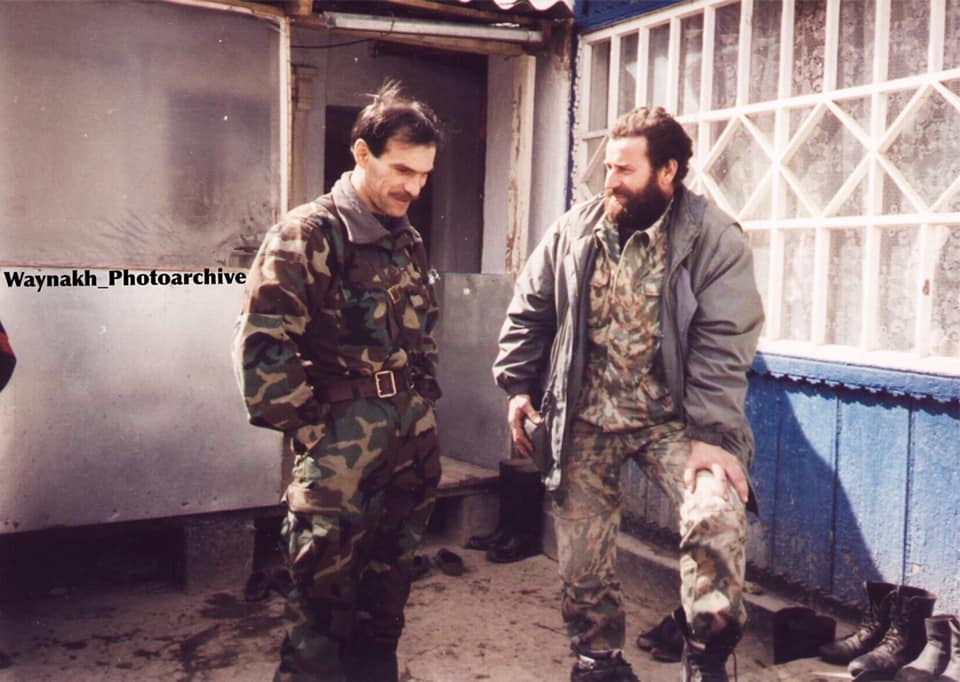
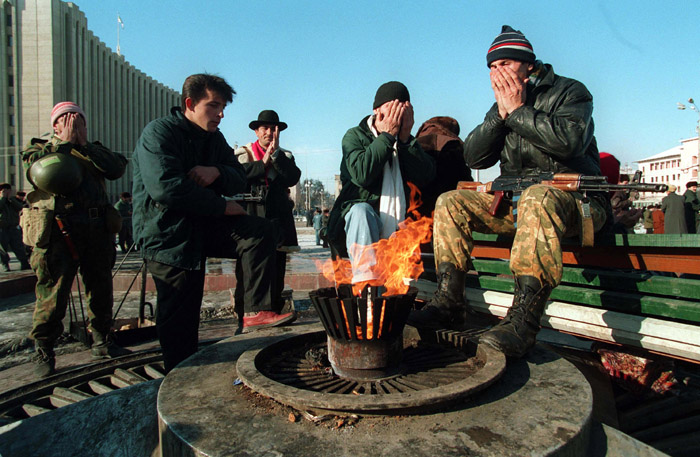


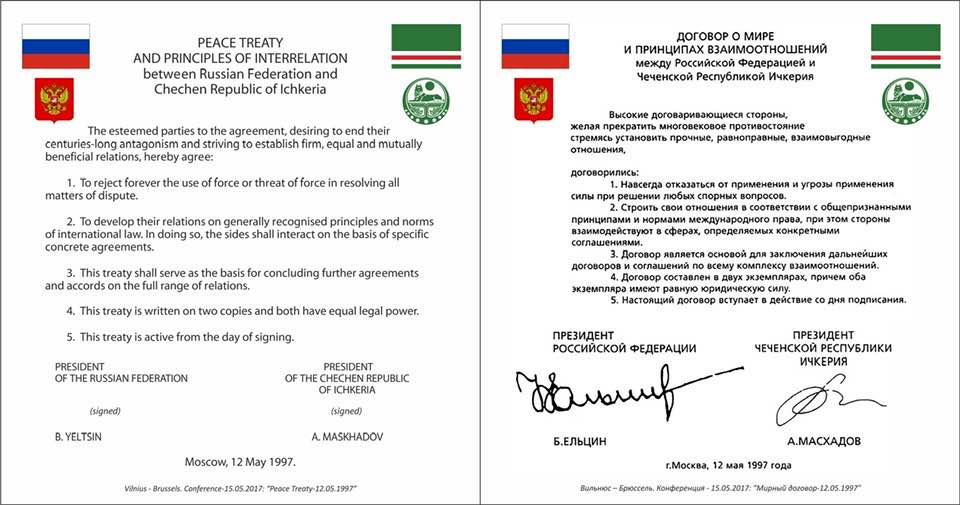

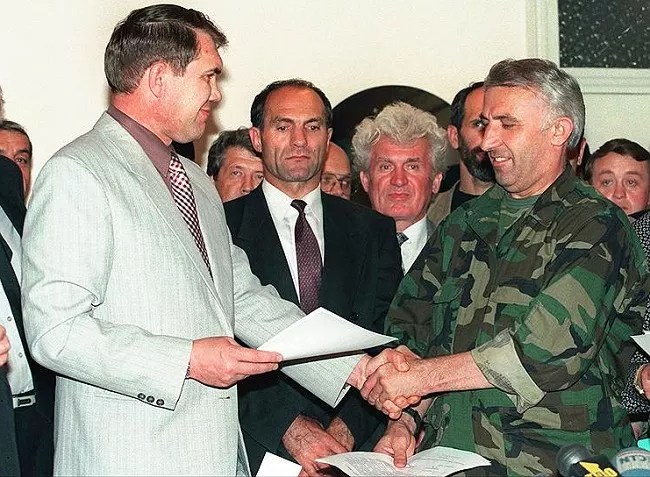
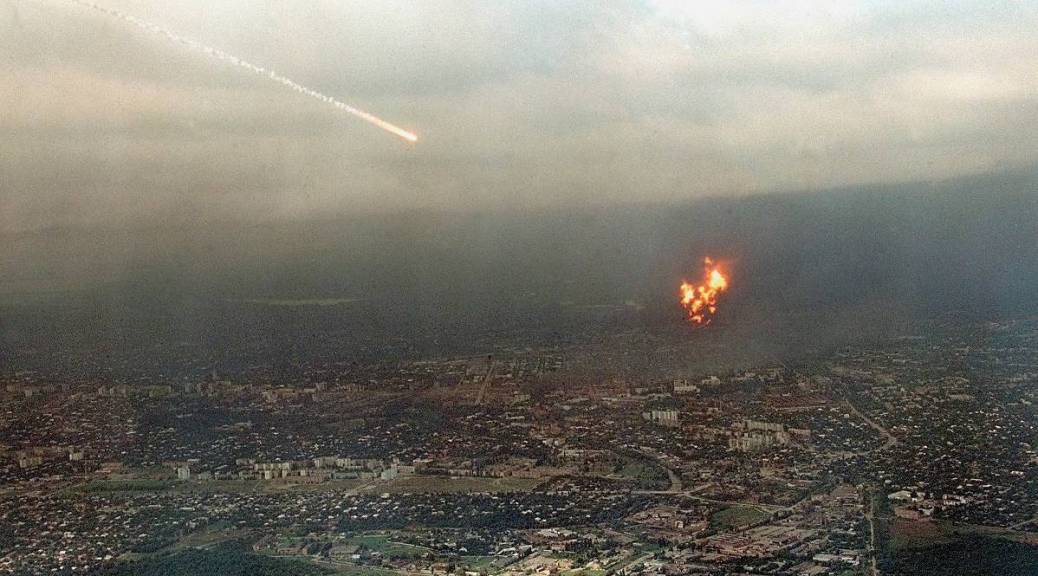
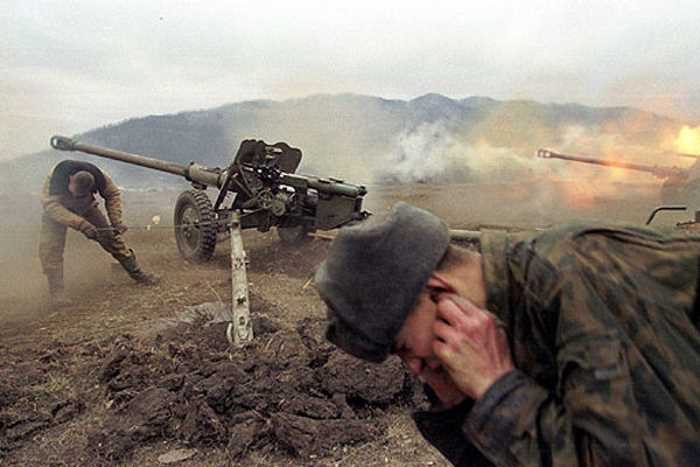
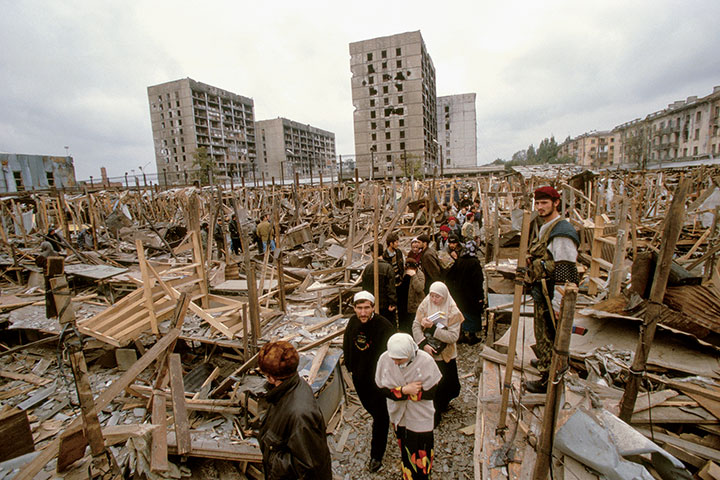

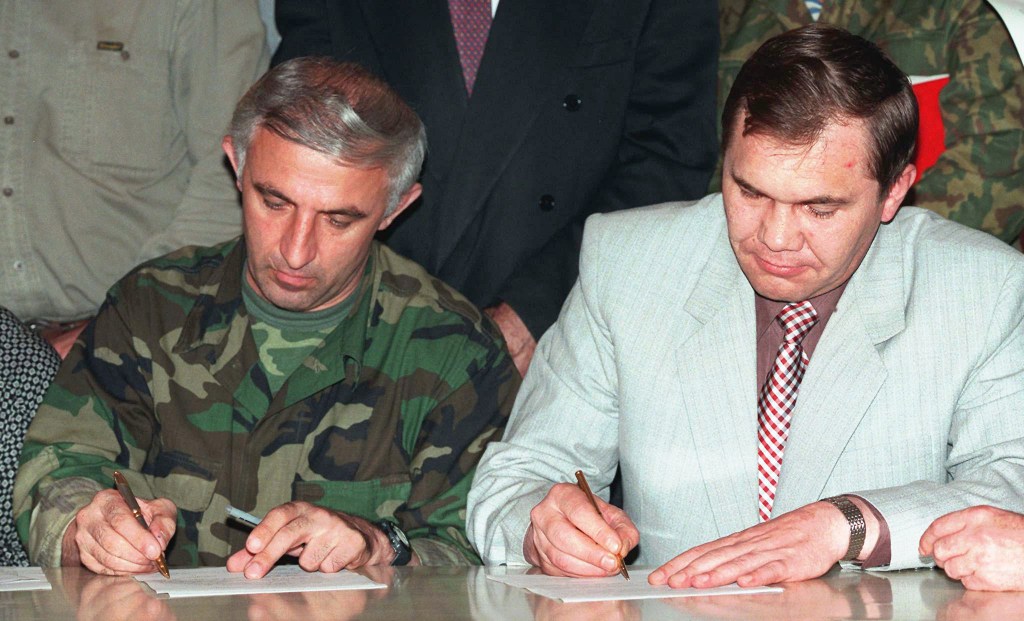


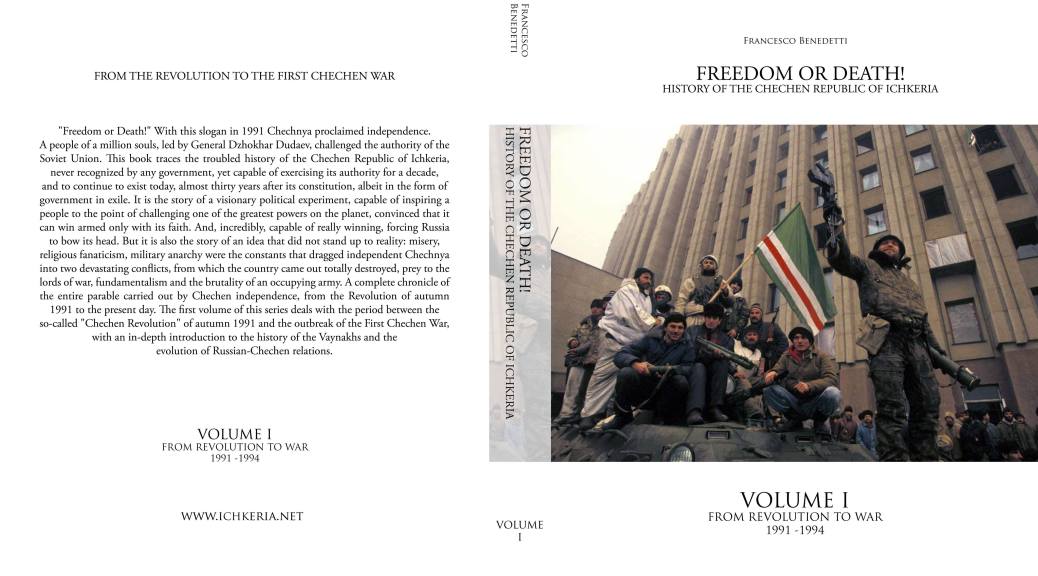
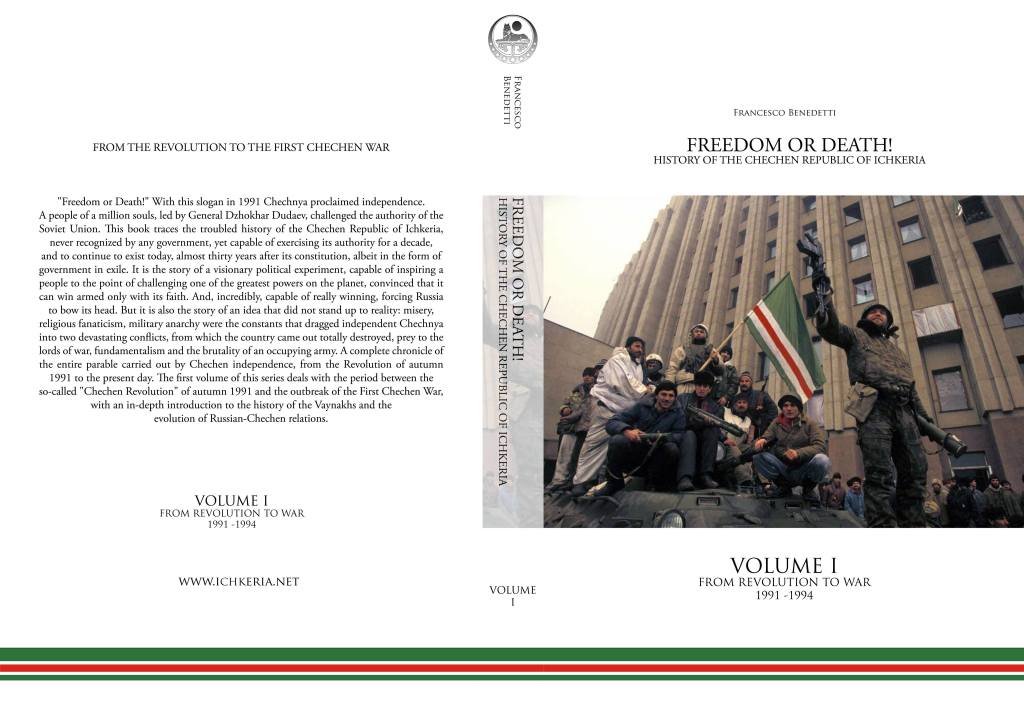

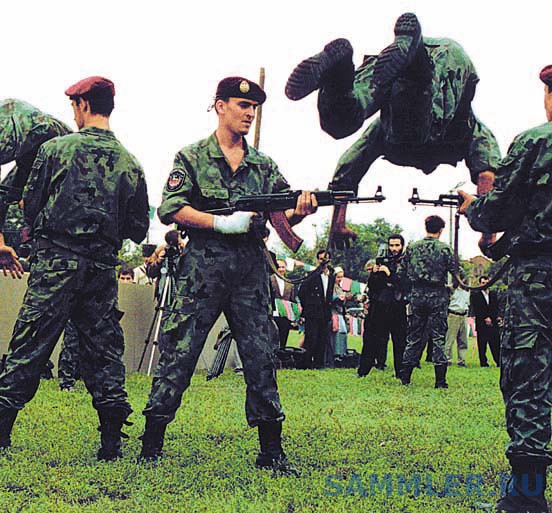


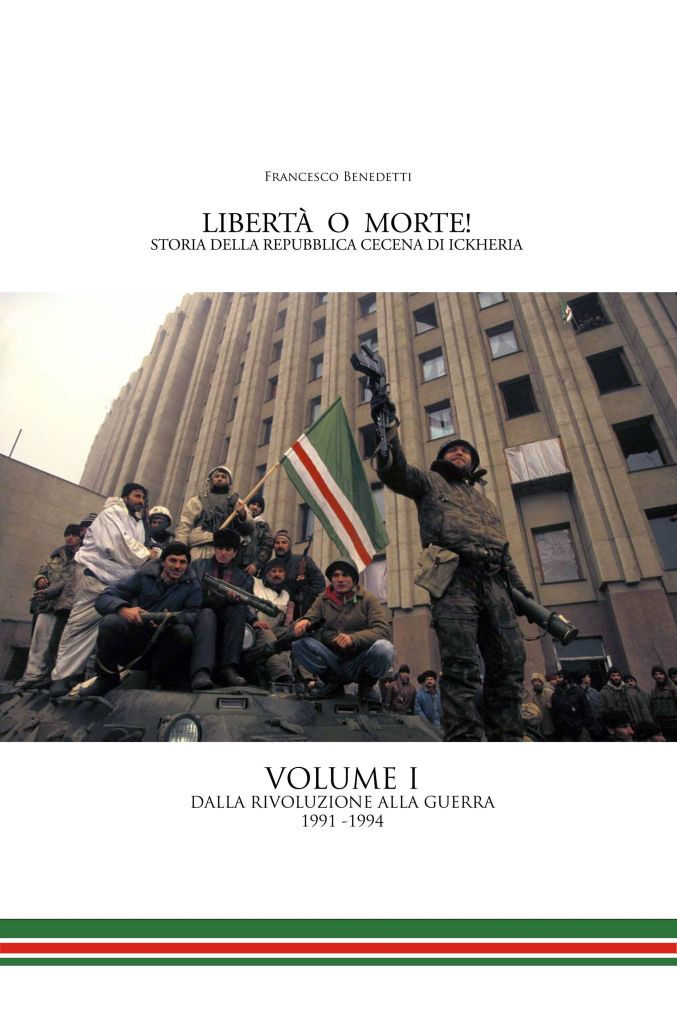
 Ichkeria Digital Archive