Archivi tag: Chechnya

Chapter IThe Boy from the Hills

(Read the previous chapter HERE)

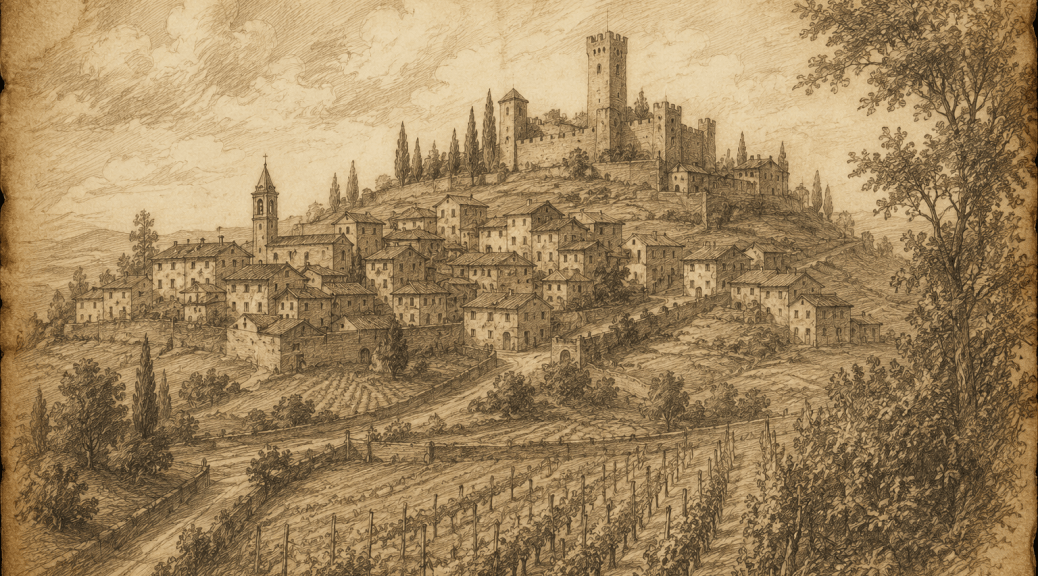
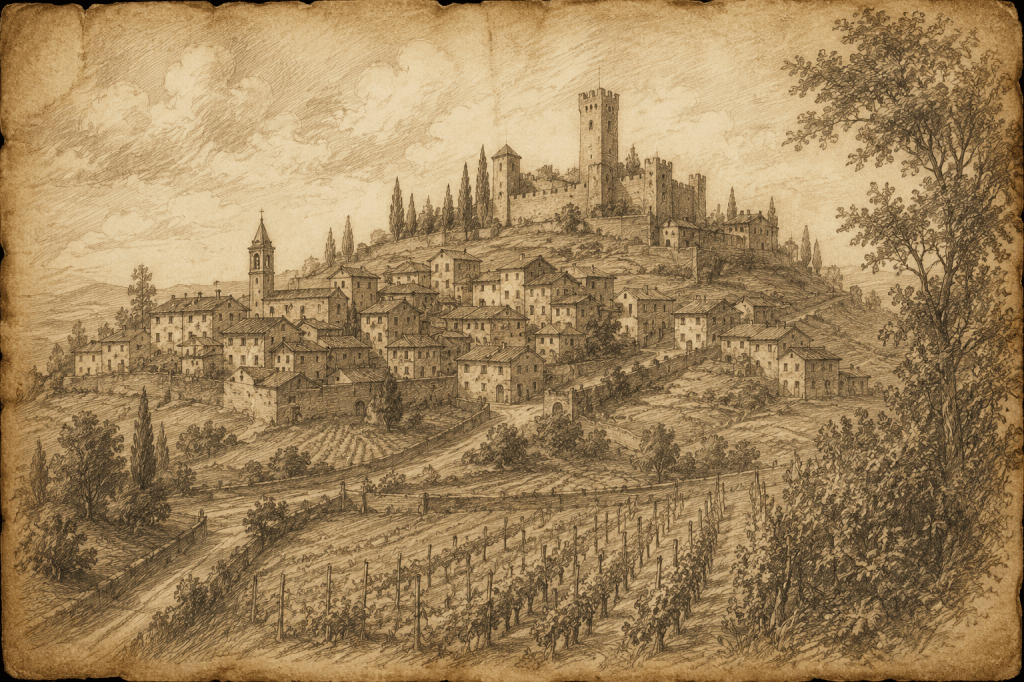
Long before his name became associated with prophets, armies, and distant mountains, Giovanni Battista Boetti was just a child born in the hills of Monferrato. It was a land of farmers, vineyards, and castles, which until just a few decades earlier had been ravaged by wars and invasions, whose ghosts lived on in the tales of the elders. Each village held memories of sieges and battles, and displayed the coats of arms of ancient feudal families. Every hill concealed a story from which the young Giovanni Battista imbibed with curiosity. Piazzano, his home village, was little more than a handful of houses clustered around the church, in the shadow of Camino Castle. From up there, the gaze could stretch for miles. It wasn’t the center of the world, but for those born there, it was the entire universe.

His family lived suspended between two eras. The Boettis retained the memory of an ancient nobility, descending, according to family tradition, from a branch of the Counts of Cunico. But the prestige of their ancestors was all that remained. Like many aristocratic families of 18th-century Monferrato, they possessed more memory than money, more pride than property. Their father, Spirito Bartolomeo, was a notary and podestà of the village. A well-educated and respected man, he was equally feared in his duties as at home. The chronicles that tell us about him do not remember him as a gentleman—quite the opposite. He was tough, inflexible, and short-tempered. Accustomed to command and unwilling to tolerate disobedience.

His wife, Maria Margherita, also came from a family of notaries and minor aristocrats. She needed a strong character to survive in a household ruled by a man like Spirito Bartolomeo. Yet, like many women of her time, her life was consumed by motherhood. With one pregnancy after another, her spirit grew weaker, finally abandoning her when she gave birth to her fifteenth child. When she died, Giovanni Battista was only seven years old. With Maria Margherita, the only point of reference that child had in the world disappeared.

Spirito Bartolomeo quickly sought a new wife. He still had children to support, a position to defend, and a home to manage. But resources were limited, and the simplest solution was to send some of the children away. So Giovanni Battista and his older sister were sent to boarding school in Casale Monferrato, a few dozen kilometers from Camino. At the time, this was a distance only a few Italians could travel in their lifetime, far from the fields and villages.

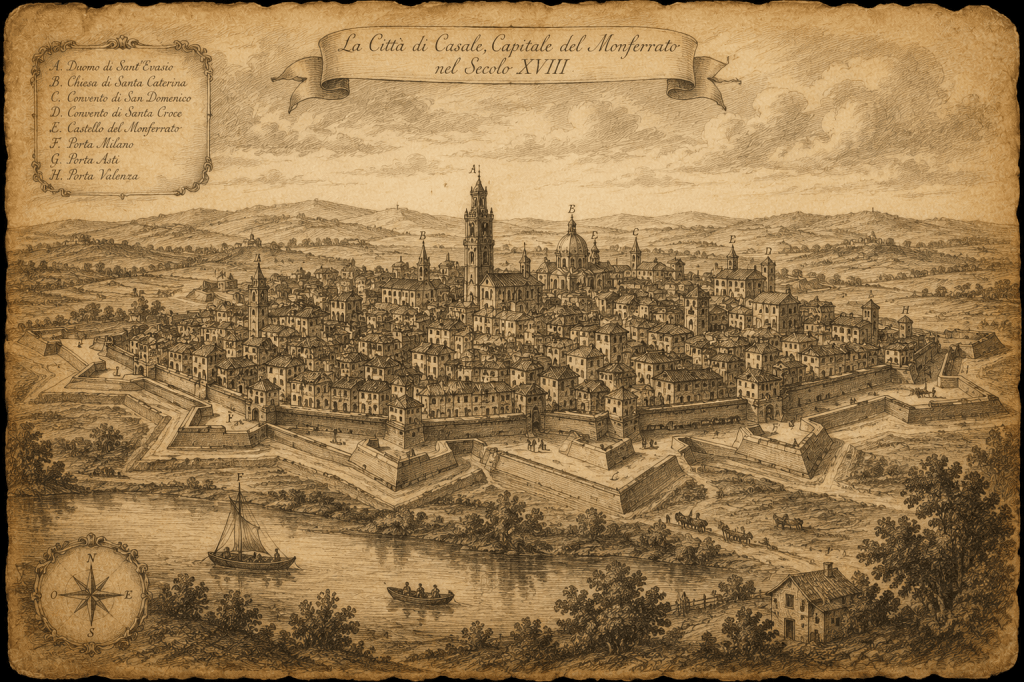
Casale was the capital of Monferrato. A vibrant city, inhabited by merchants, clergy, students, and officials. Its streets were busier than anything the boy had ever seen. Its churches were larger. Its libraries richer. Its opportunities seemingly endless. Many young people would have welcomed this new life with enthusiasm. Giovanni Battista did not.

For him, boarding school meant one thing above all: being removed from home. In the years that followed, he would develop a difficult character. Rebellious against authority, intolerant of impositions, incapable of passively accepting his fate. Perhaps these traits were already present in him. Perhaps they were born right then, within the walls of the boarding school, fueled by nostalgia and resentment.

While other boys dreamed of a respectable profession, a family, or a quiet life, young Boetti was already beginning to look beyond the horizon. Beyond the hills of Monferrato. Beyond Piedmont, toward an East he had never seen and did not yet know he would reach.

Beyond Extradition: How Russia Hunts Chechen Exiles Across Europe and Central Asia

The Kremlin’s campaign against the Chechen diaspora did not end with the wars. It simply crossed international borders.

When people think about political repression, they often imagine arrests, prisons, or torture carried out inside an authoritarian state. Far less visible is what happens after dissidents escape.

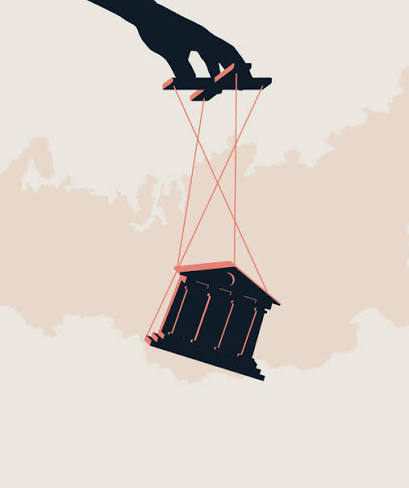
For thousands of Chechens who fled Russia over the last two decades, exile has never meant safety. Instead, many have discovered that Moscow’s reach extends well beyond its own territory. Through extradition requests, international police cooperation, administrative deportations, surveillance, intimidation of relatives, and—in the most extreme cases—assassinations, Russia has developed a system designed to ensure that its critics remain vulnerable wherever they seek refuge.

The objective is not merely to bring individuals back to Russia. It is to convince every member of the Chechen diaspora that nowhere is truly beyond the Kremlin’s reach.

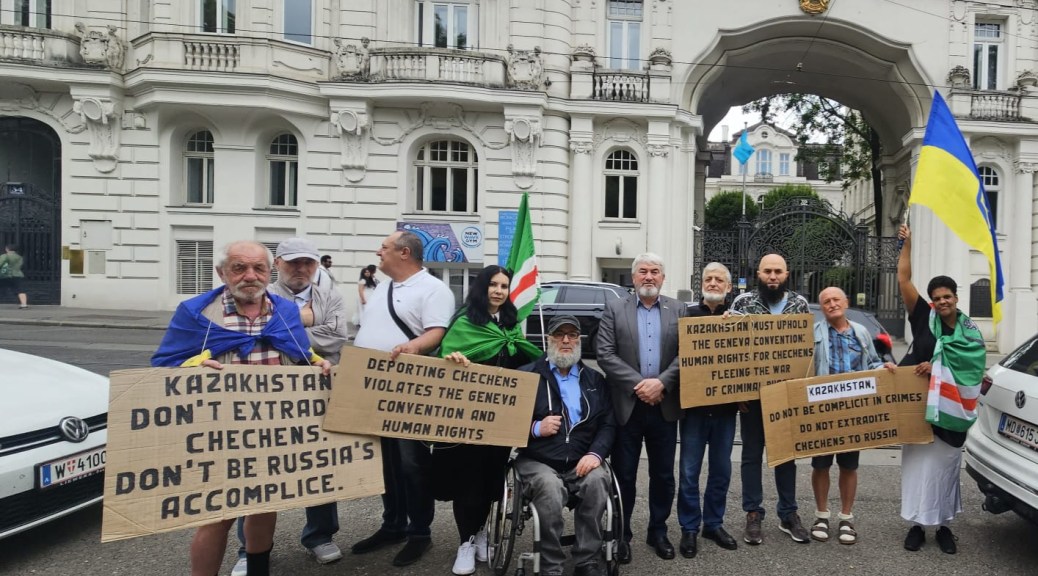
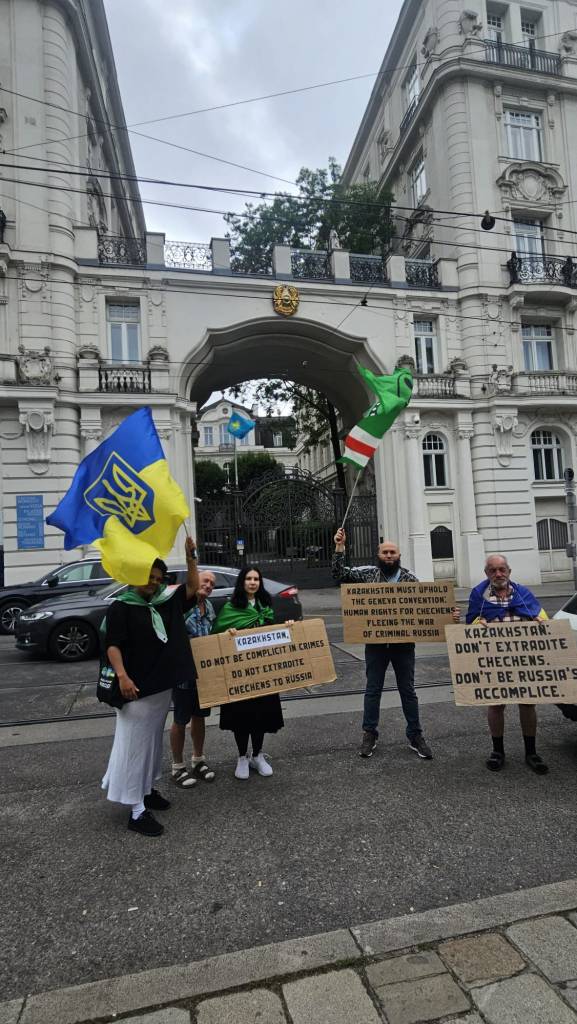
The recent case of Mansur Movlaev in Kazakhstan illustrates how this system continues to operate.


Mansur Movlaev

A Legal Request—or Political Persecution?

Officially, Russia rarely describes its targets as political opponents. Instead, extradition requests are almost always framed as ordinary criminal cases involving terrorism, extremism, illegal weapons possession, organized crime, fraud, or other criminal offences. This legal framing is not accidental. If a request appears to concern common crime rather than political persecution, foreign prosecutors and courts are more likely to treat it as a routine matter of judicial cooperation.

Once such a request reaches another country, local authorities may arrest the individual while extradition proceedings begin. Depending on the legal system involved, the refugee may spend weeks or months in detention before the courts determine whether the request is compatible with international human rights obligations. For the individual concerned, the punishment often begins long before any final judicial decision.


The Principle That Should Prevent Extradition

International law contains a fundamental safeguard known as the principle of non-refoulement. Article 3 of the European Convention on Human Rights and Article 3 of the United Nations Convention Against Torture prohibit states from transferring any individual to a country where they face a real risk of torture, inhuman treatment, enforced disappearance, or grossly unfair judicial proceedings. This prohibition is absolute.

Unlike many other rights, it cannot be suspended for reasons of national security or political convenience. Because of this principle, European courts have repeatedly refused to extradite Chechen refugees when credible evidence indicated that they would face persecution upon their return to Russia or, more specifically, to Chechnya. These rulings reflect decades of documented abuses, including torture, arbitrary detention, enforced disappearances, and extrajudicial killings committed by Russian and Chechen security forces.


Why Do Extradition Attempts Continue?

Despite these legal protections, Russian requests continue to appear across Europe and Central Asia. This apparent contradiction has several explanations.

First, authorities frequently evaluate Russian requests as ordinary criminal matters rather than as instruments of political persecution. Unless the political nature of the charges is clearly demonstrated, prosecutors may initially consider the request legally valid.

Second, not every case reaches the stage of a formal extradition judgment. Administrative deportation procedures, immigration measures, or public-order legislation may expose refugees to removal through alternative legal channels.

Finally, security concerns have increasingly influenced migration policy throughout Europe. Since many Russian requests invoke allegations of terrorism or extremism, authorities may initially prioritize public security over the broader political context in which these accusations arise.

The result is a legal environment in which refugees often bear the burden of proving that apparently ordinary criminal charges are, in reality, politically motivated.


Kazakhstan: The Weakest Link

The contrast between the European Union and Kazakhstan is particularly striking. While European judicial systems generally apply stronger human rights safeguards, Kazakhstan remains deeply integrated into the post-Soviet legal and security framework. Judicial cooperation with Russia is extensive, security services maintain close working relationships and Asylum protections are comparatively weaker. As a result, Russian requests can rapidly lead to detention before effective international protection mechanisms become available.

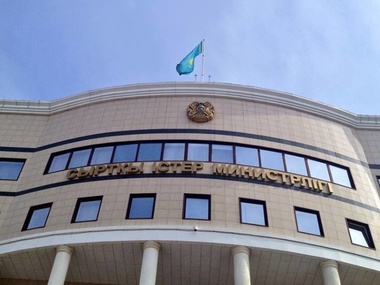
The detention of Chechen refugee Mansur Movlaev demonstrates these vulnerabilities. According to information provided by his legal representatives and international human rights organisations, Movlaev was arrested in Almaty following a Russian extradition request and remained in custody while extradition proceedings advanced. His transfer was ultimately suspended only after international intervention, including emergency measures before United Nations human rights mechanisms. His case illustrates how international protection often arrives only after a refugee has already entered the extradition process.


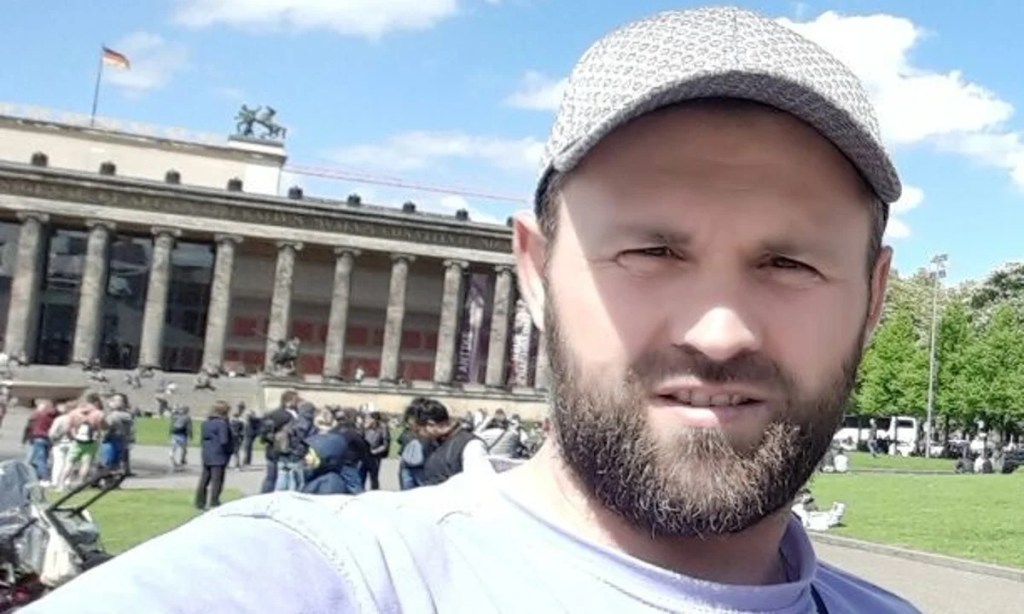
Zelimkhan Khangoshvili, murdered in Berlin in 2019

When Courts Say No

Perhaps the most revealing aspect of Russia’s strategy is what happens when extradition fails. For many authoritarian governments, an unsuccessful extradition marks the end of the matter. For Russia—and particularly for Ramzan Kadyrov’s security apparatus—it frequently marks the beginning of another phase. Chechen dissidents living abroad have repeatedly become targets of surveillance, intimidation, attacks, or assassination attempts.

The murder of Zelimkhan Khangoshvili in Berlin in 2019 remains the clearest example. German judges concluded that the assassination had been organised by Russian state authorities.

Tumso Abdurakhmanov, one of the best-known critics of Ramzan Kadyrov, survived an attempted murder in Sweden after facing legal pressure and deportation proceedings.

German courts have also convicted individuals involved in a conspiracy to assassinate another prominent Kadyrov opponent, Mokhmad Abdurakhmanov.

These cases suggest that failed extradition does not necessarily end the campaign against a political opponent. Instead, the methods simply change.


Families Become Hostages

Pressure is rarely limited to the exile alone. Human rights organisations have repeatedly documented intimidation directed against relatives who remain inside Chechnya. Family members may be questioned by security services, threatened, dismissed from employment, publicly humiliated, or forced to denounce their relatives abroad. This strategy transforms exile into a continuing form of psychological pressure. Even when dissidents themselves remain physically safe in Europe, they know that those they left behind may become targets.


Beyond Extradition: Transnational Repression

Taken individually, extradition requests, deportation proceedings, surveillance, assassination attempts, and family intimidation may appear unrelated. Viewed together, however, they reveal a coherent strategy. Researchers increasingly describe this phenomenon as transnational repression—the effort by authoritarian governments to silence political opponents beyond their own borders. Russia’s campaign against the Chechen diaspora represents one of the clearest examples of this practice.

Extradition requests serve not only to recover individuals but also to identify opponents, disrupt diaspora networks, impose financial and psychological costs, and demonstrate the state’s global reach. Even unsuccessful extradition requests can achieve these objectives. A refugee who spends months in detention, pays substantial legal expenses, loses employment, or fears for relatives back home has already experienced part of the intended punishment.


Conclusion

The question is no longer whether Chechen dissidents face risks inside Russia. International courts, human rights organisations, and independent investigations have documented those dangers for years. The more urgent question is whether democratic states fully recognise the broader strategy behind Russian extradition requests.

Each case should not be viewed as an isolated criminal file. Rather, it should be understood within a wider campaign of transnational repression designed to extend authoritarian control beyond national borders. Protecting refugees therefore requires more than refusing unlawful extraditions. It also requires recognising the political logic that lies behind them.

For many Chechen exiles, the greatest threat is not simply being returned to Russia. It is living with the knowledge that, wherever they go, Russia may already be waiting.

Russia Declares the Chechen Republic of Ichkeria a “Terrorist Organization”

12 March 2026 marks another symbolic escalation in Moscow’s long war against the legacy of Chechen independence.

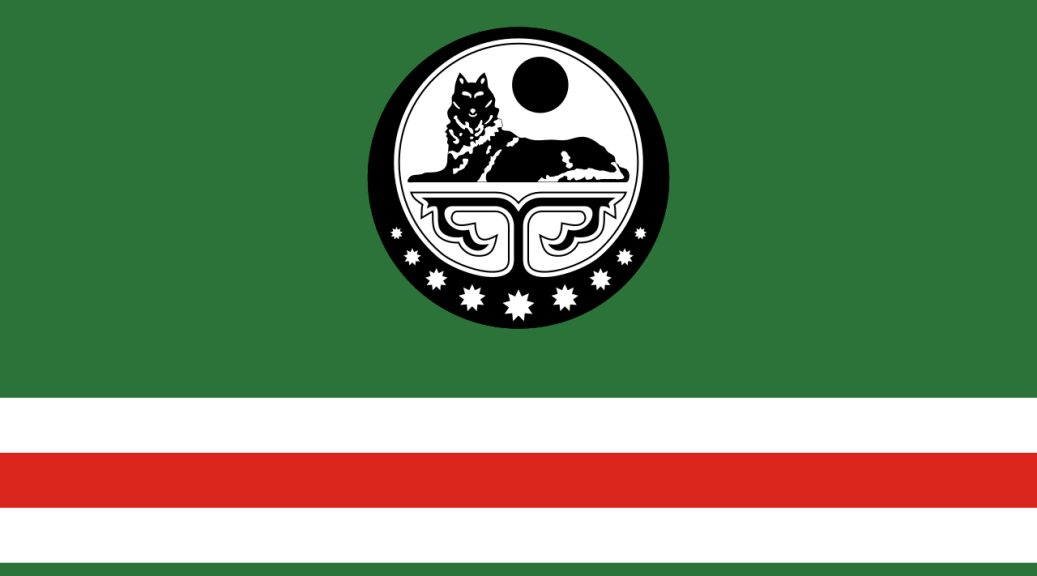
A court in the Chechen Republic, acting within the legal framework of the Russian Federation, officially designated the Chechen Republic of Ichkeria (ChRI) as a terrorist organization, banning all of its activities on Russian territory.

The decision was not directed against an armed group, a military formation or a specific underground movement. Instead, it targeted the very legal and political continuity of the Chechen state proclaimed in 1991 and represented today by its government-in-exile.

For the first time, the Russian state formally placed the entire concept of the Chechen Republic of Ichkeria within the same legal category reserved for terrorist organizations.

A Political Decision Disguised as a Judicial One

The designation should be understood primarily as a political act.

For more than two decades, Russian authorities have described Chechen separatism through the language of “counter-terrorism”. Individual commanders, armed groups and underground networks have repeatedly been labeled terrorist organizations by Russian courts.

The March 2026 ruling goes significantly further.

Instead of targeting specific individuals or military structures, it criminalizes the historical and political entity of the Chechen Republic of Ichkeria itself. In practice, the ruling attempts to erase any distinction between the legitimate institutions of the Chechen state and the actions of particular militant groups that operated during the wars.

This is a fundamental shift.

For years, Moscow argued that it had defeated separatism. Now it is effectively acknowledging that the idea of Ichkeria still exists and still possesses enough political relevance to require a formal ban.

Why Now?

The timing is unlikely to be accidental.

Since the beginning of Russia’s full-scale invasion of Ukraine in 2022, the question of Ichkeria has re-emerged on the international stage in ways that seemed unimaginable only a few years earlier.

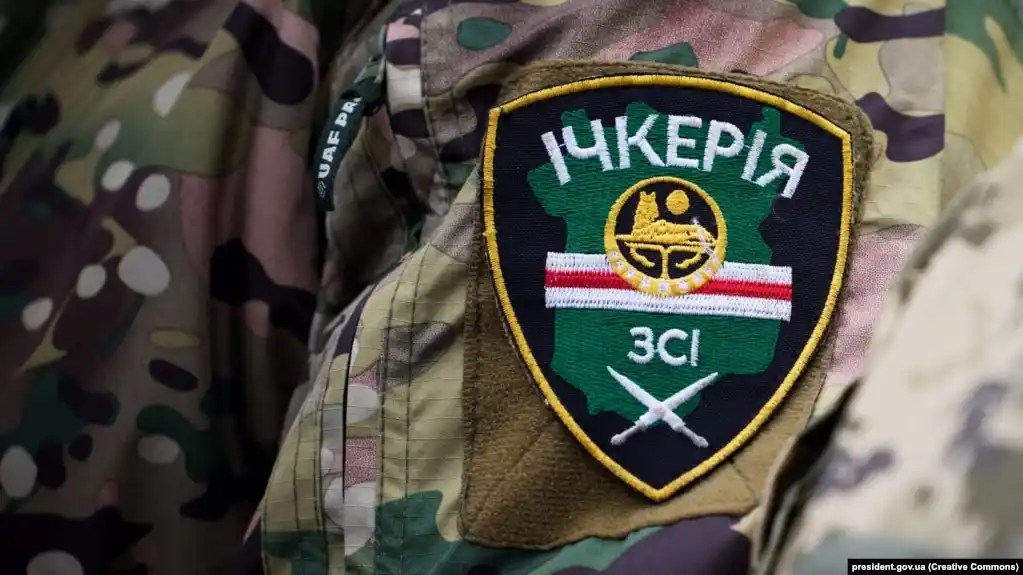
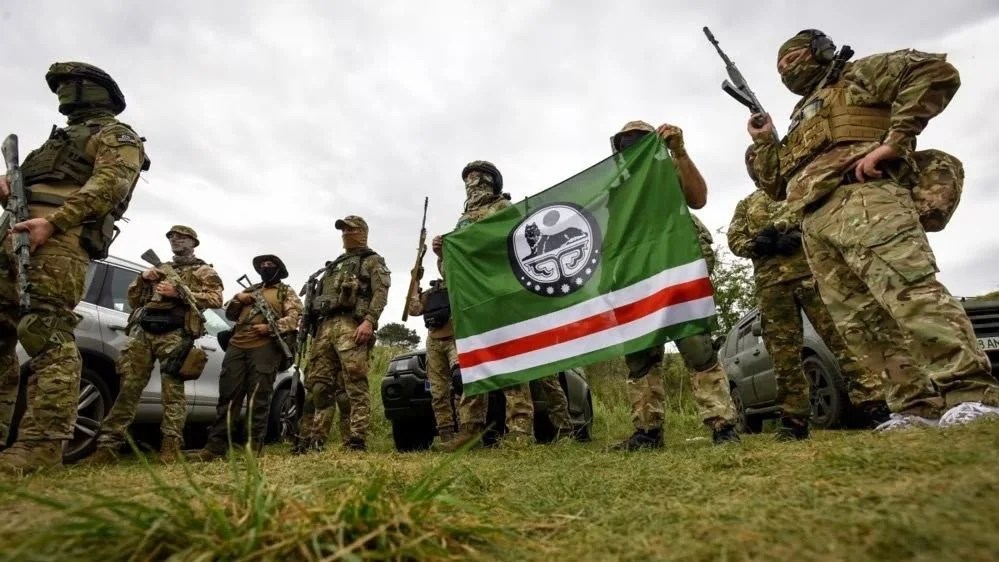
The Ukrainian parliament officially recognized the Chechen Republic of Ichkeria as a territory temporarily occupied by Russia in October 2022. Numerous Chechen volunteer formations fighting on Ukraine’s side have openly declared themselves heirs to the armed forces of the Chechen Republic of Ichkeria. The government-in-exile, led by Akhmed Zakayev, has increased its diplomatic activity and visibility across Europe and Ukraine.

From Moscow’s perspective, these developments transformed Ichkeria from a historical issue into a contemporary geopolitical one.

The terrorist designation therefore appears less connected to events inside Chechnya than to the international rehabilitation of the Ichkerian cause.

Legal Consequences

The practical consequences of the ruling may be significant.

Under Russian legislation, participation in, support for, financing of, cooperation with, or public advocacy on behalf of a terrorist organization can lead to criminal prosecution.

The designation potentially provides Russian authorities with a new legal instrument against:

  • Supporters of Ichkerian independence inside Russia;
  • Members of the Chechen diaspora who maintain ties with the government-in-exile;
  • Journalists and researchers working on Ichkerian institutions;
  • Activists promoting recognition of the Chechen Republic of Ichkeria;
  • Individuals publicly displaying Ichkerian state symbols.

The ruling also creates additional grounds for extradition requests and political pressure against exiled representatives abroad.

Whether foreign governments will recognize such requests is another matter entirely.

The Problem of Historical Continuity

Perhaps the most revealing aspect of the decision is what it says about Russia’s continuing struggle with the memory of the Chechen wars.

The designation seeks to establish a simple narrative: if Ichkeria is a terrorist organization, then its institutions, leaders, symbols and historical claims become illegitimate by definition.

Yet history remains more complicated.

The Chechen Republic of Ichkeria possessed a constitution, elected institutions, a parliament, a presidency and internationally observed elections. Its existence cannot be reduced to the actions of particular military commanders or radical factions that emerged during later phases of the conflict.

The attempt to classify an entire state project as terrorism raises a broader question: can a political entity that once exercised de facto sovereignty be legally transformed into a terrorist organization decades after its destruction?

The Russian authorities answer yes.

Many historians, legal scholars and supporters of Chechen self-determination would answer otherwise.

International Implications

The ruling is unlikely to change the position of those states, organizations and political figures that continue to engage with representatives of the Ichkerian government-in-exile.

Indeed, recent Russian diplomatic protests over contacts between European politicians and Ichkerian representatives suggest that Moscow remains highly sensitive to any form of international recognition of the Chechen independence movement.

Rather than ending discussion about Ichkeria, the designation may produce the opposite effect.

By formally declaring the Chechen Republic of Ichkeria a terrorist organization, the Russian state has once again brought international attention to a political project that many assumed had disappeared with the end of the Second Chechen War.

Conclusion

The March 2026 ruling is about more than law.

It is an attempt to define the historical meaning of the Chechen struggle for independence and to determine who has the authority to speak in its name.

Moscow presents the decision as the final legal verdict on Ichkeria.

Its supporters will likely interpret it differently: not as proof of Ichkeria’s irrelevance, but as evidence that the idea of Chechen independence continues to possess enough political weight to worry the Russian state even after a quarter of a century.

For that reason alone, the decision deserves close attention.

Kazakhstan Must Not Send Mansur Movlaev Back to Chechnya

Chechen activist remains at risk despite UN intervention

A new human rights case is drawing international attention to the ongoing persecution of critics of the Chechen authorities.

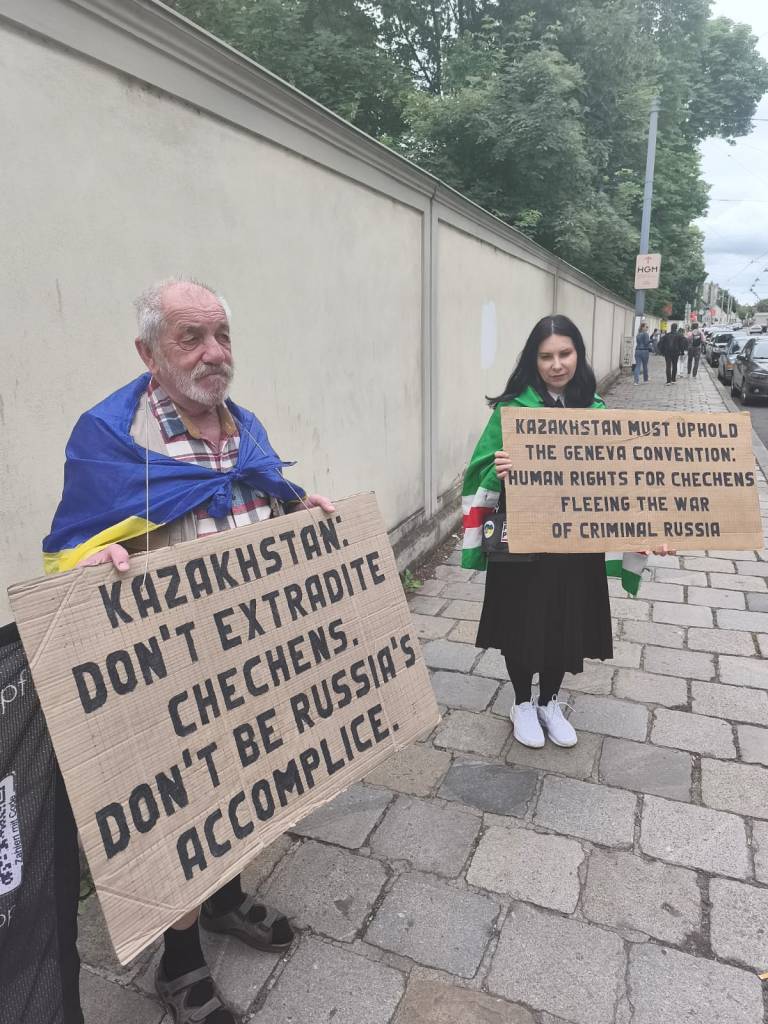
Mansur Movlaev, a Russian citizen of Chechen origin, has been held in extradition detention in Kazakhstan since May 2025 after being arrested in Almaty at the request of the Russian Federation. Although Kazakh authorities initially acknowledged his application for asylum and later suspended his extradition following intervention by the United Nations Human Rights Committee, Movlaev remains behind bars and continues to face the possibility of being transferred to Russia.

For human rights defenders, the stakes could not be higher.

A history of persecution

According to his lawyers and multiple human rights organizations, Movlaev has long been targeted because of his criticism of the Chechen authorities.

His supporters argue that a previous criminal conviction on drug-related charges was politically motivated. Following his early release in 2022, Movlaev reportedly disappeared into the hands of Chechen security forces and was detained in an unofficial facility where he was subjected to torture. He later managed to escape and eventually fled through Kyrgyzstan before reaching Kazakhstan.

These allegations fit a pattern that has been documented for years by international organizations, including Human Rights Watch, Amnesty International, the Council of Europe and the European Court of Human Rights.

Arrest in Kazakhstan

On 13 May 2025, Kazakh authorities arrested Movlaev in Almaty based on an international request originating from Chechnya.

Initially, Kazakhstan’s Prosecutor General’s Office stated that the Russian request concerned extortion charges. Later reports suggested that Russian authorities were also linking Movlaev to alleged extremist activities.

The exact content of the Russian case remains unclear because neither the full indictment nor the complete extradition file has been made public.

On 21 May 2025, Movlaev formally applied for asylum in Kazakhstan and received official asylum-seeker documentation. Under Kazakh law, this should have protected him from removal while his claim was under consideration.

Nevertheless, at the end of January 2026, Kazakhstan’s Prosecutor General approved his extradition to Russia after his refugee application had been rejected.

United Nations intervention

The case took a dramatic turn on 23 February 2026.

After receiving an individual complaint from Movlaev’s legal team, the United Nations Human Rights Committee requested interim measures and instructed Kazakhstan not to extradite him until the case could be examined.

The following day, Kazakhstan’s Supreme Court suspended the extradition order.

While this prevented his immediate transfer, it did not secure his release. In May 2026, Kazakh courts extended his extradition detention until at least July.

Reports of family reprisals

Human rights advocates are particularly concerned by reports concerning Movlaev’s relatives in Chechnya.

Several media outlets and activists have alleged that members of his family have been abducted, tortured, or forcibly disappeared in recent years. Although some of these claims cannot yet be independently verified, they are consistent with a broader pattern of collective punishment repeatedly documented in Chechnya.

International organizations have long reported cases in which family members of government critics have faced intimidation, detention, destruction of property, and physical violence.

Why extradition would be dangerous

The central issue is not simply whether criminal charges exist against Movlaev.

International law prohibits extradition whenever there are substantial grounds for believing that a person faces torture, enforced disappearance, political persecution, or other serious human rights violations after return.

Kazakhstan is a party to the 1951 Refugee Convention, the UN Convention Against Torture, and the International Covenant on Civil and Political Rights. Under these obligations, authorities must not return an individual to a place where there is a real risk of torture or persecution.

The documented record of abuses in Chechnya—including torture, secret detention facilities, fabricated criminal cases, collective punishment, and enforced disappearances—makes such concerns impossible to dismiss.

A test for Kazakhstan

The case of Mansur Movlaev has become more than a single extradition dispute.

It is now a test of Kazakhstan’s commitment to its international obligations and to the principle of non-refoulement—the cornerstone of international refugee and human rights law.

As long as credible evidence suggests that Movlaev could face torture, disappearance, or death if returned to Chechnya, any forced transfer would raise serious legal and moral questions.

The international community should continue monitoring the case closely.

For Mansur Movlaev, the difference between protection and extradition may ultimately be a matter of life and death.

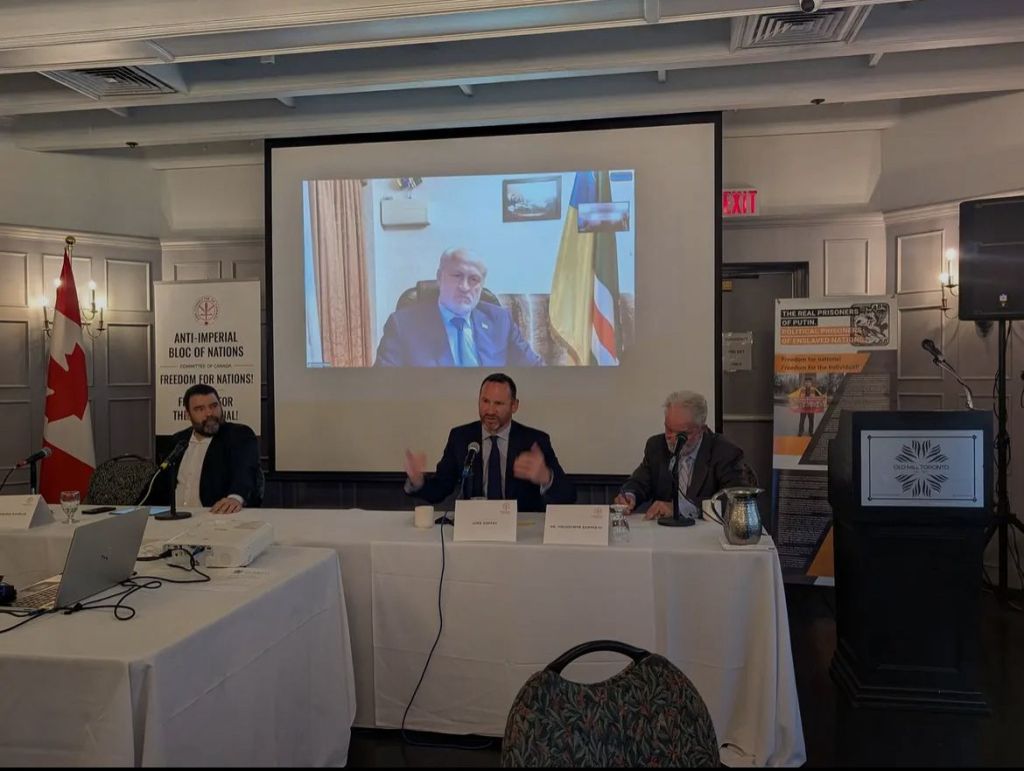
“Ukraine as a Frontier of Western Civilization.” A report by Prime Minister of the Chechen Republic of Ichkeria Akhmed Zakayev at the ABN Conference in Toronto

Ladies and gentlemen!

Thank you for the opportunity to speak on this important and highly relevant topic.

When we speak about Ukraine today, we often call it the front line of European security. This is true. Ukraine is defending not only its cities, its borders, and its people. It is also defending the security architecture of Europe. However, I would like to offer a broader definition: today Ukraine is not only the front line of European security — Ukraine has become the frontier of Western civilization itself.

By “Western civilization,” I mean a system of principles: national sovereignty, the rule of law, freedom of speech, human dignity, and the right of nations to decide their own future. These are exactly the principles that Russia is trying to destroy. The war against Ukraine is not simply a territorial conflict. It is not only a dispute over borders, and not merely a war between two states. It is a clash between two political ideas. On one side is the belief that every nation, regardless of its size, has the right to exist as a sovereign political community. On the other side is the imperial belief that great powers have the right to dominate their neighbors, erase their identity, choose their alliances, and decide their historical destiny. This is why Ukraine matters far beyond Ukraine itself.

Russia invaded Ukraine not because Ukraine posed a military threat to Moscow. Ukraine threatened the Russian imperial model simply by existing as an independent, democratic, and Europe-oriented state. For the Kremlin, a democratic Ukraine is dangerous not because it is hostile, but because it is an example. It shows that the post-Soviet space is not doomed to authoritarianism. It shows that societies once ruled from Moscow can choose a different path. This is the real threat that Ukraine represents to the Russian imperial system. That is why Moscow’s war is directed not only against Ukrainian territory — it is directed against Ukrainian statehood and political identity.

Ukraine was often described as a space “between” Russia and Europe. But this very language was part of the problem. Ukraine is not a geopolitical corridor, not a gray zone, and not a bargaining chip in someone else’s security agreement. Ukraine is a nation. Ukraine is a state. And it is precisely for this choice that Ukraine is paying the highest price today.

The Russian imperial model is based on a special understanding of power. In this model, power is not limited by law, society is subordinate to the state, and neighboring peoples are seen not as equal partners but as material for geopolitical expansion. Such a system cannot tolerate democratic institutions near its borders, especially when these institutions exist in a country that the empire still imagines as part of itself.

Wherever Russian power arrives, free elections disappear. Independent courts disappear. Free media disappear. Local self-government disappears. Civil society disappears. Academic freedom disappears. Language and culture become subject to imperial narratives. Therefore, by defending itself, Ukraine is defending far more than territory. It is defending the principle that institutions are more important than force, that law is more important than violence, and that the citizen is more important than empire.

The question today is not only whether Ukraine can survive. The question is whether democratic states are capable of defending the principles on which their own legitimacy is built. If borders can be changed by force, if nuclear blackmail can paralyze political will, if a large authoritarian state can destroy a neighboring democracy, then this crisis is not only Ukrainian — it is a crisis of the entire international order.

For decades, the West spoke about democracy, sovereignty, human rights, and the rule of law. And here I would like to return to the events of the 1990s. At that time, the Chechens accepted all these declarations as sincere and, in accordance with the basic principles and norms of international law, restored their statehood. However, when Russia carried out military aggression against the young independent state, Western countries in practice sided with the aggressor.

The First Russian-Chechen War was compared by international military experts to the Second World War because of its destruction and brutality. After a short break, the Second Russian-Chechen War began, and its consequences continue to this day.

As a result of these two wars, according to official data from the occupation administration, more than 300,000 people in Chechnya were killed, including around 42,000 children between the ages of one and twelve. Today, the entire Chechen people live under a brutal occupation regime led by a Chechen quisling.

Chechens, like Ukrainians, ask a very simple question: were all those declarations by Western politicians about the inviolability of borders and the right of nations to self-determination real values, or were they merely political slogans of the Cold War period?

Today, Ukraine is forcing the democratic world to answer this question not with speeches, but with policy. This is why support for Ukraine should not be seen as charity. It is a form of strategic self-defense. Canada, the United States, the European Union, and other democratic states support Ukraine not only because Ukraine became the victim of aggression. They support Ukraine because the future security of the democratic world is being decided there.

The cost of supporting Ukraine is high. But the cost of Ukraine’s defeat would be far higher.

The defeat of Ukraine would not bring stability. It would create a more dangerous Europe, a weakened NATO, a discredited European Union, stronger authoritarian regimes, and a clear message to every revisionist power in the world: aggression works. By contrast, a successful Ukraine would send the opposite message: imperial war can be resisted, democratic societies can survive, and a post-imperial future is possible.

This point is especially important in the broader context of our discussion about the regional and global consequences of Russian imperial decline.

The weakening of Russia does not automatically mean the arrival of peace. We must not be naive here. Empires in decline often become even more aggressive. They try to compensate for internal decay with external violence. They turn demographic crisis, economic stagnation, and political fear into militarized nationalism. Therefore, Russia’s internal instability may transform into dangerous external behavior.

We already see this logic: the militarization of society, the suppression of dissent, forced mobilization, imperial propaganda, nuclear threats, and the use of instability as a weapon. A state that cannot offer its citizens a positive future instead offers them imperial revenge. An empire in decline does not become harmless — on the contrary, it can become extremely dangerous, especially when it still possesses military power, nuclear weapons, intelligence networks, and propaganda tools.

Therefore, the West needs a strategy that is both firm and wise.

Democratic states must stop viewing Russian imperialism as a temporary deviation or simply as Putin’s personal project. Of course, leadership matters. But the problem is much deeper than one individual. It is historical, ideological, and imperial in nature.

The West must abandon the illusion that stability can be bought at the cost of the sovereignty of nations located next to Russia. This logic has failed many times. Every concession made at the expense of Chechnya, Ukraine, Georgia, Moldova, and other vulnerable states did not satisfy imperial ambition — it only encouraged it.

Canada, the United States, and the European Union must see Ukraine not as a peripheral issue, but as a central pillar of democratic security. Military aid, economic support, sanctions, reconstruction planning, and legal accountability are all strategic responses to the imperial challenge.

Democratic states must listen more carefully to peoples who have direct historical experience with Russian imperial rule: Ukrainians, Poles, Georgians, Crimean Tatars, Chechens, and others. These societies often understood the nature of the threat earlier than many Western capitals. Their historical memory is not emotional exaggeration — it is a form of political knowledge.

This also raises the question of Russian opposition figures living in exile. Dialogue with them may be useful. It is important to speak with people who oppose the regime. However, policymakers should be careful not to confuse opposition to Putin with a full rejection of imperial thinking. Not every anti-Putin voice is necessarily post-imperial. Some may oppose the current regime while still keeping colonial views about Ukraine, the Caucasus, Central Asia, and other peoples once dominated by Moscow.

Therefore, the main question should not only be: “Are you against Putin?” The deeper question should be: “Do you recognize the full sovereignty, political subjecthood, and historical dignity of the peoples once ruled by Russia?” Without such recognition, there can be no genuine post-imperial future.

Thus, Ukraine’s struggle is also a struggle for a new political language. It forces us to move beyond old categories such as “spheres of influence,” “great power compromise,” and “buffer zones.” These categories are not neutral. Very often they reproduce imperial thinking under the language of political realism. True realism today requires recognizing that the imperial idea itself creates war.

Security in Europe will not be restored by giving Russia veto power over the freedom of its neighbors. It will only be restored when the imperial principle itself is defeated — politically, militarily, intellectually, and morally.

Ukraine stands at the center of this process. Ukraine has shown that democratic identity is not weakness. It has shown that civic patriotism can be stronger than imperial nationalism. It has shown that institutions, even under attack, can mobilize society. It has shown that freedom is not an abstract value but a living political force.

In this sense, Ukraine has reminded the West of something the West itself had begun to forget: democracy is not only procedure. It is not only elections, bureaucracy, or legal norms. Democracy is also a civilization of responsibility. It requires citizens willing to defend institutions. It requires states willing to defend principles. It requires alliances capable of understanding that peace without justice is only a pause before the next aggression.

That is why the Ukrainian lesson is not only military. It is civilizational.

Ukraine teaches us that freedom survives only when it is defended. Sovereignty survives only when it is respected. Institutions survive only when people are willing to protect them. And democratic civilization survives only when it understands the nature of those who seek to destroy it.

Allow me to end with the following thought.

Ukraine defends the West not because it is a passive outpost of Western power. Ukraine defends the West because Ukrainians chose the political principles that define the West at its best. They defend the idea that free nations have the right to exist. They defend the idea that democracy is not a privilege reserved for old and wealthy states. They defend the idea that empire has no moral right to decide the fate of other peoples.

That is why Ukraine is not only the front line of European security. Ukraine is the frontier between law and force, between citizenship and empire, between democratic institutions and imperial domination.

And if the democratic world clearly understands this, support for Ukraine will no longer be seen as a burden. It will be understood for what it truly is: the defense of the political meaning of Western civilization itself.

Thank you for your attention.

Ukrainian Intelligence Claims Infiltration of Akhmat Unit

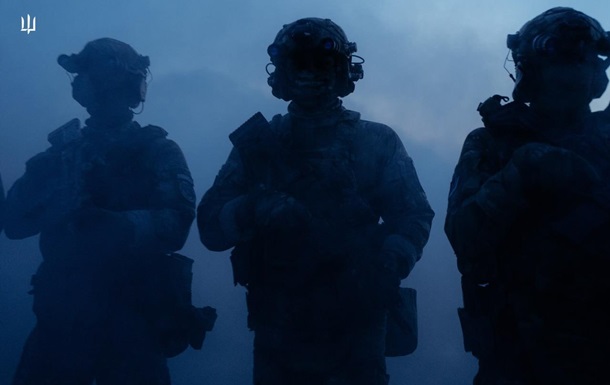
The Main Directorate of Intelligence of the Ministry of Defence of Ukraine (GUR) has announced what it describes as a successful infiltration of a unit belonging to the Akhmat forces, one of the formations associated with Chechen leader Ramzan Kadyrov.

According to statements released by Ukrainian intelligence and reported by several media outlets, an undercover operative was able to gain access to the unit and provide information that contributed to Ukrainian military operations. Ukrainian officials have also suggested that the operation led to significant losses among Russian forces.

At present, the details of the alleged infiltration remain limited. Ukrainian authorities have not disclosed the identity of the operative, the duration of the mission, or the exact role played within the Akhmat formation. Independent verification of the operation has not been made publicly available.

If confirmed, the case would represent one of the most significant intelligence penetrations of Kadyrov-linked forces since the beginning of Russia’s full-scale invasion of Ukraine.

The Akhmat units, named after former Chechen pro – russian leader Akhmat Kadyrov, have played a visible role in Russian military operations in Ukraine. While often portrayed by Russian media as elite formations, they have also faced criticism regarding their battlefield performance and have been the subject of repeated allegations concerning internal rivalries, discipline issues, and defections.

Such factors may increase the vulnerability of military formations to intelligence penetration, although no independent evidence has yet emerged to confirm the specific claims made by the GUR.

The announcement comes amid continued fighting along several sectors of the front and reflects the growing importance of intelligence operations in the ongoing conflict. As with many wartime claims, a full assessment of the operation may only become possible after additional evidence becomes available.

For now, the reported infiltration should be regarded as a claim made by Ukrainian military intelligence, albeit one that appears plausible in light of the broader context of the war and previous reports of tensions within pro-Kadyrov formations.

“We Are Trying to Tell the World the Truth About Chechnya”

An Interview with Karl Foverskov and the Danish Support Committee for Chechnya

Introduction

This interview was conducted during one of the darkest periods of the Second Russo-Chechen War, when the Russian Federation was carrying out a large-scale military campaign in the Chechen Republic of Ichkeria. At the time, independent journalists and international observers faced increasing difficulties in accessing the region, while reports of widespread human rights violations, indiscriminate bombardments, enforced disappearances, and civilian casualties continued to emerge from the war-torn republic.

Among those seeking to draw international attention to the conflict was the Danish Support Committee for Chechnya, an organization established by Danish academics, journalists, politicians, and human rights advocates. The committee played an important role in informing the Danish public about developments in Chechnya and supporting efforts to document violations of international humanitarian law.

One of its leading members was historian Karl (Carl E.) Foverskov, a specialist in Soviet and Eastern European history. Having followed developments in the Caucasus since the collapse of the Soviet Union, Foverskov visited the Chechen Republic of Ichkeria in 1997, shortly after the First Russo-Chechen War. Together with his wife, Lis Foverskov, he documented the destruction caused by the conflict and collected testimonies from local residents. Upon returning to Denmark, he dedicated himself to raising awareness about the plight of the Chechen people.

The following interview was conducted with Karl and Lis Foverskov with the assistance of Usman Firzauli, Representative of the Chechen Republic of Ichkeria in Denmark.


Interview

Correspondent: What impression did your visit to Chechnya leave on you at the time?

K. Foverskov: Lis and I were shocked by the scale of the destruction. But we were even more shocked and outraged by the fact that it was primarily theatres, schools, and universities that had been destroyed. We did not see destroyed military installations. What stood before our eyes was a city reduced to ruins.

Despite the post-war period, during which the media constantly spoke about kidnappings and similar issues, my wife and I encountered wonderful, friendly, and hopeful people. We lived with an ordinary Chechen family. The warmth of Chechen hospitality is unforgettable.

Correspondent: There is much discussion about your Committee. Russian media have already begun publishing material intended to discredit it.

K. Foverskov: That is understandable. We tell the truth; we do not promote any ideology. Our chairman, Thomas Bindesbøll Larsen, a highly educated historian, is the organizer of our committee. Even before the war in Chechnya, he was concerned about human rights violations wherever they occurred in the world. Today, he devotes great effort to documenting events objectively and informing the public about the real situation in Chechnya.

Correspondent: Who are the members of your Committee?

K. Foverskov: Our Committee includes prominent political figures, scientists, and journalists.

Correspondent: More specifically, what does your Committee do?

K. Foverskov: Our goal is to ensure that people in our country know the truth about what is happening in Ichkeria. To achieve this, we seek reliable information from Chechnya concerning human rights violations. This information is then disseminated through local media. Usman Firzauli, Representative of the Chechen Republic of Ichkeria, also assists us in this work.

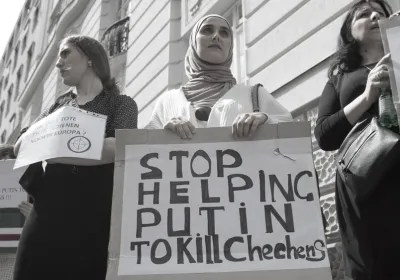
Our Committee organized and carried out a protest outside the Russian Embassy, which provoked a negative reaction from Russian officials.

Correspondent: Russia is attempting to convince the international community that it is conducting what it describes as an anti-terrorist operation, a struggle against Islamic extremism. You have been to Chechnya. Did you see any Islamic extremists there?

K. Foverskov: I observed a greater presence of Islamism in Tatarstan than in Chechnya. We are trying to explain to our fellow citizens that Russia, in order to justify the crimes it is committing in Chechnya, is deliberately promoting the public stereotype of Chechens as bandits and extremists.

At our request, the Danish Parliament examined the issue of the genocide of the Chechen people and recommended that the Danish Government bring a case against Russia before the International Court of Justice for crimes committed against the Chechen people.

Starye Atagi, December 2001: When “Normalization” Meant Fear and Disappearances

An examination of eyewitness testimonies from one of the darkest periods of the Second Russo-Chechen War.


A Village Under Occupation

At the end of 2001, Russian authorities repeatedly claimed that the situation in Chechnya was improving. Official statements spoke of “stabilization,” “normalization,” and the restoration of constitutional order throughout the republic.

For many residents of the Chechen Republic of Ichkeria, however, reality looked very different. One of the most revealing accounts from this period comes from the village of Starye Atagi, southwest of Grozny. Between late December 2001 and early January 2002, local residents described a climate of fear marked by military raids, arbitrary detentions, extortion, disappearances, and constant harassment by Russian federal forces. Their testimonies provide a rare glimpse into everyday life during one of the most difficult phases of the war.


A Village Already Scarred by War

By the end of 2001, Starye Atagi had already endured years of military operations. Since the beginning of the Second Russo-Chechen War, the village had repeatedly been subjected to raids, searches, and so-called “counter-terrorist operations” conducted by Russian forces.

Residents had previously appealed to international organizations, describing a pattern of punitive sweeps that had affected dozens of local families. Many villagers reported losing relatives during these operations, while others continued searching for family members who had disappeared after being detained by Russian troops.

Far from experiencing the promised normalization, the population found itself living under a permanent state of uncertainty.


The December Raids

According to testimonies collected at the time, between 26 and 30 December 2001 Russian troops carried out a series of operations in the village. Residents alleged that soldiers entered homes, conducted arbitrary document inspections, demanded money from civilians, and confiscated property under various pretexts. Witnesses described scenes of intimidation and humiliation affecting numerous families throughout the village.

Among the incidents reported was the case of a young mother who was allegedly forced to hand over money after soldiers questioned her personal documents and family status. While individual details remain difficult to verify more than two decades later, the broader pattern described by witnesses corresponds closely to practices documented elsewhere in Chechnya during the same period.


Arbitrary Detentions and Ransom Payments

The most serious allegations concerned the detention of dozens of local residents. According to villagers, Russian forces detained more than forty men during the operation, including elderly civilians and members of several well-known local families. Detainees were reportedly accused of assisting the fighters of the Chechen Republic of Ichkeria, although no formal charges were presented.

Witnesses claimed that many of those arrested were subjected to beatings and ill-treatment before being released. Families reportedly secured the release of relatives only after paying sums ranging from 2,000 to 5,000 rubles. Such allegations were not unusual during this stage of the conflict. Throughout the early 2000s, numerous human-rights organizations documented cases in which detainees were released only after relatives paid money to members of military or security structures.

For civilians living in villages such as Starye Atagi, the greatest burden was often uncertainty. Men of military age lived with the constant risk of detention. Families feared nighttime raids. Mothers worried that sons, husbands, or fathers could disappear without explanation and never return. The absence of legal safeguards meant that ordinary civilians often had no effective mechanism through which to challenge abuses or seek information about detained relatives. As a result, fear became a permanent feature of daily life.

February 2000 – Russian soldiers inspect Chechen men standing along a wall in the prison of the Chechen village of Chernokozovo. 

A Pattern Seen Across the Chechen Republic of Ichkeria

The events reported in Starye Atagi were not isolated. Throughout the Second Russo-Chechen War, villages and towns across the Chechen Republic of Ichkeria experienced similar operations. International human-rights organizations repeatedly documented allegations of enforced disappearances, arbitrary detention, torture, extrajudicial executions, and collective punishment carried out during security sweeps.

Russian authorities maintained that these operations were necessary to combat the armed forces of the Chechen Republic of Ichkeria and their supporters. Human-rights advocates, however, consistently argued that civilians were frequently subjected to abuses that violated both Russian law and international humanitarian norms.

The experiences of Starye Atagi therefore form part of a much broader historical pattern that affected thousands of Chechen families during the conflict.


Preserving Historical Memory

More than twenty years later, testimonies from villages such as Starye Atagi remain an essential part of the historical record. They preserve voices that were rarely heard beyond the borders of Chechnya and document the experiences of civilians caught between the struggle for the independence of the Chechen Republic of Ichkeria and the overwhelming military power of the Russian Federation.

Whether examined by historians, researchers, journalists, or future generations, these accounts serve as a reminder that behind official statements and military reports stood real communities struggling to survive under extraordinary circumstances. Remembering their stories is not only a matter of historical accuracy.

It is also a matter of justice.


This article is based on testimonies published in January 2002 and on the broader body of documentation concerning human-rights violations committed during the Second Russo-Chechen War.

Land, Sovereignty, and the Unfinished Question of Privatization in Chechnya

The Chechen Republic of Ichkeria from Soviet Collapse to Postwar Re-Bureaucratization

Introduction

The question of land privatization in Chechnya cannot be understood as a merely technical issue of post-Soviet economic transition. In the Chechen case, land was never simply an asset to be registered, transferred, leased, or sold. It was a national patrimony, a source of historical memory, a foundation of communal identity, a battlefield of state-building, and, after 1994, one of the many casualties of war.

Between 1991 and 1999, the Chechen Republic of Ichkeria did not develop a liberal land market comparable to that emerging in the Russian Federation. Nor did it complete a coherent agrarian reform. The available evidence instead points to a more complex and internally contradictory model: a sovereignty-first economic doctrine, constitutionally open to private property in general, but deeply reluctant to commodify land, natural resources, or strategic assets.

This article argues that the failure of land privatization in independent Chechnya was not merely the result of administrative weakness or wartime destruction. Those factors were decisive, but they came later. At the origin of the process stood a political choice. Dzhokhar Dudayev and much of the independence leadership regarded rapid privatization, especially of land and strategic resources, as a danger to national survival. In their view, privatization risked opening the republic to speculation, corruption, external penetration, and the fragmentation of national wealth before the Chechen state had consolidated its sovereignty.

The result was an unfinished land regime: neither Soviet collectivism, nor Russian-style privatization, nor a fully restored customary order. It was a hybrid system, suspended between national patrimony, emergency administration, communal expectation, and the collapse of state capacity.


1. Historical Background: Land, Deportation, and the Moral Economy of Return

Chechen attitudes toward land were shaped long before the fall of the Soviet Union. Traditional Vainakh society was organized through family, teip, and tukkhum structures, in which land was tied to lineage, locality, honor, and collective survival. Customary law, or adat, regulated property disputes alongside social obligations and communal authority. In the mountain and foothill regions, the idea of land as a purely alienable commodity had only limited roots.

The Soviet period transformed these relations through collectivization. Beginning in the late 1920s, private and communal forms of landholding were absorbed into collective and state farms. For Chechens, collectivization was not experienced simply as modernization. It was remembered as another episode in the long history of imperial interference with the native relationship to land.

The trauma of the 1944 deportation deepened this perception. When Chechens and Ingush were exiled to Central Asia, their republic was dissolved, their villages emptied, and their homes and lands redistributed. Upon return after 1957, many found themselves effectively “immigrants in their own homes.” Housing, farmland, and administrative control had passed into other hands. The struggle for land was therefore inseparable from the struggle to recover historical dignity.

This memory mattered in 1991. The national movement did not approach land as a neutral sector of economic reform. Land was part of the historical body of the nation.


2. The Soviet Inheritance and the Structural Crisis of Agriculture

By the late Soviet period, Checheno-Ingushetia had a distorted economic structure. Oil, refining, and petrochemical industries dominated the economy, while agriculture remained weak, dependent, and undercapitalized. The countryside was largely Chechen, while Russians were disproportionately represented in industry, administration, and urban employment.

The agricultural sector was especially fragile. It had long depended on Soviet subsidies, controlled prices, access to fuel, machinery, and lubricants, and centralized procurement systems. Once the Soviet framework collapsed, the sector faced a structural crisis. Agricultural enterprises accumulated enormous debts; much of this debt was not accidental but systemic, arising from dependence on fuel, lubricants, and state support.

In principle, three policies could have addressed the crisis: agrarian reform, land privatization, and the elimination of subsidies. But this was exactly the path Dudayev opposed. This point is essential. The Chechen leadership was not unaware of the agricultural problem. On the contrary, the problem was known and discussed. The state simply refused to resolve it through the Russian-style market solution.

This refusal distinguished Ichkeria from the Russian Federation. In Russia, land reform and privatization were part of a broader project of economic liberalization. In Chechnya, the leadership feared that liberalization without consolidated sovereignty would produce not freedom, but predation.


3. Sovereignty Before Privatization

The earliest Chechen political texts placed land and natural resources within a national-patrimonial framework. The sovereignty discourse of 1990–1991 described land, subsoil, airspace, water, and natural resources as the property of the people. This formula did not exclude private economic activity, but it subordinated it to the collective ownership of the nation.

The 1992 Constitution of the Chechen Republic introduced a more differentiated property regime. It recognized private and state property, and it guaranteed economic freedoms. Yet it continued to define land and natural resources in their natural state as the patrimony of the people, to be granted for possession and use according to law. This was not a straightforward constitutionalization of private land ownership.

The distinction is crucial. Private property could exist. Enterprise could exist. Trade could exist. But land and strategic resources were not simply objects for unrestricted market circulation.

This made the Chechen model fundamentally different from the Russian one. The question was not whether Chechnya would have a market economy. It was whether the national territory itself could be turned into a market before the state had secured its independence.


4. Dudayev’s Anti-Privatization Position

The strongest new evidence from the broader research archive concerns Dudayev’s position. He did not merely delay privatization. He opposed it as a political danger. Dudayev and many others feared that privatization would allow “small profiteers” to parcel out national wealth for private advantage, leaving the country in poverty. This interpretation helps explain why the Chechen leadership resisted the liberal reform path even when economic conditions were deteriorating.

Dudayev’s position was not irrational in context. Chechnya’s economy was heavily concentrated around oil and refining. Other sectors, especially agriculture, required investment that the state did not possess. If privatization had been implemented quickly, it could have produced the same oligarchic dynamics seen in Russia, but in a much smaller and more vulnerable republic.

There was also a geopolitical concern. A weak, unrecognized Chechen state could not guarantee that privatized land, infrastructure, or industrial assets would remain under genuinely national control. Privatization could become a mechanism for Russian economic re-penetration. Thus, Dudayev’s anti-privatization stance must be understood as part of a broader doctrine: sovereignty first, market later.


5. Institutional Ambiguity: The State Committee on Privatization and Its Liquidation

The documentary record shows that the Chechen authorities dismantled or reorganized the institutional machinery that could have implemented classical privatization. In February 1992, the State Committee on Privatization and Antimonopoly Policy was liquidated, and its documentation was transferred to the Ministry of Economy and Finance.

This does not mean that no private economic activity existed. On the contrary, the early 1990s saw an explosion of informal trade, private initiative, smuggling, and local appropriation. But it does mean that the state moved away from a standardized privatization apparatus.

This point changes the interpretation of Ichkeria’s economic history. The issue was not simply that the Chechen state was too weak to conduct privatization. It was also that the leadership did not want to reproduce the Russian privatization model.

The result was a paradox: the formal privatization process was blocked, but informal appropriation flourished.


6. Agriculture: The Unresolved Core of Land Reform

The agricultural sector reveals the contradiction most clearly. Soviet collective and state farms were no longer functioning efficiently, but they were not replaced by a coherent private land system. Subsidies continued in one form or another. Debts mounted. Productivity fell. Machinery deteriorated. Fuel shortages worsened.

The population increasingly retreated from Grozny and other urban centers toward villages and rural networks, where land could provide subsistence. But the collapse of the collective farm system did not automatically produce orderly land ownership. Instead, it opened the way to looting, local redistribution, customary claims, and semi-formal occupation.

In some northern plains districts, mechanized agriculture survived in reduced form. Elsewhere, the decline of state farms created a vacuum filled by family networks and local power.

This is where the Chechen land question becomes especially difficult to classify. The republic did not maintain the Soviet system intact. But neither did it create a legal market in agricultural land. The countryside moved toward de facto decentralization without de jure privatization.


7. The Role of Customary Law

Customary law did not replace state law, but it became increasingly important as state capacity weakened. The collapse of collective farms and the absence of a clear privatization regime allowed local communities to rely on familiar mechanisms of allocation, mediation, and legitimacy.

This did not necessarily mean a romantic return to an ancient order. Customary structures could stabilize disputes, but they could also reinforce local hierarchies, clan influence, and unequal access. Still, they offered a form of social regulation where formal institutions were absent or contested.

The independence period therefore produced a layered land regime:

  1. constitutional patrimony of the people;
  2. state administration of strategic resources;
  3. partial or informal private use;
  4. customary allocation and recognition;
  5. growing coercion by armed actors.

No single model prevailed.


8. Oil, Land, and Strategic Control

Although the article focuses on land privatization, Chechnya’s land question cannot be separated from oil. Oil wells, pipelines, refineries, storage areas, and transport corridors were all territorial assets. Control over them was control over the fiscal basis of the state.

Since late 1991, Dudayev placed oil exports under direct presidential authorization. This was part of the same logic that shaped his position on land: strategic resources had to remain under national control. In practice, however, the government struggled to enforce this control. Theft from pipelines, illegal withdrawals, looting of tankers, and collusion by guards became endemic.

The Dudayev government responded by centralizing production and distribution. One major refining facility, the Lenin Refinery, became the core of production, while other plants were closed. Storage and distribution were also centralized in a guarded zone near Grozny’s Zavodskoy district. This produced some short-term success: theft reportedly decreased, and the state regained access to revenue.

But centralization also had political costs. The opposition accused Dudayev of treating oil as a personal asset and using strategic resources to strengthen presidential power. Whether or not the accusations of personal enrichment were justified, the political effect was real: economic sovereignty became inseparable from accusations of authoritarianism.

This dynamic helps explain land policy as well. If land and resources were too important to privatize, they also became too important to leave outside presidential control.


9. Parliament, Presidency, and the Political Economy of State-Building

The land question was embedded in a broader institutional conflict between the presidency and parliament. Dudayev sought to centralize authority in order to defend independence and prevent Russian penetration. Parliamentary critics accused him of violating constitutional procedures, duplicating institutions, appointing loyalists, and replacing elected local authority with presidential structures.

This conflict mattered for land administration. A functioning land reform would have required stable institutions, local authorities, cadastral bodies, courts, and enforcement mechanisms. Instead, the state was torn between competing centers of power.

Dudayev also dismantled parts of the old Soviet administrative system and replaced them with prefectures. Parliament objected, since the Constitution provided for elected regional governors. The executive justified centralization as necessary for state survival. The legislature saw it as authoritarian drift.

In such a context, land privatization was almost impossible. The legal question “who owns the land?” could not be answered while the political question “who represents the state?” remained unresolved.


10. The State Commission for Land Resources and Management

One important institutional detail is the existence of a State Commission for Land Resources and Management. During the Russian-backed Hadjiev administration in 1995, Ibragim Dzhandarov was listed as chairman of this commission, and the source notes that he had held the same post under Dudayev.

This is a significant clue. It shows that the land question was not absent from the state apparatus. There was a dedicated institutional structure responsible for land resources and territorial management. Yet the available evidence suggests that this institution did not succeed in creating a stable land regime.

Its continuity from the Dudayev period into the Hadjiev government is also revealing. Moscow-backed authorities did not simply invent land administration from scratch. They reused personnel and structures inherited from the independence period. This suggests that despite political rupture, administrative continuity existed at least in fragments.

However, under wartime occupation, such institutions could hardly operate as neutral organs of land governance. They functioned within competing claims: Ichkerian legality, Russian federal authority, collaborationist administration, military occupation, and local survival economies.


11. War and the Collapse of Property Order

The First Russo-Chechen War transformed the land question. From December 1994 onward, land reform ceased to be a policy problem and became part of wartime survival.

Russian bombardment destroyed cities, villages, archives, infrastructure, and administrative continuity. Grozny, the center of bureaucracy and record-keeping, was devastated. Property claims became difficult or impossible to verify. Many people fled, leaving houses, plots, documents, and livestock behind.

The destruction of records had long-term consequences. Even where ownership or use rights had existed, they were often no longer documentary. Claims survived through memory, witnesses, family networks, or force.

The war also militarized property relations. Vehicles, buildings, fuel, and other assets were requisitioned for the war effort. Dudayev’s orders included the expropriation of vehicles that had once belonged to the government but had been privatized in the early 1990s. This demonstrates that even the private property that had emerged before the war remained vulnerable to emergency state claims.

In wartime Ichkeria, property became conditional upon survival.


12. Occupation, Collaborationist Administration, and Land Governance

The Russian-backed Hadjiev government attempted to reconstruct civilian authority in occupied areas. Its cabinet included figures from the old Soviet nomenklatura, anti-Dudayev opposition, and former Dudayev officials. It also included a chairman of the State Commission for Land Resources and Management.

This government was politically weak and widely discredited, but it reveals Moscow’s preferred model: not immediate liberalization, but administrative restoration under Russian control. Oil infrastructure, reconstruction funds, housing, and land administration were all tied to the attempt to build a loyal Chechen authority within the Russian state.

However, corruption, looting, military impunity, and black-market activity undermined this effort. Reconstruction resources were misappropriated. Warehouses were looted. Oil infrastructure was exploited by both official and unofficial actors. Land governance could not be separated from the broader breakdown of legality.

Thus, by 1995–1996, Chechnya contained overlapping property regimes:

  • Dudayev’s wartime Ichkerian authority;
  • Russian military occupation;
  • Hadjiev’s collaborationist administration;
  • local customary control;
  • black-market appropriation;
  • armed requisition.

The land question had become fragmented beyond institutional control.


13. Interwar Ichkeria, 1996–1999: Victory Without Reconstruction

The Khasavyurt Accords ended the First Russo-Chechen War but did not create the conditions for stable land reform. Ichkeria regained de facto independence, but the state was exhausted. Institutions were weak, the economy shattered, armed groups powerful, and international recognition absent.

The Maskhadov government inherited an impossible problem: how to rebuild a country without money, secure borders, functioning courts, reliable archives, or a monopoly of force.

Land privatization under such conditions would have required an administrative capacity the state did not possess. It would also have risked igniting disputes among displaced families, returning refugees, armed commanders, local elites, and communities whose prewar claims had been destroyed or transformed by war.

The interwar state therefore failed to settle the land question. It could not restore Soviet collectivism, could not implement liberal privatization, and could not fully regulate customary or armed control.

This was not merely policy failure. It was the consequence of attempting state reconstruction in the ruins of a war fought against a vastly superior power.


14. Interpretation: Why Chechnya Did Not Privatize Land

The evidence supports five main conclusions.

First, independent Chechnya did not follow the Russian privatization model because its leadership did not trust that model. Dudayev saw privatization as a mechanism through which national wealth could be captured by profiteers, criminal groups, or external interests.

Second, land privatization was discussed as a possible solution to agricultural collapse, but it was rejected. This means the absence of land reform was not simply accidental.

Third, Chechnya’s constitutional framework recognized private property but preserved land and natural resources as the patrimony of the people. This created a hybrid doctrine: private economic activity without full commodification of the national territory.

Fourth, institutional conflict between the presidency and parliament, followed by war, made coherent reform impossible. Even if political will had existed, the administrative machinery was too unstable.

Fifth, after 1994, war transformed land from an economic problem into a survival problem. Displacement, destruction, requisition, looting, and the loss of records destroyed the practical basis for orderly privatization.


Conclusion

The history of land privatization in Chechnya is the history of an unfinished state.

In the early 1990s, the Chechen Republic of Ichkeria stood at the intersection of three possible futures. It could have followed Russia into rapid privatization. It could have preserved a modified Soviet system. Or it could have built a distinct national model rooted in popular ownership, limited private property, and strategic state control.

Dudayev chose the third path, but he never had the time, institutions, recognition, or peace necessary to make it work.

The result was not a coherent alternative economy, but an unresolved hybrid. Land remained symbolically national, administratively contested, socially communal, economically underproductive, and increasingly vulnerable to informal seizure. Agriculture collapsed under debt and subsidy dependence. Oil was centralized but also looted. State institutions multiplied but weakened. Parliament and presidency clashed. Then war destroyed the remaining foundations of legality.

The central conclusion is therefore precise: the Chechen Republic of Ichkeria did not fail to privatize land simply because it lacked capacity. It also refused to privatize land in the Russian sense because its leadership feared that privatization would destroy the very sovereignty independence was meant to secure.

After 1999, Russian rule restored legal bureaucracy but not genuine property security. Land ceased to be the patrimony of a self-proclaimed nation and became part of an authoritarian system of administrative control, reconstruction patronage, and political dependency.

The land question in Chechnya was never merely about property.

It was about sovereignty, memory, survival, and the right of a people to decide whether its land could be sold before its state had even been allowed to exist.

Olivier Dupuis and Chechnya: the European voice that refused to bow to Moscow

On May 4, Olivier Dupuis, former Radical Member of the European Parliament, passed away. An atypical and often isolated figure in the European political landscape, his death has largely gone unnoticed in public debate. Yet for those who have followed the history of Chechnya, it marks the loss of one of the very few European voices who, in the most difficult years, maintained a coherent, lucid, and countercurrent position.

Dupuis was not merely a parliamentarian. He was, in the fullest sense of the word, an activist for the rights of peoples.


A Radical consistency

A member of the Partito Radicale, close to figures such as Marco Pannella and Emma Bonino, Dupuis belonged to a very specific political tradition: that of nonviolent struggles, self-determination of peoples, and the defense of human rights even when it meant political isolation.

Chechnya, in this path, was not an exception. It was a consequence.

Portrait of Olivier DUPUIS MEP

Chechnya in its darkest hour

During the Second Chechen War, while much of Europe chose diplomatic caution or silence, Dupuis took a clear stance.

He openly denounced Russian military operations, the systematic human rights violations and the destruction of Grozny, and entire civilian communities

At a time when the dominant narrative tended to reduce the conflict to an internal Russian matter or a mere fight against terrorism, Dupuis insisted on a fundamental point: Chechnya was прежде всего an international political issue.


Support for the leadership of Ichkeria

One of the most significant aspects of his engagement was his relationship with the leadership of the Chechen Republic of Ichkeria, particularly Aslan Maskhadov.

Dupuis supported: the recognition of Maskhadov as a legitimate interlocutor, the opening of political negotiations and a clear distinction between the independence leadership and extremist drifts within the conflict

This position, already uncomfortable in the late 1990s, became openly countercurrent after the shift in the international context.


After 9/11: against simplification

After the September 11 attacks, the war in Chechnya was progressively absorbed into the global “war on terror” narrative.

Russia used this shift to legitimize its military actions. Most European capitals aligned with this perspective.

Dupuis did not.

He continued to distinguish between jihadist terrorism, real but limited, and the Chechen independence struggle, which he considered politically legitimate

This distinction, which today may seem self-evident to many analysts, was far from obvious at the time—and came at a political cost.


An isolated voice

Perhaps the most defining trait of his action was precisely his isolation.

Dupuis did not represent a majority line. On the contrary, the European Union avoided confrontation with Moscow, governments prioritized stability and economic relations, while the Chechen issue was gradually marginalized

In this context, his position was never opportunistic. It was a position of principle.

And for this very reason, it carries particular historical value today.


A bridge between Europe and Chechnya

For the Chechen cause, Dupuis was more than just a supporter.

He was:

  • a point of contact with European institutions
  • a voice capable of translating the Chechen issue into the language of international rights
  • one of the few European politicians who refused to reduce the conflict to terrorism

At a time when Ichkeria was being erased from public discourse, Dupuis helped preserve its political dimension.


Legacy

Today, many of his insights appear clearer:

  • the instrumentalization of terrorism by states
  • Europe’s difficulty in confronting Russia
  • the marginalization of self-determination struggles when they become inconvenient

Dupuis saw all this in advance.

And he consciously chose not to conform.


The tightrope walker

To remember him today are also the words of his wife—simple and powerful—perhaps capturing better than any political analysis the essence of who he was:

Chers si chers amis
Chères
Si Chères amies

Notre Olivier
S’en est allé
Très apaisé

Notre Olivier
S’est envolé
Le cœur léger

Le Funambule
Cheveux au vent
Danse
Sur
Son
Fil…

The tightrope walker.

It is a striking image, because it precisely captures what Dupuis was: a man in balance, suspended between principles and realpolitik, between political solitude and fidelity to his ideals.

In a Europe that, then as now, often chooses the comfort of silence, Olivier Dupuis chose to remain on the wire.

And never to step down.