Archivi tag: Radical Party

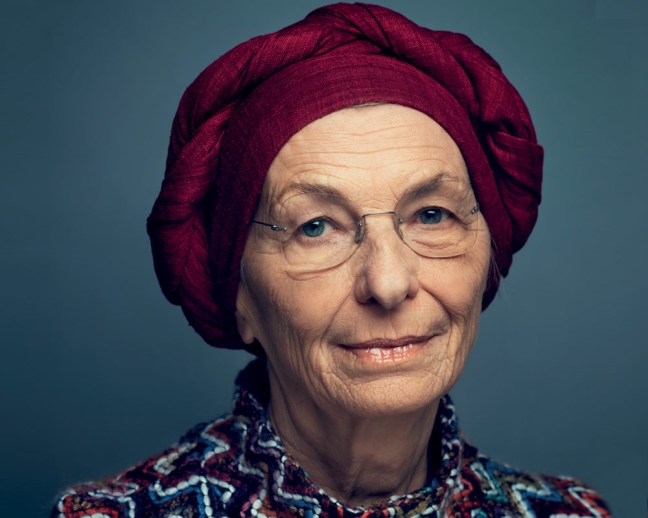
Emma Bonino (1948 – 2026) and her commitment to the Chechen cause

Emma Bonino, the prominent Italian politician, former European Commissioner and Foreign Minister, died on 11 September 2026 at the age of 78.

Alongside her better-known campaigns for civil and human rights, Bonino had a long and significant record of involvement with the Chechen question, particularly during the First and Second Russo-Chechen Wars.

As European Commissioner responsible for Humanitarian Aid from 1995 to 1999, Bonino dealt with the humanitarian consequences of the First Russo-Chechen War and consistently defended the principle of independent humanitarian access to populations affected by armed conflicts.

Her commitment became particularly visible during the Second Russo-Chechen War. In 2000, Bonino and the Transnational Radical Party actively worked to bring the Chechen issue before international institutions. The Radical Party provided representatives of the legitimate Chechen institutions with opportunities to address international forums, provoking strong opposition from the Russian Federation. Moscow even attempted to have the Transnational Radical Party’s consultative status at the United Nations suspended.

When the Russian request was rejected by ECOSOC in October 2000, Bonino dedicated the victory to Antonio Russo, the Radio Radicale journalist who had reported extensively from Chechnya and had been murdered in Georgia only days earlier.

On 23 November 2000, Bonino participated in and helped lead the major conference “Chechnya: A Hidden War – Free Access for the Media and International Humanitarian Intervention”, organised in Rome by the Radical Party, Reporters Without Borders and members of the European Parliament. Chechen and Russian human-rights activists, journalists and humanitarian organisations took part.
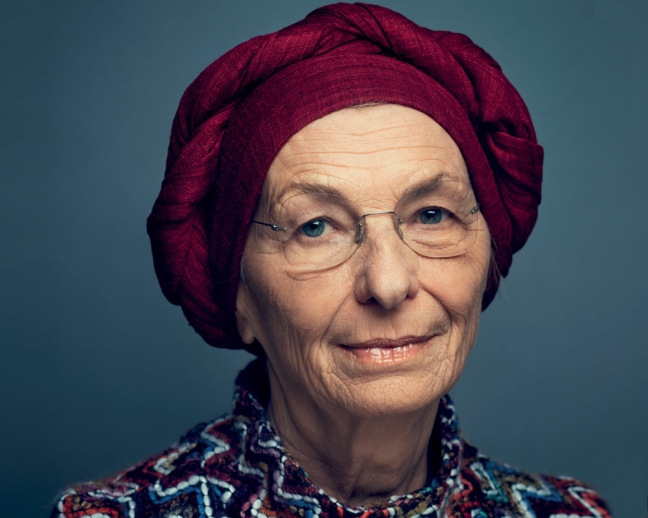
Perhaps the clearest political expression of Bonino’s position came in April 2002, when she co-sponsored a European Parliament motion on Chechnya. The text explicitly recalled the legitimacy of the election of President Aslan Maskhadov, his government and the Chechen Parliament, noting that the 1997 elections had been recognised by the OSCE and by the Russian Federation itself. It called for a political solution based on negotiations between the Russian authorities and the legitimate Chechen authorities and urged direct negotiations between Vladimir Putin and Aslan Maskhadov.

Bonino continued to defend this position publicly. Speaking before the European Parliament on 10 March 2004, she denounced the persecution and abduction of relatives of Chechen Health Minister Umar Khambiev, whom she described as an envoy of “elected President Aslan Maskhadov”. She referred to the Moscow-backed administration in Chechnya as a “puppet government” and urged European institutions not to remain silent about what was happening in Chechnya.

While Bonino does not appear to have formally advocated diplomatic recognition of Chechen independence, she consistently defended the democratic legitimacy of Maskhadov and the elected Chechen institutions, rejected Moscow’s attempt to reduce the Chechen question solely to terrorism, denounced serious human-rights violations committed during the war, and supported an international political settlement involving the legitimate Chechen leadership.

Her death therefore also marks the passing of one of the prominent European political figures who, during some of the darkest years of the Russo-Chechen conflict, repeatedly insisted that Chechnya should not be forgotten.
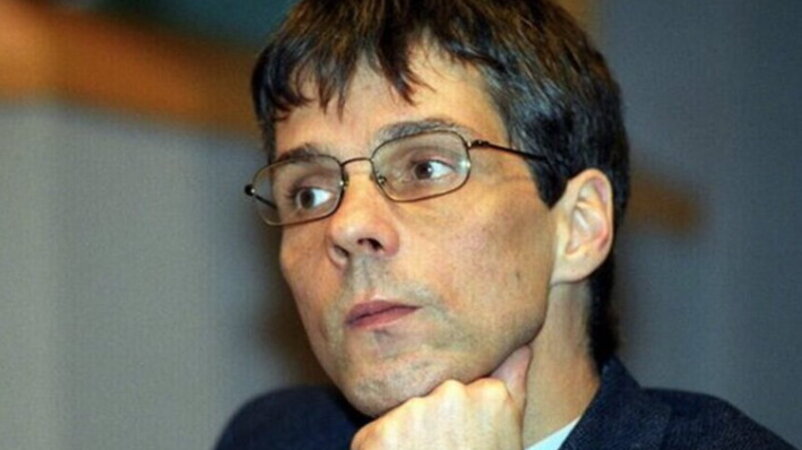
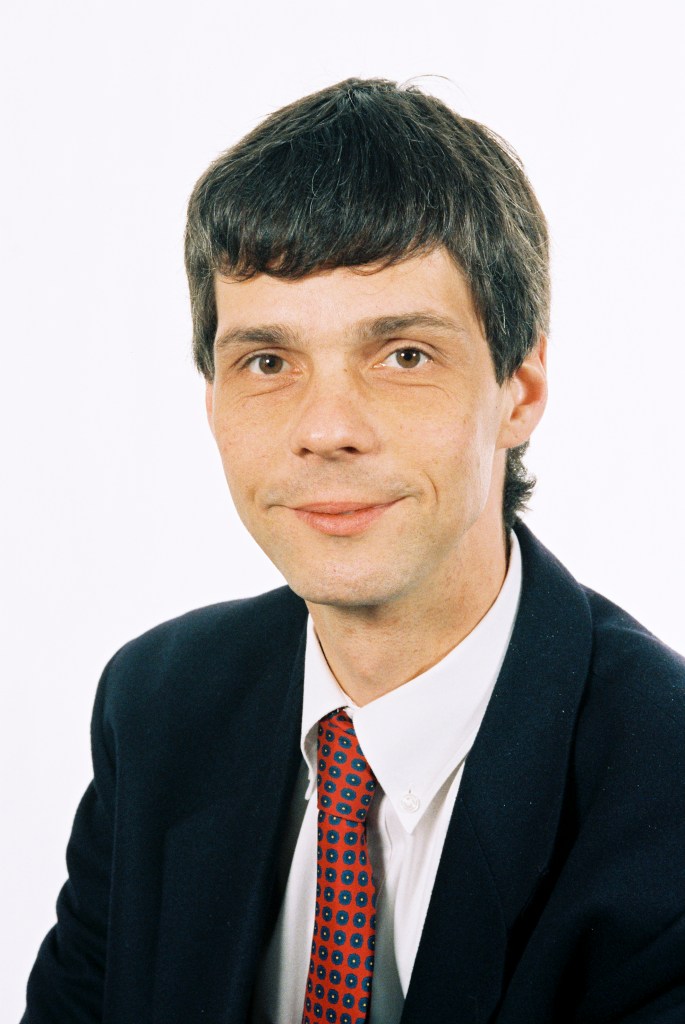
Olivier Dupuis and Chechnya: the European voice that refused to bow to Moscow

On May 4, Olivier Dupuis, former Radical Member of the European Parliament, passed away. An atypical and often isolated figure in the European political landscape, his death has largely gone unnoticed in public debate. Yet for those who have followed the history of Chechnya, it marks the loss of one of the very few European voices who, in the most difficult years, maintained a coherent, lucid, and countercurrent position.

Dupuis was not merely a parliamentarian. He was, in the fullest sense of the word, an activist for the rights of peoples.


A Radical consistency

A member of the Partito Radicale, close to figures such as Marco Pannella and Emma Bonino, Dupuis belonged to a very specific political tradition: that of nonviolent struggles, self-determination of peoples, and the defense of human rights even when it meant political isolation.

Chechnya, in this path, was not an exception. It was a consequence.

Portrait of Olivier DUPUIS MEP

Chechnya in its darkest hour

During the Second Chechen War, while much of Europe chose diplomatic caution or silence, Dupuis took a clear stance.

He openly denounced Russian military operations, the systematic human rights violations and the destruction of Grozny, and entire civilian communities

At a time when the dominant narrative tended to reduce the conflict to an internal Russian matter or a mere fight against terrorism, Dupuis insisted on a fundamental point: Chechnya was прежде всего an international political issue.


Support for the leadership of Ichkeria

One of the most significant aspects of his engagement was his relationship with the leadership of the Chechen Republic of Ichkeria, particularly Aslan Maskhadov.

Dupuis supported: the recognition of Maskhadov as a legitimate interlocutor, the opening of political negotiations and a clear distinction between the independence leadership and extremist drifts within the conflict

This position, already uncomfortable in the late 1990s, became openly countercurrent after the shift in the international context.


After 9/11: against simplification

After the September 11 attacks, the war in Chechnya was progressively absorbed into the global “war on terror” narrative.

Russia used this shift to legitimize its military actions. Most European capitals aligned with this perspective.

Dupuis did not.

He continued to distinguish between jihadist terrorism, real but limited, and the Chechen independence struggle, which he considered politically legitimate

This distinction, which today may seem self-evident to many analysts, was far from obvious at the time—and came at a political cost.


An isolated voice

Perhaps the most defining trait of his action was precisely his isolation.

Dupuis did not represent a majority line. On the contrary, the European Union avoided confrontation with Moscow, governments prioritized stability and economic relations, while the Chechen issue was gradually marginalized

In this context, his position was never opportunistic. It was a position of principle.

And for this very reason, it carries particular historical value today.


A bridge between Europe and Chechnya

For the Chechen cause, Dupuis was more than just a supporter.

He was:

  • a point of contact with European institutions
  • a voice capable of translating the Chechen issue into the language of international rights
  • one of the few European politicians who refused to reduce the conflict to terrorism

At a time when Ichkeria was being erased from public discourse, Dupuis helped preserve its political dimension.


Legacy

Today, many of his insights appear clearer:

  • the instrumentalization of terrorism by states
  • Europe’s difficulty in confronting Russia
  • the marginalization of self-determination struggles when they become inconvenient

Dupuis saw all this in advance.

And he consciously chose not to conform.


The tightrope walker

To remember him today are also the words of his wife—simple and powerful—perhaps capturing better than any political analysis the essence of who he was:

Chers si chers amis
Chères
Si Chères amies

Notre Olivier
S’en est allé
Très apaisé

Notre Olivier
S’est envolé
Le cœur léger

Le Funambule
Cheveux au vent
Danse
Sur
Son
Fil…

The tightrope walker.

It is a striking image, because it precisely captures what Dupuis was: a man in balance, suspended between principles and realpolitik, between political solitude and fidelity to his ideals.

In a Europe that, then as now, often chooses the comfort of silence, Olivier Dupuis chose to remain on the wire.

And never to step down.