Archivi tag: European Parliament

Olivier Dupuis and Chechnya: the European voice that refused to bow to Moscow

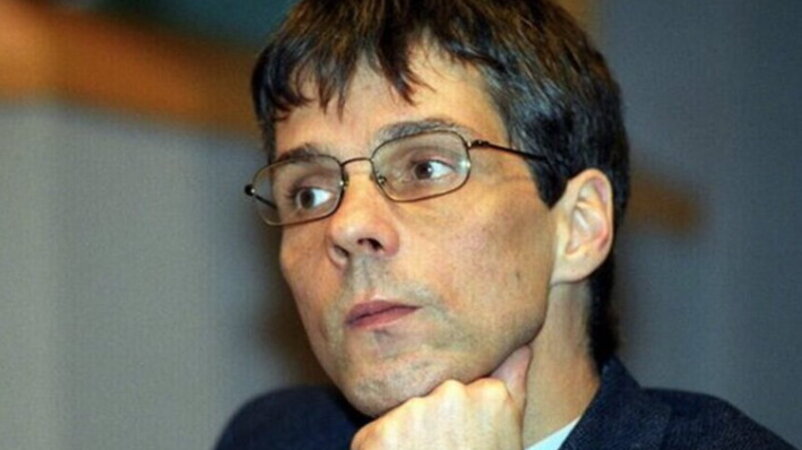
On May 4, Olivier Dupuis, former Radical Member of the European Parliament, passed away. An atypical and often isolated figure in the European political landscape, his death has largely gone unnoticed in public debate. Yet for those who have followed the history of Chechnya, it marks the loss of one of the very few European voices who, in the most difficult years, maintained a coherent, lucid, and countercurrent position.

Dupuis was not merely a parliamentarian. He was, in the fullest sense of the word, an activist for the rights of peoples.


A Radical consistency

A member of the Partito Radicale, close to figures such as Marco Pannella and Emma Bonino, Dupuis belonged to a very specific political tradition: that of nonviolent struggles, self-determination of peoples, and the defense of human rights even when it meant political isolation.

Chechnya, in this path, was not an exception. It was a consequence.
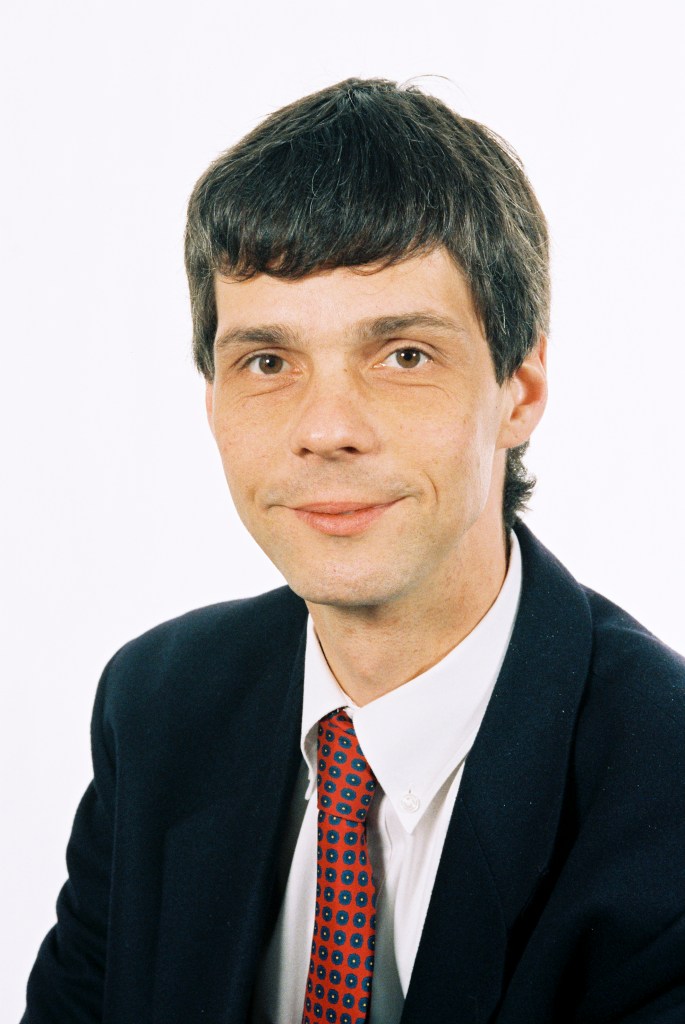
Portrait of Olivier DUPUIS MEP

Chechnya in its darkest hour

During the Second Chechen War, while much of Europe chose diplomatic caution or silence, Dupuis took a clear stance.

He openly denounced Russian military operations, the systematic human rights violations and the destruction of Grozny, and entire civilian communities

At a time when the dominant narrative tended to reduce the conflict to an internal Russian matter or a mere fight against terrorism, Dupuis insisted on a fundamental point: Chechnya was прежде всего an international political issue.


Support for the leadership of Ichkeria

One of the most significant aspects of his engagement was his relationship with the leadership of the Chechen Republic of Ichkeria, particularly Aslan Maskhadov.

Dupuis supported: the recognition of Maskhadov as a legitimate interlocutor, the opening of political negotiations and a clear distinction between the independence leadership and extremist drifts within the conflict

This position, already uncomfortable in the late 1990s, became openly countercurrent after the shift in the international context.


After 9/11: against simplification

After the September 11 attacks, the war in Chechnya was progressively absorbed into the global “war on terror” narrative.

Russia used this shift to legitimize its military actions. Most European capitals aligned with this perspective.

Dupuis did not.

He continued to distinguish between jihadist terrorism, real but limited, and the Chechen independence struggle, which he considered politically legitimate

This distinction, which today may seem self-evident to many analysts, was far from obvious at the time—and came at a political cost.

An isolated voice

Perhaps the most defining trait of his action was precisely his isolation.

Dupuis did not represent a majority line. On the contrary, the European Union avoided confrontation with Moscow, governments prioritized stability and economic relations, while the Chechen issue was gradually marginalized

In this context, his position was never opportunistic. It was a position of principle.

And for this very reason, it carries particular historical value today.


A bridge between Europe and Chechnya

For the Chechen cause, Dupuis was more than just a supporter.

He was:

  • a point of contact with European institutions
  • a voice capable of translating the Chechen issue into the language of international rights
  • one of the few European politicians who refused to reduce the conflict to terrorism

At a time when Ichkeria was being erased from public discourse, Dupuis helped preserve its political dimension.


Legacy

Today, many of his insights appear clearer:

  • the instrumentalization of terrorism by states
  • Europe’s difficulty in confronting Russia
  • the marginalization of self-determination struggles when they become inconvenient

Dupuis saw all this in advance.

And he consciously chose not to conform.


The tightrope walker

To remember him today are also the words of his wife—simple and powerful—perhaps capturing better than any political analysis the essence of who he was:

Chers si chers amis
Chères
Si Chères amies

Notre Olivier
S’en est allé
Très apaisé

Notre Olivier
S’est envolé
Le cœur léger

Le Funambule
Cheveux au vent
Danse
Sur
Son
Fil…

The tightrope walker.

It is a striking image, because it precisely captures what Dupuis was: a man in balance, suspended between principles and realpolitik, between political solitude and fidelity to his ideals.

In a Europe that, then as now, often chooses the comfort of silence, Olivier Dupuis chose to remain on the wire.

And never to step down.

“The Future of the North Caucasus” – Francesco Benedetti at the European Parliament

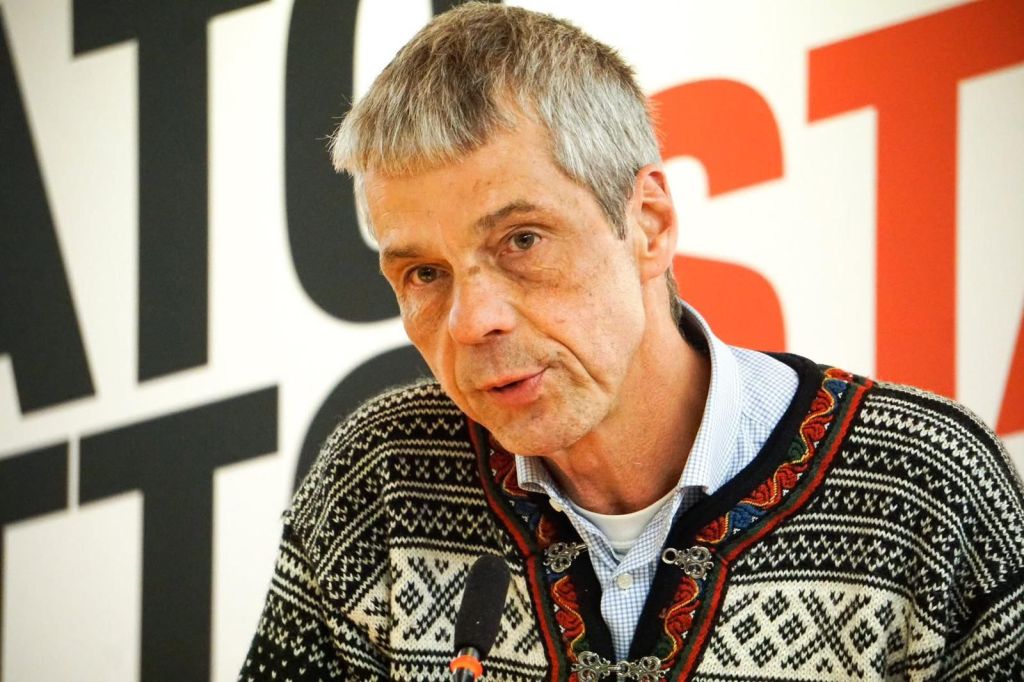
Last November 8th Francesco Benedetti was called to speak at the conference “The Future of the Northern Caucasus”, organized by the MEP Anna Fotyga. Below we report his speech, filmed by @INEWS cameras

The speeches of all the conference participants are available on the INEWS YouTube channel (https://www.youtube.com/@INEWSI ) and on the website https://www.caucasusfree.com

English Transcription of the speech

Good evening to all present

Thank you, Minister.

Over the past decade, a series of political and military crises have crossed the world. Visualizing them on the map, we can identify a “line of friction” that starting from Finland runs from North to South through Eastern Europe, reaches the Caucasus, crosses the Middle East and then wedges into Africa, cutting it from East to West. If the hot spots on this front are currently Ukraine, Nagorno Karabakh, Syria and Palestine, no less concern is aroused by its secondary segments, such as the Russian Federation, Belarus, Georgia, Iraq, Libya and the West African Republics. The Caucasus is one of the pieces of this front.

The war unleashed by Putin in February 2022 against Ukraine has exposed the Russian Federation to the risk of a collapse. This would give the North Caucasus republics an opportunity to reassess their position in a regional association along the lines of the North Caucasus Mountain Republic. Similar projects, after all, were theorized as early as the late 1980s and early 1990s, notably by Dzhokhar Dudaev and Zviad Gamsakhurdia, and with them a vast movement of opinion that had animated debates, discussions, and projects. I can try to make a modest contribution by bringing to your attention my own experience as a citizen of a member state of a supranational union, at whose main institution, the European Parliament, we find ourselves right now.

European Union has been established, given itself a Parliament, created legislative, governing and supervisory bodies, procedures and regulations of all kinds, social, economic and cultural projects of the highest order. However, at this very moment, when a solid and strong Europe, capable of influencing the course of world events and protecting the interests of European citizens would be needed more than ever, the Union is revealing some difficulties.

Personally, I believe that the problem lies mainly in the fact that even today, seventy-four years after the establishment of the Council of Europe, the European Union does not have a “Mission.” European citizens feel part of a larger community than that of the nation to which they belong, but they do not know how to recognize its “depth,” so they call themselves first “French” “Spanish” “German,” then “European.” Precisely from this problem I try to translate the discussion to the North Caucasus.

A union of North – Caucasian republics can be a viable curb on the imperial pretensions of neighboring powers, and Russia in particular. Moreover, it could grant the republics that would compose it greater specific weight in international fora, and start a process of building a Caucasian identity that, as an outside observer, I trace already exists in a rather pronounced way. A defensive purpose, however, cannot be a sufficient “mission.”

I believe that the project of a unification of the North Caucasus, fascinating and potentially successful in itself, must be accompanied by deep reflection regarding what its “mission” in history should be. If until a few decades ago new states arose out of opportunity, embodying the national ambitions of peoples, today we are witnessing the emergence of new states out of necessity. The end of the U.S.-led unipolar world, the rise of new world powers, and the agglomeration of economic power and demographic weight makes the “small homelands” so irrelevant that they are forced to consort if they want to avoid becoming pawns in the great international power games.

What need, then, should guide the creation of a Confederation of the Peoples of the North Caucasus? What historical mission should it set itself? What added value should it bring to the Caucasian community, and to the human community at large? On what distinctive features should it be articulated? To put it even more simply: how will a citizen of Dzhokhar, Magas, or Machackala feel honored to be a Citizen of the Caucasus? I believe that the ability of the peoples of the North Caucasus to erect a solid institution, capable of guaranteeing them a future of freedom and prosperity, will depend on the attention paid to these questions.

My time is up, thank you for your attention.