Archivi categoria: Senza categoria

Chapter IThe Boy from the Hills

(Read the previous chapter HERE)

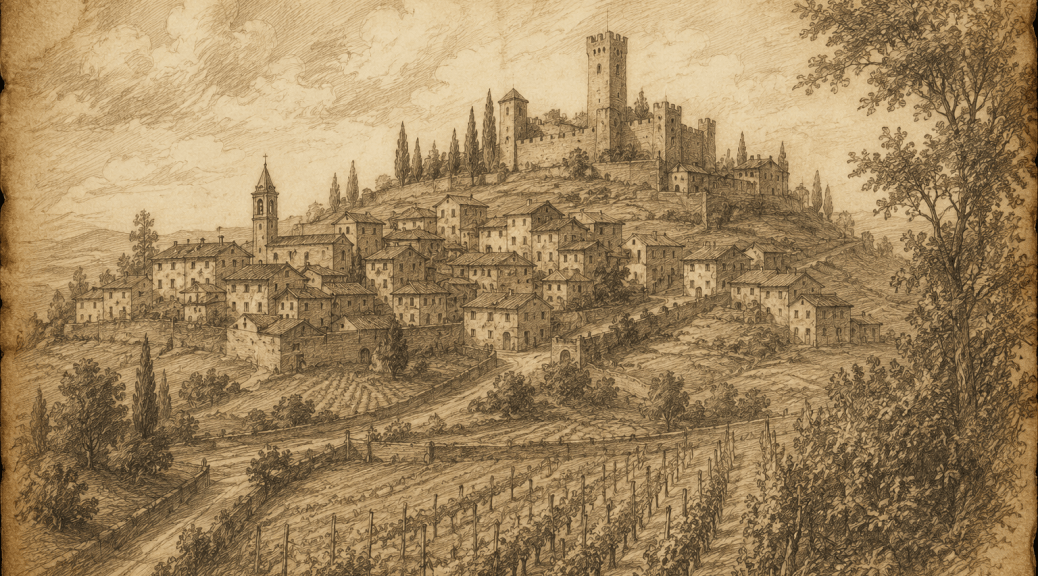
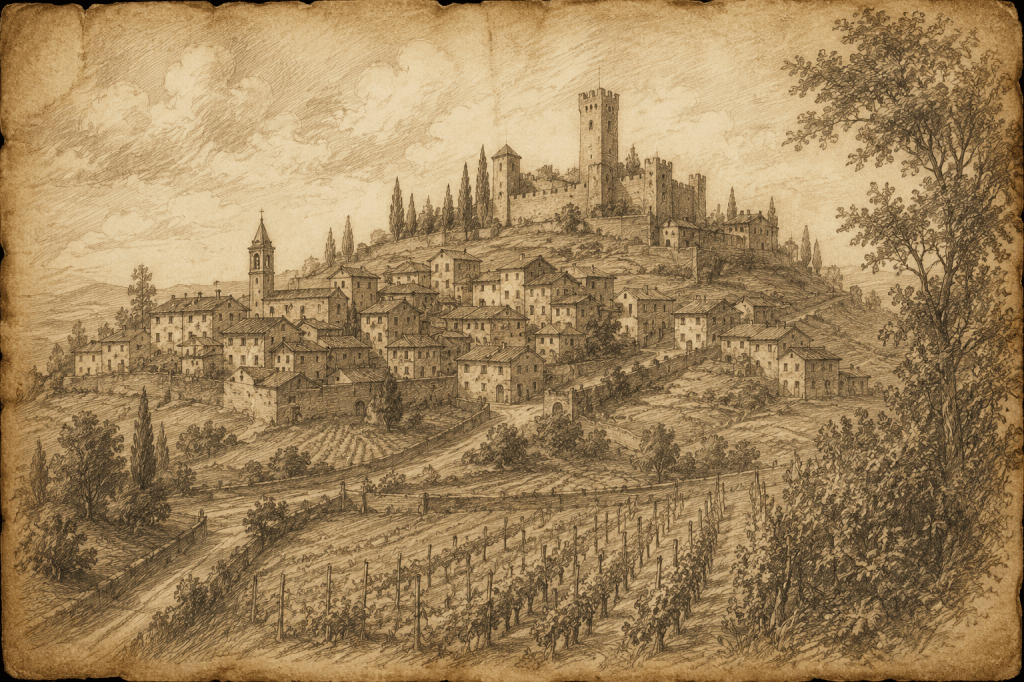
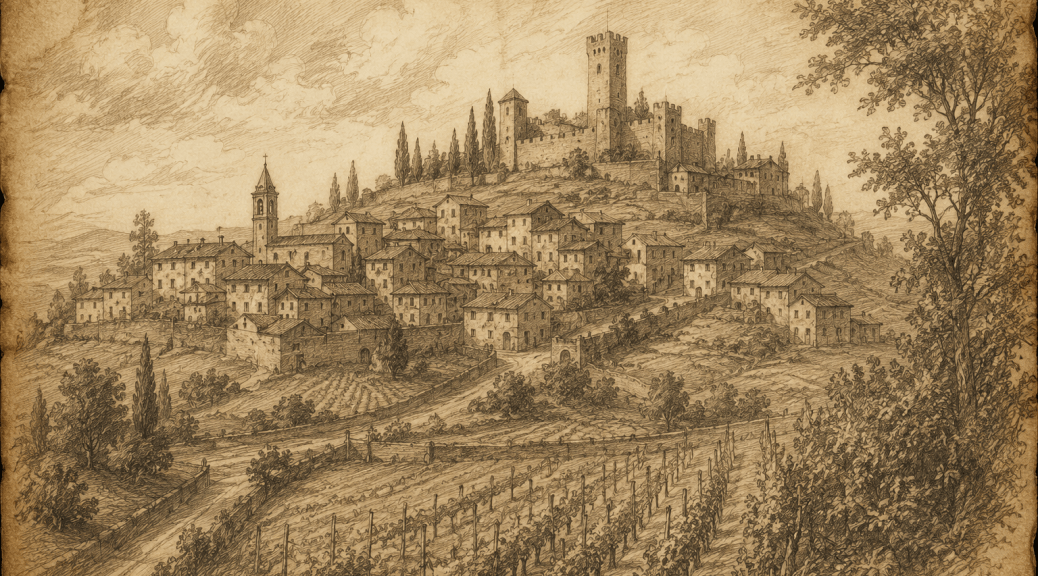
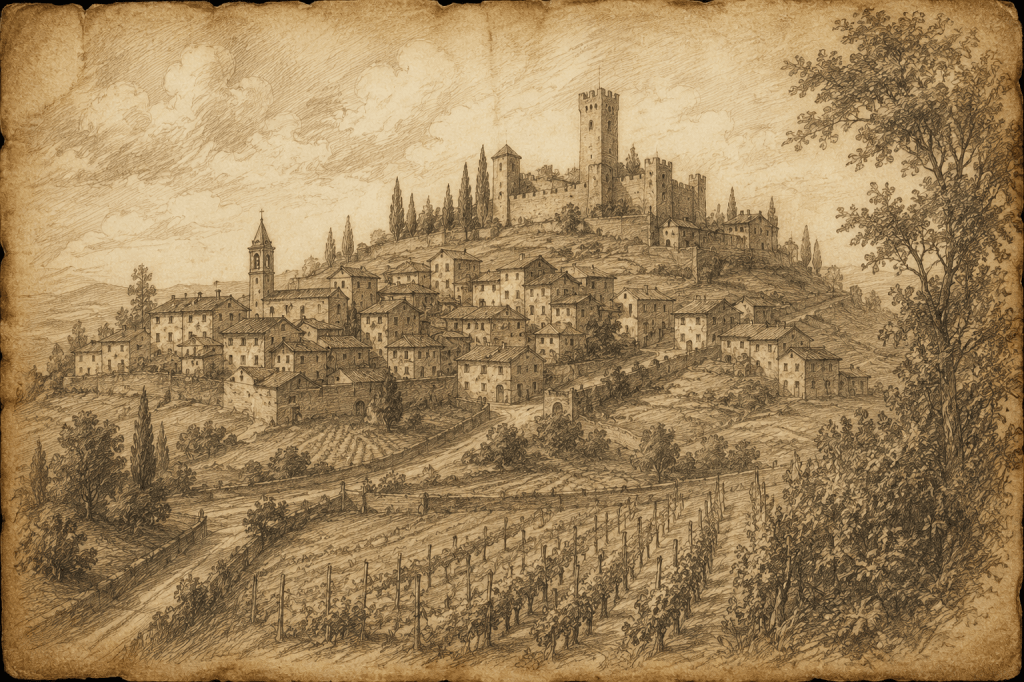
Long before his name became associated with prophets, armies, and distant mountains, Giovanni Battista Boetti was just a child born in the hills of Monferrato. It was a land of farmers, vineyards, and castles, which until just a few decades earlier had been ravaged by wars and invasions, whose ghosts lived on in the tales of the elders. Each village held memories of sieges and battles, and displayed the coats of arms of ancient feudal families. Every hill concealed a story from which the young Giovanni Battista imbibed with curiosity. Piazzano, his home village, was little more than a handful of houses clustered around the church, in the shadow of Camino Castle. From up there, the gaze could stretch for miles. It wasn’t the center of the world, but for those born there, it was the entire universe.

His family lived suspended between two eras. The Boettis retained the memory of an ancient nobility, descending, according to family tradition, from a branch of the Counts of Cunico. But the prestige of their ancestors was all that remained. Like many aristocratic families of 18th-century Monferrato, they possessed more memory than money, more pride than property. Their father, Spirito Bartolomeo, was a notary and podestà of the village. A well-educated and respected man, he was equally feared in his duties as at home. The chronicles that tell us about him do not remember him as a gentleman—quite the opposite. He was tough, inflexible, and short-tempered. Accustomed to command and unwilling to tolerate disobedience.

His wife, Maria Margherita, also came from a family of notaries and minor aristocrats. She needed a strong character to survive in a household ruled by a man like Spirito Bartolomeo. Yet, like many women of her time, her life was consumed by motherhood. With one pregnancy after another, her spirit grew weaker, finally abandoning her when she gave birth to her fifteenth child. When she died, Giovanni Battista was only seven years old. With Maria Margherita, the only point of reference that child had in the world disappeared.

Spirito Bartolomeo quickly sought a new wife. He still had children to support, a position to defend, and a home to manage. But resources were limited, and the simplest solution was to send some of the children away. So Giovanni Battista and his older sister were sent to boarding school in Casale Monferrato, a few dozen kilometers from Camino. At the time, this was a distance only a few Italians could travel in their lifetime, far from the fields and villages.

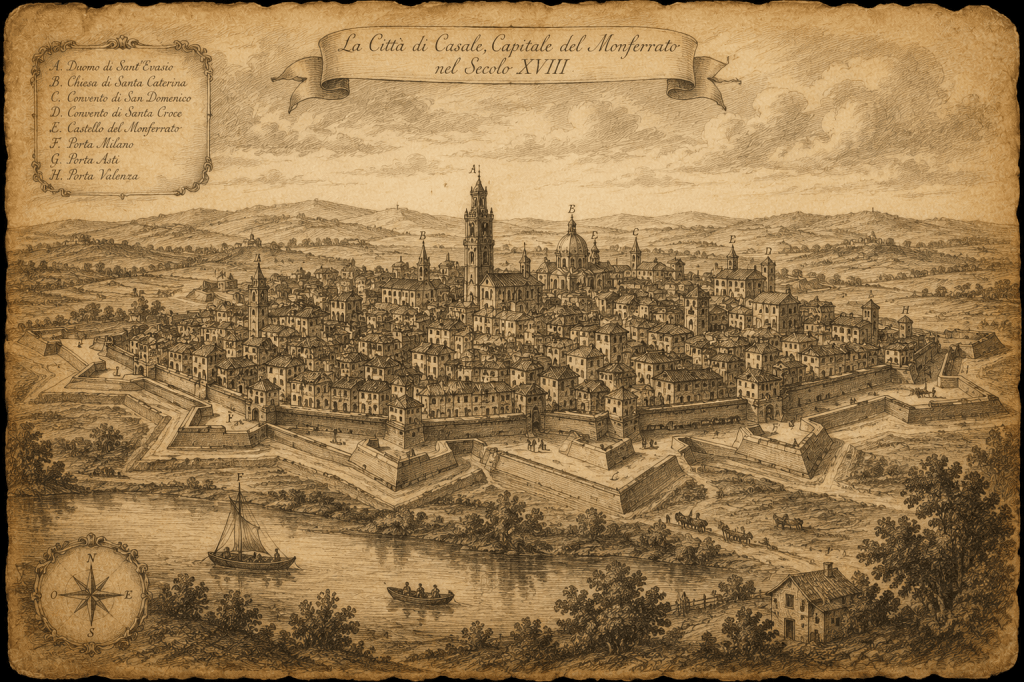
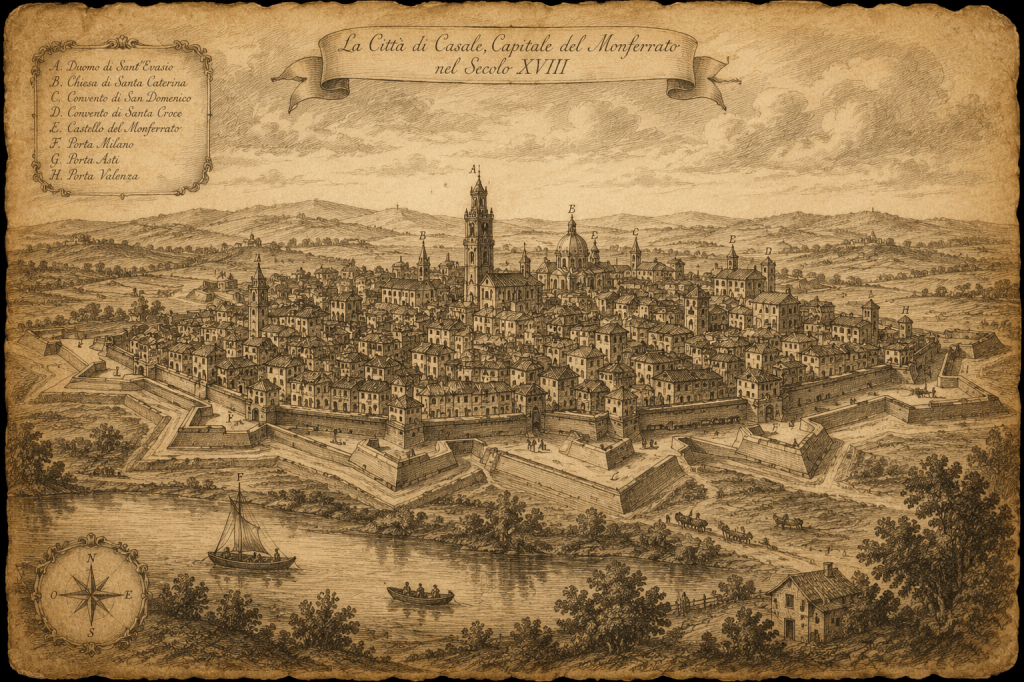
Casale was the capital of Monferrato. A vibrant city, inhabited by merchants, clergy, students, and officials. Its streets were busier than anything the boy had ever seen. Its churches were larger. Its libraries richer. Its opportunities seemingly endless. Many young people would have welcomed this new life with enthusiasm. Giovanni Battista did not.

For him, boarding school meant one thing above all: being removed from home. In the years that followed, he would develop a difficult character. Rebellious against authority, intolerant of impositions, incapable of passively accepting his fate. Perhaps these traits were already present in him. Perhaps they were born right then, within the walls of the boarding school, fueled by nostalgia and resentment.

While other boys dreamed of a respectable profession, a family, or a quiet life, young Boetti was already beginning to look beyond the horizon. Beyond the hills of Monferrato. Beyond Piedmont, toward an East he had never seen and did not yet know he would reach.

Capitolo I – Il ragazzo delle colline

(Leggi il capitolo precedente QUI)

Molto prima che il suo nome venisse associato a profeti, eserciti e montagne lontane, Giovanni Battista Boetti fu soltanto un bambino nato tra le colline del Monferrato. Era una terra di contadini, vigneti e castelli, che solo fino a qualche decennio prima era stata attraversata da guerre e invasioni, i cui fantasmi continuavano a vivere nei racconti degli anziani. Ogni villaggio custodiva memorie di assedi e battaglie, e sfoggiava gli stemmi degli antichi casati feudali. Ogni collina nascondeva una storia alla quale il giovane Giovanni Battista si abbeverava con curiosità. Piazzano, il suo villaggio natale, era poco più di un pugno di case raccolte attorno alla chiesa, all’ombra del castello di Camino. Da lassù lo sguardo poteva correre per chilometri. Non era il centro del mondo, ma per chi vi nasceva era l’intero universo.

La sua famiglia viveva sospesa tra due epoche. I Boetti conservavano il ricordo di un’antica nobiltà, discendendo, secondo la tradizione familiare, da un ramo dei Conti di Cunico. Ma il prestigio degli antenati era tutto ciò che restava. Come molte famiglie aristocratiche del Monferrato settecentesco, possedevano più memoria che denaro, più orgoglio che proprietà. Il padre, Spirito Bartolomeo, era notaio e podestà del villaggio. Uomo istruito e rispettato, era ugualmente temuto nelle sue funzioni come in casa. Le cronache che ci parlano di lui non lo ricordano come un uomo gentile, tutt’altro. Egli era duro, inflessibile, irascibile. Abituato a comandare e poco disposto a tollerare disobbedienze.

Sua moglie, Maria Margherita, proveniva anch’essa da una famiglia di notai e piccoli aristocratici. Doveva essere una donna di carattere forte per sopravvivere in una casa governata da un uomo come Spirito Bartolomeo. Eppure, come accadeva a molte donne del suo tempo, la sua esistenza fu consumata dalla maternità. Una gravidanza dopo l’altra, il suo spirito si fece via via più flebile abbandonandola, infine, al quindicesimo figlio messo al mondo. Quando morì, Giovanni Battista aveva soltanto sette anni. Con Maria Margherita scomparve l’unico punto di riferimento che quel bambino avesse nel mondo.

Spirito Bartolomeo non tardò a cercare una nuova moglie. Aveva ancora figli da mantenere, una posizione da difendere e una casa da amministrare. Ma le risorse erano limitate e la soluzione più semplice fu allontanare alcuni dei bambini. Così Giovanni Battista e la sorella maggiore furono mandati in convitto a Casale Monferrato, a poche decine di chilometri da Camino. Che all’epoca erano una distanza che solo pochi italiani potevano percorrere nella loro vita, lontano dai campi e dai villaggi.

Casale era la capitale del Monferrato. Una città viva, abitata da mercanti, religiosi, studenti e funzionari. Le sue strade erano più affollate di qualsiasi cosa il ragazzo avesse mai visto. Le sue chiese erano più grandi. Le sue biblioteche più ricche. Le sue opportunità apparentemente infinite. Molti giovani avrebbero accolto quella nuova vita con entusiasmo. Giovanni Battista no.

Per lui il convitto significava soprattutto una cosa: essere stato allontanato da casa. Negli anni successivi avrebbe sviluppato un carattere difficile da domare. Ribelle all’autorità, insofferente alle imposizioni, incapace di accettare passivamente il proprio destino. Forse quei tratti erano già presenti in lui. Forse nacquero proprio allora, tra le mura del collegio, alimentati dalla nostalgia e dal rancore.

Mentre gli altri ragazzi sognavano una professione rispettabile, una famiglia o una vita tranquilla, il giovane Boetti iniziava già a guardare oltre l’orizzonte. Oltre le colline del Monferrato. Oltre il Piemonte, verso un Oriente che non aveva mai visto e che ancora non sapeva di dover raggiungere.

Beyond Extradition: How Russia Hunts Chechen Exiles Across Europe and Central Asia

The Kremlin’s campaign against the Chechen diaspora did not end with the wars. It simply crossed international borders.

When people think about political repression, they often imagine arrests, prisons, or torture carried out inside an authoritarian state. Far less visible is what happens after dissidents escape.

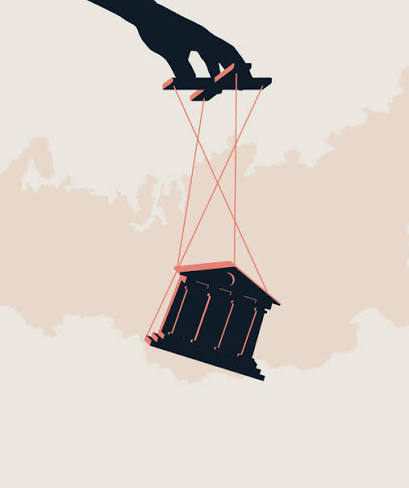
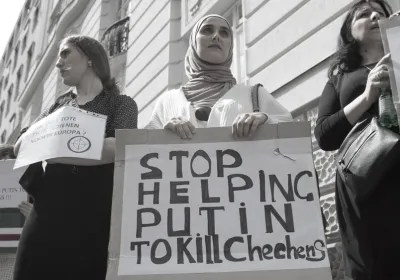
For thousands of Chechens who fled Russia over the last two decades, exile has never meant safety. Instead, many have discovered that Moscow’s reach extends well beyond its own territory. Through extradition requests, international police cooperation, administrative deportations, surveillance, intimidation of relatives, and—in the most extreme cases—assassinations, Russia has developed a system designed to ensure that its critics remain vulnerable wherever they seek refuge.

The objective is not merely to bring individuals back to Russia. It is to convince every member of the Chechen diaspora that nowhere is truly beyond the Kremlin’s reach.

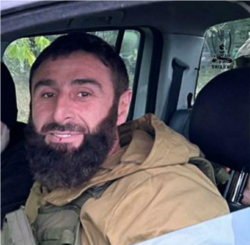
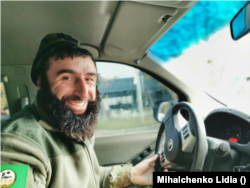
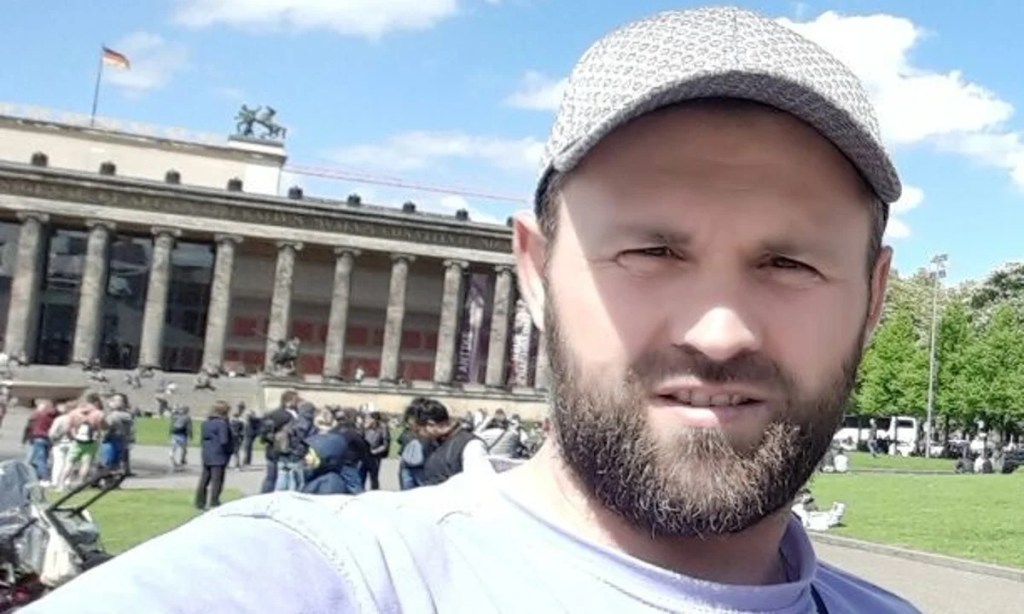
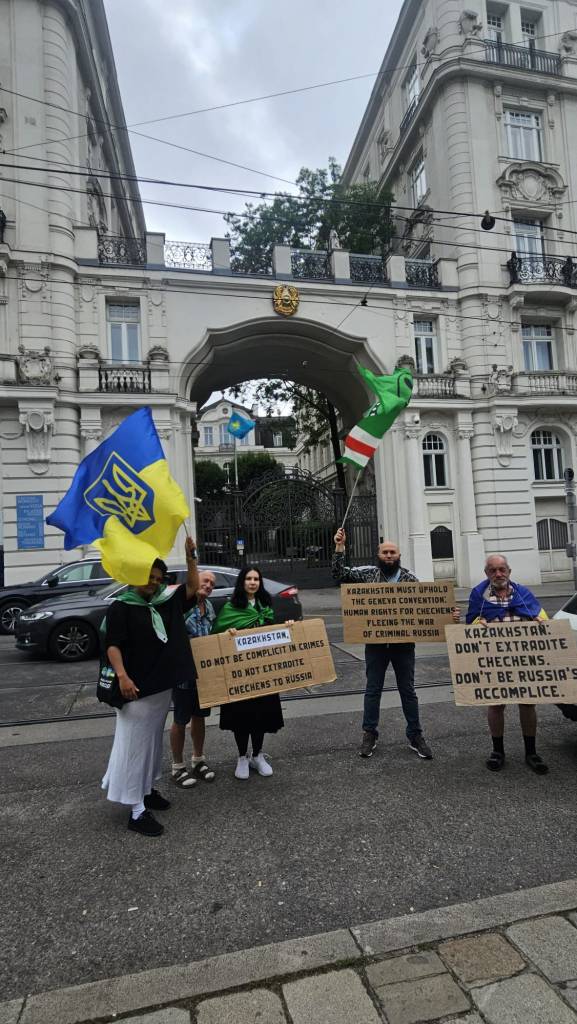
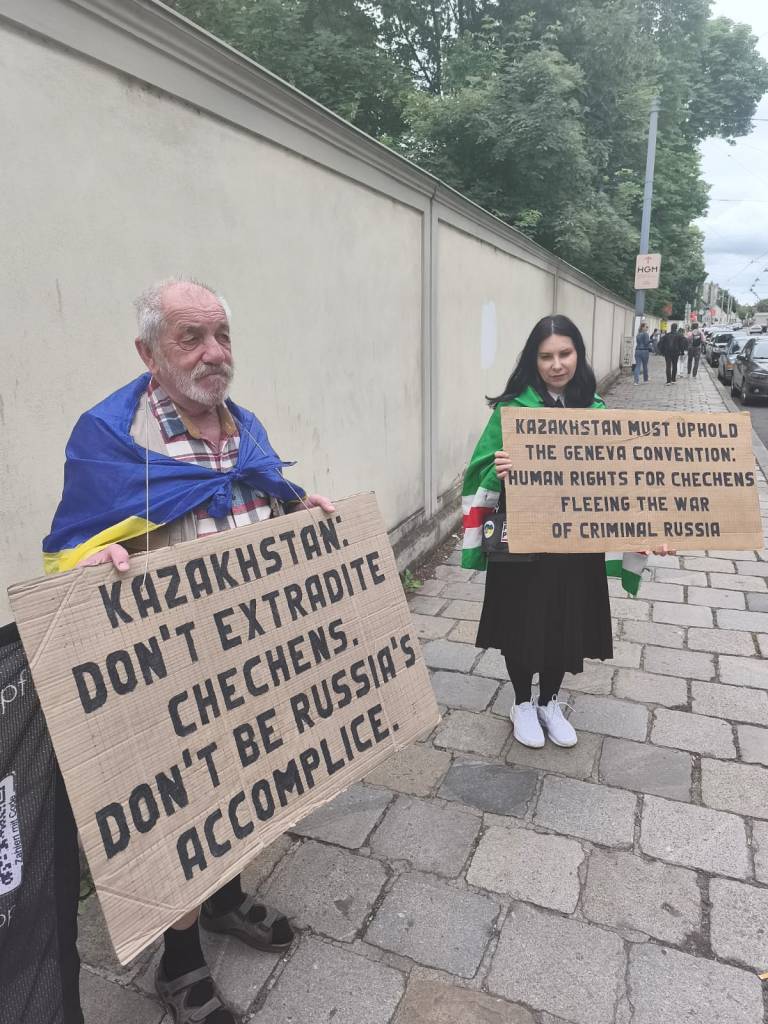
The recent case of Mansur Movlaev in Kazakhstan illustrates how this system continues to operate.


Mansur Movlaev

A Legal Request—or Political Persecution?

Officially, Russia rarely describes its targets as political opponents. Instead, extradition requests are almost always framed as ordinary criminal cases involving terrorism, extremism, illegal weapons possession, organized crime, fraud, or other criminal offences. This legal framing is not accidental. If a request appears to concern common crime rather than political persecution, foreign prosecutors and courts are more likely to treat it as a routine matter of judicial cooperation.

Once such a request reaches another country, local authorities may arrest the individual while extradition proceedings begin. Depending on the legal system involved, the refugee may spend weeks or months in detention before the courts determine whether the request is compatible with international human rights obligations. For the individual concerned, the punishment often begins long before any final judicial decision.


The Principle That Should Prevent Extradition

International law contains a fundamental safeguard known as the principle of non-refoulement. Article 3 of the European Convention on Human Rights and Article 3 of the United Nations Convention Against Torture prohibit states from transferring any individual to a country where they face a real risk of torture, inhuman treatment, enforced disappearance, or grossly unfair judicial proceedings. This prohibition is absolute.

Unlike many other rights, it cannot be suspended for reasons of national security or political convenience. Because of this principle, European courts have repeatedly refused to extradite Chechen refugees when credible evidence indicated that they would face persecution upon their return to Russia or, more specifically, to Chechnya. These rulings reflect decades of documented abuses, including torture, arbitrary detention, enforced disappearances, and extrajudicial killings committed by Russian and Chechen security forces.


Why Do Extradition Attempts Continue?

Despite these legal protections, Russian requests continue to appear across Europe and Central Asia. This apparent contradiction has several explanations.

First, authorities frequently evaluate Russian requests as ordinary criminal matters rather than as instruments of political persecution. Unless the political nature of the charges is clearly demonstrated, prosecutors may initially consider the request legally valid.

Second, not every case reaches the stage of a formal extradition judgment. Administrative deportation procedures, immigration measures, or public-order legislation may expose refugees to removal through alternative legal channels.

Finally, security concerns have increasingly influenced migration policy throughout Europe. Since many Russian requests invoke allegations of terrorism or extremism, authorities may initially prioritize public security over the broader political context in which these accusations arise.

The result is a legal environment in which refugees often bear the burden of proving that apparently ordinary criminal charges are, in reality, politically motivated.


Kazakhstan: The Weakest Link

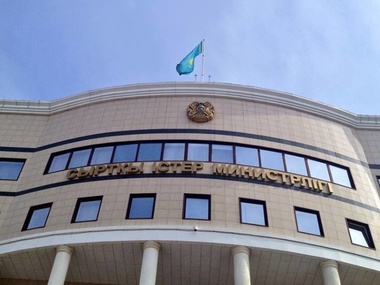
The contrast between the European Union and Kazakhstan is particularly striking. While European judicial systems generally apply stronger human rights safeguards, Kazakhstan remains deeply integrated into the post-Soviet legal and security framework. Judicial cooperation with Russia is extensive, security services maintain close working relationships and Asylum protections are comparatively weaker. As a result, Russian requests can rapidly lead to detention before effective international protection mechanisms become available.

The detention of Chechen refugee Mansur Movlaev demonstrates these vulnerabilities. According to information provided by his legal representatives and international human rights organisations, Movlaev was arrested in Almaty following a Russian extradition request and remained in custody while extradition proceedings advanced. His transfer was ultimately suspended only after international intervention, including emergency measures before United Nations human rights mechanisms. His case illustrates how international protection often arrives only after a refugee has already entered the extradition process.


Zelimkhan Khangoshvili, murdered in Berlin in 2019

When Courts Say No

Perhaps the most revealing aspect of Russia’s strategy is what happens when extradition fails. For many authoritarian governments, an unsuccessful extradition marks the end of the matter. For Russia—and particularly for Ramzan Kadyrov’s security apparatus—it frequently marks the beginning of another phase. Chechen dissidents living abroad have repeatedly become targets of surveillance, intimidation, attacks, or assassination attempts.

The murder of Zelimkhan Khangoshvili in Berlin in 2019 remains the clearest example. German judges concluded that the assassination had been organised by Russian state authorities.

Tumso Abdurakhmanov, one of the best-known critics of Ramzan Kadyrov, survived an attempted murder in Sweden after facing legal pressure and deportation proceedings.

German courts have also convicted individuals involved in a conspiracy to assassinate another prominent Kadyrov opponent, Mokhmad Abdurakhmanov.

These cases suggest that failed extradition does not necessarily end the campaign against a political opponent. Instead, the methods simply change.


Families Become Hostages

Pressure is rarely limited to the exile alone. Human rights organisations have repeatedly documented intimidation directed against relatives who remain inside Chechnya. Family members may be questioned by security services, threatened, dismissed from employment, publicly humiliated, or forced to denounce their relatives abroad. This strategy transforms exile into a continuing form of psychological pressure. Even when dissidents themselves remain physically safe in Europe, they know that those they left behind may become targets.


Beyond Extradition: Transnational Repression

Taken individually, extradition requests, deportation proceedings, surveillance, assassination attempts, and family intimidation may appear unrelated. Viewed together, however, they reveal a coherent strategy. Researchers increasingly describe this phenomenon as transnational repression—the effort by authoritarian governments to silence political opponents beyond their own borders. Russia’s campaign against the Chechen diaspora represents one of the clearest examples of this practice.

Extradition requests serve not only to recover individuals but also to identify opponents, disrupt diaspora networks, impose financial and psychological costs, and demonstrate the state’s global reach. Even unsuccessful extradition requests can achieve these objectives. A refugee who spends months in detention, pays substantial legal expenses, loses employment, or fears for relatives back home has already experienced part of the intended punishment.


Conclusion

The question is no longer whether Chechen dissidents face risks inside Russia. International courts, human rights organisations, and independent investigations have documented those dangers for years. The more urgent question is whether democratic states fully recognise the broader strategy behind Russian extradition requests.

Each case should not be viewed as an isolated criminal file. Rather, it should be understood within a wider campaign of transnational repression designed to extend authoritarian control beyond national borders. Protecting refugees therefore requires more than refusing unlawful extraditions. It also requires recognising the political logic that lies behind them.

For many Chechen exiles, the greatest threat is not simply being returned to Russia. It is living with the knowledge that, wherever they go, Russia may already be waiting.

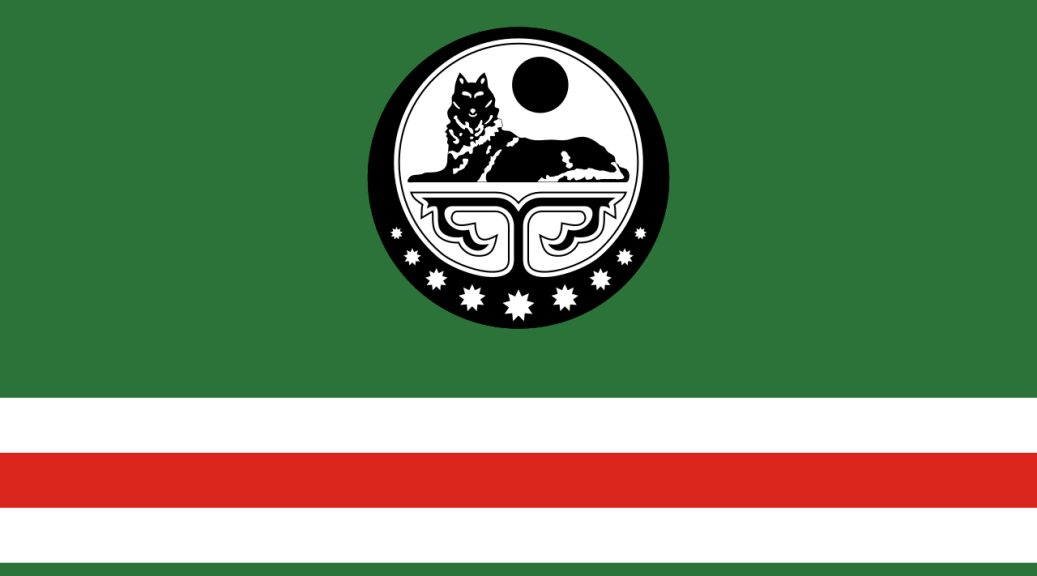
Russia Declares the Chechen Republic of Ichkeria a “Terrorist Organization”

12 March 2026 marks another symbolic escalation in Moscow’s long war against the legacy of Chechen independence.

A court in the Chechen Republic, acting within the legal framework of the Russian Federation, officially designated the Chechen Republic of Ichkeria (ChRI) as a terrorist organization, banning all of its activities on Russian territory.

The decision was not directed against an armed group, a military formation or a specific underground movement. Instead, it targeted the very legal and political continuity of the Chechen state proclaimed in 1991 and represented today by its government-in-exile.

For the first time, the Russian state formally placed the entire concept of the Chechen Republic of Ichkeria within the same legal category reserved for terrorist organizations.

A Political Decision Disguised as a Judicial One

The designation should be understood primarily as a political act.

For more than two decades, Russian authorities have described Chechen separatism through the language of “counter-terrorism”. Individual commanders, armed groups and underground networks have repeatedly been labeled terrorist organizations by Russian courts.

The March 2026 ruling goes significantly further.

Instead of targeting specific individuals or military structures, it criminalizes the historical and political entity of the Chechen Republic of Ichkeria itself. In practice, the ruling attempts to erase any distinction between the legitimate institutions of the Chechen state and the actions of particular militant groups that operated during the wars.

This is a fundamental shift.

For years, Moscow argued that it had defeated separatism. Now it is effectively acknowledging that the idea of Ichkeria still exists and still possesses enough political relevance to require a formal ban.

Why Now?

The timing is unlikely to be accidental.

Since the beginning of Russia’s full-scale invasion of Ukraine in 2022, the question of Ichkeria has re-emerged on the international stage in ways that seemed unimaginable only a few years earlier.

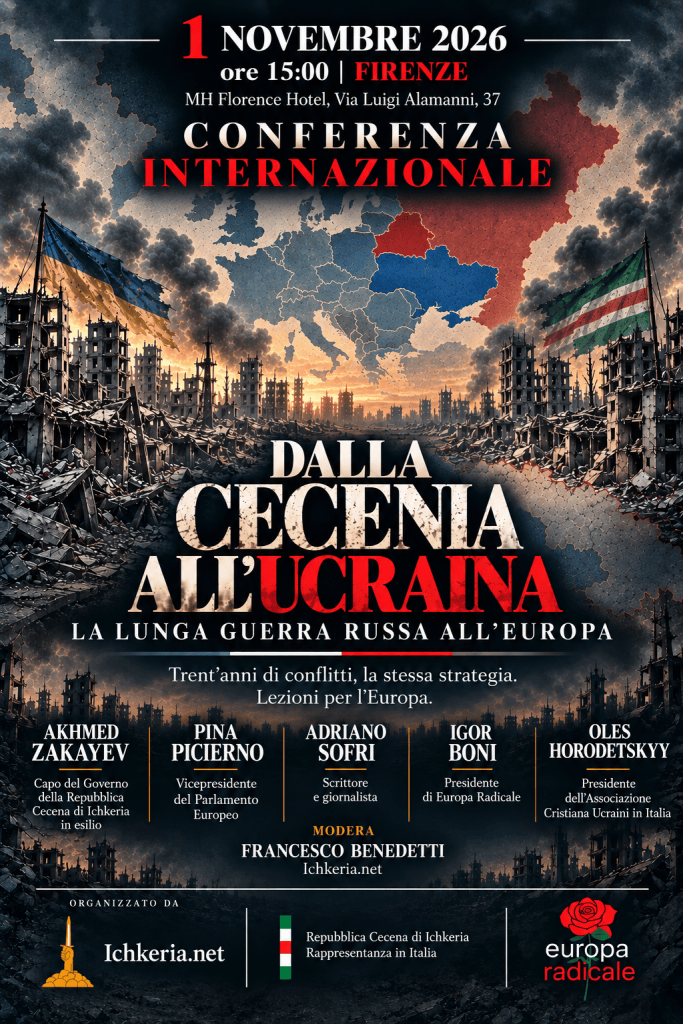
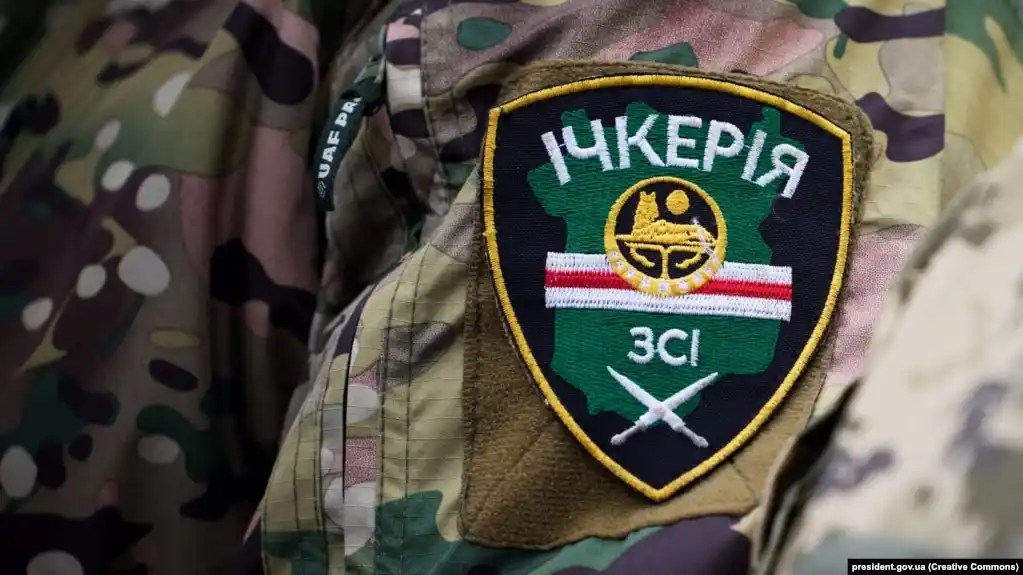
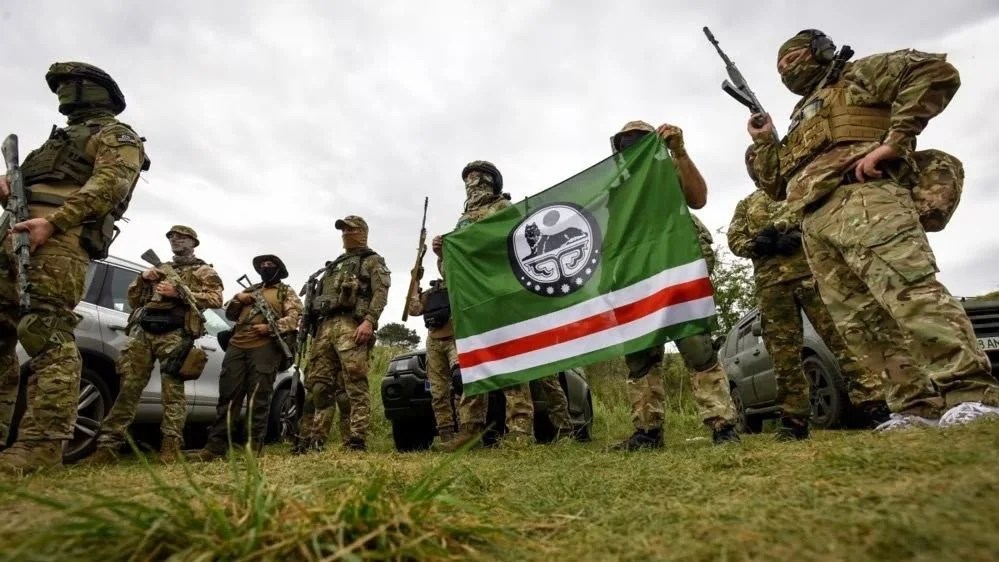
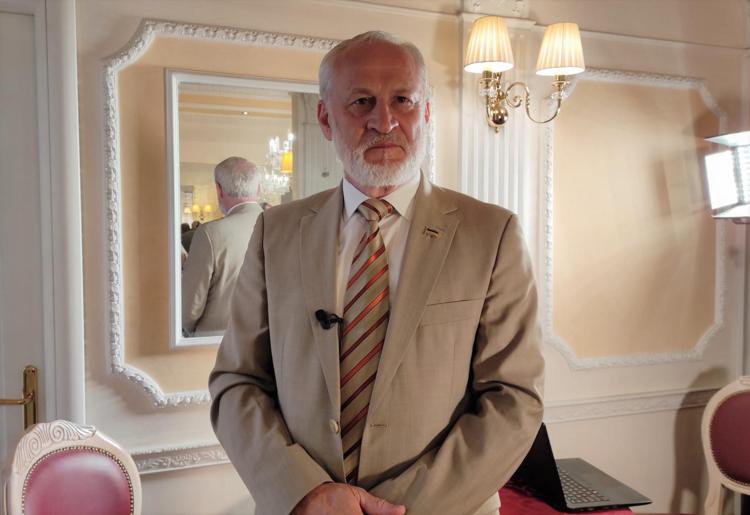
The Ukrainian parliament officially recognized the Chechen Republic of Ichkeria as a territory temporarily occupied by Russia in October 2022. Numerous Chechen volunteer formations fighting on Ukraine’s side have openly declared themselves heirs to the armed forces of the Chechen Republic of Ichkeria. The government-in-exile, led by Akhmed Zakayev, has increased its diplomatic activity and visibility across Europe and Ukraine.

From Moscow’s perspective, these developments transformed Ichkeria from a historical issue into a contemporary geopolitical one.

The terrorist designation therefore appears less connected to events inside Chechnya than to the international rehabilitation of the Ichkerian cause.

Legal Consequences

The practical consequences of the ruling may be significant.

Under Russian legislation, participation in, support for, financing of, cooperation with, or public advocacy on behalf of a terrorist organization can lead to criminal prosecution.

The designation potentially provides Russian authorities with a new legal instrument against:

  • Supporters of Ichkerian independence inside Russia;
  • Members of the Chechen diaspora who maintain ties with the government-in-exile;
  • Journalists and researchers working on Ichkerian institutions;
  • Activists promoting recognition of the Chechen Republic of Ichkeria;
  • Individuals publicly displaying Ichkerian state symbols.

The ruling also creates additional grounds for extradition requests and political pressure against exiled representatives abroad.

Whether foreign governments will recognize such requests is another matter entirely.

The Problem of Historical Continuity

Perhaps the most revealing aspect of the decision is what it says about Russia’s continuing struggle with the memory of the Chechen wars.

The designation seeks to establish a simple narrative: if Ichkeria is a terrorist organization, then its institutions, leaders, symbols and historical claims become illegitimate by definition.

Yet history remains more complicated.

The Chechen Republic of Ichkeria possessed a constitution, elected institutions, a parliament, a presidency and internationally observed elections. Its existence cannot be reduced to the actions of particular military commanders or radical factions that emerged during later phases of the conflict.

The attempt to classify an entire state project as terrorism raises a broader question: can a political entity that once exercised de facto sovereignty be legally transformed into a terrorist organization decades after its destruction?

The Russian authorities answer yes.

Many historians, legal scholars and supporters of Chechen self-determination would answer otherwise.

International Implications

The ruling is unlikely to change the position of those states, organizations and political figures that continue to engage with representatives of the Ichkerian government-in-exile.

Indeed, recent Russian diplomatic protests over contacts between European politicians and Ichkerian representatives suggest that Moscow remains highly sensitive to any form of international recognition of the Chechen independence movement.

Rather than ending discussion about Ichkeria, the designation may produce the opposite effect.

By formally declaring the Chechen Republic of Ichkeria a terrorist organization, the Russian state has once again brought international attention to a political project that many assumed had disappeared with the end of the Second Chechen War.

Conclusion

The March 2026 ruling is about more than law.

It is an attempt to define the historical meaning of the Chechen struggle for independence and to determine who has the authority to speak in its name.

Moscow presents the decision as the final legal verdict on Ichkeria.

Its supporters will likely interpret it differently: not as proof of Ichkeria’s irrelevance, but as evidence that the idea of Chechen independence continues to possess enough political weight to worry the Russian state even after a quarter of a century.

For that reason alone, the decision deserves close attention.

The Crimean Tatars and the Long Shadow of Exile

Remembering the Sürgünlik, 82 Years Later

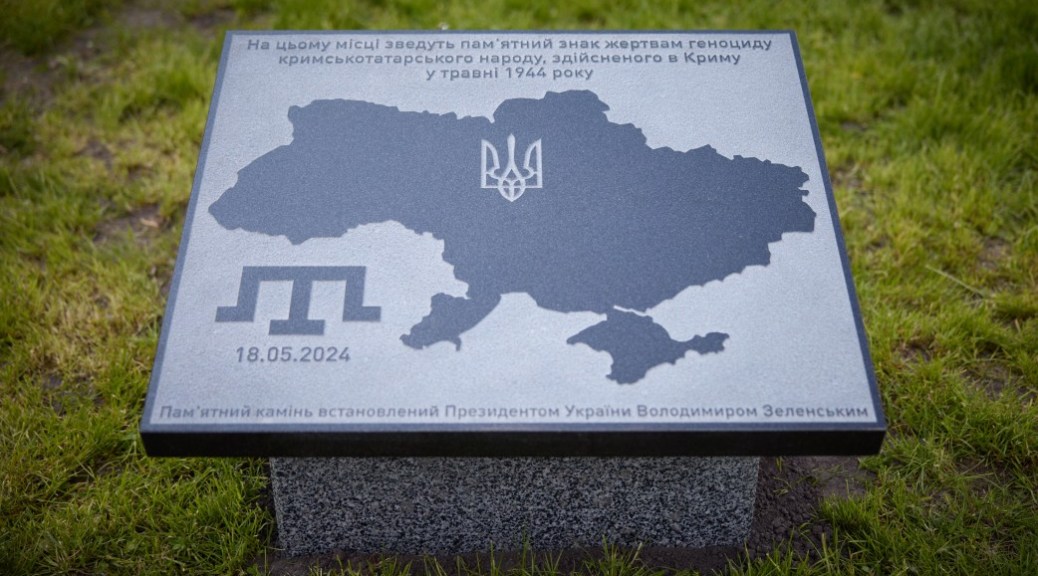
On May 18, Crimean Tatars around the world commemorated the eighty-second anniversary of one of the darkest chapters in their history: the mass deportation of the entire Crimean Tatar people by the Soviet regime in 1944.

For many readers, the story may sound familiar. The Chechens, Ingush, Karachays, Balkars, Kalmyks and several other peoples of the Soviet Union suffered similar fates under Joseph Stalin. Entire nations were accused of collective collaboration with Nazi Germany and punished without trial, without distinction, and without mercy.

Today we remember the Crimean Tatars.

A Nation Condemned

In the spring of 1944, as Soviet forces retook Crimea from German occupation, Stalin’s government accused the Crimean Tatars of collaborating with the enemy. While some individuals had indeed served in German-controlled formations—as happened among virtually every population under occupation—the Soviet leadership chose to punish an entire people for the actions of a minority.

On May 11, 1944, Stalin signed State Defense Committee Resolution No. 5859. The decree ordered the complete removal of the Crimean Tatars from their homeland.

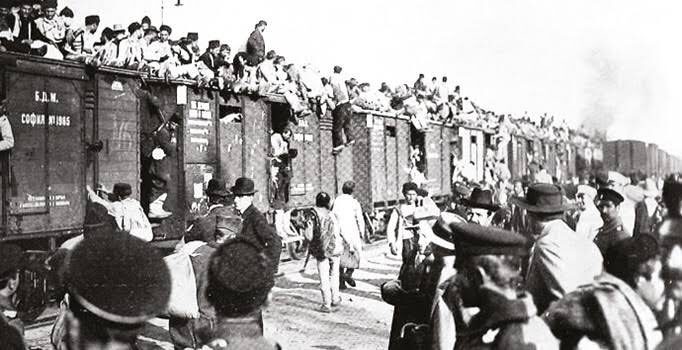
At dawn on May 18, thousands of NKVD troops descended upon towns and villages across Crimea. Families were awakened, given only minutes to gather their belongings, and forced onto trucks headed for railway stations.

Within three days, the operation was complete.

More than 190,000 Crimean Tatars had been deported.

The Journey Into Exile

The deportees were packed into overcrowded cattle wagons and transported thousands of kilometers eastward, primarily to Uzbekistan and other regions of Central Asia.

The journey lasted days or even weeks. Food was scarce, water was limited, and sanitary conditions were almost nonexistent. Many elderly people and children died before reaching their destinations.

Those who survived found themselves living under the harsh regime of “special settlements,” effectively a form of internal exile. Their movements were restricted, their communities were monitored by Soviet security services, and they were subjected to forced labor and severe discrimination.

Historians continue to debate the exact number of deaths caused by the deportation and its aftermath. Soviet records indicate that at least 27,000 Crimean Tatars died by the end of 1945. Other estimates place the death toll considerably higher.

Whatever the precise figure, the human cost was catastrophic.

Memorial of the Deportation of Crimean Tatars, in Sundak

Erasing Crimea’s Indigenous People

The deportation was not merely the removal of a population. It was an attempt to erase a nation from its homeland.

Following the deportation, the Crimean Autonomous Soviet Socialist Republic was abolished. Hundreds of Crimean Tatar place names were changed. Mosques, cemeteries, and cultural sites were neglected, destroyed, or repurposed.

Even the very term “Crimean Tatar” largely disappeared from official Soviet language.

The goal was clear: to transform Crimea into a land without Crimean Tatars.

Decades of Resistance

Unlike many deported populations, the Crimean Tatars were not allowed to return home after Stalin’s death.

Although restrictions on their exile were formally lifted in 1956, the Soviet authorities continued to deny them the right to return collectively to Crimea.

For decades, Crimean Tatar activists organized one of the most remarkable civil rights movements in Soviet history. Through petitions, protests, and international advocacy, they kept alive the memory of their homeland and demanded justice.

Only during the final years of the Soviet Union did large-scale return become possible.

Beginning in the late 1980s, hundreds of thousands of Crimean Tatars slowly made their way back to Crimea.

Memory and the Present

The deportation remains central to Crimean Tatar identity.

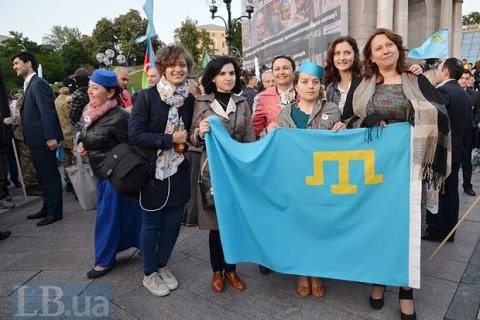
Every year on May 18, known among Crimean Tatars as the Day of Remembrance of the Victims of the Sürgünlik (“Exile”), communities gather to honor those who died and those who endured decades of displacement.

For many Crimean Tatars, the memory of 1944 is not simply a historical tragedy. It is a living experience passed from grandparents to children and grandchildren.

Following Russia’s annexation of Crimea in 2014, many Crimean Tatars have expressed fears that their community once again faces political pressure, cultural marginalization, and restrictions on its representative institutions.

As a result, the events of May 1944 continue to resonate far beyond the history books.

Why It Matters

For Chechens, the story of the Crimean Tatars is more than an episode of Soviet history. It is part of a shared experience.

The deportations of 1944 were built upon the same principle: collective guilt. Entire peoples were condemned not for what they had done, but for who they were.

Remembering the Crimean Tatars means remembering all the nations that suffered under this policy—and recognizing the resilience of those who survived.

Eighty-two years later, the voices of the exiled have not been silenced.

And neither has their memory.

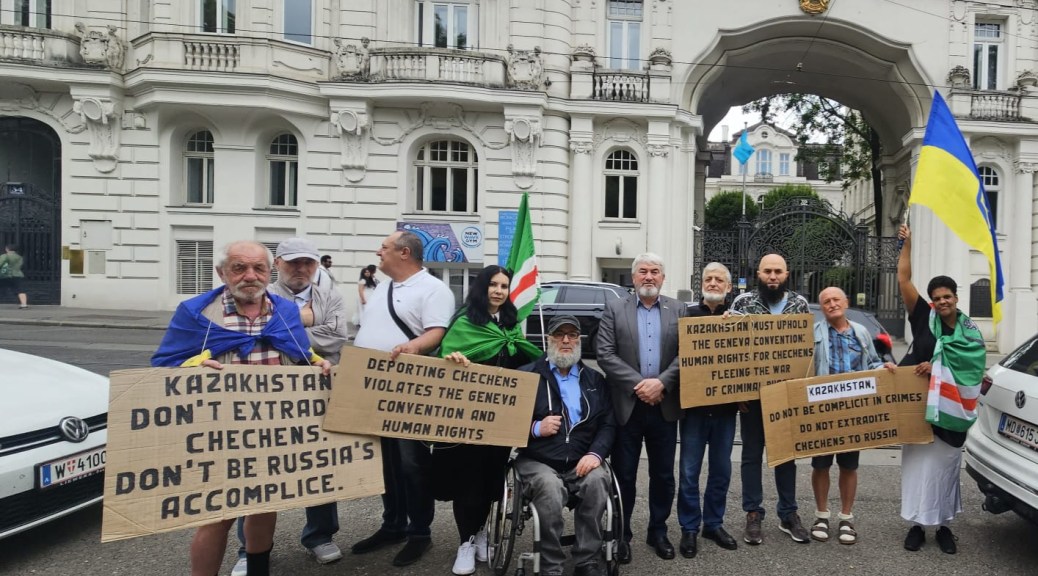
Kazakhstan Must Not Send Mansur Movlaev Back to Chechnya

Chechen activist remains at risk despite UN intervention

A new human rights case is drawing international attention to the ongoing persecution of critics of the Chechen authorities.

Mansur Movlaev, a Russian citizen of Chechen origin, has been held in extradition detention in Kazakhstan since May 2025 after being arrested in Almaty at the request of the Russian Federation. Although Kazakh authorities initially acknowledged his application for asylum and later suspended his extradition following intervention by the United Nations Human Rights Committee, Movlaev remains behind bars and continues to face the possibility of being transferred to Russia.

For human rights defenders, the stakes could not be higher.

A history of persecution

According to his lawyers and multiple human rights organizations, Movlaev has long been targeted because of his criticism of the Chechen authorities.

His supporters argue that a previous criminal conviction on drug-related charges was politically motivated. Following his early release in 2022, Movlaev reportedly disappeared into the hands of Chechen security forces and was detained in an unofficial facility where he was subjected to torture. He later managed to escape and eventually fled through Kyrgyzstan before reaching Kazakhstan.

These allegations fit a pattern that has been documented for years by international organizations, including Human Rights Watch, Amnesty International, the Council of Europe and the European Court of Human Rights.

Arrest in Kazakhstan

On 13 May 2025, Kazakh authorities arrested Movlaev in Almaty based on an international request originating from Chechnya.

Initially, Kazakhstan’s Prosecutor General’s Office stated that the Russian request concerned extortion charges. Later reports suggested that Russian authorities were also linking Movlaev to alleged extremist activities.

The exact content of the Russian case remains unclear because neither the full indictment nor the complete extradition file has been made public.

On 21 May 2025, Movlaev formally applied for asylum in Kazakhstan and received official asylum-seeker documentation. Under Kazakh law, this should have protected him from removal while his claim was under consideration.

Nevertheless, at the end of January 2026, Kazakhstan’s Prosecutor General approved his extradition to Russia after his refugee application had been rejected.

United Nations intervention

The case took a dramatic turn on 23 February 2026.

After receiving an individual complaint from Movlaev’s legal team, the United Nations Human Rights Committee requested interim measures and instructed Kazakhstan not to extradite him until the case could be examined.

The following day, Kazakhstan’s Supreme Court suspended the extradition order.

While this prevented his immediate transfer, it did not secure his release. In May 2026, Kazakh courts extended his extradition detention until at least July.

Reports of family reprisals

Human rights advocates are particularly concerned by reports concerning Movlaev’s relatives in Chechnya.

Several media outlets and activists have alleged that members of his family have been abducted, tortured, or forcibly disappeared in recent years. Although some of these claims cannot yet be independently verified, they are consistent with a broader pattern of collective punishment repeatedly documented in Chechnya.

International organizations have long reported cases in which family members of government critics have faced intimidation, detention, destruction of property, and physical violence.

Why extradition would be dangerous

The central issue is not simply whether criminal charges exist against Movlaev.

International law prohibits extradition whenever there are substantial grounds for believing that a person faces torture, enforced disappearance, political persecution, or other serious human rights violations after return.

Kazakhstan is a party to the 1951 Refugee Convention, the UN Convention Against Torture, and the International Covenant on Civil and Political Rights. Under these obligations, authorities must not return an individual to a place where there is a real risk of torture or persecution.

The documented record of abuses in Chechnya—including torture, secret detention facilities, fabricated criminal cases, collective punishment, and enforced disappearances—makes such concerns impossible to dismiss.

A test for Kazakhstan

The case of Mansur Movlaev has become more than a single extradition dispute.

It is now a test of Kazakhstan’s commitment to its international obligations and to the principle of non-refoulement—the cornerstone of international refugee and human rights law.

As long as credible evidence suggests that Movlaev could face torture, disappearance, or death if returned to Chechnya, any forced transfer would raise serious legal and moral questions.

The international community should continue monitoring the case closely.

For Mansur Movlaev, the difference between protection and extradition may ultimately be a matter of life and death.

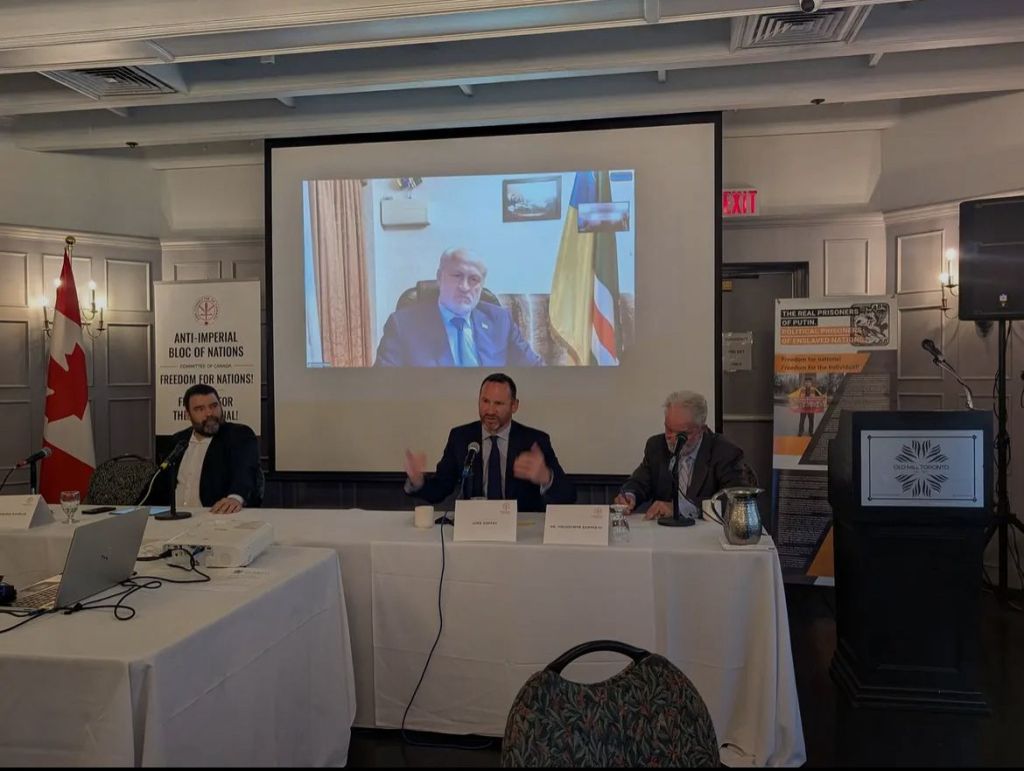
“Ukraine as a Frontier of Western Civilization.” A report by Prime Minister of the Chechen Republic of Ichkeria Akhmed Zakayev at the ABN Conference in Toronto

Ladies and gentlemen!

Thank you for the opportunity to speak on this important and highly relevant topic.

When we speak about Ukraine today, we often call it the front line of European security. This is true. Ukraine is defending not only its cities, its borders, and its people. It is also defending the security architecture of Europe. However, I would like to offer a broader definition: today Ukraine is not only the front line of European security — Ukraine has become the frontier of Western civilization itself.

By “Western civilization,” I mean a system of principles: national sovereignty, the rule of law, freedom of speech, human dignity, and the right of nations to decide their own future. These are exactly the principles that Russia is trying to destroy. The war against Ukraine is not simply a territorial conflict. It is not only a dispute over borders, and not merely a war between two states. It is a clash between two political ideas. On one side is the belief that every nation, regardless of its size, has the right to exist as a sovereign political community. On the other side is the imperial belief that great powers have the right to dominate their neighbors, erase their identity, choose their alliances, and decide their historical destiny. This is why Ukraine matters far beyond Ukraine itself.

Russia invaded Ukraine not because Ukraine posed a military threat to Moscow. Ukraine threatened the Russian imperial model simply by existing as an independent, democratic, and Europe-oriented state. For the Kremlin, a democratic Ukraine is dangerous not because it is hostile, but because it is an example. It shows that the post-Soviet space is not doomed to authoritarianism. It shows that societies once ruled from Moscow can choose a different path. This is the real threat that Ukraine represents to the Russian imperial system. That is why Moscow’s war is directed not only against Ukrainian territory — it is directed against Ukrainian statehood and political identity.

Ukraine was often described as a space “between” Russia and Europe. But this very language was part of the problem. Ukraine is not a geopolitical corridor, not a gray zone, and not a bargaining chip in someone else’s security agreement. Ukraine is a nation. Ukraine is a state. And it is precisely for this choice that Ukraine is paying the highest price today.

The Russian imperial model is based on a special understanding of power. In this model, power is not limited by law, society is subordinate to the state, and neighboring peoples are seen not as equal partners but as material for geopolitical expansion. Such a system cannot tolerate democratic institutions near its borders, especially when these institutions exist in a country that the empire still imagines as part of itself.

Wherever Russian power arrives, free elections disappear. Independent courts disappear. Free media disappear. Local self-government disappears. Civil society disappears. Academic freedom disappears. Language and culture become subject to imperial narratives. Therefore, by defending itself, Ukraine is defending far more than territory. It is defending the principle that institutions are more important than force, that law is more important than violence, and that the citizen is more important than empire.

The question today is not only whether Ukraine can survive. The question is whether democratic states are capable of defending the principles on which their own legitimacy is built. If borders can be changed by force, if nuclear blackmail can paralyze political will, if a large authoritarian state can destroy a neighboring democracy, then this crisis is not only Ukrainian — it is a crisis of the entire international order.

For decades, the West spoke about democracy, sovereignty, human rights, and the rule of law. And here I would like to return to the events of the 1990s. At that time, the Chechens accepted all these declarations as sincere and, in accordance with the basic principles and norms of international law, restored their statehood. However, when Russia carried out military aggression against the young independent state, Western countries in practice sided with the aggressor.

The First Russian-Chechen War was compared by international military experts to the Second World War because of its destruction and brutality. After a short break, the Second Russian-Chechen War began, and its consequences continue to this day.

As a result of these two wars, according to official data from the occupation administration, more than 300,000 people in Chechnya were killed, including around 42,000 children between the ages of one and twelve. Today, the entire Chechen people live under a brutal occupation regime led by a Chechen quisling.

Chechens, like Ukrainians, ask a very simple question: were all those declarations by Western politicians about the inviolability of borders and the right of nations to self-determination real values, or were they merely political slogans of the Cold War period?

Today, Ukraine is forcing the democratic world to answer this question not with speeches, but with policy. This is why support for Ukraine should not be seen as charity. It is a form of strategic self-defense. Canada, the United States, the European Union, and other democratic states support Ukraine not only because Ukraine became the victim of aggression. They support Ukraine because the future security of the democratic world is being decided there.

The cost of supporting Ukraine is high. But the cost of Ukraine’s defeat would be far higher.

The defeat of Ukraine would not bring stability. It would create a more dangerous Europe, a weakened NATO, a discredited European Union, stronger authoritarian regimes, and a clear message to every revisionist power in the world: aggression works. By contrast, a successful Ukraine would send the opposite message: imperial war can be resisted, democratic societies can survive, and a post-imperial future is possible.

This point is especially important in the broader context of our discussion about the regional and global consequences of Russian imperial decline.

The weakening of Russia does not automatically mean the arrival of peace. We must not be naive here. Empires in decline often become even more aggressive. They try to compensate for internal decay with external violence. They turn demographic crisis, economic stagnation, and political fear into militarized nationalism. Therefore, Russia’s internal instability may transform into dangerous external behavior.

We already see this logic: the militarization of society, the suppression of dissent, forced mobilization, imperial propaganda, nuclear threats, and the use of instability as a weapon. A state that cannot offer its citizens a positive future instead offers them imperial revenge. An empire in decline does not become harmless — on the contrary, it can become extremely dangerous, especially when it still possesses military power, nuclear weapons, intelligence networks, and propaganda tools.

Therefore, the West needs a strategy that is both firm and wise.

Democratic states must stop viewing Russian imperialism as a temporary deviation or simply as Putin’s personal project. Of course, leadership matters. But the problem is much deeper than one individual. It is historical, ideological, and imperial in nature.

The West must abandon the illusion that stability can be bought at the cost of the sovereignty of nations located next to Russia. This logic has failed many times. Every concession made at the expense of Chechnya, Ukraine, Georgia, Moldova, and other vulnerable states did not satisfy imperial ambition — it only encouraged it.

Canada, the United States, and the European Union must see Ukraine not as a peripheral issue, but as a central pillar of democratic security. Military aid, economic support, sanctions, reconstruction planning, and legal accountability are all strategic responses to the imperial challenge.

Democratic states must listen more carefully to peoples who have direct historical experience with Russian imperial rule: Ukrainians, Poles, Georgians, Crimean Tatars, Chechens, and others. These societies often understood the nature of the threat earlier than many Western capitals. Their historical memory is not emotional exaggeration — it is a form of political knowledge.

This also raises the question of Russian opposition figures living in exile. Dialogue with them may be useful. It is important to speak with people who oppose the regime. However, policymakers should be careful not to confuse opposition to Putin with a full rejection of imperial thinking. Not every anti-Putin voice is necessarily post-imperial. Some may oppose the current regime while still keeping colonial views about Ukraine, the Caucasus, Central Asia, and other peoples once dominated by Moscow.

Therefore, the main question should not only be: “Are you against Putin?” The deeper question should be: “Do you recognize the full sovereignty, political subjecthood, and historical dignity of the peoples once ruled by Russia?” Without such recognition, there can be no genuine post-imperial future.

Thus, Ukraine’s struggle is also a struggle for a new political language. It forces us to move beyond old categories such as “spheres of influence,” “great power compromise,” and “buffer zones.” These categories are not neutral. Very often they reproduce imperial thinking under the language of political realism. True realism today requires recognizing that the imperial idea itself creates war.

Security in Europe will not be restored by giving Russia veto power over the freedom of its neighbors. It will only be restored when the imperial principle itself is defeated — politically, militarily, intellectually, and morally.

Ukraine stands at the center of this process. Ukraine has shown that democratic identity is not weakness. It has shown that civic patriotism can be stronger than imperial nationalism. It has shown that institutions, even under attack, can mobilize society. It has shown that freedom is not an abstract value but a living political force.

In this sense, Ukraine has reminded the West of something the West itself had begun to forget: democracy is not only procedure. It is not only elections, bureaucracy, or legal norms. Democracy is also a civilization of responsibility. It requires citizens willing to defend institutions. It requires states willing to defend principles. It requires alliances capable of understanding that peace without justice is only a pause before the next aggression.

That is why the Ukrainian lesson is not only military. It is civilizational.

Ukraine teaches us that freedom survives only when it is defended. Sovereignty survives only when it is respected. Institutions survive only when people are willing to protect them. And democratic civilization survives only when it understands the nature of those who seek to destroy it.

Allow me to end with the following thought.

Ukraine defends the West not because it is a passive outpost of Western power. Ukraine defends the West because Ukrainians chose the political principles that define the West at its best. They defend the idea that free nations have the right to exist. They defend the idea that democracy is not a privilege reserved for old and wealthy states. They defend the idea that empire has no moral right to decide the fate of other peoples.

That is why Ukraine is not only the front line of European security. Ukraine is the frontier between law and force, between citizenship and empire, between democratic institutions and imperial domination.

And if the democratic world clearly understands this, support for Ukraine will no longer be seen as a burden. It will be understood for what it truly is: the defense of the political meaning of Western civilization itself.

Thank you for your attention.

Fugitive, Monk, Warrior Prophet: The Life of Giovanni Battista Boetti

There are men who pass through history leaving behind portraits, treatises, and monuments. And then there are men who leave behind only questions. Giovanni Battista Boetti belonged to the latter category.

When he was born on June 2, 1743, in the small Piedmontese village of Piazzano, no one could have imagined that the child would become the protagonist of one of the most enigmatic stories of eighteenth-century Europe. The son of a declining noble family, educated to become a physician against his own wishes, Boetti would go on to be a fugitive, a soldier, a seducer, a Dominican friar, a missionary in the East, and a physician to pashas and princes. He crossed half the known world in pursuit of something that perhaps even he could not fully define.

For more than twenty years he travelled through Italy, the Balkans, the Ottoman Empire, Syria, Mesopotamia, Persia, and the Caucasus. He appeared in the most unlikely places and vanished from them just as quickly. He was arrested, expelled, welcomed as a saint, denounced as an impostor, hunted as a spy, and protected by powerful men. Each time his story seems to reach its conclusion, it begins again somewhere else.

Then, suddenly, something happens.

The sources tell us that after years spent between Mosul, Constantinople, and Persia, the Piedmontese Dominican almost completely disappeared from the official record. When he re-emerged, he was no longer simply Giovanni Battista Boetti.

He was Mansur — The Victorious.

According to an extraordinary handwritten report preserved for more than a century in the archives of the Kingdom of Sardinia, the former friar preached a new faith, gathered thousands of followers, and led an army through Kurdistan, Georgia, and the mountains of the Caucasus. His forces are said to have defeated armies, besieged cities, and conquered entire regions. His sermons reportedly attracted Muslims, Christians, and Jews alike. His ambitions challenged princes, pashas, and sultans.

It sounds like the plot of an adventure novel, yet Giovanni Battista Boetti was a real historical figure. His signature appears on authentic documents. His letters have survived the passage of time. His movements can be reconstructed through archives scattered across Italy and the Middle East. Some episodes of his life are confirmed beyond reasonable doubt. Others belong to that uncertain territory where history and legend become indistinguishable.

It is precisely there that the mystery begins.

At the end of the eighteenth century, while resistance against the expansion of the Russian Empire was gathering strength in the North Caucasus, another man emerged who would become a legend in his own right: Sheikh Mansur Ushurma, the first great leader of the Caucasian struggle against Russia.

As the years passed, the stories of these two men began to converge—first as rumor, then as hypothesis, and finally as a genuine historical theory.

Could the warrior-prophet of the Caucasus and the Piedmontese friar have been the same person?

Could one of the most celebrated heroes of Chechen history have been born among the hills of Monferrato?

For more than two centuries, historians, writers, and researchers have sought an answer. Some are convinced that they were indeed one and the same; others regard the theory as nothing more than an extraordinary fabrication.

In this series, we will follow the trail left by Giovanni Battista Boetti, from the countryside of Piedmont to the caravans of Syria, from Dominican monasteries to the courts of pashas, from the shores of the Bosphorus to the mountains of the Caucasus. For whether the legend of Mansur is true or false, one thing is certain: the life of Giovanni Battista Boetti was already so extraordinary that it seems almost impossible.

Read the Next Chapters

Fuggiasco, monaco, profeta guerriero: la vita di Giovanni Battista Boetti

Esistono uomini che attraversano la storia lasciando dietro di sé ritratti, trattati e monumenti. E poi esistono uomini che lasciano soltanto domande. Giovanni Battista Boetti apparteneva alla seconda categoria.

Quando nacque, il 2 giugno 1743, nel piccolo villaggio piemontese di Piazzano, nessuno avrebbe potuto immaginare che quel bambino sarebbe diventato il protagonista di una delle vicende più enigmatiche del Settecento europeo. Figlio di una famiglia nobile in declino, educato per diventare medico contro la propria volontà, fuggiasco, soldato, seduttore, monaco domenicano, missionario in Oriente, medico di pascià e principi, Boetti attraversò mezzo mondo inseguendo qualcosa che forse neppure lui sapeva definire.

Per oltre vent’anni viaggiò tra l’Italia, i Balcani, l’Impero Ottomano, la Siria, la Mesopotamia, la Persia e il Caucaso. Comparve nei luoghi più improbabili e ne scomparve con la stessa rapidità. Venne arrestato, espulso, accolto come un santo, accusato come un impostore, ricercato come una spia e protetto da uomini potenti. Ogni volta che la sua storia sembra terminare, ricomincia altrove.

Poi, improvvisamente, accade qualcosa.

Le fonti raccontano che dopo anni trascorsi tra Mosul, Costantinopoli e la Persia, il domenicano piemontese svanì quasi completamente dalle cronache ufficiali. Quando riemerse, non era più soltanto Giovanni Battista Boetti.

Era Mansur, Il Vittorioso.

Secondo una straordinaria relazione manoscritta conservata per oltre un secolo negli archivi del Regno di Sardegna, l’ex monaco avrebbe predicato una nuova fede, raccolto migliaia di seguaci e guidato un esercito attraverso il Kurdistan, la Georgia e le montagne del Caucaso. Le sue armate avrebbero sconfitto eserciti, assediato città e conquistato intere regioni. Le sue prediche avrebbero attirato musulmani, cristiani ed ebrei. Le sue ambizioni avrebbero sfidato principi, pascià e sultani.

Sembra la trama di un romanzo d’avventura, eppure Giovanni Battista Boetti è realmente esistito. La sua firma compare in documenti autentici. Le sue lettere sono sopravvissute al tempo. I suoi spostamenti possono essere ricostruiti attraverso archivi sparsi tra Italia e Medio Oriente. Alcuni episodi della sua vita sono confermati oltre ogni ragionevole dubbio. Altri appartengono al territorio incerto in cui storia e leggenda si confondono.

È proprio lì che inizia il mistero.

Alla fine del XVIII secolo, mentre nel Caucaso settentrionale infuriava la resistenza contro l’espansione dell’Impero Russo, comparve un altro uomo destinato a entrare nella leggenda: Sheikh Mansur Ushurma, il primo grande leader della lotta caucasica contro la Russia.

Con il passare degli anni, le storie dei due uomini iniziarono ad avvicinarsi, prima come semplice diceria, poi come ipotesi, infine come una vera e propria teoria storica.

Possibile che il profeta guerriero del Caucaso e il monaco piemontese fossero la stessa persona?

Possibile che uno dei più celebri eroi della storia cecena fosse nato tra le colline del Monferrato?

Da oltre due secoli storici, scrittori e ricercatori cercano una risposta: alcuni sono convinti che si tratti della stessa persona, altri ritengono che sia soltanto una straordinaria mistificazione.

Seguiremo le tracce lasciate da Giovanni Battista Boetti, dalle campagne piemontesi alle carovane della Siria, dai conventi domenicani alle corti dei pascià, dalle rive del Bosforo alle montagne del Caucaso. Perché, vera o falsa che sia la leggenda di Mansur, una cosa è certa: la vita di Giovanni Battista Boetti fu già di per sé talmente incredibile da sembrare impossibile.

Leggi i capitoli successivi

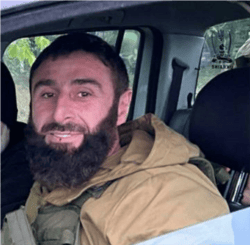
Ukrainian Intelligence Claims Infiltration of Akhmat Unit

The Main Directorate of Intelligence of the Ministry of Defence of Ukraine (GUR) has announced what it describes as a successful infiltration of a unit belonging to the Akhmat forces, one of the formations associated with Chechen leader Ramzan Kadyrov.

According to statements released by Ukrainian intelligence and reported by several media outlets, an undercover operative was able to gain access to the unit and provide information that contributed to Ukrainian military operations. Ukrainian officials have also suggested that the operation led to significant losses among Russian forces.

At present, the details of the alleged infiltration remain limited. Ukrainian authorities have not disclosed the identity of the operative, the duration of the mission, or the exact role played within the Akhmat formation. Independent verification of the operation has not been made publicly available.

If confirmed, the case would represent one of the most significant intelligence penetrations of Kadyrov-linked forces since the beginning of Russia’s full-scale invasion of Ukraine.

The Akhmat units, named after former Chechen pro – russian leader Akhmat Kadyrov, have played a visible role in Russian military operations in Ukraine. While often portrayed by Russian media as elite formations, they have also faced criticism regarding their battlefield performance and have been the subject of repeated allegations concerning internal rivalries, discipline issues, and defections.

Such factors may increase the vulnerability of military formations to intelligence penetration, although no independent evidence has yet emerged to confirm the specific claims made by the GUR.

The announcement comes amid continued fighting along several sectors of the front and reflects the growing importance of intelligence operations in the ongoing conflict. As with many wartime claims, a full assessment of the operation may only become possible after additional evidence becomes available.

For now, the reported infiltration should be regarded as a claim made by Ukrainian military intelligence, albeit one that appears plausible in light of the broader context of the war and previous reports of tensions within pro-Kadyrov formations.