

The Kremlin’s campaign against the Chechen diaspora did not end with the wars. It simply crossed international borders.
When people think about political repression, they often imagine arrests, prisons, or torture carried out inside an authoritarian state. Far less visible is what happens after dissidents escape.
For thousands of Chechens who fled Russia over the last two decades, exile has never meant safety. Instead, many have discovered that Moscow’s reach extends well beyond its own territory. Through extradition requests, international police cooperation, administrative deportations, surveillance, intimidation of relatives, and—in the most extreme cases—assassinations, Russia has developed a system designed to ensure that its critics remain vulnerable wherever they seek refuge.
The objective is not merely to bring individuals back to Russia. It is to convince every member of the Chechen diaspora that nowhere is truly beyond the Kremlin’s reach.
The recent case of Mansur Movlaev in Kazakhstan illustrates how this system continues to operate.

A Legal Request—or Political Persecution?
Officially, Russia rarely describes its targets as political opponents. Instead, extradition requests are almost always framed as ordinary criminal cases involving terrorism, extremism, illegal weapons possession, organized crime, fraud, or other criminal offences. This legal framing is not accidental. If a request appears to concern common crime rather than political persecution, foreign prosecutors and courts are more likely to treat it as a routine matter of judicial cooperation.
Once such a request reaches another country, local authorities may arrest the individual while extradition proceedings begin. Depending on the legal system involved, the refugee may spend weeks or months in detention before the courts determine whether the request is compatible with international human rights obligations. For the individual concerned, the punishment often begins long before any final judicial decision.

The Principle That Should Prevent Extradition
International law contains a fundamental safeguard known as the principle of non-refoulement. Article 3 of the European Convention on Human Rights and Article 3 of the United Nations Convention Against Torture prohibit states from transferring any individual to a country where they face a real risk of torture, inhuman treatment, enforced disappearance, or grossly unfair judicial proceedings. This prohibition is absolute.
Unlike many other rights, it cannot be suspended for reasons of national security or political convenience. Because of this principle, European courts have repeatedly refused to extradite Chechen refugees when credible evidence indicated that they would face persecution upon their return to Russia or, more specifically, to Chechnya. These rulings reflect decades of documented abuses, including torture, arbitrary detention, enforced disappearances, and extrajudicial killings committed by Russian and Chechen security forces.

Why Do Extradition Attempts Continue?
Despite these legal protections, Russian requests continue to appear across Europe and Central Asia. This apparent contradiction has several explanations.
First, authorities frequently evaluate Russian requests as ordinary criminal matters rather than as instruments of political persecution. Unless the political nature of the charges is clearly demonstrated, prosecutors may initially consider the request legally valid.
Second, not every case reaches the stage of a formal extradition judgment. Administrative deportation procedures, immigration measures, or public-order legislation may expose refugees to removal through alternative legal channels.
Finally, security concerns have increasingly influenced migration policy throughout Europe. Since many Russian requests invoke allegations of terrorism or extremism, authorities may initially prioritize public security over the broader political context in which these accusations arise.
The result is a legal environment in which refugees often bear the burden of proving that apparently ordinary criminal charges are, in reality, politically motivated.

Kazakhstan: The Weakest Link
The contrast between the European Union and Kazakhstan is particularly striking. While European judicial systems generally apply stronger human rights safeguards, Kazakhstan remains deeply integrated into the post-Soviet legal and security framework. Judicial cooperation with Russia is extensive, security services maintain close working relationships and Asylum protections are comparatively weaker. As a result, Russian requests can rapidly lead to detention before effective international protection mechanisms become available.
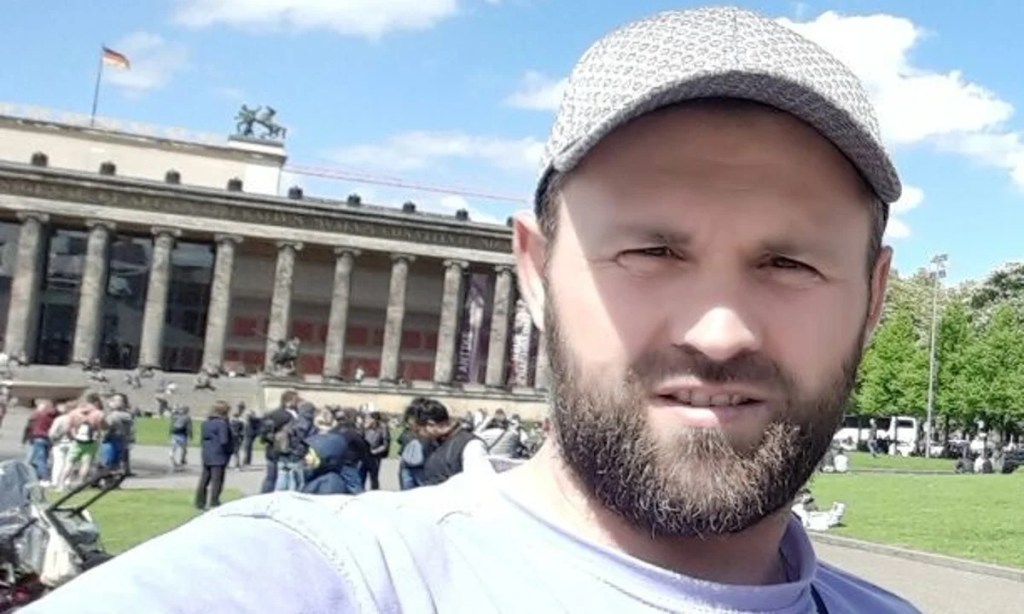
The detention of Chechen refugee Mansur Movlaev demonstrates these vulnerabilities. According to information provided by his legal representatives and international human rights organisations, Movlaev was arrested in Almaty following a Russian extradition request and remained in custody while extradition proceedings advanced. His transfer was ultimately suspended only after international intervention, including emergency measures before United Nations human rights mechanisms. His case illustrates how international protection often arrives only after a refugee has already entered the extradition process.
When Courts Say No
Perhaps the most revealing aspect of Russia’s strategy is what happens when extradition fails. For many authoritarian governments, an unsuccessful extradition marks the end of the matter. For Russia—and particularly for Ramzan Kadyrov’s security apparatus—it frequently marks the beginning of another phase. Chechen dissidents living abroad have repeatedly become targets of surveillance, intimidation, attacks, or assassination attempts.
The murder of Zelimkhan Khangoshvili in Berlin in 2019 remains the clearest example. German judges concluded that the assassination had been organised by Russian state authorities.
Tumso Abdurakhmanov, one of the best-known critics of Ramzan Kadyrov, survived an attempted murder in Sweden after facing legal pressure and deportation proceedings.
German courts have also convicted individuals involved in a conspiracy to assassinate another prominent Kadyrov opponent, Mokhmad Abdurakhmanov.
These cases suggest that failed extradition does not necessarily end the campaign against a political opponent. Instead, the methods simply change.
Families Become Hostages
Pressure is rarely limited to the exile alone. Human rights organisations have repeatedly documented intimidation directed against relatives who remain inside Chechnya. Family members may be questioned by security services, threatened, dismissed from employment, publicly humiliated, or forced to denounce their relatives abroad. This strategy transforms exile into a continuing form of psychological pressure. Even when dissidents themselves remain physically safe in Europe, they know that those they left behind may become targets.

Beyond Extradition: Transnational Repression
Taken individually, extradition requests, deportation proceedings, surveillance, assassination attempts, and family intimidation may appear unrelated. Viewed together, however, they reveal a coherent strategy. Researchers increasingly describe this phenomenon as transnational repression—the effort by authoritarian governments to silence political opponents beyond their own borders. Russia’s campaign against the Chechen diaspora represents one of the clearest examples of this practice.
Extradition requests serve not only to recover individuals but also to identify opponents, disrupt diaspora networks, impose financial and psychological costs, and demonstrate the state’s global reach. Even unsuccessful extradition requests can achieve these objectives. A refugee who spends months in detention, pays substantial legal expenses, loses employment, or fears for relatives back home has already experienced part of the intended punishment.

Conclusion
The question is no longer whether Chechen dissidents face risks inside Russia. International courts, human rights organisations, and independent investigations have documented those dangers for years. The more urgent question is whether democratic states fully recognise the broader strategy behind Russian extradition requests.
Each case should not be viewed as an isolated criminal file. Rather, it should be understood within a wider campaign of transnational repression designed to extend authoritarian control beyond national borders. Protecting refugees therefore requires more than refusing unlawful extraditions. It also requires recognising the political logic that lies behind them.
For many Chechen exiles, the greatest threat is not simply being returned to Russia. It is living with the knowledge that, wherever they go, Russia may already be waiting.

