

12 March 2026 marks another symbolic escalation in Moscow’s long war against the legacy of Chechen independence.
A court in the Chechen Republic, acting within the legal framework of the Russian Federation, officially designated the Chechen Republic of Ichkeria (ChRI) as a terrorist organization, banning all of its activities on Russian territory.
The decision was not directed against an armed group, a military formation or a specific underground movement. Instead, it targeted the very legal and political continuity of the Chechen state proclaimed in 1991 and represented today by its government-in-exile.
For the first time, the Russian state formally placed the entire concept of the Chechen Republic of Ichkeria within the same legal category reserved for terrorist organizations.
A Political Decision Disguised as a Judicial One
The designation should be understood primarily as a political act.
For more than two decades, Russian authorities have described Chechen separatism through the language of “counter-terrorism”. Individual commanders, armed groups and underground networks have repeatedly been labeled terrorist organizations by Russian courts.
The March 2026 ruling goes significantly further.
Instead of targeting specific individuals or military structures, it criminalizes the historical and political entity of the Chechen Republic of Ichkeria itself. In practice, the ruling attempts to erase any distinction between the legitimate institutions of the Chechen state and the actions of particular militant groups that operated during the wars.
This is a fundamental shift.
For years, Moscow argued that it had defeated separatism. Now it is effectively acknowledging that the idea of Ichkeria still exists and still possesses enough political relevance to require a formal ban.
Why Now?
The timing is unlikely to be accidental.
Since the beginning of Russia’s full-scale invasion of Ukraine in 2022, the question of Ichkeria has re-emerged on the international stage in ways that seemed unimaginable only a few years earlier.
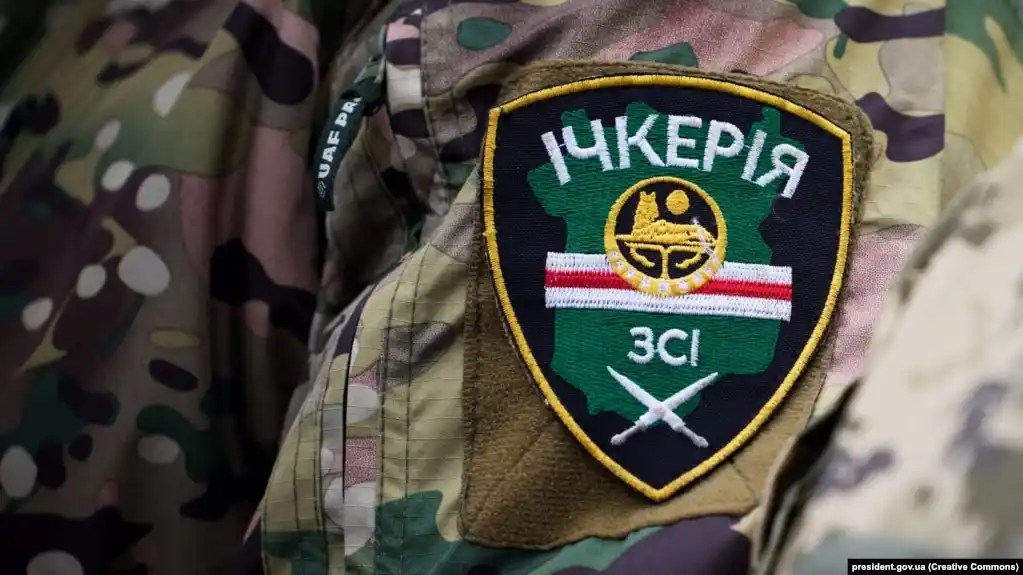
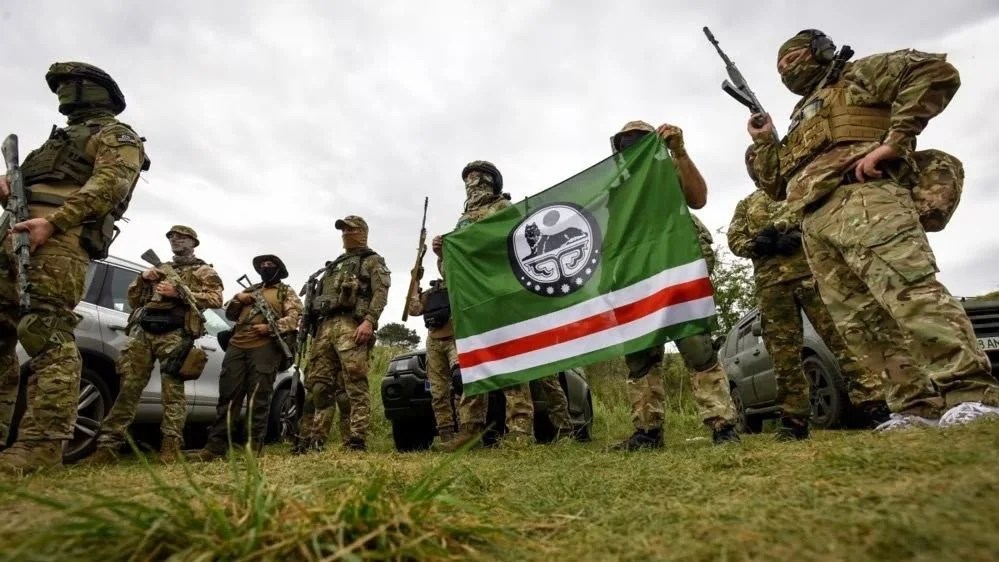
The Ukrainian parliament officially recognized the Chechen Republic of Ichkeria as a territory temporarily occupied by Russia in October 2022. Numerous Chechen volunteer formations fighting on Ukraine’s side have openly declared themselves heirs to the armed forces of the Chechen Republic of Ichkeria. The government-in-exile, led by Akhmed Zakayev, has increased its diplomatic activity and visibility across Europe and Ukraine.
From Moscow’s perspective, these developments transformed Ichkeria from a historical issue into a contemporary geopolitical one.
The terrorist designation therefore appears less connected to events inside Chechnya than to the international rehabilitation of the Ichkerian cause.
Legal Consequences
The practical consequences of the ruling may be significant.
Under Russian legislation, participation in, support for, financing of, cooperation with, or public advocacy on behalf of a terrorist organization can lead to criminal prosecution.
The designation potentially provides Russian authorities with a new legal instrument against:
- Supporters of Ichkerian independence inside Russia;
- Members of the Chechen diaspora who maintain ties with the government-in-exile;
- Journalists and researchers working on Ichkerian institutions;
- Activists promoting recognition of the Chechen Republic of Ichkeria;
- Individuals publicly displaying Ichkerian state symbols.
The ruling also creates additional grounds for extradition requests and political pressure against exiled representatives abroad.
Whether foreign governments will recognize such requests is another matter entirely.
The Problem of Historical Continuity
Perhaps the most revealing aspect of the decision is what it says about Russia’s continuing struggle with the memory of the Chechen wars.
The designation seeks to establish a simple narrative: if Ichkeria is a terrorist organization, then its institutions, leaders, symbols and historical claims become illegitimate by definition.
Yet history remains more complicated.
The Chechen Republic of Ichkeria possessed a constitution, elected institutions, a parliament, a presidency and internationally observed elections. Its existence cannot be reduced to the actions of particular military commanders or radical factions that emerged during later phases of the conflict.
The attempt to classify an entire state project as terrorism raises a broader question: can a political entity that once exercised de facto sovereignty be legally transformed into a terrorist organization decades after its destruction?
The Russian authorities answer yes.
Many historians, legal scholars and supporters of Chechen self-determination would answer otherwise.
International Implications
The ruling is unlikely to change the position of those states, organizations and political figures that continue to engage with representatives of the Ichkerian government-in-exile.
Indeed, recent Russian diplomatic protests over contacts between European politicians and Ichkerian representatives suggest that Moscow remains highly sensitive to any form of international recognition of the Chechen independence movement.
Rather than ending discussion about Ichkeria, the designation may produce the opposite effect.
By formally declaring the Chechen Republic of Ichkeria a terrorist organization, the Russian state has once again brought international attention to a political project that many assumed had disappeared with the end of the Second Chechen War.
Conclusion
The March 2026 ruling is about more than law.
It is an attempt to define the historical meaning of the Chechen struggle for independence and to determine who has the authority to speak in its name.
Moscow presents the decision as the final legal verdict on Ichkeria.
Its supporters will likely interpret it differently: not as proof of Ichkeria’s irrelevance, but as evidence that the idea of Chechen independence continues to possess enough political weight to worry the Russian state even after a quarter of a century.
For that reason alone, the decision deserves close attention.
 Ichkeria Digital Archive