Archivi tag: Giovanni Battista Boetti

Chapter IThe Boy from the Hills

(Read the previous chapter HERE)

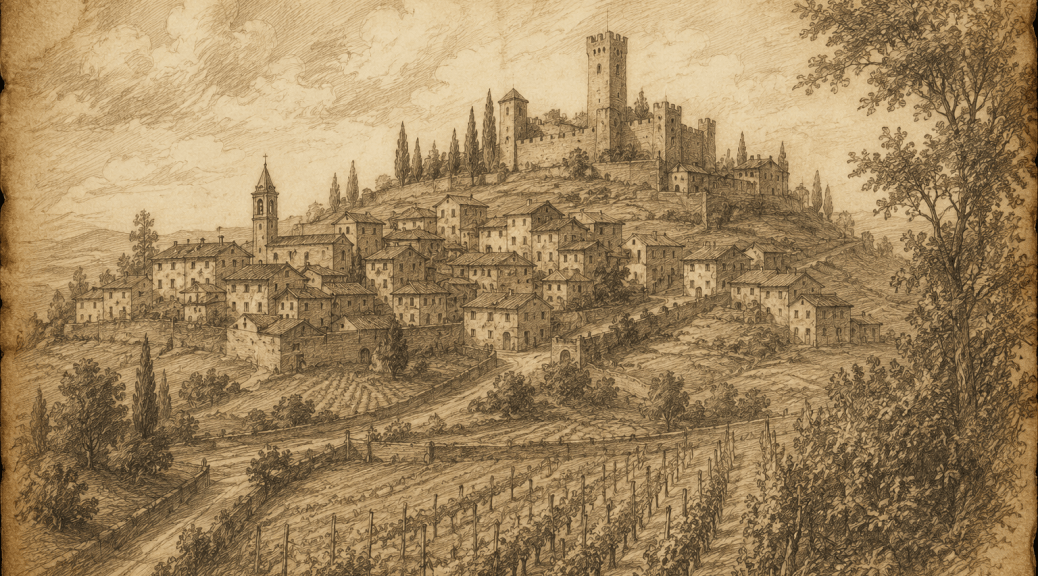
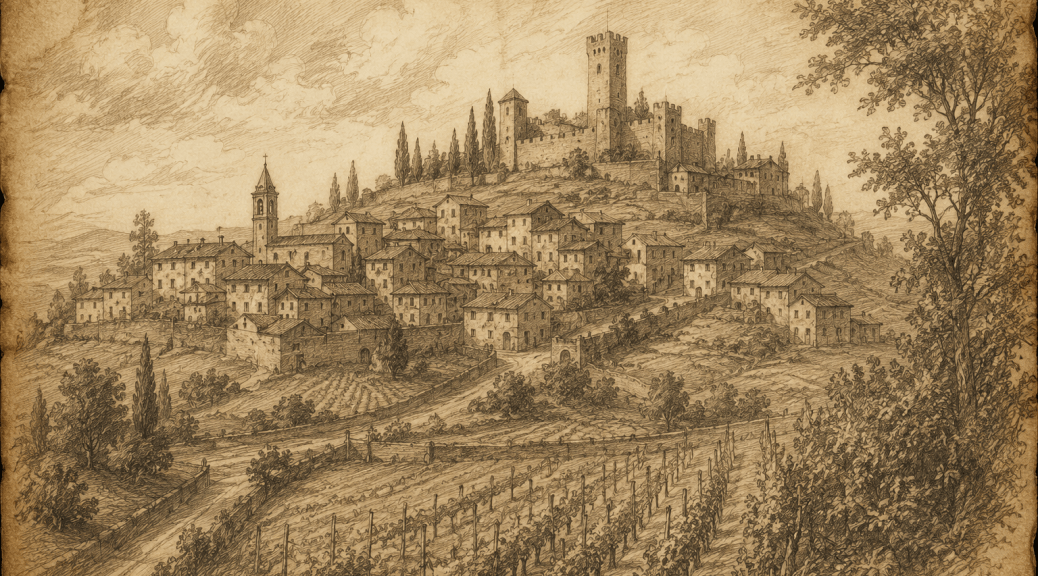
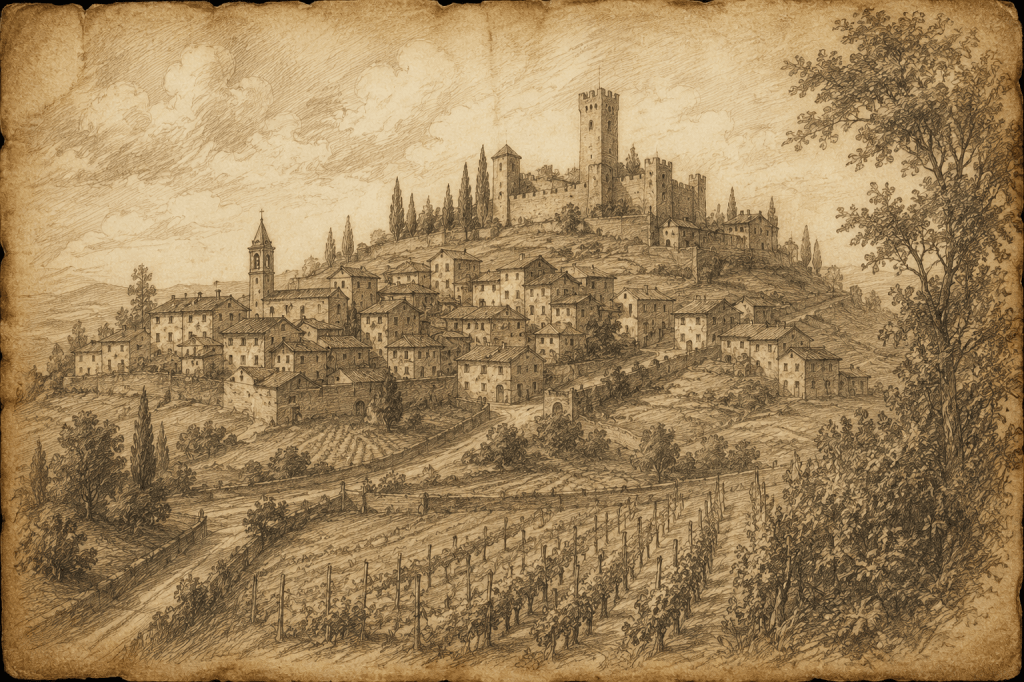
Long before his name became associated with prophets, armies, and distant mountains, Giovanni Battista Boetti was just a child born in the hills of Monferrato. It was a land of farmers, vineyards, and castles, which until just a few decades earlier had been ravaged by wars and invasions, whose ghosts lived on in the tales of the elders. Each village held memories of sieges and battles, and displayed the coats of arms of ancient feudal families. Every hill concealed a story from which the young Giovanni Battista imbibed with curiosity. Piazzano, his home village, was little more than a handful of houses clustered around the church, in the shadow of Camino Castle. From up there, the gaze could stretch for miles. It wasn’t the center of the world, but for those born there, it was the entire universe.
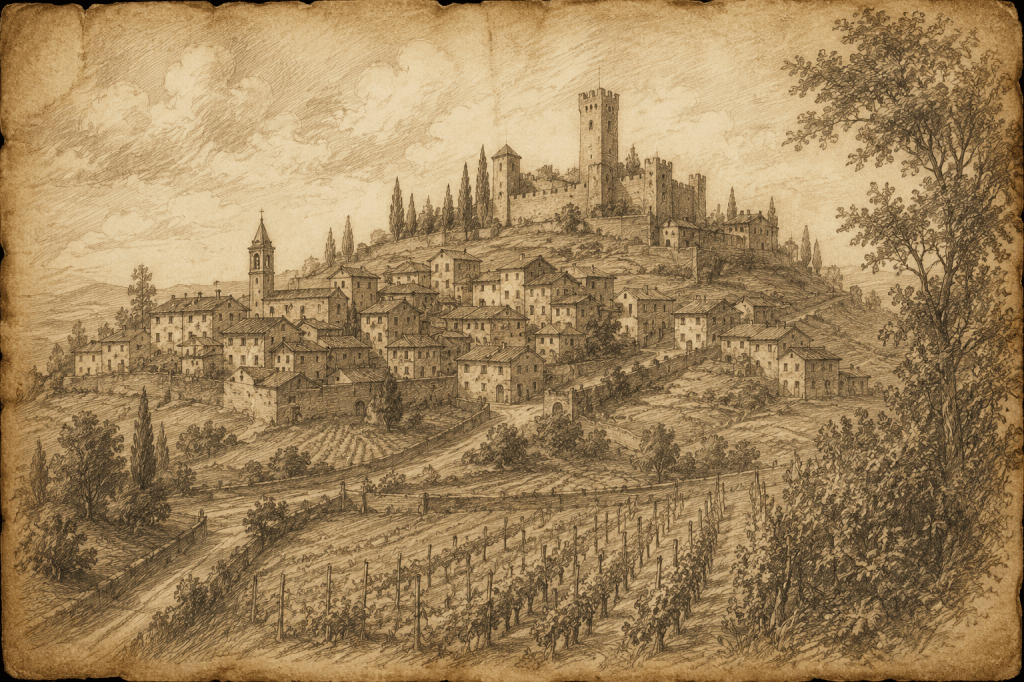
His family lived suspended between two eras. The Boettis retained the memory of an ancient nobility, descending, according to family tradition, from a branch of the Counts of Cunico. But the prestige of their ancestors was all that remained. Like many aristocratic families of 18th-century Monferrato, they possessed more memory than money, more pride than property. Their father, Spirito Bartolomeo, was a notary and podestà of the village. A well-educated and respected man, he was equally feared in his duties as at home. The chronicles that tell us about him do not remember him as a gentleman—quite the opposite. He was tough, inflexible, and short-tempered. Accustomed to command and unwilling to tolerate disobedience.

His wife, Maria Margherita, also came from a family of notaries and minor aristocrats. She needed a strong character to survive in a household ruled by a man like Spirito Bartolomeo. Yet, like many women of her time, her life was consumed by motherhood. With one pregnancy after another, her spirit grew weaker, finally abandoning her when she gave birth to her fifteenth child. When she died, Giovanni Battista was only seven years old. With Maria Margherita, the only point of reference that child had in the world disappeared.

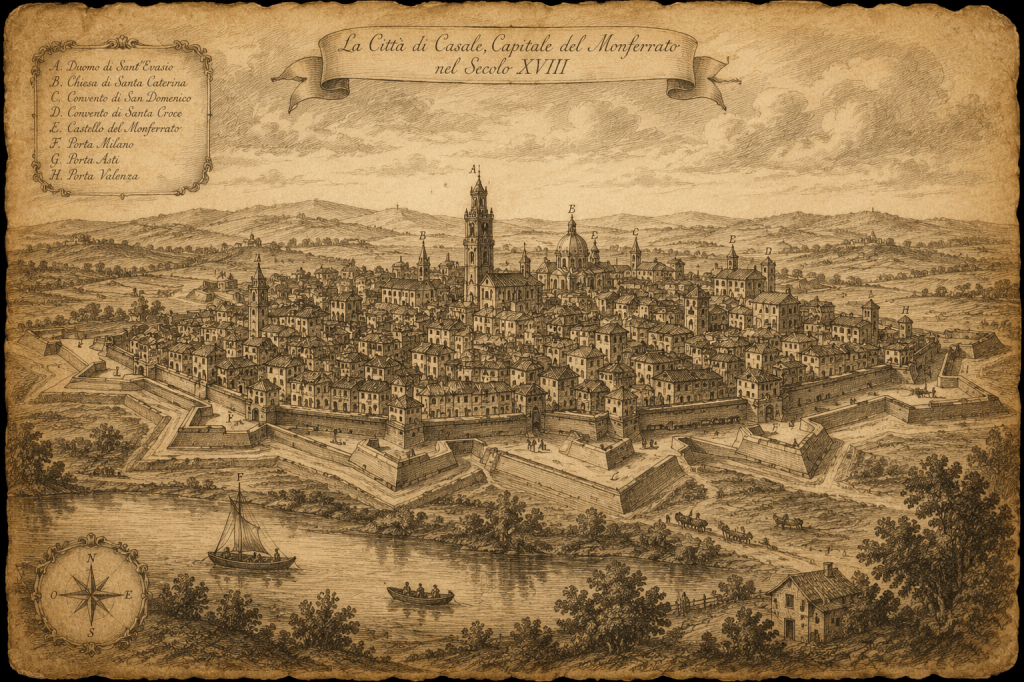
Spirito Bartolomeo quickly sought a new wife. He still had children to support, a position to defend, and a home to manage. But resources were limited, and the simplest solution was to send some of the children away. So Giovanni Battista and his older sister were sent to boarding school in Casale Monferrato, a few dozen kilometers from Camino. At the time, this was a distance only a few Italians could travel in their lifetime, far from the fields and villages.
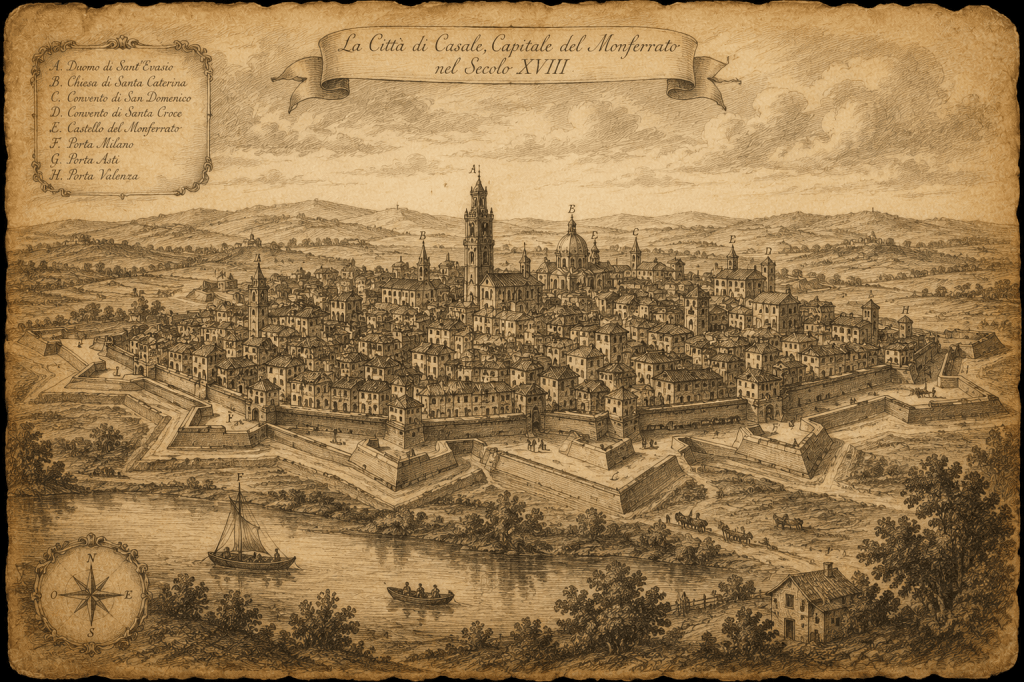
Casale was the capital of Monferrato. A vibrant city, inhabited by merchants, clergy, students, and officials. Its streets were busier than anything the boy had ever seen. Its churches were larger. Its libraries richer. Its opportunities seemingly endless. Many young people would have welcomed this new life with enthusiasm. Giovanni Battista did not.

For him, boarding school meant one thing above all: being removed from home. In the years that followed, he would develop a difficult character. Rebellious against authority, intolerant of impositions, incapable of passively accepting his fate. Perhaps these traits were already present in him. Perhaps they were born right then, within the walls of the boarding school, fueled by nostalgia and resentment.

While other boys dreamed of a respectable profession, a family, or a quiet life, young Boetti was already beginning to look beyond the horizon. Beyond the hills of Monferrato. Beyond Piedmont, toward an East he had never seen and did not yet know he would reach.
Capitolo I – Il ragazzo delle colline

(Leggi il capitolo precedente QUI)

Molto prima che il suo nome venisse associato a profeti, eserciti e montagne lontane, Giovanni Battista Boetti fu soltanto un bambino nato tra le colline del Monferrato. Era una terra di contadini, vigneti e castelli, che solo fino a qualche decennio prima era stata attraversata da guerre e invasioni, i cui fantasmi continuavano a vivere nei racconti degli anziani. Ogni villaggio custodiva memorie di assedi e battaglie, e sfoggiava gli stemmi degli antichi casati feudali. Ogni collina nascondeva una storia alla quale il giovane Giovanni Battista si abbeverava con curiosità. Piazzano, il suo villaggio natale, era poco più di un pugno di case raccolte attorno alla chiesa, all’ombra del castello di Camino. Da lassù lo sguardo poteva correre per chilometri. Non era il centro del mondo, ma per chi vi nasceva era l’intero universo.

La sua famiglia viveva sospesa tra due epoche. I Boetti conservavano il ricordo di un’antica nobiltà, discendendo, secondo la tradizione familiare, da un ramo dei Conti di Cunico. Ma il prestigio degli antenati era tutto ciò che restava. Come molte famiglie aristocratiche del Monferrato settecentesco, possedevano più memoria che denaro, più orgoglio che proprietà. Il padre, Spirito Bartolomeo, era notaio e podestà del villaggio. Uomo istruito e rispettato, era ugualmente temuto nelle sue funzioni come in casa. Le cronache che ci parlano di lui non lo ricordano come un uomo gentile, tutt’altro. Egli era duro, inflessibile, irascibile. Abituato a comandare e poco disposto a tollerare disobbedienze.

Sua moglie, Maria Margherita, proveniva anch’essa da una famiglia di notai e piccoli aristocratici. Doveva essere una donna di carattere forte per sopravvivere in una casa governata da un uomo come Spirito Bartolomeo. Eppure, come accadeva a molte donne del suo tempo, la sua esistenza fu consumata dalla maternità. Una gravidanza dopo l’altra, il suo spirito si fece via via più flebile abbandonandola, infine, al quindicesimo figlio messo al mondo. Quando morì, Giovanni Battista aveva soltanto sette anni. Con Maria Margherita scomparve l’unico punto di riferimento che quel bambino avesse nel mondo.

Spirito Bartolomeo non tardò a cercare una nuova moglie. Aveva ancora figli da mantenere, una posizione da difendere e una casa da amministrare. Ma le risorse erano limitate e la soluzione più semplice fu allontanare alcuni dei bambini. Così Giovanni Battista e la sorella maggiore furono mandati in convitto a Casale Monferrato, a poche decine di chilometri da Camino. Che all’epoca erano una distanza che solo pochi italiani potevano percorrere nella loro vita, lontano dai campi e dai villaggi.

Casale era la capitale del Monferrato. Una città viva, abitata da mercanti, religiosi, studenti e funzionari. Le sue strade erano più affollate di qualsiasi cosa il ragazzo avesse mai visto. Le sue chiese erano più grandi. Le sue biblioteche più ricche. Le sue opportunità apparentemente infinite. Molti giovani avrebbero accolto quella nuova vita con entusiasmo. Giovanni Battista no.

Per lui il convitto significava soprattutto una cosa: essere stato allontanato da casa. Negli anni successivi avrebbe sviluppato un carattere difficile da domare. Ribelle all’autorità, insofferente alle imposizioni, incapace di accettare passivamente il proprio destino. Forse quei tratti erano già presenti in lui. Forse nacquero proprio allora, tra le mura del collegio, alimentati dalla nostalgia e dal rancore.

Mentre gli altri ragazzi sognavano una professione rispettabile, una famiglia o una vita tranquilla, il giovane Boetti iniziava già a guardare oltre l’orizzonte. Oltre le colline del Monferrato. Oltre il Piemonte, verso un Oriente che non aveva mai visto e che ancora non sapeva di dover raggiungere.

Fugitive, Monk, Warrior Prophet: The Life of Giovanni Battista Boetti

There are men who pass through history leaving behind portraits, treatises, and monuments. And then there are men who leave behind only questions. Giovanni Battista Boetti belonged to the latter category.

When he was born on June 2, 1743, in the small Piedmontese village of Piazzano, no one could have imagined that the child would become the protagonist of one of the most enigmatic stories of eighteenth-century Europe. The son of a declining noble family, educated to become a physician against his own wishes, Boetti would go on to be a fugitive, a soldier, a seducer, a Dominican friar, a missionary in the East, and a physician to pashas and princes. He crossed half the known world in pursuit of something that perhaps even he could not fully define.

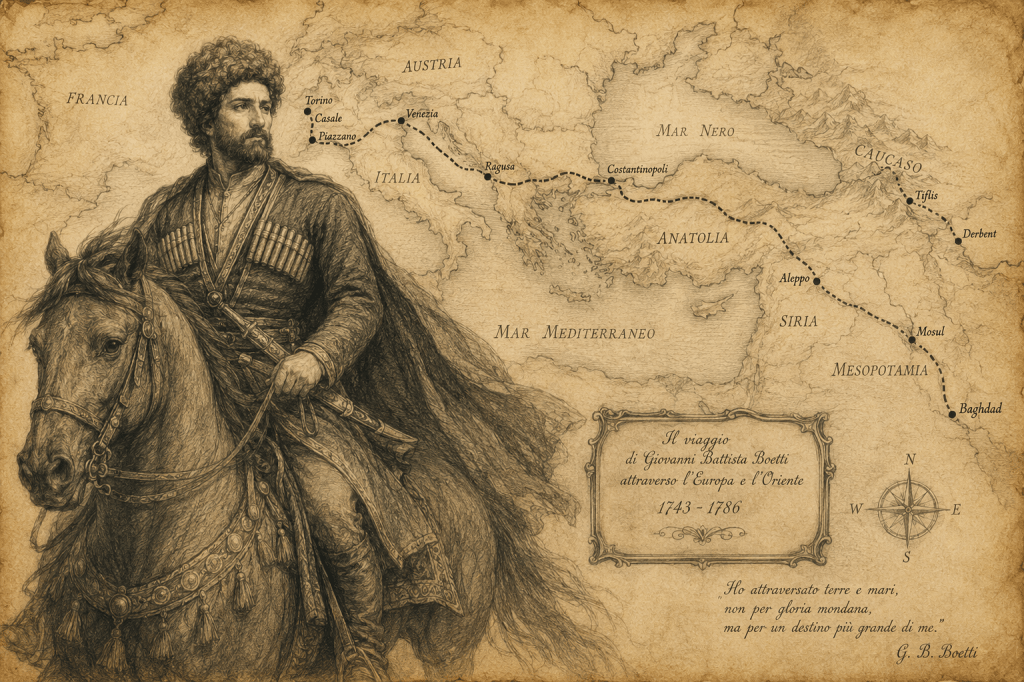
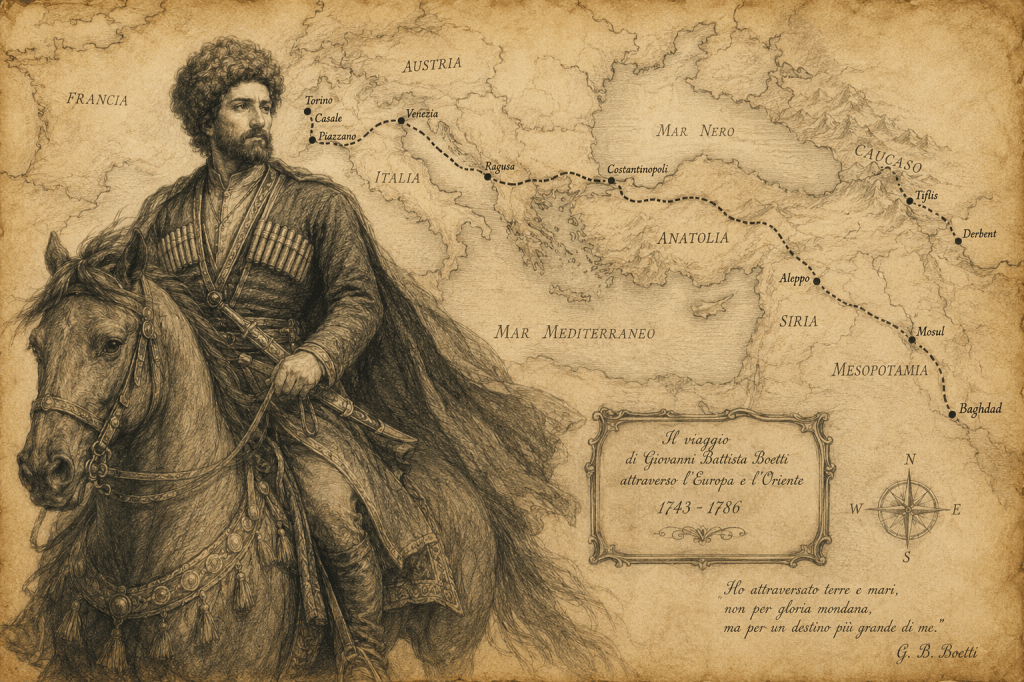
For more than twenty years he travelled through Italy, the Balkans, the Ottoman Empire, Syria, Mesopotamia, Persia, and the Caucasus. He appeared in the most unlikely places and vanished from them just as quickly. He was arrested, expelled, welcomed as a saint, denounced as an impostor, hunted as a spy, and protected by powerful men. Each time his story seems to reach its conclusion, it begins again somewhere else.

Then, suddenly, something happens.

The sources tell us that after years spent between Mosul, Constantinople, and Persia, the Piedmontese Dominican almost completely disappeared from the official record. When he re-emerged, he was no longer simply Giovanni Battista Boetti.

He was Mansur — The Victorious.

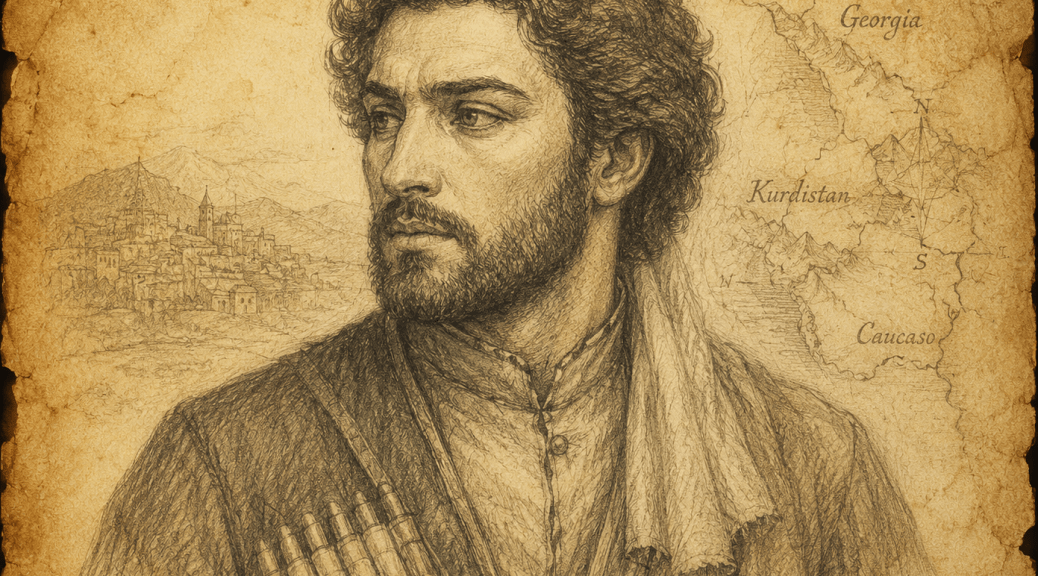
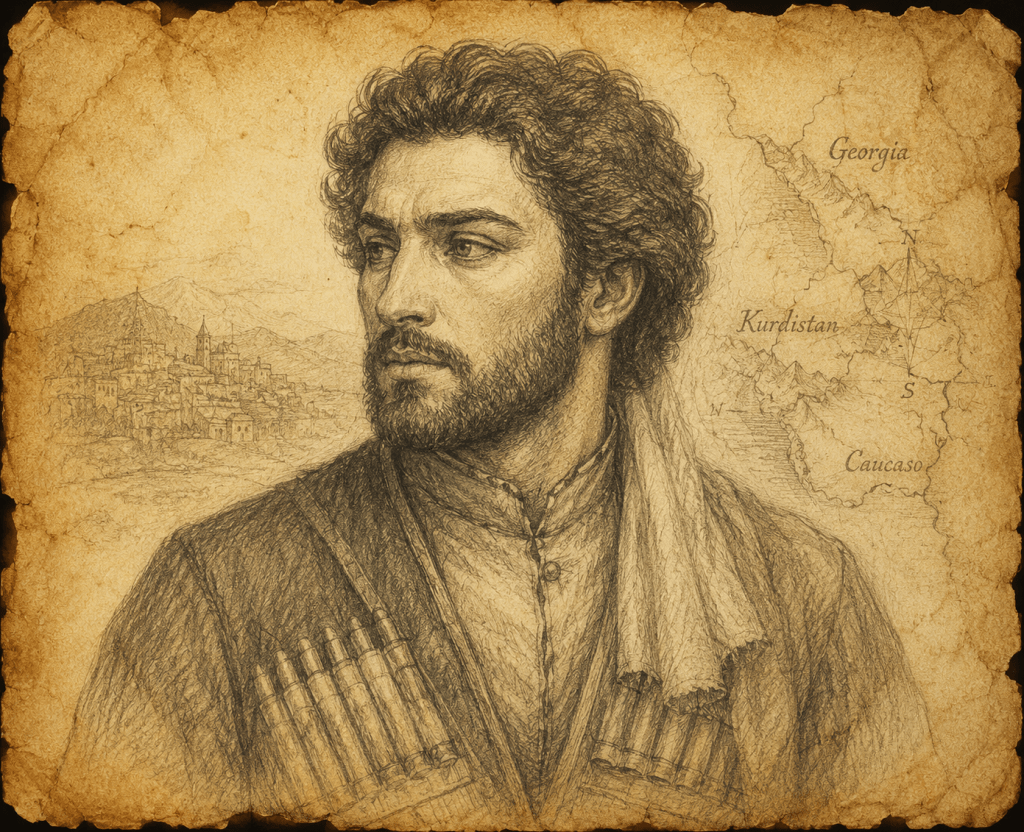
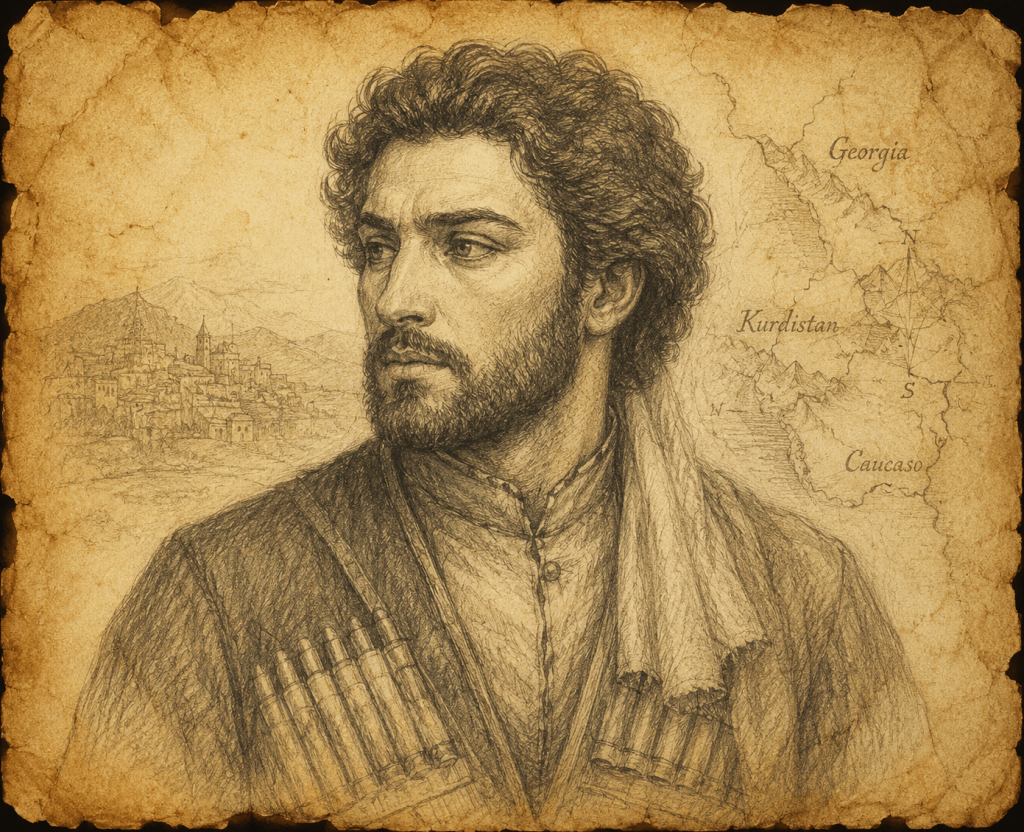
According to an extraordinary handwritten report preserved for more than a century in the archives of the Kingdom of Sardinia, the former friar preached a new faith, gathered thousands of followers, and led an army through Kurdistan, Georgia, and the mountains of the Caucasus. His forces are said to have defeated armies, besieged cities, and conquered entire regions. His sermons reportedly attracted Muslims, Christians, and Jews alike. His ambitions challenged princes, pashas, and sultans.

It sounds like the plot of an adventure novel, yet Giovanni Battista Boetti was a real historical figure. His signature appears on authentic documents. His letters have survived the passage of time. His movements can be reconstructed through archives scattered across Italy and the Middle East. Some episodes of his life are confirmed beyond reasonable doubt. Others belong to that uncertain territory where history and legend become indistinguishable.

It is precisely there that the mystery begins.

At the end of the eighteenth century, while resistance against the expansion of the Russian Empire was gathering strength in the North Caucasus, another man emerged who would become a legend in his own right: Sheikh Mansur Ushurma, the first great leader of the Caucasian struggle against Russia.

As the years passed, the stories of these two men began to converge—first as rumor, then as hypothesis, and finally as a genuine historical theory.

Could the warrior-prophet of the Caucasus and the Piedmontese friar have been the same person?

Could one of the most celebrated heroes of Chechen history have been born among the hills of Monferrato?

For more than two centuries, historians, writers, and researchers have sought an answer. Some are convinced that they were indeed one and the same; others regard the theory as nothing more than an extraordinary fabrication.

In this series, we will follow the trail left by Giovanni Battista Boetti, from the countryside of Piedmont to the caravans of Syria, from Dominican monasteries to the courts of pashas, from the shores of the Bosphorus to the mountains of the Caucasus. For whether the legend of Mansur is true or false, one thing is certain: the life of Giovanni Battista Boetti was already so extraordinary that it seems almost impossible.

Read the Next Chapters

Fuggiasco, monaco, profeta guerriero: la vita di Giovanni Battista Boetti

Esistono uomini che attraversano la storia lasciando dietro di sé ritratti, trattati e monumenti. E poi esistono uomini che lasciano soltanto domande. Giovanni Battista Boetti apparteneva alla seconda categoria.

Quando nacque, il 2 giugno 1743, nel piccolo villaggio piemontese di Piazzano, nessuno avrebbe potuto immaginare che quel bambino sarebbe diventato il protagonista di una delle vicende più enigmatiche del Settecento europeo. Figlio di una famiglia nobile in declino, educato per diventare medico contro la propria volontà, fuggiasco, soldato, seduttore, monaco domenicano, missionario in Oriente, medico di pascià e principi, Boetti attraversò mezzo mondo inseguendo qualcosa che forse neppure lui sapeva definire.

Per oltre vent’anni viaggiò tra l’Italia, i Balcani, l’Impero Ottomano, la Siria, la Mesopotamia, la Persia e il Caucaso. Comparve nei luoghi più improbabili e ne scomparve con la stessa rapidità. Venne arrestato, espulso, accolto come un santo, accusato come un impostore, ricercato come una spia e protetto da uomini potenti. Ogni volta che la sua storia sembra terminare, ricomincia altrove.

Poi, improvvisamente, accade qualcosa.

Le fonti raccontano che dopo anni trascorsi tra Mosul, Costantinopoli e la Persia, il domenicano piemontese svanì quasi completamente dalle cronache ufficiali. Quando riemerse, non era più soltanto Giovanni Battista Boetti.

Era Mansur, Il Vittorioso.

Secondo una straordinaria relazione manoscritta conservata per oltre un secolo negli archivi del Regno di Sardegna, l’ex monaco avrebbe predicato una nuova fede, raccolto migliaia di seguaci e guidato un esercito attraverso il Kurdistan, la Georgia e le montagne del Caucaso. Le sue armate avrebbero sconfitto eserciti, assediato città e conquistato intere regioni. Le sue prediche avrebbero attirato musulmani, cristiani ed ebrei. Le sue ambizioni avrebbero sfidato principi, pascià e sultani.

Sembra la trama di un romanzo d’avventura, eppure Giovanni Battista Boetti è realmente esistito. La sua firma compare in documenti autentici. Le sue lettere sono sopravvissute al tempo. I suoi spostamenti possono essere ricostruiti attraverso archivi sparsi tra Italia e Medio Oriente. Alcuni episodi della sua vita sono confermati oltre ogni ragionevole dubbio. Altri appartengono al territorio incerto in cui storia e leggenda si confondono.

È proprio lì che inizia il mistero.

Alla fine del XVIII secolo, mentre nel Caucaso settentrionale infuriava la resistenza contro l’espansione dell’Impero Russo, comparve un altro uomo destinato a entrare nella leggenda: Sheikh Mansur Ushurma, il primo grande leader della lotta caucasica contro la Russia.

Con il passare degli anni, le storie dei due uomini iniziarono ad avvicinarsi, prima come semplice diceria, poi come ipotesi, infine come una vera e propria teoria storica.

Possibile che il profeta guerriero del Caucaso e il monaco piemontese fossero la stessa persona?

Possibile che uno dei più celebri eroi della storia cecena fosse nato tra le colline del Monferrato?

Da oltre due secoli storici, scrittori e ricercatori cercano una risposta: alcuni sono convinti che si tratti della stessa persona, altri ritengono che sia soltanto una straordinaria mistificazione.

Seguiremo le tracce lasciate da Giovanni Battista Boetti, dalle campagne piemontesi alle carovane della Siria, dai conventi domenicani alle corti dei pascià, dalle rive del Bosforo alle montagne del Caucaso. Perché, vera o falsa che sia la leggenda di Mansur, una cosa è certa: la vita di Giovanni Battista Boetti fu già di per sé talmente incredibile da sembrare impossibile.

Leggi i capitoli successivi