
(Read the previous chapter HERE)
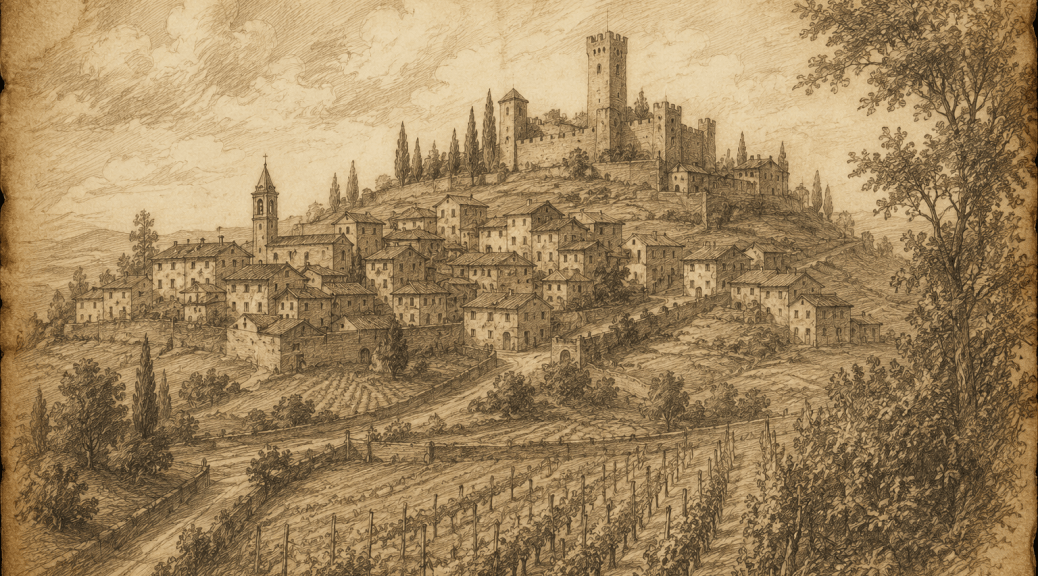
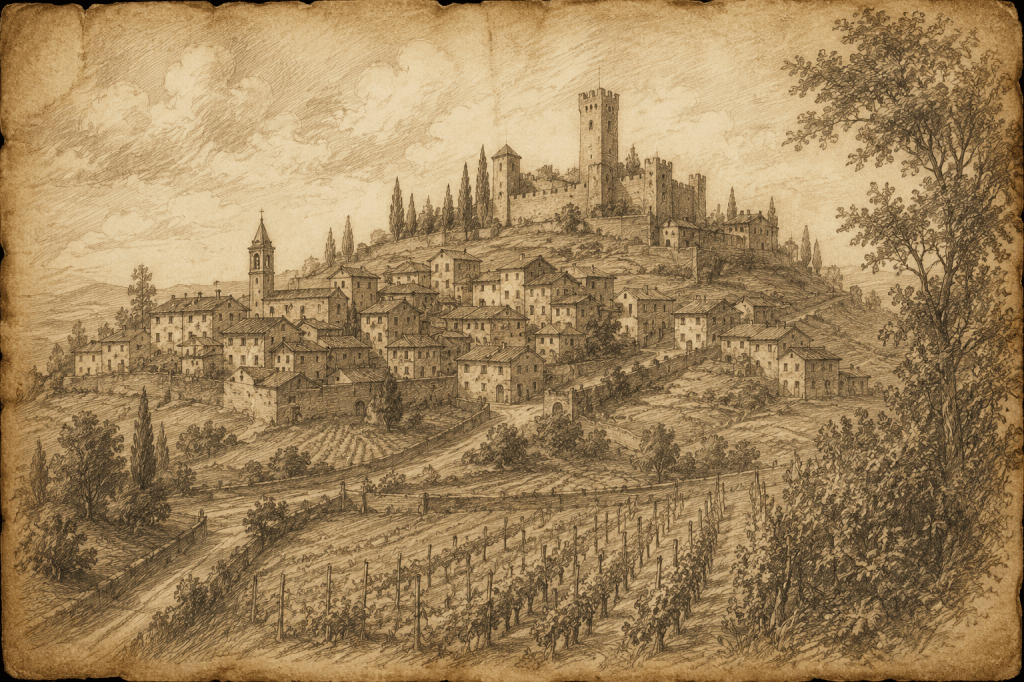
Long before his name became associated with prophets, armies, and distant mountains, Giovanni Battista Boetti was just a child born in the hills of Monferrato. It was a land of farmers, vineyards, and castles, which until just a few decades earlier had been ravaged by wars and invasions, whose ghosts lived on in the tales of the elders. Each village held memories of sieges and battles, and displayed the coats of arms of ancient feudal families. Every hill concealed a story from which the young Giovanni Battista imbibed with curiosity. Piazzano, his home village, was little more than a handful of houses clustered around the church, in the shadow of Camino Castle. From up there, the gaze could stretch for miles. It wasn’t the center of the world, but for those born there, it was the entire universe.
His family lived suspended between two eras. The Boettis retained the memory of an ancient nobility, descending, according to family tradition, from a branch of the Counts of Cunico. But the prestige of their ancestors was all that remained. Like many aristocratic families of 18th-century Monferrato, they possessed more memory than money, more pride than property. Their father, Spirito Bartolomeo, was a notary and podestà of the village. A well-educated and respected man, he was equally feared in his duties as at home. The chronicles that tell us about him do not remember him as a gentleman—quite the opposite. He was tough, inflexible, and short-tempered. Accustomed to command and unwilling to tolerate disobedience.
His wife, Maria Margherita, also came from a family of notaries and minor aristocrats. She needed a strong character to survive in a household ruled by a man like Spirito Bartolomeo. Yet, like many women of her time, her life was consumed by motherhood. With one pregnancy after another, her spirit grew weaker, finally abandoning her when she gave birth to her fifteenth child. When she died, Giovanni Battista was only seven years old. With Maria Margherita, the only point of reference that child had in the world disappeared.
Spirito Bartolomeo quickly sought a new wife. He still had children to support, a position to defend, and a home to manage. But resources were limited, and the simplest solution was to send some of the children away. So Giovanni Battista and his older sister were sent to boarding school in Casale Monferrato, a few dozen kilometers from Camino. At the time, this was a distance only a few Italians could travel in their lifetime, far from the fields and villages.
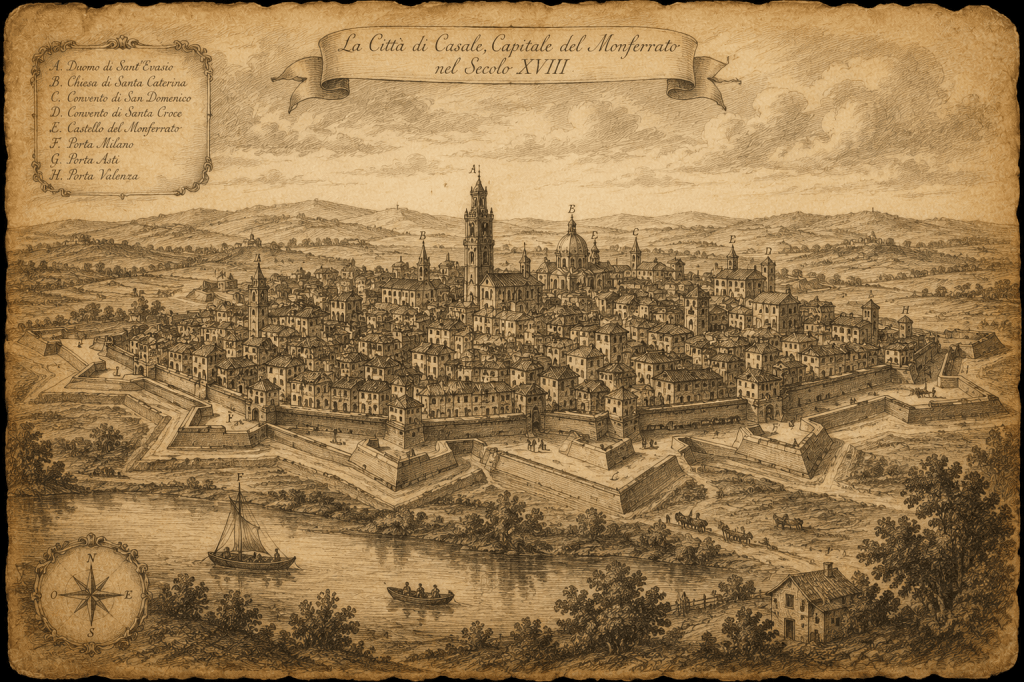
Casale was the capital of Monferrato. A vibrant city, inhabited by merchants, clergy, students, and officials. Its streets were busier than anything the boy had ever seen. Its churches were larger. Its libraries richer. Its opportunities seemingly endless. Many young people would have welcomed this new life with enthusiasm. Giovanni Battista did not.
For him, boarding school meant one thing above all: being removed from home. In the years that followed, he would develop a difficult character. Rebellious against authority, intolerant of impositions, incapable of passively accepting his fate. Perhaps these traits were already present in him. Perhaps they were born right then, within the walls of the boarding school, fueled by nostalgia and resentment.
While other boys dreamed of a respectable profession, a family, or a quiet life, young Boetti was already beginning to look beyond the horizon. Beyond the hills of Monferrato. Beyond Piedmont, toward an East he had never seen and did not yet know he would reach.


1 commento su “Chapter IThe Boy from the Hills”