
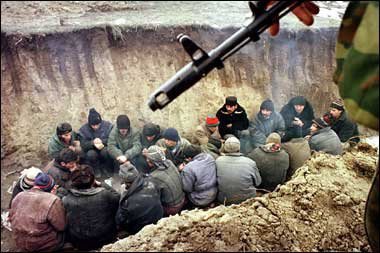
An examination of eyewitness testimonies from one of the darkest periods of the Second Russo-Chechen War.
A Village Under Occupation
At the end of 2001, Russian authorities repeatedly claimed that the situation in Chechnya was improving. Official statements spoke of “stabilization,” “normalization,” and the restoration of constitutional order throughout the republic.
For many residents of the Chechen Republic of Ichkeria, however, reality looked very different. One of the most revealing accounts from this period comes from the village of Starye Atagi, southwest of Grozny. Between late December 2001 and early January 2002, local residents described a climate of fear marked by military raids, arbitrary detentions, extortion, disappearances, and constant harassment by Russian federal forces. Their testimonies provide a rare glimpse into everyday life during one of the most difficult phases of the war.
A Village Already Scarred by War
By the end of 2001, Starye Atagi had already endured years of military operations. Since the beginning of the Second Russo-Chechen War, the village had repeatedly been subjected to raids, searches, and so-called “counter-terrorist operations” conducted by Russian forces.
Residents had previously appealed to international organizations, describing a pattern of punitive sweeps that had affected dozens of local families. Many villagers reported losing relatives during these operations, while others continued searching for family members who had disappeared after being detained by Russian troops.
Far from experiencing the promised normalization, the population found itself living under a permanent state of uncertainty.
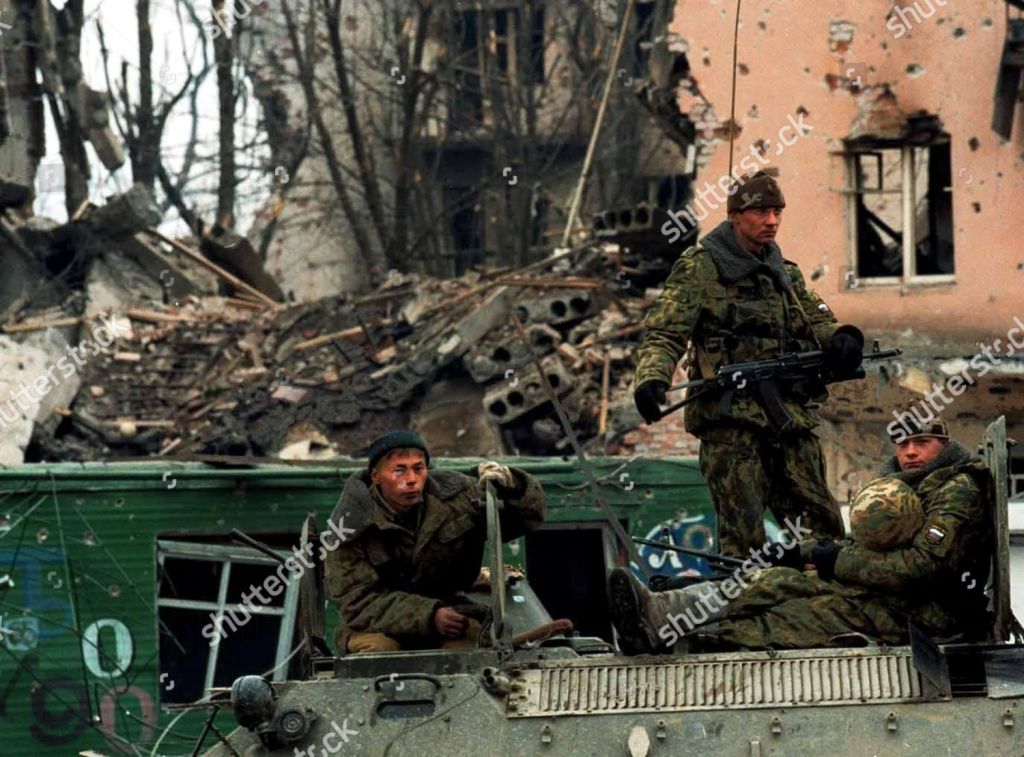
The December Raids
According to testimonies collected at the time, between 26 and 30 December 2001 Russian troops carried out a series of operations in the village. Residents alleged that soldiers entered homes, conducted arbitrary document inspections, demanded money from civilians, and confiscated property under various pretexts. Witnesses described scenes of intimidation and humiliation affecting numerous families throughout the village.
Among the incidents reported was the case of a young mother who was allegedly forced to hand over money after soldiers questioned her personal documents and family status. While individual details remain difficult to verify more than two decades later, the broader pattern described by witnesses corresponds closely to practices documented elsewhere in Chechnya during the same period.
Arbitrary Detentions and Ransom Payments
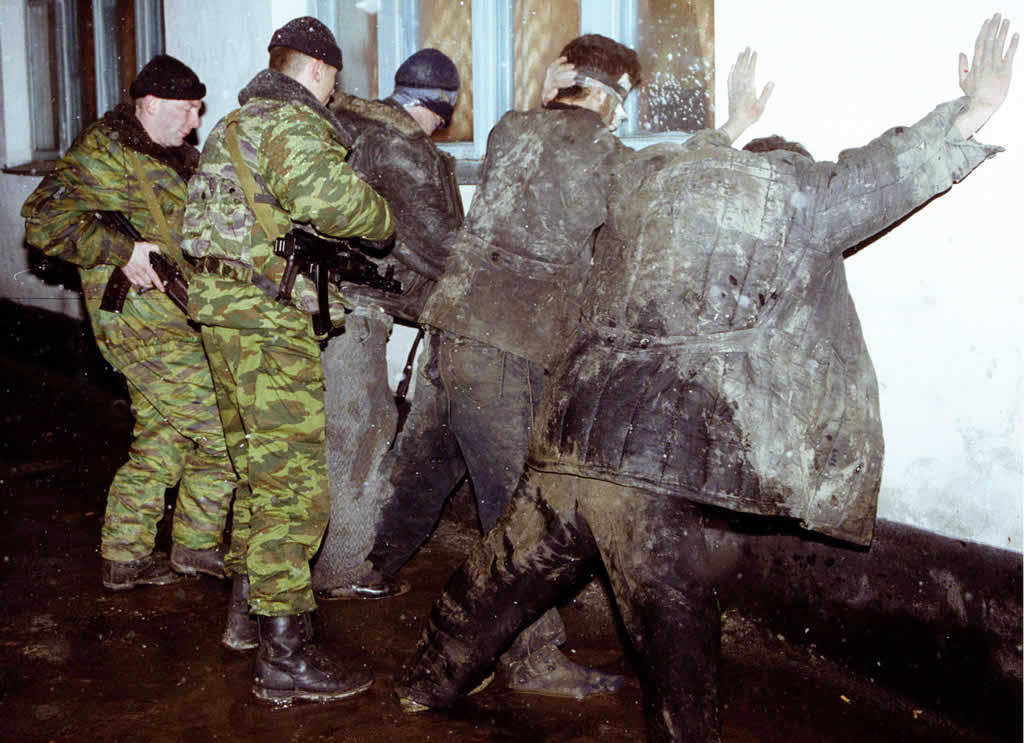
The most serious allegations concerned the detention of dozens of local residents. According to villagers, Russian forces detained more than forty men during the operation, including elderly civilians and members of several well-known local families. Detainees were reportedly accused of assisting the fighters of the Chechen Republic of Ichkeria, although no formal charges were presented.
Witnesses claimed that many of those arrested were subjected to beatings and ill-treatment before being released. Families reportedly secured the release of relatives only after paying sums ranging from 2,000 to 5,000 rubles. Such allegations were not unusual during this stage of the conflict. Throughout the early 2000s, numerous human-rights organizations documented cases in which detainees were released only after relatives paid money to members of military or security structures.
For civilians living in villages such as Starye Atagi, the greatest burden was often uncertainty. Men of military age lived with the constant risk of detention. Families feared nighttime raids. Mothers worried that sons, husbands, or fathers could disappear without explanation and never return. The absence of legal safeguards meant that ordinary civilians often had no effective mechanism through which to challenge abuses or seek information about detained relatives. As a result, fear became a permanent feature of daily life.
A Pattern Seen Across the Chechen Republic of Ichkeria
The events reported in Starye Atagi were not isolated. Throughout the Second Russo-Chechen War, villages and towns across the Chechen Republic of Ichkeria experienced similar operations. International human-rights organizations repeatedly documented allegations of enforced disappearances, arbitrary detention, torture, extrajudicial executions, and collective punishment carried out during security sweeps.
Russian authorities maintained that these operations were necessary to combat the armed forces of the Chechen Republic of Ichkeria and their supporters. Human-rights advocates, however, consistently argued that civilians were frequently subjected to abuses that violated both Russian law and international humanitarian norms.
The experiences of Starye Atagi therefore form part of a much broader historical pattern that affected thousands of Chechen families during the conflict.
Preserving Historical Memory
More than twenty years later, testimonies from villages such as Starye Atagi remain an essential part of the historical record. They preserve voices that were rarely heard beyond the borders of Chechnya and document the experiences of civilians caught between the struggle for the independence of the Chechen Republic of Ichkeria and the overwhelming military power of the Russian Federation.
Whether examined by historians, researchers, journalists, or future generations, these accounts serve as a reminder that behind official statements and military reports stood real communities struggling to survive under extraordinary circumstances. Remembering their stories is not only a matter of historical accuracy.
It is also a matter of justice.
This article is based on testimonies published in January 2002 and on the broader body of documentation concerning human-rights violations committed during the Second Russo-Chechen War.
 Ichkeria Digital Archive