Archivi tag: History

“I am grateful to the fate that made me meet the Chechens!” Francesco Benedetti interviews Alla Dudaeva

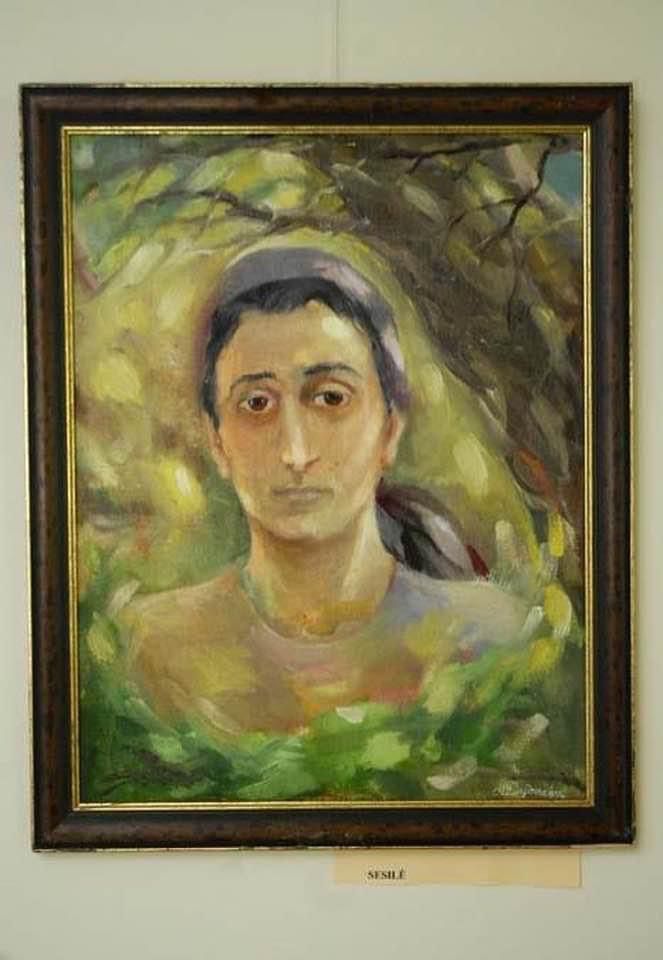
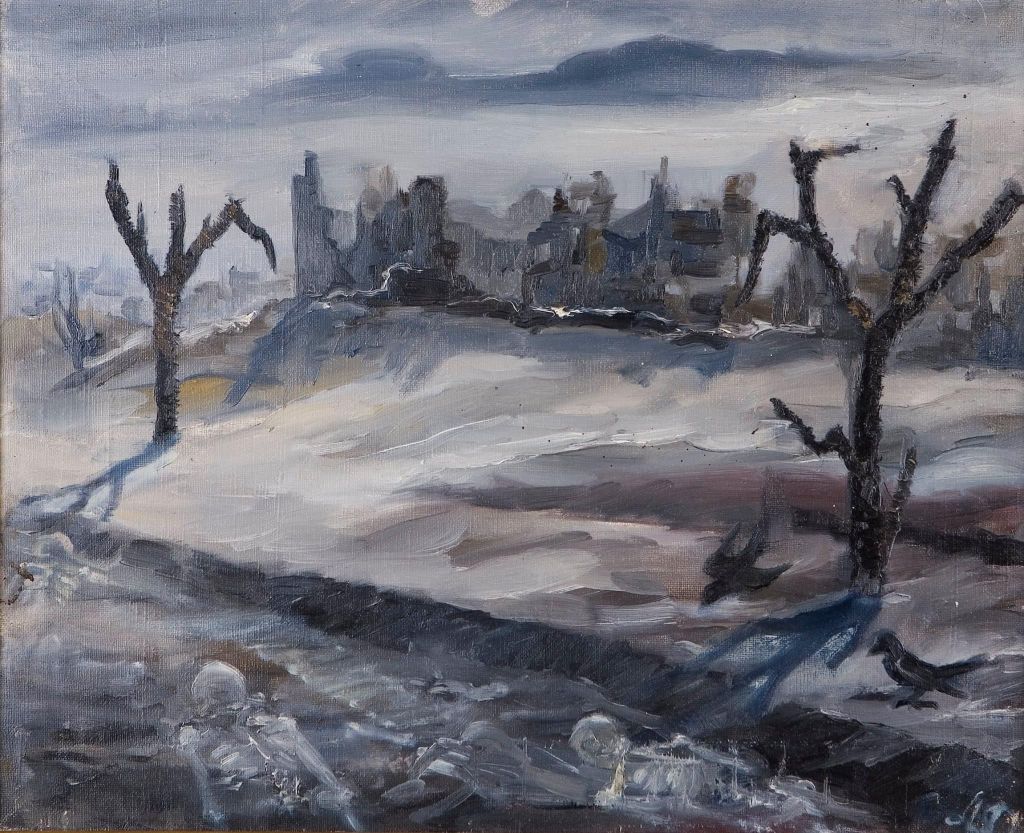
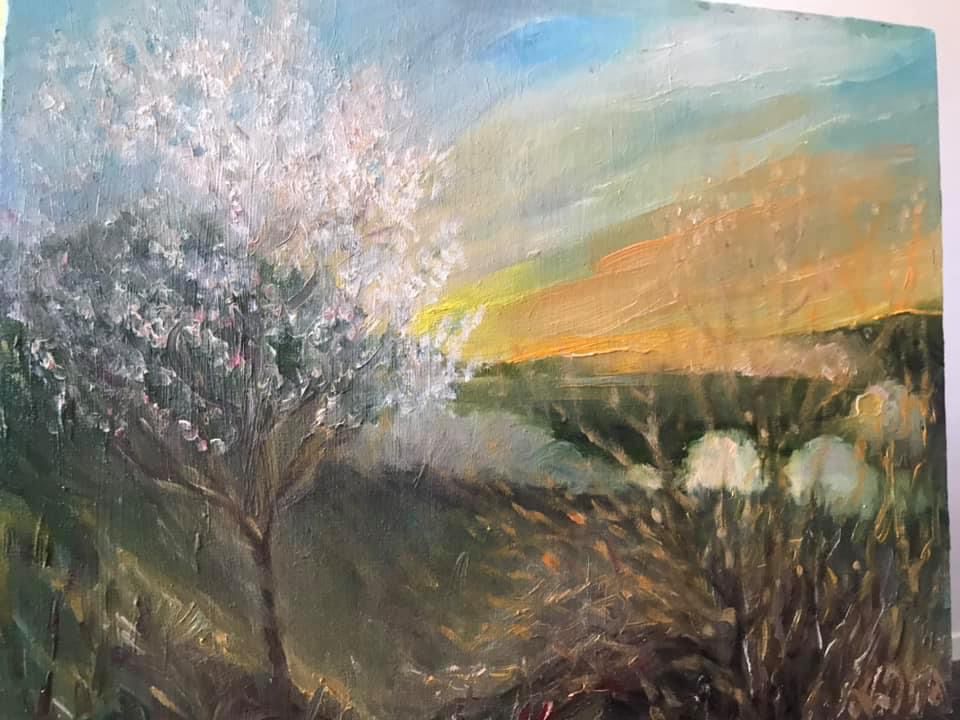
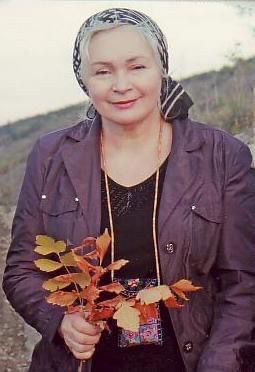
Alla Fyodorovna Dudayeva is the widow of the first President of the Chechen Republic of Ichkeria. Dudaev’s life partner, she lived with him until his assassination, which occurred on April 21, 1996 by the Russian army. Despite being of Russian origin, Alla Dudaeva linked her personal destiny to the cause of Chechen independence, continuing after her husband’s death to plead the reasons for a free Chechnya. Among her qualities, her passion for drawing certainly stands out. For this reason, in addition to her words, we have collected and published, with her permission, her pictorial works. What follows, therefore, is a double story, in words and images: the story of a wife, a mother, an artist, a political activist, a woman united with Chechnya by love and destiny.

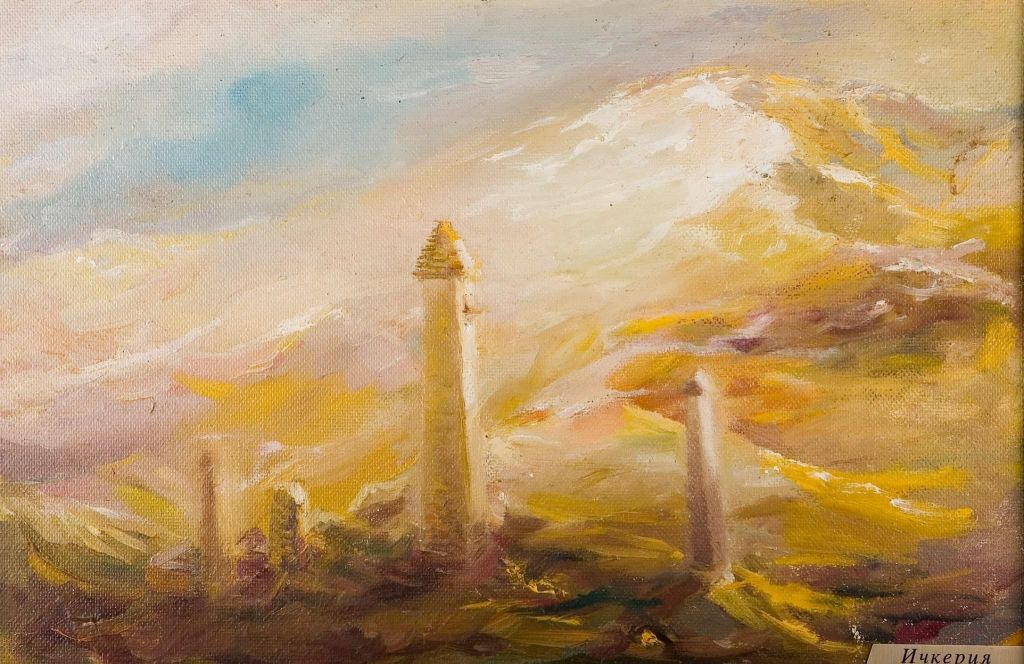
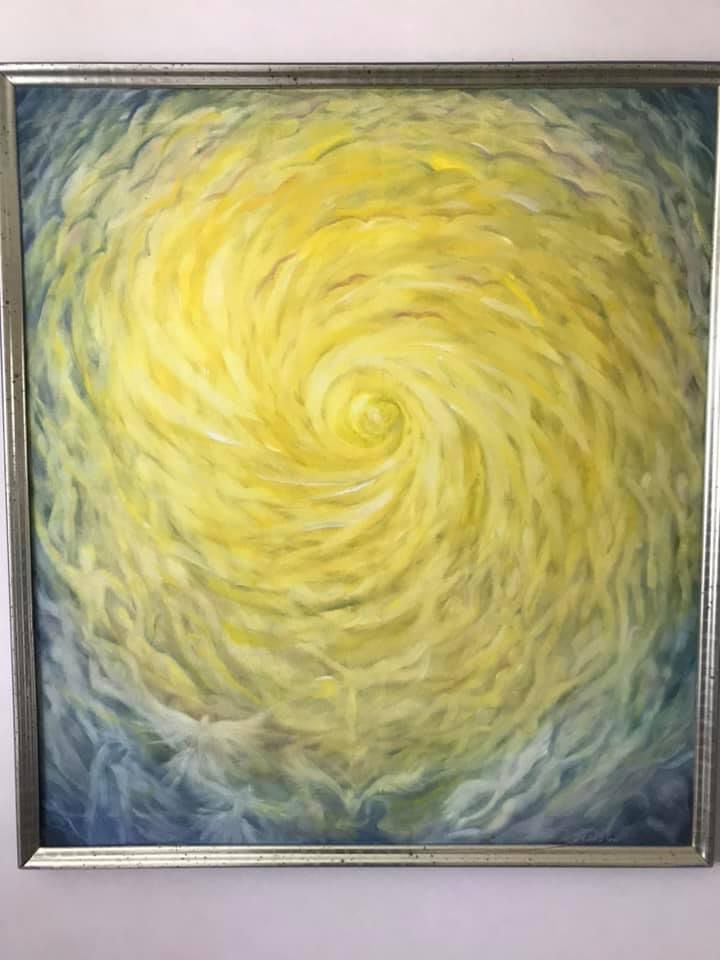
“Golden Ichkeria” – 1989

The death of Dzhokhar Dudayev has deprived the Chechens of both a human and a political point of reference. From your point of view, this may be even more true: has the loss of a person so important to you as a life partner, as a mother, and at the same time as a supporter of a free Chechnya, changed your existential point of view?

The entire Chechen people wept when they learned of Dzhokhar’s death, as well as the Muslim world. But not only Muslims: the whole world appreciated Dzhokhar’s life and work, the Chechen people’s resistance to Russian aggression, and dedicated dozens of streets, squares and cities in different countries to him. Dzhokhar showed how to “take cities” and in 3 days (March 7,8,9) the capital of Ichkeria was taken by Chechens. Russian military units and bases were surrounded, but the Chechens did not shoot at the Russians so that the planes could not bomb the attackers. This ingenious plan was conceived by Dzhokhar, and when journalists asked him “why did you leave Grozny?” He replied “We have shown the whole world how to take cities!” In exactly the same way, the invaders were surrounded three months after the death of Dzhokhar on August 6, 1996. It was called: “dying, embracing the enemy.” And it happened only thanks to the unparalleled courage and courage of the Chechen people. For the first time in the world, a small Chechen people defeated the huge Russian empire of evil and violence, which the whole world has been afraid of for decades!

And the people called it a miracle! This victory gave hope to all occupied peoples for their future liberation and breathed new strength into those who bowed and surrendered! A nation is invincible when it fights on its own land for its freedom, if it has such a leader! When the president and the people are one, they are invincible!

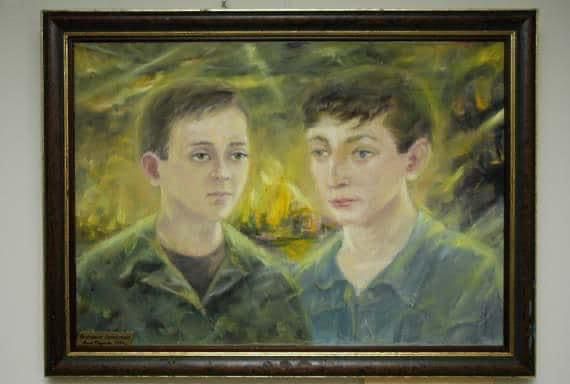
“Dzhokhar Dudaev” 1989

Has his death changed anything in you regarding the care of your family and regarding the idea of an independent Chechnya?

After the death of Dzhokhar, nothing has changed in me in relation to our family or in relation to the idea of the independence of Ichkeria. But my personal feeling changed, I could not imagine myself without Dzhokhar, it was as if I was unexpectedly hit in the chest. Then we were secretly taken to the second home of a brave and wise man, Dayan, and I sat by his body for three days. Dayan asked me not to mention that Dzhokhar was dead when I was at her house for dinner. He asked me to say that there was one wounded, but not that it was Dzhokhar. “My wife Leila” he said “She couldn’t bear it. He has a weak heart. No need to mourn it in front of them, there would be such a noise that everyone in the village would understand immediately. Instead we have to hide. After her words, I understood that there were still those who loved Dzhokhar, albeit weaker than me in health. And I learned to hide, even as my heart was torn apart by pain. Therefore, when it was necessary to declare Dzhokhar’s death on April 24 in front of journalists from all over the world, I learned to hide my tears and did not cry, I thought about hundreds of sick old women like Leila, what would happen to them when they heard the sad news. And about our enemies, how they would rejoice at Dzhokhar’s death … That’s why I decided to leave the doubt, to Dzhokhar’s enemies who feared him, that he might return.

That very night we snuck him out and buried him. And I witnessed such miracles, when Dzhokhar was raised and carried to the cemetery, that it seemed to me that I had new strength. We left at three in the morning. When we arrived at the cemetery it was still dark which was scary. There was a wall of fog. While the grave was being dug, I sat next to Dzhokhar’s body, behind the fence. And when they came for him and brought him, suddenly the fog cleared, pink-gold rays of the sun appeared, under which everything around shone. And in the blue sky above his grave, flocks of birds were circling, as if they had come to greet or meet him. And they sang!!! Most likely, the Almighty himself met him! I understood that Dzhokhar would not be in the grave, his soul was immediately taken to heaven!

When the Chechen people gathered all their strength and managed to defeat the huge Russian empire, many believed that Dzhokhar was alive and would certainly return. But our enemies have claimed that Dzhokhar, a symbol of independence, fled, leaving his people behind. And then I had to refute these dirty rumors and we made a documentary about the place of his death. In it, I detailed where he was, when it happened and from which side two rockets came, one after the other. The military prosecutor, Magomed Zhaniev, and our former representative in Moscow, Khamad Kurbanov, they died with him. They were immediately taken away by relatives and buried the next day. But many Chechens still didn’t believe me and so I had to write the book “Million First” which became a documentary about the birth, childhood, life and death of Dzhokhar Dudayev .

It was first published in Baku in 2002. Then in six other countries in different languages. By the way, immediately after the book was published, a video was mounted in Chechnya, someone spoke in my voice against the background of my photograph. “I apologize to the Chechen people, I am getting married. I searched for a long time and finally found someone similar to Dzhokhar, only the mustache is different.” This was done intentionally so that my book would not be believed, and some still think that I again married Dzhokhar, who in reality was allegedly wounded, secretly taken out of Chechnya, and then healed. Only many years later the Chechen people finally convinced themselves and stopped waiting for Dzhokhar.

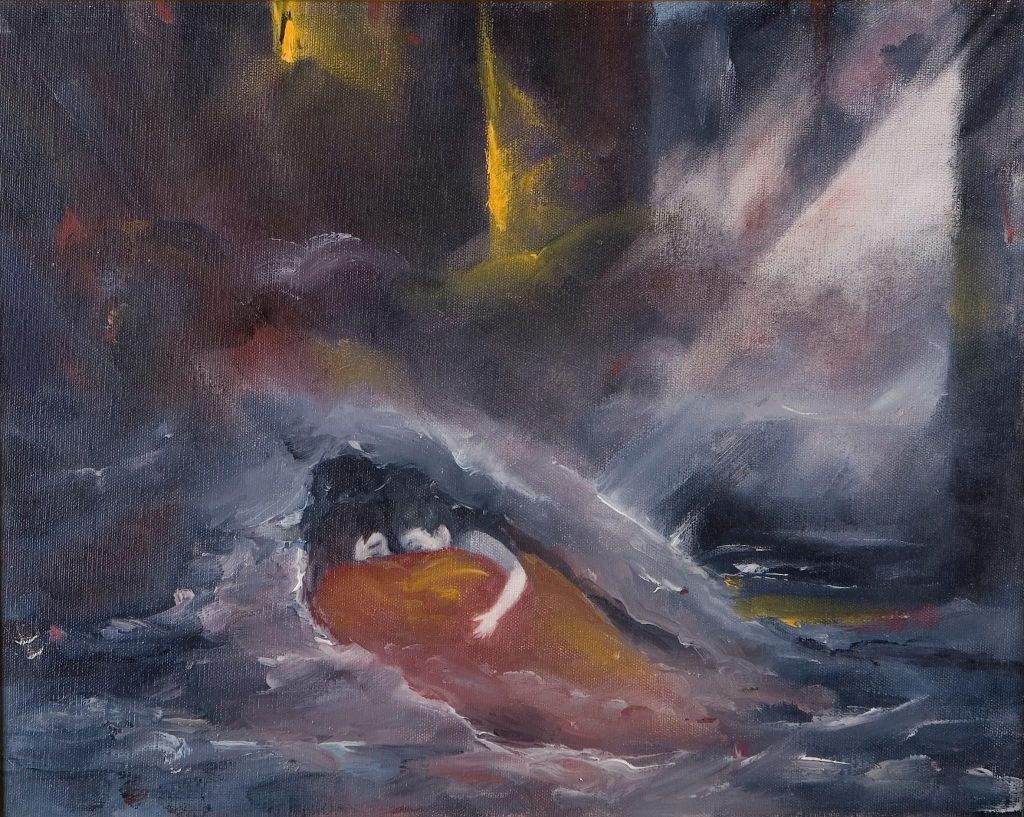
“The immortal city of Grozny” 1995

After the liberation of Grozny in August, Chechnya found itself free, but in constant danger. From April 1996 to February 1997, Dzhokhar’s inheritance passed to Zelimkhan Yandarbiev. He was an old friend of your husband’s. What do you remember about him? What kind of person was he?

Zelimkhan Yandarbiev was a poet and leader of the Vainakh Democratic Party , one of the pioneers of Chechen People’s Freedom. He visited us in Tartu, Estonia and invited Dzhokhar to the first Congress. Dzhokhar made such a brilliant speech that he was elected chairman of the Chechen People’s Executive Committee. Zelimkhan was always next to Dzhokhar and supported him in everything. He was distinguished by great courage and loyalty to the idea of independence, and therefore Dzhokhar, after a series of unsuccessful attempts on his life, instructed him to replace him as president of the CRI in the event of his death. Zelimkhan’s courage can be judged by the famous video in which he did not surrender to President Yeltsin during peace talks in the Kremlin. And he insisted that he move to the place assigned to him, opposite Zelimkhan Yandarbiev. Because the war of 1994-1996 was with the Russian aggressor, who started the war with independent Ichkeria. This was not the “internal conflict” that the Russian media were talking about. And it was not about “restoring constitutional order on the territory of the Chechen Republic of Ichkeria”, but about a full-scale war, during which the capital was burned to the ground by Russian bombs, the entire Chechen land was burned and mined ! Zelimkhan in 1997 held the election of a new president of the CRI, although he could have continued to hold office, but he wanted the Chechen people to choose their own president. Although then some blamed him for it. He has always been on the side of legality and democracy.
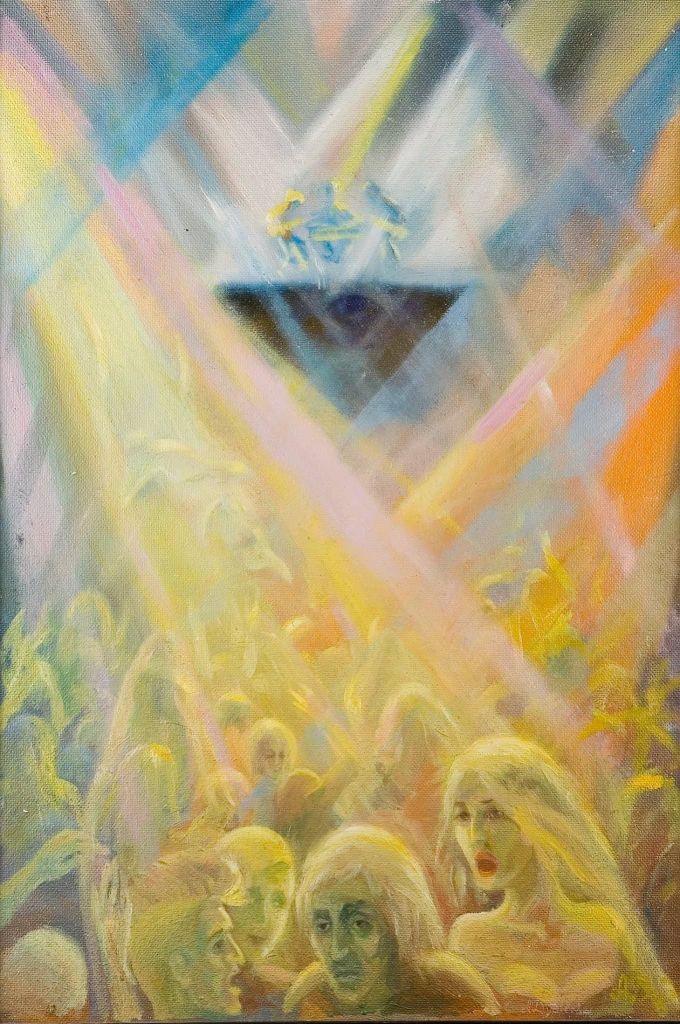
“Lost World” 1992

After the 1997 elections, the post of president of the republic passed to Aslan Maskhadov. What was your opinion of him? And how did this opinion change during your political tenure before the second Russian invasion?

Aslan Maskhadov inherited a country destroyed by the Russian-Chechen war and thousands wounded, tens of thousands of people without means of subsistence. Dzhokhar Dudayev forbade taking a ransom for captured Russians. But, immediately after his death on April 21, already in May, the oligarch Berezovsky bought out the Russian journalist Elena Masyuk from Chechen captivity for two million dollars. They returned her to the United States, and Bill Clinton, a friend of Yeltsin, solemnly awarded her a massive gold chain on her chest. All this was shown on television and marked the beginning of the hostage trade conducted by the FSK. They often took hostages from the families of wealthy businessmen to the border of the CRI and handed them over to the Chechens, and then divided the ransom through intermediaries, the main one being Berezovsky. The authorities could do nothing about the rampant crimes of the Russian special services. They killed 8 people from the International Red Cross, blaming the Chechens. And they cut off the heads of three foreigners who allegedly provided the republic with telephone communications with the whole world. They tried to show the Chechens as criminals and bandits to the whole world. In 1999, on Putin’s orders, they blew up two houses in Moscow and one in Volgodonsk, accused the Chechens of this crime and started the second Russo-Chechen war. The fate of Aslan Maskhadov was tragic, but he honorably fulfilled his duty and died as a result of a long guerrilla war. I think it was easier for him to live in a tent and fight in the forest alongside his faithful comrades than during his presidency.
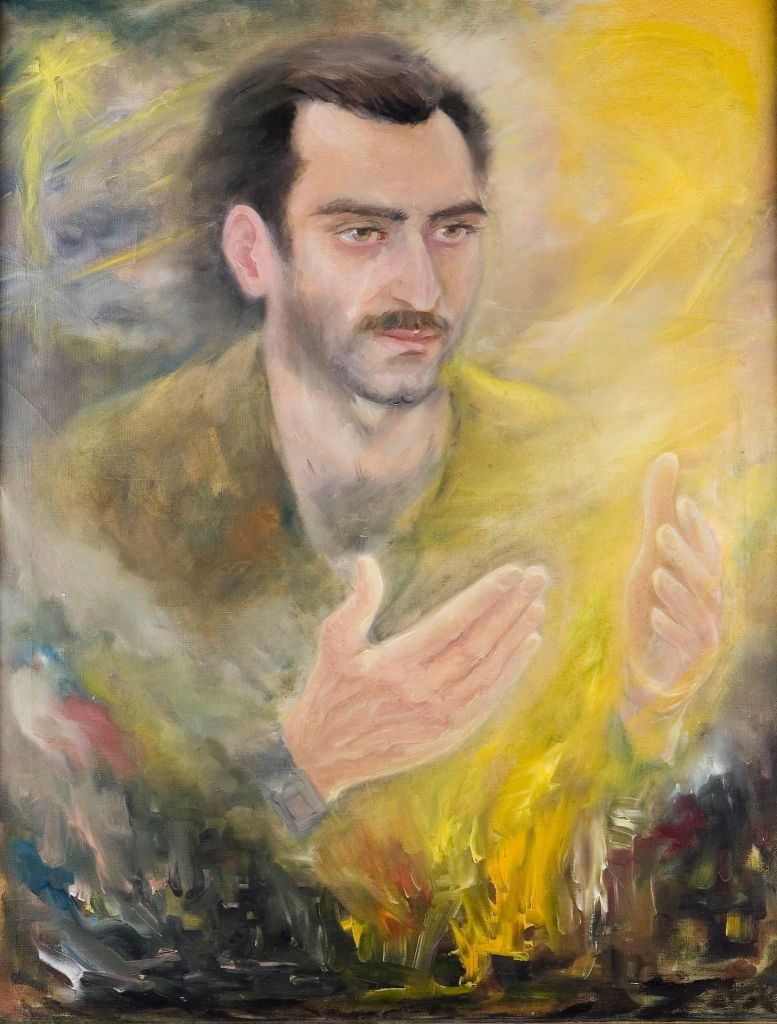
“Allah Akhbar!” 1995

The main accusation leveled against Ichkeria between 1996 and 1999 is that it became an Islamic state and abandoned the path started by the 1992 Constitution and which Dzhokhar intended to maintain. What do you think about this topic?

Ichkeria hasn’t become an Islamic state over the years because it was ruled by President Aslan Maskhadov and had a parliament, but Foreign Minister Movladi Udugov created a two-story so-called “Wahhabi” center in the city of Grozny with security and behind a wall. People from Saudi Arabia came to him, who presented themselves to the Chechen people as the most correct Muslims. They stopped cars on the street and checked people’s IDs to see if relatives or women were traveling with unfamiliar men. To then punish them with whips, as well as for drunkenness. Udugov tried to install his emirs in each village to create parallel systems of state administration. In Urus-Martan, the only village not destroyed by bombing because its inhabitants did not take part in the resistance to Russian troops in the first Russo-Chechen war, a “Wahhabi” center was organized and hijabs were brought for women. In addition, small booklets with extracts from the Koran were brought, published in Moscow. There was a Jamaat school in Baku, where our wounded were taken in, and they were taught to pray differently, but they didn’t leave to react. They were subsidized by Moscow. But, I repeat, from 1992 to 1999, Ichkeria did not become an Islamic state and retained its constitution. Much later, already during the partisan war phase, in 2002, Aslan Maskhadov made a statement and changed the constitution by introducing an Islamic one, but only the parliament has the right to make such legislative decisions if there is a quorum and the modification of the constitution by all the people during a referendum.

“Highlander Amatsi” 2002

After Maskhadov’s death, Abdul- Khalim Sadulayev became the successor to the leadership of independent Ichkeria. He stated:

“With the beginning of the Second War, work continued on the drafting of the Constitution in full accordance with the norms of Islam, […] And now article 1 of the Constitution of the CRI accounting: “The Chechen Republic of Ichkeria is a sovereign and independent Islamic state of law, created as a result of the self-determination of the Chechen people. The sources of all decisions are the Koran and the Sunnah.” Thus, we have come to the logical conclusion of the legal reforms initiated by Dzhokhar Dudayev . Do you think these arguments are correct? What do you think about Sadulaev ?

Indeed, Abdul- Khalim Saidulaev , appointed by Maskhadov in case of his death, became Aslan Maskhadov’s successor. But, like Aslan Maskhadov, he was a partisan in the forest and did not have a parliament to change the constitution. Only the parliament has the ability to engage in legislative activities, and only the people have the right to decide such important issues as changing the constitution during a referendum on this issue. The president has the right only to sign the laws passed by the parliament or the decisions of the people during a referendum.

“Free Ichkeria” 2005

Do you think the Chechen diaspora in Europe and the West as a whole will be able to influence governments to intervene decisively in the rebirth of an independent Chechnya? What actions, in your opinion, should be taken by its representatives?

There are now 160,000 Russian troops in Ichkeria. As soon as the changes in Russia begin, the Russian troops left in a foreign country, surrounded by a foreign people, will slowly leave by themselves. Just as Kadyrov and his accomplices will run away, fearing a feud. Our activities, like all past years, took place in the information struggle with those who want to take advantage of the seizure of power in the republic to declare Sharia and themselves at the head of Sharia without the democratic choice of the people in accordance with our constitution. We are the only legitimate authority, the Presidium and its members have never proclaimed themselves illegal “prime ministers” or cabinet presidents. We were approved in our offices by the last president and we have continued our work. And we exist to organize democratic elections for new leaders who will undoubtedly appear among the Chechen people in the course of all these events. We must ensure the continuity of democratic power of the people. Only the people have the right to elect a leader and other structures. In recent years, many educated young Chechens have grown up, who studied at the best universities in Europe. Surely the most active of them will show up and be ready, on a competitive basis, not only to lead the republic, but also the cabinet of ministers.

“Wind of change” 2017

You, of Russian origin, could be represented, if you will allow me an analogy, as a tree with Russian roots and Chechen branches. How do you experience the relationship between these two identities, even after all that has happened?

I am very sorry that the Kremlin has started a war of annihilation with such an amazing people as the Chechens. In the first Russo-Chechen war, at the invitation of the government of Ichkeria, 250 Russian mothers came to Nazran for their captured sons, eighteen-year-old conscripts scattered throughout the republic, finding and taking their sons away from Chechen commanders. This went down in world history, for the first time such a small nation took pity on an army of conquerors and returned the captives without any ransom to their mothers. But, now, almost everyone who opposed the Russian Empire’s aggressive wars has either left Russia or been killed. The Russian people have changed and their army has turned into an army of looters and bandits. However, Russian generals are now taking criminals out of prisons and sending them to fight in Ukraine. And Russia itself evokes completely different feelings among all the peoples of our world. Therefore, everyone is waiting for this last empire of evil and violence to collapse and for its colonial peoples to free themselves and finally become masters of their own land and destiny. And I hope that with the help of Western countries, this will happen much faster than it could be with the Chechen people, who had almost no weapons to defend themselves, most of the machine guns were stolen from the Russian occupiers themselves. And yet he didn’t give up and led the resistance for decades. There were not even a million Chechens, now there are 46 million Ukrainians, and the whole world helps them with weapons and condemnation of Russia’s aggression.

During the war in Chechnya Western politicians declared non-interference in Russia’s internal affairs. Dzhokhar warned that the time might come when the West itself would become Russia’s internal affair. Lo and behold, this moment has come, his words have come true, and they finally woke up! Now Russia is recognized by the West as a terrorist state, although I would call it a terrorist state on an international scale! Because in addition to wars of conquest, it destroys all those who oppose it around the world: Alexander Litvinenko in London, Zelimkhan Yandarbiev in Qatar, Turkey, Austria, Germany, France… it is difficult to list all those killed by name and name the methods of their murder. The Russian government has to answer for its crimes in the same way as Nazi Germany did when the Nuremberg trials took place. Russia is waiting for Nuremberg 2. And I really hope that we will all witness this momentous event and the Russian Empire will sink into oblivion.

“I’ll never forget you” 1989

How did you live, as mother and wife of the late first president, between the first and second wars? I deliberately ask this question in a very general way. Then you can talk about whatever aspect or experience is most important to you.

Between the wars I lived, like most Chechens, in the belief that there would be no more war. People have restored destroyed houses, planted trees and gardens. Life went on. My kids were there and they too thought all the bad stuff was over. After the outbreak of the second war, when the Chechen people were undeservedly accused of blowing up houses in Moscow, everyone understood that this war would become revanchist. And Moscow’s revenge for the victory of the Chechen people in 1996. I had to leave Ichkeria and move to Ingushetia, then to Georgia, to Baku and, finally, to Istanbul. Our family, like many other Chechens, was forced into exile. Throughout Ichkeria, like mushrooms, Russian filtration fields multiplied, they became more than fifty. They were even in Stavropol, Minvody , Pyatigorsk . In them, tens of thousands of Chechens were tortured and killed. Some of the dying or corpses were sold to relatives for burial. It was a terrible time! The Chechen people paid for their desire to be free with their blood! But, in his soul, he has always remained unconquered, because from time immemorial he welcomed all those who entered his house saying: “be free”! And to this day this greeting remains in effect. I am grateful to fate for giving me the opportunity to get to know this proud and humane people, their customs and traditions. A people who would be admired and taken as an example by humanity if they knew it! And I thank Allah for giving me the opportunity to witness so many miracles that I would never have believed if I hadn’t seen them myself. The Chechen people are busy now, but this is only temporary, they have a bright future ahead of them, and new names and new heroes will certainly appear, about which we still do not know anything. After all, no country in the world has as many enthusiasts as the Chechens. People ready to give their lives for the freedom of the people!

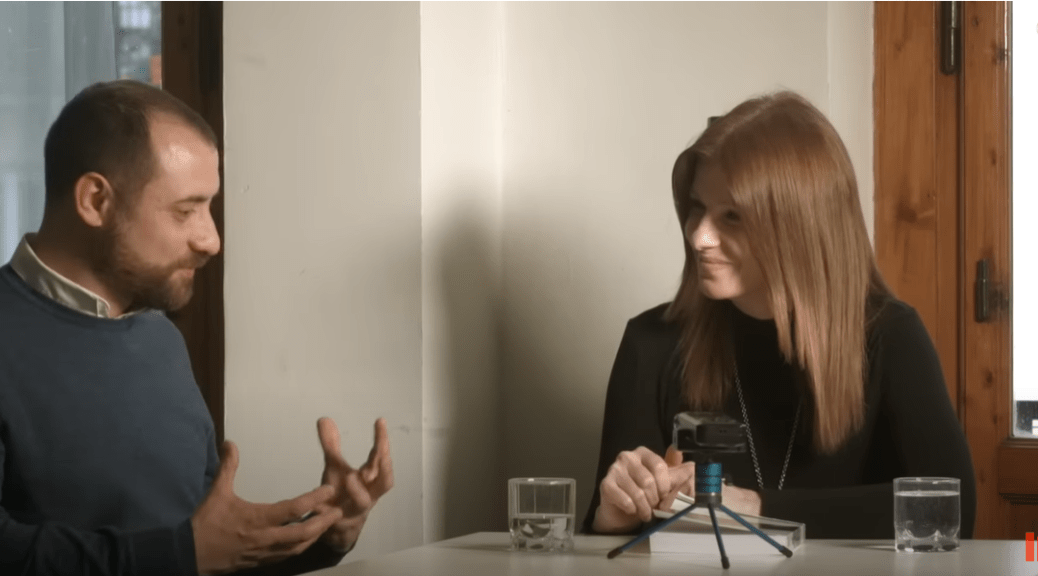
I NEWS interviews Francesco Benedetti

A few days ago Francesco Benedetti met Inna Kurochkina in Florence. The interview that emerged takes up the speeches addressed in another chat, which took place more or less a year ago, shortly before Russia invaded Ukraine. In the course of this year many things have changed, Francis’ work has moved forward and with it his awareness of how important the history of Chechnya is for the West.

We reproduce the video of the interview, attaching the transcript in English.

ENGLISH TRANSCRIPTION

First of all I would like to congratulate you from all visitors, subscribers who have already read your first volume. From today it is possible to have this second volume. How is it possible to have it?

First of all thanks to you, and thanks to all those who appreciated the first volume, and who gave me this consideration. The book is currently available in Italian, on Amazon, but will soon be available in English, thanks to the collaboration of Orts Akhmadov, son of Ilyas Akhmadov, who is working with me on the English version, and will soon also be available in Russian and Chechen, as for the first volume.

The other time we met and talked about your book was December 2021 and perhaps we were expecting war, this tragedy. Then we met in Brussels on the first day of the war, when both we and you met Akhmed Zakayev for the first time. With your help we attended some Radicali Italiani events, these very good people who organized Akhmed Zakayev’s visit to Italy, so somehow you are involved in our activities and in Ichkeria’s. How has your life changed during this year?

I have certainly had more real experiences with respect to this theme. I was a simple student of the history of the Chechen Republic of Ichkeria, but my experience was purely theoretical, abstract, not concrete, material. Since that day I have had the opportunity to speak with many people, and this second book is also written thanks to the memoirs of about a hundred people with whom I have spoken. Thus, my knowledge of that historical experience and of the human experience of the Chechens has grown enormously. From February to today I have given faces, names and lives to an experience that for me until then had only been theoretical.

You and I are working on the history of the Chechen Republic of Ichkeria, because I am also doing a cycle of chronicles. Do you understand the expression “in your skin”? How did you feel firsthand how the war was coming to Chechnya?

One of the questions I ask myself while studying the history of Chechnya, and in particular when studying this period, was “how would I have felt if I had found myself in that situation?” And I ask myself this question almost every day, because my study is based on the memories of the people I interview, and my interviews focus precisely on this aspect of every historical event: naturally I ask for information, names, dates, etc., but the first question I asked in almost every interview was “how did you feel at that moment?” “How did you spend the period between 26 November and 11 December (the time between the storming of Grozny by the pro-Russian opposition and the invasion). Personally, I try every day to imagine what the feelings of the people waiting for the war were, what they were thinking: their children, their families, how to save their families, how to save their things, their money, their cars, their homes. An event like this can completely destroy life, change people’s lives forever. I think I’m quite an empathic person, and I assure you that writing this book I suffered a lot. Like any author, I often re-read the book I’ve read, and every time I have the same feeling of tragedy on the one hand, and admiration on the other for those people who survived the war, in this case managing to win it, against their invaders .

I would like to understand how you frame the nature of the Chechen people. I was born in Georgia, I’m Ukrainian. I would like to work for the Georgian people, or for the Chechen people, but my whole heart now belongs to the Chechen people, I don’t know why. How could you describe your feeling towards the Chechen people? Because if you fell in love with this people, you did it because you have a passion in you.

I understand what you think because, when I think about it, what happened to me is really strange. I live in Tuscany, and I have no family, economic or any other connection with Chechnya. Yet ever since I was a child, something happened the first time I heard the name “Chechnya”. I don’t know exactly what, an elective affinity that has grown inside me, and I don’t know exactly why.

What I love about the Chechen people about this story is their ability to show happiness in tragedy. In them I have seen people who don’t want to be considered victims, but people who manage to find the beauty of life in everything. They have shown the world how to laugh in the face of death, and how to preserve humanity even in a situation which, if I imagine myself in their place, would strip humanity away from me as well. If a war destroyed my life maybe I’d go crazy. I have spoken to many people who have fought a war and have not gone mad, but rather have kept their kindness, their being good people. I don’t know if I would be able to keep these qualities in myself, fighting a war. I think this character trait of the Chechens is beautiful: the fact that they have managed to keep their happiness and will to live despite going through such bitter experiences.

Knowing this special character trait of this people, let’s think about how much Russia has gone to destroy them. It’s a biblical story for me. What do you think about it?

When a bully tries to hit a victim, and the victim smiles at him, the bully will become even more angry, but will ultimately be defeated by his victim’s resilience. In this sense I loved the struggle of the Chechens who showed the Russians that their spirit would never break.

In this last year we realized that the Ukrainians didn’t understand what the war in Chechnya was, just like the Russians they didn’t care about it. Now they have understood, and the Ukrainian parliament has recognized the independence, the state of occupation and the genocide of the Chechen people. What needs to happen for even Russian liberals to understand this tragedy? In their view of life there is no Chechen war and no Chechen tragedy, and of course there is no Ichkeria. What do you think?

I think Russian liberals are also part of the Russian empire. Maybe they want a “liberal empire”? Maybe it’s nonsense. I don’t think that in this sense there is much difference between the radical parties and the moderate or liberal ones. Everyone wants the same thing: to strengthen the empire, in one form or another. Maybe Russian liberals don’t want to fight the war in Ukraine, but they also don’t want to lose the integrity of their empire. I don’t see anything strange in this. I’m more used to studying and reading the news of another empire, the American one, and the liberals of the American empire are no less angry and aggressive than the nationalists. Citizens of an empire grow up thinking the only way to preserve the country is to stick together and squash any dissonant voices.

I was very surprised by your “hobby”. I’m going to show snippets from one of your band’s videos, which is called “Inner Code”. Tell me about this song about empire. I’m so surprised because you’re from Florence, we can’t relate the concept of “empire” with the city of Rome, which is so beautiful.

Rome in this song is the archetype of the empire. When we think of the Roman Empire we think of the empire by definition. The Russian Empire itself is inspired by the Roman Empire. The word “Tsar” is the translation of the Latin “Caesar”, the Kaiser of the German Empire is the Germanic translation of “Caesar”, and so on. “He will burn Rome” speaks of the fall of Rome, but by extension it speaks of the fall of all empires. No matter how big and strong, every empire will fall sooner or later. When I listen to this song I find a connection with the story we are talking about, being a story that can work with any empire, even the Russian one. However, I recommend listening to the song at a low volume!

[…]

Basically, everything we are talking about revolves around the word “Freedom”. You are a free person in all respects, as I see. Do you see the freedom of Ichkeria under attack? Do you think the imperial forces, the FSB , want to cancel this goal of freedom? We perceive these attacks, for example those that are being carried out against Akhmed Zakayev, a person who is a symbol of freedom of Ichkeria. Do you perceive these attacks from Italy?

I guess this behavior is consistent with the situation. I have an indirect perception of this, because unfortunately Italian newspapers don’t report much on what is happening in Chechnya or in the Chechen diaspora. However, having some contact with members of the Chechen diaspora due to my studies, I imagine that these people are talking about present and future plans to achieve independence and freedom for Chechnya and sometimes they do it in heated discussions, or getting angry. I speak as an Italian, I don’t think I have the right to tell the Chechens what they have to do. Only, seeing what is happening in the Chechen diaspora from the outside, I notice that there are “unresolved issues” and it is possible that the FSB , or anyone who does not want an independent Chechnya, could emphasize these divisions on the pro-independence front to weaken it. I hope people don’t fall into this trap. I don’t know if Chechnya’s independence is far or near, but it is important that at every step we find ourselves in the best condition to gather all our strength together to win freedom.

In recent months, also thanks to you and to the Italian Radicals (I am thinking of the meeting in Rome between Zakayev and Benedetto della Vedova, the speech to the Italian parliament, the recognition of Ichkeria by the Ukrainian parliament, the just finished speech by Zakayev at the European Parliament etc.) we have seen an evolution in the proposal of the government of Ichkeria. In Brussels, Zakayev presented a project for the reconstitution of the Republic of the Mountain, established in 1918 and dissolved by the Bolsheviks, and which Zviad Gamsakhurdia and Dzhokhar Dudaev at the time wanted to reconstitute in the 1990s. Now Zakayev is carrying out this idea, this project, and the Minister of Foreign Affairs, Inal Sharip has gone to Washington DC and is presenting it there. As a historian, do you think this project of the Mountain Republic is safer, more feasible than independent Chechnya? Do you think Chechnya alone could survive its monstrous neighbors?

I think creating a confederation is very difficult, but if it is led by a strong center, it can multiply the strength of every single member. If the confederation is a simple sum of subjects I don’t think it will last long. An example can be that of the European Union: a sum of countries, but its strength is not equivalent to the sum of the forces that compose it. Because each country defends its interests, and this is a problem because a state built like this cannot resist the forces of countries like the United States, Russia, China. The problem with our confederation is that we don’t have a center, a nation that holds all the others together. And every time one of the European nations takes supremacy, the others fight against it. So our European confederation is politically weak. If the Chechens want to lead a confederation they don’t have to do it like the Europeans did. If they are credible enough to attract other nations into a confederation of which they are the centre, not as an imperial centre, but as the place of those who believe most of all in this project, and who are ready to sacrifice themselves for it more than the others to keep everyone together, then I think this is a political project that can last. Like, for example, the United States, which is a confederacy that, after some major problems, has become the most powerful nation on earth. A confederation, therefore, can last, but you need a center that has the credibility and strength to hold all the others together, not by force but by setting an example. I think the Chechens have shown the world great examples more than once.

In 1997 Russia and Chechnya signed a peace treaty which was later betrayed. What do you think about the desire of the world community to persuade Ukraine to sign a similar treaty with Russia?

Looking at history, it is perfectly understood that the real value of documents depends on whether or not they reflect the real situation. In 1997 Russia signed a peace treaty, but while it was signing it was preparing its second invasion. In my opinion, if he now accepts a compromise with Russia, this compromise will in no case fix any situation, because I don’t think the Russians would be satisfied, and neither would the Ukrainians. I believe that a compromise now would only be a way of moving the war forward by three or four years. I believe that this is a moment in which it is necessary to solve a problem that was born in Chechnya. In a wonderful review by Adriano Sofri, an Italian who knows Chechnya well, and who wrote a wonderful article on this book, he says that what happened in Ukraine is a remake of what happened in Chechnya and Georgia, and that Ukraine is the end of a line that starts in Chechnya. It is time to break this line once and for all, otherwise we will have to add another point to this line in four or five years. As a European I reflect on the fact that this line does not go away from Europe, but from Chechnya towards Europe. The next point will be even closer to our home, not further away. I think Europe should think about this. If they don’t stop this process now, they will face it again even closer to home.

Back to the Constitution: Francesco Benedetti interviews Ikhvan Gerikhanov (Part 2)

In April 21, 1996, President Dudayev was killed, and Vice-President Yandarbiev assumed his interim powers. How did your relationship with him develop?

After the treasonous assassination of the President, I returned to Grozny and actively participated in the preparation of the new elections. I returned to my duties when President Yandarbiev accepted my condition that the Constitutional Court could begin its work only after the annulment of the unconstitutional decree concerning its dissolution in April 1993. This happened with the Decree from these promulgated on November 12, 1996, in which it was clarified that the dissolution order issued by Dudaev was to be considered devoid of any legal effect. At that point I started forming a new team of judges for the court, having to make up for the expressed refusal of some of the old members to collaborate with the new government, as well as the defections of others, who had left the territory of the Republic.

During his mandate, Yandarbiev initiated a series of legislative interventions aimed at establishing an Islamic republic, such as, for example, the creation of Sharia courts. Were these measures constitutionally correct? Has the Constitutional Court sanctioned them?


To take a specific decision on the introduction of Sharia courts, the Constitutional Court did not yet have the necessary quorum for a vote and the approval of the judges was and is the prerogative of the Parliament of the Chechen Republic, which during this period had not yet been renewed. Actions aimed at introducing Sharia courts directly contradict the Constitution of the Chechen Republic, which I have repeatedly expressed in the media and personally to Yandarbiev.

Zelimkhan Yandarbiev


Following the January 1997 presidential elections, Aslan Maskhadov became president. How was your work under his tenure?


After the election of President and of the Parliament, I have actively collaborated with the institutions and have looked for candidates to complete the ranks of the Constitutional Court , and obtain their nomination by the Parliament. However I failed to complete this task, due to the situation in the Republic and the introduction of Sharia courts. However, as head of the highest judicial authority, I have actively participated in all legal activities of national importance.

By Presidential Decree of May 6 , 1996, I was appointed an expert in the process of negotiating and drafting documents on relations between the Chechen Republic of Ichkeria and the Russian Federation, and also headed the office of the State Legal Commission to develop and improve the constitutional principles , with the creation of a code of Islamic law CHRI. This order was presented to the President on May 20, 1997. This code of laws was personally prepared by me and delivered to President Maskhadov under the name ” Korta Nizam “, meaning “main consensus”: this project included the combination of Muslim and secular law, without radical deviations from the mentality and customs ( adat ) of the Chechen people, but taking into account the rules of conduct for a Muslim according to the Koran and the Sunnah of our Prophet (SAS). This law should have been voted on in a referendum and subsequently should have been adopted by the Parliament. If the Chechen people had approved this bill, after it was adopted by its legislative body, it would have acquired the status of Constitution as Basic Law of the country.However, once again, the crisis of the institutions has not allowed this to be discussed, and possibly integrated into the Fundamental Law of the State.

In addition to this, I was involved in the work as a member of the State Commission for the Development of the National Security Doctrine of the CRI, according to the Resolution of the Cabinet of Ministers of July 31, 1997. Basically, we worked on guarantees for the country’s national security and so that the invasion of our country would not be repeated over the decades. We have tried to establish ChRI in the world community as a subject of international law and find protection through international institutions. In addition, we have worked on consolidating our statehood through the Charter of the United Nations, which should be the document guaranteeing our security, both as a state and as a whole and as an ethnic group in communion with the whole civilized world. Constitutional Court member Seda Khalidova worked actively with me. In 1997 we met with the new Chairman of the Constitutional Court of the Russian Federation M. Baglai and even prepared an agreement on the interaction of the two highest state judicial bodies. This draft agreement was not approved by the parties, for the well-known reasons we have already mentioned.

As the radical forces consolidated in the country, the possibility of creating an Islamic state was increasingly discussed. How could this idea fit into the 1992 Constitution?


In no way. The Constitution of the CRI and its norms are mandatory, i.e. mandatory, regardless of the situation, if changes to individual articles of the Constitution have not been made in accordance with the requirements of this Basic Law.

At the end of 1998, Maskhadov was tried by the Sharia court. Was this court constitutionally legal? Do you remember this process?

By that time I had left the republic and worked at the International Arbitration Tribunal, but as one of the authors of the 1992 Constitution of the Chechen Republic, I can state that such a decision grossly violates the requirements of the Constitution of the Chechen Republic!

How did your experience as President of the Constitutional Court ended?

I resigned in March 1998, after an unconstitutional vote of no confidence in the President of the Constitutional Court of the Chechen Republic, ie in me, for my position against the introduction of Sharia courts and the use of public executions. In the Parliament of the CRI on the second convocation there were deputies who had their own candidates for the post of President of the Tribunal and, frankly, had their own mercantile interests, which under my leadership they could not have realized. Moreover, the very discussion regarding the issue of mistrust of me is an unconstitutional process, if I have not committed a crime or if, for health reasons, I cannot fulfill my duties, or I have committed other actions contrary to the ideas of the sovereignty and territorial integrity of the state, prescribed by the law “On the activities of the Constitutional Court of the Chechen Republic”, adopted in 1992.

This question was initiated by two deputies, one of whom, as it was later established, worked for the FSB of Russia. The second deputy brought his name into disrepute during the proceedings of the first convocation Parliament. Their names are known and they, being refugees in Europe, continue to harm the legitimate authorities of the CRI.

Chechnya, 1997: Religious police impose corporal punishment for drunkenness

After the start of the Second Russo-Chechen War and Russia’s second invasion of the country, martial law was introduced in the CRI. Aslan Maskhadov’s mandate would have expired in February 2002, but he remained in office until his assassination in 2005. If you recall, what measure extended his mandate up to this point?

First of all, we must proceed from the fact that the President of the CRI, in accordance with the requirements of the Constitution of the CRI, declared martial law in connection with the invasion of the aggressor into the sovereign territory of the country.

Secondly, in connection with martial law and the purpose of centralized government, the chairman of the CRI, Aslan Maskhadov, issued a decree on October 5, 1999 on the introduction of martial law on the territory of the republic and the adoption of Annex No . 1 to it, according to which all state structures were subordinated to the established State Defense Committee (GKO), with the wording that ” all authorities stop their work of norm-setting “. Furthermore, the State Defense Committee, since martial law was declared, has been approved as ” the highest collegial body of state power…”. And with resolution no. 217, adopted at the same time, by decision of the GKO, the President of the CRI was endowed with additional powers corresponding to the highest legislative and executive power!

Thus, the chairman of the CRI, Aslan Maskhadov, as the commander-in-chief of the armed forces of the CRI and the head of the country’s State Defense Committee, during this wartime period could not and had no legal right to leave this post and remained in place until his treasonous assassination by Russian punishers.

After Maskhadov’s assassination, power passed to Vice President Abdul Khalim Sadulayev. Was such a transfer of power constitutionally acceptable?

Of course, and this right is enshrined in art. 75 of the Constitution of the Chechen Republic, which provides that in case of removal from office of the President or in other cases in which the President cannot perform his duties, the Vice-President is required to assume full powers.

After the assassination of Sadulaev , power passed to Dokku Umarov , who proclaimed himself President. There appear to be differences between the Maskhadov-Sadulayev succession and the Sadulayev- Umarov power . What do you think is the difference between these two phenomena?

I don’t see much difference, since CRI president Abdul- Khalim Sadulaev , by decree dated June 2, 2005, appointed Umarov Doku as Vice President of the CRI. As it was indicated above, the State Defense Committee is the only state authority for the period of martial law in the country, and such actions to transfer powers do not go beyond the legislation of the CRI, although they are of a temporary nature, until the end of war and the lifting of the state of emergency.

In October 2007, Umarov announced the dissolution of the CRI as part of the Caucasus Emirate. Is this process unconstitutional?

These actions grossly violate the requirements of the Constitution of the CRI and are criminally punishable as liquidation of the state system and its power structures!

Dokku Umarov (center) last President of the Chechen Republic of Ichkeria and founder of the Caucasus Emirate


A few months after the birth of the Caucasus Emirate, the current Chairman of the Cabinet of Ministers, Akhmed Zakayev, was elected to his current position by still capable deputies. How did this nomination come about? Was it constitutionally correct?

This process can be explained at length and it is impossible to complete it in this interview due to its large volume in the description. There is my October 10, 2020 Expert Opinion [attached at the bottom of this interview, NDR], made at the request of the Council of Elders of Europe, which has done a great job of consolidating disparate structures, as each of them it is declared a legitimate authority in accordance with the Constitution of the CRI. During this period, I was not a member of any diaspora or power group, so I conducted a thorough analysis and evaluation of the requirements of the Constitution of the CRI, as one of its authors and a scientist in the field of jurisprudence, and concluded that the CRI government in exile is a legitimate state authority of the CRI.

Is it true that in 2002 all powers were transferred to the GKO and that so far the institutional power of the CRI derives from the decisions of this committee, now renamed the State Deoccupation Commitee?

Yes, it is this structure that continues to have the status of the only state authority of the CRI, as the successor to the State Defense Committee, represented by the State Deoccupation Commitee of the annexed territory by the Russian Armed Forces and their protégés.

From the point of view of constitutional law, can the current CRI authorities represented by the Cabinet of Ministers, chaired by Akhmed Zakaev , recognize themselves as legitimate?

Yes, and this does not contradict the requirements of the Constitution of the CRI, and proof of this is the fact that it was approved by the legal successor of the state power of the CRI – the State Deoccupation Commitee. A detailed analysis of the legitimacy of the Cabinet of Ministers of the CRI is contained in the opinion of 10.10.2020.

FREEDOM SOLD OR WAR BOUGHT? – REFLECTIONS BY APTI BATALOV (part 2)

The sharp deterioration of Russian-Chechen relations and the intensification of activities by the Russian special services in Ichkeria and neighboring territories began with Putin’s appointment as Secretary of the Security Council of the Russian Federation. Armed provocations were staged on the Russian-Chechen border. In April 1999, for example, Russian forces attacked a Chechen border post along the Kizlyar section of the border at night, killing one guard and wounding several others. This was evidently an attempt to draw the Chechens into an armed conflict in Dagestan. However Maskhadov, realizing what the Russians wanted to achieve, forbade any retaliatory action across the border. The Russian provocation, therefore, was not followed up. The next action was staged in the Herzel section of the border in May 1999. Fierce fighting took place here for several days, during which even field artillery was used. The Russians’ plan was the same – to lure the Dagestanis to their side. Once again, however, the President of Ichkeria managed to preserve the peace between the Chechen and Dagestani peoples. Even this cowardly enterprise failed, the Russians began to threaten the country with all kinds of ultimatums.

Aslan Maskhadov (left) and Alexander Lebed (right) sign the Khasavyurt’s Accords, August 1996

President Yeltsin’s second term was coming to an end, and to save themselves from prison this drunkard’s entourage began frantically looking for a replacement. However, this group did not have a candidate who could validly oppose Primakov, and with the latter’s coming to power, all this mess would end: everything they plundered would be confiscated from them. In an attempt to find a good man they first turned to Stephasin, who refused. After these appeared Putin, like a devil from a snuffbox. He was ready to accept all the conditions stipulated by the Yeltsin clique. However , he was not yet popular enough to oppose Primakov. Thus it was that the public relations specialists, led by Berezovsky, Voloshin and Pavlovsky played the “Chechen card” in favor of Putin.

Every presidential campaign in modern “democratic” Russia is shrouded in tragedy and blood. At that time the GRU and the FSB flooded Chechnya with their agents. The services were infiltrated into the restricted circle of Chechen political-military leaders, taking advantage of the latter’s indifference in the selection of their entourage, soon becoming confidants of their godfathers. As the struggle for the presidency intensified in Moscow, Russian agents accelerated their provocative and subversive activities, as was evident from the events that began to occur in Ichkeria. I recall that in the spring of 1997 rumors began to circulate about the imminent unification of Chechnya and Dagestan into a single Islamic state, and that a “cleansing” of Russians would soon begin in preparation for this unification. Various kinds of figures and emissaries began to appear in Chechnya, coming from Dagestan. These men found great hospitality, and the support of those who supported them. Without encountering any significant opposition from the authorities, supporters of the Imamate began to promote the idea of creating a Chechen-Dagestan state “to marry Dagestan to Ichkeria” as one of them put it.

Some time later, a congress of the Chechen and Dagestani peoples was held in Dzhokhar, in the presence of the same leadership of Ichkeria. Shamil Basayev was elected Imam of Chechnya and Dagestan, with the aim of establishing an Imamate. Analyzing everything that was happening, it was obvious that this was being done under the direction of the Lubyanka , but any sober remarks regarding this adventure met with strong opposition from the “advocates of pure Islam”, anyone who dared to say something objective in this matter he would have been branded as an “apostate”, an agent of the Russians, a Jew or belonging to other categories considered hostile to the Chechens.

Shamil Basayev and Al Khattab, the two main animators of the Congress of Peoples of Ichkeria and Dagestan

After using all sorts of provocations against Ichkeria, starting with the financing of slave traders and ending with battles on the Russian-Chechen border, without results, the Russian revanchists used the risk of an Islamic insurrection in the Caucasus as a strong argument for the 1999 presidential campaign. In the summer of 1999, Basayev and his supporters accelerated preparations for the invasion of Dagestan, making no secret of their plans. The leadership of Ichkeria, being in a serious internal crisis, did not have the opportunity to intervene.

At the end of August , more precisely on August 28, 1999, a meeting of the State Defense Committee (GKO) was held in the building of the Presidential Administration. Almost all of the country’s military-political leadership attended this meeting, as well as religious figures and some members of Parliament. The main argument was evidently the invasion of Dagestan. Basayev had shown himself to the whole world in the territory of Dagestan, with a watermelon in his hand. The GKO was expected to make a decision on this issue , and a proposal was made to ask Basayev to immediately leave Dagestan, and return to Chechnya.

The meeting took place in a tense atmosphere: the president assessed the situation as very difficult, and harshly accused Basayev of having exposed the Chechen people to serious consequences. Finally, he urged those present to prepare to repel the invasion of the Russians, as, according to him, another war was inevitable at this point. At the end of his speech, the President asked the members of the State Defense Committee to express their opinion on this issue. On the eve of the GKO meeting, I hoped that a collective statement condemning the actions of Shamil Basayev would be presented: I am sure that Shamil would not have remained indifferent to the GKO’s pronouncement. Yet this did not happen. Without boring the reader with a list of the names of those present, I will say that there were 35/40 people there. For the most part the speakers expressed little, and not very clearly. A clear and unequivocal position on the matter was expressed by no more than 3 – 4 people. Among them was Akhmed Zakayev. In his speech the Minister of Culture supported and approved Basayev’s actions without hesitation. I, in turn, called Basayev’s actions a crime against the Chechen people. Many of those who condemn Basayev’s action today remained silent then. The lack of a unanimous decision on this issue was a mistake on the part of the GKO. The leadership of Ichkeria, with its fragmentation, showed the side of Russian anti-Chechen propaganda. Our short-sightedness was very useful to the Russian revanchists.

Freedom or death! History of the Chechen Republic of Ichkeria: The second volume in Italian is out today

The war in Ukraine started in Chechnya. It may seem like a provocation. Yet, this is the reality that the pages of this second volume reveal, entirely dedicated to the First Russo-Chechen War. The genesis, development and unfolding of this bloody conflict seem to be the draft of the script that the world has been witnessing in recent months between the Donbass and the Crimea.

Even then, as now, Russia invaded a free state, disguising the war it was waging behind the label of a “special operation.”

Even then, as now, the enemy of the Russian state had been labeled and demonized: if Zelensky and his government are called “Nazis” today, Dudayev and his ministers were then called “bandits”.

Even then, as today, convinced of their superiority, the military commands marched on the capital, claiming to bend a people to their will, as they had done several times in Soviet times. But even then, as now, they were forced to withdraw, only to unleash a bloody all-out war, the most devastating European war since 1945.

The First Russo-Chechen War was the first tragic product of Russian revanchism: the “zero point” of a parable that from Grozny leads to Kiev, passing through Georgia, Crimea, Belarus and Donbass. With one substantial difference: that the Russians lost that first war against Chechnya. Their imperial ambitions, resting on the worn foundations of a crumbling empire, ended up frustrated by the stubbornness of a nation immensely inferior in number and means, to that of Ukraine, which today defends its land from the war unleashed by Putin.

This story can teach those who have the patience to read it two important lessons: what happens when you indulge the ambitions of an empire, and how do you defeat it. If it is already too late to put the first into practice, we still have time for the second.

Purchase the volume here:

https://www.amazon.it/Libert%C3%A0-Storia-Repubblica-Cecena-Ichkeria/dp/B0BMSY666Y/ref=sr_1_4?crid=379QYOJIF1LQJ&keywords=libert%C3%A0+o+morte&qid=1670606213&sprefix=%2Caps %2C76&sr=8-4

Back to the Constitution: Francesco Benedetti interviews Ikhvan Gerikhanov

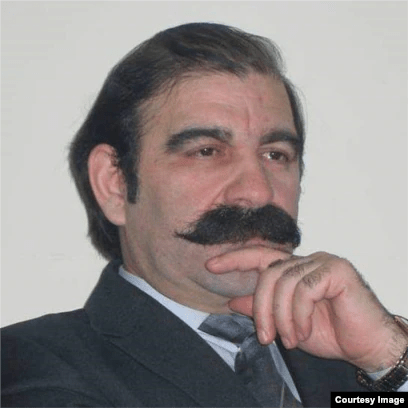
Dr. Ikhvan Gerikhanov has served the Chechen Republic since 1991. Doctor in law and specialist in comparative studies in international law, with the statute od judge of the highest category, Gerikhanov was Member of the Executive Committee of the National Congress of the Chechen People, Deputy of Parliament on first convocation, and President of the Constitutional Court from 1993 to 1998. He was one of the main authors of the Constitution of 1992, which still today represents the Basic Law of the Chechen Republic of Ichkeria.

Today Gerikhanov is the head of the national war crimes tribunal in the Chechen Republic of Ichkeria. About this activity, he said: “The objective of our trinbunal is the collection and evaluation of evidence for the assessment of the presence of signs of genocide and ethnocide of the chechen people, starting from the the time of the Tsar’s autocracy, the communist regime and the modern russian invasion on our territory”.

He currently resides in France. The French government refused him and his family a few weeks ago, political refugee status.

We had a long conversation with him about the Constitution, the legitimacy of ChRI governments, as well as some of the most controversial laws, not forgetting his work as President of the Constitutional Court.

Ikhvan Gerikhanov in front of the text of the newly approved Constitution

Dr. Gerikhanov, when talk about a constitution started?

The first debates regarding the writing of the Constitution began at the moment of the creation of the Provisional Supreme Soviet, on September 7, 1991. This body was attended by former deputies of the Chechen-Ingush Supreme Soviet and popular representatives, and was headed by the future Speaker of the Parliament of the Chechen Republic, Hussein Akhmadov. Joint commissions were created, including a juridical commission for the elaboration of legislative projects concerning the election of the President and the Parliament of the Republic. As a member of the National Congress of the Chechen People (OKChN) and as the only legal scholar (at that time I was a district court judge of the Leninsky district of Grozny, and had recently defended a dissertation on international law at the University of Kiev) I was included in this legal commission, chaired by the former Second Secretary of the regional party committee, Lechi Magomadov. A wonderful person. Many people from all professional backgrounds participated in the discussion of these projects. The discussion was publicized in the media, including through television. Every citizen of the Republic was able to participate.

In 1994, when the war broke out, Magomadov would have been among the main exponents of the unionist government. Don’t you think that the work he did in the legal commission contradicts the choice to take the side of Russia during the First World War?

Magomadov was first of all a worthy and loyal person. Secondly, he fully supported the decisions of the Chechen People’s Congress. At that time he supported the reasons of the people, and did not participate in any opposition. From his work the Chechen nation only benefited. He died in Mecca during the pilgrimage.

If we had to judge people by the episodes, keep in mind that between 2010 and 2012 I directed the Arbitration Tribunal of the Chechen Republic, which is not part of the power system, but helps all those who turn to it in the resolution of civil cases . Due to conflicts with the local authorities, as well as the fact that I refused to pay the “tribute”, they tried to initiate a criminal case against me. And for this reason I was forced to leave my fatherland and my father’s house once again.

Therefore, one cannot judge people by episodes, as life makes its own adjustments, and sometimes a person is forced to live side by side with the enemy. Some supporters of independence still work in various structures today, while in the republic the protégés of the Kremlin rule. This does not mean that they have betrayed the idea of \u200b\u200bfreedom!

In the elections of 27 October 1991 you were elected deputy. Do you remember how Parliament developed the work on the Constitution?

I was elected in the Nadterechny constituency. Once formed, the Parliament adopted as a basis the draft already developed by the legal commission of the Provisional Supreme Soviet and, after a general discussion which also took place through the media, in the presence of journalists, jurists and simple interested parties, the Parliament adopted the Constitution of the Republic Chechen on March 12, 1991, a year and a half before Russia adopted its own. Personally, I was one of the main co-authors of the Constitution. The deputies did not have much time to adopt the Basic Law, since Russia had already declared the election of the President and Parliament illegal, and it was urgent to consolidate sovereignty by law, as promised to the Chechen National People’s Congress. Within the walls of the parliament of the Chechen Republic, in the body of lawyers’ deputies, there were very few lawyers, only four people out of 41 deputies, and it was not easy to adopt the Constitution when the body of deputies consisted of former farm workers and builders. But we all faced this task, and the Constitution of the Chechen Republic was adopted by the Parliament of the Chechen Republic, and we all rejoiced this holiday, regardless of profession and religion!

There were many opposition supporters in Nadterechny District. They declared that the elections were a farce and that they did not take place in their controlled areas. How do you respond to these accusations?

During the election period, there were opposition supporters in Nadterechny District, but only in one place, not everywhere. The population still did not realize what was happening, and was rather neutral. I have personally met with voters in two large settlements, where they know me well, and the electoral commission received the ballots and prepared the elections. Two representatives were elected in this constituency. Unfortunately my colleague died heroically in the First War!

After the promulgation of the constitution, the institutions foreseen by the Basic Law began to be established. One of these was the Constitutional Court, of which you were elected president in March 1993. How did this constitution process take place?


In early 1992, the Parliament of the Chechen Republic adopted the law “On the activities of the Constitutional Court of the Chechen Republic” and, according to it, the number of judges was determined at seven people. Well-known lawyers from the Republic, from the Ministry of Justice, from the Public Prosecutor’s Office and from the Supreme Court of the Republic took part in the election of the President of the Constitutional Court. Usman Imaev was nominated by the President of the Chechen Republic, while my fellow deputies convinced me to participate in these elections. I can say that all the judges of the Constitutional Court of the Chechen Republic were highly qualified specialists and experienced lawyers. I can be proud of all my colleagues who have had the opportunity to work with them, especially Judge Seda Khalidova, who went through a very difficult path with us and did not become a defector from another government, as some judges have done.

The three leaders of the first call parliament: from left to right, Bektimar Mezhidov (Vice-President), Hussein Akhmadov (President), Magomed Gushakayev (Vice-President)

Why did Dudayev want Imaev in that role?

Usman Imaev was a very knowledgeable lawyer and an excellent executor of all orders of Dzhokhar Dudayev. I would have been happy and satisfied if he had been elected head of the Constitutional Court, but the Parliament saw me, probably, not as an executor of someone else’s orders, but as a learned lawyer, and a person of principle. For example, once elected I was the first of the chechen leaders to meet V. Zorkin, President of the Russian Constitutional Court. On that occasion we prepared a joint agreement ready to be signed, but this was not possible due to the current crisis of power in the Republic.

What activities did the Constitutional Court perform?

The Constitutional Court of the Chechen Republic fulfilled its direct duties of protection of the constitutional order and in strict compliance with the provisions of the Constitution, regardless of the origin of the legislative acts, be it the President or the Parliament.

We have repeatedly made decisions on the inconsistency of our Constitution with the Decrees of the President and the Parliament of the Chechen Republic, which at first were taken for granted.
Then, when the confrontation between the legislative and executive bodies became an open conflict, the intervention of our court, and that of its president were not fully received correctly and each side wanted to see the Constitutional Court of the Chechen Republic as “partisan ”, which was impossible, because the court was established to protect the constitutional order and not the branches of power.

The Constitution establishes that Parliament holds the legislative power, and this has the right to approve presidential appointments and to control the work of civil servants. President Dudayev’s reluctance to follow these instructions has led to serious tensions between the president and parliament. What was the origin of these tensions?

The main reason for the confrontation between the legislature and the executive was the misunderstanding or non-acceptance of the fact that the Republic was parliamentary. Many members of the government, including the President, could not bear it. At the very beginning of the confrontation between these branches of power, the Constitutional Court and its chairman issued dozens of official statements on the need to follow the requirements of the Constitution of the Chechen Republic and on the fact that such an escalation of tension could lead to consequences unpredictable.

I don’t know the reason behind this non-acceptance of the parliamentary nature of the Republic, but I can say that around Dudayev there were many sycophants who could influence his decision. I myself was dumbfounded by his behavior, when he sent a late night messenger asking me or advice on key legal matters. After agreeing on these matters, Dzhokhar publicly stated the opposite, and when I asked him why he did this, he referred to unknown people who convinced him against our agreement!

Many members of the entourage of the President of the Chechen Republic literally influenced Dzhokhar Dudayev about the negative influence of the parliament of the Chechen Republic in state building, having their own personal and mercantile interests. Issues of a legislative nature were resolved at the household level, ignoring the requirements of the Constitution and other regulatory acts. First of all, it was a confrontation between the forces of order: the Public Prosecutor’s Office and the Ministry of Internal Affairs. Each of them resolved the issue from the point of view of his participation in the process of declaring sovereignty, and not from the legal point of view of fulfilling his direct duties.
All this led to chaos and mutual misunderstanding, while those who could not be authorized to manage state bodies also very actively intervened: various parties, organizations of the elderly, athletes and cultural figures, who were assigned positions in based on their popularity in their business field.


On April 10 and 17, 1993, President Dudayev issued a series of decrees establishing direct presidential rule and dissolving parliament, decrees which were declared illegal by the Constitutional Court. Do you remember exactly what these decrees contained and why he declared them illegal?

The Constitutional Court has recognized the President’s Decrees regarding the dissolution of the supreme legislative body as illegitimate, as they grossly contradict the provisions of the Constitution. The content of the decree of the President of the Chechen Republic on the dissolution of the supreme legislative body of the country stated that, in order to preserve the sovereignty and political system, and due to the loss of confidence in it, in accordance with Art. 73 of the Constitution of the Chechen Republic the Parliament of the Chechen Republic should have been dissolved. In truth, the art. 73 of the Constitution of the CRI does not guarantee the President these powers, not even in times of war. He could suspend the activities of all authorities by imposing martial law, but this was not done at the time, since there was no reason to do so. The action exercised by Dudayev, in legal language is called “seizure of power”. which is prohibited by art. 2 of the Constitution.

As mentioned above, the Constitutional Court has applied all means to resolve this conflict and, as the head of the highest legislative body, I have personally asked and spoken to the President of the Parliament and almost all the deputies, as well as the President of the Republic, so that this confrontation would not result in a violation of the Constitution of the Chechen Republic and in an armed conflict. However, each side considered itself on the right side, and we are all witnesses and eyewitnesses of what happened next. The Constitutional Court of the Chechen Republic, on the basis of the obligation to control and safeguard the state system, has correctly pronounced the illegitimacy of the acts of dissolution of the supreme legislative body, not being able otherwise by the judicial body, called to respond to violations of the Constitution of the Chechen Republic.


In the same period, the parliament called a referendum on trust in President Dudayev and in Parliament itself, which the Constitutional Court deemed acceptable. Was this referendum legitimate?


When the confrontation between legislative and executive authority reached a critical point, the Parliament made use of its constitutional right, provided for by paragraph 24 of art. 64 of the Constitution of the Chechen Republic on the popular vote, to hold a referendum on the issue of trust in the authorities and regarding the form of government of the state. This decision is the prerogative of the Parliament of the Chechen Republic and only it can take such a decision, if it deems it necessary, without the consent of any branch of power. These days the crisis of power, with the exception of the judiciary, was in full swing and turned into an open confrontation, with the subsequent armed intervention of the police forces during the dissolution of the Parliament of the Chechen Republic.

Dzhokhar Dudaev votes in the elections of 27 October 1991

On June 3, 1993, Dudayev rejected the opinion of the Constitutional Court regarding the legitimacy of the referendum, declaring it a “perversion of the law”. Why, in your opinion, was Dudayev so against the referendum?


We have tried to solve this process with all diplomatic methods, up to involving respected people and elders. A conciliation group was created headed by the president of the Academy of Sciences, doctor of physical and mathematical sciences Khamzat Ibragimov, in which I was also included. I spoke to Dzhokhar repeatedly on this matter, but after every conversation he did not operate as required by the Constitution. He believed, like everyone in his entourage, that the parliament of the Chechen Republic acts in favor of the opposition, and that the parliamentarians themselves are on several “barricades” of this crisis.

After the coup d’état of 4 June 1993, the Constitutional Court remained the only institution recognized by the Constitution on a permanent basis. On 18 June it issued a statement on the illegality of the government’s actions. Do you remember the contents of this court statement? What reactions has it elicited?


The Constitutional Court of the Chechen Republic suspended work on the administration of justice on my initiative, because after the court decision on the illegality of dissolving the Parliament of the Chechen Republic, our judges and staff began to fear retribution from the radicals , who saw in this decision only an opposition to the President of the Chechen Republic and nothing else. In this regard, this opinion still remains rooted in some supporters of sovereignty today, although there was and could not be any conflict between the Constitutional Court and the President, neither at an institutional level, nor at a personal level. The highest judicial body, within its powers, performed the duties assigned to it to protect the Constitution and the constitutional order, revealing violations that ignored the requirements of the Basic Law of the land, regardless of grades and degrees, and the position held in power and in this society.


How did relations develop between you and Dudayev, and between you and the government in general, after June 1993? Are you under pressure, threats or attempts on your life?

There was no, and there could be no public persecution and threats, since even to my detractors it was clear that I was fulfilling my duties, regardless of the roles and positions of violators of the requirements of the Constitution of the Chechen Republic.


With the outbreak of the First Russo-Chechen War the authorities of the Chechen Republic of Ichkeria were placed under martial law. As a lawman, and a senior state official, how did you serve the cause of independence?


Since the beginning of the first war in December 1994, I have been at the forefront of opponents of armed conflict and have organized national and international conferences, as well as roundtables on the cessation of hostilities in my Motherland, condemning Russia’s military and political leadership. Having the moral and institutional responsibility to preserve sovereignty, as well as to stop hostilities on our territory, as president of the Constitutional Court, I have adopted all the methods and means at my disposal to inform the world and the Russian public opinion about the crime of this war and about the existence of the ongoing genocide against my people. To do this, I involved Russian government officials, as well as personally holding press conferences and organizing international conferences, with the participation of world-renowned scientists, conflict specialists and experts from the United Nations.

A number of conferences were held in the building of the international organization “Federation of Peace and Accord”, which has an advisory office at the United Nations. I would like to take this opportunity to express my gratitude to the leadership of this organization, especially to the deputy chairman of the Society, MGIMO professor Andrey Melvil, who impartially helped me and provided every opportunity for the world to hear the voice of the Chechen people, who was being exterminated under carpet bombing by the Russian military forces.

Gerikhanov (right) participates in the negotiations for the release of hostages during the Budennovsk crisis

One of the events that saw you protagonist in the period 1994 – 1996 were the negotiations following the Budennovsk hostage crisis. Why were you involved in these negotiations, and how did they unfold?

During this time I was in Moscow and was approached by the Minister of Nationalities of Russia V. Mikhailov, who asked me for help in freeing the hostages, as I was one of the highest officials of the republic. Naturally I could not refuse this request, knowing that the hostages were women and children. Considering myself morally responsible and in general, as a lawyer and also as a simple person, not accepting this way of making war, I went to the place. Upon arrival in Budennovsk, I went to the headquarters for the release of hostages, where N. Yegorov, the Deputy Prime Minister of the Government of the Russian Federation, Stepashin, the director of the FSB and other officials of the Russian side were. Then I went to the hospital, and finally participated in the negotiations and drafting of the documents relating to the conditions for the release of the hostages. At the same time, I had to involve the Prime Minister of the Russian Federation V. Chernomyrdin in this process through Mikhailov in order to have guarantees that the conditions set by Shamil Basaev were met.

My participation in the release of the hostages was decisive, because knowing the situation, I assumed responsibility as an official and as a Chechen: without this happening it would have been impossible to complete this negotiation. I was helped in this by two other compatriots of mine, whom I thank for the courage shown in this situation, in which we were all risking our lives. The important thing was that the result was positive: the hostages were released (over 1200 hostages, mostly women and children) and hostilities on the territory of the republic were stopped, which saved tens and hundreds of civilian lives, and started a dialogue between the warring parties which ended with negotiations peacemakers of Khasavyurt.

Besides that, you worked for the establishment of an international tribunal for Chechnya.

In 1995-1996 I was one of the organizers of the Public International Tribunal for crimes against humanity and war crimes in the Chechen Republic. The presiding judge was Galina Starovoitova, who was killed for her civilian activity by war supporters. The books have been published for some time and are directly accessible via the Internet. The court worked in accordance with the current Russian Criminal Procedure Code, and the collection of materials and evidence took place in the court. The members of the court were former and current deputies of the State Duma of the Russian Federation, as well as well-known world-famous lawyers, both Russian and foreign. Among the observers were well-known specialists and distinguished diplomats.
By the way, one of the experts was Olof Palme’s brother Klaus Palme, and among the diplomats – the last USSR Foreign Minister Pankin. We have conducted several phases of the judicial investigation both inside and outside Russia and have examined evidence bordering on the genocide of the Chechen people. These judicial investigation materials are published in three printed books and are available on the Internet.

FREEDOM SOLD OR WAR BOUGHT? – REFLECTIONS BY APTI BATALOV (part 1)

I believe I am not mistaken when I say that one of the tragedies of the Chechen people originated on the day when Chechnya proclaimed itself an independent state. After choosing the first president, the Chechens naively believed that Russia would respect their choice. After all, Yeltsin said “take all the freedom you can swallow!” The Chechens did not know that “Swallowing freedom” they would regurgitate their blood.

The conquest of freedom

The Russians did not recognize the presidential elections held on October 27, 1991 in Chechnya. Rejecting any possibility of peaceful separation from Chechnya, the Kremlin has focused on the definitive solution of the Chechen “problem”. In planning actions against Chechen sovereignty, it was obvious that the Russian government would prioritize provocative and subversive activities, and this was evident from the growing activity of pro-Russian provocateurs on the territory of Chechnya. Funded and armed by Moscow, the leaders of the “anti-Dudaevites” began to form criminal groups under the cover of political slogans, calling themselves “opposition of the Dudaev regime”. In reality, the ideologues of this movement were full-time agents of the Russian special services and, following the instructions of the Lubyanka , they caused a civil war in the Chechens. Through these ” Mankurts ” [1], in the first half of the 90s of the twentieth century, Chechnya was transformed into a land of internal contrasts and social instability. Having already gained political independence from Moscow, many officials who held high positions in the state did what they could to discredit the idea of independence. With their actions they compromised the government, corrupted it, doing everything to make the Chechens repent of their choice. Every day, these people desecrated the idea of a free and sovereign state, and achieved many successes in this action, furthering the premises of the 1994/1996 Russo-Chechen War.

However, one detail had not been taken into consideration: the war imposed by the Kremlin would have ignited the genetic memory of the Chechens. All the people, with rare exceptions, took up arms and stood up to defend that choice. Evidently, after receiving the order to intensify their activities, the Russian special services agents began to increase their efforts to destabilize the political, economic and social situation throughout the Ichkeria territory. By sowing discord among the leaders of the state, creating an atmosphere of mutual distrust and enmity in the relations between yesterday’s comrades, the Russian mercenaries achieved the objectives set by Moscow. Instead of rallying around the president, in this hard and difficult time for the fate of the Chechen nation, and exercising their authority to defend and strengthen the authority of Ichkeria, the leaders of the country faced each other in the political arena with every sort of intrigue, against each other, using their credit only for speculative and populist purposes. After withdrawing troops from Ichkeria in 1996, the Russians invaded it with their agents. Terrible times came for Ichkeria, banditry assumed the proportions of a national catastrophe, kidnapping and the slave trade became the profession of a significant part of the former freedom fighters, lack of work and poverty swelled the ranks of criminals.

Heroes yesterday, enemies today

Thus there was no effective authority in Ichkeria. The comrades in arms of the President of yesterday, having had the opportunity to strengthen it, did not do so, but rather, having become politicians, they were the real antagonists of the President, doing everything to weaken his power. On every occasion, and under various pretexts, his authority was undermined: not a day passed without some “emergency” directed against the President. At that time I was convinced that these antagonists wanted to break Maskhadov psychologically. Imagine the state in which a person subjected to daily torture can be, every day more sophisticated and insidious. One fine day, the President collapsed… all this turmoil around the presidency drove the people to despair, their faith in authority and yesterday’s heroes disappeared. Social inequality, the absence of any guarantee of security, corrupt authorities at all levels, poverty and devastation: the Chechen people faced the 1999 war in these conditions … With an economic blockade, political and information isolation in place, the Chechen leadership he had no way of adequately preparing for Russian aggression.

The signs that the Russians were preparing a new war against Ichkeria appeared as early as February – March 1999. In February 1999, a demonstration of many thousands of people was held in support of the President’s policy in the city of Dzhokhar [formerly Grozny, NDR ]. The participants in the demonstration approved and supported in unison Maskhadov, the foreign and internal policy he pursued, and expressed the desire and willingness to take up arms to restore order in the country. Two or three Russian journalists were present at this gathering, being able to work without any restrictions. They assured me that the Russian media would report the demonstration, but not a single TV channel mentioned it. On the other hand, Russian public opinion began to be influenced by the idea that Maskhadov was a weak and indecisive person, that he had lost the support of the people, that power in Ichkeria was in the hands of the field commanders, that banditry and the slave trade flourished in Ichkeria. Obviously it would be wrong to deny these claims, which were partly true, but that the people did not support Maskhadov, or that he was weak, that was an absolute lie. The Chechen people had responded to the President’s appeal, and were willing to defend him. But the Russian media hid this fact from their audience. As for the field commanders, most of them obeyed without question the President and Commander the Chief of the Armed Forces.

But, as they say, no family is without monsters. On the occasion of the second anniversary of the signing of the Peace Treaty between Ichkeria and Russia on May 12 , 1997, well-organized celebrations were held in the city of Dzhokhar: events were held in the city center, horse races were held on the outskirts of the capital, with prizes in prize money, including “VAZ” 6 car models. It was a bright and festive day, during which the Ichkeria leadership showed all its desire for peace with Russia. Once again, Russian TV reporters worked on the event, as always without restrictions. And once again the media did not say a single word about the fact that similar celebrations were held in the city of Dzhokhar. All of this suggested that there would be no celebration the following year.


[1] Figuratively speaking, the word ” mankurt ” refers to people who have lost touch with their ethnic homeland , who have forgotten their kinship . For further information: https://en.wikipedia.org/wiki/Mankurt

THE GENERAL OF NAUR – MEMORIES OF APTI BATALOV (PART IV)

Battle in Ilaskhan – Yurt

After leaving Argun, we moved to a wooded mountainous area in the Nozhai – Yurt district. Here we organized our base, well hidden in a gorge near the village of Shuani. On the afternoon of March 25, a messenger arrived at the base: we were ordered to go in force to the village of Novogrozny, today Oyskhara. When we arrived Maskhadov gave me a brief report on the situation: “The Russians have left Gudermes, and are moving in the direction of Novogrozny. They crushed our defenses. We have to delay them at least for a few hours, until we evacuate the hospital and the documents. I have no one else to send except your battalion. I ask you to detain the Russians as much as possible: there are many wounded in the hospital, if the Russians find them they will shoot them all. ” Then Maskhadov told me that on the eastern outskirts of Ilaskhan – Yurt a unit of militiamen from nearby was gathering and they would give us a hand.

There were few people with me, about thirty in all, because after the retreat from Argun many of the militiamen, cold and tired, had dispersed to the surrounding villages to recover their strength. We immediately set off towards Ilaskhan – Yurt and, having reached the goal, we reunited with 70 militia men. The Russians advanced on the wooded ridge overlooking the village, traveling in the direction of Novogrozny. We settled in positions previously equipped, and then later abandoned. Their conditions were not the best: due to the heavy rains of those days they were full of water, and we guarded the positions with mud up to our knees. We tried to drain them, but the water returned to fill them in a few hours, due to the damp soil.

Soon our presence was noticed by the Russians, who began bombing our trenches from their high positions. Using mortars and field artillery. In that bombing we suffered the wounding of three or four men. However , they did not proceed to an attack, allowing us to hold them back for many more hours. Having left in a hurry, we had brought neither food nor water with us: we spent the next night hungry and cold in our damp trenches, under constant enemy bombardment. We were so starved that, when we managed to get our hands on a heifer the next day, we ate its almost raw meat, but not before getting permission from a local clergyman.

March 29 , the first Russian patrol reached our trenches. We managed to repel the assault: the enemy lost two men and retreated quickly. From the uniforms and weapons found in the possession of the fallen Russians, we understood that we had a paratrooper unit in front of us. As soon as the Russians were back in their trenches the artillery began a pounding bombardment on our positions with mortars and 120 mm artillery, causing many injuries among our units. After a long preparatory bombardment, the infantry moved on to the attack, and we began the unhooking maneuvers: some of us took the wounded away, others retreated into the woods, or returned to their homes. Only five of us remained in position: Vakha from Chishka, Khavazhi from Naurskaya, Yusup from Alpatovo, Mammad from Naursk station and myself. When we finally managed to get away we were exhausted: I came out with chronic pneumonia, which would accompany me in the years to follow.

Combined Regiment Naursk

In April, if memory serves me well, on April 2, as he said, the head of the main headquarters of the armed forces of the CRI, General Maskhadov, came to my base. The Chief of Staff briefly introduced me to the latest events and changes on the lines of contact between us and the Russians: it was clear from his words that our situation was not good. Consequently he asked me to become subordinate to the commander of the Nozhai- Yurta leadership, Magomed Khambiev. The same day I went to Nozhai-Yurt, where I met the new commander. He assigned the battalion’s area of responsibility to a location not far from the village of Zamai-Yurt, southwest of this village. Once deployed, we dug trenches and equipped shooting points for the machine gun. Here at the base, we, in our Naur battalion, were joined by groups of militias from Gudermes and the Shelkovsky district, for a total of 200 people. As a result, our battalion became the “Combined Naur Regiment”. I was confirmed by Maskhadov himself as commander of this new unit.

The Regiment held the assigned position until the early days of 1995, fighting a war of position against Russian forces. These faced us mainly with artillery, throwing a hail of mortar rounds at us, and increasing the dose with incursions of combat helicopters MI – 42 and MI – 18. During this phase we mourned the death of one of us, Dzhamleila of Naurskaya , and the wounding of ten men. Finally, in the first days of June , we received the order to switch to guerrilla warfare.

VERSIONE ITALIANA

IL GENERALE DI NAUR – MEMORIE DI APTI BATALOV (PARTE 4)

Battaglia ad Ilaskhan – Yurt

Dopo aver lasciato Argun, ci trasferimmo in una zona montuosa coperta di boschi, nel distretto di Nozhai – Yurt. Qui organizzammo la nostra base, ben nascosta in una gola vicino al villaggio di Shuani. Nel pomeriggio del 25 Marzo giunse alla base un messaggero: ci era ordinato di dirigerci in forze al villaggio di Novogrozny, oggi Oyskhara. Quando arrivammo Maskhadov mi fece un breve rapporto sulla situazione: “I russi hanno lasciato Gudermes, e si stanno muovendo in direzione di Novogrozny. Hanno schiacciato le nostre difese. Dobbiamo ritardarli almeno per qualche ora, finchè non evacuiamo l’ospedale ed i documenti. Non ho nessun altro da inviare, tranne il tuo battaglione. Ti chiedo di trattenere i russi il più possibile: ci sono molti feriti nell’ospedale, se i russi li trovano li fucileranno tutti.” Poi Maskhadov mi disse che alla periferia orientale di Ilaskhan – Yurt si stava radunando un reparto di miliziani provenienti dalle vicinanze, i quali ci avrebbero dato man forte.

Insieme a me c’erano poche persone, una trentina in tutto, perché dopo la ritirata da Argun molti dei miliziani, infreddoliti e stanchi, si erano dispersi nei villaggi circostanti per recuperare le forze. Ci mettemmo subito in marcia verso Ilaskhan  – Yurt e, raggiunto l’obiettivo, ci ricongiungemmo con 70 uomini della milizia. I russi avanzavano sulla cresta boscosa che dominava il villaggio, viaggiando in direzione di Novogrozny. Ci sistemammo in posizioni precedentemente attrezzate, e poi successivamente abbandonate. Le loro condizioni non erano delle migliori: a causa delle forti piogge di quei giorni erano piene d’acqua, e presidiavamo le posizioni con il fango fino alle ginocchia. Cercavamo di drenarle, ma l’acqua tornava a riempirle in poche ore, a causa del terreno umido.

Ben presto la nostra presenza fu notata dai russi, i quali iniziarono a bombardare le nostre trincee dalle loro posizioni elevate. Usando mortai ed artiglieria da campagna. In quel bombardamento patimmo il ferimento di tre o quattro uomini. Tuttavia non procedettero ad un attacco, permettendoci di trattenerli ancora per molte ore. Essendo partiti in fretta e furia, non avevamo portato con noi né cibo né acqua: trascorremmo la notte successiva affamati ed infreddoliti nelle nostre trincee umide, sotto il costante bombardamento nemico. Eravamo così provati dalla fame che, quando il giorno dopo riuscimmo a mettere le mani su una giovenca, ne mangiammo la carne quasi cruda, ma non prima di aver avuto il permesso da un religioso locale.

A mezzogiorno del 29 Marzo la prima pattuglia russa raggiunse le nostre trincee. Riuscimmo a respingere l’assalto: il nemico perse due uomini e si ritirò velocemente. Dalle divise e dalle armi trovate in possesso dei russi caduti capimmo di avere davanti un reparto di paracadutisti.  Non appena i russi furono rientrati nelle loro trincee l’artiglieria iniziò un bombardamento martellante sulle nostre posizioni con mortai ed artiglieria da 120 mm, provocando molti ferimenti tra le nostre unità. Dopo un lungo bombardamento preparatorio, la fanteria passò all’attacco, e noi iniziammo le manovre di sganciamento: alcuni di noi portarono via i feriti, altri si ritirarono tra i boschi, o tornarono alle loro case. In posizione rimanemmo soltanto in cinque: Vakha da Chishka, Khavazhi da Naurskaya, Yusup da Alpatovo, Mammad dalla stazione di Naursk ed io. Quando finalmente riuscimmo ad allontanarci eravamo esausti: io ne uscii con una polmonite cronica, che mi avrebbe accompagnato negli anni a seguire.

Reggimento Combinato Naursk

Ad aprile, se la memoria mi serve bene, il due aprile, come ha detto, il capo del quartier generale principale delle forze armate della CRI, il generale Maskhadov, è venuto alla mia base. Il capo di stato maggiore mi ha brevemente presentato gli ultimi eventi e i cambiamenti sulle linee di contatto tra noi e i russi: era chiaro dalle sue parole che la  nostra situazione non era buona. Di conseguenza mi chiese di diventare subordinato al comandante di la direzione Nozhai-Yurta,  Magomed Khambiev. Lo stesso giorno mi recai a Nozhai-Yurt, dove incontrai il nuovo comandante. Egli assegnò l’area di responsabilità del battaglione ad una posizione non lontana dal villaggio di Zamai-Yurt, a sud-ovest di questo villaggio. Una volta schierati, abbiamo scavato trincee e attrezzato punti di tiro per la mitragliatrice. Qui alla base, noi, nel nostro battaglione Naur, siamo stati raggiunti da gruppi di milizie di Gudermes e del distretto di Shelkovsky, per un totale di 200 persone. Di conseguenza, il nostro battaglione divenne il “Reggimento Combinato Naur”. Fui confermato dallo stesso Maskhadov comandante di questa nuova unità.

Il Reggimento tenne la posizione assegnata fino ai primi di giorni del 1995, combattendo una guerra di posizione contro le forze russe. Queste ci affrontavano principalmente con l’artiglieria, lanciandoci contro una grandine di colpi di mortaio, e rincarando la dose con incursioni di elicotteri da combattimento MI – 42 e MI – 18. Durante questa fase piangemmo la morte di uno di noi, Dzhamleila di Naurskaya, ed il ferimento di dieci uomini. Nei primi giorni di Giugno, infine, ricevemmo l’ordine di passare alla guerra partigiana.

THE GENERAL OF NAUR: MEMORIES OF APTI BATALOV (Part III)

Defending Grozny

When the federal forces reached Grozny, my men and I were in Gudermes, where we had quartered to form an organized unit made up entirely of men from the Naur District . On January 4th , a runner sent by Maskhadov was placed in our command post. He gave me the order to converge on our capital with all the men at my disposal. Once in the city, I met a young volunteer, who made himself available to organize our group and put it in coordination with the other fighting units. It is called Turpal Ali Atgeriev. In conversation with him, I learned that he had taken part in the war in Abkhazia and that he had some fighting experience. There was not a single war veteran among us, starting with me: I was in desperate need of someone with combat experience. For this I asked Atgiriev to become my deputy, and he accepted my proposal. Since he didn’t have a weapon, I handed him an RPK-74 machine gun. Someone criticized my decision, accusing me of having appointed a stranger as my deputy. I was not interested in this gossip and intrigue, I was worried about only one thing itself: saving lives and at the same time beating the enemy.

We were deployed in defense of the Pedagogical Institute. A regiment of Russian marines had targeted the building: if this had been taken, it would have been possible to easily reach Maskhadov’s headquarters, which was literally fifty meters from our position, under the Presidential Palace. The Russians tried to break through our defenses almost every day, until January 19 , 1994, but without success. In these attacks they lost many soldiers, whose corpses remained in the middle of the road, in no man’s land, prey to stray dogs. We tried to remove them, to save their bodies, but without a respite we could not have prevented them from being eaten. Several times, during the fighting, our command and the Russian one reached an agreement for a 48-hour truce, precisely to clean the streets of the corpses of Russian soldiers. During these truces we talked to the Russian patrols stationed on the side streets. I remember one of these conversations with a Russian captain, to whom I had thrown a pack of cigarettes: Guys he said, quit, you will not win, because you are not fighting the police, but the army. His voice was not arrogant, he was a simple Russian peasant. That battle was also difficult because to supply our armories we had to capture weapons and ammunition from the Russians. In every disabled armored transport vehicle we found a heap of weapons, cartridges and grenades, which we looted. Later the Russians became more careful, and we didn’t find much in their means. On the other hand, their vehicles were stuffed with all sorts of carpets, dishes and other goods looted from the population.

January 19 , when it became clear that the defense of the Pedagogical Institute would no longer slow down the fall of the Presidential Palace, we withdrew. I was ordered to organize the defense of the Trampark area , and we occupied positions on Novya Street Buachidze . Trampark changed hands several times, and there were fierce battles until February 7th . Right in via Novya Buachidze suffered a shock from a tank bullet which, entering the window of the room where I was with some of my men, hit two of them in full, killing them. This shock still undermines my health. Finally, on the evening of February 7 , a messenger from Maskhadov handed me a note in which I was ordered to leave the position, join Basayev in Chernorechie and leave the city. I should have assumed the defense in the parking area in Via 8 Marzo, where the departments were concentrating to prepare for the exit from the city. Once there we counted all those present: also considering the staff of the Headquarters, we were 320 men. Obviously some departments were not present: detached units fought in other areas of the city, and besides them there were the so-called “Indians”, armed gangs who did not obey anyone, they fought when it was favorable gold and along the way they plundered everything that they could find. When Maskhadov lined up us in the square, he told us that our descendants would be proud of us, that the victory would be ours, that we were leaving Grozny only to return one day. The night between 7 and 8 Fenbbraio we left the capital.

The Naursk Battalion

It was after the retreat from Grozny that my unit, still an amalgam of more or less organized groups, began to become a real tactical unit. This same process was also taking place in the other units that had formed spontaneously at the beginning of the war. Moreover, in the Chechen resistance there were no military units and formations in the classical sense of the term: “battalions”, “regiments” and “fronts” were symbolic terms that did not correspond to a battle order in the classical sense. For example, what was called the “Argun Regiment” was an association of several groups, often poorly armed, made up of a variable number of people, each of which replied to its own commander. The members of these units, all volunteers, could leave at any time, there was no precise chain of command.

Our team spirit had already been forged in the battles we had fought together, and which unfortunately had forced us to count the first fallen. The first of our men to die for the defense of Chechnya was Beshir Turluev , who fell at the Ishcherskaya Checkpoint in December 1994. Since then, other young Chechens had sacrificed their lives for their homeland. Among those who remained alive, and who fought more assiduously with me, a group of “veterans” began to form, who by character or competence acquired the role of “informal officers”. Thus, for example, a 4th year student of a medical institute, whose name was Ruslan, became the head of the medical unit, while Sheikh Khavazhi , from the village of Naurskaya , became the head of logistics. The latter was in charge of keeping in touch with the Naur region , from which the supplies for our unit came. The inhabitants collected the food intended for our livelihood and delivered it to us via a KAMAZ truck, driven by Umar, from the village of Savelieva, and his companion Alkhazur . Sometimes money was also collected, usually a small amount, which was scrupulously recorded and distributed among the men. For the needs of the battalion, for the entire period of the 1994-1996 war, I, from the central command, did not receive more than 3 thousand dollars.

Defending Argun

After we had withdrawn from Grozny, Maskhadov ordered us to fall back on Argun, to help defend the city. We quartered ourselves in the city hospital, now empty and unused. The commander of the stronghold was Khunkarpasha Israpilov, and the commander of the largest unit, the so-called “Combined Regiment”, was Aslambek Ismailov. We were deployed in the sector of the so-called “Indian village”, a front of about 350 meters along the Argun River. On our left were the so-called “Black Wolves”, characterized by wearing very dark jeans. On the other side were Alaudi ‘s men Khamzatov , guard posts on the main bridge over the Argun. In front of us was a Russian paratrooper unit. We learned that we were facing special forces from a Russian soldier whom we captured when, with his squad, he attempted a reconnaissance close to our lines. At that juncture, as soon as the other side learned that their group had been identified and attacked, the Moscow artillery launched a massive bombing on our positions, during which two of our militiamen fell: Daud, coming from the village of Kalinovsky and Rizvan , from Naurskaya . To scare us, the Russians played Vladimir Vysotsky ‘s “Hunting for Wolves” at very high volume . We responded with “Freedom or Death”. The supply of the militias in the city of Argun, as well as in Grozny, was very scarce, there was a severe shortage of ammunition, there was a catastrophic lack of machine gun cartridges, RPG-7 grenade launcher shells and only dressing bandages they were more or less in abundance among the drugs.

On the morning of March 20, the Russians began testing our defenses along the entire line of contact, simulating a force attack from our side. In reality, the main attack took place, surprisingly, at the Moskovsky state farm . We did not expect the enemy to break in from that side, and after a fierce battle during which we lost many men (including the commander of the Melkhu – Khe militia , whose name was Isa and a brave, young Lithuanian named Nicholas) we had to leave the city, to retreat to the wooded region of Nozhai – Yurt. In the defense of Argun, Abuezid , from the village of Naurskaya , Umar, Mekenskaya , Muslim, Nikolaevskaya also fell , while another ten of us were wounded. We left Argun in the night between 21st and 22nd March 1995.

IL TRADIMENTO CHE NON CI FU – L’OPERAZIONE “SCHAMIL” (I Parte)

Quando, nel Febbraio del 1944, Stalin decretò la deportazione di massa dei Ceceni in Asia centrale, egli motivò la terribile “punizione” con la supposta collaborazione dei Ceceni con le forze armate germaniche. Tale collaborazione sarebbe avvenuta, secondo la versione ufficiale, nel corso del 1942, in concomitanza con un’azione di intelligence e sabotaggio compiuta dalla Wehrmacht, chiamata in codice “Operazione Schamil”. Il marchio dell’infamia, gettato su tutti i ceceni dalla teoria del “tradimento”, avrebbe condizionato l’esistenza di un intero popolo il quale, ridotto a paria nel consesso delle nazioni che abitavano l’impero sovietico, fu costretto ad accettare una frustrante discriminazione sociale, economica e politica. Questa condizione fu uno tra i detonatori del desiderio di rivalsa che pervase i ceceni alla fine degli anni ’80, e alimentò quel desiderio di libertà che poi si concretizzò con l’indipendenza nel 1991.

Oggi in Russia si è accettata l’idea che la deportazione del 1944 fu un crimine terribile. Eppure rimane ben radicata dell’opinione pubblica l’idea che questo tradimento dei ceceni si sarebbe realmente consumato, e che pertanto vi sia una “colpa” ancestrale che i Vaynakh dovrebbero “espiare” di fronte alla madrepatria. Tralasciando il fatto che molti ceceni non considerano affatto la Russia la loro casa, e che quindi non si sentirebbero affatto dei “traditori” di una patria che non riconoscono, il fatto è che questa “colpa” non è affatto certa. Anzi, è piuttosto chiaro, dalle evidenze storiche, che la maggior parte dei ceceni combattè con onore nelle file dell’Armata Rossa, e che la popolazione civile non solidarizzò con i tedeschi più di quanto non lo fecero le altre nazioni sottoposte al giogo di Stalin.

Recentemente Pieter Van Huis, ricercatore dell’Università di Leida, nei Paesi Bassi, ha pubblicato una tesi dal titolo Banditi di montagna e fuorilegge della foresta. Ceceni e Ingusce sotto il dominio sovietico nel 1918-1944. Lo studioso dedica un capitolo proprio alla celebre “Operazione Schamil”: attingendo alle fonti documentali disponibili presso gli archivi della Wehmacht e dell’NKVD, ha saputo ricostruire la genesi e lo svolgimento di questa azione. Riepiloghiamo in sintesi quanto è emerso dagli studi di Van Huis, a loro volta riportati da Anastasia Kirilenko sul sito del Nodo Caucasico: https://www.kavkaz-uzel.eu/

I RAPPORTI LANGE

Le prime fonti cui fa riferimento Van Huis sono tre rapporti operativi, due firmati dal Tenente Maggiore Erhard Lange ed uno dal volontario osseto Boris Tsagolov. Tutte e tre le fonti, sebbene differenti nello stile, concordano sul fatto che l’operazione fu un sostanziale fallimento principalmente a causa della pronta reazione delle unità dell’NKVD, le quali procedettero a punire i residenti che davano ospitalità al nemico bruciando le loro case, o applicando punizioni collettive alle comunità che non si opposero attivamente al suo passaggio. Tutti e tre i rapporti, in ogni caso, concordano sul fatto che ad eccezione di alcune bande di irregolari, peraltro già attive prima dell’invasione, non fornirono un supporto sufficiente al buon esito dell’operazione.

Il primo di questi rapporti fu inviato da Ehrard Lange il 5 Gennaio 1943. In esso si riepiloga che l’Operazione Schamil ebbe inizio il 25 Agosto 1942, quando un aereo della Luftwaffe decollato da Armavir paracadutò 11 tedeschi e 19 volontari caucasici nei pressi di Chishki e di Dachu – Barzoi, a circa 30 kilometri da Grozny. Il cielo era sgombro, e la luce della luna illuminò fin da subito i paracadutisti, i quali furono presi di mira dal nemico. La maggior parte delle armi e dell’equipaggiamento fu quindi frettolosamente abbandonato, e ci vollero alcuni giorni prima che il gruppo potesse ricompattarsi, non prima di aver accertato alcune perdite e diserzioni. Il gruppo, ridotto a 22 uomini, tentò di racimolare qualche arma da fuoco sequestrandola agli abitanti dei villaggi vicini, mentre tentava di guadagnare un rifugio sicuro. Tuttavia, essendo stati notati fin dal loro arrivo, gli uomini del commando divennero da subito oggetto di una spietata caccia da parte dell’NKVD, che giunse a mobilitare addirittura 2.000 effettivi per stanarli. Lange tentò quindi di prendere contatto con i ribelli locali, arroccati sulle montagne, cercando di riunirli in un’unica banda organizzata, e di aggiungere a questa massa critica un contingente di 400 ribelli georgiani. Il piano, tuttavia, non riuscì a causa del fatto che il 24 Settembre 1942 l’NKVD intercettò Lange, costringendolo ad aprirsi una via di fuga con la forza. I sopravvissuti raggiunsero Kharsenoy, ma qui furono nuovamente intercettati e costretti a combattere. Dopo aver perduto altri uomini, Lange decise di abortire la missione. Dopo aver abbandonato le divise ed indossato abiti civili, riuscì a spacciare i resti del suo gruppo (cinque tedeschi e quattro caucasici) per una banda di banditi Cabardini, finché non riuscì ad ottenere la collaborazione di alcuni residenti locali, i quali accettarono di aiutarlo a patto i membri della banda fossero divisi e distribuiti secondo le loro volontà. Non potendo fare altro, Lange acconsentì. Lui e i suoi uomini rimasero nascosti fino al 9 Dicembre successivo, quando appresero che l’armata rossa aveva intercettato e distrutto la maggior parte dei ribelli operanti in Cecenia. Il giorno successivo Lange raccolse i suoi, e li portò oltre la linea del fronte. Rientrato alla base, l’ufficiale compilò una memoria nella quale indicò una lista di nomi di “103 persone assolutamente affidabili, che potrebbero fungere da guide”.

Successivamente, il 23 Aprile 1943, Lange depositò un secondo rapporto, nel quale specificava maggiormente lo scopo della sua missione: mettere in atto operazioni militari per ostacolare la ritirata nemica lungo la direttrice Grozny – Botlikh. Il compito, si specificava, non era stato portato a termine a causa del fatto che la maggior parte delle armi era andato perduto durante l’atterraggio, ma anche per via della scarsa collaborazione dei residenti locali. Secondo questo rapporto, una volta constatata la dispersione del “Gruppo Lange”, il comando tedesco aveva inviato una seconda unità, chiamata “Gruppo Rekert” a cercare di recuperare i dispersi. Questo secondo drappello, tuttavia, era stato sbaragliato ed i suoi componenti risultavano scomparsi. Rispetto al suo rapporto con i civili, Lange precisa che il gruppo era nelle mani della popolazione civile e correva quotidianamente il rischio di un tradimento da parte loro, e che soltanto dopo lunghe discussioni il commando riuscì a liberarsi da questa tutela. Infine, il resoconto specificava anche l’obiettivo secondario seguito da Lange una volta che quello principale (il sabotaggio) si rivelò irraggiungibile: Verificare la veridicità dei rapporti al Fuhrer secondo i quali ceceni e ingusci sarebbero particolarmente coraggiosi nella lotta contro i bolscevichi e, nel caso, fornire loro supporto logistico ed armi per proseguire la guerriglia. Per raggiungere questo secondo obiettivo Lang avrebbe dovuto passare alcune settimane in Cecenia, confidando nello spirito di ospitalità dei residenti locali. Egli sapeva che per un ceceno l’ospitalità è sacra. Nel rapporto riferisce, infatti: le regole locali sull’ospitalità richiedono di proteggere la vita di un ospite anche a costo della propria. Consci di questo, i tedeschi non risparmiarono ai ceceni veri e propri ricatti morali, minacciando di far sapere a tutti del disonore gettato sulla famiglia e sul Teip da persone che non accettavano di ospitarli e di collaborare con loro.

Se ottenere l’ospitalità dei ceceni sembrava piuttosto facile, molto più difficile risultò garantirsi la loro alleanza nel costituire un movimento di resistenza antisovietica. Sempre citando Lange:  I residenti locali non sono interessati a nulla, tranne che al destino del loro villaggio, nel quale vorrebbero vivere come contadini liberi. Essi non hanno alcun rispetto per il tempo, per lo spazio, né per il rispetto degli accordi presi. […] Tutto questo crea pessimi requisiti per una rivolta. Citando un evento accaduto al Gruppo Reckert, Lange ricorda che dopo aver ricevuto le armi, gli uomini sono tornati in fretta ai loro villaggi. A conclusione del suo rapporto, Lange consigliava di non investire uomini e mezzi in questa operazione, giacchè la popolazione locale non avrebbe combattuto per la Germania, ma al massimo per liberarsi delle fattorie collettive e riappropriarsi della terra.

ENGLISH VERSION


THE BETRAYAL THAT DID NOT HAPPEN – OPERATION “SCHAMIL” (Part I)

When, in February 1944, Stalin decreed the mass deportation of the Chechens to Central Asia, he motivated the terrible "punishment" with the alleged collaboration of the Chechens with the Germanic armed forces. According to the official version, this collaboration took place during 1942, in conjunction with an intelligence and sabotage action carried out by the Wehrmacht, codenamed "Operation Schamil". The stigma thrown on all Chechens by the theory of "betrayal", would have conditioned the existence of an entire people who, reduced to pariah in the assembly of nations that inhabited the Soviet empire, was forced to accept a frustrating social, economic and political discrimination. This condition was one of the detonators of the desire for revenge that pervaded the Chechens in the late 1980s, and fueled that desire for freedom which then materialized with independence in 1991.

Today in Russia it is accepted that the 1944 deportation was a terrible crime. Yet public opinion remains firmly rooted in the idea that this betrayal of the Chechens would actually be consummated, and that therefore there is an ancestral "guilt" that the Vaynakhs should "atone" in the face of the motherland. Leaving aside the fact that many Chechens do not consider Russia their home at all, and therefore would not at all feel like "traitors" to a homeland they do not recognize, the fact is that this "fault" is by no means certain. Indeed, it is quite clear from the historical evidence that most Chechens fought with honor in the ranks of the Red Army, and that the civilian population did not sympathize with the Germans any more than did other nations under Stalin's yoke. .

Pieter Van Huis, a researcher at the University of Leiden in the Netherlands, recently published a thesis entitled Mountain Bandits and Forest Outlaws. Chechens and Ingush under Soviet rule in 1918-1944. The scholar dedicates a chapter to the famous "Operation Schamil": drawing on the documentary sources available in the Wehmacht and NKVD archives, he was able to reconstruct the genesis and development of this action. We summarize in summary what emerged from the studies of Van Huis, in turn reported by Anastasia Kirilenko on the Caucasian Node website: https://www.kavkaz-uzel.eu/
THE LANGE REPORTS

The first sources to which Van Huis refers are three operational reports, two signed by Lieutenant Major Erhard Lange and one by the Ossetian volunteer Boris Tsagolov. All three sources, although different in style, agree that the operation was a substantial failure mainly due to the prompt reaction of the NKVD units, which proceeded to punish the residents who housed the enemy by burning their homes. , or by applying collective punishment to communities that did not actively oppose its passage. All three reports, in any case, agree that with the exception of some bands of illegal immigrants, which were already active before the invasion, they did not provide sufficient support for the success of the operation.
The first of these reports was sent by Ehrard Lange on January 5, 1943. It summarizes that Operation Schamil began on August 25, 1942, when a Luftwaffe plane taken off from Armavir parachuted 11 Germans and 19 Caucasian volunteers near Chishki. and Dachu - Barzoi, about 30 kilometers from Grozny. The sky was clear, and the light of the moon immediately illuminated the paratroopers, who were targeted by the enemy. Most of the weapons and equipment were therefore hastily abandoned, and it took a few days before the group could regroup, not before having ascertained some losses and desertions. The group, reduced to 22 men, attempted to scrape together some firearms by seizing them from nearby villagers, while trying to gain a safe haven. However, having been noticed since their arrival, the men of the commando immediately became the object of a merciless hunt by the NKVD, which even mobilized 2,000 troops to track them down. Lange then attempted to make contact with the local rebels, perched in the mountains, trying to unite them in a single organized band, and to add a contingent of 400 Georgian rebels to this critical mass. The plan, however, failed due to the fact that on September 24, 1942, the NKVD intercepted Lange, forcing him to forcibly open an escape route. The survivors reached Kharsenoy, but here they were again intercepted and forced to fight. After losing other men, Lange decided to abort the mission. After abandoning his uniforms and wearing civilian clothes, he managed to pass off the remains of his group (five Germans and four Caucasians) as a band of Cabardini bandits, until he succeeded in obtaining the collaboration of some local residents, who agreed to help him provided the members of the gang were divided and distributed according to their will. Unable to do anything else, Lange agreed. He and his men remained in hiding until the following December 9, when they learned that the Red Army had intercepted and destroyed most of the rebels operating in Chechnya. The next day Lange gathered his own, and carried them over the front line. Returning to the base, the officer compiled a memo in which he indicated a list of names of "103 absolutely reliable people, who could serve as guides".
Subsequently, on April 23, 1943, Lange filed a second report, in which he further specified the purpose of his mission: to carry out military operations to obstruct the enemy retreat along the Grozny - Botlikh route. The task, it was specified, had not been completed due to the fact that most of the weapons had been lost during landing, but also due to the lack of cooperation from local residents. According to this report, once the dispersion of the "Lange Group" was ascertained, the German command had sent a second unit, called the "Rekert Group" to try to recover the missing. This second squad, however, had been defeated and its members had disappeared. With respect to his relationship with civilians, Lange specifies that the group was in the hands of the civilian population and daily ran the risk of betrayal on their part, and that only after long discussions did the commandos manage to free themselves from this protection. Finally, the report also specified the secondary objective followed by Lange once the main one (sabotage) proved unattainable: Verifying the veracity of the reports to the Fuhrer according to which Chechens and Ingush are particularly courageous in the fight against the Bolsheviks and, in the case, provide them with logistical support and weapons to continue the guerrilla warfare. To achieve this second goal, Lang would have had to spend a few weeks in Chechnya, trusting in the spirit of hospitality of the local residents. He knew that hospitality is sacred to a Chechen. In fact, in the report he reports: the local rules on hospitality require you to protect the life of a guest even at the cost of your own. Aware of this, the Germans did not spare the Chechens real moral blackmail, threatening to let everyone know of the dishonor thrown on the family and on the Teip by people who did not accept to host them and to collaborate with them.
While obtaining the hospitality of the Chechens seemed easy enough, it was much more difficult to secure their alliance in forming an anti-Soviet resistance movement. Again quoting Lange: Local residents are not interested in anything except the fate of their village, in which they would like to live as free farmers. They have no respect for time, space, or compliance with the agreements made. […] All this creates bad conditions for a riot. Citing an event that happened to the Reckert Group, Lange recalls that after receiving the weapons, the men quickly returned to their villages. At the end of his report, Lange advised not to invest men and means in this operation, since the local population would not fight for Germany, but at most to get rid of the collective farms and regain possession of the land.