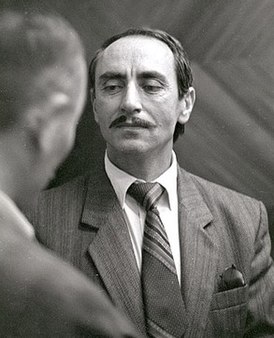
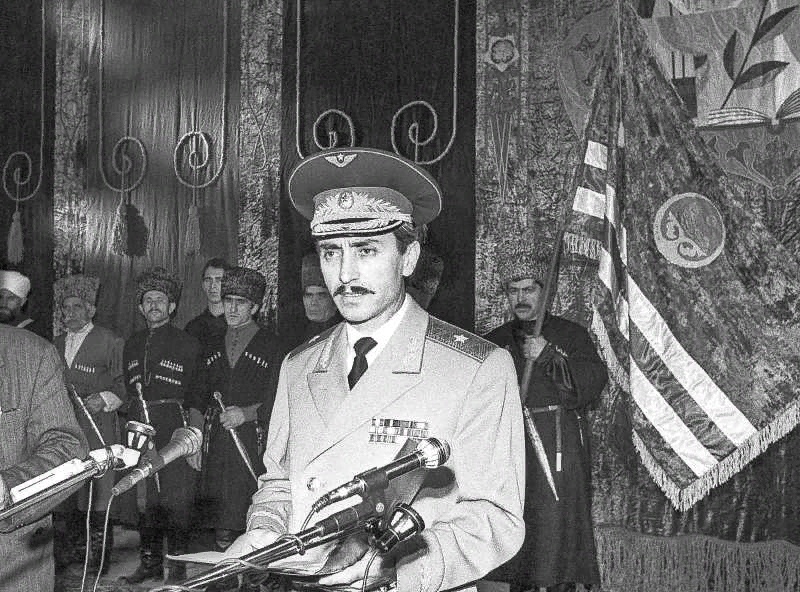
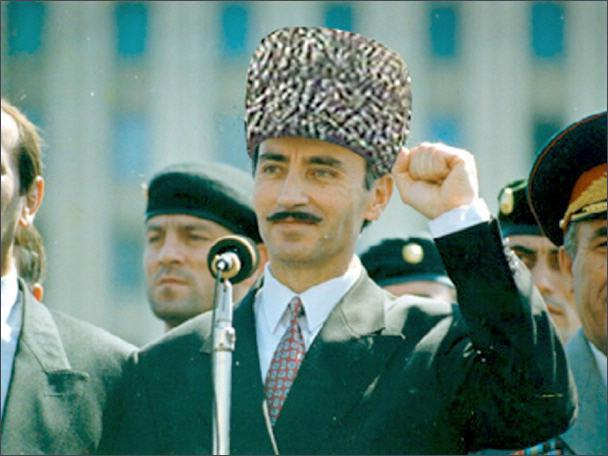
Last November 8th Francesco Benedetti was called to speak at the conference “The Future of the Northern Caucasus”, organized by the MEP Anna Fotyga. Below we report his speech, filmed by @INEWS cameras
Over the past decade, a series of political and military crises have crossed the world. Visualizing them on the map, we can identify a “line of friction” that starting from Finland runs from North to South through Eastern Europe, reaches the Caucasus, crosses the Middle East and then wedges into Africa, cutting it from East to West. If the hot spots on this front are currently Ukraine, Nagorno Karabakh, Syria and Palestine, no less concern is aroused by its secondary segments, such as the Russian Federation, Belarus, Georgia, Iraq, Libya and the West African Republics. The Caucasus is one of the pieces of this front.
The war unleashed by Putin in February 2022 against Ukraine has exposed the Russian Federation to the risk of a collapse. This would give the North Caucasus republics an opportunity to reassess their position in a regional association along the lines of the North Caucasus Mountain Republic. Similar projects, after all, were theorized as early as the late 1980s and early 1990s, notably by Dzhokhar Dudaev and Zviad Gamsakhurdia, and with them a vast movement of opinion that had animated debates, discussions, and projects. I can try to make a modest contribution by bringing to your attention my own experience as a citizen of a member state of a supranational union, at whose main institution, the European Parliament, we find ourselves right now.
European Union has been established, given itself a Parliament, created legislative, governing and supervisory bodies, procedures and regulations of all kinds, social, economic and cultural projects of the highest order. However, at this very moment, when a solid and strong Europe, capable of influencing the course of world events and protecting the interests of European citizens would be needed more than ever, the Union is revealing some difficulties.
Personally, I believe that the problem lies mainly in the fact that even today, seventy-four years after the establishment of the Council of Europe, the European Union does not have a “Mission.” European citizens feel part of a larger community than that of the nation to which they belong, but they do not know how to recognize its “depth,” so they call themselves first “French” “Spanish” “German,” then “European.” Precisely from this problem I try to translate the discussion to the North Caucasus.
A union of North – Caucasian republics can be a viable curb on the imperial pretensions of neighboring powers, and Russia in particular. Moreover, it could grant the republics that would compose it greater specific weight in international fora, and start a process of building a Caucasian identity that, as an outside observer, I trace already exists in a rather pronounced way. A defensive purpose, however, cannot be a sufficient “mission.”
I believe that the project of a unification of the North Caucasus, fascinating and potentially successful in itself, must be accompanied by deep reflection regarding what its “mission” in history should be. If until a few decades ago new states arose out of opportunity, embodying the national ambitions of peoples, today we are witnessing the emergence of new states out of necessity. The end of the U.S.-led unipolar world, the rise of new world powers, and the agglomeration of economic power and demographic weight makes the “small homelands” so irrelevant that they are forced to consort if they want to avoid becoming pawns in the great international power games.
What need, then, should guide the creation of a Confederation of the Peoples of the North Caucasus? What historical mission should it set itself? What added value should it bring to the Caucasian community, and to the human community at large? On what distinctive features should it be articulated? To put it even more simply: how will a citizen of Dzhokhar, Magas, or Machackala feel honored to be a Citizen of the Caucasus? I believe that the ability of the peoples of the North Caucasus to erect a solid institution, capable of guaranteeing them a future of freedom and prosperity, will depend on the attention paid to these questions.
In an interview with IWPR, Maskhadov said that armed resistance by the rebels would continue as a means of “self-preservation” against the Russian army, but that he was seeking a political solution. Questions were sent by IWPR’s Caucasus Editor Thomas de Waal via an intermediary in March 2022, via a Chechen intermediary. The interview was recorded in late April in Chechnya, before the death was announced of the Arab warlord Khattab. Maskhadov’s answers, recorded on cassette, were returned to IWPR in London only last week.
Thomas de Waal
What is the general situation in Chechnya at the moment? What can you say about the ‘clean-up’ operations by Russian troops, about the level of resistance of Chechen fighters, about losses on both sides?
The general situation in Chechnya is dictated by the logic of a protracted war that is senseless for the men who began it. Almost three years after the beginning of the second war, the Russian side has not achieved any of its aims. At least they have not managed to break the resistance of our warriors and they will not be able to. As a result of this all the rage and cruelty of the occupiers is falling on the civilian population. And recent months have been especially hard for the inhabitants of the foothills and mountains of Chechnya. Every day Russian troops are carrying out endless ‘clean-up’ operations in these places, with robberies, murders and disappearances. General Moltenskoi devised his new tactic (ceaseless brutal clean-ups) with the idea of bringing people to the point where they would catch our warriors themselves and give them up to Russian forces. But it seems that the general is ill acquainted with the history and mentality of our people. And he also forgets that the men whom he is asking to be given up are the brothers, sons, husbands and fathers of the people his soldiers are subjecting to daily tortures and humiliations.
Russian special forces policeman patrols a street in Chechen town of Gudermes, 29 March 2001, as Chechen family looks at him, standing in front of the gates of their house, with bullet marks on them. The situation in Chechnya is set to improve significantly in the near future, the head of the pro-Moscow administration in Chechnya Akhmad Kadyrov said today, adding that Russian President Vladimir Putin as maintaining “an uncompromising line” with Chechen separatists and that there was “no question of talks” with rebel President Aslan Maskhadov. (Photo by ALEXANDER NEMENOV / AFP) (Photo by ALEXANDER NEMENOV/AFP via Getty Images)
Recently [at the end of March] the general, wishing to come across as a champion of human rights, issued an order requiring the search operations be carried out in the presence of a member of the prosecutor’s office and the local administration, that the armoured vehicles which took part in the operation have numbers on their hulls and the soldiers identify themselves in the houses of people they were making checks. This order was advertised by [Sergei] Yastrzhembsky [the main Russian spokesman on Chechnya] in the media pretty much as though it was the UN Declaration of Human Rights. However in reality it turned out to be just a propaganda trick. In the latest operations in Tsatsan-Yurt, Kurchaloi, Gekhi and other places the same scenes were repeated – there were armoured personnel carriers without numbers, OMON troops in masks, beatings, robberies and dozens of people disappeared without trace.
Even if General Moltenskoi wanted to, he is incapable of reining in the fighters who are out of control and long ago forgot what army regulations and order are. From the beginning they are recruited to carry out punitive operations against civilians and have turned into real bandit formations under cover of being state structures.
As I said before, the Russian side has completely turned on the civilian population. They keep away from the places where our units are deployed. Even though attacks on Russian army columns and checkpoints have not stopped for a single day. Diversionary raids are carried out on the points where enemy units are deployed. The daily losses of Russian forces vary between ten and 50 in men killed alone. There are losses on our side. That is a fact of war. But they are significantly fewer than the enemy’s because we are using partisan tactics and act in small groups and do not allow large numbers of men to be concentrated in one place.
What is your status now, as your presidential term has expired, but new elections have not yet been held? How do you see the resolution of this problem?
There cannot be some special solution for this problem in our republic. We strictly follow the dictates of international law and our constitution. Until fighting ends and there are conditions, which allow the free expression of will by the people, there can be no elections and elections are not held in these circumstances anywhere in the world. As soon as the fighting stops and the right conditions are created I will be the first with the initiative to hold elections in the republic. I assure you, it would be much more pleasant for me to be an ordinary voter in peaceful Chechnya than the president of a republic at war. So, whether the Russian authorities like me or not, to end the war they will have to hold negotiations with the legally elected authorities of Chechnya, headed by President Maskhadov. If they want to keep on repeating that the puppet regime of [Russian-appointed leader Akhmad] Kadyrov is the lawful authority in the republic, let them summon him to Moscow and sign any agreement with him on ending the fighting. We’ll see how that works out.
Do you have any contact with any Russian officials and, if so, what are you discussing?
I do not have any direct contacts with the Russian leadership. I have appointed Chechnya’s deputy prime minister Akhmed Zakayev to make these contacts. He met the president of Russia’s representative for the Southern Federal District, Vladimir Kazantsev and keeps up contact with him. But it has not got beyond general conversation. The Russian side is too afraid of its generals to have serious concrete discussions with him.
In the opinion of many people in Chechnya and outside Shamil Basayev and Khattab bear a large degree of responsibility for the second war in Chechnya. Do you believe they still enjoy support in Chechnya and it is possible to seek a way out of the situation by removing them from the game?
It would be naïve to suppose that the fifty or so volunteers who set off with Basayev to Dagestan, which was at that time totally gripped by an internal conflict (in the Tsumada and Botlikh regions and the villages of Karamakhi and Chebanmakhi), were the reason for such a wide-scale war, which has lasted for almost three years. In case the Russian public was not convinced that this was reason enough to begin a massive war (Dagestan is far away and few people understand what goes on there), they also engineered the explosions against buildings in Moscow and other Russian cities and blamed them on the Chechens. So the war against Chechnya was planned before and was not the result of a chain of accidental events.
But that does not mean that the leadership of Chechnya welcomed or encouraged Basayev’s actions in Dagestan. Quite the opposite. I called for an early meeting with the leaders of Dagestan and the other North Caucasian republics to combine our efforts and work out ways of not letting such conflicts occur. The first man to reject the idea of this meeting was the leader of Dagestan, as strong pressure was put on him from Moscow; for them the whole planned invasion of Chechnya would have been put under threat if the meeting had taken place. All these things are now well known to the public thanks to the revelations of one of the players of this game, Boris Berezovsky. The current Russian leadership is trying to present it as though only he was responsible for all this. But he is only one of the players in the game and not the main one.
As for Basayev and Khattab, they are active participants in the resistance movement and their removal from the game, as you put it, can only weaken overall resistance and not bring the end of the war any closer.
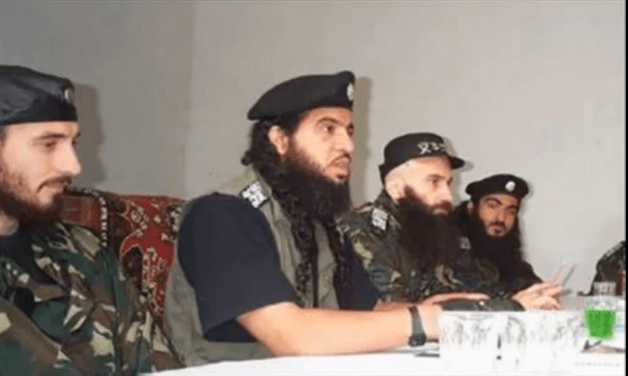
From left to right: Abu Al – Walid, Shamil Basayev, Ibn Al – Khattab and Ramzan Akhmadov
Everyone understands that this time Russian forces will not simply leave Chechnya and that in both Russia and Chechnya many people are suffering a great deal because of this. What concessions are you ready to make in order for the bloodshed to stop? Are you ready, for example, to agree to a freezing of your independence declaration in return for genuine negotiations?
As we understand it, independence means above all independence from the whim of bureaucrats, who sit in Moscow offices somewhere and decree the fates of our people without facing any punishment. Genocide has continued for several centuries now and no one has borne any responsibility for it (true, the recently formed UN Human Rights Criminal Tribunal does inspire some hope).
Armed resistance is a means of self-preservation when no other methods of defence are available. International institutions, charged with defending us and created specially for that purpose are unable to do so. Nor can the world community, which can raise its voice in defence of the Bosnians, the Timorese, the Hutus and Tutsis, the Kosovars, the Croatians and so on. In their case prominent states have the courage to send peacekeeping forces to the conflict region, impose sanctions on aggressor countries, establish international tribunals and so on. In our case, all our efforts lead only to statements by the Parliamentary Assembly of the Council of Europe and human-rights organizations and a handful of politicians, whose conscience and civil courage does not permit them to remain silent about the horrific crimes which are being committed in Chechnya.
So ending resistance will not guarantee for us ending the genocide. Rather the opposite. Being undefended would make us even more vulnerable in the face of the arbitrary behaviour of the Russian military machine. I want to be understood correctly. Independence is not a whim or an ambition. It is the necessary condition of our survival as an ethnic group. If Russia is prepared to undertake internationally, through the mediation of other states or international organizations, that from henceforth it will not allow itself any more armed aggression against Chechnya, if Putin is replaced by Ivanov or Ivanov by Sidorov, or in the case of any political change-over, then we are ready to discuss any questions with the Russian side, including questions of independence. Of course we well understand that we are not situated on some island, somewhere in the ocean, but next door to Russia and in some places our border runs down a country road or through a ploughed field. We are in the same economic, energy and ecological space as Russia. We share the same water resources, transport communications and many other links. So, if good will can be found, no obstacles are insuperable.
Ruslan Gelayev
What can you say about Ruslan Gelayev, his presence in the Pankisi Gorge and his raid into Abkhazia last year? In whose name was and is he acting?
In any war and especially in one so bloody and protracted as the current one in Chechnya transformations occur which are hard to understand for a person who is far away from events. Ruslan Gelayev has long been absent from Chechnya and I cannot say whether he is in the Pankisi Gorge or somewhere else. I have not given him any order to leave the territory of Chechnya and I await his explanations.
The following is the transcript of the first part of the interview between Francesco Benedetti and Akhmed Zakayev conducted by Inna Kurochkina for INEWS (we attach the link to the original video, which will soon be accompanied by English and Italian subtitles)
On 6 March 1996 the armed forces of the ChRI launched their first major offensive action of the conflict: the so-called “Operation Retribution”. According to what I was told by Huseyn Iskhanov, then Representative of the General Staff, the plan was conceived in Goiskoye and saw your participation, as well as that of the Chief of Staff, Maskhadov, and the Deputy Chief of Staff, Saydaev. Do you remember how you planned this operation?
Yes, of course I remember that. This, in principle, came out of the operation that we carried out to blockade the city of Urus-Martan in order to prevent elections. After this operation, my Chief of Staff Dolkhan Khadzhaev and I met with Dzhokhar Dudayev. And we suggested the option that something like this should be done. We understood that any of our actions in order to make any attempts to change this situation, the Russians needed at least three days, theoretically.
It took them three days to recover and start doing something. And then we started talking about the possibility of blocking several districts at the same time. And then Dzhokhar Dudayev said: “You see how good it is when a team works. I, he says, was with these thoughts and thought about how best and what kind of operation we should carry out.
It was then that the idea arose to carry out this operation in the city of Grozny, in the city of Dzhokhar – in the future.
And on the same day, it was decided to invite Aslan Maskhadov, Chief of the General Staff, to call him to our side, and from that time, almost two or three days after we discussed this with Dzhokhar Dudayev, we began preparations over this operation. Practically – we had our own intelligence in Grozny, we knew where each Russian unit was concentrated, and we did additional work and identified all these points where Russian units are located. Where are checkpoints, commandant’s offices, military units.
Yes, Umadi Saidaev, the late Umadi Saidaev, he was the Chief of the Operational Headquarters, and then, later, Aslan Maskhadov arrived there, and together with the Commanders of the Directions who were supposed to take part, we developed this operation.
Returning again to Operation Retribution, this was a success that the ChRI leadership chose to use more symbolically than strategically. In your memoir you recall that at the time the decision to withdraw from Grozny, despite having taken it under your control, did not please you, and that even now you maintain that what was achieved in the following August, with Operation Jihad , could have been achieved with Operation Retribution.Finally, you say: In March of 1996 we probably had the opportunity to finish the war victoriously, and then much of our recent history could have gone differently. What do you mean by this sentence? Are you alluding to the fact that Dudayev was still alive, or to the fact that the Russian presidential election had not yet been held? Or again, to something else?
I thought about the elections in Russia last, because there have never been any elections there. Yes, the very fact that Dzhokhar was alive at that time could have been of great importance, and the course of history could have been completely different if the war had ended with Dzhokhar Dudayev alive. And it is unlikely that the Russians would go for it, I also admit this, on the one hand, I admit that they would not go. They made every effort to eliminate Dzhokhar Dudayev, and subsequently to seek peace. As for this operation, I’m just sure of it. Yes, then we planned the operation for three or four days, but there was no concrete decision, such that we would leave in three days. Because Dzhokhar Dudayev arrived in Grozny, he was at my Headquarters in the city of Grozny, in my defense sector, in that part of the operation that the units under my command took part, he arrived there, and we were together last night at our headquarters. And I remember the reaction of Dzhokhar Dudayev when he learned that there was an order to leave the city, that some units had already begun to leave Grozny. He did not agree with this, because you can really assess the situation when you see the situation in the process, how it changes, and based on this you must draw conclusions and make decisions. Dzhokhar Dudayev was in Grozny for the first time after the Russian occupation, we traveled with him at night, in Grozny at night, we went to the bus station, he watched all this destruction, and when we returned to the Headquarters, some of our units had already begun to leave. He said: “Well, if there is an order, it is necessary to carry it out.”
And we retreated. And I later thought about it, because nothing more than what we did for the month of March, we did nothing in August. This operation was repeated one by one in the same way, and with the same forces and means. Even in August, we initially had and at the beginning of this operation, the funds involved were two times less than in the March operation. And therefore, I am sure that if we had stayed in Grozny … (well … history does not tolerate the subjunctive mood). What had to happen happened. But I remain of my opinion that it could have been different. But this is already from the area of \u200b\u200b”could”.
But that did not happen.
In March 1996 you faced, as commander, what was perhaps the biggest defensive battle fought by the Chechen army in 1996. I am referring to the Battle of Goiskoye. I’ve read conflicting opinions regarding the choice to face the Russians in that position. Some argue that the defense of the village was senseless, resulting in numerous unwarranted casualties for the Chechen forces. Others argue that if Goiskoye had fallen too soon intofederal hands, the entire Chechen defense system could have shattered. After all these years, what do you think?
To prevent the enemy from reaching the foothills, to block him in the village of Goyskoe, this was, from a strategic point of view, militarily an absolutely correct decision. This decision was made by the Supreme Command of the Armed Forces of the Chechen Republic of Ichkeria. Yes, I also know that there is such a statement, but based on real losses, we did not suffer any serious losses during the defense of Goisky. Yes, there were dead, several people who died were injured, but there were no such losses. There is no war without loss. Well, in a strategic sense, the protection and defense of Goisky kept the front line, which moved from Bamut to Alkhazurov. Alkhazurov fell under Russian control, but Komsomolskoye also fell under Russian control. But in Goyskoe we didn’t let them go any further. We prevented the passage of the Russians up to the foothills. And thus they retained the Front and the front line. And this was of very important strategic importance, all the more so against the background of the fact that the Russians began to talk about negotiations, about a truce. If we talk about a truce and start a conversation with them about a political dialogue, naturally, the preservation of a certain territory that we controlled, this was of great political importance, and in connection with this, Dzhokhar Dudayev made the decision to protect Goiskoye. Yes, we lasted a month and a half. And later, after the death of Dzhokhar Dudayev, when Bamut had already fallen, it was decided to leave Goiskoye. But as long as Achkhoy and Bamut were on the defensive, we held the line of defense in Goyskoye as well.
But when the front had already been interrupted there, it was pointless to continue to hold the front line and lose our fighters. And so it was decided to withdraw our units already to the mountains. Subsequently, we already redeployed closer to the city and began to prepare for the August operation.
After Dudayev’s death, power was transferred to Vice-President Yandarbiev, who took office as Interim President. Was the decision to transfer power to him unanimous? Or were there discussions about it?
In principle, there were no discussions, one vote was against, the rest all spoke in favor of recognizing Zelimkhan Yandarbiyev as Vice President. It was in line with our constitution, presidency provision, and it was accepted. And Zelimkhan Yandarbiev began to act as President.
After Yandarbiev assumed presidential powers, he appointed you as Presidential Assistant at Security. What were your duties in this position?
Yes. He appointed me Assistant to the President for National Security. And at the same time, that unit, that is, the Third Sector, which I commanded, I was simultaneously appointed Commander of the Separate Special Purpose Brigade. That is, the unit that I commanded, being the Commander of the Third Sector, he was also transferred to the Brigade, to the status of the Brigade under the President of the Chechen Republic of Ichkeria. Basically, this was done because Zelimkhan Yandarbiyev, after we retreated and put up the Presidential Palace at the beginning of the war, he was inside the Presidential Palace until the last moment, until we left the city. Since that time, in principle, Zelimkhan Yandarbiev has not been involved in military operations, and over the past year and a half, over the past year, new units have already been created and new people have appeared in these military structures. And naturally, Zelimkhan needed a person who knew this whole system militarily, and, of course, we worked with him and in the near future Zelimkhan was introduced to the course in all Directions, Fronts and our units, and already as the Supreme Commander, he Subsequently, he began to manage these processes himself. And my task included power components. And later it was transferred, after graduation this position was transferred, retrained to the position of “Secretary of the Security Council”.
And before the elections, in principle, I performed these functions.
As is known, the right of peoples to self-determination is one of the basic principles of international law, which means the right of each people to independently decide on the form of their state existence, freely determine their political status without outside interference and carry out their economic and cultural development.
He received recognition in the process of the collapse of the colonial system , and was enshrined in the Declaration on the Granting of Independence to Colonial Countries and Peoples (adopted by Resolution No. 1514 of the XVth UN General Assembly of December 14, 1960) and subsequent international pacts and UN declarations.
This principle, along with other principles, is proclaimed in the UN Charter, which aims to “develop friendly relations among nations based on respect for the principle of equal rights and self-determination of peoples.” The same goal is set in the UN Charter in connection with the development of economic and social cooperation between states.
Further, the International Covenant on Economic, Social and Cultural Rights and the International Covenant on Civil and Political Rights of December 19, 1966 (Article 1) state: “All peoples have the right to self-determination. By virtue of this right, they freely determine their political status and freely pursue their economic, social and cultural development … All States Parties to the present Covenant … must, in accordance with the provisions of the Charter of the United Nations, promote the exercise of the right to self-determination and respect this right.
The Declaration on the Principles of International Law (October 24, 1970) also states: “By virtue of the principle of equal rights and self-determination of peoples, enshrined in the UN Charter, all peoples have the right to freely determine their political status without outside interference and to carry out their economic, social and cultural development and every State has an obligation to respect that right in accordance with the provisions of the Charter.”
Ikhvan Gerikhanov with Vakha Arsanov
The same Declaration states that the means of exercising the right to self-determination can be “the creation of a sovereign and independent state, free accession to or association with an independent state, or the establishment of any other political status.”
Similar principles are enshrined in the documents of the Conference on Security and Cooperation in Europe: the Helsinki Final Act of 1975, the Final Document of the Vienna Meeting of 1986, the document of the Copenhagen Meeting of the OSCE Human Dimension Conference of 1990 and other international legal acts .
These international principles and the right to self-determination are directly related to the formation of the Chechen state. Without going into a historical digression about the existence of state formations among the Chechens since ancient times, we will dwell on the subject of the formation of the national statehood of the Chechens during the collapse of the USSR and after its liquidation.
According to Article 72 of the Constitution of the USSR, which was a amended by the Law of April 3, 1990, the right to secede from the Soviet Union was provided for only to the republics of the Union. It was also provided there, in the second and third parts of the said law, that “the decision to change the status and secession of an autonomous republic or an autonomous region from the USSR is possible only by a referendum. “
The first of the republics to use this right Russian Federation and on June 12, 1990, it proclaimed its sovereignty outside the USSR.
This initiative for self-determination was also supported on the territory of the Chechen Republic of China , where on November 23-25, 1990, the 1st Chechen National Congress was convened and a decision was made on behalf of the Chechen people to declare the sovereignty of the Chechen Republic of Nokhchicho . In fact, this was an act of a referendum, since the representatives of the congress, on behalf of the Chechen people, decided to choose a free path of development within the framework of the current legislation of the USSR and the RSFSR. It was precisely this path that the RSFSR chose when it convened its next congress of people’s deputies and proclaimed its sovereignty outside the Union of Soviet Socialist Republics.
So, the decision of the congress of the Chechen people was and legally fixed by the legally existing Supreme Council of the Chechen-Ingush Republic, which on November 27, 1990 issued a Resolution declaring the state sovereignty of the Chechen-Ingush Republic.
Dzhokhar Dudaev at the second session of the Congress, 1991
In a word, the Chechen people (taking into account that later the people of Ingushetia also wished to live as part of the RSFSR), in accordance with the generally recognized principles and norms of international law, while observing domestic law, expressed their will to self-determination at a new stage of their development. This corresponds to the legal establishment of the Declaration on the Principles of International Law (October 24, 1970 ) , which states that every people can freely determine its political status and carry out its economic, social and cultural development without outside interference.
Also, the said Declaration on State Sovereignty of the CHIR allowed to obtain an equal legal status, like the RSFSR, i.e. the status of a union republic.
This legal status did not change even after August 19, 1991 , when an attempt was made in Moscow against the president of the USSR , from which a wave of protests began throughout the entire territory of the union state.
Did not become an exception, which ultimately lost power in the republic and transferred powers again formed by the Provisional The Supreme Soviet is from among the deputies of the highest authority of the republic. The task of this Council was to prepare and conduct democratic elections to the state authorities of the republic, which it failed to cope with, and the election commission, created by the National Congress of the Chechen People, took over the preparation of the elections.
As a result, on October 27, 1991, parliamentary and presidential elections were held. Based on the will of the people, the President and the Parliament of the Republic were elected, thereby once again securing the right of the Chechen people to self-determination.
It follows from this that the inalienable right of the people to self-determination is connected with its national sovereignty and is the basis of its international legal personality. If peoples have the right to self-determination, then all other states have the duty to respect this right. This obligation also covers the recognition of those international legal relations in which the people themselves are the subject.
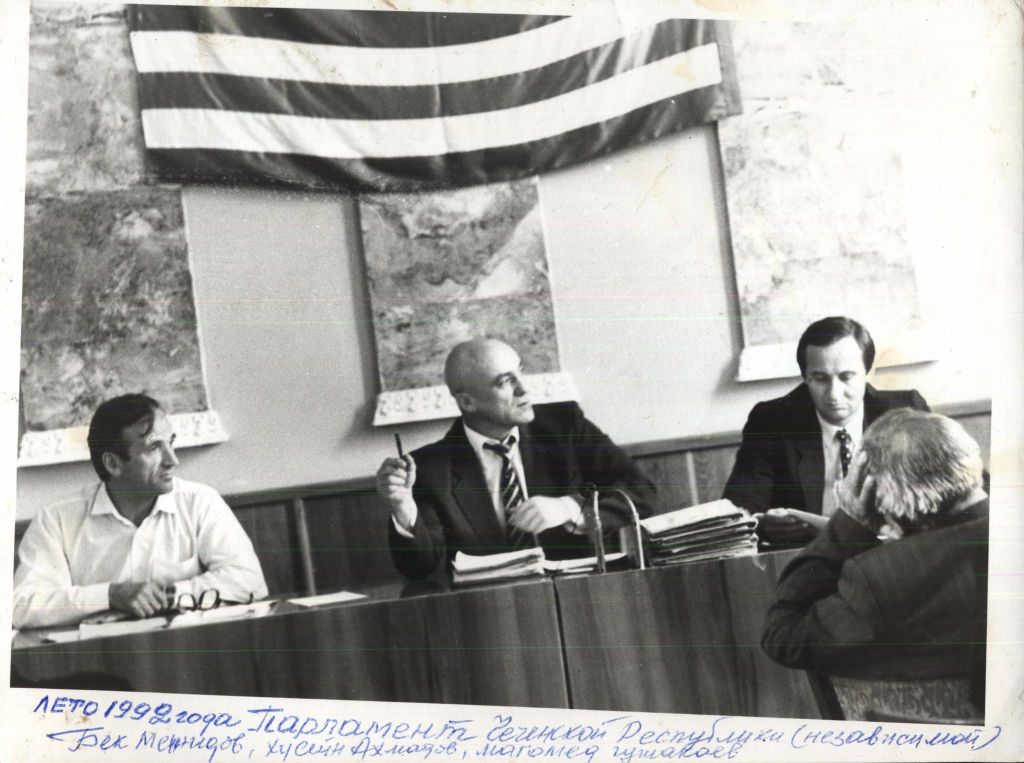
Hussein Akhmadov, speaker of the Parliament, with the vicepresidents, Mezhidov and Gushakayev
The will of the people, which elected the bodies of state power and administration , was once again enshrined in the Decree of the President of the Chechen Republic of November 1, 1991, proclaiming state sovereignty, thereby continuing the will of the Chechen people, expressed at the first congress on November 23-25, 1990.
Then, on March 12, 1992, the Constitution of the Chechen Republic was adopted and entered into force. And on June 12, 1992, all units of the former Soviet Army stationed on sovereign territory left the republics and, thereby de facto recognizing the sovereignty of the Chechen people.
It should be noted that since the declaration of the sovereignty and territorial integrity of the Chechen Republic, the latter has not taken part in all the ongoing activities to create authorities in the Russian statehood. Thus, the Chechen Republic did not sign federative agreements and did not participate in the formation of the state power of Russia, as well as when voting for the Constitution of the Russian Federation, which was adopted on December 12, 1993, i.e. almost more than a year and a half after the declaration of sovereignty and the adoption of the Constitution of the Chechen state
Thus, the Chechen Republic of Ichkeria , which received a change in name in 1993, in terms of compliance with domestic and international requirements for self-determination, quite legally and reasonably established its legal personality, created its own institutions of state power and administration within the country , while creating representative offices in other states of the Caucasus and the world. That is, from the point of view of international law, we are talking about the activities of sovereign states a , with its inherent features of a subject of international law.
By the way, it will be said that in this period of time, before the start of the conflict with Russia, it was precisely as a subject of international law that CRI was recognized by states such as Georgia and Afghanistan, and our countries were already ready to open official representative offices of the state with the right to present credentials by ambassadors mutually. But, as you know, these intentions were frustrated due to the change in the format of power in Georgia and the beginning of the second Russian aggression against our republic.
Direct relations between the Chechen Republic of Ichkeria and the Russian Federation also testify that there was compliance with the rules and protocol when interacting as subjects of international law.
While launching various Protocols and Agreements signed by these two states, both on the territory of Russia and in The Hague (Netherlands), when resolving the issue of resolving the military conflict, it should be recognized that the election of the President of the CRI on January 27, 1997 put a legal end to the issue on the status of the Chechen Republic of Ichkeria. In the presence of international observers from the OSCE member states, on the basis of the Constitution of the CRI and in accordance with international law, the result of the election of state bodies of the republic was recognized: the President and the Parliament of the CRI.
RUSSIA. May 12, 1997. Russian President Boris Yeltsin (R) and the President of the Chechen Republic of Ichkeria Aslan Maskhadov after signing of the Russia-Chechen Peace Treaty. Alexander Sentsov, Alexander Chumichev/TASS –—
Recognizing the sovereignty and territorial integrity of the CRI, the President, the Chairman of the Federation Council and the Prime Minister of the Russian Federation officially congratulated the leadership of the Chechen Republic of Ichkeria on democratic elections, that is, de jure recognized the CRI as a subject of international law. The latter is confirmed by such a signed interstate document as the “Treaty on Peace and Principles of Relations between the Russian Federation and the Chechen Republic of Ichkeria” , where it was unequivocally stated that “ bilateral relations will be considered in the light of generally accepted norms and principles of international law”.
It follows from this that the Chechen Republic of Ichkeria, in accordance with domestic and international law, established its authority on sovereign territory, and this fact was legally recognized by the subject of international law as the Russian Federation, from which, observing as currently in force domestic law , and the basic principles and norms of international law, the Chechen Republic of Ichkeria separated as an independent state, and therefore as a subject of international law.
In relation to the current situation, the Russian armed forces occupied and even annexed the sovereign territory of the CRI, which is a violation of international legal obligations and principles of interaction between subjects of international law, in accordance with the Geneva Convention of August 12, 1949.
It is indisputable that the very fact of occupation and annexation of foreign territory, according to the same Convention, does not acquire the right to sovereignty over this territory, regardless of the time of its occupation and retention by force. Therefore, the legal successor of the legitimate power – the Government of the CRI, located outside the country – continues legal and political work to de-occupy its territory.
The CRI government, repeating the previous statement, as a legitimate successor of a subject of international law, on the basis of the Constitution CRI conducts such diplomatic activities as the work of representative offices abroad and the opening of their own representative offices . Work is also underway to grant CRI citizenship to foreigners who wish and issue passports to citizens of the Chechen Republic of Ichkeria.
Meetings of the leadership of the CRI Governments at the highest level with representatives of the OSCE and other international organizations, as well as various diplomatic initiatives against the Russian occupation of the Chechen Republic and Ichkeria , statements to the International Criminal Court about crimes against humanity and war crimes by the political and military leadership of Russia, the existence of criminal cases and their investigations within the framework of the instructions of the Prosecutor General of the CRI and the statement of the Minister of Foreign Affairs of the CRI on political issues, this is not a complete list of the real activities of the Government of the CRI, which intends to wage a legal and political struggle until the complete de-occupation of its country from the aggressor.
History shows that similar situations were in the recent past in European countries. Thus, during the Second World War, the Polish government in exile continued its work in France and England for decades and was recognized by the world community as a legitimate representative of the Polish people.
A more striking example is the activity of the Baltic Governments, which achieved the return of the occupied territories, first by Nazi Germany, then by the Soviet Union, continuing the political struggle in exile until the final establishment of the independence of their countries.
From left to right: first – Said Khasan Abumuslimov, third – Vakha Arsanov, fourth – Ikhvan Gerikhanov
Military occupation, like annexation, as international practice shows, ends with the cessation of control by the aggressor. It makes no difference whether this will be done in a year or decades. Today, it must be recognized that the CRI is de facto under occupation by the Russian Federation, but this is not a fact of the loss of sovereignty, which was proclaimed by the legitimate power of the CRI on the basis of its Constitution and recognized by the participation of representatives of more than fifty and European states as international observers .
Summing up, we can state the following: The Chechen Republic of Ichkeria, having proclaimed, at the will of the Chechen people, its independence and sovereignty, on the basis of the domestic law in force at that time, in compliance with the basic principles and norms of international law, and also defending its right to free development in the struggle with the aggressor in two bloody wars, which have no analogues in world history , continues the de-occupation of its territory through representatives of the CRI state authorities, while maintaining and protecting the status of the Chechen Republic of Ichkeria as a subject of international law.
Dr. IKHVAN B. GERIKHANOV,
First Chairman of the Constitutional Court of the CRI, President of the National Tribunal on war crimes in the CRI Doctor of Law, specialist in international law, expert on human and civil rights.
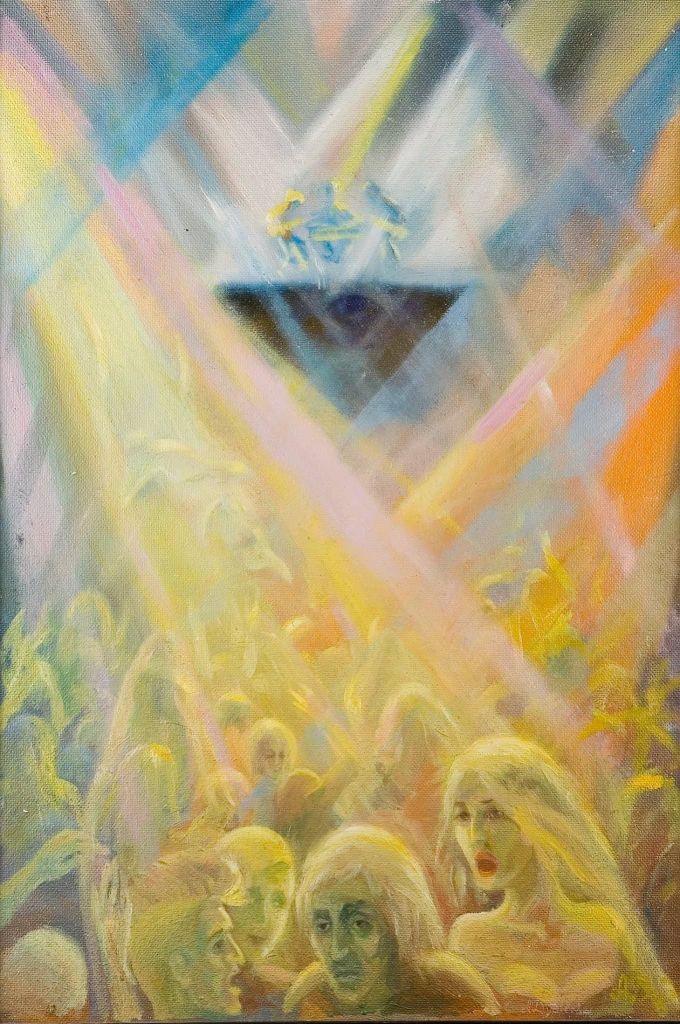
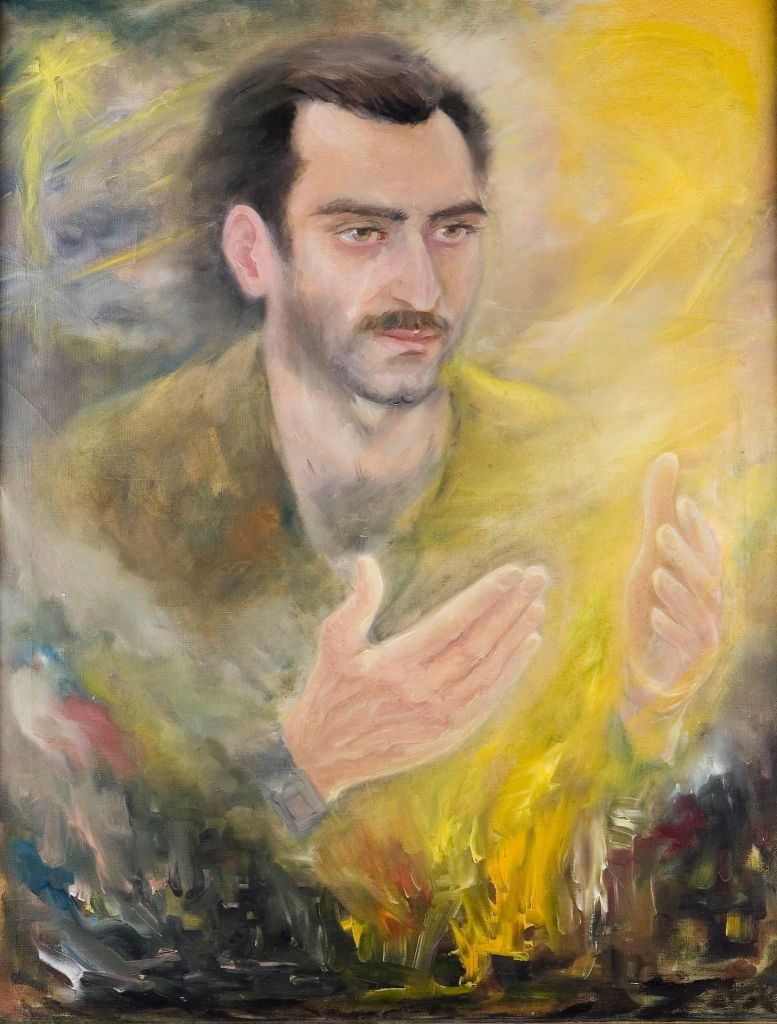
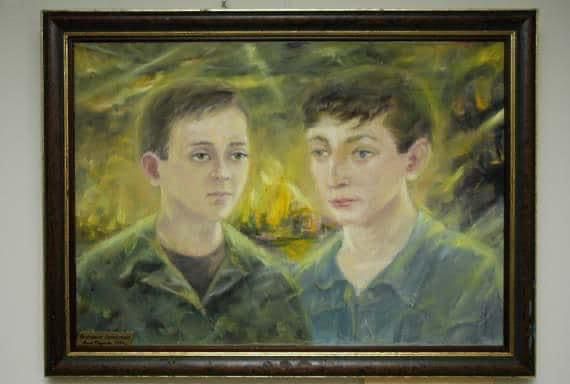
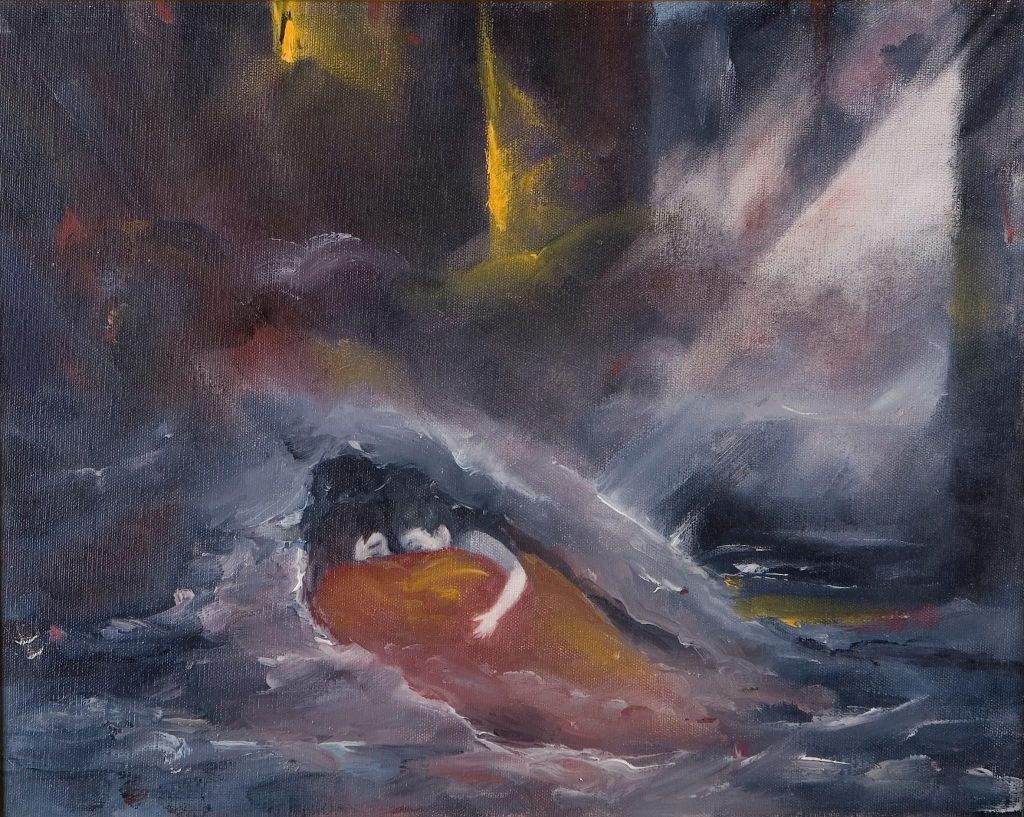
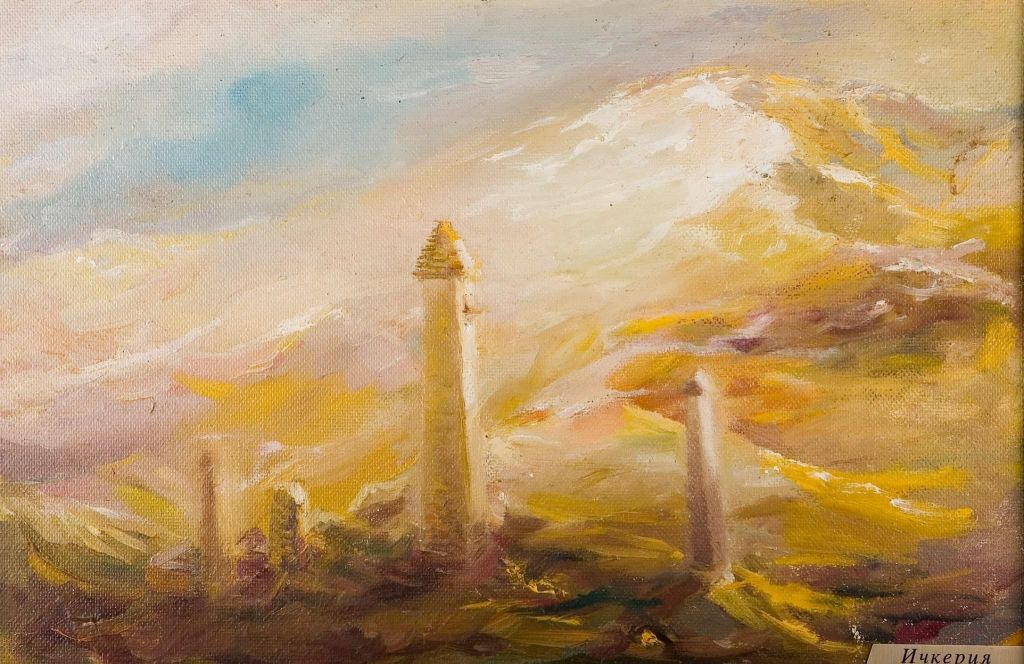
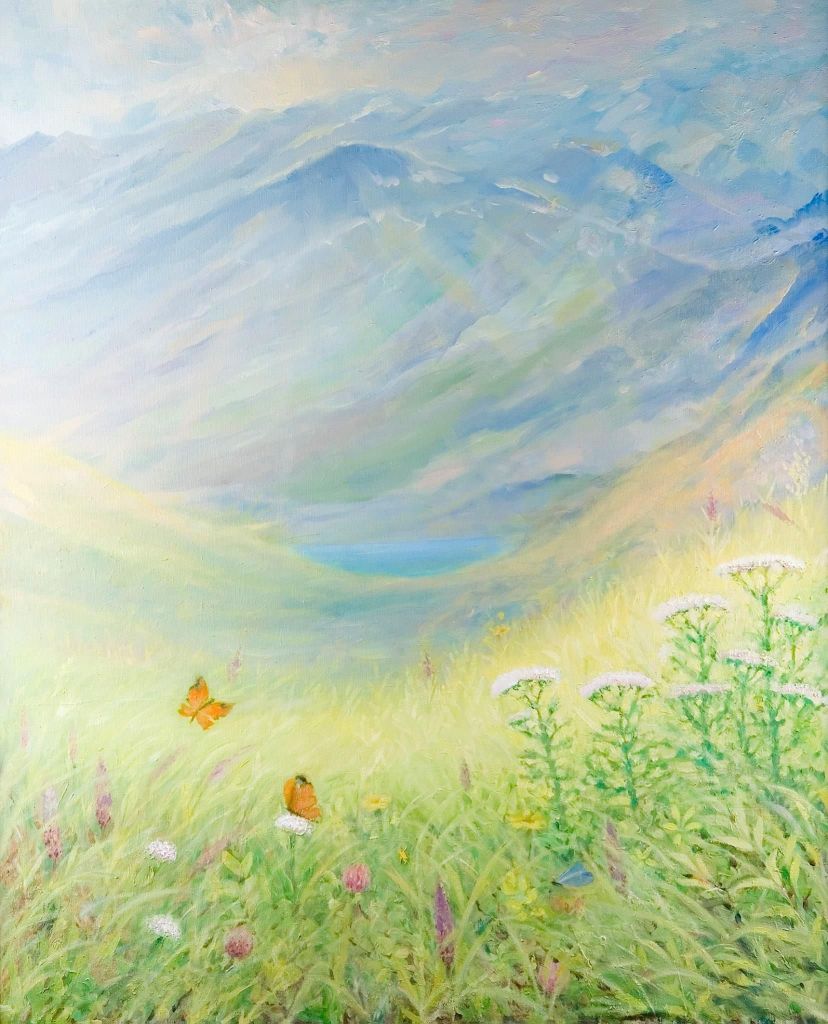
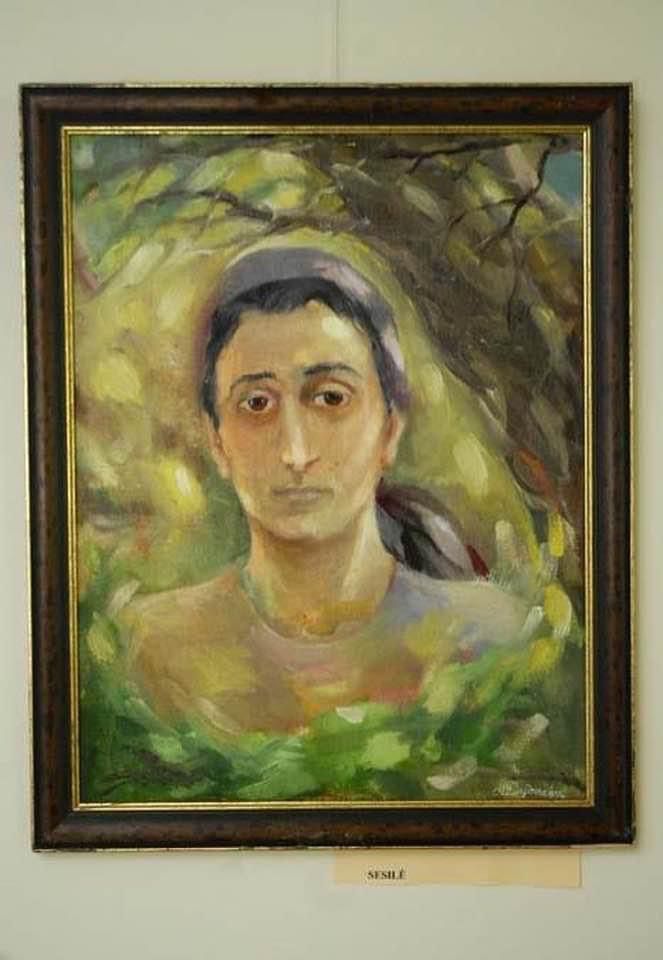
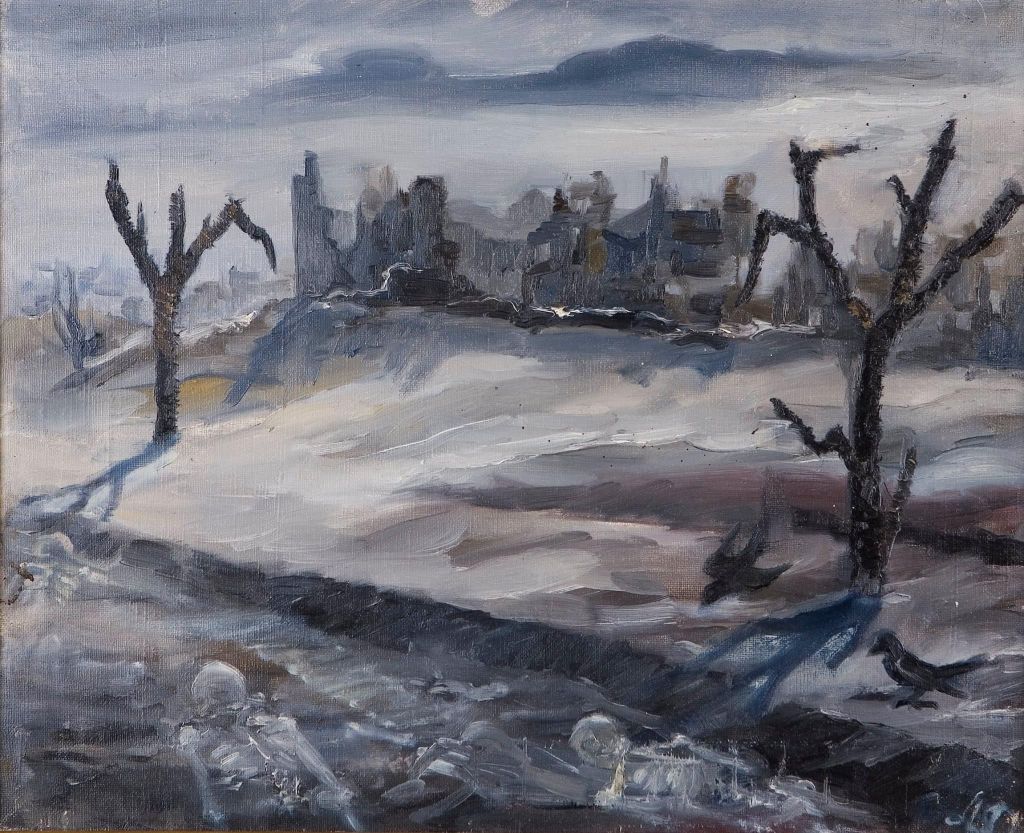
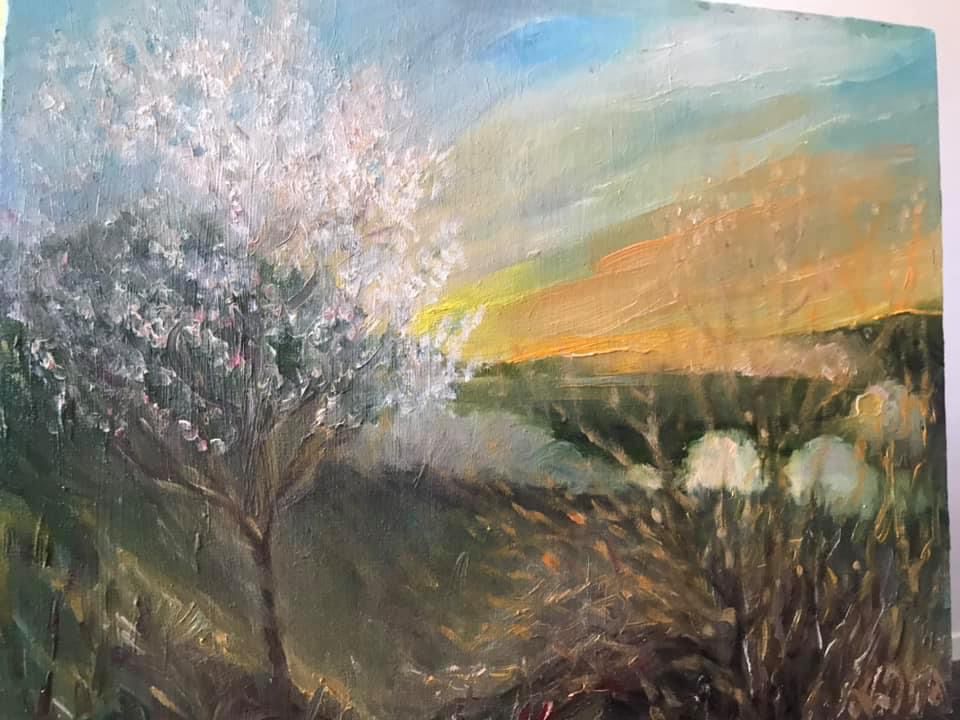
Alla Fyodorovna Dudayeva is the widow of the first President of the Chechen Republic of Ichkeria. Dudaev’s life partner, she lived with him until his assassination, which occurred on April 21, 1996 by the Russian army. Despite being of Russian origin, Alla Dudaeva linked her personal destiny to the cause of Chechen independence, continuing after her husband’s death to plead the reasons for a free Chechnya. Among her qualities, her passion for drawing certainly stands out. For this reason, in addition to her words, we have collected and published, with her permission, her pictorial works. What follows, therefore, is a double story, in words and images: the story of a wife, a mother, an artist, a political activist, a woman united with Chechnya by love and destiny.
“Golden Ichkeria” – 1989
The death of Dzhokhar Dudayev has deprived the Chechens of both a human and a political point of reference. From your point of view, this may be even more true: has the loss of a person so important to you as a life partner, as a mother, and at the same time as a supporter of a free Chechnya, changed your existential point of view?
The entire Chechen people wept when they learned of Dzhokhar’s death, as well as the Muslim world. But not only Muslims: the whole world appreciated Dzhokhar’s life and work, the Chechen people’s resistance to Russian aggression, and dedicated dozens of streets, squares and cities in different countries to him. Dzhokhar showed how to “take cities” and in 3 days (March 7,8,9) the capital of Ichkeria was taken by Chechens. Russian military units and bases were surrounded, but the Chechens did not shoot at the Russians so that the planes could not bomb the attackers. This ingenious plan was conceived by Dzhokhar, and when journalists asked him “why did you leave Grozny?” He replied “We have shown the whole world how to take cities!” In exactly the same way, the invaders were surrounded three months after the death of Dzhokhar on August 6, 1996. It was called: “dying, embracing the enemy.” And it happened only thanks to the unparalleled courage and courage of the Chechen people. For the first time in the world, a small Chechen people defeated the huge Russian empire of evil and violence, which the whole world has been afraid of for decades!
And the people called it a miracle! This victory gave hope to all occupied peoples for their future liberation and breathed new strength into those who bowed and surrendered! A nation is invincible when it fights on its own land for its freedom, if it has such a leader! When the president and the people are one, they are invincible!
“Dzhokhar Dudaev” 1989
Has his death changed anything in you regarding the care of your family and regarding the idea of an independent Chechnya?
After the death of Dzhokhar, nothing has changed in me in relation to our family or in relation to the idea of the independence of Ichkeria. But my personal feeling changed, I could not imagine myself without Dzhokhar, it was as if I was unexpectedly hit in the chest. Then we were secretly taken to the second home of a brave and wise man, Dayan, and I sat by his body for three days. Dayan asked me not to mention that Dzhokhar was dead when I was at her house for dinner. He asked me to say that there was one wounded, but not that it was Dzhokhar. “My wife Leila” he said “She couldn’t bear it. He has a weak heart. No need to mourn it in front of them, there would be such a noise that everyone in the village would understand immediately. Instead we have to hide. After her words, I understood that there were still those who loved Dzhokhar, albeit weaker than me in health. And I learned to hide, even as my heart was torn apart by pain. Therefore, when it was necessary to declare Dzhokhar’s death on April 24 in front of journalists from all over the world, I learned to hide my tears and did not cry, I thought about hundreds of sick old women like Leila, what would happen to them when they heard the sad news. And about our enemies, how they would rejoice at Dzhokhar’s death … That’s why I decided to leave the doubt, to Dzhokhar’s enemies who feared him, that he might return.
That very night we snuck him out and buried him. And I witnessed such miracles, when Dzhokhar was raised and carried to the cemetery, that it seemed to me that I had new strength. We left at three in the morning. When we arrived at the cemetery it was still dark which was scary. There was a wall of fog. While the grave was being dug, I sat next to Dzhokhar’s body, behind the fence. And when they came for him and brought him, suddenly the fog cleared, pink-gold rays of the sun appeared, under which everything around shone. And in the blue sky above his grave, flocks of birds were circling, as if they had come to greet or meet him. And they sang!!! Most likely, the Almighty himself met him! I understood that Dzhokhar would not be in the grave, his soul was immediately taken to heaven!
When the Chechen people gathered all their strength and managed to defeat the huge Russian empire, many believed that Dzhokhar was alive and would certainly return. But our enemies have claimed that Dzhokhar, a symbol of independence, fled, leaving his people behind. And then I had to refute these dirty rumors and we made a documentary about the place of his death. In it, I detailed where he was, when it happened and from which side two rockets came, one after the other. The military prosecutor, Magomed Zhaniev, and our former representative in Moscow, Khamad Kurbanov, they died with him. They were immediately taken away by relatives and buried the next day. But many Chechens still didn’t believe me and so I had to write the book “Million First” which became a documentary about the birth, childhood, life and death of Dzhokhar Dudayev .
It was first published in Baku in 2002. Then in six other countries in different languages. By the way, immediately after the book was published, a video was mounted in Chechnya, someone spoke in my voice against the background of my photograph. “I apologize to the Chechen people, I am getting married. I searched for a long time and finally found someone similar to Dzhokhar, only the mustache is different.” This was done intentionally so that my book would not be believed, and some still think that I again married Dzhokhar, who in reality was allegedly wounded, secretly taken out of Chechnya, and then healed. Only many years later the Chechen people finally convinced themselves and stopped waiting for Dzhokhar.
“The immortal city of Grozny” 1995
After the liberation of Grozny in August, Chechnya found itself free, but in constant danger. From April 1996 to February 1997, Dzhokhar’s inheritance passed to Zelimkhan Yandarbiev. He was an old friend of your husband’s. What do you remember about him? What kind of person was he?
Zelimkhan Yandarbiev was a poet and leader of the Vainakh Democratic Party , one of the pioneers of Chechen People’s Freedom. He visited us in Tartu, Estonia and invited Dzhokhar to the first Congress. Dzhokhar made such a brilliant speech that he was elected chairman of the Chechen People’s Executive Committee. Zelimkhan was always next to Dzhokhar and supported him in everything. He was distinguished by great courage and loyalty to the idea of independence, and therefore Dzhokhar, after a series of unsuccessful attempts on his life, instructed him to replace him as president of the CRI in the event of his death. Zelimkhan’s courage can be judged by the famous video in which he did not surrender to President Yeltsin during peace talks in the Kremlin. And he insisted that he move to the place assigned to him, opposite Zelimkhan Yandarbiev. Because the war of 1994-1996 was with the Russian aggressor, who started the war with independent Ichkeria. This was not the “internal conflict” that the Russian media were talking about. And it was not about “restoring constitutional order on the territory of the Chechen Republic of Ichkeria”, but about a full-scale war, during which the capital was burned to the ground by Russian bombs, the entire Chechen land was burned and mined ! Zelimkhan in 1997 held the election of a new president of the CRI, although he could have continued to hold office, but he wanted the Chechen people to choose their own president. Although then some blamed him for it. He has always been on the side of legality and democracy.
“Lost World” 1992
After the 1997 elections, the post of president of the republic passed to Aslan Maskhadov. What was your opinion of him? And how did this opinion change during your political tenure before the second Russian invasion?
Aslan Maskhadov inherited a country destroyed by the Russian-Chechen war and thousands wounded, tens of thousands of people without means of subsistence. Dzhokhar Dudayev forbade taking a ransom for captured Russians. But, immediately after his death on April 21, already in May, the oligarch Berezovsky bought out the Russian journalist Elena Masyuk from Chechen captivity for two million dollars. They returned her to the United States, and Bill Clinton, a friend of Yeltsin, solemnly awarded her a massive gold chain on her chest. All this was shown on television and marked the beginning of the hostage trade conducted by the FSK. They often took hostages from the families of wealthy businessmen to the border of the CRI and handed them over to the Chechens, and then divided the ransom through intermediaries, the main one being Berezovsky. The authorities could do nothing about the rampant crimes of the Russian special services. They killed 8 people from the International Red Cross, blaming the Chechens. And they cut off the heads of three foreigners who allegedly provided the republic with telephone communications with the whole world. They tried to show the Chechens as criminals and bandits to the whole world. In 1999, on Putin’s orders, they blew up two houses in Moscow and one in Volgodonsk, accused the Chechens of this crime and started the second Russo-Chechen war. The fate of Aslan Maskhadov was tragic, but he honorably fulfilled his duty and died as a result of a long guerrilla war. I think it was easier for him to live in a tent and fight in the forest alongside his faithful comrades than during his presidency.
“Allah Akhbar!” 1995
The main accusation leveled against Ichkeria between 1996 and 1999 is that it became an Islamic state and abandoned the path started by the 1992 Constitution and which Dzhokhar intended to maintain. What do you think about this topic?
Ichkeria hasn’t become an Islamic state over the years because it was ruled by President Aslan Maskhadov and had a parliament, but Foreign Minister Movladi Udugov created a two-story so-called “Wahhabi” center in the city of Grozny with security and behind a wall. People from Saudi Arabia came to him, who presented themselves to the Chechen people as the most correct Muslims. They stopped cars on the street and checked people’s IDs to see if relatives or women were traveling with unfamiliar men. To then punish them with whips, as well as for drunkenness. Udugov tried to install his emirs in each village to create parallel systems of state administration. In Urus-Martan, the only village not destroyed by bombing because its inhabitants did not take part in the resistance to Russian troops in the first Russo-Chechen war, a “Wahhabi” center was organized and hijabs were brought for women. In addition, small booklets with extracts from the Koran were brought, published in Moscow. There was a Jamaat school in Baku, where our wounded were taken in, and they were taught to pray differently, but they didn’t leave to react. They were subsidized by Moscow. But, I repeat, from 1992 to 1999, Ichkeria did not become an Islamic state and retained its constitution. Much later, already during the partisan war phase, in 2002, Aslan Maskhadov made a statement and changed the constitution by introducing an Islamic one, but only the parliament has the right to make such legislative decisions if there is a quorum and the modification of the constitution by all the people during a referendum.
“Highlander Amatsi” 2002
After Maskhadov’s death, Abdul- Khalim Sadulayev became the successor to the leadership of independent Ichkeria. He stated:
“With the beginning of the Second War, work continued on the drafting of the Constitution in full accordance with the norms of Islam, […] And now article 1 of the Constitution of the CRI accounting: “The Chechen Republic of Ichkeria is a sovereign and independent Islamic state of law, created as a result of the self-determination of the Chechen people. The sources of all decisions are the Koran and the Sunnah.” Thus, we have come to the logical conclusion of the legal reforms initiated by Dzhokhar Dudayev . Do you think these arguments are correct? What do you think about Sadulaev ?
Indeed, Abdul- Khalim Saidulaev , appointed by Maskhadov in case of his death, became Aslan Maskhadov’s successor. But, like Aslan Maskhadov, he was a partisan in the forest and did not have a parliament to change the constitution. Only the parliament has the ability to engage in legislative activities, and only the people have the right to decide such important issues as changing the constitution during a referendum on this issue. The president has the right only to sign the laws passed by the parliament or the decisions of the people during a referendum.
“Free Ichkeria” 2005
Do you think the Chechen diaspora in Europe and the West as a whole will be able to influence governments to intervene decisively in the rebirth of an independent Chechnya? What actions, in your opinion, should be taken by its representatives?
There are now 160,000 Russian troops in Ichkeria. As soon as the changes in Russia begin, the Russian troops left in a foreign country, surrounded by a foreign people, will slowly leave by themselves. Just as Kadyrov and his accomplices will run away, fearing a feud. Our activities, like all past years, took place in the information struggle with those who want to take advantage of the seizure of power in the republic to declare Sharia and themselves at the head of Sharia without the democratic choice of the people in accordance with our constitution. We are the only legitimate authority, the Presidium and its members have never proclaimed themselves illegal “prime ministers” or cabinet presidents. We were approved in our offices by the last president and we have continued our work. And we exist to organize democratic elections for new leaders who will undoubtedly appear among the Chechen people in the course of all these events. We must ensure the continuity of democratic power of the people. Only the people have the right to elect a leader and other structures. In recent years, many educated young Chechens have grown up, who studied at the best universities in Europe. Surely the most active of them will show up and be ready, on a competitive basis, not only to lead the republic, but also the cabinet of ministers.
“Wind of change” 2017
You, of Russian origin, could be represented, if you will allow me an analogy, as a tree with Russian roots and Chechen branches. How do you experience the relationship between these two identities, even after all that has happened?
I am very sorry that the Kremlin has started a war of annihilation with such an amazing people as the Chechens. In the first Russo-Chechen war, at the invitation of the government of Ichkeria, 250 Russian mothers came to Nazran for their captured sons, eighteen-year-old conscripts scattered throughout the republic, finding and taking their sons away from Chechen commanders. This went down in world history, for the first time such a small nation took pity on an army of conquerors and returned the captives without any ransom to their mothers. But, now, almost everyone who opposed the Russian Empire’s aggressive wars has either left Russia or been killed. The Russian people have changed and their army has turned into an army of looters and bandits. However, Russian generals are now taking criminals out of prisons and sending them to fight in Ukraine. And Russia itself evokes completely different feelings among all the peoples of our world. Therefore, everyone is waiting for this last empire of evil and violence to collapse and for its colonial peoples to free themselves and finally become masters of their own land and destiny. And I hope that with the help of Western countries, this will happen much faster than it could be with the Chechen people, who had almost no weapons to defend themselves, most of the machine guns were stolen from the Russian occupiers themselves. And yet he didn’t give up and led the resistance for decades. There were not even a million Chechens, now there are 46 million Ukrainians, and the whole world helps them with weapons and condemnation of Russia’s aggression.
During the war in Chechnya Western politicians declared non-interference in Russia’s internal affairs. Dzhokhar warned that the time might come when the West itself would become Russia’s internal affair. Lo and behold, this moment has come, his words have come true, and they finally woke up! Now Russia is recognized by the West as a terrorist state, although I would call it a terrorist state on an international scale! Because in addition to wars of conquest, it destroys all those who oppose it around the world: Alexander Litvinenko in London, Zelimkhan Yandarbiev in Qatar, Turkey, Austria, Germany, France… it is difficult to list all those killed by name and name the methods of their murder. The Russian government has to answer for its crimes in the same way as Nazi Germany did when the Nuremberg trials took place. Russia is waiting for Nuremberg 2. And I really hope that we will all witness this momentous event and the Russian Empire will sink into oblivion.
“I’ll never forget you” 1989
How did you live, as mother and wife of the late first president, between the first and second wars? I deliberately ask this question in a very general way. Then you can talk about whatever aspect or experience is most important to you.
Between the wars I lived, like most Chechens, in the belief that there would be no more war. People have restored destroyed houses, planted trees and gardens. Life went on. My kids were there and they too thought all the bad stuff was over. After the outbreak of the second war, when the Chechen people were undeservedly accused of blowing up houses in Moscow, everyone understood that this war would become revanchist. And Moscow’s revenge for the victory of the Chechen people in 1996. I had to leave Ichkeria and move to Ingushetia, then to Georgia, to Baku and, finally, to Istanbul. Our family, like many other Chechens, was forced into exile. Throughout Ichkeria, like mushrooms, Russian filtration fields multiplied, they became more than fifty. They were even in Stavropol, Minvody , Pyatigorsk . In them, tens of thousands of Chechens were tortured and killed. Some of the dying or corpses were sold to relatives for burial. It was a terrible time! The Chechen people paid for their desire to be free with their blood! But, in his soul, he has always remained unconquered, because from time immemorial he welcomed all those who entered his house saying: “be free”! And to this day this greeting remains in effect. I am grateful to fate for giving me the opportunity to get to know this proud and humane people, their customs and traditions. A people who would be admired and taken as an example by humanity if they knew it! And I thank Allah for giving me the opportunity to witness so many miracles that I would never have believed if I hadn’t seen them myself. The Chechen people are busy now, but this is only temporary, they have a bright future ahead of them, and new names and new heroes will certainly appear, about which we still do not know anything. After all, no country in the world has as many enthusiasts as the Chechens. People ready to give their lives for the freedom of the people!
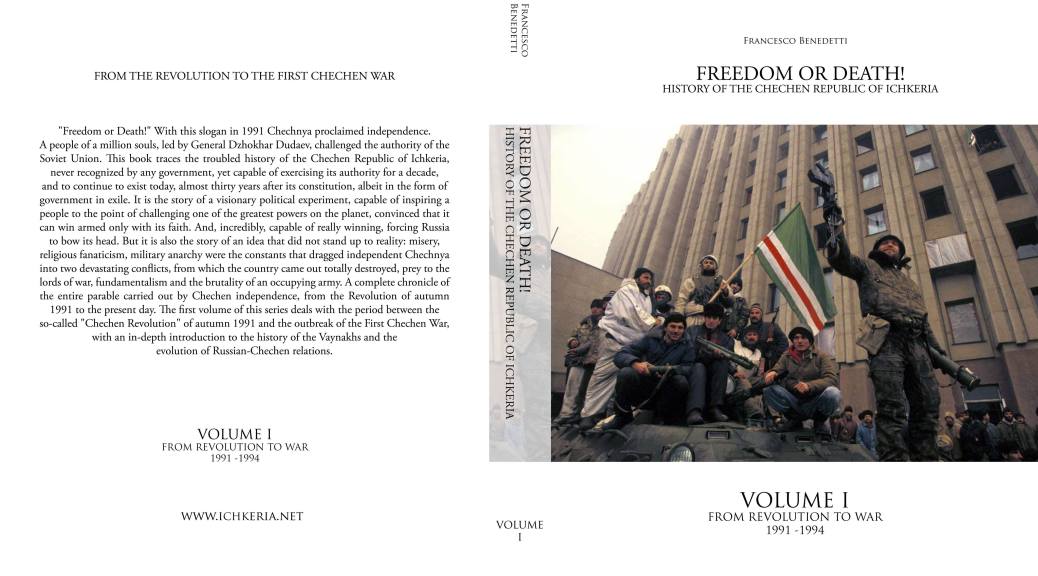
Yesterday we celebrated the entry into our library of a new version of the first volume of the series – the Chechen language version. At this point there are 4 languages in which it is possible to read “Freedom or Death!” and with the publication of the second volume in Italian (which will be followed by the English, Russian and Chechen versions within a few months) we thought it would be useful to offer a general overview of our book offering. This is why we have just put online a small site dedicated solely to the book,
Another year of our life fades into the past, a year of great tests of the Chechen people’s endurance and steadfastness in defense of their won freedom. This year we celebrated the second anniversary of our bloodless revolution and independence. Having passed all the tests with dignity in the fight against internal and external enemies, we entered the third year, more stabilizing the political and economic situation, spiritually and morally strengthening, becoming more confident in an independent path of development of our statehood.
Looking back, summing up another year, we can say without a doubt that it was not in vain to strive for political independence. Our centuries-old history tells us that only political freedom and independence from anyone else is the guarantor of the peaceful life and prosperity of the nation. The vilest of all phenomena in the history of mankind is slavery and humility, against which our ancestors fought for centuries and bequeathed to their offspring not to abandon the freedom-loving spirit of the Vaynakh people.
We are well aware of the repeated attempts to destroy the gene pool of the Vaynakh nation under the Tsarist and then the Soviet-Communist empire. After centuries of persecutions and tragedies of the 19th century, 1944-1957, after the bloody massacre of Khaibach and after the hundreds of thousands of victims of the Soviet genocide, the Chechen people has nevertheless recovered, revived, preserving their national dignity, language and culture, although the Soviet totalitarian regime did everything to suppress his spirit, intimidate him and keep him in constant fear. The current generation skillfully uses the historical opportunity that has come their way to fulfill the dreams and aspirations of their ancestors.
The events that occurred after the collapse of the Soviet empire also show that sovereignty and independence are the only correct path chosen by the Chechen people. The intentions of the GKChP (if this coup succeeded) to repeat the 1944 public broadcast on television about the attack on our own parliament by large-caliber guns gives us another reason to reflect on whether we have done well, when we have decided two years ago to separate us from fascist Russia where it is not the laws that rule, but the attempts of each political group at the top of power, under the guise of a new “democracy”, to consolidate racism and fascism. For two years we have resisted a global blockade by the Russian authorities, their military invasion, internal confrontation of all kinds: sabotage, provocations, espionage. The whole world watches us with admiration. We are in his eyes an example and a model of courage, fortitude and love of freedom. And this spirit will never dry up among the Chechens. Yes, it’s hard for us. We have suffered setbacks, difficulties related to power structures that have not yet taken shape, lack of discipline, lack of organization, internal confrontation between destructive forces, criminal groups and mafias.
Many see only negative aspects in what is happening in Chechnya; disintegration, destruction, extremism, nationalism, etc. All this is actually a fiction. Is life easier in the CIS countries? Do those republics that have not separated from Russia feel calmer? Let’s remember the fate of our Ingush brothers, let’s look at what is happening in the neighboring republics and in Russia itself. There is an endless crisis: political, economic. The collapse of the economy, the impoverishment of a significant part of the population, rising prices, corruption and street crime, terrorism, the outflow of qualified personnel abroad. All branches of power are degrading, none of them are ready to cooperate with each other, none of them control the situation in the country. And with all this, seeing only our failures is, to put it mildly, simply not serious.
Despite all the obstacles posed, many positive steps were taken during the two years of independence to improve the political and economic situation of the republic. The people have breathed deeply for centuries the desired freedom. Fear and hypocrisy are gone forever. Many laws and resolutions have been passed to help stabilize the situation in Chechnya. Many practical steps are being taken to implement the government’s foreign and domestic policy agenda. Clear guidelines were outlined for the further development of the economy, for bringing the republic out of the crisis. We have no problem choosing the way to overcome the crisis. This path is clearly defined. The problem is only in our unity and harmony.
The stage of independent development has arrived, the main task of which is production and economic transformations, in which important structural and investment changes are expected to ensure the necessary market balance: rational use of our oil; urgent restructuring of all oil refineries to ensure a significant increase in oil refining, their technological re-equipment; solve the problem of creating new machine-building industries; make the rich reserves of raw materials productive for the production of building materials, use the enormous reserves of mountain fodder (for the production of livestock products), the development of which will allow to maintain 200 thousand heads of cattle and one million heads of sheep . Much attention will be paid to the construction of roads, residential buildings and stables, the laying of power and communication lines. A state program has been developed to improve soil fertility in the republic. The reconstruction and creation of enterprises for the processing of agricultural products, the introduction of technologies and the importation of equipment, the creation of a tourist and health complex are envisaged.
The chronic insolvability of many economic and social issues arouses feelings of dissatisfaction and pessimism in the population. This is a natural phenomenon and there is nothing to worry about. We have chosen a difficult road to freedom and we have no right to interrupt it. In the memory of the Chechen people, from generation to generation, the words spoken by their ancestors more than a hundred years ago are tenaciously preserved: “We plead guilty only before God and the Chechen people for not being able to restore the freedom granted to us by God”. And now the current generation of Chechens has managed to restore this freedom, to fulfill the precepts of their ancestors. And he’s determined to defend it until the end of his life, whatever the cost. These temporary hardships that have developed for all peoples on the territory of the former Soviet Empire are nothing compared to the shame and humiliation that the Chechen people have experienced for decades: sabotage of local authorities, violations of all kinds, policy of cruel staff that has provoked periodic protests, demonstrations demanding that the Ingush and Chechen be evicted again; refusal to hire Chechens to work in industrial enterprises and objects of strategic importance, in administrative bodies, prohibition of celebrating national and religious holidays; persecution and pressure on the intelligentsia; Gradual annihilation of the mother tongue in daily life; ban on studying the real history of the Vaynakhs. Here is a far from complete list of phenomena that have dishonored and humiliated this people.
Our goal of freedom and independence has been achieved. This should be appreciated and we should be proud of it. We are now building a sovereign democratic state based on the rule of law. There is no doubt that we will be able to accomplish this task too: unlike the Russian “democratic” state, where representatives of Caucasian nationalities are persecuted at every step, Chechens are terrorized, shot, deported from their homes, the authorities of the Chechen Republic will never allow anyone the slightest violation of the rights of a single person, no matter what nation he belongs to and no matter what god he prays to. All peoples inhabiting the republic are equal and worthy of respect and a better life.
The Chechen people have nothing to complain about or regret the previous regime, which left them with the highest infant mortality, unhealthiness and environmental pollution, the lowest life expectancy and the lowest standard of living. We don’t ask anyone for help. We ask and demand not to be disturbed.
DEAR CITIZENS OF THE CHECHEN REPUBLIC!
Our people are optimistic about their future, despite the intrigues of external and internal opponents against our sovereignty. We believe that sooner or later reason and wisdom will prevail in Russian leadership circles. We believe that the state flag of the Chechen Republic, which flies in front of the headquarters of the Unrepresented Peoples Organization, will soon be hoisted in front of the UN headquarters. We believe that PEACE, HEALTH and PROSPERITY will reign in long-suffering Chechnya. The Chechen state already has not only a history, but also a more real future. Vitality and strength, the ability to create and live with reason and talent – we confirmed ourselves in the most difficult tests of strength, building our state in the “mouth of a boa constrictor”.
Today we can proudly say that the desecrated honor has been restored and from yesterday’s homeless population, in the times of the USSR, today we are a free NATION.
LET THE END OF THE YEAR BRING WITH IT ALL OUR FRICTIONS, ALL OUR PROBLEMS!
HAPPY NEW YEAR TO YOU, DEAR COMPATRIOTS! WITH NEW HAPPINESS, WITH NEW SUCCESS AND GOOD HEALTH! MAY GOD HELP YOU!
Dzhokhar DUDAEV.
VERSIONE ITALIANA
“Oggi siamo una nazione libera!” Il Discorso di Dudaev alla nazione (31/12/1993)
Un altro anno della nostra vita sta svanendo nel passato, un anno di grandi prove di resistenza e fermezza del popolo ceceno in difesa della libertà conquistata. Quest’anno abbiamo celebrato il secondo anniversario della nostra rivoluzione e indipendenza senza sangue. Avendo resistito con dignità a tutte le prove nella lotta contro i nemici interni ed esterni, siamo entrati nel terzo anno, stabilizzando maggiormente la situazione politica ed economica, rafforzando spiritualmente e moralmente, diventando più fiduciosi su un percorso indipendente di sviluppo della nostra statualità.
Guardando indietro, riassumendo un altro anno, possiamo affermare senza ombra di dubbio che non è stato vano aspirare all’indipendenza politica. La nostra storia secolare ci dice che solo la libertà politica e l’indipendenza da chiunque altro è garante della vita pacifica e della prosperità della nazione. Il più vile di tutti i fenomeni nella storia dell’umanità è la schiavitù e l’umiltà, contro le quali i nostri antenati hanno combattuto per secoli e hanno lasciato in eredità alla loro progenie di non abbandonare lo spirito amante della libertà del popolo Vaynakh.
Siamo ben consapevoli dei ripetuti tentativi di distruggere il patrimonio genetico della nazione Vaynakh sotto l’impero zarista e poi sovietico-comunista. Dopo secoli di persecuzioni e tragedie del XIX secolo, 1944-1957, dopo il sanguinoso massacro di Khaibach e dopo le centinaia di migliaia di vittime del genocidio sovietico, il popolo ceceno si è comunque risollevato, ravvivato, conservando la propria dignità nazionale, lingua e cultura, sebbene il regime totalitario sovietico abbia fatto di tutto per sopprimere il suo spirito, intimidirlo e tenerlo in costante paura. L’attuale generazione usa abilmente l’occasione storica che le è capitata per realizzare i sogni e le aspirazioni dei suoi antenati.
Gli eventi occorsi dopo il crollo dell’impero sovietico mostrano anche che la sovranità e l’indipendenza sono l’unica strada corretta scelta dal popolo ceceno. Le intenzioni del GKChP (se questo colpo di stato fosse riuscito) di ripetere il 1944, la trasmissione pubblica in televisione riguardo l’attacco al nostro stesso parlamento da cannoni di grosso calibro ci danno un altro motivo per riflettere se abbiamo fatto bene, quando abbiamo deciso due anni fa di separarci dalla Russia fascista dove non comandano le leggi, ma i tentativi di ogni gruppo politico che si trova al vertice del potere, sotto le spoglie di una nuova “democrazia”, di consolidare razzismo e fascismo. Per due anni abbiamo resistito a un blocco globale da parte delle autorità russe, alla loro invasione militare, al confronto interno di ogni genere: sabotaggio, provocazioni, spionaggio. Il mondo intero ci guarda con ammirazione. Siamo ai suoi occhi un esempio e un modello di coraggio, fortezza e amore per la libertà. E questo spirito non si inaridirà mai tra i ceceni.Sì, è difficile per noi. Abbiamo subito battute d’arresto, difficoltà legate a strutture di potere che non hanno ancora preso forma, mancanza di disciplina, mancanza di organizzazione, confronto interno tra forze distruttive, gruppi criminali e mafiosi.
Molti vedono solo aspetti negativi in ciò che sta accadendo in Cecenia; disintegrazione, distruzione, estremismo, nazionalismo, ecc. Tutto questo è in realtà una finzione. La vita è forse più facile nei paesi della CSI? Quelle repubbliche che non si sono separate dalla Russia si sentono più tranquille? Ricordiamo il destino dei nostri fratelli ingusci, guardiamo cosa sta succedendo nelle repubbliche vicine e nella stessa Russia. C’è una crisi senza fine: politica, economica. Il collasso dell’economia, l’impoverimento di una parte significativa della popolazione, l’aumento dei prezzi, la corruzione e la criminalità di strada, il terrorismo, il deflusso di personale qualificato all’estero. Tutti i rami del potere si stanno degradando, nessuno di essi è pronto a collaborare con gli altri, nessuno di loro controlla la situazione nel Paese. E con tutto questo, vedere solo i nostri fallimenti è, per usare un eufemismo, semplicemente non serio.
Nonostante tutti gli ostacoli posti, durante i due anni di indipendenza sono stati fatti molti passi positivi per migliorare la situazione politica ed economica della repubblica. Il popolo ha respirato a pieni polmoni per secoli la libertà desiderata. La paura e l’ipocrisia sono sparite per sempre. Molte leggi e risoluzioni sono state adottate per aiutare a stabilizzare la situazione in Cecenia. Si stanno compiendo molti passi pratici per attuare il programma di politica estera e interna del governo. Sono state delineate chiare linee guida per l’ulteriore sviluppo dell’economia, per far uscire la repubblica dalla crisi. Non abbiamo problemi a scegliere il modo per superare la crisi. Questo percorso è chiaramente definito. Il problema è solo nella nostra unità e armonia.
È arrivata la fase dello sviluppo indipendente, il cui compito principale è la produzione e le trasformazioni economiche, in cui sono attesi importanti cambiamenti strutturali e di investimenti per garantire il necessario equilibrio del mercato: uso razionale del nostro petrolio; ristrutturazione urgente di tutte le raffinerie di petrolio per garantire un significativo aumento della raffinazione del petrolio, il loro riequipaggiamento tecnologico; risolvere il problema della creazione di nuove industrie per la costruzione di macchinari; rendere produttive le ricche riserve di materie prime per la produzione di materiali da costruzione, utilizzare le enormi riserve di foraggi di montagna (per la produzione di prodotti zootecnici), il cui sviluppo consentirà di mantenere 200mila capi di bestiame e un milione di capi di pecore. Molta attenzione sarà dedicata alla realizzazione di strade, edifici residenziali e stalle, alla posa di linee elettriche e di comunicazione. È stato sviluppato un programma statale per migliorare la fertilità del suolo nella repubblica. Sono previste la ricostruzione e la realizzazione di imprese per la lavorazione dei prodotti agricoli, l’introduzione di tecnologie e l’importazione di attrezzature, la creazione di un complesso turistico e sanitario.
L’irrisolvibilità cronica di molte questioni economiche e sociali suscita nella popolazione sentimenti di insoddisfazione e pessimismo. Questo è un fenomeno naturale e non c’è nulla di cui preoccuparsi. Abbiamo scelto una strada difficile verso la libertà e non abbiamo il diritto di interromperla. Nella memoria del popolo ceceno, di generazione in generazione, si conservano tenacemente le parole pronunciate dai loro antenati più di cento anni fa: «Ci dichiariamo colpevoli solo davanti a Dio e al popolo ceceno per non aver saputo restituire la libertà concessaci da Dio”. E ora l’attuale generazione di ceceni è riuscita a ripristinare questa libertà, ad adempiere ai precetti dei loro antenati. Ed è determinato a difenderlo fino alla fine della sua vita, a qualunque costo. Queste difficoltà temporanee che si sono sviluppate per tutti i popoli sul territorio dell’ex impero sovietico non sono nulla in confronto alla vergogna e all’umiliazione che il popolo ceceno ha vissuto per decenni: sabotaggio delle autorità locali, violazioni di ogni tipo, politica del personale crudele che ha provocato proteste periodiche, manifestazioni nelle quali si è chiesto che ingusci e ceceni fossero sfrattati di nuovo; rifiuto di assumere ceceni per lavorare presso imprese industriali e oggetti di importanza strategica, negli organi amministrativi, divieto di celebrare feste nazionali e religiose; persecuzione e pressioni sull’’intellighenzia; Annientamento graduale della lingua madre nella vita quotidiana; divieto di studiare la vera storia dei Vaynakh. Ecco un elenco tutt’altro che completo di fenomeni che hanno disonorato e umiliato questo popolo.
Il nostro obiettivo di libertà e indipendenza è stato raggiunto. Questo dovrebbe essere apprezzato e di questo dovremmo essere orgogliosi. Ora stiamo costruendo uno stato democratico sovrano e di diritto. Non c’è dubbio che saremo in grado di portare a termine anche questo compito: a differenza dello Stato “democratico” russo, dove i rappresentanti delle nazionalità caucasiche sono perseguitati a ogni passo, i ceceni sono terrorizzati, fucilati, deportati dalle loro case, le autorità della Repubblica cecena non permetteranno mai a nessuno la minima violazione dei diritti di una singola persona, non importa a quale nazione appartenga e non importa quale dio preghi. Tutti i popoli che abitano la repubblica sono uguali e degni di rispetto e di una vita migliore.
Il popolo ceceno non ha nulla di cui lamentarsi o rimpiangere il precedente regime, il quale ha lasciato loro la più alta mortalità infantile, insalubrità e inquinamento ambientale, la più bassa aspettativa di vita e il più basso tenore di vita. Non chiediamo aiuto a nessuno. Chiediamo ed esigiamo di non essere disturbati.
CARI CITTADINI DELLA REPUBBLICA CECENA!
Il nostro popolo è ottimista riguardo al proprio futuro, nonostante gli intrighi degli oppositori esterni e interni contro la nostra sovranità. Crediamo che prima o poi la ragione e la saggezza prevarranno nei circoli della leadership russa. Crediamo che la bandiera di stato della Repubblica Cecena, che sventola davanti alla sede dell’Organizzazione dei Popoli Non Rappresentati, sarà presto issata davanti alla sede delle Nazioni Unite. Crediamo che PACE, SALUTE e PROSPERITÀ regneranno nella longanime Cecenia. Lo Stato ceceno ha già non solo una storia, ma anche un futuro più reale. Vitalità e forza, capacità di creare e vivere con ragione e talento: ci siamo confermati nelle più difficili prove di forza, costruendo il nostro stato nella “bocca di un boa constrictor”.
Oggi possiamo affermare con orgoglio che l’onore profanato è stato ripristinato e dalla popolazione senzatetto di ieri, ai tempi dell’URSS, oggi siamo una NAZIONE libera.
LASCIATE CHE L’ANNO CHE FINISCE PORTI CON SE TUTTI I NOSTRI ATTRITI, TUTTI I NOSTRI PROBLEMI!
BUON ANNO A VOI, CARI COMPATRIOTI! CON NUOVA FELICITÀ, CON NUOVO SUCCESSO E BUONA SALUTE! CHE DIO VI AIUTI!
Quando, nel Febbraio del 1944, Stalin decretò la deportazione di massa dei Ceceni in Asia centrale, egli motivò la terribile “punizione” con la supposta collaborazione dei Ceceni con le forze armate germaniche. Tale collaborazione sarebbe avvenuta, secondo la versione ufficiale, nel corso del 1942, in concomitanza con un’azione di intelligence e sabotaggio compiuta dalla Wehrmacht, chiamata in codice “Operazione Schamil”. Il marchio dell’infamia, gettato su tutti i ceceni dalla teoria del “tradimento”, avrebbe condizionato l’esistenza di un intero popolo il quale, ridotto a paria nel consesso delle nazioni che abitavano l’impero sovietico, fu costretto ad accettare una frustrante discriminazione sociale, economica e politica. Questa condizione fu uno tra i detonatori del desiderio di rivalsa che pervase i ceceni alla fine degli anni ’80, e alimentò quel desiderio di libertà che poi si concretizzò con l’indipendenza nel 1991.
Oggi in Russia si è accettata l’idea che la deportazione del 1944 fu un crimine terribile. Eppure rimane ben radicata dell’opinione pubblica l’idea che questo tradimento dei ceceni si sarebbe realmente consumato, e che pertanto vi sia una “colpa” ancestrale che i Vaynakh dovrebbero “espiare” di fronte alla madrepatria. Tralasciando il fatto che molti ceceni non considerano affatto la Russia la loro casa, e che quindi non si sentirebbero affatto dei “traditori” di una patria che non riconoscono, il fatto è che questa “colpa” non è affatto certa. Anzi, è piuttosto chiaro, dalle evidenze storiche, che la maggior parte dei ceceni combattè con onore nelle file dell’Armata Rossa, e che la popolazione civile non solidarizzò con i tedeschi più di quanto non lo fecero le altre nazioni sottoposte al giogo di Stalin.
Recentemente Pieter Van Huis, ricercatore dell’Università di Leida, nei Paesi Bassi, ha pubblicato una tesi dal titolo Banditi di montagna e fuorilegge della foresta. Ceceni e Ingusce sotto il dominio sovietico nel 1918-1944. Lo studioso dedica un capitolo proprio alla celebre “Operazione Schamil”: attingendo alle fonti documentali disponibili presso gli archivi della Wehmacht e dell’NKVD, ha saputo ricostruire la genesi e lo svolgimento di questa azione. Riepiloghiamo in sintesi quanto è emerso dagli studi di Van Huis, a loro volta riportati da Anastasia Kirilenko sul sito del Nodo Caucasico: https://www.kavkaz-uzel.eu/
I RAPPORTI LANGE
Le prime fonti cui fa riferimento Van Huis sono tre rapporti operativi, due firmati dal Tenente Maggiore Erhard Lange ed uno dal volontario osseto Boris Tsagolov. Tutte e tre le fonti, sebbene differenti nello stile, concordano sul fatto che l’operazione fu un sostanziale fallimento principalmente a causa della pronta reazione delle unità dell’NKVD, le quali procedettero a punire i residenti che davano ospitalità al nemico bruciando le loro case, o applicando punizioni collettive alle comunità che non si opposero attivamente al suo passaggio. Tutti e tre i rapporti, in ogni caso, concordano sul fatto che ad eccezione di alcune bande di irregolari, peraltro già attive prima dell’invasione, non fornirono un supporto sufficiente al buon esito dell’operazione.
Il primo di questi rapporti fu inviato da Ehrard Lange il 5 Gennaio 1943. In esso si riepiloga che l’Operazione Schamil ebbe inizio il 25 Agosto 1942, quando un aereo della Luftwaffe decollato da Armavir paracadutò 11 tedeschi e 19 volontari caucasici nei pressi di Chishki e di Dachu – Barzoi, a circa 30 kilometri da Grozny. Il cielo era sgombro, e la luce della luna illuminò fin da subito i paracadutisti, i quali furono presi di mira dal nemico. La maggior parte delle armi e dell’equipaggiamento fu quindi frettolosamente abbandonato, e ci vollero alcuni giorni prima che il gruppo potesse ricompattarsi, non prima di aver accertato alcune perdite e diserzioni. Il gruppo, ridotto a 22 uomini, tentò di racimolare qualche arma da fuoco sequestrandola agli abitanti dei villaggi vicini, mentre tentava di guadagnare un rifugio sicuro. Tuttavia, essendo stati notati fin dal loro arrivo, gli uomini del commando divennero da subito oggetto di una spietata caccia da parte dell’NKVD, che giunse a mobilitare addirittura 2.000 effettivi per stanarli. Lange tentò quindi di prendere contatto con i ribelli locali, arroccati sulle montagne, cercando di riunirli in un’unica banda organizzata, e di aggiungere a questa massa critica un contingente di 400 ribelli georgiani. Il piano, tuttavia, non riuscì a causa del fatto che il 24 Settembre 1942 l’NKVD intercettò Lange, costringendolo ad aprirsi una via di fuga con la forza. I sopravvissuti raggiunsero Kharsenoy, ma qui furono nuovamente intercettati e costretti a combattere. Dopo aver perduto altri uomini, Lange decise di abortire la missione. Dopo aver abbandonato le divise ed indossato abiti civili, riuscì a spacciare i resti del suo gruppo (cinque tedeschi e quattro caucasici) per una banda di banditi Cabardini, finché non riuscì ad ottenere la collaborazione di alcuni residenti locali, i quali accettarono di aiutarlo a patto i membri della banda fossero divisi e distribuiti secondo le loro volontà. Non potendo fare altro, Lange acconsentì. Lui e i suoi uomini rimasero nascosti fino al 9 Dicembre successivo, quando appresero che l’armata rossa aveva intercettato e distrutto la maggior parte dei ribelli operanti in Cecenia. Il giorno successivo Lange raccolse i suoi, e li portò oltre la linea del fronte. Rientrato alla base, l’ufficiale compilò una memoria nella quale indicò una lista di nomi di “103 persone assolutamente affidabili, che potrebbero fungere da guide”.
Successivamente, il 23 Aprile 1943, Lange depositò un secondo rapporto, nel quale specificava maggiormente lo scopo della sua missione: mettere in atto operazioni militari per ostacolare la ritirata nemica lungo la direttrice Grozny – Botlikh. Il compito, si specificava, non era stato portato a termine a causa del fatto che la maggior parte delle armi era andato perduto durante l’atterraggio, ma anche per via della scarsa collaborazione dei residenti locali. Secondo questo rapporto, una volta constatata la dispersione del “Gruppo Lange”, il comando tedesco aveva inviato una seconda unità, chiamata “Gruppo Rekert” a cercare di recuperare i dispersi. Questo secondo drappello, tuttavia, era stato sbaragliato ed i suoi componenti risultavano scomparsi. Rispetto al suo rapporto con i civili, Lange precisa che il gruppo era nelle mani della popolazione civile e correva quotidianamente il rischio di un tradimento da parte loro, e che soltanto dopo lunghe discussioni il commando riuscì a liberarsi da questa tutela. Infine, il resoconto specificava anche l’obiettivo secondario seguito da Lange una volta che quello principale (il sabotaggio) si rivelò irraggiungibile: Verificare la veridicità dei rapporti al Fuhrer secondo i quali ceceni e ingusci sarebbero particolarmente coraggiosi nella lotta contro i bolscevichi e, nel caso, fornire loro supporto logistico ed armi per proseguire la guerriglia. Per raggiungere questo secondo obiettivo Lang avrebbe dovuto passare alcune settimane in Cecenia, confidando nello spirito di ospitalità dei residenti locali. Egli sapeva che per un ceceno l’ospitalità è sacra. Nel rapporto riferisce, infatti: le regole locali sull’ospitalità richiedono di proteggere la vita di un ospite anche a costo della propria. Consci di questo, i tedeschi non risparmiarono ai ceceni veri e propri ricatti morali, minacciando di far sapere a tutti del disonore gettato sulla famiglia e sul Teip da persone che non accettavano di ospitarli e di collaborare con loro.
Se ottenere l’ospitalità dei ceceni sembrava piuttosto facile, molto più difficile risultò garantirsi la loro alleanza nel costituire un movimento di resistenza antisovietica. Sempre citando Lange: I residenti locali non sono interessati a nulla, tranne che al destino del loro villaggio, nel quale vorrebbero vivere come contadini liberi. Essi non hanno alcun rispetto per il tempo, per lo spazio, né per il rispetto degli accordi presi. […] Tutto questo crea pessimi requisiti per una rivolta. Citando un evento accaduto al Gruppo Reckert, Lange ricorda che dopo aver ricevuto le armi, gli uomini sono tornati in fretta ai loro villaggi. A conclusione del suo rapporto, Lange consigliava di non investire uomini e mezzi in questa operazione, giacchè la popolazione locale non avrebbe combattuto per la Germania, ma al massimo per liberarsi delle fattorie collettive e riappropriarsi della terra.
ENGLISH VERSION
THE BETRAYAL THAT DID NOT HAPPEN – OPERATION “SCHAMIL” (Part I)
When, in February 1944, Stalin decreed the mass deportation of the Chechens to Central Asia, he motivated the terrible "punishment" with the alleged collaboration of the Chechens with the Germanic armed forces. According to the official version, this collaboration took place during 1942, in conjunction with an intelligence and sabotage action carried out by the Wehrmacht, codenamed "Operation Schamil". The stigma thrown on all Chechens by the theory of "betrayal", would have conditioned the existence of an entire people who, reduced to pariah in the assembly of nations that inhabited the Soviet empire, was forced to accept a frustrating social, economic and political discrimination. This condition was one of the detonators of the desire for revenge that pervaded the Chechens in the late 1980s, and fueled that desire for freedom which then materialized with independence in 1991.

Today in Russia it is accepted that the 1944 deportation was a terrible crime. Yet public opinion remains firmly rooted in the idea that this betrayal of the Chechens would actually be consummated, and that therefore there is an ancestral "guilt" that the Vaynakhs should "atone" in the face of the motherland. Leaving aside the fact that many Chechens do not consider Russia their home at all, and therefore would not at all feel like "traitors" to a homeland they do not recognize, the fact is that this "fault" is by no means certain. Indeed, it is quite clear from the historical evidence that most Chechens fought with honor in the ranks of the Red Army, and that the civilian population did not sympathize with the Germans any more than did other nations under Stalin's yoke. .

Pieter Van Huis, a researcher at the University of Leiden in the Netherlands, recently published a thesis entitled Mountain Bandits and Forest Outlaws. Chechens and Ingush under Soviet rule in 1918-1944. The scholar dedicates a chapter to the famous "Operation Schamil": drawing on the documentary sources available in the Wehmacht and NKVD archives, he was able to reconstruct the genesis and development of this action. We summarize in summary what emerged from the studies of Van Huis, in turn reported by Anastasia Kirilenko on the Caucasian Node website: https://www.kavkaz-uzel.eu/
THE LANGE REPORTS

The first sources to which Van Huis refers are three operational reports, two signed by Lieutenant Major Erhard Lange and one by the Ossetian volunteer Boris Tsagolov. All three sources, although different in style, agree that the operation was a substantial failure mainly due to the prompt reaction of the NKVD units, which proceeded to punish the residents who housed the enemy by burning their homes. , or by applying collective punishment to communities that did not actively oppose its passage. All three reports, in any case, agree that with the exception of some bands of illegal immigrants, which were already active before the invasion, they did not provide sufficient support for the success of the operation.
The first of these reports was sent by Ehrard Lange on January 5, 1943. It summarizes that Operation Schamil began on August 25, 1942, when a Luftwaffe plane taken off from Armavir parachuted 11 Germans and 19 Caucasian volunteers near Chishki. and Dachu - Barzoi, about 30 kilometers from Grozny. The sky was clear, and the light of the moon immediately illuminated the paratroopers, who were targeted by the enemy. Most of the weapons and equipment were therefore hastily abandoned, and it took a few days before the group could regroup, not before having ascertained some losses and desertions. The group, reduced to 22 men, attempted to scrape together some firearms by seizing them from nearby villagers, while trying to gain a safe haven. However, having been noticed since their arrival, the men of the commando immediately became the object of a merciless hunt by the NKVD, which even mobilized 2,000 troops to track them down. Lange then attempted to make contact with the local rebels, perched in the mountains, trying to unite them in a single organized band, and to add a contingent of 400 Georgian rebels to this critical mass. The plan, however, failed due to the fact that on September 24, 1942, the NKVD intercepted Lange, forcing him to forcibly open an escape route. The survivors reached Kharsenoy, but here they were again intercepted and forced to fight. After losing other men, Lange decided to abort the mission. After abandoning his uniforms and wearing civilian clothes, he managed to pass off the remains of his group (five Germans and four Caucasians) as a band of Cabardini bandits, until he succeeded in obtaining the collaboration of some local residents, who agreed to help him provided the members of the gang were divided and distributed according to their will. Unable to do anything else, Lange agreed. He and his men remained in hiding until the following December 9, when they learned that the Red Army had intercepted and destroyed most of the rebels operating in Chechnya. The next day Lange gathered his own, and carried them over the front line. Returning to the base, the officer compiled a memo in which he indicated a list of names of "103 absolutely reliable people, who could serve as guides".
Subsequently, on April 23, 1943, Lange filed a second report, in which he further specified the purpose of his mission: to carry out military operations to obstruct the enemy retreat along the Grozny - Botlikh route. The task, it was specified, had not been completed due to the fact that most of the weapons had been lost during landing, but also due to the lack of cooperation from local residents. According to this report, once the dispersion of the "Lange Group" was ascertained, the German command had sent a second unit, called the "Rekert Group" to try to recover the missing. This second squad, however, had been defeated and its members had disappeared. With respect to his relationship with civilians, Lange specifies that the group was in the hands of the civilian population and daily ran the risk of betrayal on their part, and that only after long discussions did the commandos manage to free themselves from this protection. Finally, the report also specified the secondary objective followed by Lange once the main one (sabotage) proved unattainable: Verifying the veracity of the reports to the Fuhrer according to which Chechens and Ingush are particularly courageous in the fight against the Bolsheviks and, in the case, provide them with logistical support and weapons to continue the guerrilla warfare. To achieve this second goal, Lang would have had to spend a few weeks in Chechnya, trusting in the spirit of hospitality of the local residents. He knew that hospitality is sacred to a Chechen. In fact, in the report he reports: the local rules on hospitality require you to protect the life of a guest even at the cost of your own. Aware of this, the Germans did not spare the Chechens real moral blackmail, threatening to let everyone know of the dishonor thrown on the family and on the Teip by people who did not accept to host them and to collaborate with them.
While obtaining the hospitality of the Chechens seemed easy enough, it was much more difficult to secure their alliance in forming an anti-Soviet resistance movement. Again quoting Lange: Local residents are not interested in anything except the fate of their village, in which they would like to live as free farmers. They have no respect for time, space, or compliance with the agreements made. […] All this creates bad conditions for a riot. Citing an event that happened to the Reckert Group, Lange recalls that after receiving the weapons, the men quickly returned to their villages. At the end of his report, Lange advised not to invest men and means in this operation, since the local population would not fight for Germany, but at most to get rid of the collective farms and regain possession of the land.
Il Governo Zakayev ha organizzato una manifestazione davanti al Tribunale Penale Internazionale dell’Aja, per spingere la corte a prendere in esame la documentazione presentata nel 2018 inerente i crimini commessi dalle forze della Federazione Russa in Cecenia. Il raduno, documentato da NEP Prague, verrà proposto dall’emittente in una serie di video. Di seguito pubblichiamo il primo tra questi, corredato di sottotitoli in italiani realizzati da Francesco Benedetti
“Il Tribunale dell’Aia per Putin. Il Tribunale dell’Aia per la Russia. “ Sottotitoli in italiano
We are pleased to announce that the English version of the book is now available on Amazon. “Freedom or Death – History of the Chechen Republic of Ichkeria!” is available in both print and e-book format.
For this second edition we have decided, given the length of the work, to organize its publication in five volumes: today we present the first, “From Revolution to War (1991 – 1994)”.
The volume consist in 400 pages, and contains a complete reviewof the events that occurred in Chechnya from the birth of the Chechen National Congress to the First Chechen War.