CONFLITTI SOCIALI – Allo scopo di interrompere le indebite appropriazioni di beni pubblici, soprattutto quelli afferenti ai magazzini della Protezione Civile, o la loro rivendita illegale da parte dei funzionari pubblici, con il Decreto Presidenziale numero 17 il Presidente della Repubblica ordina un censimento generale delle proprietà ed un nuovo protocollo di autorizzazione per il loro utilizzo attraverso speciali permessi presidenziali.
POLITICA NAZIONALE – Con Decreto Presidenziale numero 16, recependo un’iniziativa del Parlamento della Repubblica, il Presidente Dudaev assegna un edificio precedentemente a disposizione del KGB ad un’unità medico – diagnostica a disposizione della popolazione infantile e femminile della Repubblica.
2 Marzo
POLITICA LOCALE – Su iniziativa del Sindaco di Grozny Bislan Gantamirov vengono aperti in città quattro negozi “sociali” destinati alla raccolta ed alla distribuzione di cibo e vestiario agli indigenti. Tale misura è volta a sostenere le fasce deboli della popolazione, sempre più colpita dal rialzo dei prezzi e dalla crisi economica generale.
Bislan Gantamirov (in abiti civili) presenzia ad un’ispezione insieme a Dzhokhar Dudaev (in mimetica)
3 Marzo
NEGOZIATI RUSSO/CECENI – I rappresentanti russi e ceceni si incontrano a Sochi per iniziare un ciclo di negoziati. Dal governo russo arriva la disponibilità a continuare nel limite del possibile il trasferimento dei fondi necessario al pagamento degli stipendi pubblici e dei salari.
5 Marzo
POLITICA NAZIONALE – In ordine a garantire locali adeguati alle strutture del comparto giudiziario della Repubblica, con il Decreto Presidenziale numero 19 “Misure per migliorare le condizioni di lavoro dei tribunali distrettuali della Repubblica Cecena” il Presidente Dudaev ordina che gli edifici, le risorse ed il mobilio appartenute al disciolto Partito Comunista dell’Unione Sovietica siano ceduti in uso alle corti di giustizia.
6 Marzo
CRISI POLITICA IN CECENIA – Umar Avturkhanov, Governatore dell’Alto Terek e principale leader dell’opposizione a Dudaev, pubblica un appello al popolo ceceno nel quale invita i suoi concittadini a non ubbidire al governo indipendentista.
CONFLITTI SOCIALI – A Grozny i rappresentanti dei dipendenti pubblici minacciano uno sciopero generale se il governo non assicurerà il pagamento degli stipendi.
POLITICA ESTERA – Dudaev invia una dichiarazione ai governi di Azerbaijian, Tatarstan, Baskhortostan e Turkmenistan proponendo un’unione monetaria alternativa al rublo, considerato uno strumento imperialista di destabilizzazione per le repubbliche “produttrici di petrolio”.
CRISI RUSSO/CECENA – Reagendo al blocco economico in atto da parte della Federazione Russa, Dudaev dichiara il blocco alle esportazioni dei prodotti strategici (in particolare dei lubrificanti per aerei, dei quali la Cecenia è produttore – leader con il 90% del fabbisogno di tutta la Russia) fin quando Mosca non riaprirà le frontiere.
ECONOMIA E FINANZA– La situazione economica nel paese peggiora di giorno in giorno. Il governo non ha le risorse necessarie a garantire il regolare pagamento degli stipendi. Insegnanti e forze dell’ordine non hanno ricevuto né lo stipendio di Gennaio, né lo stipendio di Marzo, e minacciano di scioperare.
10 Marzo
POLITICA NAZIONALE – Al fine di garantire le risorse necessarie al suo funzionamento, con il Decreto Presidenziale numero 18 il Presidente Dudaev alloca la somma di 200.000 rubli per le spese correnti della neocostituita Corte Suprema della Repubblica. Tale misura dovrà essere implementata con la costituzione di un’apposita voce nel bilancio statale.
12 Marzo
POLITICA NAZIONALE – Con la Legge numero 108/1992Il Parlamento promulga la Costituzione della Repubblica Cecena. La nuova carta fondamentale, ispirata alle costituzioni occidentali, identifica lo Stato come una repubblica democratica di tipo parlamentare, fondata sul rispetto dei diritti della persona, dei diritti civili e della tolleranza religiosa.
Con Decreto Presidenziale numero 23 il Presidente Dudaev riforma la Protezione Civile Nazionale, assumendo il potere di nomina dei suoi massimi rappresentanti e delegando al Sindaco di Grozny la gestione della protezione civile nella capitale.
POLITICA ESTERA – La delegazione cecena, guidata dal Ministro degli Esteri Shamil Beno giunge a Dagomys, in Abkhazia, dove incontra la controparte russa per iniziare i negoziati tra i governi di Grozny e di Mosca.
Le tre più alte cariche del Parlamento di prima convocazione: Il Presidente del Parlamento, Akhmadov (Al centro) ed i due Vicepresidenti, Mezhidov (a sinistra) e Gushakayev (a destra)
12 Marzo
POLITICA ESTERA – Settanta deputati provenienti dalla Georgia vengono ospitati in sessione dalle autorità cecene, alla presenza dell’ex presidente georgiano Gamsakhurdia e del Capo dello Stato ceceno, Dudaev. Con questo gesto il Presidente della Repubblica Cecena prende una chiara posizione politica in favore dell’ormai decaduto leader georgiano.
12 Marzo
NEGOZIATI RUSSO/CECENI –I negoziati tra Federazione Russa e Repubblica Cecena portano alla sottoscrizione di un documento condiviso nel quale si identificano alcune aree di integrazione politica ed economica tra i due paesi.
I negoziati proseguono mentre la Federazione Russa indice per il 31 Marzo la cerimonia di firma di un nuovo Trattato Federativo con il quale tutti i soggetti federati della Russia fisseranno i loro rapporti con il governo centrale. I moderati ceceni spingono perché la Cecenia firmi il Trattato, ma Dudaev ed i nazionalisti pretendono che prima la Federazione Russa riconosca l’indipendenza della Cecenia.
15 Marzo
NEGOZIATI RUSSO/CECENI –Di ritorno dalla sessione negoziale nella cittadina di Dagomys, la delegazione cecena comunica che il prossimo incontro si terrà a Mosca, e che la delegazione russa ha promesso di allentare il blocco finanziario della Repubblica Cecena se questa ricomincerà ad esportare i prodotti derivanti dalla lavorazione degli idrocarburi.
16 Marzo
POLITICA NAZIONALE – Per favorire gli investimenti nella repubblica il Parlamento vara una moratoria sull’imposta sul reddito, e la abolisce per l’anno di imposta 1992. La misura serve anche a rottamare una enorme quantità di debiti privati nei confronti della pubblica amministrazione, cui la maggior parte dei ceceni non riesce più a far fronte, o che non intende pagare.
CONFLITTI SOCIALI – Continua lo sciopero degli insegnanti e di altri dipendenti del pubblico impiego a causa dei ritardi nel pagamento degli stipendi. In particolare gli insegnanti lamentano il fatto di non aver ancora ricevuto lo stipendio di Gennaio. Il governo assicura che presto i pagamenti riprenderanno regolari, a seguito di accordi per la vendita di prodotti petroliferi che dovrebbero portare alle casse dello Stato la liquidità necessaria a mettere il tesoro in pari con i pagamenti.
17 Marzo
CONFLITTI SOCIALI – Intere categorie di lavoratori pubblici entrano in sciopero a causa del mancato pagamento dei salari. Le scuole, colpite dall’astensione lavorativa degli insegnanti, rimangono chiuse. Il Ministro dell’Economia Taymaz Abubakarov promette che il tesoro ricomincerà a pagare regolarmente gli stipendi non appena la Russia interromperà il blocco dei trasferimenti finanziari.
POLITICA NAZIONALE – Il Parlamento della Repubblica approva una legge con la quale reintroduce l’alfabeto latino in funzione di quello cirillico, imposto dall’Unione Sovietica negli anni ’30. Secondo il parere dei deputati, questo è più aderente alla fonetica della lingua cecena.
CRISI POLITICA IN CECENIA – l’opposizione anti – dudaevita fa circolare volantini nei quali si chiedono le dimissioni di Dudaev. Gruppi armati antidudaeviti prendono posizione nei dintorni di Grozny.
Uno dei leader dell’opposizione antidudaevita, Umar Avturkhanov
20 Marzo
POLITICA ESTERA – Con Decreto Presidenziale il Presidente Dudaev ordina al Ministero degli Esteri di stabilire regolari relazioni diplomatiche con la Repubblica di Georgia “non appena l’ordine costituzionale sarà ripristinato”. Il provvedimento è essenzialmente un gesto di amicizia politica al decaduto presidente georgiano Gamsakhurdia, il quale attualmente risiede a Grozny e lavora alla riconquista del potere sostenuto da numerosi ex esponenti del Soviet Supremo Georgiano, anch’esso disperso a seguito del colpo di stato dell’anno precedente.
20 Marzo
POLITICA NAZIONALE – Dudaev promulga il Decreto “Sulle aliquote di dazio statale da addebitarsi sulle domande e sui reclami presentati in tribunale, nonché sulle imposte degli atti notarili e dello stato civile” con il quale calmiera i prezzi degli atti pubblici, agevolando la popolazione vessata dalla crisi economica ma riducendo al minimo gli introiti a disposizione del comparto della giustizia, il quale già versa in una cronica carenza di risorse per poter funzionare.
24 Marzo
POLITICA NAZIONALE – In ordine a razionalizzare i servizi sanitari della Repubblica, con il Decreto Presidenziale numero 30 Dudaev stabilisce la conversione del centro medico del Ministero degli Interni in ospedale policlinico al servizio dei dipendenti pubblici e delle forze dell’ordine, decretando che tale struttura sarà finanziata da specifiche voci di bilancio a carico delle istituzioni statali che utilizzeranno la struttura.
25 Marzo
MOVIMENTI POLITICI – Il Congresso Nazionale del Popolo Ceceno (OKChN) dal quale sono emerse le forze che hanno scatenato la Rivoluzione Cecena, delibera una nuova sessione da tenersi in Maggio. La Costituzione appena approvata non ha riconosciuto al Congresso alcuno spazio istituzionale, ed i nuovi rappresentanti dell’organizzazione, emersi dal “travaso” di molti dei suoi leaders nelle istituzioni della Repubblica, rivendicano il ruolo centrale che a loro parere il Congresso dovrebbe avere nella Cecenia indipendente.
Yaragi Mamodaev, di ritorno da un viaggio privato in Giappone, relaziona riguardo ai suoi contatti con il Ministero degli Esteri del Sol Levante e con alcuni industriali, i quali si sono detti disponibili a saggiare le possibilità di una collaborazione economica.
A latere della sua conferenza stampa Mamodaev suggerisce che il Parlamento, dei cui 41 deputati soltanto uno (Gleb Bunin) è russo e nessuno appartiene ad alcuna delle minoranze che abitano la repubblica, dovrebbe sciogliersi e ricostituirsi secondo un criterio etnicamente più rappresentativo.
26 Marzo
TENSIONI SOCIALI – Sciopero dei vigili del fuoco, i quali lamentano ritardi di tre mesi nel pagamento degli stipendi. L’allentamento delle tensioni con la Russia ha fatto si che da Mosca siano arrivati 150 milioni di rubli per il pagamento di stipendi e pensioni, ma queste risorse sono ampiamente insufficienti a coprire gli ammanchi delle casse statali.
POLITICA NAZIONALE – In un incontro con l’Associazione dell’Intellighenzia della Repubblica Cecena, il Presidente Dudaev afferma che l’indipendenza del Paese non è in discussione, mentre lo sono tutti i suoi aspetti “collaterali”, come eventuali accordi di cooperazione economica con la Federazione Russa e con i paesi produttori di petrolio. In questo modo Dudaev ribadisce la propria totale contrarietà a qualsiasi negoziato di tipo federativo con Mosca, eventualità ventilata sia dagli stessi intellettuali, sia da correnti interne al Parlamento.
28 Marzo
TERRORISMO – Una banda di sequestratori provenienti dal Territorio di Stavropol chiede asilo al governo ceceno, ma questo lo nega ed ordina l’arresto dei sequestratori, ed il rilascio degli ostaggi. I terroristi vengono da prima tradotti nell’edificio del Ministero degli Interni, poi in una caserma della Guardia Nazionale.
28 Marzo
CRISI POLITICA IN CECENIA –La polizia antisommossa, dipendente dal Ministero degli Interni, è in stato di agitazione e chiede che il Ministero abbia riconosciuta una guida ufficiale, mentre adesso si trova diretto da un Ministro “de facto”, Umals Alsultanov, peraltro inattivo. Egli, già Ministro negli ultimi mesi di vita della ASSR Ceceno – Inguscia, era stato esautorato a causa della sua sospetta collaborazione con il Comitato di Emergenza responsabile del Putsch di Agosto e sostituito da Vakha Ibragimov, ma Dudaev lo ha riconfermato alla guida del dicastero nel suo “governo provvisorio”. Al momento della sua presentazione al Parlamento non ha ottenuto i voti necessari, pertanto si è posto in stato di riposo in attesa di dare le dimissioni in favore del suo successore. I funzionari del Ministero sono quindi divisi tra coloro che premono per una sua riconferma e coloro che chiedono la nomina di Ibragimov.
30 Marzo
CRISI POLITICA IN CECENIA – Milizie armate antidudaevite si radunano nei sobborghi di Grozny. In alcuni villaggi si segnala la distribuzione di armi a volontari disposti a mettere a segno un colpo di mano per estromettere il Presidente Dudaev e riportare la Cecenia nella Federazione Russa.
Vita quotidiana a Grozny nell’estate del 1992
31 Marzo
COLPO DI STATO DI MARZO – Un gruppo di ex funzionari della RSSA Ceceno – Inguscia ed alcuni rappresentanti dell’opposizione, favorevoli alla federazione con la Russia tenta un colpo di Stato. Milizie armate e reparti inquadrati nella Guardia Nazionale occupano la TV e la Radio. Un “Comitato di Emergenza” si riunisce per costituire un governo di transizione che porti la Cecenia ad un Referendum sull’adesione alla Federazione Russa e successivamente a nuove elezioni parlamentari. Le unità del Ministero degli Interni, in questo momento prive di un Ministro e dirette dal Viceministro degli Interni, Udiev, rimangono acquartierate nelle caserme.
Dopo alcune ore di sbandamento una folla di sostenitori dell’indipendenza si raduna davanti al Palazzo Presidenziale, dove il Presidente del Parlamento Akhmadov legge la mozione dell’assemblea che condanna il colpo di stato in atto ed il Presidente Dudaev si appella al popolo affinché difenda l’indipendenza appena conquistata.
Nel corso del Pomeriggio la Guardia Nazionale riprende il controllo della città, espugna l’edificio della TV di Stato e costringe gli insorti ad abbandonare Grozny. Nelle sparatorie muoiono almeno quindici persone, ed una quarantina sono i feriti. L’opposizione moderata, critica verso il governo Dudaev, condanna parimenti le azioni del Comitato d’Emergenza, gridando ad un complotto ordito dalla leadership russa per provocare una guerra civile nel paese.
In serata il Parlamento torna a riunirsi in assemblea, mentre il Deputato e leader del VDP Zelimkhan Yandarbiev condanna i “nemici insidiosi del popolo ceceno” i quali, anziché accettare l’offerta di mediazione pubblicamente fatta dal Parlamento alcuni giorni fa, hanno deciso di prendere le armi contro lo Stato con ,’intento di rovesciarlo.
Khavazh Serbiev served as the Prosecutor General of the Chechen Republic of Ichkeria during the period between the first and second Russian invasions of the country. In June 2022 he gave an interview to Ukraina Today ( https://ukrainatoday.com.ua/ ) about the parallels between the ongoing war and those fought by the Chechens. Below is the translation of the interview.
You investigated the crimes of the Russian army. If we compare the actions of the Russian army in Chechnya and what they did in Ukraine, is there anything more similar or different?
In Ukraine, nothing new has happened, nor is it happening, compared to what has been done in the Chechen Republic. Everything is mirrored: only the scale is different, because your people (the Ukrainians, Ed ) are many times more numerous than the Chechens, and the territory is vaster. Everything else is the same. This is so familiar to us that we are even surprised: nothing changes in the policy of the Russian state and in the actions of its army!
Why did the world community react rather slowly to statements about Russian war crimes in Chechnya? Why was it considered an internal affair of Russia, or why did Russian propaganda manage to dehumanize the Chechens, saying that terrorists were fighting there?
Of course, the whole world believed that the Chechen territory and the Chechen people were subjects of the Russian Federation. And nobody wanted to change that. Although in November 1990, according to the laws of the USSR, the Chechen Republic was actually brought on an equal footing with other union republics (the republics that made up the USSR, ed. ) . But nobody wanted to change that. Also, Russia is a large nuclear state. It seems to me that this factor played a leading role.
In the end, everyone at that moment had their own problems. Ukraine, Belarus and other states had left the USSR. They didn’t even want to ask this question. And the rest of the world – the West and other states – for them this business was happening in a distant place, they didn’t care. The Chechen side was accused of using unacceptable methods. That is, they blamed the victim and the abuser by the same standards. There was some kind of fear or reluctance to intervene in this problem.
Is it important to involve foreign experts in war crimes investigations or is it enough to use our own forces?
It is very important to involve foreign experts. Because in a dialogue with Russia it is unrealistic to do something yourself. Naturally, the basis is created on site. It’s easier for you Ukrainians, but for us it was practically impossible. I believe the whole world should be involved in this process. It is important to have an international opinion, an international investigation. This is the only way it can work.
How did war crimes investigations unfold after the first Chechen war?
A criminal case for genocide was initiated in the Attorney General’s Office. The material, collected in every district of our territory, was conveyed to the apparatus of the General Prosecutor’s Office. Evidence of Russian military genocide and war crimes was investigated in every district. And it all came together in a common criminal case, which reached 64 volumes. Each volume is at least 400 pages. This is what we have been able to cover. Before the start of the second Russian aggression, however, we were unable to transfer a certain amount of this material to an international authority, such as the Hague Tribunal.
Why?
Because Russia has created huge problems inside Chechnya, events have overlapped one another in wave after wave. Law enforcement agencies and, of course, the Prosecutor General’s Office simply did not have time to bring at least part of this case of war crimes of the Russian army in the Chechen Republic to a conclusion. We just didn’t make it. By the time the second attack had begun, we handed over part of the materials to the Tribunal in The Hague. Approximately 12 volumes of materials have been delivered. Some were returned because they were considered irrelevant under international law. We had no experience. There are only 6 volumes left. Meanwhile, active hostilities began again and soon the whole territory was completely occupied. And any further process was suspended again.
Grozny destroyed
During the first war, which Moscow lost, Russian troops brought a lot of trouble to the Chechens. How could it be that during the Second World War Moscow found relatively many allies among the Chechens? In particular, Kadyrov supported them.
The Russian regime, the relevant authorities and services involved in the Chechen Republic have taken into account their previous mistakes. The “hat toss” dominated the minds of politicians and military during their first campaign. As a result, they took these moments into account and did a huge undercover work to attract new members to this agent network, and also launched powerful propaganda within Russia itself.
Imagine when the second campaign began: immediately on the state television of Russia sounded “Get up, the country is huge!” (popular song written during WWII to mobilize the masses against the German invasion, Ed. ) as it sounded during WWII when Hitler attacked the USSR. I’ve heard it myself. You get goosebumps when you hear this song. Imagine that against the tiny Chechen Republic, which some can’t even find on the map! And then suddenly the Chechens became a “fascist force”. The same thing that has now been done against Ukraine.
The Second Chechen War was preceded by terrorist attacks on the territory of Russia, in which the Chechens were blamed. What do you know about it?
Solid disinformation, which has been played a lot not only in Russia, but throughout the world. Many believed it. Why was it so masterfully presented using the regime controlled media. It was so obvious to us that this was a lie that we were just taken aback. There was a lot of evidence that these were provocations, that this was done by the Russian special services. But there was simply no one to listen to us. And the materials that we tried to smuggle overseas through the media in the West simply disappeared. They were broadcast, they were reported, but there was no response.
Shamil Basayev in Daghestan, 1999
There was another reason for the second war – the invasion of Shamil Basayev’s detachment in Dagestan. Why did it happen?
Yes, there was an encroachment of some groups, there were Chechens even on the territory of Dagestan. This cannot be denied. If you knew how different these groups were! There were people from all over the North Caucasus, including Dagestan. Bagautdin alone (one of the leaders of the “Islamic Shura of Dagestan” – ed. ) brought 2,000 people to our territory. And the people got the impression that it was the Chechens who were moving like an avalanche across the territory of Dagestan with the aim of occupying, assaulting, etc. It looked completely different than what eyewitnesses saw. Everyone, of course, saw what they wanted to see. But I assure you, not even half of the Chechens were there. Most of them were people from other republics, there were also volunteers from the Middle East … Naturally, President Aslan Maskhadov, from the very beginning, when information began to pour in, was categorically against it. And this was not the action of the armed units of the Chechen Republic of Ichkeria. Under no circumstances! These were volunteers who made their choice and took part in this operation.
Did President Maskhadov have the opportunity to stop Basayev’s action?
At that time, on the borders of the Chechen Republic, throughout the North Caucasus, there was a massive concentration of Russian troops, huge. Why were they concentrated in these places? We didn’t have troops on our borders, there wasn’t even the possibility to do that. For example, there was no conscription in the army as such. And to contain the volunteers or Basayev himself, who acted alone, would have meant an intra-Chechen military confrontation. The transition to the territory of Dagestan took place in a matter of days. I believe that for Maskhadov it was, on the one hand, unexpected and that in any case there were no adequate forces to organize some kind of barrier to prevent this encroachment.
Among the Russian soldiers who died in Ukraine, there are many people from Dagestan. How to explain it?
Dagestan is mostly a mountainous area. There are many high-altitude villages that live independently. We can say that the main reason is poverty. In the Russian Federation, this is a common phenomenon in the outback. And in Dagestan there is poverty, and therefore …
Khavazh Serbiev è stato Procuratore Generale della Repubblica Cecena di Ichkeria durante il periodo che intercorre tra la prima e la seconda invasione russa del paese. Nel Giugno del 2022 ha rilasciato un’intervista ad Ukraina Today (https://ukrainatoday.com.ua/) riguardo i parallelismi tra la guerra in corso e quelle combattute dai Ceceni. Ti seguito riportiamo la traduzione dell’intervista.
Hai indagato sui crimini dell’esercito russo. Se confrontiamo le azioni dell’esercito russo in Cecenia e quello che hanno fatto in Ucraina, c’è qualcosa di più simile o diverso?
In Ucraina non è successo, né sta succedendo nulla di nuovo, rispetto a quanto è stato fatto nella Repubblica Cecena. Tutto è rispecchiato: soltanto la scala è diversa, perché la tua gente (gli Ucraini, Ndr) è molte volte più numerosa dei ceceni, ed il territorio è più vasto. Tutto il resto è uguale. Questo ci è così familiare che siamo persino sorpresi: nulla cambia nella politica dello stato russo e nelle azioni del suo esercito!
Perché la comunità mondiale ha reagito piuttosto lentamente alle dichiarazioni sui crimini di guerra russi in Cecenia? Perché era considerato un affare interno della Russia, o perché la propaganda russa è riuscita a disumanizzare i ceceni, dicendo che lì stavano combattendo i terroristi?
Certo, il mondo intero credeva che il territorio ceceno ed il popolo ceceno fossero sudditi della Federazione Russa. E nessuno voleva cambiare le cose. Anche se nel novembre 1990, secondo le leggi dell’URSS, la Repubblica cecena venne effettivamente portata su un piano di parità con le altre repubbliche sindacali (le repubbliche che componevano l’URSS, ndr). Ma nessuno voleva cambiare le cose. Inoltre, la Russia è un grande stato nucleare. Mi sembra che questo fattore abbia avuto un ruolo di primo piano.
Alla fine, tutti in quel momento avevano i loro problemi. L’Ucraina, la Bielorussia e altri stati avevano lasciato l’URSS. Non volevano nemmeno porsi questo problema. E il resto del mondo – l’Occidente e altri stati – per loro questa faccenda stava accadendo in un luogo lontano, a loro non importava. La parte cecena è stata accusata di utilizzare metodi inaccettabili. Cioè, hanno incolpato la vittima e l’aggressore secondo gli stessi standard. C’era una sorta di paura o di riluttanza a intervenire in questo problema.
E’ importante coinvolgere esperti stranieri nelle indagini sui crimini di guerra o è sufficiente utilizzare le nostre stesse forze?
È molto importante coinvolgere esperti stranieri. Perché in un dialogo con la Russia non è realistico fare qualcosa da soli. Naturalmente, la base viene creata sul posto. Per voi ucraini è più facile, ma per noi era praticamente impossibile. Credo che tutto il mondo dovrebbe essere coinvolto in questo processo. È importante avere un’opinione internazionale, un’indagine internazionale. Questo è l’unico modo in cui può funzionare.
Come si sono svolte le indagini sui crimini di guerra dopo la prima guerra cecena?
Presso l’ufficio del procuratore generale è stato avviato un procedimento penale per genocidio. Il materiale, raccolto in ogni circoscrizione del nostro territorio, era convogliato negli apparati della Procura Generale. Prove di genocidio e crimini di guerra dell’esercito russo sono stati indagati in ogni distretto. E tutto è confluito in un procedimento penale comune, che ha raggiunto 64 volumi. Ogni volume è di almeno 400 pagine. Questo è ciò che siamo stati in grado di coprire. Prima dell’inizio della seconda aggressione russa, tuttavia, non fummo in grado di trasferire una certa quantità di questo materiale ad un’autorità internazionale, come il Tribunale dell’Aja.
Grozny nel 1995
Perché?
Perchè la Russia ha creato enormi problemi all’interno della Cecenia, gli eventi si sono sovrapposti l’uno all’altro in un’ondata dopo l’altra. Le forze dell’ordine e, naturalmente, l’ufficio del procuratore generale, semplicemente non hanno avuto il tempo di portare a conclusione almeno una parte di questo caso sui crimini di guerra dell’esercito russo nella Repubblica cecena. Semplicemente, non ce l’abbiamo fatta. Quando ormai era iniziata la seconda aggressione, abbiamo consegnato parte dei materiali al Tribunale dell’Aia. Sono stati consegnati circa 12 volumi di materiali. Alcuni furono restituiti, perché considerati non pertinenti secondo le norme del diritto internazionale. Non avevamo esperienza. Sono rimasti solo 6 volumi. Nel frattempo ricominciarono le ostilità attive e presto l’intero territorio fu completamente occupato. Ed ogni ulteriore processo è stato nuovamente sospeso.
Durante la prima guerra, persa da Mosca, le truppe russe causarono molti problemi ai ceceni. Come è potuto accadere che durante la Seconda guerra Mosca abbia trovato relativamente molti alleati tra i ceceni? In particolare, Kadyrov li ha supportati.
Il regime russo, le autorità ed i servizi competenti coinvolti nella Repubblica cecena hanno tenuto conto dei loro precedenti errori. Il “lancio del cappello” ha dominato le menti dei politici e dei militari durante la loro prima campagna. Di conseguenza, hanno tenuto conto di questi momenti e hanno svolto un enorme lavoro sotto copertura per attirare nuovi membri in questa rete di agenti, ed hanno anche lanciato una potente propaganda all’interno della stessa Russia.
Immagina quando è iniziata la seconda campagna: immediatamente alla televisione di stato della Russia suonò “Alzati, il paese è enorme!” (canzone popolare scritta durante la Seconda Guerra Mondiale per mobilitare le masse contro l’invasione tedesca, Ndr) come suonava durante la Seconda guerra mondiale, quando Hitler attaccò l’URSS. L’ho sentito io stesso. Viene la pelle d’oca quando si sente questa canzone. Immagina questo contro la piccola Repubblica cecena, che alcuni non riescono neanche a trovare sulla mappa! E poi improvvisamente i ceceni sono diventati una “forza fascista”. La stessa cosa che è stata fatta ora contro l’Ucraina.
La seconda guerra cecena è stata preceduta da attacchi terroristici sul territorio della Russia, in cui sono stati accusati i ceceni. Che ne sai a riguardo?
Solida disinformazione, che è stata giocata molto non solo in Russia, ma in tutto il mondo. Molti ci hanno creduto. Perché è stato presentato in modo così magistrale utilizzando i media controllati dal regime. Era così ovvio per noi che si trattava di una bugia che siamo rimasti semplicemente sorpresi. C’erano molte prove che si trattava di provocazioni, che ciò veniva fatto dai servizi speciali russi. Ma semplicemente non c’era nessuno ad ascoltarci. E i materiali che abbiamo cercato di contrabbandare all’estero attraverso i media in Occidente sono semplicemente scomparsi. Furono trasmessi, furono segnalati, ma non ci fu alcuna risposta.
Shamil Basayev durante l’invasione del Daghestan (Agosto 1999)
C’era un’altra ragione per la seconda guerra: l’invasione del distaccamento di Shamil Basayev in Daghestan. Perché è accaduta?
Sì, c’è stata uno sconfinamento di alcuni gruppi, c’erano ceceni anche nel territorio del Daghestan. Questo non può essere negato. Se sapessi quanto erano diversi questi gruppi! C’erano persone provenienti da tutto il Caucaso settentrionale, compreso il Daghestan. Solo Bagautdin (uno dei leader della “Shura islamica del Daghestan” – ndr) ha portato nel nostro territorio 2.000 persone. E la gente ha avuto l’impressione che fossero i ceceni a muoversi come una valanga nel territorio del Daghestan con l’obiettivo di occupare, aggredire, ecc. Sembrava completamente diverso rispetto a quello che vedevano testimoni oculari. Tutti, ovviamente, hanno visto quello che volevano vedere. Ma ti assicuro che non c’era nemmeno la metà dei ceceni. Per la maggior parte erano persone di altre repubbliche, c’erano anche volontari dal Medio Oriente … Naturalmente, il presidente Aslan Maskhadov, fin dall’inizio, quando le informazioni iniziarono ad arrivare, era categoricamente contrario. E questa non era l’azione delle unità armate della Repubblica cecena di Ichkeria. In nessun caso! Questi erano volontari che hanno fatto la loro scelta e hanno preso parte a questa operazione.
Il presidente Maskhadov ha avuto l’opportunità di fermare l’azione di Basayev?
A quel tempo, ai confini della Repubblica cecena, in tutto il Caucaso settentrionale, c’era una massiccia concentrazione di truppe russe, enorme. Perché erano concentrati in questi luoghi? Noi non avevamo truppe ai nostri confini, non c’era nemmeno la possibilità di farlo. Ad esempio, non vi era alcuna leva nell’esercito in quanto tale. E contenere i volontari o lo stesso Basayev, che ha agito da solo, avrebbe significato uno scontro militare intra-ceceno. Il passaggio al territorio del Daghestan è avvenuto in pochi giorni. Credo che per Maskhadov sia stato, da un lato, inaspettato e che comunque non ci fossero forze adeguate per organizzare una sorta di barriera per impedire questo sconfinamento.
Tra i soldati russi morti in Ucraina, ci sono molte persone del Daghestan. Come spiegarlo?
Il Daghestan è per la maggior parte un’area montuosa. Ci sono molti villaggi d’alta quota che vivono autonomamente. Possiamo dire che la ragione principale è la povertà. Nella Federazione Russa, questo è un fenomeno comune nell’entroterra. E in Daghestan c’è povertà, e quindi …
As is known, the right of peoples to self-determination is one of the basic principles of international law, which means the right of each people to independently decide on the form of their state existence, freely determine their political status without outside interference and carry out their economic and cultural development.
He received recognition in the process of the collapse of the colonial system , and was enshrined in the Declaration on the Granting of Independence to Colonial Countries and Peoples (adopted by Resolution No. 1514 of the XVth UN General Assembly of December 14, 1960) and subsequent international pacts and UN declarations.
This principle, along with other principles, is proclaimed in the UN Charter, which aims to “develop friendly relations among nations based on respect for the principle of equal rights and self-determination of peoples.” The same goal is set in the UN Charter in connection with the development of economic and social cooperation between states.
Further, the International Covenant on Economic, Social and Cultural Rights and the International Covenant on Civil and Political Rights of December 19, 1966 (Article 1) state: “All peoples have the right to self-determination. By virtue of this right, they freely determine their political status and freely pursue their economic, social and cultural development … All States Parties to the present Covenant … must, in accordance with the provisions of the Charter of the United Nations, promote the exercise of the right to self-determination and respect this right.
The Declaration on the Principles of International Law (October 24, 1970) also states: “By virtue of the principle of equal rights and self-determination of peoples, enshrined in the UN Charter, all peoples have the right to freely determine their political status without outside interference and to carry out their economic, social and cultural development and every State has an obligation to respect that right in accordance with the provisions of the Charter.”
Ikhvan Gerikhanov with Vakha Arsanov
The same Declaration states that the means of exercising the right to self-determination can be “the creation of a sovereign and independent state, free accession to or association with an independent state, or the establishment of any other political status.”
Similar principles are enshrined in the documents of the Conference on Security and Cooperation in Europe: the Helsinki Final Act of 1975, the Final Document of the Vienna Meeting of 1986, the document of the Copenhagen Meeting of the OSCE Human Dimension Conference of 1990 and other international legal acts .
These international principles and the right to self-determination are directly related to the formation of the Chechen state. Without going into a historical digression about the existence of state formations among the Chechens since ancient times, we will dwell on the subject of the formation of the national statehood of the Chechens during the collapse of the USSR and after its liquidation.
According to Article 72 of the Constitution of the USSR, which was a amended by the Law of April 3, 1990, the right to secede from the Soviet Union was provided for only to the republics of the Union. It was also provided there, in the second and third parts of the said law, that “the decision to change the status and secession of an autonomous republic or an autonomous region from the USSR is possible only by a referendum. “
The first of the republics to use this right Russian Federation and on June 12, 1990, it proclaimed its sovereignty outside the USSR.
This initiative for self-determination was also supported on the territory of the Chechen Republic of China , where on November 23-25, 1990, the 1st Chechen National Congress was convened and a decision was made on behalf of the Chechen people to declare the sovereignty of the Chechen Republic of Nokhchicho . In fact, this was an act of a referendum, since the representatives of the congress, on behalf of the Chechen people, decided to choose a free path of development within the framework of the current legislation of the USSR and the RSFSR. It was precisely this path that the RSFSR chose when it convened its next congress of people’s deputies and proclaimed its sovereignty outside the Union of Soviet Socialist Republics.
So, the decision of the congress of the Chechen people was and legally fixed by the legally existing Supreme Council of the Chechen-Ingush Republic, which on November 27, 1990 issued a Resolution declaring the state sovereignty of the Chechen-Ingush Republic.
Dzhokhar Dudaev at the second session of the Congress, 1991
In a word, the Chechen people (taking into account that later the people of Ingushetia also wished to live as part of the RSFSR), in accordance with the generally recognized principles and norms of international law, while observing domestic law, expressed their will to self-determination at a new stage of their development. This corresponds to the legal establishment of the Declaration on the Principles of International Law (October 24, 1970 ) , which states that every people can freely determine its political status and carry out its economic, social and cultural development without outside interference.
Also, the said Declaration on State Sovereignty of the CHIR allowed to obtain an equal legal status, like the RSFSR, i.e. the status of a union republic.
This legal status did not change even after August 19, 1991 , when an attempt was made in Moscow against the president of the USSR , from which a wave of protests began throughout the entire territory of the union state.
Did not become an exception, which ultimately lost power in the republic and transferred powers again formed by the Provisional The Supreme Soviet is from among the deputies of the highest authority of the republic. The task of this Council was to prepare and conduct democratic elections to the state authorities of the republic, which it failed to cope with, and the election commission, created by the National Congress of the Chechen People, took over the preparation of the elections.
As a result, on October 27, 1991, parliamentary and presidential elections were held. Based on the will of the people, the President and the Parliament of the Republic were elected, thereby once again securing the right of the Chechen people to self-determination.
It follows from this that the inalienable right of the people to self-determination is connected with its national sovereignty and is the basis of its international legal personality. If peoples have the right to self-determination, then all other states have the duty to respect this right. This obligation also covers the recognition of those international legal relations in which the people themselves are the subject.
Hussein Akhmadov, speaker of the Parliament, with the vicepresidents, Mezhidov and Gushakayev
The will of the people, which elected the bodies of state power and administration , was once again enshrined in the Decree of the President of the Chechen Republic of November 1, 1991, proclaiming state sovereignty, thereby continuing the will of the Chechen people, expressed at the first congress on November 23-25, 1990.
Then, on March 12, 1992, the Constitution of the Chechen Republic was adopted and entered into force. And on June 12, 1992, all units of the former Soviet Army stationed on sovereign territory left the republics and, thereby de facto recognizing the sovereignty of the Chechen people.
It should be noted that since the declaration of the sovereignty and territorial integrity of the Chechen Republic, the latter has not taken part in all the ongoing activities to create authorities in the Russian statehood. Thus, the Chechen Republic did not sign federative agreements and did not participate in the formation of the state power of Russia, as well as when voting for the Constitution of the Russian Federation, which was adopted on December 12, 1993, i.e. almost more than a year and a half after the declaration of sovereignty and the adoption of the Constitution of the Chechen state
Thus, the Chechen Republic of Ichkeria , which received a change in name in 1993, in terms of compliance with domestic and international requirements for self-determination, quite legally and reasonably established its legal personality, created its own institutions of state power and administration within the country , while creating representative offices in other states of the Caucasus and the world. That is, from the point of view of international law, we are talking about the activities of sovereign states a , with its inherent features of a subject of international law.
By the way, it will be said that in this period of time, before the start of the conflict with Russia, it was precisely as a subject of international law that CRI was recognized by states such as Georgia and Afghanistan, and our countries were already ready to open official representative offices of the state with the right to present credentials by ambassadors mutually. But, as you know, these intentions were frustrated due to the change in the format of power in Georgia and the beginning of the second Russian aggression against our republic.
Direct relations between the Chechen Republic of Ichkeria and the Russian Federation also testify that there was compliance with the rules and protocol when interacting as subjects of international law.
While launching various Protocols and Agreements signed by these two states, both on the territory of Russia and in The Hague (Netherlands), when resolving the issue of resolving the military conflict, it should be recognized that the election of the President of the CRI on January 27, 1997 put a legal end to the issue on the status of the Chechen Republic of Ichkeria. In the presence of international observers from the OSCE member states, on the basis of the Constitution of the CRI and in accordance with international law, the result of the election of state bodies of the republic was recognized: the President and the Parliament of the CRI.
RUSSIA. May 12, 1997. Russian President Boris Yeltsin (R) and the President of the Chechen Republic of Ichkeria Aslan Maskhadov after signing of the Russia-Chechen Peace Treaty. Alexander Sentsov, Alexander Chumichev/TASS –—
Recognizing the sovereignty and territorial integrity of the CRI, the President, the Chairman of the Federation Council and the Prime Minister of the Russian Federation officially congratulated the leadership of the Chechen Republic of Ichkeria on democratic elections, that is, de jure recognized the CRI as a subject of international law. The latter is confirmed by such a signed interstate document as the “Treaty on Peace and Principles of Relations between the Russian Federation and the Chechen Republic of Ichkeria” , where it was unequivocally stated that “ bilateral relations will be considered in the light of generally accepted norms and principles of international law”.
It follows from this that the Chechen Republic of Ichkeria, in accordance with domestic and international law, established its authority on sovereign territory, and this fact was legally recognized by the subject of international law as the Russian Federation, from which, observing as currently in force domestic law , and the basic principles and norms of international law, the Chechen Republic of Ichkeria separated as an independent state, and therefore as a subject of international law.
In relation to the current situation, the Russian armed forces occupied and even annexed the sovereign territory of the CRI, which is a violation of international legal obligations and principles of interaction between subjects of international law, in accordance with the Geneva Convention of August 12, 1949.
It is indisputable that the very fact of occupation and annexation of foreign territory, according to the same Convention, does not acquire the right to sovereignty over this territory, regardless of the time of its occupation and retention by force. Therefore, the legal successor of the legitimate power – the Government of the CRI, located outside the country – continues legal and political work to de-occupy its territory.
The CRI government, repeating the previous statement, as a legitimate successor of a subject of international law, on the basis of the Constitution CRI conducts such diplomatic activities as the work of representative offices abroad and the opening of their own representative offices . Work is also underway to grant CRI citizenship to foreigners who wish and issue passports to citizens of the Chechen Republic of Ichkeria.
Meetings of the leadership of the CRI Governments at the highest level with representatives of the OSCE and other international organizations, as well as various diplomatic initiatives against the Russian occupation of the Chechen Republic and Ichkeria , statements to the International Criminal Court about crimes against humanity and war crimes by the political and military leadership of Russia, the existence of criminal cases and their investigations within the framework of the instructions of the Prosecutor General of the CRI and the statement of the Minister of Foreign Affairs of the CRI on political issues, this is not a complete list of the real activities of the Government of the CRI, which intends to wage a legal and political struggle until the complete de-occupation of its country from the aggressor.
History shows that similar situations were in the recent past in European countries. Thus, during the Second World War, the Polish government in exile continued its work in France and England for decades and was recognized by the world community as a legitimate representative of the Polish people.
A more striking example is the activity of the Baltic Governments, which achieved the return of the occupied territories, first by Nazi Germany, then by the Soviet Union, continuing the political struggle in exile until the final establishment of the independence of their countries.
From left to right: first – Said Khasan Abumuslimov, third – Vakha Arsanov, fourth – Ikhvan Gerikhanov
Military occupation, like annexation, as international practice shows, ends with the cessation of control by the aggressor. It makes no difference whether this will be done in a year or decades. Today, it must be recognized that the CRI is de facto under occupation by the Russian Federation, but this is not a fact of the loss of sovereignty, which was proclaimed by the legitimate power of the CRI on the basis of its Constitution and recognized by the participation of representatives of more than fifty and European states as international observers .
Summing up, we can state the following: The Chechen Republic of Ichkeria, having proclaimed, at the will of the Chechen people, its independence and sovereignty, on the basis of the domestic law in force at that time, in compliance with the basic principles and norms of international law, and also defending its right to free development in the struggle with the aggressor in two bloody wars, which have no analogues in world history , continues the de-occupation of its territory through representatives of the CRI state authorities, while maintaining and protecting the status of the Chechen Republic of Ichkeria as a subject of international law.
Dr. IKHVAN B. GERIKHANOV,
First Chairman of the Constitutional Court of the CRI, President of the National Tribunal on war crimes in the CRI Doctor of Law, specialist in international law, expert on human and civil rights.
Mr. Gerikhanov , your intervention in the Budennovsk hostage crisis begins on the evening of June 15, 1995, when you reach the city hospital, occupied by Basayev’s men, with the intention of starting negotiations. The task had been assigned to her by the Minister for Nationalities of the Russian Federation, Mikhailov. Do you remember how you responded to his request? Were you able to communicate with ChRI authorities from the time you were called to the hospital until you entered the hospital?
That’s essentially how it went. As chairman of the Constitutional Court , I had no contact with the leadership of the Chechen Republic, and was busy reporting on the war crimes that were taking place on the territory of our republic. I have personally held dozens of international conferences and roundtables, in which I have called for the intervention of the world community to stop the destruction of the Chechen people as an ethnic group!
At the time I was in Moscow, as an expert in the session of the International Tribunal for war crimes and crimes against humanity in the Chechen Republic, headed by State Duma Deputy Galina Starovoitova, later killed due to her civil engagement on the events in Chechnya. While I was at work, I was approached by one of my compatriots who held a responsible position in the presidential administration of the Russian Federation. He was looking for me at the request of the Minister for Nationalities, Mikhailov, who asked for my assistance in freeing the hostages held in Budennovsk. Naturally, I accepted the assignment, aware of the moral responsibility I had for these facts, as a senior official of the republic.
First of all, I interpreted my mission as that of allowing the hostages to understand the reason for this armed incursion, and to explain to them that they were not “militants”, as reported by all the world’s media, but defenders of their homeland.
Two or three days after I received the request, I was on a plane bound for Grozny, on which was also a delegation from the Russian Liberal Democratic Party, headed by Zhirinovsky. We had no contact with them, but the departure of the plane from Moscow was delayed for several hours.
Ikhvan Gerikhanov waits in front of an entrance to the Budennovsk hospital manned by one of Basayev’s men
Together with her were other Chechen officials. Who were they? And why did you choose them?
With me . were Paskushev and D. Khangoshvili . The second is a Georgian Chechen. Neither was an official of the state structure of the republic. I didn’t choose them, we just happened to be together. In fact I was not the head of the delegation. The other two simply knew my position among the authorities of the republic, and they recognized me as a sort of “primacy” in relation to the responsibility of my work. Unfortunately Khangoshvili passed away a week ago. Paskushev remained at headquarters in the Ministry of Internal Affairs building to ensure our safety.
I take this opportunity to express my special gratitude to my comrades for their courage and perseverance in these events. We were exposed to mortal danger of being shot in the rear by the Russian army, or by a sniper, or of being shot by our own if the military’s provocations ended with the assault on the hospital.
Did you personally know Basayev before Budennovsk? What opinion did you have of him? And how has it changed after the seizure of the hospital?
Before these events I had never had personal contact with him, as a Member of Parliament on first call and President of the Constitutional Court I was busy with my duties.
My opinion on this raid is still ambiguous today, I am against violence against civilians, although dozens of times we Chechens have seen how Russian troops put groups of civilians in front of them and went on the attack. But war is war , there are no rules of engagement and no one chooses the methods. This was mutually evident when civilians were killed by carpet bombing on the territory of the republic and filter camps were set up, where ordinary civilians, both women and men, were tortured, raped and killed.
The indifference of the absolute majority of Russian citizens and the world community gave the following result: our soldiers were forced to attract everyone’s attention in this way, to stop the destruction of the Chechens on a national basis. By the way, to this day the participants of Basayev’s raid are “found guilty” and sentenced to the maximum sentence, while not a single officer or soldier of the Russian army, except for the freak and rapist Budanov, has been held responsible for the criminal acts made on the territory of our republic.
This raid, with its pitiable innocent victims, produced results: the war was stopped and the Khasavyurt Accords on the cessation of hostilities and the beginning of peace negotiations were signed.
After landing in Budennovsk and reaching the hospital, you made contact with the Chechen units barricaded in the facility. Your first request to talk to Basayev, however, was turned down. Aslambek Ismailov, clarified that there would be no negotiations. Why do you think Basayev reacted so harshly? Didn’t he recognize you as a senior ChRI official? And speaking of Ismailov, did you know him before the Budennovsk events?
Before our arrival in Budennovsk, Basayev made it clear to everyone that there would be no negotiations before the withdrawal of the Russian army from the territory of our republic and that negotiations with Dudayev for the recognition of independence should begin. To all delegations, including one composed of Basayev’s relatives, he made it clear that he would not speak to anyone, and that any attempt to force the situation would lead to the death of the hostages.
After arriving at the Headquarters, headed by Russian Deputy Prime Minister Egorov, I informed everyone about the purpose of my visit and after long discussions I called the hospital directly to explain that my intention was to visit the building where the hostages were being held. Since it was night, I resolved to enter the building the next morning. Ismailov, Basayev’s deputy, answered me. I had never met him before. He knew me, he knew I was a high official of the republic. He promised to tell Basayev what I was proposing, and to give me an answer within a few hours.
To get an affirmative answer, I had to declare that I was willing to remain inside the hospital together with the hostages and Basayev’s men if my efforts to resolve the crisis were unsuccessful.
June 18 , you finally managed to enter the hospital, leading two different groups inside the facility and starting negotiations to open an exit corridor for Basayev’s men, in exchange for the release of a certain number of hostages. How did these negotiations take place? Why do you think Basayev changed his attitude towards you?
My first contact was on June 16 , when Khangoshvili and Ismailov met at the hospital entrance. Before our arrival a sniper had shot one of Basayev’s men, and his corpse was still lying in plain sight, covered in blood, at a distance of 1.5 – 2 meters. To avoid risking the same end, we met on the entrance stairway, sheltered from snipers. After a short conversation with Ismailov, we parted. On the same day he contacted the General Headquarters informing those present that Basayev was available to meet the President of the Constitutional Court of the Chechen Republic.
Women and children hostages are freed during the negotiations.
What situation did you find in the hospital? Do you remember the conditions of the hostages and militants during your stay in the facility?
The situation was very tense, there were many women and children, some wounded, mothers who had just given birth. With respect to this, the Russian media presented a distorted version of reality: with the exception of military pilots and police officers, the hostages were shown respect and care, relative to the conditions in which they found themselves. The hostages themselves had spread white scarves and sheets outside the windows to prevent an assault by the Russian army. I saw a woman, a doctor from the hospital, slap a police lieutenant general who was saying that Basayev’s team was putting women and children against the windows!
Khangoshvili and I have been to the hospital 5-6 times until June 18th , and each time we came back with several children, who we returned to their mothers. They persuaded me to take the children with me, referring to the fact that Basayev would not object and that the children would be saved. On our next visit, we heard the voices of the women talking to each other saying that there was a “mustachioed prosecutor” and that another group of children needed to be rounded up.
According to press reports, it was you who developed the text of the agreement that led to the resolution of the crisis. Do you remember the genesis of this document? Were there discussions about what should be written on it? Do you keep a copy of this document?
Yes, I wrote that text. At the first meeting with Basayev he recognized my rank as an official, but said that he was accountable to his command, and that without the approval of his bosses he would not take any decision. Basayev insisted that the withdrawal of Russian troops from Chechnya and the republic’s independence could not be negotiated. His detachment would not have left if these two conditions were not met. If necessary they would all have sacrificed their lives for this. I had to talk to all the members of Basayev’s team to explain to them that at this stage of the conflict, fulfilling both conditions would be impossible, even with the sacrifice of all Chechens on earth.
In the end, thanks to the help of the witnesses I brought, and the arguments of my reasoning, I managed to persuade Basayev that the withdrawal of troops and the opening of negotiations would be real steps towards ending the war and recognizing Chechen sovereignty . After another visit to the hospital on June 17 , Basayev finally declared that he was ready to open a dialogue on this basis, and asked me to draft a document. To the above conditions he added the request for a guarantee of safety for his men, so that they could return to Chechnya without incident. Finally, he reminded me that, as a Chechen, I would answer to the people and to Allah if the Russian military and political leadership did not abide by the agreements.
The text was signed by responsible persons. I was asked to sign as head of the Chechen delegation, but I refused because I was a state official. However, having to identify a guarantor among the Chechens, I asked Kanghoshvili to sign, since the Russian government would not accept my signature as an official of the Chechen Republic.
The main concern for me and for Basayev was: who would guarantee the free passage of the buses on which the Chechen fighters and their escorts would leave? Knowing the insidious behavior of the Russian military and leadership, when I returned to the HQ I asked on my own initiative that this guarantee be given by the Russian Prime Minister Chernomyrdin: without his direct intervention, Basayev’s men would not have left the building, and they would have agreed to fight to the death. All those present reacted with anger: Deputy Prime Minister Yegorov , FSB director Stephasin and other military commanders invited me to leave. To which, brusquely, I told them that if they stormed the hospital, the whole world would immediately know about it from me, and the death of the hostages would remain on their conscience!
While returning to Moscow with the Chechen delegation, the human rights activist, S. Kovalev, approached us, and told us that Chernomyrdin was willing to talk with us about the guarantees to be given to Basayev’s men. I replied that this shouldn’t have been behind the scenes, but that it should have been an official statement. I then demanded that the Prime Minister speak to Basayev directly on the phone, and threatened to abandon the negotiations, and to return to my job if the conversation did not take place.
When you left the hospital, you took about a hundred hostages with you. Do you remember any of them? Were you able to exchange a few words between you? What did the hostages think about what was happening?
As I said, after I learned that Chernomyrdin would call Basayev, I returned to the hospital on June 18th . Arriving from Basayev I asked him: if the Prime Minister provides a guarantee of safe passage to Chechnya, will this be a sufficient basis for the release of the hostages? Basayev and his men laughed: they didn’t believe such a guarantee would be possible. However Kovalev and the accompanying State Duma deputies confirmed my words, so we added this clause to the agreement, and signed it. I asked Basayev to give a sign of good will by handing over, together with the request for agreement, at least 100 hostages, including women and children, to be released. Basayev agreed to the request the next day.
Upon your departure, Basayev reportedly warned you: “Remember that you are a Chechen. If even a single hair falls from my fighters’ heads along the way, your whole family will answer for it!” Does this mean you got involved in a family feud to save the Budennovsk hostages?
Naturally this was a provocation on Basayev’s part. After all, I could not vouch for their free passage through Russian territory. Knowing about Yeltsin’s intention to show himself to the world community as a fighter against “terrorists”, I nipped in the bud another provocation thought up by the head of the operation to free the hostages, General Yerin . As soon as I arrived in Moscow, I gave several interviews to Russian and foreign journalists in which I feared a possible military provocation against Basayev’s detachment on the way back.
After signing the agreement, on your way home, you were abruptly called back at Aslambek ‘s explicit request Abdulkhadzhiev . The feds had asked all those who had joined Basayev on the return journey to sign a document that effectively exempted the Russian authorities from any responsibility in the event of accidents on the way back. It was a tacit admission of a willingness to raid Basayev’s convoy as soon as it entered Chechnya. Abdulkhadzhiev stated that without your intervention the negotiations would not have resumed. Did you know him? Why was your presence deemed necessary?
I have already mentioned General Yerin , the author of this receipt stating that such and such a person “voluntarily joins Shamil Basayev’s group…”. Abdulkhadzhiev reacted urgently to this provocation and declared that without a conversation with the President of the Constitutional Court of the Republic, the agreement would not proceed.
A car caught up with us on the way to the airport, and we were asked to come back. Upon arrival in Budennovsk, after reading the text proposed by General Yerin , I asked to speak urgently with Chernomyrdin and, after my explanations, Chernomyrdin slipped through Yerin , scolded him about the receipt and ordered him to cancel it. It later became known that the General was preparing an assault on Basayev’s convoy on orders from President Yeltsin, who was outside Russia at the time. Indeed, an attempted assault took place near the Chechen border, at the height of Kurskaya , when military helicopters began flying over the buses. However, due to the great attention these events caused and the presence of many foreign journalists, the attack did not take place.
Hostages leave the hospital
After resolving this second crisis, you were faced with the frustrated reaction of the Russian military and civilians who had witnessed the kidnapping. Why were they mad at you? What made them so nervous?
The answer in this case is unequivocal. Many soldiers wanted to destroy Basayev’s detachment and gain prestige. They didn’t care about the hostages and their punishments at the time. On our next visit to the hospital we realized that the army’s special units clearly wanted to take advantage of the stalemate in operations due to the negotiation process to storm the hospital. And the police major’s snide comment: You can’t come here, you’re no better than the terrorists you sent home I assumed I never expected the most basic humanity or gratitude from these people.
After Basayev’s return to Chechnya, your mission was over. Were you able to contact Dudayev, or another official of the Chechen Republic of Ichkeria?
Unfortunately no, I was very busy with the international tribunal, and until 1996 I was unable to return to the republic. According to Abdulkhadzhiev , in the presence of Ismailov and Basayev, my actions in this mission were highly appreciated by the President, who said that at the first meeting with me he would present me with the Republic’s highest award, the “Honor of the Nation ”. Unfortunately, the infamous assassination of the President of the Chechen Republic prevented us from meeting on this earth.
Did the Russian authorities give you any credit for ending the Budennovsk hostage crisis?
First of all, I didn’t expect anything from gold and I didn’t work for them. I only accepted the offer to participate in this matter, in good faith, because I was one of the highest officials of the Republic. Secondly, I did what I did out of civic duty, and I am grateful to the Almighty for giving me the opportunity to be of service to my people and to free more than 1200 hostages who were not involved in hostilities, like dozens of thousands of civilians in Chechnya, who suffered the most from the presence of the Russian army.
It was said a long time ago that I was offered an apartment in Moscow. Speculation around this topic was a useless farce of the Russian leadership, just as some newly emerged “patriots” among the Chechens could be accused of treason, who even today cannot understand and evaluate my actions as Chairman of the Constitutional Court of the Republic Chechen. But that’s another topic!
The Budennovsk crisis allowed the Chechen government to conclude a truce which proved useful in winning the war. However, it has cast a shadow of terror on the resistance. How do you think Budennovsk changed the history of independent Chechnya?
Today the whole world has known the face of the Russian Empire and has finally understood that the war of the aggressor, launched against our republic, was the beginning of perfidy and contempt for all norms and principles of international law, so as well as its obligations to the world community. The Budennovsk events forced the Russian leadership to sit down at the negotiating table, and this saved tens of thousands of lives, both on the territory of our republic and in Russia itself.
As for the “shadow of terror”, state terror was declared against the Chechen people by Russia, exclusively on a national basis, and has not stopped to this day, even though the peace treaty with the Chechen Republic of Ichkeria was signed a long time ago! So who is guilty of terrorism? Who is the terrorist?
Thank God the European community has already declared Russia a sponsor of terrorism. This is mine answer at the your last question !
Text of the agreement drawn up by Gerikhanov.
The document, translated for us by Inna Kurochkina, says:
Agreed text for the time 10 hours 40 minutes 18.06.95.
On the release of the hostages, the city of Budyonnovsk.
Commitment:
-On the part of the Government of the Russian Federation represented by the Prime Minister
V.S. Chernomyrdin:
Immediately stop hostilities and bombardments of the territory of Chechnya.
All other issues, including the disengagement of troops, should be resolved exclusively by personal means on the basis of the negotiation process.
The person authorized to negotiate with the Chechen side is Usman Imaev.
-From Shamil Basayev:
Release of hostages, with the exception of the security assurance team.
Time of completion:
Statement by Chairman of the Government of the Russian Federation Chernomyrdin.
The release of the hostages in the amount of one hundred people Sh. Basaev immediately after the speech of Viktor Chernomyrdin.
The rest, with the exception of the security guarantee group, are released during the time for the security of the departure of Sh. Basayev’s group.
18.06.95
10 hours 03 minutes
Signatures:
Viktor Stepanivich Chernomyrdin
Shamil Basaev
From the Government of the Russian Federation on behalf of Viktor Chernomyrdin: Head of
the Delegation Sergey Kovalev
From the Administration of the Stavropol Kraj Member of the delegation Sergey Popov
Deputy of the State Duma of the Russian Federation Yuliy Rybakov
From the side of the Chechen diaspora Khangoshvili Dzhabrail
Federation Council Deputy Viktor Kurochkin
Assistant to Kovalev Oleg Orlov “Memorial”
Amendments to the first document
The document, translated for us by Inna Kurochkina, says:
Additional agreements to the text of the Agreement dated June 18, 1995.
The delegation of the Russian Federation and Shamil Basayev’s group agreed on the following:
All questions of a political settlement, including the question of the status of the Republic of Chechnya, its relations with the federal authorities of the Russian Federation, and the republics of the Russian Federation, and other issues, should be resolved exclusively by peaceful means, on the basis of international legal acts, legislation and agreements reached in the negotiations.
This procedure should be the subject of consideration by authorized officials of the Chechen Republic of Ichkeria and representatives of the Government and the Federal Assembly of
the Russian Federation.
18.06.95
11 hours 03 minutes
Signatures
Shamil Basaev
From the side of the Chechen diaspora Khangoshvili Dzhabrail
From the delegation of the Russian Federation:
Sergey Kovalev
Juliy Rybakov (Deputy of the State Duma)
Viktor Kurochkin (Member of the Federal Assembly)
Oleg Orlov (“Memorial”)
From the Administration of the Stavropol Kraj Sergey Popov
In April 21, 1996, President Dudayev was killed, and Vice-President Yandarbiev assumed his interim powers. How did your relationship with him develop?
After the treasonous assassination of the President, I returned to Grozny and actively participated in the preparation of the new elections. I returned to my duties when President Yandarbiev accepted my condition that the Constitutional Court could begin its work only after the annulment of the unconstitutional decree concerning its dissolution in April 1993. This happened with the Decree from these promulgated on November 12, 1996, in which it was clarified that the dissolution order issued by Dudaev was to be considered devoid of any legal effect. At that point I started forming a new team of judges for the court, having to make up for the expressed refusal of some of the old members to collaborate with the new government, as well as the defections of others, who had left the territory of the Republic.
During his mandate, Yandarbiev initiated a series of legislative interventions aimed at establishing an Islamic republic, such as, for example, the creation of Sharia courts. Were these measures constitutionally correct? Has the Constitutional Court sanctioned them?
To take a specific decision on the introduction of Sharia courts, the Constitutional Court did not yet have the necessary quorum for a vote and the approval of the judges was and is the prerogative of the Parliament of the Chechen Republic, which during this period had not yet been renewed. Actions aimed at introducing Sharia courts directly contradict the Constitution of the Chechen Republic, which I have repeatedly expressed in the media and personally to Yandarbiev.
Zelimkhan Yandarbiev
Following the January 1997 presidential elections, Aslan Maskhadov became president. How was your work under his tenure?
After the election of President and of the Parliament, I have actively collaborated with the institutions and have looked for candidates to complete the ranks of the Constitutional Court , and obtain their nomination by the Parliament. However I failed to complete this task, due to the situation in the Republic and the introduction of Sharia courts. However, as head of the highest judicial authority, I have actively participated in all legal activities of national importance.
By Presidential Decree of May 6 , 1996, I was appointed an expert in the process of negotiating and drafting documents on relations between the Chechen Republic of Ichkeria and the Russian Federation, and also headed the office of the State Legal Commission to develop and improve the constitutional principles , with the creation of a code of Islamic law CHRI. This order was presented to the President on May 20, 1997. This code of laws was personally prepared by me and delivered to President Maskhadov under the name ” Korta Nizam “, meaning “main consensus”: this project included the combination of Muslim and secular law, without radical deviations from the mentality and customs ( adat ) of the Chechen people, but taking into account the rules of conduct for a Muslim according to the Koran and the Sunnah of our Prophet (SAS). This law should have been voted on in a referendum and subsequently should have been adopted by the Parliament. If the Chechen people had approved this bill, after it was adopted by its legislative body, it would have acquired the status of Constitution as Basic Law of the country.However, once again, the crisis of the institutions has not allowed this to be discussed, and possibly integrated into the Fundamental Law of the State.
In addition to this, I was involved in the work as a member of the State Commission for the Development of the National Security Doctrine of the CRI, according to the Resolution of the Cabinet of Ministers of July 31, 1997. Basically, we worked on guarantees for the country’s national security and so that the invasion of our country would not be repeated over the decades. We have tried to establish ChRI in the world community as a subject of international law and find protection through international institutions. In addition, we have worked on consolidating our statehood through the Charter of the United Nations, which should be the document guaranteeing our security, both as a state and as a whole and as an ethnic group in communion with the whole civilized world. Constitutional Court member Seda Khalidova worked actively with me. In 1997 we met with the new Chairman of the Constitutional Court of the Russian Federation M. Baglai and even prepared an agreement on the interaction of the two highest state judicial bodies. This draft agreement was not approved by the parties, for the well-known reasons we have already mentioned.
As the radical forces consolidated in the country, the possibility of creating an Islamic state was increasingly discussed. How could this idea fit into the 1992 Constitution?
In no way. The Constitution of the CRI and its norms are mandatory, i.e. mandatory, regardless of the situation, if changes to individual articles of the Constitution have not been made in accordance with the requirements of this Basic Law.
At the end of 1998, Maskhadov was tried by the Sharia court. Was this court constitutionally legal? Do you remember this process?
By that time I had left the republic and worked at the International Arbitration Tribunal, but as one of the authors of the 1992 Constitution of the Chechen Republic, I can state that such a decision grossly violates the requirements of the Constitution of the Chechen Republic!
How did your experience as President of the Constitutional Court ended?
I resigned in March 1998, after an unconstitutional vote of no confidence in the President of the Constitutional Court of the Chechen Republic, ie in me, for my position against the introduction of Sharia courts and the use of public executions. In the Parliament of the CRI on the second convocation there were deputies who had their own candidates for the post of President of the Tribunal and, frankly, had their own mercantile interests, which under my leadership they could not have realized. Moreover, the very discussion regarding the issue of mistrust of me is an unconstitutional process, if I have not committed a crime or if, for health reasons, I cannot fulfill my duties, or I have committed other actions contrary to the ideas of the sovereignty and territorial integrity of the state, prescribed by the law “On the activities of the Constitutional Court of the Chechen Republic”, adopted in 1992.
This question was initiated by two deputies, one of whom, as it was later established, worked for the FSB of Russia. The second deputy brought his name into disrepute during the proceedings of the first convocation Parliament. Their names are known and they, being refugees in Europe, continue to harm the legitimate authorities of the CRI.
Chechnya, 1997: Religious police impose corporal punishment for drunkenness
After the start of the Second Russo-Chechen War and Russia’s second invasion of the country, martial law was introduced in the CRI. Aslan Maskhadov’s mandate would have expired in February 2002, but he remained in office until his assassination in 2005. If you recall, what measure extended his mandate up to this point?
First of all, we must proceed from the fact that the President of the CRI, in accordance with the requirements of the Constitution of the CRI, declared martial law in connection with the invasion of the aggressor into the sovereign territory of the country.
Secondly, in connection with martial law and the purpose of centralized government, the chairman of the CRI, Aslan Maskhadov, issued a decree on October 5, 1999 on the introduction of martial law on the territory of the republic and the adoption of Annex No . 1 to it, according to which all state structures were subordinated to the established State Defense Committee (GKO), with the wording that ” all authorities stop their work of norm-setting “. Furthermore, the State Defense Committee, since martial law was declared, has been approved as ” the highest collegial body of state power…”. And with resolution no. 217, adopted at the same time, by decision of the GKO, the President of the CRI was endowed with additional powers corresponding to the highest legislative and executive power!
Thus, the chairman of the CRI, Aslan Maskhadov, as the commander-in-chief of the armed forces of the CRI and the head of the country’s State Defense Committee, during this wartime period could not and had no legal right to leave this post and remained in place until his treasonous assassination by Russian punishers.
After Maskhadov’s assassination, power passed to Vice President Abdul Khalim Sadulayev. Was such a transfer of power constitutionally acceptable?
Of course, and this right is enshrined in art. 75 of the Constitution of the Chechen Republic, which provides that in case of removal from office of the President or in other cases in which the President cannot perform his duties, the Vice-President is required to assume full powers.
After the assassination of Sadulaev , power passed to Dokku Umarov , who proclaimed himself President. There appear to be differences between the Maskhadov-Sadulayev succession and the Sadulayev- Umarov power . What do you think is the difference between these two phenomena?
I don’t see much difference, since CRI president Abdul- Khalim Sadulaev , by decree dated June 2, 2005, appointed Umarov Doku as Vice President of the CRI. As it was indicated above, the State Defense Committee is the only state authority for the period of martial law in the country, and such actions to transfer powers do not go beyond the legislation of the CRI, although they are of a temporary nature, until the end of war and the lifting of the state of emergency.
In October 2007, Umarov announced the dissolution of the CRI as part of the Caucasus Emirate. Is this process unconstitutional?
These actions grossly violate the requirements of the Constitution of the CRI and are criminally punishable as liquidation of the state system and its power structures!
Dokku Umarov (center) last President of the Chechen Republic of Ichkeria and founder of the Caucasus Emirate
A few months after the birth of the Caucasus Emirate, the current Chairman of the Cabinet of Ministers, Akhmed Zakayev, was elected to his current position by still capable deputies. How did this nomination come about? Was it constitutionally correct?
This process can be explained at length and it is impossible to complete it in this interview due to its large volume in the description. There is my October 10, 2020 Expert Opinion [attached at the bottom of this interview, NDR], made at the request of the Council of Elders of Europe, which has done a great job of consolidating disparate structures, as each of them it is declared a legitimate authority in accordance with the Constitution of the CRI. During this period, I was not a member of any diaspora or power group, so I conducted a thorough analysis and evaluation of the requirements of the Constitution of the CRI, as one of its authors and a scientist in the field of jurisprudence, and concluded that the CRI government in exile is a legitimate state authority of the CRI.
Is it true that in 2002 all powers were transferred to the GKO and that so far the institutional power of the CRI derives from the decisions of this committee, now renamed the State Deoccupation Commitee?
Yes, it is this structure that continues to have the status of the only state authority of the CRI, as the successor to the State Defense Committee, represented by the State Deoccupation Commitee of the annexed territory by the Russian Armed Forces and their protégés.
From the point of view of constitutional law, can the current CRI authorities represented by the Cabinet of Ministers, chaired by Akhmed Zakaev , recognize themselves as legitimate?
Yes, and this does not contradict the requirements of the Constitution of the CRI, and proof of this is the fact that it was approved by the legal successor of the state power of the CRI – the State Deoccupation Commitee. A detailed analysis of the legitimacy of the Cabinet of Ministers of the CRI is contained in the opinion of 10.10.2020.
The sharp deterioration of Russian-Chechen relations and the intensification of activities by the Russian special services in Ichkeria and neighboring territories began with Putin’s appointment as Secretary of the Security Council of the Russian Federation. Armed provocations were staged on the Russian-Chechen border. In April 1999, for example, Russian forces attacked a Chechen border post along the Kizlyar section of the border at night, killing one guard and wounding several others. This was evidently an attempt to draw the Chechens into an armed conflict in Dagestan. However Maskhadov, realizing what the Russians wanted to achieve, forbade any retaliatory action across the border. The Russian provocation, therefore, was not followed up. The next action was staged in the Herzel section of the border in May 1999. Fierce fighting took place here for several days, during which even field artillery was used. The Russians’ plan was the same – to lure the Dagestanis to their side. Once again, however, the President of Ichkeria managed to preserve the peace between the Chechen and Dagestani peoples. Even this cowardly enterprise failed, the Russians began to threaten the country with all kinds of ultimatums.
Aslan Maskhadov (left) and Alexander Lebed (right) sign the Khasavyurt’s Accords, August 1996
President Yeltsin’s second term was coming to an end, and to save themselves from prison this drunkard’s entourage began frantically looking for a replacement. However, this group did not have a candidate who could validly oppose Primakov, and with the latter’s coming to power, all this mess would end: everything they plundered would be confiscated from them. In an attempt to find a good man they first turned to Stephasin, who refused. After these appeared Putin, like a devil from a snuffbox. He was ready to accept all the conditions stipulated by the Yeltsin clique. However , he was not yet popular enough to oppose Primakov. Thus it was that the public relations specialists, led by Berezovsky, Voloshin and Pavlovsky played the “Chechen card” in favor of Putin.
Every presidential campaign in modern “democratic” Russia is shrouded in tragedy and blood. At that time the GRU and the FSB flooded Chechnya with their agents. The services were infiltrated into the restricted circle of Chechen political-military leaders, taking advantage of the latter’s indifference in the selection of their entourage, soon becoming confidants of their godfathers. As the struggle for the presidency intensified in Moscow, Russian agents accelerated their provocative and subversive activities, as was evident from the events that began to occur in Ichkeria. I recall that in the spring of 1997 rumors began to circulate about the imminent unification of Chechnya and Dagestan into a single Islamic state, and that a “cleansing” of Russians would soon begin in preparation for this unification. Various kinds of figures and emissaries began to appear in Chechnya, coming from Dagestan. These men found great hospitality, and the support of those who supported them. Without encountering any significant opposition from the authorities, supporters of the Imamate began to promote the idea of creating a Chechen-Dagestan state “to marry Dagestan to Ichkeria” as one of them put it.
Some time later, a congress of the Chechen and Dagestani peoples was held in Dzhokhar, in the presence of the same leadership of Ichkeria. Shamil Basayev was elected Imam of Chechnya and Dagestan, with the aim of establishing an Imamate. Analyzing everything that was happening, it was obvious that this was being done under the direction of the Lubyanka , but any sober remarks regarding this adventure met with strong opposition from the “advocates of pure Islam”, anyone who dared to say something objective in this matter he would have been branded as an “apostate”, an agent of the Russians, a Jew or belonging to other categories considered hostile to the Chechens.
Shamil Basayev and Al Khattab, the two main animators of the Congress of Peoples of Ichkeria and Dagestan
After using all sorts of provocations against Ichkeria, starting with the financing of slave traders and ending with battles on the Russian-Chechen border, without results, the Russian revanchists used the risk of an Islamic insurrection in the Caucasus as a strong argument for the 1999 presidential campaign. In the summer of 1999, Basayev and his supporters accelerated preparations for the invasion of Dagestan, making no secret of their plans. The leadership of Ichkeria, being in a serious internal crisis, did not have the opportunity to intervene.
At the end of August , more precisely on August 28, 1999, a meeting of the State Defense Committee (GKO) was held in the building of the Presidential Administration. Almost all of the country’s military-political leadership attended this meeting, as well as religious figures and some members of Parliament. The main argument was evidently the invasion of Dagestan. Basayev had shown himself to the whole world in the territory of Dagestan, with a watermelon in his hand. The GKO was expected to make a decision on this issue , and a proposal was made to ask Basayev to immediately leave Dagestan, and return to Chechnya.
The meeting took place in a tense atmosphere: the president assessed the situation as very difficult, and harshly accused Basayev of having exposed the Chechen people to serious consequences. Finally, he urged those present to prepare to repel the invasion of the Russians, as, according to him, another war was inevitable at this point. At the end of his speech, the President asked the members of the State Defense Committee to express their opinion on this issue. On the eve of the GKO meeting, I hoped that a collective statement condemning the actions of Shamil Basayev would be presented: I am sure that Shamil would not have remained indifferent to the GKO’s pronouncement. Yet this did not happen. Without boring the reader with a list of the names of those present, I will say that there were 35/40 people there. For the most part the speakers expressed little, and not very clearly. A clear and unequivocal position on the matter was expressed by no more than 3 – 4 people. Among them was Akhmed Zakayev. In his speech the Minister of Culture supported and approved Basayev’s actions without hesitation. I, in turn, called Basayev’s actions a crime against the Chechen people. Many of those who condemn Basayev’s action today remained silent then. The lack of a unanimous decision on this issue was a mistake on the part of the GKO. The leadership of Ichkeria, with its fragmentation, showed the side of Russian anti-Chechen propaganda. Our short-sightedness was very useful to the Russian revanchists.
A seguito del riconoscimento della Repubblica Cecena di Ichkeria da parte del Parlamento ucraino, il Primo Ministro Akhmed Zakayev si è rivolto ai Radicali Italiani per ringraziarli del loro sostegno. Nel Giugno scorso i Radicali avevano organizzato una visita a Roma per il Primo Ministro ceceno, durante la quale era stato ricevuto in via ufficiale dal Sottosegretario di Stato agli Esteri Benedetto della Vedova.
Ai nostri amici italiani di Radicali Italiani
A Silvja Manzi e Igor Boni
A Benedetto della Vedova e Riccardo Magi
18 ottobre 2022
Oggi il Parlamento ucraino ha riconosciuto la Repubblica Cecena di Ichkeria. Si tratta di un gesto molto più che formale: il popolo ucraino ha riconosciuto nella nostra battaglia la sua stessa battaglia, nelle nostre sofferenze le sue stesse sofferenze, nel nostro destino il suo stesso destino. Non potrà mai esserci libertà per nessuno, finché un solo popolo, e addirittura un solo uomo, dovrà subire la schiavitù.
Oggi gli Ucraini combattono per la loro indipendenza, così come i ceceni fanno ormai da ventidue lunghi anni. L’Europa, che prima non aveva capito l’importanza della nostra battaglia, oggi comincia a riconoscere che la guerra che oggi si combatte sulle sponde del Dnepr e nel Donbass è iniziato molti anni prima, quando la Russia ha preteso di piegare il nostro spirito spezzando i corpi dei nostri fratelli, dei nostri bambini, con i cingoli dei suoi carri armati.
In questo giorno così importante per la nostra nazione, che segna il primo, concreto passo verso la riconquista della nostra libertà dall’oppressione, rivolgo a voi, che in tutto questo avete creduto fin dall’inizio, il mio sentito ringraziamento per il sostegno che avete dato, e che continuate dare, alla nostra lotta. Spero che la purezza dei vostri ideali possa illuminare le coscienze di tutti gli uomini liberi.
Sarete benvenuti come fratelli nella Cecenia libera.
Akhmed Zakaev,
Primo Ministro della Repubblica Cecena di Ichkeria
ENGLISH VERSION
Following the recognition of the Chechen Republic of Ichkeria by the Ukrainian Parliament, Prime Minister Akhmed Zakayev addressed the Italian Radicals to thank them for their support. Last June the Radicals had organized a visit to Rome for the Chechen Prime Minister, during which he was officially received by the Undersecretary of State for Foreign Affairs Benedetto della Vedova.
To our Italian friends of Radicali Italiani
To Silvja Manzi and Igor Boni
To Benedetto della Vedova and Riccardo Magi
October 18, 2022
Today the Ukrainian Parliament recognized the Chechen Republic of Ichkeria. It is a much more than formal gesture: the Ukrainian people recognized their own battle in our battle, their own sufferings in our sufferings, their own destiny in our destiny. There can never be freedom for anyone, as long as a single people, and even a single man, has to suffer slavery.
Today the Ukrainians are fighting for their independence, just as the Chechens have been fighting for twenty-two long years now. Europe, which previously did not understand the importance of our battle, is now beginning to recognize that the war being fought today on the banks of the Dnieper and in the Donbass began many years earlier, when Russia tried to bend our spirit. breaking the bodies of our brothers, of our children, with the tracks of his tanks.
On this very important day for our nation, which marks the first concrete step towards regaining our freedom from oppression, I extend to you, who have believed in all this from the beginning, my heartfelt thanks for the support that you have given, and continue to dare, to our struggle. I hope that the purity of your ideals can enlighten the consciences of all free men.
You will be welcome as brothers in free Chechnya.
Akhmed Zakaev,
Prime Minister of the Chechen Republic of Ichkeria
My first meeting with Aslan Maskhadov, Chief of the General Staff of the Armed Forces of the Chechen Republic took place a few days after my appointment. That day I was summoned to Grozny for a meeting of the commanders of the military units. When I arrived in Grozny, I introduced myself to his office, which if I remember correctly was on the second floor of the building that housed the Headquarters. After a short wait I was called by one of his guards and invited to enter. Maskhadov’s office, then still a Colonel, was not large. He was sitting on his desk and writing. I greeted him with the usual Chechen greeting, he got up from his chair and replied with a counter greeting. When he had finished, he looked at me and asked me what the purpose of my visit was.
I introduced myself, and Merzhuyev ‘s order regarding my appointment as Commander of the districts of Naursk and Nadterechny was placed on the table. Maskhadov took the document, read it, crossed out a sentence with his pen and said to me: Have it wright again, I don’t have enough cops. And he gave me back my order. I took the paper and looked at what he had erased. After seeing his correction the blood went to my head, my face started to burn with anger. Maskhadov had ticked “Police Captain”. Holding back the indignation with difficulty, I replied: I did not ask for this position, I will not go to anyone and I will not write anything! To be honest, in a way, I was satisfied with this “entry” into the ChRI authorities. Now I could legitimately refuse my appointment and go home in peace. But as I reached the door Maskhadov called me back: The meeting will start in an hour, please go to the Central Control Center. I didn’t know what he was talking about and so, after taking my leave, I asked a guard what the Central Control Center ( TsKP ) was, and where it was. The guard told me that it was the Central Command Post, and that I could reach it on the first floor of the Presidential Palace, in the right wing. I headed for my destination, keeping the order in my pocket. I still keep it in my personal archive. As I walked, I thought to myself: Something is rotten in the state of Denmark. The subsequent history of the Republic confirmed the validity of my hypothesis.
False alarms. Luckly!
Between 29 and 30 August , at the Ishcherskaya checkpoint , we arrested a boy of about 25 from the Stavropol District. Subjected to inspection, in his backpack we found a T-shirt, underwear, a black mask and a full-face balaclava, as well as a silk rope of about one meter in length. In his pocket we found a letter which, we discovered, was addressed to his sister. We questioned him about the purpose of his trip to Chechnya, and he replied without hesitation that he had come to join the opposition and protect the Russians from the oppression and violence of the Dudaevites. He said that he had already fought in Yugoslavia, on the side of the Serbs, and that the mask and the rope he had already used there. He said that once he reached his destination he would send the letter to his sister, the only one who loved him, to inform her of his arrival. After detaining him, I called for ad AN – 2 from Khankala delivered him to Grozny. A few days later the “volunteer” was shown on TV and President Dudaev, in front of the reporters, after showing the mask and the cordon, read aloud the “letter from a volunteer”.
As I wrote earlier, all settlements in the region were equipped with radio stations, there was a consolidated link between the district and the village commander’s offices, at any time of day I could contact the commander of each village and know the situation in this settlement. In addition to ensuring the safety of the Naur region from the Avturkhanov opposition, we, through our local supporters in the village of Znamenskoye , who were not few, monitored what was happening in the opposition camp, and relayed reports to Grozny. We had a signalman who knew radio stations well once he served in Afghanistan as radio operator in a GRU sabotage detachment.
One day, the operator tuned in to the opposition radio station in Znamenskoye , and listened to a radio conversation of our opponents that was endlessly repeated: Tonight , at zero – zero, the time X arrives. Fearing to be heard, I decided to deliver the report personally, and went to Grozny myself. Arriving at the Presidential Palace, I went to the Central Command Post, but found no one. It was late at night, but the news was too important, so I went to the sixth (or possibly seventh) floor, where Colonel Merzhuyev ‘s office was located . After listening to me, he confirmed my fears: Apparently tonight, or early in the morning, something will happen. The Ingush [I don’t know who he was referring to] received orders from Moscow to block the Rostov – Baku highway and to keep it ready for the mass advance of military vehicles.
Merzhuyev was visibly agitated by my message. Before leaving, he asked me to warn Abu Arsanukaev , commander of the Presidential Guard, to strengthen security around the Palace. Having found Arsanukaev , I sent him Mershuyev ‘s order , and he began to tinker with the armored vehicle parked at the entrance, a BRDM armed with a machine gun. After a brief check, it became clear that the vehicle’s machine gun was unable to fire. The guards present began to look for an alternative: it seems that a tank was available, stationed around a nearby corner, but that it was unable to move and that they should have towed it.
I thought, disconsolately, about the conversation with Merzhuyev , while observing the readiness or rather, the non-readiness of the defense of the Presidential Palace in the event of an attack. I returned to Ishcherskaya , waiting for the impending attack. Fortunately, neither that day nor the next day did anything happen. A week or two later Mershuyev apparently quit for health reasons.
Musa Merzhuyev (left) attends the Independence Day military parade, September 6, 1993
The hardest two hours of my life
On 23 August 1994 an opposition unit, mounted on trucks and escorted by two T – 64s, appeared near Chernokozovo, a few kilometers from Naurskaya. Waiting for him was a crowd of local residents, led by the Prefect, Aindi Akhaev , who literally seized the tanks, disarmed the avturkhanovites and sent them back, with a promise never to come back armed. Shortly thereafter, I received an ultimatum from Avturkhanov: either we would return the wagons to him and remove the roadblocks, or, in his words, he would march into the district in bloody boots . Receiving no response from us, he sent a messenger and asked me for a meeting on the bridge between Ishcherskaya and Znamenskoye . I accepted, and went to the birdge. Halfway there was a Volga, from which first a tall man with blond hair got out, then Avturkhanov.
We shook hands. His was sweaty, and visibly trembling. I mocked him, asking: What is it, Umar, don’t you have reliable Chechens to use as bodyguards? He muttered back to me, then moved on to threats. He asked me to return the tanks to him, and to my refusal he replied: I’ll give you two hours, otherwise I’ll reduce you to dust! He did not insist again on the dismantling of the roadblock, perhaps he had forgotten. I replied aloud, in Russian: we’ll see who cancels whom. We are waiting for you. I went back to my companions and told them about our conversation. We prepared to repel the attack. Fifteen minutes later, on the other side of the river we noticed a great commotion: civilian cars were massing at the checkpoint, a ZPU-2 anti-aircraft gun had appeared out of nowhere, and its turret rotated left and right, aimed at ours. locations.
The moment was very tense, and some of us started running away. A police officer who was with me along with four of his fellow soldiers stated that he had been urgently recalled to the District Police Department, and that they should leave us. I couldn’t resist, and I let them go. Other militiamen also left. I had to do something, so I ordered one of the tanks we had seized to be placed at the entrance to the Checkpoint, and aimed the gun at our opponents. At the sight of the tank, the opposition militants on the other side began to fidget, running back and forth. Two painful hours passed while we awaited the attack. If there had been a well-organized attack, we would never have been able to keep the bridge. They would have taken the tank back from us, and no one could have helped us. The difference between our forces and theirs was too great, we barely had two magazines each, and neither of us had military experience. If Avturkhanov had persisted, the bridge would have fallen. At the time I did not understand why he considered it so important to enter the Naursk District, being able to use the road from Lomaz – Yurt to Znamenskoye , along the right side of the Terek, to get to Grozny. Only some time ago, in a conversation with a guy who was an opposition militant at the time, I learned that the anti – Dudaevites had trouble getting the equipment through that street, because the inhabitants of Lomaz – Yurt (now Bratskoye ) they were for the most part supporters of Dudaev, and opposed arms in hand to the passing of arms against the government. Avturkhanov wanted to check the bridge in order to use the road on the left bank of the Terek. But these things I learned only later. I was not aware of this at the time, and I did not understand what this opposition showdown was for.
Eventually Avturkhanov gave up. There was no attack. The Avturkhanovites limited themselves to undermining their side of the bridge and damaging it, leaving only a narrow pedestrian passage. That day I learned about who was with me: I was very proud of the companions who remained. To be honest, these two hours were perhaps the hardest hours of my life for me. The most difficult because for the first time, I had to make a decision that could have had serious consequences. In those days the Chechens were not so indifferent to the bloodshed of their compatriots, they were not yet hardened by the hatred due to political differences!
After the war, when I was director of the National Security Service, I learned from an inmate that the Provisional Council had organized the August 23 Raid to try to take over the entire district. The raid on Naurskaya, stopped by Akhaev in Chernokozovo , was supposed to induce the population of the district to surrender, taking the militia behind while they were busy defending the checkpoints. What Avturkhanov’s strategists had not considered was the courage of the people of Naursk and Mekenskaya . They were simple people, but very determined, who with their courage made the plan of our adversaries fail.
Dudaev (left) Maskhadov (centre) Edilov (Right)
VERSIONE ITALIANA
PARTE II
Il primo incontro con Maskhadov
Il mio primo incontro con Aslan Maskhadov, Capo di Stato Maggiore Generale delle Forze Armate della Repubblica Cecena è avvenuto pochi giorni dopo la mia nomina. Quel giorno fui convocato a Grozny per una riunione dei comandanti delle unità militari. Arrivato a Grozny, mi presentai nel suo ufficio, che se non ricordo male si trovava al secondo piano dell’edificio che ospitava il Quartier Generale. Dopo una breve anticamera fui chiamato da una delle sue guardie ed invitato ad entrare. L’ufficio di Maskhadov, allora ancora Colonnello, non era grande. Egli era seduto sulla sua scrivania e scriveva. Lo salutai con il consueto saluto ceceno, lui si alzò dalla sedia e rispose con un contro saluto. Quando ebbe finito di scrivere, mi guardò e mi chiese quale fosse lo scopo della mia visita.
Mi presentai, e l’ordine di Merzhuyev riguardo la mia nomina a Comandante dei distretti di Naursk e Nadterechny gli fu posto sul tavolo. Maskhadov prese il documento, lo lesse, barrò una frase con la penna e mi disse: Fallo rifare, non ho abbastanza poliziotti. E mi restituì l’ordine. Io presi il foglio e guardai che cosa avesse cancellato. Dopo aver visto la sua correzione il sangue mi andò alla testa, il mio viso iniziò a bruciare di eccitazione. Maskhadov aveva barrato “Capitano della Polizia”. Trattenendo a fatica l’indignazione, risposi: Non ho chiesto io questa posizione, non andrò da nessuno e non scriverò nulla! Ad essere onesti, in un certo modo, ero soddisfatto di questo “ingresso” nelle autorità della ChRI. Ora potevo legittimamente rifiutare la mia nomina e tornare a casa in pace. Ma come raggiunsi la porta Maskhadov mi richiamò: La riunione comincerà tra un’ora, fatti trovare al Centro di Controllo Centrale. Io non sapevo di cosa stesse parlando e così, dopo essermi congedato, chiesi ad una guardia che cosa fosse il Centro di Controllo Centrale (TsKP), e dove si trovasse. La guardia mi precisò che si trattava del Posto di Comando Centrale, e che avrei potuto raggiungerlo al primo piano del Palazzo Presidenziale, nell’ala destra.
Dopo aver salutato, mi avviai verso la mia destinazione, tenendo l’ordine in tasca. Lo conservo ancora, nel mio archivio personale. Mentre camminavo, pensai tra me e me: “C’è del marcio in Danimarca”. La successiva storia della Repubblica confermò la validità di questa mia ipotesi.
Falsi allarmi. Per fortuna!
Tra il 29 ed il 30 Agosto, al posto di blocco di Ishcherskaya, fermammo un ragazzo di circa 25 anni proveniente dal Distretto di Stavropol. Sottoposto ad ispezione, nel suo zaino trovammo una maglietta, della biancheria, una maschera nera ed un passamontagna integrale, oltre ad una corda di seta di circa un metro di lunghezza. In tasca gli trovammo una lettera che, scoprimmo, era indirizzata alla sorella. Lo interrogammo riguardo lo scopo del suo viaggio in Cecenia, e lui rispose senza esitazione che era venuto per unirsi all’opposizione e proteggere i russi dall’oppressione e dalla violenza dei dudaeviti. Disse che aveva già combattuto in Jugoslavia, dalla parte dei serbi, e che la maschera e la corda li aveva già usati lì. Disse che una volta giunto a destinazione avrebbe inviato la lettera alla sorella, l’unica che gli volesse bene, per comunicarle il suo arrivo. Dopo averlo trattenuto, feci arrivare un AN – 2 da Khankala e lo feci consegnare a Grozny. Pochi giorni dopo il “volontario” fu mostrato alla TV ed il Presidente Dudaev, davanti ai giornalisti, dopo aver mostrato la maschera ed il cordone, lesse ad alta voce la “lettera di un volontario”.
Come ho scritto in precedenza, tutti gli insediamenti della regione erano dotati di stazioni radio, c’era un collegamento consolidato tra il distretto e gli uffici del comandante del villaggio, a qualsiasi ora del giorno potevo contattare il comandante Di ogni villaggio e conoscere la situazione in questo insediamento. Oltre a garantire la sicurezza della regione di Naur da parte dell’opposizione di Avturkhanov, noi, attraverso i nostri sostenitori locali nel villaggio di Znamenskoye, che non erano pochi, monitoravamo quanto stava accadendo nel campo dell’opposizione, e trasmettevamo rapporti a Grozny. Avevamo un segnalatore che conosceva bene le stazioni radio, una volta ha attraversato l’Afghanistan dove era un operatore radio in un distaccamento di sabotaggio del GRU.
Un giorno, l’operatore si sintonizzò sulla stazione radio dell’opposizione a Znamenskoye, ed ascoltò una conversazione radio dei nostri avversari che si ripeteva incessantemente: Questa notte, a zero – zero, arriva l’ora X. Temendo che anche le nostre conversazioni fossero ascoltate, decisi di recapitare il rapporto personalmente, e mi recai di persona a Grozny. Giunto al Palazzo Presidenziale, mi recai al Posto di Comando Centrale, ma non trovai nessuno. Era notte fonda, ma la notizia era troppo importante, così mi recai al sesto (o forse al settimo) piano, dove si trovava l’ufficio del Colonnello Merzhuyev. Dopo avermi ascoltato, questi confermò i miei timori: A quanto pare questa notte, o al mattino presto, succederà qualcosa. L’Inguscio [non so a chi si riferisse] ha ricevuto ordini da Mosca di bloccare l’autostrata Rostov – Baku e di tenerla pronta per l’avanzata in massa di mezzi militari.
Merzhuyev era visibilmente agitato dal mio messaggio. Prima di prendere commiato, mi chiese di avvisare Abu Arsanukaev, comandante della Guardia Presidenziale, di rafforzare la sicurezza intorno al Palazzo. Trovato Arsanukaev, gli trasmisi l’ordine di Mershuyev, e questi si mise ad armeggiare con il mezzo blindato parcheggiato all’ingresso, un BRDM armato di mitragliatrice. Dopo un breve controllo, fu chiaro che la mitragliatrice del veicolo non era in grado di sparare. Le guardie presenti si misero a cercare un’alternativa: pare che fosse disponibile un carro armato, appostato dietro ad un angolo lì vicino, ma che non fosse in grado di muoversi e che avrebbero dovuto rimorchiarlo.
Ripensai, sconsolato, alla conversazione con Merzhuyev, mentre osservavo la prontezza o meglio, la non prontezza della difesa del Palazzo Presidenziale in caso di attacco. Tornai ad Ishcherskaya, aspettando l’attacco imminente. Fortunatamente, né quel giorno, né il giorno successivo accadde nulla. Una o due settimane dopo Mershuyev si licenziò a quanto pare per motivi di salute. Non l’ho più visto
Le due ore più difficili della mia vita
Il 23 Agosto 1994 un reparto dell’opposizione, montato su camion e scortato da due T – 64 comparve nei pressi di Chernokozovo, a pochi chilometri da Naur. Ad attenderlo c’era una folla di residenti locali, guidati dal Prefetto, Aindi Akhaev, i quali letteralmente sequestrarono i carri armati, disarmarono gli avturkhanoviti e li rispedirono indietro, con la promessa di non tornare mai più armati. Poco dopo ricevetti un ultimatum da Avturkhanov: o gli restituivamo i carri e rimuovevamo i posti di blocco, oppure, citando le sue parole, egli avrebbe marciato sul distretto con gli stivali insenguinati. Non ricevendo da noi alcuna risposta, inviò un messaggero e mi chiese un incontro sul ponte tra Ishcherskaya e Znamenskoye. Io accettai, e mi recai sul ponte. A metà strada c’era una Volga, dalla quale scese dapprima un uomo alto, coi capelli biondi, poi Avturkhanov.
Ci stringemmo la mano. La sua era sudata, e visibilmente tremante. Lo irrisi, chiedendogli: Che c’è, Umar, non hai ceceni affidabili da usare come guardie del corpo? Quello mi rispose bofonchiando, poi passò alle minacce. Mi chiese di restituirgli i carri armati, e al mio rifiuto rispose: ti do due ore, altrimenti vi riduco in polvere! Non insistette nuovamente sullo smantellamento del posto di blocco, forse se n’era dimenticato. Io gli risposi ad alta voce, in russo: vedremo chi cancellerà chi. Vi aspettiamo. Tornai dai miei compagni e raccontai loro della nostra conversazione. Ci preparammo a respingere l’attacco. Quindici minuti dopo, dall’altra parte del fiume notammo un gran trambusto: auto civili si stavano ammassando al posto di blocco, un cannone antiaereo ZPU – 2 era apparso dal nulla, e la sua torretta ruotava a destra e a sinistra, diretta contro le nostre posizioni.
Il momento era molto teso, ed alcuni di noi iniziarono a darsela a gambe. Un ufficiale di polizia che era con me insieme a quattro suoi commilitoni dichiarò che era stato richiamato urgentemente al Dipartimento di Polizia Distrettuale, e che avrebbero dovuto lasciarci. Non potevo oppormi, e li lasciai partire. Anche altri miliziani se ne andarono. Dovevo fare qualcosa, e allora ordinai che uno dei carri che avevamo sequestrato fosse posizionato all’ingresso del Checkpoint, e che puntasse il cannone contro i nostri avversari. Alla vista del carro, dall’altra parte i militanti dell’opposizione iniziarono ad agitarsi, correndo avanti e indietro. Passarono due ore dolorose, mentre attendevamo l’attacco. Se ci fosse stato un attacco ben organizzato, non avremmo mai potuto tenere il ponte. Loro ci avrebbero ripreso il carro armato, e nessuno avrebbe potuto aiutarci. La differenza tra le nostre forze e le loro era troppo grande, noi avevamo appena due caricatori a testa, e nessuno di noi aveva esperienza militare. Se Avturkhanov avesse insistito, il ponte sarebbe caduto. Sul momento non capivo perché ritenesse così importante penetrare nel Distretto di Naursk, potendo utilizzare la strada che da Lomaz – Yurt procede pe Znamenskoye, costeggiando il lato destro del Terek, per arrivare a Grozny. Soltanto qualche tempo da, conversando con un tizio che a quel tempo era un militante dell’opposizione, ho saputo che gli anti – dudaeviti avevano problemi a far passare l’equipaggiamento da quella strada, perché gli abitanti di Lomaz – Yurt (oggi Bratskoye) erano per la maggior parte sostenitori di Dudaev, e si opponevano armi in pugno al passaggio di armi contro il governo. Avturkhanov voleva controllare il ponte per poter usare la strada sulla sponda sinistra del Terek. Ma queste cose le ho sapute soltanto dopo. All’epoca non ne ero informato, e non capivo a cosa servisse questa prova di forza da parte dell’opposizione.
Alla fine Avturkhanov desistette. Non ci fu alcun attacco. Gli avturkhanoviti si limitarono a minare il loro versante del ponte e a danneggiarlo, lasciando soltanto uno stretto passaggio pedonale. Quel giorno imparai a conoscere chi era con me: fui molto orgoglioso dei compagni che erano rimasti. Ad essere sincero, per me queste due ore sono state forse le ore più difficili della mia vita. Le più difficili perché per la prima volta, dovetti prendere una decisione che avrebbe potuto produrre gravi conseguenze. A quei tempi i ceceni non erano così indifferenti allo spargimento di sangue dei loro compatrioti, non erano ancora induriti dall’odio dovuto alle differenze politiche!
Dopo la guerra, quando ero direttore del Servizio di Sicurezza Nazionale, seppi da un detenuto che il Consiglio Provvisorio aveva organizzato il Raid del 23 Agosto per tentare di impossessarsi dell’intero distretto. Il raid su Naur, fermato da Akhaev a Chernokozovo, avrebbe dovuto indurre la popolazione del distretto ad arrendersi, prendendo la milizia alle spalle mentre era impegnata a difendere i posti di blocco. Quello che gli strateghi di Avturkhanov non avevano considerato era il coraggio delle popolazioni di Naursk e di Mekenskaya. Si trattava di persone semplici, ma molto determinate, che con il loro coraggio fecero fallire il piano dei nostri avversari.
Apti Batalov was born in Ilic, in the Kamensky District of Kazakhistan, on October 19, 1956. Police officer, in September 1994 he was appointed military commander of the districts of Naur and Nadterechny, and in this role he organized the armed militias destined to become one of the most well-known military units of the Chechen army, the Naursk Battalion. The unit would have distinguished itself in many battles, and Batalov himself would have become, at the end of the conflict, one of the main officials of the Chechen army, coming to lead the General Staff of the Armed Forces with the rank of Brigadier General and the National Security Service.
Batalov agreed to share his war memories with me.
Winds of war
On June 20, 1994, I was appointed head of the Ishcherskaya Village Police Department in the Naursk District. The village is located on the left bank of the Terek, the north-eastern part of the village borders the Stavropol Territory while to the south, on the other side of the river, about a kilometer and a half, is the village of Znamenskoye, which at the time was the headquarters of the opposition. The city is crossed by a railway that leads from Russia to Dagestan. The western part of the village hosted a terminal for the loading of oil and a pumping station, through which the crude was shipped to Russia. The road that entered Chechnya from the Stavropol Territory forked in two: one route continued eastwards, reaching Chervlennaya and from there continuing to Dagestan, in the north, and another one run up to Grozny, in the south. The other crossed the Terek by a bridge, crossed the Nadterechny District and then penetrated deep into the country. Being a border settlement and a crossroads of roads to and from Russia, Ishcherskaya was one of the busiest places for criminals in all of Chechnya – a sort of criminal transit point.
At the end of June 1994 the chief of the district police, Zaindi Pashaev, called me and introduced me to the district military commander sent from Grozny. I was told to make myself available to the Commander and to assist him in organizing checkpoints around Ishcherskaya. He did not present any documents confirming his position, neither then nor subsequently. He was a man of about 25, 28 years, about five feet tall, very dynamic, fast in his movements and physically strong. A young man, who I later learned was President Dudaev’s son-in-law, having married the daughter of a brother of the President. His name was Duta Muzaev. He actively went to work, and I followed his directions, helping in all that needed to be done. We set up two checkpoints, one on the Russian-Chechen border, in front of the village of Galyugaevskaya, the other on the left access of the bridge over the Terek, in front of Znamenskoye.
In those days, while we were building the checkpoints, mass anti-Chechen pogroms began in the territories adjacent to Chechnya, a boy named Pashaev was killed, self-styled “Cossacks of Kursk” (actually agents of the GRU and FSK) began to damaging the houses where the Chechens lived, they burned the farms where cows and sheep were kept. It was not difficult to understand that behind these pogroms and murders there were forces interested in creating chaos and inter-ethnic massacres between the Cossack and Chechen populations. Refugees began pouring into Chechnya. Meanwhile , Russian armed units began to carry out all kinds of provocations. Armed units entered their armored vehicles in the Naur District and, under armed threat, carried out “passport control” operations declaring: “You are in our territory, and you are Russian citizens”.
In the first days of August Muzaev told me that he had had a physical problem with the muscles of his spine, and that he would have to return to Grozny for treatment. He left, and never came back. Shortly after Muzaev’s departure, I was summoned to Grozny by Colonel Merzhuyev. On 16 September I joined him in the capital and he informed me that due to the worsening of the situation on the borders of Ichkeria, since the Naursk District is located at the northern limit of the Republic, I had been recommended to the President to take the place of Military Commander in that district, and in the neighboring district of Nadterechny. To be honest this news surprised me, and shocked me, because it was clear that a war was about to break out between Russia and Chechnya. The Naur region was the most vulnerable, being on the border. After listening to Merzhuyev, I asked him: Don’t you really have a person more experienced than me for this position? I told him that I was absolutely not trained in military affairs, and that I had no idea how to play the role of military commander in these regions, especially in the Nadterechny District, which is almost entirely under the control of the opposition. Merzhuyev replied: Tell the President all this.
We went to meet the President, who received us after a short anteroom. It was my first meeting with Dudaev. He was dressed in civilian clothes, and he looked intelligent and serious. He asked me some not very important questions, after which he asked me: You have been recommended to me for the position of District Commander. Well, are you able to hold it? I was hoping that Merzhuyev would join the conversation, but looking at him I realized that he would remain silent. I’ll do whatever it takes, I replied. Dudaev did not detain us any longer, and dismissed us. Before leaving, Merzhuyev wrote an appointment order by hand, said he would send it to the Naur District Prefect, Aindi Akhaev, so that he would learn of the appointment and order his officials to carry out my orders. I had just become the first regional military commander in the history of Ichkeria. From that day on, my path was the struggle for Chechnya’s independence, which eventually led me to England.
Aindi Akhaev
Military Commander
Back in Naur, I started mobilizing volunteers for checkpoint service. People answered my call: they were ordinary Chechen boys, simple agricultural workers, yet they were people of great dignity, and with a deep sense of honor. Most of them were unarmed, some carrying shotguns, knives or daggers with them. My frequent appeals to Headquarters were eventually crowned with success, and they promised me from Grozny that they would send 10 AK-74 firearms. I thought I would get the guns from the State Security Department, but Geliskhanov, who at the time he led the department, found a different reason each time not to send the guns, and went on for about a month. When the weapons were finally delivered, I saw that they were old, worn, firearms, some even missing some parts. I had to sort it out differently, so I requisitioned the armory of the Naur Police Department. We managed to collect more than twenty AK 5.45 assault rifles, an RPK 5.45 machine gun, two PK – 7.62, two RPG grenade launchers, an automatic grenade launcher and a sniper rifle. I distributed all these weapons among the militia men on duty at the Checkpoints, and so we put on a well-armed force, able to counter the armed opposition deployed in Znamenskoye and the bandits who tried to penetrate taking advantage of the chaos. In addition to this, I formed local teams recruited from the residents of each village. We began holding gatherings in all the settlements in the region, leaving the residents to appoint their own commanders. These makeshift officers were the directors of state agricultural farms and other local businesses. In particular, they provided us with radio stations with which they were used to communicating with the district authorities. A person who specialized in these things helped us to establish communications, so that all units were coordinated with each other.
The summer and autumn of 1994 in Chechnya saw many social and political events. The Opposition has become more active in the districts of Urus – Martan, Gudermes and Grozny. In the village of Znamenskoye the armed groups of Labazanov and Gantemirov gathered, while the Cossacks of the Naur and Shelkov districts took action, sending delegations to Stavropol asking to annex the entire left bank of the Terek to Russia. Realizing that any public demonstration in support of this proposal would give courage and determination to the local opponents and the Cossacks, to prevent this from happening, I began to seek contacts to organize secret meetings with the leaders of the Chechen and Cossack opposition. I used to go to their house and there, over a cup of tea or vodka, I would say to them: If you want to gather, go to Znamenskoye, I promise you that none of your family will be punished for this. But if you start moving from that area, no one will be safe, not even you. They replied that they would not give in to my threats, but in the end no one in the Naur District spoke out against Dudaev in a public demonstration. A big help came from the district prefect, Aindi Akhaev, who was a very brave man and a devoted supporter of President Dudaev. The fortunate coexistence of these factors, in the end, determined the fact that the District of Naur remained loyal to Ichkeria until the end!
Umar Avturkhanov, leader dell’opposizione antidudaevita
Adding fuel to the fire
In the fall of 1994, enemy special services intensified their subversive activities throughout Ichkeria. In Grozny, terrorist attacks and all kinds of provocations began to occur frequently: the Russians actively sought to create an atmosphere of fear, panic and chaos throughout the Republic, while in several areas the so-called “opposition” declared with increasing certainty that they would not recognize the central government. Of course, the Naur District was also under attack from the special services. Several high-profile murders took place in the area, such as two Naurskaya residents, both of Cossack ethnicity, killed on the Tersky state farm. I, together with the district police chief, went to the scene of the crime: the murder had been committed with demonstrative cruelty, the victims’ stomachs had been slashed, and the bowels had been made out of the corpses. At the crime scene a trace was perfectly visible, as if it had been left on purpose, leading to a boy’s home: clothes smeared with blood, rubber boots with blood on the soles and other evidence clearly framing the young man.
However, something was not clear: the alleged perpetrator was a physically very weak, mentally unstable 17-18 year old boy. Furthermore, if the traces leading from the place where the bodies were found to his home were evident, there was no trace that led to the place where these people had been killed. It was obvious that this boy had been brought onto the scene by someone else, in order to be used as a scapegoat. When I asked the chief of the district police a few days later how the investigation was proceeding, he replied that because the district attorney had refused to arrest the suspect, the detainee had been released from custody. I was sure that the Russian special services were behind this crime, who were interested in creating a rift between Cossacks and Chechens, using the pretext of “genocide” to incite the former against the latter and provoke the secession of the northern districts from Chechnya.
Later, these suspicions of ours were proved by facts. The news of the brutal murder spread throughout the region with incredible speed, the Cossacks gathered in Naurskaya and demanded that the guilty be found, tried and sentenced. Aindi Akhaev met many of them, explained to them who the instigators of these murders were, and the Cossacks realized that the Russian government didn’t care about them at all, but was interested in using them as tools to provoke an inter-ethnic massacre. I too, present at this meeting, spoke in support of the Prefect’s version. Finally, thanks to him, the Naur region was spared from violence.
автоматический перевод на русский
ГЕНЕРАЛ НАУРА – ВОСПОМИНАНИЯ АПТИ БАТАЛОВА (ЧАСТЬ I)
Введение
Апти Баталов родился 19 октября 1956 года в селе Илыч Каменского района Казахстана. Офицер полиции, в сентябре 1994 года назначен военным комендантом Наурского и Надтеречного районов, и в этой роли организовывал вооруженные формирования, предназначенные для стать одной из самых известных воинских частей чеченской армии, Наурским батальоном. Подразделение отличилось бы во многих боях, а сам Баталов стал бы по окончании конфликта одним из главных чинов чеченской армии, придя возглавить Генеральный штаб Вооруженных Сил в звании бригадного генерала. и Служба национальной безопасности.
Баталов согласился поделиться со мной своими военными воспоминаниями.
Ветры войны
20 июня 1994 года я был назначен начальником Ищерского РОВД Наурского района. Село расположено на левом берегу Терека, северо-восточная часть села граничит со Ставропольским краем, а южнее, по другую сторону реки, примерно в полутора километрах, находится село Знаменское, который в то время был штабом оппозиции. Город пересекает железная дорога, ведущая из России в Дагестан. В западной части поселка находился терминал по отгрузке нефти и насосная станция, через которую нефть отгружалась в Россию. Дорога, въезжавшая в Чечню со стороны Ставропольского края, разветвлялась на две части: одна шла на восток до Червленной и оттуда в Дагестан на севере, а другая доходила до Грозного на юге. Другая по мосту пересекла Терек, пересекла Надтеречный район и затем проникла в глубь страны. Будучи пограничным поселком и перекрестком дорог в Россию и из России, Ищерская была одним из самых оживленных мест криминала во всей Чечне — этаким криминальным перевалочным пунктом.
В конце июня 1994 г. мне позвонил начальник районной милиции Заинди Пашаев и представил присланному из Грозного окружному военачальнику. Мне сказали явиться к командиру и помочь ему в организации блокпостов вокруг Ищерской. Никаких документов, подтверждающих его позицию, он не предъявлял ни тогда, ни впоследствии. Это был мужчина лет 25-28, ростом около пяти футов, очень динамичный, быстрый в движениях и крепкий физически. Молодой человек, как я потом узнал, был зятем президента Дудаева, женившимся на дочери брата президента. Звали его Дута Музаев. Он активно брался за работу, а я следовала его указаниям, помогая во всем, что нужно было делать. Поставили два блокпоста, один на российско-чеченской границе, перед станицей Галюгаевской, другой на левом подъезде к мосту через Терек, перед Знаменским.
В те дни, пока мы строили блокпосты, на прилегающих к Чечне территориях начались массовые античеченские погромы, был убит мальчик по имени Пашаев, самозваные «казаки Курска» (на самом деле агенты ГРУ и ФСК) начали повредив дома, в которых жили чеченцы, они сожгли фермы, где содержались коровы и овцы. Нетрудно было понять, что за этими погромами и убийствами стояли силы, заинтересованные в создании хаоса и межнациональных погромов между казачьим и чеченским населением. Беженцы начали прибывать в Чечню. Тем временем российские вооруженные формирования начали проводить всевозможные провокации. Вооруженные формирования въехали на своей бронетехнике в Наурский район и под угрозой оружия провели операцию «паспортный контроль», заявив: «Вы находитесь на нашей территории, и вы – граждане России».
В первых числах августа Музаев сказал мне, что у него физически возникли проблемы с мышцами позвоночника, и что ему придется вернуться в Грозный для лечения. Он ушел и больше не вернулся. Вскоре после отъезда Музаева меня вызвал в Грозный полковник Мержуев. 16 сентября я присоединился к нему в столице, и он сообщил мне, что в связи с ухудшением обстановки на границах Ичкерии, поскольку Наурский район находится на северной окраине республики, я рекомендован Президенту принять место Военкомата в этом районе и в соседнем Надтеречном районе. Честно говоря, эта новость меня удивила и шокировала, потому что было ясно, что вот-вот разразится война между Россией и Чечней. Наурский район был самым уязвимым, находясь на границе. Выслушав Мержуева, я спросил его: неужели у вас нет на эту должность человека более опытного, чем я? Я сказал ему, что я совершенно не обучен военному делу и понятия не имею, как играть роль военного коменданта в этих районах, особенно в Надтеречном районе, который почти полностью находится под контролем оппозиции. Мержуев ответил: Расскажите обо всем этом Президенту.
Мы пошли встречать президента, который принял нас после короткой приемной. Это была моя первая встреча с Дудаевым. Он был одет в штатское, выглядел интеллигентным и серьезным. Он задал мне несколько не очень важных вопросов, после чего спросил: Вы мне рекомендованы на должность командующего округом. Ну, ты в состоянии держать его? Я надеялся, что Мержуев присоединится к разговору, но, глядя на него, понял, что он будет молчать. Я сделаю все, что потребуется, — ответил я. Дудаев больше нас не задерживал и отпустил. Перед отъездом Мержуев написал от руки приказ о назначении, сказал, что направит его префекту Наурского района Айнди Ахаеву, чтобы тот узнал о назначении и приказал своим чиновникам выполнить мои распоряжения. Я только что стал первым в истории Ичкерии областным военачальником. С этого дня моим путем стала борьба за независимость Чечни, которая в конце концов привела меня в Англию.
Военный командующий
Вернувшись в Наур, я начал мобилизовывать добровольцев для обслуживания блокпостов. На мой зов откликнулись люди: это были обычные чеченские мальчишки, простые сельскохозяйственные рабочие, но люди большого достоинства, с глубоким чувством чести. Большинство из них были безоружны, некоторые несли с собой дробовики, ножи или кинжалы. Мои частые обращения в Ставку в итоге увенчались успехом, и из Грозного мне пообещали прислать 10 автоматов АК-74. Я думал, что получу оружие из ОГБ, но Гелисханов, который в то время руководил управлением, каждый раз находил разные причины не присылать ружья, и ездил около месяца. Когда оружие, наконец, доставили, я увидел, что оно старое, изношенное, огнестрельное, у некоторых даже не хватает некоторых частей. Пришлось разбираться по-другому, поэтому я реквизировал арсенал Наурского полицейского управления. Нам удалось собрать более двадцати автоматов АК 5,45, пулемет РПК 5,45, два ПК-7,62, два гранатомета РПГ, автоматический гранатомет и снайперскую винтовку. Все это оружие я раздал милиционерам, дежурившим на блокпостах, и таким образом мы сформировали хорошо вооруженный отряд, способный противостоять вооруженной оппозиции, дислоцированной в Знаменском, и бандитам, пытавшимся проникнуть, воспользовавшись хаосом. Кроме того, я сформировал местные команды, набранные из жителей каждой деревни. Мы начали проводить сходы во всех населенных пунктах района, предоставив жителям самим назначать себе командиров. Эти импровизированные офицеры были директорами совхозов и других местных предприятий. В частности, они предоставили нам радиостанции, с помощью которых они привыкли общаться с районными властями. Человек, который специализировался на этих вещах, помог нам наладить связь, чтобы все подразделения были согласованы друг с другом.
Летом и осенью 1994 года в Чечне произошло много общественно-политических событий. Оппозиция активизировалась в районах Уруса – Мартановском, Гудермесском и Грозненском. В селе Знаменском собрались вооруженные отряды Лабазанова и Гантемирова, а казаки Наурского и Шелковского уездов выступили, направив в Ставрополь делегации с просьбой присоединить к России весь левый берег Терека. Понимая, что любая публичная демонстрация в поддержку этого предложения придаст мужества и решимости местным противникам и казакам, чтобы этого не произошло, я стал искать контакты для организации тайных встреч с лидерами чеченской и казачьей оппозиции. Бывало, я прихожу к ним домой и там за чашкой чая или водки говорю им: если хотите собраться, езжайте в Знаменское, обещаю вам, что никто из вашей семьи не будет за это наказан. Но если вы начнете двигаться из этой области, никто не будет в безопасности, даже вы. Они ответили, что не поддадутся на мои угрозы, но в итоге никто в Наурском районе не выступил против Дудаева на публичной демонстрации. Большую помощь оказал префект района Айнди Ахаев, очень храбрый человек и преданный сторонник президента Дудаева. Удачное сосуществование этих факторов, в конечном итоге, определило тот факт, что Наурский округ до конца остался верен Ичкерии!
Добавление масла в огонь
Осенью 1994 года спецслужбы противника активизировали диверсионную деятельность по всей Ичкерии. В Грозном участились теракты и разного рода провокации: русские активно стремились создать атмосферу страха, паники и хаоса по всей республике, а в ряде районов так называемая «оппозиция» со все большей уверенностью заявляла, что они не признавал центральную власть. Конечно, Наурский район также подвергся обстрелу со стороны спецслужб. В этом районе произошло несколько громких убийств, например, двое жителей Наурской, оба казачьей национальности, убиты в совхозе «Терский». Я вместе с участковым полицмейстером выехал на место преступления: убийство совершено с демонстративной жестокостью, животы жертв вскрыты, из трупов сделаны кишки. На месте преступления был прекрасно виден след, как будто специально оставленный, ведущий к дому мальчика: одежда, перепачканная кровью, резиновые сапоги с кровью на подошвах и другие улики, явно подставлявшие молодого человека .
Однако что-то было непонятно: предполагаемый преступник был физически очень слабым, психически неуравновешенным парнем 17-18 лет. Кроме того, если следы, ведущие от места, где были обнаружены тела, к его дому, были очевидны, то не было никаких следов, ведущих к месту, где были убиты эти люди. Было очевидно, что этого мальчика привел на сцену кто-то другой, чтобы использовать его в качестве козла отпущения. Когда через несколько дней я спросил начальника районной полиции, как продвигается следствие, он ответил, что из-за отказа окружного прокурора задержать подозреваемого задержанный был освобожден из-под стражи. Я был уверен, что за этим преступлением стоят российские спецслужбы, заинтересованные в том, чтобы создать раскол между казаками и чеченцами, под предлогом «геноцида» настроить первых против вторых и спровоцировать отделение северных районов от Чечни.
Позднее эти наши подозрения подтвердились фактами. Весть о зверском убийстве с невероятной скоростью разнеслась по округе, казаки собрались в Наурской и потребовали найти виновного, судить и осудить. Айни Ахаев познакомился со многими лотосами, объяснил им, кто был зачинщиком этих убийств, и казаки поняли, что российское правительство вообще не заботится о них, а заинтересовано в том, чтобы использовать их как инструменты для провоцирования межнациональной бойни. Я тоже, присутствовавший на этом собрании, высказался в поддержку версии префекта. Наконец, благодаря ему Наурский край был избавлен от насилия.
TRADUZIONE IN ITALIANO
IL GENERALE DI NAUR – MEMORIE DI APTI BATALOV (PARTE I)
Introduzione
Apti Batalov è nato ad Ilic, nel Distretto di Kamensky, il 19 Ottobre 1956. Funzionario di polizia, nel Settembre del 1994 fu nominato comandante militare dei distretti di Naur e di Nadterechny, ed in questa veste organizzò le milizie armate destinate a diventare una delle più note unità militari dell’esercito ceceno, il Battaglione Naursk. L’unità si sarebbe distinta in molte battaglie, dalla difesa di Grozny, nel 1995, alla sua riconquista, l’anno successivo, lo stesso Batalov sarebbe diventato, alla fine del conflitto, uno dei principali funzionari dell’esercito ceceno, giungendo a guidare lo Stato Maggiore delle Forze Armate col grado di Generale di Brigata.
Ho contattato Batalov di mia iniziativa, per raccogliere i suoi ricordi di guerra, e lui ha accettato di condividerle con me.
Venti di guerra
Il 20 Giugno 1994 fui nominato capo del dipartimento di polizia del villaggio di Ishcherskaya, nel Distretto di Naursk. Il villaggio è situato sulla riva sinistra del Terek, la parte nordorientale del villaggio confina con il Territorio di Stavropol mentre a Sud, dall’altra parte del fiume, a circa un chilometro e mezzo, è situato il villaggio di Znamenskoye, che all’epoca era il quartier generale dell’opposizione. Una volta Ishcherskaya era un grande insediamento cosacco, ma a quel tempo non c’erano più di dieci famiglie di cosacchi del Terek. Ishcherskaya è attraversata da una ferrovia che porta dalla Russia al Daghestan. Infine, la parte occidentale del villaggio ospitava un terminal per il carico del petrolio ed una stazione di pompaggio, tramite la quale il greggio veniva spedito in Russia. All’altezza della cittadina, la strada che dal Territorio di Stavropol entrava in Cecenia si biforcava in due: una rotta proseguiva verso est, raggiungendo Chervlennaya e da qui proseguendo fino in Daghestan, a nord, e fino a Grozny, a sud. L’altra attraversava il Terek tramite un ponte, attraversava il Distretto di Nadterechny per poi penetrare in profondità nel Paese. Trattandosi di un insediamento di frontiera e di un crocevia di strade da e per la Russia, Ishcherskaya era uno dei posti più affollati da criminali in tutta la Cecenia: una sorta di punto di transito criminale.
Alla fine di Giugno del 1994 il capo della polizia distrettuale, Zaindi Pashaev, mi chiamò e mi presentò al comandante militare del distretto inviato da Grozny. Mi fu detto di mettermi a disposizione del Comandante e di affiancarlo nell’organizzazione di posti di blocco nei dintorni di Ishcherskaya. Egli non presentò nessun documento che confermasse la sua posizione, né allora né successivamente. Era un uomo di circa 25, 28 anni, alto circa un metro e settanta, molto dinamico, veloce nei movimenti e fisicamente forte. Un uomo giovane, che più tardi capii essere il genero del Presidente Dudaev, avendo sposato la figlia di un fratello del Presidente. Si chiamava Duta Muzaev. Egli si mise attivamente al lavoro, ed io eseguii le sue indicazioni, aiutando in tutto ciò che doveva essere fatto. Mettemmo su due posti di blocco, uno sul confine russo – ceceno, di fronte al villaggio di Galyugaevskaya, l’altro sull’accesso sinistro del ponte sul Terek, di fronte a Znamenskoye.
In quei giorni, mentre stavamo realizzando i checkpoint, nei territori limitrofi alla Cecenia iniziarono pogrom anti – ceceni di massa, un ragazzo di nome Pashaev fu ucciso, sedicenti “Cosacchi di Kursk” (in realtà agenti del GRU e dell’FSK) iniziarono a danneggiare le case dove vivevano i ceceni, bruciarono le fattorie dove venivano tenute mucche e pecore. Non era difficile capire che dietro a questi pogrom e omicidi c’erano forze interessate a creare caos e massacri interetnici tra la popolazione cosacca e quella cecena. I rifugiati iniziarono ad affluire in Cecenia. Nel frattempo reparti armati russi iniziarono a compiere ogni tipo di provocazione. Unità armate penetrarono sui loro veicoli blindati nel Distretto di Naur e, sotto minaccia armata, portarono avanti operazioni di “controllo passaporti” dichiarando: “Siete nel nostro territorio, e siete cittadini russi”.
Nei primi giorni di Agosto Muzaev mi disse che aveva avuto un problema fisico ai muscoli della spina dorsale, e che avrebbe dovuto tornare a Grozny per curarsi. Se ne andò, e non tornò più. Poco dopo la partenza di Muzaev, venni convocato a Grozny dal Colonnello Merzhuyev. Il 16 Settembre lo raggiunsi nella capitale e questi mi informò che a causa dell’aggravarsi della situazione ai confini di Ichkeria, essendo il Distretto di Naursk posto al limite settentrionale della Repubblica, ero stato raccomandato al Presidente per prendere il posto di Comandante Militare in quel distretto, e nel vicino distretto di Nadterechny. Ad essere onesti questa notizia mi sorprese, e mi sconvolse, perché era chiaro che tra Russia e Cecenia stesse per scoppiare una guerra. La regione di Naur era il più vulnerabile, essendo al confine. Dopo aver ascoltato Merzhuyev, gli chiesi: Davvero non avete una persone più esperta di me per questa posizione? Gli dissi che non ero assolutamente preparato negli affari militari, e che non avevo idea di come svolgere il ruolo di comandante militare in queste regioni, specialmente nel Distretto di Nadterechny, quasi totalmente sotto il controllo dell’opposizione. Merzhuyev mi rispose: Di’ tutto questo al Presidente. Andammo a colloquio dal Presidente, il quale ci ricevette dopo una breve anticamera. Fu il mio primo incontro con Dudaev. Era vestito in abiti civili, e si mostrò intelligente e serio. Mi fece alcune domande non molto importanti, dopo di che mi chiese: Mi sei stato raccomandato per la posizione di Comandante di Distretto. Bene, sei in grado di tenerla? Speravo che Merzhuyev si unisse alla conversazione, ma guardandolo realizzai che sarebbe rimasto in silenzio. Farò tutto ciò che serve, risposi. Dudaev non ci trattenne oltre, e ci congedò. Prima di uscire, Merzhuyev scrisse a mano un ordine di nomina, disse che lo avrebbe inviato al Prefetto del Distretto di Naur, Zayndi Akhaev, in modo tale che questi venisse a conoscenza della nomina e ordinasse ai suoi funzionari di eseguire i miei ordini. Ero appena diventato il primo comandante militare regionale della Storia di Ichkeria. Da quel giorno la mia strada fu la lotta per l’indipendenza della Cecenia, la quale, alla fine, mi ha portato in Inghilterra.
Comandante Militare
Tornato a Naur, inziai a mobilitare volontari per il servizio ai checkpoint. Le persone risposero alla mia chiamata: si trattava di ragazzi ceceni ordinari, semplici lavoratori agricoli, eppure erano persone di grande dignità, e con un profondo senso dell’onore. Erano quasi tutti disarmati, qualcuno portò con sé fucili da caccia, coltellacci o pugnali. I miei frequenti appelli al Quartier Generale furono infine coronati dal successo, e da Grozny mi promisero che avrebbero inviato 10 armi da fuoco AK – 74. Pensavo che avrei avuto le armi dal Dipartimento per la Sicurezza dello Stato, ma Geliskhanov, che a quel tempo guidava il dipartimento, trovava ogni volta una ragione diversa per non inviare la armi, e tirò avanti la cosa per circa un mese. Quando poi le armi, finalmente, furono consegnate, vidi che erano vecchie, logore, armi da fuoco, alcune mancanti addirittura di alcune parti. Dovetti risolvere la cosa in altro modo, così requisii l’armeria del Dipartimento di Polizia di Naur. Riuscimmo a raccogliere così più di venti fucili d’assalto AK 5.45, una mitragliatrice RPK 5.45, due PK – 7.62, due lanciagranate RPG un lanciagranate automatico ed un fucile da cecchino. Distibuii tutte queste armi tra gli uomini della milizia in servizio ai Checkpoint, e così mettemmo su una forza ben armata, in grado di contrastare l’opposizione armata schierata a Znamenskoye ed i banditi che tentavano di penetrare approfittandosi del caos. Oltre a questo, costituii squadre locali reclutate dai residenti di ogni villaggio. Iniziammo a tenere raduni in tutti gli insediamenti della regione, lasciando ai residenti il compito di nominare i propri comandanti. Questi ufficiali improvvisati erano i direttori delle fattorie agricole di stato e di altre imprese locali. Ci fornirono in particolare le stazioni radio con le quali erano abituati a comunicare con le autorità del distretto. Una persona specializzata in queste cose ci aiutò a stabilite le comunicazioni, in modo tale che tutte le unità fossero coordinate tra loro.
L’estate e l’autunno del 1994 in Cecenia hanno visto molti eventi sociali e politici. L’Opposizione è diventata più attiva nei distretti di Urus – Martan, Gudermes e Grozny. Nel villaggio di Znamenskoye i gruppi armati di Labazanov e di Gantemirov si radunavano, mentre i cosacchi dei distretti di Naur e di Shelkov si attivarono, inviando delegazioni a Stavropol le quali chiedevano di annettere alla Russia tutta la riva sinistra del Terek. Comprendendo che qualsiasi manifestazione pubblica a supporto di questa proposta avrebbe dato coraggio e determinazione agli oppositori locali ed ai cosacchi, per evitare che ciò avvenisse ho iniziato a cercare contatti per organizzare incontri segreti con i capi dell’opposizione cecena e cosacca. Solitamente mi recavo a casa loro e là, davanti ad una tazza di te o a una vodka, dicevo loro: Se volete radunarvi, andate a Znamenskoye, ti prometto che nessuno della tua famiglia sarà punito per questo. Ma se iniziate a muovervi da quella zona, nessuno sarà in salvo, nemmeno tu. Loro rispondevano che non avrebbero ceduto alle mie minacce, ma alla fine nessuno, nel Distretto di Naur, si pronunciò contro Dudaev in una manifestazione pubblica. Un grosso aiuto mi arrivò dal Prefetto del distretto, Aindi Akhaev, che era un uomo davvero coraggioso ed un sostenitore devoto del Presidente Dudaev. La fortunata compresenza di questi fattori, alla fine, determinò il fatto che il Distretto di Naur rimase fedele ad Ichkeria fino alla fine!


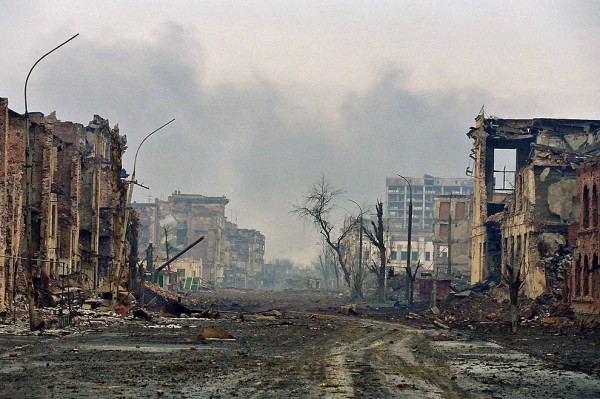
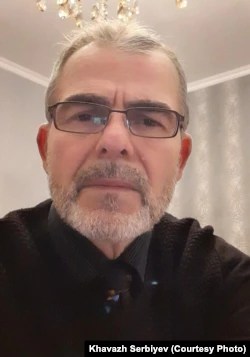


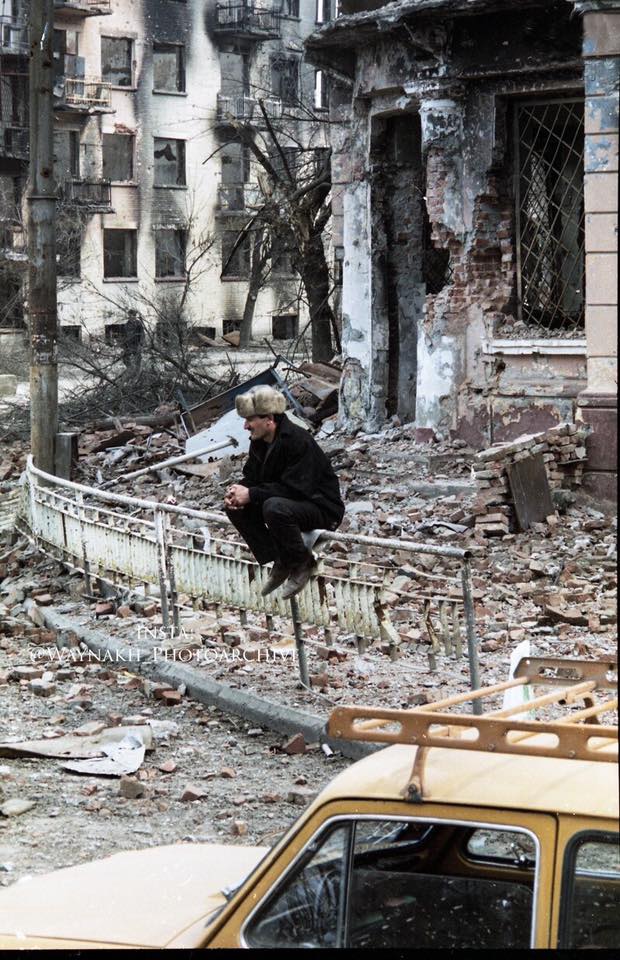


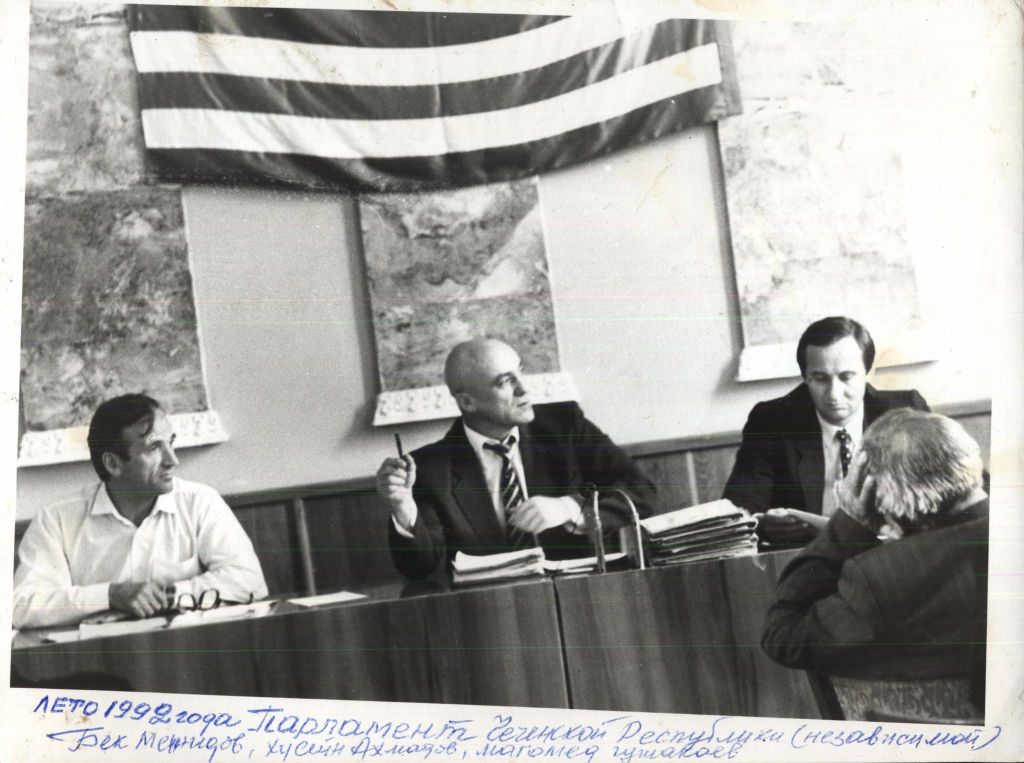


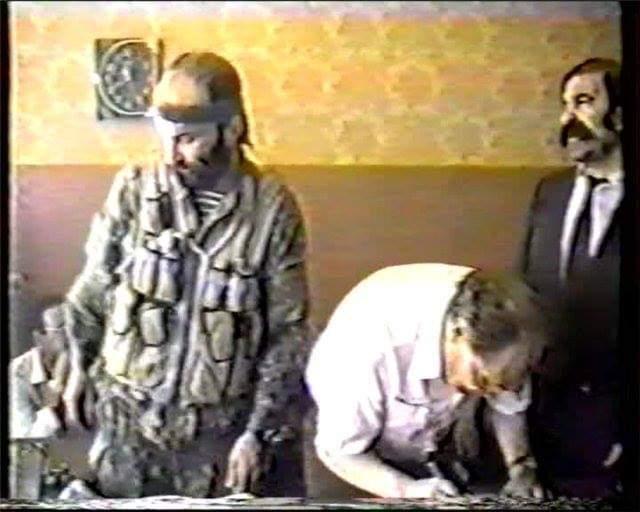

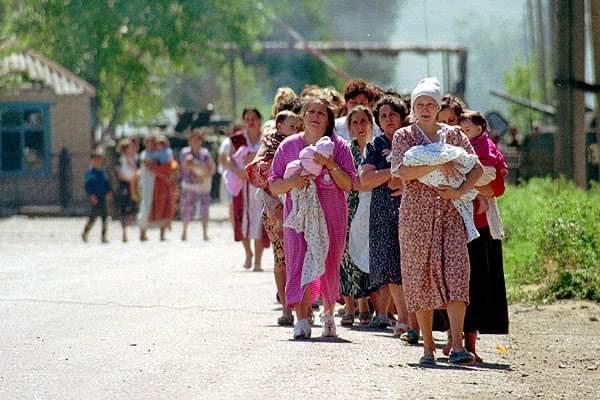

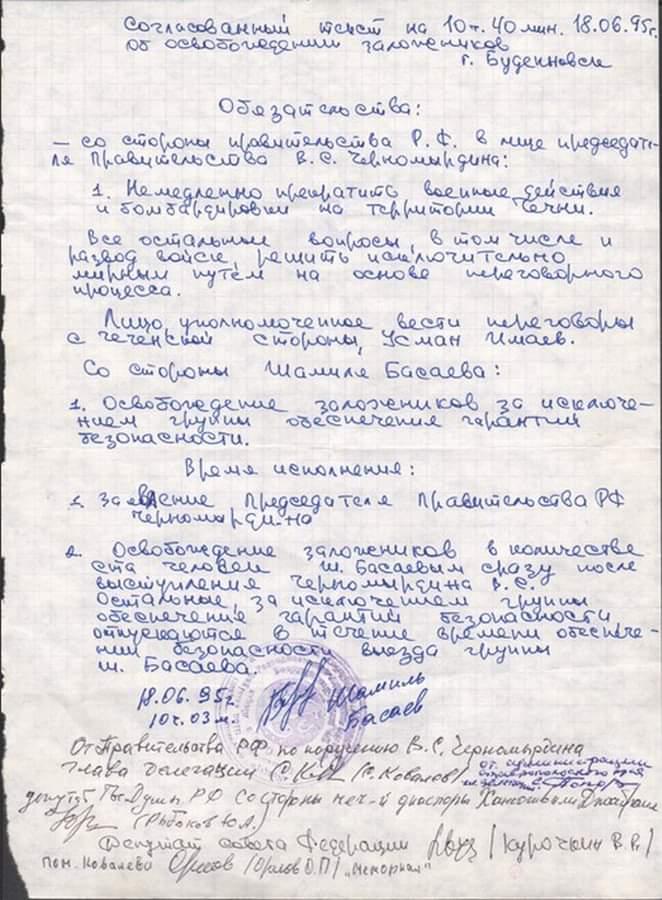

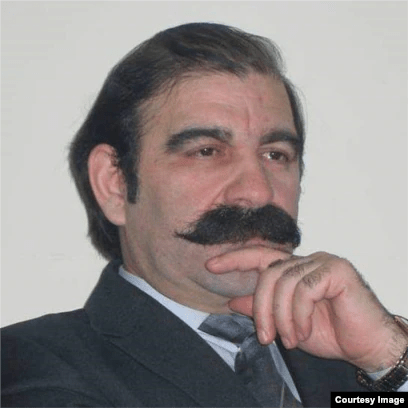


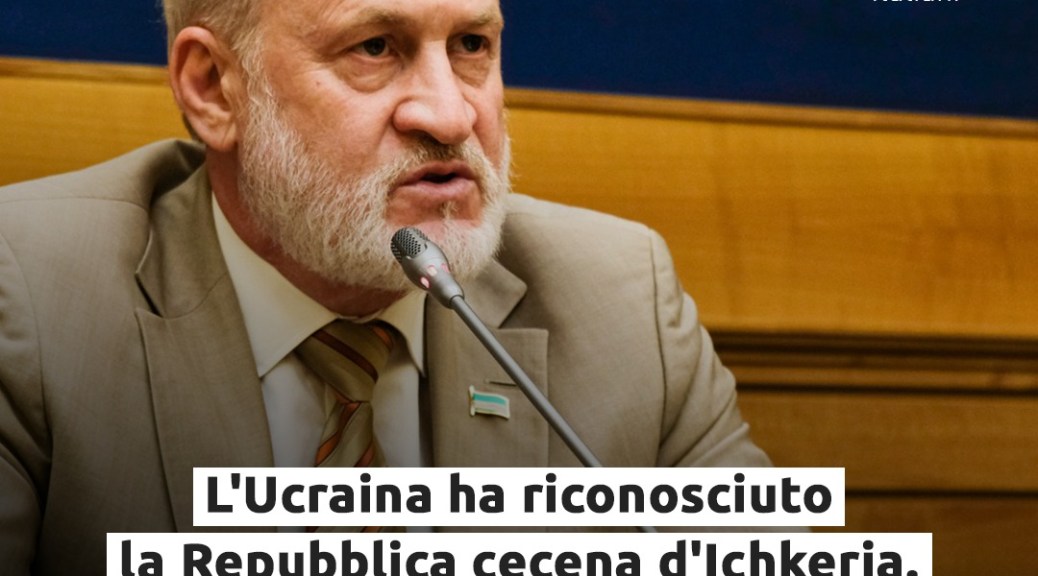

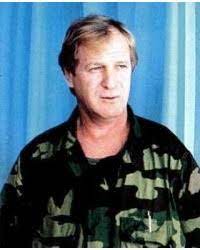

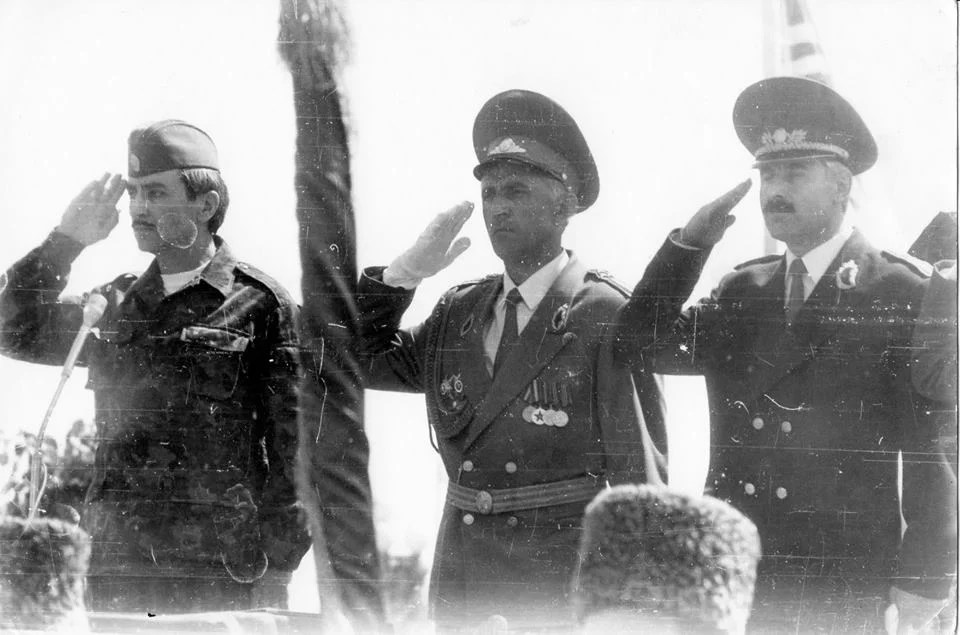


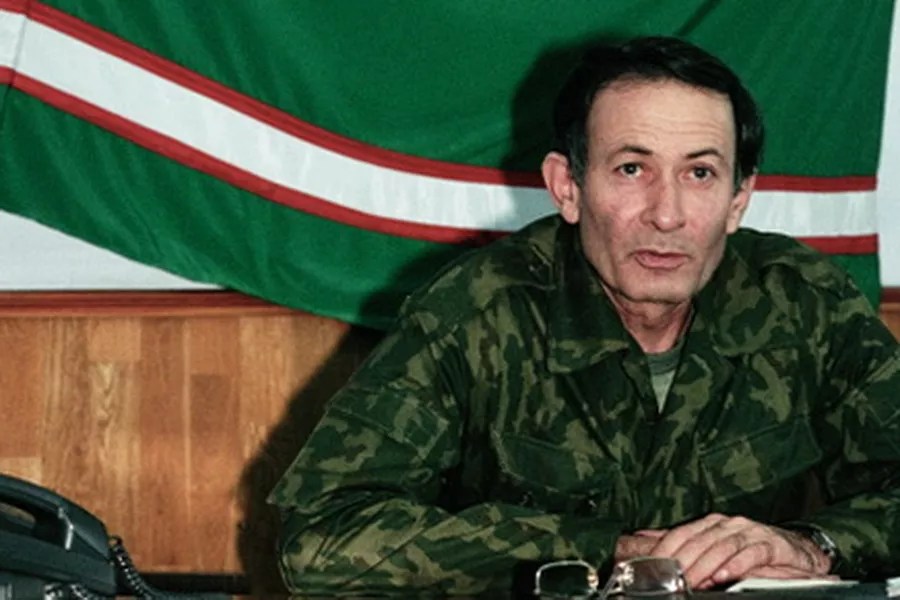
 Ichkeria Digital Archive