Archivi tag: Ichkeria
Da Mosca a Nazran (estratto dal secondo volume)

Oggi pubblichiamo un secondo estratto dal secondo volume di “Libertà o Morte! Storia della Repubblica Cecena di Ichkeria”, nel quale si parla della genesi degli Accordi di Nazran del Giugno 1996.

DA MOSCA A NAZRAN

Il 16 aprile 1996, pochi giorni prima che Dudaev fosse ucciso, si era tenuto un congresso delle principali anime politiche della Cecenia. Si erano riuniti 26 movimenti e 12 partiti politici, ed al congresso avevano partecipato Maskhadov in veste ufficiale per il governo della Repubblica di Ichkeria ed i rappresentanti di Khasbulatov per l’opposizione antidudaevita. Il documento che ne era venuto fuori conteneva la proposta di una moratoria sulle azioni militari, l’apertura di negoziati ai massimi livelli tra Russia e Cecenia, lo svolgimento di nuove elezioni parlamentari. Zavgaev fu volutamente escluso dagli inviti, non partecipò alle attività dell’assemblea e venne considerato come un semplice funzionario di Mosca. Eltsin aveva bisogno proprio di un documento del genere in quel momento. I ceceni capirono che incoraggiare Elstin avrebbe potuto portare ad una effettiva fine delle ostilità, e Yandarbiev dichiarò di essere disposto a iniziare negoziati formali, a condizione che sul piatto fosse posto il ritiro delle forze russe. Come segno di buona volontà il nuovo presidente ordinò il rilascio di 40 prigionieri, catturati durante l’Operazione Retribution. Altri 32 furono rilasciati una settimana dopo. Per parte sua, Maskhadov sostenne la posizione di Yandarbiev, dichiarando di essere disposto ad intavolare immediatamente trattative con il Generale Tikhomirov riguardanti un effettivo cessate – il – fuoco. In un primo momento la leadership dell’esercito federale, rappresentata in primo luogo proprio da Tikhomirov, non sembrò mostrarsi ricettiva: avendo avuto notizia che Eltsin si sarebbe presto recato in Cecenia, e volendo mostrare al presidente di avere la situazione  militare sotto controllo, l’alto ufficiale russo ordinò una serie di rabbiosi attacchi contro il villaggio di Goiskoye e gli insediamenti alla periferia di Urus  – Martan, provocando ampie distruzioni e ulteriori perdite da entrambe le parti, senza tuttavia ottenere risultati concreti: anzi, il 10 Maggio forze cecene tesero un’imboscata ad una colonna blindata nei pressi di Mesker – Yurt, alla periferia meridionale di Argun, costringendola ad un repentino ripiegamento. Più fortunate furono le operazioni lanciate contro le roccaforti occidentali: nel corso della seconda metà di Maggio caddero Starye Achkhoy, Yandi e Bamut (di queste battaglie parleremo più avanti). Questi parziali successi spinsero Tikhomirov a dichiarare, con ingiustificata pomposità, che non ci fossero più grandi sacche di resistenza delle formazioni armate di Dudayev e che tale evidenza avrebbe favorito negoziati senza alcuna condizione[1].

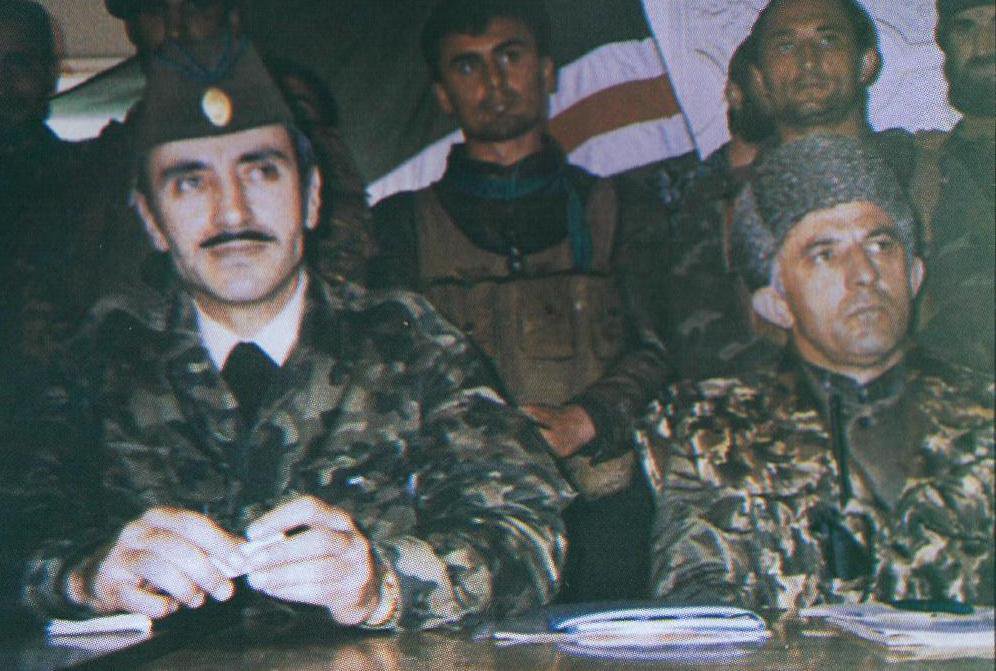
Zelimkhan Yandarbiev

Il 23 maggio, finalmente, fu annunciato che Yandarbiev era stato invitato a Mosca per porre fine alla guerra. Il 27 Yandarbiev raggiunse l’aereoporto inguscio di Sleptovskaya accompagnato da una nutrita scorta armata, e da qui volò fino alla capitale russa. Insieme a lui c’erano Akhmed Zakayev, Khozh – Akhmed Yarikhanov e, Movladi Ugudov, oltre ad altri funzionari[2], tra i quali alcuni rappresentanti dell’OSCE. Quando la delegazione cecena raggiunse il Cremlino, Yandarbiev ed i suoi entrarono nella sala del negoziato da una porta laterale, trovandosi faccia a faccia con la rappresentanza del governo filorusso, Zavgaev in testa, che stava entrando dalla parte opposta. Quando entrambe le delegazioni furono una di fronte all’altra, dalla porta centrale apparve Eltsin. Era chiaro che questi intendeva presentarsi alle parti come il “mediatore” che avrebbe risolto un “conflitto interno” alla repubblica cecena. Eltsin si sedette a capotavola, invitando le parti a sedersi sui lati del tavolo. Ma Yandarbiev si rifiutò di assecondarlo, finché Eltsin non avesse accondisceso a prendere il posto di Zavgaev, riconoscendosi come una parte in causa e non come un giudice super partes. Davanti al folto gruppo di inviati accorsi a riprendere l’evento, il Presidente ad interim della Repubblica Cecena di Ichkeria dichiarò: Sono venuto ad incontrare il Presidente russo, non alla riunione di una commissione. Avete capito?  Eltsin oppose resistenza, rispondendo: Mettiamoci a parlare: non siamo pari a lei, indicando una sedia alla sua sinistra. Avvicinatosi fin quasi a toccarlo, Yandarbiev rispose: Anche se non siamo pari, dobbiamo decidere, rimanendo in piedi davanti al presidente russo, il quale, sempre più stizzito, insisteva: Si sieda! Si sieda! All’ordine di Eltsin il presidente ceceno rispose: Boris Nikolaevic, se lei usa questo tono con me, io non mi siederò! Messo l’avversario sulla difensiva, Yandarbiev riprese: Parliamo a tu per tu! Al rifiuto di Eltsin, tra gli sguardi imbarazzati dei funzionari del Cremlino, e nel silenzio della delegazione del governo Zavgaev, il leader indipendentista rispose: Allora non parleremo affatto. Io non mi siedo. Basta! E poi, volgendogli le spalle: Non tollero azioni del genere. Di fronte all’imbarazzo dei russi, Yandarbiev chiese che Zavgaev ed i suoi delegati abbandonassero il tavolo. Eltsin replicò: ci sono documenti da firmare, li firmerà lui, indicando Zavgaev. L’altro, prontamente, rispose: se non ci troveremo d’accordo, non firmeremo alcun documento. Il presidente russo rispose che un documento doveva assolutamente essere firmato: bisogna mettere termine allo spargimento di sangue, bisogna porre fine alla guerra. In questo modo palesò all’altro il suo assoluto bisogno di chiudere quell’incontro con la firma di un documento politico. E a quel punto fu chiaro a Yandarbiev che il suo avversario era sul punto di cedere. Io voglio parlare con lei. Lo incalzò. Penso che sarà lei a trarne vantaggio. Dopo alcuni minuti di confusione, Eltsin si alzò dal capotavola, si sedette dal lato di Zavgaev ed invitò Yandarbiev a sedersi. I ceceni l’avevano spuntata: ora il negoziato sarebbe stato tra Russia ed Ichkeria.

Yandarbiev discute con Eltsin il 27 Maggio 1996

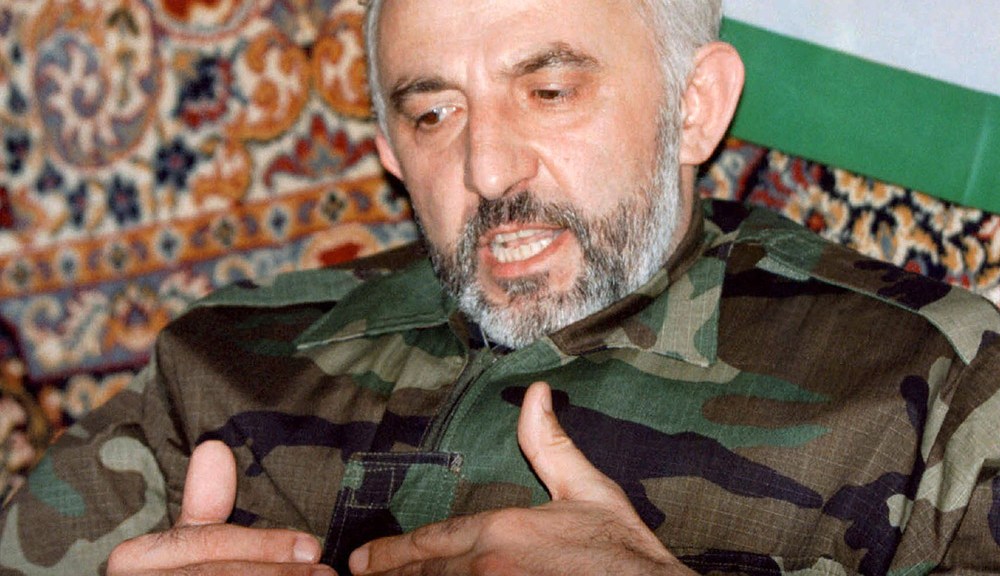
La scena fu ripresa dalle TV di tutto il mondo, e fu piuttosto imbarazzante per il Presidente russo. Sul momento questi incassò il colpo, ma il suo piano aveva appena iniziato a svilupparsi: mentre i colloqui sul cessate il fuoco andavano avanti, Eltsin volò a Grozny, lasciando il Primo Ministro, Chernomyrdin, alle prese con un ignaro Yandarbiev. I negoziati portarono alla firma congiunta di un documento che impegnava le parti a cessare tutte le operazioni dalla mezzanotte del 1 Giugno 1996 e ad organizzare un nuovo round di negoziati nella capitale del Daghestan, Makhachkala. Nel frattempo, mentre il presidente ceceno ed il premier russo firmavano un accordo di pace, il Presidente russo si mostrò nella capitale cecena per una fugace visita elettorale di quattro ore, proclamando la vittoria delle forze russe, e dichiarando che ben presto le poche unità indipendentiste rimaste sarebbero state liquidate. Poi, durante il viaggio di ritorno, dichiarò che la sua visita era servita a dimostrare che la Cecenia è parte della Russia, e di nient’altro. Fu una vigliaccata che Yandarbiev non gli perdonò, oltre che una inutile e pomposa menzogna. Di fatto Yandarbiev si trovò ad essere l’ostaggio dietro al quale Eltsin poté volare in Cecenia garantendosi l’incolumità personale[3]. Ad ogni modo, il 2 Giugno il Comitato di Difesa dello Stato confermò gli Accordi di Mosca, modificando unicamente la sede del secondo ciclo di colloqui da Makhachkala a Nazran, in Inguscezia. Il 6 Giugno questi ripresero sotto il patrocinio del presidente inguscio Ruslan Aushev. Capi delle rispettive delegazioni erano il Ministro delle Nazionalità russo, Mikhailov, ed il Capo di Stato Maggiore delle forze armate cecene, Maskhadov, accompagnato da Said – Khasan Abumuslimov, nuovo Vicepresidente della Repubblica Cecena di Ichkeria, appena nominato da Yandarbiev[4].

Mandatory Credit: Photo by Yuri Kochetkov/EPA/Shutterstock (8489593a) Ingush President Ruslan Aushev

I negoziati non iniziarono nel migliore dei modi, giacché subito dopo il loro inizio la cittadina di Shali fu oggetto di un attacco, durante il quale furono catturati 14 tra funzionari e poliziotti del governo filorusso. Non è chiaro cosa successe precisamente, fatto sta che il Generale Shamanov, al comando delle unità schierate in quel settore, pose sotto assedio la cittadina. Per rappresaglia, i ceceni assediarono un avamposto della milizia dipendente dal Ministero dell’Interno presso il villaggio di Shuani, catturando 27 militari. Di nuovo si materializzò l’impasse che aveva fatto naufragare i negoziati l’anno precedente, e nonostante le delegazioni giunte a Nazran avessero già concordato un cessate – il – fuoco permanente ed il progressivo ritiro delle truppe federali entro la fine di Agosto, la parte russa dichiarò di non essere intenzionata a portare avanti il ritiro a causa della scarsa collaborazione offerta dalla parte cecena. Ci vollero un paio di giorni prima che il clima si distendesse a sufficienza da far riprendere i negoziati, i quali proseguirono sul blocco delle questioni politiche. Maskhadov chiese, ed ottenne, la promessa che entro il 1 Luglio le forze federali abbandonassero il paese, e che Mosca accettasse la costituzione di un governo di unità nazionale che traghettasse il paese a nuove elezioni. A tal proposito, Mikhailov si impegnò a garantire che nessuna consultazione elettorale si sarebbe tenuta finché le forze di Mosca non avessero completato il loro ritiro. Questo tema era considerato fondamentale dagli indipendentisti, ed era tanto più caldo in quanto il premier filorusso, Zavgaev, che a Mosca, durante le trattative tra Yandarbiev ed Eltsin, era stato pubblicamente degradato a fantoccio dei Russi, intendeva consolidare la sua posizione con un nuovo voto popolare, ed aveva indicato per il 16 Giugno la data della nuova consultazione, in contemporanea con le elezioni presidenziali russe, il cui appuntamento era stato il principale motore della riapertura dei negoziati da parte di Eltsin. Qualora le elezioni si fossero svolte prima del ritiro, Zavgaev avrebbe avuto più chances di mettere in angolo i nazionalisti i quali, molto probabilmente, avrebbero boicottato la tornata. La vittoria elettorale avrebbe permesso al Capo della Repubblica Cecena di presentarsi alle parti come l’unico in grado di costituire un governo di unità nazionale, potendo così amministrare il passaggio di consegne tra Mosca e Grozny e tenere lontani dal potere Yandarbiev e Maskhadov. Una convincente tornata elettorale, infine, avrebbe dissipato le sempre più minacciose nubi che si addensavano sul suo esecutivo, sempre più nel mirino degli inquirenti a causa di certi ammanchi finanziari dei quali, al momento, Zavgaev non sapeva rendere conto. Da tempo infatti la procura federale portava avanti indagini sui flussi che dalle casse dello Stato transitavano attraverso numerose banche commerciali, e da queste finivano nelle disponibilità dei dicasteri ceceni deputati alla ricostruzione del paese, in particolare nelle mani dell’ex sindaco di Grozny, Bislan Gantamirov. Su di lui pesavano le accuse di aver dirottato miliardi di rubli destinati alla ricostruzione verso il riarmo della propria milizia personale. Come abbiamo visto, Gantamirov era già stato sindaco della città una prima volta, quando era allineato sulle posizioni degli indipendentisti, tra il 1991 ed il 1993, ed anche in quell’occasione era finito sotto l’occhio della magistratura per malversazione di quote petrolifere. Le accuse della procura federale sembravano ricalcare in maniera speculare quelle rivoltegli a suo tempo dalla procura repubblicana. Un’elezione popolare avrebbe forse attenuato il crescente astio che montava tra la popolazione di Grozny verso il suo governo, già di per sé debole a causa della presenza pervasiva dell’esercito federale, e ora accusato apertamente di essere corrotto. I dudaeviti ovviamente contestavano la proposta di Zavgaev, ed a Nazran Maskhadov dichiarò che i suoi non avrebbero preso parte alle elezioni e che non le avrebbero in alcun modo riconosciute ma anzi, che qualora esse non fossero state annullate entro il 12 Giugno, avrebbero ripreso le ostilità contro le truppe federali ancora presenti in Cecenia.

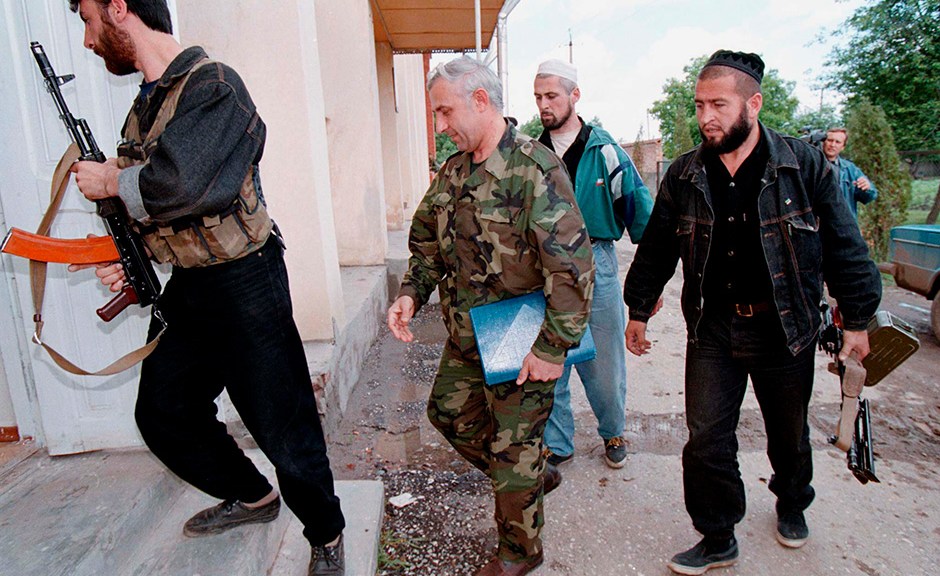
Aslan Maskhadov (Photo by Oleg Nikishin/Getty Images)

Il 10 giugno Maskhadov ed il Comando militare russo giunsero ad un accordo, che Mikhailov non esitò a definire l’ultima possibilità e, forse, l’unica opportunità di pace[5]: i federali avrebbero tolto l’assedio ai villaggi sotto attacco entro il 7 Luglio, ed in cambio i ceceni avrebbero consegnato le loro armi entro il 7 Agosto. Al termine della demilitarizzazione, prevista per il 31 agosto, le forze federali avrebbero definitivamente lasciato la Cecenia. Nel frattempo i due fronti si sarebbero scambiati i prigionieri ancora nelle rispettive mani. Furono costituiti gruppi di lavoro congiunti, incaricati di redigere le liste dei prigionieri da scambiare, e commissioni militari che organizzassero la demilitarizzazione dei villaggi. La firma dei protocolli militari portò ad un primo ritiro delle unità schierate a ridosso delle cittadine di Vedeno e Shatoy, l’11 Giugno 1996. Quello tuttavia fu l’unico effetto pratico dell’accordo giacché, il giorno successivo, Zavgaev confermò che il 16 si sarebbero tenute regolarmente le elezioni[6]. Eltsin, che proprio quel giorno avrebbe dovuto affrontare la prova elettorale più difficile della sua vita politica, non aveva intenzione di infangare la sua immagine con un intervento riguardo la Cecenia, e liquidò le elezioni come un affare interno alla piccola repubblica, non appoggiandole esplicitamente, ma neanche condannandole[7], e considerandole come un “tampone” in attesa che il ritiro fosse completato e si potesse procedere a nuove elezioni. Zavgaev, da parte sua, smentì questa posizione, dichiarando che le elezioni che erano in procinto di tenersi avrebbero costituito il corpo legislativo dello stato almeno fino al 1998, escludendo a priori qualsiasi margine di trattativa politica con gli indipendentisti.

In questo modo mentre gli occhi di tutto il mondo erano puntati sul Cremlino, a Grozny ed in qualche altro distretto ancora sotto il controllo federale si tennero le elezioni – farsa di cui Zavgaev aveva bisogno[8]. Si trattò di una consultazione priva di rappresentatività, poco partecipata e boicottata dagli indipendentisti, al termine della quale Zavgaev uscì, come previsto, vincitore. Alla Camera dei Rappresentanti, uno dei due nuovi organi previsti da Zavgaev,  venne eletto l’ex membro del Presidium del Soviet Supremo Amin Osmaev, mentre la Camera Legislativa elesse presidente l’ex Capo del Governo di Rinascita Nazionale, l’organo costituito nell’estate del 1994 dal Consiglio Provvisorio, Ali Alavdinov. L’OSCE, che aveva avuto modo di verificare quanto poco trasparenti fossero state le elezioni, giudicò la consultazione illegittima, pubblicando una nota nella quale la certificava come non allineata agli standard minimi di legalità, oltre a contraddire lo spirito del protocollo sul cessate il fuoco e sulla risoluzione del conflitto armato firmato il 19 Giugno a Nazran[9].  Il primo risultato delle elezioni fu una recrudescenza delle azioni militari: gli indipendentisti risposero alla presa di posizione di Zavgaev chiedendo l’annullamento della consultazione, le dimissioni del governo Zavgaev e la ricostituzione della delegazione russa in modo che questa non includesse personaggi gravati dalla responsabilità di aver scatenato la guerra[10],  lanciando una serie di attacchi alle truppe federali, alle quali i russi risposero con uguale ferocia: nel corso delle prime tre settimane di giugno i ceceni attaccarono le posizioni russe almeno 350 volte, ed altrettante furono le azioni di rappresaglia compiute dalle forze federali[11].

Doku Zavgaev

L’effimera vittoria politica ottenuta da Zavgaev con le sue elezioni, non portò al leader ex – sovietico alcun vantaggio tangibile. Anzi, contribuì ad isolarlo sia rispetto alla popolazione cecena, che ormai lo odiava, sia rispetto al Cremlino, che non poteva più spenderlo come candidato credibile alla guida di un governo di unità nazionale, malgrado questi ribadisse di aver ottenuto tale investitura con il voto appena conclusosi. La leadership indipendentista continuò a pretendere che i negoziati si svolgessero esclusivamente tra i suoi rappresentanti e quelli della Russia, relegando Zavgaev al ruolo di mero collaborazionista delle forze di occupazione. I russi, per parte loro, avevano come unico obiettivo quello di porre fine alle operazioni militari, e di presentare la Cecenia “pacificata” e non avevano più alcuna intenzione di perdere tempo e risorse nel puntellare il potere di Zavgaev. Prova di questo fu l’arresto, operato dalla stessa polizia federale, dell’ex sindaco di Grozny, nel frattempo diventato Vice Primo Ministro, Bislan Gantamirov, fermato a Mosca con l’accusa di appropriazione indebita di 7 miliardi di rubli dai fondi destinati alla ricostruzione della Cecenia, e di frode[12]


[1] Stanislav Dmitrevsky, Bogdan Gvraeli, Oksana Chelysheva – Tribunale Internazionale per la Cecenia.

[2] Insieme ai delegati sopra citati presenziarono alle trattative gli assistenti presidenziali Movlen Salamov ed Hussein Bybulatov ed il Viceministro degli Esteri Yaragi Abdulaev.

[3] Tale considerazione fu condivisa anche dai media russi. In un articolo di Kommersant del 29/05/1996 si leggeva: Il viaggio di quattro ore del presidente non poteva rivelarsi un fallimento, come molti scettici avevano previsto. Né poteva finire tragicamente: la delegazione degli indipendentisti ceceni, rimasta a Mosca fino al ritorno di Eltsin, si è fatta garante della sua incolumità.

[4] Said – Khasan Abumuslimov: Nato in Kazakistan il 01/02/1953, professore presso l’Università Statale Cecena, era stato uno dei principali ideologi dell’indipendentismo ceceno ed uno dei suoi primi attivisti avendo partecipato alla fondazione, nel 1988, della rivista Bart, dalla quale sarebbe sorto il Partito Democratico Vaynakh. Membro del Comitato Esecutivo del Congresso Nazionale del Popolo Ceceno (Ispolkom) era stato eletto deputato alle elezioni popolari dell’Ottobre 1991. Nel Giugno 1993 aveva sostenuto Dudaev, rimanendo in Parlamento fino allo scoppio delle ostilità.

[5] Kommersant, 13/06/1996.

[6] In una nota pubblicata dal quotidiano russo Kommersant il 13/06/1996, il portavoce di Zavgaev dichiarò: L’annullamento delle elezioni significherebbe la sconfitta davanti agli indipendentisti e che la dirigenza cecena non intendeva essere condizionata da una manciata di ricattatori.

[7] Uno dei membri della delegazione russa a Nazran, Vladimir Zorin, commentò: le elezioni per il rinnovo del parlamento ceceno non sono una priorità, perché non rientrano nel quadro degli accordi firmati a Mosca. Tra il 10 ed il 16 Giugno i delegati russi difesero blandamente l’idea delle elezioni, cercando di convincere Yandarbiev che queste non avessero a che fare con il ben più importante tema della risoluzione del conflitto, e che la tornata elettorale sarebbe stata comunque cancellata da nuove elezioni non appena terminato il ritiro delle truppe russe dal paese. Sergei Stephasin rassicurò sui media che lo svolgimento dell’attuale votazione non annulla le future elezioni democratiche, le quali si svolgeranno dopo il ritiro definitivo delle truppe e la smilitarizzazione della repubblica mentre il rappresentante presidenziale Emil Pain dichiarò che le elezioni avevano l’unico scopo di costituire un corpo legislativo democratico che assicurasse una transizione che fosse più breve possibile (Kommersant, 15/06/1996).

[8] Secondo quanto riportato in The War in Chechnya: Anche il rappresentante del Quartier Generale Russo, Tenente Generale Andrei Ivanov, fu costretto ad ammettere indirettamente che considerare “svolte” le elezioni era possibile soltanto con un discreto sforzo di fantasia. Le elezioni non si tennero affatto in tutta la regione di Khuchaloy, né nei territori circostanti Bachi – Yurt, Alleroy, Tsentoroi, Gudermes, Vedeno, Shelkovsky e Shali. Furono parzialmente tenute nelle regioni di Kalinovskaya e Sovetskoye, e solo in alcune comunità nelle regioni di Nozhai – Yurt ed Achkhoy – Martan.

[9] La posizione assunta dall’OSCE, e più volte ribadita dall’inviato dell’organizzazione in Cecenia, Tim Guldiman, irritò non poco Zavgaev, il quale, secondo quanto riportato da Kommersant, giudicò la condotta del diplomatico svizzero unilaterale e minacciò di chiedere la sua rimozione.

[10] Quest’ultima richiesta era riferita alla presenza di Sergei Stephasin, all’epoca dell’inizio della guerra Direttore dell’FSK – FSB.

[11] Secondo quanto riportato in The War in Chechnya le azioni di guerriglia nel mese di Giugno portarono alla morte di 30 militari russi, ed al ferimento di un centinaio, oltre alla perdita di un elicottero da combattimento e due veicoli blindati. La parte cecena soffrì la perdita di 25 uomini ed il ferimento di altri 75.

[12] Il Governo filorusso si affrettò a dichiarare sé stesso e Gantamirov estranei a qualsiasi addebito, rimbalzando l’accusa sullo stesso governo russo. Il Vicepremier Bugaev dichiarò: la distribuzione dei fondi di bilancio è completamente controllata dal centro di Mosca. Il governo della repubblica e, in particolare, Gantamirov, non hanno niente a che fare con questi soldi. Anche il sindaco successore di Gantamirov, Yakub Deniyev, sostenne l’innocenza del primo: La notizia dell’arresto di Gantamirov ha causato sconcerto e rammarico in città. Ha gettato un’ombra su uno dei più tenaci combattenti contro Dzhokhar Dudaev. Il processo contro Gantamirov si sarebbe protratto fino al 1999, quando il Tribunale di Mosca lo avrebbe condannato a 6 anni di reclusione. Tuttavia nel giro di 6 mesi sarebbe uscito di carcere tramite un provvedimento di grazia concessogli da Eltsin in concomitanza con l’inizio della Seconda Guerra Cecena, durante la quale Gantamirov sarebbe stato nominato Capo del Consiglio di Stato del governo filorusso (Vedi il Volume IV di quest’opera).

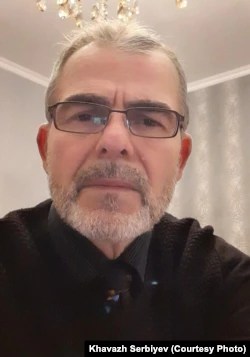
“Nothing new in Ukraine” – Interview with Khavazh Serbiev

Khavazh Serbiev served as the Prosecutor General of the Chechen Republic of Ichkeria during the period between the first and second Russian invasions of the country. In June 2022 he gave an interview to Ukraina Today ( https://ukrainatoday.com.ua/ ) about the parallels between the ongoing war and those fought by the Chechens. Below is the translation of the interview.

You investigated the crimes of the Russian army. If we compare the actions of the Russian army in Chechnya and what they did in Ukraine, is there anything more similar or different?

In Ukraine, nothing new has happened, nor is it happening, compared to what has been done in the Chechen Republic. Everything is mirrored: only the scale is different, because your people (the Ukrainians, Ed ) are many times more numerous than the Chechens, and the territory is vaster. Everything else is the same. This is so familiar to us that we are even surprised: nothing changes in the policy of the Russian state and in the actions of its army!

Why did the world community react rather slowly to statements about Russian war crimes in Chechnya? Why was it considered an internal affair of Russia, or why did Russian propaganda manage to dehumanize the Chechens, saying that terrorists were fighting there?

Of course, the whole world believed that the Chechen territory and the Chechen people were subjects of the Russian Federation. And nobody wanted to change that. Although in November 1990, according to the laws of the USSR, the Chechen Republic was actually brought on an equal footing with other union republics (the republics that made up the USSR, ed. ) . But nobody wanted to change that. Also, Russia is a large nuclear state. It seems to me that this factor played a leading role.

In the end, everyone at that moment had their own problems. Ukraine, Belarus and other states had left the USSR. They didn’t even want to ask this question. And the rest of the world – the West and other states – for them this business was happening in a distant place, they didn’t care. The Chechen side was accused of using unacceptable methods. That is, they blamed the victim and the abuser by the same standards. There was some kind of fear or reluctance to intervene in this problem.

Is it important to involve foreign experts in war crimes investigations or is it enough to use our own forces?

It is very important to involve foreign experts. Because in a dialogue with Russia it is unrealistic to do something yourself. Naturally, the basis is created on site. It’s easier for you Ukrainians, but for us it was practically impossible. I believe the whole world should be involved in this process. It is important to have an international opinion, an international investigation. This is the only way it can work.

How did war crimes investigations unfold after the first Chechen war?

A criminal case for genocide was initiated in the Attorney General’s Office. The material, collected in every district of our territory, was conveyed to the apparatus of the General Prosecutor’s Office. Evidence of Russian military genocide and war crimes was investigated in every district. And it all came together in a common criminal case, which reached 64 volumes. Each volume is at least 400 pages. This is what we have been able to cover. Before the start of the second Russian aggression, however, we were unable to transfer a certain amount of this material to an international authority, such as the Hague Tribunal.

Why?

Because Russia has created huge problems inside Chechnya, events have overlapped one another in wave after wave. Law enforcement agencies and, of course, the Prosecutor General’s Office simply did not have time to bring at least part of this case of war crimes of the Russian army in the Chechen Republic to a conclusion. We just didn’t make it. By the time the second attack had begun, we handed over part of the materials to the Tribunal in The Hague. Approximately 12 volumes of materials have been delivered. Some were returned because they were considered irrelevant under international law. We had no experience. There are only 6 volumes left. Meanwhile, active hostilities began again and soon the whole territory was completely occupied. And any further process was suspended again.

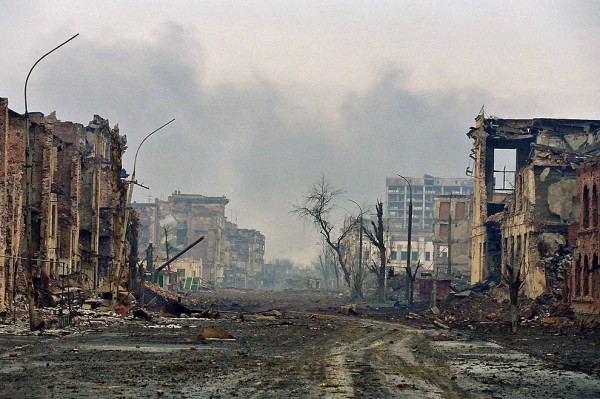
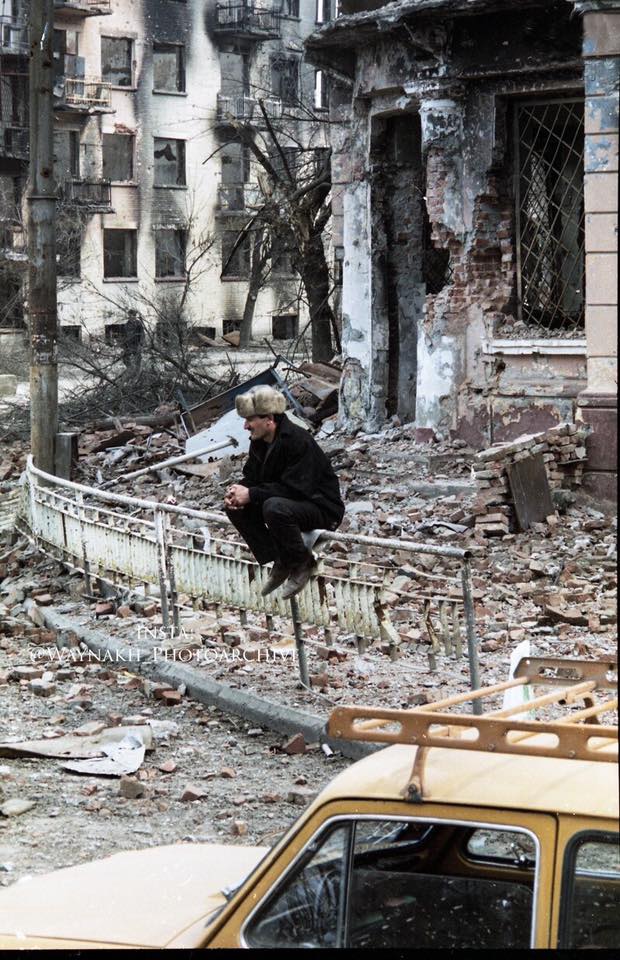
Grozny destroyed

During the first war, which Moscow lost, Russian troops brought a lot of trouble to the Chechens. How could it be that during the Second World War Moscow found relatively many allies among the Chechens? In particular, Kadyrov supported them.

The Russian regime, the relevant authorities and services involved in the Chechen Republic have taken into account their previous mistakes. The “hat toss” dominated the minds of politicians and military during their first campaign. As a result, they took these moments into account and did a huge undercover work to attract new members to this agent network, and also launched powerful propaganda within Russia itself.

Imagine when the second campaign began: immediately on the state television of Russia sounded “Get up, the country is huge!” (popular song written during WWII to mobilize the masses against the German invasion, Ed. ) as it sounded during WWII when Hitler attacked the USSR. I’ve heard it myself. You get goosebumps when you hear this song. Imagine that against the tiny Chechen Republic, which some can’t even find on the map! And then suddenly the Chechens became a “fascist force”. The same thing that has now been done against Ukraine.

The Second Chechen War was preceded by terrorist attacks on the territory of Russia, in which the Chechens were blamed. What do you know about it?

Solid disinformation, which has been played a lot not only in Russia, but throughout the world. Many believed it. Why was it so masterfully presented using the regime controlled media. It was so obvious to us that this was a lie that we were just taken aback. There was a lot of evidence that these were provocations, that this was done by the Russian special services. But there was simply no one to listen to us. And the materials that we tried to smuggle overseas through the media in the West simply disappeared. They were broadcast, they were reported, but there was no response.

Shamil Basayev in Daghestan, 1999

There was another reason for the second war – the invasion of Shamil Basayev’s detachment in Dagestan. Why did it happen?

Yes, there was an encroachment of some groups, there were Chechens even on the territory of Dagestan. This cannot be denied. If you knew how different these groups were! There were people from all over the North Caucasus, including Dagestan. Bagautdin alone (one of the leaders of the “Islamic Shura of Dagestan” – ed. ) brought 2,000 people to our territory. And the people got the impression that it was the Chechens who were moving like an avalanche across the territory of Dagestan with the aim of occupying, assaulting, etc. It looked completely different than what eyewitnesses saw. Everyone, of course, saw what they wanted to see. But I assure you, not even half of the Chechens were there. Most of them were people from other republics, there were also volunteers from the Middle East … Naturally, President Aslan Maskhadov, from the very beginning, when information began to pour in, was categorically against it. And this was not the action of the armed units of the Chechen Republic of Ichkeria. Under no circumstances! These were volunteers who made their choice and took part in this operation.

Did President Maskhadov have the opportunity to stop Basayev’s action?

At that time, on the borders of the Chechen Republic, throughout the North Caucasus, there was a massive concentration of Russian troops, huge. Why were they concentrated in these places? We didn’t have troops on our borders, there wasn’t even the possibility to do that. For example, there was no conscription in the army as such. And to contain the volunteers or Basayev himself, who acted alone, would have meant an intra-Chechen military confrontation. The transition to the territory of Dagestan took place in a matter of days. I believe that for Maskhadov it was, on the one hand, unexpected and that in any case there were no adequate forces to organize some kind of barrier to prevent this encroachment.

Among the Russian soldiers who died in Ukraine, there are many people from Dagestan. How to explain it?

Dagestan is mostly a mountainous area. There are many high-altitude villages that live independently. We can say that the main reason is poverty. In the Russian Federation, this is a common phenomenon in the outback. And in Dagestan there is poverty, and therefore …

“Niente di nuovo in Ucraina” – Intervista a Khavazh Serbiev

Khavazh Serbiev è stato Procuratore Generale della Repubblica Cecena di Ichkeria durante il periodo che intercorre tra la prima e la seconda invasione russa del paese. Nel Giugno del 2022 ha rilasciato un’intervista ad Ukraina Today (https://ukrainatoday.com.ua/) riguardo i parallelismi tra la guerra in corso e quelle combattute dai Ceceni. Ti seguito riportiamo la traduzione dell’intervista.

L’articolo originale è disponibile quì:

https://ukrainatoday.com.ua/k-rassledovaniju-voennyh-prestuplenij-ochen-vazhno-privlech-zarubezhnyh-jekspertov-genprokuror-nepriznannoj-ichkerii-serbiev/

Hai indagato sui crimini dell’esercito russo. Se confrontiamo le azioni dell’esercito russo in Cecenia e quello che hanno fatto in Ucraina, c’è qualcosa di più simile o diverso?

In Ucraina non è successo, né sta succedendo nulla di nuovo, rispetto a quanto è stato fatto nella Repubblica Cecena. Tutto è rispecchiato: soltanto la scala è diversa, perché la tua gente (gli Ucraini, Ndr) è molte volte più numerosa dei ceceni, ed il territorio è più vasto. Tutto il resto è uguale. Questo ci è così familiare che siamo persino sorpresi: nulla cambia nella politica dello stato russo e nelle azioni del suo esercito!

Perché la comunità mondiale ha reagito piuttosto lentamente alle dichiarazioni sui crimini di guerra russi in Cecenia? Perché era considerato un affare interno della Russia, o perché la propaganda russa è riuscita a disumanizzare i ceceni, dicendo che lì stavano combattendo i terroristi?

Certo, il mondo intero credeva che il territorio ceceno ed il popolo ceceno fossero sudditi della Federazione Russa. E nessuno voleva cambiare le cose. Anche se nel novembre 1990, secondo le leggi dell’URSS, la Repubblica cecena venne effettivamente portata su un piano di parità con le altre repubbliche sindacali (le repubbliche che componevano l’URSS, ndr). Ma nessuno voleva cambiare le cose. Inoltre, la Russia è un grande stato nucleare. Mi sembra che questo fattore abbia avuto un ruolo di primo piano.

Alla fine, tutti in quel momento avevano i loro problemi. L’Ucraina, la Bielorussia e altri stati avevano lasciato l’URSS. Non volevano nemmeno porsi questo problema. E il resto del mondo – l’Occidente e altri stati – per loro questa faccenda stava accadendo in un luogo lontano, a loro non importava. La parte cecena è stata accusata di utilizzare metodi inaccettabili. Cioè, hanno incolpato la vittima e l’aggressore secondo gli stessi standard. C’era una sorta di paura o di riluttanza a intervenire in questo problema.

E’ importante coinvolgere esperti stranieri nelle indagini sui crimini di guerra o è sufficiente utilizzare le nostre stesse forze?

È molto importante coinvolgere esperti stranieri. Perché in un dialogo con la Russia non è realistico fare qualcosa da soli. Naturalmente, la base viene creata sul posto. Per voi ucraini è più facile, ma per noi era praticamente impossibile. Credo che tutto il mondo dovrebbe essere coinvolto in questo processo. È importante avere un’opinione internazionale, un’indagine internazionale. Questo è l’unico modo in cui può funzionare.

Come si sono svolte le indagini sui crimini di guerra dopo la prima guerra cecena?

Presso l’ufficio del procuratore generale è stato avviato un procedimento penale per genocidio. Il materiale, raccolto in ogni circoscrizione del nostro territorio, era convogliato negli apparati della Procura Generale. Prove di genocidio e crimini di guerra dell’esercito russo sono stati indagati in ogni distretto. E tutto è confluito in un procedimento penale comune, che ha raggiunto 64 volumi. Ogni volume è di almeno 400 pagine. Questo è ciò che siamo stati in grado di coprire. Prima dell’inizio della seconda aggressione russa, tuttavia, non fummo in grado di trasferire una certa quantità di questo materiale ad un’autorità internazionale, come il Tribunale dell’Aja.

Grozny nel 1995

Perché?

Perchè la Russia ha creato enormi problemi all’interno della Cecenia, gli eventi si sono sovrapposti l’uno all’altro in un’ondata dopo l’altra. Le forze dell’ordine e, naturalmente, l’ufficio del procuratore generale, semplicemente non hanno avuto il tempo di portare a conclusione almeno una parte di questo caso sui crimini di guerra dell’esercito russo nella Repubblica cecena. Semplicemente, non ce l’abbiamo fatta. Quando ormai era iniziata la seconda aggressione, abbiamo consegnato parte dei materiali al Tribunale dell’Aia. Sono stati consegnati circa 12 volumi di materiali. Alcuni furono restituiti, perché considerati non pertinenti secondo le norme del diritto internazionale. Non avevamo esperienza. Sono rimasti solo 6 volumi. Nel frattempo ricominciarono le ostilità attive e presto l’intero territorio fu completamente occupato. Ed ogni ulteriore processo è stato nuovamente sospeso.

Durante la prima guerra, persa da Mosca, le truppe russe causarono molti problemi ai ceceni. Come è potuto accadere che durante la Seconda guerra Mosca abbia trovato relativamente molti alleati tra i ceceni? In particolare, Kadyrov li ha supportati.

Il regime russo, le autorità ed i servizi competenti coinvolti nella Repubblica cecena hanno tenuto conto dei loro precedenti errori. Il “lancio del cappello” ha dominato le menti dei politici e dei militari durante la loro prima campagna. Di conseguenza, hanno tenuto conto di questi momenti e hanno svolto un enorme lavoro sotto copertura per attirare nuovi membri in questa rete di agenti, ed hanno anche lanciato una potente propaganda all’interno della stessa Russia.

Immagina quando è iniziata la seconda campagna: immediatamente alla televisione di stato della Russia suonò “Alzati, il paese è enorme!” (canzone popolare scritta durante la Seconda Guerra Mondiale per mobilitare le masse contro l’invasione tedesca, Ndr) come suonava durante la Seconda guerra mondiale, quando Hitler attaccò l’URSS. L’ho sentito io stesso. Viene la pelle d’oca quando si sente questa canzone. Immagina questo contro la piccola Repubblica cecena, che alcuni non riescono neanche a trovare sulla mappa! E poi improvvisamente i ceceni sono diventati una “forza fascista”. La stessa cosa che è stata fatta ora contro l’Ucraina.

La seconda guerra cecena è stata preceduta da attacchi terroristici sul territorio della Russia, in cui sono stati accusati i ceceni. Che ne sai a riguardo?

Solida disinformazione, che è stata giocata molto non solo in Russia, ma in tutto il mondo. Molti ci hanno creduto. Perché è stato presentato in modo così magistrale utilizzando i media controllati dal regime. Era così ovvio per noi che si trattava di una bugia che siamo rimasti semplicemente sorpresi. C’erano molte prove che si trattava di provocazioni, che ciò veniva fatto dai servizi speciali russi. Ma semplicemente non c’era nessuno ad ascoltarci. E i materiali che abbiamo cercato di contrabbandare all’estero attraverso i media in Occidente sono semplicemente scomparsi. Furono trasmessi, furono segnalati, ma non ci fu alcuna risposta.

Shamil Basayev durante l’invasione del Daghestan (Agosto 1999)

C’era un’altra ragione per la seconda guerra: l’invasione del distaccamento di Shamil Basayev in Daghestan. Perché è accaduta?

Sì, c’è stata uno sconfinamento di alcuni gruppi, c’erano ceceni anche nel territorio del Daghestan. Questo non può essere negato. Se sapessi quanto erano diversi questi gruppi! C’erano persone provenienti da tutto il Caucaso settentrionale, compreso il Daghestan. Solo Bagautdin (uno dei leader della “Shura islamica del Daghestan” – ndr) ha portato nel nostro territorio 2.000 persone. E la gente ha avuto l’impressione che fossero i ceceni a muoversi come una valanga nel territorio del Daghestan con l’obiettivo di occupare, aggredire, ecc. Sembrava completamente diverso rispetto a quello che vedevano testimoni oculari. Tutti, ovviamente, hanno visto quello che volevano vedere. Ma ti assicuro che non c’era nemmeno la metà dei ceceni. Per la maggior parte erano persone di altre repubbliche, c’erano anche volontari dal Medio Oriente … Naturalmente, il presidente Aslan Maskhadov, fin dall’inizio, quando le informazioni iniziarono ad arrivare, era categoricamente contrario. E questa non era l’azione delle unità armate della Repubblica cecena di Ichkeria. In nessun caso! Questi erano volontari che hanno fatto la loro scelta e hanno preso parte a questa operazione.

Il presidente Maskhadov ha avuto l’opportunità di fermare l’azione di Basayev?

A quel tempo, ai confini della Repubblica cecena, in tutto il Caucaso settentrionale, c’era una massiccia concentrazione di truppe russe, enorme. Perché erano concentrati in questi luoghi?  Noi non avevamo truppe ai nostri confini, non c’era nemmeno la possibilità di farlo. Ad esempio, non vi era alcuna leva nell’esercito in quanto tale. E contenere i volontari o lo stesso Basayev, che ha agito da solo, avrebbe significato uno scontro militare intra-ceceno. Il passaggio al territorio del Daghestan è avvenuto in pochi giorni. Credo che per Maskhadov sia stato, da un lato, inaspettato e che comunque non ci fossero forze adeguate per organizzare una sorta di barriera per impedire questo sconfinamento.

Tra i soldati russi morti in Ucraina, ci sono molte persone del Daghestan. Come spiegarlo?

Il Daghestan è per la maggior parte un’area montuosa. Ci sono molti villaggi d’alta quota che vivono autonomamente. Possiamo dire che la ragione principale è la povertà. Nella Federazione Russa, questo è un fenomeno comune nell’entroterra. E in Daghestan c’è povertà, e quindi …

Young Lithuania and New Chechnya – Francesco Benedetti interviews Stanislovas Buškevičius


Stanislovas Buskevichius was a member of Lithuanian Seimas , the Lithuanian legislative assembly between 1996 and 2004. As a member he supported many initiatives in support of the Chechen Republic of Ichkeria, even presenting a legal act for its recognition by Lithuania. Francesco Benedetti interviewed him for Ichkeria.net

Biography

Born in Kaunas on September 14, 1958, since his adolescence he took part the national and democratic movement against the Soviet dictatorship, participating in demonstrations and distributing anti-Soviet literature. After graduating from Vilnius University with a degree in economics (1985), he began teaching Western politicaleconomy at the Kaunas Medical Institute. Because of his pro-Lithuanian independence ideas, his course was closed. In November 1988, he signed the Young Lithuania manifesto, which called for the restoration of an independent and democratic Lithuanian state. Between 1989 and 1990 he was one of the promoters of the boycott of the Red Army, through which thousands of military draft cards were sent back to Moscow, and promoted the demolition of Soviet monuments in Kaunas. After his visit in Paris at the invitation of the French Human Rights Association, between 1993 and 1996 he worked as a consultant to the Lithuanian Government for youth policies.

Was elected a member to Kaunas City Council (later Deputy Mayor) between 1995 and 1997, and between 2007 and 2015, in 1996 he was elected a member of the Seimas , the Lithuanian Parliament. As a member he registered 20 legal acts, regulations and drafts. Among its main activities Buskevicius indicates the promotion of physical activity, sport and a healthy lifestyle, support for Ukrainians, Chechens and other peoples who are fighting against the Russian occupation, the protection of animals.

His hobbies are culture, sport, international politics, reading. He is the father of three children.

Buskevicius calls himself a Lithuanian, a believer, a democrat.


Interview

In 1991 Chechnya proclaimed independence. How did Lithuanian public opinion experience this news? And how did you experience it? What political measures have been taken to support Chechen independence?

In 1991 Lithuanians supported the independence of Chechnya. Our common enemy was and is Russian chauvinism and imperialism. Yes, we Lithuanians demanded Chechnya’s independence to be recognized.

In 1994 the Russian Federation invaded Chechnya. How did the Lithuanian institutions express themselves towards this invasion? What was your point of view regarding this crisis?

In 1994, our newly formed Young Lithuania party and I, as well as all Lithuanian patriots, condemned the Russian invasion and the war against Chechnya. We protested. In 1995, as a member of the Kaunas city council, I demanded the assembly to recognize Chechnya's independence. The Kaunas city council, as well as many other city and district governments, recognized Chechnya’s independence.


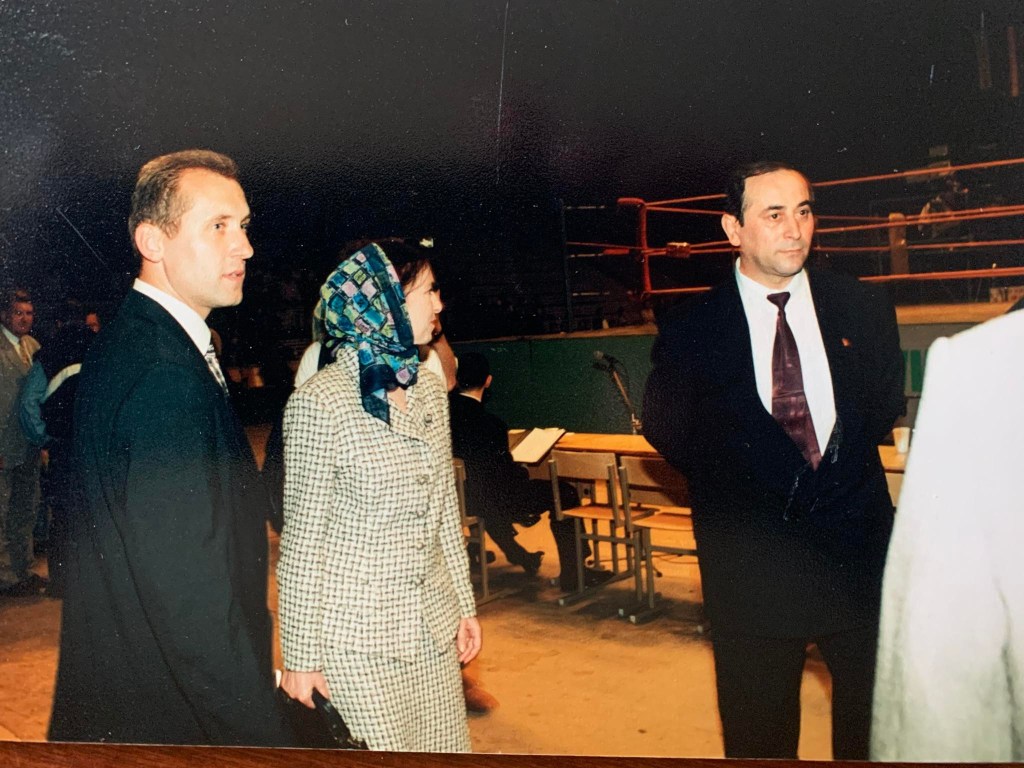
Aminat Sayeva, representative of ChRI in Lithuania and Akhyad Idigov, President of the Parliamentary Committee on Foreign Affairs of ChRI, attend the sports event organized by Buskevichius

In August 1996 the ChRI armed forces retook Grozny and forced the Russian leadership to sign the Khasavyurt Accords. What were the reactions in the Lithuanian parliament? And in general, how did public opinion react to this unexpected victory?

In 1996 I was elected member of the Lithuanian Seimas (Parliament). In 1997, I submitted to the Seimas a legal act on the recognition of the independence of the Chechen Republic of Ichkeria. 23 members voted in favour, 45voted against. All of Lithuania rejoiced at the Chechen victory.


As a result of the war, Chechnya found itself free, but badly destroyed. Have the Lithuanian government and civil society taken measures to support the Chechen people?

Civil society supported and sympathized with Chechnya. Lithuanian parliamentarians went to Chechnya, and the Seimas established a parliamentary group for relations with the Chechen parliament. Lithuania provided humanitarian assistance to the Chechen people. My idea was to start international recognition of Chechnya through sport. In 1997 In Kaunas, together with the athletes, I organized a unique kickboxing tournament to win the cup of Dzhokhar Dudayev, the first president of the Chechen Republic of Ichkeria. Athletes from Lithuania, Latvia and Ichkeria participated in the tournament, Ichkeria’s national anthem was played, and the flag was raised. In 1998 we invited athletes from Chechen Republic of Ichkeria   to the official European Kickboxing Championship,  therefore protesting   athletes from Russia and Belarus refused to participate in it. With this project I came to the Titanas martial arts club directed by Maries Misunas. He gladly agreed to help organize these tournaments.  On May 17, 1998 kickboxers from the Chechen Republic of Ichkeria took part at our invitation at the European championship in Kaunas, as representatives of an independent state. The fights in the ring were tense, and the audience was thrilled. Many Lithuanian patriots, especially General Sergejus Madalovas , provided great assistance. Between 8 and 9 April 1997, a bill concerning the recognition of the independence of the Chechen Republic of Ichkeria was presented to the Sejmas by two parties: the Young Lithuania party and the Lithuanian Labor Party. The bill was indeed scheduled, but ultimately failed to win a majority of votes.

Participants of the international championship in Kaunas, 1998

Why, in your opinion, did the Lithuanian Parliament choose not to recognize Ichkeria?


April 3, 1997, I presented in my personal capacity (not on behalf of the party) a resolution on the independence of Chechnya. The authorities, in their hearts, sympathized and supported Chechnya, but did not dare to make any actions. Vytautas Landsbergis supported me ideologically, but personally he told me that since Lithuania is not a member of NATO, there was a risk of a response from Russia. I urged him not to be afraid.

The president of the Seimas , Vytautas Landsbergis, spoke publicly on June 16, 1997. His response to Ichkeria was this: Lithuania’s decision to recognize the independence of the Chechen Republic is not the most important thing now. The chairman of the interparliamentary group for relations with Chechnya, Rytas Kupchinskas, told a Kommersant Daily correspondent that the issue of recognizing independence will be resolved very gradually. In your opinion, do these statements mean that there was actually a negotiation between the Chechen and Lithuanian delegations for the recognition of the ChRI?


I think there could have been talk of recognizing Chechnya's independence. I knew Landsbergis and I knew Kupcinska. They supported the independence of Chechnya in their hearts, but did not dare to recognize it. I personally stood up against the Russians even during the occupation, I hadn’t been a pioneer, nor a member of the Communist Youth , nor a communist. I had the KGB on my tail, so I was more determined.

As regards the inter-parliamentary group for relations with Chechnya, do you recall what activities this group has carried out to strengthen political relations with the ChRI?

The resolution of accession by the ChRI Parliament


The Chechen Liaison Group held meetings and made public statements. His work was helpful.

As a deputy of the Lithuanian Seimas , do you remember whether there were any further legislative proposals or other public initiatives in support of Chechnya during your mandate?


I don’t remember anyone else officially proposing to recognize Chechnya, other than me. Civil society and many politicians support the struggle of Chechens and Ukrainians against Russia. As a former member of Seimas , I proposed to recognize the genocide of the Chechen people, following the example of what the Ukrainian parliament did (LINK). But the chairman of the Seimas Foreign Affairs Committee , Zygimantas Pavilionis , is blocking this resolution. I suggested to Aminat Sayeva (former Foreign Minister of ChRI) to establish as soon as possible an Olympic Committee of the Chechen Republic of Ichkeria in Brussels or Kiev, and to request participation in the Paris Olympics in 2024, instead of the Russians. I think this would be very important in Chechnya’s struggle for independence!

THE CHECHEN REPUBLIC OF ICHKERIA IS A SUBJECT OF INTERNATIONAL LAW

As is known, the right of peoples to self-determination is one of the basic principles of international law, which means the right of each people to independently decide on the form of their state existence, freely determine their political status without outside interference and carry out their economic and cultural development.

He received recognition in the process of the collapse of the colonial system , and was enshrined in the Declaration on the Granting of Independence to Colonial Countries and Peoples (adopted by Resolution No. 1514 of the XVth UN General Assembly of December 14, 1960) and subsequent international pacts and UN declarations.

This principle, along with other principles, is proclaimed in the UN Charter, which aims to “develop friendly relations among nations based on respect for the principle of equal rights and self-determination of peoples.” The same goal is set in the UN Charter in connection with the development of economic and social cooperation between states.

Further, the International Covenant on Economic, Social and Cultural Rights and the International Covenant on Civil and Political Rights of December 19, 1966 (Article 1) state: “All peoples have the right to self-determination. By virtue of this right, they freely determine their political status and freely pursue their economic, social and cultural development … All States Parties to the present Covenant … must, in accordance with the provisions of the Charter of the United Nations, promote the exercise of the right to self-determination and respect this right.

The Declaration on the Principles of International Law (October 24, 1970) also states: “By virtue of the principle of equal rights and self-determination of peoples, enshrined in the UN Charter, all peoples have the right to freely determine their political status without outside interference and to carry out their economic, social and cultural development and every State has an obligation to respect that right in accordance with the provisions of the Charter.”

Ikhvan Gerikhanov with Vakha Arsanov

The same Declaration states that the means of exercising the right to self-determination can be “the creation of a sovereign and independent state, free accession to or association with an independent state, or the establishment of any other political status.”

Similar principles are enshrined in the documents of the Conference on Security and Cooperation in Europe: the Helsinki Final Act of 1975, the Final Document of the Vienna Meeting of 1986, the document of the Copenhagen Meeting of the OSCE Human Dimension Conference of 1990 and other international legal acts .

These international principles and the right to self-determination are directly related to the formation of the Chechen state. Without going into a historical digression about the existence of state formations among the Chechens since ancient times, we will dwell on the subject of the formation of the national statehood of the Chechens during the collapse of the USSR and after its liquidation.

According to Article 72 of the Constitution of the USSR, which was a amended by the Law of April 3, 1990, the right to secede from the Soviet Union was provided for only to the republics of the Union. It was also provided there, in the second and third parts of the said law, that “the decision to change the status and secession of an autonomous republic or an autonomous region from the USSR is possible only by a referendum. “

The first of the republics to use this right Russian Federation and on June 12, 1990, it proclaimed its sovereignty outside the USSR.

This initiative for self-determination was also supported on the territory of the Chechen Republic of China , where on November 23-25, 1990, the 1st Chechen National Congress was convened and a decision was made on behalf of the Chechen people to declare the sovereignty of the Chechen Republic of Nokhchicho . In fact, this was an act of a referendum, since the representatives of the congress, on behalf of the Chechen people, decided to choose a free path of development within the framework of the current legislation of the USSR and the RSFSR. It was precisely this path that the RSFSR chose when it convened its next congress of people’s deputies and proclaimed its sovereignty outside the Union of Soviet Socialist Republics.

So, the decision of the congress of the Chechen people was and legally fixed by the legally existing Supreme Council of the Chechen-Ingush Republic, which on November 27, 1990 issued a Resolution declaring the state sovereignty of the Chechen-Ingush Republic.

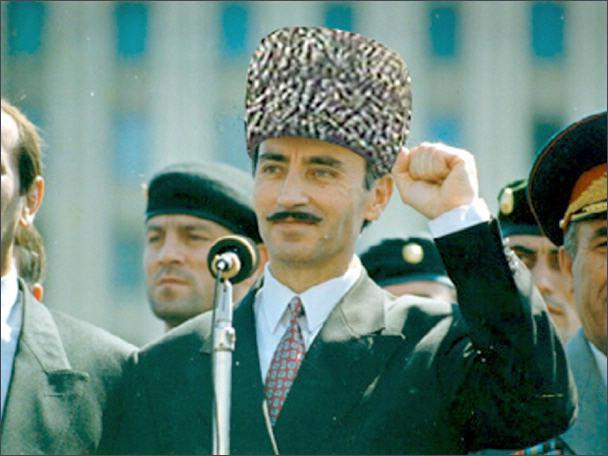
Dzhokhar Dudaev at the second session of the Congress, 1991

In a word, the Chechen people (taking into account that later the people of Ingushetia also wished to live as part of the RSFSR), in accordance with the generally recognized principles and norms of international law, while observing domestic law, expressed their will to self-determination at a new stage of their development. This corresponds to the legal establishment of the Declaration on the Principles of International Law (October 24, 1970 ) , which states that every people can freely determine its political status and carry out its economic, social and cultural development without outside interference.

Also, the said Declaration on State Sovereignty of the CHIR allowed to obtain an equal legal status, like the RSFSR, i.e. the status of a union republic.

This legal status did not change even after August 19, 1991 , when an attempt was made in Moscow against the president of the USSR , from which a wave of protests began throughout the entire territory of the union state.

Did not become an exception, which ultimately lost power in the republic and transferred powers again formed by the Provisional The Supreme Soviet is from among the deputies of the highest authority of the republic. The task of this Council was to prepare and conduct democratic elections to the state authorities of the republic, which it failed to cope with, and the election commission, created by the National Congress of the Chechen People, took over the preparation of the elections.

As a result, on October 27, 1991, parliamentary and presidential elections were held. Based on the will of the people, the President and the Parliament of the Republic were elected, thereby once again securing the right of the Chechen people to self-determination.

It follows from this that the inalienable right of the people to self-determination is connected with its national sovereignty and is the basis of its international legal personality. If peoples have the right to self-determination, then all other states have the duty to respect this right. This obligation also covers the recognition of those international legal relations in which the people themselves are the subject.

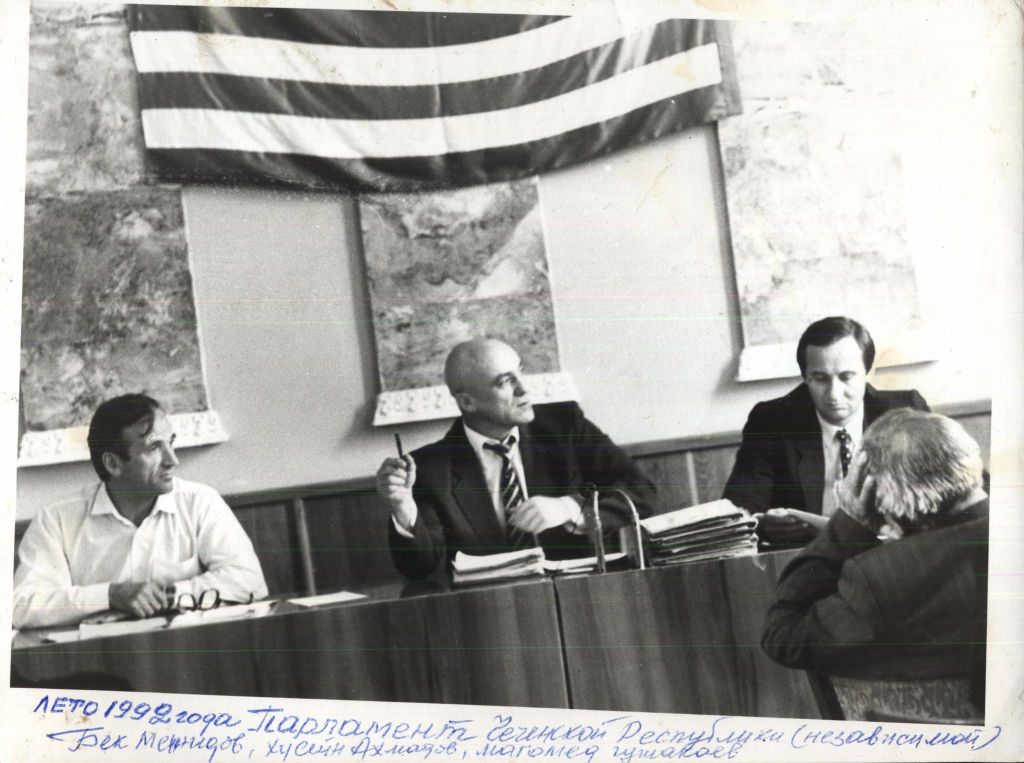
Hussein Akhmadov, speaker of the Parliament, with the vicepresidents, Mezhidov and Gushakayev

The will of the people, which elected the bodies of state power and administration , was once again enshrined in the Decree of the President of the Chechen Republic of November 1, 1991, proclaiming state sovereignty, thereby continuing the will of the Chechen people, expressed at the first congress on November 23-25, 1990.

Then, on March 12, 1992, the Constitution of the Chechen Republic was adopted and entered into force. And on June 12, 1992, all units of the former Soviet Army stationed on sovereign territory left the republics and, thereby de facto recognizing the sovereignty of the Chechen people.

It should be noted that since the declaration of the sovereignty and territorial integrity of the Chechen Republic, the latter has not taken part in all the ongoing activities to create authorities in the Russian statehood. Thus, the Chechen Republic did not sign federative agreements and did not participate in the formation of the state power of Russia, as well as when voting for the Constitution of the Russian Federation, which was adopted on December 12, 1993, i.e. almost more than a year and a half after the declaration of sovereignty and the adoption of the Constitution of the Chechen state

Thus, the Chechen Republic of Ichkeria , which received a change in name in 1993, in terms of compliance with domestic and international requirements for self-determination, quite legally and reasonably established its legal personality, created its own institutions of state power and administration within the country , while creating representative offices in other states of the Caucasus and the world. That is, from the point of view of international law, we are talking about the activities of sovereign states a , with its inherent features of a subject of international law.

By the way, it will be said that in this period of time, before the start of the conflict with Russia, it was precisely as a subject of international law that CRI was recognized by states such as Georgia and Afghanistan, and our countries were already ready to open official representative offices of the state with the right to present credentials by ambassadors mutually. But, as you know, these intentions were frustrated due to the change in the format of power in Georgia and the beginning of the second Russian aggression against our republic.

Direct relations between the Chechen Republic of Ichkeria and the Russian Federation also testify that there was compliance with the rules and protocol when interacting as subjects of international law.

While launching various Protocols and Agreements signed by these two states, both on the territory of Russia and in The Hague (Netherlands), when resolving the issue of resolving the military conflict, it should be recognized that the election of the President of the CRI on January 27, 1997 put a legal end to the issue on the status of the Chechen Republic of Ichkeria. In the presence of international observers from the OSCE member states, on the basis of the Constitution of the CRI and in accordance with international law, the result of the election of state bodies of the republic was recognized: the President and the Parliament of the CRI.

RUSSIA. May 12, 1997. Russian President Boris Yeltsin (R) and the President of the Chechen Republic of Ichkeria Aslan Maskhadov after signing of the Russia-Chechen Peace Treaty. Alexander Sentsov, Alexander Chumichev/TASS –—

Recognizing the sovereignty and territorial integrity of the CRI, the President, the Chairman of the Federation Council and the Prime Minister of the Russian Federation officially congratulated the leadership of the Chechen Republic of Ichkeria on democratic elections, that is, de jure recognized the CRI as a subject of international law. The latter is confirmed by such a signed interstate document as the “Treaty on Peace and Principles of Relations between the Russian Federation and the Chechen Republic of Ichkeria” , where it was unequivocally stated that “ bilateral relations will be considered in the light of generally accepted norms and principles of international law”.

It follows from this that the Chechen Republic of Ichkeria, in accordance with domestic and international law, established its authority on sovereign territory, and this fact was legally recognized by the subject of international law as the Russian Federation, from which, observing as currently in force domestic law , and the basic principles and norms of international law, the Chechen Republic of Ichkeria separated as an independent state, and therefore as a subject of international law.

In relation to the current situation, the Russian armed forces occupied and even annexed the sovereign territory of the CRI, which is a violation of international legal obligations and principles of interaction between subjects of international law, in accordance with the Geneva Convention of August 12, 1949.

It is indisputable that the very fact of occupation and annexation of foreign territory, according to the same Convention, does not acquire the right to sovereignty over this territory, regardless of the time of its occupation and retention by force. Therefore, the legal successor of the legitimate power – the Government of the CRI, located outside the country – continues legal and political work to de-occupy its territory.

The CRI government, repeating the previous statement, as a legitimate successor of a subject of international law, on the basis of the Constitution CRI conducts such diplomatic activities as the work of representative offices abroad and the opening of their own representative offices . Work is also underway to grant CRI citizenship to foreigners who wish and issue passports to citizens of the Chechen Republic of Ichkeria.

Meetings of the leadership of the CRI Governments at the highest level with representatives of the OSCE and other international organizations, as well as various diplomatic initiatives against the Russian occupation of the Chechen Republic and Ichkeria , statements to the International Criminal Court about crimes against humanity and war crimes by the political and military leadership of Russia, the existence of criminal cases and their investigations within the framework of the instructions of the Prosecutor General of the CRI and the statement of the Minister of Foreign Affairs of the CRI on political issues, this is not a complete list of the real activities of the Government of the CRI, which intends to wage a legal and political struggle until the complete de-occupation of its country from the aggressor.

History shows that similar situations were in the recent past in European countries. Thus, during the Second World War, the Polish government in exile continued its work in France and England for decades and was recognized by the world community as a legitimate representative of the Polish people.

A more striking example is the activity of the Baltic Governments, which achieved the return of the occupied territories, first by Nazi Germany, then by the Soviet Union, continuing the political struggle in exile until the final establishment of the independence of their countries.

From left to right: first – Said Khasan Abumuslimov, third – Vakha Arsanov, fourth – Ikhvan Gerikhanov

Military occupation, like annexation, as international practice shows, ends with the cessation of control by the aggressor. It makes no difference whether this will be done in a year or decades. Today, it must be recognized that the CRI is de facto under occupation by the Russian Federation, but this is not a fact of the loss of sovereignty, which was proclaimed by the legitimate power of the CRI on the basis of its Constitution and recognized by the participation of representatives of more than fifty and European states as international observers .

Summing up, we can state the following: The Chechen Republic of Ichkeria, having proclaimed, at the will of the Chechen people, its independence and sovereignty, on the basis of the domestic law in force at that time, in compliance with the basic principles and norms of international law, and also defending its right to free development in the struggle with the aggressor in two bloody wars, which have no analogues in world history , continues the de-occupation of its territory through representatives of the CRI state authorities, while maintaining and protecting the status of the Chechen Republic of Ichkeria as a subject of international law.

Dr. IKHVAN B. GERIKHANOV,

First Chairman of the Constitutional Court of the CRI,                                President of the National Tribunal on war crimes in the CRI Doctor of Law, specialist in international law, expert on human and civil rights.

Reflections and premonitions: Dudaev’s “ghost” interview

This interview, made in April 1995 and published by Kommersant on September 1, 1998, has an unusual story. The tape with the recording of the conversation disappeared under strange circumstances, leaving only its transcript. To remove doubts about the authenticity of the interview, Kommersant questioned the journalist who carried it out, the famous ITAR – TASS reporter Sherip Asuev.

Here is what Sharip Asuev recalls: “It was three years ago, in the spring. It was very difficult for me to get to Dudayev. His base was in the mountains, near Shatoi, in an old stable. I was accompanied by his associates, especially Daud Akhmadov. We talked almost until the morning … Then for two days I could not leave. Then they took me to another road. A few months later I was persuaded to give the cassette of the journalist of Komsomolskaya Pravda Alexander Yevtushenko, I agreed, because I knew it would never go through the TASS channels. All night I deciphered the tape. The next morning Sasha left. I return in the evening. Some people in camouflage took away his car, with all its contents… ”

Yevtushenko confirmed that he had received the tape, and that his car was confiscated, which was destroyed a few weeks later at a federal troop checkpoint, hit directly by a tank shell. “Even if the tape had still been in the car” he replied “there would have been nothing left of it after the bombing…”

Daud Akhmadov also confirmed Sherip’s version, declaring that he was present while Dudayev was giving the interview, and that he worked to get people to pass by a different road than the one by which he had come, because the first one in the meantime had been bombed .

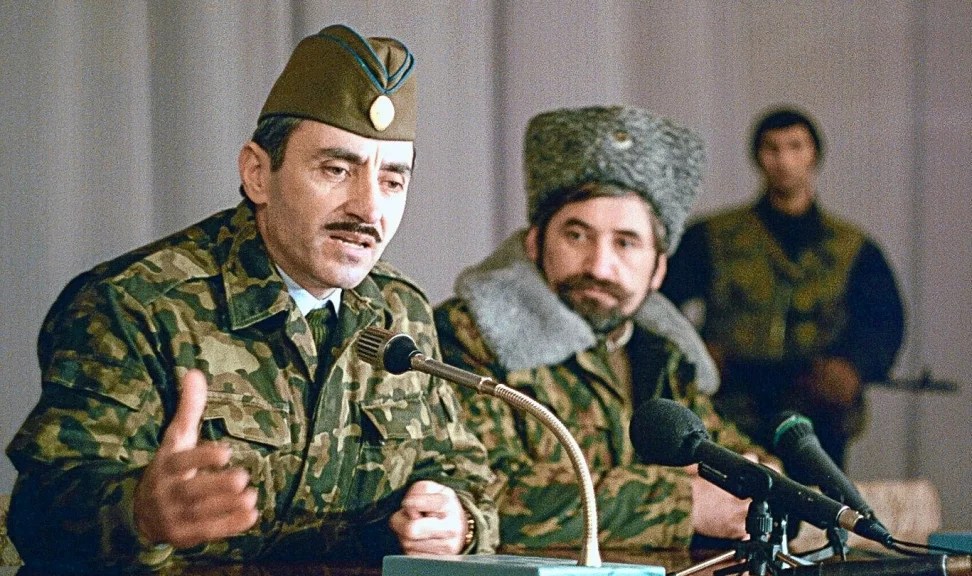
Dudaev tiene una conferenza stampa dopo lo scoppio delle ostilità

Below is the translation of the interview:

Shatoi, April 1995

Dzhokhar, on the eve of the entry of Russian troops into Chechnya, did you personally feel this danger? Did you expect this development of events? After all, there was a giant tragedy of the people.

“This is a tragedy not only of the Chechen people. There has been a tragedy for Russia and the Russian people.”

I mean Grozny destroyed, the villages executed, thousands of widows and orphans. Did you foresee something like this happening?

“I’ve always said that Russia is dying and needs victims.”

Many today (April 1995.-Kommersant) say about you that you were specially trained and sent to destroy her people.

“It’s all bullshit. Bullshit, which I despise and do not perceive. I know exactly how these lies are formed. This is propaganda.”

They also talk about the fabulous money you get from selling oil, drugs…

“Bluff and talk. I don’t even want to comment.”

How do you see the future of Chechnya today?

“Well.”

What do you think will happen to Russia next?

If the Russians knew what fate they were preparing – not only for their descendants, but also for the current generation – they would probably have incurable diarrhea. Russia has two ways of developing. And both are stupid.

So?

What is the path to Russia? Take the dollar and make it your god. They are ready for it right now. What will come of it? This is self-destruction, a destructive path. You can go another way – I know which way Russia needs. But I will never tell. Let them fall and roll! One way is to accept Islam and follow the way of Islam. This is a more realistic way for them.

Daud Akhmadov parla ad una conferenza stampa.

And could not our people with you be victims of all these global processes?

“Today it is the victim of these problems.”

Victory or defeat, how will this war end?

“Questions about the start of the war and its completion are the Almighty’s business. So far, Russia itself is not prepared either for war or for its logical conclusion. But it’s not the war that worries me now, it will end anyway . And we will sign the peace. Not in Moscow – I will never go, and not in Chechnya – I have to let Russia save face. This (the signing of the peace. – Kommersant) will take place in the Caucasian land, in Dagestan. Do you want me to tell you where? In a train carriage…”

Dzhokhar, don’t you feel guilty that everything turned out like this in Chechnya?

“I don’t feel guilty.”

Couldn’t we have avoided this nightmare of war?

“We could not. If we tried to solve (the problem of relations with Russia. – Kommersant) by peaceful means, by politics, by loyalty, by humility – I can assure you that we would be destroyed to the root. And there would never again be a Chechen nation or its state. And I can responsibly say that already in 1991, the idea arose to populate the disputed territories on the Sino-Soviet border, under the branding that the Chechen mafia, rackets will not let you live. In 1991, how many Were there locomotives in Gudermes? With the excuse of maintenance? On which the factory grease had not yet been removed!? There were 56 locomotives! And how many wagons stood at the railway junctions around and on the territory of the republic? Cattle wagons. And without any movement for more than three months?! How many covered vehicles, under the guise of collection were in 11 districts, standing motionless, with people in green jackets?! Each car has an officer. And from how many units were additionally unloaded military equipment and the military contingent arrived on the territory of the republic to those who were already here?! And the Chechen nation would be destroyed. And the Emergency Committee was supposed to implement the idea of the genocide, another deportation of the Chechen people. And only an accident thwarted these plans.”

There is an idea that if Dudayev left now, saying: “If you want elections, hold them, if you want, join Russia”! Many more lives could be saved. Why do not you do that?

“I testify before Allah that such an act would bring great harm to the people. 300,000 men – aged between 17 and 50 – now have no shelter, no food, no work. They have nowhere to go – families are being destroyed, houses are being destroyed. These people have only one goal: revenge. As long as they trust me they obey me. If the landmark is broken, they will go out of control… Terrible! An internecine war will begin. In distant Russia, who should take revenge? Here we will seek blood revenge. They will again call for help from the Russians. And the latter, not understanding where theirs is, where they are strangers, will raze everything to the ground.”

Would you like to talk to Yeltsin now?

“I always have something to say to the leadership of Russia. I have always understood perfectly well, and I understand now, that such a huge Russia has its own interests, which are difficult to give up in an hour, in an instant. At first I suggested to take into account the interests of Russia: joint defense, joint armed forces. I even called him. I said more than once: recognize the path chosen by my people, and I will leave the political arena in 3 days.”

Dudaev vota alle elezioni popolari del 27 Ottobre 1991

Dzhokhar, how do you evaluate today’s events, as a result of which you came to power in the presidential elections on October 27, 1991?

“The Supreme is my witness that I did not want to present my candidacy for president. But then my supporters were indignant because, they said I was afraid.”

Who were these people who convened the first national congress of the Chechen people (November 23-25, 1990), at which an executive committee was created (September 6, 1991, the Executive Committee of the Chechen People’s Congress seized power in the republic – Kommersant)? What do you think now, did they really support the idea or did they use the name of the first Chechen general to achieve their goals?

“That’s all! When I saw to whom the Vainakh people’s congress entrusted its sovereignty and its future, I – I give you my word of honor – got goosebumps. Already at the very first meeting of the executive committee there, they – those who organized and held this congress – started a fight for money.Literally because of the money raised for the last congress.

I didn’t need places in this republic, in that environment, spoiled to the point of lawlessness. In general, I was not only afraid of this environment but, frankly, I despised it. This environment was so far from my intellect and level with all its luxury, bravado and behind-the-scenes games. This environment was wild and far away for me… I looked and shuddered in horror. Who was given the trust of the people! It became clear that it was a collapse. That things would turn out so differently from the direction people had imagined. That they would literally pervert this idea (of sovereignty-Kommersant), they would smear it, they would spit on it. And that the people would be reduced to nothing. This is what made me take on this heavy burden. But it’s one thing to pronounce high-sounding words from the stands, quite another when it is necessary to implement a decision.”

Dudaev in abiti civili durante il periodo prebellico

They say your inner circle was corrupt.

“Everyone was corrupt. In the old days, money was brought to the first people in the highest echelons of power in the republic, and there was a certain tax. It took some time to clear the upper echelon. A cabinet of ministers was replaced , the second cabinet, the third. And we passed the upper level, we succeeded. And those who planned it, they felt the sword of Damocles upon them, which would cut off their heads. But on the lower level, the corruption continued to exist with unbridled force.

If you started all over again, what would you change about your actions in the last few years (1991-1996 – Kommersant)?

“Even if I wanted to change something, they just wouldn’t let me. Of course, I wish I had done things very differently.”

Who didn’t allow it?

The context didn’t allow it, a society that wasn’t ripe for democracy and respect for rules and laws. Do you think I wouldn’t want to have talented, intelligent, intellectual, creative, dedicated people next to me?! But there were little bastards around who had only one interest: unbridled profit. The environment turned out to be like this due to the circumstances, there was no other.”

“I am grateful to the fate that made me meet the Chechens!” Francesco Benedetti interviews Alla Dudaeva

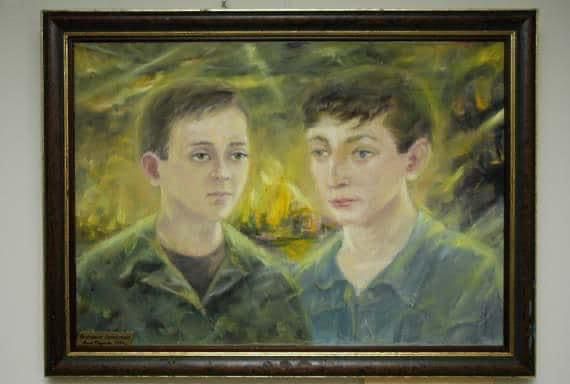
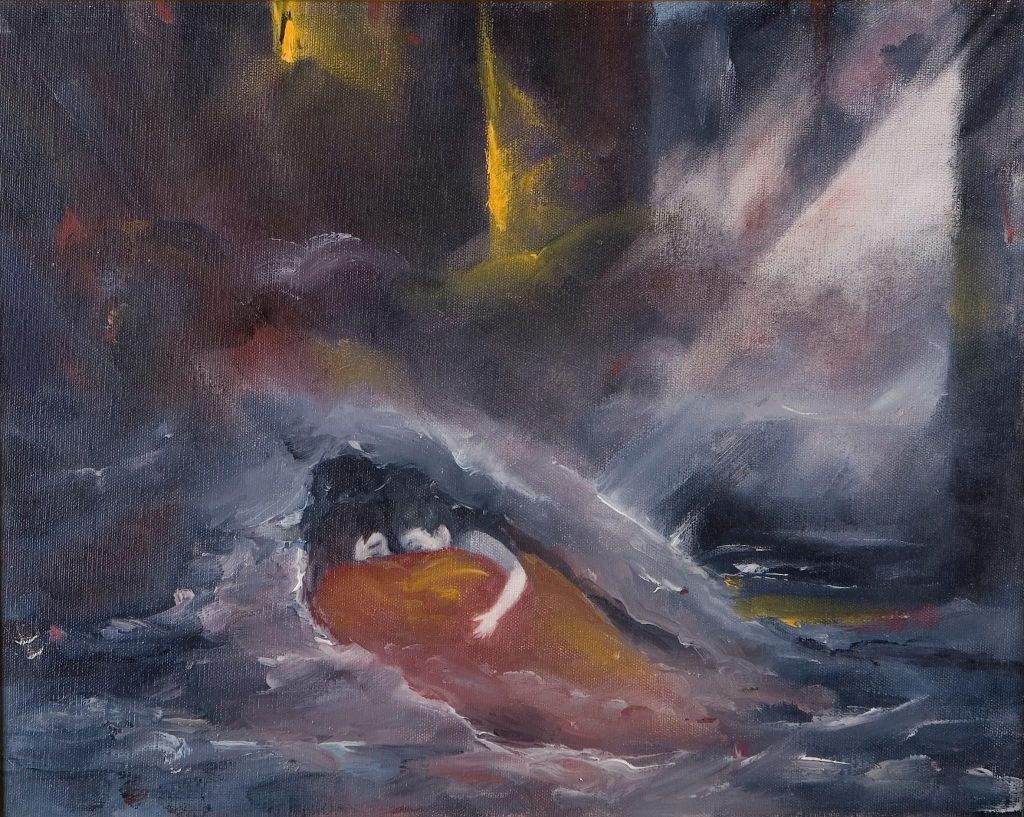
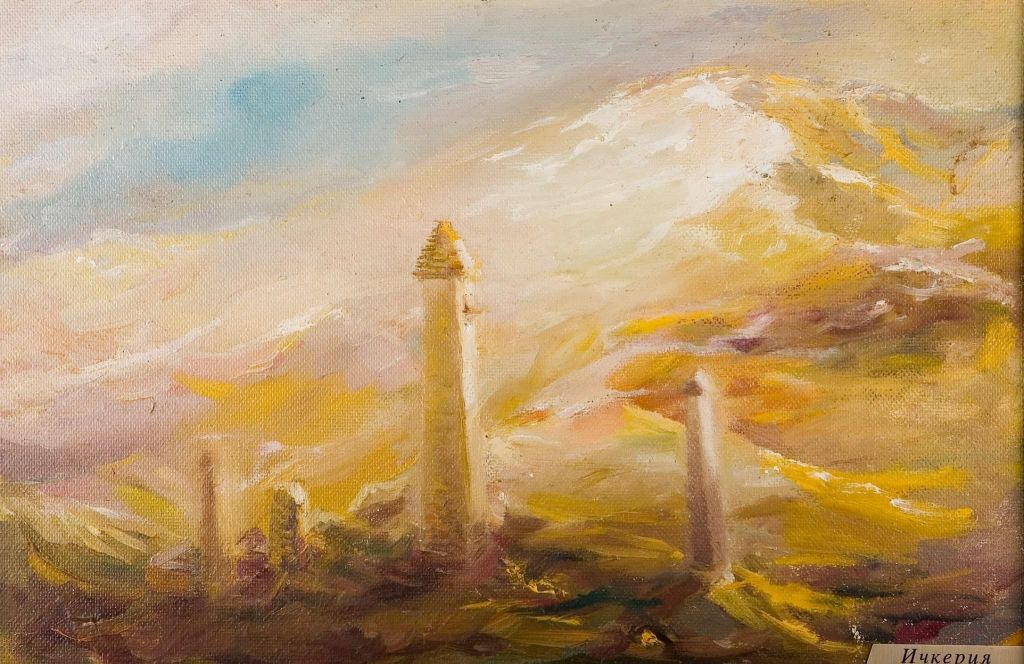
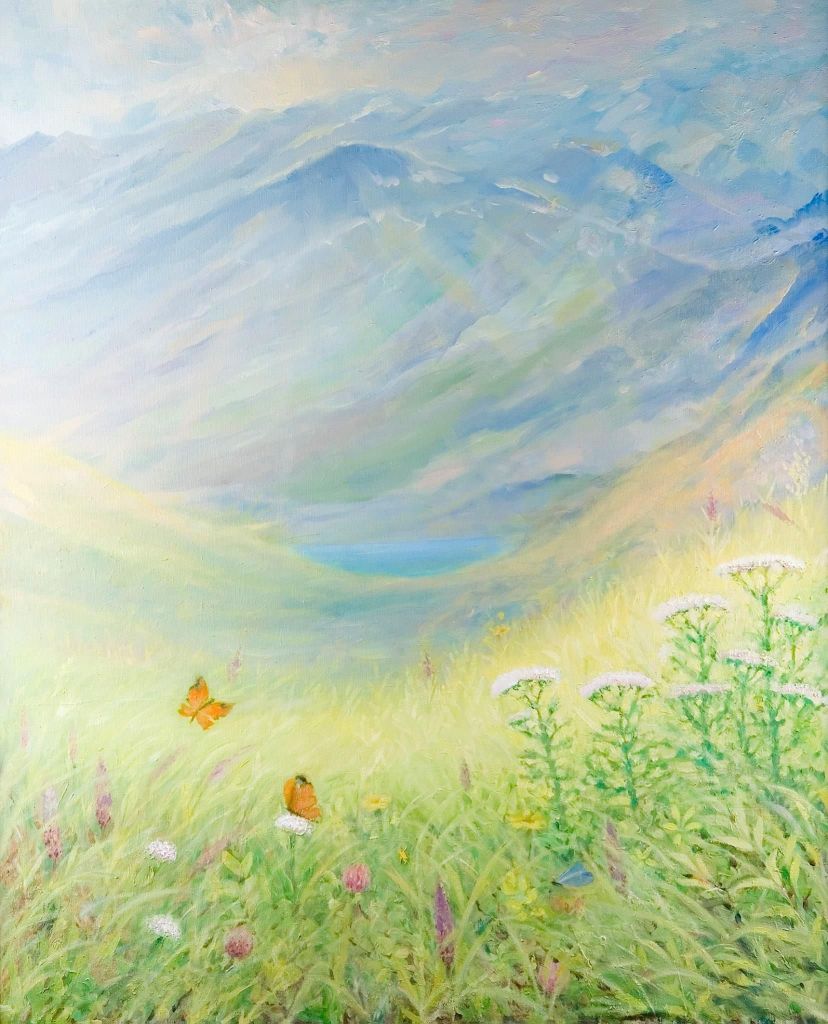
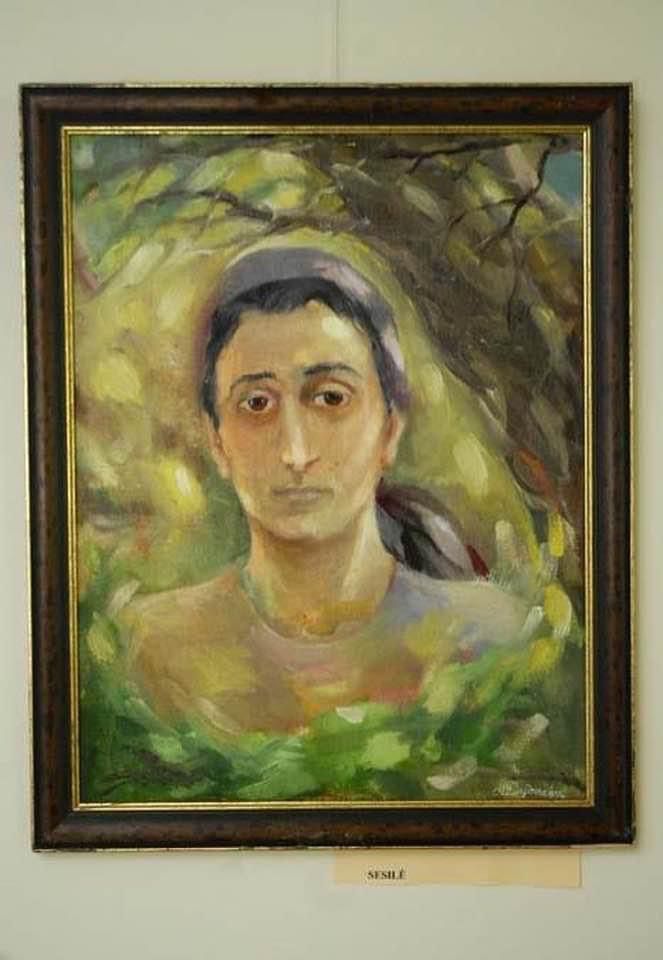
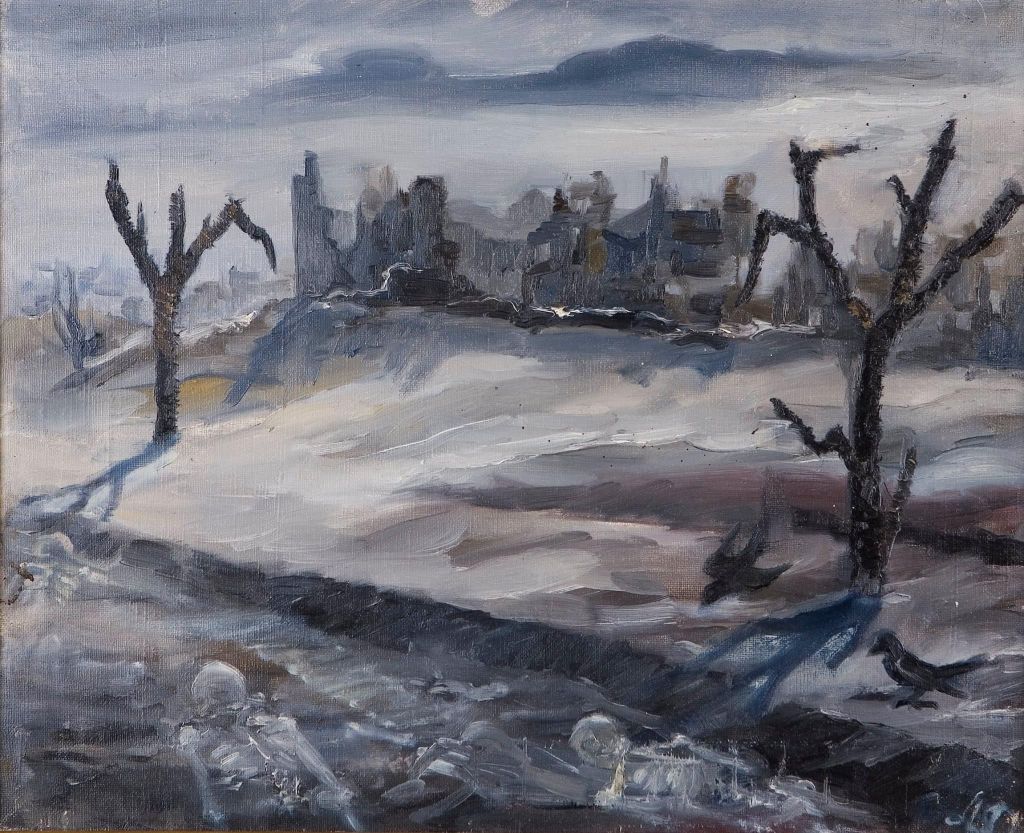
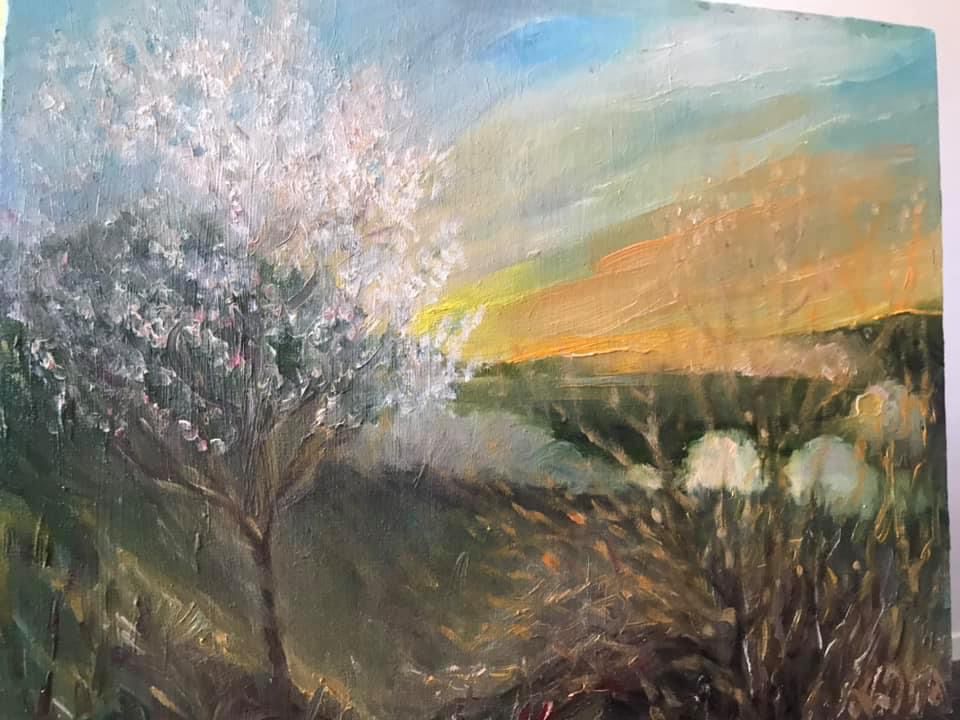
Alla Fyodorovna Dudayeva is the widow of the first President of the Chechen Republic of Ichkeria. Dudaev’s life partner, she lived with him until his assassination, which occurred on April 21, 1996 by the Russian army. Despite being of Russian origin, Alla Dudaeva linked her personal destiny to the cause of Chechen independence, continuing after her husband’s death to plead the reasons for a free Chechnya. Among her qualities, her passion for drawing certainly stands out. For this reason, in addition to her words, we have collected and published, with her permission, her pictorial works. What follows, therefore, is a double story, in words and images: the story of a wife, a mother, an artist, a political activist, a woman united with Chechnya by love and destiny.

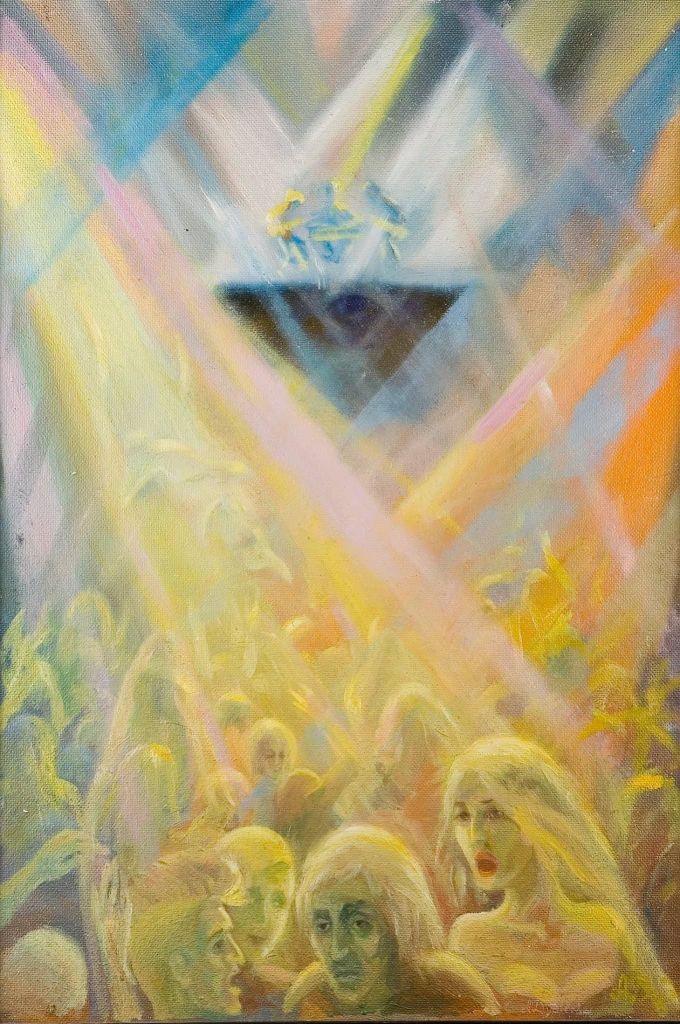
“Golden Ichkeria” – 1989

The death of Dzhokhar Dudayev has deprived the Chechens of both a human and a political point of reference. From your point of view, this may be even more true: has the loss of a person so important to you as a life partner, as a mother, and at the same time as a supporter of a free Chechnya, changed your existential point of view?

The entire Chechen people wept when they learned of Dzhokhar’s death, as well as the Muslim world. But not only Muslims: the whole world appreciated Dzhokhar’s life and work, the Chechen people’s resistance to Russian aggression, and dedicated dozens of streets, squares and cities in different countries to him. Dzhokhar showed how to “take cities” and in 3 days (March 7,8,9) the capital of Ichkeria was taken by Chechens. Russian military units and bases were surrounded, but the Chechens did not shoot at the Russians so that the planes could not bomb the attackers. This ingenious plan was conceived by Dzhokhar, and when journalists asked him “why did you leave Grozny?” He replied “We have shown the whole world how to take cities!” In exactly the same way, the invaders were surrounded three months after the death of Dzhokhar on August 6, 1996. It was called: “dying, embracing the enemy.” And it happened only thanks to the unparalleled courage and courage of the Chechen people. For the first time in the world, a small Chechen people defeated the huge Russian empire of evil and violence, which the whole world has been afraid of for decades!

And the people called it a miracle! This victory gave hope to all occupied peoples for their future liberation and breathed new strength into those who bowed and surrendered! A nation is invincible when it fights on its own land for its freedom, if it has such a leader! When the president and the people are one, they are invincible!

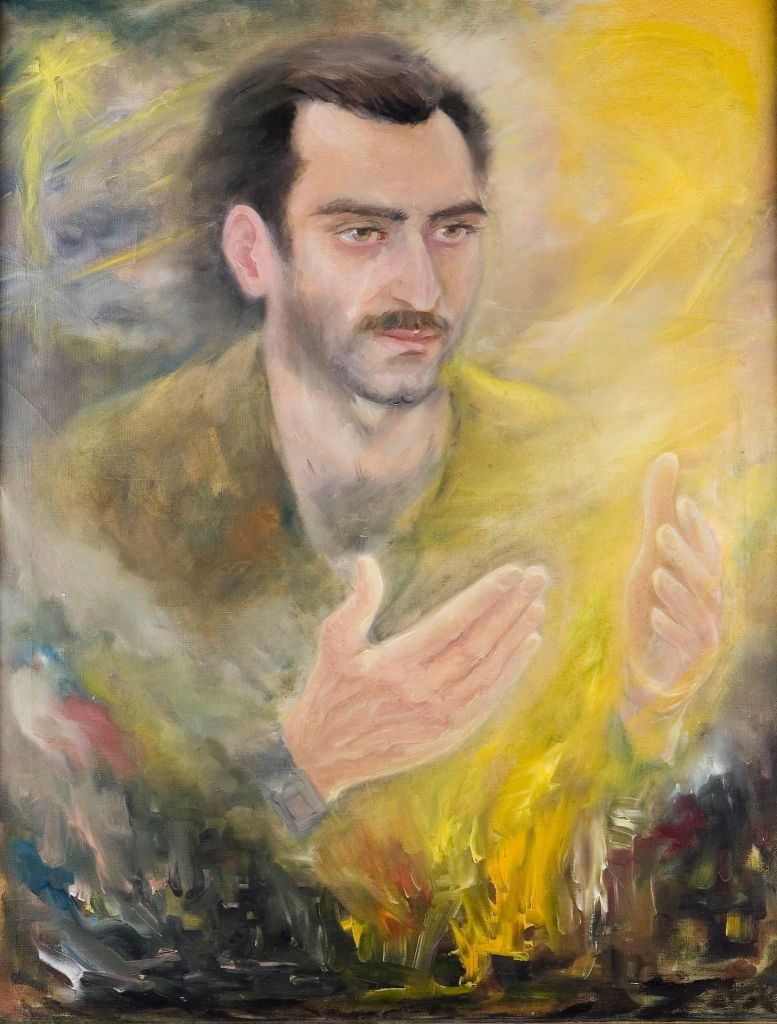
“Dzhokhar Dudaev” 1989

Has his death changed anything in you regarding the care of your family and regarding the idea of an independent Chechnya?

After the death of Dzhokhar, nothing has changed in me in relation to our family or in relation to the idea of the independence of Ichkeria. But my personal feeling changed, I could not imagine myself without Dzhokhar, it was as if I was unexpectedly hit in the chest. Then we were secretly taken to the second home of a brave and wise man, Dayan, and I sat by his body for three days. Dayan asked me not to mention that Dzhokhar was dead when I was at her house for dinner. He asked me to say that there was one wounded, but not that it was Dzhokhar. “My wife Leila” he said “She couldn’t bear it. He has a weak heart. No need to mourn it in front of them, there would be such a noise that everyone in the village would understand immediately. Instead we have to hide. After her words, I understood that there were still those who loved Dzhokhar, albeit weaker than me in health. And I learned to hide, even as my heart was torn apart by pain. Therefore, when it was necessary to declare Dzhokhar’s death on April 24 in front of journalists from all over the world, I learned to hide my tears and did not cry, I thought about hundreds of sick old women like Leila, what would happen to them when they heard the sad news. And about our enemies, how they would rejoice at Dzhokhar’s death … That’s why I decided to leave the doubt, to Dzhokhar’s enemies who feared him, that he might return.

That very night we snuck him out and buried him. And I witnessed such miracles, when Dzhokhar was raised and carried to the cemetery, that it seemed to me that I had new strength. We left at three in the morning. When we arrived at the cemetery it was still dark which was scary. There was a wall of fog. While the grave was being dug, I sat next to Dzhokhar’s body, behind the fence. And when they came for him and brought him, suddenly the fog cleared, pink-gold rays of the sun appeared, under which everything around shone. And in the blue sky above his grave, flocks of birds were circling, as if they had come to greet or meet him. And they sang!!! Most likely, the Almighty himself met him! I understood that Dzhokhar would not be in the grave, his soul was immediately taken to heaven!

When the Chechen people gathered all their strength and managed to defeat the huge Russian empire, many believed that Dzhokhar was alive and would certainly return. But our enemies have claimed that Dzhokhar, a symbol of independence, fled, leaving his people behind. And then I had to refute these dirty rumors and we made a documentary about the place of his death. In it, I detailed where he was, when it happened and from which side two rockets came, one after the other. The military prosecutor, Magomed Zhaniev, and our former representative in Moscow, Khamad Kurbanov, they died with him. They were immediately taken away by relatives and buried the next day. But many Chechens still didn’t believe me and so I had to write the book “Million First” which became a documentary about the birth, childhood, life and death of Dzhokhar Dudayev .

It was first published in Baku in 2002. Then in six other countries in different languages. By the way, immediately after the book was published, a video was mounted in Chechnya, someone spoke in my voice against the background of my photograph. “I apologize to the Chechen people, I am getting married. I searched for a long time and finally found someone similar to Dzhokhar, only the mustache is different.” This was done intentionally so that my book would not be believed, and some still think that I again married Dzhokhar, who in reality was allegedly wounded, secretly taken out of Chechnya, and then healed. Only many years later the Chechen people finally convinced themselves and stopped waiting for Dzhokhar.

“The immortal city of Grozny” 1995

After the liberation of Grozny in August, Chechnya found itself free, but in constant danger. From April 1996 to February 1997, Dzhokhar’s inheritance passed to Zelimkhan Yandarbiev. He was an old friend of your husband’s. What do you remember about him? What kind of person was he?

Zelimkhan Yandarbiev was a poet and leader of the Vainakh Democratic Party , one of the pioneers of Chechen People’s Freedom. He visited us in Tartu, Estonia and invited Dzhokhar to the first Congress. Dzhokhar made such a brilliant speech that he was elected chairman of the Chechen People’s Executive Committee. Zelimkhan was always next to Dzhokhar and supported him in everything. He was distinguished by great courage and loyalty to the idea of independence, and therefore Dzhokhar, after a series of unsuccessful attempts on his life, instructed him to replace him as president of the CRI in the event of his death. Zelimkhan’s courage can be judged by the famous video in which he did not surrender to President Yeltsin during peace talks in the Kremlin. And he insisted that he move to the place assigned to him, opposite Zelimkhan Yandarbiev. Because the war of 1994-1996 was with the Russian aggressor, who started the war with independent Ichkeria. This was not the “internal conflict” that the Russian media were talking about. And it was not about “restoring constitutional order on the territory of the Chechen Republic of Ichkeria”, but about a full-scale war, during which the capital was burned to the ground by Russian bombs, the entire Chechen land was burned and mined ! Zelimkhan in 1997 held the election of a new president of the CRI, although he could have continued to hold office, but he wanted the Chechen people to choose their own president. Although then some blamed him for it. He has always been on the side of legality and democracy.

“Lost World” 1992

After the 1997 elections, the post of president of the republic passed to Aslan Maskhadov. What was your opinion of him? And how did this opinion change during your political tenure before the second Russian invasion?

Aslan Maskhadov inherited a country destroyed by the Russian-Chechen war and thousands wounded, tens of thousands of people without means of subsistence. Dzhokhar Dudayev forbade taking a ransom for captured Russians. But, immediately after his death on April 21, already in May, the oligarch Berezovsky bought out the Russian journalist Elena Masyuk from Chechen captivity for two million dollars. They returned her to the United States, and Bill Clinton, a friend of Yeltsin, solemnly awarded her a massive gold chain on her chest. All this was shown on television and marked the beginning of the hostage trade conducted by the FSK. They often took hostages from the families of wealthy businessmen to the border of the CRI and handed them over to the Chechens, and then divided the ransom through intermediaries, the main one being Berezovsky. The authorities could do nothing about the rampant crimes of the Russian special services. They killed 8 people from the International Red Cross, blaming the Chechens. And they cut off the heads of three foreigners who allegedly provided the republic with telephone communications with the whole world. They tried to show the Chechens as criminals and bandits to the whole world. In 1999, on Putin’s orders, they blew up two houses in Moscow and one in Volgodonsk, accused the Chechens of this crime and started the second Russo-Chechen war. The fate of Aslan Maskhadov was tragic, but he honorably fulfilled his duty and died as a result of a long guerrilla war. I think it was easier for him to live in a tent and fight in the forest alongside his faithful comrades than during his presidency.

“Allah Akhbar!” 1995

The main accusation leveled against Ichkeria between 1996 and 1999 is that it became an Islamic state and abandoned the path started by the 1992 Constitution and which Dzhokhar intended to maintain. What do you think about this topic?

Ichkeria hasn’t become an Islamic state over the years because it was ruled by President Aslan Maskhadov and had a parliament, but Foreign Minister Movladi Udugov created a two-story so-called “Wahhabi” center in the city of Grozny with security and behind a wall. People from Saudi Arabia came to him, who presented themselves to the Chechen people as the most correct Muslims. They stopped cars on the street and checked people’s IDs to see if relatives or women were traveling with unfamiliar men. To then punish them with whips, as well as for drunkenness. Udugov tried to install his emirs in each village to create parallel systems of state administration. In Urus-Martan, the only village not destroyed by bombing because its inhabitants did not take part in the resistance to Russian troops in the first Russo-Chechen war, a “Wahhabi” center was organized and hijabs were brought for women. In addition, small booklets with extracts from the Koran were brought, published in Moscow. There was a Jamaat school in Baku, where our wounded were taken in, and they were taught to pray differently, but they didn’t leave to react. They were subsidized by Moscow. But, I repeat, from 1992 to 1999, Ichkeria did not become an Islamic state and retained its constitution. Much later, already during the partisan war phase, in 2002, Aslan Maskhadov made a statement and changed the constitution by introducing an Islamic one, but only the parliament has the right to make such legislative decisions if there is a quorum and the modification of the constitution by all the people during a referendum.

“Highlander Amatsi” 2002

After Maskhadov’s death, Abdul- Khalim Sadulayev became the successor to the leadership of independent Ichkeria. He stated:

“With the beginning of the Second War, work continued on the drafting of the Constitution in full accordance with the norms of Islam, […] And now article 1 of the Constitution of the CRI accounting: “The Chechen Republic of Ichkeria is a sovereign and independent Islamic state of law, created as a result of the self-determination of the Chechen people. The sources of all decisions are the Koran and the Sunnah.” Thus, we have come to the logical conclusion of the legal reforms initiated by Dzhokhar Dudayev . Do you think these arguments are correct? What do you think about Sadulaev ?

Indeed, Abdul- Khalim Saidulaev , appointed by Maskhadov in case of his death, became Aslan Maskhadov’s successor. But, like Aslan Maskhadov, he was a partisan in the forest and did not have a parliament to change the constitution. Only the parliament has the ability to engage in legislative activities, and only the people have the right to decide such important issues as changing the constitution during a referendum on this issue. The president has the right only to sign the laws passed by the parliament or the decisions of the people during a referendum.

“Free Ichkeria” 2005

Do you think the Chechen diaspora in Europe and the West as a whole will be able to influence governments to intervene decisively in the rebirth of an independent Chechnya? What actions, in your opinion, should be taken by its representatives?

There are now 160,000 Russian troops in Ichkeria. As soon as the changes in Russia begin, the Russian troops left in a foreign country, surrounded by a foreign people, will slowly leave by themselves. Just as Kadyrov and his accomplices will run away, fearing a feud. Our activities, like all past years, took place in the information struggle with those who want to take advantage of the seizure of power in the republic to declare Sharia and themselves at the head of Sharia without the democratic choice of the people in accordance with our constitution. We are the only legitimate authority, the Presidium and its members have never proclaimed themselves illegal “prime ministers” or cabinet presidents. We were approved in our offices by the last president and we have continued our work. And we exist to organize democratic elections for new leaders who will undoubtedly appear among the Chechen people in the course of all these events. We must ensure the continuity of democratic power of the people. Only the people have the right to elect a leader and other structures. In recent years, many educated young Chechens have grown up, who studied at the best universities in Europe. Surely the most active of them will show up and be ready, on a competitive basis, not only to lead the republic, but also the cabinet of ministers.

“Wind of change” 2017

You, of Russian origin, could be represented, if you will allow me an analogy, as a tree with Russian roots and Chechen branches. How do you experience the relationship between these two identities, even after all that has happened?

I am very sorry that the Kremlin has started a war of annihilation with such an amazing people as the Chechens. In the first Russo-Chechen war, at the invitation of the government of Ichkeria, 250 Russian mothers came to Nazran for their captured sons, eighteen-year-old conscripts scattered throughout the republic, finding and taking their sons away from Chechen commanders. This went down in world history, for the first time such a small nation took pity on an army of conquerors and returned the captives without any ransom to their mothers. But, now, almost everyone who opposed the Russian Empire’s aggressive wars has either left Russia or been killed. The Russian people have changed and their army has turned into an army of looters and bandits. However, Russian generals are now taking criminals out of prisons and sending them to fight in Ukraine. And Russia itself evokes completely different feelings among all the peoples of our world. Therefore, everyone is waiting for this last empire of evil and violence to collapse and for its colonial peoples to free themselves and finally become masters of their own land and destiny. And I hope that with the help of Western countries, this will happen much faster than it could be with the Chechen people, who had almost no weapons to defend themselves, most of the machine guns were stolen from the Russian occupiers themselves. And yet he didn’t give up and led the resistance for decades. There were not even a million Chechens, now there are 46 million Ukrainians, and the whole world helps them with weapons and condemnation of Russia’s aggression.

During the war in Chechnya Western politicians declared non-interference in Russia’s internal affairs. Dzhokhar warned that the time might come when the West itself would become Russia’s internal affair. Lo and behold, this moment has come, his words have come true, and they finally woke up! Now Russia is recognized by the West as a terrorist state, although I would call it a terrorist state on an international scale! Because in addition to wars of conquest, it destroys all those who oppose it around the world: Alexander Litvinenko in London, Zelimkhan Yandarbiev in Qatar, Turkey, Austria, Germany, France… it is difficult to list all those killed by name and name the methods of their murder. The Russian government has to answer for its crimes in the same way as Nazi Germany did when the Nuremberg trials took place. Russia is waiting for Nuremberg 2. And I really hope that we will all witness this momentous event and the Russian Empire will sink into oblivion.

“I’ll never forget you” 1989

How did you live, as mother and wife of the late first president, between the first and second wars? I deliberately ask this question in a very general way. Then you can talk about whatever aspect or experience is most important to you.

Between the wars I lived, like most Chechens, in the belief that there would be no more war. People have restored destroyed houses, planted trees and gardens. Life went on. My kids were there and they too thought all the bad stuff was over. After the outbreak of the second war, when the Chechen people were undeservedly accused of blowing up houses in Moscow, everyone understood that this war would become revanchist. And Moscow’s revenge for the victory of the Chechen people in 1996. I had to leave Ichkeria and move to Ingushetia, then to Georgia, to Baku and, finally, to Istanbul. Our family, like many other Chechens, was forced into exile. Throughout Ichkeria, like mushrooms, Russian filtration fields multiplied, they became more than fifty. They were even in Stavropol, Minvody , Pyatigorsk . In them, tens of thousands of Chechens were tortured and killed. Some of the dying or corpses were sold to relatives for burial. It was a terrible time! The Chechen people paid for their desire to be free with their blood! But, in his soul, he has always remained unconquered, because from time immemorial he welcomed all those who entered his house saying: “be free”! And to this day this greeting remains in effect. I am grateful to fate for giving me the opportunity to get to know this proud and humane people, their customs and traditions. A people who would be admired and taken as an example by humanity if they knew it! And I thank Allah for giving me the opportunity to witness so many miracles that I would never have believed if I hadn’t seen them myself. The Chechen people are busy now, but this is only temporary, they have a bright future ahead of them, and new names and new heroes will certainly appear, about which we still do not know anything. After all, no country in the world has as many enthusiasts as the Chechens. People ready to give their lives for the freedom of the people!

I NEWS interviews Francesco Benedetti

A few days ago Francesco Benedetti met Inna Kurochkina in Florence. The interview that emerged takes up the speeches addressed in another chat, which took place more or less a year ago, shortly before Russia invaded Ukraine. In the course of this year many things have changed, Francis’ work has moved forward and with it his awareness of how important the history of Chechnya is for the West.

We reproduce the video of the interview, attaching the transcript in English.

ENGLISH TRANSCRIPTION

First of all I would like to congratulate you from all visitors, subscribers who have already read your first volume. From today it is possible to have this second volume. How is it possible to have it?

First of all thanks to you, and thanks to all those who appreciated the first volume, and who gave me this consideration. The book is currently available in Italian, on Amazon, but will soon be available in English, thanks to the collaboration of Orts Akhmadov, son of Ilyas Akhmadov, who is working with me on the English version, and will soon also be available in Russian and Chechen, as for the first volume.

The other time we met and talked about your book was December 2021 and perhaps we were expecting war, this tragedy. Then we met in Brussels on the first day of the war, when both we and you met Akhmed Zakayev for the first time. With your help we attended some Radicali Italiani events, these very good people who organized Akhmed Zakayev’s visit to Italy, so somehow you are involved in our activities and in Ichkeria’s. How has your life changed during this year?

I have certainly had more real experiences with respect to this theme. I was a simple student of the history of the Chechen Republic of Ichkeria, but my experience was purely theoretical, abstract, not concrete, material. Since that day I have had the opportunity to speak with many people, and this second book is also written thanks to the memoirs of about a hundred people with whom I have spoken. Thus, my knowledge of that historical experience and of the human experience of the Chechens has grown enormously. From February to today I have given faces, names and lives to an experience that for me until then had only been theoretical.

You and I are working on the history of the Chechen Republic of Ichkeria, because I am also doing a cycle of chronicles. Do you understand the expression “in your skin”? How did you feel firsthand how the war was coming to Chechnya?

One of the questions I ask myself while studying the history of Chechnya, and in particular when studying this period, was “how would I have felt if I had found myself in that situation?” And I ask myself this question almost every day, because my study is based on the memories of the people I interview, and my interviews focus precisely on this aspect of every historical event: naturally I ask for information, names, dates, etc., but the first question I asked in almost every interview was “how did you feel at that moment?” “How did you spend the period between 26 November and 11 December (the time between the storming of Grozny by the pro-Russian opposition and the invasion). Personally, I try every day to imagine what the feelings of the people waiting for the war were, what they were thinking: their children, their families, how to save their families, how to save their things, their money, their cars, their homes. An event like this can completely destroy life, change people’s lives forever. I think I’m quite an empathic person, and I assure you that writing this book I suffered a lot. Like any author, I often re-read the book I’ve read, and every time I have the same feeling of tragedy on the one hand, and admiration on the other for those people who survived the war, in this case managing to win it, against their invaders .

I would like to understand how you frame the nature of the Chechen people. I was born in Georgia, I’m Ukrainian. I would like to work for the Georgian people, or for the Chechen people, but my whole heart now belongs to the Chechen people, I don’t know why. How could you describe your feeling towards the Chechen people? Because if you fell in love with this people, you did it because you have a passion in you.

I understand what you think because, when I think about it, what happened to me is really strange. I live in Tuscany, and I have no family, economic or any other connection with Chechnya. Yet ever since I was a child, something happened the first time I heard the name “Chechnya”. I don’t know exactly what, an elective affinity that has grown inside me, and I don’t know exactly why.

What I love about the Chechen people about this story is their ability to show happiness in tragedy. In them I have seen people who don’t want to be considered victims, but people who manage to find the beauty of life in everything. They have shown the world how to laugh in the face of death, and how to preserve humanity even in a situation which, if I imagine myself in their place, would strip humanity away from me as well. If a war destroyed my life maybe I’d go crazy. I have spoken to many people who have fought a war and have not gone mad, but rather have kept their kindness, their being good people. I don’t know if I would be able to keep these qualities in myself, fighting a war. I think this character trait of the Chechens is beautiful: the fact that they have managed to keep their happiness and will to live despite going through such bitter experiences.

Knowing this special character trait of this people, let’s think about how much Russia has gone to destroy them. It’s a biblical story for me. What do you think about it?

When a bully tries to hit a victim, and the victim smiles at him, the bully will become even more angry, but will ultimately be defeated by his victim’s resilience. In this sense I loved the struggle of the Chechens who showed the Russians that their spirit would never break.

In this last year we realized that the Ukrainians didn’t understand what the war in Chechnya was, just like the Russians they didn’t care about it. Now they have understood, and the Ukrainian parliament has recognized the independence, the state of occupation and the genocide of the Chechen people. What needs to happen for even Russian liberals to understand this tragedy? In their view of life there is no Chechen war and no Chechen tragedy, and of course there is no Ichkeria. What do you think?

I think Russian liberals are also part of the Russian empire. Maybe they want a “liberal empire”? Maybe it’s nonsense. I don’t think that in this sense there is much difference between the radical parties and the moderate or liberal ones. Everyone wants the same thing: to strengthen the empire, in one form or another. Maybe Russian liberals don’t want to fight the war in Ukraine, but they also don’t want to lose the integrity of their empire. I don’t see anything strange in this. I’m more used to studying and reading the news of another empire, the American one, and the liberals of the American empire are no less angry and aggressive than the nationalists. Citizens of an empire grow up thinking the only way to preserve the country is to stick together and squash any dissonant voices.

I was very surprised by your “hobby”. I’m going to show snippets from one of your band’s videos, which is called “Inner Code”. Tell me about this song about empire. I’m so surprised because you’re from Florence, we can’t relate the concept of “empire” with the city of Rome, which is so beautiful.

Rome in this song is the archetype of the empire. When we think of the Roman Empire we think of the empire by definition. The Russian Empire itself is inspired by the Roman Empire. The word “Tsar” is the translation of the Latin “Caesar”, the Kaiser of the German Empire is the Germanic translation of “Caesar”, and so on. “He will burn Rome” speaks of the fall of Rome, but by extension it speaks of the fall of all empires. No matter how big and strong, every empire will fall sooner or later. When I listen to this song I find a connection with the story we are talking about, being a story that can work with any empire, even the Russian one. However, I recommend listening to the song at a low volume!

[…]

Basically, everything we are talking about revolves around the word “Freedom”. You are a free person in all respects, as I see. Do you see the freedom of Ichkeria under attack? Do you think the imperial forces, the FSB , want to cancel this goal of freedom? We perceive these attacks, for example those that are being carried out against Akhmed Zakayev, a person who is a symbol of freedom of Ichkeria. Do you perceive these attacks from Italy?

I guess this behavior is consistent with the situation. I have an indirect perception of this, because unfortunately Italian newspapers don’t report much on what is happening in Chechnya or in the Chechen diaspora. However, having some contact with members of the Chechen diaspora due to my studies, I imagine that these people are talking about present and future plans to achieve independence and freedom for Chechnya and sometimes they do it in heated discussions, or getting angry. I speak as an Italian, I don’t think I have the right to tell the Chechens what they have to do. Only, seeing what is happening in the Chechen diaspora from the outside, I notice that there are “unresolved issues” and it is possible that the FSB , or anyone who does not want an independent Chechnya, could emphasize these divisions on the pro-independence front to weaken it. I hope people don’t fall into this trap. I don’t know if Chechnya’s independence is far or near, but it is important that at every step we find ourselves in the best condition to gather all our strength together to win freedom.

In recent months, also thanks to you and to the Italian Radicals (I am thinking of the meeting in Rome between Zakayev and Benedetto della Vedova, the speech to the Italian parliament, the recognition of Ichkeria by the Ukrainian parliament, the just finished speech by Zakayev at the European Parliament etc.) we have seen an evolution in the proposal of the government of Ichkeria. In Brussels, Zakayev presented a project for the reconstitution of the Republic of the Mountain, established in 1918 and dissolved by the Bolsheviks, and which Zviad Gamsakhurdia and Dzhokhar Dudaev at the time wanted to reconstitute in the 1990s. Now Zakayev is carrying out this idea, this project, and the Minister of Foreign Affairs, Inal Sharip has gone to Washington DC and is presenting it there. As a historian, do you think this project of the Mountain Republic is safer, more feasible than independent Chechnya? Do you think Chechnya alone could survive its monstrous neighbors?

I think creating a confederation is very difficult, but if it is led by a strong center, it can multiply the strength of every single member. If the confederation is a simple sum of subjects I don’t think it will last long. An example can be that of the European Union: a sum of countries, but its strength is not equivalent to the sum of the forces that compose it. Because each country defends its interests, and this is a problem because a state built like this cannot resist the forces of countries like the United States, Russia, China. The problem with our confederation is that we don’t have a center, a nation that holds all the others together. And every time one of the European nations takes supremacy, the others fight against it. So our European confederation is politically weak. If the Chechens want to lead a confederation they don’t have to do it like the Europeans did. If they are credible enough to attract other nations into a confederation of which they are the centre, not as an imperial centre, but as the place of those who believe most of all in this project, and who are ready to sacrifice themselves for it more than the others to keep everyone together, then I think this is a political project that can last. Like, for example, the United States, which is a confederacy that, after some major problems, has become the most powerful nation on earth. A confederation, therefore, can last, but you need a center that has the credibility and strength to hold all the others together, not by force but by setting an example. I think the Chechens have shown the world great examples more than once.

In 1997 Russia and Chechnya signed a peace treaty which was later betrayed. What do you think about the desire of the world community to persuade Ukraine to sign a similar treaty with Russia?

Looking at history, it is perfectly understood that the real value of documents depends on whether or not they reflect the real situation. In 1997 Russia signed a peace treaty, but while it was signing it was preparing its second invasion. In my opinion, if he now accepts a compromise with Russia, this compromise will in no case fix any situation, because I don’t think the Russians would be satisfied, and neither would the Ukrainians. I believe that a compromise now would only be a way of moving the war forward by three or four years. I believe that this is a moment in which it is necessary to solve a problem that was born in Chechnya. In a wonderful review by Adriano Sofri, an Italian who knows Chechnya well, and who wrote a wonderful article on this book, he says that what happened in Ukraine is a remake of what happened in Chechnya and Georgia, and that Ukraine is the end of a line that starts in Chechnya. It is time to break this line once and for all, otherwise we will have to add another point to this line in four or five years. As a European I reflect on the fact that this line does not go away from Europe, but from Chechnya towards Europe. The next point will be even closer to our home, not further away. I think Europe should think about this. If they don’t stop this process now, they will face it again even closer to home.

I NEWS intervista Francesco Benedetti

Alcuni giorni fa Francesco Benedetti ha incontrato a Firenze Inna Kurochkina di I NEWS. L’intervista che ne è uscita fuori riprende i discorsi affrontati in un’altra chiacchierata, svoltasi più o meno un anno fa, poco prima che la Russia invadesse l’Ucraina. Nel corso di questo anno molte cose sono cambiate, il lavoro di Francesco è andato avanti e con esso la sua consapevolezza di quanto sia importante per l’Occidente la storia della Cecenia.

Riproponiamo il video dell’intervista, allegandone la trascrizione in lingua italiana.

TRASCRIZIONE IN ITALIANO DELL’INTERVISTA

Prima di tutto vorrei congratularmi con te da parte di tutti i visitatori, gli abbonati che hanno già letto il tuo primo volume. Da oggi è possibile avere questo secondo volume. Com’è possibile averlo?

Prima di tutto grazie a te, e grazie a tutti coloro che hanno apprezzato il primo volume, e che mi hanno dato questa considerazione. Il libro in questo momento è disponibile in italiano, su Amazon, ma sarà presto disponibile in inglese, grazie alla collaborazione di Orts Akhmadov, figlio di Ilyas Akhmadov, che sta lavorando con me alla versione inglese, e presto sarà disponibile anche in lingua russa e cecena, come per il primo volume.

L’altra volta che ci siamo visti ed abbiamo parlato del tuo libro era il Dicembre del 2021 e forse ci aspettavamo la guerra, questa tragedia. Poi ci siamo incontrati a Bruxelles nel primo giorno della guerra, quando sia noi che tu incontrammo per la prima volta Akhmed Zakayev. Con il tuo aiuto partecipammo ad alcuni eventi di Radicali Italiani, queste ottime persone che organizzarono la visita di Akhmed Zakayev in Italia, quindi in qualche modo sei coinvolto nelle nostre attività ed in quelle di Ichkeria. Com’è cambiata la tua vita durante questo anno?

Sicuramente ho avuto esperienze più reali rispetto a questo tema. Ero un semplice studente della storia della Repubblica Cecena di Ichkeria, ma la mia esperienza era puramente teorica, astratta, non concreta, materiale. Da quel giorno ho avuto modo di parlare con molte persone, e questo secondo libro è scritto anche grazie alle memorie di circa un centinaio di persone con le quali ho parlato. Così, la mia conoscenza di quella esperienza storica e dell’esperienza umana dei ceceni è cresciuta enormemente. Da Febbraio ad oggi ho dato volti, nomi ed vite ad un’esperienza che per me fino ad allora era stata soltanto teoretica.

Io e te stiamo lavorando alla storia della Repubblica Cecena di Ichkeria, perché anch’io sto facendo un ciclo di cronache. Capisci l’espressione “nella tua pelle”? Come hai sentito sulla tua pelle come la guerra stesse arrivando in Cecenia?

Una delle domande che mi faccio studiando la storia della Cecenia, e in particolare studiando questo periodo è stata proprio “come mi sarei sentito se mi fossi trovato in quella situazione?” E mi faccio questa domanda quasi tutti i giorni, perché il mio studio si basa sulle memorie delle persone che intervisto, e le mie interviste si focalizzano proprio si questo aspetto di ogni evento storico: naturalmente chiedo informazioni, nomi, date eccetera, ma la prima domanda che ho fatto in quasi tutte le interviste è stata “come ti sentivi in quel momento?” “Come passasti il periodo tra il 26 Novembre e l’11 Dicembre (il lasso di tempo tra l’assalto a Grozny da parte dell’opposizione filorussa e l’invasione). Personalmente provo ogni giorno ad immaginarmi quali fossero i sentimenti delle persone che aspettavano la guerra, cosa pensavano: i loro figli, le loro famiglie, come mettere in salvo le loro famiglie, come mettere in salvo le loro cose, i loro soldi, le loro auto, le loro case. Un evento come questo può distruggere completamente la vita, cambia per sempre la vita della gente. Credo di essere una persona abbastanza empatica, e ti assicuro che scrivendo questo libro ho sofferto molto. Come ogni autore rileggo molto spesso il libro che ho letto, ed ogni volta ho la stessa sensazione da una parte di tragedia, dall’altra di ammirazione per quelle persone che sono sopravvissute alla guerra, in questo caso riuscendo a vincerla, contro i loro invasori.

Vorrei comprendere come inquadri la natura del popolo ceceno. Io sono nata in Georgia, sono ucraina. Vorrei lavorare per il popolo georgiano, o per quello ceceno, ma tutto il mio cuore ora appartiene al popolo ceceno, non so perché. Come potresti descrivere il tuo sentimento verso il popolo ceceno? Perché se ti sei innamorato per questo popolo, lo hai fatto perché hai in te una passione.

Capisco quello che pensi perché, se ci penso, è veramente strano ciò che mi è capitato. Vivo in Toscana, e non ho alcun collegamento familiare, economico o di qualsiasi altro genere con la Cecenia. Eppure fin da quando ero bambino, la prima volta in cui ho ascoltato il nome “Cecenia” è successo qualcosa. Non so cosa precisamente, un’affinità elettiva che è cresciuta dentro di me, e non so precisamente perché.

Ciò che amo del popolo ceceno, riguardo a questa storia, è la sua capacità di mostrare la felicità nella tragedia. In loro ho visto persone che non vogliono essere considerate vittime, ma persone che riescono a trovare la bellezza della vita in ogni cosa. Loro hanno mostrato al mondo come si ride di fronte alla morte, e come si conserva l’umanità anche in una situazione che, se mi immagino di essere al loro posto, strapperebbe via l’umanità anche da me. Se una guerra distruggesse la mia vita forse diventerei pazzo. Ho parlato con molte persone che hanno combattuto una guerra e non sono impazzite, ma anzi hanno conservato la loro gentilezza, il loro essere persone buone. Non so se sarei in grado di conservare in me queste qualità, combattendo una guerra. Penso che questo tratto caratteriale dei ceceni sia bellissimo: il fatto che siano riusciti a conservare felicità e voglia di vivere nonostante abbiano dovuto affrontare esperienze così amare.

Conoscendo questo tratto caratteriale speciale di questo popolo, pensiamo a quanto la Russia si sia impegnata a distruggerli. E’ una storia biblica per me. Tu che ne pensi?

Quando un bullo prova a picchiare una vittima, e questa gli sorride, il bullo diventerà ancora più rabbioso, ma alla fine sarà sconfitto dalla resilienza della sua vittima. In questo senso ho amato la lotta dei ceceni, i quali hanno mostrato ai russi che il loro spirito non si sarebbe mai spezzato.

In quest’ultimo anno ci siamo resi conto che gli ucraini non avevano capito cosa fosse stata la guerra in Cecenia, perché esattamente come i russi non se ne erano preoccupati. Adesso hanno capito, ed il parlamento ucraino ha riconosciuto l’indipendenza, lo stato di occupazione ed il genocidio del popolo ceceno. Cosa deve succedere perché anche i liberali russi capiscano questa tragedia? Nella loro visione della vita non c’è nessuna guerra cecena e nessuna tragedia cecena, e ovviamente non c’è nessuna Ichkeria. Cosa ne pensi?

Penso che i liberali russi siano anche loro parte dell’impero russo. Forse vogliono un “impero liberale”? Forse è un non – senso. Non credo che in questo senso ci sia tanta differenza tra i partiti radicali e quelli moderati, o liberali. Tutti vogliono la stessa cosa: rafforzare l’impero, in una forma o nell’altra. Forse i liberali russi, non vogliono combattere la guerra in Ucraina, ma non vogliono neanche perdere l’integrità del loro impero. Non vedo niente di strano in questo. Sono più abituato a studiare ed a leggere le notizie di un altro impero, quello americano, ed i liberali dell’impero americano non sono meno arrabbiati ed aggressivi rispetto ai nazionalisti. I cittadini di un impero crescono pensando che l’unico modo per preservare il paese sia tenero unito e schiacciare ogni voce dissonante.

Sono stata molto sorpresa dal tuo “hobby”. Mostrerò dei pezzi di uno dei video della tua band, che si chiama “Inner Code”. Parlami di questa canzone che parla dell’impero. Sono così sorpresa perché sei di Firenze, noi non riusciamo a mettere in relazione il concetto di “impero” con la città di Roma,  che è così bella.

Roma in questa canzone è l’archetipo dell’impero. Quando pensiamo all’impero romano pensiamo all’impero per definizione. Lo stesso impero russo si ispira all’impero romano. La parola “Zar” è la traduzione del latino “Caesar”, il Kaiser dell’impero tedesco è la traduzione germanica di “Caesar”, e così via. “Brucerà Roma” parla della caduta di Roma, ma per estensione parla della caduta di tutti gli imperi. Per quanto grande e forte, ogni impero prima o poi cadrà. Quando ascolto questa canzone trovo un collegamento con la storia di cui stiamo parlando, essendo una storia che può funzionare con qualsiasi impero, anche per quello russo. Consiglio comunque di ascoltare la canzone a volume basso!

[…]

Fondamentalmente, tutto ciò di cui stiamo parlando gira intorno alla parola “Libertà”. Tu sei una persona libera sotto tutti i punti di vista, come vedo. Vedi la libertà di Ichkeria sotto attacco? Pensi che le forze imperiali, l’Fsb, vogliano cancellare questo obiettivo di libertà? Noi percepiamo questi attacchi, per esempio quelli che stanno venendo portati contro Akhmed Zakayev, una persona che è un simbolo della libertà di Ichkeria. Percepisci questi attacchi dall’Italia?

Immagino che questo comportamento sia coerente con la situazione. Ho una percezione indiretta di questo, perché sfortunatamente i giornali italiani non raccontano molto ciò che succede in Cecenia o nella diaspora cecena. Tuttavia avendo alcuni contatti con i membri della diaspora cecena per via dei miei studi, immagino che queste persone stiano parlando di progetti  presenti e futuri per raggiungere l’indipendenza e la libertà della Cecenia e che talvolta lo facciano discutendo animatamente, o arrabbiandosi. Parlo da italiano, non penso di avere il diritto di dire ai ceceni ciò che devono fare. Solo, vedendo da fuori ciò che succede nella diaspora cecena, noto che ci sono delle “questioni irrisolte” ed è possibile che l’Fsb, o chiunque non voglia una Cecenia indipendente possa enfatizzare queste divisioni del fronte indipendentista per indebolirlo. Spero che le persone non cadano in questa trappola. Non so se l’indipendenza della Cecenia è lontana o vicina, ma è importante che ad ogni passo ci si trovi nella migliore condizione per raccogliere insieme tutte le forze per conquistare la libertà.

Negli ultimi mesi, anche grazie a te ed ai Radicali Italiani (penso all’incontro a Roma tra Zakayev e Benedetto della Vedova, al discorso al parlamento italiano, al riconoscimento di Ichkeria da parte del parlamento ucraino, all’appena terminato intervento di Zakayev al parlamento europeo ecc..) abbiamo visto un’evoluzione nella proposta del governo di Ichkeria. A Bruxelles Zakayev ha presentato un progetto di ricostituzione della Repubblica della Montagna, costituita nel 1918 e dissolta dai Bolscevichi, e che a suo tempo Zviad Gamsakhurdia e Dzhokhar Dudaev volevano ricostituire negli anni ’90.  Adesso Zakayev sta portando avanti quest’idea, questo progetto, ed il Ministro degli Affari Esteri, Inal Sharip è andato a Washington DC e lo sta presentando là. Da storico, pensi che questo progetto della Repubblica della Montagna sia più sicuro, più realizzabile rispetto alla Cecenia indipendente? Pensi che da sola la Cecenia riuscirebbe a sopravvivere ai suoi vicini così “mostruosi”?

Penso che creare una confederazione sia molto difficile, ma se questa è guidata da un centro forte, può moltiplicare la forza di ogni suo singolo membro. Se la confederazione è una semplice somma di soggetti non credo che durerà a lungo. Un esempio può essere quello dell’Unione Europea: una somma di paesi, ma la sua forza non è equivalente alla somma delle forze che la compongono. Perché ogni paese difende i suoi interessi, e questo è un problema perché uno stato costruito in questo modo non può resistere a forze di paesi come Stati Uniti, Russia, Cina. Il problema della nostra confederazione  è che non abbiamo un centro, una nazione che tiene unite tutte le altre. E ogni volta che una delle nazioni europee prende la supremazia le altre la combattono. Così la nostra confederazione europea è politicamente debole. Se i ceceni vogliono guidare una confederazione non devono farlo come lo hanno fatto gli europei. Se saranno abbastanza credibili da attrarre le altre nazioni in una confederazione della quale loro siano il centro, non come un centro imperiale, ma come il luogo di coloro che credono più di tutti gli altri a questo progetto,  e che per questo sono pronti a sacrificarsi più degli altri per tenere tutti insieme, allora credo che questo sia un progetto politico che può durare. Come, per esempio, gli Stati Uniti, i quali sono una confederazione che, dopo alcuni grossi problemi, è diventata la più potente nazione della terra. Una confederazione, quindi, può durare, ma ti serve un centro che abbia la credibilità e la forza per tenere insieme tutti gli altri, non con la forza ma dando l’esempio. Penso che i ceceni abbiano mostrato più di una volta al mondo grandi esempi.

Nel 1997 Russia e Cecenia firmarono un trattato di pace che poi fu tradito. Cosa pensi del desiderio da parte della comunità mondiale di convincere l’Ucraina a firmare un trattato simile con la Russia?

Guardando alla storia si capisce perfettamente che il reale valore dei documenti dipende dal fatto che questi riflettano o meno la situazione reale. Nel 1997 la Russia firmò un trattato di pace, ma mentre lo firmava stava preparando la seconda invasione. Secondo me se adesso accettasse un compromesso con la Russia, questo compromesso in nessun caso potrebbe sistemare alcuna situazione, perché non credo che i russi sarebbero soddisfatti, e neanche gli ucraini lo sarebbero. Credo che adesso un compromesso sarebbe soltanto un modo per spostare in avanti la guerra di tre o quattro anni. Credo che questo sia un momento nel quale è necessario risolvere un problema che è nato proprio in Cecenia. In una bellissima recensione di Adriano Sofri, un italiano che conosce bene la Cecenia, e che ha scritto un bellissimo articolo su questo libro, lui dice che quello che è successo in Ucraina è un remake di quello che è successo in Cecenia e in Georgia, e che l’Ucraina è la fine di una linea che inizia in Cecenia. E’ il momento di interrompere questa linea una volta per tutte, altrimenti dovremo aggiungere un altro punto a questa linea, tra quattro o cinque anni. Come europeo rifletto sul fatto che questa linea non si dirige lontano dall’Europa, ma dalla Cecenia verso l’Europa. Il punto successivo sarà ancora più vicino a casa nostra, non più lontano. Credo che l’Europa dovrebbe pensare a questo. Se non interrompono questo processo adesso, lo affronteranno di nuovo ancora più vicino a casa.

Memories of Budennovsk: Francesco Benedetti interviews Ikhvan Gerikhanov

Mr. Gerikhanov , your intervention in the Budennovsk hostage crisis begins on the evening of June 15, 1995, when you reach the city hospital, occupied by Basayev’s men, with the intention of starting negotiations. The task had been assigned to her by the Minister for Nationalities of the Russian Federation, Mikhailov. Do you remember how you responded to his request? Were you able to communicate with ChRI authorities from the time you were called to the hospital until you entered the hospital?

That’s essentially how it went. As chairman of the Constitutional Court , I had no contact with the leadership of the Chechen Republic, and was busy reporting on the war crimes that were taking place on the territory of our republic. I have personally held dozens of international conferences and roundtables, in which I have called for the intervention of the world community to stop the destruction of the Chechen people as an ethnic group!

At the time I was in Moscow, as an expert in the session of the International Tribunal for war crimes and crimes against humanity in the Chechen Republic, headed by State Duma Deputy Galina Starovoitova, later killed due to her civil engagement on the events in Chechnya. While I was at work, I was approached by one of my compatriots who held a responsible position in the presidential administration of the Russian Federation. He was looking for me at the request of the Minister for Nationalities, Mikhailov, who asked for my assistance in freeing the hostages held in Budennovsk. Naturally, I accepted the assignment, aware of the moral responsibility I had for these facts, as a senior official of the republic.

First of all, I interpreted my mission as that of allowing the hostages to understand the reason for this armed incursion, and to explain to them that they were not “militants”, as reported by all the world’s media, but defenders of their homeland.

Two or three days after I received the request, I was on a plane bound for Grozny, on which was also a delegation from the Russian Liberal Democratic Party, headed by Zhirinovsky. We had no contact with them, but the departure of the plane from Moscow was delayed for several hours.

Ikhvan Gerikhanov waits in front of an entrance to the Budennovsk hospital manned by one of Basayev’s men

Together with her were other Chechen officials. Who were they? And why did you choose them?

With me . were Paskushev and D. Khangoshvili . The second is a Georgian Chechen. Neither was an official of the state structure of the republic. I didn’t choose them, we just happened to be together. In fact I was not the head of the delegation. The other two simply knew my position among the authorities of the republic, and they recognized me as a sort of “primacy” in relation to the responsibility of my work. Unfortunately Khangoshvili passed away a week ago. Paskushev remained at headquarters in the Ministry of Internal Affairs building to ensure our safety.

I take this opportunity to express my special gratitude to my comrades for their courage and perseverance in these events. We were exposed to mortal danger of being shot in the rear by the Russian army, or by a sniper, or of being shot by our own if the military’s provocations ended with the assault on the hospital.

Did you personally know Basayev before Budennovsk? What opinion did you have of him? And how has it changed after the seizure of the hospital?

Before these events I had never had personal contact with him, as a Member of Parliament on first call and President of the Constitutional Court I was busy with my duties.

My opinion on this raid is still ambiguous today, I am against violence against civilians, although dozens of times we Chechens have seen how Russian troops put groups of civilians in front of them and went on the attack. But war is war , there are no rules of engagement and no one chooses the methods. This was mutually evident when civilians were killed by carpet bombing on the territory of the republic and filter camps were set up, where ordinary civilians, both women and men, were tortured, raped and killed.

The indifference of the absolute majority of Russian citizens and the world community gave the following result: our soldiers were forced to attract everyone’s attention in this way, to stop the destruction of the Chechens on a national basis. By the way, to this day the participants of Basayev’s raid are “found guilty” and sentenced to the maximum sentence, while not a single officer or soldier of the Russian army, except for the freak and rapist Budanov, has been held responsible for the criminal acts made on the territory of our republic.

This raid, with its pitiable innocent victims, produced results: the war was stopped and the Khasavyurt Accords on the cessation of hostilities and the beginning of peace negotiations were signed.

After landing in Budennovsk and reaching the hospital, you made contact with the Chechen units barricaded in the facility. Your first request to talk to Basayev, however, was turned down. Aslambek Ismailov, clarified that there would be no negotiations. Why do you think Basayev reacted so harshly? Didn’t he recognize you as a senior ChRI official? And speaking of Ismailov, did you know him before the Budennovsk events?

Before our arrival in Budennovsk, Basayev made it clear to everyone that there would be no negotiations before the withdrawal of the Russian army from the territory of our republic and that negotiations with Dudayev for the recognition of independence should begin. To all delegations, including one composed of Basayev’s relatives, he made it clear that he would not speak to anyone, and that any attempt to force the situation would lead to the death of the hostages.

After arriving at the Headquarters, headed by Russian Deputy Prime Minister Egorov, I informed everyone about the purpose of my visit and after long discussions I called the hospital directly to explain that my intention was to visit the building where the hostages were being held. Since it was night, I resolved to enter the building the next morning. Ismailov, Basayev’s deputy, answered me. I had never met him before. He knew me, he knew I was a high official of the republic. He promised to tell Basayev what I was proposing, and to give me an answer within a few hours.

To get an affirmative answer, I had to declare that I was willing to remain inside the hospital together with the hostages and Basayev’s men if my efforts to resolve the crisis were unsuccessful.

June 18 , you finally managed to enter the hospital, leading two different groups inside the facility and starting negotiations to open an exit corridor for Basayev’s men, in exchange for the release of a certain number of hostages. How did these negotiations take place? Why do you think Basayev changed his attitude towards you?

My first contact was on June 16 , when Khangoshvili and Ismailov met at the hospital entrance. Before our arrival a sniper had shot one of Basayev’s men, and his corpse was still lying in plain sight, covered in blood, at a distance of 1.5 – 2 meters. To avoid risking the same end, we met on the entrance stairway, sheltered from snipers. After a short conversation with Ismailov, we parted. On the same day he contacted the General Headquarters informing those present that Basayev was available to meet the President of the Constitutional Court of the Chechen Republic.

Women and children hostages are freed during the negotiations.

What situation did you find in the hospital? Do you remember the conditions of the hostages and militants during your stay in the facility?

The situation was very tense, there were many women and children, some wounded, mothers who had just given birth. With respect to this, the Russian media presented a distorted version of reality: with the exception of military pilots and police officers, the hostages were shown respect and care, relative to the conditions in which they found themselves. The hostages themselves had spread white scarves and sheets outside the windows to prevent an assault by the Russian army. I saw a woman, a doctor from the hospital, slap a police lieutenant general who was saying that Basayev’s team was putting women and children against the windows!

Khangoshvili and I have been to the hospital 5-6 times until June 18th , and each time we came back with several children, who we returned to their mothers. They persuaded me to take the children with me, referring to the fact that Basayev would not object and that the children would be saved. On our next visit, we heard the voices of the women talking to each other saying that there was a “mustachioed prosecutor” and that another group of children needed to be rounded up.

According to press reports, it was you who developed the text of the agreement that led to the resolution of the crisis. Do you remember the genesis of this document? Were there discussions about what should be written on it? Do you keep a copy of this document?

Yes, I wrote that text. At the first meeting with Basayev he recognized my rank as an official, but said that he was accountable to his command, and that without the approval of his bosses he would not take any decision. Basayev insisted that the withdrawal of Russian troops from Chechnya and the republic’s independence could not be negotiated. His detachment would not have left if these two conditions were not met. If necessary they would all have sacrificed their lives for this. I had to talk to all the members of Basayev’s team to explain to them that at this stage of the conflict, fulfilling both conditions would be impossible, even with the sacrifice of all Chechens on earth.

In the end, thanks to the help of the witnesses I brought, and the arguments of my reasoning, I managed to persuade Basayev that the withdrawal of troops and the opening of negotiations would be real steps towards ending the war and recognizing Chechen sovereignty . After another visit to the hospital on June 17 , Basayev finally declared that he was ready to open a dialogue on this basis, and asked me to draft a document. To the above conditions he added the request for a guarantee of safety for his men, so that they could return to Chechnya without incident. Finally, he reminded me that, as a Chechen, I would answer to the people and to Allah if the Russian military and political leadership did not abide by the agreements.

The text was signed by responsible persons. I was asked to sign as head of the Chechen delegation, but I refused because I was a state official. However, having to identify a guarantor among the Chechens, I asked Kanghoshvili to sign, since the Russian government would not accept my signature as an official of the Chechen Republic.

The main concern for me and for Basayev was: who would guarantee the free passage of the buses on which the Chechen fighters and their escorts would leave? Knowing the insidious behavior of the Russian military and leadership, when I returned to the HQ I asked on my own initiative that this guarantee be given by the Russian Prime Minister Chernomyrdin: without his direct intervention, Basayev’s men would not have left the building, and they would have agreed to fight to the death. All those present reacted with anger: Deputy Prime Minister Yegorov , FSB director Stephasin and other military commanders invited me to leave. To which, brusquely, I told them that if they stormed the hospital, the whole world would immediately know about it from me, and the death of the hostages would remain on their conscience!

While returning to Moscow with the Chechen delegation, the human rights activist, S. Kovalev, approached us, and told us that Chernomyrdin was willing to talk with us about the guarantees to be given to Basayev’s men. I replied that this shouldn’t have been behind the scenes, but that it should have been an official statement. I then demanded that the Prime Minister speak to Basayev directly on the phone, and threatened to abandon the negotiations, and to return to my job if the conversation did not take place.

When you left the hospital, you took about a hundred hostages with you. Do you remember any of them? Were you able to exchange a few words between you? What did the hostages think about what was happening?

As I said, after I learned that Chernomyrdin would call Basayev, I returned to the hospital on June 18th . Arriving from Basayev I asked him: if the Prime Minister provides a guarantee of safe passage to Chechnya, will this be a sufficient basis for the release of the hostages? Basayev and his men laughed: they didn’t believe such a guarantee would be possible. However Kovalev and the accompanying State Duma deputies confirmed my words, so we added this clause to the agreement, and signed it. I asked Basayev to give a sign of good will by handing over, together with the request for agreement, at least 100 hostages, including women and children, to be released. Basayev agreed to the request the next day.

Upon your departure, Basayev reportedly warned you: “Remember that you are a Chechen. If even a single hair falls from my fighters’ heads along the way, your whole family will answer for it!” Does this mean you got involved in a family feud to save the Budennovsk hostages?

Naturally this was a provocation on Basayev’s part. After all, I could not vouch for their free passage through Russian territory. Knowing about Yeltsin’s intention to show himself to the world community as a fighter against “terrorists”, I nipped in the bud another provocation thought up by the head of the operation to free the hostages, General Yerin . As soon as I arrived in Moscow, I gave several interviews to Russian and foreign journalists in which I feared a possible military provocation against Basayev’s detachment on the way back.

After signing the agreement, on your way home, you were abruptly called back at Aslambek ‘s explicit request Abdulkhadzhiev . The feds had asked all those who had joined Basayev on the return journey to sign a document that effectively exempted the Russian authorities from any responsibility in the event of accidents on the way back. It was a tacit admission of a willingness to raid Basayev’s convoy as soon as it entered Chechnya. Abdulkhadzhiev stated that without your intervention the negotiations would not have resumed. Did you know him? Why was your presence deemed necessary?

I have already mentioned General Yerin , the author of this receipt stating that such and such a person “voluntarily joins Shamil Basayev’s group…”. Abdulkhadzhiev reacted urgently to this provocation and declared that without a conversation with the President of the Constitutional Court of the Republic, the agreement would not proceed.

A car caught up with us on the way to the airport, and we were asked to come back. Upon arrival in Budennovsk, after reading the text proposed by General Yerin , I asked to speak urgently with Chernomyrdin and, after my explanations, Chernomyrdin slipped through Yerin , scolded him about the receipt and ordered him to cancel it. It later became known that the General was preparing an assault on Basayev’s convoy on orders from President Yeltsin, who was outside Russia at the time. Indeed, an attempted assault took place near the Chechen border, at the height of Kurskaya , when military helicopters began flying over the buses. However, due to the great attention these events caused and the presence of many foreign journalists, the attack did not take place.

Hostages leave the hospital

After resolving this second crisis, you were faced with the frustrated reaction of the Russian military and civilians who had witnessed the kidnapping. Why were they mad at you? What made them so nervous?

The answer in this case is unequivocal. Many soldiers wanted to destroy Basayev’s detachment and gain prestige. They didn’t care about the hostages and their punishments at the time. On our next visit to the hospital we realized that the army’s special units clearly wanted to take advantage of the stalemate in operations due to the negotiation process to storm the hospital. And the police major’s snide comment: You can’t come here, you’re no better than the terrorists you sent home I assumed I never expected the most basic humanity or gratitude from these people.

After Basayev’s return to Chechnya, your mission was over. Were you able to contact Dudayev, or another official of the Chechen Republic of Ichkeria?

Unfortunately no, I was very busy with the international tribunal, and until 1996 I was unable to return to the republic. According to Abdulkhadzhiev , in the presence of Ismailov and Basayev, my actions in this mission were highly appreciated by the President, who said that at the first meeting with me he would present me with the Republic’s highest award, the “Honor of the Nation ”. Unfortunately, the infamous assassination of the President of the Chechen Republic prevented us from meeting on this earth.

Did the Russian authorities give you any credit for ending the Budennovsk hostage crisis?

First of all, I didn’t expect anything from gold and I didn’t work for them. I only accepted the offer to participate in this matter, in good faith, because I was one of the highest officials of the Republic. Secondly, I did what I did out of civic duty, and I am grateful to the Almighty for giving me the opportunity to be of service to my people and to free more than 1200 hostages who were not involved in hostilities, like dozens of thousands of civilians in Chechnya, who suffered the most from the presence of the Russian army.

It was said a long time ago that I was offered an apartment in Moscow. Speculation around this topic was a useless farce of the Russian leadership, just as some newly emerged “patriots” among the Chechens could be accused of treason, who even today cannot understand and evaluate my actions as Chairman of the Constitutional Court of the Republic Chechen. But that’s another topic!

The Budennovsk crisis allowed the Chechen government to conclude a truce which proved useful in winning the war. However, it has cast a shadow of terror on the resistance. How do you think Budennovsk changed the history of independent Chechnya?

Today the whole world has known the face of the Russian Empire and has finally understood that the war of the aggressor, launched against our republic, was the beginning of perfidy and contempt for all norms and principles of international law, so as well as its obligations to the world community. The Budennovsk events forced the Russian leadership to sit down at the negotiating table, and this saved tens of thousands of lives, both on the territory of our republic and in Russia itself.

As for the “shadow of terror”, state terror was declared against the Chechen people by Russia, exclusively on a national basis, and has not stopped to this day, even though the peace treaty with the Chechen Republic of Ichkeria was signed a long time ago! So who is guilty of terrorism? Who is the terrorist?

Thank God the European community has already declared Russia a sponsor of terrorism. This is mine answer at the your last question !

Text of the agreement drawn up by Gerikhanov.


The document, translated for us by Inna Kurochkina, says:

Agreed text for the time 10 hours 40 minutes 18.06.95.

On the release of the hostages, the city of Budyonnovsk.

Commitment:

-On the part of the Government of the Russian Federation represented by the Prime Minister

V.S. Chernomyrdin:

Immediately stop hostilities and bombardments of the territory of Chechnya.

All other issues, including the disengagement of troops, should be resolved exclusively by personal means on the basis of the negotiation process.

The person authorized to negotiate with the Chechen side is Usman Imaev.

-From Shamil Basayev:

Release of hostages, with the exception of the security assurance team.

Time of completion:

Statement by Chairman of the Government of the Russian Federation Chernomyrdin.

The release of the hostages in the amount of one hundred people Sh. Basaev immediately after the speech of Viktor Chernomyrdin.

The rest, with the exception of the security guarantee group, are released during the time for the security of the departure of Sh. Basayev’s group.

18.06.95

10 hours 03 minutes

Signatures:

Viktor Stepanivich Chernomyrdin

Shamil Basaev

From the Government of the Russian Federation on behalf of Viktor Chernomyrdin: Head of

the Delegation Sergey Kovalev

From the Administration of the Stavropol Kraj Member of the delegation Sergey Popov

Deputy of the State Duma of the Russian Federation Yuliy Rybakov

From the side of the Chechen diaspora Khangoshvili Dzhabrail

Federation Council Deputy Viktor Kurochkin

Assistant to Kovalev Oleg Orlov “Memorial”

Amendments to the first document

The document, translated for us by Inna Kurochkina, says:

Additional agreements to the text of the Agreement dated June 18, 1995.

The delegation of the Russian Federation and Shamil Basayev’s group agreed on the following:

All questions of a political settlement, including the question of the status of the Republic of Chechnya, its relations with the federal authorities of the Russian Federation, and the republics of the Russian Federation, and other issues, should be resolved exclusively by peaceful means, on the basis of international legal acts, legislation and agreements reached in the negotiations.

This procedure should be the subject of consideration by authorized officials of the Chechen Republic of Ichkeria and representatives of the Government and the Federal Assembly of

the Russian Federation.

18.06.95

11 hours 03 minutes

Signatures

Shamil Basaev

From the side of the Chechen diaspora Khangoshvili Dzhabrail

From the delegation of the Russian Federation:

Sergey Kovalev

Juliy Rybakov (Deputy of the State Duma)

Viktor Kurochkin (Member of the Federal Assembly)

Oleg Orlov (“Memorial”)

From the Administration of the Stavropol Kraj Sergey Popov