Archivi tag: Eltsin

First Russian – Chechen War: a Preview from “Freedom or Death” Volume II

The following is a preview of the second volume of “Freedom or Death!” just released in English. The passage deals with Russian and Chechen preparations in the days immediately preceding the outbreak of war.

Zero Hour

In 1994, Russian-backed forces in Chechnya opposing Dzhokhar Dudayev led the failed November Assault, and it was a moment of realization for everyone.[1] President Yeltsin now clearly understood he needed to do more than covertly support groups inside Chechnya. He had to officially intervene to prevent the small, historically rebellious mountain republic from seceding. The Chechen opposition’s Provisional Council itself desperately appealed to him to send troops against the Dudayevites.[2] Meanwhile, General Dudayev was hopeful for peace negotiations but took seriously the threat of Russia fully invading.

For Yeltsin and Defense Minister Pavel Grachev, victory was not an achievable objective but a ripening fact. A “small victorious war” promised to raise the administration’s ratings against the increasing popularity of nationalist parties.[3] They ignored, or pretended to ignore, the deplorable state of their military and underestimated their enemy’s determination. Meanwhile the Chechens were preparing to resist the invasion.[4] Dudayev entrusted command of the regular forces to Colonel Aslan Maskhadov,[5] who inherited ragtag units rather than an army from his former colleague Viskhan Shakhabov.[6] Throughout 1994, he attempted to structure it partly according to army reforms enacted in 1992 and based on pre-existing forces, which were comprised of veterans from wars in Afghanistan and Abkhazia. Some units were combat-ready by the beginning of December. Among such forces was the Presidential Guard commanded by Abu Arsanukaev, and its Spetnatz unit under Apti Takhaev. Next was Shamil Basayev’s Reconnaissance and Sabotage Battalion, which was composed mostly of veterans of Abkhazia. Then came Ruslan Gelayev’s Special Borz (“Wolf”) Regiment, which included a battalion led by Umalt Dashayev. Adding also the Shali Armored Regiment and other minor units, there was a nucleus of 1,500 troops joined by 1,000 men from the Ministry of the Interior and the National Security Service (police officials, riot police and state intelligence services). Maskhadov added some volunteer territorial militia battalions, such as the so-called “Islamic Regiment” under Islam Halimov and the Naursk Battalion[7] with Major Apti Batalov.[8]  Thanks to their contribution and the many other bands of volunteers who rushed to Grozny’s defense, Chechen Headquarters relied on 5,000 men at the start of Russia’s invasion. Several more formations followed Dudayev’s general mobilization proclamation on 4 December.[9] The Chechens understood however, that regardless of how they prepared they could only temporarily hold the enemy at the gates. Chechnya lacked the numbers, arms, and organization to take on enemy armored brigades directly.[10] Russia had even preemptively destroyed the modest air force on 1 December.

Russia’s initial approach to the invasion reflected its narrow aim to eliminate the leadership rather than destroy Chechnya. The average Russian solider, struggling to pin it on a map, cared even less about Chechnya. The government narrowed its invasion partly to avoid a humanitarian crisis since the wary West was watching with a hand on the money tap keeping Russia afloat. 

Whatever way the Russians intended to attack, the Chechens were preparing to fight and die all the same. Their plan was “to last.” They wanted to resist as long as possible and hopefully expose the Kremlin to domestic public opinion, which was still struggling with trauma from the Soviet-Afghan War. Equally important was the opinion of the West, whose conditional loans kept Russia’s economy from sinking.[11] The Chechens organized their defense in three phases. They planned to first trap the Russians inside Grozny, a “concrete forest,” and ensnarl their overwhelming armor. To entice the Russians, the Chechens yielded the defensive line to the north to create the illusion they had abandoned the capital. This line along a strip of hills running north of Grozny on the so-called Terek Ridge hinged to the west by the villages Dolinskyand Pervomaisk. It ended in the east at the height of the village Petropavlovskaya on the left bank of the Sunzha. After crossing the line and penetrating the capital, the Russians would encounter Chechnya’s best forces eagerly waiting to recreate the success they had against the anti-Dudayevites back in 26 November. This was ideally going to force Yeltsin to negotiate with Dudayev, but with far more realistic expectations, the Chechens planned to retreat south to the main centers of Achkhoy-Martan, Shatoy, Vedeno, and Nozhay Yurt.

  Maskhadov divided the territory into six military districts called “Fronts” and entrusted them to his best men.[12] The loyal former police captain Vakha Arsanov held the Terek Ridge Line. Ruslan Gelayev was charged with the South-Western Front, a quadrilateral defined by the villages Assinovskaya, Novy-Sharoy, Achkhoy-Martan, and Bamut. Dudayev’s twenty-eight-year-old son-in-law Salman Raduyevcommanded the North-Eastern Front centering on the city Gudermes. CommanderRuslan Alikhadziyev[13] of the newly appointed Shali Armored Regimentled the southern front, with its main centers being Shatoyand Shali. Turpal Atgeriyev, a twenty-six-year-old veteran of the Abkhaz War and one of Raduyev’s most trusted men led the South-Eastern Front, centering on Nozhay Yurt. Finally, Shamil Basayev held Grozny. Unfortunately, the government lacked a comprehensive plan to protect the population,[14] and the situation was especially dire in Grozny. Unlike their Chechen neighbors there, the many ethnic Russian residents did not have relatives and friends in the countryside to flee to.

 The Russian Headquarters was busily gathering nineteen thousand fresh conscripts from the most diverse branches. Collectively baptized the “Joint Group of the United Forces,”[15] it also included five thousand soldiers from the Interior Ministry to comb the rear for enemies. The army was divided into the West, East, and North groups.[16] West Group started off from Vladikavkaz, North Ossetia to penetrate in three columns, taking up a position at the height of Novy-Sharoy behind the Chechen Terek RidgeLine. From Klizyar, Dagestan, East Group was to reach Tolstoy-Yurt along the Terek River. Finally, North Group in Mozdok, North Ossetia would cross the pro-Russian occupied plains of northern Chechnya to link up with East Group north of Grozny. With one hundred kilometers to the objectives, the operation had a schedule of a couple days. The high command of the Russian military prepared to issue an ultimatum to the leadership and offer amnesty to Chechen troops who surrendered.[17] Afterwards, artillery would clear the way for tanks to finally crush the rest of Dudayev’s “little rebellion”.

 However, the commander of the Russian operation Colonel General Eduard Vorobyov refused to lead the plan,[18] dismissing it as “madness”and a dishonor to send the military against citizens Russian considered its own.[19] Grachev promptly dismissed and investigated him, and instead tapped the unquestioning General Anatoly Kvashnin. Vorobyov’s forced resignation quickly led to the replacement of the Military Command of the Caucasus, further disrupting the chain of command which, on the eve of the invasion, was completely “purged.”

There were also important fringes of Parliament, including in the majority, opposed to military intervention. Yegor Gaidar, one of Yeltsin’s closest allies and chairman of the pro-government Democratic Choice of Russia Party,[20] spoke out and brought others from his faction with him.[21] Galina Starovoytova from the Democratic Russia Party was also opposed. Many moderates remained ambivalent though: the newly established center-left Yabloko Party saw heated internal debate between skeptics and those that supported the invasion “in principle” if not in execution.[22] On the right, nationalist movements beat the war drums, particularly Vadim Zhirinovsky’s Liberal Democratic Party. Opponents argued that using the military was unconstitutional without the government declaring a state of emergency and imposing martial law. According to Article 102 of the Constitution, the president had to consult Parliament to issue the provision, which would likely have been rejected. Supporters of military action, on the other hand, pointed to Articles 80 and 86 as support for Yeltsin’s right to lead the military and his duty to “safeguard the sovereignty” and “integrity of the state.”[23] A public debate could perhaps have steered tanks away from the Caucasus, especially as concerned newspapers all over the world began to cover the matter.[24] But the die was cast, and Yelstin was moving his pieces towards Chechnya.


[1] For more on the November Assault and the events preceding the outbreak of the First Russo-Chechen War, see Volume I of this work.

[2] In a conversation with the author, Ilyas Akhmadov recalled a telegram from the Provisional Council explicitly requesting Yeltsin to intervene. It was signed by Umar Avturkhanov and arrived in Moscow in the first days of December 1994.

[3] One analysis of the beginning of Yeltsin’s political shift: “With the controversial decision to use force to stop the secession of a small ‘province’ of his empire, Yeltsin himself also crossed a political ‘Rubicon,’ from which it will be difficult to go back: that of the alliance with the democratic forces that had supported him from the dissolution of the USSR in 1991 to the bloody battle against the rebel parliament in ’93. . . . After the victory of nationalists and communists in the legislative elections of December ’93, Yeltsin assumed new positions in foreign policy and in the management of economic reforms, thus trying to pander to the opposition, regain popular consent, and maintain power at the next electoral appointments, the legislative ones in a year, the presidential elections in a year and a half.” (Enrico Franceschini, “A Peace Party in Moscow,” La Repubblica, December 19, 1994).

[4] Chechen Foreign Minister Shamsouddin Youssef responded to news of Russia’s likely invasion by demanding Russia to recognize Chechnya’s independence. Otherwise, the Chechens would “fight, and bring war in the Russian Federation.” On the same day, Aslan Maskhadov added that Moscow risked fighting a “new Afghanistan.” First Name Last Name, “Title,” La Repubblica, May 12, 1994. 

[5]Aslan Alievich Maskhadov, introduced in Volume I of this work, was born in Shakai, Kazakh Soviet Socialist Republic, and returned to Chechnya with his family in 1957. He enrolled at the Artillery School of Tbilisi in 1972, then perfected himself at the High School of Kalinin Artillery in Leningrad. After his service in Hungary, he transferred to Vilnius and witnessed the Lithuanian independence uprisings. After resigning in 1992, he returned to Chechnya again and entered Dudayev’s service. In November 1993, he replaced Viskhan Sakhabov as chief of the general staff, first on an interim basis, then permanently beginning in March 1994. For a comprehensive biography written by his son Anzor, see Frihetskjemperen: Min far, Tsjetsjenias president.

[6] As Musa Temishev shared in a conversation with the author, Viskhan Shakhabov (extensively discussed in Volume I of this work) could not organize the nascent Chechen armed forces as a result of frictions with President Dudayev that arose between 1992 and 1993. Their disagreements on the methods of acquisition and use of Soviet arsenals paralyzed the Ministry of Defense, which was never officially established, leading to Shakhabov’s resignation.

[7] To be precise, Aslan Maskhadov christened the unit “Naursk Battalion” only in January 1995, during a live television broadcast on the presidential channel. The nom de guerre was a eulogy to Batalov’s units who had fought during the siege of Grozny. According to the commander, the regiment was still a “people’s militia”until the Battle for Grozny: “There were no cadres, there were no officers, there were only groups of people from different villages, commanded by people elected by them, totally on a voluntary basis. People came and went, and no one could order anything from them.”To read more about Apti Batalov and the Naursk Battalion, see the series of articles The General of Naur: Memoirs of Apti Batalov at www.ichkeria.net.

[8] Apti Batalov Aldamovich, born in Kyrgyzstan on October 19, 1956, returned to Chechnya and graduated from the Petroleum Institute of Grozny as a civil engineer. After entering the police force, he served as part of the Ishcherskaya Militia in the Naursk district, becoming its commander on June 20 1994. According to our conversations, until early August he served under District Military Commander Duta Muzaev, Dudayev’s son-in-law. After Muzaev’s return to Gronzy, Batalov became of head of the military administration of the Naursk and Nadterechny districts on September 16, 1994. He was tasked with organizing their defense against raids by the pro-Russia armed opposition.

[9] On 4 December, President Dudayev proclaimed a total mobilization of reservists. All male citizens between the ages of 15 and 60 were summoned, too many to realistically arm and train for the regular forces. Most were sent back to their villages of origin with the task of setting up self-defense militias using light weapons or resorting to hunting weapons.

Regarding the composition and nature of these militias, Ilyas Akhmadov recalled in a conversation with the author in 2022: “During the war there were many local volunteer groups consisting of five or six people, sometimes related to each other. It was very important to find a band that you knew. If you were with someone from your village, street, block, or family, you had a 90% guarantee that they wouldn’t leave your body if killed or injured. If they didn’t know you, they didn’t want you. This was mutually understandable to all: If something happened they would not be able to find the relatives, and for us it was very important to be returned to our families.”

[10] To learn more about the ChRI Air Force and its eventual destruction by Russia, see the in-depth study Green Wolf Stars: the ChRI Air Force on the website www.ichkria.net and consult Volume I of this work.

[11] United States Congress opened debates on 11 December 1994, on financially leveraging Russia to discourage war. Senators John McCain and Joseph Lieberan asked for aid to be reevaluated. Their colleague Alfonse D’Amato, argued on 3 January, that this could “send the wrong signal,”although he felt it necessary to express US displeasure at the civilian losses caused by the invasion.

[12] To view the Chechen defense plan, see thematic map A.

[13] Ruslan Alikhadzhiev was born in 1961 in Shali. After completing his military service with the rank of Sergeant, he returned to Chechnya in 1992. He took command of the Shali Armored Regiment in the autumn of 1994, replacing Isa Dalkhaev. At the outbreak of hostilities he organized the recruitment of militia in the Shali district (the “Shali Regiment”).

[14] Anatol Lieven’s first-hand account: “A government plan to feed the population and evacuate the children if the Russians started a siege? I don’t know of any such thing, but if President Dudayev said so, of course it is true,” an official told me in early December 1994, sitting in his deserted office in the municipal offices of the central district of Grozny, . . . “Anyway, it doesn’t matter. We Chechens are such strong people, we will be able to feed ourselves no matter what happens. Is it my responsibility? What do you mean by this? I’m here in my office, right? Don’t you think I will fight to the death to defend my country?” With that he let out a gasp, blowing a breath of vodka in our direction, and with wet fingers lifted a piece of greyish meat from a glass jar on his knees, and fed it to his cat.” Anatol Lieven, Chechnya: Tombstone of Russian Power (New Haven: Yale University Press, 1998), 34.

[15] The unpreparedness of the federal forces was well known to the military commands, and to the Minister of Defense himself. A few days before the start of the military campaign, Grachev read a top secret directive (No. D-0010) which described “unpreparedness for action of fighting.” Stazys Knezys and Romana Sedlickas, The War in Chechnya, (College Station: Texas A&M University Press, 1999).

The assessment report drawn up by the office of the North Caucasus Military Region was similar: “Most of the officers are not only unfamiliar with the required combat readiness requirements set out in the control documents, but also do not know how to recognize their personal duties, or what they should do in times of peace or war. Watch officers and units, in most formations inspected, are poorly trained to take practical actions in response to combat commands. The instructions and other control documents are prepared in gross violation of the requirements of the General Staff.” Knezys and Sedlickas,  War in Chechnya.

[16] To view the Russian invasion plan, see thematic map B.

[17] The Duma approved a resolution to this effect 13 December 1994.

[18] Grachev’s plan was entirely based on the assumption that a massive deployment of forces would disperse the separatists: “Grachev’s plan and timetable reflect expectations of limited resistance. Little intelligence used and bad planning were to blame… The planning also ignored the experience of loyalist Chechen forces [i.e. thread . Russians] who had attempted to storm Grozny in August , October and November 1994. If that experience had been studied, the Russian command would have been aware of the dangers that faced tank columns in Grozny.”Olga Oliker, Russia’s Chechen wars 1994-2000: Lessons from Urban Combat (Santa Monica: RAND, 2001) 11-12.  

[19] As Eduard Vorobjev said in an interview with journalist Vitaly Moiseev: “I was shocked by the situation, the units that arrived were completely unprepared, the commanders did not know their subordinates, many of the fighters did not have the necessary professional skills. I turned to the Chief of the General Staff: ‘If you think that a change of command will change the situation for the better, then you are wrong. It’s not about the commander, it’s about the adventurous approach. . . . Approaching me, the Minister of Defense said ‘I am disappointed in you, Colonel General, and I think you should submit your letter of resignation.’ I replied ‘I have it.’… It was not easy for me, a person who served in the armed forces for 38 years, who constantly answered ‘Yes!’ I was faced with a choice: to make a deal with my conscience and deal with completely unprepared people, to conduct an operation not planned by me, or to leave the armed forces, which meant the end of my military career.… It seems to me that Grachev underestimated the moral and psychological state of the Chechens, which had reached fanaticism. The operation was designed to intimidate: they thought that Dudayev would get scared when he saw hundreds of units and thousands of soldiers, and surrender to the victor’s mercy. Indeed, the Chechen side clearly knew where our troops were, what they were doing—information was spreading in all directions.”

[20] To the press Gaidar declared: “I appeal to Yeltsin not to allow a military escalation in Chechnya. The intervention was a tragic mistake. Taking Grozny will cost huge human losses. It will worsen the internal political situation in Russia, it will be a blow to the integrity of the nation, to our democratic achievements, to everything we have achieved in recent years.” Franceschini, “A Peace Party in Moscow.” 

[21] Deputy of Democratic Choice Dimitrij Golkogonov’s response to “Why are you against the invasion?”: “Because my party, Choice of Russia, led by the ex-Prime Minister Gajdar, is against violence, against the use of force to solve political problems. In Chechnya there is a leader, Dudayev, who does not want to lose power, thanks to whom he has enriched himself and his friends with the trade of oil. Independence has nothing to do with it. But to attack Dudayev is to make a criminal a popular hero. . . . A negotiation had to be opened. If Yeltsin had invited the Chechens to Moscow, they would have come running.” Enrico Franceschini, “‘Yeltsin Made Wrong Move in Invading But Remains Leader of Russia,’” La Repubblica, December 15, 1994.

[22] Vladimir Lukin, former ambassador to the United States and prominent member of Yabloko, in his January 24, 1995 speech in the Nezavisimaya Gazeta wrote: “The executive branch has shown itself and society that it can act independently, regardless of and in spite of political pressures . . . In an ideal world, the preposterous and dangerous idea that the military should not be used for internal conflicts should be driven out of the heads of our armed forces. . . . Using the army inside the country in extreme situations, when threats to the state appear, is the norm in democratic states. Nezavisimaya Gazeta.

[23] For careful study of this topic see Stuart Goldman and Jim Nichol, Russian Conflict in Chechnya and Implications for the United States (DC: Congressional Research Service, 1995).See also Victoria A. Malko, The Chechen Wars: Responses in Russia and the United States(Lambert Academic Publishing, 2015).  

[24]  An example from an Italian newspaper: “In the end, like a mountain annoyed by a daredevil mouse, Yeltsin ordered the direct intervention of his troops. Moscow claims that Chechnya is part of Russia, therefore it is its right to occupy it to restore order. For the moment, Western public opinion seems aligned with this position, considering yesterday’s events as an “internal matter” for Russia: for which there are no international complaints, unlike what happened with the invasion of Afghanistan. But if we look at the substance of the Russian military expedition in Chechnya, some resemblance to the Soviet invasion fifteen years ago emerges. . . . The fact remains that Yeltsin does not hesitate to use tanks when he sees that other means (negotiation, economic pressure, support for the local opposition) do not produce results. The propensity to resolve political crises militarily, as a year ago in the tug of war with the rebel Parliament, is a hallmark of his presidency. The future will tell whether Russia needed a “strongman” to become a civilized and democratic nation”. Enrico Franceschini,“Moscow Fears the Kabul Syndrome,” La Repubblica, December 12, 1994.

BIOGRAPHIES – Umalt Yakhubovich Dashaev  

The work on this biography is carried out in collaboration with the Instagram page “Qoman Sij”, based on information received from the former deputy of the Minister of Foreign Affairs of the Chechen Republic of Ichkeria, Ilyas Musaev, verified with the sources at our disposal.

Born in Prigorodnoye (?/?/1956)

Died in Khankala (12/28/1994)

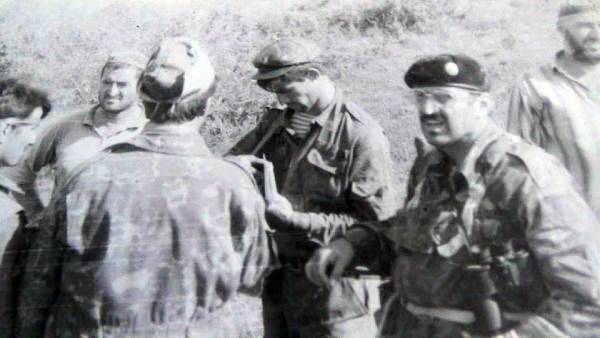
Native of the Varanda teip, he participated in the actions of the International Brigades during the Georgian – Abkhaz war, distinguishing himself for valor on numerous occasions, in particular during the Battle of Gagra (September 1992) and Sukhumi (September 1993). Wounded several times, after the war he returned to Chechnya, where he placed himself at the disposal of the nascent National Guard, operating in the Separate Battalion for Special Purposes “Borz”.

In November 1994 he participated in the operations to defend Grozny from the attack launched by Bislan Gantemirov’s forces. At the outbreak of the First Chechen War he mobilized his unit to defend Grozny, being wounded several times, until he lost an eye.

Umalt Dashaev with Khamzat Khankarov in Abkhazia

At the end of December 1994 he was sent by the Chief of Staff, Maskhadov, to defend the Khanakala airport from the federal troops who were about to occupy it. He led the Chechen contingent in the Battle of Khankala, during which, after being wounded several times, he died. According to the chronicles, he fought to his last breath against the attacking forces, earning the state award of Qoman Turpal (“Warrior of the Nation”).Riguardo la sua morte:

Eyewitnesses say that the seriously wounded Umalt Dashaev continued to lead his soldiers, urging them to conduct grenade launcher fire at Russian tanks. Umalt Dashaev was a born warrior, who did not know what fear is and was selflessly devoted to the ideas of freedom and independence of the Chechen people. From the first days of the beginning of the national liberation movement of the Chechen people, he took part in the hottest spots of the confrontation between Chechen soldiers and Russian mercenaries, destroying the enemies of the Chechen state. (Qoman Sij)

Umalt Dashaev with Shamil Basayev in Abkhazia, 1992

21/04/1996, La Morte di Dudaev – Estratto da “Libertà o Morte! Storia della Repubblica Cecena di Ichkeria”

il 21 Aprile 1996 Dhokhar Dudaev, primo Presidente della Repubblica Cecena di Ichkeria, fu assassinato dall’FSB. Nell’anniversario nel ventottesimo anniversario della sua morte, pubblichiamo un brano tratto dal secondo volume di “Libertà o Morte! Storia della Repubblica Cecena di Ichkeria” (Link)

Nell’aprile del 1996 i ceceni potevano dirsi vicini a raggiungere la vittoria: l’esercito federale era in piena crisi, ed Eltsin aveva un disperato bisogno di pace per vincere le elezioni presidenziali[1]. Le cancellerie europee, rimaste sul chi va là di fronte al “Piano di pace” presentato dal presidente russo, dopo aver inutilmente atteso l’avvio di negoziati tra le parti, erano tornate a tormentarlo con richieste pressanti di interrompere le azioni militari, lamentando la violazione della Convenzione di Ginevra e minacciando un ulteriore slittamento dell’accordo di partenariato tra Mosca e Bruxelles, che ormai languiva dalla primavera del 1994. La Commissione politica dell’Assemblea Parlamentare del Consiglio d’Europa aveva approvato un documento nel quale si diffidava la Russia a procedere alla immediata attuazione del piano di pace, o di qualsiasi altro piano specificando che qualsiasi soluzione negoziale avrebbe potuto avere successo soltanto se tutte le parti in conflitto, compreso Dudaev, vi partecipano. Il documento conteneva una condanna senza riserve delle violazioni dei diritti umani in Cecenia, commessi sia dalle truppe federali che dai combattenti ceceni. Riguardo al comportamento dei primi, la risoluzione riteneva inadeguato ed ingiustificato il massiccio ricorso alla forza da parte delle truppe di Mosca, e riconosceva che tali mezzi erano la prova tangibile del mancato rispetto da parte della Federazione Russa degli obblighi assunti col Consiglio d’Europa. Infine, proponeva la mediazione dell’OSCE in un negoziato che portasse alla ricomposizione del conflitto.  Il tempo giocava a favore di Dudaev, e presto o tardi i russi avrebbero dovuto scendere a patti con lui. Sempre che, ovviamente, non riuscissero ad ucciderlo prima.

Dzhokhar Dudaev

Fin dall’inizio delle ostilità l’FSK aveva investito ingenti risorse nel rintracciare il presidente ceceno. La prima azione per trovare ed arrestare Dudaev era stata messa in atto dal Procuratore Generale russo il 1° febbraio 1995 quando, all’indomani del fallito assalto a Grozny, la magistratura di Mosca aveva emesso un mandato d’arresto  a suo carico. Il suo caso includeva quattro capi d’accusa: tentativo di usurpare intenzionalmente il potere, sabotaggio delle attività del governo costituzionalmente eletto, incitamento pubblico ad azioni terroristiche e istigazione all’antagonismo nazionale sociale e religioso. L’FSK aveva promesso di prendere Dudaev nel giro di qualche giorno, ma non era riuscito neanche a capire dove potesse nascondersi. Alla fine di aprile era stata costituita una task force che individuasse Dudaev e lo prendesse, vivo o morto. Nel corso del 1995 i russi avevano tentato di eliminarlo quattro volte, ma il Generale non era mai caduto in trappola. L’aeronautica russa bombardava sistematicamente tutti i villaggi dove girava voce che si trovasse, senza mai riuscire a colpirlo. Il 21 aprile 1996, tuttavia, Dudaev commise un errore fatale. Il suo convoglio si trovava nei pressi del villaggio di Gekhi – Chu, diretto ad una vicina collina ben coperta dai boschi dove il Generale avrebbe dovuto intrattenere conversazioni telefoniche via satellite. Insieme a lui viaggiavano il suo assistente, Vakha Ibragimov, il Procuratore Militare Magomed Zhaniev ed il Rappresentante di Dudaev a Mosca, Chamid Kurbanov. Nel convoglio erano presenti anche sua moglie, Alla, ed un nutrito seguito di guardie. Mentre Dudaev stava parlando al telefono un aereo militare apparve dal cielo e lanciò un missile aria-terra che colpì con grande precisione l’auto sulla quale viaggiava. Da tre mesi i servizi segreti russi tentavano di triangolare la sua linea telefonica, utilizzando come riferimento un telefono dello stesso tipo che Salman Raduev aveva abbandonato a Pervomaiskoje. In altre quattro occasioni erano quasi riusciti ad individuare Dudaev, ma la repentina chiusura delle comunicazioni aveva impedito ai missili di intercettare in tempo il segnale, mancando il bersaglio. Il missile che fece centro quel fatidico 21 aprile era progettato per dirigersi verso una fonte radio, e non appena ne fu rilevata una (in quegli anni non erano molti i telefoni dotati di una simile tecnologia in Cecenia) puntò la sorgente. Per evitare questo genere di rischi Dudaev aveva stabilito che il suo assistente avrebbe dovuto cronometrare le conversazioni e, qualora queste superassero una certa durata avrebbe dovuto immediatamente chiuderle, anche contro il suo volere. Anche in questa occasione pare che Ibragimov avesse fatto scrupolosamente il suo dovere, interrompendo la conversazione dopo pochi minuti. Ma quel giorno erano previste due telefonate a distanza ravvicinata, il che permise ai servizi russi di non perdere il segnale. Inoltre il cavo dell’antenna si era rotto, costringendo Ibragimov a sistemarla direttamente sul tettino dell’auto. Per favorire l’individuazione del segnale, nelle settimane precedenti, le autorità federali avevano causato volontariamente una serie di blackout nella rete elettrica locale, spegnendo tutte le sorgenti radio e tracciando così la posizione del telefono. Il primo ad usare l’apparecchio fu Kurbanov, per leggere un comunicato. Subito dopo fu il turno di Dudaev, per una conversazione con il deputato russo Kostantin Borovoj. I due parlarono per tre o quattro minuti, poi la conversazione fu bruscamente interrotta dall’impatto del missile.

Commemorazione della morte di Dudaev sul luogo del suo omicidio, 1997

Dopo l’esplosione Alla Dudaeva, sbalzata in avanti dallo spostamento d’aria, corse al relitto fumante dell’auto, coperto di terra. Kurbanov e Zhaniev erano rimasti uccisi sul colpo mentre Ibragimov, che al momento dell’esplosione era in ginocchio davanti all’automobile, era stato sbalzato dall’esplosione ed era gravemente ferito. Dudaev giaceva poco lontano dalla macchina, coperto di terra e ferito superficialmente dalle schegge. Quando Alla prese la sua testa tra le mani, scoprì che dietro la nuca aveva una profonda ferita, che lo aveva ucciso sul colpo. Trasportato nel vicino villaggio, il suo corpo venne lavato e vestito di bianco. Alla avrebbe voluto seppellirlo in un cimitero, ma il mattino seguente l’aviazione federale bombardò tutti i cimiteri nei pressi del luogo dell’attacco, devastandoli. Così, per mantenere l’integrità del suo corpo, venne deciso di seppellirlo in un luogo nascosto, dove nessuno potesse trovarlo[2].  Una cerimonia pubblica fu comunque tenuta nel villaggio di Salazhi, alla presenza della maggior parte dei capi militari dell’esercito. Le esequie politiche del presidente furono tenute da Yandarbiev, il quale assunse ad interim i poteri di capo dello stato in qualità di Vicepresidente[3]. Parlando ai giornalisti, il braccio destro di Dudaev dichiarò: La morte del primo presidente ceceno non ha piegato il popolo, che è pronto a proseguire la sua battaglia per la libertà[4].

Morendo, Dzhokhar Dudaev lasciava un’eredità politica controversa. I suoi nemici lo avevano descritto come un dittatore attaccato al potere e responsabile delle peggiori atrocità. Dudaev fu più volte accusato di contrabbandare armi e petrolio, di alimentare attività finanziarie illegali. In molti paesi dell’Europa Orientale, come l’Estonia, fu invece considerato un eroe, al punto che gli furono dedicate strade, piazze e targhe. Nei paesi che avevano fatto parte dell’Unione Sovietica, e che avevano subito particolarmente la pervasiva presenza russa, il suo sacrificio fu pianto da molti: soprattutto in Ucraina, la notizia della sua morte fu accompagnata da manifestazioni di lutto pubblico. Perfino in Russia ci fu chi lo pianse: il 24 Aprile, tre giorni dopo la sua morte, fu fatto circolare un necrologio firmato dal Consiglio di Coordinamento del partito dell’Unione Democratica, nel quale si leggeva: Esprimiamo le nostre più sentite condoglianze al governo della Repubblica cecena di Ichkeria e al popolo ceceno in occasione della tragica morte del presidente di Ichkeria, Dzhokhar Musaevich Dudayev. Il suo nome rimarrà per sempre nella storia tra i nomi dei grandi combattenti per la liberazione nazionale dei popoli. Ricordiamo il suo dignitoso rifiuto di prendere parte alle repressioni contro il popolo estone nel 1991. Non abbiamo dubbi che la giusta lotta di liberazione nazionale del popolo ceceno non si estinguerà finché almeno un invasore calpesterà la terra di Ichkeria. Gloria all’eroe della resistenza cecena!

Per parte sua, Eltsin, che in quei giorni si trovava a Khabarovsk ed era in partenza per una visita a Pechino, commentò: Con o senza Dudaev, faremo comunque finire tutto in Cecenia con la Pace. Gli abbiamo proposto più volte di metterci al tavolo negoziale, ma lui ha voluto la guerra. Ebbene, la guerra non ci sarà più. Se l’uomo è morto, pazienza. […][5].

 Chi fu, dunque, l’uomo che tenne in pugno il destino del popolo ceceno, che lo guidò all’indipendenza e poi lo trascinò nella catastrofe? Valery Tyshkov nel suo “Chechnya: Life in a War – Torn society” scrive: “Per comprendere l’emergere dei leader nel periodo post – sovietico è necessario affrontare le seguenti domande: come è nata una nuova generazione di “leader nazionali” dalla liberalizzazione? In che modo la popolazione post – sovietica li percepiva, e perché le masse seguivano tali leader? Su questa domanda ci concentreremo più da vicino, poiché l’impatto del ruolo di leader di Dudaev nel determinare gli eventi in Cecenia non può essere sopravvalutato. Un’idea comunemente sentita nel discorso accademico e pubblico della Russia è che quando le civiltà sono in conflitto, nel corso naturale delle cose, i gruppi etnici o i popoli, di cui sono composte, assumono leader che esprimono la loro volontà collettiva di realizzare un obiettivo storicamente predestinato. In altre parole, se Dudaev non fosse salito al potere, lo avrebbe fatto qualcun altro e tutto sarebbe andato in modo simile. Come ha osservato l’ex compagno di servizio di Dudaev, A.N. Osipenko, “Non fu lui a scegliere l’idea nazionale, fu quell’idea a scegliere lui”. […] Raramente è ammesso che un leader crei, o almeno influenzi in modo significativo il cosiddetto “movimento rivoluzionario” da solo. In realtà, il quadro è molto più complicato.” Dudaev si contese la leadership della Cecenia con personaggi che per molti versi erano più avvezzi di lui alla lotta per il potere. Politici come Zavgaev e Khasbulatov, personaggi pubblici come Hadjiev, sapevano come gestire il consenso, come divincolarsi tra le pieghe della volubile opinione pubblica, possedevano ottimi agganci ed avevano accesso a grandi capitali. Eppure fu lui, e non gli altri, a dirigere il gioco fin dalla sua discesa nell’arena. Se non avesse accettato l’invito a prendere le redini del fronte nazionalista, quest’ultimo non sarebbe stato in grado di percorrere lo stesso sentiero, e probabilmente la Repubblica Cecena di Ichkeria non sarebbe mai esistita. Dudaev seppe fare politica e seppe costruire un solido consenso intorno alla sua figura, seppe polarizzare le passioni di un popolo in cerca di riscatto e libertà sovrapponendo a queste due parole il suo volto[6]. A differenza di tutti gli altri, Dudaev seppe far sognare le masse. Se Zavgaev cercò di comprarsele col clientelismo, e Khasbulatov cercò di conquistarle con l’assennatezza dei suoi discorsi, Dudaev seppe far loro immaginare un futuro. E poco importa se nel pratico si dimostrasse una persona poco adatta all’amministrazione dello stato: era un leader visionario che proiettava tutto intorno a sé un’aura di eroismo, una padronanza di sé, la consapevolezza di essere il condottiero del suo popolo[7]. E questo, alla fine, era quello che la maggior parte dei ceceni si aspettava da lui. Alla sua morte egli fu oggetto di una vera e propria venerazione collettiva, e la notizia della sua dipartita fu presa da molti come falsa, tanto che il plenipotenziario di negoziati del governo, Yarikhanov, dovette fare una dichiarazione pubblica per confermarne il decesso[8], e lo stesso dovettero fare Maskhadov e Basayev, apparendo pubblicamente sul “canale presidenziale”[9]. Ciononostante molti ceceni continuarono a rifiutarsi di credere che Dudaev fosse davvero morto, incoraggiati dalle parole del genero Salman Raduev (il quale giurò sul Corano che fosse ancora vivo) nonché di altri personaggi che facevano parte della sua cerchia ristretta[10], ma anche dallo stesso scetticismo di alcuni alti ufficiali russi[11]. Inizialmente, infatti, le autorità militari russe in Cecenia negarono di aver portato a termine un’azione volta ad uccidere il presidente ceceno, anche se i giornali riportarono svariate “fughe di notizie” dal quartier generale, secondo le quali l’eliminazione di Dudaev fosse uno degli obiettivi primari dell’intelligence del Cremlino[12].

Dare un giudizio di merito su Dzhokhar Dudaev non è facile, e forse non è neanche così utile. Chi lo vide come un capo fu ispirato dalla sua figura, e nel suo nome combatté e morì. Chi lo vide come un tiranno fece di tutto per abbatterlo. Sicuramente fu un leader capace di mobilitare il popolo ceceno come nessun altro aveva mai fatto dai tempi dell’Imam Shamil. Fu un uomo coraggioso, che abbandonò la prospettiva di una lunga e rispettata vecchiaia da illustre graduato dell’esercito per combattere la sua battaglia ideale. Fu anche un abile stratega sul campo di battaglia: sfidò la Russia con un esercito di volontari e riuscì ad umiliare il prestigio di uno degli eserciti più potenti del pianeta. Per contro fu un pessimo amministratore, ed un miope negoziatore politico. La sua riluttanza a scendere a qualsiasi compromesso, se pure rese la sua figura affascinante e romantica, condusse il paese alla distruzione. La sua scelta di gettare la sua patria nel carnaio della guerra totale provocò al suo popolo immani lutti e sofferenze, il suo supporto indiretto alle azioni terroristiche lo portò a sdoganare una tattica militare odiosa, che alienò ai ceceni la simpatia del mondo occidentale.

La morte di Dudaev lasciò un vuoto incolmabile. Per quanto questi avesse da tempo organizzato la successione del potere in caso di sua dipartita, non c’era nessuno in grado di ereditare il peso politico della sua persona. Soltanto grazie a lui le numerose e composite anime dell’indipendentismo ceceno erano rimaste unite sotto la bandiera della ChRI evitando, per il momento, l’esplodere di una guerra tra bande. Il numero 2 del regime, Zelimkhan Yandarbiev, era pronto a farsi carico delle sue responsabilità, ma il suo compito non era facile. L’indipendentismo aveva sempre avuto un solo eroe, e adesso questo eroe era morto. La Repubblica Cecena di Ichkeria non aveva più il suo punto di riferimento e rischiava di spaccarsi in una galassia di piccoli potentati in guerra per la successione al potere. A complicare le cose giunse l’annuncio, falso, da parte del governo Zavgaev che lo stesso Yandarbiev era stato ucciso. Ci vollero alcuni giorni prima che fosse chiaro che a cadere non era stato il Vice – Presidente, ma un suo nipote, e nel frattempo i media specularono su chi avrebbe dovuto raccogliere il suo testimone, ipotizzando addirittura una guerra civile tra le forze indipendentiste[13]. Quando l’equivoco fu ufficialmente chiarito, Yandarbiev si mise all’opera, prima di tutto per ottenere la lealtà dei principali comandanti sul campo. Maskhadov, Basayev, Gelayev, Alikhadziev, Atgeriev, tutti i principali leader della resistenza riconobbero il suo primato politico, in attesa che la fine della guerra portasse ad una ridefinizione dei rapporti di potere[14]. D’altra parte la nomina di un capo era fondamentale: la morte di Dudaev, per quanto tragica, rimuoveva il principale ostacolo all’apertura di un canale diplomatico con le autorità russe. Non che fossero in molti a credere ad una soluzione negoziale della guerra: i militari russi temevano che un’altra tregua avrebbe nuovamente avvantaggiato i ceceni, permettendo loro di ricompattarsi e di lanciare una nuova ondata di attacchi. I comandanti sul campo ceceni, dal canto loro, non si aspettavano niente, considerato com’era andata fino ad allora. Il capo del governo filorusso, Zavgaev, non aveva alcuna intenzione di parteciparvi, essendo intenzionato a capitalizzare il massimo risultato politico derivante dalla morte del suo avversario. In concomitanza con la morte del generale rispolverò addirittura il Congresso del Popolo Ceceno, indicendone un’assemblea straordinaria. L’evento vide la partecipazione di 400 delegati, reclutati tra i rappresentanti delle comunità favorevoli ad un accordo con la Russia. Davanti a loro, Zavgaev chiese ed ottenne il mandato per l’organizzazione di nuove elezioni parlamentari, tramite le quali consolidare la propria posizione e disfarsi, almeno in parte, dell’ingombrante supporto derivante dalla nomina d’imperio ottenuta da Mosca nell’autunno dell’anno precedente. In quell’occasione, una voce si levò contro il “Capo della Repubblica”: quella dell’ex sindaco di Grozny (ora Vice Primo Ministro) Bislan Gantamirov. Intervenuto all’assemblea, si dichiarò insoddisfatto del lavoro di Zavgaev, sostenne che la sua figura non avrebbe facilitato il processo di pace e si dissociò dalla sua politica collaborazionista. Come vedremo, questa posizione gli sarebbe costata cara.


[1] A metà Aprile il governo russo sembrava intenzionato a riprendere i colloqui con Dudaev. Secondo quanto riferito da Kommersant il 18 Aprile 1996, Eltsin aveva dato mandato al Ministro per le Nazionalità, Mikhailov ed al Consigliere Presidenziale Emil Pain di riattivare i contatti, negoziando il ritiro delle forze federali e la normalizzazione della Cecenia. All’iniziativa, ancora informale, aveva fatto eco la dichiarazione pubblica del Ministro della Giustizia russo, Valentin Kovaljov, il quale aveva ventilato il ritiro delle accuse formali a Dudaev a seconda dell’esito dei colloqui, segno evidente che la leadership del Cremlino era disponibile ad accomodarsi pur di presentare all’opinione pubblica un piano di pace credibile. Per parte sua Dudaev aveva chiesto l’intervento quali mediatori del Presidente della Turchia, o del Re di Giordania, dando a intendere di essere disposto a raggiungere un accordo di massima con Mosca.

[2] Pochissimi sanno ancora oggi dove si trovi la sua tomba. Certamente ne fu a conoscenza il Vicepresidente, Zelimkhan Yandarbiev, che dopo la sua morte assunse la carica di Presidente ad interim. In un’intervista rilasciata a Peter Grokhmalski nel Luglio del 1996 disse: Il mondo intero vede il comportamento degli aggressori russi. Niente è sacro per loro. Non vogliamo che profanino i resti di Dudaev. Un ceceno che si fa beffe del corpo del suo nemico, che tortura un prigioniero, cade in disgrazia. Per i russi, questo è motivo di orgoglio. Pertanto, oltre a me, solo poche persone conoscono il luogo di sepoltura di Dudaev.

[3] In realtà, secondo quanto riporta Ilyas Akhmadov in The Chechen Struggle, al momento della morte di Dudaev non esisteva, o non era più reperibile, un decreto legittimo che attestasse la nomina di Yandarbiev alla carica di Vicepresidente. Secondo quanto raccontato dall’autore, quindi, venne redatto un provvedimento predatato per  legittimare il passaggio dei poteri.

[4] La Repubblica, edizione del 25/04/1996.

[5] La Repubblica, edizione del 25/04/1996.

[6] Un contadino di Vedeno di 18 anni, intervistato sul suo rapporto con la figura di Dudaev, raccontò: “Quando Dudaev salì al potere ero studente di una scuola islamica. Il nostro insegnante ci disse che Dudaev era stato mandato dal cielo, che il suo vero nome era Dzhovkhar (“Perle” in ceceno) e che il suo avvento era stato predetto dall’antica tradizione. In quel momento si svolgevano molti raduni e tutti urlavano “Allah Akhbar”. Poi abbiamo iniziato a scandire “Dzhovkhar! Dzhovkhar!”. Anche il nostro insegnante, che era il Mullah della nostra scuola, venne alle manifestazioni. Quando gli ho chiesto chi fossero i nostri nemici, ha risposto “gli infedeli”. Ha anche detto che in un sogno aveva visto Dudaev scendere dal cielo su delle ali. Disse: “Con un leader del genere siamo invincibili!”. Tutto ciò di cui la gente parlava sempre più spesso era la guerra. E anch’io volevo andare in guerra.” Una ragazza cecena, ricordando il giorno della sua nomina a Presidente, riferì: WRicordo il giorno dell’investitura di Dudaev. […] Ha prestato giuramento al teatro e poi è andato al palazzo del governo in mezzo alla gente, una folla enorme. E’ stato straordinario, ho sentito che stava succedendo qualcosa di importante. Non posso dire di essermi votata a Dudaev proprio in quel momento, ma da allora qualcosa è cambiato in me. Era così bello nella sua splendida divisa da generale! Ho detto agli amici: “Andiamo a vederlo, non ci perdoneremo mai di non averlo fatto se ce lo perdiamo!”

[7] Sempre citando Tyshkov: Dudaev era il tipico carismatico “non sistemico” il cui potere risiedeva nella concezione di progetti irrealizzabili […] nell’ignorare soluzioni ai problemi pratici. Come scrive M.A. Sivertsev “Il leader carismatico che cerca una risposta alle sfide di un tempo di transizione e instabile deve affrontarlo in un orizzonte visionario: deve ripristinare i legami di lunga durata con le basi idealizzate della vita. Questa capacità (il suo carisma) di ripristinare l’esperienza sacrale conferisce al leader la legittimazione delle sue azioni. Il suo malfunzionamento e le sue insignificanti carenze nella sfera formalizzata – razionale sono perdonati e persino considerati come un’ulteriore prova di forza carismatica […].” Rivolgendosi ai miti della lotta e della vittoria, all’animosità e alla vendetta, il leader carismatico modella le percezioni dei suoi seguaci e da quel successo la sua immagine eroica personale acquisisce la necessaria stabilità. Quindi, costruisce una sottocultura chiusa che sviluppa la propria lingua, il proprio codice e le proprie pratiche, con connessioni minime verso il mondo esterno.

[8] Secondo quanto riferito da Kommersant, il 23 Aprile Yarikhanov dichiarò alla ITAR – TASS: Dudaev è stato ucciso, non c’è dubbio. Insieme a Dudaev, sono state uccise diverse persone della sua cerchia ristretta, incluso il suo assistente Vakha Ibragimov, così come il Procuratore Militare Magomed Zhaniev. In realtà Ibragimov non era morto, ma giaceva in condizioni critiche in un letto d’ospedale. Si sarebbe ripreso nel giro di qualche mese, tornando a partecipare alla vita politica della Repubblica una volta finita la guerra, tra le file dei nazionalisti radicali.

[9] Il canale televisivo presidenziale era una trasmissione prodotta da una rete di emittenti artigianali gestite dai sostenitori dell’indipendenza. Trasmetteva principalmente dai centri a Sud di Grozny, ed era in grado di rendersi visibile nella capitale ed in buona parte del Sud del paese.

[10] Interrogato sull’argomento, il segretario personale di Dudaev, Sapuddin Khasanov, dichiarò che Dudaev stava lavorando normalmente e che le voci sul suo assassinio erano totalmente infondate.

[11] Secondo quanto riporta Kommersant del 25/04/1996 il Presidente del Comitato per la Sicurezza della Duma, Viktor Iluychin, affermò di essere disposto a credere alla morte di Dudaev soltanto dopo che il suo presunto cadavere fosse stato riesumato, mentre lo stesso comandante in capo delle forze federali in Cecenia, Tikhomirov, dichiarò che le truppe di Mosca non avevano assolutamente niente a che fare con la morte di Dudaev, contraddicendo la versione ufficiale, secondo la quale il presidente ceceno sarebbe caduto vittima di un attacco missilistico. D’altra parte altri alti ufficiali dell’esercito confermavano la presenza di cacciabombardieri a Sud di Urus – Martan, intenti ad attaccare bersagli in ricerca libera come rappresaglia per i recenti attacchi ceceni alle colonne russe.

[12] Secondo quanto riportato da La Repubblica del 25/04/1996: «l’azione punitiva» è stata finalmente rivendicata da un rappresentante altolocato del ministero dell’Interno.Ci siamo vendicati per l’agguato ad una colonna di automezzi russi che ha provocato la morte di decine di soldati e ufficiali” ha detto, e “abbiamo distrutto a colpi dì missili sette sedi segrete di Dudaev di cui sapevamo l’ubicazione”. Una di quelle sedi si trovava a Ghekhi-Chu dove è stato centrato il bersaglio principale. Fonti dei servizi segreti a Groznij sono state ancora più esplicite: “Si è trattato di un quinto tentativo, stavolta riuscito, nei giro degli ultimi 2-3 mesi”.

[13] Sul Kommersant del 30/04/1996 appare un lungo articolo che specula sull’ipotesi di uno “scisma” tra Maskhadov e Basayev. In quel frangente la versione del quotidiano russo fu prontamente smentita dai protagonisti, ma il confronto tra i due si sarebbe consumato davvero, pochi anni più tardi, portando la Repubblica ad un passo dall’autodistruzione. Molto probabilmente in quel momento, nel pieno del conflitto, più che di “scisma” si poteva parlare di “concorrenza”. Riportando le parole usate da Ilyas Akhmadov in una delle nostre conversazioni: Sfiducia” è una parola troppo forte per descrivere la loro relazione in quel momento. C’era sicuramente una certa concorrenza tra loro però. Non era pubblicamente riconosciuto, solo coloro che erano nei circoli privati di Basayev e Maskhadov erano a conoscenza. Alla fine, i due hanno lavorato insieme meravigliosamente. Ci sono stati anche alcuni disaccordi sugli incaricati di Maskhadov . Maskhadov è venuto nella regione natale di Shamil e stava nominando delle persone. Ma durante la guerra c’era una legge non scritta secondo cui un comandante, quando si trovava nella sua regione d’origine, era il principale responsabile. […].Ma come ho detto, a parte poche persone, la competizione tra Shamil e Maskhadov era quasi invisibile agli occhi del pubblico. […] A quel tempo, la tensione tra Shamil e Maskhadov non era grande. Era divertente, a volte quando Shamil voleva dire qualcosa a Maskhadov me lo diceva e viceversa. […] È possibile che nel tempo la competizione abbia portato a disaccordi molto più pubblici durante le elezioni. Ma durante la guerra, sebbene avessero alcuni disaccordi, erano più personali e non divennero un problema pubblico.

[14] Tale decisione fu assunta dal consesso dei comandanti militari in una riunione straordinaria del Comitato per la Difesa dello Stato (GKO) tenutasi a Roshni – Chu subito dopo la morte del presidente ceceno, durante la quale venne avanzata anche l’ipotesi di nominare Maskhadov al posto di Yandarbiev, considerato il contesto bellico nel quale la successione avrebbe dovuto svolgersi. Maskhadov tuttavia rifiutò, invitando i convenuti a rispettare quanto previsto dalla Costituzione.

WHERE IS CHECHNYA GOING? POLITICAL REFLECTIONS BY DZHOKHAR DUDAYEV (PART 3)

Do you know what basic conditions were constantly and ambiguously put forward by the West in almost all negotiations with state leaders of the USSR in 1989 – 1991, when it came to providing credit and charitable assistance, and this was not publicized in the Union press? Yes, the creation of that very financial oligarchy (5-10% of the population), capable of controlling up to 60% of the country’s total potential, with the guaranteed establishment of the institution of private property and protection of large-scale foreign investments and foreign property!

Then, strangely enough, the first to realize it and tried to take it into account, albeit limitedly. N.Nazarbayev, but M.Gorbachev for a long time was floundering and hesitated, grasping for various alternatives that were saving in his opinion, but miraculous, as it turned out later, until the whole feud with GKChP broke out, mainly because of irreconcilable differences of opinion among his entourage….

As long as the society reforming towards collegial privatcapitalism does not decisively overcome the transition stage of non-authoritarian state capitalism, which is dangerous because of its instability and centrifugal forces, chaos, crime, economic collapse and general ungovernability in public spheres may reach its peak, followed by monstrous armed conflicts and historically irreversible processes. The example of the collapse of the USSR, the “critical boiling points” in Russia and the CIS countries, and, thank God, only sensitive echoes in the Chechen Republic serve as impressive proof of this.

Dzhokhar Dudaev

Back then, in 1984, nothing seemed to foreshadow that such a powerful empire could collapse in such a short period of time by historical standards. And only the highest echelons of power were aware of the fact that the cumbersome and non-adaptive to the ever-increasing demands of the country’s economy management system was failing more and more catastrophically every year, its “slippages” were throwing the USSR further and further away from the advanced countries of the capitalist world in terms of economic development. The “cosmetic repairs” of the state apparatus did not save it, nor did the desperate reshuffling of personnel in it produce any results. That is why, finally, M. Gorbachev, relying on the brave and radical wing of his entourage, decided to reform the state structure. The general public is well aware of the deplorable results of the experiment for the President of the USSR. But what was M. Gorbachev’s mistake, why did he fail to skip the dangerous stage of non-authoritarian state capitalism, even introducing elements of private property and legalizing entrepreneurial activity? Were the centrifugal forces so strong, and the aspirants to the future “financial aces” were still just playing “nursery cooperatives”? Yes, probably. But this was not the only factor.

If one imagines authoritarian state capitalism in the form of the famous Ostankino TV tower, the stability of which is created by the extremely tight steel rope running through it, then the “cable of political stability” of the former USSR consisted of many strands of “unfreedoms” that created the necessary strength. In his attempt to throw the rope bridge from the “top of the Soviet system” to the “Western model”, M. Gorbachev weakened to a greater or lesser extent many of the steel strings, such as freedom of speech, press, information, expression of will, national self-expression…. and even entrepreneurial activity, while leaving the “inviolable” but coveted private property 100% tightened. And while the West was feverishly winding some ropes on its “bay of democracy”, the construction of the Soviet tower staggered and collapsed. The ropes that had already been thrown over did not help; they sagged and plunged us all into the swamp of collegial state capitalism.

The main and also fatal mistake of M. Gorbachev (if only this ERROR!?), was in the FOLLOWING loosening of the strings stretched on the “soviet fingerboard”. The example of “communist China” is clear evidence of this. They do the opposite there and apparently play the “guitar of economic reforms” quite well.

WHAT is the fate of the Russian Federation now? Will “Yeltsin’s sappers” be able to overcome the unfortunate”minefield”for the Union, or is the explosion imminent? Or maybe “Khasbulatov’s” frightened parliament will be able to pull everything back to more familiar circles? What if it all comes back to bite us in Chechnya? Nowadays, few people probably remember the December 1991 speech of Boris Yeltsin. His program speech, made on the 28th after the famous Belovezhskoe deed, although it was verified in parliamentary language and slightly diplomatically veiled for potential Russian tycoons, shone a long-awaited green light as a signal for the most active actions, as an indulgence for the ideals of private property. Behind it stood the little-known fact that the current processes in the Russian Empire (USSR, CIS and the Russian Federation proper) were financed. And it was done by target purpose “under Yeltsin”, who unlike M. Gorbachev, who was bluffing. He gave his consent to the West for the birth of the Russian Financial Oligarchy! International capital already then paid for the first stage, when a person who cannot swim is thrown into the water, seducing him with the pleasure of market relations, which can be obtained on an equal footing with others who have previously mastered swimming in the sea of capital. If he doesn’t drown at once and continues to swim, we will help him a little more, but if he goes to the bottom, we will always find another candidate. It makes no difference who will continue the line of M.Gorbachev and B.G.Yeltsin, be it L.Rutskoy or R.Khasbulatov, but they will not give up what they have, c’est la vie, but that is the logic of the powerful.


 Another, and by no means unimportant factor is the fact that Russia has significant healthy forces, high intellectual potential, desire and means to complete the radical reforms that have been initiated. That is, a complete set – Stimulus, Motive, Means and Power.

That is why, summarizing, we can say with great confidence that the young Moscow guild of capitalists, which is emerging and growing stronger day by day, coupled with a foreign armada of “associates”, together with Boris Yeltsin’s team, although rather shabby in battles, but resilient, will bring the matter to its logical conclusion.  What is in store for us? Will the mutant virus of the management tools of authoritarian state capitalism (last time in our country it had a variation under the name of “Soviet partam pa ratnoy”), which is stubbornly fighting for living space in the Parliament of the Chechen Republic, as well as in the Supreme Soviet of the Russian Federation, still give rise to incurable metastasis. After all, such a cancerous contagion inevitably dooms the representative bodies of the authorities to become a kind of “reanimated Chechen regional party committee”, taking over from its deceased predecessor the rudimentary functions of control, management and distribution in the sphere of production and consumption, and usurping the right of “the only connoisseur of the interests and problems of the people”.

MIkhail Gorbachev

So what should be our priorities? How, what forces and means should we use in the first place? These are not easy questions, but there are visible answers to them.

Let us first of all realize once and for all one simple axiom. Not a single Parliament of the world and not a single President, sitting in their palaces or residences and issuing only laws and decrees, have not fed a single nation or created commodity abundance for anyone in the history of the world. The welfare of their people is brought, usually by special initiative people (large organizers and entrepreneurs, businessmen and business scientists) who, thanks to their efforts, abilities and talent, often at their own expense and at their own risk and risk, create in society special mechanisms of social and state development, known to them alone and, at first, only understood by them, using as a creative driving force the factor of satisfying the interests of the largest and most productive part of the population. Exactly they, using the personal factor of Means, through the Motive of the attracted specialists, maximally include the factor of Interest of the Producer People, strengthening the factor of Power of the State, which in turn contributes to the next similar cycle, but already at a higher level. As a result, new jobs and guaranteed wages appear in the country, the share of “buy-and-sell” business begins to give way to creative and service business, etc. In short, it is what is called “economic recovery”, the main thing is to legally allow them to do it! And if we can’t do anything to help, it is important not to hinder it, shielding this saving layer of society from aggressive attacks of the “socialist virus” of equality without the rich and hatred of “bloodsuckers”.

That is why there is no more important task for us today than to create the most possible conditions for the intensive development of the business class, from which domestic Vainakh tycoons of financial and industrial capital will inevitably emerge, the future flagships of the Chechen ship, the guarantors of stability and prosperity of society. It is all the more urgent because, unfortunately, unlike Russia, no one will finance us. Believe me, to the great joy of the Metropolis and not without its handiwork, there are no countries in the world that at this stage would fill the empty niche of the Chechen financial oligarchy as an external friend. The vectors of geostrategic interests of Russia and those states that could actually do it are very different in their directions. The dominant Russian factor of Power and its known unpredictability leaves no one in doubt here. There is no alternative “adrenaline” for us today, and unfortunately there is no minimum necessary start-up capital. At one time we missed a very important moment when COUNCH could have made timid steps and prerequisites for the creation of oligarchic structures, but in the Parliament of the Chechen Republic we defeated the syndrome of the mental deficit acquired from the Bolsheviks. There were other missed opportunities. However, there is a deep conviction, based again on the laws and examples of social development, that the Vainakh people, having unlimited potential reserves, will be able to dispose of them rationally, that a part of the excessive willpower of the present Chechen population will necessarily transform into the missing factors and compensate for any emerging inhibitory moments on its way. And there is no other Alternative to this!

Finally, the last hot topic of discussion of the day is the legitimacy of the current form and content of the state structure of the Chechen Republic. This is a kind of self-branded tablecloth for our political cooks who are losers. Grief-experts of both the domestic and Moscow variety go to what extremes and grave extremes, looking for a speck in someone else’s eye. In order to prevent the “worm of doubt” about the legality of Chechnya from tormenting some people and to finally knock the labeled “trump card” out of the hands of others, the following clarifications are required. If we take a dialectical approach, then legal professionals know that a reference to any law of any country can always be challenged, whether on historical, legal, moral and ethical, or other aspects, due to the fact that jurisprudence is essentially eclectic, i.e. “no wisdom is simple enough”, since one can always find a counterargument to any argument if desired.

It is impossible to create any small-minded code of laws without explicit or implicit contradictions. Humanity has not yet developed a universally-identified, logically adequate and legally sterile language, like computer linguistics, free from such shortcomings. And then on the scales of the disputing parties, in principle, there will always be strong enough competent justifications in their favor, but the adoption of judicial, arbitration, socio-political or any other “legal” decision depends predominantly on the balance of forces and opinions in society, on the power and force positions of the disputing and verdict parties, finally, on the prevailing realities. This has always been the case everywhere, at any level, from the “village council” to the UN General Assembly,

Boris Eltsin

There is no doubt that Russia has not been able to “crush” us after the 1991 secession, but it is also indisputable that Chechnya has not yet won back its position in this dispute. Today we are like two tired wrestlers on the mat who, having entered the clinch, have taken a wait-and-see stance for the final victory throw. A difficult precarious balance for the country. But, remember that Unrecognized Permanent Reality tends to be legitimized sooner or later. It is only a question of time and stamina, and the effort to make it happen. Apparently, just as scientists pharmacists take a long time to reach the required prescription for a new and unexpected disease, our way of choosing the establishment and implementation of rationally effective public administration is also long. It is just that a sick person always wants to get well as soon as possible.


 Personally, I see us in collegial privatcapitalism, which, of course, has nationally distinctive features, and I am convinced that the Chechen state has not only a history, but also a real, “not banana” big future, all we need to do is to set the “good Gene Capital” free. If we don’t do it, others will do it.

In closing, I would like to remind you of one thing. Do not forget. The TRUTH is like an infinite mosaic panel consisting of innumerable pieces of “truths”. Truth is one, cognizance of all the immense depth of which, apparently, is not given to a mere mortal, to know it in its entirety is destined only to the Almighty Himself. We are destined to perceive only its separate fragments. Each individual has his own set of “truths”, from which he can make his own part of the canvas of truth. How much of it will he really display, of what components is it composed of, and what should they be? These and other similar questions, have not yet been identified in our society.But I believe in the collective Vainakh capabilities, in the Chechen Stimulus and Motive, capable of painting the necessary picture of the Truth, however small in size and large in number its components may be, because behind each of them stands our
Man with his priceless destiny

PEACE, TRANQUILITY AND PROSPERITY TO YOU ALL.

Where is Chechnya going? Political reflections by Dzhokhar Dudayev (part 2)

That is why the archaic for modern foreign political science linguistics terminology “good, honest, decent, fair”, etc. as applied to our new power structures does not have even approximately unambiguously identified semantic content, because a million people will give exactly a million different interpretations to it. For some reason, for example, when speaking about the performing skills of a musician, we use quite natural and characteristic definitions such as “talented” or “skillful”, but not at all “virtuous” or “crystal honest”. This, as they say, is from a different opera.

Why is it that in politics everything is put upside down and professionalism is advanced to the “good guy”? Any specialist is very jealous of dilettantish talks about the subtleties of his profession. In politics, strangely enough, everything is allowed.

If we give in to the verbal exercises and tempting enticements of the rather proliferated “elementary educated” and use as state-building material such abstracted criteria thrown by Satan himself, we will probably not build anything good…ANY community of people at all times is differentiated, and the real basis of its division is the multiplicity of human aspirations, principles of behavior, potentialities and influential moments. Integrating by one or another criteria into groups and categories, they constitute those real natural forces and movements in society. In this connection, it is probably worth recalling that the formation and development of the state, which is also true for any individual, is based on these four characteristic driving factors, conventionally named: STIMULUS, MOTIVE, POWER AND FACILITIES.

STIMULUS is usually understood as a value reflecting the vector sum of its components, such as all kinds of Interests, Desires, Feelings, etc. MOTIVE is a potential value integrating Intellect, Knowledge, Experience, Know-How, etc. Another vector value is POWER, which integrates Power and Strength. And finally, FACILITIES is another potential value, the components of which are Money, Resources, Funds, etc. Predominantly operating with such concepts, which are “political bricks, mortar, armature and concrete”, and not with dilettantish abstract ones – “honesty, decency” or even “competence”, will always help any statesman and not only him to get a sufficiently objective dialectically verified analytical picture of any socio-political processes, to have the basis that does not allow making inexcusable and irreparable mistakes of political nature. The tools used for dismantling and destruction, as a rule, are unsuitable for construction and creation. That is why all appeals to “reason, brotherhood, understanding, unity, consensus…” etc. are useless. Only those who will be able to satisfy the Stimulus of the people, using the Means through the Motive of specialists, will be able to increase the Power of the state.
 Further. Many people thought, and are still strongly convinced of it, that it is worth to adopt the external attributes of the so-called civilized democracies, i.e. to elect a Parliament, a President and a Constitutional Court, delegating there the “best” representatives of the people, and all problems are solved. This is a monstrous misconception, and in conditions of collegial state capitalism, which today is certainly not only the Chechen Republic, but also Russia, these institutions turn out to be nothing more than the well-known “Hottabych’s telephone!” Absolutely identical to the prototype in all externally visible parameters and banally completely empty inside, without the electronic and mechanical stuffing that makes the apparatus work. We think, i.e. “call”, that we govern, while the people live under the influence of their objective social laws of evolutionary development.

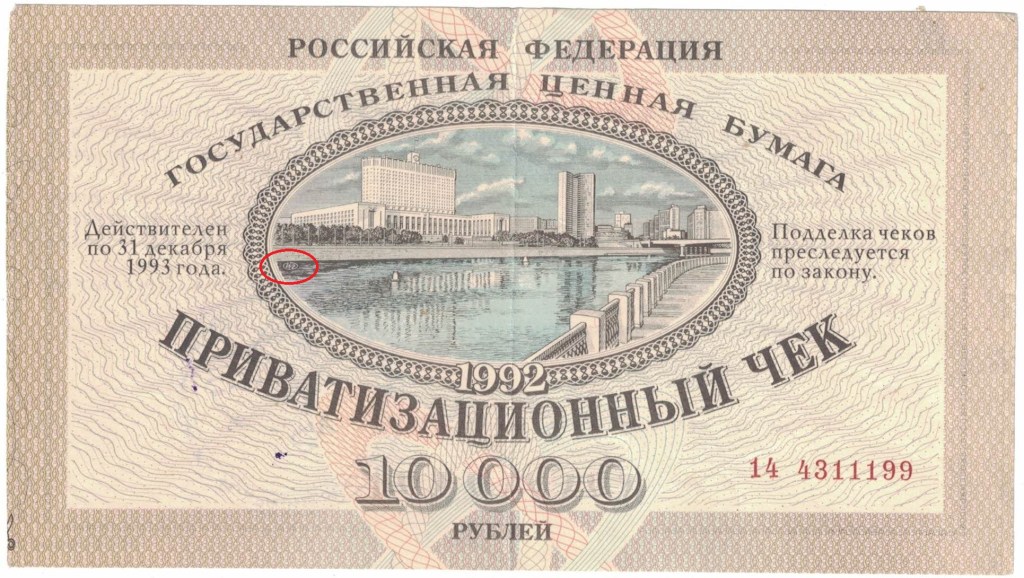
Photo of a voucher (privatization check, 1992) with an indication of the place where the monogram of the artist Igor Krylkov is located on the banknote (letters I and K in an oval).

Parliaments, Senates, Congresses, as a rule, are only a symbol of POWER in the hands of the explicit (authoritarianism) or implicit (non-authoritarianism) MASTER and, at best, serve as a laboratory practice for practicing the legislature set by the Master or giving legitimate form to his wishes.

As for the Presidential Structures, Cabinets or Councils of Ministers, other possible state bodies of executive power, they, as a rule, fulfill the function of these Wishes. Naturally, any form of state governance is characterized by a greater or lesser divergence in the directions of vectors of interests of the Master and the People. Except that in authoritarian state capitalism the change of the direction of the latter in its direction is performed by the Master mainly at the expense of the Power component of the Power factor, and in collegial private capitalism through the predominant use of the components of the Means factor. Unfortunately, and this is probably characteristic of most citizens of the former USSR, we are still in the deep captivity of nostalgic illusions about that executive power, which was exercised thanks to years of clearly defined totalitarian system, which had a wide range of appropriate tools: from fiscal bodies for suppression of dissent to institutions for “ideological straightening of brains”, from the stick to the carrot. Even the most ardent Western “anti-Sovietists” recognized at the time that totalitarianism ensured greater efficiency, discipline, and order. This is achieved, of course, at the expense of such characteristically dominant in authoritarian state capitalism worst components of the Stimulus, such as fear, fear, a sense of hopelessness, powerlessness, etc. Another question, of course, is what we have come to as a result of all this….

Let’s imagine hypothetically that the notorious Power overnight completely and completely passes into one hands: either the President, or the Parliament, or someone else. And let us be ruled by the ideal in each case, either presidential X. or the many-faced parliamentary Y, or nameless Z. What does this mean in practice? And that in this case all the national wealth, all the country’s resources and all its economic potential “falls under the monopoly of X. Y-a, or Z. That is, they will manage and distribute what they personally do not really own, but the owner – the people have very ephemeral economic rights! Together with the entire ministerial team, the governing echelon of the government can hardly constitute even one tenth of a percent of the population. But the psychology of behavior and programmed attitude of any manager – non-private co-owner, especially in the conditions of decline in economic production and deterioration of living standards of the poor part of the population, consists in instinctive efforts to keep the place under the sun by justifying the motives of their activities, referring to the difficulties of objective and subjective plan, as well as criticism of various formal and informal objects that create allegedly insurmountable problems. Remember N. Ryzhkov, V. Pavlov or T. Gaidar. V.Chernomyrdin is bound to follow this path.

Boris Eltsin

Naturally, and it is inherent in human nature, that the dissatisfied and offended, “who know better how the country should be run and what the people need”, necessarily starting with derogatory criticism, can move on to much more serious and active actions to “restore justice”. What is the response for the ruling elite? To tighten the screws? But this is a return to totalitarianism, from which they fled and have not yet had time to catch their breath. Make personnel reshuffles? Nothing will change significantly. Then the System itself must be replaced! But, as it seems, we changed it by dismantling the “unified party-parameter room” and creating a modernized one with “separate warheads”. This is where another stumbling block turned out to be. Having flown out at first in one “anti-imperial missile”, we ended up like those “swan, crayfish and pike”, with our spatially differently oriented vectors of Stimulus and Power, different baggage of Motive and Means.

Yes, sometimes power is divisible. And its rank gradation is possible both vertically and horizontally. But on a national scale, it always has pyramidal differentiation, strengthening from the base to the top. And two or even three pyramids in a country is a competition of authoritarian authorities. Reasonable peace or peaceful compromise in such unnatural conditions is nonsense. Artificial attempts of horizontal separation of powers, i.e. to make several Masters at the same time, is an objective doom for “family-economic” strife, which will continue until the unstable balance will not take its more natural stable state, peculiar only under one definite Master, until the divided pyramids will finally merge into one. Many people mistakenly see the antagonism of “divided powers” as a personal factor. Then imagine, for example, that we swapped places with the Chairman of the Parliament of the Chechen Republic. In half a year, if not sooner, having mastered and gotten up to speed, having been in a “different skin”, each of us will defend new positions, noticing a grain of sand in someone else’s eye and not seeing a log in our own. And there is nothing surprising or tragic in this, it is simply the natural nature of a person to defend the interests of a certain (“his”) group and category of people or, if you like, a part of society. I am sure that the same metamorphosis would have happened if B. Yeltsin and R. Khasbulatov had been swapped.

Former Soviet Parliament Chairman Ruslan Khasbulatov, seen here second-left in 1993

What then is the reason for stability in the collegial private capitalist camp? Is their “collective economy” quiet and smooth and God’s grace? Not at all. And here interests and motives may differ greatly, and various storms and tsunamis may occur. But in the world, where “the dominance of private property” rules, the communicative language of business invariably develops a mutually acceptable solution, which, having passed through “their” structures of power, is always implemented, as it is refined by the filter of economic expediency and the state Guarantor of Private capital. The only way of civilized solution to any conflict, which has been worked out for centuries, is to make it more profitable for the disputing parties to stop the conflict than to continue it. We have yet to master such methods.

Thus, implying a change of the System, in fact we have changed only its external Form, its Attributes. The System itself remained inviolable – state-capitalist! To finally dispel the last illusions about its viability, let us consider the question: “Will such a competitive government be able to effectively realize its management mission in the period of transition to market relations, so that the sheep would be safe and the wolves would be fed? What, in general, is its potential future, if neither M. Gorbachev and the Union Parliament, nor B. Yeltsin and the Supreme Soviet of the Russian Federation, nor other CIS republics have been able to do so so far – one does not need to go far for examples….

Libertà o morte! Storia della Repubblica Cecena di Ichkeria – Esce oggi il secondo volume in italiano

La guerra in Ucraina è iniziata in Cecenia. Può sembrare una provocazione. Eppure, questa è la realtà che rivelano le pagine di questo secondo volume, interamente dedicato alla Prima Guerra Russo – Cecena. Genesi, sviluppo e svolgimento di questo sanguinoso conflitto sembrano la bozza del copione cui il mondo sta assistendo in questi mesi tra il Donbass e la Crimea.

Anche allora, come oggi, la Russia invase uno stato libero, mascherando la guerra che stava scatenando dietro alla definizione di “operazione speciale”.

Anche allora, come oggi, il nemico dello stato russo era stato etichettato e demonizzato: se Zelensky ed il suo governo sono chiamati oggi “nazisti”, Dudaev ed i suoi ministri furono chiamati allora “banditi”.

Anche allora, come oggi, convinti della loro superiorità, i comandi militari marciarono sulla capitale, pretendendo di piegare un popolo alla loro volontà, come avevano fatto più volte in epoca sovietica. Ma anche allora, come oggi, furono costretti a ritirarsi, per poi scatenare una sanguinosa guerra totale, la più devastante guerra europea dal 1945.

La Prima Guerra Russo – Cecena fu il primo tragico prodotto del revanscismo russo: il “punto zero” di una parabola che da Grozny porta a Kiev, passando dalla Georgia, dalla Crimea, dalla Bielorussia e dal Donbass. Con una differenza sostanziale: che quella prima guerra contro la Cecenia, i russi, la persero. Le loro ambizioni imperiali, poggiate sulle fondamenta logore di un impero fatiscente, finirono frustrate dalla caparbietà di una nazione immensamente inferiore per numero e per mezzi, a quella che ucraina, che oggi difende la sua terra dalla guerra scatenata da Putin.

Questa storia può impartire a chi avrà la pazienza di leggerla due importanti lezioni: cosa succede quando si assecondano le ambizioni di un impero, e come si fa a sconfiggerlo. Se è già tardi per mettere in pratica la prima, per la seconda siamo ancora in tempo.

Acquista il volume qui:

FREEDOM SOLD OR WAR BOUGHT? – REFLECTIONS BY APTI BATALOV (part 1)

I believe I am not mistaken when I say that one of the tragedies of the Chechen people originated on the day when Chechnya proclaimed itself an independent state. After choosing the first president, the Chechens naively believed that Russia would respect their choice. After all, Yeltsin said “take all the freedom you can swallow!” The Chechens did not know that “Swallowing freedom” they would regurgitate their blood.

The conquest of freedom

The Russians did not recognize the presidential elections held on October 27, 1991 in Chechnya. Rejecting any possibility of peaceful separation from Chechnya, the Kremlin has focused on the definitive solution of the Chechen “problem”. In planning actions against Chechen sovereignty, it was obvious that the Russian government would prioritize provocative and subversive activities, and this was evident from the growing activity of pro-Russian provocateurs on the territory of Chechnya. Funded and armed by Moscow, the leaders of the “anti-Dudaevites” began to form criminal groups under the cover of political slogans, calling themselves “opposition of the Dudaev regime”. In reality, the ideologues of this movement were full-time agents of the Russian special services and, following the instructions of the Lubyanka , they caused a civil war in the Chechens. Through these ” Mankurts ” [1], in the first half of the 90s of the twentieth century, Chechnya was transformed into a land of internal contrasts and social instability. Having already gained political independence from Moscow, many officials who held high positions in the state did what they could to discredit the idea of independence. With their actions they compromised the government, corrupted it, doing everything to make the Chechens repent of their choice. Every day, these people desecrated the idea of a free and sovereign state, and achieved many successes in this action, furthering the premises of the 1994/1996 Russo-Chechen War.

However, one detail had not been taken into consideration: the war imposed by the Kremlin would have ignited the genetic memory of the Chechens. All the people, with rare exceptions, took up arms and stood up to defend that choice. Evidently, after receiving the order to intensify their activities, the Russian special services agents began to increase their efforts to destabilize the political, economic and social situation throughout the Ichkeria territory. By sowing discord among the leaders of the state, creating an atmosphere of mutual distrust and enmity in the relations between yesterday’s comrades, the Russian mercenaries achieved the objectives set by Moscow. Instead of rallying around the president, in this hard and difficult time for the fate of the Chechen nation, and exercising their authority to defend and strengthen the authority of Ichkeria, the leaders of the country faced each other in the political arena with every sort of intrigue, against each other, using their credit only for speculative and populist purposes. After withdrawing troops from Ichkeria in 1996, the Russians invaded it with their agents. Terrible times came for Ichkeria, banditry assumed the proportions of a national catastrophe, kidnapping and the slave trade became the profession of a significant part of the former freedom fighters, lack of work and poverty swelled the ranks of criminals.

Heroes yesterday, enemies today

Thus there was no effective authority in Ichkeria. The comrades in arms of the President of yesterday, having had the opportunity to strengthen it, did not do so, but rather, having become politicians, they were the real antagonists of the President, doing everything to weaken his power. On every occasion, and under various pretexts, his authority was undermined: not a day passed without some “emergency” directed against the President. At that time I was convinced that these antagonists wanted to break Maskhadov psychologically. Imagine the state in which a person subjected to daily torture can be, every day more sophisticated and insidious. One fine day, the President collapsed… all this turmoil around the presidency drove the people to despair, their faith in authority and yesterday’s heroes disappeared. Social inequality, the absence of any guarantee of security, corrupt authorities at all levels, poverty and devastation: the Chechen people faced the 1999 war in these conditions … With an economic blockade, political and information isolation in place, the Chechen leadership he had no way of adequately preparing for Russian aggression.

The signs that the Russians were preparing a new war against Ichkeria appeared as early as February – March 1999. In February 1999, a demonstration of many thousands of people was held in support of the President’s policy in the city of Dzhokhar [formerly Grozny, NDR ]. The participants in the demonstration approved and supported in unison Maskhadov, the foreign and internal policy he pursued, and expressed the desire and willingness to take up arms to restore order in the country. Two or three Russian journalists were present at this gathering, being able to work without any restrictions. They assured me that the Russian media would report the demonstration, but not a single TV channel mentioned it. On the other hand, Russian public opinion began to be influenced by the idea that Maskhadov was a weak and indecisive person, that he had lost the support of the people, that power in Ichkeria was in the hands of the field commanders, that banditry and the slave trade flourished in Ichkeria. Obviously it would be wrong to deny these claims, which were partly true, but that the people did not support Maskhadov, or that he was weak, that was an absolute lie. The Chechen people had responded to the President’s appeal, and were willing to defend him. But the Russian media hid this fact from their audience. As for the field commanders, most of them obeyed without question the President and Commander the Chief of the Armed Forces.

But, as they say, no family is without monsters. On the occasion of the second anniversary of the signing of the Peace Treaty between Ichkeria and Russia on May 12 , 1997, well-organized celebrations were held in the city of Dzhokhar: events were held in the city center, horse races were held on the outskirts of the capital, with prizes in prize money, including “VAZ” 6 car models. It was a bright and festive day, during which the Ichkeria leadership showed all its desire for peace with Russia. Once again, Russian TV reporters worked on the event, as always without restrictions. And once again the media did not say a single word about the fact that similar celebrations were held in the city of Dzhokhar. All of this suggested that there would be no celebration the following year.


[1] Figuratively speaking, the word ” mankurt ” refers to people who have lost touch with their ethnic homeland , who have forgotten their kinship . For further information: https://en.wikipedia.org/wiki/Mankurt

LA PACE PRECARIA – Il trattato di pace Russo – Ceceno

Il 12 Maggio 1997 la Repubblica Cecena di Ichkeria e la Federazione Russa firmarono un trattato di pace con il quale intendevano porre fine alla Prima Guerra Russo – Cecena. Nonostante che in esso la Russia riconoscesse De Jure la Repubblica Cecena di Ichkeria, le clausole contenute nell’accordo furono interpretate in maniera assai differente dalle due parti. Il diverso approccio tenuto da Mosca e da Grozny rispetto al Trattato di Pace avrebbe impedito la risoluzione pacifica del conflitto, e creato le premesse per una nuova guerra.

Il testo del trattato in inglese e in russo

IL TRATTATO DI MOSCA

Il 12 Maggio1997 la delegazione cecena, composta da Maskhadov, Ugudov e Zakayev raggiunse Mosca, dove procedette alla firma solenne del Trattato di Pace tra la Federazione Russa e la Repubblica Cecena di Ichkeria. La firma del Trattato fu un evento epocale: per la prima volta in quattrocento anni di guerre e tensioni il governo di Mosca e quello di Grozny si promettevano ufficialmente la pace. Vennero firmati due documenti: il primo si intitolava “Trattato di Pace e Principi di Relazione tra la Federazione Russa e la Repubblica Cecena di Ichkeria”, il secondo si chiamava “Accordo tra il governo della Federazione Russa e il governo della Repubblica Cecena di Ichkeria sulla cooperazione economica reciprocamente vantaggiosa e la preparazione delle condizioni per la conclusione di un trattato su vasta scala tra la Federazione Russa e la Repubblica Cecena di Ichkeria”. I due documenti, dagli altisonanti titoli, avrebbero dovuto essere la base giuridica sulla quale si sarebbero costruiti i rapporti tra Russia e Cecenia. Il “Trattato di Pace” iniziava con un epico preambolo riguardo la reciproca volontà di “[…] Porre fine al confronto secolare, cercando di stabilire relazioni forti, uguali e reciprocamente vantaggiose […]”. Un iniziò di tutto rispetto, dal quale ci si aspetterebbe un lungo ed articolato Trattato. E invece niente di questo. Il Documento si costituiva di cinque articoli, e soltanto tre contenevano qualcosa di politicamente rilevante. In essi Russia e Cecenia si impegnavano:

  • A rinunciare in modo permanente all’uso ed alla minaccia dell’uso della forza come forma di risoluzione di eventuali controversie;
  • A Costruire le loro relazioni conformemente ai principi ed alle norme generalmente riconosciuti dal diritto internazionale, e ad interagire in aree definite da accordi specifici;
  • A considerare il Trattato come base per la conclusione di qualsiasi altra negoziazione.

Di per sé le tre affermazioni possono essere considerate solide basi di negoziazione politica, ma a ben guardare si prestano a molteplici interpretazioni, come tutti gli altri “documenti”, “dichiarazioni” e “protocolli” firmati fino ad allora dalla marea di delegazioni che fin dal 1992 avevano cercato di trovare un accordo tra le parti. In particolare Maskhadov considerò il Trattato come il riconoscimento dell’Indipendenza cecena, dichiarando che la sua sottoscrizione apriva “Una nuova era politica per la Russia, il Caucaso e l’intero mondo musulmano”. Uno dei funzionari della politica estera cecena, delegato in Danimarca per conto della Repubblica Cecena di Ichkeria, Usman Ferzauli, quando venne inviato da Maskhadov a firmare le Convenzioni di Ginevra, dichiarò: “[…] La Russia, firmando nel maggio 1997 il Trattato di Pace con la Repubblica Cecena di Ichkeria di fatto ha riconosciuto la Repubblica. Abbiamo il diritto di considerarci un soggetto di diritto internazionale. […].”. Anche alcuni ricercatori internazionali, come Francis A. Boyle, professore presso il College Law dell’Università dell’Illinos, produssero ricerche giuridiche sul Trattato. Nella discussione di Boyle si legge: “L’elemento più importante del trattato è il suo titolo: “Trattato sulla pace e i principi delle interrelazioni tra la Federazione russa e l’Ichkeria della Repubblica cecena”

Maskhadov ed Eltsin si stringono la mano

IL PARERE FAVOREVOLE

Secondo i principi di base del diritto internazionale, un “trattato” è concluso tra due stati nazionali indipendenti. In altre parole, il CRI viene trattato dalla Federazione Russa come se fosse uno stato nazionale indipendente ai sensi del diritto e delle prassi internazionali. […] Allo stesso modo, l’uso del linguaggio “Trattato sui … principi di interrelazione” indica che la Russia sta trattando la CRI come uno stato nazionale indipendente anziché come un’unità componente della Federazione Russa. Normalmente, “i principi delle interrelazioni” tra uno stato federale come la Federazione Russa e un’unità componente sono determinati dalla Costituzione dello stato federale. Questo documento non dice nulla della Costituzione della Federazione Russa.  […]Certamente l’elemento più importante del titolo del Trattato è l’uso del termine “Repubblica Cecena di Ichkeria”. Questo è il nome preciso che il popolo ceceno e il governo ceceno hanno deciso di dare al loro stato nazionale indipendente. In altre parole, ancora una volta, la Federazione Russa ha fornito ai Ceceni il riconoscimento di fatto (anche se non ancora di diritto) come stato nazionale indipendente alle loro condizioni. […] L’articolo 1 del trattato è sostanzialmente in linea con il requisito dell’articolo 2, paragrafo 4 della Carta delle Nazioni Unite secondo cui gli Stati membri “si astengono dalle loro relazioni internazionali dalla minaccia o dall’uso della forza ….” Allo stesso modo, la Carta delle Nazioni Unite Articolo 2, paragrafo 3, impone agli Stati membri di “risolvere le loro controversie internazionali con mezzi pacifici ….” Quindi, con questo Trattato, la Federazione Russa ha formalmente riconosciuto il suo obbligo di trattare la CRI in conformità con questi due requisiti fondamentali della Carta delle Nazioni Unite. […] Il secondo articolo dell’accordo è estremamente importante: “Costruire le nostre relazioni corrispondenti ai principi e alle norme generalmente accettati del diritto internazionale …” Secondo la mia opinione professionale, l’unico modo in cui l’articolo 2 del presente trattato può essere correttamente letto alla luce di tutto ciò che è stato detto in precedenza nel suo testo è che la Federazione russa sta trattando l’IRC come se fosse di fatto (anche se non ancora de jure) stato nazionale indipendente ai sensi del diritto e delle prassi internazionali, con una propria personalità giuridica internazionale. Solo gli stati nazionali indipendenti sono soggetti ai “principi e norme generalmente accettati del diritto internazionale”.  […].”

Accordi di Khasavyurt: Maskhadov e Lebed si stringono la mano

IL PARERE CONTRARIO

Il governo Russo negò questa interpretazione, considerando l’assenza di qualsiasi affermazione chiara in merito. Rispetto a questo, negli anni successivi sarebbe sorto un lungo dibattito, il che già di per sé dimostra quanto generici fossero gli impegni assunti dalle parti e quanto poco chiaro fosse il documento in se. In una sua trattazione del tema, il ricercatore russo Andrei Babitski scrisse:

“L’essenza di questo documento è semplice. E’ solo un documento sulla cessazione delle operazioni militari. […] Non menziona la capitolazione da parte di nessuna delle parti, non proclama nessuno vincitore e non formula principi chiari per governare le relazioni tra Russia e Cecenia. La risposta a queste domande è stata rinviata. La cosa più importante era terminare la guerra.”.

Silvia Serravo, ricercatrice esperta in questioni caucasiche, specificò in un’intervista:

“Il documento contiene la possibilità di interpretazioni diverse. […] L’indipendenza della Cecenia non è stata riconosciuta. Tuttavia, il documento ha reso possibile, almeno per la parte cecena, interpretarlo come il riconoscimento da parte della Russia dell’indipendenza cecena. […] Il trattato può certamente essere considerato un risultato. […] Tuttavia si può sempre speculare sulla misura in cui le parti erano sincere quando fu firmato questo documento e se la conclusione del Trattato si basava su alcuni motivi fraudolenti.”

INDIPENDENZA “SOSPESA”

Il secondo documento, collaterale al primo, conteneva un altra generica serie di intese difficilmente realizzabili. In esso si definiva l’attuazione dei contenuti degli Accordi di Khasavyurt in fatto di ripristino dei servizi vitali per la popolazione civile, il regolare pagamento delle pensioni e degli stupendi pubblici da parte della Federazione Russa,  il pagamento di un risarcimento alle vittime dei combattimenti, la “piena attuazione del programma di ripristino del complesso socioeconomico” del paese, il rilascio di ostaggi e prigionieri, e lo scioglimento della Commissione Governativa congiunta riguardo alla gestione del periodo interbellico, contemporaneamente all’entrata in vigore del Governo uscito dalle Elezioni del Gennaio precedente.

Se il primo documento, come abbiamo visto, poteva lasciar pensare che la Russia volesse trattare la Cecenia come uno Stato indipendente, il secondo assomigliava molto ad un accordo interfederale tra una repubblica autonoma bisognosa di aiuto ed un governo centrale che intendeva corrisponderglielo. Particolarmente evidente era l’impegno, da parte di Mosca, di erogare gli stipendi pubblici dell’amministrazione cecena. Questo passo è fondamentale, perchè accettandolo Maskhadov riconobbe implicitamente l’autorità di Mosca di mantenere la struttura amministrativa della Cecenia esattamente come faceva ai tempi dell’Unione Sovietica. Non un solo accenno era previsto riguardo al riconoscimento, anche formale, all’indipendenza del paese. Il Trattato di Pace firmato da Maskhadov fu un documento utile ad accreditare lui presso l’opinione pubblica ma fallì nel rappresentare uno strumento diplomatico utile a risolvere alcunchè. Certamente pose ufficialmente fine alla guerra e ad ogni palese ingerenza del governo federale sulla politica interna del paese, ma niente oltre a questo.

Il Trattato non riconobbe in maniera inequivocabile l’indipendenza del paese, ma si limitò a stabilire gli strumenti tramite i quali i due stati avrebbero comunicato tra loro. Dette ampia libertà di interpretazione sia al governo ceceno, che vide in quelle poche righe un implicito riconoscimento da parte di Mosca, che al governo russo, che ci riconobbe esclusivamente l’impegno assunto a riportare su binari politici il conflitto. Sul momento comunque sia Maskhadov che Eltsin poterono dirsi soddisfatti: il primo tornava in patria con un trattato di pace tra le mani, qualcosa che i Ceceni non avevano mai visto in tutta la loro storia. Il secondo tirava un sospiro di sollievo e metteva un temporaneo tampone a quella emorragia di consensi che era stata la Prima Guerra Cecena.

La crisi istituzionale del 1993 – Russia e Cecenia a Confronto (Parte 1)

LA FINE DELLA PERESTROJKA

Agli inizi del 1993 il processo innescato dalla Perestrojka e proseguito col collasso dell’URSS poteva dirsi completo. In ogni ex repubblica sovietica il comunismo era stato travolto ed il regime a partito unico era stato sostituito da sistemi democratici. Si trattava di governi giovani, instabili, nei quali alle istituzioni parlamentari si contrapponeva l’autoritarismo dei leader che le avevano create. Esattamente come stava succedendo in Cecenia, dove la straripante figura del Generale Dudaev veniva a stento contenuta dal Parlamento, anche in Bielorussia, Georgia, Armenia, Azerbaijan e nella stessa Russia si innescarono conflitti istituzionali. I risultati furono di due tipi: dove vinse la corrente parlamentare si instaurarono democrazie di stampo occidentale. Dove invece vinsero i leader nazionalpopolari nacquero repubbliche dalla spiccata vocazione presidenziale o regimi semi – dittatoriali. Sia in Russia che in Cecenia l’evoluzione del conflitto avrebbe portato al medesimo epilogo.

In Cecenia Dudaev si trovava sempre più isolato. I suoi sostenitori, per la maggior parte componenti dell’entourage presidenziale e nazionalisti del VDP, si arroccavano a difesa di posizioni radicali, in contrasto con la propensione al compromesso dei nazionalisti moderati. Una crescente opposizione extraparlamentare, poi, rifiutava di partecipare alla vita politica. In Russia la situazione non era molto diversa: le politiche del governo Gaidar erano in pieno svolgimento e presentavano ai russi un conto salatissimo. Nel corso del 1992 il PIL del paese era franato del 14,5%, e le stime per il 1993 non lasciavano sperare in meglio. La crisi economica aveva lasciato sul lastrico metà della popolazione. Tutti i comparti della spesa pubblica erano stati tagliati, a cominciare dai sussidi sociali, dal sistema sanitario, e ovviamente dall’esercito, ridotto all’ombra di sé stesso. La terapia d’urto stava costando ad Eltsin un vistoso calo di consensi, e gli aveva ormai allontanato il supporto del Presidente del Soviet Supremo, il già citato politico ceceno Ruslan Khasbulatov. Questi, inizialmente vicino alle posizioni del presidente, soprattutto nei giorni confusi del Putsch di Agosto, si era allineato su posizioni socialdemocratiche, critiche verso il liberismo di Gaidar. Intorno a lui la maggioranza dei deputati del Soviet aveva aderito a correnti, movimenti e partiti favorevoli ad una moderazione delle politiche governative.

Ruslan Khasbulatov

La strada per una “controrivoluzione liberale” sembrava aperta, e passava prima di tutto dalla abrogazione dei poteri d’emergenza che Eltsin aveva chiesto ed ottenuto per attuare la sua manovra “lacrime e sangue”, i quali sarebbero scaduti naturalmente entro la fine del 1992. Il Presidente ne chiedeva il prolungamento, ma questa richiesta cozzava con le intenzioni di buona parte dei deputati ostili al governo Gaidar e con quelle di Khasbulatov, che quei poteri voleva revocarli quanto prima. Pertanto la richiesta di Eltsin sbatté contro il rifiuto del Congresso che, anzi, il 9 dicembre 1992 sfiduciò Gaidar dalla guida dell’esecutivo. Al pari di quanto stava succedendo in Cecenia, anche in Russia il potere presidenziale, fautore di una politica radicale, si scontrava con quello parlamentare, intenzionato a difendere l’ordinamento costituzionale.

ELTSIN CONTRO KHASBULATOV

La reazione di Eltsin non si fece attendere, ed il 10 dicembre il Presidente tenne un rabbioso discorso, accusando il Soviet Supremo di voler sabotare le riforme e riportare la Russia nell’era sovietica. Propose infine un referendum popolare sulla fiducia dei cittadini nel Presidente, nel governo e nel Parlamento[1]. Dopo due giorni di reciproche bordate, Khasbulatov ed Eltsin raggiunsero un compromesso per il quale il Presidente avrebbe accettato di sottoporre il suo operato ad un voto popolare di fiducia, ed avrebbe operato un cambio della guardia nell’esecutivo, in cambio dell’estensione di quasi tutti i poteri d’emergenza fino al giorno del referendum, da tenersi nell’aprile del 1993. Lì per lì sembrò che l’accordo tenesse: Elstin licenziò Gaidar e lo sostituì con Viktor Chernomyrdin, personaggio eclettico e politicamente volubile, presidente della principale società produttrice di petrolio e gas naturale della Russia ed una delle più importanti del pianeta, la Gazprom.

I NEGOZIATI DI GENNAIO

Impantanato com’era nella crisi col Parlamento, Eltsin non aveva né il tempo né l’opportunità di occuparsi della Cecenia. Per questo lasciò che il suo plenipotenziario Sergei Shakhrai, che già nel 1992 lo aveva rappresentato nei numerosi incontri con le delegazioni separatiste, si occupasse di portare avanti le trattative con la controparte, con l’unico imperativo di non lasciare che la piccola repubblica caucasica riuscisse ad ottenere un riconoscimento come stato indipendente. Shakhrai aveva tre opzioni tra le quali scegliere: appoggiare l’opposizione extraparlamentare e favorire una ribellione armata nella repubblica, aprire un ciclo di negoziati con Dudaev, o tentare di aggirarlo portandogli via il sostegno del suo stesso Parlamento. La terza soluzione gli parve la più efficace, perché indeboliva il principale ostacolo al reintegro della Cecenia (Dudaev appunto) pur senza “sporcarsi le mani” con operazioni sotto copertura. Ad armare qualche ribelle per mandarlo ad uccidere il presidente ceceno si era sempre in tempo. Dividere il fronte indipendentista, invece, era possibile farlo solo ora che tra il generale e gli esponenti del Parlamento di Grozny i rapporti erano compromessi. Così, per tutto il mese di dicembre, Shakhrai lavorò a tenersi vicini sia Mamodaev sia il più energico tra deputati ceceni, Soslambekov, ormai ostile al Presidente.  

Yusup Soslambekov e Dzhokhar Dudaev

Shakhrai, Mamodaev e Soslambekov si incontrarono prima a Vladikavkaz, poi a Mosca, predisponendo una bozza di Trattato Federativo che avrebbe visto la Cecenia aderirvi come uno stato indipendente. Il primo risultato di questa rinnovata intesa fu la promessa di Shakhrai di allentare il blocco economico e ricominciare a pagare pensioni e sussidi ai cittadini ceceni, non appena la bozza del Trattato fosse stata approvata a Grozny. Sembrò che dopo tanta acredine un terreno comune di negoziato fosse stato raggiunto. Ma come sempre era stato fino ad allora, le speranze dei negoziatori ceceni sbatterono contro il cocciuto rifiuto di Dudaev, il quale non intendeva aderire ad alcun trattato federativo, di nessuna natura, a nessuna condizione. Per il momento, in ogni caso, le consultazioni andarono avanti. Del resto per Shakhrai non era tanto importante giungere ad un accordo immediatamente, quanto isolare il più possibile Dudaev.  Il 6 gennaio Mamodaev dichiarò di aver presentato un progetto di trattato tra Russia e Cecenia, e di averne discusso a grandi linee con il Vice – Ministro russo per le nazionalità Ramzan Abdulatipov. Il documento, che avrebbe dovuto essere discusso nei giorni seguenti, avrebbe determinato il trasferimento di numerosi poteri da parte dello stato ceceno alla Federazione Russa. Come c’era da aspettarsi, Dudaev rispose con un categorico No. Shkahrai e Soslambekov si accordarono comunque per proseguire le trattative sulla base del principio federativo “tra pari”, sperando che la fazione parlamentare riuscisse ad avere la meglio su Dudaev, ed il divorzio russo – ceceno riuscisse a ricomporsi. I due decisero di incontrarsi nuovamente a Grozny il 14 gennaio.

Non appena la delegazione russa giunse nella capitale cecena subito fu chiaro agli occhi di tutti in quale difficile clima si sarebbero svolti i negoziati. L’aeroporto era militarizzato, ed il corteo diplomatico fu sorvegliato da miliziani di Dudaev armati fino ai denti fino all’arrivo all’edificio del Parlamento, dove si sarebbero tenuti i colloqui. Giunta a destinazione la delegazione russa iniziò i negoziati con quella cecena, composta dal Presidente del Parlamento, Akhmadov, dal Vicepresidente Mezhidov, dal Presidente della Commissione Affari Esteri, Soslambekov e dal rappresentante della Cecenia a Mosca, Sherip Yusupov. Nel giro di pochi minuti un distaccamento della Guardia Presidenziale raggiunse l’edificio del Parlamento in assetto da combattimento. Sembrava che Dudaev fosse deciso ad interrompere i negoziati ad ogni costo, se necessario arrestando tutti i presenti. Akhmadov e Soslambekov mobilitarono chiunque potesse aiutarli, parenti e amici compresi. L’intervento di una folla di parlamentari e civili, che si assieparono di fronte all’edificio ed impedirono alle forze speciali di intervenire, permise il proseguimento dei colloqui.

I PRODROMI DELLA CRISI ISTITUZIONALE IN CECENIA

Il fatto in sé rimaneva comunque inaudito, ed indicativo del clima di reciproco sospetto che ormai aleggiava tra il Presidente ed il Parlamento. Le due delegazioni alla fine firmarono un protocollo di preparazione ad un trattato sulla mutua delegazione e divisione dei poteri. Il protocollo dava ai Ceceni la vittoria di un riconoscimento della loro repubblica come un soggetto del diritto. Parimenti, garantiva ai russi la prospettiva di un trattato che mantenesse la Cecenia entro lo spazio economico e politico della Russia. Su questa base, la Cecenia avrebbe potuto cedere porzioni della sua sovranità alla Federazione Russa non in quanto soggetto di livello inferiore, ma in quanto soggetto paritetico che volontariamente aderiva ad una federazione di repubbliche sovrane. Sul piano giuridico la differenza era effettivamente importante: si riconosceva l’ingresso della Cecenia come volontario, e non come una costrizione dovuta all’applicazione del principio di supremazia. Sul piano pratico (che era quello che interessava più a Dudaev) tuttavia, significava il ritorno della Cecenia alla Russia, la perdita dell’indipendenza ed il riconoscimento del primato politico di Mosca. Il 19 gennaio la stampa cecena pubblicò la bozza del trattato, facendo infuriare Dudaev. Questi ripudiò il protocollo, dichiarando che nessun accordo avrebbe potuto essere raggiunto prima del riconoscimento del Paese come repubblica indipendente, facendo infuriare a sua volta Soslambekov ed Akhmadov.

Frustrato dall’atteggiamento di Dudaev, Soslambekov dichiarò che se il generale si fosse opposto ai negoziati il Parlamento avrebbe tenuto un referendum popolare, costringendo il Presidente a firmare il trattato federativo. Stiamo costruendo uno stato non per il Presidente e non per il Parlamento, ma per l’intero popolo della repubblica, le sue future generazioni dichiarò alla stampa. Anche il terzo delegato del Parlamento, il Vice – Presidente Bektimar Mezhidov, si scagliò contro il Presidente, accusandolo di non voler trovare un linguaggio comune. Dudaev rispose per bocca del suo Ministro dell’Informazione, Ugudov, il quale dichiarò: Mentre, nel complesso, il governo supporta la conduzione di negoziati russo – ceceni, non concorda con una serie di formule del protocollo firmato dalla delegazione russa e dai rappresentanti del parlamento ceceno il 14 gennaio.  Yandarbiev gli fece eco, sostenendo che il tenore del documento firmato abbassava il livello del negoziato così come era stato impostato tra marzo e maggio del 1992.  Soslambekov tentò allora di rettificare i punti contestati, redigendo una bozza di trattato in base al quale la Cecenia avrebbe aderito alla Federazione Russa da soggetto indipendente.

Sergei Shakhrai

[1] Descrivendo lo scopo del referendum in una conferenza stampa, Eltsin propose il suo quesito: Quale corso sostengono i cittadini della Russia? Il corso del Presidente, un corso di trasformazione, o il corso del Congresso, del Soviet Supremo e del suo Presidente, un corso volto a piegare le riforme ed in ultima analisi verso l’aggravamento della crisi?

I CINQUEMILA GIORNI DI ICHKERIA – PARTE 6 (SETTEMBRE – OTTOBRE 1991)

14 Settembre

RIVOLUZIONE CECENA – Il Presidente del Soviet Supremo Russo, Khasbulatov, si reca in Cecenia per concordare la nascita di un governo provvisorio che amministri lo Stato fino alle elezioni, da svolgersi il 17 Novembre seguente. Viene istituito un direttorio nel quale vengono inseriti sia membri del disperso Soviet Supremo, sia elementi di spicco del Congresso Nazionale del Popolo Ceceno. L’OKChN diffida il Soviet Provvisorio dall’agire in contrasto con la volontà del Congresso, minacciandone in tal caso la dissoluzione.

IRREDENTISMO INGUSCIO – A Nazran, i rappresentanti Ingusci dichiarano l’indipendenza della Repubblica di Inguscezia e si riconoscono all’interno della Russia.

25 Settembre

RIVOLUZIONE CECENA – A causa delle intimidazioni messe in atto dalla Guardia Nazionale nei loro confronti, molti deputati del Soviet Provvisorio sono impossibilitati a raggiungere l’assemblea, alla quale possono partecipare soltanto i deputati allineati con il Congresso Nazionale del Popolo Ceceno. Il Presidente del Soviet Provvisorio, l’uomo di fiducia di Dudaev e del Comitato Esecutivo Hussein Akhmadov, fa votare una mozione nella quale consegna i pieni poteri all’OKChN. I deputati assenti dichiarano nullo il voto, ma vengono aggrediti dalla Guardia Nazionale e dispersi.

Il Presidente del Soviet Supremo russo, Ruslan Khasbulatov attorniato dai giornalisti, Settembre 1991

1 Ottobre

IRREDENTISMO INGUSCIO – Il Comitato Esecutivo del Congresso Nazionale del Popolo Ceceno ed i leaders del Congresso Nazionale Inguscio firmano una dichiarazione congiunta nella quale concordano sulla separazione dell’Inguscezia dalla Cecenia.

3 Ottobre

RIVOLUZIONE CECENA – La Guardia Nazionale occupa l’edificio del Ministero degli Interni Ceceno – Inguscio.

5 Ottobre

RIVOLUZIONE CECENA – A seguito degli aspri contrasti sorti in seno al direttorio nominato il 15 settembre precedente, gli indipendentisti sciolgono il Soviet Provvisorio “per attività sovversive e provocatorie” e formano un “comitato rivoluzionario” cui conferiscono piena autorità. Nella notte miliziani armati occupano il Ministero degli Interni e la sede regionale del KGB, rinvenendo una grande quantità di armi e munizioni. Nelle settimane successive i ribelli riusciranno ad aprire il magazzino militare dei servizi segreti, mettendo le mani su un arsenale composto da centinaia di armi da fuoco e tonnellate di equipaggiamento militare.

7 Ottobre

RIVOLUZIONE CECENA – Il Soviet Supremo Provvisorio, dopo aver sconfessato l’autorità di Hussein Akhmadov, promulga una risoluzione di condanna all’Ispolkom (il Comitato Esecutivo dell’OKChN). Nella stessa giornata i militanti del Congresso disperdono l’assemblea con l’uso della forza.

MOVIMENTI POLITICI – Zelimkhan Yandarbiev viene confermato alla guida del Partito Democratico Vaynakh al termine del terzo congresso del partito.

8 Ottobre

RIVOLUZIONE CECENA – Il Soviet Supremo Russo dichiara il Soviet Provvisorio ceceno unica autorità riconosciuta nel paese.

10 Ottobre

RIVOLUZIONE CECENA – Il Soviet Supremo russo condanna col decreto “Sulla situazione politica in Cecenia – Inguscezia” la presa del potere da parte del Comitato Esecutivo ed emette un ultimatum di 48 per il disarmo delle milizie “illegali”.

L’opposizione moderata, ostile a Dudaev, costituisce una “milizia popolare” a sostegno del governo provvisorio.

Il Congresso Nazionale del Popolo Ceceno organizza elezioni popolari per il 27 Ottobre ed ordina la mobilitazione generale di tutti i cittadini maschi tra i 15 ed i 55 anni.

16 Ottobre

RIVOLUZIONE CECENA – Il Ministro degli Interni ceceno, Umalt Alsultanov, viene rimosso dalla sua carica a seguito del mancato intervento delle forze dell’ordine nel reprimere l’insurrezione del Comitato Esecutivo. Gli succede Vakha Ibragimov, ma Alsultanov si rifiuta di abbandonare l’ufficio, ed i reparti di polizia si dividono tra chi sostiene le posizioni del primo e chi intende ubbidire all’avvicendamento. Questa situazione provoca ulteriore caos.

Da Mosca, il Presidente russo Boris Eltsin definisce gli indipendentisti “una banda di criminali che terrorizzano la popolazione” e ordina il dispiegamento dell’esercito ai confini della Cecenia.

CONFLITTI SOCIALI – A Grozny ignoti tentano di occupare l’ufficio del Direttore del giornale “Daimokhk”. Nella notte risuonano spari in tutta la città. Il Comitato Esecutivo del Congresso nega che siano in atto azioni della Guardia Nazionale ed accusa ignoti provocatori di voler destabilizzare la situazione nel Paese per scongiurare le elezioni popolari previste per il 27 Ottobre. Dalle vicine repubbliche del Caucaso settentrionale giungono dichiarazioni di supporto alle attività del Comitato Esecutivo.

17 Ottobre

CRIMINALITA’ – Banditi armati, fintisi uomini della Guardia Nazionale, penetrano in un posto di guardia e rubano 4 carabine, un fucile di piccolo calibro e un revolver.

In risposta alla diffusa circolazione delle armi il Comitato Esecutivo dell’OKChN decreta il ritiro della Guardia Nazionale dagli edifici pubblici “non essenziali” ed il suo acquartieramento nelle caserme, la sospensione della mobilitazione proclamata il 10 Ottobre ed il divieto di circolazione alle armi non registrate.

Isa Akyadov, volontario della Guardia Nazionale, posa sul busto abbattuto di Lenin

18 Ottobre

RIVOLUZIONE CECENA – Il Comitato Esecutivo del Congresso diffida il Soviet Supremo Russo ad emettere delibere riguardanti la Cecenia, e dichiara che considererà qualsiasi intromissione “una continuazione del genocidio contro il popolo ceceno“.

Continuano i preparativi per le elezioni popolari del 27 Ottobre: ad oggi vi sono 5 candidati alla Presidenza della Repubblica e un centinaio di candidati per il ruolo di deputato del nuovo Parlamento, il quale conterà quarantuno membri.

CONFLITTI SOCIALI – Nel centro detentivo di Naursk, ancora in stato di agitazione, una cinquantina di detenuti si appella a Dudaev affinché consenta loro di mettersi a disposizione della Guardia Nazionale, promettendo di non abbandonare il paese e di rimettersi successivamente alla volontà dei magistrati. Il professor Ramzan Goytemirov, leader del Movimento Verde, porta avanti le trattative con i detenuti.

19 Ottobre

RIVOLUZIONE CECENA – Eltsin intima alle milizie di Dudaev di smobilitare, e minaccia di prendere “tutte le misure necessarie a normalizzare la situazione, a garantire la sicurezza della popolazione ed a proteggere l’ordine costituzionale”. Il Vicepresidente del Comitato Esecutivo, Hussein Akhmadov, bolla l’ultimatum come “l’ultimo fiato dell’impero russo“.

CONFLITTI SOCIALI – Nel distretto di Naursk l’assemblea dei rappresentanti dei Cosacchi di Cecenia chiede un referendum per secedere dalla Cecenia ed annettere i territori del Distretto di Naursk al Territorio di Stavropol.

20 Ottobre

RIVOLUZIONE CECENA – L’esercito federale viene messo in stato di allerta.

21 Ottobre

RIVOLUZIONE CECENA – Autobus carichi di militanti provenienti da varie regioni del Caucaso giungono a Grozny. Molti attivisti della Confederazione dei Popoli del Caucaso, organizzazione appena costituita con l’obiettivo di raggiungere l’unità politica delle repubbliche del Caucaso Settentrionale, si mettono a disposizione dei rivoluzionari ceceni.

I rappresentanti dei movimenti moderati (Daymokhk, Partito Socialdemocratico, Unione degli Intellettuali ed altre sigle minori) tengono un presidio in Piazza del Teatro, a Grozny contro il Comitato Esecutivo chiedendo il disarmo delle milizie armate e lo sgombero degli edifici occupati.

Una rappresentativa degli anziani e del clero islamico si riunisce nella capitale cecena per dare il suo contributo alla soluzione della crisi politica in atto. Viene deciso di convocare un “Mekhk . Khel”, il tradizionale consiglio degli anziani che nel passato veniva chiamato a pronunciarsi su questioni particolarmente delicate.

21 Ottobre

RIVOLUZIONE CECENA – Scade l’ultimatum di Eltsin sul disarmo della Guardia Nazionale. Nessuna iniziativa pratica viene presa da Mosca, mentre la Commissione Difesa del Congresso Nazionale continua a registrare i volontari disposti a mobilitarsi in caso di confronto armato con le forze del Cremlino. A dirigere l’arruolamento c’è il Capo di Stato Maggiore della Guardia Nazionale, Iles Arsanukaev.

22 Ottobre

RIVOLUZIONE CECENA – Su ordine del Comitato Esecutivo hanno inizio le operazioni per il riconoscimento della cittadinanza. A Grozny e nelle principali città, ufficiali autorizzati dall’OKChN distribuiscono l’attestazione di nazionalità timbrando i vecchi passaporti sovietici con il simbolo della Repubblica Cecena e registrano i proprietari su elenchi ufficiali.

In Piazza del Teatro l’opposizione moderata manifesta contro le iniziative del Congresso, bollando come illegali le azioni da questo intraprese e riconoscendo il Soviet Provvisorio come unica autorità legittima nel paese.

23 Ottobre

RIVOLUZIONE CECENA – Doku Zavgaev invia un appello al popolo ceceno nel quale mette in guardia i cittadini dal proseguire sulla strada del caos e della rivoluzione, definendo la Cecenia “sull’orlo di una guerra civile”. Ricorda che l’inverno è alle porte, e che il caos ha impedito l’organizzazione logistica necessaria ad assicurare a tutti i villaggi di montagna sufficienti risorse per affrontarlo. Invita i cittadini a diffidare dei rivoluzionari, paventando il rischio che il Paese finisca nell’anarchia.

Le redazioni dei principali quotidiani ceceni chiedono al Comitato Esecutivo di liberare la sede della TV e della Radio di Stato e di permettere il libero svolgimento del lavoro dei giornalisti, lamentando forti pressioni da parte dei militanti dell’OKChN e della Guardia Nazionale.

24 Ottobre

RIVOLUZIONE CECENA – Il Soviet Supremo dell’URSS dichiara illegittime le elezioni popolari in programma per il 27 Ottobre ed invita i cittadini a boicottarle. I deputati del disperso Soviet Provvisorio si appellano al popolo perché boicotti le elezioni e sostenga il disarmo delle milizie.

In risposta all’appello di Zavgaev, il quale aveva definito la situazione in Cecenia “sull’orlo di una guerra civile” il Presidente della Commissione Difesa dell’OKChN, Bislan Gantamirov, risponde che “non ci sarà alcuna guerra civile” perché le armi che il Comitato sta ammassando sono destinate ad “invasioni dall’esterno”. La Guardia Nazionale, spiega, rimarrà in armi per garantire lo svolgimento delle elezioni popolari del 27 Ottobre.

Ad oggi sono candidati alla carica di deputato 187 cittadini. Altri 19, che avevano presentato la loro candidatura, sono stati rifiutati dalla Commissione Elettorale.

MANIFESTAZIONI POLITICHE – A Grozny si costituisce il comitato organizzativo per il congresso dei cittadini di lingua russa, in programma per il 19 Novembre.

Un cittadino legge un quotidiano appena acquistato da un ambulante, Grozny, 1991

25 Ottobre

RIVOLUZIONE CECENA – Eltsin invia il Viceministro delle Foreste, Akhmed Arsanov, come suo rappresentante in Cecenia. Arsanov è appartenente ad una illustre famiglia cecena, ed è molto rispettato tra la popolazione.

26 Ottobre

CONFLITTI SOCIALI – Nuove rivolte nelle carceri. 130 detenuti insorgono, ed altri 600, già fatti fuoriuscire nelle settimane precedenti, manifestano per le strade.

RIVOLUZIONE CECENA – Il Soviet Provvisorio, ricostituito sotto la presidenza di Baudi Bakhmadov, indice per il 17 Novembre un referendum sulla istituzione della carica di Presidente della Repubblica e sulla secessione dell’Inguscezia dalla repubblica Ceceno – Inguscia.

Il Rappresentante del Presidente della Federazione Russa, Akhmed Arsanov, interviene alla manifestazione dell’opposizione al Comitato Esecutivo dichiarando che “i popoli ceceno e inguscio sono stati, sono e rimarranno uniti” ed esortando i cittadini a boicottare le elezioni popolari previste per il giorno successivo. Infine si rivolge alla popolazione russa residente nella Repubblica, esortandola a non abbandonare il Paese.

In serata Dzhokhar Dudaev tiene una conferenza stampa, durante la quale dichiara che l’introduzione di Arsanov in Cecenia rappresenta “Un tentativo di introdurre un governatorato nella Repubblica”. Inoltre afferma che la decisione presa dal popolo ceceno di autodeterminarsi non deve necessariamente portare ad una rottura dei rapporti con la Russia, e che la popolazione russofona non ha nulla da temere. Infine, nei riguardi della ormai certa separazione tra Cecenia e Inguscezia, dichiara di essere intenzionato a rispettare le volontà degli ingusci, anche se sostiene la prospettiva di un percorso comune sulla strada dell’indipendenza.

27 Ottobre

RIVOLUZIONE CECENA – Si tengono le elezioni popolari organizzate dal Congresso Nazionale del Popolo Ceceno. La popolazione partecipa in massa (470.000 voti su 640.000 elettori, secondo la Commissione Elettorale) ed elegge il Generale Dudaev alla carica di Presidente della Repubblica con quasi il 90% dei voti, ed un Parlamento della Repubblica di 41 membri (al voto diretto vengono eletti 32 deputati, gli altri 9 verranno eletti nelle settimane seguenti con voto suppletivo). Almeno 14 deputati sono eletti tra le file del Partito Democratico Vaynakh, e la maggior parte degli altri tra gli attivisti dell’OKChN. L’opposizione moderata, la quale non ha partecipato al voto, è quasi assente dall’assemblea legislativa. Le elezioni sono caratterizzate da diffuse irregolarità, e sono sconfessate dalle forze moderate. In alcuni distretti l’organizzazione del voto è frammentaria e mancano commissioni neutrali in grado di verificare la validità del voto. Tuttavia la stragrande maggioranza della popolazione saluta l’evento con grande soddisfazione.

28 Ottobre

RIVOLUZIONE CECENA – Mentre il Soviet Supremo dell’URSS dichiara illegali le elezioni appena svoltesi, i movimenti moderati si riuniscono nel Movimento per la Conservazione della Cecenia – Inguscezia ed armano squadre di volontari che proteggano i seggi nelle elezioni previste per il 17 Novembre.

Dzhokhar Dudaev viene proclamato primo Presidente della Repubblica Cecena. Durante la conferenza stampa che segue, egli dichiara “Dobbiamo dimostrare alla civiltà mondiale che, essendo diventati più liberi, non saremo più necessari solo ai loro vicini, ma anche ad altri popoli “. Successivamente invia un appello al governo federale, nel quale si dice “fiducioso che le relazioni tra la Repubblica Cecena e la Federazione Russa saranno costruite sulla base delle norme civili, del diritto internazionale e nel rispetto reciproco dei diritti e delle libertà” e “sicuro che tutti i nostri ulteriori contatti porteranno a comprensione e rafforzamento di reciproci legami di amicizia tra i nostri popoli, i quali contribuiranno alla prosperità delle nostre repubbliche.”

L’opposizione moderata, la quale ha contestato e boicottato le elezioni, continua a manifestare in Piazza Sheikh Mansur (ex Piazza Lenin).

Elettori si registrano a Grozny per partecipare alle elezioni popolari. 27 ottobre 1991 (foto Gennady Khamelyanin TASS)

30 Ottobre

RIVOLUZIONE CECENA – L’opposizione continua ad occupare Piazza Sheikh Mansur. Tra i manifestanti si costituiscono bande armate. Gli esponenti dell’opposizione moderata dichiarano aperta la campagna elettorale per la costituzione del nuovo Soviet Supremo Ceceno – Inguscio, da decretarsi tramite voto popolare il 17 Novembre.

POLITICA NAZIONALE – Con il Decreto  Presidenziale n° 2 “Sulla creazione del Servizio Stampa sotto il Presidente della Repubblica”, Dudaev costituisce il Servizio Stampa Presidenziale.