Reading in the newspapers about the tragic bloody events that are taking place in Palestine is like watching the remake of a film that humanity has already seen many times, along that terrible trail of blood that is the history of imperialism. Anyone who knows the recent history of Chechnya will be able to identify the similarities between the war unleashed by Russia against Ichkeria in 1999 and the one unleashed by Israel against Palestine a few days ago. The genesis and development of both these products of imperialism seem to be almost overlapping.
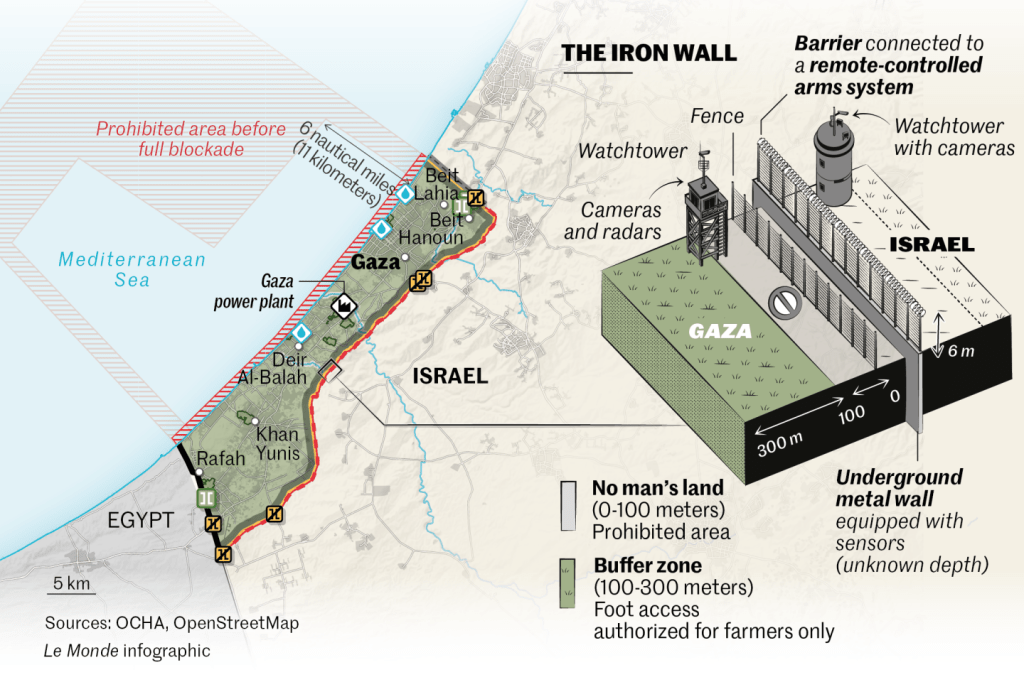
Let’s start with geography. The Gaza Strip borders on two parts with the State of Israel, on another with the Mediterranean Sea and finally with Egypt, via the Rafah crossing. As we know, Israel has blocked both the land and sea borders, forcing Gaza into a de facto siege through which Tel Aviv literally maintains the right of life and death over the two and a half million Palestinians who live there. Chechnya in 1999 was also in the same situation: surrounded on three out of four sides by the Russian Federation, it could only count on a precarious mountain road, the Itum Khale – Shatili highway, to evade the economic blockade to which Moscow had subjected the country since since 1997.
Chechnya is closed on three sides by Russia, and has only one alternative border, with Georgia, via a narrow mountain pass
From a political point of view, the Gaza Strip should be part of an independent Palestinian state, recognized by Israel and the UN, but even today the government in Tel Aviv (According to the Israelis and their American protectors, Jerusalem) has not accomplished no step in this direction, preferring to consider that territory a sort of “no man’s land” to be administered with periodic military “pacification” incursions. Chechnya in 1999 also lived in a “suspended” state similar to that of Gaza. The Russian Federation, which had signed a Peace Treaty with the Chechen government, had never ratified the country’s independence, and persisted in considering it a subject of the federation, threatening any government that implemented a recognition procedure with serious retaliation. of the independence of Ichkeria.
Since 2008, the Gaza Strip has been de facto governed by Hamas. It is an extremist party, responsible for numerous terrorist actions already before October 2023, and considered a terrorist organization by most Western countries. Its power is essentially based on the desperation in which Israel artificially keeps the Palestinian population, forced to live in a state of severe overcrowding, with an income approximately 75 times lower than that of Israeli citizens, forced to ration water, food, medicines and electricity and to pray to the Israeli occupiers to be able to leave that “large ghetto” that is the Strip. A situation very similar to that experienced in Chechnya in 1999, when the weak Maskhadov government, democratically elected, operated under the blackmail of armed militias of Islamist orientation, without being able to counter the warlords’ belligerence with the social policies necessary to revive the fate of the population and distance them from the flattery of the more radicals. Also in this case the invader of the moment, Russia, did not provide war reparations to restore the economy that it had devastated with the invasion of 1994 – 1996, delaying or blocking the payment of pensions and allowances to citizens Chechens and, as in the case of Gaza, by making the country dependent on electricity supplies, it fomented a population reduced to poverty, pushing it into the arms of fundamentalism.
Gaza is closed on three sides by Israel, and has only one alternative border, with Egypt, via the Rafah crossing
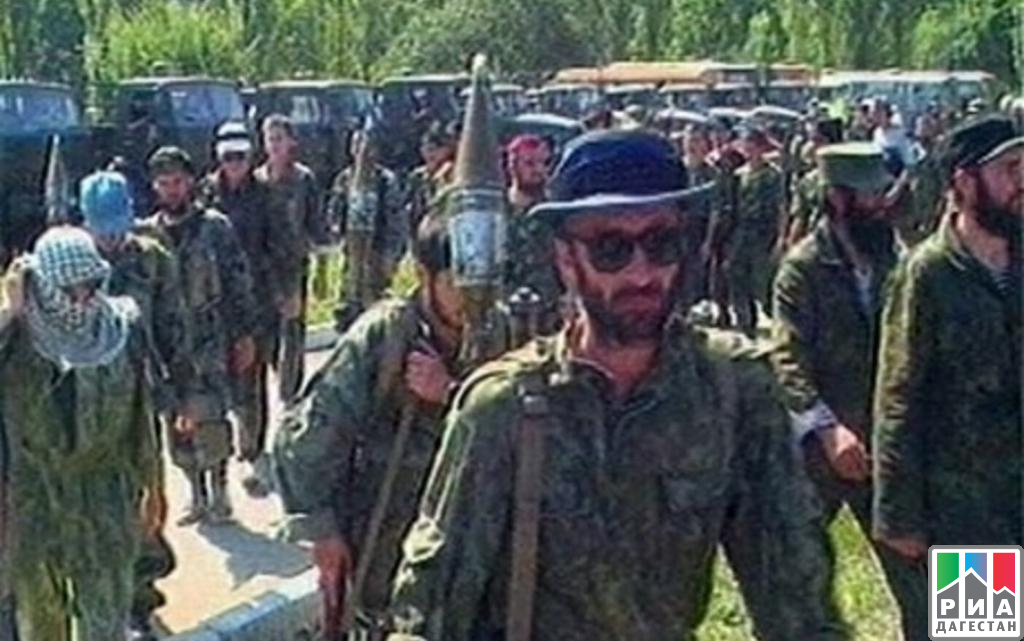
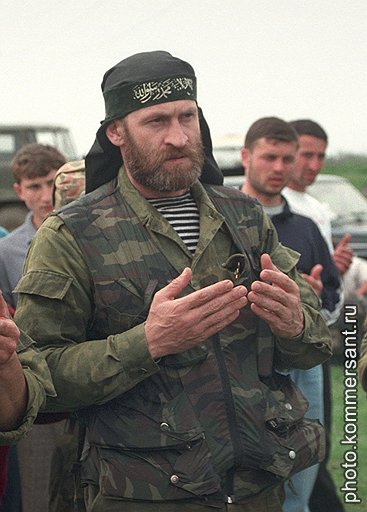
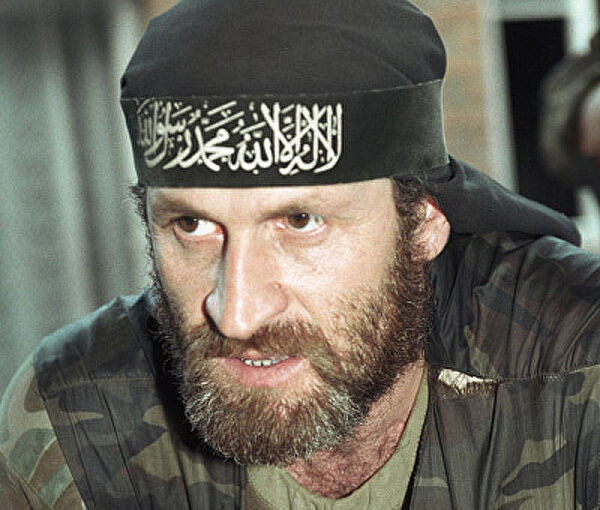
Exactly as happened in October 2023 in Gaza, in August 1999 a small army of sappers, led by the Chechen field commander Shamil Basayev, carried out a raid deep into Dagestan, with the intention of promoting a general uprising against Russian power and establish an Islamic emirate. In this case the objectives are slightly different (Hamas declared that the action was aimed solely at hitting the Israeli army and demonstrating the vulnerability of the State of Israel) but the dynamics are surprisingly similar: penetrated almost without encountering resistance, evidently to due to a relaxation of security measures that almost seems to have been caused intentionally, Basayev’s men, like those of Hamas, advanced for several kilometers before being blocked by a rapid (perhaps too) rapid military deployment and driven back into Chechnya. A “suicidal” action that seemed tailor-made to give Russia a casus belli and justify a new invasion. To complete the picture came a series of terrorist attacks against condominiums in various Russian cities (for which it has not yet been clarified who and why carried them out) which caused the death of three hundred people and the wounding of another 1000, causing a wave of popular indignation that the rising star of Russian politics, Vladimir Putin, was able to skilfully ride, winning the presidency of the Federation on the promise of “killing terrorists even in the toilet”.
Hamas militants
Upon closer inspection, even the terrible massacre carried out by Hamas has its “political beneficiaries”. It is surprising that, even in this case, Tel Aviv’s legendary security services failed so spectacularly to prevent the attack, they who have always been so diligent in infiltrating spies, in hunting down enemies of the state in any part of the globe, and in preventing hostile actions against Israel. While less surprising, unfortunately, is the political advantage achieved by Prime Minister Netanyahu, in the midst of a crisis of consensus until a few days earlier, and now back in the saddle with an “emergency government” that can finally have a free hand in “resolving” the problem Palestinian with the methods most similar to the narrow nationalism that the Prime Minister represents.
But the analogies do not end here: the military operation unleashed by Israel to avenge its deaths has a disproportion that is comparable only to that used by Putin against Chechnya. Today as then, after a total blockade of the borders and a terrorist campaign against the civilian population (with missiles launched on the markets, columns of refugees targeted, water and electricity services cut, humanitarian aid blocked) it is declared that the aim is not to punish a people and carry out a genocide, but “create a buffer zone”, a “cordon sanitaire” that safeguards the attacker from the response of the attacked. And in the meantime the civilian population is advised to “leave”. Where? It’s not important. For what civilian lives are worth, they can go and die of thirst in some basement. If the Israeli Defense Minister generically defined the target of the invasion as “human animals”, in the Kremlin the Chechens were seen no differently.
Basayev’s militiamen about to invade Dagestan
There is one thing that Gaza and Grozny do not have in common: the name of those who destroyed them. Yet the reason behind the martyrdom of Chechens and Palestinians is the same: the arrogance of a people that claims to crush another, implementing all the tools, legal and illicit, moral and immoral, to pursue its goal. Which is nothing other than imperialism, the political sublimation of arrogance, of cynicism, of selfishness elevated to a cult of the self, capable of bending and deforming every political, civil and moral virtue. These days, the Putin who unleashed the genocide of the Chechens is outraged by the Palestinian genocide unleashed by the Israelis, who in turn were outraged when Putin bombed refugees or tortured them in the filter camps. Each of these characters, in Moscow as in Tel Aviv, in Beijing as in Washington, accuses the others of being “the evil empire”. But the truth is that the Empire is itself “evil”, and that there are no “good empires”.
CONFLITTI SOCIALI – Allo scopo di interrompere le indebite appropriazioni di beni pubblici, soprattutto quelli afferenti ai magazzini della Protezione Civile, o la loro rivendita illegale da parte dei funzionari pubblici, con il Decreto Presidenziale numero 17 il Presidente della Repubblica ordina un censimento generale delle proprietà ed un nuovo protocollo di autorizzazione per il loro utilizzo attraverso speciali permessi presidenziali.
POLITICA NAZIONALE – Con Decreto Presidenziale numero 16, recependo un’iniziativa del Parlamento della Repubblica, il Presidente Dudaev assegna un edificio precedentemente a disposizione del KGB ad un’unità medico – diagnostica a disposizione della popolazione infantile e femminile della Repubblica.
2 Marzo
POLITICA LOCALE – Su iniziativa del Sindaco di Grozny Bislan Gantamirov vengono aperti in città quattro negozi “sociali” destinati alla raccolta ed alla distribuzione di cibo e vestiario agli indigenti. Tale misura è volta a sostenere le fasce deboli della popolazione, sempre più colpita dal rialzo dei prezzi e dalla crisi economica generale.
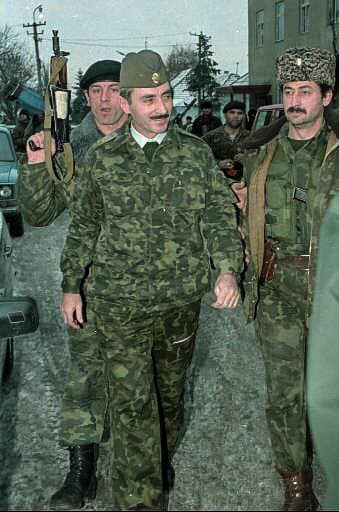
Bislan Gantamirov (in abiti civili) presenzia ad un’ispezione insieme a Dzhokhar Dudaev (in mimetica)
3 Marzo
NEGOZIATI RUSSO/CECENI – I rappresentanti russi e ceceni si incontrano a Sochi per iniziare un ciclo di negoziati. Dal governo russo arriva la disponibilità a continuare nel limite del possibile il trasferimento dei fondi necessario al pagamento degli stipendi pubblici e dei salari.
5 Marzo
POLITICA NAZIONALE – In ordine a garantire locali adeguati alle strutture del comparto giudiziario della Repubblica, con il Decreto Presidenziale numero 19 “Misure per migliorare le condizioni di lavoro dei tribunali distrettuali della Repubblica Cecena” il Presidente Dudaev ordina che gli edifici, le risorse ed il mobilio appartenute al disciolto Partito Comunista dell’Unione Sovietica siano ceduti in uso alle corti di giustizia.
6 Marzo
CRISI POLITICA IN CECENIA – Umar Avturkhanov, Governatore dell’Alto Terek e principale leader dell’opposizione a Dudaev, pubblica un appello al popolo ceceno nel quale invita i suoi concittadini a non ubbidire al governo indipendentista.
CONFLITTI SOCIALI – A Grozny i rappresentanti dei dipendenti pubblici minacciano uno sciopero generale se il governo non assicurerà il pagamento degli stipendi.
POLITICA ESTERA – Dudaev invia una dichiarazione ai governi di Azerbaijian, Tatarstan, Baskhortostan e Turkmenistan proponendo un’unione monetaria alternativa al rublo, considerato uno strumento imperialista di destabilizzazione per le repubbliche “produttrici di petrolio”.
CRISI RUSSO/CECENA – Reagendo al blocco economico in atto da parte della Federazione Russa, Dudaev dichiara il blocco alle esportazioni dei prodotti strategici (in particolare dei lubrificanti per aerei, dei quali la Cecenia è produttore – leader con il 90% del fabbisogno di tutta la Russia) fin quando Mosca non riaprirà le frontiere.
ECONOMIA E FINANZA– La situazione economica nel paese peggiora di giorno in giorno. Il governo non ha le risorse necessarie a garantire il regolare pagamento degli stipendi. Insegnanti e forze dell’ordine non hanno ricevuto né lo stipendio di Gennaio, né lo stipendio di Marzo, e minacciano di scioperare.
10 Marzo
POLITICA NAZIONALE – Al fine di garantire le risorse necessarie al suo funzionamento, con il Decreto Presidenziale numero 18 il Presidente Dudaev alloca la somma di 200.000 rubli per le spese correnti della neocostituita Corte Suprema della Repubblica. Tale misura dovrà essere implementata con la costituzione di un’apposita voce nel bilancio statale.
12 Marzo
POLITICA NAZIONALE – Con la Legge numero 108/1992Il Parlamento promulga la Costituzione della Repubblica Cecena. La nuova carta fondamentale, ispirata alle costituzioni occidentali, identifica lo Stato come una repubblica democratica di tipo parlamentare, fondata sul rispetto dei diritti della persona, dei diritti civili e della tolleranza religiosa.
Con Decreto Presidenziale numero 23 il Presidente Dudaev riforma la Protezione Civile Nazionale, assumendo il potere di nomina dei suoi massimi rappresentanti e delegando al Sindaco di Grozny la gestione della protezione civile nella capitale.
POLITICA ESTERA – La delegazione cecena, guidata dal Ministro degli Esteri Shamil Beno giunge a Dagomys, in Abkhazia, dove incontra la controparte russa per iniziare i negoziati tra i governi di Grozny e di Mosca.
Le tre più alte cariche del Parlamento di prima convocazione: Il Presidente del Parlamento, Akhmadov (Al centro) ed i due Vicepresidenti, Mezhidov (a sinistra) e Gushakayev (a destra)
12 Marzo
POLITICA ESTERA – Settanta deputati provenienti dalla Georgia vengono ospitati in sessione dalle autorità cecene, alla presenza dell’ex presidente georgiano Gamsakhurdia e del Capo dello Stato ceceno, Dudaev. Con questo gesto il Presidente della Repubblica Cecena prende una chiara posizione politica in favore dell’ormai decaduto leader georgiano.
12 Marzo
NEGOZIATI RUSSO/CECENI –I negoziati tra Federazione Russa e Repubblica Cecena portano alla sottoscrizione di un documento condiviso nel quale si identificano alcune aree di integrazione politica ed economica tra i due paesi.
I negoziati proseguono mentre la Federazione Russa indice per il 31 Marzo la cerimonia di firma di un nuovo Trattato Federativo con il quale tutti i soggetti federati della Russia fisseranno i loro rapporti con il governo centrale. I moderati ceceni spingono perché la Cecenia firmi il Trattato, ma Dudaev ed i nazionalisti pretendono che prima la Federazione Russa riconosca l’indipendenza della Cecenia.
15 Marzo
NEGOZIATI RUSSO/CECENI –Di ritorno dalla sessione negoziale nella cittadina di Dagomys, la delegazione cecena comunica che il prossimo incontro si terrà a Mosca, e che la delegazione russa ha promesso di allentare il blocco finanziario della Repubblica Cecena se questa ricomincerà ad esportare i prodotti derivanti dalla lavorazione degli idrocarburi.
16 Marzo
POLITICA NAZIONALE – Per favorire gli investimenti nella repubblica il Parlamento vara una moratoria sull’imposta sul reddito, e la abolisce per l’anno di imposta 1992. La misura serve anche a rottamare una enorme quantità di debiti privati nei confronti della pubblica amministrazione, cui la maggior parte dei ceceni non riesce più a far fronte, o che non intende pagare.
CONFLITTI SOCIALI – Continua lo sciopero degli insegnanti e di altri dipendenti del pubblico impiego a causa dei ritardi nel pagamento degli stipendi. In particolare gli insegnanti lamentano il fatto di non aver ancora ricevuto lo stipendio di Gennaio. Il governo assicura che presto i pagamenti riprenderanno regolari, a seguito di accordi per la vendita di prodotti petroliferi che dovrebbero portare alle casse dello Stato la liquidità necessaria a mettere il tesoro in pari con i pagamenti.
17 Marzo
CONFLITTI SOCIALI – Intere categorie di lavoratori pubblici entrano in sciopero a causa del mancato pagamento dei salari. Le scuole, colpite dall’astensione lavorativa degli insegnanti, rimangono chiuse. Il Ministro dell’Economia Taymaz Abubakarov promette che il tesoro ricomincerà a pagare regolarmente gli stipendi non appena la Russia interromperà il blocco dei trasferimenti finanziari.
POLITICA NAZIONALE – Il Parlamento della Repubblica approva una legge con la quale reintroduce l’alfabeto latino in funzione di quello cirillico, imposto dall’Unione Sovietica negli anni ’30. Secondo il parere dei deputati, questo è più aderente alla fonetica della lingua cecena.
CRISI POLITICA IN CECENIA – l’opposizione anti – dudaevita fa circolare volantini nei quali si chiedono le dimissioni di Dudaev. Gruppi armati antidudaeviti prendono posizione nei dintorni di Grozny.
Uno dei leader dell’opposizione antidudaevita, Umar Avturkhanov
20 Marzo
POLITICA ESTERA – Con Decreto Presidenziale il Presidente Dudaev ordina al Ministero degli Esteri di stabilire regolari relazioni diplomatiche con la Repubblica di Georgia “non appena l’ordine costituzionale sarà ripristinato”. Il provvedimento è essenzialmente un gesto di amicizia politica al decaduto presidente georgiano Gamsakhurdia, il quale attualmente risiede a Grozny e lavora alla riconquista del potere sostenuto da numerosi ex esponenti del Soviet Supremo Georgiano, anch’esso disperso a seguito del colpo di stato dell’anno precedente.
20 Marzo
POLITICA NAZIONALE – Dudaev promulga il Decreto “Sulle aliquote di dazio statale da addebitarsi sulle domande e sui reclami presentati in tribunale, nonché sulle imposte degli atti notarili e dello stato civile” con il quale calmiera i prezzi degli atti pubblici, agevolando la popolazione vessata dalla crisi economica ma riducendo al minimo gli introiti a disposizione del comparto della giustizia, il quale già versa in una cronica carenza di risorse per poter funzionare.
24 Marzo
POLITICA NAZIONALE – In ordine a razionalizzare i servizi sanitari della Repubblica, con il Decreto Presidenziale numero 30 Dudaev stabilisce la conversione del centro medico del Ministero degli Interni in ospedale policlinico al servizio dei dipendenti pubblici e delle forze dell’ordine, decretando che tale struttura sarà finanziata da specifiche voci di bilancio a carico delle istituzioni statali che utilizzeranno la struttura.
25 Marzo
MOVIMENTI POLITICI – Il Congresso Nazionale del Popolo Ceceno (OKChN) dal quale sono emerse le forze che hanno scatenato la Rivoluzione Cecena, delibera una nuova sessione da tenersi in Maggio. La Costituzione appena approvata non ha riconosciuto al Congresso alcuno spazio istituzionale, ed i nuovi rappresentanti dell’organizzazione, emersi dal “travaso” di molti dei suoi leaders nelle istituzioni della Repubblica, rivendicano il ruolo centrale che a loro parere il Congresso dovrebbe avere nella Cecenia indipendente.
Yaragi Mamodaev, di ritorno da un viaggio privato in Giappone, relaziona riguardo ai suoi contatti con il Ministero degli Esteri del Sol Levante e con alcuni industriali, i quali si sono detti disponibili a saggiare le possibilità di una collaborazione economica.
A latere della sua conferenza stampa Mamodaev suggerisce che il Parlamento, dei cui 41 deputati soltanto uno (Gleb Bunin) è russo e nessuno appartiene ad alcuna delle minoranze che abitano la repubblica, dovrebbe sciogliersi e ricostituirsi secondo un criterio etnicamente più rappresentativo.
26 Marzo
TENSIONI SOCIALI – Sciopero dei vigili del fuoco, i quali lamentano ritardi di tre mesi nel pagamento degli stipendi. L’allentamento delle tensioni con la Russia ha fatto si che da Mosca siano arrivati 150 milioni di rubli per il pagamento di stipendi e pensioni, ma queste risorse sono ampiamente insufficienti a coprire gli ammanchi delle casse statali.
POLITICA NAZIONALE – In un incontro con l’Associazione dell’Intellighenzia della Repubblica Cecena, il Presidente Dudaev afferma che l’indipendenza del Paese non è in discussione, mentre lo sono tutti i suoi aspetti “collaterali”, come eventuali accordi di cooperazione economica con la Federazione Russa e con i paesi produttori di petrolio. In questo modo Dudaev ribadisce la propria totale contrarietà a qualsiasi negoziato di tipo federativo con Mosca, eventualità ventilata sia dagli stessi intellettuali, sia da correnti interne al Parlamento.
28 Marzo
TERRORISMO – Una banda di sequestratori provenienti dal Territorio di Stavropol chiede asilo al governo ceceno, ma questo lo nega ed ordina l’arresto dei sequestratori, ed il rilascio degli ostaggi. I terroristi vengono da prima tradotti nell’edificio del Ministero degli Interni, poi in una caserma della Guardia Nazionale.
28 Marzo
CRISI POLITICA IN CECENIA –La polizia antisommossa, dipendente dal Ministero degli Interni, è in stato di agitazione e chiede che il Ministero abbia riconosciuta una guida ufficiale, mentre adesso si trova diretto da un Ministro “de facto”, Umals Alsultanov, peraltro inattivo. Egli, già Ministro negli ultimi mesi di vita della ASSR Ceceno – Inguscia, era stato esautorato a causa della sua sospetta collaborazione con il Comitato di Emergenza responsabile del Putsch di Agosto e sostituito da Vakha Ibragimov, ma Dudaev lo ha riconfermato alla guida del dicastero nel suo “governo provvisorio”. Al momento della sua presentazione al Parlamento non ha ottenuto i voti necessari, pertanto si è posto in stato di riposo in attesa di dare le dimissioni in favore del suo successore. I funzionari del Ministero sono quindi divisi tra coloro che premono per una sua riconferma e coloro che chiedono la nomina di Ibragimov.
30 Marzo
CRISI POLITICA IN CECENIA – Milizie armate antidudaevite si radunano nei sobborghi di Grozny. In alcuni villaggi si segnala la distribuzione di armi a volontari disposti a mettere a segno un colpo di mano per estromettere il Presidente Dudaev e riportare la Cecenia nella Federazione Russa.
Vita quotidiana a Grozny nell’estate del 1992
31 Marzo
COLPO DI STATO DI MARZO – Un gruppo di ex funzionari della RSSA Ceceno – Inguscia ed alcuni rappresentanti dell’opposizione, favorevoli alla federazione con la Russia tenta un colpo di Stato. Milizie armate e reparti inquadrati nella Guardia Nazionale occupano la TV e la Radio. Un “Comitato di Emergenza” si riunisce per costituire un governo di transizione che porti la Cecenia ad un Referendum sull’adesione alla Federazione Russa e successivamente a nuove elezioni parlamentari. Le unità del Ministero degli Interni, in questo momento prive di un Ministro e dirette dal Viceministro degli Interni, Udiev, rimangono acquartierate nelle caserme.
Dopo alcune ore di sbandamento una folla di sostenitori dell’indipendenza si raduna davanti al Palazzo Presidenziale, dove il Presidente del Parlamento Akhmadov legge la mozione dell’assemblea che condanna il colpo di stato in atto ed il Presidente Dudaev si appella al popolo affinché difenda l’indipendenza appena conquistata.
Nel corso del Pomeriggio la Guardia Nazionale riprende il controllo della città, espugna l’edificio della TV di Stato e costringe gli insorti ad abbandonare Grozny. Nelle sparatorie muoiono almeno quindici persone, ed una quarantina sono i feriti. L’opposizione moderata, critica verso il governo Dudaev, condanna parimenti le azioni del Comitato d’Emergenza, gridando ad un complotto ordito dalla leadership russa per provocare una guerra civile nel paese.
In serata il Parlamento torna a riunirsi in assemblea, mentre il Deputato e leader del VDP Zelimkhan Yandarbiev condanna i “nemici insidiosi del popolo ceceno” i quali, anziché accettare l’offerta di mediazione pubblicamente fatta dal Parlamento alcuni giorni fa, hanno deciso di prendere le armi contro lo Stato con ,’intento di rovesciarlo.
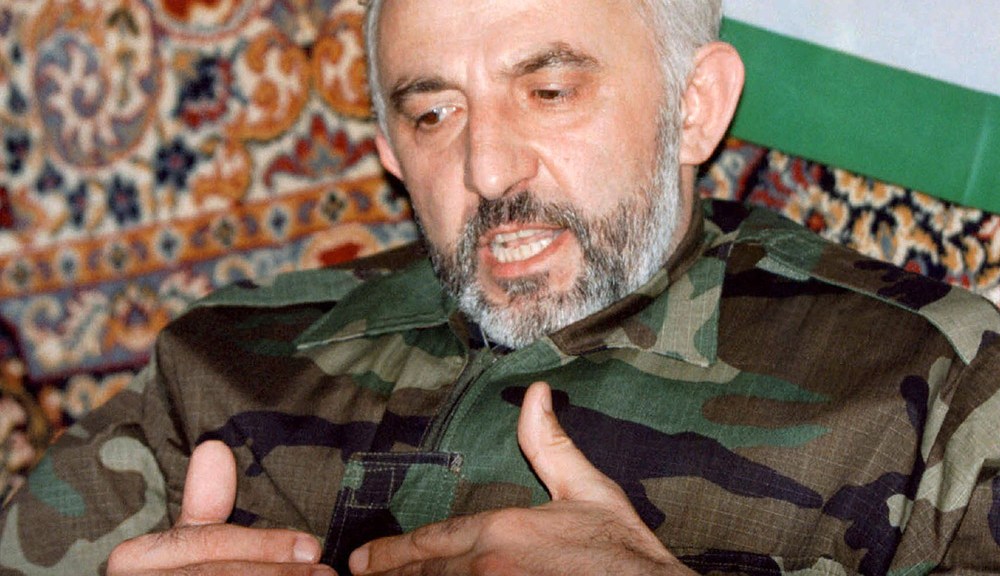
In an interview with IWPR, Maskhadov said that armed resistance by the rebels would continue as a means of “self-preservation” against the Russian army, but that he was seeking a political solution. Questions were sent by IWPR’s Caucasus Editor Thomas de Waal via an intermediary in March 2022, via a Chechen intermediary. The interview was recorded in late April in Chechnya, before the death was announced of the Arab warlord Khattab. Maskhadov’s answers, recorded on cassette, were returned to IWPR in London only last week.
Thomas de Waal
What is the general situation in Chechnya at the moment? What can you say about the ‘clean-up’ operations by Russian troops, about the level of resistance of Chechen fighters, about losses on both sides?
The general situation in Chechnya is dictated by the logic of a protracted war that is senseless for the men who began it. Almost three years after the beginning of the second war, the Russian side has not achieved any of its aims. At least they have not managed to break the resistance of our warriors and they will not be able to. As a result of this all the rage and cruelty of the occupiers is falling on the civilian population. And recent months have been especially hard for the inhabitants of the foothills and mountains of Chechnya. Every day Russian troops are carrying out endless ‘clean-up’ operations in these places, with robberies, murders and disappearances. General Moltenskoi devised his new tactic (ceaseless brutal clean-ups) with the idea of bringing people to the point where they would catch our warriors themselves and give them up to Russian forces. But it seems that the general is ill acquainted with the history and mentality of our people. And he also forgets that the men whom he is asking to be given up are the brothers, sons, husbands and fathers of the people his soldiers are subjecting to daily tortures and humiliations.
Russian special forces policeman patrols a street in Chechen town of Gudermes, 29 March 2001, as Chechen family looks at him, standing in front of the gates of their house, with bullet marks on them. The situation in Chechnya is set to improve significantly in the near future, the head of the pro-Moscow administration in Chechnya Akhmad Kadyrov said today, adding that Russian President Vladimir Putin as maintaining “an uncompromising line” with Chechen separatists and that there was “no question of talks” with rebel President Aslan Maskhadov. (Photo by ALEXANDER NEMENOV / AFP) (Photo by ALEXANDER NEMENOV/AFP via Getty Images)
Recently [at the end of March] the general, wishing to come across as a champion of human rights, issued an order requiring the search operations be carried out in the presence of a member of the prosecutor’s office and the local administration, that the armoured vehicles which took part in the operation have numbers on their hulls and the soldiers identify themselves in the houses of people they were making checks. This order was advertised by [Sergei] Yastrzhembsky [the main Russian spokesman on Chechnya] in the media pretty much as though it was the UN Declaration of Human Rights. However in reality it turned out to be just a propaganda trick. In the latest operations in Tsatsan-Yurt, Kurchaloi, Gekhi and other places the same scenes were repeated – there were armoured personnel carriers without numbers, OMON troops in masks, beatings, robberies and dozens of people disappeared without trace.
Even if General Moltenskoi wanted to, he is incapable of reining in the fighters who are out of control and long ago forgot what army regulations and order are. From the beginning they are recruited to carry out punitive operations against civilians and have turned into real bandit formations under cover of being state structures.
As I said before, the Russian side has completely turned on the civilian population. They keep away from the places where our units are deployed. Even though attacks on Russian army columns and checkpoints have not stopped for a single day. Diversionary raids are carried out on the points where enemy units are deployed. The daily losses of Russian forces vary between ten and 50 in men killed alone. There are losses on our side. That is a fact of war. But they are significantly fewer than the enemy’s because we are using partisan tactics and act in small groups and do not allow large numbers of men to be concentrated in one place.
What is your status now, as your presidential term has expired, but new elections have not yet been held? How do you see the resolution of this problem?
There cannot be some special solution for this problem in our republic. We strictly follow the dictates of international law and our constitution. Until fighting ends and there are conditions, which allow the free expression of will by the people, there can be no elections and elections are not held in these circumstances anywhere in the world. As soon as the fighting stops and the right conditions are created I will be the first with the initiative to hold elections in the republic. I assure you, it would be much more pleasant for me to be an ordinary voter in peaceful Chechnya than the president of a republic at war. So, whether the Russian authorities like me or not, to end the war they will have to hold negotiations with the legally elected authorities of Chechnya, headed by President Maskhadov. If they want to keep on repeating that the puppet regime of [Russian-appointed leader Akhmad] Kadyrov is the lawful authority in the republic, let them summon him to Moscow and sign any agreement with him on ending the fighting. We’ll see how that works out.
Do you have any contact with any Russian officials and, if so, what are you discussing?
I do not have any direct contacts with the Russian leadership. I have appointed Chechnya’s deputy prime minister Akhmed Zakayev to make these contacts. He met the president of Russia’s representative for the Southern Federal District, Vladimir Kazantsev and keeps up contact with him. But it has not got beyond general conversation. The Russian side is too afraid of its generals to have serious concrete discussions with him.
In the opinion of many people in Chechnya and outside Shamil Basayev and Khattab bear a large degree of responsibility for the second war in Chechnya. Do you believe they still enjoy support in Chechnya and it is possible to seek a way out of the situation by removing them from the game?
It would be naïve to suppose that the fifty or so volunteers who set off with Basayev to Dagestan, which was at that time totally gripped by an internal conflict (in the Tsumada and Botlikh regions and the villages of Karamakhi and Chebanmakhi), were the reason for such a wide-scale war, which has lasted for almost three years. In case the Russian public was not convinced that this was reason enough to begin a massive war (Dagestan is far away and few people understand what goes on there), they also engineered the explosions against buildings in Moscow and other Russian cities and blamed them on the Chechens. So the war against Chechnya was planned before and was not the result of a chain of accidental events.
But that does not mean that the leadership of Chechnya welcomed or encouraged Basayev’s actions in Dagestan. Quite the opposite. I called for an early meeting with the leaders of Dagestan and the other North Caucasian republics to combine our efforts and work out ways of not letting such conflicts occur. The first man to reject the idea of this meeting was the leader of Dagestan, as strong pressure was put on him from Moscow; for them the whole planned invasion of Chechnya would have been put under threat if the meeting had taken place. All these things are now well known to the public thanks to the revelations of one of the players of this game, Boris Berezovsky. The current Russian leadership is trying to present it as though only he was responsible for all this. But he is only one of the players in the game and not the main one.
As for Basayev and Khattab, they are active participants in the resistance movement and their removal from the game, as you put it, can only weaken overall resistance and not bring the end of the war any closer.
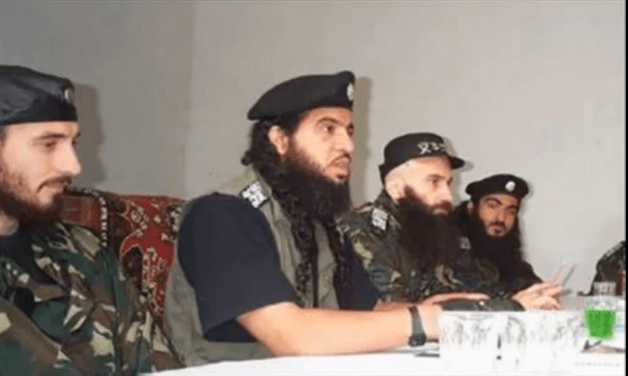
From left to right: Abu Al – Walid, Shamil Basayev, Ibn Al – Khattab and Ramzan Akhmadov
Everyone understands that this time Russian forces will not simply leave Chechnya and that in both Russia and Chechnya many people are suffering a great deal because of this. What concessions are you ready to make in order for the bloodshed to stop? Are you ready, for example, to agree to a freezing of your independence declaration in return for genuine negotiations?
As we understand it, independence means above all independence from the whim of bureaucrats, who sit in Moscow offices somewhere and decree the fates of our people without facing any punishment. Genocide has continued for several centuries now and no one has borne any responsibility for it (true, the recently formed UN Human Rights Criminal Tribunal does inspire some hope).
Armed resistance is a means of self-preservation when no other methods of defence are available. International institutions, charged with defending us and created specially for that purpose are unable to do so. Nor can the world community, which can raise its voice in defence of the Bosnians, the Timorese, the Hutus and Tutsis, the Kosovars, the Croatians and so on. In their case prominent states have the courage to send peacekeeping forces to the conflict region, impose sanctions on aggressor countries, establish international tribunals and so on. In our case, all our efforts lead only to statements by the Parliamentary Assembly of the Council of Europe and human-rights organizations and a handful of politicians, whose conscience and civil courage does not permit them to remain silent about the horrific crimes which are being committed in Chechnya.
So ending resistance will not guarantee for us ending the genocide. Rather the opposite. Being undefended would make us even more vulnerable in the face of the arbitrary behaviour of the Russian military machine. I want to be understood correctly. Independence is not a whim or an ambition. It is the necessary condition of our survival as an ethnic group. If Russia is prepared to undertake internationally, through the mediation of other states or international organizations, that from henceforth it will not allow itself any more armed aggression against Chechnya, if Putin is replaced by Ivanov or Ivanov by Sidorov, or in the case of any political change-over, then we are ready to discuss any questions with the Russian side, including questions of independence. Of course we well understand that we are not situated on some island, somewhere in the ocean, but next door to Russia and in some places our border runs down a country road or through a ploughed field. We are in the same economic, energy and ecological space as Russia. We share the same water resources, transport communications and many other links. So, if good will can be found, no obstacles are insuperable.
Ruslan Gelayev
What can you say about Ruslan Gelayev, his presence in the Pankisi Gorge and his raid into Abkhazia last year? In whose name was and is he acting?
In any war and especially in one so bloody and protracted as the current one in Chechnya transformations occur which are hard to understand for a person who is far away from events. Ruslan Gelayev has long been absent from Chechnya and I cannot say whether he is in the Pankisi Gorge or somewhere else. I have not given him any order to leave the territory of Chechnya and I await his explanations.
The following is the transcript of the first part of the interview between Francesco Benedetti and Akhmed Zakayev conducted by Inna Kurochkina for INEWS (we attach the link to the original video, which will soon be accompanied by English and Italian subtitles)
On 6 March 1996 the armed forces of the ChRI launched their first major offensive action of the conflict: the so-called “Operation Retribution”. According to what I was told by Huseyn Iskhanov, then Representative of the General Staff, the plan was conceived in Goiskoye and saw your participation, as well as that of the Chief of Staff, Maskhadov, and the Deputy Chief of Staff, Saydaev. Do you remember how you planned this operation?
Yes, of course I remember that. This, in principle, came out of the operation that we carried out to blockade the city of Urus-Martan in order to prevent elections. After this operation, my Chief of Staff Dolkhan Khadzhaev and I met with Dzhokhar Dudayev. And we suggested the option that something like this should be done. We understood that any of our actions in order to make any attempts to change this situation, the Russians needed at least three days, theoretically.
It took them three days to recover and start doing something. And then we started talking about the possibility of blocking several districts at the same time. And then Dzhokhar Dudayev said: “You see how good it is when a team works. I, he says, was with these thoughts and thought about how best and what kind of operation we should carry out.
It was then that the idea arose to carry out this operation in the city of Grozny, in the city of Dzhokhar – in the future.
And on the same day, it was decided to invite Aslan Maskhadov, Chief of the General Staff, to call him to our side, and from that time, almost two or three days after we discussed this with Dzhokhar Dudayev, we began preparations over this operation. Practically – we had our own intelligence in Grozny, we knew where each Russian unit was concentrated, and we did additional work and identified all these points where Russian units are located. Where are checkpoints, commandant’s offices, military units.
Yes, Umadi Saidaev, the late Umadi Saidaev, he was the Chief of the Operational Headquarters, and then, later, Aslan Maskhadov arrived there, and together with the Commanders of the Directions who were supposed to take part, we developed this operation.
Returning again to Operation Retribution, this was a success that the ChRI leadership chose to use more symbolically than strategically. In your memoir you recall that at the time the decision to withdraw from Grozny, despite having taken it under your control, did not please you, and that even now you maintain that what was achieved in the following August, with Operation Jihad , could have been achieved with Operation Retribution.Finally, you say: In March of 1996 we probably had the opportunity to finish the war victoriously, and then much of our recent history could have gone differently. What do you mean by this sentence? Are you alluding to the fact that Dudayev was still alive, or to the fact that the Russian presidential election had not yet been held? Or again, to something else?
I thought about the elections in Russia last, because there have never been any elections there. Yes, the very fact that Dzhokhar was alive at that time could have been of great importance, and the course of history could have been completely different if the war had ended with Dzhokhar Dudayev alive. And it is unlikely that the Russians would go for it, I also admit this, on the one hand, I admit that they would not go. They made every effort to eliminate Dzhokhar Dudayev, and subsequently to seek peace. As for this operation, I’m just sure of it. Yes, then we planned the operation for three or four days, but there was no concrete decision, such that we would leave in three days. Because Dzhokhar Dudayev arrived in Grozny, he was at my Headquarters in the city of Grozny, in my defense sector, in that part of the operation that the units under my command took part, he arrived there, and we were together last night at our headquarters. And I remember the reaction of Dzhokhar Dudayev when he learned that there was an order to leave the city, that some units had already begun to leave Grozny. He did not agree with this, because you can really assess the situation when you see the situation in the process, how it changes, and based on this you must draw conclusions and make decisions. Dzhokhar Dudayev was in Grozny for the first time after the Russian occupation, we traveled with him at night, in Grozny at night, we went to the bus station, he watched all this destruction, and when we returned to the Headquarters, some of our units had already begun to leave. He said: “Well, if there is an order, it is necessary to carry it out.”
And we retreated. And I later thought about it, because nothing more than what we did for the month of March, we did nothing in August. This operation was repeated one by one in the same way, and with the same forces and means. Even in August, we initially had and at the beginning of this operation, the funds involved were two times less than in the March operation. And therefore, I am sure that if we had stayed in Grozny … (well … history does not tolerate the subjunctive mood). What had to happen happened. But I remain of my opinion that it could have been different. But this is already from the area of \u200b\u200b”could”.
But that did not happen.
In March 1996 you faced, as commander, what was perhaps the biggest defensive battle fought by the Chechen army in 1996. I am referring to the Battle of Goiskoye. I’ve read conflicting opinions regarding the choice to face the Russians in that position. Some argue that the defense of the village was senseless, resulting in numerous unwarranted casualties for the Chechen forces. Others argue that if Goiskoye had fallen too soon intofederal hands, the entire Chechen defense system could have shattered. After all these years, what do you think?
To prevent the enemy from reaching the foothills, to block him in the village of Goyskoe, this was, from a strategic point of view, militarily an absolutely correct decision. This decision was made by the Supreme Command of the Armed Forces of the Chechen Republic of Ichkeria. Yes, I also know that there is such a statement, but based on real losses, we did not suffer any serious losses during the defense of Goisky. Yes, there were dead, several people who died were injured, but there were no such losses. There is no war without loss. Well, in a strategic sense, the protection and defense of Goisky kept the front line, which moved from Bamut to Alkhazurov. Alkhazurov fell under Russian control, but Komsomolskoye also fell under Russian control. But in Goyskoe we didn’t let them go any further. We prevented the passage of the Russians up to the foothills. And thus they retained the Front and the front line. And this was of very important strategic importance, all the more so against the background of the fact that the Russians began to talk about negotiations, about a truce. If we talk about a truce and start a conversation with them about a political dialogue, naturally, the preservation of a certain territory that we controlled, this was of great political importance, and in connection with this, Dzhokhar Dudayev made the decision to protect Goiskoye. Yes, we lasted a month and a half. And later, after the death of Dzhokhar Dudayev, when Bamut had already fallen, it was decided to leave Goiskoye. But as long as Achkhoy and Bamut were on the defensive, we held the line of defense in Goyskoye as well.
But when the front had already been interrupted there, it was pointless to continue to hold the front line and lose our fighters. And so it was decided to withdraw our units already to the mountains. Subsequently, we already redeployed closer to the city and began to prepare for the August operation.
After Dudayev’s death, power was transferred to Vice-President Yandarbiev, who took office as Interim President. Was the decision to transfer power to him unanimous? Or were there discussions about it?
In principle, there were no discussions, one vote was against, the rest all spoke in favor of recognizing Zelimkhan Yandarbiyev as Vice President. It was in line with our constitution, presidency provision, and it was accepted. And Zelimkhan Yandarbiev began to act as President.
After Yandarbiev assumed presidential powers, he appointed you as Presidential Assistant at Security. What were your duties in this position?
Yes. He appointed me Assistant to the President for National Security. And at the same time, that unit, that is, the Third Sector, which I commanded, I was simultaneously appointed Commander of the Separate Special Purpose Brigade. That is, the unit that I commanded, being the Commander of the Third Sector, he was also transferred to the Brigade, to the status of the Brigade under the President of the Chechen Republic of Ichkeria. Basically, this was done because Zelimkhan Yandarbiyev, after we retreated and put up the Presidential Palace at the beginning of the war, he was inside the Presidential Palace until the last moment, until we left the city. Since that time, in principle, Zelimkhan Yandarbiev has not been involved in military operations, and over the past year and a half, over the past year, new units have already been created and new people have appeared in these military structures. And naturally, Zelimkhan needed a person who knew this whole system militarily, and, of course, we worked with him and in the near future Zelimkhan was introduced to the course in all Directions, Fronts and our units, and already as the Supreme Commander, he Subsequently, he began to manage these processes himself. And my task included power components. And later it was transferred, after graduation this position was transferred, retrained to the position of “Secretary of the Security Council”.
And before the elections, in principle, I performed these functions.
The following is the transcript of the first part of the interview between Francesco Benedetti and Akhmed Zakayev conducted by Inna Kurochkina for INEWS (we attach the link to the original video, which will soon be accompanied by English and Italian subtitles)
1. On December 6, 1994, a few days before the federal army invaded Chechnya, a delegation appointed by Dudayev went to Vladikavkaz to confer with the Russian Minister for Nationalities, Mikhailov. In your memoirs you say that a certain number of oil entrepreneurs joined the delegation led by the Minister of Economy Abubakarov. What do you think was the purpose of their presence? Is it possible that among the proposals thatthe delegation should have presented was an agreement on the exploitation of Chechen oil, or on the exploitation of Chechen refineries?
At that moment and during that period, the presence in this delegation of the Minister of Economy and Finance Abubakarov, Deputy Prime Minister Amaliyev, was not associated with any possible agreements on the operation of oil refineries. They were then our representatives and proxies of Dzhokhar Dudayev. Not only did they “join”, they were included in this delegation. And from there they went from Kizlyar to Moscow, to further study the issue of preventing military aggression from Russia, to prevent a war. Dzhokhar did everything possible to prevent the outbreak of hostilities in Chechnya. And practically our delegation was in Moscow, headed by Tyushi Amaliyev, with Abubakarov, the Minister of Finance and Economy, and when Russia began to bomb Grozny. On December 11, despite everything, Yeltsin signed a decree on the introduction of troops and the start of a military campaign. Therefore, at that moment and in that period, it was not about the operation of oil wells, or rather, the use of oil refineries, or the Chechen oil that was produced at that time.
2. At the outbreak of war you placed yourself in the service of President Dudayev, and within a few months you were given the task of setting up an autonomous front. At the time you were the Minister of Culture, certainly no one expected you to take up arms and fight a war. Why did you decide to enlist?
(laughs)
The fact is that I did not go to the service of Dudayev. I was appointed Minister of Culture of the Chechen Republic of Ichkeria by Dudayev’s decree. No one served anyone or anyone. We worked for our state, and Dzhokhar Dudayev, as president, had the authority to appoint and dismiss. My appointment was in October, when Dzhokhar Dudayev offered me to work in his team. I accepted it despite everything that happened. I just say in my book that for me there was no difference, it was absolutely obvious that there would be a war. And I told to Dzhokhar: “Dzhokhar, it makes no difference to me in whose capacity I will defend our fatherland, my place is here, with my people. Whether a janitor, whether a minister .. ” And Dzhokhar then said, I remember his words, I just wrote about it. He said: “No, there will be no war. The world will not allow this. I won’t allow it. There will be no war, we need to do creative work. And your place is exactly in this direction. And so you must accept my offer.” I accepted this offer. I returned to the republic, and already on the first day, November 18, I officially went to work, and on November 26 the war began. In principle, this is the first invasion of Russian troops under the pretext of the “Chechen opposition” into the city of Grozny, where they were defeated.
And now for the second part of the question. The fact is that according to our legislation, I think that it is the same in Italy, the same laws, members of the Government, if a war starts, they become liable for military service, regardless of their positions. Culture, or art, it doesn’t matter, everyone becomes liable for military service. I, in principle, before I was appointed commander of the seventh front, I joined the people’s militia. I remember that day, December 28, when my office of the Ministry of Culture, in the Mayor’s Office building, was bombed, and on the same day I… There were people on the square who signed up as volunteers for the people’s militia. I signed up for this people’s militia, and only on January 11, Dzhokhar recalled me from my position as Minister of Culture, because a meeting of the Government was scheduled. And I returned from my positions to the Government meeting on January 11. And on this day Dzhokhar entrusted me with another task, I also wrote about this in my memoirs, and later, already in March, when the city was abandoned and we retreated to the foothills, at that time Dzhokhar signed the Decree on the creation of the Seventh Front and appointed me Commander. That is, we began to form this front, in general, from scratch.
3. After the fall of Grozny in Russian hands, and the withdrawal of the Chechen forces on the mountain defense line, the government was reorganized in order to make up for the defections of some senior officials, but also to function more streamlined in a context of total war. This “war government” continued to function throughout theduration of the conflict, and overcame the death of Dudayev, placing itself at the disposal of the Interim President, Yandarbiev. How did this government operate, and how did it manage to meet, to keep in touch with the President?
The Military Government, what you call the Military Government, was the State Defense Committee, which was formed by Presidential Decree when the military aggression began. And this body was the Supreme State Organ. Parliament stopped its legislative activity. The government had already been transferred to a military footing, and the State Defense Committee was formed as the Supreme Body of State Power. It included members of the Government, members of Parliament, the Leading Military Command represented by the General Staff, and Commanders of Fronts and Directions. And this Government functioned all this period. How were the meetings? Naturally, we all knew where the Supreme Commander-in-Chief was located, in which part of the republic. And periodically he convened a meeting of the State Defense Committee, and we discussed issues related to the continuation of resistance, with defense. Questions of a military nature were discussed in connection with the preparation of military operations or attacks on enemy territory.
All these points were discussed at the meeting of the State Defense Committee, and it functioned very effectively. It was a small number of people, but they were people who were directly involved in all processes – political, military, economic issues. These questions were also not the last ones, because providing the units with the necessary provisions, this was also within the competence, the questions of the State Defense Committee. And all these issues were discussed and functioned very effectively due precisely to the fact that Dzhokhar Dudayev did not go into deep underground, into forests, into the mountains, where it would be impossible to get him, he held personal meetings with all units, not only with the State Defense Committee but also with military units. He went to the front line, to the front line, met with ordinary soldiers. And now all our defense and all our resistance fighters, they all took a very responsible attitude to which side Dzhokhar Dudayev was on. I mean, along the front line, where active hostilities are taking place, the soldiers knew that behind them, behind their shoulders, there was already the Headquarters of the Supreme Commander. Or they disputed, along the Argun River, when he crossed over to the other side, those parts of the resistance, the Armed Forces took it for pride, proudly announced that the Supreme Commander was now on our side of the front. There was a very friendly atmosphere. When I remember these times, this period, despite all the difficulties that we then experienced, there was a war, but the people were different. We were different. The Chechens were completely different. They were different from today’s Chechens, who live in the territory and who are outside. And all this was connected, I think, with the fact that we were under Soviet occupation for seventy years, and for the first time we had a chance to build our own state. Independent state. And now the leader of this movement and the state, and later the leader of the Defense and the leader of the national liberation movement, he inspired in many ways and not only the fighters, but the entire Chechen people to resist and repel aggression. These were simply amazing times in the history of the Chechen people, when the whole people actually accomplished a feat. It was thanks to the feat of the Chechen people that we managed then to preserve both the power structures and what we were doing. And basically win.
4. Between March and May 1995, according to what you refer in your memoirs, you were in charge of setting up, in record time and with almost non-existent resources, the so-called “Seventh Front” south of Urus – Martan, which would serve as a point of contact between the stronghold of Bamut and the rest of the Chechen deployment. In your book you tell how the Seventh Front was born. Could you explain how it developed, which units made it up, and which operations it carried out until June 1995?
This happened in March, Dzhokhar Dudayev signed a decree. By this time, all our units had moved to the foothills, when the flat part was already mainly under the control of the Russian aggressors, and the foothills remained, starting from Bamut and to Alkhazurov, in this direction, and there further up, to the Grozny region, Chishki, Dacha Borzoi. This side was not yet occupied by the Russians, and it was necessary to create a unified defense in this direction, from Bamut to Alkhazurov. And the consciousness of the Seventh Front, and the task of the Seventh Front, was precisely this. And it practically turned out basically, this is the so-called Urus – Martanovsky district, it was believed that this area was loyal to Russia, the Russian aggressors, because the occupation regime functioned there, the occupation power structures, headed by Yusup Elmurzaev, the then prefect, who was appointed occupation mode. The creation of this front and the main task was the creation of military bases in the three gorges. These are Martan Chu, Tangi Chu, Roshni Chu. It was in these three gorges that we formed three military bases in just a few months. Although at the time when the decree was signed, there were practically no military units there. There were only militias, people who were part of the people’s militia, but there was no centralized command, and we in a short time, from those units, from those people’s militias that were then in this region, we created this Seventh Front, and a centralized military unit, under the centralized command of the Supreme Commander-in-Chief Dzhokhar Dudayev. Subsequently, this Seventh Front was already transformed into Sectors – the South-Western Front and Three Sectors – the First, Second, Third Sector. These sectors were under my responsibility.
Later I was in charge of the Third Sector of the Southwestern Front. Speaking by surname, these are, in principle, our young middle-level commanders, Dokka Makhaev, Dokka Umarov, Khamzat Labazanov, Isa Munaev, all these guys … Akhyad (I will not name him by his last name, because he is alive and is on the territory), Khusein Isabaev, these guys, then the middle link of commanders who headed these Sectors, and this Direction. Although it was already such a single military unit, which was part of the Armed Forces and had already been structured into the General Staff of the Armed Forces of the CRI.
5. In the spring of 1995 you could consider yourself one of the main army officers of the ChRI, therefore you were definitely monitored by the FSB, and by the intelligence of the Russian army. How did federal forces try to stop you and other senior officers from participating in the resistance? And how did you manage to evade Russian attempts to track you down?
First of all, God protected us. And, secondly, it is the Chechens and the Chechen people. We were at home. We were in our native villages, in our native settlements. And of course, the Chechen people, in fact, were the main protection of those who were then in the Armed Forces. And President Dzhokhar Dudayev, you know, the republic is small, all this time he was among the Chechens, he was in different settlements, and every village where the fighters stopped, although there were also opposition-minded and cowardly people, but in general, our supporters, supporters and independence, and those who supported our national liberation movement, they were much stronger and were much more numerous. They managed to prevent both assassination attempts and those ambushes that set not only me, but also those who were then involved and were listed in the ranks, as you said, in the highest composition of the Command, and all of them were protected by the Chechen people. And, of course, not everything was under the control of either the FSB or the Russians. Life and death are in the hands of God. And those reasons, those actions that were taken by us in order to survive, and what the Chechens did with us, the Chechen people, protecting their commanders, people who defended their homeland, their fatherland and themselves.
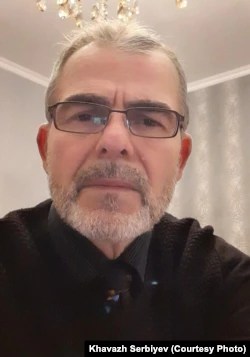
Khavazh Serbiev served as the Prosecutor General of the Chechen Republic of Ichkeria during the period between the first and second Russian invasions of the country. In June 2022 he gave an interview to Ukraina Today ( https://ukrainatoday.com.ua/ ) about the parallels between the ongoing war and those fought by the Chechens. Below is the translation of the interview.
You investigated the crimes of the Russian army. If we compare the actions of the Russian army in Chechnya and what they did in Ukraine, is there anything more similar or different?
In Ukraine, nothing new has happened, nor is it happening, compared to what has been done in the Chechen Republic. Everything is mirrored: only the scale is different, because your people (the Ukrainians, Ed ) are many times more numerous than the Chechens, and the territory is vaster. Everything else is the same. This is so familiar to us that we are even surprised: nothing changes in the policy of the Russian state and in the actions of its army!
Why did the world community react rather slowly to statements about Russian war crimes in Chechnya? Why was it considered an internal affair of Russia, or why did Russian propaganda manage to dehumanize the Chechens, saying that terrorists were fighting there?
Of course, the whole world believed that the Chechen territory and the Chechen people were subjects of the Russian Federation. And nobody wanted to change that. Although in November 1990, according to the laws of the USSR, the Chechen Republic was actually brought on an equal footing with other union republics (the republics that made up the USSR, ed. ) . But nobody wanted to change that. Also, Russia is a large nuclear state. It seems to me that this factor played a leading role.
In the end, everyone at that moment had their own problems. Ukraine, Belarus and other states had left the USSR. They didn’t even want to ask this question. And the rest of the world – the West and other states – for them this business was happening in a distant place, they didn’t care. The Chechen side was accused of using unacceptable methods. That is, they blamed the victim and the abuser by the same standards. There was some kind of fear or reluctance to intervene in this problem.
Is it important to involve foreign experts in war crimes investigations or is it enough to use our own forces?
It is very important to involve foreign experts. Because in a dialogue with Russia it is unrealistic to do something yourself. Naturally, the basis is created on site. It’s easier for you Ukrainians, but for us it was practically impossible. I believe the whole world should be involved in this process. It is important to have an international opinion, an international investigation. This is the only way it can work.
How did war crimes investigations unfold after the first Chechen war?
A criminal case for genocide was initiated in the Attorney General’s Office. The material, collected in every district of our territory, was conveyed to the apparatus of the General Prosecutor’s Office. Evidence of Russian military genocide and war crimes was investigated in every district. And it all came together in a common criminal case, which reached 64 volumes. Each volume is at least 400 pages. This is what we have been able to cover. Before the start of the second Russian aggression, however, we were unable to transfer a certain amount of this material to an international authority, such as the Hague Tribunal.
Why?
Because Russia has created huge problems inside Chechnya, events have overlapped one another in wave after wave. Law enforcement agencies and, of course, the Prosecutor General’s Office simply did not have time to bring at least part of this case of war crimes of the Russian army in the Chechen Republic to a conclusion. We just didn’t make it. By the time the second attack had begun, we handed over part of the materials to the Tribunal in The Hague. Approximately 12 volumes of materials have been delivered. Some were returned because they were considered irrelevant under international law. We had no experience. There are only 6 volumes left. Meanwhile, active hostilities began again and soon the whole territory was completely occupied. And any further process was suspended again.
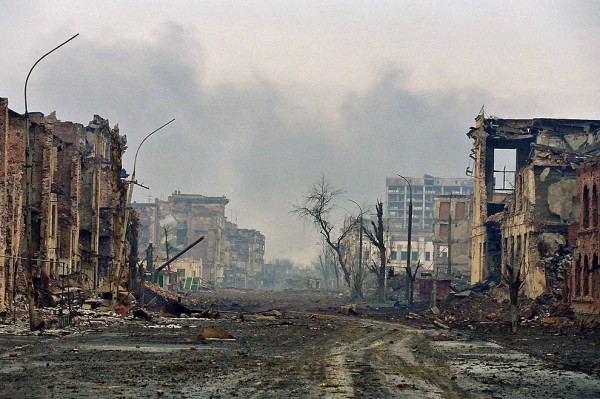
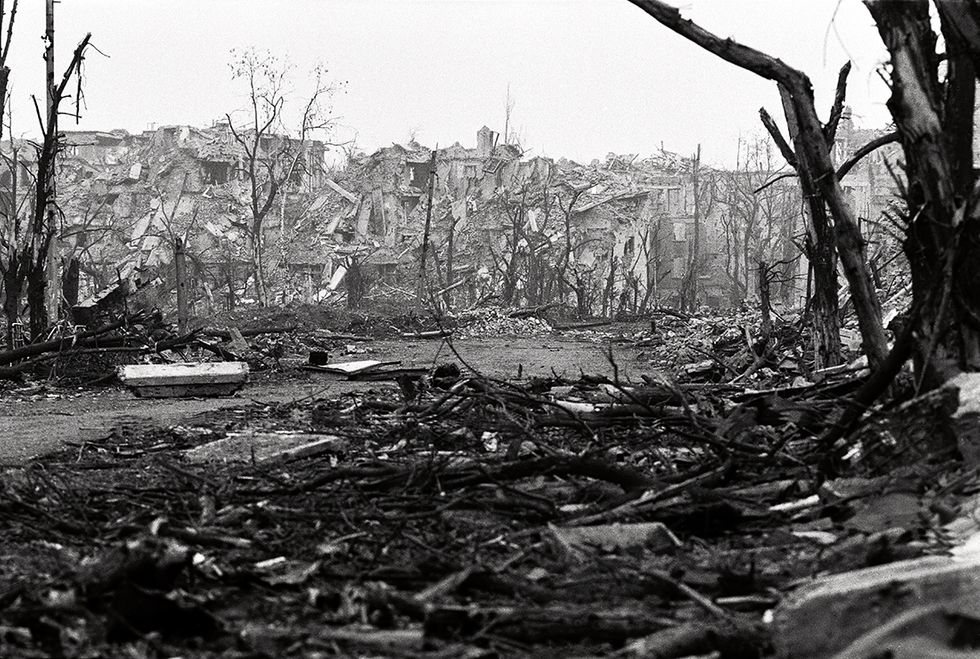
Grozny destroyed
During the first war, which Moscow lost, Russian troops brought a lot of trouble to the Chechens. How could it be that during the Second World War Moscow found relatively many allies among the Chechens? In particular, Kadyrov supported them.
The Russian regime, the relevant authorities and services involved in the Chechen Republic have taken into account their previous mistakes. The “hat toss” dominated the minds of politicians and military during their first campaign. As a result, they took these moments into account and did a huge undercover work to attract new members to this agent network, and also launched powerful propaganda within Russia itself.
Imagine when the second campaign began: immediately on the state television of Russia sounded “Get up, the country is huge!” (popular song written during WWII to mobilize the masses against the German invasion, Ed. ) as it sounded during WWII when Hitler attacked the USSR. I’ve heard it myself. You get goosebumps when you hear this song. Imagine that against the tiny Chechen Republic, which some can’t even find on the map! And then suddenly the Chechens became a “fascist force”. The same thing that has now been done against Ukraine.
The Second Chechen War was preceded by terrorist attacks on the territory of Russia, in which the Chechens were blamed. What do you know about it?
Solid disinformation, which has been played a lot not only in Russia, but throughout the world. Many believed it. Why was it so masterfully presented using the regime controlled media. It was so obvious to us that this was a lie that we were just taken aback. There was a lot of evidence that these were provocations, that this was done by the Russian special services. But there was simply no one to listen to us. And the materials that we tried to smuggle overseas through the media in the West simply disappeared. They were broadcast, they were reported, but there was no response.
Shamil Basayev in Daghestan, 1999
There was another reason for the second war – the invasion of Shamil Basayev’s detachment in Dagestan. Why did it happen?
Yes, there was an encroachment of some groups, there were Chechens even on the territory of Dagestan. This cannot be denied. If you knew how different these groups were! There were people from all over the North Caucasus, including Dagestan. Bagautdin alone (one of the leaders of the “Islamic Shura of Dagestan” – ed. ) brought 2,000 people to our territory. And the people got the impression that it was the Chechens who were moving like an avalanche across the territory of Dagestan with the aim of occupying, assaulting, etc. It looked completely different than what eyewitnesses saw. Everyone, of course, saw what they wanted to see. But I assure you, not even half of the Chechens were there. Most of them were people from other republics, there were also volunteers from the Middle East … Naturally, President Aslan Maskhadov, from the very beginning, when information began to pour in, was categorically against it. And this was not the action of the armed units of the Chechen Republic of Ichkeria. Under no circumstances! These were volunteers who made their choice and took part in this operation.
Did President Maskhadov have the opportunity to stop Basayev’s action?
At that time, on the borders of the Chechen Republic, throughout the North Caucasus, there was a massive concentration of Russian troops, huge. Why were they concentrated in these places? We didn’t have troops on our borders, there wasn’t even the possibility to do that. For example, there was no conscription in the army as such. And to contain the volunteers or Basayev himself, who acted alone, would have meant an intra-Chechen military confrontation. The transition to the territory of Dagestan took place in a matter of days. I believe that for Maskhadov it was, on the one hand, unexpected and that in any case there were no adequate forces to organize some kind of barrier to prevent this encroachment.
Among the Russian soldiers who died in Ukraine, there are many people from Dagestan. How to explain it?
Dagestan is mostly a mountainous area. There are many high-altitude villages that live independently. We can say that the main reason is poverty. In the Russian Federation, this is a common phenomenon in the outback. And in Dagestan there is poverty, and therefore …
Khavazh Serbiev è stato Procuratore Generale della Repubblica Cecena di Ichkeria durante il periodo che intercorre tra la prima e la seconda invasione russa del paese. Nel Giugno del 2022 ha rilasciato un’intervista ad Ukraina Today (https://ukrainatoday.com.ua/) riguardo i parallelismi tra la guerra in corso e quelle combattute dai Ceceni. Ti seguito riportiamo la traduzione dell’intervista.
Hai indagato sui crimini dell’esercito russo. Se confrontiamo le azioni dell’esercito russo in Cecenia e quello che hanno fatto in Ucraina, c’è qualcosa di più simile o diverso?
In Ucraina non è successo, né sta succedendo nulla di nuovo, rispetto a quanto è stato fatto nella Repubblica Cecena. Tutto è rispecchiato: soltanto la scala è diversa, perché la tua gente (gli Ucraini, Ndr) è molte volte più numerosa dei ceceni, ed il territorio è più vasto. Tutto il resto è uguale. Questo ci è così familiare che siamo persino sorpresi: nulla cambia nella politica dello stato russo e nelle azioni del suo esercito!
Perché la comunità mondiale ha reagito piuttosto lentamente alle dichiarazioni sui crimini di guerra russi in Cecenia? Perché era considerato un affare interno della Russia, o perché la propaganda russa è riuscita a disumanizzare i ceceni, dicendo che lì stavano combattendo i terroristi?
Certo, il mondo intero credeva che il territorio ceceno ed il popolo ceceno fossero sudditi della Federazione Russa. E nessuno voleva cambiare le cose. Anche se nel novembre 1990, secondo le leggi dell’URSS, la Repubblica cecena venne effettivamente portata su un piano di parità con le altre repubbliche sindacali (le repubbliche che componevano l’URSS, ndr). Ma nessuno voleva cambiare le cose. Inoltre, la Russia è un grande stato nucleare. Mi sembra che questo fattore abbia avuto un ruolo di primo piano.
Alla fine, tutti in quel momento avevano i loro problemi. L’Ucraina, la Bielorussia e altri stati avevano lasciato l’URSS. Non volevano nemmeno porsi questo problema. E il resto del mondo – l’Occidente e altri stati – per loro questa faccenda stava accadendo in un luogo lontano, a loro non importava. La parte cecena è stata accusata di utilizzare metodi inaccettabili. Cioè, hanno incolpato la vittima e l’aggressore secondo gli stessi standard. C’era una sorta di paura o di riluttanza a intervenire in questo problema.
E’ importante coinvolgere esperti stranieri nelle indagini sui crimini di guerra o è sufficiente utilizzare le nostre stesse forze?
È molto importante coinvolgere esperti stranieri. Perché in un dialogo con la Russia non è realistico fare qualcosa da soli. Naturalmente, la base viene creata sul posto. Per voi ucraini è più facile, ma per noi era praticamente impossibile. Credo che tutto il mondo dovrebbe essere coinvolto in questo processo. È importante avere un’opinione internazionale, un’indagine internazionale. Questo è l’unico modo in cui può funzionare.
Come si sono svolte le indagini sui crimini di guerra dopo la prima guerra cecena?
Presso l’ufficio del procuratore generale è stato avviato un procedimento penale per genocidio. Il materiale, raccolto in ogni circoscrizione del nostro territorio, era convogliato negli apparati della Procura Generale. Prove di genocidio e crimini di guerra dell’esercito russo sono stati indagati in ogni distretto. E tutto è confluito in un procedimento penale comune, che ha raggiunto 64 volumi. Ogni volume è di almeno 400 pagine. Questo è ciò che siamo stati in grado di coprire. Prima dell’inizio della seconda aggressione russa, tuttavia, non fummo in grado di trasferire una certa quantità di questo materiale ad un’autorità internazionale, come il Tribunale dell’Aja.
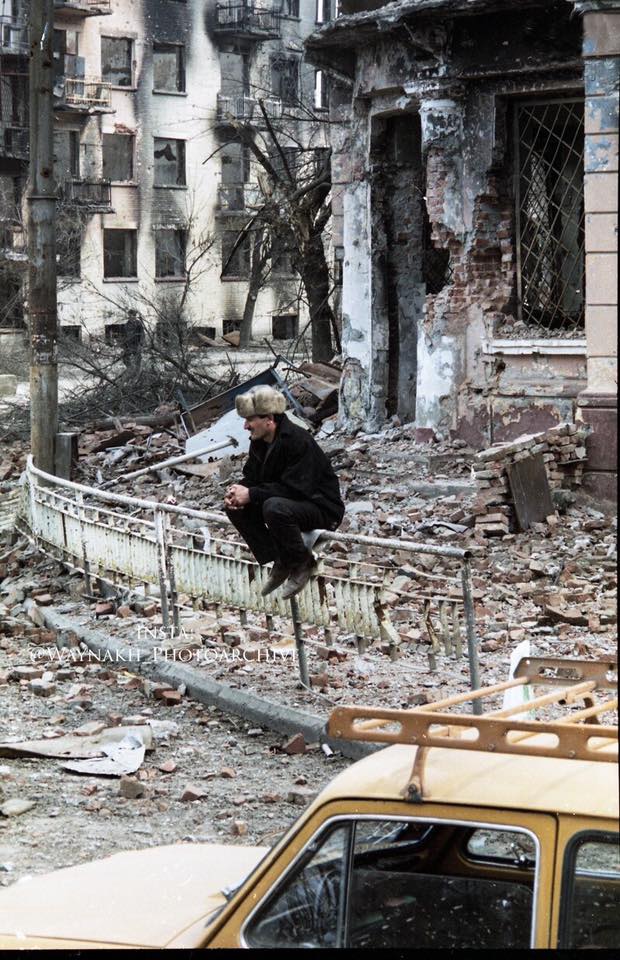
Grozny nel 1995
Perché?
Perchè la Russia ha creato enormi problemi all’interno della Cecenia, gli eventi si sono sovrapposti l’uno all’altro in un’ondata dopo l’altra. Le forze dell’ordine e, naturalmente, l’ufficio del procuratore generale, semplicemente non hanno avuto il tempo di portare a conclusione almeno una parte di questo caso sui crimini di guerra dell’esercito russo nella Repubblica cecena. Semplicemente, non ce l’abbiamo fatta. Quando ormai era iniziata la seconda aggressione, abbiamo consegnato parte dei materiali al Tribunale dell’Aia. Sono stati consegnati circa 12 volumi di materiali. Alcuni furono restituiti, perché considerati non pertinenti secondo le norme del diritto internazionale. Non avevamo esperienza. Sono rimasti solo 6 volumi. Nel frattempo ricominciarono le ostilità attive e presto l’intero territorio fu completamente occupato. Ed ogni ulteriore processo è stato nuovamente sospeso.
Durante la prima guerra, persa da Mosca, le truppe russe causarono molti problemi ai ceceni. Come è potuto accadere che durante la Seconda guerra Mosca abbia trovato relativamente molti alleati tra i ceceni? In particolare, Kadyrov li ha supportati.
Il regime russo, le autorità ed i servizi competenti coinvolti nella Repubblica cecena hanno tenuto conto dei loro precedenti errori. Il “lancio del cappello” ha dominato le menti dei politici e dei militari durante la loro prima campagna. Di conseguenza, hanno tenuto conto di questi momenti e hanno svolto un enorme lavoro sotto copertura per attirare nuovi membri in questa rete di agenti, ed hanno anche lanciato una potente propaganda all’interno della stessa Russia.
Immagina quando è iniziata la seconda campagna: immediatamente alla televisione di stato della Russia suonò “Alzati, il paese è enorme!” (canzone popolare scritta durante la Seconda Guerra Mondiale per mobilitare le masse contro l’invasione tedesca, Ndr) come suonava durante la Seconda guerra mondiale, quando Hitler attaccò l’URSS. L’ho sentito io stesso. Viene la pelle d’oca quando si sente questa canzone. Immagina questo contro la piccola Repubblica cecena, che alcuni non riescono neanche a trovare sulla mappa! E poi improvvisamente i ceceni sono diventati una “forza fascista”. La stessa cosa che è stata fatta ora contro l’Ucraina.
La seconda guerra cecena è stata preceduta da attacchi terroristici sul territorio della Russia, in cui sono stati accusati i ceceni. Che ne sai a riguardo?
Solida disinformazione, che è stata giocata molto non solo in Russia, ma in tutto il mondo. Molti ci hanno creduto. Perché è stato presentato in modo così magistrale utilizzando i media controllati dal regime. Era così ovvio per noi che si trattava di una bugia che siamo rimasti semplicemente sorpresi. C’erano molte prove che si trattava di provocazioni, che ciò veniva fatto dai servizi speciali russi. Ma semplicemente non c’era nessuno ad ascoltarci. E i materiali che abbiamo cercato di contrabbandare all’estero attraverso i media in Occidente sono semplicemente scomparsi. Furono trasmessi, furono segnalati, ma non ci fu alcuna risposta.
Shamil Basayev durante l’invasione del Daghestan (Agosto 1999)
C’era un’altra ragione per la seconda guerra: l’invasione del distaccamento di Shamil Basayev in Daghestan. Perché è accaduta?
Sì, c’è stata uno sconfinamento di alcuni gruppi, c’erano ceceni anche nel territorio del Daghestan. Questo non può essere negato. Se sapessi quanto erano diversi questi gruppi! C’erano persone provenienti da tutto il Caucaso settentrionale, compreso il Daghestan. Solo Bagautdin (uno dei leader della “Shura islamica del Daghestan” – ndr) ha portato nel nostro territorio 2.000 persone. E la gente ha avuto l’impressione che fossero i ceceni a muoversi come una valanga nel territorio del Daghestan con l’obiettivo di occupare, aggredire, ecc. Sembrava completamente diverso rispetto a quello che vedevano testimoni oculari. Tutti, ovviamente, hanno visto quello che volevano vedere. Ma ti assicuro che non c’era nemmeno la metà dei ceceni. Per la maggior parte erano persone di altre repubbliche, c’erano anche volontari dal Medio Oriente … Naturalmente, il presidente Aslan Maskhadov, fin dall’inizio, quando le informazioni iniziarono ad arrivare, era categoricamente contrario. E questa non era l’azione delle unità armate della Repubblica cecena di Ichkeria. In nessun caso! Questi erano volontari che hanno fatto la loro scelta e hanno preso parte a questa operazione.
Il presidente Maskhadov ha avuto l’opportunità di fermare l’azione di Basayev?
A quel tempo, ai confini della Repubblica cecena, in tutto il Caucaso settentrionale, c’era una massiccia concentrazione di truppe russe, enorme. Perché erano concentrati in questi luoghi? Noi non avevamo truppe ai nostri confini, non c’era nemmeno la possibilità di farlo. Ad esempio, non vi era alcuna leva nell’esercito in quanto tale. E contenere i volontari o lo stesso Basayev, che ha agito da solo, avrebbe significato uno scontro militare intra-ceceno. Il passaggio al territorio del Daghestan è avvenuto in pochi giorni. Credo che per Maskhadov sia stato, da un lato, inaspettato e che comunque non ci fossero forze adeguate per organizzare una sorta di barriera per impedire questo sconfinamento.
Tra i soldati russi morti in Ucraina, ci sono molte persone del Daghestan. Come spiegarlo?
Il Daghestan è per la maggior parte un’area montuosa. Ci sono molti villaggi d’alta quota che vivono autonomamente. Possiamo dire che la ragione principale è la povertà. Nella Federazione Russa, questo è un fenomeno comune nell’entroterra. E in Daghestan c’è povertà, e quindi …
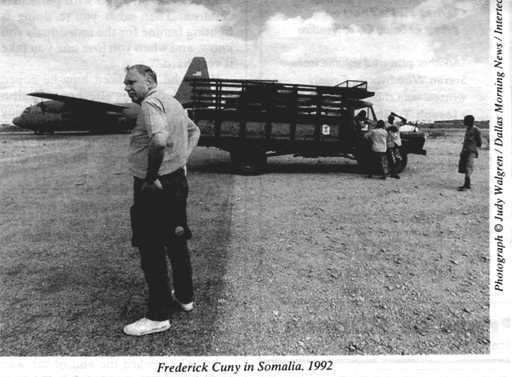
Frederick Carl Cuny (November 14, 1944, April 14, 1995) was an American citizen who throughout his life committed himself, officially for humanitarian reasons, to supporting the populations of countries in war, humanitarian and environmental crises. Active since 1969 in the consultancy and coordination of humanitarian services, he had worked in Biafra, Pakistan, Nicaragua, Guatemala, El Salvador, and dozens of other contexts, often very difficult, in which he had to deal not only with the difficult situation on the field, but also with the inefficiencies of humanitarian associations and the corruption of local governments. At the end of 1994 Cuny was contacted by George Soros’ Open Society Institute and sent to Chechnya with the aim of organizing a humanitarian plan for the safety of the inhabitants of Grozny. Returning the following March from his mission, during which he had witnessed the terrible siege of Grozny and made friends with Aslan Maskhadov, he had tried to involve the United States government in order to force Russia to stop military operations, negotiating a humanitarian truce. He held numerous conferences, public and private meetings with high-level politicians, and his article Killing Chechnya [1], in which he accused Russia of unleashing a war of aggression with genocidal purposes,went around the world. Despite his efforts and the support of some politicians in Congress, Cuny had failed to convince any of the high offices of state to intercede for him [2]. So he returned to Chechnya, to restart his mission on behalf of the Open Society. On April 1 , 1996, while on his way to Maskhadov’s headquarters in Orekhovo [3], he was captured in Starye Achkoy together with two Russian doctors and an interpreter [4], with whom he was crossing the country in an ambulance, after which he was lost traces completely. His search lasted for many months, after which his son and brother communicated that they had received reliable information according to which he would have been killed almost immediately after his arrest, presumably carried out by men of the Department of State Security, at that time directed by Abusupyan Mosvaev . His body and that of his colleagues would never be found. Charges regarding his killing fell on Colonel Rizvan Elbiev , State Defense Department officer in Achkhoy –Martan district. The latter, according to Cuny ‘s driver (the only one of the group left alive) after the ambulance had been stopped near Starye Achkhoy by a detachment of the State Department of Defense, requested that the members of the team of Cuny presented themselves to him to provide the personal details, and then accompany them to the Headquarters of Maskhadov. The volunteers sent the driver back with a note intended for Open Society in which they said they were fine, to postpone the scheduled appointments by 3 days and to alert the authorities if they did not return within the established time [5].
Days passed, then weeks, and no trace of Cuny was found. Family members involved the FBI, the US government, and even the Soros Foundation, which had financed the mission, began his research, spending up to eighty thousand dollars a month to obtain information [6]. Calls for the release of the American came from the American president Clinton, from the Russian Yeltsin and even from the Chechen one, Dudayev.
The following August, after months of unsuccessful attempts to locate Cuny and his friends, his family publicly announced that they had learned of the death of their relative, and all members of his group. Cuny ‘s son and brother publicly accused the Chechen government of responsibility for the murder, and likewise accused the Russian authorities of presenting Cuny as a spy. In the confidential report sent to the US government, the family specifically named Elbiev , whose name was given by the State Security Department soldier who had taken custody of the group. According to what they reported , Elbiev had all four shot on April 14th . This information was confirmed to the driver of the Cuny family , an ex combatant, in August 1995, on the basis of an indication given to him by a certain “A”, Bamut defense field officer [7].
In August 1996, a bloody bundle was found in the ruins of a house in Starye Achkhoy , and inside it were found the documents of all four members of Cuny ‘s team . Besides these there was a note, addressed to Maskhadov, in which was written: Esteemed Aslan, We have tried to come to you, with the medicines and the two doctors we had promised. With me is Fred Cuny , the American you already know, who came to hold the meeting that didn’t take place last time. to confirm that you are aware of us and our mission. Respectfully, Galina Oleinik . Soros Foundation. Being certain that it was Elbiev who seized the documents, it is quite probable that he was responsible for the deaths of Cuny and the others [8].
It is possible that Eldiev was only the material executor of the murder. According to what an anonymous Chechen source reported to Scott Anderson, journalist of the New York Times, and confirmed by Memorial in one of its reports, [9]the order to shoot Cuny and his friends would have come directly from the Director of the State Defense Department, Abusupyan Mosvaev who would have been deceived by a list of spies circulated by the FSB around Bamut, to push Chechen fighters into a false step [10]. The choice of Mosvaev , however, could also have been determined by another factor, a suspicion that opens up to a rather imaginative theory, based exclusively on a rumor: that in those parts, and precisely in the surroundings of Bamut, a short distance from Starye Achkhoy , the Chechen government was hiding radioactive material , or even a nuclear weapon. Let’s start again: these are theses that have no basis for proof, and we report them solely for the record.
Grozny in 1995
Bamut was one of the strongholds of the Chechen defense. The village, and the missile base located nearby, withstood a long and exhausting siege, which lasted from April 18 , 1995 to May 24, 1996. The Chechens defended that position with great fury, apparently out of the way of the heart of the Chechen defense system. It so happens that the village’s main point of interest was a base for launching ballistic missiles capable of carrying nuclear warheads. The Russians had already abandoned the base in 1992, solemnly declaring that they had stolen all unconventional weapons, and that they had brought all the radioactive material back to Russia . In mid- November , following a communication sent from Chechnya, the Russian authorities found a container containing an explosive sprinkled with radioactive material in a park in Moscow . There was talk of non-military material, therefore not coming from an atomic warhead, but the case produced a search for psychosis among the federal security forces. The other element that raises doubts is the route taken by Cuny to reach Yandi . Instead of taking a main road, perhaps passing through Rostov – Baku, for you to turn towards Katar – Yurt and from there you can easily reach Maskhadov’s headquarters, Cuny decided to cross Bamut and climb up a path that is very difficult to do by car, facing voluntarily an already difficult journey in itself, complicated by the fact that the village garrison, notoriously reluctant to collaborate with journalists and foreign volunteers, was about to end up under siege [11].
The cover of the Frontline program dedicated to Fred Cuny
Neither of these two leads, in any case, appears completely convincing. It seems strange, in fact, that a man with such extensive connections and knowledge as Fred Cuny would end up shot just because he was mentioned in a fabricated FSB document. And likewise the story of the investigation into the “Dudaev atomic bomb” is totally devoid of evidence (after all, no atomic warhead, nor box containing atomic material has ever been found). What happened then? A third theory is provided by Kommersant, in his April 21, 1999 edition:
This time [on his second trip, ed .] Cuny presented a specific plan for a truce between Moscow and Grozny. And therefore, he certainly had to meet with General Dudayev . That is why the inspection by the Chechen State Security Department did not worry him at all. However, on April 7 – this is the date Galina Oleinik feared – [in the note found in 1996, ed .] the Russian army began the famous “cleansing” of Samashki, the ancestral village of the Chechen president. The shootings continued there for two days. And they couldn’t help but ruin Cuny and his mission. By then Kewney was getting in the way of everyone: Russian hawks, Chechen warlords, and even his own country’s politicians. Kewney has not overestimated the extent of his influence and authority in the American establishment. Suffice it to say that US military doctrine changed largely under his influence […] not surprisingly, the “missionary” activities of Fred Cuny and that of the US military began to go hand in hand after the Gulf War. However, if at first Cuny and American politicians successfully cooperated, trying not to interfere in each other’s sphere of competence, very soon they began to compete. […] The death of a competitor has allowed politicians to become monopolists. And they reversed his plan: Cuny , starting from the elimination of the consequences of military operations, tried to build an international mechanism to prevent humanitarian catastrophes. Politicians have transformed his doctrine into “humanitarian wars” in which a humanitarian catastrophe is caused.
Whatever the reason that led to Cuny’s death, this will presumably be buried together with his body and that of his travel companions. Precisely with regard to his remains, in November 1998 unknown criminals tried to contact Fred’s family to return the body, which they claimed to have. As evidence, they sent a photo of a metal pin that had been inserted into Cuny ‘s leg many years earlier after he had been hit by a taxi. The family replied that they would never pay a ransom for the body, following the will of the father, who stated: you don’t pay for the body, with reference to the practice of ransom of corpses. Cuny was convinced that the practice of paying ransoms for kidnapped people or getting their remains back was one of the main drivers of kidnappings for ransom, and that if the ransoms were not paid, this heinous criminal activity would soon disappear from Chechnya [12].
[2]In particular, according to an article by Kommersant dated April 24 , 1999, the US ambassador in Moscow, Thomas Pickering, responded to Cuny ‘s requests that the United States had no strategic interest in this region and that if the Soros Foundation wanted to act in Chechnya he would have done so at his own peril.
[4]The interpreter was Galina Oleinik , the two doctors were Sergei Makarov and Andrei Sereda .
[5]The contents of the ticket, like all the other circumstances described so far can be found in the Frontline article, Who killed Fred Cuny ? available at www.pbs.org
[6]February 25, 1996 – What happened to Fred Cuny ?
[7] Mr. “A” could be Captain Shirvani Albakov , Bamut’s Chief of Defense Staff, shot in the neck on 16 June 1995. In this sense, it could be a settlement of accounts due precisely to the cover-up of the affair in question.
[8]Frontline, Who Killed Fred Cuny ? available on the site www.pbs.org
[9]The account is quoted by Kommersant in an April 21 , 1999 article
[10]The news of the “list” presumably circulated by the FSB around Bamut to induce the Chechens to doubt foreign humanitarian agents would have been provided not only by the family of the deceased Cuny, but also by a witness interviewed by the New York Times , whose memoirs were published in the February 25, 1996 article What happened to Fred Cuny ? The circumstance is doubtful, because Cuny had arrived in Chechnya only a few days earlier, and the FSB would hardly have been able to organize such an operation in such a short time. On the other hand, it is strange that the Chechen government, always very helpful towards Western supporters at that stage of the conflict, had on its own initiative betrayed a consolidated relationship of trust with one of the most famous humanitarian workers in all of the West.
STRAGI, SPIE ED ARMI NUCLEARI: L’ASSASSINIO DI FRED CUNY
Frederick Carl Cuny (14 Novembre 1944, 15 Aprile 1995) era un cittadino americano che per tutta la vita si impegnò, ufficialmente per motivi umanitari, nel sostegno alle popolazioni di paesi in crisi bellica, umanitaria ed ambientale. Attivo fin dal 1969 nell’attività di consulenza e coordinamento dei servizi umanitari, aveva lavorato in Biafra, Pakistan, Nicaragua, Guatemala, El Salvador, e dozzine di altri contesti, spesso molto difficili, nei quali doveva confrontarsi non soltanto con la difficile situazione sul campo, ma anche con le inefficienze delle associazioni umanitarie e la corruzione dei governi locali. Alla fine del 1994 Cuny era stato contattato dall’Open Society Institute di George Soros ed inviato in Cecenia con lo scopo di organizzare un piano umanitario per la sicurezza degli abitanti di Grozny. Rientrato nel Marzo successivo dalla sua missione, durante la quale aveva assistito al terribile assedio di Grozny ed aveva stretto amicizia con Aslan Maskhadov, aveva cercato di coinvolgere il governo degli Stati Uniti ad entrare in campo per costringere la Russia ad interrompere le operazioni militari, negoziando una tregua umanitaria. Tenne numerose conferenze, incontri pubblici e privati con politici di alto livello, ed il suo articolo Killing Chechnya[1], nel quale accusava la Russia di aver scatenato una guerra di aggressione con scopi genocidi,fece il giro del mondo. Nonostante il suo impegno e l’appoggio di alcuni politici al Congresso, Cuny non era riuscito a convincere nessuna delle alte cariche dello stato ad intercedere per lui[2]. Così era tornato in Cecenia, per ricominciare la sua missione per conto della Open Society. Il 1 Aprile 1996, mentre si dirigeva al Quartier Generale di Maskhadov, ad Orekhovo[3], venne catturato a Starye Achkoy insieme a due medici russi ed un interprete[4], con i quali stava attraversando il paese a bordo di un’ambulanza, dopodiché di lui si persero completamente le tracce. Le sue ricerche si protrassero per molti mesi, dopodichè il figlio ed il fratello comunicarono di aver ricevuto informazioni affidabili secondo le quali egli sarebbe stato ucciso quasi subito dopo il suo arresto, operato presumibilmente da uomini del Dipartimento per la Sicurezza dello Stato, a quel tempo diretto da Abusupyan Mosvaev. Il suo corpo e quello dei suoi colleghi non sarebbero mai strati ritrovati. Le accuse riguardo la sua uccisione ricaddero sul Colonnello Rizvan Elbiev, ufficiale del Dipartimento per la Difesa dello Stato nel distretto di Achkhoy – Martan. Questi, secondo quanto riferito dall’autista di Cuny (l’unico del gruppo rimasto in vita) dopo che l’ambulanza era stata fermata nei pressi di Starye Achkhoy da un distaccamento del Dipartimento per la Difesa dello Stato, richiese che i componenti della squadra di Cuny si presentassero da lui per fornire le generalità, per poi accompagnarli al Quartier Generale di Maskhadov. I volontari rimandarono l’autista indietro con un biglietto destinato ad Open Society nel quale dicevano di stare bene, di spostare gli appuntamenti in programma di 3 giorni e di allertare le autorità qualora non fossero rientrati entro il tempo stabilito[5].
Passarono i giorni, poi le settimane, e di Cuny non si trovò traccia. I familiari coinvolsero l’FBI, il governo americano, ed anche la Fondazione Soros, che aveva finanziato la missione, iniziò le sue ricerche, spendendo fino ad ottantamila dollari al mese per ottenere informazioni[6]. Appelli alla liberazione dell’americano giunsero dal presidente americano Clinton, da quello russo Eltsin e perfino da quello ceceno, Dudaev.
Nell’Agosto successivo, dopo mesi di inutili tentativi di rintracciare Cuny ed i suoi amici, la sua famiglia annunciò pubblicamente di essere venuta a conoscenza della morte del loro congiunto, e di tutti i membri del suo gruppo. Il figlio ed il fratello di Cuny accusarono pubblicamente il governo ceceno della responsabilità dell’omicidio, e parimenti accusarono le autorità russe di aver presentato Cuny come una spia. Nel rapporto confidenziale inviato al governo degli Stati Uniti, la famiglia fece precisamente il nome di Elbiev, il cui nome era stato fatto dal militare del Dipartimento per la Sicurezza dello Stato che aveva preso in custodia il gruppo. Secondo quanto riferito da questi, Elbiev avrebbe fatto fucilare tutti e quattro il 14 Aprile. Tale informazione fu confermata all’autista della famiglia Cuny, un ex combattente, nell’Agosto del 1995, sulla base di un’indicazione a questi fornita da un certo “A”, ufficiale di campo della difesa di Bamut[7].
Nell’Agosto del 1996, tra le rovine di una casa di Starye Achkhoy fu rinvenuto un fagotto insanguinato, e all’interno di questo furono trovati i documenti di tutti e quattro i membri della squadra di Cuny. Oltre a questi c’era un biglietto, indirizzato a Maskhadov, nel quale c’era scritto: Stimato Aslan, Abbiamo cercato di passare da te, con le medicine e i due dottori che avevamo promesso. Con me c’è Fred Cuny, l’americano che già conosci, che è venuto per tenere l’incontro che l’altra volta non c’è stato. per confermare che sei a conoscenza di noi e della nostra missione. Con rispetto, Galina Oleinik. Fondazione Soros. Essendo certo che fu Elbiev a sequestrare i documenti, è piuttosto probabile che fosse lui il responsabile della morte di Cuny e degli altri[8].
E’ possibile che Eldiev fosse soltanto l’esecutore materiale dell’omicidio. Secondo quanto riferito da una fonte anonima cecena a Scott Anderson, giornalista de New York Times, e confermato da Memorial in uno dei suoi resoconti[9] l’ordine di fucilare Cuny ed i suoi amici sarebbe venuto direttamente dal Direttore del Dipartimento per la Difesa dello Stato, Abusupyan Mosvaev il quale sarebbe stato tratto in inganno da una lista di spie fatta circolare dall’FSB nei dintorni di Bamut, per spingere i combattenti ceceni ad un passo falso[10]. La scelta di Mosvaev, tuttavia, avrebbe potuto essere determinata anche da un altro fattore, un sospetto che apre ad una teoria piuttosto fantasiosa, basata esclusivamente su una diceria: che da quelle parti, e precisamente nei dintorni di Bamut, a poca distanza da Starye Achkhoy, il governo ceceno nascondesse materiale radiattivo, o addirittura un’arma nucleare. Premettiamo nuovamente: si tratta di tesi che non hanno alcun fondamento di prova, e le riportiamo unicamente per dovere di cronaca.
Bamut era uno dei capisaldi della difesa cecena. Il villaggio, e la base missilistica situata nei suoi pressi, resistettero ad un lungo ed estenuante assedio, protrattosi dal 18 Aprile 1995 al 24 Maggio 1996. I ceceni difesero con grande accanimento quella posizione, apparentemente defilata rispetto al cuore del sistema difensivo ceceno. Il caso vuole che il punto di interesse principale del villaggio fosse una base per il lancio di missili balistici capaci di trasportare testate nucleari. I russi avevano abbandonato la base già nel 1992, dichiarando solennemente di aver sottratto qualsiasi arma non convenzionale, e di aver riportato in Russia tutto il materiale radiattivo. A metà Novembre, a seguito di una comunicazione inviata dalla Cecenia, le autorità russe rinvennero in un parco di Mosca un contenitore contenente un esplosivo cosparso di materiale radiattivo. Si parlava di materiale non militare, quindi non proveniente da una testata atomica, ma il caso produsse una cerca psicosi tra le forze di sicurezza federali. L’altro elemento che solleva dei dubbi è il percorso fatto da Cuny per raggiungere Yandi. Anziché prendere una strada principale, magari passando dalla Rostov – Baku, per voi svoltare verso Katar – Yurt e da lì raggiungere agilmente il Quartier Generale di Maskhadov, Cuny decise di attraversare Bamut e di inerpicarsi su un sentiero molto difficile da fare in automobile, affrontando volontariamente un viaggio già difficile di per sé, complicato dal fatto che la guarnigione del villaggio, notoriamente poco incline a collaborare con giornalisti e volontari stranieri, stava per finire sotto assedio[11].
Nessuna tra queste due piste, in ogni caso, appare completamente convincente. Appare strano, infatti, che un uomo con agganci e conoscenze così vaste come Fred Cuny finisse fucilato soltanto perché citato in un documento artefatto dall’FSB. E parimenti la storia dell’indagine sulla “atomica di Dudaev” è totalmente priva di elementi di prova (del resto nessuna testata atomica, né scatola contenente materiale atomico è mai stata ritrovata). Che cosa successe, quindi? Una terza teoria è fornita da Kommersant, nella sua edizione del 21 Aprile 1999:
Questa volta [durante il suo secondo viaggio, ndr.] Cuny ha presentato un piano specifico per una tregua tra Mosca e Grozny. E quindi, doveva certamente incontrare il generale Dudayev. Ecco perché l’ispezione da parte del Dipartimento per la sicurezza dello Stato ceceno non lo impensieriva affatto. Tuttavia, il 7 aprile – questa è la data che temeva Galina Oleinik – [nel biglietto ritrovato nel 1996, ndr.] l’esercito russo ha iniziato la famosa “pulizia” di Samashki, il villaggio ancestrale del presidente ceceno. Le sparatorie sono continuate lì per due giorni. E non potevano fare a meno di rovinare Cuny e la sua missione. A quel punto Kewney stava intralciando tutti: falchi russi, signori della guerra ceceni e persino i politici del suo stesso paese. Kewney non ha sopravvalutato la portata della sua influenza e autorità nell’establishment americano. Basti dire che la dottrina militare degli Stati Uniti è cambiata in gran parte sotto la sua influenza […] non sorprende che l’attività “missionarie” di Fred Cuny e quella dell’esercito americano, dopo la Guerra del Golfo, abbiano cominciato ad andare di pari passo. Tuttavia, se all’inizio Cuny e i politici americani hanno collaborato con successo, cercando di non interferire nella sfera di competenza l’uno dell’altro, molto presto hanno iniziato a competere. […] La morte di un concorrente ha permesso ai politici di diventare monopolisti. E hanno ribaltato il suo piano: Cuny, partendo dall’eliminazione delle conseguenze delle operazioni militari, ha provato a costruire un meccanismo internazionale per prevenire le catastrofi umanitarie. I politici hanno trasformato la sua dottrina in “guerre umanitarie” in cui si provoca una catastrofe umanitaria.
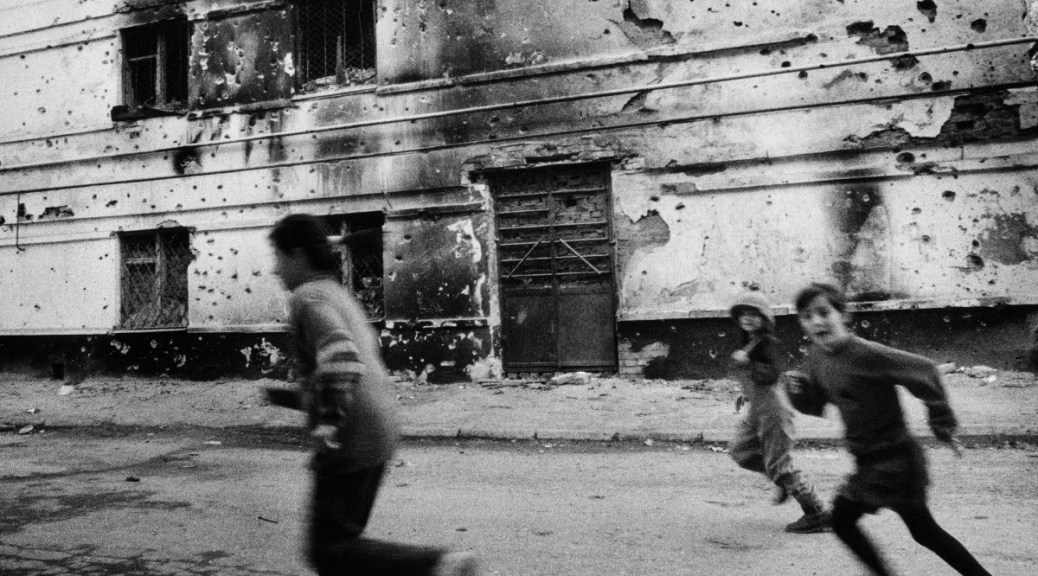
Quale che fosse il motivo che portò Cuny alla morte, questo rimarrà presumibilmente sepolto insieme al suo cadavere ed a quello dei suoi compagni di viaggio. Proprio riguardo ai suoi resti, nel Novembre del 1998 ignoti criminali cercarono di contattare la famiglia di Fred per restituire il cadavere, che dichiaravano di detenere. Come prova inviarono una foto che ritraeva un perno di metallo che era stato inserito in una gamba di Cuny molti anni prima, dopo che era stato investito da un taxi. La famiglia rispose che non avrebbe mai pagato un riscatto per il corpo, seguendo la volontà del padre, il quale affermava: non si paga per il corpo, con riferimento alla pratica del riscatto dei cadaveri. Cuny era convinto che la prassi di pagare i riscatti per persone rapite o per riavere i loro resti era uno dei motori principali dei sequestri a scopo estorsivo, e che se i riscatti non fossero stati pagati ben presto tale odiosa attività criminale sarebbe sparita dalla Cecenia[12].
[2] In particolare, secondo quanto riportato da un articolo di Kommersant del 24 Aprile 1999, l’ambasciatore statunitense a Mosca, Thomas Pickering, rispose alle sollecitazioni di Cuny che gli Stati Uniti non avevano interessi strategici in questa regione e che se la Soros Foundation avesse voluto agire in Cecenia lo avrebbe fatto a proprio rischio e pericolo.
[4] L’interprete era Galina Oleinik, i due medici si chiamavano Sergei Makarov e Andrei Sereda.
[5] Il contenuto del biglietto, al pari di tutte le altre circostanze finora descritte sono reperibili sull’articolo di Frontline, Who killed Fred Cuny? disponibile sul sito www.pbs.org
[6] New York Times Magazines del 25 Febbraio 1996 – What happened to Fred Cuny?
[7] Il Signor “A” potrebbe essere il Capitano Shirvani Albakov, Capo di Stato Maggiore della Difesa di Bamut, ucciso con un colpo alla nuca il 16 Giugno 1995. In questo senso potrebbe trattarsi di un regolamento di conti dovuto proprio all’insabbiamento della vicenda in questione.
[8]Frontline, Who killed Fred Cuny? disponibile sul sito www.pbs.org
[9] Il resoconto è citato da Kommersant in un articolo del 21 Aprile 1999
[10] La notizia della “lista” fatta circolare presumibilmente dall’FSB nei dintorni di Bamut per indurre i ceceni a dubitare degli agenti umanitari stranieri sarebbe stata fornita, oltre che dalla famiglia del defunto Cuny, anche da un testimone intervistato dal New York Times, le cui memorie sono state pubblicate sull’articolo del 25 Febbraio 1996 What happened to Fred Cuny? La circostanza è dubbia, perché Cuny era arrivato soltanto pochi giorni prima in Cecenia, e difficilmente l’FSB sarebbe stato in grado di predisporre una simile operazione in così poco tempo. D’altra parte è strano che il governo ceceno, sempre molto disponibile verso i sostenitori occidentali in quella fase del conflitto, avesse di propria iniziativa tradito un rapporto consolidato di fiducia con uno degli operatori umanitari più celebri di tutto l’Occidente.
Ismail Akaev è un giornalista e scrittore ceceno. I frequentatori di questo sito lo conoscono per il suo fondamentale contributo alla traduzione in lingua russa di “Libertà o Morte! Storia della Repubblica Cecena di Ichkeria”. Autore prolifico, la sua principale opera narrativa è il romanzo storico “Silver Coin”, che si presenta al suo pubblico con queste parole:
Questo non è un romanzo ordinario, ma piuttosto una storia giornalistica sull’amore, il dovere e l’onore. Se vuoi conoscere un’altra verità sulla guerra cecena e allo stesso tempo sentirne tutto il dolore, questo libro è per te. Una storia tragica e commovente su un insegnante di scuola… Su un padre e un figlio… “L’alba sanguina davanti ai nostri occhi. Il cielo bagna i cadaveri e la terra piange. Uccelli e animali: tutto brucia sotto il fuoco. Quanto fa male: un gemito mi taglia la schiena. Cosa dovrei fare? Non si può cambiare nulla …“
“Quella sera il villaggio di montagna di Borzoy accolse Said con ansia e tristezza. I militanti che si erano ritirati dalla città si trasferirono sulle montagne e quindi qui si svolgevano intense operazioni militari. In alcuni punti sui sentieri di montagna innevati le loro ombre, avvolte in cappotti mimetici bianchi, lampeggiavano.
C’era allarme e spavento in montagna, e non solo in montagna. Qualcosa di inimmaginabile stava accadendo in tutta la repubblica. Non era una guerra, le guerre non funzionano così . In guerra due paesi con la stessa forza militare si combattono, e conoscono bene le ragioni del conflitto. Quello che stava succedendo in Cecenia era la distruzione di massa di un piccolo popolo da parte di un’enorme potenza nucleare. E il mondo intero guardava con indifferenza, come se dovesse essere così… Dopo aver letto gli appunti trovati nel nascondiglio di suo padre, Said era sicuro che nulla avrebbe mai turbato il suo cuore. Gli sembrò che quella notte avesse pianto tutte le lacrime e anestetizzato il suo cuore e la sua anima, ma ciò che stava accadendo intorno a lui diceva contrario. Le “operazioni di pulizia”, L’omicidio , il furto, sono diventati un luogo comune per i ceceni . Si rallegravano del ritrovamento del cadavere come un tesoro e la morte era percepita come ricompensa, l’importante era non finire nel campo di filtraggio e non diventare cibo per i cani. I federali hanno imparato da soli che i ceceni apprezzano allo stesso modo sia i vivi che i morti e hanno trovato un modo per guadagnarci sopra. Con la scusa di controllare i passaporti, individuavano le famiglie benestanti che sarebbero state in grado di pagare i soldi per riavere i loro cari. Rapire qualcuno non era un problema per loro. Del resto Shamanov aveva detto: “Un buon ceceno è un ceceno morto”.
A Chechen woman showing the passports of her missing sons during a gathering of women searching for arrested and missing male relatives in central Grozny. Photo by Heidi Brander
Man mano si andò creando una mappa della morte: si annotava chi era sepolto dove per restituire il suo corpo ai parenti, in cambio di soldi. La vicina di Saipuddin, Zara, apparteneva ad una delle famiglie benestanti. Viveva con il suo unico figlio, Isa, nella vecchia casa paterna di suo marito, nel villaggio di Borzoy. Suo marito era stato ucciso durante la prima campagna militare, mentre lasciava la città assediata. Dopo la sua morte lei e Isa si trasferirono nel villaggio ancestrale di suo marito e si stabilirono qui. La vista della loro casa fu il motivo per cui Isa fu portato al campo di filtraggio. Zara non sapeva come fare. Parenti vicini e lontani, e perfino i compaesani accorsero in aiuto della vedova: tante persone si trovavano nella situazione di Zara, ma la sua tragedia sconvolse molti. Vagò per un anno, e per tutta la Cecenia, in cerca di suo figlio. I suoi occhi videro tanti cadaveri, spesso mutilati, col volto tumefatto. Zara continuò a cercare, sopportando l’odore nauseante dei cadaveri. Cercava il suo ragazzo, il suo unico legame al senso della vita, tra i vivi e tra i morti.
[…]
Insieme al cugino del marito Zara si diresse al luogo che le era stato indicato. Ad un certo punto incontrò i federali, i quali gli dissero che non era permesso procedere con la macchina oltre quel punto. Così lui rimase sulla strada e Zara, salita su un’auto militare, andò avanti insieme ai federali. Dopo aver viaggiato molto, Zara vide un’enorme buca. Le fu detto di scendere e identificare suo figlio, dopodiché i federali sarebbero scesi a prenderlo . Zara scese con cautela. I cadaveri erano sparpagliati alla rinfusa nella buca. Zara riconobbe immediatamente Isa. Lo riconobbe da una piccola voglia sulla fronte, e dal sorriso disegnato sulle sue labbra congelate. Il cadavere era fresco. A quanto sembrava, era stato tenuto nel campo per molto tempo ed è stato ucciso di recente. Stava per gridare ai federali di averlo trovato, quando vide il mignolo della mano del cadavere accanto a quello di Isa che stava tremando. A Zara sembrò che l’avessero cosparsa di acqua bollente.
“Sei vivo?” – sussurrò con labbra tremanti. Il palmo sporco del ragazzo che strinse era caldo. Zara si rese conto che era vivo. A quanto pare era svenuto dopo il pestaggio e i federali lo avevano gettato nella fossa insieme ai cadaveri. Zara non ebbe il tempo pensare. Tutto quello che aveva passato quest’anno per arrivare al cadavere del suo giovane figlio le scorreva davanti agli occhi. Probabilmente i Borzoy si stavano già radunando per un funerale e si stavano preparando a scavare una fossa accanto alla tomba del padre di Isa. Nei suoi occhi apparve l’immagine di suo marito: cosa avrebbe fatto lui? Non importa, si sarebbe comportata come una madre, questa era la decisione giusta. Zara si è resa conto che suo figlio non poteva tornare indietro. Da qualche parte, in Cecenia, la madre di colui sulla cui mano si era appena mosso il mignolo non dormiva la notte. Se Allah le aveva lasciato una tale scelta, lei avrebbe scelto come sceglierebbe il cuore di una madre.
“Dirò loro che sei mio figlio, ti sto tirando fuori come se fossi morto. Non fare un fiato”, sussurrò. Zara guardò indietro. Si chinò sul cadavere di suo figlio e fece scorrere delicatamente la mano sul suo viso giovane, che non aveva avuto il tempo di ricoprirsi di barba. “Che Allah ti benedica, mio caro ragazzo, perdonami, devo lasciarti qui per salvare un’altra vita”.
– “Sono pronta” Gridò Zara. Il soldato scese nella fossa.
– Quale?
– “Eccolo mio figlio”. Indicò Zara con mano tremante.
Caricando il ragazzo come un sacco in spalla, il soldato lasciò la fossa, seguito da Zara. Lo gettò a terra e un altro “Fed” colpì allo stomaco il “cadavere” con una pala. Zara urlò di orrore. Pensò il ragazzo si sarebbe contorto dal dolore.
– “Vai avanti da sola. Portalo sulla strada”, disse il “Fed”. Salirono in macchina, chiudendo le portiere dietro di loro, e infilarono la canna di una pistola fuori dal finestrino. Zara se lo mise sulla spalla e camminò così per un po’, poi le gambe cedettero, e Zara cadde a terra con lui. Decise di trascinarlo come un sacco.
– “Abbi pazienza figlio mio, ancora un po’ e raggiungeremo la macchina, va tutto bene… Ti porterò a Borzoy. Ti curerò… è così bello lì… L’aria fresca… Le montagne, il fiume. Tu sei forte e giovane e ti rimetterai presto in piedi. Assomigli persino a mio figlio. Andrà tutto bene, arriva la primavera… Tornerai da tua madre», borbottò Zara. In qualche modo raggiunse il ciglio della strada.
– Dov’è Isa?
– “Isa è rimasto lì”, rispose Zara con un sussurro, gli occhi sconvolti
– “Cosa significa, Zara di cosa stai parlando?” chiese l’uomo, sorpreso.
– “Isa è morto – sussurrò lei – ma lui è vivo, ed io ho preso il vivo” Poi cadde a terra, priva di sensi.
[…]
Lungo la strada, Zara tornò in sé e si sedette sul sedile posteriore. Tenne la mano del ragazzo nella sua mano. Arrivarono a Borzoy. Aperto il cancello vi trovarono parenti, anziani e il teologo locale. Akhmed non sapeva cosa dire ai parenti. Fermò la macchina e appoggiò stancamente la testa sul volante.
– “Racconterò tutto da sola”, disse lei.
Scese con sicurezza dall’auto e si avvicinò allo zio di suo marito, Abdulbek. “Vashi” gli disse “Sei il maggiore della nostra famiglia, ci consultiamo con te per tutto, quindi voglio solo dirti che… Non ho portato Isa. È rimasto lì tra i cadaveri. Quando sono sceso nella fossa, ho notato un ragazzo vivo tra i corpi, ho detto che era mio figlio e l’ho tirato fuori . Non so se ho fatto bene.”
Ci fu un ruggito di stupore tra la gente.
– “Hai fatto come avrebbe dovuto fare qualsiasi madre cecena, sono orgoglioso di te figlia. Invece della morte, la vita è venuta in questa casa. Quindi è il volere di Allah . Alhamdulillah , Gloria ad Allah.”
– “Dov’è?”
– “Dobbiamo aiutarlo”
– “Di chi è?”
Il ragazzo non era cosciente. Lo portarono in casa. Gli astanti lessero il Movlid ed eseguirono lo zikr in onore della memoria di Isa . E Zara iniziò a prendersi cura di colui a cui aveva salvato la vita.
A woman searches for the bodies of her missing family members in a mass grave. Photo by Heidi Brander
Said rimase scioccato da questa storia. Insieme a zio Saipula, aveva aiutato i vicini a prepararsi per il funerale: come tutti, anche lui si aspettava che Zara sarebbe arrivata presto e che avrebbero seppellito suo figlio. Lui avrebbe ricordato per sempre quel giorno, la triste immagine di Zara, avvolta in una sciarpa nera, che passava tra la folla delle persone per confessarsi.
Said si riscosse: ricordò la rivelazione di suo padre che aveva letto il giorno precedente. Quanto è grande il sacrificio del ceceno persone. Questa è l’intera risposta alla domanda sul perché per secoli, dopo tanti genocidi, questo popolo rinasce ancora, e ancora. Sentendosi colpevole per l’intera nazione, suo padre lascia il proprio figlio a una donna sconosciuta e poi, decenni dopo, una donna cecena abbandona il cadavere di suo figlio, porta fuori il figlio di qualcun altro, perché ogni vita cecena le è cara. L’ impresa compiuta di Zara sembrava ricordargli che il futuro appartiene al popolo ceceno, il cui amore per la vita e per la Patria è più forte di migliaia di morti. Così passavano i giorni sulle montagne cecene innevate dove, sostituendosi l’un l’altro come il giorno e la notte, la vita e la morte andavano mano nella mano.
This interview, made in April 1995 and published by Kommersant on September 1, 1998, has an unusual story. The tape with the recording of the conversation disappeared under strange circumstances, leaving only its transcript. To remove doubts about the authenticity of the interview, Kommersant questioned the journalist who carried it out, the famous ITAR – TASS reporter Sherip Asuev.
Here is what Sharip Asuev recalls: “It was three years ago, in the spring. It was very difficult for me to get to Dudayev. His base was in the mountains, near Shatoi, in an old stable. I was accompanied by his associates, especially Daud Akhmadov. We talked almost until the morning … Then for two days I could not leave. Then they took me to another road. A few months later I was persuaded to give the cassette of the journalist of Komsomolskaya Pravda Alexander Yevtushenko, I agreed, because I knew it would never go through the TASS channels. All night I deciphered the tape. The next morning Sasha left. I return in the evening. Some people in camouflage took away his car, with all its contents… ”
Yevtushenko confirmed that he had received the tape, and that his car was confiscated, which was destroyed a few weeks later at a federal troop checkpoint, hit directly by a tank shell. “Even if the tape had still been in the car” he replied “there would have been nothing left of it after the bombing…”
Daud Akhmadov also confirmed Sherip’s version, declaring that he was present while Dudayev was giving the interview, and that he worked to get people to pass by a different road than the one by which he had come, because the first one in the meantime had been bombed .
Dudaev tiene una conferenza stampa dopo lo scoppio delle ostilità
Below is the translation of the interview:
Shatoi, April 1995
Dzhokhar, on the eve of the entry of Russian troops into Chechnya, did you personally feel this danger? Did you expect this development of events? After all, there was a giant tragedy of the people.
“This is a tragedy not only of the Chechen people. There has been a tragedy for Russia and the Russian people.”
I mean Grozny destroyed, the villages executed, thousands of widows and orphans. Did you foresee something like this happening?
“I’ve always said that Russia is dying and needs victims.”
Many today (April 1995.-Kommersant) say about you that you were specially trained and sent to destroy her people.
“It’s all bullshit. Bullshit, which I despise and do not perceive. I know exactly how these lies are formed. This is propaganda.”
They also talk about the fabulous money you get from selling oil, drugs…
“Bluff and talk. I don’t even want to comment.”
How do you see the future of Chechnya today?
“Well.”
What do you think will happen to Russia next?
If the Russians knew what fate they were preparing – not only for their descendants, but also for the current generation – they would probably have incurable diarrhea. Russia has two ways of developing. And both are stupid.
So?
What is the path to Russia? Take the dollar and make it your god. They are ready for it right now. What will come of it? This is self-destruction, a destructive path. You can go another way – I know which way Russia needs. But I will never tell. Let them fall and roll! One way is to accept Islam and follow the way of Islam. This is a more realistic way for them.
Daud Akhmadov parla ad una conferenza stampa.
And could not our people with you be victims of all these global processes?
“Today it is the victim of these problems.”
Victory or defeat, how will this war end?
“Questions about the start of the war and its completion are the Almighty’s business. So far, Russia itself is not prepared either for war or for its logical conclusion. But it’s not the war that worries me now, it will end anyway . And we will sign the peace. Not in Moscow – I will never go, and not in Chechnya – I have to let Russia save face. This (the signing of the peace. – Kommersant) will take place in the Caucasian land, in Dagestan. Do you want me to tell you where? In a train carriage…”
Dzhokhar, don’t you feel guilty that everything turned out like this in Chechnya?
“I don’t feel guilty.”
Couldn’t we have avoided this nightmare of war?
“We could not. If we tried to solve (the problem of relations with Russia. – Kommersant) by peaceful means, by politics, by loyalty, by humility – I can assure you that we would be destroyed to the root. And there would never again be a Chechen nation or its state. And I can responsibly say that already in 1991, the idea arose to populate the disputed territories on the Sino-Soviet border, under the branding that the Chechen mafia, rackets will not let you live. In 1991, how many Were there locomotives in Gudermes? With the excuse of maintenance? On which the factory grease had not yet been removed!? There were 56 locomotives! And how many wagons stood at the railway junctions around and on the territory of the republic? Cattle wagons. And without any movement for more than three months?! How many covered vehicles, under the guise of collection were in 11 districts, standing motionless, with people in green jackets?! Each car has an officer. And from how many units were additionally unloaded military equipment and the military contingent arrived on the territory of the republic to those who were already here?! And the Chechen nation would be destroyed. And the Emergency Committee was supposed to implement the idea of the genocide, another deportation of the Chechen people. And only an accident thwarted these plans.”
There is an idea that if Dudayev left now, saying: “If you want elections, hold them, if you want, join Russia”! Many more lives could be saved. Why do not you do that?
“I testify before Allah that such an act would bring great harm to the people. 300,000 men – aged between 17 and 50 – now have no shelter, no food, no work. They have nowhere to go – families are being destroyed, houses are being destroyed. These people have only one goal: revenge. As long as they trust me they obey me. If the landmark is broken, they will go out of control… Terrible! An internecine war will begin. In distant Russia, who should take revenge? Here we will seek blood revenge. They will again call for help from the Russians. And the latter, not understanding where theirs is, where they are strangers, will raze everything to the ground.”
Would you like to talk to Yeltsin now?
“I always have something to say to the leadership of Russia. I have always understood perfectly well, and I understand now, that such a huge Russia has its own interests, which are difficult to give up in an hour, in an instant. At first I suggested to take into account the interests of Russia: joint defense, joint armed forces. I even called him. I said more than once: recognize the path chosen by my people, and I will leave the political arena in 3 days.”
Dudaev vota alle elezioni popolari del 27 Ottobre 1991
Dzhokhar, how do you evaluate today’s events, as a result of which you came to power in the presidential elections on October 27, 1991?
“The Supreme is my witness that I did not want to present my candidacy for president. But then my supporters were indignant because, they said I was afraid.”
Who were these people who convened the first national congress of the Chechen people (November 23-25, 1990), at which an executive committee was created (September 6, 1991, the Executive Committee of the Chechen People’s Congress seized power in the republic – Kommersant)? What do you think now, did they really support the idea or did they use the name of the first Chechen general to achieve their goals?
“That’s all! When I saw to whom the Vainakh people’s congress entrusted its sovereignty and its future, I – I give you my word of honor – got goosebumps. Already at the very first meeting of the executive committee there, they – those who organized and held this congress – started a fight for money.Literally because of the money raised for the last congress.
I didn’t need places in this republic, in that environment, spoiled to the point of lawlessness. In general, I was not only afraid of this environment but, frankly, I despised it. This environment was so far from my intellect and level with all its luxury, bravado and behind-the-scenes games. This environment was wild and far away for me… I looked and shuddered in horror. Who was given the trust of the people! It became clear that it was a collapse. That things would turn out so differently from the direction people had imagined. That they would literally pervert this idea (of sovereignty-Kommersant), they would smear it, they would spit on it. And that the people would be reduced to nothing. This is what made me take on this heavy burden. But it’s one thing to pronounce high-sounding words from the stands, quite another when it is necessary to implement a decision.”
Dudaev in abiti civili durante il periodo prebellico
They say your inner circle was corrupt.
“Everyone was corrupt. In the old days, money was brought to the first people in the highest echelons of power in the republic, and there was a certain tax. It took some time to clear the upper echelon. A cabinet of ministers was replaced , the second cabinet, the third. And we passed the upper level, we succeeded. And those who planned it, they felt the sword of Damocles upon them, which would cut off their heads. But on the lower level, the corruption continued to exist with unbridled force.
If you started all over again, what would you change about your actions in the last few years (1991-1996 – Kommersant)?
“Even if I wanted to change something, they just wouldn’t let me. Of course, I wish I had done things very differently.”
Who didn’t allow it?
The context didn’t allow it, a society that wasn’t ripe for democracy and respect for rules and laws. Do you think I wouldn’t want to have talented, intelligent, intellectual, creative, dedicated people next to me?! But there were little bastards around who had only one interest: unbridled profit. The environment turned out to be like this due to the circumstances, there was no other.”