The opinion piece published by the Kyiv Post under the title “Kadyrov and Chechnya – Putin’s Black Swans” offers a critical reading of the growing vulnerability of Vladimir Putin’s regime in light of the “Kadyrov factor” and Russia’s internal political condition.
The author, Inal Sherip — a cultural studies scholar and political figure within the Chechen diaspora — argues that Ramzan Kadyrov should no longer be seen merely as a loyal ally of the Kremlin, but increasingly as a source of fragility for Putin’s system itself. The article opens by examining the recent “surprises” (so-called black swans) confronting Putin — diplomatic failures, international pressure, and military deadlock — and explains how, in this context, Kadyrov’s role has become increasingly problematic.
Inal Sharip, Foreign Minister of the Chechen Republic of Ichkeria
Sherip traces the evolution of the political project that, over the years, led to the construction of a personal power apparatus around Kadyrov — initially designed as a tool for Moscow’s control over the Caucasus — and shows how this same apparatus now risks turning into a “toxic asset.” The reasons are multiple: the growing cultural and religious autonomy of Chechnya’s leadership from Russia’s official narrative, its ties with Gulf states, and the ostentatious concentration of power and wealth.
At the core of the analysis lies the hypothesis that the potential disappearance or weakening of Kadyrov — whether due to health issues or internal conflict — could trigger a chain reaction capable of undermining Russia’s internal power balances themselves: from the redistribution of federal security forces, to an intense succession struggle within Kadyrov’s inner circle, to the opening of new spaces for intervention by Russia’s central security services, such as the FSB.
Ultimately, Sherip advances a non-conventional but compelling interpretation: Putin’s dependence on figures like Kadyrov is no longer merely a coercive advantage, but a potential breaking point for the stability of his own system of power — an internal “black swan” that could accelerate far broader dynamics of instability.
What role did Aushev play in the restoration of the Ingush state? And how is he seen today?
Aushev is a military man and obeys orders. The first thing he did when he became president was to ban all political organizations and establish a barracks regime in the republic. He created the conditions for corruption. He divided the Ingush people into three parts: the “Ingush” Ingush, who lived on the uncontested part of the land, the “Chechen” Ingush, who were forced to leave Grozny, and the “Ossetian” Ingush, who were expelled from North Ossetia after the ethnocide by the Russian army.
He violated Article 11 of the Constitution of the Republic of Ingushetia: he gave up the ancestral territories of Ingushetia and the city of Vladikavkaz by signing the so-called “Kislovodsk Treaties”. He did this under pressure from Yeltsin, who threatened to remove him from the presidency for the next term. There is video evidence of this. I don’t remember exactly when I wrote this comment on Facebook, but it concerns Aushev.
“All those who criticize Aushev for the Kislovodsk/Nalchik agreement, for the pocket parliament, for the barracks regime, for dancing at Ossetian government meetings, for abandoning the right bank of Vladikavkaz, for corruption, for jumping off personnel, for populism …. First of all, everyone has the right to criticize, because he is not a private person, but a public person, and every public person is subject to criticism; secondly, or rather, above all, all critics are right, because they tell the TRUTH. He led the republic built by us, the ancients, not as a general, but as a sergeant. Aushev was a talented but uneducated man, and that is why he drove all serious and worthy, educated and professional Ingush out of politics and business, placing himself alongside sycophants and other amateurs.”
Ruslan Aushev
So Aushev “sold” legitimate Ingush claims in order to avoid a conflict with Moscow. Considering what you told me about Dudayev’s decision not to pander to Yeltsin, don’t you think Aushev’s decision was wiser than Dudayev’s? A compromise to avoid ethnocide? Or do you think it could have been done differently?
Aushev took office after the ethnocide. It is very difficult to negotiate with the imperial Kremlin. It is necessary to be politically flexible. A good example of this was the President of Tatarstan Shaimiev Mintimer Sharipovich. Aushev violated Article 11 of the Constitution of the Republic of Ingushetia in order to retain his office as president, or more precisely, to extend it for a second term. Dudayev opted for open confrontation in the hope of gaining international support. Both generals knew how to wage war.
Aushev was in Afghanistan as an infantryman and put himself in real danger. Dudayev was the commander of a squadron of strategic bombers from the “carpet bombing” era, but neither of them understood anything about politics. As Krylov’s fable says: “It’s a disaster when a cobbler starts baking cakes and a baker starts grinding boots.”
Do you therefore think that the leadership in both the case of Ingushetia and Chechnya was not the right one to achieve “separation” from Moscow? Do you think that there were better people at the time who could have handled the situation better?
Yes, certainly. For example, Salambek Naibovich Khadzhiev in Chechnya and Bembulat Bersovich Bogatyrev in Ingushetia. I knew Khadzhiyev personally. An academic, an intellectual. An experienced person who didn’t need to improve his image because he was a seasoned personality. It is the hotheads who slander him. Unlike many others, Khadzhiyev was “capable of judgment” (according to Kant), and he never followed the euphoric, apparent freedom of the Chechens and did not declare independence, but used his authority to improve the lives of his people step by step, taking more and more powers away from Moscow… until the empire weakened. Khadzhiyev would not have sacrificed the Chechen people to the Russian barbarians.
The empire has never allowed people who were not loyal to it to lead the colonies. I said at the beginning of our conversation that I consider the declaration of independence to be a tragic mistake that was a catastrophe not only for the Chechen people, but also for the entire national and liberation movement in the Caucasus.
The military should not interfere in politics: it usually ends badly. But you can’t change it, history doesn’t tolerate the subjunctive. With the right tactics towards Moscow, the people I mentioned would have achieved results slowly, without losses, gradually gaining more and more independence, distancing themselves from the Kremlin and gaining strength, coordinating their actions with other peoples in the Caucasus and taking the path of DECOLONIZATION.
Do you believe that Salambek Khadzhiyev really wanted Chechnya to be independent? And as for the need to avoid a break with Moscow: Don’t you think that, given the way things developed in the following years, Chechnya’s independence would have been impossible to achieve if Russia had overcome its period of weakness?
You and I are talking about what could have been. In principle, this is only necessary in order to understand the processes that have taken place. The past must be known for the future. That is clear. Besides, it makes no sense to compare Dudayev and Khadzhiyev. We are talking about facts here. It is a fact that the Chechens declared independence under the leadership of Dudayev! Did they achieve it? NO. This is an indisputable fact.
As it turned out later in his interview, he knew very well what would happen in the future and even predicted it. He knew that a military confrontation with Russia was unwinnable. He knew that, and yet he took the risk. Dudayev did not achieve his goal! The Chechen people suffered heavy losses and fell under the yoke of Kadyrov, who was loyal to the Kremlin. The Russian empire was not weak in the years 1991-1998. Its economy was weak but its imperial face remained unchanged, although Yeltsin managed to fool the world into believing that Russia could be a democratic state. This will never happen.
The Russian empire will only get weaker now that it has gone to war against Ukraine. Now is the time when the colonized peoples, if they work together in harmony, can embark on the path of decolonization with the support of the Western democratic world. This includes the creation of a sovereign state. Thirty years ago, this was still impossible.
Salambek Khadzhiyev
More about Khadzhiyev. After Dudayev came to power, Khadzhiyev represented the opposition and led the “collaboration government” with Moscow for a while during the war. Do you think this was the right choice for him? Wouldn’t it have been better not to lead this government?
Khadzhiyev, who knew the history of the Russian Empire well and understood that a tragic mistake had been made that would inflict great losses on the Chechen people and thwart the dream of freedom for many years, could not remain indifferent to the tragedy that was rapidly approaching his people and tried everything to prevent this catastrophe. But a man in a stately general’s uniform, who spoke in a confident and authoritarian voice about the freedom of the Chechen spirit and called for death in the fight for it, was more attractive than a thoughtful intellectual who called for a cautious confrontation with the monster that had oppressed many peoples for many years.
The calm voice and the calls of the thinking people for sensible action were easily drowned out by the general’s slogan “Freedom or death”. Intoxicated by the apparent proximity of long-awaited freedom, the crowd chose death. Khadzhiyev was not a collaborator. Like me and many other thinking Chechens, he was sure that this monster could not be defeated alone and tried to save his people from disaster.
On October 23, 1995, Khadzhiyev resigned from the government he had formed and was replaced by Zavgaev. In light of this event, do you not believe that Khadzhiyev (without judging the nobility of his soul) was more a pawn of Moscow than an asset to the Chechen people? Under his rule, the federal forces committed numerous atrocities, which Khadzhiyev apparently had to endure, and after him, power passed to the old head of the Chechen Republic, who, as far as I know, was now hated by everyone.
Khadzhiyev did not allow himself to be manipulated by anyone. He was a true Chechen for whom the terms “honor” and “human dignity” were not empty words. In September 1991, S. Khadzhiyev led the movement for democratic reforms in Chechnya-Ingushetia and on the eve of the first presidential elections of the Chechen Republic in November 1991 was considered Dudayev’s main rival, but refused to take part in the elections and subsequently work in the government formed by the Chechen National Congress (OKCHN). In 1992, he again turned down the OKCHN’s offer to become Prime Minister of the Chechen government. This was because he was against Dudayev and Yandarbiyev, who were driving the people to tragedy. Khadzhiyev tried to prevent the impending catastrophe. A few days before the Russian aggression began, he tried to end the unrest and chaos in Chechnya and lead the government. But the federal troops, as you rightly pointed out, committed atrocities. Precisely because he refused to be manipulated by Moscow, he was replaced by Zavgaev.
Zavgaev was there before Khadzhiev. The Moscow puppet was ready to carry out any order from the Kremlin. In 1991, I headed the Ingush State Theater, which I had founded, and Zavgaev wanted me to join his team, invited me to run as a deputy for the Supreme Council of the Chechen-Ingush Republic, but in 1989, at the Second Ingush People’s Congress, I withdrew and distanced myself from political activity because I did not agree with the path I had chosen. But that’s another topic.
Doku Zavgaev
Doku Zavgaev: What do you think of him? Is he a man who tried to save Chechnya from war, or a weak politician who just wanted to exploit the situation for his own personal gain?
Zavgaev was an obedient lackey of Moscow. He was only interested in himself. He tried to get anyone who was popular with the people on his side. In short, he bought those who could be bought.
Back to the war. How did the Ingush deal with the Russian invasion of Chechnya? Didn’t the Ingush also declare independence after the end of the invasion in 1996 with the withdrawal of the Moscow army?
Ingushetia served as logistical support for the Chechen resistance fighters. The families of the Chechen resistance fighters were safe in Ingushetia. Wounded resistance fighters were treated in Ingushetia. Although the Republic of Ingushetia officially belonged to Russia, the Ingush strongly supported the Chechen resistance and their Chechen brothers. Individual Ingush also took part in the war against the Russian occupiers on the side of the Chechens.
What were the relations between Ingushetia and Chechnya between the end of the first and the beginning of the second war? Did the scourge of abductions also affect Ingushetia? Were there crises during this period because the borders between Ingushetia and Ichkeria could not be defined?
Despite constant provocations and attempts by the colonial authorities to divide and divide these two related peoples, all their efforts were in vain. The Chechen and Ingush people learned not to transfer the actions of politicians and the government, the lackeys of the Kremlin, to the relations between Chechens and Ingush. These attempts have continued throughout the ages, starting with the Russo-Caucasian War.
The merits of Presidents Dudayev and Aushev can be seen in the fact that they did not raise the issue of the border and postponed the resolution of these questions until better times. Chechen resistance fighters who had entered the territory of Ingushetia were arrested by the Ingushetian army and police and transferred to Chechnya with the request not to transfer the fight with the Russians to the territory of Ingushetia.
For two years, Russia has succeeded in changing the mood of the Western community from sympathy to antipathy towards the Chechens through “special operations” with hostage-taking, especially of foreign aid organizations. Who would sympathize with bandits who cut off the heads of people who wanted to help them? In the period between the first and second wars, I was often in Chechnya with German doctors. We brought wounded children to Germany to be treated free of charge. When we visited the Chechen Republic, Maskhadov, whom I knew personally, always gave us an armed escort. In a country devastated by war, there were always people who took hostages for money. Moscow provided considerable resources for this. There were no mass hostage-takings for ransom in Ingushetia.
Although the Dudayev government did not help the Ingush with either people or weapons during the ethnocide of the Ingush people in 1992, although it sent and received a delegation to North Ossetia twice and assured the Ossetian leadership of non-interference … basically betrayed the fraternal people and got them into trouble … there were no complaints or reproaches from the Ingush other than resentment. On the contrary, everyone understood that the Chechens had been provoked.
Dzhokhar Dudaev
You have described the hostage crisis in Chechnya as an instrument controlled by Russia to distance Chechnya from the West. In your opinion, were the apartment explosions of 1999, which justified the second invasion of Chechnya, also organized by the Russian government?
Yes, it was an initiative of the Russian secret services to discredit the Chechens. Irena Brezna, a Swiss writer of Slovakian origin, published a memo from the Analytical Center of the Russian Federation, in which the necessity and methods of discrediting the Chechen people and their struggle for freedom were pointed out. There were direct instructions on how to proceed and that no expense should be spared. One of the well-known facts confirming these methods is the murder of a humanitarian affairs expert from the American Soros Foundation, US citizen Fred Cuney, his translator Galina Oleynik and two employees of the Russian Committee of the Red Cross who were accompanying them. The Chechen State Security Service was held responsible for the murder.
In the interwar period, I witnessed such propaganda activities at the Russian embassy in Germany, where a video was shown of Chechens cutting off the heads of Russian mercenaries. This video certainly had a shocking effect on the German public.
Yes, of course houses in Russia were blown up by the FSB itself. There is a book by KGB officer Alexander Litvinenko, who was murdered by Putin in London with polonium, and by historian Yuri Felshtinsky entitled “The FSB blows up Russia”.
Akhmat Kadyrov. What kind of person was he? Did the Ingush know him? What was their opinion of him and how did it change over time?
As a rule, the spiritual leaders in Russia were KGB officers. I don’t know whether Akhmat Kadyrov was one. After he became the spiritual leader of the people, he first called for the killing of Russians. He promised paradise to anyone who killed as many Russian attackers as possible. And then he sided with the Russians and became the first president of the already conquered Chechnya? Strange metamorphosis!
As far as I know, the Ingush had no time for Mufti Kadyrov. In any case, Kadyrov senior betrayed the Chechen people or, in the opinion of others, saved the Chechen people from annihilation. I don’t know. The Ingush, like all other peoples of the world, have the same attitude towards traitors.
Kadyrov senior asked for money to rebuild the destroyed city of Grozny under his control (I heard him talk about it personally on a TV program). Moscow wanted to manage the money itself… Akhmat Kadyrov became an uncomfortable figure; he was too independent. The empire doesn’t need such people, so they liquidated him and installed Kadyrov Jr. who hadn’t even finished school. Kadyrov Jr. became Putin’s loyal ‘foot soldier’, killing his enemies (Politkovskaya, Nemtsov) and terrorizing the Chechen people!
Akhmat Kadyrov with Vladimir Putin
After the death of Akhmat Kadyrov, power in Chechnya passed to his son Ramzan after a brief interregnum. How did relations between Ingush and Chechens develop during his dictatorship?
The Kremlin and Kadyrov, as well as Ingush appointees such as FSB General Zyazikov and GRU General Yevkurov, have done the bidding of their masters in the Kremlin. They have tried to sow enmity between our peoples. In Chechnya, for example, information has been spread at government level that the Ingush are profiting from Chechen refugees by renting unsuitable premises for accommodation for hundreds of dollars, etc.
In 2018, on the Kremlin’s instructions, they carried out a provocation to cede Ingush territories to the Chechen Republic. It’s not just a question of land. It is about the history of the people, the graves of their ancestors and everything that is important for the self-confidence of the Ingush. Yevkurov and Kadyrov reached an agreement and drew the border between Ingush and Chechens, so that an original part of Ingushetia went to Chechnya. The protests of the Ingush were widely felt. The Kremlin had long wanted to shed blood to separate these two peoples. But the Ingush police did not allow any retaliatory measures to be taken against the demonstrators. This happened in 2018, and the leaders of this protest were sentenced to draconian punishments and are in prison. And there is no one in world public opinion who cares about this injustice.
Of course, this provocation has not left both peoples unscathed, and relations between Chechens and Ingush have become more difficult.
But the Chechens, Ingush and other colonized peoples of the Caucasus must unite and establish their own state.
The empire does not tolerate any criticism, let alone any demands from colonized peoples.
The Empire is afraid of the unification of the colonized peoples and their national freedom movement and will therefore do everything to ensure that the peoples of the Caucasus have reason not to trust each other. Even better if they come into conflict with each other.
It is time for all the colonized peoples of the Caucasus to realize that they are not full and equal citizens of Russia. When we realize this, we will want to free ourselves from this oppression. The genetic inability to be a slave forces us to resist the position of a slave. The national liberation struggle will begin. The Chechens have tried to go it alone, have shown courage and will, have suffered heavy losses and have not reached the goal. All the peoples of the Caucasus must unite and take the path of decolonization together, because this is the path to the creation of a common independent pan-Caucasian state.
Last November 8th Francesco Benedetti was called to speak at the conference “The Future of the Northern Caucasus”, organized by the MEP Anna Fotyga. Below we report his speech, filmed by @INEWS cameras
Over the past decade, a series of political and military crises have crossed the world. Visualizing them on the map, we can identify a “line of friction” that starting from Finland runs from North to South through Eastern Europe, reaches the Caucasus, crosses the Middle East and then wedges into Africa, cutting it from East to West. If the hot spots on this front are currently Ukraine, Nagorno Karabakh, Syria and Palestine, no less concern is aroused by its secondary segments, such as the Russian Federation, Belarus, Georgia, Iraq, Libya and the West African Republics. The Caucasus is one of the pieces of this front.
The war unleashed by Putin in February 2022 against Ukraine has exposed the Russian Federation to the risk of a collapse. This would give the North Caucasus republics an opportunity to reassess their position in a regional association along the lines of the North Caucasus Mountain Republic. Similar projects, after all, were theorized as early as the late 1980s and early 1990s, notably by Dzhokhar Dudaev and Zviad Gamsakhurdia, and with them a vast movement of opinion that had animated debates, discussions, and projects. I can try to make a modest contribution by bringing to your attention my own experience as a citizen of a member state of a supranational union, at whose main institution, the European Parliament, we find ourselves right now.
European Union has been established, given itself a Parliament, created legislative, governing and supervisory bodies, procedures and regulations of all kinds, social, economic and cultural projects of the highest order. However, at this very moment, when a solid and strong Europe, capable of influencing the course of world events and protecting the interests of European citizens would be needed more than ever, the Union is revealing some difficulties.
Personally, I believe that the problem lies mainly in the fact that even today, seventy-four years after the establishment of the Council of Europe, the European Union does not have a “Mission.” European citizens feel part of a larger community than that of the nation to which they belong, but they do not know how to recognize its “depth,” so they call themselves first “French” “Spanish” “German,” then “European.” Precisely from this problem I try to translate the discussion to the North Caucasus.
A union of North – Caucasian republics can be a viable curb on the imperial pretensions of neighboring powers, and Russia in particular. Moreover, it could grant the republics that would compose it greater specific weight in international fora, and start a process of building a Caucasian identity that, as an outside observer, I trace already exists in a rather pronounced way. A defensive purpose, however, cannot be a sufficient “mission.”
I believe that the project of a unification of the North Caucasus, fascinating and potentially successful in itself, must be accompanied by deep reflection regarding what its “mission” in history should be. If until a few decades ago new states arose out of opportunity, embodying the national ambitions of peoples, today we are witnessing the emergence of new states out of necessity. The end of the U.S.-led unipolar world, the rise of new world powers, and the agglomeration of economic power and demographic weight makes the “small homelands” so irrelevant that they are forced to consort if they want to avoid becoming pawns in the great international power games.
What need, then, should guide the creation of a Confederation of the Peoples of the North Caucasus? What historical mission should it set itself? What added value should it bring to the Caucasian community, and to the human community at large? On what distinctive features should it be articulated? To put it even more simply: how will a citizen of Dzhokhar, Magas, or Machackala feel honored to be a Citizen of the Caucasus? I believe that the ability of the peoples of the North Caucasus to erect a solid institution, capable of guaranteeing them a future of freedom and prosperity, will depend on the attention paid to these questions.
Oleg Magaletsky is a specialist in strategic development, organizational changes, innovations, scaling and management of organizations, teams and ideas (both in commercial and non-commercial segments) Since childhood, he has been interested in history, economics, psychology, literature, political science, and social geography.
Oleg Magaletsky
When and how did the idea of a forum of free nations arise?
The idea to create a platform of the Free Nations Post-Russia Forum arose as a reflection on the beginning of the full-scale aggression of imperial Muscovy against Ukraine on February 24, 2022, as a result of the analysis of the situation, the confidence increased that the only real option to achieve long-term peace in Europe (and all of Northern Eurasia) is maximally controlled , non-violent and complete Decolonization of the last European empire (currently in the form of a terrorist state, the so-called “Russian Federation”)
From your point of view, Russia is a “nineteenth-century” colonial empire, comparable to the European ones dismantled after the Second World War. In what sense can the Russian Federation be defined as a “colonial empire”?
Although according to the form and declarations de jure imperial Muscovy is the (Russian) Federation (according to the “Constitution”), where the regions have subjectivity and citizens have equal rights, in fact de facto, by all outward signs Muscovy is just a classic continental empire model of the second half of the 19th century, with a clear empire, a metropolis (Moscow) and the rest of the territories (both conventionally “internal” and external) – colonies, whose resources are only exploited by the metropolis for its own “shine” and external aggressions, exercising effective control over the colonies, making it impossible there is sustainable economic development, holding back continuous progress, prohibiting linguistic, cultural and national development/identification. In fact, the only thing that today unites Sakha and Cherkessia, Buryatia and Ingushetia ets. – this is only a repressive apparatus (“vertical”) and colonial exploitation by the Kremlin. There are no substantive horizontal connections, which is also characteristic of the imperialism of the past century, the last example of which in Europe today remains Russia.
Does supporting the reasons of the nations subjected to Russian colonial rule mean, in your opinion, denying the existence of Russia as such?
To some extent. The concept of “Russia” is a hybrid, a simulacrum, created purely for propaganda purposes, to justify imperialism and the enslavement of inferior nations and regions. The de-imperialization of Muscovy will also liberate it, allowing it to turn into a number of independent, compatible and free national and/or regional entities, some of which will be able to return to their own, primarily Finno-Hungarian, roots in their own identification.
the post – Russian space according to the Forum
Is there, in your opinion, a part of Russian society that would be willing to do without its empire in favor of a community of free nations in a nuclear-free “post-Russian” area?
Yes, there are such people, moreover, their number is not only growing, the very “quality” composition of supporters of the corresponding views and actions is important: these are intellectual, organizational and managerial elites (in the good sense of the word), these are people capable of analysis and understanding cause-and-effect relationships. It is obvious to them that Putin is not the cause, but the consequence of the problems, and their very essence lies precisely in the imperial nature of the modern “Russian” statehood, which can be changed only by radical (and not cosmetic profanation) changes through de-imperialization and decolonization.
What would be, in your opinion, the advantages for the international community in dismantling the Russian Federation? Isn’t there a risk that Moscow’s enormous nuclear arsenal would end up in the hands of many smaller countries, some of which could become small “North Koreas”?
A huge number of advantages (attaching a separate file with their thesis description), with a proactive approach and controllability of the process of Decolonization of Russia, it will be the most positive geopolitical event since the collapse of the USSR 30 years ago. As for the “spread” of nuclear weapons, this is one of the main horrors of imperial propaganda, but as the experience of the collapse of the USSR shows – all this can be easily avoided, although free countries are not interested in having nuclear weapons (it is very expensive and impractical), only empires need them. Both the first and the second factor were devoted to our latest public events, in particular the 8th Free Nations Post-Russia Forum in London and Paris on October 12-14 (attach its summary declaration below)
The flags of some of the nations participating in the Forum
You introduced the theme of the different behavior of empires compared to nations. Based on the reflections made for Russia, do you think it is correct to say that all empires, albeit in different forms, share the same “original sin”, and that in some way also a certain “imperial mission” which is at the origin of the state of generalized war in which most of the planet finds itself? And if so, do you think it would be appropriate to apply the same “weakening” of imperial ambitions to other “empires” too?
Of course, there are certain general characteristics, but mainly – everything depends on the specific context (time, conditions, system) and is quite individual. At a certain historical stage, the creation of colonies (in their original form and essence during the times of ancient Greece and Rome) was a progressive and relatively positive phenomenon. But already at the end of the 19th and the beginning of the 20th century, the creation of colonies in the format of the policy of imperialism with all the rationalizations like “The White Man’s Burden” took on much more grotesque and negative forms (the Belgian Congo can be mentioned as an apotheosis). Therefore, what Muscovy is doing in the 21st year on the huge expanses from Sakha in the north to Kalmykia in the south, from Keninsberg in the west and to the occupied part of Karafuto in the east – this is an absolutely unacceptable retrograde policy for the time being, which will deal with internal repression and external military expansion from the outside. Currently, there is no other similar state in the world, but if imperial Muscovy is not stopped now, China, Iran, etc. will most likely follow its example, that is, it may be the beginning of a renaissance of the most disgusting practices of colonial exploitation, authoritarianism and imperialism. Therefore, it is the complete and final decolonization (preferably controlled and maximally non-leadership) of the so-called “Russian Federation” that is the key to a new architecture of collective sustainable security and peace in the entire northern hemisphere (and an effective method to stop the Moscow-Beijing-Tehran-Pyongyang MBTP Axis as a de facto already existing alliance of tyrants + their satellite regimes Maduro, Lukashenko, Assad, Hamas, Hezbollah, Taliban etc.)
Talking about the benefits that the divestment of the Russian Federation could bring to the world. Russia has been on the brink of collapse several times over the last century. And yet what appears to be its main enemy, the United States, has always acted to preserve its unity. Why do you think there is this strange relationship (if you believe it exists) between these two historical enemies, yet linked by an apparent relationship of mutual necessity? And how could the United States’ point of view on this issue change?
This is not so characteristic of US politics, as it is of bureaucracy and politicians in general – they are a priori extremely inert, not inclined to change and seek to preserve the status quo, even if it is negative (and changes are positive), in particular, this was the case during the collapse of the USSR, when the Bush administration (as well as Reagan before that) did everything possible and impossible to save this communist Frankenstein as a single state. But they were not the only ones who did this (the rest of the free states, from France and Britain to Japan and Canada, acted in fact in the same direction), besides, at that time the USSR was not so much an enemy as a former opponent (and in 1917- 1920 was not an enemy of the USA at all) i.e., the situation with the desire to “leave Russia united and indivisible” is not an exception (as is the attitude of the US Department of State to this issue), but rather a geopolitical (unfortunately) “rule”: a similar attitude was applied to the division of Yugoslavia (even to Croatia and Slovenia’s “European friends” tried to prevent it from gaining independence), as we see now with regard to the enemies of the free world, China and Iran – the independence of Kurdistan is not recognized, Taiwan is in an unclear status, occupied Tiber and Eastern Turkestan are not being helped, etc. That is, it is sad. But there is also a positive – regardless of the desire of an inert and spineless bureaucracy and blind politicians without a vision and strategy – the dynamics and logic of history determine the determinism of certain processes, such as the entropy of weak and large empires, so – they are doomed to be dismantled (regardless of the wishes of Bush, Kissinger, Sullivan, Burns, etc.)
The speakers at the seventh forum held in Japan last August
What would be the fate of the Russian communities in the new subjects that would be born following the dismantling of the Russian Federation?
Probably, it will be different. Future independent states will have different paths and structures, very different from each other, there will be significant regional integration (with current neighbors outside the perimeter) Probably, the main trend will be integration and the creation of new political nations, where ethnic origin will not play a key role, and the main factor will be precisely citizenship and values;
Recent history presents us with numerous scenarios of civil war, or wars between states that arose following the collapse of the Soviet system throughout Eastern Europe, as well as in the former USSR. How would it be possible, from your point of view, to prevent the crumbling of the Russian empire from causing a myriad of these small conflicts, or ethnic cleansing against the old Russophile elites who governed, and partly still govern, the territory?
In fact, by the standards of history, the collapse of the USSR was virtually bloodless, violence was minimal. And where it was (as in the case of Bosnia and Kosovo during the breakup of Yugoslavia), their source and cause was precisely the revanchism of the former metropolis (Serbia and Russia, respectively). Some conflicts in which Russia did not take an open and direct part (such as the Armenian-Azebarjan war) were deepened and artificially supported by it (divide and conquer), so as soon as there were opportunities to reduce its influence, the conflicts quickly escalated (what we actually observe there now). There are no panaceas, but there are definitely conditions that can reduce the likelihood of conflicts (because the new states are not interested in this, they need to deal with their own state building and development, in particular: 1. Maximum integration of new states into both global and regional institutions with the participation of the leading states of the region (which can be temporary “moderators” in case of problems) 2. Eliminating the grounds for revanchism in the former metropolis through (double-parallel) both economic integration and military deterrence 3. Comprehensive involvement of the free world in the reconstruction programs of the newly independent states of the post-Russian space.
Based on the statements, the forum identifies itself as a non-violent, democratic, anti-authoritarian, as well as anti-imperialist organization. Let’s start from the first of the characteristics mentioned, non-violence as an approach to political struggle. How do you think you will be able to convince the Moscow government to recognize the reasons of the subjugated nations, through the instrument of non-violence?
Many recipes and tools demonstrate the experience of liberating both Central European states and the USSR from communism 30 years ago. At the same time, our emphasis on nonviolent actions (which have a significant arsenal of acts of sabotage, strikes, manifestos, etc.) does not exclude some elements of violent resistance, but we are talking about the fact that the corresponding acts of direct (in particular, violent) countermeasures should be maximally limited, controlled, justified, effective and targeted. One of the best ways to do this is the synchronization and coordination of the actions of national liberation and anti-colonial movements – alternate losses in the war against Ukraine and its own size – the empire simply cannot physically prevent simultaneous secessions.
8) The Forum defines itself, as we were saying, as an organization based on respect for democratic principles. What does it mean, from your point of view, to carry out a “democratic” fight against Russian imperialism?
We consider it unnecessary to “reinvent the wheel”, that is, we share all the main liberal and humanistic values characteristic (and underlying) of NATO and the EU (with the exception, unfortunately, of Turkey and Hungary, whose authoritarian governments are increasingly in the opposite direction), in particular – freedom of will, freedom of speech, presumption of innocence, distribution of branches of power, limitation of terms of tenure in public positions, civil and civil accountability, prerogative of international law, absence of censorship, etc.
Being anti-authoritarian is certainly identified among the founding values of the Forum. This is particularly evident in your policy document, in which the forum states that “post-Russian” countries would seek cooperation from all countries, except China, which is currently under an authoritarian regime. How can the Forum ensure that some of the political realities that emerge from the fragmentation of the Russian Federation do not end up becoming bridgeheads for Chinese authoritarianism instead?
Of course, we cannot provide guarantees, as the future is uncertain and realities are dynamic. However, we can support the existing opportunities and conditions, which is that now the leaders of the national liberation and anti-colonial movements have an anti-China position, and if the states of the free world will maintain open political, economic and cultural ties with it, their integration into global/regional markets and institutions, they will not have no reason to drift away from cooperation with the EU, USA, NATO, Japan, etc. in the direction of the PRC.
One of the most interesting themes regarding your program is that of replacing the “territorial” element, which often inspires policies of greatness to the detriment of neighboring countries, with a system of international law based on populations and on compromise between nations, oriented towards the well-being of peoples rather than nationalist claims. Could you explain this “revolutionary” point of your program better?
In our opinion, it is important to learn from previous experience, trying to avoid repeating mistakes. A very eloquent example is the refancism and revisionism of Serbia, which affected not only Bosnia and Kosovo, but above all itself, after the breakup of Yugoslavia. In the modern post-industrial world, the size and resources actually do not matter (and if they do, the bigger they are, the more difficult it is), because the main capital is people and their intellectual potential. At the same time, good neighborly relations and open borders create much more opportunities than an additional piece of “historic land” where people will die, military expenditures will increase, and trade will be complicated. In addition, the very concept of “historical lands”, like “historical justice”, is very subjective and ambiguous, in contrast to international law and already existing borders (in particular, still “internal” administrative ones, as in the case of the Russian Federation), that is, if to summarize, our view is directed to the future, not the past, to collective security and cooperation (in particular with/within the EU and NATO), and not to ethnic irredentism.
Do you believe that the solution of replacing the Russian Federation with an open confederation, modeled on the European Union, for example, or directly integrated into it, could solve the problem of irredentism? And could Moskovia be part of this subject, in your opinion, without returning to hegemonise it in the long term?
Since Russia itself is a 100% artificial and unnatural entity, any attempt to change this Frankenstein will bring the same results. Post-Russian spaces (in the plural), as well as their future independent states, are completely different and distinct, and each will have its own path – for Buryatia, Sakha, the Pacific Federation, interaction with Japan, Mongolia, Korea, etc. is much more natural, and not Moscow for Bashkortostan, Tatarstan, Astrakhan – with Kazakhstan and Turkey, not Moscow, Ingria and Keningsberg are part of the Baltic region, some states (including the Federation of Zalesye, which will include Moscow as a former metropolis if it chooses Austria as a “benchmark” example) may eventually become members of the EU and NATO, – this is a very likely way)
Another cornerstone of the thought behind the Forum is the rejection of the so-called “Realpolitik”, which leads democratic and liberal regimes to enter into agreements of convenience with authoritarian, or fundamentalist, regimes for tactical purposes. Does the rejection of realpolitik therefore mean embracing a system of ethical values? If so, what could these values be?
Exactly. In the pursuit of minor tactical advantages, cooperating with dictators, murderers and tyrants, we all lose much more by legitimizing and aiding their aggressive and dangerous (especially for the free world, not only their own citizens) systems. The ethical principles of both internal and external politics have long been formed, this is the basis of our (Western civilization), which has its roots in Athens and Rome, through the Renaissance and, above all, the political ideas of the Enlightenment (Locke, Kant, Montexieu, etc.) to the New Age with the General Declarations and human rights and the founding documents of the United Nations. To be very general and to cut short, the categorical imperatives formed by Kant should apply to states, as well as to individuals.
Khavazh Serbiev served as the Prosecutor General of the Chechen Republic of Ichkeria during the period between the first and second Russian invasions of the country. In June 2022 he gave an interview to Ukraina Today ( https://ukrainatoday.com.ua/ ) about the parallels between the ongoing war and those fought by the Chechens. Below is the translation of the interview.
You investigated the crimes of the Russian army. If we compare the actions of the Russian army in Chechnya and what they did in Ukraine, is there anything more similar or different?
In Ukraine, nothing new has happened, nor is it happening, compared to what has been done in the Chechen Republic. Everything is mirrored: only the scale is different, because your people (the Ukrainians, Ed ) are many times more numerous than the Chechens, and the territory is vaster. Everything else is the same. This is so familiar to us that we are even surprised: nothing changes in the policy of the Russian state and in the actions of its army!
Why did the world community react rather slowly to statements about Russian war crimes in Chechnya? Why was it considered an internal affair of Russia, or why did Russian propaganda manage to dehumanize the Chechens, saying that terrorists were fighting there?
Of course, the whole world believed that the Chechen territory and the Chechen people were subjects of the Russian Federation. And nobody wanted to change that. Although in November 1990, according to the laws of the USSR, the Chechen Republic was actually brought on an equal footing with other union republics (the republics that made up the USSR, ed. ) . But nobody wanted to change that. Also, Russia is a large nuclear state. It seems to me that this factor played a leading role.
In the end, everyone at that moment had their own problems. Ukraine, Belarus and other states had left the USSR. They didn’t even want to ask this question. And the rest of the world – the West and other states – for them this business was happening in a distant place, they didn’t care. The Chechen side was accused of using unacceptable methods. That is, they blamed the victim and the abuser by the same standards. There was some kind of fear or reluctance to intervene in this problem.
Is it important to involve foreign experts in war crimes investigations or is it enough to use our own forces?
It is very important to involve foreign experts. Because in a dialogue with Russia it is unrealistic to do something yourself. Naturally, the basis is created on site. It’s easier for you Ukrainians, but for us it was practically impossible. I believe the whole world should be involved in this process. It is important to have an international opinion, an international investigation. This is the only way it can work.
How did war crimes investigations unfold after the first Chechen war?
A criminal case for genocide was initiated in the Attorney General’s Office. The material, collected in every district of our territory, was conveyed to the apparatus of the General Prosecutor’s Office. Evidence of Russian military genocide and war crimes was investigated in every district. And it all came together in a common criminal case, which reached 64 volumes. Each volume is at least 400 pages. This is what we have been able to cover. Before the start of the second Russian aggression, however, we were unable to transfer a certain amount of this material to an international authority, such as the Hague Tribunal.
Why?
Because Russia has created huge problems inside Chechnya, events have overlapped one another in wave after wave. Law enforcement agencies and, of course, the Prosecutor General’s Office simply did not have time to bring at least part of this case of war crimes of the Russian army in the Chechen Republic to a conclusion. We just didn’t make it. By the time the second attack had begun, we handed over part of the materials to the Tribunal in The Hague. Approximately 12 volumes of materials have been delivered. Some were returned because they were considered irrelevant under international law. We had no experience. There are only 6 volumes left. Meanwhile, active hostilities began again and soon the whole territory was completely occupied. And any further process was suspended again.
Grozny destroyed
During the first war, which Moscow lost, Russian troops brought a lot of trouble to the Chechens. How could it be that during the Second World War Moscow found relatively many allies among the Chechens? In particular, Kadyrov supported them.
The Russian regime, the relevant authorities and services involved in the Chechen Republic have taken into account their previous mistakes. The “hat toss” dominated the minds of politicians and military during their first campaign. As a result, they took these moments into account and did a huge undercover work to attract new members to this agent network, and also launched powerful propaganda within Russia itself.
Imagine when the second campaign began: immediately on the state television of Russia sounded “Get up, the country is huge!” (popular song written during WWII to mobilize the masses against the German invasion, Ed. ) as it sounded during WWII when Hitler attacked the USSR. I’ve heard it myself. You get goosebumps when you hear this song. Imagine that against the tiny Chechen Republic, which some can’t even find on the map! And then suddenly the Chechens became a “fascist force”. The same thing that has now been done against Ukraine.
The Second Chechen War was preceded by terrorist attacks on the territory of Russia, in which the Chechens were blamed. What do you know about it?
Solid disinformation, which has been played a lot not only in Russia, but throughout the world. Many believed it. Why was it so masterfully presented using the regime controlled media. It was so obvious to us that this was a lie that we were just taken aback. There was a lot of evidence that these were provocations, that this was done by the Russian special services. But there was simply no one to listen to us. And the materials that we tried to smuggle overseas through the media in the West simply disappeared. They were broadcast, they were reported, but there was no response.
Shamil Basayev in Daghestan, 1999
There was another reason for the second war – the invasion of Shamil Basayev’s detachment in Dagestan. Why did it happen?
Yes, there was an encroachment of some groups, there were Chechens even on the territory of Dagestan. This cannot be denied. If you knew how different these groups were! There were people from all over the North Caucasus, including Dagestan. Bagautdin alone (one of the leaders of the “Islamic Shura of Dagestan” – ed. ) brought 2,000 people to our territory. And the people got the impression that it was the Chechens who were moving like an avalanche across the territory of Dagestan with the aim of occupying, assaulting, etc. It looked completely different than what eyewitnesses saw. Everyone, of course, saw what they wanted to see. But I assure you, not even half of the Chechens were there. Most of them were people from other republics, there were also volunteers from the Middle East … Naturally, President Aslan Maskhadov, from the very beginning, when information began to pour in, was categorically against it. And this was not the action of the armed units of the Chechen Republic of Ichkeria. Under no circumstances! These were volunteers who made their choice and took part in this operation.
Did President Maskhadov have the opportunity to stop Basayev’s action?
At that time, on the borders of the Chechen Republic, throughout the North Caucasus, there was a massive concentration of Russian troops, huge. Why were they concentrated in these places? We didn’t have troops on our borders, there wasn’t even the possibility to do that. For example, there was no conscription in the army as such. And to contain the volunteers or Basayev himself, who acted alone, would have meant an intra-Chechen military confrontation. The transition to the territory of Dagestan took place in a matter of days. I believe that for Maskhadov it was, on the one hand, unexpected and that in any case there were no adequate forces to organize some kind of barrier to prevent this encroachment.
Among the Russian soldiers who died in Ukraine, there are many people from Dagestan. How to explain it?
Dagestan is mostly a mountainous area. There are many high-altitude villages that live independently. We can say that the main reason is poverty. In the Russian Federation, this is a common phenomenon in the outback. And in Dagestan there is poverty, and therefore …
A few days ago Francesco Benedetti met Inna Kurochkina in Florence. The interview that emerged takes up the speeches addressed in another chat, which took place more or less a year ago, shortly before Russia invaded Ukraine. In the course of this year many things have changed, Francis’ work has moved forward and with it his awareness of how important the history of Chechnya is for the West.
We reproduce the video of the interview, attaching the transcript in English.
ENGLISH TRANSCRIPTION
First of all I would like to congratulate you from all visitors, subscribers who have already read your first volume. From today it is possible to have this second volume. How is it possible to have it?
First of all thanks to you, and thanks to all those who appreciated the first volume, and who gave me this consideration. The book is currently available in Italian, on Amazon, but will soon be available in English, thanks to the collaboration of Orts Akhmadov, son of Ilyas Akhmadov, who is working with me on the English version, and will soon also be available in Russian and Chechen, as for the first volume.
The other time we met and talked about your book was December 2021 and perhaps we were expecting war, this tragedy. Then we met in Brussels on the first day of the war, when both we and you met Akhmed Zakayev for the first time. With your help we attended some Radicali Italiani events, these very good people who organized Akhmed Zakayev’s visit to Italy, so somehow you are involved in our activities and in Ichkeria’s. How has your life changed during this year?
I have certainly had more real experiences with respect to this theme. I was a simple student of the history of the Chechen Republic of Ichkeria, but my experience was purely theoretical, abstract, not concrete, material. Since that day I have had the opportunity to speak with many people, and this second book is also written thanks to the memoirs of about a hundred people with whom I have spoken. Thus, my knowledge of that historical experience and of the human experience of the Chechens has grown enormously. From February to today I have given faces, names and lives to an experience that for me until then had only been theoretical.
You and I are working on the history of the Chechen Republic of Ichkeria, because I am also doing a cycle of chronicles. Do you understand the expression “in your skin”? How did you feel firsthand how the war was coming to Chechnya?
One of the questions I ask myself while studying the history of Chechnya, and in particular when studying this period, was “how would I have felt if I had found myself in that situation?” And I ask myself this question almost every day, because my study is based on the memories of the people I interview, and my interviews focus precisely on this aspect of every historical event: naturally I ask for information, names, dates, etc., but the first question I asked in almost every interview was “how did you feel at that moment?” “How did you spend the period between 26 November and 11 December (the time between the storming of Grozny by the pro-Russian opposition and the invasion). Personally, I try every day to imagine what the feelings of the people waiting for the war were, what they were thinking: their children, their families, how to save their families, how to save their things, their money, their cars, their homes. An event like this can completely destroy life, change people’s lives forever. I think I’m quite an empathic person, and I assure you that writing this book I suffered a lot. Like any author, I often re-read the book I’ve read, and every time I have the same feeling of tragedy on the one hand, and admiration on the other for those people who survived the war, in this case managing to win it, against their invaders .
I would like to understand how you frame the nature of the Chechen people. I was born in Georgia, I’m Ukrainian. I would like to work for the Georgian people, or for the Chechen people, but my whole heart now belongs to the Chechen people, I don’t know why. How could you describe your feeling towards the Chechen people? Because if you fell in love with this people, you did it because you have a passion in you.
I understand what you think because, when I think about it, what happened to me is really strange. I live in Tuscany, and I have no family, economic or any other connection with Chechnya. Yet ever since I was a child, something happened the first time I heard the name “Chechnya”. I don’t know exactly what, an elective affinity that has grown inside me, and I don’t know exactly why.
What I love about the Chechen people about this story is their ability to show happiness in tragedy. In them I have seen people who don’t want to be considered victims, but people who manage to find the beauty of life in everything. They have shown the world how to laugh in the face of death, and how to preserve humanity even in a situation which, if I imagine myself in their place, would strip humanity away from me as well. If a war destroyed my life maybe I’d go crazy. I have spoken to many people who have fought a war and have not gone mad, but rather have kept their kindness, their being good people. I don’t know if I would be able to keep these qualities in myself, fighting a war. I think this character trait of the Chechens is beautiful: the fact that they have managed to keep their happiness and will to live despite going through such bitter experiences.
Knowing this special character trait of this people, let’s think about how much Russia has gone to destroy them. It’s a biblical story for me. What do you think about it?
When a bully tries to hit a victim, and the victim smiles at him, the bully will become even more angry, but will ultimately be defeated by his victim’s resilience. In this sense I loved the struggle of the Chechens who showed the Russians that their spirit would never break.
In this last year we realized that the Ukrainians didn’t understand what the war in Chechnya was, just like the Russians they didn’t care about it. Now they have understood, and the Ukrainian parliament has recognized the independence, the state of occupation and the genocide of the Chechen people. What needs to happen for even Russian liberals to understand this tragedy? In their view of life there is no Chechen war and no Chechen tragedy, and of course there is no Ichkeria. What do you think?
I think Russian liberals are also part of the Russian empire. Maybe they want a “liberal empire”? Maybe it’s nonsense. I don’t think that in this sense there is much difference between the radical parties and the moderate or liberal ones. Everyone wants the same thing: to strengthen the empire, in one form or another. Maybe Russian liberals don’t want to fight the war in Ukraine, but they also don’t want to lose the integrity of their empire. I don’t see anything strange in this. I’m more used to studying and reading the news of another empire, the American one, and the liberals of the American empire are no less angry and aggressive than the nationalists. Citizens of an empire grow up thinking the only way to preserve the country is to stick together and squash any dissonant voices.
I was very surprised by your “hobby”. I’m going to show snippets from one of your band’s videos, which is called “Inner Code”. Tell me about this song about empire. I’m so surprised because you’re from Florence, we can’t relate the concept of “empire” with the city of Rome, which is so beautiful.
Rome in this song is the archetype of the empire. When we think of the Roman Empire we think of the empire by definition. The Russian Empire itself is inspired by the Roman Empire. The word “Tsar” is the translation of the Latin “Caesar”, the Kaiser of the German Empire is the Germanic translation of “Caesar”, and so on. “He will burn Rome” speaks of the fall of Rome, but by extension it speaks of the fall of all empires. No matter how big and strong, every empire will fall sooner or later. When I listen to this song I find a connection with the story we are talking about, being a story that can work with any empire, even the Russian one. However, I recommend listening to the song at a low volume!
[…]
Basically, everything we are talking about revolves around the word “Freedom”. You are a free person in all respects, as I see. Do you see the freedom of Ichkeria under attack? Do you think the imperial forces, the FSB , want to cancel this goal of freedom? We perceive these attacks, for example those that are being carried out against Akhmed Zakayev, a person who is a symbol of freedom of Ichkeria. Do you perceive these attacks from Italy?
I guess this behavior is consistent with the situation. I have an indirect perception of this, because unfortunately Italian newspapers don’t report much on what is happening in Chechnya or in the Chechen diaspora. However, having some contact with members of the Chechen diaspora due to my studies, I imagine that these people are talking about present and future plans to achieve independence and freedom for Chechnya and sometimes they do it in heated discussions, or getting angry. I speak as an Italian, I don’t think I have the right to tell the Chechens what they have to do. Only, seeing what is happening in the Chechen diaspora from the outside, I notice that there are “unresolved issues” and it is possible that the FSB , or anyone who does not want an independent Chechnya, could emphasize these divisions on the pro-independence front to weaken it. I hope people don’t fall into this trap. I don’t know if Chechnya’s independence is far or near, but it is important that at every step we find ourselves in the best condition to gather all our strength together to win freedom.
In recent months, also thanks to you and to the Italian Radicals (I am thinking of the meeting in Rome between Zakayev and Benedetto della Vedova, the speech to the Italian parliament, the recognition of Ichkeria by the Ukrainian parliament, the just finished speech by Zakayev at the European Parliament etc.) we have seen an evolution in the proposal of the government of Ichkeria. In Brussels, Zakayev presented a project for the reconstitution of the Republic of the Mountain, established in 1918 and dissolved by the Bolsheviks, and which Zviad Gamsakhurdia and Dzhokhar Dudaev at the time wanted to reconstitute in the 1990s. Now Zakayev is carrying out this idea, this project, and the Minister of Foreign Affairs, Inal Sharip has gone to Washington DC and is presenting it there. As a historian, do you think this project of the Mountain Republic is safer, more feasible than independent Chechnya? Do you think Chechnya alone could survive its monstrous neighbors?
I think creating a confederation is very difficult, but if it is led by a strong center, it can multiply the strength of every single member. If the confederation is a simple sum of subjects I don’t think it will last long. An example can be that of the European Union: a sum of countries, but its strength is not equivalent to the sum of the forces that compose it. Because each country defends its interests, and this is a problem because a state built like this cannot resist the forces of countries like the United States, Russia, China. The problem with our confederation is that we don’t have a center, a nation that holds all the others together. And every time one of the European nations takes supremacy, the others fight against it. So our European confederation is politically weak. If the Chechens want to lead a confederation they don’t have to do it like the Europeans did. If they are credible enough to attract other nations into a confederation of which they are the centre, not as an imperial centre, but as the place of those who believe most of all in this project, and who are ready to sacrifice themselves for it more than the others to keep everyone together, then I think this is a political project that can last. Like, for example, the United States, which is a confederacy that, after some major problems, has become the most powerful nation on earth. A confederation, therefore, can last, but you need a center that has the credibility and strength to hold all the others together, not by force but by setting an example. I think the Chechens have shown the world great examples more than once.
In 1997 Russia and Chechnya signed a peace treaty which was later betrayed. What do you think about the desire of the world community to persuade Ukraine to sign a similar treaty with Russia?
Looking at history, it is perfectly understood that the real value of documents depends on whether or not they reflect the real situation. In 1997 Russia signed a peace treaty, but while it was signing it was preparing its second invasion. In my opinion, if he now accepts a compromise with Russia, this compromise will in no case fix any situation, because I don’t think the Russians would be satisfied, and neither would the Ukrainians. I believe that a compromise now would only be a way of moving the war forward by three or four years. I believe that this is a moment in which it is necessary to solve a problem that was born in Chechnya. In a wonderful review by Adriano Sofri, an Italian who knows Chechnya well, and who wrote a wonderful article on this book, he says that what happened in Ukraine is a remake of what happened in Chechnya and Georgia, and that Ukraine is the end of a line that starts in Chechnya. It is time to break this line once and for all, otherwise we will have to add another point to this line in four or five years. As a European I reflect on the fact that this line does not go away from Europe, but from Chechnya towards Europe. The next point will be even closer to our home, not further away. I think Europe should think about this. If they don’t stop this process now, they will face it again even closer to home.
Francesco Benedetti è ospite del canale Youtube Economia Italia per un approfondimento sulla storia della Cecenia ed alcune riflessioni sulla situazioni attuale in Ucraina.
Il contenuto è disponibile quì
Visita la pagina di EconomiaItalia, abbonati e guarda il video:
La guerra in Ucraina è iniziata in Cecenia. Può sembrare una provocazione. Eppure, questa è la realtà che rivelano le pagine di questo secondo volume, interamente dedicato alla Prima Guerra Russo – Cecena. Genesi, sviluppo e svolgimento di questo sanguinoso conflitto sembrano la bozza del copione cui il mondo sta assistendo in questi mesi tra il Donbass e la Crimea.
Anche allora, come oggi, la Russia invase uno stato libero, mascherando la guerra che stava scatenando dietro alla definizione di “operazione speciale”.
Anche allora, come oggi, il nemico dello stato russo era stato etichettato e demonizzato: se Zelensky ed il suo governo sono chiamati oggi “nazisti”, Dudaev ed i suoi ministri furono chiamati allora “banditi”.
Anche allora, come oggi, convinti della loro superiorità, i comandi militari marciarono sulla capitale, pretendendo di piegare un popolo alla loro volontà, come avevano fatto più volte in epoca sovietica. Ma anche allora, come oggi, furono costretti a ritirarsi, per poi scatenare una sanguinosa guerra totale, la più devastante guerra europea dal 1945.
La Prima Guerra Russo – Cecena fu il primo tragico prodotto del revanscismo russo: il “punto zero” di una parabola che da Grozny porta a Kiev, passando dalla Georgia, dalla Crimea, dalla Bielorussia e dal Donbass. Con una differenza sostanziale: che quella prima guerra contro la Cecenia, i russi, la persero. Le loro ambizioni imperiali, poggiate sulle fondamenta logore di un impero fatiscente, finirono frustrate dalla caparbietà di una nazione immensamente inferiore per numero e per mezzi, a quella che ucraina, che oggi difende la sua terra dalla guerra scatenata da Putin.
Questa storia può impartire a chi avrà la pazienza di leggerla due importanti lezioni: cosa succede quando si assecondano le ambizioni di un impero, e come si fa a sconfiggerlo. Se è già tardi per mettere in pratica la prima, per la seconda siamo ancora in tempo.
A seguito del riconoscimento della Repubblica Cecena di Ichkeria da parte del Parlamento ucraino, il Primo Ministro Akhmed Zakayev si è rivolto ai Radicali Italiani per ringraziarli del loro sostegno. Nel Giugno scorso i Radicali avevano organizzato una visita a Roma per il Primo Ministro ceceno, durante la quale era stato ricevuto in via ufficiale dal Sottosegretario di Stato agli Esteri Benedetto della Vedova.
Ai nostri amici italiani di Radicali Italiani
A Silvja Manzi e Igor Boni
A Benedetto della Vedova e Riccardo Magi
18 ottobre 2022
Oggi il Parlamento ucraino ha riconosciuto la Repubblica Cecena di Ichkeria. Si tratta di un gesto molto più che formale: il popolo ucraino ha riconosciuto nella nostra battaglia la sua stessa battaglia, nelle nostre sofferenze le sue stesse sofferenze, nel nostro destino il suo stesso destino. Non potrà mai esserci libertà per nessuno, finché un solo popolo, e addirittura un solo uomo, dovrà subire la schiavitù.
Oggi gli Ucraini combattono per la loro indipendenza, così come i ceceni fanno ormai da ventidue lunghi anni. L’Europa, che prima non aveva capito l’importanza della nostra battaglia, oggi comincia a riconoscere che la guerra che oggi si combatte sulle sponde del Dnepr e nel Donbass è iniziato molti anni prima, quando la Russia ha preteso di piegare il nostro spirito spezzando i corpi dei nostri fratelli, dei nostri bambini, con i cingoli dei suoi carri armati.
In questo giorno così importante per la nostra nazione, che segna il primo, concreto passo verso la riconquista della nostra libertà dall’oppressione, rivolgo a voi, che in tutto questo avete creduto fin dall’inizio, il mio sentito ringraziamento per il sostegno che avete dato, e che continuate dare, alla nostra lotta. Spero che la purezza dei vostri ideali possa illuminare le coscienze di tutti gli uomini liberi.
Sarete benvenuti come fratelli nella Cecenia libera.
Akhmed Zakaev,
Primo Ministro della Repubblica Cecena di Ichkeria
ENGLISH VERSION
Following the recognition of the Chechen Republic of Ichkeria by the Ukrainian Parliament, Prime Minister Akhmed Zakayev addressed the Italian Radicals to thank them for their support. Last June the Radicals had organized a visit to Rome for the Chechen Prime Minister, during which he was officially received by the Undersecretary of State for Foreign Affairs Benedetto della Vedova.
To our Italian friends of Radicali Italiani
To Silvja Manzi and Igor Boni
To Benedetto della Vedova and Riccardo Magi
October 18, 2022
Today the Ukrainian Parliament recognized the Chechen Republic of Ichkeria. It is a much more than formal gesture: the Ukrainian people recognized their own battle in our battle, their own sufferings in our sufferings, their own destiny in our destiny. There can never be freedom for anyone, as long as a single people, and even a single man, has to suffer slavery.
Today the Ukrainians are fighting for their independence, just as the Chechens have been fighting for twenty-two long years now. Europe, which previously did not understand the importance of our battle, is now beginning to recognize that the war being fought today on the banks of the Dnieper and in the Donbass began many years earlier, when Russia tried to bend our spirit. breaking the bodies of our brothers, of our children, with the tracks of his tanks.
On this very important day for our nation, which marks the first concrete step towards regaining our freedom from oppression, I extend to you, who have believed in all this from the beginning, my heartfelt thanks for the support that you have given, and continue to dare, to our struggle. I hope that the purity of your ideals can enlighten the consciences of all free men.
You will be welcome as brothers in free Chechnya.
Akhmed Zakaev,
Prime Minister of the Chechen Republic of Ichkeria
Idigov Ahyad : Thank you for inviting the Chechen delegation to your meeting. President Aslan Maskhadov sent me here, realizing the importance of a political solution of the conflict in relations with Russia with the direct participation of the West in this process, we consider the work of the OWG as the beginning of the work to achieve peace with the participation of these three parties, without which it is not possible to achieve stability in general and in perspective. Of course, a significant disadvantage of the formation of the Joint Working Group, according to the PACE decision, is that today, under the pretext that the Chechen Republic of Ichkeria, in violation of international law, is an unrecognized state, our parliamentarians do not have been included in this important international body. If there are militarily opposing entities, the denial of the right of one of them to participate in the peace process is an unacceptable discrimination, in our case this happens in relation to the Chechen Republic of Ichkeria. We hope that the misunderstanding will be corrected soon. We have already presented proposals from the Chechen side to PACE on this.
As we know, the OWG should contribute to the implementation of resolutions no. 1444 and n. 1456 of 2000. and resolution no. 1221 of the same year, as well as some similar documents adopted at other times on the military situation in Chechnya. The resolutions call for peace between the belligerents and also indicate that Russia, a member of the Council of Europe, should follow the principles of this organization and not hesitate to find a political solution to the question. At the same time, they also ask the Chechen side for political dialogue, expressing protest against terrorism and extremism. You know that the president of the Chechen Republic of Ichkeria Maskhadov has declared his willingness to sit at the negotiating table, following the deliberations of the PACE , without any preconditions. However, this political process of peaceful settlement of the issue is interrupted by the Russian Federation-Russia. We ask: what will we do next? Will we call those who disturb the order in the European home to order, or will we say: “Everything is lawful for Russia”? This may therefore mean that the Council of Europe grants permission for violations of a similar nature to all other states. This may also mean that the Council of Europe no longer follows its basic principles.
Parliamentary gentlemen! The Chechen Republic of Ichkeria is part of Europe. More than 40 European commissions have visited Chechnya since the beginning of the second Russo-Chechen war. What have they done? Nothing has been done, people have been killed, tortured in concentration camps and all this is continuing …
I take this opportunity to hand over to the Secretary General of PACE Haller Bruno a document with my powers from President A. Maskhadov . Here too I offer a statement by the president of my country, Aslan Maskhadov , on the situation in and around Chechnya. In the statement, as can be seen, there are proposals on the world negotiation process between the Chechen Republic-Ichkeria and the Russian Federation-Russia. I am pleased to have the opportunity to present to you the legislative basis for the formation of the Chechen state since the collapse of the USSR. Along with this, I will try to present to you our vision of a way out of the deadlock in relations between Chechnya and Russia. All of this is of fundamental importance to us, since Russian propaganda brings false information to the whole world about the alleged illegality of the Chechen government’s actions.
Before the collapse of the Soviet Union (December 1991), the autonomous republics were transformed into union republics on April 26, 1990, in accordance with the law on the delimitation of powers between the USSR and the subjects of the Federation. And they began to be called the autonomous republics: the Soviet Socialist Republic of North Ossetia, the Soviet Dagestan, the Kalmyk Soviet Socialist Republic , etc. Thus, the republics that formed the USSR became – 35 (15 + 20). At the same time, almost simultaneously, the USSR recognized the independence of the three Baltic republics (Lithuania, Latvia and Estonia). The Chechen Republic was the one which, in addition to being renamed a trade union republic, also adopted all the attributes of an independent state. And he completed this process with the adoption of the Constitution on March 12, 1992. Everything was rigorously verified with international law, the laws of the RSFSR and the USSR. Declaration on State Sovereignty of the RSFSR of 12 June 1990.
And on March 31, 1992, when the Federal Treaty on the formation of a new state of the Russian Federation was signed – Russia between the RSFSR and the new union republics of the USSR, Chechnya did not participate in it.
On March 12, 1992, the Chechen Republic adopted a new constitution for an independent democratic state. All these processes took place in a coherent and peaceful way, although times were turbulent. Of course, they debated whether it was necessary to act in this way, because everyone in the world knows that Chechnya was included in the Russian Empire due to the colonial war. But the point was that the Russian empire – the USSR had collapsed. This gave them the right to self-determination. The very idea of independence was born because it is so far the only known mechanism in the world through which more or less all people can guarantee their safety. This is the main reason why the Chechen people were guided in choosing the right to build their own independent state.
After the end of the game in the “legal state” in the Russian Federation, the Supreme Soviet of the RSFSR was dissolved in October 1993. The new constitution of the Russian Federation was adopted illegally, arbitrarily inscribing an independent Chechen state! Basically, a “rule” was established in the constitution of the Russian Federation-Russia, which made it possible to wage war against an entire people, which is contrary to international law. It became clear that the new Russian Federation-Russia had deviated from the legal norms it was supposed to follow. Everything proceeded according to a new circle of imperial traditions, and this required the image of the enemy. The authorities have chosen the Chechen people as guilty of all the problems and shortcomings in the Russian Federation-Russia. And it will serve (according to them) as a unifying principle in the rebirth of the empire.
Hence the provocations of the Russian special services against the Chechen Republic until 1995, to start the first war, the explosions of houses in Moscow and other cities in the period 1996-1999, to start the second phase of the war. The Russian government needs war, so it continues to maintain the military situation in Chechnya, so the Russian Federation-Russia does not seek peace and refuses it to the West, which here wants stability in order to obtain favorable conditions for investments. But the Russian Federation-Russia is against it, so the war will continue until it becomes unprofitable for the Kremlin leadership, or until the West seriously demands an end to the genocide of the Chechen people and the establishment of peace on the basis of international law.
This is where, in our view, the roots of this bloody war lie. Any other peace-seeking method, regardless of the above, is doomed to fail early, as it provokes a new round of warfare, which plays into the game of the Russian army and Moscow itself as a whole. Flirting with numerous third and fourth forces means ignoring the resolution of the question of centuries of confrontation, which begins a new cycle of empire rebirth. And all this is an attempt to escape the solution of the problem of stability in the Caucasus. If the OWG can focus its attention on the areas that President Maskhadov talks about in his statement, the work of this respected international group of parliamentarians can be effective.
At the same time, we recognize that in all actions taken by the Chechen side to seek peace, there may be errors. In the course of the hostilities caused by the Russian aggression against Chechnya, there may be violations by the Chechen defense forces, and we do not approve of that. However, I would like to express myself on this in the words of Lohman Dietrich (Human Rights Watch), who gave a conference in the English Parliament on 28 February this year, in which I attended, as well as Lord Judd, who is here. These words were as follows: “The number of violations by Chechen fighters is negligible compared to what Russian troops are doing.”
I’m trying to talk about the fundamental things that everything else depends on.
How the OWG will act: the near future will show it and our collaboration with you in the future will depend on it. I wish it were fruitful and useful ….
Furthermore, Mr. Idigov spoke about the work done by the Parliament and the President of Chechnya in search of peace. On the creation and functioning in England of the “International Campaign for Peace and Human Rights in Chechnya” … He outlined the position of President A. Maskhadov and the Parliament on the events taking place in Chechnya.

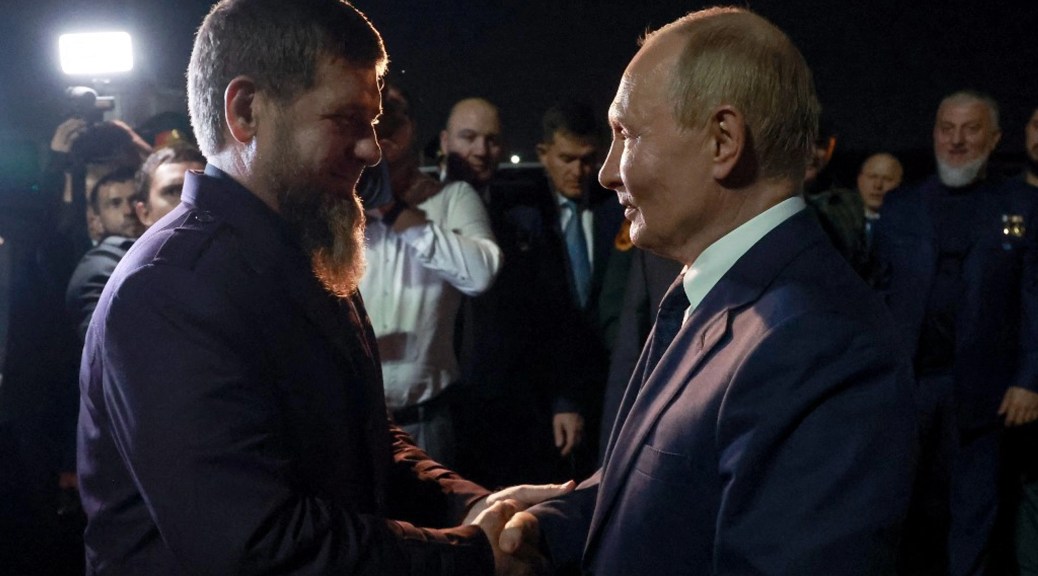



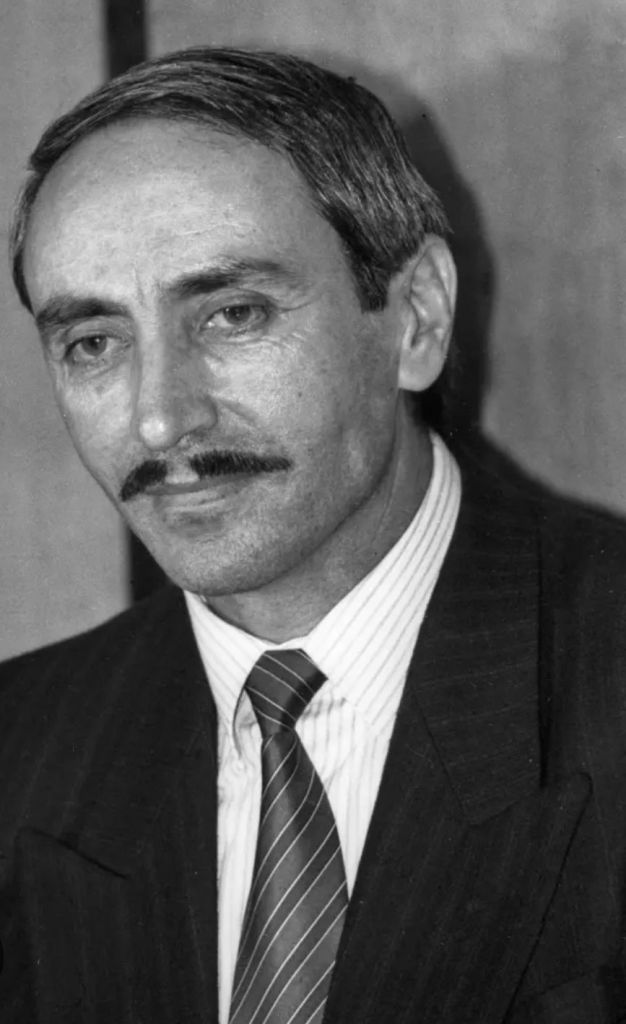


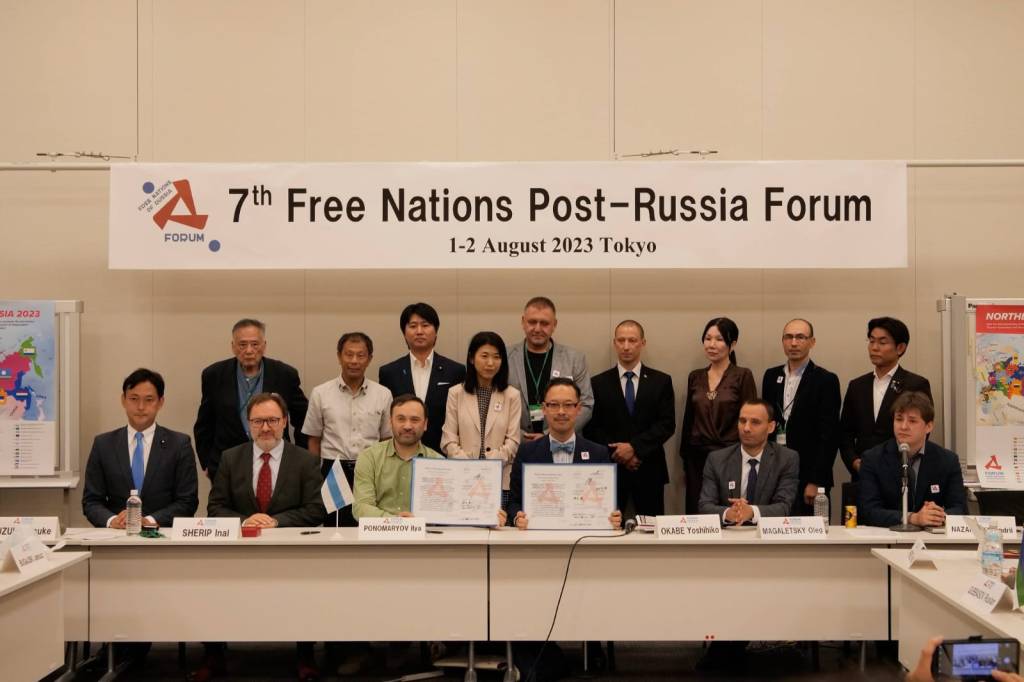


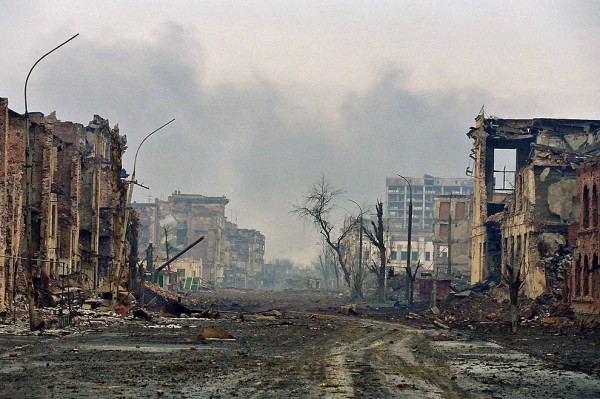
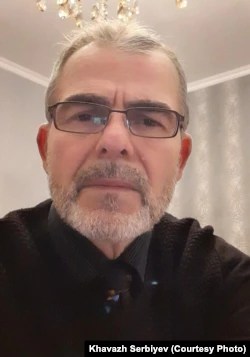


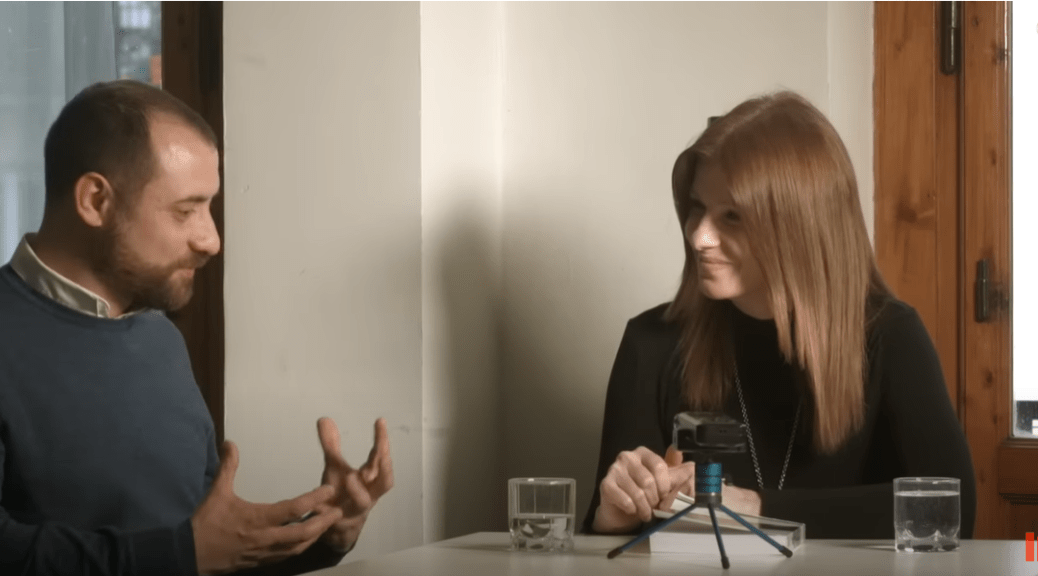


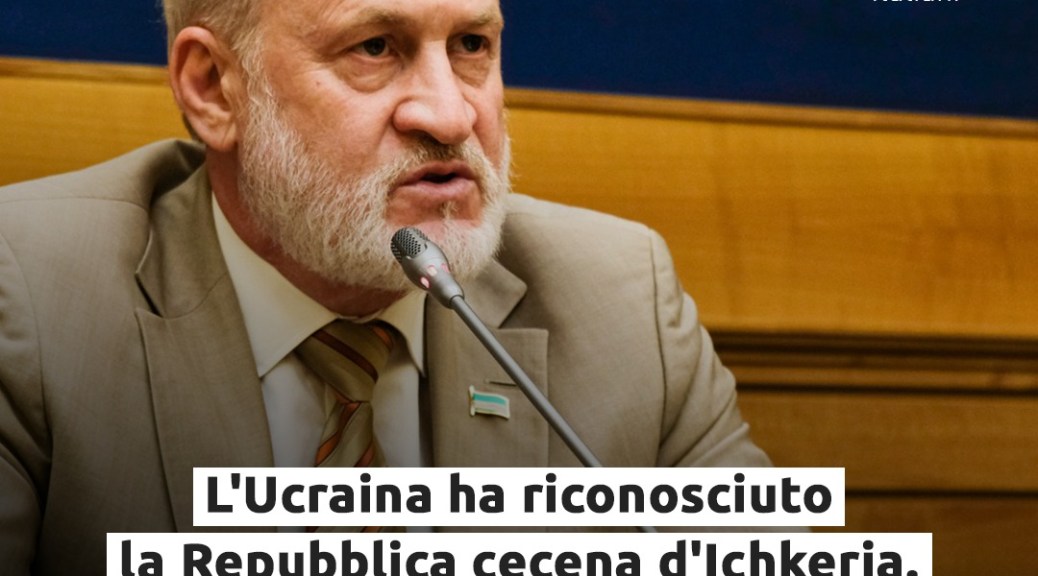


 Ichkeria Digital Archive