The following is the transcript of the first part of the interview between Francesco Benedetti and Akhmed Zakayev conducted by Inna Kurochkina for INEWS (we attach the link to the original video, which will soon be accompanied by English and Italian subtitles)
On 6 March 1996 the armed forces of the ChRI launched their first major offensive action of the conflict: the so-called “Operation Retribution”. According to what I was told by Huseyn Iskhanov, then Representative of the General Staff, the plan was conceived in Goiskoye and saw your participation, as well as that of the Chief of Staff, Maskhadov, and the Deputy Chief of Staff, Saydaev. Do you remember how you planned this operation?
Yes, of course I remember that. This, in principle, came out of the operation that we carried out to blockade the city of Urus-Martan in order to prevent elections. After this operation, my Chief of Staff Dolkhan Khadzhaev and I met with Dzhokhar Dudayev. And we suggested the option that something like this should be done. We understood that any of our actions in order to make any attempts to change this situation, the Russians needed at least three days, theoretically.
It took them three days to recover and start doing something. And then we started talking about the possibility of blocking several districts at the same time. And then Dzhokhar Dudayev said: “You see how good it is when a team works. I, he says, was with these thoughts and thought about how best and what kind of operation we should carry out.
It was then that the idea arose to carry out this operation in the city of Grozny, in the city of Dzhokhar – in the future.
And on the same day, it was decided to invite Aslan Maskhadov, Chief of the General Staff, to call him to our side, and from that time, almost two or three days after we discussed this with Dzhokhar Dudayev, we began preparations over this operation. Practically – we had our own intelligence in Grozny, we knew where each Russian unit was concentrated, and we did additional work and identified all these points where Russian units are located. Where are checkpoints, commandant’s offices, military units.
Yes, Umadi Saidaev, the late Umadi Saidaev, he was the Chief of the Operational Headquarters, and then, later, Aslan Maskhadov arrived there, and together with the Commanders of the Directions who were supposed to take part, we developed this operation.
Returning again to Operation Retribution, this was a success that the ChRI leadership chose to use more symbolically than strategically. In your memoir you recall that at the time the decision to withdraw from Grozny, despite having taken it under your control, did not please you, and that even now you maintain that what was achieved in the following August, with Operation Jihad , could have been achieved with Operation Retribution.Finally, you say: In March of 1996 we probably had the opportunity to finish the war victoriously, and then much of our recent history could have gone differently. What do you mean by this sentence? Are you alluding to the fact that Dudayev was still alive, or to the fact that the Russian presidential election had not yet been held? Or again, to something else?
I thought about the elections in Russia last, because there have never been any elections there. Yes, the very fact that Dzhokhar was alive at that time could have been of great importance, and the course of history could have been completely different if the war had ended with Dzhokhar Dudayev alive. And it is unlikely that the Russians would go for it, I also admit this, on the one hand, I admit that they would not go. They made every effort to eliminate Dzhokhar Dudayev, and subsequently to seek peace. As for this operation, I’m just sure of it. Yes, then we planned the operation for three or four days, but there was no concrete decision, such that we would leave in three days. Because Dzhokhar Dudayev arrived in Grozny, he was at my Headquarters in the city of Grozny, in my defense sector, in that part of the operation that the units under my command took part, he arrived there, and we were together last night at our headquarters. And I remember the reaction of Dzhokhar Dudayev when he learned that there was an order to leave the city, that some units had already begun to leave Grozny. He did not agree with this, because you can really assess the situation when you see the situation in the process, how it changes, and based on this you must draw conclusions and make decisions. Dzhokhar Dudayev was in Grozny for the first time after the Russian occupation, we traveled with him at night, in Grozny at night, we went to the bus station, he watched all this destruction, and when we returned to the Headquarters, some of our units had already begun to leave. He said: “Well, if there is an order, it is necessary to carry it out.”
And we retreated. And I later thought about it, because nothing more than what we did for the month of March, we did nothing in August. This operation was repeated one by one in the same way, and with the same forces and means. Even in August, we initially had and at the beginning of this operation, the funds involved were two times less than in the March operation. And therefore, I am sure that if we had stayed in Grozny … (well … history does not tolerate the subjunctive mood). What had to happen happened. But I remain of my opinion that it could have been different. But this is already from the area of \u200b\u200b”could”.
But that did not happen.
In March 1996 you faced, as commander, what was perhaps the biggest defensive battle fought by the Chechen army in 1996. I am referring to the Battle of Goiskoye. I’ve read conflicting opinions regarding the choice to face the Russians in that position. Some argue that the defense of the village was senseless, resulting in numerous unwarranted casualties for the Chechen forces. Others argue that if Goiskoye had fallen too soon intofederal hands, the entire Chechen defense system could have shattered. After all these years, what do you think?
To prevent the enemy from reaching the foothills, to block him in the village of Goyskoe, this was, from a strategic point of view, militarily an absolutely correct decision. This decision was made by the Supreme Command of the Armed Forces of the Chechen Republic of Ichkeria. Yes, I also know that there is such a statement, but based on real losses, we did not suffer any serious losses during the defense of Goisky. Yes, there were dead, several people who died were injured, but there were no such losses. There is no war without loss. Well, in a strategic sense, the protection and defense of Goisky kept the front line, which moved from Bamut to Alkhazurov. Alkhazurov fell under Russian control, but Komsomolskoye also fell under Russian control. But in Goyskoe we didn’t let them go any further. We prevented the passage of the Russians up to the foothills. And thus they retained the Front and the front line. And this was of very important strategic importance, all the more so against the background of the fact that the Russians began to talk about negotiations, about a truce. If we talk about a truce and start a conversation with them about a political dialogue, naturally, the preservation of a certain territory that we controlled, this was of great political importance, and in connection with this, Dzhokhar Dudayev made the decision to protect Goiskoye. Yes, we lasted a month and a half. And later, after the death of Dzhokhar Dudayev, when Bamut had already fallen, it was decided to leave Goiskoye. But as long as Achkhoy and Bamut were on the defensive, we held the line of defense in Goyskoye as well.
But when the front had already been interrupted there, it was pointless to continue to hold the front line and lose our fighters. And so it was decided to withdraw our units already to the mountains. Subsequently, we already redeployed closer to the city and began to prepare for the August operation.
After Dudayev’s death, power was transferred to Vice-President Yandarbiev, who took office as Interim President. Was the decision to transfer power to him unanimous? Or were there discussions about it?
In principle, there were no discussions, one vote was against, the rest all spoke in favor of recognizing Zelimkhan Yandarbiyev as Vice President. It was in line with our constitution, presidency provision, and it was accepted. And Zelimkhan Yandarbiev began to act as President.
After Yandarbiev assumed presidential powers, he appointed you as Presidential Assistant at Security. What were your duties in this position?
Yes. He appointed me Assistant to the President for National Security. And at the same time, that unit, that is, the Third Sector, which I commanded, I was simultaneously appointed Commander of the Separate Special Purpose Brigade. That is, the unit that I commanded, being the Commander of the Third Sector, he was also transferred to the Brigade, to the status of the Brigade under the President of the Chechen Republic of Ichkeria. Basically, this was done because Zelimkhan Yandarbiyev, after we retreated and put up the Presidential Palace at the beginning of the war, he was inside the Presidential Palace until the last moment, until we left the city. Since that time, in principle, Zelimkhan Yandarbiev has not been involved in military operations, and over the past year and a half, over the past year, new units have already been created and new people have appeared in these military structures. And naturally, Zelimkhan needed a person who knew this whole system militarily, and, of course, we worked with him and in the near future Zelimkhan was introduced to the course in all Directions, Fronts and our units, and already as the Supreme Commander, he Subsequently, he began to manage these processes himself. And my task included power components. And later it was transferred, after graduation this position was transferred, retrained to the position of “Secretary of the Security Council”.
And before the elections, in principle, I performed these functions.
The following is the transcript of the first part of the interview between Francesco Benedetti and Akhmed Zakayev conducted by Inna Kurochkina for INEWS (we attach the link to the original video, which will soon be accompanied by English and Italian subtitles)
1. On December 6, 1994, a few days before the federal army invaded Chechnya, a delegation appointed by Dudayev went to Vladikavkaz to confer with the Russian Minister for Nationalities, Mikhailov. In your memoirs you say that a certain number of oil entrepreneurs joined the delegation led by the Minister of Economy Abubakarov. What do you think was the purpose of their presence? Is it possible that among the proposals thatthe delegation should have presented was an agreement on the exploitation of Chechen oil, or on the exploitation of Chechen refineries?
At that moment and during that period, the presence in this delegation of the Minister of Economy and Finance Abubakarov, Deputy Prime Minister Amaliyev, was not associated with any possible agreements on the operation of oil refineries. They were then our representatives and proxies of Dzhokhar Dudayev. Not only did they “join”, they were included in this delegation. And from there they went from Kizlyar to Moscow, to further study the issue of preventing military aggression from Russia, to prevent a war. Dzhokhar did everything possible to prevent the outbreak of hostilities in Chechnya. And practically our delegation was in Moscow, headed by Tyushi Amaliyev, with Abubakarov, the Minister of Finance and Economy, and when Russia began to bomb Grozny. On December 11, despite everything, Yeltsin signed a decree on the introduction of troops and the start of a military campaign. Therefore, at that moment and in that period, it was not about the operation of oil wells, or rather, the use of oil refineries, or the Chechen oil that was produced at that time.
2. At the outbreak of war you placed yourself in the service of President Dudayev, and within a few months you were given the task of setting up an autonomous front. At the time you were the Minister of Culture, certainly no one expected you to take up arms and fight a war. Why did you decide to enlist?
(laughs)
The fact is that I did not go to the service of Dudayev. I was appointed Minister of Culture of the Chechen Republic of Ichkeria by Dudayev’s decree. No one served anyone or anyone. We worked for our state, and Dzhokhar Dudayev, as president, had the authority to appoint and dismiss. My appointment was in October, when Dzhokhar Dudayev offered me to work in his team. I accepted it despite everything that happened. I just say in my book that for me there was no difference, it was absolutely obvious that there would be a war. And I told to Dzhokhar: “Dzhokhar, it makes no difference to me in whose capacity I will defend our fatherland, my place is here, with my people. Whether a janitor, whether a minister .. ” And Dzhokhar then said, I remember his words, I just wrote about it. He said: “No, there will be no war. The world will not allow this. I won’t allow it. There will be no war, we need to do creative work. And your place is exactly in this direction. And so you must accept my offer.” I accepted this offer. I returned to the republic, and already on the first day, November 18, I officially went to work, and on November 26 the war began. In principle, this is the first invasion of Russian troops under the pretext of the “Chechen opposition” into the city of Grozny, where they were defeated.
And now for the second part of the question. The fact is that according to our legislation, I think that it is the same in Italy, the same laws, members of the Government, if a war starts, they become liable for military service, regardless of their positions. Culture, or art, it doesn’t matter, everyone becomes liable for military service. I, in principle, before I was appointed commander of the seventh front, I joined the people’s militia. I remember that day, December 28, when my office of the Ministry of Culture, in the Mayor’s Office building, was bombed, and on the same day I… There were people on the square who signed up as volunteers for the people’s militia. I signed up for this people’s militia, and only on January 11, Dzhokhar recalled me from my position as Minister of Culture, because a meeting of the Government was scheduled. And I returned from my positions to the Government meeting on January 11. And on this day Dzhokhar entrusted me with another task, I also wrote about this in my memoirs, and later, already in March, when the city was abandoned and we retreated to the foothills, at that time Dzhokhar signed the Decree on the creation of the Seventh Front and appointed me Commander. That is, we began to form this front, in general, from scratch.
3. After the fall of Grozny in Russian hands, and the withdrawal of the Chechen forces on the mountain defense line, the government was reorganized in order to make up for the defections of some senior officials, but also to function more streamlined in a context of total war. This “war government” continued to function throughout theduration of the conflict, and overcame the death of Dudayev, placing itself at the disposal of the Interim President, Yandarbiev. How did this government operate, and how did it manage to meet, to keep in touch with the President?
The Military Government, what you call the Military Government, was the State Defense Committee, which was formed by Presidential Decree when the military aggression began. And this body was the Supreme State Organ. Parliament stopped its legislative activity. The government had already been transferred to a military footing, and the State Defense Committee was formed as the Supreme Body of State Power. It included members of the Government, members of Parliament, the Leading Military Command represented by the General Staff, and Commanders of Fronts and Directions. And this Government functioned all this period. How were the meetings? Naturally, we all knew where the Supreme Commander-in-Chief was located, in which part of the republic. And periodically he convened a meeting of the State Defense Committee, and we discussed issues related to the continuation of resistance, with defense. Questions of a military nature were discussed in connection with the preparation of military operations or attacks on enemy territory.
All these points were discussed at the meeting of the State Defense Committee, and it functioned very effectively. It was a small number of people, but they were people who were directly involved in all processes – political, military, economic issues. These questions were also not the last ones, because providing the units with the necessary provisions, this was also within the competence, the questions of the State Defense Committee. And all these issues were discussed and functioned very effectively due precisely to the fact that Dzhokhar Dudayev did not go into deep underground, into forests, into the mountains, where it would be impossible to get him, he held personal meetings with all units, not only with the State Defense Committee but also with military units. He went to the front line, to the front line, met with ordinary soldiers. And now all our defense and all our resistance fighters, they all took a very responsible attitude to which side Dzhokhar Dudayev was on. I mean, along the front line, where active hostilities are taking place, the soldiers knew that behind them, behind their shoulders, there was already the Headquarters of the Supreme Commander. Or they disputed, along the Argun River, when he crossed over to the other side, those parts of the resistance, the Armed Forces took it for pride, proudly announced that the Supreme Commander was now on our side of the front. There was a very friendly atmosphere. When I remember these times, this period, despite all the difficulties that we then experienced, there was a war, but the people were different. We were different. The Chechens were completely different. They were different from today’s Chechens, who live in the territory and who are outside. And all this was connected, I think, with the fact that we were under Soviet occupation for seventy years, and for the first time we had a chance to build our own state. Independent state. And now the leader of this movement and the state, and later the leader of the Defense and the leader of the national liberation movement, he inspired in many ways and not only the fighters, but the entire Chechen people to resist and repel aggression. These were simply amazing times in the history of the Chechen people, when the whole people actually accomplished a feat. It was thanks to the feat of the Chechen people that we managed then to preserve both the power structures and what we were doing. And basically win.
4. Between March and May 1995, according to what you refer in your memoirs, you were in charge of setting up, in record time and with almost non-existent resources, the so-called “Seventh Front” south of Urus – Martan, which would serve as a point of contact between the stronghold of Bamut and the rest of the Chechen deployment. In your book you tell how the Seventh Front was born. Could you explain how it developed, which units made it up, and which operations it carried out until June 1995?
This happened in March, Dzhokhar Dudayev signed a decree. By this time, all our units had moved to the foothills, when the flat part was already mainly under the control of the Russian aggressors, and the foothills remained, starting from Bamut and to Alkhazurov, in this direction, and there further up, to the Grozny region, Chishki, Dacha Borzoi. This side was not yet occupied by the Russians, and it was necessary to create a unified defense in this direction, from Bamut to Alkhazurov. And the consciousness of the Seventh Front, and the task of the Seventh Front, was precisely this. And it practically turned out basically, this is the so-called Urus – Martanovsky district, it was believed that this area was loyal to Russia, the Russian aggressors, because the occupation regime functioned there, the occupation power structures, headed by Yusup Elmurzaev, the then prefect, who was appointed occupation mode. The creation of this front and the main task was the creation of military bases in the three gorges. These are Martan Chu, Tangi Chu, Roshni Chu. It was in these three gorges that we formed three military bases in just a few months. Although at the time when the decree was signed, there were practically no military units there. There were only militias, people who were part of the people’s militia, but there was no centralized command, and we in a short time, from those units, from those people’s militias that were then in this region, we created this Seventh Front, and a centralized military unit, under the centralized command of the Supreme Commander-in-Chief Dzhokhar Dudayev. Subsequently, this Seventh Front was already transformed into Sectors – the South-Western Front and Three Sectors – the First, Second, Third Sector. These sectors were under my responsibility.
Later I was in charge of the Third Sector of the Southwestern Front. Speaking by surname, these are, in principle, our young middle-level commanders, Dokka Makhaev, Dokka Umarov, Khamzat Labazanov, Isa Munaev, all these guys … Akhyad (I will not name him by his last name, because he is alive and is on the territory), Khusein Isabaev, these guys, then the middle link of commanders who headed these Sectors, and this Direction. Although it was already such a single military unit, which was part of the Armed Forces and had already been structured into the General Staff of the Armed Forces of the CRI.
5. In the spring of 1995 you could consider yourself one of the main army officers of the ChRI, therefore you were definitely monitored by the FSB, and by the intelligence of the Russian army. How did federal forces try to stop you and other senior officers from participating in the resistance? And how did you manage to evade Russian attempts to track you down?
First of all, God protected us. And, secondly, it is the Chechens and the Chechen people. We were at home. We were in our native villages, in our native settlements. And of course, the Chechen people, in fact, were the main protection of those who were then in the Armed Forces. And President Dzhokhar Dudayev, you know, the republic is small, all this time he was among the Chechens, he was in different settlements, and every village where the fighters stopped, although there were also opposition-minded and cowardly people, but in general, our supporters, supporters and independence, and those who supported our national liberation movement, they were much stronger and were much more numerous. They managed to prevent both assassination attempts and those ambushes that set not only me, but also those who were then involved and were listed in the ranks, as you said, in the highest composition of the Command, and all of them were protected by the Chechen people. And, of course, not everything was under the control of either the FSB or the Russians. Life and death are in the hands of God. And those reasons, those actions that were taken by us in order to survive, and what the Chechens did with us, the Chechen people, protecting their commanders, people who defended their homeland, their fatherland and themselves.
Khavazh Serbiev served as the Prosecutor General of the Chechen Republic of Ichkeria during the period between the first and second Russian invasions of the country. In June 2022 he gave an interview to Ukraina Today ( https://ukrainatoday.com.ua/ ) about the parallels between the ongoing war and those fought by the Chechens. Below is the translation of the interview.
You investigated the crimes of the Russian army. If we compare the actions of the Russian army in Chechnya and what they did in Ukraine, is there anything more similar or different?
In Ukraine, nothing new has happened, nor is it happening, compared to what has been done in the Chechen Republic. Everything is mirrored: only the scale is different, because your people (the Ukrainians, Ed ) are many times more numerous than the Chechens, and the territory is vaster. Everything else is the same. This is so familiar to us that we are even surprised: nothing changes in the policy of the Russian state and in the actions of its army!
Why did the world community react rather slowly to statements about Russian war crimes in Chechnya? Why was it considered an internal affair of Russia, or why did Russian propaganda manage to dehumanize the Chechens, saying that terrorists were fighting there?
Of course, the whole world believed that the Chechen territory and the Chechen people were subjects of the Russian Federation. And nobody wanted to change that. Although in November 1990, according to the laws of the USSR, the Chechen Republic was actually brought on an equal footing with other union republics (the republics that made up the USSR, ed. ) . But nobody wanted to change that. Also, Russia is a large nuclear state. It seems to me that this factor played a leading role.
In the end, everyone at that moment had their own problems. Ukraine, Belarus and other states had left the USSR. They didn’t even want to ask this question. And the rest of the world – the West and other states – for them this business was happening in a distant place, they didn’t care. The Chechen side was accused of using unacceptable methods. That is, they blamed the victim and the abuser by the same standards. There was some kind of fear or reluctance to intervene in this problem.
Is it important to involve foreign experts in war crimes investigations or is it enough to use our own forces?
It is very important to involve foreign experts. Because in a dialogue with Russia it is unrealistic to do something yourself. Naturally, the basis is created on site. It’s easier for you Ukrainians, but for us it was practically impossible. I believe the whole world should be involved in this process. It is important to have an international opinion, an international investigation. This is the only way it can work.
How did war crimes investigations unfold after the first Chechen war?
A criminal case for genocide was initiated in the Attorney General’s Office. The material, collected in every district of our territory, was conveyed to the apparatus of the General Prosecutor’s Office. Evidence of Russian military genocide and war crimes was investigated in every district. And it all came together in a common criminal case, which reached 64 volumes. Each volume is at least 400 pages. This is what we have been able to cover. Before the start of the second Russian aggression, however, we were unable to transfer a certain amount of this material to an international authority, such as the Hague Tribunal.
Why?
Because Russia has created huge problems inside Chechnya, events have overlapped one another in wave after wave. Law enforcement agencies and, of course, the Prosecutor General’s Office simply did not have time to bring at least part of this case of war crimes of the Russian army in the Chechen Republic to a conclusion. We just didn’t make it. By the time the second attack had begun, we handed over part of the materials to the Tribunal in The Hague. Approximately 12 volumes of materials have been delivered. Some were returned because they were considered irrelevant under international law. We had no experience. There are only 6 volumes left. Meanwhile, active hostilities began again and soon the whole territory was completely occupied. And any further process was suspended again.
Grozny destroyed
During the first war, which Moscow lost, Russian troops brought a lot of trouble to the Chechens. How could it be that during the Second World War Moscow found relatively many allies among the Chechens? In particular, Kadyrov supported them.
The Russian regime, the relevant authorities and services involved in the Chechen Republic have taken into account their previous mistakes. The “hat toss” dominated the minds of politicians and military during their first campaign. As a result, they took these moments into account and did a huge undercover work to attract new members to this agent network, and also launched powerful propaganda within Russia itself.
Imagine when the second campaign began: immediately on the state television of Russia sounded “Get up, the country is huge!” (popular song written during WWII to mobilize the masses against the German invasion, Ed. ) as it sounded during WWII when Hitler attacked the USSR. I’ve heard it myself. You get goosebumps when you hear this song. Imagine that against the tiny Chechen Republic, which some can’t even find on the map! And then suddenly the Chechens became a “fascist force”. The same thing that has now been done against Ukraine.
The Second Chechen War was preceded by terrorist attacks on the territory of Russia, in which the Chechens were blamed. What do you know about it?
Solid disinformation, which has been played a lot not only in Russia, but throughout the world. Many believed it. Why was it so masterfully presented using the regime controlled media. It was so obvious to us that this was a lie that we were just taken aback. There was a lot of evidence that these were provocations, that this was done by the Russian special services. But there was simply no one to listen to us. And the materials that we tried to smuggle overseas through the media in the West simply disappeared. They were broadcast, they were reported, but there was no response.
Shamil Basayev in Daghestan, 1999
There was another reason for the second war – the invasion of Shamil Basayev’s detachment in Dagestan. Why did it happen?
Yes, there was an encroachment of some groups, there were Chechens even on the territory of Dagestan. This cannot be denied. If you knew how different these groups were! There were people from all over the North Caucasus, including Dagestan. Bagautdin alone (one of the leaders of the “Islamic Shura of Dagestan” – ed. ) brought 2,000 people to our territory. And the people got the impression that it was the Chechens who were moving like an avalanche across the territory of Dagestan with the aim of occupying, assaulting, etc. It looked completely different than what eyewitnesses saw. Everyone, of course, saw what they wanted to see. But I assure you, not even half of the Chechens were there. Most of them were people from other republics, there were also volunteers from the Middle East … Naturally, President Aslan Maskhadov, from the very beginning, when information began to pour in, was categorically against it. And this was not the action of the armed units of the Chechen Republic of Ichkeria. Under no circumstances! These were volunteers who made their choice and took part in this operation.
Did President Maskhadov have the opportunity to stop Basayev’s action?
At that time, on the borders of the Chechen Republic, throughout the North Caucasus, there was a massive concentration of Russian troops, huge. Why were they concentrated in these places? We didn’t have troops on our borders, there wasn’t even the possibility to do that. For example, there was no conscription in the army as such. And to contain the volunteers or Basayev himself, who acted alone, would have meant an intra-Chechen military confrontation. The transition to the territory of Dagestan took place in a matter of days. I believe that for Maskhadov it was, on the one hand, unexpected and that in any case there were no adequate forces to organize some kind of barrier to prevent this encroachment.
Among the Russian soldiers who died in Ukraine, there are many people from Dagestan. How to explain it?
Dagestan is mostly a mountainous area. There are many high-altitude villages that live independently. We can say that the main reason is poverty. In the Russian Federation, this is a common phenomenon in the outback. And in Dagestan there is poverty, and therefore …
Yesterday we celebrated the entry into our library of a new version of the first volume of the series – the Chechen language version. At this point there are 4 languages in which it is possible to read “Freedom or Death!” and with the publication of the second volume in Italian (which will be followed by the English, Russian and Chechen versions within a few months) we thought it would be useful to offer a general overview of our book offering. This is why we have just put online a small site dedicated solely to the book,
The war in Ukraine started in Chechnya. It may seem like a provocation. Yet, this is the reality that the pages of this second volume reveal, entirely dedicated to the First Russo-Chechen War. The genesis, development and unfolding of this bloody conflict seem to be the draft of the script that the world has been witnessing in recent months between the Donbass and the Crimea.
Even then, as now, Russia invaded a free state, disguising the war it was waging behind the label of a “special operation.”
Even then, as now, the enemy of the Russian state had been labeled and demonized: if Zelensky and his government are called “Nazis” today, Dudayev and his ministers were then called “bandits”.
Even then, as today, convinced of their superiority, the military commands marched on the capital, claiming to bend a people to their will, as they had done several times in Soviet times. But even then, as now, they were forced to withdraw, only to unleash a bloody all-out war, the most devastating European war since 1945.
The First Russo-Chechen War was the first tragic product of Russian revanchism: the “zero point” of a parable that from Grozny leads to Kiev, passing through Georgia, Crimea, Belarus and Donbass. With one substantial difference: that the Russians lost that first war against Chechnya. Their imperial ambitions, resting on the worn foundations of a crumbling empire, ended up frustrated by the stubbornness of a nation immensely inferior in number and means, to that of Ukraine, which today defends its land from the war unleashed by Putin.
This story can teach those who have the patience to read it two important lessons: what happens when you indulge the ambitions of an empire, and how do you defeat it. If it is already too late to put the first into practice, we still have time for the second.
After leaving Argun, we moved to a wooded mountainous area in the Nozhai – Yurt district. Here we organized our base, well hidden in a gorge near the village of Shuani. On the afternoon of March 25, a messenger arrived at the base: we were ordered to go in force to the village of Novogrozny, today Oyskhara. When we arrived Maskhadov gave me a brief report on the situation: “The Russians have left Gudermes, and are moving in the direction of Novogrozny. They crushed our defenses. We have to delay them at least for a few hours, until we evacuate the hospital and the documents. I have no one else to send except your battalion. I ask you to detain the Russians as much as possible: there are many wounded in the hospital, if the Russians find them they will shoot them all. ” Then Maskhadov told me that on the eastern outskirts of Ilaskhan – Yurt a unit of militiamen from nearby was gathering and they would give us a hand.
There were few people with me, about thirty in all, because after the retreat from Argun many of the militiamen, cold and tired, had dispersed to the surrounding villages to recover their strength. We immediately set off towards Ilaskhan – Yurt and, having reached the goal, we reunited with 70 militia men. The Russians advanced on the wooded ridge overlooking the village, traveling in the direction of Novogrozny. We settled in positions previously equipped, and then later abandoned. Their conditions were not the best: due to the heavy rains of those days they were full of water, and we guarded the positions with mud up to our knees. We tried to drain them, but the water returned to fill them in a few hours, due to the damp soil.
Soon our presence was noticed by the Russians, who began bombing our trenches from their high positions. Using mortars and field artillery. In that bombing we suffered the wounding of three or four men. However , they did not proceed to an attack, allowing us to hold them back for many more hours. Having left in a hurry, we had brought neither food nor water with us: we spent the next night hungry and cold in our damp trenches, under constant enemy bombardment. We were so starved that, when we managed to get our hands on a heifer the next day, we ate its almost raw meat, but not before getting permission from a local clergyman.
March 29 , the first Russian patrol reached our trenches. We managed to repel the assault: the enemy lost two men and retreated quickly. From the uniforms and weapons found in the possession of the fallen Russians, we understood that we had a paratrooper unit in front of us. As soon as the Russians were back in their trenches the artillery began a pounding bombardment on our positions with mortars and 120 mm artillery, causing many injuries among our units. After a long preparatory bombardment, the infantry moved on to the attack, and we began the unhooking maneuvers: some of us took the wounded away, others retreated into the woods, or returned to their homes. Only five of us remained in position: Vakha from Chishka, Khavazhi from Naurskaya, Yusup from Alpatovo, Mammad from Naursk station and myself. When we finally managed to get away we were exhausted: I came out with chronic pneumonia, which would accompany me in the years to follow.
Combined Regiment Naursk
In April, if memory serves me well, on April 2, as he said, the head of the main headquarters of the armed forces of the CRI, General Maskhadov, came to my base. The Chief of Staff briefly introduced me to the latest events and changes on the lines of contact between us and the Russians: it was clear from his words that our situation was not good. Consequently he asked me to become subordinate to the commander of the Nozhai- Yurta leadership, Magomed Khambiev. The same day I went to Nozhai-Yurt, where I met the new commander. He assigned the battalion’s area of responsibility to a location not far from the village of Zamai-Yurt, southwest of this village. Once deployed, we dug trenches and equipped shooting points for the machine gun. Here at the base, we, in our Naur battalion, were joined by groups of militias from Gudermes and the Shelkovsky district, for a total of 200 people. As a result, our battalion became the “Combined Naur Regiment”. I was confirmed by Maskhadov himself as commander of this new unit.
The Regiment held the assigned position until the early days of 1995, fighting a war of position against Russian forces. These faced us mainly with artillery, throwing a hail of mortar rounds at us, and increasing the dose with incursions of combat helicopters MI – 42 and MI – 18. During this phase we mourned the death of one of us, Dzhamleila of Naurskaya , and the wounding of ten men. Finally, in the first days of June , we received the order to switch to guerrilla warfare.
VERSIONE ITALIANA
IL GENERALE DI NAUR – MEMORIE DI APTI BATALOV (PARTE 4)
Battaglia ad Ilaskhan – Yurt
Dopo aver lasciato Argun, ci trasferimmo in una zona montuosa coperta di boschi, nel distretto di Nozhai – Yurt. Qui organizzammo la nostra base, ben nascosta in una gola vicino al villaggio di Shuani. Nel pomeriggio del 25 Marzo giunse alla base un messaggero: ci era ordinato di dirigerci in forze al villaggio di Novogrozny, oggi Oyskhara. Quando arrivammo Maskhadov mi fece un breve rapporto sulla situazione: “I russi hanno lasciato Gudermes, e si stanno muovendo in direzione di Novogrozny. Hanno schiacciato le nostre difese. Dobbiamo ritardarli almeno per qualche ora, finchè non evacuiamo l’ospedale ed i documenti. Non ho nessun altro da inviare, tranne il tuo battaglione. Ti chiedo di trattenere i russi il più possibile: ci sono molti feriti nell’ospedale, se i russi li trovano li fucileranno tutti.” Poi Maskhadov mi disse che alla periferia orientale di Ilaskhan – Yurt si stava radunando un reparto di miliziani provenienti dalle vicinanze, i quali ci avrebbero dato man forte.
Insieme a me c’erano poche persone, una trentina in tutto, perché dopo la ritirata da Argun molti dei miliziani, infreddoliti e stanchi, si erano dispersi nei villaggi circostanti per recuperare le forze. Ci mettemmo subito in marcia verso Ilaskhan – Yurt e, raggiunto l’obiettivo, ci ricongiungemmo con 70 uomini della milizia. I russi avanzavano sulla cresta boscosa che dominava il villaggio, viaggiando in direzione di Novogrozny. Ci sistemammo in posizioni precedentemente attrezzate, e poi successivamente abbandonate. Le loro condizioni non erano delle migliori: a causa delle forti piogge di quei giorni erano piene d’acqua, e presidiavamo le posizioni con il fango fino alle ginocchia. Cercavamo di drenarle, ma l’acqua tornava a riempirle in poche ore, a causa del terreno umido.
Ben presto la nostra presenza fu notata dai russi, i quali iniziarono a bombardare le nostre trincee dalle loro posizioni elevate. Usando mortai ed artiglieria da campagna. In quel bombardamento patimmo il ferimento di tre o quattro uomini. Tuttavia non procedettero ad un attacco, permettendoci di trattenerli ancora per molte ore. Essendo partiti in fretta e furia, non avevamo portato con noi né cibo né acqua: trascorremmo la notte successiva affamati ed infreddoliti nelle nostre trincee umide, sotto il costante bombardamento nemico. Eravamo così provati dalla fame che, quando il giorno dopo riuscimmo a mettere le mani su una giovenca, ne mangiammo la carne quasi cruda, ma non prima di aver avuto il permesso da un religioso locale.
A mezzogiorno del 29 Marzo la prima pattuglia russa raggiunse le nostre trincee. Riuscimmo a respingere l’assalto: il nemico perse due uomini e si ritirò velocemente. Dalle divise e dalle armi trovate in possesso dei russi caduti capimmo di avere davanti un reparto di paracadutisti. Non appena i russi furono rientrati nelle loro trincee l’artiglieria iniziò un bombardamento martellante sulle nostre posizioni con mortai ed artiglieria da 120 mm, provocando molti ferimenti tra le nostre unità. Dopo un lungo bombardamento preparatorio, la fanteria passò all’attacco, e noi iniziammo le manovre di sganciamento: alcuni di noi portarono via i feriti, altri si ritirarono tra i boschi, o tornarono alle loro case. In posizione rimanemmo soltanto in cinque: Vakha da Chishka, Khavazhi da Naurskaya, Yusup da Alpatovo, Mammad dalla stazione di Naursk ed io. Quando finalmente riuscimmo ad allontanarci eravamo esausti: io ne uscii con una polmonite cronica, che mi avrebbe accompagnato negli anni a seguire.
Reggimento Combinato Naursk
Ad aprile, se la memoria mi serve bene, il due aprile, come ha detto, il capo del quartier generale principale delle forze armate della CRI, il generale Maskhadov, è venuto alla mia base. Il capo di stato maggiore mi ha brevemente presentato gli ultimi eventi e i cambiamenti sulle linee di contatto tra noi e i russi: era chiaro dalle sue parole che la nostra situazione non era buona. Di conseguenza mi chiese di diventare subordinato al comandante di la direzione Nozhai-Yurta, Magomed Khambiev. Lo stesso giorno mi recai a Nozhai-Yurt, dove incontrai il nuovo comandante. Egli assegnò l’area di responsabilità del battaglione ad una posizione non lontana dal villaggio di Zamai-Yurt, a sud-ovest di questo villaggio. Una volta schierati, abbiamo scavato trincee e attrezzato punti di tiro per la mitragliatrice. Qui alla base, noi, nel nostro battaglione Naur, siamo stati raggiunti da gruppi di milizie di Gudermes e del distretto di Shelkovsky, per un totale di 200 persone. Di conseguenza, il nostro battaglione divenne il “Reggimento Combinato Naur”. Fui confermato dallo stesso Maskhadov comandante di questa nuova unità.
Il Reggimento tenne la posizione assegnata fino ai primi di giorni del 1995, combattendo una guerra di posizione contro le forze russe. Queste ci affrontavano principalmente con l’artiglieria, lanciandoci contro una grandine di colpi di mortaio, e rincarando la dose con incursioni di elicotteri da combattimento MI – 42 e MI – 18. Durante questa fase piangemmo la morte di uno di noi, Dzhamleila di Naurskaya, ed il ferimento di dieci uomini. Nei primi giorni di Giugno, infine, ricevemmo l’ordine di passare alla guerra partigiana.
When the federal forces reached Grozny, my men and I were in Gudermes, where we had quartered to form an organized unit made up entirely of men from the Naur District . On January 4th , a runner sent by Maskhadov was placed in our command post. He gave me the order to converge on our capital with all the men at my disposal. Once in the city, I met a young volunteer, who made himself available to organize our group and put it in coordination with the other fighting units. It is called Turpal Ali Atgeriev. In conversation with him, I learned that he had taken part in the war in Abkhazia and that he had some fighting experience. There was not a single war veteran among us, starting with me: I was in desperate need of someone with combat experience. For this I asked Atgiriev to become my deputy, and he accepted my proposal. Since he didn’t have a weapon, I handed him an RPK-74 machine gun. Someone criticized my decision, accusing me of having appointed a stranger as my deputy. I was not interested in this gossip and intrigue, I was worried about only one thing itself: saving lives and at the same time beating the enemy.
We were deployed in defense of the Pedagogical Institute. A regiment of Russian marines had targeted the building: if this had been taken, it would have been possible to easily reach Maskhadov’s headquarters, which was literally fifty meters from our position, under the Presidential Palace. The Russians tried to break through our defenses almost every day, until January 19 , 1994, but without success. In these attacks they lost many soldiers, whose corpses remained in the middle of the road, in no man’s land, prey to stray dogs. We tried to remove them, to save their bodies, but without a respite we could not have prevented them from being eaten. Several times, during the fighting, our command and the Russian one reached an agreement for a 48-hour truce, precisely to clean the streets of the corpses of Russian soldiers. During these truces we talked to the Russian patrols stationed on the side streets. I remember one of these conversations with a Russian captain, to whom I had thrown a pack of cigarettes: Guys he said, quit, you will not win, because you are not fighting the police, but the army. His voice was not arrogant, he was a simple Russian peasant. That battle was also difficult because to supply our armories we had to capture weapons and ammunition from the Russians. In every disabled armored transport vehicle we found a heap of weapons, cartridges and grenades, which we looted. Later the Russians became more careful, and we didn’t find much in their means. On the other hand, their vehicles were stuffed with all sorts of carpets, dishes and other goods looted from the population.
January 19 , when it became clear that the defense of the Pedagogical Institute would no longer slow down the fall of the Presidential Palace, we withdrew. I was ordered to organize the defense of the Trampark area , and we occupied positions on Novya Street Buachidze . Trampark changed hands several times, and there were fierce battles until February 7th . Right in via Novya Buachidze suffered a shock from a tank bullet which, entering the window of the room where I was with some of my men, hit two of them in full, killing them. This shock still undermines my health. Finally, on the evening of February 7 , a messenger from Maskhadov handed me a note in which I was ordered to leave the position, join Basayev in Chernorechie and leave the city. I should have assumed the defense in the parking area in Via 8 Marzo, where the departments were concentrating to prepare for the exit from the city. Once there we counted all those present: also considering the staff of the Headquarters, we were 320 men. Obviously some departments were not present: detached units fought in other areas of the city, and besides them there were the so-called “Indians”, armed gangs who did not obey anyone, they fought when it was favorable gold and along the way they plundered everything that they could find. When Maskhadov lined up us in the square, he told us that our descendants would be proud of us, that the victory would be ours, that we were leaving Grozny only to return one day. The night between 7 and 8 Fenbbraio we left the capital.
The Naursk Battalion
It was after the retreat from Grozny that my unit, still an amalgam of more or less organized groups, began to become a real tactical unit. This same process was also taking place in the other units that had formed spontaneously at the beginning of the war. Moreover, in the Chechen resistance there were no military units and formations in the classical sense of the term: “battalions”, “regiments” and “fronts” were symbolic terms that did not correspond to a battle order in the classical sense. For example, what was called the “Argun Regiment” was an association of several groups, often poorly armed, made up of a variable number of people, each of which replied to its own commander. The members of these units, all volunteers, could leave at any time, there was no precise chain of command.
Our team spirit had already been forged in the battles we had fought together, and which unfortunately had forced us to count the first fallen. The first of our men to die for the defense of Chechnya was Beshir Turluev , who fell at the Ishcherskaya Checkpoint in December 1994. Since then, other young Chechens had sacrificed their lives for their homeland. Among those who remained alive, and who fought more assiduously with me, a group of “veterans” began to form, who by character or competence acquired the role of “informal officers”. Thus, for example, a 4th year student of a medical institute, whose name was Ruslan, became the head of the medical unit, while Sheikh Khavazhi , from the village of Naurskaya , became the head of logistics. The latter was in charge of keeping in touch with the Naur region , from which the supplies for our unit came. The inhabitants collected the food intended for our livelihood and delivered it to us via a KAMAZ truck, driven by Umar, from the village of Savelieva, and his companion Alkhazur . Sometimes money was also collected, usually a small amount, which was scrupulously recorded and distributed among the men. For the needs of the battalion, for the entire period of the 1994-1996 war, I, from the central command, did not receive more than 3 thousand dollars.
Defending Argun
After we had withdrawn from Grozny, Maskhadov ordered us to fall back on Argun, to help defend the city. We quartered ourselves in the city hospital, now empty and unused. The commander of the stronghold was Khunkarpasha Israpilov, and the commander of the largest unit, the so-called “Combined Regiment”, was Aslambek Ismailov. We were deployed in the sector of the so-called “Indian village”, a front of about 350 meters along the Argun River. On our left were the so-called “Black Wolves”, characterized by wearing very dark jeans. On the other side were Alaudi ‘s men Khamzatov , guard posts on the main bridge over the Argun. In front of us was a Russian paratrooper unit. We learned that we were facing special forces from a Russian soldier whom we captured when, with his squad, he attempted a reconnaissance close to our lines. At that juncture, as soon as the other side learned that their group had been identified and attacked, the Moscow artillery launched a massive bombing on our positions, during which two of our militiamen fell: Daud, coming from the village of Kalinovsky and Rizvan , from Naurskaya . To scare us, the Russians played Vladimir Vysotsky ‘s “Hunting for Wolves” at very high volume . We responded with “Freedom or Death”. The supply of the militias in the city of Argun, as well as in Grozny, was very scarce, there was a severe shortage of ammunition, there was a catastrophic lack of machine gun cartridges, RPG-7 grenade launcher shells and only dressing bandages they were more or less in abundance among the drugs.
On the morning of March 20, the Russians began testing our defenses along the entire line of contact, simulating a force attack from our side. In reality, the main attack took place, surprisingly, at the Moskovsky state farm . We did not expect the enemy to break in from that side, and after a fierce battle during which we lost many men (including the commander of the Melkhu – Khe militia , whose name was Isa and a brave, young Lithuanian named Nicholas) we had to leave the city, to retreat to the wooded region of Nozhai – Yurt. In the defense of Argun, Abuezid , from the village of Naurskaya , Umar, Mekenskaya , Muslim, Nikolaevskaya also fell , while another ten of us were wounded. We left Argun in the night between 21st and 22nd March 1995.
Apti Batalov was born in Ilic, in the Kamensky District of Kazakhistan, on October 19, 1956. Police officer, in September 1994 he was appointed military commander of the districts of Naur and Nadterechny, and in this role he organized the armed militias destined to become one of the most well-known military units of the Chechen army, the Naursk Battalion. The unit would have distinguished itself in many battles, and Batalov himself would have become, at the end of the conflict, one of the main officials of the Chechen army, coming to lead the General Staff of the Armed Forces with the rank of Brigadier General and the National Security Service.
Batalov agreed to share his war memories with me.
Winds of war
On June 20, 1994, I was appointed head of the Ishcherskaya Village Police Department in the Naursk District. The village is located on the left bank of the Terek, the north-eastern part of the village borders the Stavropol Territory while to the south, on the other side of the river, about a kilometer and a half, is the village of Znamenskoye, which at the time was the headquarters of the opposition. The city is crossed by a railway that leads from Russia to Dagestan. The western part of the village hosted a terminal for the loading of oil and a pumping station, through which the crude was shipped to Russia. The road that entered Chechnya from the Stavropol Territory forked in two: one route continued eastwards, reaching Chervlennaya and from there continuing to Dagestan, in the north, and another one run up to Grozny, in the south. The other crossed the Terek by a bridge, crossed the Nadterechny District and then penetrated deep into the country. Being a border settlement and a crossroads of roads to and from Russia, Ishcherskaya was one of the busiest places for criminals in all of Chechnya – a sort of criminal transit point.
At the end of June 1994 the chief of the district police, Zaindi Pashaev, called me and introduced me to the district military commander sent from Grozny. I was told to make myself available to the Commander and to assist him in organizing checkpoints around Ishcherskaya. He did not present any documents confirming his position, neither then nor subsequently. He was a man of about 25, 28 years, about five feet tall, very dynamic, fast in his movements and physically strong. A young man, who I later learned was President Dudaev’s son-in-law, having married the daughter of a brother of the President. His name was Duta Muzaev. He actively went to work, and I followed his directions, helping in all that needed to be done. We set up two checkpoints, one on the Russian-Chechen border, in front of the village of Galyugaevskaya, the other on the left access of the bridge over the Terek, in front of Znamenskoye.
In those days, while we were building the checkpoints, mass anti-Chechen pogroms began in the territories adjacent to Chechnya, a boy named Pashaev was killed, self-styled “Cossacks of Kursk” (actually agents of the GRU and FSK) began to damaging the houses where the Chechens lived, they burned the farms where cows and sheep were kept. It was not difficult to understand that behind these pogroms and murders there were forces interested in creating chaos and inter-ethnic massacres between the Cossack and Chechen populations. Refugees began pouring into Chechnya. Meanwhile , Russian armed units began to carry out all kinds of provocations. Armed units entered their armored vehicles in the Naur District and, under armed threat, carried out “passport control” operations declaring: “You are in our territory, and you are Russian citizens”.
In the first days of August Muzaev told me that he had had a physical problem with the muscles of his spine, and that he would have to return to Grozny for treatment. He left, and never came back. Shortly after Muzaev’s departure, I was summoned to Grozny by Colonel Merzhuyev. On 16 September I joined him in the capital and he informed me that due to the worsening of the situation on the borders of Ichkeria, since the Naursk District is located at the northern limit of the Republic, I had been recommended to the President to take the place of Military Commander in that district, and in the neighboring district of Nadterechny. To be honest this news surprised me, and shocked me, because it was clear that a war was about to break out between Russia and Chechnya. The Naur region was the most vulnerable, being on the border. After listening to Merzhuyev, I asked him: Don’t you really have a person more experienced than me for this position? I told him that I was absolutely not trained in military affairs, and that I had no idea how to play the role of military commander in these regions, especially in the Nadterechny District, which is almost entirely under the control of the opposition. Merzhuyev replied: Tell the President all this.
We went to meet the President, who received us after a short anteroom. It was my first meeting with Dudaev. He was dressed in civilian clothes, and he looked intelligent and serious. He asked me some not very important questions, after which he asked me: You have been recommended to me for the position of District Commander. Well, are you able to hold it? I was hoping that Merzhuyev would join the conversation, but looking at him I realized that he would remain silent. I’ll do whatever it takes, I replied. Dudaev did not detain us any longer, and dismissed us. Before leaving, Merzhuyev wrote an appointment order by hand, said he would send it to the Naur District Prefect, Aindi Akhaev, so that he would learn of the appointment and order his officials to carry out my orders. I had just become the first regional military commander in the history of Ichkeria. From that day on, my path was the struggle for Chechnya’s independence, which eventually led me to England.
Aindi Akhaev
Military Commander
Back in Naur, I started mobilizing volunteers for checkpoint service. People answered my call: they were ordinary Chechen boys, simple agricultural workers, yet they were people of great dignity, and with a deep sense of honor. Most of them were unarmed, some carrying shotguns, knives or daggers with them. My frequent appeals to Headquarters were eventually crowned with success, and they promised me from Grozny that they would send 10 AK-74 firearms. I thought I would get the guns from the State Security Department, but Geliskhanov, who at the time he led the department, found a different reason each time not to send the guns, and went on for about a month. When the weapons were finally delivered, I saw that they were old, worn, firearms, some even missing some parts. I had to sort it out differently, so I requisitioned the armory of the Naur Police Department. We managed to collect more than twenty AK 5.45 assault rifles, an RPK 5.45 machine gun, two PK – 7.62, two RPG grenade launchers, an automatic grenade launcher and a sniper rifle. I distributed all these weapons among the militia men on duty at the Checkpoints, and so we put on a well-armed force, able to counter the armed opposition deployed in Znamenskoye and the bandits who tried to penetrate taking advantage of the chaos. In addition to this, I formed local teams recruited from the residents of each village. We began holding gatherings in all the settlements in the region, leaving the residents to appoint their own commanders. These makeshift officers were the directors of state agricultural farms and other local businesses. In particular, they provided us with radio stations with which they were used to communicating with the district authorities. A person who specialized in these things helped us to establish communications, so that all units were coordinated with each other.
The summer and autumn of 1994 in Chechnya saw many social and political events. The Opposition has become more active in the districts of Urus – Martan, Gudermes and Grozny. In the village of Znamenskoye the armed groups of Labazanov and Gantemirov gathered, while the Cossacks of the Naur and Shelkov districts took action, sending delegations to Stavropol asking to annex the entire left bank of the Terek to Russia. Realizing that any public demonstration in support of this proposal would give courage and determination to the local opponents and the Cossacks, to prevent this from happening, I began to seek contacts to organize secret meetings with the leaders of the Chechen and Cossack opposition. I used to go to their house and there, over a cup of tea or vodka, I would say to them: If you want to gather, go to Znamenskoye, I promise you that none of your family will be punished for this. But if you start moving from that area, no one will be safe, not even you. They replied that they would not give in to my threats, but in the end no one in the Naur District spoke out against Dudaev in a public demonstration. A big help came from the district prefect, Aindi Akhaev, who was a very brave man and a devoted supporter of President Dudaev. The fortunate coexistence of these factors, in the end, determined the fact that the District of Naur remained loyal to Ichkeria until the end!
Umar Avturkhanov, leader dell’opposizione antidudaevita
Adding fuel to the fire
In the fall of 1994, enemy special services intensified their subversive activities throughout Ichkeria. In Grozny, terrorist attacks and all kinds of provocations began to occur frequently: the Russians actively sought to create an atmosphere of fear, panic and chaos throughout the Republic, while in several areas the so-called “opposition” declared with increasing certainty that they would not recognize the central government. Of course, the Naur District was also under attack from the special services. Several high-profile murders took place in the area, such as two Naurskaya residents, both of Cossack ethnicity, killed on the Tersky state farm. I, together with the district police chief, went to the scene of the crime: the murder had been committed with demonstrative cruelty, the victims’ stomachs had been slashed, and the bowels had been made out of the corpses. At the crime scene a trace was perfectly visible, as if it had been left on purpose, leading to a boy’s home: clothes smeared with blood, rubber boots with blood on the soles and other evidence clearly framing the young man.
However, something was not clear: the alleged perpetrator was a physically very weak, mentally unstable 17-18 year old boy. Furthermore, if the traces leading from the place where the bodies were found to his home were evident, there was no trace that led to the place where these people had been killed. It was obvious that this boy had been brought onto the scene by someone else, in order to be used as a scapegoat. When I asked the chief of the district police a few days later how the investigation was proceeding, he replied that because the district attorney had refused to arrest the suspect, the detainee had been released from custody. I was sure that the Russian special services were behind this crime, who were interested in creating a rift between Cossacks and Chechens, using the pretext of “genocide” to incite the former against the latter and provoke the secession of the northern districts from Chechnya.
Later, these suspicions of ours were proved by facts. The news of the brutal murder spread throughout the region with incredible speed, the Cossacks gathered in Naurskaya and demanded that the guilty be found, tried and sentenced. Aindi Akhaev met many of them, explained to them who the instigators of these murders were, and the Cossacks realized that the Russian government didn’t care about them at all, but was interested in using them as tools to provoke an inter-ethnic massacre. I too, present at this meeting, spoke in support of the Prefect’s version. Finally, thanks to him, the Naur region was spared from violence.
автоматический перевод на русский
ГЕНЕРАЛ НАУРА – ВОСПОМИНАНИЯ АПТИ БАТАЛОВА (ЧАСТЬ I)
Введение
Апти Баталов родился 19 октября 1956 года в селе Илыч Каменского района Казахстана. Офицер полиции, в сентябре 1994 года назначен военным комендантом Наурского и Надтеречного районов, и в этой роли организовывал вооруженные формирования, предназначенные для стать одной из самых известных воинских частей чеченской армии, Наурским батальоном. Подразделение отличилось бы во многих боях, а сам Баталов стал бы по окончании конфликта одним из главных чинов чеченской армии, придя возглавить Генеральный штаб Вооруженных Сил в звании бригадного генерала. и Служба национальной безопасности.
Баталов согласился поделиться со мной своими военными воспоминаниями.
Ветры войны
20 июня 1994 года я был назначен начальником Ищерского РОВД Наурского района. Село расположено на левом берегу Терека, северо-восточная часть села граничит со Ставропольским краем, а южнее, по другую сторону реки, примерно в полутора километрах, находится село Знаменское, который в то время был штабом оппозиции. Город пересекает железная дорога, ведущая из России в Дагестан. В западной части поселка находился терминал по отгрузке нефти и насосная станция, через которую нефть отгружалась в Россию. Дорога, въезжавшая в Чечню со стороны Ставропольского края, разветвлялась на две части: одна шла на восток до Червленной и оттуда в Дагестан на севере, а другая доходила до Грозного на юге. Другая по мосту пересекла Терек, пересекла Надтеречный район и затем проникла в глубь страны. Будучи пограничным поселком и перекрестком дорог в Россию и из России, Ищерская была одним из самых оживленных мест криминала во всей Чечне — этаким криминальным перевалочным пунктом.
В конце июня 1994 г. мне позвонил начальник районной милиции Заинди Пашаев и представил присланному из Грозного окружному военачальнику. Мне сказали явиться к командиру и помочь ему в организации блокпостов вокруг Ищерской. Никаких документов, подтверждающих его позицию, он не предъявлял ни тогда, ни впоследствии. Это был мужчина лет 25-28, ростом около пяти футов, очень динамичный, быстрый в движениях и крепкий физически. Молодой человек, как я потом узнал, был зятем президента Дудаева, женившимся на дочери брата президента. Звали его Дута Музаев. Он активно брался за работу, а я следовала его указаниям, помогая во всем, что нужно было делать. Поставили два блокпоста, один на российско-чеченской границе, перед станицей Галюгаевской, другой на левом подъезде к мосту через Терек, перед Знаменским.
В те дни, пока мы строили блокпосты, на прилегающих к Чечне территориях начались массовые античеченские погромы, был убит мальчик по имени Пашаев, самозваные «казаки Курска» (на самом деле агенты ГРУ и ФСК) начали повредив дома, в которых жили чеченцы, они сожгли фермы, где содержались коровы и овцы. Нетрудно было понять, что за этими погромами и убийствами стояли силы, заинтересованные в создании хаоса и межнациональных погромов между казачьим и чеченским населением. Беженцы начали прибывать в Чечню. Тем временем российские вооруженные формирования начали проводить всевозможные провокации. Вооруженные формирования въехали на своей бронетехнике в Наурский район и под угрозой оружия провели операцию «паспортный контроль», заявив: «Вы находитесь на нашей территории, и вы – граждане России».
В первых числах августа Музаев сказал мне, что у него физически возникли проблемы с мышцами позвоночника, и что ему придется вернуться в Грозный для лечения. Он ушел и больше не вернулся. Вскоре после отъезда Музаева меня вызвал в Грозный полковник Мержуев. 16 сентября я присоединился к нему в столице, и он сообщил мне, что в связи с ухудшением обстановки на границах Ичкерии, поскольку Наурский район находится на северной окраине республики, я рекомендован Президенту принять место Военкомата в этом районе и в соседнем Надтеречном районе. Честно говоря, эта новость меня удивила и шокировала, потому что было ясно, что вот-вот разразится война между Россией и Чечней. Наурский район был самым уязвимым, находясь на границе. Выслушав Мержуева, я спросил его: неужели у вас нет на эту должность человека более опытного, чем я? Я сказал ему, что я совершенно не обучен военному делу и понятия не имею, как играть роль военного коменданта в этих районах, особенно в Надтеречном районе, который почти полностью находится под контролем оппозиции. Мержуев ответил: Расскажите обо всем этом Президенту.
Мы пошли встречать президента, который принял нас после короткой приемной. Это была моя первая встреча с Дудаевым. Он был одет в штатское, выглядел интеллигентным и серьезным. Он задал мне несколько не очень важных вопросов, после чего спросил: Вы мне рекомендованы на должность командующего округом. Ну, ты в состоянии держать его? Я надеялся, что Мержуев присоединится к разговору, но, глядя на него, понял, что он будет молчать. Я сделаю все, что потребуется, — ответил я. Дудаев больше нас не задерживал и отпустил. Перед отъездом Мержуев написал от руки приказ о назначении, сказал, что направит его префекту Наурского района Айнди Ахаеву, чтобы тот узнал о назначении и приказал своим чиновникам выполнить мои распоряжения. Я только что стал первым в истории Ичкерии областным военачальником. С этого дня моим путем стала борьба за независимость Чечни, которая в конце концов привела меня в Англию.
Военный командующий
Вернувшись в Наур, я начал мобилизовывать добровольцев для обслуживания блокпостов. На мой зов откликнулись люди: это были обычные чеченские мальчишки, простые сельскохозяйственные рабочие, но люди большого достоинства, с глубоким чувством чести. Большинство из них были безоружны, некоторые несли с собой дробовики, ножи или кинжалы. Мои частые обращения в Ставку в итоге увенчались успехом, и из Грозного мне пообещали прислать 10 автоматов АК-74. Я думал, что получу оружие из ОГБ, но Гелисханов, который в то время руководил управлением, каждый раз находил разные причины не присылать ружья, и ездил около месяца. Когда оружие, наконец, доставили, я увидел, что оно старое, изношенное, огнестрельное, у некоторых даже не хватает некоторых частей. Пришлось разбираться по-другому, поэтому я реквизировал арсенал Наурского полицейского управления. Нам удалось собрать более двадцати автоматов АК 5,45, пулемет РПК 5,45, два ПК-7,62, два гранатомета РПГ, автоматический гранатомет и снайперскую винтовку. Все это оружие я раздал милиционерам, дежурившим на блокпостах, и таким образом мы сформировали хорошо вооруженный отряд, способный противостоять вооруженной оппозиции, дислоцированной в Знаменском, и бандитам, пытавшимся проникнуть, воспользовавшись хаосом. Кроме того, я сформировал местные команды, набранные из жителей каждой деревни. Мы начали проводить сходы во всех населенных пунктах района, предоставив жителям самим назначать себе командиров. Эти импровизированные офицеры были директорами совхозов и других местных предприятий. В частности, они предоставили нам радиостанции, с помощью которых они привыкли общаться с районными властями. Человек, который специализировался на этих вещах, помог нам наладить связь, чтобы все подразделения были согласованы друг с другом.
Летом и осенью 1994 года в Чечне произошло много общественно-политических событий. Оппозиция активизировалась в районах Уруса – Мартановском, Гудермесском и Грозненском. В селе Знаменском собрались вооруженные отряды Лабазанова и Гантемирова, а казаки Наурского и Шелковского уездов выступили, направив в Ставрополь делегации с просьбой присоединить к России весь левый берег Терека. Понимая, что любая публичная демонстрация в поддержку этого предложения придаст мужества и решимости местным противникам и казакам, чтобы этого не произошло, я стал искать контакты для организации тайных встреч с лидерами чеченской и казачьей оппозиции. Бывало, я прихожу к ним домой и там за чашкой чая или водки говорю им: если хотите собраться, езжайте в Знаменское, обещаю вам, что никто из вашей семьи не будет за это наказан. Но если вы начнете двигаться из этой области, никто не будет в безопасности, даже вы. Они ответили, что не поддадутся на мои угрозы, но в итоге никто в Наурском районе не выступил против Дудаева на публичной демонстрации. Большую помощь оказал префект района Айнди Ахаев, очень храбрый человек и преданный сторонник президента Дудаева. Удачное сосуществование этих факторов, в конечном итоге, определило тот факт, что Наурский округ до конца остался верен Ичкерии!
Добавление масла в огонь
Осенью 1994 года спецслужбы противника активизировали диверсионную деятельность по всей Ичкерии. В Грозном участились теракты и разного рода провокации: русские активно стремились создать атмосферу страха, паники и хаоса по всей республике, а в ряде районов так называемая «оппозиция» со все большей уверенностью заявляла, что они не признавал центральную власть. Конечно, Наурский район также подвергся обстрелу со стороны спецслужб. В этом районе произошло несколько громких убийств, например, двое жителей Наурской, оба казачьей национальности, убиты в совхозе «Терский». Я вместе с участковым полицмейстером выехал на место преступления: убийство совершено с демонстративной жестокостью, животы жертв вскрыты, из трупов сделаны кишки. На месте преступления был прекрасно виден след, как будто специально оставленный, ведущий к дому мальчика: одежда, перепачканная кровью, резиновые сапоги с кровью на подошвах и другие улики, явно подставлявшие молодого человека .
Однако что-то было непонятно: предполагаемый преступник был физически очень слабым, психически неуравновешенным парнем 17-18 лет. Кроме того, если следы, ведущие от места, где были обнаружены тела, к его дому, были очевидны, то не было никаких следов, ведущих к месту, где были убиты эти люди. Было очевидно, что этого мальчика привел на сцену кто-то другой, чтобы использовать его в качестве козла отпущения. Когда через несколько дней я спросил начальника районной полиции, как продвигается следствие, он ответил, что из-за отказа окружного прокурора задержать подозреваемого задержанный был освобожден из-под стражи. Я был уверен, что за этим преступлением стоят российские спецслужбы, заинтересованные в том, чтобы создать раскол между казаками и чеченцами, под предлогом «геноцида» настроить первых против вторых и спровоцировать отделение северных районов от Чечни.
Позднее эти наши подозрения подтвердились фактами. Весть о зверском убийстве с невероятной скоростью разнеслась по округе, казаки собрались в Наурской и потребовали найти виновного, судить и осудить. Айни Ахаев познакомился со многими лотосами, объяснил им, кто был зачинщиком этих убийств, и казаки поняли, что российское правительство вообще не заботится о них, а заинтересовано в том, чтобы использовать их как инструменты для провоцирования межнациональной бойни. Я тоже, присутствовавший на этом собрании, высказался в поддержку версии префекта. Наконец, благодаря ему Наурский край был избавлен от насилия.
TRADUZIONE IN ITALIANO
IL GENERALE DI NAUR – MEMORIE DI APTI BATALOV (PARTE I)
Introduzione
Apti Batalov è nato ad Ilic, nel Distretto di Kamensky, il 19 Ottobre 1956. Funzionario di polizia, nel Settembre del 1994 fu nominato comandante militare dei distretti di Naur e di Nadterechny, ed in questa veste organizzò le milizie armate destinate a diventare una delle più note unità militari dell’esercito ceceno, il Battaglione Naursk. L’unità si sarebbe distinta in molte battaglie, dalla difesa di Grozny, nel 1995, alla sua riconquista, l’anno successivo, lo stesso Batalov sarebbe diventato, alla fine del conflitto, uno dei principali funzionari dell’esercito ceceno, giungendo a guidare lo Stato Maggiore delle Forze Armate col grado di Generale di Brigata.
Ho contattato Batalov di mia iniziativa, per raccogliere i suoi ricordi di guerra, e lui ha accettato di condividerle con me.
Venti di guerra
Il 20 Giugno 1994 fui nominato capo del dipartimento di polizia del villaggio di Ishcherskaya, nel Distretto di Naursk. Il villaggio è situato sulla riva sinistra del Terek, la parte nordorientale del villaggio confina con il Territorio di Stavropol mentre a Sud, dall’altra parte del fiume, a circa un chilometro e mezzo, è situato il villaggio di Znamenskoye, che all’epoca era il quartier generale dell’opposizione. Una volta Ishcherskaya era un grande insediamento cosacco, ma a quel tempo non c’erano più di dieci famiglie di cosacchi del Terek. Ishcherskaya è attraversata da una ferrovia che porta dalla Russia al Daghestan. Infine, la parte occidentale del villaggio ospitava un terminal per il carico del petrolio ed una stazione di pompaggio, tramite la quale il greggio veniva spedito in Russia. All’altezza della cittadina, la strada che dal Territorio di Stavropol entrava in Cecenia si biforcava in due: una rotta proseguiva verso est, raggiungendo Chervlennaya e da qui proseguendo fino in Daghestan, a nord, e fino a Grozny, a sud. L’altra attraversava il Terek tramite un ponte, attraversava il Distretto di Nadterechny per poi penetrare in profondità nel Paese. Trattandosi di un insediamento di frontiera e di un crocevia di strade da e per la Russia, Ishcherskaya era uno dei posti più affollati da criminali in tutta la Cecenia: una sorta di punto di transito criminale.
Alla fine di Giugno del 1994 il capo della polizia distrettuale, Zaindi Pashaev, mi chiamò e mi presentò al comandante militare del distretto inviato da Grozny. Mi fu detto di mettermi a disposizione del Comandante e di affiancarlo nell’organizzazione di posti di blocco nei dintorni di Ishcherskaya. Egli non presentò nessun documento che confermasse la sua posizione, né allora né successivamente. Era un uomo di circa 25, 28 anni, alto circa un metro e settanta, molto dinamico, veloce nei movimenti e fisicamente forte. Un uomo giovane, che più tardi capii essere il genero del Presidente Dudaev, avendo sposato la figlia di un fratello del Presidente. Si chiamava Duta Muzaev. Egli si mise attivamente al lavoro, ed io eseguii le sue indicazioni, aiutando in tutto ciò che doveva essere fatto. Mettemmo su due posti di blocco, uno sul confine russo – ceceno, di fronte al villaggio di Galyugaevskaya, l’altro sull’accesso sinistro del ponte sul Terek, di fronte a Znamenskoye.
In quei giorni, mentre stavamo realizzando i checkpoint, nei territori limitrofi alla Cecenia iniziarono pogrom anti – ceceni di massa, un ragazzo di nome Pashaev fu ucciso, sedicenti “Cosacchi di Kursk” (in realtà agenti del GRU e dell’FSK) iniziarono a danneggiare le case dove vivevano i ceceni, bruciarono le fattorie dove venivano tenute mucche e pecore. Non era difficile capire che dietro a questi pogrom e omicidi c’erano forze interessate a creare caos e massacri interetnici tra la popolazione cosacca e quella cecena. I rifugiati iniziarono ad affluire in Cecenia. Nel frattempo reparti armati russi iniziarono a compiere ogni tipo di provocazione. Unità armate penetrarono sui loro veicoli blindati nel Distretto di Naur e, sotto minaccia armata, portarono avanti operazioni di “controllo passaporti” dichiarando: “Siete nel nostro territorio, e siete cittadini russi”.
Nei primi giorni di Agosto Muzaev mi disse che aveva avuto un problema fisico ai muscoli della spina dorsale, e che avrebbe dovuto tornare a Grozny per curarsi. Se ne andò, e non tornò più. Poco dopo la partenza di Muzaev, venni convocato a Grozny dal Colonnello Merzhuyev. Il 16 Settembre lo raggiunsi nella capitale e questi mi informò che a causa dell’aggravarsi della situazione ai confini di Ichkeria, essendo il Distretto di Naursk posto al limite settentrionale della Repubblica, ero stato raccomandato al Presidente per prendere il posto di Comandante Militare in quel distretto, e nel vicino distretto di Nadterechny. Ad essere onesti questa notizia mi sorprese, e mi sconvolse, perché era chiaro che tra Russia e Cecenia stesse per scoppiare una guerra. La regione di Naur era il più vulnerabile, essendo al confine. Dopo aver ascoltato Merzhuyev, gli chiesi: Davvero non avete una persone più esperta di me per questa posizione? Gli dissi che non ero assolutamente preparato negli affari militari, e che non avevo idea di come svolgere il ruolo di comandante militare in queste regioni, specialmente nel Distretto di Nadterechny, quasi totalmente sotto il controllo dell’opposizione. Merzhuyev mi rispose: Di’ tutto questo al Presidente. Andammo a colloquio dal Presidente, il quale ci ricevette dopo una breve anticamera. Fu il mio primo incontro con Dudaev. Era vestito in abiti civili, e si mostrò intelligente e serio. Mi fece alcune domande non molto importanti, dopo di che mi chiese: Mi sei stato raccomandato per la posizione di Comandante di Distretto. Bene, sei in grado di tenerla? Speravo che Merzhuyev si unisse alla conversazione, ma guardandolo realizzai che sarebbe rimasto in silenzio. Farò tutto ciò che serve, risposi. Dudaev non ci trattenne oltre, e ci congedò. Prima di uscire, Merzhuyev scrisse a mano un ordine di nomina, disse che lo avrebbe inviato al Prefetto del Distretto di Naur, Zayndi Akhaev, in modo tale che questi venisse a conoscenza della nomina e ordinasse ai suoi funzionari di eseguire i miei ordini. Ero appena diventato il primo comandante militare regionale della Storia di Ichkeria. Da quel giorno la mia strada fu la lotta per l’indipendenza della Cecenia, la quale, alla fine, mi ha portato in Inghilterra.
Comandante Militare
Tornato a Naur, inziai a mobilitare volontari per il servizio ai checkpoint. Le persone risposero alla mia chiamata: si trattava di ragazzi ceceni ordinari, semplici lavoratori agricoli, eppure erano persone di grande dignità, e con un profondo senso dell’onore. Erano quasi tutti disarmati, qualcuno portò con sé fucili da caccia, coltellacci o pugnali. I miei frequenti appelli al Quartier Generale furono infine coronati dal successo, e da Grozny mi promisero che avrebbero inviato 10 armi da fuoco AK – 74. Pensavo che avrei avuto le armi dal Dipartimento per la Sicurezza dello Stato, ma Geliskhanov, che a quel tempo guidava il dipartimento, trovava ogni volta una ragione diversa per non inviare la armi, e tirò avanti la cosa per circa un mese. Quando poi le armi, finalmente, furono consegnate, vidi che erano vecchie, logore, armi da fuoco, alcune mancanti addirittura di alcune parti. Dovetti risolvere la cosa in altro modo, così requisii l’armeria del Dipartimento di Polizia di Naur. Riuscimmo a raccogliere così più di venti fucili d’assalto AK 5.45, una mitragliatrice RPK 5.45, due PK – 7.62, due lanciagranate RPG un lanciagranate automatico ed un fucile da cecchino. Distibuii tutte queste armi tra gli uomini della milizia in servizio ai Checkpoint, e così mettemmo su una forza ben armata, in grado di contrastare l’opposizione armata schierata a Znamenskoye ed i banditi che tentavano di penetrare approfittandosi del caos. Oltre a questo, costituii squadre locali reclutate dai residenti di ogni villaggio. Iniziammo a tenere raduni in tutti gli insediamenti della regione, lasciando ai residenti il compito di nominare i propri comandanti. Questi ufficiali improvvisati erano i direttori delle fattorie agricole di stato e di altre imprese locali. Ci fornirono in particolare le stazioni radio con le quali erano abituati a comunicare con le autorità del distretto. Una persona specializzata in queste cose ci aiutò a stabilite le comunicazioni, in modo tale che tutte le unità fossero coordinate tra loro.
L’estate e l’autunno del 1994 in Cecenia hanno visto molti eventi sociali e politici. L’Opposizione è diventata più attiva nei distretti di Urus – Martan, Gudermes e Grozny. Nel villaggio di Znamenskoye i gruppi armati di Labazanov e di Gantemirov si radunavano, mentre i cosacchi dei distretti di Naur e di Shelkov si attivarono, inviando delegazioni a Stavropol le quali chiedevano di annettere alla Russia tutta la riva sinistra del Terek. Comprendendo che qualsiasi manifestazione pubblica a supporto di questa proposta avrebbe dato coraggio e determinazione agli oppositori locali ed ai cosacchi, per evitare che ciò avvenisse ho iniziato a cercare contatti per organizzare incontri segreti con i capi dell’opposizione cecena e cosacca. Solitamente mi recavo a casa loro e là, davanti ad una tazza di te o a una vodka, dicevo loro: Se volete radunarvi, andate a Znamenskoye, ti prometto che nessuno della tua famiglia sarà punito per questo. Ma se iniziate a muovervi da quella zona, nessuno sarà in salvo, nemmeno tu. Loro rispondevano che non avrebbero ceduto alle mie minacce, ma alla fine nessuno, nel Distretto di Naur, si pronunciò contro Dudaev in una manifestazione pubblica. Un grosso aiuto mi arrivò dal Prefetto del distretto, Aindi Akhaev, che era un uomo davvero coraggioso ed un sostenitore devoto del Presidente Dudaev. La fortunata compresenza di questi fattori, alla fine, determinò il fatto che il Distretto di Naur rimase fedele ad Ichkeria fino alla fine!


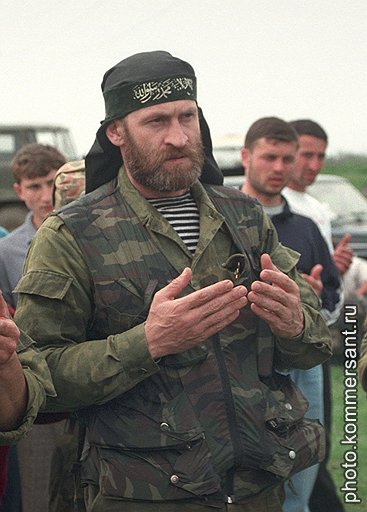


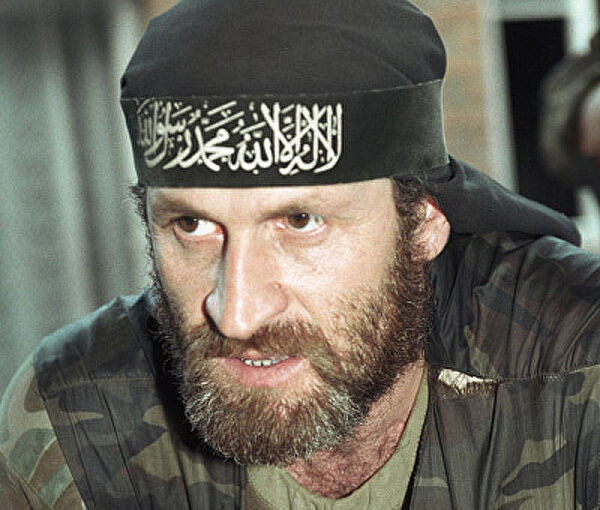
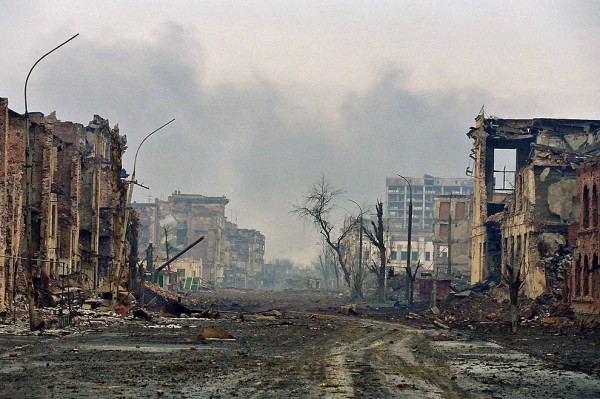
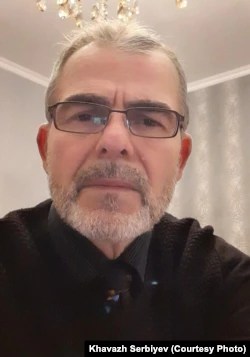


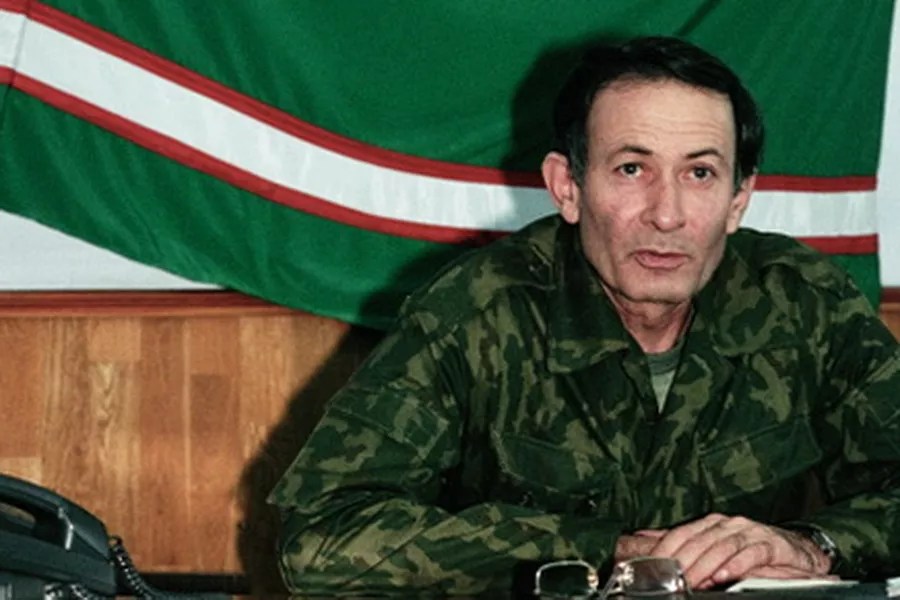
 Ichkeria Digital Archive