Archivi tag: Post Soviet

September 6, 1991 – Assault to the Supreme Soviet

On the thirty-second anniversary of Chechen independence, we publish an excerpt from the first volume of “Freedom or Death! History of the Chechen Republic of Ichkeria” which retraces the events that led to the dissolution of the Chechen-Ingush Supreme Soviet, and the proclamation of independence.

————–

In early September, the echo of the August Putsch began to fade in Moscow and the main Russian cities, and Yeltsin was able to return to rest his gaze on the turbulent peripheries of the empire. Chechnya had gone into a state of turmoil, but the Russian president did not give too much weight to the alarming reports from the local Supreme Soviet. He was convinced that all that noise was nothing more than an anti-caste regurgitation as had been seen so many at that time in the USSR. He thought that it would be enough to replace Zavgaev with someone else to be able to calm the hearts of the people and restore Chechnya – Ingushetia to social peace. So he thought of Salambek Hadjiev, a professor who had made headlines a few months earlier, when he was appointed Minister of Chemical and Oil Industry of the Soviet government. Born in Kazakhstan, Hadjiev had earned a position in academia, graduating from the Grozny Petroleum Institute and then working on it until he became its director. A prolific researcher, he was a member of the Academy of Sciences, as well as one of the leading experts in the petrochemical sector in all of Russia. Known for being a moderate anti-militarist (he was head of the Committee for Chemical Weapons and Disarmament) he represented in all respects the “mature” alter ego of the leader Dudaev. Yeltsin appreciated him because he could speak to both intellectuals and entrepreneurs, had a modern vision of the state and was a hard worker. He seemed to have all the credentials to compete with the General, who had his nice uniform, good rhetoric and little else on his side. The idea of ​​replacing Zavgaev with Hadjiev also pleased the President of the Supreme Soviet Khasbulatov, who, as we have seen, certainly did not like the current First Secretary. Hadjiev, on the other hand, was a man of high intellectual qualities like him (who was a professor) and like him he had a moderate and reformist vision. Arranging one of “his” people in power in Chechnya would also have been convenient for him in terms of elections, so he worked to ensure that the change took place as soon as possible.

Khasbulatov then headed to Chechnya to secure a painless changing of the guard. His notoriety, now that he was at the top of the Soviet state, his culture and his political ability would have allowed him to oust his hateful rival and to install a viable alternative that averted civil war and favored his position. However, there was to be reckoned with the nationalists, who grew up in the shadow of the crisis and rebelled during the coup.

To vanquish them, Khasbulatov drew up a plan. From his point of view, the nationalists were an amalgam of disillusioned, desperate and opportunists, held together by a vanguard of young idealists unable to rule the beast they were raising. Faced on the terrain of political debate, most likely they would have ended up being reduced to a residual fraction. Only the context, according to him, allowed them to occupy the scene. Despair and lack of alternatives were the ingredients of the mixture that threatened to break out the revolution. To neutralize the threat it was necessary to “change the air”: the opposition had strengthened against Zavgaev and his corrupt regime, getting him out of the way was the first step. There was to replace him with someone who had good numbers. And Hadjiev seemed the right one. The solution, however, he could not descend from above. It was necessary to establish an alternative consensus front to Dudaev and for this it took time. The nationalists had conquered the streets riding the wave of the institutional crisis. Getting them bogged down in a political diatribe by letting time pass, while the situation normalized, would have deprived the Dudaevites (as the supporters of the General began to call themselves) the ground under their feet. As socio-political conditions stabilized, the desperate would be less and less desperate, the disillusioned less and less disillusioned. People would have listened to those who called for calm and reforms rather than revolution and war, and the radicals would be marginalized. Finally, with a good democratic election, the moderates would have won and the revolutionaries would have lost.

Doku Zavgayev

A perfect plan, in theory, which, however, was based on two significant variables. The first: that Dudaev and his people were too afraid to force their hand, thus leaving the initiative to him. The second: that the situation in Moscow did not degenerate further. And Khasbulatov, unfortunately for him, could not control either the first or the second. Yet somewhere we had to start and so, from 23 August, the President of the Supreme Soviet went to Grozny, accompanied by Hadjiev, with the intention of killing Zavgaev. In a turbulent meeting of the Presidium of the Supreme Soviet, to the First Secretary who begged him to authorize the proclamation of a state of emergency and to disperse the opposition, Khasbulatov replied that the use of force was absolutely to be avoided, and that the solution of the crisis should be political, which meant only one thing: resignation.

Having cornered Zavgaev, he went to test his opponent. His first conversation with Dudaev seemed to be promising: the General welcomed him with affability and agreed to his proposal to dissolve the Supreme Soviet and replace it with a provisional administration to ferry the country into the elections. Satisfied, he returned to Moscow convinced that he had brought home a good point. The real goal, however, was achieved by the leader of the nationalists. Discovering Khasbulatov’s cards, he was now clear that no one would raise a finger to defend the legitimate government of Chechnya – Ingushetia: a casus belli would be enough to force the hand and take control of the institutions. Thus, while Moscow was toasting to the happy solution of the crisis, in Grozny the Dudaevites took control of the city and besieged the government, now without an army to defend it. Nevertheless, Zavgaev did not intend to give up. His abdication could only have been imposed by a vote of the Supreme Soviet, and almost none of the deputies had any intention of endorsing it, considering that a moment later the Soviet itself would be dissolved. Thus the situation remained at a standstill for a few days, with the government not resigning and the nationalists not abandoning the streets.

Between 28 and 30 August Dudaev began to test Moscow’s reactions: the National Guard broke into numerous public buildings, occupying them and displacing anyone who opposed them. Not a breath came from Moscow. Then the General ordered the establishment of armed patrols to guard the streets, and once again there was no reaction. Chaos was taking over the country and nobody seemed to care that much[1].

On September 1, Dudaev called the third session of the Congress. The National Guard presided over the assembly. Armed volunteers erected barricades all around. A group of militiamen entered in the Sovmin, occupied it and lowered the flag of the Chechen-Ingush RSSA, hoisting the green banner of Islam in its place. There was no trace of the moderates: ousted in the June session, they were now unable to influence public opinion in any way. The scene was all for the great leader, who exhorted Ispolkom to declare the Supreme Soviet lapsed. The delegates promptly agreed to the proposal and declared the Executive Committee the only legitimate authority in Chechnya. Once again, the reactions from Moscow were tepid, and mostly superficial. Khasbulatov himself, underestimating the gravity of the situation, he thought that Zavgaev’s replacement would be enough to split the nationalist front in two. Now, according to him, it would be sufficient to force Zavgaev to leave and replace him with Hadjiev, or someone else, to put the radicals in the minority. In reality, what was happening in Grozny was something much more serious than the political game that Khasbulatov thought he was playing. Dudaev had almost all public opinion on his side, he had his armed guards and was setting up a real government.

Dzhokhar Dudayev surrounded by his supporters

This was absolutely clear to the First Secretary, and it was even more so when on September 3, ignoring the directives of Moscow, he attempted to introduce a state of emergency through a resolution of the Presidium of the Supreme Soviet: no police or army department answered the call. While many of the Interior Ministry Militia men had already changed sides, those who had not taken a position simply avoided moving. Defeated again, Zavgaev remained holed up in the House of Political Education, where he had barricaded himself with his followers. Finally, on the evening of September 6, the National Guard also broke in there: a handful of men led by the Vice-President of Ispolkom Yusup Soslambekov entered the building. It is not known whether it was a premeditated action or the rise of agitation, the fact is that the crowd followed the militiamen and began to devastate everything. The deputies were beaten and silenced. Soslambekov placed in front of each of them a sheet and a pen and ordered them to write their resignations in their own hand. One by one, all the deputies signed. Under the threat of being executed on the spot, Zavgaev signed a waiver in which he “voluntarily” abandoned all public offices. Only the President of the Grozny City Council, Vitaly Kutsenko, refused to sign. When questioned by Soslambekov, he replied: I will not sign. What you are doing is illegal, it is a coup! Moments later Kutsenko flew from the third floor, crashing to the ground. He would later be hospitalized, where he would die in excruciating suffering[2]. The moderates condemned the assault, disassociated themselves publicly and withdrew from the National Movement, constituting an alternative Round Table to Congress. Zavgaev was driven out of Grozny and took refuge in Upper Terek District, his native land. In Grozny, Ispolkom began to operate as a real government, setting up commissions, issuing decrees and occupying public buildings.

In Moscow the news of the insurrection was received almost with disinterest. It took four days before a government delegation, made up of the Secretary of State, Barbulis, and the Minister of Press and Information, Poltoranin, arrived in Chechnya to try to resolve the crisis. With Dudaev, the two tried a “Soviet” approach: in the roaring years of the USSR, when a person represented a danger to the Party and could not be sent to a gulag to clear his mind, he was promoted and kept good. Poltoranin and Barbulis thought that if they offered Dudaev a leading role, he might take the chance to get out of that mess in exchange for a good job and a hefty pension. Unfortunately for them the General wasn’t just smarter than they thought, but he was also more courageous and determined, and he really believed in an independent Chechnya. So the meeting ended in a stalemate.

Khasbulatov meanwhile had returned to Chechnya, where he hoped to resume negotiations with Dudaev where he had left them. The meeting between the two was resolved with a new draft agreement: the “fallen” Supreme Soviet would be dissolved, and in its place a “provisional” Soviet would be established to deal with ordinary administration pending new elections. Representatives of Congress would also have participated in this executive. Comforted by the apparent concession of the nationalist leader, the President of the Russian Supreme Soviet spoke to the masses thronged in Lenin Square. In front of a large crowd (who even spoke of a hundred thousand demonstrators) invited everyone to calm down, asked for the demonstrations to be stopped and put all the blame on Zavgaev, ordering him in absentia not to show up unless he wanted to be taken to Moscow in an iron cage. Finally, when an extraordinary assembly of the Supreme Soviet was convened, he induced the deputies to resign and to establish a Provisional Soviet of 32 members, some from the old assembly and some from the ranks of the Executive Committee. The last act of the Chechen-Ingush Supreme Soviet was a decree calling for new elections for the following 17 November.
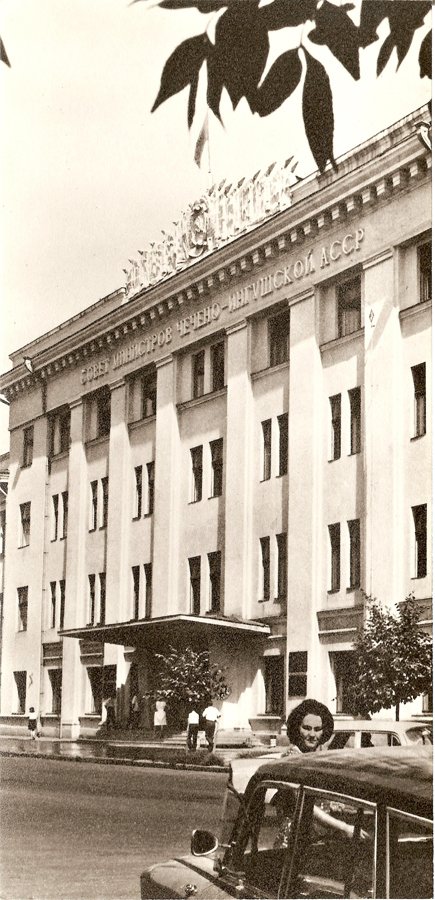
The building that housed the Presidium of the Chechen – Ingush Supreme Soviet

Once again it seemed that the situation had been recovered at the last minute, and Khasbulatov set about returning to his duties in Moscow not before Dudaev had fully recommended that the agreements be respected. He did not even have time to land in the Russian capital, which was greeted by a resolution of the Executive Committee of the Congress, just made to vote by Dudaev, in which Ispolkom recognized the Provisional Soviet as an expression of the will of the Congress, and warned him to go against the will expressed by it[3]. The declaration also contained an electoral calendar different from the one agreed: fearful that normalization would weaken their position, the nationalists decreed that elections would take place on October 19 and 27, respectively for the institutions of the President of the Republic and Parliament. Nobody in Moscow knew for sure which president and which parliament they were talking about: the Constitution of the Chechen-Ingush RSSA did not provide for any of these institutions. From the tone of the declaration it was now clear that the National Congress intended to proclaim full independence.


[1]The riots that broke out following the August Putsch had led to the paralysis of government departments, which was beginning to show its first harmful effects on everyday life. On August 28, about 400 inmates from the Naursk penal colony rose up, attacking the garrison of garrison, setting fire to the watchtowers, devastating the service rooms and occupying the prison facility. Two days later fifty of them, armed with handcrafted knives and weapons, occupied a wing of the building. All the others had escaped, dispersing among the demonstrators.

[2]It is unclear whether Kutsenko threw himself from the palace in a panic attack or was deliberately ousted. According to some, it was he who threw himself downstairs, beating his head against a cast iron manhole. Other versions speak of a guard of Dudaev, or of Soslambekov himself, who would have thrown him against a window when he refused to sign his resignation. Even regarding his hospitalization, the testimonies are conflicting. According to some, the angry mob attacked him, filling him with kicks and spit. Others, like Yandarbiev himself in his memoirs, say that Kutsenko was promptly picked up and taken to hospital, but he refused to be examined by any Chechen doctor for fear of being finished. As there were no Russian doctors available, he ended up in a coma, only to expire a few days later. However, the investigation into Kutsenko’s death would not have established any responsibility. The official version reported by the Prosecutor’s Office was that the President of the Grozny City Council voluntarily threw himself downstairs, frightened by the crowd.

[3]The text of the declaration, organized in sixteen programmatic points, began by condemning the Supreme Soviet, guilty of having lost the right to exercise legislative power, of having committed a betrayal of the interests of the people and of having wanted to favor the coup d’état. Some of the main political exponents of the Congress were appointed to the Provisional Soviet (Hussein Akhmadov as President, as well as other nationalists chosen from the ranks of the VDP). The Soviet would have operated in compliance with the mandate entrusted to it by Congress: if a crisis of confidence had occurred, this would have been rejected by the Executive Committee and promptly dissolved. The solidarity of parliaments around the world and of the countries that have just left the USSR was also invoked, in opposition to the attempt by the imperial forces to continue the genocide against the Chechen people.

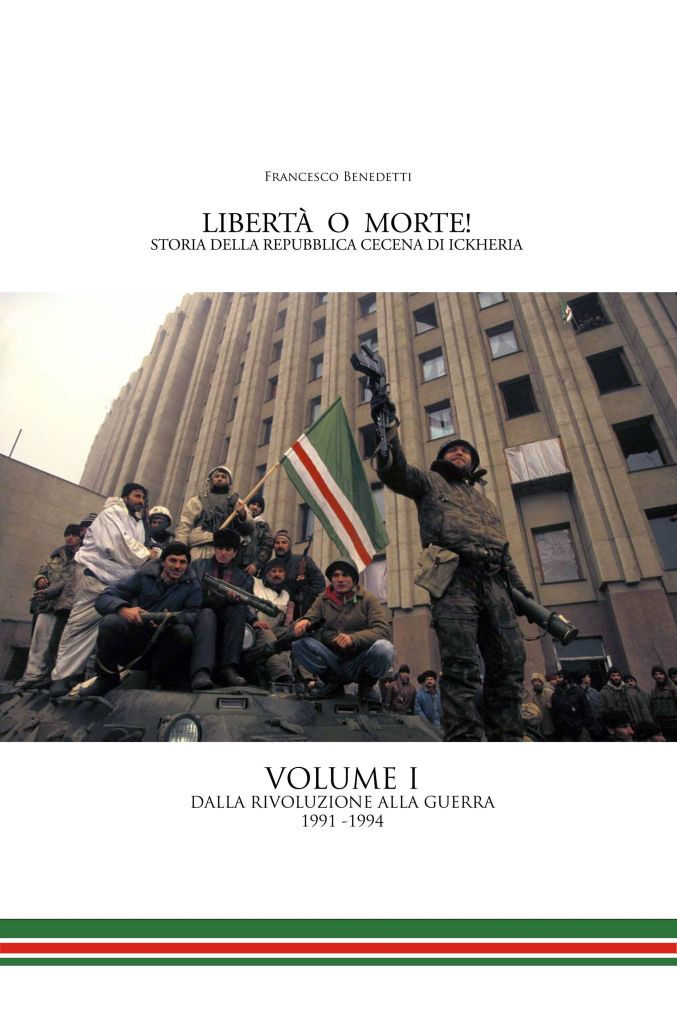
“LIBERTA’ O MORTE!” – Seconda Edizione

Siamo lieti di comunicare che da oggi è disponibile la seconda edizione del libro “Libertà o Morte! Storia della Repubblica Cecena di Ichkeria” in vendita su Amazon sia in versione cartacea che in E – Book.

Per questa seconda edizione abbiamo deciso, data la lunghezza del lavoro, di organizzarne la pubblicazione in cinque volumi: oggi esce il primo di questi, “Dalla Rivoluzione alla Guerra (1991 – 1994)”.

Il volume si compone di 340 pagine, e contiene numerose aggiunte e modifiche rispetto alla versione precedente. Dalla settimana prossima sarà possibile acquistarlo anche in lingua inglese. Buona lettura!

ACQUISTA IL LIBRO

IBN AL – KHATTAB: MEMORIE DI UN TERRORISTA (PARTE 1)

Nel 2016 il blog di informazione https://arabskayavesna.wordpress.com/  ha pubblicato il testo integrale delle memorie di Sāmir Ṣālaḥ ʿAbd Allāh al-Suwaylim: “Memories of Amir Khattab: The Experience of the Arab Ansar in Cecenia, Afghanistan e Tagikistan”.Dai più conosciuto come Emir Al Khattab, è stato il più celebre “Comandante di Campo” della guerriglia cecena, mettendo in atto alcune delle più audaci azioni di guerra contro l’esercito russo, e rendendosi parimenti responsabile di alcuni tra i più odiosi atti terroristici che abbiano macchiato il suolo del Caucaso. Fervente islamista, fu tra i promotori della “svolta fondamentalista” della resistenza cecena, preparando centinaia di giovani combattenti al “martirio” e costituendo l’organizzazione alla base dell’autoproclamato “Emirato Islamico”. In questa sede pubblichiamo alcuni stralci dell’intervista. Chiariamo subito che il nostro intento non è quello di glorificare una figura di Al Khattab, di giustificarne le azioni o di supportare il radicalismo islamico (come specificato nella sezione “Mission” di questo blog). Nel nostro trattare l’argomento della Repubblica Cecena di Ichkeria non possiamo ignorare la voce di questa parte della “resistenza” che fu così fondamentale per l’evoluzione confessionale della ChRI. Per questo, e per nessun altro motivo, riportiamo alcuni stralci del libro di Ibn Al Khattab.

Copertina della versione inglese dell’autobiografia di Ibn Al – Khattab

            BIOGRAFIA DI IBN AL – KHATTAB

Nato ad Arar, in Arabia Saudita, nel 1969, Samir Salah Al – Suwaylim proveniva da una famiglia benestante, il che gli permise di affrontare con successo gli studi secondari. Fin dall’adolescenza si appassionò alle grandi figure dell’Islam, maturando una visione radicale dell’impegno religioso che lo portò, ancora diciassettenne, ad unirsi alle file degli arabi afghani nella guerra contro l’esercito sovietico. Durante la sua permanenza in Afghanistan Al Suwaylim combattè come gregario in formazioni di mijahudeen vicine al fondamentalismo islamico, guadagnandosi il nome di battaglia di Ibn Al – Khattab, ispirato al celebre Califfo Omar Ibn – Al Khattab, vissuto nel VII Secolo. Nell’incauto maneggiamento di esplosivi, il giovane perse quasi completamente l’uso della mano destra.

Tra il 1993 ed il 1995 Khattab combattè in Tajikistan, al fianco dell’opposizione islamica. Secondo una sua dichiarazione, combattè anche in Bosnia, al fianco delle milizie islamiche locali. Recatosi per la prima volta in Cecenia nel 1995, ed infiltratosi fingendosi giornalista, costituì un’unità combattente guidata da lui stesso e da alcuni suoi uomini fidati ma composta prevalentemente da daghestani e ceceni con la quale, tra il 1995 e il 1996, mise a segno numerose imboscate tra le quali quella più celebre presso  la gola di Yarish – Mardy, durante la quale distrusse completamente una colonna della Quarantasettesima divisione corazzata dell’esercito federale.

Alla fine della Prima Guerra Cecena Khattab rimase sul territorio della ChRI, dove gestì un campo di addestramento di Mujahideen e raccolse milioni di dollari in donazioni dalle organizzazioni islamiste di tutto il pianeta, ivi compresa Al Qaeda. Sotto la sua guida si formarono centinaia di jihadisti, con i quali Khattab mise a segno il 22 Dicembre 1997 un’incursione in Daghestan, presso la base militare di Buinaksk. L’attacco fu un fiasco, i jihadisti dovettero rientrare precipitosamente in Cecenia e lo stesso Khattab rimase ferito.

Nel 1998 fu tra i promotori del Majilis  – Ul – Shura dei Mujahideen Riuniti (Consiglio Consultivo dei Sacri Combattenti Riuniti) il cui terminale politico era il Congresso dei Popoli di Ichkeria e Daghestan, con lo scopo di iniziare un’insurrezione islamista nella repubblica vicina alla ChRI e scatenare una rivoluzione islamica in tutto il Caucaso. Braccio armato dell’organizzazione fu la Brigata Islamica per il Mantenimento della Pace, al cui comando fu posto l’amico e compagno d’armi Shamil Basayev. Nell’Agosto del 1999 le forze islamiste al comando di Basayev e Khattab tentarono un’invasione del Daghestan, venendo tuttavia respinti con gravi perdite. L’azione dette il via alla ritorsione armata della Federazione Russa, la quale invase in forze la Cecenia provocando la caduta del governo separatista e lo scoppio della Seconda Guerra Cecena. Secondo l’FSB (il servizio di sicurezza federale) Khattab avrebbe diretto o organizzato i tragici attentati terroristici ai quartieri residenziali di numerose città russe, provocando centinaia di morti e feriti.

Khattab in Afghanistan

Con lo scoppio della Seconda Guerra Cecena Khattab fu reintegrato nell’esercito separatista, occupandosi di armare, addestrare e condurre le Jamaats islamiche insediatesi nel paese al termine della prima guerra. In questa veste il leader arabo si occupò anche di far fluire alla resistenza lauti aiuti economici provenienti dalle associazioni islamiche di tutto il mondo. Divenuto uno dei terroristi più ricercati del pianeta, Khattab fu oggetto di un’accanita caccia all’uomo terminata il 20 Marzo 2002, quando l’FSB riuscì ad avvelenarlo facendogli recapitare una lettera avvelenata.

KHATTAB IN CECENIA

“Mentre ci stavamo preparando per l’anno successivo, iniziarono gli eventi in Cecenia. Ho guardato la TV: lo scontro contro i russi era condotto dal generale comunista Dzhokhar Dudaev, o almeno così lo immaginavamo. Credevamo fosse un conflitto tra comunisti, non vedevamo prospettive islamiche in Cecenia.  Un giorno tornai nelle retrovie per curare il mio braccio destro ferito. La’ un Mujahideen ceceno venne da me e si offrì di portarmi in Cecenia per una o due settimane. Guardammo la mappa della Cecenia. Era una piccola repubblica di 16.000 chilometri quadrati. Era persino difficile da trovare sulla mappa. Pensavo che la sua popolazione fosse di un migliaio di persone. Quindi iniziammo il nostro viaggio. C’era una sola strada per entrare in Cecenia. In quel momento la Russi aveva iniziato ad istituire posti di frontiera, ma riuscimmo ad aggirarli.

[…] Alcuni tra i miei fratelli avevano un’opinione diversa dalla mia. Dicevano: “Perché vai in Cecenia? Ti sei affezionato alle battaglie e per te non fa differenza con chi combattere?” E’ Haraam per te combattere con queste persone, Sufi con un leader comunista, un generale sovietico? Verserai il tuo sangue invano. […] Ho discusso con loro, dicendo […] “Se Allah ha predeterminato che faremo qualcosa, allora lo faremo. Siamo venuti qui per Allah, non per i comunisti. Non supporteremo loro. Stiamo lavorando per Allah e la nostra ricompensa è con lui, quindi siate pazienti. Entriamo e diamo un’occhiata alla situazione.” […]. Questo è stato l’inizio della mia storia in Cecenia.”

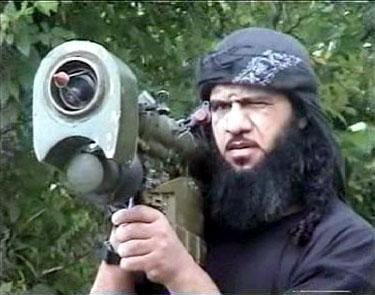
Khattab armato di un lanciarazzi

FORMARE UN ESERCITO

I combattimenti si avvinarono presto alla nostra zona. I giovani discutevano se si trattasse di una Jihad, i mullah sufi dichiaravano che non lo era, che si trattava di una resa dei conti tra Dzhokhar Dudaev ed i comunisti, e gli ipocriti gettavano benzina sul fuoco con i loro commessi. I burattini dei russi (l’opposizione antidudaevita, ndr.) dicevano che questo era un problema tra loro e Dudaev, e che noi non avremmo dovuto intervenire. […] Io non conoscevo veramente la situazione perché non l’avevo studiata. Avevo una videocamera ed ho iniziato a filmare le persone, chiedendo loro per cosa stessero combattendo. E’ così che ho conosciuto Shamil Basayev. Alcune persone pensavano che fossi un giornalista. Ho visto persone sincere e, giuro su Allah, ho pianto quando ho chiesto ad una donna anziana: “Per quanto tempo sopporterete queste difficoltà?” e lei ha risposto: “Vogliamo sbarazzarci dei russi”. Le ho chiesto “Per cosa combattete?” e lei ha risposto: “Vogliamo vivere come musulmani e non vogliamo vivere con i russi”. Allora le ho chiesto. “Cosa potete dare ai Mujahideen?” E lei: “Non ho che questa giacca addosso”. Ho pianto: se questa donna anziana può aiutare avendo solo questo, perché noi ci permettiamo di avere paura e dubbi? Da quel giorno decisi con i miei fratelli di iniziare a preparare le persone alla battaglia, come primo passo.

[…] Abbiamo iniziato a radunare i giovani e abbiamo preparato per loro una base di addestramento sulla montagne. Lo Sceicco Fathi (Al – Sistani, comandante del cosiddetto Battaglione Islamico, ndr.) mi ha dato una mappa ed abbiamo scelto il villaggio di Vedeno e la zona circostante. Dopo aver trovato un Campo dei Pionieri (istituzione giovanile del Partito Comunista sovietico, ndr.) abbandonato, abbiamo iniziato a radinarvi i giovani e abbiamo stabilito un programma di addestramento. Ricordo che al primo incontro c’erano più di 80 mujahideen che ora sono divenuti Emiri. Ricordo cosa dissi loro (e Fathi tradusse): “Se qualcuno di voi vuole essere Emir, allora deve offrire il suo programma di combattimento e noi gli ubbidiremo”. Nessuno disse nulla. In quei giorni la battaglia si stava avvicinando alle montagne. Quindi dissi loro: “Non vi sto dicendo che ho conoscenza. Ho solo esperienza di combattimento in Afghanistan e Tajikistan. Forse è il momento di mettersi al lavoro. Ho un programma scaglionato in tre fasi: preparazione, armamento e operazioni. Se non saremo davanti a voi in battaglia potrete spararci. Saremo davanti a voi dopo il corso. Dopo l’armamento, inizieremo ad implementare il programma di combattimento. Andremo sempre davanti a voi, io ed i fratelli che sono con me.”

L’INCONTRO CON DUDAEV

Ho incontrato Dudaev durante una visita allo Sceicco Fathi. […] Dzhokhar iniziò a fare domande. […] Chiese: “perché dalle tua parti non ci vengono ad aiutare?” Risposi: “La verità  che le ragioni della guerra non sono chiare, e le persone non sanno per cosa stiamo combattendo.” Lui mi disse: “Fratello […] questa è una terra islamica. Non è abbastanza per te?” Rimasi scioccato dal fatto che una frase di questo genere provenisse dalle labbra di un generale russo. […] Rimasi colpito da questa personalità dignitosa e forte. Mi sedetti accanto a loro (Dudaev e Al – Sistani, ndr.) e posi a Dudaev la prima domanda: “Qual è lo scopo della tua battaglia? Combatti per l’Islam?” Lui rispose: “Ogni figlio della Cecenia e del Caucaso, oppresso da decenni, sogna che un giorno l’Islam tornerà non solo nella sua terra natale, ma in tutto il Caucaso. E io sono uno di questi figli. Fui sopraffatto da una risposta così profonda. Dissi: “Va bene, i russi sono stati assenti pe tre anni, del 1991 alla fine del 1994. Perché non hai proclamato uno Stato Islamico e non hai risolto la questione in questi tre anni?” Lui disse: “Sapevamo che non appena ci fossimo allontanati dalla Russia, questa ci avrebbe attaccati il giorno successivo. Abbiamo cercato di ingannarli, mostrandoci come dei democratici che cercano di sbarazzarsi dell’inferno russo. Ma i russi sono molto maliziosi, e astuti; sapevano che eravamo sulla strada per la restaurazione dell’Islam, quindi iniziarono l’occupazione.”

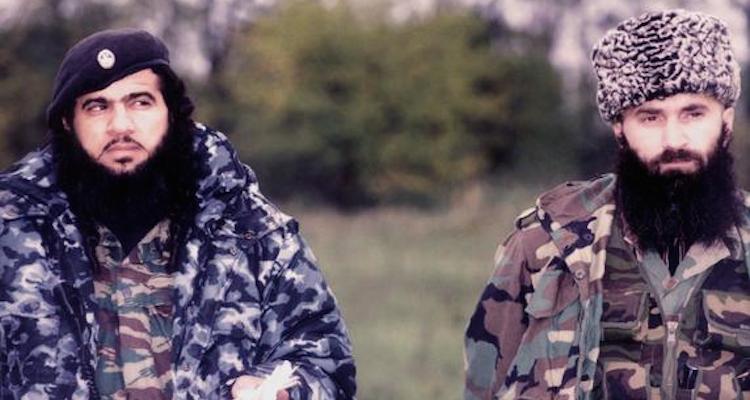
Khattab e Basayev

Allora risposi: “Il mondo islamico non sa di questa guerra. Non hai nemmeno chiamato questo paese “Repubblica Islamica Cecena” in modo che le persone sapessero che hanno il dovere di aiutare. Il mondo islamico non sa nulla degli eventi in corso in Cecenia.” Lui disse: “[…] E’ un dovere. La guerra è iniziata qui in Ceceni,a e sai che questa è la terra dei musulmani, che è tuo dovere venire qui. Sei il primo giornalista musulmano a farmi queste domande, mentre sotto i bombardamenti i giornalisti della BBC, della CNN e dell’intero mondo occidentale si siedono in ginocchio davanti a noi per saperne di più sulla guerra. Chiedono per cosa combattiamo, qual è la situazione, se siamo musulmani o cristiani e ci pongono domande sorprendenti. E finora, guarda quanti musulmani ci sono tra i giornalisti! Nessuno è venuto qui per saperne di più, o per fare domande sulla guerra!”

GLI AMBASCIATORI DI ICHKERIA – Seconda Parte

SECONDA PARTE: DAL 1993 AL 1996

Proseguiamo la nostra rassegna sulla politica estera della Repubblica Cecena di Ichkeria (QUI LA PRIMA PARTE). Come abbiamo visto, tra il 1991 ed il 1992 il principale attore nella politica estera repubblicana fu il Presidente Dudaev. Egli intese fin da subito il suo ruolo come centrale nell’azione di difesa dell’indipendenza cecena. Questo atteggiamento “protagonista” si tradusse in azioni politiche spesso al di là dei suoi limiti “di protocollo istituzionale” alienandogli il favore sia del primo Ministro degli Esteri della Repubblica, Shamil Beno (il quale si dimise, in polemica con il Presidente, nel Settembre 1992) sia del Parlamento, il quale intendeva portare avanti una politica meno provocatoria nei confronti di Mosca e più orientata ai “piccoli passi”, evitando di alzare la tensione tramite sterili visite ufficiali che non avrebbero certamente portato al riconoscimento della ChRI, ma che invece avrebbero messo in imbarazzo Mosca, allontanando la prospettiva di una secessione “negoziata” con la Russia.

OGNUNO PER SE’, DUDAEV PER TUTTI

Mentre Dudaev svolgeva il suo “gran tour” nei paesi mediorientali ed occidentali, una delegazione parlamentare guidata dal Vicepresidente dell’Assemblea, Magomed Gushakayev, intesseva fitti rapporti con i paesi baltici, ed in particolare con la Lituania. Qui il Presidente del Consiglio Supremo, Vyautas Landsbergis, si era dimostrato molto sensibile alle istanze dei ceceni, ed accolse con entusiasmo una rappresentanza del parlamento nell’Ottobre 1992. I deputati di Grozny parlarono all’assemblea parlamentare lituana, auspicando ad un riconoscimento ufficiale da parte di questa. In quell’occasione Gushakayev garantì che la stragrande maggioranza dei ceceni era favorevole all’indipendenza, e che le discussioni politiche non vertevano sul “cosa” fare, ma sul “come” farlo:

“[…] non c’è, e non esiste, una sola organizzazione socio – politica [in Cecenia, ndr.] che non sostenga l’indipendenza della Cecenia. La discrepanza è solo nella tattica per raggiungere questo obiettivo. L’esperienza lituana nel raggiungimento dell’indipendenza statale è molto importante per noi. E’ stato per questo che siamo venuti a Vilnius. La Lituania è stata e rimane un faro per la Cecenia sulla via dell’indipendenza dello Stato.”

Le tre principali autorità del Parlamento di Prima Convocazione della ChRI. Da sinistra a destra: Bektimar Mezhidov, Hussein Akhmadov, Magomed Gushakayev

IL TOUR DIPLOMATICO DEL 1993

L’atteggiamento moderato e prudente del Parlamento cozzava con quello ardimentoso e radicale di Dudaev, il quale, non appena rientrato dal suo giro di visite diplomatiche, ne organizzò subito un altro per i primi mesi del 1993. Il 29 Gennaio egli volò in Lettonia, proprio dove si erano recati i parlamentari pochi mesi prima. Accolto dal solito Landsbergis, Dudaev tenne un colloquio con il Presidente della piccola repubblica baltica, Seimas Cheslovas Yurshenas. I due parlarono di come impostare un rapporto di partnership economica e culturale, di come realizzare un programma di scambio universitario e di come sostenere vicendevolmente le rispettive economie utilizzando la Lituania come “porta per l’occidente” della Cecenia, e la Cecenia come “petroliera” della Lituania. L’incontro rimase, tuttavia, soltanto un’esperienza informale, e la Lituania non procedette a riconoscere ufficialmente la secessione cecena.

Dopo un altro giro di visite “locali” in Azerbaijan ed Armenia, teso a consolidare i rapporti tra il suo governo (ormai sul punto di diventare un vero e proprio regime dittatoriale) e gli stati più vicini, Dudave partì per la Francia, dove svolse una visita a metà tra l’ufficiale ed il privato tra il 13 ed il 16 Giugno 1993. Secondo Eduard Khachukaev, all’epoca Capo del Dipartimento per il Commercio Estero (il quale accompagnò il Presidente in quasi tutti i suoi viaggi) L’invito era giunto da rappresentanti del Ministero della Difesa francese, i quali si occuparono di organizzare l’arrivo del presidente ceceno all’aereoporto di Beauvais e di organizzare un incontro volto a concludere un contratto di consulenza militare relativamente alla difesa terrestre della repubblica.  Secondo quanto riferito da Khachukaev i funzionari francesi, sapendo che Dudaev era un pilota, lo invitarono alla basa aerea di Orange e gli presentarono il loro nuovo caccia Mirage 2000, permettendogli addirittura di guidarne uno. Non si sa molto altro di questo viaggio, na certamente le prospettive auspicate da Dudaev riguardo una collaborazione militare tra Francia e Cecenia non si concretizzarono mai.

AMBASCIATORI NON AUTORIZZATI

L’approccio disinvolto e pragmatico di Dudaev alla politica estera si concretizzava anche nel frequente ricorso a “testimonial internazionali” alla causa cecena. Impegnato nella costante ricerca di un riconoscimento politico per il suo paese, e disposto a qualsiasi cosa pur di farsi conoscere dall’opinione pubblica mondiale, il presidente non si risparmiò il ricorso alla nomina di “ambasciatori” non riconosciuti dai paesi nei quali avrebbero dovuto operare. Fu il caso ad esempio di Berkan Yashar, nominato Viceministro degli Esteri nel 1992 e poi “Ambasciatore in Turchia” (nonostante la Turchia non avesse riconosciuto la Cecenia). Berkan era un personaggio torbido, quasi sicuramente un agente reclutato dalla CIA, e a quanto pare curò più di un affare sporco per conto di Dudaev (secondo quanto dichiarò molti anni dopo, giunse perfino ad incontrare il terrorista internazionale Osama Bin Laden in un appartamento a Grozny – ma di questo parleremo in un articolo ad hoc dedicato alle “covert operations” della ChRI – ). Nello stesso modo l’americano David Christian, giunto in visita a Grozny nel 1993, fu nominato “Ambasciatore negli Stati Uniti” pur non avendò né la cittadinanza cecena, né il riconoscimento in tale ruolo da parte delle autorità statunitensi.

Dzhokhar Dudaev discute con David Christian durante la sua visita a Grozny nel 1993

Certamente la pratica di nominare “rappresentanti della repubblica” e “consoli onorari” di origine straniera ovunque ci fosse qualcuno disposto a fregiarsi di questo titolo divenne una delle principali attività diplomatiche dei presidenti della “ChRI”, pratica in vigore ancora oggi presso il governo separatista in esilio. Ad oggi abbiamo raccolto un elenco di 77 “rappresentanti” nominati tra il 1991 ed il 2020 in numerosi paesi, così come presso alcune importanti organizzazioni internazionali.

DIPLOMAZIA DI GUERRA

Lo scoppio della Prima Guerra Cecena impedì alla ChRI di portare avanti una politica estera ufficiale. Costretti ad operare in clandestinità, i secessionisti (e Dudaev in particolare) cercarono di sfruttare i canali aperti tra il 1992 ed il 1994 per garantire il costante approvvigionamento di risorse economiche, volontari ed armamenti necessari a sostenere la resistenza armata. Non ci soffermeremo su questo punto in questa sede: l’argomento richiede una trattazione molto lunga e dettagliata, e rimandiamo la questione ad articoli successivi. Chi volesse approfondire il tema della politica estera della ChRI durante la Prima Guerra Cecena può trovare informazioni utili nel libro “Libertà o morte! Storia della Repubblica Cecena di Ichkeria”, acquistabile QUI.

L’ERA YANDARBIEV

Il 21 Aprile 1996, pochi mesi prima che la guerra avesse fine con la vittoria tattica dei separatisti e gli accordi di Khasavyurt, il Presidente Dudaev morì ucciso da un missile teleguidato russo. Gli successe il suo amico, ideologo e vicepresidente, Zelimkhan Yandarbiev. A differenza di Dudaev, Yandarbiev era ben disposto all’idea di aprire contatti concreti con i movimenti islamici radicali, dei quali apprezzava la dedizione, lo spirito combattivo e non ultimo le importanti disponibilità economiche necessarie, secondo lui, a consolidare le conquiste della Rivoluzione Cecena ed a far ripartire la sgangherata economia del Paese. Tali contatti, tuttavia, avrebbero certamente alienato alla Cecenia le simpatie del mondo occidentale, e gettato sul movimento separatista il turpe alone del fondamentalismo. Per questo motivo contatti ufficiali tra la ChRI ed i movimenti jihadisti non furono mai portati avanti, neanche sotto la presidenza Yandarbiev, fino allo scoppio della Seconda Guerra Cecena.

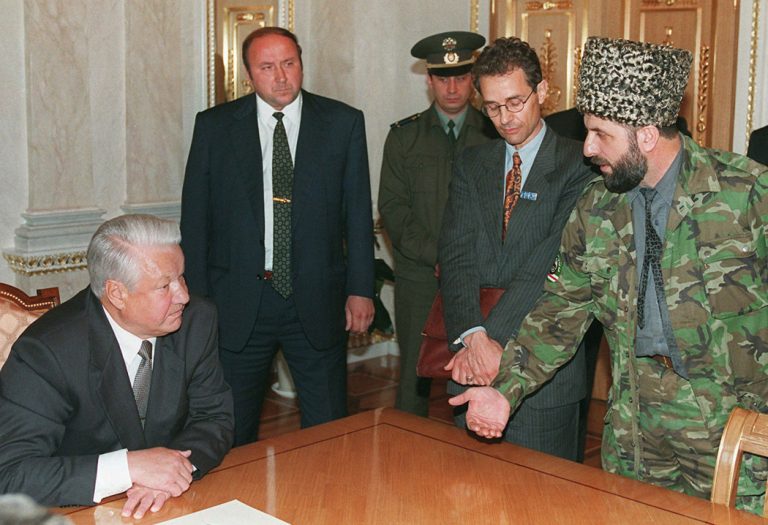
Zelimkhan Yandarbiev discute con Boris Eltsin durante i negoziati del 1996 a Mosca

In campo internazionale l’impegno del nuovo presidente fu monopolizzato dalla gestione dei negoziati con la Federazione Russa, con la quale era necessario giungere ad un’intesa per la smilitarizzazione del Paese e la sua ricostruzione post – bellica. Fu Yandarbiev a portare avanti i negoziati che portarono al ritiro delle truppe federali entro il 31/12/1996, supportato in questo dall’autorevole Capo di Stato Maggiore dell’Esercito, Aslan Maskhadov, destinato a succedergli nel Febbraio 1997 alla Presidenza della Repubblica.