Russian ambition is vulnerable in what has always been the Empire’s soft underbelly: the North Caucasus. A conference in Kyiv sets a framework for opposition to Moscow’s imperialist legacy.
The following article was written by the Minister of Foreign Affairs of the Chechen Republic of Ichkeria, Inal Sharip, and published in the Kyiv Post at the following link:
The Kyiv conference “The North Caucasus as Europe’s Security Frontier” was timed to the third anniversary of Verkhovna Rada Resolution No. 2672-IX on the temporary occupation of the territory of the Chechen Republic of Ichkeria (ChRI). Its core conclusion is that Europe’s stability is inseparable from the fate of the peoples of the North Caucasus; therefore, the “Caucasus track” must move from declarations to a managed policy with institutional tools and clearly defined addressees.
The lineup underscored the political weight and attention to the topic. Participants included Verkhovna Rada Speaker Ruslan Stefanchuk and First Deputy Speaker Oleksandr Korniyenko; Ukraine’s third President Viktor Yushchenko; Mykhailo Podolyak, advisor to the Head of the Office of the President of Ukraine; Prime Minister of the ChRI Akhmed Zakayev; MEP Rasa Jukneviciene (former Lithuanian Minister of Defense, Vice-Chair of the EPP Group in the European Parliament); former Polish Foreign Minister Anna Fotyga; as well as members of the Ukrainian parliament and international experts. Such a roster widens the frame from a national to a pan-European and transatlantic level, signaling that the North Caucasus is entering the security mainstream.
Prime Minister of ChRI Akhmed Zakayev with the third President of the Republic of Ukraine, Viktor Andrijovych Yushchenko
The normative direction of the discussion was set by the adopted Kyiv Declaration.
First, it fixes a strategic lens: the North Caucasus is a critical link in pan-European security; the threats are transnational (hybrid aggression, repression, deportations, disinformation) and require coordinated international responses. This turn implies abandoning the “all-Russia prism” in favor of viewing the North Caucasus as a distinct macro-region with its own elites and trajectory.
Second, the declaration sets an operational framework – a four-track roadmap, which makes the conversation reproducible within EU/NATO policy and at national levels:
Legal (universal jurisdiction, documentation of crimes, support for applications to international courts);
Sanctions (expansion of personal and sectoral measures for repression, mobilization, deportations, and cultural erasure);
Humanitarian (protection of refugees and political prisoners, access to medical and psychological care, preservation of language and culture);
Communications (countering disinformation, supporting independent media and expert analysis).
Third, much attention was dedicated to the Ukrainian pillar. Participants called on the Verkhovna Rada to take steps enabling “Ichkerian entities” to function within Ukraine’s legal field: recognize ChRI citizenship; provide for representation of ChRI citizens in third countries pending international recognition; grant the State Committee for the De-Occupation of the ChRI official status as an organ of national-liberation struggle; and launch a regular parliamentary dialogue. They also propose energizing cross-party caucuses and supporting draft law No. 11402 on engagement with national movements of the Russian Federation’s colonized peoples. Taken together, this moves moral-political declarations toward legally operable mechanisms.
ChRI Prime Minister Akhmed Zakayev with the Speaker of the Ukrainian Parliament, Ruslan Stefanchuk
External addressees are divided into two groups. The first – the European Parliament, PACE/NATO PA, and national parliaments – are urged to strengthen the parliamentary dimension of de-occupation policy, initiate public hearings and evidence-gathering missions, establish systematic dialogue with national-liberation movements, and expand sanctions lists, including accountability for the use of North Caucasus natives in Russia’s war against Ukraine. The second – governments and institutions of the EU/UK/Canada/US – are encouraged to integrate North Caucasus issues into strategic reviews and deterrence plans, and to support human rights, cultural heritage, and the languages of the Caucasus peoples.
A key infrastructural outcome was the decision to build an expert network and a public monitoring panel, Caucasus Watch – a tool that links human-rights reporting, sanctions tracking, and analysis, thereby reducing information asymmetries for policymakers and regulators. A dedicated grant track is envisioned for researchers working on law, security, and culture in the North Caucasus.
The tone of the discussion was well captured by remarks from Laura Lindermann of the United States (Senior Fellow at the Atlantic Council’s Eurasia Center and Director of Programs at the Central Asia – Caucasus Institute at the American Foreign Policy Council). She noted Russia’s “strategic retrenchment” from the South Caucasus, the shift in the mediation architecture, and the vulnerability of three pillars of control in the North – hyper-securitization, budget transfers, and personal patronage networks (including the “Kadyrov model”). The weakening of these pillars increases the risks of local conflicts and terrorism, as well as the play of external actors; hence integrating the “Caucasus track” into the core of Euro-Atlantic strategies is a matter of prevention, not reaction.
From here flows the practical logic of the Kyiv Declaration: institutionalizing subjecthood, standardizing sanctions-legal work, producing verifiable data, and advancing parliamentary diplomacy. The expected outputs fall into three baskets:
Legal (building out universal-jurisdiction cases and treaty-based procedures);
Political (consolidating inter-parliamentary formats, including channels to movements and diasporas);
Informational (reducing reliance on fragmentary testimony through a single data window (Caucasus Watch)).
The risks are evident: sanctions fatigue and bureaucratization; limited access to sources and witness security; competing external agendas. However, the very shift to an operational framework with clear addressees and instruments is already significant. The political will of parliaments and the cohesion of expert networks will be the key variables – both for implementing the Ukrainian pillar (including decisions on ChRI citizenship and the State Committee’s status) and for embedding the “Caucasus track” in EU/NATO strategies.
Kyiv has offered new arguments as well as a policy infrastructure, from legislation to enforcement. The trajectory ahead will be measured not by the volume of statements but by the speed of institutional steps and the quality of interagency coordination.
The views expressed in this opinion article are the author’s and not necessarily those of Kyiv Post.
The text of the Declaration signed in Kyiv is available in English, Russian and Ukrainian at this link
Let’s go back to 1999. When Russia invaded Chechnya for the second time, where were you? Were you still studying?
At that time I was working in Moscow, at the Central Documentary Film Studio. I was making documentaries. When the war started, I returned to Chechnya to make a film about the war. It was my most dangerous experience, because the aggression was in full swing, they were ready to destroy the entire Chechen people. When Russian troops saw journalists, human rights activists or documentary filmmakers, they hated them and put up all sorts of obstacles, because they were telling the whole world about the atrocities that the Russians were committing in Chechnya. And when the Russian military found out that I was a Chechen, they were ready to shoot me. Several times I was a millimeter away from death. After finishing work on the film, the film was selected at a film festival in North Carolina (USA). In 2000, I left for the USA, where my film received high reviews in the professional community. After that, I began negotiations with American producers about working on a documentary series about the centuries-long struggle of the Chechen people for independence: from Sheikh Mansur to the present day.
nail Sharip collects the Award for the International Festival of Independent Cinema of Naples
What was the American public’s involvement with what was happening in Chechnya?
Ordinary people knew little about Chechnya. They heard something about the war, but knew nothing specific. Journalists and human rights activists knew well. Most Americans are not interested in what is happening outside the United States. According to statistics, only a few percent of voters care about the presidential candidate’s pre-election position on U.S. foreign policy.
In the rhetoric of the current regime of Ramzan Kadyrov I have often heard references to the fact that the independence that was regained then cost the Chechens so much, that even talking about it today is to be considered synonymous with “extremism”. In your opinion, how much did all this weigh in strengthening the Chechens’ support for Kadyrov?
The question of how the values associated with independence and loss influence the support for Ramzan Kadyrov’s regime in Chechnya leads us to deeper reflections on human ideals and motivations. The phrase indicating that independence “cost” the Chechen people too much and that preserving this memory has become synonymous with “extremism” touches upon complex issues of identity and self-awareness. For peoples who have endured wars and trauma, collective ideals are often intertwined with historical memory, built on suffering and struggle. For many Chechens, the memory of war and independence is not merely a historical fact but a part of their identity that legitimizes their sense of community and belonging. However, this perception can become a tool of power when fear and loss are employed to validate authority.
This raises a philosophical question: Do individuals truly hold higher ideals for which they are willing to sacrifice everything, including their lives? In the past, values such as honor, dignity, and justice served as catalysts for revolutions and social changes. In the 18th and 19th centuries, such ideals inspired people to make selfless acts. Yet in the modern world, filled with logic of consumerism and individualism, these ideals may appear indifferent. Nonetheless, those ideals have not disappeared; rather, they have transformed. When facing crises or difficulties, individuals unconsciously seek not only justifications for their actions but also profound values that could support them in those moments. For some, this may be family; for others, freedom; and for some, belonging to their nation and its history. However, under an authoritarian regime like Kadyrov’s, such searches are permeated by fear. The ability to openly defend ideals born from suffering can lead to repression, making individuals more inclined towards conformity.
Ramzan Kadyrov, leader of the Russian province of Chechnya gestures speaking in Chechnya’s regional capital of Grozny, Russia, Tuesday, March 29, 2022. (AP Photo)
Thus, Kadyrov’s support can be viewed as a product of psychological defense, built before external threats. This does not always indicate ideological support for the ruler; rather, it is a strategic adaptation driven by the desire for survival. Society needs to protect itself from challenges, and at times, supporting an established authority becomes a means of preserving identity and collective memory. Therefore, while the era of high ideals may give way to more pragmatic considerations, the very idea of self-sacrifice and the search for meaning in life remains an inseparable part of human existence. Ultimately, the answer to the question of what drives a person regarding higher ideals largely depends on personal choice, background, and existing context. In this sense, support for Kadyrov is not merely support for a regime, but a complex and multifaceted process where fear, memory, and the search for identity converge.
A splendid reflection, which brings us to another question: can all those who collaborate with Kadyrov be considered “traitors”?
Thank you for your question. This is indeed a very complex issue that touches upon moral and ethical considerations regarding collaboration with a regime. Historical experience shows that different contexts and eras have led to various responses to such situations. During World War II, for example, those who collaborated with the occupiers were often executed immediately. In contrast, in the Baltic countries—Latvia, Estonia, and Lithuania—after over 50 years of occupation, there were no mass executions in 1991. This was largely because a new generation had grown up without knowing life outside the Soviet Union, highlighting how sensitive the topic of survival under occupation is.
Your reflections on who exactly can be considered a “Kadyrovite” are indeed critical. It is essential to emphasize that we cannot label ordinary people, who are forced to survive in difficult conditions and have no connection to the crimes committed by Kadyrov’s gang, as “Kadyrovites.” On the contrary, they are victims of this regime, subjected to the abuses of Kadyrov and his associates. In my view, those who have committed crimes should primarily be held accountable. It is especially important to bring religious leaders who justify Kadyrov’s actions to justice, as their influence on the minds and souls of people can be far more destructive than that of the perpetrators themselves. This is a multifaceted issue, and addressing it requires careful consideration of numerous factors.
In your answer you specifically mentioned “religious leaders”. How are Islamic clergy supporting Kadyrov’s regime?
In various countries, the relationship between the state and the clergy can vary: they either work closely together or, as in the case of Russia, the state uses religious institutions to advance its interests. In Russia, government agencies deploy their agents into the religious sphere, helping them build careers within spiritual organizations. These state representatives are legitimized in religious circles, while the clergy, in turn, serves the interests of the state. This practice is widespread globally, although there may be exceptions. The first official Muslim organization in Russia was established by the decree of Catherine the Great in 1788. The position of the Mufti, the head of Russian Muslims, was created, and the candidate had to be approved by the emperor after being elected by the Muslim community. In the decree, it was explicitly stated that this organization was established in the interest of the Russian state. Since then, little has changed: just as the state controlled the religious life of its citizens in the past, it continues to do so today.
Before the 1917 revolution, Russian intelligence services infiltrated their agents into religious institutions, and after the revolution, the Soviet government created its own educational institutions—Orthodox seminaries and Islamic madrasas—where future preachers, often intelligence officers, were trained. It was impossible to receive a religious education in the Soviet Union without KGB approval. Those who believe Russia has lost its grip in this area are mistaken. In fact, Russia has expanded its influence: for example, graduates of the Islamic faculty at the University of Damascus in Syria are under the control of Russian intelligence, particularly the GRU. It’s no secret that the GRU has a base in Syria, and it’s no surprise that several dozen graduates of this university work within Ramzan Kadyrov’s circle, justifying his actions both in Chechnya and in Ukraine from a religious perspective. Undoubtedly, this situation needs to change, and the Islamic world is in dire need of reforms. However, those who benefit from the current state of affairs will fiercely defend it. A striking example is the case of Saudi journalist Jamal Khashoggi, who was forced to flee due to threats to his life for his political views. He was brutally murdered and dismembered at the Saudi consulate in Turkey when he came to obtain a new passport. His last tweet was deeply symbolic: “The Islamic world is in great need of democratic reforms.”
The central Mosque of Grozny
So, if the Islamic clergy is all, more or less, infiltrated or managed by the secret services, does this mean that Islam cannot be a unifying force in the movement for the independence of the North Caucasus? And if so, what force, in your opinion, can be a unifying element?
There’s no need to invent a new unifying idea for the peoples of the North Caucasus in their struggle for independence. That idea has long existed and remains clear. Just as 100 years ago, when the Confederation of the Peoples of the Caucasus, the Mountain Republic, was created, today the peoples of the North Caucasus simply want to live freely on their own land, in accordance with their traditions and culture. It is the national liberation movement of different peoples that unites them in this struggle, just as it did a century ago. This deeply rooted desire for self-determination and the preservation of their identity continues to be the strongest unifying force. The fight for freedom and sovereignty has always been the common thread binding the diverse peoples of the region. The historical past of the struggle against occupation, repression, and genocide by the Russian Empire is indeed a key unifying factor for the peoples of the Caucasus. This past is connected to numerous tragic events and struggles for survival, creating a common platform for the recognition of themselves as oppressed peoples.
Common Experience of Oppression: All the peoples of the Caucasus have faced similar confrontations with imperial power, fostering a sense of solidarity. Memories of brutal repression, genocide, and occupation deepen the understanding of a shared fate and suffering.
Identity and Memory: Preserving the historical memory of the struggle against colonial oppression strengthens the identity of each people. In this context, shared history becomes the foundation for recognizing their rights and striving for freedom.
Culture and Language: Common cultural elements, folklore, and language also serve as connecting links. These aspects often bring a sense of unity to the fight for justice and independence.Historical memory serves as motivation for consolidating efforts to protect rights and freedoms.
Thus, the shared historical experience of fighting against oppression becomes a solid basis for forming a united front among the peoples of the Caucasus, allowing them to focus on common goals without sacrificing the interests of one people to the detriment of another.
Every project for the birth of a new state needs its own intrinsic “usefulness” for those governments that, from the outside, should give it legitimacy with their recognition. In this sense, what “usefulness” do you see for a Confederation of the peoples of the Northern Caucasus?
The answer to the question about the purpose of establishing a government in exile for the Confederation of the North Caucasus starts with recognizing the limitations of the independent Chechen Republic of Ichkeria. It is a small territory that cannot play a significant role in shaping global geopolitics. In today’s world, if you are not part of a larger force shaping the future geopolitical landscape, it is nearly impossible to change existing borders in a way that would grant independence to the Chechen people. The Chechen Republic lacks access to the Black Sea and does not occupy any strategically important transport corridors, which is why our struggle for independence did not fall within the interests of major geopolitical players. However, our struggle has been subject to political manipulation. For example, Saudi Arabia tried to leverage the Chechen issue for its own interests, offering Putin a deal to resolve the Chechen independence question in exchange for Russian withdrawal from Syria. This demonstrates how external powers can exploit national movements for their own agendas.
But when we talk about the creation of the Confederation of the North Caucasus, the geopolitical calculus changes dramatically. Such a state becomes highly attractive because it addresses several key geopolitical problems that have emerged during the war in Ukraine. If the Confederation of the North Caucasus is formed, Russia would lose access to the Black Sea, which directly aligns with Ukraine’s interests. Without its naval base in the Black Sea, Russia would no longer pose a constant maritime threat to Ukraine. Europe and the U.S. are also interested in this outcome, as they do not wish to see the total collapse of Russia, which could lead to China’s expansion into the Far East and further strengthen its influence. The West is also concerned about the potential chaos that could arise from Russia’s breakup, especially given that Russia is the largest country in the world, covering more than 10% of the world’s land area. Furthermore, there is fear over Russia’s nuclear facilities and, most critically, the risk that nuclear materials could fall into the hands of third-party states or terrorist organizations.
The creation of the Confederation of the North Caucasus would address several of these challenges at once. By losing access to the Black Sea, Russia would be reduced from a global power to a regional one, which is something the entire world is interested in. A regional Russia would be forced to focus on containing China and managing its nuclear arsenal. Without nuclear weapons, Russia would not be able to effectively counter China’s influence. Additionally, Ukraine would no longer face the threat of Russia’s naval base in the Black Sea, and Turkey would emerge as the dominant power in the region. In this way, the establishment of the Confederation of the North Caucasus aligns with the interests of multiple countries, including the U.S., Europe, Ukraine, and Turkey, all of whom share a vested interest in transforming Russia from a global to a regional power. This shift is crucial for maintaining stability and ensuring a balanced global order.
Could a confederation of the North Caucasus also be an opportunity for Russia?
The separation of the North Caucasus from Russia can indeed be seen as an opportunity for a new Russia. This scenario could facilitate the necessary transformation of the country towards a democratic state, which is urgently needed. Moreover, the separation of the Caucasus could increase the rating of those Russian politicians who manage to implement such a course. Given the growing anti-Caucasian sentiments in society, the separation of the region might be perceived as a populist step, allowing them to garner support among a segment of Russian citizens dissatisfied with the current situation.
Couldn’t an independent Caucasus easily become a client state of Türkiye?
Turkey is certainly an important player in the region with whom we will establish partnership relations, but at this stage other NATO countries are also helping us in the implementation of this project. Naturally, in the future we hope to become part of NATO, and with the partners who will help in the implementation of this project, we will have allied relations.
Inal Sharip is the Minister of Foreign Affairs of Ichkeria. Born in 1971, he is a chess champion, a film director and producer, and between the first and second Chechen wars he was Deputy Minister of Culture and head of the Film Department.
Being born in 1971, You had the opportunity to observe the evolution of the situation in Chechnya from the independence until the outbreak of the war in 1994. What was the climate in the country in those years? And what impression did you have of Dudaev’s government?
I lived in Grozny until I graduated from university in 1993. Then I went to Moscow to take my first steps in the cinema. I remember Grozny as an ordinary post-Soviet city no different from other cities in the former USSR or Eastern Europe. As in other cities of the post-Soviet space there was an economic difficult situation. But Dzhokhar Dudayev began to stimulate medium and small businesses and abolished taxes and duties on imported goods. Direct flights were also established from Grozny to cities in the United Arab Emirates and other cities in eastern countries from where the goods were transported. Thanks to this Grozny became in a short time the trade center of the North Caucasus.
When the war started, I was in Moscow, taking my first steps in documentary filmmaking. Many things fade from memory, but what I remember well is the anxiety of realizing that terrible events were coming. Many of my feelings were portrayed in one of my first movies, “My Grozny City”. The piercing pain of what was done to my hometown, which remained only in my memory.
Inal Sharip, Minister of Foreign Affairs of Ichkeria
How did you spend the two years of war? And what did you do after?
At the first opportunity I came to Grozny. I established a secret connection with Akhmed Zakayev. (I met Akhmed Zakayev when I was writing music for the theater, in 1992. We were introduced by our mutual friend, Hussein Guzuev, a theater director. Before the war, Dzhokhar Dudayev appointed him director of television and he was one of the first to be killed at the beginning of the First Chechen War. Akhmed was then a theater artist and became at first chairman of the Chechen Union of Theater Workers. A few months before the war started, Dzhokhar Dudayev appointed Zakayev Minister of Culture. When the war started, Akhmed led the people’s militia.) And he coordinated his activities while in Moscow and Grozny. After the first war, Akhmed returned to work as Minister of Culture and invited me to be Deputy Minister.
Akhmed appointed me head of the Department of Cinematography of the Chechen Republic with the rank of Deputy Minister of Culture. I worked there for about a year. Maskhadov then created a commission on education, science and culture (a prototype of the UNESCO commission) to work on accession and cooperation with UNESCO, and to search for and return cultural property from museums that the Russians had illegally exported to Russia in violation of all international conventions. I was appointed head of this commission. Before leaving Chechnya, I was in charge of this commission.
I was the only member of the commission. It was I who initiated the creation of this commission, because we had to enter international organizations, and UNESCO was an organization we could enter, although without the right to vote in this organization at the first stage. In addition, the Russians have taken many museum exhibits out of Chechnya. Including paintings, a collection of 17th-18th century edged weapons, etc. It was necessary to track them down and return them. The international UNESCO conventions that regulate this kind of situation were an ideal tool, given that Russia had ratified all UNESCO conventions. Maskhadov wrote a decree creating this commission and appointing me to head it. Other than that, I received nothing, no funding, no office, nothing. Few among the military at that time understood the significance of this organization. At that time, everything was focused on the military aspect. That’s why I couldn’t hire people. I could work without a salary, other people could not.
Akhmed Zakayev in 1996
Speaking of the period between 1996 and 1999, what was your impression of the situation? In your opinion, was the Maskhadov government doing a good job? What was the general opinion of the people, in your opinion?
This is one of the most difficult periods in the history of modern Chechnya. Of course, Maskhadov’s government was not ideal, but we must understand the situation it found itself in. Russia was secretly preparing for a second war. It was actively recruiting agents from among the supporters of independence. It was deliberately corrupting Chechen officials. Russian special services were in direct contact with independent commanders of military units, persuading them to commit criminal acts. Russian agents in the Middle East, who specialize in working in the Islamic world, were redirected to Chechnya to split Chechen society along religious lines. In the conditions of post-war devastation and economic crisis, Russia managed to split Chechen society. Of course, at that time few people understood what was really happening. I also did not understand and did not like many things, so in 1998 I left Chechnya and returned to film production.
Now that we have collected information, we see how many FSB agents have infiltrated Chechen society, and we can draw conclusions. Suffice it to say that the Chief Mufti of Chechnya Kadyrov was an FSB agent, but no one talked about it at the time, and the leaders of Chechnya trusted him. In addition, it should be noted that few in Maskhadov’s government understood how world politics actually worked, both in the West and in the East, since there was no international experience. There was no information, no Internet. There was great trust in the Muslim world, based on the myth of the Muslim Brotherhood, but there was no understanding that the governments and intelligence services of most Muslim countries were using religion for their own political and geopolitical interests. Perhaps historians will analyze this period of Chechen history more deeply in the future, but today we can say for sure that Maskhadov was under great pressure from all sides, primarily with the goal of splitting Chechen society.
Boris Eltsin and Vladimir Putin
In 1999, Russia invaded Chechnya for the second time. Shortly before, Vladimir Putin had appeared on the political scene. Do you remember how public opinion experienced his rise to power?
At that time, Russians were tired of crime, corruption and disorder. It seems that discrimination against democracy was deliberate and directed by someone. Of course, what happened in Russia in the nineties has nothing to do with democracy, but it was presented to the people as democratic processes. That is why the people began to miss a strong authoritarian leader, like Stalin, Andropov and others who were leaders of the USSR. A situation was created when the people wanted to get their master back, who would determine their fate for them. In exchange, the new master had to restore order and feed the people. That is why the explosions of apartment buildings, Putin’s harsh rhetoric, all this is part of the scenario of creating a new authoritarian leader of Russia. It should be noted, I say this as a director, that Putin was not the best candidate for this role. He does not have natural charisma. But the circumstances developed in such a way that he was chosen as a collective decision of several influential groups in the Kremlin.
Putin, at the beginning of his career, was a compromise figure for different Kremlin clans. Every Russian billionaire or oligarch has a KGB-FSB general as his head of security. The KGB-FSB nominated three presidential candidates: Primakov, Stepashin, Putin. All of them were from the KGB and all of them were presidential candidates. The least known person, who did not have his own team and was considered harmless for different clans, was Putin, and he was elected. In 25 years, he created his clan, dealt with other clans and now he is the undisputed master in the Kremlin. The problem is that over these 25 years, Russian propaganda has been cultivating Great Russian chauvinism in the people. Chauvinism is constantly present in the Russian people, so cultivating Great Russian chauvinism in the people was not difficult. Putin has created for himself a Putin electorate, which was created for the greatness of Russia, the successor of the tsarist empire, the Soviet empire. Therefore, having removed one tsar, the people will in any case want another tsar and demand revenge for the defeat in Ukraine. Quite recently, Putin said in an interview that the collapse of the USSR is a great geopolitical tragedy. He said this because this is the mood of the people and he expressed the opinion of the Russian people. Therefore, the matter is much more complicated than in one person.
Yes, for a period of time for several years the war may stop, but then preparations for a military revenge in Ukraine will begin. Russians will never forgive the defeat in Ukraine. Just as they could not forgive the defeat from Chechnya in 1996. When they signed a peace treaty with Chechnya, at the same moment they began to prepare for the Second Chechen War. The same will happen in Ukraine. Russia must lose and transform into another democratic state. For example, the leader of the Russian opposition Navalny, who was killed in prison, did not recognize Crimea as Ukrainian. Because in the future he planned to participate in the presidential election campaign, and he must be guided by the opinion of the people. And 90 percent of the population of Russia considers Crimea to be Russia.
So, if I understand correctly, power in Russia is organized as an alliance of clans, and the President is the one who “moderates” the relations between clans. And in this system the FSB is a “clanized” apparatus or is it in competition with these clans?
This was the case before the war in Ukraine. Each major clan had its own people in the FSB leadership. But there was also an FSB clan that included both former and current FSB officers. All this was done with Putin’s approval. Putin was interested in creating a situation where different clans opposed him, and he was at the center of this structure and was an arbiter. In this way, he ensures his own security, and the clans were interested in Putin. But the war in Ukraine changed the balance of power in Russia. Prigozhin’s march on Moscow had a particular impact on these changes. Today, the FSB controls almost everything in Russia. With Shoigu’s departure from the Ministry of Defense, the FSB began a purge of generals and thus the FSB took control of the army. The only person the FSB cannot defeat yet is Kadyrov. Putin supports Kadyrov so that at least someone inside Russia would oppose the FSB. But I assume that the FSB will achieve its goal, and sooner or later the FSB will defeat Kadyrov.
Ramzan Kadyrov hugs Vladimir Putin
Why, in your opinion, does it (the FSB) not control Kadyrov?
Because Putin is interested in this. Putin knows what the KGB and the FSB are, and he knows that they can play their game at any moment. Putin and his clan have stolen hundreds of billions of dollars. Some “patriotic” generals may not like this, and they may try to stage a coup. Therefore, he is trying to minimize the risks. To do this, he must separate the different clans and do everything so that they do not unite. There are Chechen generals in the FSB who have always served Russia and whom the FSB would like to put in charge of Chechnya. But the FSB is not succeeding, because Putin has placed his bet on Kadyrov, whom he allows to commit any crimes, which helps strengthen him. The FSB was counting on the fact that Ramzan Kadyrov and his father are temporary workers, whom they are temporarily using to transfer the Chechen people’s struggle for independence from Russia into a civil war between Chechens. Kadyrov is not a career FSB employee, he is pursuing his own independent policy in the republic, which the FSB does not like.
In this regard, clashes between the FSB and Kadyrov’s men are constantly taking place in Russia, in which Putin has to act as an arbitrator. But so far there has not been a single situation where Putin has infringed on Kadyrov’s interests. The FSB expects that Putin will have to hand over Kadyrov sooner or later. But there is no doubt that Putin will have to choose between the FSB and Kadyrov. The FSB is getting stronger because of the war in Ukraine and is a state-forming institution, so I have no doubt that they will defeat Kadyrov in the future.
Surho Sugaipov was born and raised in Grozny. At the age of fifteen, Surho arrived in Germany after his family had to flee from Grozny during the Second Chechen War. After graduating from high school in the city of Würselen, NRW, he worked in the family business until he enrolled in university. As a student of the Faculty of Economics at the University of Cologne, he simultaneously dedicated himself to his great passion – acting. His first major role was as one of the main characters in the French film “Le grand homme” (2014) directed by Sarah Leonor.
You can learn more about his creative work in cinema in Germany and France on his Wikipedia page:
A member of the Chechen Democratic Party, one of its co-founders and spokespersons, Surho lives with his wife and three children in Cologne.
We can say that you belong to a generation that we could define as the “Ichkeria Generation”, that is, those kids who were born close to independence, and who became adults during the period of independent Chechnya. What memories do you have about the first Russian invasion of Chechnya?
I was 9 years old, and of course, I remember how my life suddenly transformed from a childhood playground into a serious, loss-filled adult life, where the main goal became to survive in the conditions of a full-scale war.
Children play in the streets of Grozny destroyed by bombing
How did you perceive your “being Chechen”? Speaking with many older witnesses, they told me how they had to deal with a certain “induced” sense of guilt following the deportation and the legend of the “betrayal”. You were born in a different context: did you also experience this sense of humiliation?
It started when we moved to a neighboring republic where we were registered as refugees. We, the children from the Chechen Republic, were assigned to one school. Our mother tried several times to enroll my sister and me in the city lyceum, but each time, after another inspection, we were expelled based on our nationality—I remember these moments well. By the time of the open invasion of the territory of the Chechen Republic, which had legally declared its independence based on international law, a powerful propaganda campaign had been launched throughout the Russian Federation, portraying Chechens as bandits, terrorists, and a threat to the civilized world. Chechens were blamed for all the negative consequences of the collapse of the Soviet Union as an empire. Brazen false propaganda was carried out continuously 24/7.
Organized, armed groups were sent to the republic to discredit the entire population and portray us in an extremely negative light to the world. Talking to older people who became victims of the genocide of Chechens during the deportation of Chechens to Kazakhstan in 1944, under the false accusation of betrayal and collaboration of the entire population with enemy forces, the situation was similar—people were accused of collaborating with the enemy army before a single Wehrmacht soldier had set foot on the territory of the republic. The elders spoke of how they had to fight against the imposed sense of guilt for the “betrayal” of the people.
The Russians have always used the story of betrayal. They said, “The Chechens have always betrayed us.” What nonsense – an empire that is surprised why its victims do not surrender and remain beaten, but dare to resist
How did you experience the period of the first war? How did your family deal with the situation?
I mainly remember the first war through the emotions of a child, who, holding his mother’s hand, was fleeing from the war. After the first war ended, we returned to Grozny and rebuilt our house, at least to a livable condition, and started anew, from scratch, among mountains of ruins and destruction. But two years later, the second war began. Many in Chechnya understood that the war was not over even before the start of the second one, as military groups operated on the principle of “the worse, the better,” preparing the ground for the return of Russian troops by turning public opinion against Maskhadov’s government, carrying out public corporal punishments, and even executions, which worked against independence. The FSB’s plan to destabilize the situation in the republic worked precisely, giving the Russian army time to escalate its forces anew. As expected, Russia attacked with a much stronger army, seeking revenge for the humiliation they experienced from their defeat in the first war. People in the republic understood that while we were trying to heal our wounds and rebuild the destroyed infrastructure, Russia was quickly assembling a new army and preparing for a new attack.
Chechens, left to their fate, fragmented by internal conflicts artificially created by Russian special services, could not keep up with such a huge empire, with its ability to play political games, its capability to escalate the military race, and adequately prepare for the inevitable war, which was obvious to many at that time. While Russia received billions in its treasury from the sale of oil and gas to the West, Chechnya was in a state of absolute economic collapse, unable to get back on its feet without external assistance, which never came. The reasons for sacrificing us, leaving us to a senseless and brutal fate at the hands of the aggressor, in the form of the Russian Federation, will likely become the subject of many historical studies. Declaring the destruction of an ethnic group as an internal matter of Russia, the international community fed a monster that had already gone wild, threatening everyone with nuclear retribution if they interfered with its new plans. As a result, we had an absolutely impoverished, fragmented, weakened region subjected to religious pressure after the first war, left to be devoured by the predator.
Grozny Hospital, 1999
When the war ended and the Russians retreated, how did you feel? Who was your heroes?
First of all, Dzhokhar Dudayev and all the resistance fighters were our heroes.
In your head as a young Chechen, how did you visualize Aslan Maskhadov? Was there any leader you didn’t like?
Maskhadov was also a hero. But his politics had many weak points that people did not like. Mainly, it concerned his friendliness towards the Russians. He perceived this war as a misunderstanding that arose under certain circumstances. Being an officer of the Soviet army, he did not fully realize that the imperial policy of Russia had not changed since the Caucasian War. Russia was using us at that moment; first, as a sacrificial victim to scare the international community with its military power. Second, to distract the population inside the country from the total plundering of the USSR’s wealth, seized during the collapse of the Union. Russia unilaterally separated itself from all the union republics to avoid sharing common property with them and, declaring itself the sole successor of the Union’s legacy, appropriated the common wealth. Aslan Maskhadov, instead of reaching out to the international level, establishing relations with the West and America, and securing their support, believed Russia’s promises that the war was over, that reparations would be paid, and that good neighborly relations would be established between two free states.
Another fatal mistake he made was his inability to resist radicalism, artificially introduced into the republic from the East, controlled by the Kremlin, and imposed on the Chechens through the activities of intelligence agents already operating widely in the Chechen Republic at that time.
Aslan Maskhadov
What happened after the second Russian invasion? How did you decide to reach Germany?
My father worked in the Ministry of Justice of the Chechen Republic of Ichkeria. After the start of the Second Chechen War, he brought us back to Nalchik, where we lived during the first war. A year later, he came for us and said that this war was more brutal, and after it, everyone who worked for their republic would be sent through filtration camps, and those who were shot immediately would be the lucky ones, envied by those who would be tortured to death in the camps. The survivors would be imprisoned, and only a few crippled people would return, while the majority would never come back. Just as he said, it happened. The situation was worse than ever. Therefore, we decided to move to Europe.
How did you personally experience arriving in Germany? Was it difficult for you to integrate with the Germans? Were there other Chechen families who helped you?
To imagine what we felt when we were settled in the dormitory, you need to at least partially understand all the persecutions we went through, the fears we experienced, and the expectations of worse scenarios that had accompanied us for years. We didn’t speak German, we couldn’t work yet, but the children were immediately sent to school. Of course, we ended up in Hauptschule at first. After a couple of years, my school teacher Fred Tribbels wrote a letter to the NRW district with a request to transfer me to HHG (Gymnasium). And that’s not all, he realized that I was struggling with physics, so he arranged for the physics teacher to tutor me additionally in this subject. We were among the first Chechens to move to Europe; there were few Chechens living in Germany, and no one who could quickly explain to us how to integrate. In any case, it wasn’t that difficult, because for any question that arose, we could contact certain institutions and always received the help and support we needed. We felt protected, it was a lifesaving support for us. Adapting to the local mentality was not difficult, it coincided with ours. The hardest part was before our arrival in Germany.
Surho Sugaipov
After you reached Germany, how were you integrated into the social system? Were the Germans kind to you? Were you able to attend school?
We have received a lot of support and understanding. Being a young boy, a teenager I obviously maintained good and less good relationships with my peers, but German society showed itself to be open, tolerant, available to help us. I can only say good things about how I was accepted. I just had the normal problems as a teenager, like everyone else at this age.
When did you decide to start doing political activity? And what kind of political vision have you developed regarding Chechnya?
I think I was never apolitical because of my early acquaintance with war and the occupation of my land. In the war in Ukraine, I saw a historic moment to resume the discussion of the situation in the Chechen Republic of Ichkeria, to raise the topic of independence, which is once again banned from discussion in Russia.
Impunity and the killing of one-third of the republic’s population allowed the leadership of the Russian Federation to continue its imperialist expansionist policy by attacking a sovereign state recognized by the entire world – Ukraine. The international community must go back 30 years to 1994 and hold the Russian Federation criminally responsible for the genocide of the Chechen people and for all the crimes committed by Russia on the territory of the Chechen Republic to destroy the Chechen ethnicity. It must help the Chechen people de-occupy their homeland and restore statehood based on the principles of democracy and secularism, where religion should be separated from the state, where any citizen has the right to practice any religion or not practice any at all, where citizens’ rights are protected by the state, and where the people are the rightful owners of their ancestral territory.
We must return to the democratic secular state that the Chechens proclaimed to the whole world, taking advantage of the moment when the Supreme Soviet of the USSR issued Law No. 1409-I of April 3, 1990, “On the Procedure for Resolving Issues Related to the Withdrawal of a Union Republic from the USSR.” In Article 3, it is stated that autonomous republics within a union republic have the right to independently decide whether to remain in the USSR or stay with the seceding union republic. The Chechen Republic, by referendum, remained in the USSR and thus became another union republic within the USSR. Consequently, when the Russian Federation declared its withdrawal from the USSR, the Chechen Republic remained within the USSR and automatically gained independence following the dissolution of the USSR on December 26, 1991.
The Chechen Republic declared its independence in July 1991, and on November 1, 1991, Dzhokhar Dudayev signed his first decree on the state sovereignty of the independent democratic state. Thus, taking advantage of the political moment during the dissolution of the Soviet Union and based on international law, the Chechen Republic seceded from the Russian Federation, declaring its independence. The Russian Federation declared its independence from the union treaty significantly later than us. The Constitution of the Chechen Republic of Ichkeria was adopted one year earlier than the Constitution of the Russian Federation. This means that the Russian Federation attacked an independent state whose people declared their independence to the whole world, exercising their right to self-determination. None of the democratic states dared to recognize our independence, fearing the wrath of the Russian Federation. For this reason, I have become more active in recent years, but I have never been silent.
My political vision is clear. There can be nothing but a democratic, secular state, as recorded in our 1992 Constitution. This state must be de-occupied with the help of the international community.
Banner of the Chechen Democratic Party
You have found a political point of reference in the Chechen Democratic Party. The first question regarding this: is there a line of political continuity between the Chechen Democratic Party and the Vaynakh Democratic Party, founded by Yandarbiev and the main proponent of Chechen independence in 1991?
We have nothing in common with the Vainakh Democratic Party, which has deviated towards radical ideologies, either by conviction or out of convenience, probably to seize power in Chechnya. Yandarbiyev changed his position to a radical idea; I don’t know if he really believed in it, but he completely transformed from a democrat to a radical. We do not agree with his point of view and have nothing in common with his party.
So, the Chechen Democratic Party supports an independent, democratic, secularized Chechnya, founded on the rule of law. What political program does the party intend to follow to achieve this objective? Starting from the current situation, what steps do you think the Party should take?
We want to de-occupy our territory, demand full restitution for the moral and material damage inflicted on our people, the extradition of all war criminals and their prosecution in an international court. We also demand the removal of all radon nuclear waste sites established by the Russian Federation on the territory of our republic and the restoration of the ecological damage caused to the republic.
Our goal is also to strengthen democratic institutions in our society, primarily the protection of the rights and freedoms of the republic’s citizens, the separation of religion from the state, and the establishment of healthy international relations, both political and economic, and trade relations. We aim to join the EU as full members. Our goal also includes reconciling and uniting all segments of our fragmented society based on the Declaration of Freedom and Independence of the Chechen Republic and the Constitution of the Chechen Republic of 1992.
I am one of those Westerners who strongly supports the independence of Chechnya): why, in your opinion, should the so-called “West” be interested in supporting the independence of Chechnya? What benefit would get from this situation?
The civilized world, logically, should be interested in the multiplication and prosperity of as many democratic states as possible on the planet. We believe that Russia will soon cease to exist in its current form because it does not fit into the civilized international community of states. Wars, attacks on neighboring countries, and the seizure of foreign territories as a healthy coexistence of state entities have completely exhausted themselves. Humanity created nuclear weapons to become a deterrent from wars that take millions of human lives. The civilized world must be able to manage the world to prevent its collapse. Russia uses enslaved peoples as cannon fodder or radical terrorist organizations and groups that pose a danger to peaceful coexistence. Therefore, it is unacceptable to allow a platform or a training ground to be created on the territory of the Chechen Republic where people capable of harming peaceful creation will be trained. Our time is a time of international trade, global international environmental protection programs, and the peaceful coexistence of people as a single whole. It is time to engage in the rapprochement of religious confessions instead of inciting national or religious enmity. Our program is aimed at progress, and we, who have never known slavery or social inequality, raised on the ideals of freedom and nobility, are created precisely for peaceful purposes. This is our natural state, and we want to return to our normal human essence. We are essentially creators, farmers who accept peaceful labor as the most noble behavior of a person.
An image of barbarians, mentally deficient warriors, and desperate villains has been created of us. We will have to prove for a long time that this was never the case and cannot continue to be. If the West helps the Chechens build their own democratic, reliable state and acts as its guarantor, it will gain a reliable, experienced military and economic partner in the Caucasus, at the crossroads of Europe and Asia.
If this does not happen and the West allows the situation to unfold without intervention, there is a risk that radical elements within our population, financed by the Kremlin, will seize power. These elements can inevitably create something similar to ISIS 2.0 or a scenario reminiscent of modern Afghanistan. All this, of course, will play into the hands of the Kremlin, which has been promoting the narrative of wild, radical Chechens for decades, thereby constantly getting a green light for aggression from the West.
The most tragic thing is that we will disappear from the face of the earth as an ethnic group. For 30 years, the Russian Federation has been conducting the primitivization of our people through the occupation authorities on the territory of the republic, and this is yielding its sad fruits. According to statistics (from open sources), there are 500 schools and 1,500 mosques operating in the republic.
Symbol of the Chechen Democratic Party
Do you believe that in this sense, the activity of the Chechen battalions fighting on the front line in Ukraine, in support of the Kiev army, could be useful in convincing Europe to support the independence of Chechnya?
No, I don’t think so. I respect these people’s decision and understand their desire to fight for Ukraine and its freedom. They follow the call of vengeance that they have carried within themselves for decades. I understand their desire to take revenge for the hell that the Russians created on our land. Nevertheless, I don’t see a great future in this approach. The predominance of radical rhetoric in their behavior gives their struggle more of a “sacred” religious significance. We never fought for religion; we fought for our land and freedom. Every time the Chechens raised their banner for freedom, volunteers from the East appeared, bringing their flags and coloring our struggle for freedom with their own colors, subordinating our interests to their own. This has happened every single time. We kept making the same mistake over and over.
I don’t think civilized society needs small, fragmented Chechen battalions. Ukraine already has its own professional army. Chechen volunteers need to join the regular Ukrainian army. A state that creates private military companies (PMCs) on its territory is doomed because the privilege of legal violence belongs to the state. The West needs reasonable, reliable, and educated people with whom they can engage in dialogue and make agreements based on international law.
So, what do you think Chechens living in Europe can do to support the cause of creating an independent Chechen state? And how can they reach the Chechens in their homeland?
Engage with European governments, political and public organizations, form alliances with other diasporas, communities, and international organizations that support self-determination and human rights. We must create our own political and non-profit public associations. Chechens living in Europe should also raise their awareness about our political situation and share it from all public platforms, helping more and more compatriots become politically educated. Organize and participate in conferences, seminars, and public demonstrations to provide more information about the situation in Chechen society.
Hold cultural events, exhibitions, and festivals to preserve and promote Chechen culture and identity in the diaspora. People in Chechnya are currently hostages; they cannot do anything. They live in constant fear under state terror. People outside Chechnya must do something to help them. We must revive our society, politicize it once again, and show the path we need to take to achieve our goals. First of all, we must revive our spirituality; it has always been of great importance to us. Chechens have traditionally avoided marrying not only within close family circles but even distant ones, observing the norms prohibiting marriage between relatives up to the seventh generation, meaning that if the seventh grandfather is common, it was not possible. In Chechen society, children were considered children until the age of 15. At 15, boys were allowed to wear a belt, signifying the right to carry a weapon, and girls could emphasize their waist. A man would not enter a house if the master of the house was not at home. Ensuring the safety of a woman and accompanying her to her destination was the duty of any man. These things are important and respected to this day.
What are the main problems you are facing in the political education of Chechen society? And what have been the main successes you have achieved to date?
Our main problem is the low level of education and the high level of radicalization among a significant part of our population. There are many reasons for this, including the deliberate actions of the Kremlin, which has repeatedly used this tool, as well as the numerous severe traumas that people have experienced, often leading them to turn to religion.
I consider our great success to be the removal of the taboo on discussing political Islam. Now society is free to discuss and share opinions on topics that just a few years ago seemed almost closed and forbidden. Overall, we have made significant progress in combating political illiteracy in a short period of time. Many people support us and our views, and this number is growing every day. Many remain silent and quietly listen because they fear for themselves and their relatives. However, we receive a lot of feedback in support, which clearly indicates that people are listening and supporting us.
Surho Sugaipov
In your opinion, is the phenomenon of radicalization also involving Chechens living in the European diaspora? Or is it a phenomenon that occurs only in Chechnya? And what role does Kadyrov have in promoting this radical culture?
As I mentioned earlier, I believe there are two reasons for the radicalization of some Chechens. More precisely, the main reason is the Kremlin and its deliberate efforts to radicalize the youth for subsequent control and use for its purposes. The fact that they have been “successful” is a consequence of the trauma of two brutal wars, the post-war policy of severe terror, humiliation, and open attacks on honor and public humiliation, combined with the inherent naivety and trustfulness of the Chechens.
Kadyrov, in turn, started by fighting against radicals and explained his switch to the Russian side precisely for this reason. Today, Kadyrov himself has become a force that is radicalizing our society by leaps and bounds. I don’t know if this radicalization is ideological or a direct order from the Kremlin. However, I would rather assume the latter.
Just think about it: in such a small Chechen Republic, 1,400 mosques have been built. They are not building schools, kindergartens, hospitals, factories, or plants where people could work and earn a living, developing the economy. Sermons are held every day, and people are indoctrinated with the idea that they should be obedient, accept their fate, and strive for paradise, forgetting about their earthly life. This is the same old trick that has been used for thousands of years, and people still fall for it. All these newly built mosques are transmitters of propaganda. If it weren’t beneficial to them, the Kremlin wouldn’t allow a single mosque to be built.
what would you say to the European public to encourage their support for the independence of Chechnya?
If we understand that there are only two camps of countries in the world—democratic countries based on citizens’ rights to freedom and self-determination on one side, and tyrannies that usurp power and maintain it through force, violence, and total id
eological brainwashing of their population on the other side—then it will not be difficult for us to understand why it is absolutely logical for the West to help the democratic forces of Chechnya build a state that will become a reliable, strong, and dedicated ally to the entire civilized world, rather than allowing the opposite to happen. Furthermore, passively allowing the extermination and erasure of a civilized, advanced, and spiritually rich people from the face of the earth is, at the very least, inhumane. We live in a world where even cruel treatment of animals is unacceptable.
Today marks the anniversary of the deportation of the Chechens by Stalin in 1944. On this occasion we publish an excerpt from the first volume of “Freedom or Death!” History of the Chechen Republic of Ichkeria
Operation Lentil
While Israilov fought his little war against the USSR in Chechnya, the world was facing the tragedy of World War II. In June 1941, Axis forces invaded Russia and were stopped at the gates of Moscow. In the summer of the following year, Hitler directed his sights on the Caucasus, trying to cut Stalin the oil supplies needed to move his armored divisions. The German avant-gardes reached the town of Malgobek, in the extreme west of the Chechen – Inguscia RSSA. Israilov issued an “appeal to the people” in which he invited the population to welcome the invaders as allies if they saw favorably the independence of the Caucasian peoples. For their part, the Germans tried to encourage the insurrection, in order to weaken the already tried Soviet defenses,[1]. However, there were contacts with the rebels, and Israilov seemed willing to collaborate with the new occupiers, making his men available against the anti-Nazi partisan resistance, in exchange for the promise of independence.
In February 1943, following the devastating defeat at Stalingrad, the Wehrmacht withdrew from the Caucasus, abandoning the Chechen rebels to their fate. Stalin’s reaction was merciless. Towards the end of 1943, when Chechnya had returned to being the rear of the front, the Soviet dictator ordered the Minister of the Interior, Lavrentji Beria to deal once and for all with that turbulent people who, in the most difficult moment of the war, had not contributed adequately to the war effort of the USSR[2]. The question of the lack of loyalty shown by the Vaynakhs during the war was not very consistent, but it was also an excellent ideological umbrella to cover an “Ermolov-like” solution to the Caucasian problem at a time when the world was not interested in looking at what was happening in that corner of Europe.
Deportation of Chechens, 1944
Beria carried out Stalin’s order with cynical professionalism: after bringing a brigade of NKVD agents to Grozny[3], ordered his men to collect evidence of the “betrayal” of the Chechens and their neighbors Ingush. The final report drawn up by the People’s Commissars cited the presence of thirty-eight active religious sects, with about twenty thousand adherents, whose purpose was to overthrow the Soviet Union. Stalin’s relentless executioner had already cut his teeth as a persecutor first in his native Transcaucasia (where he had administered the purges) then in Poland, and in the Baltic countries (where he had completed the purge of intellectuals and bourgeois) thus, after putting his military machine to the test by completing two “small” ethnic cleanings in Kabardino – Balkaria and in Karachai – Circassia, he decided to develop that of the Chechens for the end of winter.
Between December 1943 and January 1944, one hundred and twenty thousand men between soldiers and NKVD officials were stationed in Chechnya, officially to support the reconstruction and prepare the harvest. Transport vehicles and freight trains were herded in military warehouses and railway stations, while soldiers set up garrisons across the country. In the night between 22 and 23 February, the so-called Operation Lentil began, which went down in history with the Russian term of Chechevitza and the Chechen term of Ardakhar: within a day three quarters of the entire Chechen people – Ingush were loaded onto trains goods and shipped to Central Asia. In the following days the same fate struck the last quarter. Anyone unable to move or resisting was executed on the spot.
Any resistance was useless. The villages in which they occurred were set on fire, and their inhabitants slaughtered. In the south of the country, where the snow was still deep and travel difficult, communists did not have too many problems forcing the populations to march in the snow to reach their destinations. The elderly, children and the disabled ended up shot or abandoned to their fate[4]. For those who got to the trains alive, a three-week death journey began. Crammed beyond belief in leaded wagons with no toilets, they set out on a three-thousand-kilometer journey across the snowy steppe, surviving on what little they had managed to take with them.[5]. Between 10 and 20% of the deportees died during the crossing. The survivors were dumped in bulk and forced to build themselves shelters and huts on the fringes of collective farms for which they would be the lowest form of labor. The Soviet government imposed compulsory stay on them. Every month the exiles would have had to report to the authorities and declare their presence, on pain of a 20-year sentence of forced labor.
Area of deportation of Chechen people
Nothing remained of the Chechen – Ingushetia: the republic was dissolved, its districts were annexed to neighboring republics or transformed into Oblast, provinces without identity. All the cultural heritage of the Chechens was destroyed: mosques and Islamic centers were demolished, and their stones became building material. Even the stems that adorned the cemeteries were removed and used for the construction of houses, government buildings, even stables and pigsties. The tyaptari, the teip chronicles written on parchment and preserved by the elders, were burned or transferred to the Moscow archives. The depopulated country was filled with war refugees. From the regions most devastated by the conflict, hundreds of thousands of Russians were placed in a Grozny, which has now become a ghost town. Only a handful of survivors, who remained in Chechnya by chance or because they escaped their tormentors, continued to live in hiding in the Mountains. Israilov himself managed to escape arrest until December 24, 1944, when he was identified by the police and killed in a shooting. For all the others, an ordeal began that would last thirteen years, until Stalin’s death.
The deportees had to face the terrible conditions of nullity among populations who barely had to feed themselves. The death rate from disease and malnutrition soon reached dramatic levels. In the three-year period 1944 – 1947 alone, one hundred and fifty thousand people died, about a quarter of the population. The survivors lived in collective lodgings in which up to fifteen families were accommodated, mostly without stable employment and without resources. Those without a job wandered across the steppe in search of animal carcasses, or wild herbs, or tried to steal food from collective farms. Anyone who managed to get a job in one of these could hope to make ends meet:[6].
On hopes that the exile was a temporary punitive measure, and that sooner or later the central government would consider their guilt extinguished, the Supreme Soviet came to put a tombstone. In a special decree it was established that
In order to determine the accommodation regime for deported populations […] it is to be considered perpetual, with no right of return […].
The Chechens were forced to sign the decree one by one.
The deportation memorial built by Dzhokhar Dudayev. Kadyrov had it demolished in 2014. for further information, read the article on the memorial in the “approfondimenti” section
The sons of Ardakhar
Deprived of their land and their customs, the Chechens tried to preserve their identity by handing down their stories orally and entrusting themselves to the elderly, who in the absence of anything else had become the only custodians of shared memory. Thanks to the traditions transmitted from generation to generation, Adat and Islam were kept alive in the uses and customs. The Soviet government tried to eradicate both, opening schools of ideological education and infiltrating the KGB among the Islamic communities, but the national sentiment of the Chechens did not fail and indeed strengthened in the resistance to the emancipation programs launched by the authorities. The distance from the homeland and the lack of written sources produced a simplified, idealized and mythologizing story, which would become the creed of that generation that would reach maturity in the early 1990s[7].
Among the hundreds of thousands of deportees who suffered the sad fate of exile was a child named Dzhokhar. He was born on February 15, 1944, nine days before Stalin ordered the deportation of all his people. Thirteenth son of Musa Dudaev, veterinarian, and his second wife Rabiat, he lived his childhood in a pariah community, considered unworthy to participate in the great socialist project, marginalized and closed in on itself. When his father died, leaving behind a large and resourceless family, his mother was allowed to move to the city of Shymkent in southern Kazakhstan, where the climate was milder and there was greater demand for labor. Dzhokhar, who had taken the dedication to study from his father, managed to complete primary school with merit[8]. With no higher education institutions available, he tried to support the family by working where possible, to bring home something that could alleviate his mother’s fatigue. It was in this situation that the news of Stalin’s death caught him. It was March 5, 1953, and the Chechens had been in exile for nine years.
The new Soviet leader, Nikita Khrushchev, launched a series of measures aimed at softening the iron fist with which the regime had governed the USSR in recent decades, which in the following years would take the name of De-Stalinization. The first step was to get rid of Stalin’s loyalists, starting with the hateful Beria, who was tried and put to the wall within a few months to the delight of the Chechens and all the other deported peoples. The second was to forgive the enemies of the state that the tyrant had persecuted. From 1954, therefore, the status of special settler was revoked for all Chechens under the age of sixteen, allowing them for the first time to move from their forced home to work and study. In August 1955 this freedom was also recognized to teachers, to war decorated, to women married with Russians and to invalids. For all others the restrictions persisted, but the penalty for abusive abandonment of the settlements was reduced from 20 to 5 years of forced labor. The number of convictions dropped significantly, going from eight thousand in 1949 to just twenty-five in 1954.
Finally, on July 16, 1956, the long night of Ardakhar officially ended. By decree of the Supreme Soviet, the ban on returning to the lands of origin was officially lifted. On January 9 of the following year the Chechen – Ingush RSSA was re-established, to which all the districts that made it up were re-annexed except for one, that of Prigorodny, on the border with North Ossetia.
The Soviet government, aware that a mass return of Chechens would create many problems, tried to govern the phenomenon by setting up a sort of waiting list that would stagger the resettlement, but the impatience of Chechens and Ingushes to return to their homes was not negotiable and already in 1957, in the face of 17,000 authorizations, at least fifty thousand people returned home. During 1958 the exodus became torrential, with the return of 340,000 deportees, mostly without employment, education and economic resources, and by 1959 83% of the Chechens and 72% of the Ingush were on a permanent basis within the ancient borders. Local governments were unable to handle such a massive influx of people, and district governors asked Moscow for help.[9].
The ancient inhabitants of Chechen – Ingushetia turned into “immigrants in their own homes”, ending up occupying the lowest positions of a social pyramid at the top of which were the Russians, to whom Stalin had given their houses and lands. This situation soon produced a sort of “apartheid” between the Russians, who held the monopoly of industry and administration, and the Chechens, who made up most of the agricultural labor or, at worst, were unemployed, forced to do seasonal work. underpaid and without protections[10]. It didn’t take long before the friction between the two peoples escalated into violence: on August 23, 1958, an Ingush killed a Russian in a brawl. It was the spark that ignited an anti – Chechen pogrom during which dozens of people were lynched, some public buildings were set on fire and that only the intervention of the army was able to quell.
Obviously not all Russians opposed the integration of the Chechens. Many residents made some plots of their private land available to the new arrivals, and in the schools the teachers’ efforts in the preparation of the young Chechens were great and selfless. The central government promoted the image of a Chechen – Ingushetia where cultural differences were respected and where different ethnic groups collaborated in the realization of socialism in peace and harmony. For this to be effectively achieved by Moscow, huge economic resources began to arrive for the construction of housing, schools, cultural centers and health services. In short, the budget of the Chechen-Ingush RSSA became dependent on the generous donations of Moscow, which came to represent even 80% of the public budget, triggering a phenomenon of financial dependence which, as we will see, would have given its bitter fruits thirty years later.
[1]Operation Schamil – Planned and implemented between August and September 1942, it involved sending small groups of commandos and saboteurs beyond the front lines. Their goal was to protect the oil infrastructure from planned destruction by the Red Army in the event of a withdrawal from Chechnya. In the summer of 1942 five groups of raiders, totaling 57 men, were parachuted over the front line. Some made contact with Israilov’s anti-Soviet resistance, others occupied the refineries, assuming a defensive position pending the arrival of the German armored divisions. The failure of the summer offensive in the Caucasus and the formidable defense offered by the Russians in Stalingrad prevented the Axis units from advancing to Grozny.
[2] Stalin’s judgment did not take into consideration the sacrifice of tens of thousands of Caucasians in the battles that the Red Army had fought against the Germans: Chechens had been the first fallen of the Soviet army, heroically defended the position in the siege of Brest. Chechen was Khanpasha Nuradilov, a very skilled sniper during the Battle of Stalingrad and also Chechens would have been Movlad Bisaitov, the first soldier to meet the allies on the Elbe River and Hakim Ismailov, who together with his team was the one who hoisted the red flag on the ruins of the Reichstag. Over the course of the conflict, more than 1000 Chechens would be rewarded for their fighting actions.
[3] NKVD – Narodnyj komissariat vnutrennich del (People’s Commissariat for Internal Affairs) was the organization responsible for state security during the Soviet period. Born from the ashes of the Tsarist imperial police, he took control of both detention facilities and branches of the police, including the notorious political police. The NKVD was the armed arm of Stalin’s policy of terror. In 1946 the organization was transformed into the Ministry of Internal Affairs, while its political police section was renamed the State Security Committee, known as the KGB.
[4] Particularly bloody was a massacre that many Chechens still remember today. In the village of Khaibakh, in the mountainous Galanchozh district, snow prevented any movement. But Beria’s orders were clear and rather than disappoint his superior, the NKVD officer operating in the area, Colonel Gveshiani, ordered the elimination of anyone unable to cope with the march. Hundreds of people were gathered in a barn, where they were executed.
[5] In a report to “Comrade Stalin” Beria wrote: Between 23 and 29 February 478,479 people, including 91,259 Ingush, were concentrated and loaded onto trains. 177 trains have been filled, 152 of these have already been sent to the resettlement sites. […] 6,000 Chechens from the Galanchozh district still remain not. rearranged due to heavy snow and the impracticability of the roads. However, their removal will be completed in the next two days […] During the operation 1016 anti-Soviet elements were arrested. A few days later, in a second report, Beria reported that at the end of Operation Lentil, 650,000 people had been “successfully” deported.
[6]In addition to food, there was a lack of clothes. In January 1945 the assistant to the President of the Assembly of People’s Commissars wrote in his report: The situation of the clothes and shoes of the special settlers has completely deteriorated. Even without taking into account all those who are unable to work, children are practically naked, and as a result disease causes high mortality rates. The absence of clothing prevents many of the healthy young people from being used in agricultural activities.
[7] As historians Carlotta Gall and Thomas de Waal have noted: The experience of deportation was a collective experience based on ethnic criteria […] Thirteen years of exile undoubtedly gave the Chechens, for the first time, the sense of a common identity. The proximity of the Chechens in the deportation has become legendary for themselves.
[8] Considering the fact that in those years only sixteen thousand Chechen children out of fifty thousand had access to some form of basic education, Dzhokhar Dudaev could say he was lucky to have had the opportunity to study.
[9]Even in 1958, one year after Khrushchev’s “forgiveness”, only a fifth of Chechens had managed to obtain a home. For the others, makeshift lodgings remained in industrial complexes, in dilapidated huts or in the ruins of ancient farms on the plateaus and mountains. Even at the employment level, the situation remained critical for a long time: due to low schooling, most Chechens did not possess the necessary qualifications to obtain the best jobs in the country’s factories and refineries, and the distrust with which local managers, all ethnic Russians, they looked at them made integration even more difficult. The school gap was very high: in 1959, compared to 8696 skilled workers of Russian origin, there were 177 Chechens occupying the same position,
[10] The reader who wants to deepen the question of the Chechen economic system – Ingush in the Soviet period can find two detailed insights on the blog www.ichkeria.net entitled The agricultural economy of ChRI.
Last November 8th Francesco Benedetti was called to speak at the conference “The Future of the Northern Caucasus”, organized by the MEP Anna Fotyga. Below we report his speech, filmed by @INEWS cameras
Over the past decade, a series of political and military crises have crossed the world. Visualizing them on the map, we can identify a “line of friction” that starting from Finland runs from North to South through Eastern Europe, reaches the Caucasus, crosses the Middle East and then wedges into Africa, cutting it from East to West. If the hot spots on this front are currently Ukraine, Nagorno Karabakh, Syria and Palestine, no less concern is aroused by its secondary segments, such as the Russian Federation, Belarus, Georgia, Iraq, Libya and the West African Republics. The Caucasus is one of the pieces of this front.
The war unleashed by Putin in February 2022 against Ukraine has exposed the Russian Federation to the risk of a collapse. This would give the North Caucasus republics an opportunity to reassess their position in a regional association along the lines of the North Caucasus Mountain Republic. Similar projects, after all, were theorized as early as the late 1980s and early 1990s, notably by Dzhokhar Dudaev and Zviad Gamsakhurdia, and with them a vast movement of opinion that had animated debates, discussions, and projects. I can try to make a modest contribution by bringing to your attention my own experience as a citizen of a member state of a supranational union, at whose main institution, the European Parliament, we find ourselves right now.
European Union has been established, given itself a Parliament, created legislative, governing and supervisory bodies, procedures and regulations of all kinds, social, economic and cultural projects of the highest order. However, at this very moment, when a solid and strong Europe, capable of influencing the course of world events and protecting the interests of European citizens would be needed more than ever, the Union is revealing some difficulties.
Personally, I believe that the problem lies mainly in the fact that even today, seventy-four years after the establishment of the Council of Europe, the European Union does not have a “Mission.” European citizens feel part of a larger community than that of the nation to which they belong, but they do not know how to recognize its “depth,” so they call themselves first “French” “Spanish” “German,” then “European.” Precisely from this problem I try to translate the discussion to the North Caucasus.
A union of North – Caucasian republics can be a viable curb on the imperial pretensions of neighboring powers, and Russia in particular. Moreover, it could grant the republics that would compose it greater specific weight in international fora, and start a process of building a Caucasian identity that, as an outside observer, I trace already exists in a rather pronounced way. A defensive purpose, however, cannot be a sufficient “mission.”
I believe that the project of a unification of the North Caucasus, fascinating and potentially successful in itself, must be accompanied by deep reflection regarding what its “mission” in history should be. If until a few decades ago new states arose out of opportunity, embodying the national ambitions of peoples, today we are witnessing the emergence of new states out of necessity. The end of the U.S.-led unipolar world, the rise of new world powers, and the agglomeration of economic power and demographic weight makes the “small homelands” so irrelevant that they are forced to consort if they want to avoid becoming pawns in the great international power games.
What need, then, should guide the creation of a Confederation of the Peoples of the North Caucasus? What historical mission should it set itself? What added value should it bring to the Caucasian community, and to the human community at large? On what distinctive features should it be articulated? To put it even more simply: how will a citizen of Dzhokhar, Magas, or Machackala feel honored to be a Citizen of the Caucasus? I believe that the ability of the peoples of the North Caucasus to erect a solid institution, capable of guaranteeing them a future of freedom and prosperity, will depend on the attention paid to these questions.
In an interview with IWPR, Maskhadov said that armed resistance by the rebels would continue as a means of “self-preservation” against the Russian army, but that he was seeking a political solution. Questions were sent by IWPR’s Caucasus Editor Thomas de Waal via an intermediary in March 2022, via a Chechen intermediary. The interview was recorded in late April in Chechnya, before the death was announced of the Arab warlord Khattab. Maskhadov’s answers, recorded on cassette, were returned to IWPR in London only last week.
Thomas de Waal
What is the general situation in Chechnya at the moment? What can you say about the ‘clean-up’ operations by Russian troops, about the level of resistance of Chechen fighters, about losses on both sides?
The general situation in Chechnya is dictated by the logic of a protracted war that is senseless for the men who began it. Almost three years after the beginning of the second war, the Russian side has not achieved any of its aims. At least they have not managed to break the resistance of our warriors and they will not be able to. As a result of this all the rage and cruelty of the occupiers is falling on the civilian population. And recent months have been especially hard for the inhabitants of the foothills and mountains of Chechnya. Every day Russian troops are carrying out endless ‘clean-up’ operations in these places, with robberies, murders and disappearances. General Moltenskoi devised his new tactic (ceaseless brutal clean-ups) with the idea of bringing people to the point where they would catch our warriors themselves and give them up to Russian forces. But it seems that the general is ill acquainted with the history and mentality of our people. And he also forgets that the men whom he is asking to be given up are the brothers, sons, husbands and fathers of the people his soldiers are subjecting to daily tortures and humiliations.
Russian special forces policeman patrols a street in Chechen town of Gudermes, 29 March 2001, as Chechen family looks at him, standing in front of the gates of their house, with bullet marks on them. The situation in Chechnya is set to improve significantly in the near future, the head of the pro-Moscow administration in Chechnya Akhmad Kadyrov said today, adding that Russian President Vladimir Putin as maintaining “an uncompromising line” with Chechen separatists and that there was “no question of talks” with rebel President Aslan Maskhadov. (Photo by ALEXANDER NEMENOV / AFP) (Photo by ALEXANDER NEMENOV/AFP via Getty Images)
Recently [at the end of March] the general, wishing to come across as a champion of human rights, issued an order requiring the search operations be carried out in the presence of a member of the prosecutor’s office and the local administration, that the armoured vehicles which took part in the operation have numbers on their hulls and the soldiers identify themselves in the houses of people they were making checks. This order was advertised by [Sergei] Yastrzhembsky [the main Russian spokesman on Chechnya] in the media pretty much as though it was the UN Declaration of Human Rights. However in reality it turned out to be just a propaganda trick. In the latest operations in Tsatsan-Yurt, Kurchaloi, Gekhi and other places the same scenes were repeated – there were armoured personnel carriers without numbers, OMON troops in masks, beatings, robberies and dozens of people disappeared without trace.
Even if General Moltenskoi wanted to, he is incapable of reining in the fighters who are out of control and long ago forgot what army regulations and order are. From the beginning they are recruited to carry out punitive operations against civilians and have turned into real bandit formations under cover of being state structures.
As I said before, the Russian side has completely turned on the civilian population. They keep away from the places where our units are deployed. Even though attacks on Russian army columns and checkpoints have not stopped for a single day. Diversionary raids are carried out on the points where enemy units are deployed. The daily losses of Russian forces vary between ten and 50 in men killed alone. There are losses on our side. That is a fact of war. But they are significantly fewer than the enemy’s because we are using partisan tactics and act in small groups and do not allow large numbers of men to be concentrated in one place.
What is your status now, as your presidential term has expired, but new elections have not yet been held? How do you see the resolution of this problem?
There cannot be some special solution for this problem in our republic. We strictly follow the dictates of international law and our constitution. Until fighting ends and there are conditions, which allow the free expression of will by the people, there can be no elections and elections are not held in these circumstances anywhere in the world. As soon as the fighting stops and the right conditions are created I will be the first with the initiative to hold elections in the republic. I assure you, it would be much more pleasant for me to be an ordinary voter in peaceful Chechnya than the president of a republic at war. So, whether the Russian authorities like me or not, to end the war they will have to hold negotiations with the legally elected authorities of Chechnya, headed by President Maskhadov. If they want to keep on repeating that the puppet regime of [Russian-appointed leader Akhmad] Kadyrov is the lawful authority in the republic, let them summon him to Moscow and sign any agreement with him on ending the fighting. We’ll see how that works out.
Do you have any contact with any Russian officials and, if so, what are you discussing?
I do not have any direct contacts with the Russian leadership. I have appointed Chechnya’s deputy prime minister Akhmed Zakayev to make these contacts. He met the president of Russia’s representative for the Southern Federal District, Vladimir Kazantsev and keeps up contact with him. But it has not got beyond general conversation. The Russian side is too afraid of its generals to have serious concrete discussions with him.
In the opinion of many people in Chechnya and outside Shamil Basayev and Khattab bear a large degree of responsibility for the second war in Chechnya. Do you believe they still enjoy support in Chechnya and it is possible to seek a way out of the situation by removing them from the game?
It would be naïve to suppose that the fifty or so volunteers who set off with Basayev to Dagestan, which was at that time totally gripped by an internal conflict (in the Tsumada and Botlikh regions and the villages of Karamakhi and Chebanmakhi), were the reason for such a wide-scale war, which has lasted for almost three years. In case the Russian public was not convinced that this was reason enough to begin a massive war (Dagestan is far away and few people understand what goes on there), they also engineered the explosions against buildings in Moscow and other Russian cities and blamed them on the Chechens. So the war against Chechnya was planned before and was not the result of a chain of accidental events.
But that does not mean that the leadership of Chechnya welcomed or encouraged Basayev’s actions in Dagestan. Quite the opposite. I called for an early meeting with the leaders of Dagestan and the other North Caucasian republics to combine our efforts and work out ways of not letting such conflicts occur. The first man to reject the idea of this meeting was the leader of Dagestan, as strong pressure was put on him from Moscow; for them the whole planned invasion of Chechnya would have been put under threat if the meeting had taken place. All these things are now well known to the public thanks to the revelations of one of the players of this game, Boris Berezovsky. The current Russian leadership is trying to present it as though only he was responsible for all this. But he is only one of the players in the game and not the main one.
As for Basayev and Khattab, they are active participants in the resistance movement and their removal from the game, as you put it, can only weaken overall resistance and not bring the end of the war any closer.
From left to right: Abu Al – Walid, Shamil Basayev, Ibn Al – Khattab and Ramzan Akhmadov
Everyone understands that this time Russian forces will not simply leave Chechnya and that in both Russia and Chechnya many people are suffering a great deal because of this. What concessions are you ready to make in order for the bloodshed to stop? Are you ready, for example, to agree to a freezing of your independence declaration in return for genuine negotiations?
As we understand it, independence means above all independence from the whim of bureaucrats, who sit in Moscow offices somewhere and decree the fates of our people without facing any punishment. Genocide has continued for several centuries now and no one has borne any responsibility for it (true, the recently formed UN Human Rights Criminal Tribunal does inspire some hope).
Armed resistance is a means of self-preservation when no other methods of defence are available. International institutions, charged with defending us and created specially for that purpose are unable to do so. Nor can the world community, which can raise its voice in defence of the Bosnians, the Timorese, the Hutus and Tutsis, the Kosovars, the Croatians and so on. In their case prominent states have the courage to send peacekeeping forces to the conflict region, impose sanctions on aggressor countries, establish international tribunals and so on. In our case, all our efforts lead only to statements by the Parliamentary Assembly of the Council of Europe and human-rights organizations and a handful of politicians, whose conscience and civil courage does not permit them to remain silent about the horrific crimes which are being committed in Chechnya.
So ending resistance will not guarantee for us ending the genocide. Rather the opposite. Being undefended would make us even more vulnerable in the face of the arbitrary behaviour of the Russian military machine. I want to be understood correctly. Independence is not a whim or an ambition. It is the necessary condition of our survival as an ethnic group. If Russia is prepared to undertake internationally, through the mediation of other states or international organizations, that from henceforth it will not allow itself any more armed aggression against Chechnya, if Putin is replaced by Ivanov or Ivanov by Sidorov, or in the case of any political change-over, then we are ready to discuss any questions with the Russian side, including questions of independence. Of course we well understand that we are not situated on some island, somewhere in the ocean, but next door to Russia and in some places our border runs down a country road or through a ploughed field. We are in the same economic, energy and ecological space as Russia. We share the same water resources, transport communications and many other links. So, if good will can be found, no obstacles are insuperable.
Ruslan Gelayev
What can you say about Ruslan Gelayev, his presence in the Pankisi Gorge and his raid into Abkhazia last year? In whose name was and is he acting?
In any war and especially in one so bloody and protracted as the current one in Chechnya transformations occur which are hard to understand for a person who is far away from events. Ruslan Gelayev has long been absent from Chechnya and I cannot say whether he is in the Pankisi Gorge or somewhere else. I have not given him any order to leave the territory of Chechnya and I await his explanations.
The following is the transcript of the first part of the interview between Francesco Benedetti and Akhmed Zakayev conducted by Inna Kurochkina for INEWS (we attach the link to the original video, which will soon be accompanied by English and Italian subtitles)
On 6 March 1996 the armed forces of the ChRI launched their first major offensive action of the conflict: the so-called “Operation Retribution”. According to what I was told by Huseyn Iskhanov, then Representative of the General Staff, the plan was conceived in Goiskoye and saw your participation, as well as that of the Chief of Staff, Maskhadov, and the Deputy Chief of Staff, Saydaev. Do you remember how you planned this operation?
Yes, of course I remember that. This, in principle, came out of the operation that we carried out to blockade the city of Urus-Martan in order to prevent elections. After this operation, my Chief of Staff Dolkhan Khadzhaev and I met with Dzhokhar Dudayev. And we suggested the option that something like this should be done. We understood that any of our actions in order to make any attempts to change this situation, the Russians needed at least three days, theoretically.
It took them three days to recover and start doing something. And then we started talking about the possibility of blocking several districts at the same time. And then Dzhokhar Dudayev said: “You see how good it is when a team works. I, he says, was with these thoughts and thought about how best and what kind of operation we should carry out.
It was then that the idea arose to carry out this operation in the city of Grozny, in the city of Dzhokhar – in the future.
And on the same day, it was decided to invite Aslan Maskhadov, Chief of the General Staff, to call him to our side, and from that time, almost two or three days after we discussed this with Dzhokhar Dudayev, we began preparations over this operation. Practically – we had our own intelligence in Grozny, we knew where each Russian unit was concentrated, and we did additional work and identified all these points where Russian units are located. Where are checkpoints, commandant’s offices, military units.
Yes, Umadi Saidaev, the late Umadi Saidaev, he was the Chief of the Operational Headquarters, and then, later, Aslan Maskhadov arrived there, and together with the Commanders of the Directions who were supposed to take part, we developed this operation.
Returning again to Operation Retribution, this was a success that the ChRI leadership chose to use more symbolically than strategically. In your memoir you recall that at the time the decision to withdraw from Grozny, despite having taken it under your control, did not please you, and that even now you maintain that what was achieved in the following August, with Operation Jihad , could have been achieved with Operation Retribution.Finally, you say: In March of 1996 we probably had the opportunity to finish the war victoriously, and then much of our recent history could have gone differently. What do you mean by this sentence? Are you alluding to the fact that Dudayev was still alive, or to the fact that the Russian presidential election had not yet been held? Or again, to something else?
I thought about the elections in Russia last, because there have never been any elections there. Yes, the very fact that Dzhokhar was alive at that time could have been of great importance, and the course of history could have been completely different if the war had ended with Dzhokhar Dudayev alive. And it is unlikely that the Russians would go for it, I also admit this, on the one hand, I admit that they would not go. They made every effort to eliminate Dzhokhar Dudayev, and subsequently to seek peace. As for this operation, I’m just sure of it. Yes, then we planned the operation for three or four days, but there was no concrete decision, such that we would leave in three days. Because Dzhokhar Dudayev arrived in Grozny, he was at my Headquarters in the city of Grozny, in my defense sector, in that part of the operation that the units under my command took part, he arrived there, and we were together last night at our headquarters. And I remember the reaction of Dzhokhar Dudayev when he learned that there was an order to leave the city, that some units had already begun to leave Grozny. He did not agree with this, because you can really assess the situation when you see the situation in the process, how it changes, and based on this you must draw conclusions and make decisions. Dzhokhar Dudayev was in Grozny for the first time after the Russian occupation, we traveled with him at night, in Grozny at night, we went to the bus station, he watched all this destruction, and when we returned to the Headquarters, some of our units had already begun to leave. He said: “Well, if there is an order, it is necessary to carry it out.”
And we retreated. And I later thought about it, because nothing more than what we did for the month of March, we did nothing in August. This operation was repeated one by one in the same way, and with the same forces and means. Even in August, we initially had and at the beginning of this operation, the funds involved were two times less than in the March operation. And therefore, I am sure that if we had stayed in Grozny … (well … history does not tolerate the subjunctive mood). What had to happen happened. But I remain of my opinion that it could have been different. But this is already from the area of \u200b\u200b”could”.
But that did not happen.
In March 1996 you faced, as commander, what was perhaps the biggest defensive battle fought by the Chechen army in 1996. I am referring to the Battle of Goiskoye. I’ve read conflicting opinions regarding the choice to face the Russians in that position. Some argue that the defense of the village was senseless, resulting in numerous unwarranted casualties for the Chechen forces. Others argue that if Goiskoye had fallen too soon intofederal hands, the entire Chechen defense system could have shattered. After all these years, what do you think?
To prevent the enemy from reaching the foothills, to block him in the village of Goyskoe, this was, from a strategic point of view, militarily an absolutely correct decision. This decision was made by the Supreme Command of the Armed Forces of the Chechen Republic of Ichkeria. Yes, I also know that there is such a statement, but based on real losses, we did not suffer any serious losses during the defense of Goisky. Yes, there were dead, several people who died were injured, but there were no such losses. There is no war without loss. Well, in a strategic sense, the protection and defense of Goisky kept the front line, which moved from Bamut to Alkhazurov. Alkhazurov fell under Russian control, but Komsomolskoye also fell under Russian control. But in Goyskoe we didn’t let them go any further. We prevented the passage of the Russians up to the foothills. And thus they retained the Front and the front line. And this was of very important strategic importance, all the more so against the background of the fact that the Russians began to talk about negotiations, about a truce. If we talk about a truce and start a conversation with them about a political dialogue, naturally, the preservation of a certain territory that we controlled, this was of great political importance, and in connection with this, Dzhokhar Dudayev made the decision to protect Goiskoye. Yes, we lasted a month and a half. And later, after the death of Dzhokhar Dudayev, when Bamut had already fallen, it was decided to leave Goiskoye. But as long as Achkhoy and Bamut were on the defensive, we held the line of defense in Goyskoye as well.
But when the front had already been interrupted there, it was pointless to continue to hold the front line and lose our fighters. And so it was decided to withdraw our units already to the mountains. Subsequently, we already redeployed closer to the city and began to prepare for the August operation.
After Dudayev’s death, power was transferred to Vice-President Yandarbiev, who took office as Interim President. Was the decision to transfer power to him unanimous? Or were there discussions about it?
In principle, there were no discussions, one vote was against, the rest all spoke in favor of recognizing Zelimkhan Yandarbiyev as Vice President. It was in line with our constitution, presidency provision, and it was accepted. And Zelimkhan Yandarbiev began to act as President.
After Yandarbiev assumed presidential powers, he appointed you as Presidential Assistant at Security. What were your duties in this position?
Yes. He appointed me Assistant to the President for National Security. And at the same time, that unit, that is, the Third Sector, which I commanded, I was simultaneously appointed Commander of the Separate Special Purpose Brigade. That is, the unit that I commanded, being the Commander of the Third Sector, he was also transferred to the Brigade, to the status of the Brigade under the President of the Chechen Republic of Ichkeria. Basically, this was done because Zelimkhan Yandarbiyev, after we retreated and put up the Presidential Palace at the beginning of the war, he was inside the Presidential Palace until the last moment, until we left the city. Since that time, in principle, Zelimkhan Yandarbiev has not been involved in military operations, and over the past year and a half, over the past year, new units have already been created and new people have appeared in these military structures. And naturally, Zelimkhan needed a person who knew this whole system militarily, and, of course, we worked with him and in the near future Zelimkhan was introduced to the course in all Directions, Fronts and our units, and already as the Supreme Commander, he Subsequently, he began to manage these processes himself. And my task included power components. And later it was transferred, after graduation this position was transferred, retrained to the position of “Secretary of the Security Council”.
And before the elections, in principle, I performed these functions.
As is known, the right of peoples to self-determination is one of the basic principles of international law, which means the right of each people to independently decide on the form of their state existence, freely determine their political status without outside interference and carry out their economic and cultural development.
He received recognition in the process of the collapse of the colonial system , and was enshrined in the Declaration on the Granting of Independence to Colonial Countries and Peoples (adopted by Resolution No. 1514 of the XVth UN General Assembly of December 14, 1960) and subsequent international pacts and UN declarations.
This principle, along with other principles, is proclaimed in the UN Charter, which aims to “develop friendly relations among nations based on respect for the principle of equal rights and self-determination of peoples.” The same goal is set in the UN Charter in connection with the development of economic and social cooperation between states.
Further, the International Covenant on Economic, Social and Cultural Rights and the International Covenant on Civil and Political Rights of December 19, 1966 (Article 1) state: “All peoples have the right to self-determination. By virtue of this right, they freely determine their political status and freely pursue their economic, social and cultural development … All States Parties to the present Covenant … must, in accordance with the provisions of the Charter of the United Nations, promote the exercise of the right to self-determination and respect this right.
The Declaration on the Principles of International Law (October 24, 1970) also states: “By virtue of the principle of equal rights and self-determination of peoples, enshrined in the UN Charter, all peoples have the right to freely determine their political status without outside interference and to carry out their economic, social and cultural development and every State has an obligation to respect that right in accordance with the provisions of the Charter.”
Ikhvan Gerikhanov with Vakha Arsanov
The same Declaration states that the means of exercising the right to self-determination can be “the creation of a sovereign and independent state, free accession to or association with an independent state, or the establishment of any other political status.”
Similar principles are enshrined in the documents of the Conference on Security and Cooperation in Europe: the Helsinki Final Act of 1975, the Final Document of the Vienna Meeting of 1986, the document of the Copenhagen Meeting of the OSCE Human Dimension Conference of 1990 and other international legal acts .
These international principles and the right to self-determination are directly related to the formation of the Chechen state. Without going into a historical digression about the existence of state formations among the Chechens since ancient times, we will dwell on the subject of the formation of the national statehood of the Chechens during the collapse of the USSR and after its liquidation.
According to Article 72 of the Constitution of the USSR, which was a amended by the Law of April 3, 1990, the right to secede from the Soviet Union was provided for only to the republics of the Union. It was also provided there, in the second and third parts of the said law, that “the decision to change the status and secession of an autonomous republic or an autonomous region from the USSR is possible only by a referendum. “
The first of the republics to use this right Russian Federation and on June 12, 1990, it proclaimed its sovereignty outside the USSR.
This initiative for self-determination was also supported on the territory of the Chechen Republic of China , where on November 23-25, 1990, the 1st Chechen National Congress was convened and a decision was made on behalf of the Chechen people to declare the sovereignty of the Chechen Republic of Nokhchicho . In fact, this was an act of a referendum, since the representatives of the congress, on behalf of the Chechen people, decided to choose a free path of development within the framework of the current legislation of the USSR and the RSFSR. It was precisely this path that the RSFSR chose when it convened its next congress of people’s deputies and proclaimed its sovereignty outside the Union of Soviet Socialist Republics.
So, the decision of the congress of the Chechen people was and legally fixed by the legally existing Supreme Council of the Chechen-Ingush Republic, which on November 27, 1990 issued a Resolution declaring the state sovereignty of the Chechen-Ingush Republic.
Dzhokhar Dudaev at the second session of the Congress, 1991
In a word, the Chechen people (taking into account that later the people of Ingushetia also wished to live as part of the RSFSR), in accordance with the generally recognized principles and norms of international law, while observing domestic law, expressed their will to self-determination at a new stage of their development. This corresponds to the legal establishment of the Declaration on the Principles of International Law (October 24, 1970 ) , which states that every people can freely determine its political status and carry out its economic, social and cultural development without outside interference.
Also, the said Declaration on State Sovereignty of the CHIR allowed to obtain an equal legal status, like the RSFSR, i.e. the status of a union republic.
This legal status did not change even after August 19, 1991 , when an attempt was made in Moscow against the president of the USSR , from which a wave of protests began throughout the entire territory of the union state.
Did not become an exception, which ultimately lost power in the republic and transferred powers again formed by the Provisional The Supreme Soviet is from among the deputies of the highest authority of the republic. The task of this Council was to prepare and conduct democratic elections to the state authorities of the republic, which it failed to cope with, and the election commission, created by the National Congress of the Chechen People, took over the preparation of the elections.
As a result, on October 27, 1991, parliamentary and presidential elections were held. Based on the will of the people, the President and the Parliament of the Republic were elected, thereby once again securing the right of the Chechen people to self-determination.
It follows from this that the inalienable right of the people to self-determination is connected with its national sovereignty and is the basis of its international legal personality. If peoples have the right to self-determination, then all other states have the duty to respect this right. This obligation also covers the recognition of those international legal relations in which the people themselves are the subject.
Hussein Akhmadov, speaker of the Parliament, with the vicepresidents, Mezhidov and Gushakayev
The will of the people, which elected the bodies of state power and administration , was once again enshrined in the Decree of the President of the Chechen Republic of November 1, 1991, proclaiming state sovereignty, thereby continuing the will of the Chechen people, expressed at the first congress on November 23-25, 1990.
Then, on March 12, 1992, the Constitution of the Chechen Republic was adopted and entered into force. And on June 12, 1992, all units of the former Soviet Army stationed on sovereign territory left the republics and, thereby de facto recognizing the sovereignty of the Chechen people.
It should be noted that since the declaration of the sovereignty and territorial integrity of the Chechen Republic, the latter has not taken part in all the ongoing activities to create authorities in the Russian statehood. Thus, the Chechen Republic did not sign federative agreements and did not participate in the formation of the state power of Russia, as well as when voting for the Constitution of the Russian Federation, which was adopted on December 12, 1993, i.e. almost more than a year and a half after the declaration of sovereignty and the adoption of the Constitution of the Chechen state
Thus, the Chechen Republic of Ichkeria , which received a change in name in 1993, in terms of compliance with domestic and international requirements for self-determination, quite legally and reasonably established its legal personality, created its own institutions of state power and administration within the country , while creating representative offices in other states of the Caucasus and the world. That is, from the point of view of international law, we are talking about the activities of sovereign states a , with its inherent features of a subject of international law.
By the way, it will be said that in this period of time, before the start of the conflict with Russia, it was precisely as a subject of international law that CRI was recognized by states such as Georgia and Afghanistan, and our countries were already ready to open official representative offices of the state with the right to present credentials by ambassadors mutually. But, as you know, these intentions were frustrated due to the change in the format of power in Georgia and the beginning of the second Russian aggression against our republic.
Direct relations between the Chechen Republic of Ichkeria and the Russian Federation also testify that there was compliance with the rules and protocol when interacting as subjects of international law.
While launching various Protocols and Agreements signed by these two states, both on the territory of Russia and in The Hague (Netherlands), when resolving the issue of resolving the military conflict, it should be recognized that the election of the President of the CRI on January 27, 1997 put a legal end to the issue on the status of the Chechen Republic of Ichkeria. In the presence of international observers from the OSCE member states, on the basis of the Constitution of the CRI and in accordance with international law, the result of the election of state bodies of the republic was recognized: the President and the Parliament of the CRI.
RUSSIA. May 12, 1997. Russian President Boris Yeltsin (R) and the President of the Chechen Republic of Ichkeria Aslan Maskhadov after signing of the Russia-Chechen Peace Treaty. Alexander Sentsov, Alexander Chumichev/TASS –—
Recognizing the sovereignty and territorial integrity of the CRI, the President, the Chairman of the Federation Council and the Prime Minister of the Russian Federation officially congratulated the leadership of the Chechen Republic of Ichkeria on democratic elections, that is, de jure recognized the CRI as a subject of international law. The latter is confirmed by such a signed interstate document as the “Treaty on Peace and Principles of Relations between the Russian Federation and the Chechen Republic of Ichkeria” , where it was unequivocally stated that “ bilateral relations will be considered in the light of generally accepted norms and principles of international law”.
It follows from this that the Chechen Republic of Ichkeria, in accordance with domestic and international law, established its authority on sovereign territory, and this fact was legally recognized by the subject of international law as the Russian Federation, from which, observing as currently in force domestic law , and the basic principles and norms of international law, the Chechen Republic of Ichkeria separated as an independent state, and therefore as a subject of international law.
In relation to the current situation, the Russian armed forces occupied and even annexed the sovereign territory of the CRI, which is a violation of international legal obligations and principles of interaction between subjects of international law, in accordance with the Geneva Convention of August 12, 1949.
It is indisputable that the very fact of occupation and annexation of foreign territory, according to the same Convention, does not acquire the right to sovereignty over this territory, regardless of the time of its occupation and retention by force. Therefore, the legal successor of the legitimate power – the Government of the CRI, located outside the country – continues legal and political work to de-occupy its territory.
The CRI government, repeating the previous statement, as a legitimate successor of a subject of international law, on the basis of the Constitution CRI conducts such diplomatic activities as the work of representative offices abroad and the opening of their own representative offices . Work is also underway to grant CRI citizenship to foreigners who wish and issue passports to citizens of the Chechen Republic of Ichkeria.
Meetings of the leadership of the CRI Governments at the highest level with representatives of the OSCE and other international organizations, as well as various diplomatic initiatives against the Russian occupation of the Chechen Republic and Ichkeria , statements to the International Criminal Court about crimes against humanity and war crimes by the political and military leadership of Russia, the existence of criminal cases and their investigations within the framework of the instructions of the Prosecutor General of the CRI and the statement of the Minister of Foreign Affairs of the CRI on political issues, this is not a complete list of the real activities of the Government of the CRI, which intends to wage a legal and political struggle until the complete de-occupation of its country from the aggressor.
History shows that similar situations were in the recent past in European countries. Thus, during the Second World War, the Polish government in exile continued its work in France and England for decades and was recognized by the world community as a legitimate representative of the Polish people.
A more striking example is the activity of the Baltic Governments, which achieved the return of the occupied territories, first by Nazi Germany, then by the Soviet Union, continuing the political struggle in exile until the final establishment of the independence of their countries.
From left to right: first – Said Khasan Abumuslimov, third – Vakha Arsanov, fourth – Ikhvan Gerikhanov
Military occupation, like annexation, as international practice shows, ends with the cessation of control by the aggressor. It makes no difference whether this will be done in a year or decades. Today, it must be recognized that the CRI is de facto under occupation by the Russian Federation, but this is not a fact of the loss of sovereignty, which was proclaimed by the legitimate power of the CRI on the basis of its Constitution and recognized by the participation of representatives of more than fifty and European states as international observers .
Summing up, we can state the following: The Chechen Republic of Ichkeria, having proclaimed, at the will of the Chechen people, its independence and sovereignty, on the basis of the domestic law in force at that time, in compliance with the basic principles and norms of international law, and also defending its right to free development in the struggle with the aggressor in two bloody wars, which have no analogues in world history , continues the de-occupation of its territory through representatives of the CRI state authorities, while maintaining and protecting the status of the Chechen Republic of Ichkeria as a subject of international law.
Dr. IKHVAN B. GERIKHANOV,
First Chairman of the Constitutional Court of the CRI, President of the National Tribunal on war crimes in the CRI Doctor of Law, specialist in international law, expert on human and civil rights.
Alla Fyodorovna Dudayeva is the widow of the first President of the Chechen Republic of Ichkeria. Dudaev’s life partner, she lived with him until his assassination, which occurred on April 21, 1996 by the Russian army. Despite being of Russian origin, Alla Dudaeva linked her personal destiny to the cause of Chechen independence, continuing after her husband’s death to plead the reasons for a free Chechnya. Among her qualities, her passion for drawing certainly stands out. For this reason, in addition to her words, we have collected and published, with her permission, her pictorial works. What follows, therefore, is a double story, in words and images: the story of a wife, a mother, an artist, a political activist, a woman united with Chechnya by love and destiny.
“Golden Ichkeria” – 1989
The death of Dzhokhar Dudayev has deprived the Chechens of both a human and a political point of reference. From your point of view, this may be even more true: has the loss of a person so important to you as a life partner, as a mother, and at the same time as a supporter of a free Chechnya, changed your existential point of view?
The entire Chechen people wept when they learned of Dzhokhar’s death, as well as the Muslim world. But not only Muslims: the whole world appreciated Dzhokhar’s life and work, the Chechen people’s resistance to Russian aggression, and dedicated dozens of streets, squares and cities in different countries to him. Dzhokhar showed how to “take cities” and in 3 days (March 7,8,9) the capital of Ichkeria was taken by Chechens. Russian military units and bases were surrounded, but the Chechens did not shoot at the Russians so that the planes could not bomb the attackers. This ingenious plan was conceived by Dzhokhar, and when journalists asked him “why did you leave Grozny?” He replied “We have shown the whole world how to take cities!” In exactly the same way, the invaders were surrounded three months after the death of Dzhokhar on August 6, 1996. It was called: “dying, embracing the enemy.” And it happened only thanks to the unparalleled courage and courage of the Chechen people. For the first time in the world, a small Chechen people defeated the huge Russian empire of evil and violence, which the whole world has been afraid of for decades!
And the people called it a miracle! This victory gave hope to all occupied peoples for their future liberation and breathed new strength into those who bowed and surrendered! A nation is invincible when it fights on its own land for its freedom, if it has such a leader! When the president and the people are one, they are invincible!
“Dzhokhar Dudaev” 1989
Has his death changed anything in you regarding the care of your family and regarding the idea of an independent Chechnya?
After the death of Dzhokhar, nothing has changed in me in relation to our family or in relation to the idea of the independence of Ichkeria. But my personal feeling changed, I could not imagine myself without Dzhokhar, it was as if I was unexpectedly hit in the chest. Then we were secretly taken to the second home of a brave and wise man, Dayan, and I sat by his body for three days. Dayan asked me not to mention that Dzhokhar was dead when I was at her house for dinner. He asked me to say that there was one wounded, but not that it was Dzhokhar. “My wife Leila” he said “She couldn’t bear it. He has a weak heart. No need to mourn it in front of them, there would be such a noise that everyone in the village would understand immediately. Instead we have to hide. After her words, I understood that there were still those who loved Dzhokhar, albeit weaker than me in health. And I learned to hide, even as my heart was torn apart by pain. Therefore, when it was necessary to declare Dzhokhar’s death on April 24 in front of journalists from all over the world, I learned to hide my tears and did not cry, I thought about hundreds of sick old women like Leila, what would happen to them when they heard the sad news. And about our enemies, how they would rejoice at Dzhokhar’s death … That’s why I decided to leave the doubt, to Dzhokhar’s enemies who feared him, that he might return.
That very night we snuck him out and buried him. And I witnessed such miracles, when Dzhokhar was raised and carried to the cemetery, that it seemed to me that I had new strength. We left at three in the morning. When we arrived at the cemetery it was still dark which was scary. There was a wall of fog. While the grave was being dug, I sat next to Dzhokhar’s body, behind the fence. And when they came for him and brought him, suddenly the fog cleared, pink-gold rays of the sun appeared, under which everything around shone. And in the blue sky above his grave, flocks of birds were circling, as if they had come to greet or meet him. And they sang!!! Most likely, the Almighty himself met him! I understood that Dzhokhar would not be in the grave, his soul was immediately taken to heaven!
When the Chechen people gathered all their strength and managed to defeat the huge Russian empire, many believed that Dzhokhar was alive and would certainly return. But our enemies have claimed that Dzhokhar, a symbol of independence, fled, leaving his people behind. And then I had to refute these dirty rumors and we made a documentary about the place of his death. In it, I detailed where he was, when it happened and from which side two rockets came, one after the other. The military prosecutor, Magomed Zhaniev, and our former representative in Moscow, Khamad Kurbanov, they died with him. They were immediately taken away by relatives and buried the next day. But many Chechens still didn’t believe me and so I had to write the book “Million First” which became a documentary about the birth, childhood, life and death of Dzhokhar Dudayev .
It was first published in Baku in 2002. Then in six other countries in different languages. By the way, immediately after the book was published, a video was mounted in Chechnya, someone spoke in my voice against the background of my photograph. “I apologize to the Chechen people, I am getting married. I searched for a long time and finally found someone similar to Dzhokhar, only the mustache is different.” This was done intentionally so that my book would not be believed, and some still think that I again married Dzhokhar, who in reality was allegedly wounded, secretly taken out of Chechnya, and then healed. Only many years later the Chechen people finally convinced themselves and stopped waiting for Dzhokhar.
“The immortal city of Grozny” 1995
After the liberation of Grozny in August, Chechnya found itself free, but in constant danger. From April 1996 to February 1997, Dzhokhar’s inheritance passed to Zelimkhan Yandarbiev. He was an old friend of your husband’s. What do you remember about him? What kind of person was he?
Zelimkhan Yandarbiev was a poet and leader of the Vainakh Democratic Party , one of the pioneers of Chechen People’s Freedom. He visited us in Tartu, Estonia and invited Dzhokhar to the first Congress. Dzhokhar made such a brilliant speech that he was elected chairman of the Chechen People’s Executive Committee. Zelimkhan was always next to Dzhokhar and supported him in everything. He was distinguished by great courage and loyalty to the idea of independence, and therefore Dzhokhar, after a series of unsuccessful attempts on his life, instructed him to replace him as president of the CRI in the event of his death. Zelimkhan’s courage can be judged by the famous video in which he did not surrender to President Yeltsin during peace talks in the Kremlin. And he insisted that he move to the place assigned to him, opposite Zelimkhan Yandarbiev. Because the war of 1994-1996 was with the Russian aggressor, who started the war with independent Ichkeria. This was not the “internal conflict” that the Russian media were talking about. And it was not about “restoring constitutional order on the territory of the Chechen Republic of Ichkeria”, but about a full-scale war, during which the capital was burned to the ground by Russian bombs, the entire Chechen land was burned and mined ! Zelimkhan in 1997 held the election of a new president of the CRI, although he could have continued to hold office, but he wanted the Chechen people to choose their own president. Although then some blamed him for it. He has always been on the side of legality and democracy.
“Lost World” 1992
After the 1997 elections, the post of president of the republic passed to Aslan Maskhadov. What was your opinion of him? And how did this opinion change during your political tenure before the second Russian invasion?
Aslan Maskhadov inherited a country destroyed by the Russian-Chechen war and thousands wounded, tens of thousands of people without means of subsistence. Dzhokhar Dudayev forbade taking a ransom for captured Russians. But, immediately after his death on April 21, already in May, the oligarch Berezovsky bought out the Russian journalist Elena Masyuk from Chechen captivity for two million dollars. They returned her to the United States, and Bill Clinton, a friend of Yeltsin, solemnly awarded her a massive gold chain on her chest. All this was shown on television and marked the beginning of the hostage trade conducted by the FSK. They often took hostages from the families of wealthy businessmen to the border of the CRI and handed them over to the Chechens, and then divided the ransom through intermediaries, the main one being Berezovsky. The authorities could do nothing about the rampant crimes of the Russian special services. They killed 8 people from the International Red Cross, blaming the Chechens. And they cut off the heads of three foreigners who allegedly provided the republic with telephone communications with the whole world. They tried to show the Chechens as criminals and bandits to the whole world. In 1999, on Putin’s orders, they blew up two houses in Moscow and one in Volgodonsk, accused the Chechens of this crime and started the second Russo-Chechen war. The fate of Aslan Maskhadov was tragic, but he honorably fulfilled his duty and died as a result of a long guerrilla war. I think it was easier for him to live in a tent and fight in the forest alongside his faithful comrades than during his presidency.
“Allah Akhbar!” 1995
The main accusation leveled against Ichkeria between 1996 and 1999 is that it became an Islamic state and abandoned the path started by the 1992 Constitution and which Dzhokhar intended to maintain. What do you think about this topic?
Ichkeria hasn’t become an Islamic state over the years because it was ruled by President Aslan Maskhadov and had a parliament, but Foreign Minister Movladi Udugov created a two-story so-called “Wahhabi” center in the city of Grozny with security and behind a wall. People from Saudi Arabia came to him, who presented themselves to the Chechen people as the most correct Muslims. They stopped cars on the street and checked people’s IDs to see if relatives or women were traveling with unfamiliar men. To then punish them with whips, as well as for drunkenness. Udugov tried to install his emirs in each village to create parallel systems of state administration. In Urus-Martan, the only village not destroyed by bombing because its inhabitants did not take part in the resistance to Russian troops in the first Russo-Chechen war, a “Wahhabi” center was organized and hijabs were brought for women. In addition, small booklets with extracts from the Koran were brought, published in Moscow. There was a Jamaat school in Baku, where our wounded were taken in, and they were taught to pray differently, but they didn’t leave to react. They were subsidized by Moscow. But, I repeat, from 1992 to 1999, Ichkeria did not become an Islamic state and retained its constitution. Much later, already during the partisan war phase, in 2002, Aslan Maskhadov made a statement and changed the constitution by introducing an Islamic one, but only the parliament has the right to make such legislative decisions if there is a quorum and the modification of the constitution by all the people during a referendum.
“Highlander Amatsi” 2002
After Maskhadov’s death, Abdul- Khalim Sadulayev became the successor to the leadership of independent Ichkeria. He stated:
“With the beginning of the Second War, work continued on the drafting of the Constitution in full accordance with the norms of Islam, […] And now article 1 of the Constitution of the CRI accounting: “The Chechen Republic of Ichkeria is a sovereign and independent Islamic state of law, created as a result of the self-determination of the Chechen people. The sources of all decisions are the Koran and the Sunnah.” Thus, we have come to the logical conclusion of the legal reforms initiated by Dzhokhar Dudayev . Do you think these arguments are correct? What do you think about Sadulaev ?
Indeed, Abdul- Khalim Saidulaev , appointed by Maskhadov in case of his death, became Aslan Maskhadov’s successor. But, like Aslan Maskhadov, he was a partisan in the forest and did not have a parliament to change the constitution. Only the parliament has the ability to engage in legislative activities, and only the people have the right to decide such important issues as changing the constitution during a referendum on this issue. The president has the right only to sign the laws passed by the parliament or the decisions of the people during a referendum.
“Free Ichkeria” 2005
Do you think the Chechen diaspora in Europe and the West as a whole will be able to influence governments to intervene decisively in the rebirth of an independent Chechnya? What actions, in your opinion, should be taken by its representatives?
There are now 160,000 Russian troops in Ichkeria. As soon as the changes in Russia begin, the Russian troops left in a foreign country, surrounded by a foreign people, will slowly leave by themselves. Just as Kadyrov and his accomplices will run away, fearing a feud. Our activities, like all past years, took place in the information struggle with those who want to take advantage of the seizure of power in the republic to declare Sharia and themselves at the head of Sharia without the democratic choice of the people in accordance with our constitution. We are the only legitimate authority, the Presidium and its members have never proclaimed themselves illegal “prime ministers” or cabinet presidents. We were approved in our offices by the last president and we have continued our work. And we exist to organize democratic elections for new leaders who will undoubtedly appear among the Chechen people in the course of all these events. We must ensure the continuity of democratic power of the people. Only the people have the right to elect a leader and other structures. In recent years, many educated young Chechens have grown up, who studied at the best universities in Europe. Surely the most active of them will show up and be ready, on a competitive basis, not only to lead the republic, but also the cabinet of ministers.
“Wind of change” 2017
You, of Russian origin, could be represented, if you will allow me an analogy, as a tree with Russian roots and Chechen branches. How do you experience the relationship between these two identities, even after all that has happened?
I am very sorry that the Kremlin has started a war of annihilation with such an amazing people as the Chechens. In the first Russo-Chechen war, at the invitation of the government of Ichkeria, 250 Russian mothers came to Nazran for their captured sons, eighteen-year-old conscripts scattered throughout the republic, finding and taking their sons away from Chechen commanders. This went down in world history, for the first time such a small nation took pity on an army of conquerors and returned the captives without any ransom to their mothers. But, now, almost everyone who opposed the Russian Empire’s aggressive wars has either left Russia or been killed. The Russian people have changed and their army has turned into an army of looters and bandits. However, Russian generals are now taking criminals out of prisons and sending them to fight in Ukraine. And Russia itself evokes completely different feelings among all the peoples of our world. Therefore, everyone is waiting for this last empire of evil and violence to collapse and for its colonial peoples to free themselves and finally become masters of their own land and destiny. And I hope that with the help of Western countries, this will happen much faster than it could be with the Chechen people, who had almost no weapons to defend themselves, most of the machine guns were stolen from the Russian occupiers themselves. And yet he didn’t give up and led the resistance for decades. There were not even a million Chechens, now there are 46 million Ukrainians, and the whole world helps them with weapons and condemnation of Russia’s aggression.
During the war in Chechnya Western politicians declared non-interference in Russia’s internal affairs. Dzhokhar warned that the time might come when the West itself would become Russia’s internal affair. Lo and behold, this moment has come, his words have come true, and they finally woke up! Now Russia is recognized by the West as a terrorist state, although I would call it a terrorist state on an international scale! Because in addition to wars of conquest, it destroys all those who oppose it around the world: Alexander Litvinenko in London, Zelimkhan Yandarbiev in Qatar, Turkey, Austria, Germany, France… it is difficult to list all those killed by name and name the methods of their murder. The Russian government has to answer for its crimes in the same way as Nazi Germany did when the Nuremberg trials took place. Russia is waiting for Nuremberg 2. And I really hope that we will all witness this momentous event and the Russian Empire will sink into oblivion.
“I’ll never forget you” 1989
How did you live, as mother and wife of the late first president, between the first and second wars? I deliberately ask this question in a very general way. Then you can talk about whatever aspect or experience is most important to you.
Between the wars I lived, like most Chechens, in the belief that there would be no more war. People have restored destroyed houses, planted trees and gardens. Life went on. My kids were there and they too thought all the bad stuff was over. After the outbreak of the second war, when the Chechen people were undeservedly accused of blowing up houses in Moscow, everyone understood that this war would become revanchist. And Moscow’s revenge for the victory of the Chechen people in 1996. I had to leave Ichkeria and move to Ingushetia, then to Georgia, to Baku and, finally, to Istanbul. Our family, like many other Chechens, was forced into exile. Throughout Ichkeria, like mushrooms, Russian filtration fields multiplied, they became more than fifty. They were even in Stavropol, Minvody , Pyatigorsk . In them, tens of thousands of Chechens were tortured and killed. Some of the dying or corpses were sold to relatives for burial. It was a terrible time! The Chechen people paid for their desire to be free with their blood! But, in his soul, he has always remained unconquered, because from time immemorial he welcomed all those who entered his house saying: “be free”! And to this day this greeting remains in effect. I am grateful to fate for giving me the opportunity to get to know this proud and humane people, their customs and traditions. A people who would be admired and taken as an example by humanity if they knew it! And I thank Allah for giving me the opportunity to witness so many miracles that I would never have believed if I hadn’t seen them myself. The Chechen people are busy now, but this is only temporary, they have a bright future ahead of them, and new names and new heroes will certainly appear, about which we still do not know anything. After all, no country in the world has as many enthusiasts as the Chechens. People ready to give their lives for the freedom of the people!


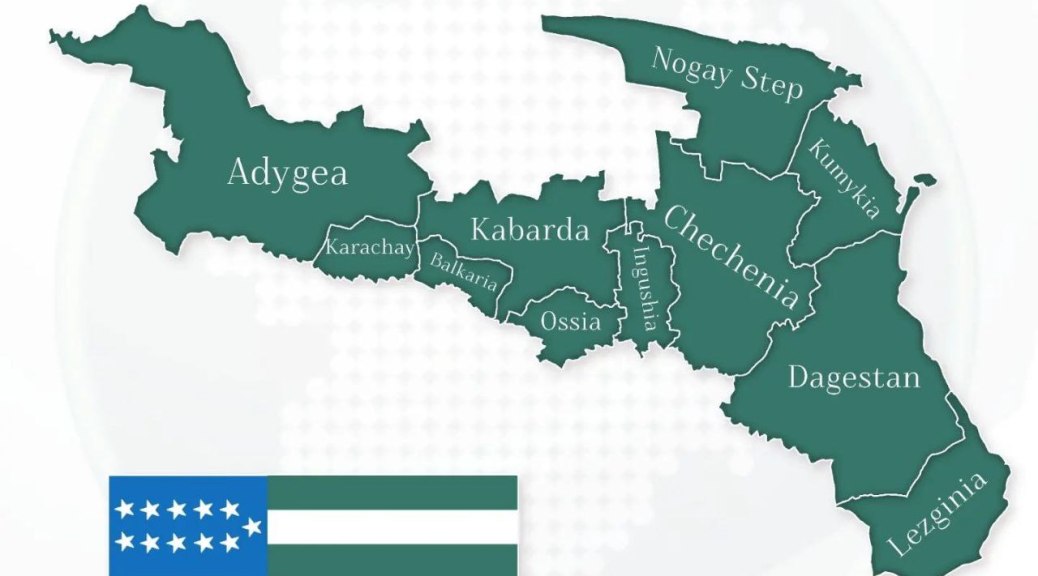
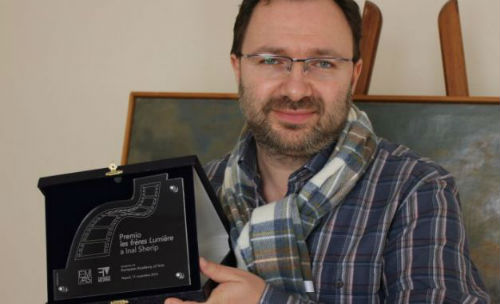

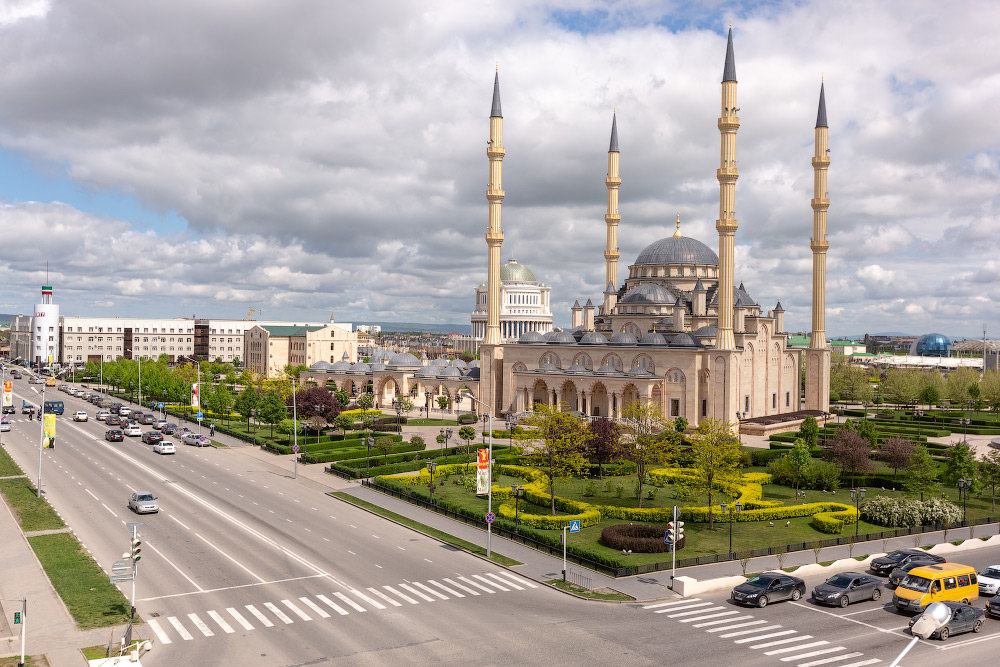

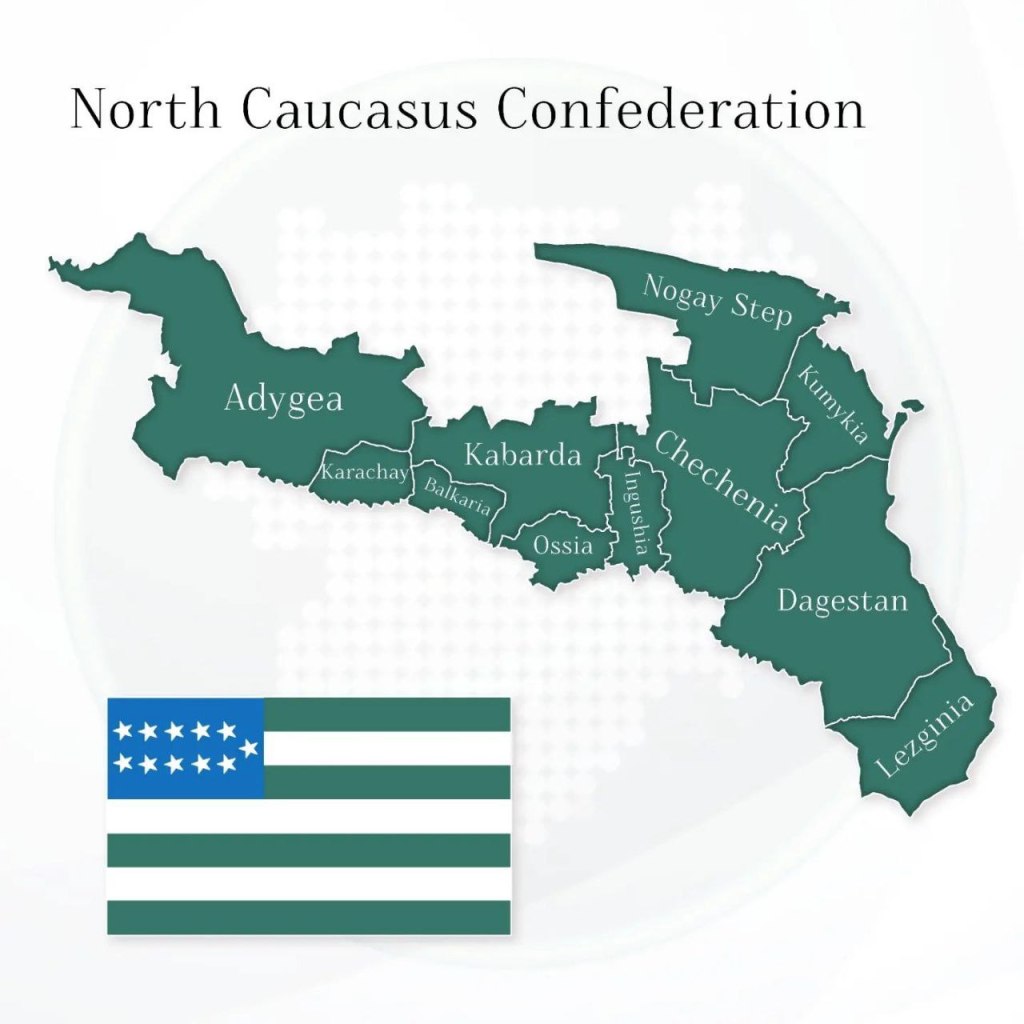
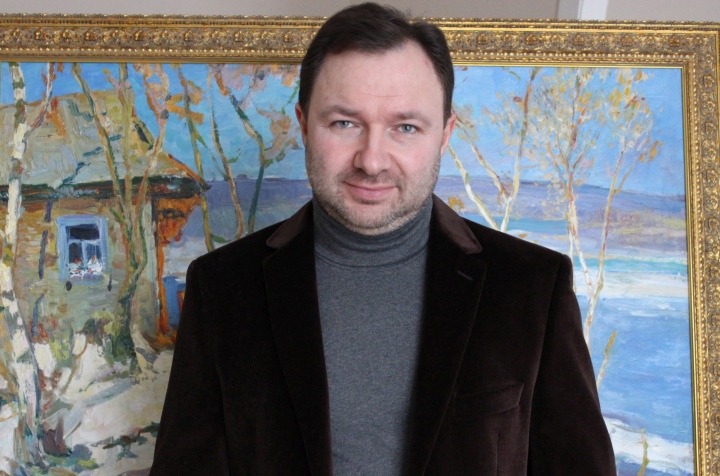

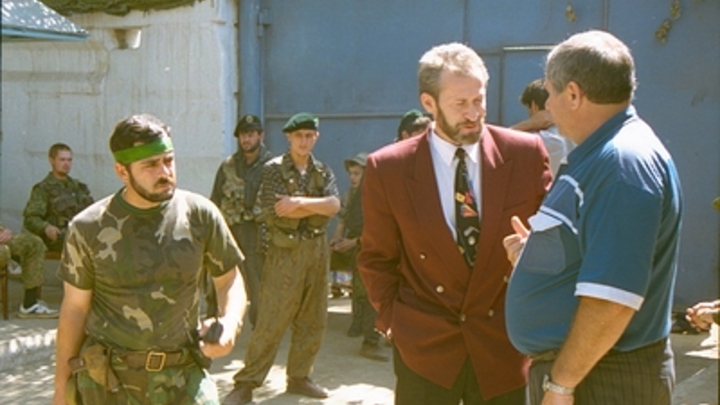


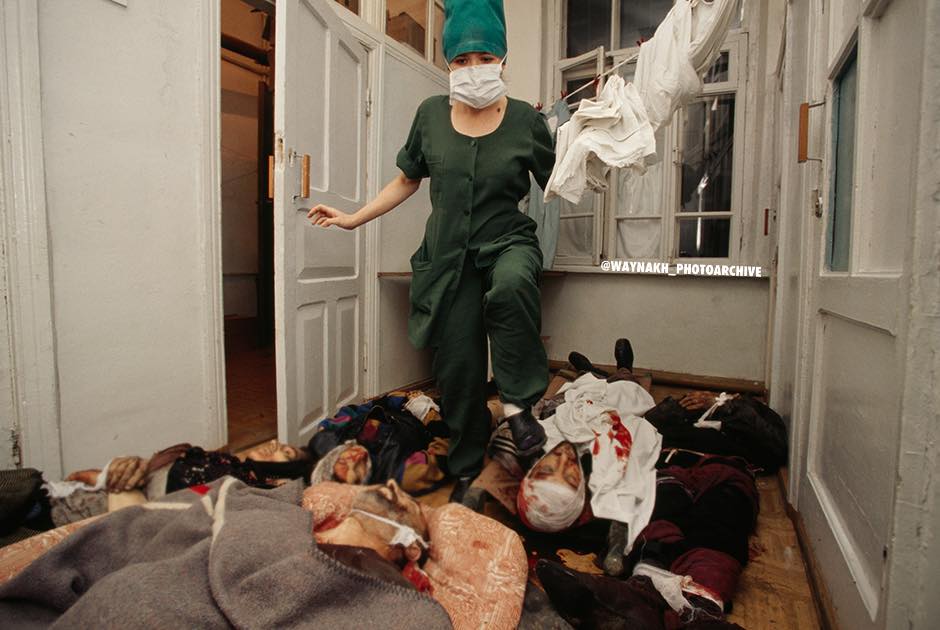


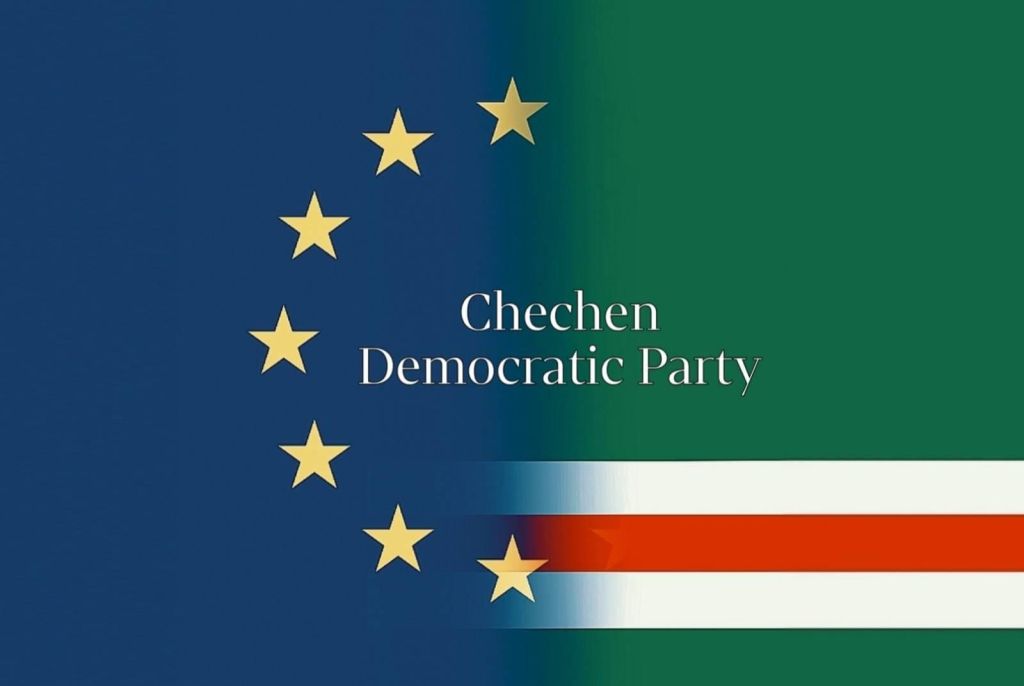


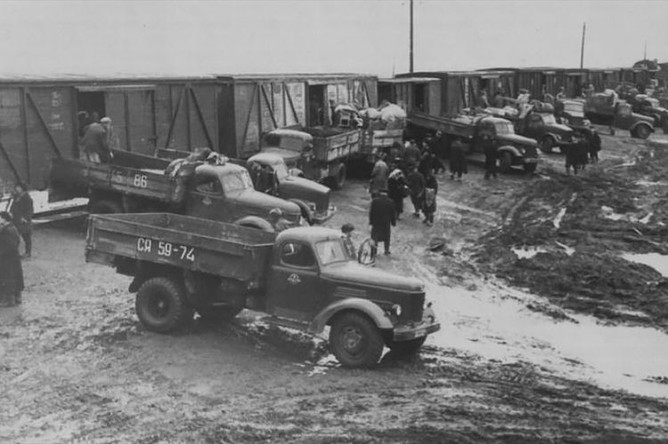
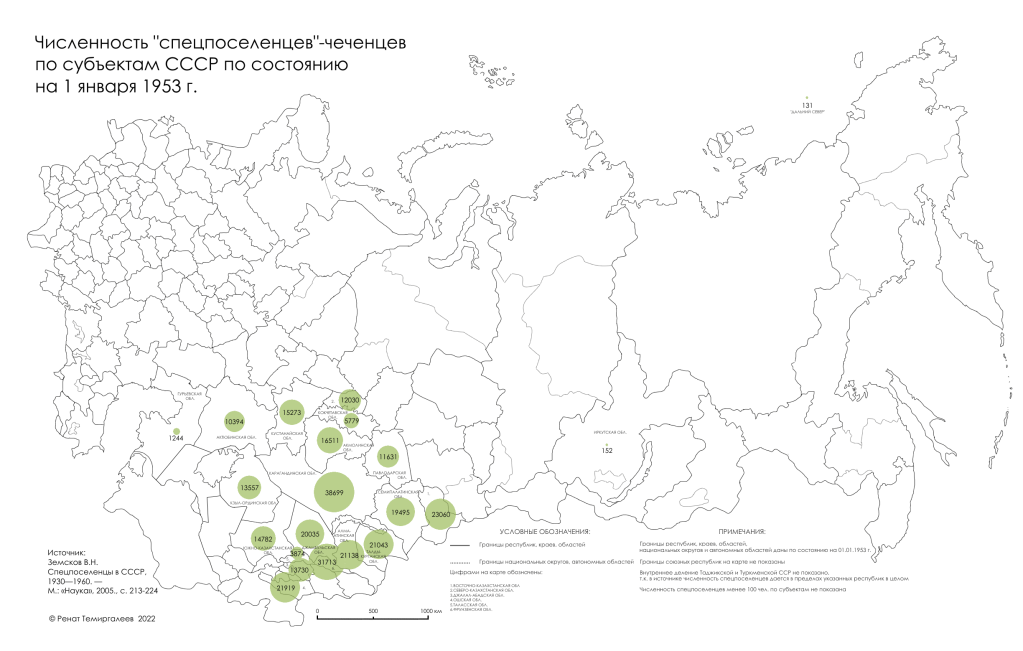


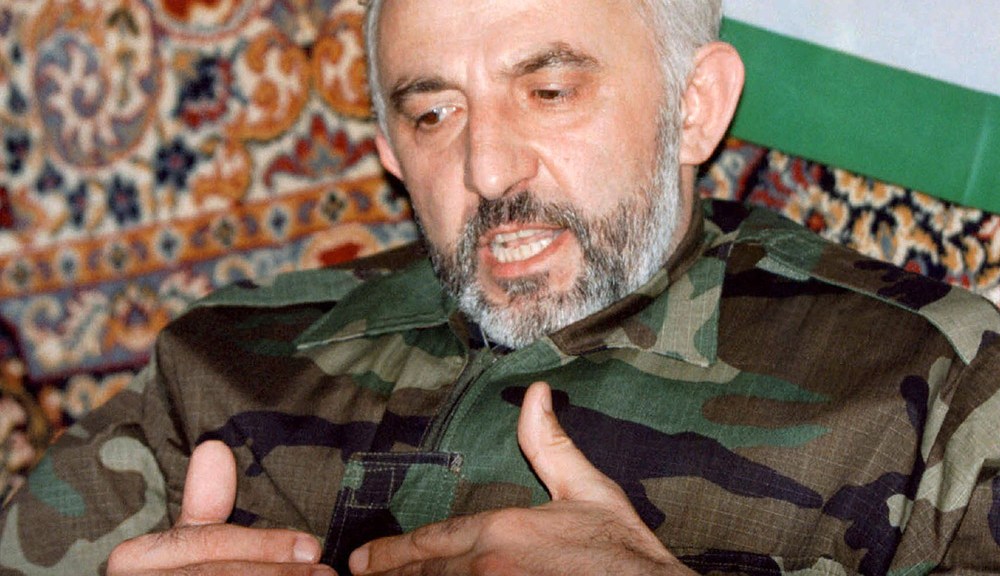


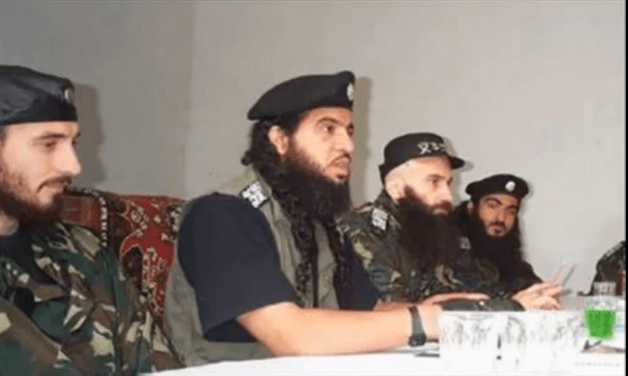


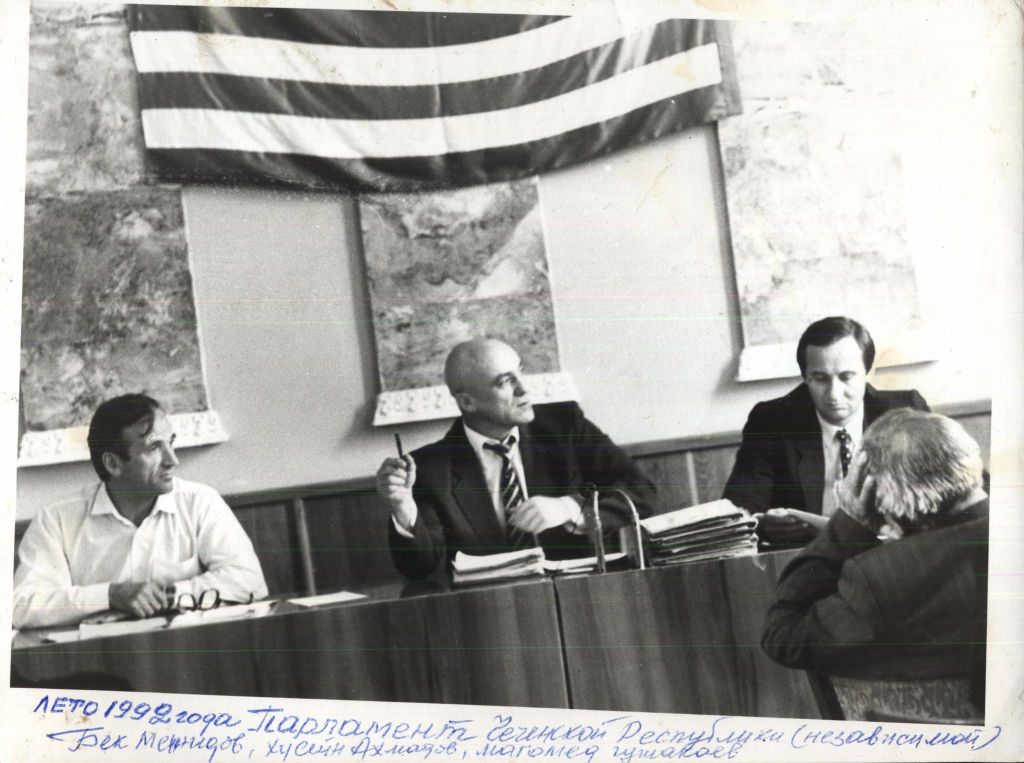




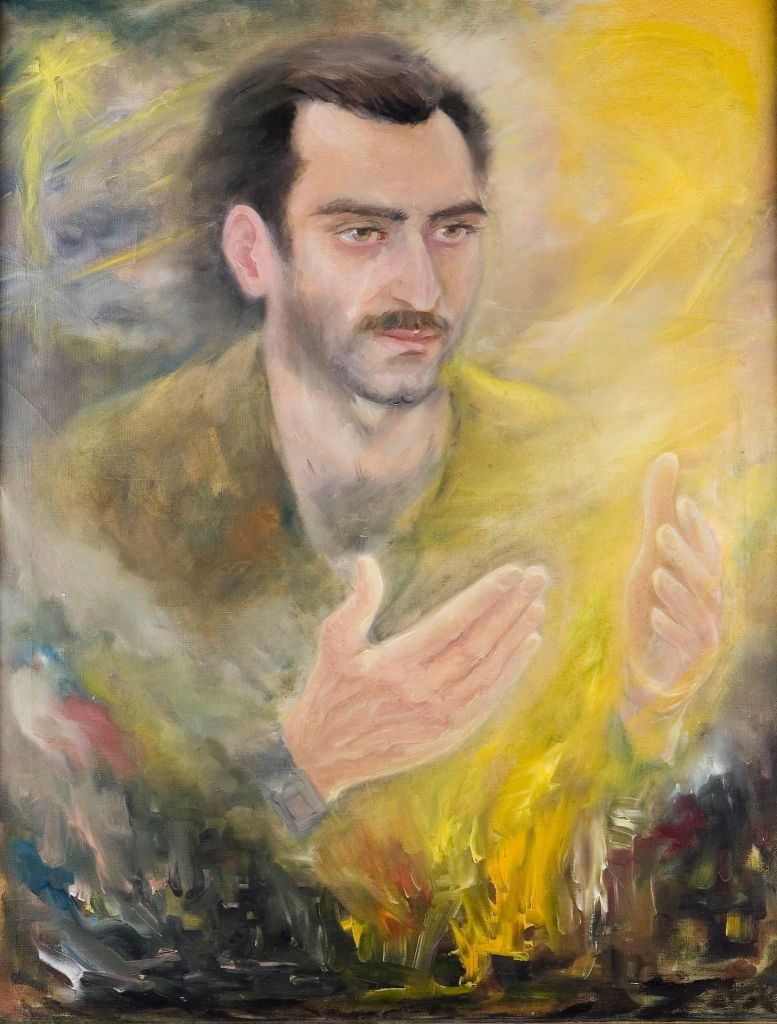



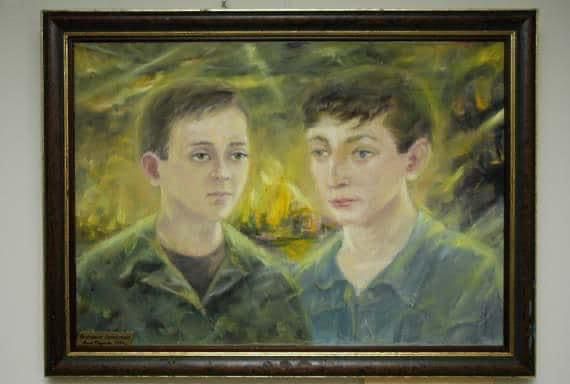



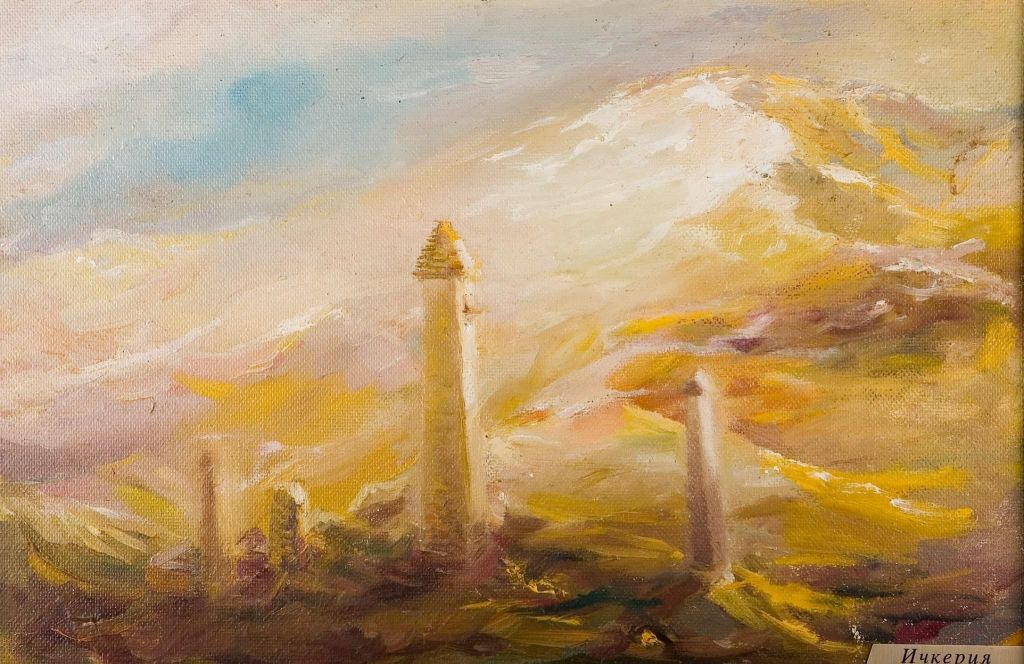


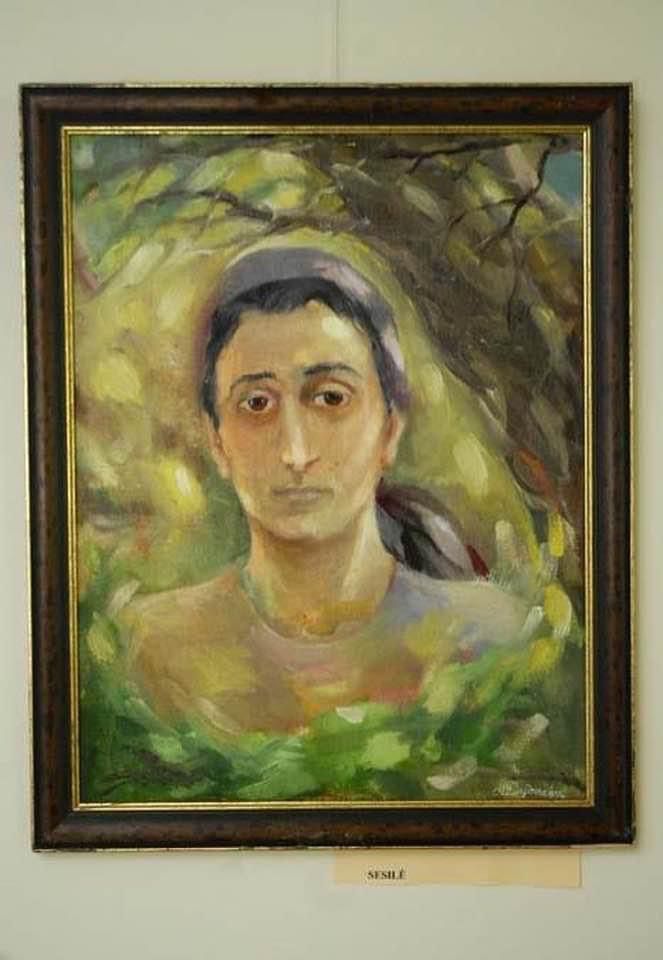


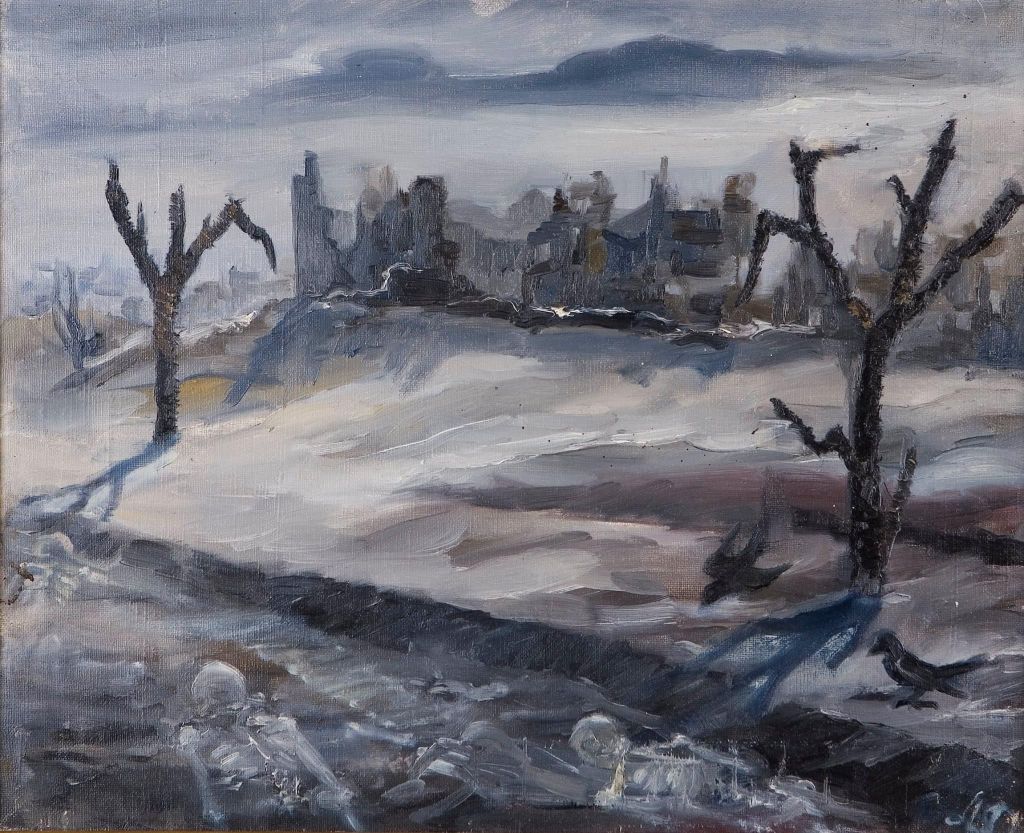


 Ichkeria Digital Archive