MAGGIORI INFORMAZIONI SU https://www.freenationsrf.org/

MAGGIORI INFORMAZIONI SU https://www.freenationsrf.org/
Last November 8th Francesco Benedetti was called to speak at the conference “The Future of the Northern Caucasus”, organized by the MEP Anna Fotyga. Below we report his speech, filmed by @INEWS cameras
The speeches of all the conference participants are available on the INEWS YouTube channel (https://www.youtube.com/@INEWSI ) and on the website https://www.caucasusfree.com
English Transcription of the speech
Good evening to all present
Thank you, Minister.
Over the past decade, a series of political and military crises have crossed the world. Visualizing them on the map, we can identify a “line of friction” that starting from Finland runs from North to South through Eastern Europe, reaches the Caucasus, crosses the Middle East and then wedges into Africa, cutting it from East to West. If the hot spots on this front are currently Ukraine, Nagorno Karabakh, Syria and Palestine, no less concern is aroused by its secondary segments, such as the Russian Federation, Belarus, Georgia, Iraq, Libya and the West African Republics. The Caucasus is one of the pieces of this front.
The war unleashed by Putin in February 2022 against Ukraine has exposed the Russian Federation to the risk of a collapse. This would give the North Caucasus republics an opportunity to reassess their position in a regional association along the lines of the North Caucasus Mountain Republic. Similar projects, after all, were theorized as early as the late 1980s and early 1990s, notably by Dzhokhar Dudaev and Zviad Gamsakhurdia, and with them a vast movement of opinion that had animated debates, discussions, and projects. I can try to make a modest contribution by bringing to your attention my own experience as a citizen of a member state of a supranational union, at whose main institution, the European Parliament, we find ourselves right now.
European Union has been established, given itself a Parliament, created legislative, governing and supervisory bodies, procedures and regulations of all kinds, social, economic and cultural projects of the highest order. However, at this very moment, when a solid and strong Europe, capable of influencing the course of world events and protecting the interests of European citizens would be needed more than ever, the Union is revealing some difficulties.
Personally, I believe that the problem lies mainly in the fact that even today, seventy-four years after the establishment of the Council of Europe, the European Union does not have a “Mission.” European citizens feel part of a larger community than that of the nation to which they belong, but they do not know how to recognize its “depth,” so they call themselves first “French” “Spanish” “German,” then “European.” Precisely from this problem I try to translate the discussion to the North Caucasus.
A union of North – Caucasian republics can be a viable curb on the imperial pretensions of neighboring powers, and Russia in particular. Moreover, it could grant the republics that would compose it greater specific weight in international fora, and start a process of building a Caucasian identity that, as an outside observer, I trace already exists in a rather pronounced way. A defensive purpose, however, cannot be a sufficient “mission.”
I believe that the project of a unification of the North Caucasus, fascinating and potentially successful in itself, must be accompanied by deep reflection regarding what its “mission” in history should be. If until a few decades ago new states arose out of opportunity, embodying the national ambitions of peoples, today we are witnessing the emergence of new states out of necessity. The end of the U.S.-led unipolar world, the rise of new world powers, and the agglomeration of economic power and demographic weight makes the “small homelands” so irrelevant that they are forced to consort if they want to avoid becoming pawns in the great international power games.
What need, then, should guide the creation of a Confederation of the Peoples of the North Caucasus? What historical mission should it set itself? What added value should it bring to the Caucasian community, and to the human community at large? On what distinctive features should it be articulated? To put it even more simply: how will a citizen of Dzhokhar, Magas, or Machackala feel honored to be a Citizen of the Caucasus? I believe that the ability of the peoples of the North Caucasus to erect a solid institution, capable of guaranteeing them a future of freedom and prosperity, will depend on the attention paid to these questions.
My time is up, thank you for your attention.
Oleg Magaletsky is a specialist in strategic development, organizational changes, innovations, scaling and management of organizations, teams and ideas (both in commercial and non-commercial segments)
Since childhood, he has been interested in history, economics, psychology, literature, political science, and social geography.

When and how did the idea of a forum of free nations arise?
The idea to create a platform of the Free Nations Post-Russia Forum arose as a reflection on the beginning of the full-scale aggression of imperial Muscovy against Ukraine on February 24, 2022, as a result of the analysis of the situation, the confidence increased that the only real option to achieve long-term peace in Europe (and all of Northern Eurasia) is maximally controlled , non-violent and complete Decolonization of the last European empire (currently in the form of a terrorist state, the so-called “Russian Federation”)
From your point of view, Russia is a “nineteenth-century” colonial empire, comparable to the European ones dismantled after the Second World War. In what sense can the Russian Federation be defined as a “colonial empire”?
Although according to the form and declarations de jure imperial Muscovy is the (Russian) Federation (according to the “Constitution”), where the regions have subjectivity and citizens have equal rights, in fact de facto, by all outward signs Muscovy is just a classic continental empire model of the second half of the 19th century, with a clear empire, a metropolis (Moscow) and the rest of the territories (both conventionally “internal” and external) – colonies, whose resources are only exploited by the metropolis for its own “shine” and external aggressions, exercising effective control over the colonies, making it impossible there is sustainable economic development, holding back continuous progress, prohibiting linguistic, cultural and national development/identification.
In fact, the only thing that today unites Sakha and Cherkessia, Buryatia and Ingushetia ets. – this is only a repressive apparatus (“vertical”) and colonial exploitation by the Kremlin. There are no substantive horizontal connections, which is also characteristic of the imperialism of the past century, the last example of which in Europe today remains Russia.
Does supporting the reasons of the nations subjected to Russian colonial rule mean, in your opinion, denying the existence of Russia as such?
To some extent.
The concept of “Russia” is a hybrid, a simulacrum, created purely for propaganda purposes, to justify imperialism and the enslavement of inferior nations and regions.
The de-imperialization of Muscovy will also liberate it, allowing it to turn into a number of independent, compatible and free national and/or regional entities, some of which will be able to return to their own, primarily Finno-Hungarian, roots in their own identification.

Is there, in your opinion, a part of Russian society that would be willing to do without its empire in favor of a community of free nations in a nuclear-free “post-Russian” area?
Yes, there are such people, moreover, their number is not only growing, the very “quality” composition of supporters of the corresponding views and actions is important: these are intellectual, organizational and managerial elites (in the good sense of the word), these are people capable of analysis and understanding cause-and-effect relationships.
It is obvious to them that Putin is not the cause, but the consequence of the problems, and their very essence lies precisely in the imperial nature of the modern “Russian” statehood, which can be changed only by radical (and not cosmetic profanation) changes through de-imperialization and decolonization.
What would be, in your opinion, the advantages for the international community in dismantling the Russian Federation? Isn’t there a risk that Moscow’s enormous nuclear arsenal would end up in the hands of many smaller countries, some of which could become small “North Koreas”?
A huge number of advantages (attaching a separate file with their thesis description), with a proactive approach and controllability of the process of Decolonization of Russia, it will be the most positive geopolitical event since the collapse of the USSR 30 years ago.
As for the “spread” of nuclear weapons, this is one of the main horrors of imperial propaganda, but as the experience of the collapse of the USSR shows – all this can be easily avoided, although free countries are not interested in having nuclear weapons (it is very expensive and impractical), only empires need them.
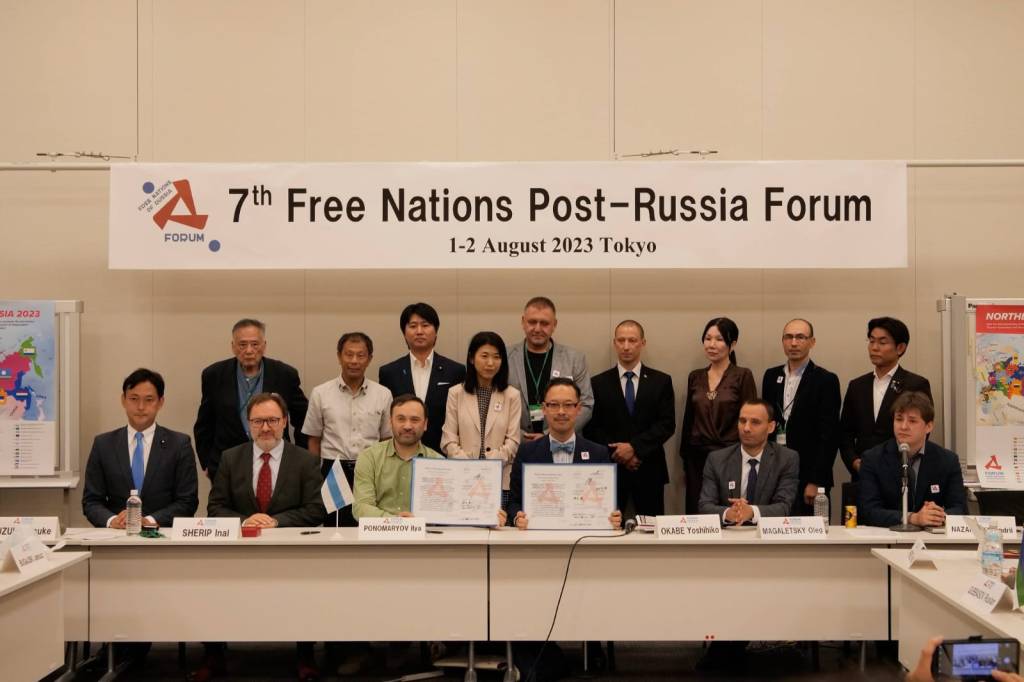
Both the first and the second factor were devoted to our latest public events, in particular the 8th Free Nations Post-Russia Forum in London and Paris on October 12-14 (attach its summary declaration below)

You introduced the theme of the different behavior of empires compared to nations. Based on the reflections made for Russia, do you think it is correct to say that all empires, albeit in different forms, share the same “original sin”, and that in some way also a certain “imperial mission” which is at the origin of the state of generalized war in which most of the planet finds itself? And if so, do you think it would be appropriate to apply the same “weakening” of imperial ambitions to other “empires” too?
Of course, there are certain general characteristics, but mainly – everything depends on the specific context (time, conditions, system) and is quite individual.
At a certain historical stage, the creation of colonies (in their original form and essence during the times of ancient Greece and Rome) was a progressive and relatively positive phenomenon.
But already at the end of the 19th and the beginning of the 20th century, the creation of colonies in the format of the policy of imperialism with all the rationalizations like “The White Man’s Burden” took on much more grotesque and negative forms (the Belgian Congo can be mentioned as an apotheosis).
Therefore, what Muscovy is doing in the 21st year on the huge expanses from Sakha in the north to Kalmykia in the south, from Keninsberg in the west and to the occupied part of Karafuto in the east – this is an absolutely unacceptable retrograde policy for the time being, which will deal with internal repression and external military expansion from the outside.
Currently, there is no other similar state in the world, but if imperial Muscovy is not stopped now, China, Iran, etc. will most likely follow its example, that is, it may be the beginning of a renaissance of the most disgusting practices of colonial exploitation, authoritarianism and imperialism.
Therefore, it is the complete and final decolonization (preferably controlled and maximally non-leadership) of the so-called “Russian Federation” that is the key to a new architecture of collective sustainable security and peace in the entire northern hemisphere (and an effective method to stop the Moscow-Beijing-Tehran-Pyongyang MBTP Axis as a de facto already existing alliance of tyrants + their satellite regimes Maduro, Lukashenko, Assad, Hamas, Hezbollah, Taliban etc.)
Talking about the benefits that the divestment of the Russian Federation could bring to the world. Russia has been on the brink of collapse several times over the last century. And yet what appears to be its main enemy, the United States, has always acted to preserve its unity. Why do you think there is this strange relationship (if you believe it exists) between these two historical enemies, yet linked by an apparent relationship of mutual necessity? And how could the United States’ point of view on this issue change?
This is not so characteristic of US politics, as it is of bureaucracy and politicians in general – they are a priori extremely inert, not inclined to change and seek to preserve the status quo, even if it is negative (and changes are positive), in particular, this was the case during the collapse of the USSR, when the Bush administration (as well as Reagan before that) did everything possible and impossible to save this communist Frankenstein as a single state. But they were not the only ones who did this (the rest of the free states, from France and Britain to Japan and Canada, acted in fact in the same direction), besides, at that time the USSR was not so much an enemy as a former opponent (and in 1917- 1920 was not an enemy of the USA at all)
i.e., the situation with the desire to “leave Russia united and indivisible” is not an exception (as is the attitude of the US Department of State to this issue), but rather a geopolitical (unfortunately) “rule”: a similar attitude was applied to the division of Yugoslavia (even to Croatia and Slovenia’s “European friends” tried to prevent it from gaining independence), as we see now with regard to the enemies of the free world, China and Iran – the independence of Kurdistan is not recognized, Taiwan is in an unclear status, occupied Tiber and Eastern Turkestan are not being helped, etc.
That is, it is sad. But there is also a positive – regardless of the desire of an inert and spineless bureaucracy and blind politicians without a vision and strategy – the dynamics and logic of history determine the determinism of certain processes, such as the entropy of weak and large empires, so – they are doomed to be dismantled (regardless of the wishes of Bush, Kissinger, Sullivan, Burns, etc.)

What would be the fate of the Russian communities in the new subjects that would be born following the dismantling of the Russian Federation?
Probably, it will be different. Future independent states will have different paths and structures, very different from each other, there will be significant regional integration (with current neighbors outside the perimeter)
Probably, the main trend will be integration and the creation of new political nations, where ethnic origin will not play a key role, and the main factor will be precisely citizenship and values;
Recent history presents us with numerous scenarios of civil war, or wars between states that arose following the collapse of the Soviet system throughout Eastern Europe, as well as in the former USSR. How would it be possible, from your point of view, to prevent the crumbling of the Russian empire from causing a myriad of these small conflicts, or ethnic cleansing against the old Russophile elites who governed, and partly still govern, the territory?
In fact, by the standards of history, the collapse of the USSR was virtually bloodless, violence was minimal. And where it was (as in the case of Bosnia and Kosovo during the breakup of Yugoslavia), their source and cause was precisely the revanchism of the former metropolis (Serbia and Russia, respectively).
Some conflicts in which Russia did not take an open and direct part (such as the Armenian-Azebarjan war) were deepened and artificially supported by it (divide and conquer), so as soon as there were opportunities to reduce its influence, the conflicts quickly escalated (what we actually observe there now).
There are no panaceas, but there are definitely conditions that can reduce the likelihood of conflicts (because the new states are not interested in this, they need to deal with their own state building and development, in particular:
1. Maximum integration of new states into both global and regional institutions with the participation of the leading states of the region (which can be temporary “moderators” in case of problems)
2. Eliminating the grounds for revanchism in the former metropolis through (double-parallel) both economic integration and military deterrence
3. Comprehensive involvement of the free world in the reconstruction programs of the newly independent states of the post-Russian space.

Based on the statements, the forum identifies itself as a non-violent, democratic, anti-authoritarian, as well as anti-imperialist organization. Let’s start from the first of the characteristics mentioned, non-violence as an approach to political struggle. How do you think you will be able to convince the Moscow government to recognize the reasons of the subjugated nations, through the instrument of non-violence?
Many recipes and tools demonstrate the experience of liberating both Central European states and the USSR from communism 30 years ago.
At the same time, our emphasis on nonviolent actions (which have a significant arsenal of acts of sabotage, strikes, manifestos, etc.) does not exclude some elements of violent resistance, but we are talking about the fact that the corresponding acts of direct (in particular, violent) countermeasures should be maximally limited, controlled, justified, effective and targeted.
One of the best ways to do this is the synchronization and coordination of the actions of national liberation and anti-colonial movements – alternate losses in the war against Ukraine and its own size – the empire simply cannot physically prevent simultaneous secessions.
8) The Forum defines itself, as we were saying, as an organization based on respect for democratic principles. What does it mean, from your point of view, to carry out a “democratic” fight against Russian imperialism?
We consider it unnecessary to “reinvent the wheel”, that is, we share all the main liberal and humanistic values characteristic (and underlying) of NATO and the EU (with the exception, unfortunately, of Turkey and Hungary, whose authoritarian governments are increasingly in the opposite direction), in particular – freedom of will, freedom of speech, presumption of innocence, distribution of branches of power, limitation of terms of tenure in public positions, civil and civil accountability, prerogative of international law, absence of censorship, etc.
Being anti-authoritarian is certainly identified among the founding values of the Forum. This is particularly evident in your policy document, in which the forum states that “post-Russian” countries would seek cooperation from all countries, except China, which is currently under an authoritarian regime. How can the Forum ensure that some of the political realities that emerge from the fragmentation of the Russian Federation do not end up becoming bridgeheads for Chinese authoritarianism instead?
Of course, we cannot provide guarantees, as the future is uncertain and realities are dynamic.
However, we can support the existing opportunities and conditions, which is that now the leaders of the national liberation and anti-colonial movements have an anti-China position, and if the states of the free world will maintain open political, economic and cultural ties with it, their integration into global/regional markets and institutions, they will not have no reason to drift away from cooperation with the EU, USA, NATO, Japan, etc. in the direction of the PRC.
One of the most interesting themes regarding your program is that of replacing the “territorial” element, which often inspires policies of greatness to the detriment of neighboring countries, with a system of international law based on populations and on compromise between nations, oriented towards the well-being of peoples rather than nationalist claims. Could you explain this “revolutionary” point of your program better?
In our opinion, it is important to learn from previous experience, trying to avoid repeating mistakes. A very eloquent example is the refancism and revisionism of Serbia, which affected not only Bosnia and Kosovo, but above all itself, after the breakup of Yugoslavia.
In the modern post-industrial world, the size and resources actually do not matter (and if they do, the bigger they are, the more difficult it is), because the main capital is people and their intellectual potential. At the same time, good neighborly relations and open borders create much more opportunities than an additional piece of “historic land” where people will die, military expenditures will increase, and trade will be complicated.
In addition, the very concept of “historical lands”, like “historical justice”, is very subjective and ambiguous, in contrast to international law and already existing borders (in particular, still “internal” administrative ones, as in the case of the Russian Federation), that is, if to summarize, our view is directed to the future, not the past, to collective security and cooperation (in particular with/within the EU and NATO), and not to ethnic irredentism.
Do you believe that the solution of replacing the Russian Federation with an open confederation, modeled on the European Union, for example, or directly integrated into it, could solve the problem of irredentism? And could Moskovia be part of this subject, in your opinion, without returning to hegemonise it in the long term?
Since Russia itself is a 100% artificial and unnatural entity, any attempt to change this Frankenstein will bring the same results.
Post-Russian spaces (in the plural), as well as their future independent states, are completely different and distinct, and each will have its own path – for Buryatia, Sakha, the Pacific Federation, interaction with Japan, Mongolia, Korea, etc. is much more natural, and not Moscow for Bashkortostan, Tatarstan, Astrakhan – with Kazakhstan and Turkey, not Moscow, Ingria and Keningsberg are part of the Baltic region, some states (including the Federation of Zalesye, which will include Moscow as a former metropolis if it chooses Austria as a “benchmark” example) may eventually become members of the EU and NATO, – this is a very likely way)

Another cornerstone of the thought behind the Forum is the rejection of the so-called “Realpolitik”, which leads democratic and liberal regimes to enter into agreements of convenience with authoritarian, or fundamentalist, regimes for tactical purposes. Does the rejection of realpolitik therefore mean embracing a system of ethical values? If so, what could these values be?
Exactly. In the pursuit of minor tactical advantages, cooperating with dictators, murderers and tyrants, we all lose much more by legitimizing and aiding their aggressive and dangerous (especially for the free world, not only their own citizens) systems.
The ethical principles of both internal and external politics have long been formed, this is the basis of our (Western civilization), which has its roots in Athens and Rome, through the Renaissance and, above all, the political ideas of the Enlightenment (Locke, Kant, Montexieu, etc.) to the New Age with the General Declarations and human rights and the founding documents of the United Nations.
To be very general and to cut short, the categorical imperatives formed by Kant should apply to states, as well as to individuals.
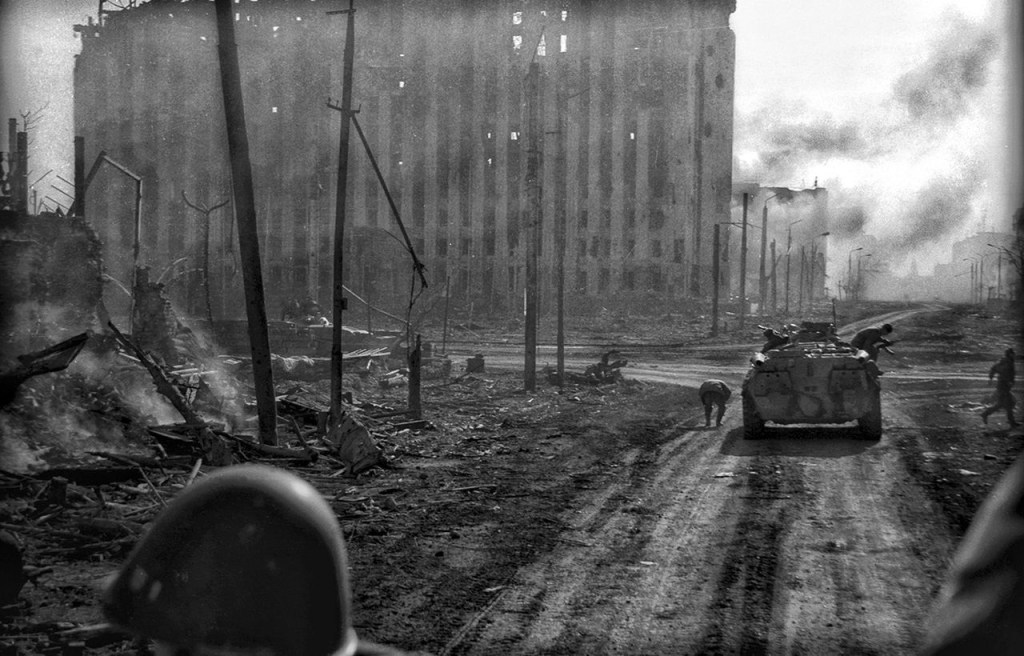
Leggere sui giornali i tragici fatti di sangue che stanno avvenendo in Palestina è come assistere al remake di un film che l’umanità ha già visto molte volte, lungo quella terribile scia di sangue che è la storia dell’imperialismo. Chi conosce la storia recente della Cecenia non potrà non individuare le analogie tra la guerra scatenata dalla Russia contro l’Ichkeria nel 1999 e quella scatenata da Israele contro la Palestina pochi giorni fa. Genesi e sviluppo di entrambi questi prodotti dell’imperialismo sembrano essere quasi sovrapponibili.

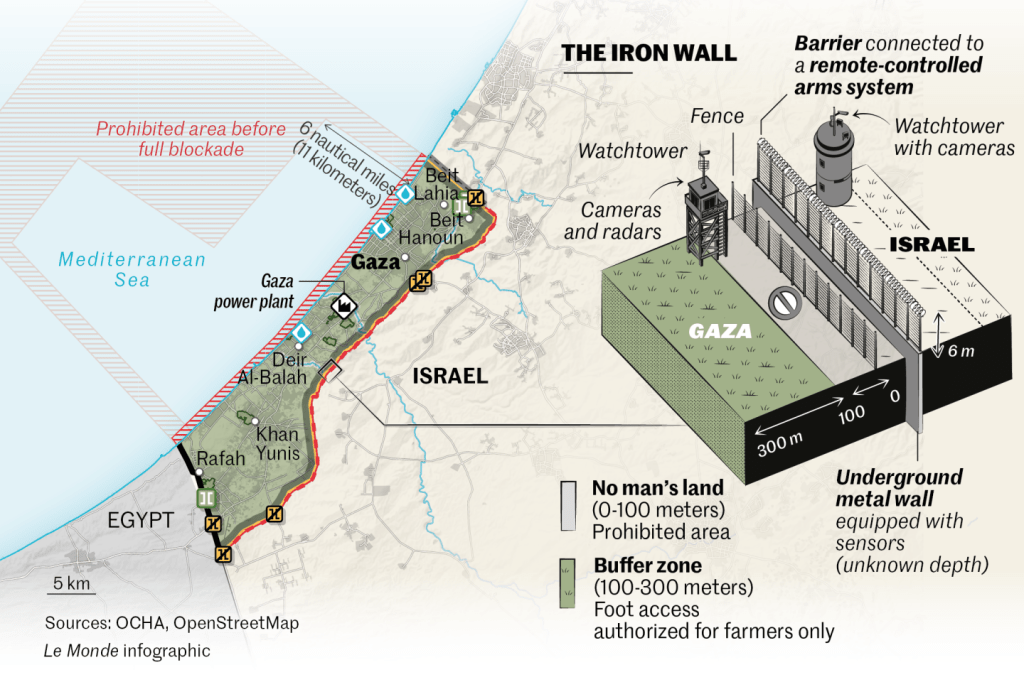
Partiamo della geografia. La Striscia di Gaza confina per due parti con lo Stato di Israele, per un altro col Mar Mediterraneo ed infine con l’Egitto, tramite il varco di Rafah. Come sappiamo, Israele ha bloccato sia i confini terrestri che quello marittimo, costringendo Gaza in un assedio di fatto tramite il quale Tel Aviv mantiene letteralmente il diritto di vita e di morte sui due milioni e mezzo di palestinesi che vi abitano. Anche la Cecenia del 1999 era nella stessa situazione: circondata da tre lati su quattro dalla Federazione Russa, poteva contare soltanto su una precaria strada di montagna, l’autostrada Itum Khale – Shatili, per eludere il blocco economico cui Mosca aveva sottoposto il paese fin dal 1997.
Da un punto di vista politico La Striscia di Gaza dovrebbe far parte di uno stato palestinese indipendente, riconosciuto da Israele e dall’ONU, ma ancora oggi il governo di Tel Aviv (Secondo gli israeliani ed i loro protettori americani, Gerusalemme) non ha compiuto alcun passo in questo senso, preferendo considerare quel territorio una sorta di “terra di nessuno” da amministrare con periodiche incursioni militari di “pacificazione”. Anche la Cecenia del ’99 viveva in uno stato “sospeso” simile a quello di Gaza. La Federazione Russa, che pure aveva firmato con il governo ceceno un Trattato di Pace, non aveva mai ratificato l’indipendenza del paese, e si ostinava a considerarlo un soggetto della federazione, minacciando di gravi ritorsioni qualsiasi governo ponesse in essere una procedura di riconoscimento dell’indipendenza di Ichkeria.

Dal 2008 la Striscia di Gaza è governata di fatto da Hamas. Si tratta di un partito estremista, responsabile di numerose azioni terroristiche già prima dell’Ottobre 2023, e considerato organizzazione terroristica dalla maggior parte dei paesi occidentali. Il suo potere si fonda essenzialmente sulla disperazione nella quale Israele tiene artificialmente la popolazione palestinese, costretta a vivere in uno stato di grave sovraffollamento, con un reddito inferiore di circa 75 volte a quello dei cittadini israeliani, costretta a razionare acqua, cibo, medicine ed energia elettrica ed a pregare gli occupanti israeliani per poter uscire da quel “grande ghetto” che è la Striscia. Una situazione molto simile a quella che si sperimentava nella Cecenia del ’99, quando il debole governo Maskhadov, democraticamente eletto, operava sotto il ricatto di milizie armate di orientamento islamista, senza poter contrapporre al bellicismo dei signori della guerra le politiche sociali necessarie a risollevare le sorti della popolazione ed allontanarle dalle lusinghe dei più radicali. Anche in questo caso l’invasore di turno, la Russia, non erogando le riparazioni di guerra per ripristinare l’economia che essa stessa aveva devastato con l’invasione del 1994 – 1996, ritardando o bloccando il pagamento delle pensioni e delle indennità ai cittadini ceceni e, come nel caso di Gaza, rendendo il paese dipendente dalle forniture di energia elettrica, fomentava una popolazione ridotta alla miseria, spingendola tra le braccia del fondamentalismo.
Esattamente come successo ad Ottobre 2023 a Gaza, nell’Agosto del 1999 un piccolo esercito di guastatori, guidato dal comandante di campo ceceno Shamil Basayev, compì un raid in profondità nel Daghestan, con l’intenzione di promuovere una sollevazione generale contro il potere russo ed instaurare un emirato islamico. In questo caso gli obiettivi sono leggermente diversi (Hamas ha dichiarato che l’azione era volta unicamente a colpire l’esercito israeliano ed a dimostrare la vulnerabilità dello Stato di Israele) ma la dinamica è sorprendentemente simile: penetrati quasi senza incontrare resistenza, evidentemente a causa di un allentamento delle misure di sicurezza che sembra quasi provocato intenzionalmente, gli uomini di Basayev, al pari di quelli di Hamas, avanzarono per parecchi chilometri prima di essere bloccati da un veloce (forse troppo) dispiegamento militare e ricacciati in Cecenia. Un’azione “suicida” che sembrava fatta apposta per dare un casus belli alla Russia, e giustificare una nuova invasione. A completare il quadro giunsero una serie di attentati terroristici ai danni di condomini in svariate città russe (rispetto alle quali ancora non è stato chiarito chi e perché li abbia condotti) che provocarono la morte di trecento persone ed il ferimento di altre 1000, suscitando un’ondata di indignazione popolare che l’astro nascente della politica russa, Vladimir Putin, seppe cavalcare abilmente, conquistandosi la presidenza della Federazione sulla promessa di “ammazzare i terroristi anche al cesso”.

A ben guardare anche la terribile strage compiuta da Hamas ha i suoi “beneficiari politici”. Stupisce che, anche in questo caso, i leggendari servizi di sicurezza di Tel Aviv abbiano fallito in modo così eclatante nell’impedire l’attacco, loro che sono sempre stati così solerti nell’infiltrare spie, nel dare la caccia ai nemici dello stato in qualunque parte del globo, e nel prevenire azioni ostili contro Israele. Mentre stupisce meno, ahimè, il vantaggio politico conseguito dal premier Netanyahu, in piena crisi di consensi fino a pochi giorni prima, ed ora di nuovo in sella con un “governo di emergenza” che finalmente può avere mano libera nel “risolvere” il problema palestinese con i metodi più affini al gretto nazionalismo che il Primo Ministro rappresenta.
Ma le analogie non finiscono qui: l’operazione militare scatenata da Israele per vendicare i suoi morti ha una sproporzione che è assimilabile soltanto a quella usata da Putin contro la Cecenia. Oggi come allora, dopo un blocco totale dei confini ed una campagna terroristica contro la popolazione civile (con missili lanciati sui mercati, colonne di profughi bersagliati, servizi idrici ed elettrici tagliati, aiuti umanitari bloccati) si dichiara che lo scopo non è punire un popolo ed attuare un genocidio, ma “creare una zona cuscinetto”, un “cordone sanitario” che salvaguardi l’attaccante dalla risposta dell’attaccato. E nel frattempo si avvisa la popolazione civile di “andarsene”. Dove? Non è importante. Per quello che valgono le vite dei civili, possono andare a morire di sete in qualche scantinato. Se il Ministro della Difesa israeliano ha definito genericamente “animali umani” l’obiettivo dell’invasione, al Cremlino i ceceni non erano visti in modo diverso.

C’è una cosa che Gaza e Grozny non hanno in comune: il nome di chi le ha distrutte. Eppure il motivo alla base del martirio di ceceni e palestinesi è lo stesso: l’arroganza di un popolo che pretende di schiacciarne un altro, mettendo in atto tutti gli strumenti, leciti e illeciti, morali ed immorali, per perseguire il suo scopo. Che poi non è nient’altro che imperialismo, sublimazione politica della prepotenza, del cinismo, dell’egoismo elevato a culto di sé, capace di piegare, deformandola, ogni virtù politica, civile e morale. In questi giorni quel Putin che ha scatenato il genocidio dei ceceni si indigna per il genocidio palestinese scatenato dagli israeliani, i quali a loro volta si erano indignati quando Putin bombardava i profughi o li torturava dei campi di filtraggio. Ognuno di questi personaggi, a Mosca come a Tel Aviv, a Pechino come a Washington, accusa gli altri di essere “L’impero del male”. Ma la verità è che l’Impero è esso stesso “il male”, e che non esistono “imperi buoni”.
Reading in the newspapers about the tragic bloody events that are taking place in Palestine is like watching the remake of a film that humanity has already seen many times, along that terrible trail of blood that is the history of imperialism. Anyone who knows the recent history of Chechnya will be able to identify the similarities between the war unleashed by Russia against Ichkeria in 1999 and the one unleashed by Israel against Palestine a few days ago. The genesis and development of both these products of imperialism seem to be almost overlapping.
Let’s start with geography. The Gaza Strip borders on two parts with the State of Israel, on another with the Mediterranean Sea and finally with Egypt, via the Rafah crossing. As we know, Israel has blocked both the land and sea borders, forcing Gaza into a de facto siege through which Tel Aviv literally maintains the right of life and death over the two and a half million Palestinians who live there. Chechnya in 1999 was also in the same situation: surrounded on three out of four sides by the Russian Federation, it could only count on a precarious mountain road, the Itum Khale – Shatili highway, to evade the economic blockade to which Moscow had subjected the country since since 1997.

From a political point of view, the Gaza Strip should be part of an independent Palestinian state, recognized by Israel and the UN, but even today the government in Tel Aviv (According to the Israelis and their American protectors, Jerusalem) has not accomplished no step in this direction, preferring to consider that territory a sort of “no man’s land” to be administered with periodic military “pacification” incursions. Chechnya in 1999 also lived in a “suspended” state similar to that of Gaza. The Russian Federation, which had signed a Peace Treaty with the Chechen government, had never ratified the country’s independence, and persisted in considering it a subject of the federation, threatening any government that implemented a recognition procedure with serious retaliation. of the independence of Ichkeria.
Since 2008, the Gaza Strip has been de facto governed by Hamas. It is an extremist party, responsible for numerous terrorist actions already before October 2023, and considered a terrorist organization by most Western countries. Its power is essentially based on the desperation in which Israel artificially keeps the Palestinian population, forced to live in a state of severe overcrowding, with an income approximately 75 times lower than that of Israeli citizens, forced to ration water, food, medicines and electricity and to pray to the Israeli occupiers to be able to leave that “large ghetto” that is the Strip. A situation very similar to that experienced in Chechnya in 1999, when the weak Maskhadov government, democratically elected, operated under the blackmail of armed militias of Islamist orientation, without being able to counter the warlords’ belligerence with the social policies necessary to revive the fate of the population and distance them from the flattery of the more radicals. Also in this case the invader of the moment, Russia, did not provide war reparations to restore the economy that it had devastated with the invasion of 1994 – 1996, delaying or blocking the payment of pensions and allowances to citizens Chechens and, as in the case of Gaza, by making the country dependent on electricity supplies, it fomented a population reduced to poverty, pushing it into the arms of fundamentalism.

Exactly as happened in October 2023 in Gaza, in August 1999 a small army of sappers, led by the Chechen field commander Shamil Basayev, carried out a raid deep into Dagestan, with the intention of promoting a general uprising against Russian power and establish an Islamic emirate. In this case the objectives are slightly different (Hamas declared that the action was aimed solely at hitting the Israeli army and demonstrating the vulnerability of the State of Israel) but the dynamics are surprisingly similar: penetrated almost without encountering resistance, evidently to due to a relaxation of security measures that almost seems to have been caused intentionally, Basayev’s men, like those of Hamas, advanced for several kilometers before being blocked by a rapid (perhaps too) rapid military deployment and driven back into Chechnya. A “suicidal” action that seemed tailor-made to give Russia a casus belli and justify a new invasion. To complete the picture came a series of terrorist attacks against condominiums in various Russian cities (for which it has not yet been clarified who and why carried them out) which caused the death of three hundred people and the wounding of another 1000, causing a wave of popular indignation that the rising star of Russian politics, Vladimir Putin, was able to skilfully ride, winning the presidency of the Federation on the promise of “killing terrorists even in the toilet”.

Upon closer inspection, even the terrible massacre carried out by Hamas has its “political beneficiaries”. It is surprising that, even in this case, Tel Aviv’s legendary security services failed so spectacularly to prevent the attack, they who have always been so diligent in infiltrating spies, in hunting down enemies of the state in any part of the globe, and in preventing hostile actions against Israel. While less surprising, unfortunately, is the political advantage achieved by Prime Minister Netanyahu, in the midst of a crisis of consensus until a few days earlier, and now back in the saddle with an “emergency government” that can finally have a free hand in “resolving” the problem Palestinian with the methods most similar to the narrow nationalism that the Prime Minister represents.
But the analogies do not end here: the military operation unleashed by Israel to avenge its deaths has a disproportion that is comparable only to that used by Putin against Chechnya. Today as then, after a total blockade of the borders and a terrorist campaign against the civilian population (with missiles launched on the markets, columns of refugees targeted, water and electricity services cut, humanitarian aid blocked) it is declared that the aim is not to punish a people and carry out a genocide, but “create a buffer zone”, a “cordon sanitaire” that safeguards the attacker from the response of the attacked. And in the meantime the civilian population is advised to “leave”. Where? It’s not important. For what civilian lives are worth, they can go and die of thirst in some basement. If the Israeli Defense Minister generically defined the target of the invasion as “human animals”, in the Kremlin the Chechens were seen no differently.

There is one thing that Gaza and Grozny do not have in common: the name of those who destroyed them. Yet the reason behind the martyrdom of Chechens and Palestinians is the same: the arrogance of a people that claims to crush another, implementing all the tools, legal and illicit, moral and immoral, to pursue its goal. Which is nothing other than imperialism, the political sublimation of arrogance, of cynicism, of selfishness elevated to a cult of the self, capable of bending and deforming every political, civil and moral virtue. These days, the Putin who unleashed the genocide of the Chechens is outraged by the Palestinian genocide unleashed by the Israelis, who in turn were outraged when Putin bombed refugees or tortured them in the filter camps. Each of these characters, in Moscow as in Tel Aviv, in Beijing as in Washington, accuses the others of being “the evil empire”. But the truth is that the Empire is itself “evil”, and that there are no “good empires”.
1 Marzo
CONFLITTI SOCIALI – Allo scopo di interrompere le indebite appropriazioni di beni pubblici, soprattutto quelli afferenti ai magazzini della Protezione Civile, o la loro rivendita illegale da parte dei funzionari pubblici, con il Decreto Presidenziale numero 17 il Presidente della Repubblica ordina un censimento generale delle proprietà ed un nuovo protocollo di autorizzazione per il loro utilizzo attraverso speciali permessi presidenziali.
POLITICA NAZIONALE – Con Decreto Presidenziale numero 16, recependo un’iniziativa del Parlamento della Repubblica, il Presidente Dudaev assegna un edificio precedentemente a disposizione del KGB ad un’unità medico – diagnostica a disposizione della popolazione infantile e femminile della Repubblica.
2 Marzo
POLITICA LOCALE – Su iniziativa del Sindaco di Grozny Bislan Gantamirov vengono aperti in città quattro negozi “sociali” destinati alla raccolta ed alla distribuzione di cibo e vestiario agli indigenti. Tale misura è volta a sostenere le fasce deboli della popolazione, sempre più colpita dal rialzo dei prezzi e dalla crisi economica generale.

3 Marzo
NEGOZIATI RUSSO/CECENI – I rappresentanti russi e ceceni si incontrano a Sochi per iniziare un ciclo di negoziati. Dal governo russo arriva la disponibilità a continuare nel limite del possibile il trasferimento dei fondi necessario al pagamento degli stipendi pubblici e dei salari.
5 Marzo
POLITICA NAZIONALE – In ordine a garantire locali adeguati alle strutture del comparto giudiziario della Repubblica, con il Decreto Presidenziale numero 19 “Misure per migliorare le condizioni di lavoro dei tribunali distrettuali della Repubblica Cecena” il Presidente Dudaev ordina che gli edifici, le risorse ed il mobilio appartenute al disciolto Partito Comunista dell’Unione Sovietica siano ceduti in uso alle corti di giustizia.
6 Marzo
CRISI POLITICA IN CECENIA – Umar Avturkhanov, Governatore dell’Alto Terek e principale leader dell’opposizione a Dudaev, pubblica un appello al popolo ceceno nel quale invita i suoi concittadini a non ubbidire al governo indipendentista.
CONFLITTI SOCIALI – A Grozny i rappresentanti dei dipendenti pubblici minacciano uno sciopero generale se il governo non assicurerà il pagamento degli stipendi.
POLITICA ESTERA – Dudaev invia una dichiarazione ai governi di Azerbaijian, Tatarstan, Baskhortostan e Turkmenistan proponendo un’unione monetaria alternativa al rublo, considerato uno strumento imperialista di destabilizzazione per le repubbliche “produttrici di petrolio”.
CRISI RUSSO/CECENA – Reagendo al blocco economico in atto da parte della Federazione Russa, Dudaev dichiara il blocco alle esportazioni dei prodotti strategici (in particolare dei lubrificanti per aerei, dei quali la Cecenia è produttore – leader con il 90% del fabbisogno di tutta la Russia) fin quando Mosca non riaprirà le frontiere.
ECONOMIA E FINANZA– La situazione economica nel paese peggiora di giorno in giorno. Il governo non ha le risorse necessarie a garantire il regolare pagamento degli stipendi. Insegnanti e forze dell’ordine non hanno ricevuto né lo stipendio di Gennaio, né lo stipendio di Marzo, e minacciano di scioperare.
10 Marzo
POLITICA NAZIONALE – Al fine di garantire le risorse necessarie al suo funzionamento, con il Decreto Presidenziale numero 18 il Presidente Dudaev alloca la somma di 200.000 rubli per le spese correnti della neocostituita Corte Suprema della Repubblica. Tale misura dovrà essere implementata con la costituzione di un’apposita voce nel bilancio statale.
12 Marzo
POLITICA NAZIONALE – Con la Legge numero 108/1992 Il Parlamento promulga la Costituzione della Repubblica Cecena. La nuova carta fondamentale, ispirata alle costituzioni occidentali, identifica lo Stato come una repubblica democratica di tipo parlamentare, fondata sul rispetto dei diritti della persona, dei diritti civili e della tolleranza religiosa.
Con Decreto Presidenziale numero 23 il Presidente Dudaev riforma la Protezione Civile Nazionale, assumendo il potere di nomina dei suoi massimi rappresentanti e delegando al Sindaco di Grozny la gestione della protezione civile nella capitale.
POLITICA ESTERA – La delegazione cecena, guidata dal Ministro degli Esteri Shamil Beno giunge a Dagomys, in Abkhazia, dove incontra la controparte russa per iniziare i negoziati tra i governi di Grozny e di Mosca.

12 Marzo
POLITICA ESTERA – Settanta deputati provenienti dalla Georgia vengono ospitati in sessione dalle autorità cecene, alla presenza dell’ex presidente georgiano Gamsakhurdia e del Capo dello Stato ceceno, Dudaev. Con questo gesto il Presidente della Repubblica Cecena prende una chiara posizione politica in favore dell’ormai decaduto leader georgiano.
12 Marzo
NEGOZIATI RUSSO/CECENI – I negoziati tra Federazione Russa e Repubblica Cecena portano alla sottoscrizione di un documento condiviso nel quale si identificano alcune aree di integrazione politica ed economica tra i due paesi.
I negoziati proseguono mentre la Federazione Russa indice per il 31 Marzo la cerimonia di firma di un nuovo Trattato Federativo con il quale tutti i soggetti federati della Russia fisseranno i loro rapporti con il governo centrale. I moderati ceceni spingono perché la Cecenia firmi il Trattato, ma Dudaev ed i nazionalisti pretendono che prima la Federazione Russa riconosca l’indipendenza della Cecenia.
15 Marzo
NEGOZIATI RUSSO/CECENI – Di ritorno dalla sessione negoziale nella cittadina di Dagomys, la delegazione cecena comunica che il prossimo incontro si terrà a Mosca, e che la delegazione russa ha promesso di allentare il blocco finanziario della Repubblica Cecena se questa ricomincerà ad esportare i prodotti derivanti dalla lavorazione degli idrocarburi.
16 Marzo
POLITICA NAZIONALE – Per favorire gli investimenti nella repubblica il Parlamento vara una moratoria sull’imposta sul reddito, e la abolisce per l’anno di imposta 1992. La misura serve anche a rottamare una enorme quantità di debiti privati nei confronti della pubblica amministrazione, cui la maggior parte dei ceceni non riesce più a far fronte, o che non intende pagare.
CONFLITTI SOCIALI – Continua lo sciopero degli insegnanti e di altri dipendenti del pubblico impiego a causa dei ritardi nel pagamento degli stipendi. In particolare gli insegnanti lamentano il fatto di non aver ancora ricevuto lo stipendio di Gennaio. Il governo assicura che presto i pagamenti riprenderanno regolari, a seguito di accordi per la vendita di prodotti petroliferi che dovrebbero portare alle casse dello Stato la liquidità necessaria a mettere il tesoro in pari con i pagamenti.
17 Marzo
CONFLITTI SOCIALI – Intere categorie di lavoratori pubblici entrano in sciopero a causa del mancato pagamento dei salari. Le scuole, colpite dall’astensione lavorativa degli insegnanti, rimangono chiuse. Il Ministro dell’Economia Taymaz Abubakarov promette che il tesoro ricomincerà a pagare regolarmente gli stipendi non appena la Russia interromperà il blocco dei trasferimenti finanziari.
POLITICA NAZIONALE – Il Parlamento della Repubblica approva una legge con la quale reintroduce l’alfabeto latino in funzione di quello cirillico, imposto dall’Unione Sovietica negli anni ’30. Secondo il parere dei deputati, questo è più aderente alla fonetica della lingua cecena.
CRISI POLITICA IN CECENIA – l’opposizione anti – dudaevita fa circolare volantini nei quali si chiedono le dimissioni di Dudaev. Gruppi armati antidudaeviti prendono posizione nei dintorni di Grozny.

20 Marzo
POLITICA ESTERA – Con Decreto Presidenziale il Presidente Dudaev ordina al Ministero degli Esteri di stabilire regolari relazioni diplomatiche con la Repubblica di Georgia “non appena l’ordine costituzionale sarà ripristinato”. Il provvedimento è essenzialmente un gesto di amicizia politica al decaduto presidente georgiano Gamsakhurdia, il quale attualmente risiede a Grozny e lavora alla riconquista del potere sostenuto da numerosi ex esponenti del Soviet Supremo Georgiano, anch’esso disperso a seguito del colpo di stato dell’anno precedente.
20 Marzo
POLITICA NAZIONALE – Dudaev promulga il Decreto “Sulle aliquote di dazio statale da addebitarsi sulle domande e sui reclami presentati in tribunale, nonché sulle imposte degli atti notarili e dello stato civile” con il quale calmiera i prezzi degli atti pubblici, agevolando la popolazione vessata dalla crisi economica ma riducendo al minimo gli introiti a disposizione del comparto della giustizia, il quale già versa in una cronica carenza di risorse per poter funzionare.
24 Marzo
POLITICA NAZIONALE – In ordine a razionalizzare i servizi sanitari della Repubblica, con il Decreto Presidenziale numero 30 Dudaev stabilisce la conversione del centro medico del Ministero degli Interni in ospedale policlinico al servizio dei dipendenti pubblici e delle forze dell’ordine, decretando che tale struttura sarà finanziata da specifiche voci di bilancio a carico delle istituzioni statali che utilizzeranno la struttura.
25 Marzo
MOVIMENTI POLITICI – Il Congresso Nazionale del Popolo Ceceno (OKChN) dal quale sono emerse le forze che hanno scatenato la Rivoluzione Cecena, delibera una nuova sessione da tenersi in Maggio. La Costituzione appena approvata non ha riconosciuto al Congresso alcuno spazio istituzionale, ed i nuovi rappresentanti dell’organizzazione, emersi dal “travaso” di molti dei suoi leaders nelle istituzioni della Repubblica, rivendicano il ruolo centrale che a loro parere il Congresso dovrebbe avere nella Cecenia indipendente.
Yaragi Mamodaev, di ritorno da un viaggio privato in Giappone, relaziona riguardo ai suoi contatti con il Ministero degli Esteri del Sol Levante e con alcuni industriali, i quali si sono detti disponibili a saggiare le possibilità di una collaborazione economica.
A latere della sua conferenza stampa Mamodaev suggerisce che il Parlamento, dei cui 41 deputati soltanto uno (Gleb Bunin) è russo e nessuno appartiene ad alcuna delle minoranze che abitano la repubblica, dovrebbe sciogliersi e ricostituirsi secondo un criterio etnicamente più rappresentativo.
26 Marzo
TENSIONI SOCIALI – Sciopero dei vigili del fuoco, i quali lamentano ritardi di tre mesi nel pagamento degli stipendi. L’allentamento delle tensioni con la Russia ha fatto si che da Mosca siano arrivati 150 milioni di rubli per il pagamento di stipendi e pensioni, ma queste risorse sono ampiamente insufficienti a coprire gli ammanchi delle casse statali.
POLITICA NAZIONALE – In un incontro con l’Associazione dell’Intellighenzia della Repubblica Cecena, il Presidente Dudaev afferma che l’indipendenza del Paese non è in discussione, mentre lo sono tutti i suoi aspetti “collaterali”, come eventuali accordi di cooperazione economica con la Federazione Russa e con i paesi produttori di petrolio. In questo modo Dudaev ribadisce la propria totale contrarietà a qualsiasi negoziato di tipo federativo con Mosca, eventualità ventilata sia dagli stessi intellettuali, sia da correnti interne al Parlamento.
28 Marzo
TERRORISMO – Una banda di sequestratori provenienti dal Territorio di Stavropol chiede asilo al governo ceceno, ma questo lo nega ed ordina l’arresto dei sequestratori, ed il rilascio degli ostaggi. I terroristi vengono da prima tradotti nell’edificio del Ministero degli Interni, poi in una caserma della Guardia Nazionale.
28 Marzo
CRISI POLITICA IN CECENIA – La polizia antisommossa, dipendente dal Ministero degli Interni, è in stato di agitazione e chiede che il Ministero abbia riconosciuta una guida ufficiale, mentre adesso si trova diretto da un Ministro “de facto”, Umals Alsultanov, peraltro inattivo. Egli, già Ministro negli ultimi mesi di vita della ASSR Ceceno – Inguscia, era stato esautorato a causa della sua sospetta collaborazione con il Comitato di Emergenza responsabile del Putsch di Agosto e sostituito da Vakha Ibragimov, ma Dudaev lo ha riconfermato alla guida del dicastero nel suo “governo provvisorio”. Al momento della sua presentazione al Parlamento non ha ottenuto i voti necessari, pertanto si è posto in stato di riposo in attesa di dare le dimissioni in favore del suo successore. I funzionari del Ministero sono quindi divisi tra coloro che premono per una sua riconferma e coloro che chiedono la nomina di Ibragimov.
30 Marzo
CRISI POLITICA IN CECENIA – Milizie armate antidudaevite si radunano nei sobborghi di Grozny. In alcuni villaggi si segnala la distribuzione di armi a volontari disposti a mettere a segno un colpo di mano per estromettere il Presidente Dudaev e riportare la Cecenia nella Federazione Russa.
31 Marzo
COLPO DI STATO DI MARZO – Un gruppo di ex funzionari della RSSA Ceceno – Inguscia ed alcuni rappresentanti dell’opposizione, favorevoli alla federazione con la Russia tenta un colpo di Stato. Milizie armate e reparti inquadrati nella Guardia Nazionale occupano la TV e la Radio. Un “Comitato di Emergenza” si riunisce per costituire un governo di transizione che porti la Cecenia ad un Referendum sull’adesione alla Federazione Russa e successivamente a nuove elezioni parlamentari. Le unità del Ministero degli Interni, in questo momento prive di un Ministro e dirette dal Viceministro degli Interni, Udiev, rimangono acquartierate nelle caserme.
Dopo alcune ore di sbandamento una folla di sostenitori dell’indipendenza si raduna davanti al Palazzo Presidenziale, dove il Presidente del Parlamento Akhmadov legge la mozione dell’assemblea che condanna il colpo di stato in atto ed il Presidente Dudaev si appella al popolo affinché difenda l’indipendenza appena conquistata.
Nel corso del Pomeriggio la Guardia Nazionale riprende il controllo della città, espugna l’edificio della TV di Stato e costringe gli insorti ad abbandonare Grozny. Nelle sparatorie muoiono almeno quindici persone, ed una quarantina sono i feriti. L’opposizione moderata, critica verso il governo Dudaev, condanna parimenti le azioni del Comitato d’Emergenza, gridando ad un complotto ordito dalla leadership russa per provocare una guerra civile nel paese.
In serata il Parlamento torna a riunirsi in assemblea, mentre il Deputato e leader del VDP Zelimkhan Yandarbiev condanna i “nemici insidiosi del popolo ceceno” i quali, anziché accettare l’offerta di mediazione pubblicamente fatta dal Parlamento alcuni giorni fa, hanno deciso di prendere le armi contro lo Stato con ,’intento di rovesciarlo.
On the thirty-second anniversary of Chechen independence, we publish an excerpt from the first volume of “Freedom or Death! History of the Chechen Republic of Ichkeria” which retraces the events that led to the dissolution of the Chechen-Ingush Supreme Soviet, and the proclamation of independence.
————–
In early September, the echo of the August Putsch began to fade in Moscow and the main Russian cities, and Yeltsin was able to return to rest his gaze on the turbulent peripheries of the empire. Chechnya had gone into a state of turmoil, but the Russian president did not give too much weight to the alarming reports from the local Supreme Soviet. He was convinced that all that noise was nothing more than an anti-caste regurgitation as had been seen so many at that time in the USSR. He thought that it would be enough to replace Zavgaev with someone else to be able to calm the hearts of the people and restore Chechnya – Ingushetia to social peace. So he thought of Salambek Hadjiev, a professor who had made headlines a few months earlier, when he was appointed Minister of Chemical and Oil Industry of the Soviet government. Born in Kazakhstan, Hadjiev had earned a position in academia, graduating from the Grozny Petroleum Institute and then working on it until he became its director. A prolific researcher, he was a member of the Academy of Sciences, as well as one of the leading experts in the petrochemical sector in all of Russia. Known for being a moderate anti-militarist (he was head of the Committee for Chemical Weapons and Disarmament) he represented in all respects the “mature” alter ego of the leader Dudaev. Yeltsin appreciated him because he could speak to both intellectuals and entrepreneurs, had a modern vision of the state and was a hard worker. He seemed to have all the credentials to compete with the General, who had his nice uniform, good rhetoric and little else on his side. The idea of replacing Zavgaev with Hadjiev also pleased the President of the Supreme Soviet Khasbulatov, who, as we have seen, certainly did not like the current First Secretary. Hadjiev, on the other hand, was a man of high intellectual qualities like him (who was a professor) and like him he had a moderate and reformist vision. Arranging one of “his” people in power in Chechnya would also have been convenient for him in terms of elections, so he worked to ensure that the change took place as soon as possible.
Khasbulatov then headed to Chechnya to secure a painless changing of the guard. His notoriety, now that he was at the top of the Soviet state, his culture and his political ability would have allowed him to oust his hateful rival and to install a viable alternative that averted civil war and favored his position. However, there was to be reckoned with the nationalists, who grew up in the shadow of the crisis and rebelled during the coup.
To vanquish them, Khasbulatov drew up a plan. From his point of view, the nationalists were an amalgam of disillusioned, desperate and opportunists, held together by a vanguard of young idealists unable to rule the beast they were raising. Faced on the terrain of political debate, most likely they would have ended up being reduced to a residual fraction. Only the context, according to him, allowed them to occupy the scene. Despair and lack of alternatives were the ingredients of the mixture that threatened to break out the revolution. To neutralize the threat it was necessary to “change the air”: the opposition had strengthened against Zavgaev and his corrupt regime, getting him out of the way was the first step. There was to replace him with someone who had good numbers. And Hadjiev seemed the right one. The solution, however, he could not descend from above. It was necessary to establish an alternative consensus front to Dudaev and for this it took time. The nationalists had conquered the streets riding the wave of the institutional crisis. Getting them bogged down in a political diatribe by letting time pass, while the situation normalized, would have deprived the Dudaevites (as the supporters of the General began to call themselves) the ground under their feet. As socio-political conditions stabilized, the desperate would be less and less desperate, the disillusioned less and less disillusioned. People would have listened to those who called for calm and reforms rather than revolution and war, and the radicals would be marginalized. Finally, with a good democratic election, the moderates would have won and the revolutionaries would have lost.

A perfect plan, in theory, which, however, was based on two significant variables. The first: that Dudaev and his people were too afraid to force their hand, thus leaving the initiative to him. The second: that the situation in Moscow did not degenerate further. And Khasbulatov, unfortunately for him, could not control either the first or the second. Yet somewhere we had to start and so, from 23 August, the President of the Supreme Soviet went to Grozny, accompanied by Hadjiev, with the intention of killing Zavgaev. In a turbulent meeting of the Presidium of the Supreme Soviet, to the First Secretary who begged him to authorize the proclamation of a state of emergency and to disperse the opposition, Khasbulatov replied that the use of force was absolutely to be avoided, and that the solution of the crisis should be political, which meant only one thing: resignation.
Having cornered Zavgaev, he went to test his opponent. His first conversation with Dudaev seemed to be promising: the General welcomed him with affability and agreed to his proposal to dissolve the Supreme Soviet and replace it with a provisional administration to ferry the country into the elections. Satisfied, he returned to Moscow convinced that he had brought home a good point. The real goal, however, was achieved by the leader of the nationalists. Discovering Khasbulatov’s cards, he was now clear that no one would raise a finger to defend the legitimate government of Chechnya – Ingushetia: a casus belli would be enough to force the hand and take control of the institutions. Thus, while Moscow was toasting to the happy solution of the crisis, in Grozny the Dudaevites took control of the city and besieged the government, now without an army to defend it. Nevertheless, Zavgaev did not intend to give up. His abdication could only have been imposed by a vote of the Supreme Soviet, and almost none of the deputies had any intention of endorsing it, considering that a moment later the Soviet itself would be dissolved. Thus the situation remained at a standstill for a few days, with the government not resigning and the nationalists not abandoning the streets.
Between 28 and 30 August Dudaev began to test Moscow’s reactions: the National Guard broke into numerous public buildings, occupying them and displacing anyone who opposed them. Not a breath came from Moscow. Then the General ordered the establishment of armed patrols to guard the streets, and once again there was no reaction. Chaos was taking over the country and nobody seemed to care that much[1].
On September 1, Dudaev called the third session of the Congress. The National Guard presided over the assembly. Armed volunteers erected barricades all around. A group of militiamen entered in the Sovmin, occupied it and lowered the flag of the Chechen-Ingush RSSA, hoisting the green banner of Islam in its place. There was no trace of the moderates: ousted in the June session, they were now unable to influence public opinion in any way. The scene was all for the great leader, who exhorted Ispolkom to declare the Supreme Soviet lapsed. The delegates promptly agreed to the proposal and declared the Executive Committee the only legitimate authority in Chechnya. Once again, the reactions from Moscow were tepid, and mostly superficial. Khasbulatov himself, underestimating the gravity of the situation, he thought that Zavgaev’s replacement would be enough to split the nationalist front in two. Now, according to him, it would be sufficient to force Zavgaev to leave and replace him with Hadjiev, or someone else, to put the radicals in the minority. In reality, what was happening in Grozny was something much more serious than the political game that Khasbulatov thought he was playing. Dudaev had almost all public opinion on his side, he had his armed guards and was setting up a real government.

This was absolutely clear to the First Secretary, and it was even more so when on September 3, ignoring the directives of Moscow, he attempted to introduce a state of emergency through a resolution of the Presidium of the Supreme Soviet: no police or army department answered the call. While many of the Interior Ministry Militia men had already changed sides, those who had not taken a position simply avoided moving. Defeated again, Zavgaev remained holed up in the House of Political Education, where he had barricaded himself with his followers. Finally, on the evening of September 6, the National Guard also broke in there: a handful of men led by the Vice-President of Ispolkom Yusup Soslambekov entered the building. It is not known whether it was a premeditated action or the rise of agitation, the fact is that the crowd followed the militiamen and began to devastate everything. The deputies were beaten and silenced. Soslambekov placed in front of each of them a sheet and a pen and ordered them to write their resignations in their own hand. One by one, all the deputies signed. Under the threat of being executed on the spot, Zavgaev signed a waiver in which he “voluntarily” abandoned all public offices. Only the President of the Grozny City Council, Vitaly Kutsenko, refused to sign. When questioned by Soslambekov, he replied: I will not sign. What you are doing is illegal, it is a coup! Moments later Kutsenko flew from the third floor, crashing to the ground. He would later be hospitalized, where he would die in excruciating suffering[2]. The moderates condemned the assault, disassociated themselves publicly and withdrew from the National Movement, constituting an alternative Round Table to Congress. Zavgaev was driven out of Grozny and took refuge in Upper Terek District, his native land. In Grozny, Ispolkom began to operate as a real government, setting up commissions, issuing decrees and occupying public buildings.
In Moscow the news of the insurrection was received almost with disinterest. It took four days before a government delegation, made up of the Secretary of State, Barbulis, and the Minister of Press and Information, Poltoranin, arrived in Chechnya to try to resolve the crisis. With Dudaev, the two tried a “Soviet” approach: in the roaring years of the USSR, when a person represented a danger to the Party and could not be sent to a gulag to clear his mind, he was promoted and kept good. Poltoranin and Barbulis thought that if they offered Dudaev a leading role, he might take the chance to get out of that mess in exchange for a good job and a hefty pension. Unfortunately for them the General wasn’t just smarter than they thought, but he was also more courageous and determined, and he really believed in an independent Chechnya. So the meeting ended in a stalemate.
Khasbulatov meanwhile had returned to Chechnya, where he hoped to resume negotiations with Dudaev where he had left them. The meeting between the two was resolved with a new draft agreement: the “fallen” Supreme Soviet would be dissolved, and in its place a “provisional” Soviet would be established to deal with ordinary administration pending new elections. Representatives of Congress would also have participated in this executive. Comforted by the apparent concession of the nationalist leader, the President of the Russian Supreme Soviet spoke to the masses thronged in Lenin Square. In front of a large crowd (who even spoke of a hundred thousand demonstrators) invited everyone to calm down, asked for the demonstrations to be stopped and put all the blame on Zavgaev, ordering him in absentia not to show up unless he wanted to be taken to Moscow in an iron cage. Finally, when an extraordinary assembly of the Supreme Soviet was convened, he induced the deputies to resign and to establish a Provisional Soviet of 32 members, some from the old assembly and some from the ranks of the Executive Committee. The last act of the Chechen-Ingush Supreme Soviet was a decree calling for new elections for the following 17 November.

Once again it seemed that the situation had been recovered at the last minute, and Khasbulatov set about returning to his duties in Moscow not before Dudaev had fully recommended that the agreements be respected. He did not even have time to land in the Russian capital, which was greeted by a resolution of the Executive Committee of the Congress, just made to vote by Dudaev, in which Ispolkom recognized the Provisional Soviet as an expression of the will of the Congress, and warned him to go against the will expressed by it[3]. The declaration also contained an electoral calendar different from the one agreed: fearful that normalization would weaken their position, the nationalists decreed that elections would take place on October 19 and 27, respectively for the institutions of the President of the Republic and Parliament. Nobody in Moscow knew for sure which president and which parliament they were talking about: the Constitution of the Chechen-Ingush RSSA did not provide for any of these institutions. From the tone of the declaration it was now clear that the National Congress intended to proclaim full independence.
[1]The riots that broke out following the August Putsch had led to the paralysis of government departments, which was beginning to show its first harmful effects on everyday life. On August 28, about 400 inmates from the Naursk penal colony rose up, attacking the garrison of garrison, setting fire to the watchtowers, devastating the service rooms and occupying the prison facility. Two days later fifty of them, armed with handcrafted knives and weapons, occupied a wing of the building. All the others had escaped, dispersing among the demonstrators.
[2]It is unclear whether Kutsenko threw himself from the palace in a panic attack or was deliberately ousted. According to some, it was he who threw himself downstairs, beating his head against a cast iron manhole. Other versions speak of a guard of Dudaev, or of Soslambekov himself, who would have thrown him against a window when he refused to sign his resignation. Even regarding his hospitalization, the testimonies are conflicting. According to some, the angry mob attacked him, filling him with kicks and spit. Others, like Yandarbiev himself in his memoirs, say that Kutsenko was promptly picked up and taken to hospital, but he refused to be examined by any Chechen doctor for fear of being finished. As there were no Russian doctors available, he ended up in a coma, only to expire a few days later. However, the investigation into Kutsenko’s death would not have established any responsibility. The official version reported by the Prosecutor’s Office was that the President of the Grozny City Council voluntarily threw himself downstairs, frightened by the crowd.
[3]The text of the declaration, organized in sixteen programmatic points, began by condemning the Supreme Soviet, guilty of having lost the right to exercise legislative power, of having committed a betrayal of the interests of the people and of having wanted to favor the coup d’état. Some of the main political exponents of the Congress were appointed to the Provisional Soviet (Hussein Akhmadov as President, as well as other nationalists chosen from the ranks of the VDP). The Soviet would have operated in compliance with the mandate entrusted to it by Congress: if a crisis of confidence had occurred, this would have been rejected by the Executive Committee and promptly dissolved. The solidarity of parliaments around the world and of the countries that have just left the USSR was also invoked, in opposition to the attempt by the imperial forces to continue the genocide against the Chechen people.
Nel trentaduesimo anniversario dell’indipendenza cecena, pubblichiamo un estratto del primo volume di “Libertà o Morte! Storia della Repubblica Cecena di Ichkeria” nella quale si ripercorrono i fatti che portarono allo scioglimento del Soviet Supremo Ceceno – Inguscio, ed alla proclamazione dell’indipendenza cecena.
——————
Ai primi di Settembre l’eco del Putsch di Agosto iniziò ad attenuarsi a Mosca e nelle principali città russe, ed Eltsin poté tornare a posare lo sguardo sulle turbolente periferie dell’impero. La Cecenia era passata in stato di agitazione, ma il presidente russo non dava troppo peso ai rapporti allarmanti provenienti dal Soviet Supremo locale. Egli era convinto che tutto quel baccano altro non fosse che un rigurgito anticasta come se ne erano visti tanti in quel periodo nell’URSS. Pensò che sarebbe bastato sostituire Zavgaev con qualcun altro per poter placare gli animi della gente e riportare la Cecenia – Inguscezia alla pace sociale. Così pensò a Salambek Hadjiev, un professore che era salito agli onori della cronaca qualche mese prima, quando era stato nominato Ministro dell’Industria Chimica e del Petrolio del governo sovietico. Nato in Kazakhistan, Hadjiev si era conquistato una posizione in ambito accademico, diplomandosi all’Istituto Petrolifero di Grozny e poi lavorandoci fino a diventarne direttore. Prolifico ricercatore, era membro dell’Accademia delle Scienze, nonché uno dei massimi esperti del settore petrolchimico di tutta la Russia. Noto per essere un moderato antimilitarista (era capo del Comitato per le armi chimiche ed il disarmo) rappresentava a tutti gli effetti l’alter ego “maturo” del capopopolo Dudaev. Eltsin lo apprezzava perché sapeva parlare sia agli intellettuali che agli imprenditori, aveva una visione moderna dello Stato ed era un gran lavoratore. Sembrava avere tutte le carte in regola per competere con il Generale, il quale dalle sua aveva la sua bella divisa, una buona retorica e poco altro. L’idea di sostituire Zavgaev con Hadjiev piacque anche al Presidente del Soviet Supremo Khasbulatov, che come abbiamo visto non aveva certo in simpatia l’attuale Primo Segretario. Hadjiev invece era uomo di alte qualità intellettuali come lui (che era professore) e come lui aveva una visione moderata e riformista. Sistemare uno dei “suoi” al potere in Cecenia gli avrebbe fatto anche comodo in chiave elettorale, quindi si adoperò affinché il cambio avvenisse il prima possibile.

Khasbulatov si diresse quindi in Cecenia per assicurarsi un indolore cambio della guardia. La sua notorietà, ora che era al vertice dello stato sovietico, la sua cultura e la sua capacità politica gli avrebbero permesso di spodestare l’odioso rivale e di installare una valida alternativa che scongiurasse la guerra civile e favorisse la sua posizione. Tuttavia c’era da fare i conti con i nazionalisti, cresciuti all’ombra della crisi ed insorti durante il colpo di stato.
Per sgominarli Khasbulatov elaborò un piano. Dal suo punto di vista i nazionalisti erano un amalgama di disillusi, disperati e opportunisti, tenuto insieme da un’avanguardia di giovani idealisti incapaci di governare la bestia che stavano allevando. Affrontati sul terreno del dibattito politico, molto probabilmente avrebbero finito per ridursi ad una frazione residuale. Solo il contesto, secondo lui, permetteva loro di occupare la scena. Disperazione e mancanza di alternative erano gli ingredienti della miscela che rischiava di far scoppiare la rivoluzione. Per neutralizzare la minaccia bisognava “cambiare aria”: l’opposizione si era rafforzata contro Zavgaev ed il suo regime corrotto, toglierlo di mezzo era il primo passo da fare. C’era da sostituirlo con qualcuno che avesse dei buoni numeri. E Hadjiev sembrava quello giusto. La soluzione, tuttavia, non poteva calare dall’alto. Era necessario costituire un fronte di consenso alternativo a Dudaev e per questo serviva tempo. I nazionalisti avevano conquistato le piazze cavalcando l’onda della crisi istituzionale. Impantanarli in una diatriba politica lasciando passare il tempo, mentre la situazione si normalizzava, avrebbe tolto ai dudaeviti (così iniziavano a chiamarsi i sostenitori del Generale) il terreno sotto ai piedi. Man mano che le condizioni sociopolitiche si fossero stabilizzate i disperati sarebbero stati sempre meno disperati, i disillusi sempre meno disillusi. La gente avrebbe prestato orecchio a chi invocava la calma e le riforme anziché la rivoluzione e la guerra, ed i radicali sarebbero stati marginalizzati. Infine, con una bella elezione democratica i moderati avrebbero vinto e i rivoluzionari avrebbero perso. Fine della partita.
Un piano perfetto, nella teoria, che però si basava su due variabili non da poco. La Pima: che Dudaev ed i suoi avessero troppa paura di forzare la mano, lasciando così l’iniziativa a lui. La seconda: che a Mosca la situazione non degenerasse ulteriormente. E Khasbulatov, purtroppo per lui, non poteva controllare né la prima né la seconda. Eppure da qualche parte si doveva pur cominciare e così, dal 23 Agosto, il Presidente del Soviet Supremo si recò a Grozny, accompagnato da Hadjiev, con l’intenzione di far fuori Zavgaev. In una turbolenta riunione del Presidium del Soviet Supremo, al Primo Segretario che lo supplicava di autorizzare la proclamazione dello stato di emergenza e di disperdere l’opposizione, Khasbulatov rispose che il ricorso alla forza era tassativamente da evitare, e che la soluzione della crisi avrebbe dovuto essere assolutamente politica, il che significava una cosa sola: dimissioni.
Dopo aver messo Zavgaev con le spalle al muro, si recò a saggiare il suo avversario. Il suo primo colloquio con Dudaev sembrò essere promettente: il Generale lo accolse con affabilità ed accondiscese alla sua proposta di sciogliere il Soviet Supremo e sostituirlo con un’amministrazione provvisoria che traghettasse il Paese elle elezioni. Soddisfatto, rientrò a Mosca convinto di aver portato a casa un bel punto. Il vero obiettivo, tuttavia, lo aveva raggiunto proprio il leader dei nazionalisti. Scoprendo le carte di Khasbulatov, egli aveva ormai chiaro che nessuno avrebbe alzato un dito per difendere il legittimo governo della Cecenia – Inguscezia: sarebbe bastato un casus belli per forzare la mano e prendere il controllo delle istituzioni. Così, mentre a Mosca si brindava alla felice soluzione della crisi, a Grozny i dudaeviti prendevano il controllo della città ed assediavano il governo, ormai privo di un esercito che lo difendesse. Ciononostante Zavgaev non intendeva darsi per vinto. La sua abdicazione avrebbe potuto essere imposta soltanto da un voto del Soviet Supremo, e quasi nessuno dei deputati aveva intenzione di avallarlo, considerato che un attimo dopo lo stesso Soviet sarebbe stato sciolto. Così la situazione rimase in stallo per alcuni giorni, con il governo che non si dimetteva ed i nazionalisti che non abbandonavano le strade.

Tra il 28 ed il 30 Agosto Dudaev iniziò a testare le reazioni di Mosca: la Guardia Nazionale irruppe in numerosi edifici pubblici, occupandoli e sloggiando chiunque vi si opponesse. Da Mosca non giunse un fiato. Allora il Generale ordinò la costituzione di ronde armate che presidiassero le strade, e ancora una volta non vi fu alcuna reazione. Il caos si stava impadronendo del Paese e sembrava che a nessuno importasse più di tanto[1].
Il 1 Settembre Dudaev convocò la terza sessione del Congresso. La Guardia Nazionale presidiava l’assemblea. Tutto intorno volontari armati erigevano barricate. Un gruppo di miliziani penetrò nel Sovmin, lo occupò ed ammainò la bandiera della RSSA Ceceno – Inguscia, issando al suo posto il drappo verde dell’Islam. Dei moderati non c’era più traccia: estromessi nella sessione di Giugno, erano ormai incapaci di condizionare in qualsiasi modo l’opinione pubblica. La scena era tutta per il grande capo, il quale esortò l’Ispolkom a decretare decaduto il Soviet Supremo e ad attribuirsi i pieni poteri. I delegati prontamente aderirono alla proposta, e dichiararono il Comitato Esecutivo unica autorità legittima in Cecenia. Ancora una volta, da Mosca, le reazioni furono tiepide, e per lo più di facciata. Lo stesso Khasbulatov, sottostimando la gravità della situazione, pensò che la sostituzione di Zavgaev sarebbe stata sufficiente a spaccare in due il fronte nazionalista. Adesso, secondo lui, sarebbe bastato costringere Zavgaev ad andarsene e sostituirlo con Hadjiev, o con qualcun altro, per mettere in minoranza i radicali. In realtà quello che stava succedendo a Grozny era qualcosa di molto più serio rispetto al gioco politico che Khasbulatov pensava di portare avanti. Dudaev aveva dalla sua parte quasi tutta l’opinione pubblica, aveva le sue guardie armate e stava costituendo un vero e proprio governo.
La cosa era assolutamente chiara al Primo Segretario, e lo fu ancora di più quando il 3 Settembre, ignorando le direttive di Mosca, egli tentò di introdurre lo stato di emergenza tramite una risoluzione del Presidium del Soviet Supremo: nessun reparto della polizia o dell’esercito rispose alla chiamata. Se molti uomini della Milizia del Ministero degli Interni avevano già cambiato bandiera, quelli che non avevano preso posizione semplicemente evitarono di muoversi. Nuovamente sconfitto, Zavgaev rimase rintanato nella Casa dell’Educazione Politica, dove si era asserragliato coi suoi seguaci. La sera del 6 Settembre, infine, la Guardia Nazionale irruppe anche là dentro: un manipolo di uomini guidato dal Vicepresidente dell’Ispolkom Yusup Soslambekov penetrò nell’edificio. Non si sa se fu un’azione premeditata o il salire dell’agitazione, fatto sta che la folla seguì i miliziani e si mise a devastare ogni cosa. I deputati furono pestati e ridotti al silenzio. Soslambekov mise davanti ad ognuno di loro un foglio ed una penna, ed ordinò che scrivessero le loro dimissioni di proprio pugno. Uno ad uno, tutti i deputati firmarono. Sotto la minaccia di essere giustiziato sul posto Zavgaev firmò un atto di rinuncia nel quale abbandonava “volontariamente” tutti gli incarichi pubblici. Soltanto il Presidente del Consiglio Comunale di Grozny, Vitaly Kutsenko, si rifiutò di firmare. Interrogato da Soslambekov, rispose: Non firmerò. Quello che stai facendo è illegale, è un colpo di Stato! Qualche attimo dopo Kutsenko volò dal terzo piano, schiantandosi al suolo. Più tardi sarebbe stato ricoverato in ospedale, dove sarebbe morto tra atroci sofferenze[2]. I moderati condannarono l’assalto, si dissociarono pubblicamente e fuoriuscirono dal Movimento Nazionale, costituendo una Tavola Rotonda alternativa al Congresso. Zavgaev fu cacciato da Grozny e si rifugiò nell’Alto Terek, sua terra natale. A Grozny l’Ispolkom iniziò ad operare come un vero e proprio governo, costituendo commissioni, emanando decreti ed occupando gli edifici pubblici.

A Mosca la notizia dell’insurrezione fu accolta quasi con disinteresse. Ci vollero quattro giorni prima che una delegazione governativa, formata dal Segretario di Stato, Barbulis, e dal Ministro della Stampa e dell’Informazione, Poltoranin, giungesse in Cecenia per provare a ricomporre la crisi. Con Dudaev i due tentarono un approccio “alla sovietica”: negli anni ruggenti dell’URSS, quando un personaggio rappresentava un pericolo per il Partito e non lo si poteva inviare in un gulag a schiarirsi le idee, lo si promuoveva e lo si teneva buono. Poltoranin e Barbulis pensarono che se avessero offerto un ruolo di primo piano a Dudaev questi forse avrebbe colto la possibilità di uscire da quel casino in cambio di un buon posto ed una lauta pensione. Purtroppo per loro il Generale non era solo più furbo di quanto pensassero, ma era anche più coraggioso e determinato, ed in una Cecenia indipendente ci credeva davvero. Così l’incontro si risolse in un nulla di fatto.
Khasbulatov nel frattempo era rientrato in Cecenia, dove sperava di riprendere i negoziati con Dudaev dove li aveva lasciati. L’incontro tra i due si risolse con un nuovo progetto di accordo: il Soviet Supremo “decaduto” sarebbe stato sciolto, e al suo posto si sarebbe costituito un Soviet “provvisorio” che si occupasse dell’ordinaria amministrazione in attesa di nuove elezioni. A questo esecutivo avrebbero partecipato anche esponenti del Congresso. Confortato dall’apparente concessione del leader nazionalista, il Presidente del Soviet Supremo Russo parlò alle masse assiepate in Piazza Lenin. Davanti ad una nutrita folla (che chi addirittura parlò di centomila manifestanti) invitò tutti alla calma, chiese l’interruzione delle manifestazioni ed addossò tutta la colpa a Zavgaev, intimandogli in contumacia di non rifarsi vivo a meno che non volesse essere portato a Mosca in una gabbia di ferro. Infine, convocata un’assemblea straordinaria del Soviet Supremo, indusse i deputati a dimettersi ed a costituire un Soviet Provvisorio di 32 membri, alcuni provenienti dalla vecchia assemblea e alcuni dalle file del Comitato Esecutivo. L’ultimo atto del Soviet Supremo Ceceno – Inguscio fu un decreto con il quale si indicevano nuove elezioni per il 17 Novembre successivo.
Ancora una volta sembrò che la situazione fosse stata recuperata all’ultimo minuto, e Khasbulatov si accinse a tornare ai suoi doveri a Mosca non prima di aver avuto piena raccomandazione, da parte di Dudaev, del rispetto degli accordi. Non ebbe neanche il tempo di atterrare nella capitale russa che fu accolto da una delibera del Comitato Esecutivo del Congresso, appena fatta votare da Dudaev, nella quale l’Ispolkom riconosceva il Soviet Provvisorio come espressione della volontà del Congresso, e lo si diffidava ad andare contro la volontà espressa da esso[3]. La dichiarazione conteneva anche un calendario elettorale diverso da quello concordato: timorosi che la normalizzazione avrebbe indebolito la loro posizione, i nazionalisti decretarono che le elezioni si sarebbero svolte il 19 ed il 27 Ottobre, rispettivamente per le istituzioni del Presidente della Repubblica e del Parlamento. Di quale presidente e di quale parlamento si stesse parlando, a Mosca nessuno lo sapeva con certezza: la Costituzione della RSSA Ceceno – Inguscia non prevedeva nessuna di queste istituzioni. Dal tono della dichiarazione era ormai evidente che il Congresso Nazionale aveva intenzione di proclamare la piena indipendenza.

[1] I disordini esplosi a seguito del Putsch di Agosto avevano portato alla paralisi dei dicasteri governativi, la quale iniziava a mostrare i suoi primi effetti nefasti sulla vita di tutti i giorni. Il 28 Agosto circa quattrocento detenuti della colonia penale di Naursk insorsero, attaccando la guarnigione di presidio, dando alle fiamme le torri di guardia devastando i locali di servizio ed occupando la struttura penitenziaria. Ancora due giorni dopo cinquanta di loro, armati di coltelli ed armi artigianali occupavano un’ala dell’edificio. Tutti gli altri erano evasi, disperdendosi tra i manifestanti.
[2] Non è chiaro se Kutsenko si lanciò dal palazzo in un attacco di panico o se fu deliberatamente defenestrato. Secondo alcuni fu lui stesso a buttarsi di sotto, battendo la testa contro un tombino di ghisa. Altre versioni parlano di una guardia di Dudaev, o dello stesso Soslambekov, il quale lo avrebbe scaraventato contro una finestra al suo rifiuto di firmare le sue dimissioni. Anche riguardo al suo ricovero le testimonianze sono discordanti. Secondo alcuni la folla inferocita si accanì su di lui riempiendolo di calci e sputi. Altri, come lo stesso Yandarbiev nelle sue memorie raccontano che Kutsenko venne prontamente raccolto e portato in ospedale, ma si rifiutò di farsi visitare da qualsiasi medico ceceno per paura di essere finito. Non essendoci medici russi a disposizione finì in coma, per poi spirare qualche giorno dopo. Le indagini riguardo la morte di Kutsenko non avrebbero comunque acclarato nessuna responsabilità. La versione ufficiale riportata dalla Procura fu che il Presidente del Consiglio Comunale di Grozny si era volontariamente buttato di sotto, impaurito dalla calca.
[3] Il testo della dichiarazione, organizzato in sedici punti programmatici, iniziava condannando il Soviet Supremo, colpevole di aver perduto il diritto di esercitare il potere legislativo, di aver compiuto un tradimento degli interessi del popolo e di aver voluto favorire il colpo di Stato. Al Soviet Provvisorio venivano nominati alcuni dei principali esponenti politici del Congresso (Hussein Akhmadov come Presidente, oltre ad altri nazionalisti scelti tra le file del VDP). Il Soviet avrebbe operato nel rispetto del mandato affidatogli dal Congresso: se si fosse verificata una crisi di fiducia questo sarebbe stato ricusato dal Comitato Esecutivo e prontamente sciolto. Si invocava inoltre la solidarietà dei Parlamenti di tutto il mondo e dei paesi appena usciti dall’URSS, in opposizione al tentativo delle forze imperiali di interferire e continuare il genocidio contro il popolo ceceno.
In an interview with IWPR, Maskhadov said that armed resistance by the rebels would continue as a means of “self-preservation” against the Russian army, but that he was seeking a political solution. Questions were sent by IWPR’s Caucasus Editor Thomas de Waal via an intermediary in March 2022, via a Chechen intermediary. The interview was recorded in late April in Chechnya, before the death was announced of the Arab warlord Khattab. Maskhadov’s answers, recorded on cassette, were returned to IWPR in London only last week.

What is the general situation in Chechnya at the moment? What can you say about the ‘clean-up’ operations by Russian troops, about the level of resistance of Chechen fighters, about losses on both sides?
The general situation in Chechnya is dictated by the logic of a protracted war that is senseless for the men who began it. Almost three years after the beginning of the second war, the Russian side has not achieved any of its aims. At least they have not managed to break the resistance of our warriors and they will not be able to. As a result of this all the rage and cruelty of the occupiers is falling on the civilian population. And recent months have been especially hard for the inhabitants of the foothills and mountains of Chechnya. Every day Russian troops are carrying out endless ‘clean-up’ operations in these places, with robberies, murders and disappearances. General Moltenskoi devised his new tactic (ceaseless brutal clean-ups) with the idea of bringing people to the point where they would catch our warriors themselves and give them up to Russian forces. But it seems that the general is ill acquainted with the history and mentality of our people. And he also forgets that the men whom he is asking to be given up are the brothers, sons, husbands and fathers of the people his soldiers are subjecting to daily tortures and humiliations.

Recently [at the end of March] the general, wishing to come across as a champion of human rights, issued an order requiring the search operations be carried out in the presence of a member of the prosecutor’s office and the local administration, that the armoured vehicles which took part in the operation have numbers on their hulls and the soldiers identify themselves in the houses of people they were making checks. This order was advertised by [Sergei] Yastrzhembsky [the main Russian spokesman on Chechnya] in the media pretty much as though it was the UN Declaration of Human Rights. However in reality it turned out to be just a propaganda trick. In the latest operations in Tsatsan-Yurt, Kurchaloi, Gekhi and other places the same scenes were repeated – there were armoured personnel carriers without numbers, OMON troops in masks, beatings, robberies and dozens of people disappeared without trace.
Even if General Moltenskoi wanted to, he is incapable of reining in the fighters who are out of control and long ago forgot what army regulations and order are. From the beginning they are recruited to carry out punitive operations against civilians and have turned into real bandit formations under cover of being state structures.
As I said before, the Russian side has completely turned on the civilian population. They keep away from the places where our units are deployed. Even though attacks on Russian army columns and checkpoints have not stopped for a single day. Diversionary raids are carried out on the points where enemy units are deployed. The daily losses of Russian forces vary between ten and 50 in men killed alone. There are losses on our side. That is a fact of war. But they are significantly fewer than the enemy’s because we are using partisan tactics and act in small groups and do not allow large numbers of men to be concentrated in one place.
What is your status now, as your presidential term has expired, but new elections have not yet been held? How do you see the resolution of this problem?
There cannot be some special solution for this problem in our republic. We strictly follow the dictates of international law and our constitution. Until fighting ends and there are conditions, which allow the free expression of will by the people, there can be no elections and elections are not held in these circumstances anywhere in the world. As soon as the fighting stops and the right conditions are created I will be the first with the initiative to hold elections in the republic. I assure you, it would be much more pleasant for me to be an ordinary voter in peaceful Chechnya than the president of a republic at war. So, whether the Russian authorities like me or not, to end the war they will have to hold negotiations with the legally elected authorities of Chechnya, headed by President Maskhadov. If they want to keep on repeating that the puppet regime of [Russian-appointed leader Akhmad] Kadyrov is the lawful authority in the republic, let them summon him to Moscow and sign any agreement with him on ending the fighting. We’ll see how that works out.

Do you have any contact with any Russian officials and, if so, what are you discussing?
I do not have any direct contacts with the Russian leadership. I have appointed Chechnya’s deputy prime minister Akhmed Zakayev to make these contacts. He met the president of Russia’s representative for the Southern Federal District, Vladimir Kazantsev and keeps up contact with him. But it has not got beyond general conversation. The Russian side is too afraid of its generals to have serious concrete discussions with him.
In the opinion of many people in Chechnya and outside Shamil Basayev and Khattab bear a large degree of responsibility for the second war in Chechnya. Do you believe they still enjoy support in Chechnya and it is possible to seek a way out of the situation by removing them from the game?
It would be naïve to suppose that the fifty or so volunteers who set off with Basayev to Dagestan, which was at that time totally gripped by an internal conflict (in the Tsumada and Botlikh regions and the villages of Karamakhi and Chebanmakhi), were the reason for such a wide-scale war, which has lasted for almost three years. In case the Russian public was not convinced that this was reason enough to begin a massive war (Dagestan is far away and few people understand what goes on there), they also engineered the explosions against buildings in Moscow and other Russian cities and blamed them on the Chechens. So the war against Chechnya was planned before and was not the result of a chain of accidental events.
But that does not mean that the leadership of Chechnya welcomed or encouraged Basayev’s actions in Dagestan. Quite the opposite. I called for an early meeting with the leaders of Dagestan and the other North Caucasian republics to combine our efforts and work out ways of not letting such conflicts occur. The first man to reject the idea of this meeting was the leader of Dagestan, as strong pressure was put on him from Moscow; for them the whole planned invasion of Chechnya would have been put under threat if the meeting had taken place. All these things are now well known to the public thanks to the revelations of one of the players of this game, Boris Berezovsky. The current Russian leadership is trying to present it as though only he was responsible for all this. But he is only one of the players in the game and not the main one.
As for Basayev and Khattab, they are active participants in the resistance movement and their removal from the game, as you put it, can only weaken overall resistance and not bring the end of the war any closer.

Everyone understands that this time Russian forces will not simply leave Chechnya and that in both Russia and Chechnya many people are suffering a great deal because of this. What concessions are you ready to make in order for the bloodshed to stop? Are you ready, for example, to agree to a freezing of your independence declaration in return for genuine negotiations?
As we understand it, independence means above all independence from the whim of bureaucrats, who sit in Moscow offices somewhere and decree the fates of our people without facing any punishment. Genocide has continued for several centuries now and no one has borne any responsibility for it (true, the recently formed UN Human Rights Criminal Tribunal does inspire some hope).
Armed resistance is a means of self-preservation when no other methods of defence are available. International institutions, charged with defending us and created specially for that purpose are unable to do so. Nor can the world community, which can raise its voice in defence of the Bosnians, the Timorese, the Hutus and Tutsis, the Kosovars, the Croatians and so on. In their case prominent states have the courage to send peacekeeping forces to the conflict region, impose sanctions on aggressor countries, establish international tribunals and so on. In our case, all our efforts lead only to statements by the Parliamentary Assembly of the Council of Europe and human-rights organizations and a handful of politicians, whose conscience and civil courage does not permit them to remain silent about the horrific crimes which are being committed in Chechnya.
So ending resistance will not guarantee for us ending the genocide. Rather the opposite. Being undefended would make us even more vulnerable in the face of the arbitrary behaviour of the Russian military machine. I want to be understood correctly. Independence is not a whim or an ambition. It is the necessary condition of our survival as an ethnic group. If Russia is prepared to undertake internationally, through the mediation of other states or international organizations, that from henceforth it will not allow itself any more armed aggression against Chechnya, if Putin is replaced by Ivanov or Ivanov by Sidorov, or in the case of any political change-over, then we are ready to discuss any questions with the Russian side, including questions of independence. Of course we well understand that we are not situated on some island, somewhere in the ocean, but next door to Russia and in some places our border runs down a country road or through a ploughed field. We are in the same economic, energy and ecological space as Russia. We share the same water resources, transport communications and many other links. So, if good will can be found, no obstacles are insuperable.

What can you say about Ruslan Gelayev, his presence in the Pankisi Gorge and his raid into Abkhazia last year? In whose name was and is he acting?
In any war and especially in one so bloody and protracted as the current one in Chechnya transformations occur which are hard to understand for a person who is far away from events. Ruslan Gelayev has long been absent from Chechnya and I cannot say whether he is in the Pankisi Gorge or somewhere else. I have not given him any order to leave the territory of Chechnya and I await his explanations.
PUBLISHED ON:
The following is the transcript of the first part of the interview between Francesco Benedetti and Akhmed Zakayev conducted by Inna Kurochkina for INEWS (we attach the link to the original video, which will soon be accompanied by English and Italian subtitles)
On 6 March 1996 the armed forces of the ChRI launched their first major offensive action of the conflict: the so-called “Operation Retribution”. According to what I was told by Huseyn Iskhanov, then Representative of the General Staff, the plan was conceived in Goiskoye and saw your participation, as well as that of the Chief of Staff, Maskhadov, and the Deputy Chief of Staff, Saydaev. Do you remember how you planned this operation?
Yes, of course I remember that. This, in principle, came out of the operation that we carried out to blockade the city of Urus-Martan in order to prevent elections. After this operation, my Chief of Staff Dolkhan Khadzhaev and I met with Dzhokhar Dudayev. And we suggested the option that something like this should be done. We understood that any of our actions in order to make any attempts to change this situation, the Russians needed at least three days, theoretically.
It took them three days to recover and start doing something. And then we started talking about the possibility of blocking several districts at the same time. And then Dzhokhar Dudayev said: “You see how good it is when a team works. I, he says, was with these thoughts and thought about how best and what kind of operation we should carry out.
It was then that the idea arose to carry out this operation in the city of Grozny, in the city of Dzhokhar – in the future.
And on the same day, it was decided to invite Aslan Maskhadov, Chief of the General Staff, to call him to our side, and from that time, almost two or three days after we discussed this with Dzhokhar Dudayev, we began preparations over this operation. Practically – we had our own intelligence in Grozny, we knew where each Russian unit was concentrated, and we did additional work and identified all these points where Russian units are located. Where are checkpoints, commandant’s offices, military units.
Yes, Umadi Saidaev, the late Umadi Saidaev, he was the Chief of the Operational Headquarters, and then, later, Aslan Maskhadov arrived there, and together with the Commanders of the Directions who were supposed to take part, we developed this operation.

Returning again to Operation Retribution, this was a success that the ChRI leadership chose to use more symbolically than strategically. In your memoir you recall that at the time the decision to withdraw from Grozny, despite having taken it under your control, did not please you, and that even now you maintain that what was achieved in the following August, with Operation Jihad , could have been achieved with Operation Retribution. Finally, you say: In March of 1996 we probably had the opportunity to finish the war victoriously, and then much of our recent history could have gone differently. What do you mean by this sentence? Are you alluding to the fact that Dudayev was still alive, or to the fact that the Russian presidential election had not yet been held? Or again, to something else?
I thought about the elections in Russia last, because there have never been any elections there. Yes, the very fact that Dzhokhar was alive at that time could have been of great importance, and the course of history could have been completely different if the war had ended with Dzhokhar Dudayev alive. And it is unlikely that the Russians would go for it, I also admit this, on the one hand, I admit that they would not go. They made every effort to eliminate Dzhokhar Dudayev, and subsequently to seek peace. As for this operation, I’m just sure of it. Yes, then we planned the operation for three or four days, but there was no concrete decision, such that we would leave in three days. Because Dzhokhar Dudayev arrived in Grozny, he was at my Headquarters in the city of Grozny, in my defense sector, in that part of the operation that the units under my command took part, he arrived there, and we were together last night at our headquarters. And I remember the reaction of Dzhokhar Dudayev when he learned that there was an order to leave the city, that some units had already begun to leave Grozny. He did not agree with this, because you can really assess the situation when you see the situation in the process, how it changes, and based on this you must draw conclusions and make decisions. Dzhokhar Dudayev was in Grozny for the first time after the Russian occupation, we traveled with him at night, in Grozny at night, we went to the bus station, he watched all this destruction, and when we returned to the Headquarters, some of our units had already begun to leave. He said: “Well, if there is an order, it is necessary to carry it out.”
And we retreated. And I later thought about it, because nothing more than what we did for the month of March, we did nothing in August. This operation was repeated one by one in the same way, and with the same forces and means. Even in August, we initially had and at the beginning of this operation, the funds involved were two times less than in the March operation. And therefore, I am sure that if we had stayed in Grozny … (well … history does not tolerate the subjunctive mood). What had to happen happened. But I remain of my opinion that it could have been different. But this is already from the area of \u200b\u200b”could”.
But that did not happen.

In March 1996 you faced, as commander, what was perhaps the biggest defensive battle fought by the Chechen army in 1996. I am referring to the Battle of Goiskoye. I’ve read conflicting opinions regarding the choice to face the Russians in that position. Some argue that the defense of the village was senseless, resulting in numerous unwarranted casualties for the Chechen forces. Others argue that if Goiskoye had fallen too soon into federal hands, the entire Chechen defense system could have shattered. After all these years, what do you think?
To prevent the enemy from reaching the foothills, to block him in the village of Goyskoe, this was, from a strategic point of view, militarily an absolutely correct decision. This decision was made by the Supreme Command of the Armed Forces of the Chechen Republic of Ichkeria. Yes, I also know that there is such a statement, but based on real losses, we did not suffer any serious losses during the defense of Goisky. Yes, there were dead, several people who died were injured, but there were no such losses. There is no war without loss. Well, in a strategic sense, the protection and defense of Goisky kept the front line, which moved from Bamut to Alkhazurov. Alkhazurov fell under Russian control, but Komsomolskoye also fell under Russian control. But in Goyskoe we didn’t let them go any further. We prevented the passage of the Russians up to the foothills. And thus they retained the Front and the front line. And this was of very important strategic importance, all the more so against the background of the fact that the Russians began to talk about negotiations, about a truce. If we talk about a truce and start a conversation with them about a political dialogue, naturally, the preservation of a certain territory that we controlled, this was of great political importance, and in connection with this, Dzhokhar Dudayev made the decision to protect Goiskoye. Yes, we lasted a month and a half. And later, after the death of Dzhokhar Dudayev, when Bamut had already fallen, it was decided to leave Goiskoye. But as long as Achkhoy and Bamut were on the defensive, we held the line of defense in Goyskoye as well.
But when the front had already been interrupted there, it was pointless to continue to hold the front line and lose our fighters. And so it was decided to withdraw our units already to the mountains. Subsequently, we already redeployed closer to the city and began to prepare for the August operation.
After Dudayev’s death, power was transferred to Vice-President Yandarbiev, who took office as Interim President. Was the decision to transfer power to him unanimous? Or were there discussions about it?
In principle, there were no discussions, one vote was against, the rest all spoke in favor of recognizing Zelimkhan Yandarbiyev as Vice President. It was in line with our constitution, presidency provision, and it was accepted. And Zelimkhan Yandarbiev began to act as President.

After Yandarbiev assumed presidential powers, he appointed you as Presidential Assistant at Security. What were your duties in this position?
Yes. He appointed me Assistant to the President for National Security. And at the same time, that unit, that is, the Third Sector, which I commanded, I was simultaneously appointed Commander of the Separate Special Purpose Brigade. That is, the unit that I commanded, being the Commander of the Third Sector, he was also transferred to the Brigade, to the status of the Brigade under the President of the Chechen Republic of Ichkeria. Basically, this was done because Zelimkhan Yandarbiyev, after we retreated and put up the Presidential Palace at the beginning of the war, he was inside the Presidential Palace until the last moment, until we left the city. Since that time, in principle, Zelimkhan Yandarbiev has not been involved in military operations, and over the past year and a half, over the past year, new units have already been created and new people have appeared in these military structures. And naturally, Zelimkhan needed a person who knew this whole system militarily, and, of course, we worked with him and in the near future Zelimkhan was introduced to the course in all Directions, Fronts and our units, and already as the Supreme Commander, he Subsequently, he began to manage these processes himself. And my task included power components. And later it was transferred, after graduation this position was transferred, retrained to the position of “Secretary of the Security Council”.
And before the elections, in principle, I performed these functions.