There are very little information about him in the press, and we were unable to find a personal photo of him. All we know about him is that he was born in 1954, that he graduated from Voronezh State University with a degree in law, and that, according to our sources, he is still alive.
Before Chechnya’s independence, Abdulkharimov worked as a law enforcement officer in the Chechen-Ingush Autonomous Soviet Socialist Republic. During the period between 1991 and 1994, he had the opportunity to establish himself in the oil business, acquiring skills and contacts that earned him the government’s interest.
It is not known what his political position was with respect to the issue of Chechen independence, and whether or not he participated (and if so in what form) in the defense of the country during the First Russo-Chechen War. It is known, however, that after the withdrawal of Russian troops from the country, he moved closer to government positions, beginning a notable political rise.
Institutional roles
Presidential Advisor for Oil Production (since 1996): After the end of the First Chechen War and the election of Aslan Maskhadov, Abdulkharimov was appointed Presidential Advisor for Oil Production, taking on a key role in managing the country’s energy resources.
Minister of Oil Production and Energy (03/07/1998 – 10/10/1998): During this short period, he headed the ministry responsible for energy policies, in a context of reconstruction and political instability.
First Deputy Chairman of the Cabinet of Ministers with responsibility for oil production (since 10/10/1998): Subsequently, he was promoted to First Deputy Chairman of the Cabinet of Ministers, maintaining responsibility for oil production.
Director of the State Enterprise “ChechenTEK” (since September 1998): He took over the management of ChechenTEK, the state enterprise responsible for the management of the oil sector, at a time when Chechnya was trying to consolidate its economy.
Member of the collaborationist government
After the conquest of Chechnya by the Russian army and the installation of the collaborationist government of Ramzan Kadyrov, Abdulkharimov was appointed Minister of Industry and Energy, by nomination of Kadyrov himself, replacing Amadi Temishev.
Temishev had repeatedly criticized the policy of “plunder” carried out by the Russian state oil company, Rosneft, complaining about the systematic violation of the contractual agreements signed in 2002 between the company and the collaborationist government, at the time led by Akhmat Kadyrov, Ramzan’s father, the disinterest of the Russian administration in the economic and environmental fate of the Republic, and the lack of investment in the restoration of Chechen industrial infrastructure. His last public interview, dated October 11, 2006, was an explicit indictment of Moscow. It is not surprising, therefore, that in April 2007 Ramzan Kadyrov (newly elected President of the Chechen Republic by decree of Vladimir Putin) decided to remove him from government, replacing him with a figure supposedly less cumbersome and more “available” towards the Russian imperial center.
The following is a preview of the second volume of “Freedom or Death!” just released in English. The passage deals with Russian and Chechen preparations in the days immediately preceding the outbreak of war.
Zero Hour
In 1994, Russian-backed forces in Chechnya opposing Dzhokhar Dudayev led the failed November Assault, and it was a moment of realization for everyone.[1] President Yeltsin now clearly understood he needed to do more than covertly support groups inside Chechnya. He had to officially intervene to prevent the small, historically rebellious mountain republic from seceding. The Chechen opposition’s Provisional Council itself desperately appealed to him to send troops against the Dudayevites.[2] Meanwhile, General Dudayev was hopeful for peace negotiations but took seriously the threat of Russia fully invading.
For Yeltsin and Defense Minister Pavel Grachev, victory was not an achievable objective but a ripening fact. A “small victorious war” promised to raise the administration’s ratings against the increasing popularity of nationalist parties.[3] They ignored, or pretended to ignore, the deplorable state of their military and underestimated their enemy’s determination. Meanwhile the Chechens were preparing to resist the invasion.[4] Dudayev entrusted command of the regular forces to Colonel Aslan Maskhadov,[5] who inherited ragtag units rather than an army from his former colleague Viskhan Shakhabov.[6] Throughout 1994, he attempted to structure it partly according to army reforms enacted in 1992 and based on pre-existing forces, which were comprised of veterans from wars in Afghanistan and Abkhazia. Some units were combat-ready by the beginning of December. Among such forces was the Presidential Guard commanded by Abu Arsanukaev, and its Spetnatz unit under Apti Takhaev. Next was Shamil Basayev’s Reconnaissance and Sabotage Battalion, which was composed mostly of veterans of Abkhazia. Then came Ruslan Gelayev’s Special Borz (“Wolf”) Regiment, which included a battalion led by Umalt Dashayev. Adding also the Shali Armored Regiment and other minor units, there was a nucleus of 1,500 troops joined by 1,000 men from the Ministry of the Interior and the National Security Service (police officials, riot police and state intelligence services). Maskhadov added some volunteer territorial militia battalions, such as the so-called “Islamic Regiment” under Islam Halimov and the Naursk Battalion[7] with Major Apti Batalov.[8] Thanks to their contribution and the many other bands of volunteers who rushed to Grozny’s defense, Chechen Headquarters relied on 5,000 men at the start of Russia’s invasion. Several more formations followed Dudayev’s general mobilization proclamation on 4 December.[9] The Chechens understood however, that regardless of how they prepared they could only temporarily hold the enemy at the gates. Chechnya lacked the numbers, arms, and organization to take on enemy armored brigades directly.[10] Russia had even preemptively destroyed the modest air force on 1 December.
Russia’s initial approach to the invasion reflected its narrow aim to eliminate the leadership rather than destroy Chechnya. The average Russian solider, struggling to pin it on a map, cared even less about Chechnya. The government narrowed its invasion partly to avoid a humanitarian crisis since the wary West was watching with a hand on the money tap keeping Russia afloat.
Whatever way the Russians intended to attack, the Chechens were preparing to fight and die all the same. Their plan was “to last.” They wanted to resist as long as possible and hopefully expose the Kremlin to domestic public opinion, which was still struggling with trauma from the Soviet-Afghan War. Equally important was the opinion of the West, whose conditional loans kept Russia’s economy from sinking.[11] The Chechens organized their defense in three phases. They planned to first trap the Russians inside Grozny, a “concrete forest,” and ensnarl their overwhelming armor. To entice the Russians, the Chechens yielded the defensive line to the north to create the illusion they had abandoned the capital. This line along a strip of hills running north of Grozny on the so-called Terek Ridge hinged to the west by the villages Dolinskyand Pervomaisk. It ended in the east at the height of the village Petropavlovskaya on the left bank of the Sunzha. After crossing the line and penetrating the capital, the Russians would encounter Chechnya’s best forces eagerly waiting to recreate the success they had against the anti-Dudayevites back in 26 November. This was ideally going to force Yeltsin to negotiate with Dudayev, but with far more realistic expectations, the Chechens planned to retreat south to the main centers of Achkhoy-Martan, Shatoy, Vedeno, and Nozhay Yurt.
Maskhadov divided the territory into six military districts called “Fronts” and entrusted them to his best men.[12] The loyal former police captain Vakha Arsanov held the Terek Ridge Line. Ruslan Gelayev was charged with the South-Western Front, a quadrilateral defined by the villages Assinovskaya, Novy-Sharoy, Achkhoy-Martan, and Bamut. Dudayev’s twenty-eight-year-old son-in-law Salman Raduyevcommanded the North-Eastern Front centering on the city Gudermes. CommanderRuslan Alikhadziyev[13]of the newly appointed Shali Armored Regimentled the southern front, with its main centers being Shatoyand Shali. Turpal Atgeriyev, a twenty-six-year-old veteran of the Abkhaz War and one of Raduyev’s most trusted men led the South-Eastern Front, centering on Nozhay Yurt. Finally, Shamil Basayev held Grozny. Unfortunately, the government lacked a comprehensive plan to protect the population,[14] and the situation was especially dire in Grozny. Unlike their Chechen neighbors there, the many ethnic Russian residents did not have relatives and friends in the countryside to flee to.
The Russian Headquarters was busily gathering nineteen thousand fresh conscripts from the most diverse branches. Collectively baptized the “Joint Group of the United Forces,”[15] it also included five thousand soldiers from the Interior Ministry to comb the rear for enemies. The army was divided into the West, East, and North groups.[16] West Group started off from Vladikavkaz, North Ossetia to penetrate in three columns, taking up a position at the height of Novy-Sharoy behind the Chechen Terek RidgeLine. From Klizyar, Dagestan, East Group was to reach Tolstoy-Yurt along the Terek River. Finally, North Group in Mozdok, North Ossetia would cross the pro-Russian occupied plains of northern Chechnya to link up with East Group north of Grozny. With one hundred kilometers to the objectives, the operation had a schedule of a couple days. The high command of the Russian military prepared to issue an ultimatum to the leadership and offer amnesty to Chechen troops who surrendered.[17] Afterwards, artillery would clear the way for tanks to finally crush the rest of Dudayev’s “little rebellion”.
However, the commander of the Russian operation Colonel General Eduard Vorobyov refused to lead the plan,[18] dismissing it as “madness”and a dishonor to send the military against citizens Russian considered its own.[19] Grachev promptly dismissed and investigated him, and instead tapped the unquestioning General Anatoly Kvashnin. Vorobyov’s forced resignation quickly led to the replacement of the Military Command of the Caucasus, further disrupting the chain of command which, on the eve of the invasion, was completely “purged.”
There were also important fringes of Parliament, including in the majority, opposed to military intervention. Yegor Gaidar, one of Yeltsin’s closest allies and chairman of the pro-government Democratic Choice of Russia Party,[20] spoke out and brought others from his faction with him.[21] Galina Starovoytova from the Democratic Russia Party was also opposed. Many moderates remained ambivalent though: the newly established center-left Yabloko Party saw heated internal debate between skeptics and those that supported the invasion “in principle” if not in execution.[22] On the right, nationalist movements beat the war drums, particularly Vadim Zhirinovsky’s Liberal Democratic Party. Opponents argued that using the military was unconstitutional without the government declaring a state of emergency and imposing martial law. According to Article 102 of the Constitution, the president had to consult Parliament to issue the provision, which would likely have been rejected. Supporters of military action, on the other hand, pointed to Articles 80 and 86 as support for Yeltsin’s right to lead the military and his duty to “safeguard the sovereignty” and “integrity of the state.”[23] A public debate could perhaps have steered tanks away from the Caucasus, especially as concerned newspapers all over the world began to cover the matter.[24] But the die was cast, and Yelstin was moving his pieces towards Chechnya.
[1] For more on the November Assault and the events preceding the outbreak of the First Russo-Chechen War, see Volume I of this work.
[2] In a conversation with the author, Ilyas Akhmadov recalled a telegram from the Provisional Council explicitly requesting Yeltsin to intervene. It was signed by Umar Avturkhanov and arrived in Moscow in the first days of December 1994.
[3] One analysis of the beginning of Yeltsin’s political shift: “With the controversial decision to use force to stop the secession of a small ‘province’ of his empire, Yeltsin himself also crossed a political ‘Rubicon,’ from which it will be difficult to go back: that of the alliance with the democratic forces that had supported him from the dissolution of the USSR in 1991 to the bloody battle against the rebel parliament in ’93. . . . After the victory of nationalists and communists in the legislative elections of December ’93, Yeltsin assumed new positions in foreign policy and in the management of economic reforms, thus trying to pander to the opposition, regain popular consent, and maintain power at the next electoral appointments, the legislative ones in a year, the presidential elections in a year and a half.” (Enrico Franceschini, “A Peace Party in Moscow,” La Repubblica, December 19, 1994).
[4] Chechen Foreign Minister Shamsouddin Youssef responded to news of Russia’s likely invasion by demanding Russia to recognize Chechnya’s independence. Otherwise, the Chechens would “fight, and bring war in the Russian Federation.” On the same day, Aslan Maskhadov added that Moscow risked fighting a “new Afghanistan.” First Name Last Name, “Title,” La Repubblica, May 12, 1994.
[5]Aslan Alievich Maskhadov, introduced in Volume I of this work, was born in Shakai, Kazakh Soviet Socialist Republic, and returned to Chechnya with his family in 1957. He enrolled at the Artillery School of Tbilisi in 1972, then perfected himself at the High School of Kalinin Artillery in Leningrad. After his service in Hungary, he transferred to Vilnius and witnessed the Lithuanian independence uprisings. After resigning in 1992, he returned to Chechnya again and entered Dudayev’s service. In November 1993, he replaced Viskhan Sakhabov as chief of the general staff, first on an interim basis, then permanently beginning in March 1994. For a comprehensive biography written by his son Anzor, see Frihetskjemperen: Min far, Tsjetsjenias president.
[6] As Musa Temishev shared in a conversation with the author, Viskhan Shakhabov (extensively discussed in Volume I of this work) could not organize the nascent Chechen armed forces as a result of frictions with President Dudayev that arose between 1992 and 1993. Their disagreements on the methods of acquisition and use of Soviet arsenals paralyzed the Ministry of Defense, which was never officially established, leading to Shakhabov’s resignation.
[7] To be precise, Aslan Maskhadov christened the unit “Naursk Battalion” only in January 1995, during a live television broadcast on the presidential channel. The nom de guerre was a eulogy to Batalov’s units who had fought during the siege of Grozny. According to the commander, the regiment was still a “people’s militia”until the Battle for Grozny: “There were no cadres, there were no officers, there were only groups of people from different villages, commanded by people elected by them, totally on a voluntary basis. People came and went, and no one could order anything from them.”To read more about Apti Batalov and the Naursk Battalion, see the series of articles The General of Naur: Memoirs of Apti Batalov at www.ichkeria.net.
[8] Apti Batalov Aldamovich, born in Kyrgyzstan on October 19, 1956, returned to Chechnya and graduated from the Petroleum Institute of Grozny as a civil engineer. After entering the police force, he served as part of the Ishcherskaya Militia in the Naursk district, becoming its commander on June 20 1994. According to our conversations, until early August he served under District Military Commander Duta Muzaev, Dudayev’s son-in-law. After Muzaev’s return to Gronzy, Batalov became of head of the military administration of the Naursk and Nadterechny districts on September 16, 1994. He was tasked with organizing their defense against raids by the pro-Russia armed opposition.
[9] On 4 December, President Dudayev proclaimed a total mobilization of reservists. All male citizens between the ages of 15 and 60 were summoned, too many to realistically arm and train for the regular forces. Most were sent back to their villages of origin with the task of setting up self-defense militias using light weapons or resorting to hunting weapons.
Regarding the composition and nature of these militias, Ilyas Akhmadov recalled in a conversation with the author in 2022: “During the war there were many local volunteer groups consisting of five or six people, sometimes related to each other. It was very important to find a band that you knew. If you were with someone from your village, street, block, or family, you had a 90% guarantee that they wouldn’t leave your body if killed or injured. If they didn’t know you, they didn’t want you. This was mutually understandable to all: If something happened they would not be able to find the relatives, and for us it was very important to be returned to our families.”
[10] To learn more about the ChRI Air Force and its eventual destruction by Russia, see the in-depth study Green Wolf Stars: the ChRI Air Force on the website www.ichkria.netand consult Volume I of this work.
[11] United States Congress opened debates on 11 December 1994, on financially leveraging Russia to discourage war. Senators John McCain and Joseph Lieberan asked for aid to be reevaluated. Their colleague Alfonse D’Amato, argued on 3 January, that this could “send the wrong signal,”although he felt it necessary to express US displeasure at the civilian losses caused by the invasion.
[12] To view the Chechen defense plan, see thematic map A.
[13] Ruslan Alikhadzhiev was born in 1961 in Shali. After completing his military service with the rank of Sergeant, he returned to Chechnya in 1992. He took command of the Shali Armored Regiment in the autumn of 1994, replacing Isa Dalkhaev. At the outbreak of hostilities he organized the recruitment of militia in the Shali district (the “Shali Regiment”).
[14] Anatol Lieven’s first-hand account: “A government plan to feed the population and evacuate the children if the Russians started a siege? I don’t know of any such thing, but if President Dudayev said so, of course it is true,” an official told me in early December 1994, sitting in his deserted office in the municipal offices of the central district of Grozny, . . . “Anyway, it doesn’t matter. We Chechens are such strong people, we will be able to feed ourselves no matter what happens. Is it my responsibility? What do you mean by this? I’m here in my office, right? Don’t you think I will fight to the death to defend my country?” With that he let out a gasp, blowing a breath of vodka in our direction, and with wet fingers lifted a piece of greyish meat from a glass jar on his knees, and fed it to his cat.” Anatol Lieven, Chechnya: Tombstone of Russian Power (New Haven: Yale University Press, 1998), 34.
[15] The unpreparedness of the federal forces was well known to the military commands, and to the Minister of Defense himself. A few days before the start of the military campaign, Grachev read a top secret directive (No. D-0010) which described “unpreparedness for action of fighting.” Stazys Knezys and Romana Sedlickas, The War in Chechnya, (College Station: Texas A&M University Press, 1999).
The assessment report drawn up by the office of the North Caucasus Military Region was similar: “Most of the officers are not only unfamiliar with the required combat readiness requirements set out in the control documents, but also do not know how to recognize their personal duties, or what they should do in times of peace or war. Watch officers and units, in most formations inspected, are poorly trained to take practical actions in response to combat commands. The instructions and other control documents are prepared in gross violation of the requirements of the General Staff.” Knezys and Sedlickas, War in Chechnya.
[16] To view the Russian invasion plan, see thematic map B.
[17] The Duma approved a resolution to this effect 13 December 1994.
[18] Grachev’s plan was entirely based on the assumption that a massive deployment of forces would disperse the separatists: “Grachev’s plan and timetable reflect expectations of limited resistance. Little intelligence used and bad planning were to blame… The planning also ignored the experience of loyalist Chechen forces [i.e. thread . Russians] who had attempted to storm Grozny in August , October and November 1994. If that experience had been studied, the Russian command would have been aware of the dangers that faced tank columns in Grozny.”Olga Oliker, Russia’s Chechen wars 1994-2000: Lessons from Urban Combat (Santa Monica: RAND, 2001) 11-12.
[19] As Eduard Vorobjev said in an interview with journalist Vitaly Moiseev: “I was shocked by the situation, the units that arrived were completely unprepared, the commanders did not know their subordinates, many of the fighters did not have the necessary professional skills. I turned to the Chief of the General Staff: ‘If you think that a change of command will change the situation for the better, then you are wrong. It’s not about the commander, it’s about the adventurous approach. . . . Approaching me, the Minister of Defense said ‘I am disappointed in you, Colonel General, and I think you should submit your letter of resignation.’ I replied ‘I have it.’… It was not easy for me, a person who served in the armed forces for 38 years, who constantly answered ‘Yes!’ I was faced with a choice: to make a deal with my conscience and deal with completely unprepared people, to conduct an operation not planned by me, or to leave the armed forces, which meant the end of my military career.… It seems to me that Grachev underestimated the moral and psychological state of the Chechens, which had reached fanaticism. The operation was designed to intimidate: they thought that Dudayev would get scared when he saw hundreds of units and thousands of soldiers, and surrender to the victor’s mercy. Indeed, the Chechen side clearly knew where our troops were, what they were doing—information was spreading in all directions.”
[20] To the press Gaidar declared: “I appeal to Yeltsin not to allow a military escalation in Chechnya. The intervention was a tragic mistake. Taking Grozny will cost huge human losses. It will worsen the internal political situation in Russia, it will be a blow to the integrity of the nation, to our democratic achievements, to everything we have achieved in recent years.” Franceschini, “A Peace Party in Moscow.”
[21] Deputy of Democratic Choice Dimitrij Golkogonov’s response to “Why are you against the invasion?”: “Because my party, Choice of Russia, led by the ex-Prime Minister Gajdar, is against violence, against the use of force to solve political problems. In Chechnya there is a leader, Dudayev, who does not want to lose power, thanks to whom he has enriched himself and his friends with the trade of oil. Independence has nothing to do with it. But to attack Dudayev is to make a criminal a popular hero. . . . A negotiation had to be opened. If Yeltsin had invited the Chechens to Moscow, they would have come running.” Enrico Franceschini, “‘Yeltsin Made Wrong Move in Invading But Remains Leader of Russia,’” La Repubblica, December 15, 1994.
[22] Vladimir Lukin, former ambassador to the United States and prominent member of Yabloko, in his January 24, 1995 speech in the Nezavisimaya Gazeta wrote: “The executive branch has shown itself and society that it can act independently, regardless of and in spite of political pressures . . . In an ideal world, the preposterous and dangerous idea that the military should not be used for internal conflicts should be driven out of the heads of our armed forces. . . . Using the army inside the country in extreme situations, when threats to the state appear, is the norm in democratic states. Nezavisimaya Gazeta.
[23] For careful study of this topic see Stuart Goldman and Jim Nichol, Russian Conflict in Chechnya and Implications for the United States (DC: Congressional Research Service, 1995).See also Victoria A. Malko, The Chechen Wars: Responses in Russia and the United States(Lambert Academic Publishing, 2015).
[24] An example from an Italian newspaper: “In the end, like a mountain annoyed by a daredevil mouse, Yeltsin ordered the direct intervention of his troops. Moscow claims that Chechnya is part of Russia, therefore it is its right to occupy it to restore order. For the moment, Western public opinion seems aligned with this position, considering yesterday’s events as an “internal matter” for Russia: for which there are no international complaints, unlike what happened with the invasion of Afghanistan. But if we look at the substance of the Russian military expedition in Chechnya, some resemblance to the Soviet invasion fifteen years ago emerges. . . . The fact remains that Yeltsin does not hesitate to use tanks when he sees that other means (negotiation, economic pressure, support for the local opposition) do not produce results. The propensity to resolve political crises militarily, as a year ago in the tug of war with the rebel Parliament, is a hallmark of his presidency. The future will tell whether Russia needed a “strongman” to become a civilized and democratic nation”. Enrico Franceschini,“Moscow Fears the Kabul Syndrome,” La Repubblica, December 12, 1994.
Let’s go back to 1999. When Russia invaded Chechnya for the second time, where were you? Were you still studying?
At that time I was working in Moscow, at the Central Documentary Film Studio. I was making documentaries. When the war started, I returned to Chechnya to make a film about the war. It was my most dangerous experience, because the aggression was in full swing, they were ready to destroy the entire Chechen people. When Russian troops saw journalists, human rights activists or documentary filmmakers, they hated them and put up all sorts of obstacles, because they were telling the whole world about the atrocities that the Russians were committing in Chechnya. And when the Russian military found out that I was a Chechen, they were ready to shoot me. Several times I was a millimeter away from death. After finishing work on the film, the film was selected at a film festival in North Carolina (USA). In 2000, I left for the USA, where my film received high reviews in the professional community. After that, I began negotiations with American producers about working on a documentary series about the centuries-long struggle of the Chechen people for independence: from Sheikh Mansur to the present day.
nail Sharip collects the Award for the International Festival of Independent Cinema of Naples
What was the American public’s involvement with what was happening in Chechnya?
Ordinary people knew little about Chechnya. They heard something about the war, but knew nothing specific. Journalists and human rights activists knew well. Most Americans are not interested in what is happening outside the United States. According to statistics, only a few percent of voters care about the presidential candidate’s pre-election position on U.S. foreign policy.
In the rhetoric of the current regime of Ramzan Kadyrov I have often heard references to the fact that the independence that was regained then cost the Chechens so much, that even talking about it today is to be considered synonymous with “extremism”. In your opinion, how much did all this weigh in strengthening the Chechens’ support for Kadyrov?
The question of how the values associated with independence and loss influence the support for Ramzan Kadyrov’s regime in Chechnya leads us to deeper reflections on human ideals and motivations. The phrase indicating that independence “cost” the Chechen people too much and that preserving this memory has become synonymous with “extremism” touches upon complex issues of identity and self-awareness. For peoples who have endured wars and trauma, collective ideals are often intertwined with historical memory, built on suffering and struggle. For many Chechens, the memory of war and independence is not merely a historical fact but a part of their identity that legitimizes their sense of community and belonging. However, this perception can become a tool of power when fear and loss are employed to validate authority.
This raises a philosophical question: Do individuals truly hold higher ideals for which they are willing to sacrifice everything, including their lives? In the past, values such as honor, dignity, and justice served as catalysts for revolutions and social changes. In the 18th and 19th centuries, such ideals inspired people to make selfless acts. Yet in the modern world, filled with logic of consumerism and individualism, these ideals may appear indifferent. Nonetheless, those ideals have not disappeared; rather, they have transformed. When facing crises or difficulties, individuals unconsciously seek not only justifications for their actions but also profound values that could support them in those moments. For some, this may be family; for others, freedom; and for some, belonging to their nation and its history. However, under an authoritarian regime like Kadyrov’s, such searches are permeated by fear. The ability to openly defend ideals born from suffering can lead to repression, making individuals more inclined towards conformity.
Ramzan Kadyrov, leader of the Russian province of Chechnya gestures speaking in Chechnya’s regional capital of Grozny, Russia, Tuesday, March 29, 2022. (AP Photo)
Thus, Kadyrov’s support can be viewed as a product of psychological defense, built before external threats. This does not always indicate ideological support for the ruler; rather, it is a strategic adaptation driven by the desire for survival. Society needs to protect itself from challenges, and at times, supporting an established authority becomes a means of preserving identity and collective memory. Therefore, while the era of high ideals may give way to more pragmatic considerations, the very idea of self-sacrifice and the search for meaning in life remains an inseparable part of human existence. Ultimately, the answer to the question of what drives a person regarding higher ideals largely depends on personal choice, background, and existing context. In this sense, support for Kadyrov is not merely support for a regime, but a complex and multifaceted process where fear, memory, and the search for identity converge.
A splendid reflection, which brings us to another question: can all those who collaborate with Kadyrov be considered “traitors”?
Thank you for your question. This is indeed a very complex issue that touches upon moral and ethical considerations regarding collaboration with a regime. Historical experience shows that different contexts and eras have led to various responses to such situations. During World War II, for example, those who collaborated with the occupiers were often executed immediately. In contrast, in the Baltic countries—Latvia, Estonia, and Lithuania—after over 50 years of occupation, there were no mass executions in 1991. This was largely because a new generation had grown up without knowing life outside the Soviet Union, highlighting how sensitive the topic of survival under occupation is.
Your reflections on who exactly can be considered a “Kadyrovite” are indeed critical. It is essential to emphasize that we cannot label ordinary people, who are forced to survive in difficult conditions and have no connection to the crimes committed by Kadyrov’s gang, as “Kadyrovites.” On the contrary, they are victims of this regime, subjected to the abuses of Kadyrov and his associates. In my view, those who have committed crimes should primarily be held accountable. It is especially important to bring religious leaders who justify Kadyrov’s actions to justice, as their influence on the minds and souls of people can be far more destructive than that of the perpetrators themselves. This is a multifaceted issue, and addressing it requires careful consideration of numerous factors.
In your answer you specifically mentioned “religious leaders”. How are Islamic clergy supporting Kadyrov’s regime?
In various countries, the relationship between the state and the clergy can vary: they either work closely together or, as in the case of Russia, the state uses religious institutions to advance its interests. In Russia, government agencies deploy their agents into the religious sphere, helping them build careers within spiritual organizations. These state representatives are legitimized in religious circles, while the clergy, in turn, serves the interests of the state. This practice is widespread globally, although there may be exceptions. The first official Muslim organization in Russia was established by the decree of Catherine the Great in 1788. The position of the Mufti, the head of Russian Muslims, was created, and the candidate had to be approved by the emperor after being elected by the Muslim community. In the decree, it was explicitly stated that this organization was established in the interest of the Russian state. Since then, little has changed: just as the state controlled the religious life of its citizens in the past, it continues to do so today.
Before the 1917 revolution, Russian intelligence services infiltrated their agents into religious institutions, and after the revolution, the Soviet government created its own educational institutions—Orthodox seminaries and Islamic madrasas—where future preachers, often intelligence officers, were trained. It was impossible to receive a religious education in the Soviet Union without KGB approval. Those who believe Russia has lost its grip in this area are mistaken. In fact, Russia has expanded its influence: for example, graduates of the Islamic faculty at the University of Damascus in Syria are under the control of Russian intelligence, particularly the GRU. It’s no secret that the GRU has a base in Syria, and it’s no surprise that several dozen graduates of this university work within Ramzan Kadyrov’s circle, justifying his actions both in Chechnya and in Ukraine from a religious perspective. Undoubtedly, this situation needs to change, and the Islamic world is in dire need of reforms. However, those who benefit from the current state of affairs will fiercely defend it. A striking example is the case of Saudi journalist Jamal Khashoggi, who was forced to flee due to threats to his life for his political views. He was brutally murdered and dismembered at the Saudi consulate in Turkey when he came to obtain a new passport. His last tweet was deeply symbolic: “The Islamic world is in great need of democratic reforms.”
The central Mosque of Grozny
So, if the Islamic clergy is all, more or less, infiltrated or managed by the secret services, does this mean that Islam cannot be a unifying force in the movement for the independence of the North Caucasus? And if so, what force, in your opinion, can be a unifying element?
There’s no need to invent a new unifying idea for the peoples of the North Caucasus in their struggle for independence. That idea has long existed and remains clear. Just as 100 years ago, when the Confederation of the Peoples of the Caucasus, the Mountain Republic, was created, today the peoples of the North Caucasus simply want to live freely on their own land, in accordance with their traditions and culture. It is the national liberation movement of different peoples that unites them in this struggle, just as it did a century ago. This deeply rooted desire for self-determination and the preservation of their identity continues to be the strongest unifying force. The fight for freedom and sovereignty has always been the common thread binding the diverse peoples of the region. The historical past of the struggle against occupation, repression, and genocide by the Russian Empire is indeed a key unifying factor for the peoples of the Caucasus. This past is connected to numerous tragic events and struggles for survival, creating a common platform for the recognition of themselves as oppressed peoples.
Common Experience of Oppression: All the peoples of the Caucasus have faced similar confrontations with imperial power, fostering a sense of solidarity. Memories of brutal repression, genocide, and occupation deepen the understanding of a shared fate and suffering.
Identity and Memory: Preserving the historical memory of the struggle against colonial oppression strengthens the identity of each people. In this context, shared history becomes the foundation for recognizing their rights and striving for freedom.
Culture and Language: Common cultural elements, folklore, and language also serve as connecting links. These aspects often bring a sense of unity to the fight for justice and independence.Historical memory serves as motivation for consolidating efforts to protect rights and freedoms.
Thus, the shared historical experience of fighting against oppression becomes a solid basis for forming a united front among the peoples of the Caucasus, allowing them to focus on common goals without sacrificing the interests of one people to the detriment of another.
Every project for the birth of a new state needs its own intrinsic “usefulness” for those governments that, from the outside, should give it legitimacy with their recognition. In this sense, what “usefulness” do you see for a Confederation of the peoples of the Northern Caucasus?
The answer to the question about the purpose of establishing a government in exile for the Confederation of the North Caucasus starts with recognizing the limitations of the independent Chechen Republic of Ichkeria. It is a small territory that cannot play a significant role in shaping global geopolitics. In today’s world, if you are not part of a larger force shaping the future geopolitical landscape, it is nearly impossible to change existing borders in a way that would grant independence to the Chechen people. The Chechen Republic lacks access to the Black Sea and does not occupy any strategically important transport corridors, which is why our struggle for independence did not fall within the interests of major geopolitical players. However, our struggle has been subject to political manipulation. For example, Saudi Arabia tried to leverage the Chechen issue for its own interests, offering Putin a deal to resolve the Chechen independence question in exchange for Russian withdrawal from Syria. This demonstrates how external powers can exploit national movements for their own agendas.
But when we talk about the creation of the Confederation of the North Caucasus, the geopolitical calculus changes dramatically. Such a state becomes highly attractive because it addresses several key geopolitical problems that have emerged during the war in Ukraine. If the Confederation of the North Caucasus is formed, Russia would lose access to the Black Sea, which directly aligns with Ukraine’s interests. Without its naval base in the Black Sea, Russia would no longer pose a constant maritime threat to Ukraine. Europe and the U.S. are also interested in this outcome, as they do not wish to see the total collapse of Russia, which could lead to China’s expansion into the Far East and further strengthen its influence. The West is also concerned about the potential chaos that could arise from Russia’s breakup, especially given that Russia is the largest country in the world, covering more than 10% of the world’s land area. Furthermore, there is fear over Russia’s nuclear facilities and, most critically, the risk that nuclear materials could fall into the hands of third-party states or terrorist organizations.
The creation of the Confederation of the North Caucasus would address several of these challenges at once. By losing access to the Black Sea, Russia would be reduced from a global power to a regional one, which is something the entire world is interested in. A regional Russia would be forced to focus on containing China and managing its nuclear arsenal. Without nuclear weapons, Russia would not be able to effectively counter China’s influence. Additionally, Ukraine would no longer face the threat of Russia’s naval base in the Black Sea, and Turkey would emerge as the dominant power in the region. In this way, the establishment of the Confederation of the North Caucasus aligns with the interests of multiple countries, including the U.S., Europe, Ukraine, and Turkey, all of whom share a vested interest in transforming Russia from a global to a regional power. This shift is crucial for maintaining stability and ensuring a balanced global order.
Could a confederation of the North Caucasus also be an opportunity for Russia?
The separation of the North Caucasus from Russia can indeed be seen as an opportunity for a new Russia. This scenario could facilitate the necessary transformation of the country towards a democratic state, which is urgently needed. Moreover, the separation of the Caucasus could increase the rating of those Russian politicians who manage to implement such a course. Given the growing anti-Caucasian sentiments in society, the separation of the region might be perceived as a populist step, allowing them to garner support among a segment of Russian citizens dissatisfied with the current situation.
Couldn’t an independent Caucasus easily become a client state of Türkiye?
Turkey is certainly an important player in the region with whom we will establish partnership relations, but at this stage other NATO countries are also helping us in the implementation of this project. Naturally, in the future we hope to become part of NATO, and with the partners who will help in the implementation of this project, we will have allied relations.
Inal Sharip is the Minister of Foreign Affairs of Ichkeria. Born in 1971, he is a chess champion, a film director and producer, and between the first and second Chechen wars he was Deputy Minister of Culture and head of the Film Department.
Being born in 1971, You had the opportunity to observe the evolution of the situation in Chechnya from the independence until the outbreak of the war in 1994. What was the climate in the country in those years? And what impression did you have of Dudaev’s government?
I lived in Grozny until I graduated from university in 1993. Then I went to Moscow to take my first steps in the cinema. I remember Grozny as an ordinary post-Soviet city no different from other cities in the former USSR or Eastern Europe. As in other cities of the post-Soviet space there was an economic difficult situation. But Dzhokhar Dudayev began to stimulate medium and small businesses and abolished taxes and duties on imported goods. Direct flights were also established from Grozny to cities in the United Arab Emirates and other cities in eastern countries from where the goods were transported. Thanks to this Grozny became in a short time the trade center of the North Caucasus.
When the war started, I was in Moscow, taking my first steps in documentary filmmaking. Many things fade from memory, but what I remember well is the anxiety of realizing that terrible events were coming. Many of my feelings were portrayed in one of my first movies, “My Grozny City”. The piercing pain of what was done to my hometown, which remained only in my memory.
Inal Sharip, Minister of Foreign Affairs of Ichkeria
How did you spend the two years of war? And what did you do after?
At the first opportunity I came to Grozny. I established a secret connection with Akhmed Zakayev. (I met Akhmed Zakayev when I was writing music for the theater, in 1992. We were introduced by our mutual friend, Hussein Guzuev, a theater director. Before the war, Dzhokhar Dudayev appointed him director of television and he was one of the first to be killed at the beginning of the First Chechen War. Akhmed was then a theater artist and became at first chairman of the Chechen Union of Theater Workers. A few months before the war started, Dzhokhar Dudayev appointed Zakayev Minister of Culture. When the war started, Akhmed led the people’s militia.) And he coordinated his activities while in Moscow and Grozny. After the first war, Akhmed returned to work as Minister of Culture and invited me to be Deputy Minister.
Akhmed appointed me head of the Department of Cinematography of the Chechen Republic with the rank of Deputy Minister of Culture. I worked there for about a year. Maskhadov then created a commission on education, science and culture (a prototype of the UNESCO commission) to work on accession and cooperation with UNESCO, and to search for and return cultural property from museums that the Russians had illegally exported to Russia in violation of all international conventions. I was appointed head of this commission. Before leaving Chechnya, I was in charge of this commission.
I was the only member of the commission. It was I who initiated the creation of this commission, because we had to enter international organizations, and UNESCO was an organization we could enter, although without the right to vote in this organization at the first stage. In addition, the Russians have taken many museum exhibits out of Chechnya. Including paintings, a collection of 17th-18th century edged weapons, etc. It was necessary to track them down and return them. The international UNESCO conventions that regulate this kind of situation were an ideal tool, given that Russia had ratified all UNESCO conventions. Maskhadov wrote a decree creating this commission and appointing me to head it. Other than that, I received nothing, no funding, no office, nothing. Few among the military at that time understood the significance of this organization. At that time, everything was focused on the military aspect. That’s why I couldn’t hire people. I could work without a salary, other people could not.
Akhmed Zakayev in 1996
Speaking of the period between 1996 and 1999, what was your impression of the situation? In your opinion, was the Maskhadov government doing a good job? What was the general opinion of the people, in your opinion?
This is one of the most difficult periods in the history of modern Chechnya. Of course, Maskhadov’s government was not ideal, but we must understand the situation it found itself in. Russia was secretly preparing for a second war. It was actively recruiting agents from among the supporters of independence. It was deliberately corrupting Chechen officials. Russian special services were in direct contact with independent commanders of military units, persuading them to commit criminal acts. Russian agents in the Middle East, who specialize in working in the Islamic world, were redirected to Chechnya to split Chechen society along religious lines. In the conditions of post-war devastation and economic crisis, Russia managed to split Chechen society. Of course, at that time few people understood what was really happening. I also did not understand and did not like many things, so in 1998 I left Chechnya and returned to film production.
Now that we have collected information, we see how many FSB agents have infiltrated Chechen society, and we can draw conclusions. Suffice it to say that the Chief Mufti of Chechnya Kadyrov was an FSB agent, but no one talked about it at the time, and the leaders of Chechnya trusted him. In addition, it should be noted that few in Maskhadov’s government understood how world politics actually worked, both in the West and in the East, since there was no international experience. There was no information, no Internet. There was great trust in the Muslim world, based on the myth of the Muslim Brotherhood, but there was no understanding that the governments and intelligence services of most Muslim countries were using religion for their own political and geopolitical interests. Perhaps historians will analyze this period of Chechen history more deeply in the future, but today we can say for sure that Maskhadov was under great pressure from all sides, primarily with the goal of splitting Chechen society.
Boris Eltsin and Vladimir Putin
In 1999, Russia invaded Chechnya for the second time. Shortly before, Vladimir Putin had appeared on the political scene. Do you remember how public opinion experienced his rise to power?
At that time, Russians were tired of crime, corruption and disorder. It seems that discrimination against democracy was deliberate and directed by someone. Of course, what happened in Russia in the nineties has nothing to do with democracy, but it was presented to the people as democratic processes. That is why the people began to miss a strong authoritarian leader, like Stalin, Andropov and others who were leaders of the USSR. A situation was created when the people wanted to get their master back, who would determine their fate for them. In exchange, the new master had to restore order and feed the people. That is why the explosions of apartment buildings, Putin’s harsh rhetoric, all this is part of the scenario of creating a new authoritarian leader of Russia. It should be noted, I say this as a director, that Putin was not the best candidate for this role. He does not have natural charisma. But the circumstances developed in such a way that he was chosen as a collective decision of several influential groups in the Kremlin.
Putin, at the beginning of his career, was a compromise figure for different Kremlin clans. Every Russian billionaire or oligarch has a KGB-FSB general as his head of security. The KGB-FSB nominated three presidential candidates: Primakov, Stepashin, Putin. All of them were from the KGB and all of them were presidential candidates. The least known person, who did not have his own team and was considered harmless for different clans, was Putin, and he was elected. In 25 years, he created his clan, dealt with other clans and now he is the undisputed master in the Kremlin. The problem is that over these 25 years, Russian propaganda has been cultivating Great Russian chauvinism in the people. Chauvinism is constantly present in the Russian people, so cultivating Great Russian chauvinism in the people was not difficult. Putin has created for himself a Putin electorate, which was created for the greatness of Russia, the successor of the tsarist empire, the Soviet empire. Therefore, having removed one tsar, the people will in any case want another tsar and demand revenge for the defeat in Ukraine. Quite recently, Putin said in an interview that the collapse of the USSR is a great geopolitical tragedy. He said this because this is the mood of the people and he expressed the opinion of the Russian people. Therefore, the matter is much more complicated than in one person.
Yes, for a period of time for several years the war may stop, but then preparations for a military revenge in Ukraine will begin. Russians will never forgive the defeat in Ukraine. Just as they could not forgive the defeat from Chechnya in 1996. When they signed a peace treaty with Chechnya, at the same moment they began to prepare for the Second Chechen War. The same will happen in Ukraine. Russia must lose and transform into another democratic state. For example, the leader of the Russian opposition Navalny, who was killed in prison, did not recognize Crimea as Ukrainian. Because in the future he planned to participate in the presidential election campaign, and he must be guided by the opinion of the people. And 90 percent of the population of Russia considers Crimea to be Russia.
So, if I understand correctly, power in Russia is organized as an alliance of clans, and the President is the one who “moderates” the relations between clans. And in this system the FSB is a “clanized” apparatus or is it in competition with these clans?
This was the case before the war in Ukraine. Each major clan had its own people in the FSB leadership. But there was also an FSB clan that included both former and current FSB officers. All this was done with Putin’s approval. Putin was interested in creating a situation where different clans opposed him, and he was at the center of this structure and was an arbiter. In this way, he ensures his own security, and the clans were interested in Putin. But the war in Ukraine changed the balance of power in Russia. Prigozhin’s march on Moscow had a particular impact on these changes. Today, the FSB controls almost everything in Russia. With Shoigu’s departure from the Ministry of Defense, the FSB began a purge of generals and thus the FSB took control of the army. The only person the FSB cannot defeat yet is Kadyrov. Putin supports Kadyrov so that at least someone inside Russia would oppose the FSB. But I assume that the FSB will achieve its goal, and sooner or later the FSB will defeat Kadyrov.
Ramzan Kadyrov hugs Vladimir Putin
Why, in your opinion, does it (the FSB) not control Kadyrov?
Because Putin is interested in this. Putin knows what the KGB and the FSB are, and he knows that they can play their game at any moment. Putin and his clan have stolen hundreds of billions of dollars. Some “patriotic” generals may not like this, and they may try to stage a coup. Therefore, he is trying to minimize the risks. To do this, he must separate the different clans and do everything so that they do not unite. There are Chechen generals in the FSB who have always served Russia and whom the FSB would like to put in charge of Chechnya. But the FSB is not succeeding, because Putin has placed his bet on Kadyrov, whom he allows to commit any crimes, which helps strengthen him. The FSB was counting on the fact that Ramzan Kadyrov and his father are temporary workers, whom they are temporarily using to transfer the Chechen people’s struggle for independence from Russia into a civil war between Chechens. Kadyrov is not a career FSB employee, he is pursuing his own independent policy in the republic, which the FSB does not like.
In this regard, clashes between the FSB and Kadyrov’s men are constantly taking place in Russia, in which Putin has to act as an arbitrator. But so far there has not been a single situation where Putin has infringed on Kadyrov’s interests. The FSB expects that Putin will have to hand over Kadyrov sooner or later. But there is no doubt that Putin will have to choose between the FSB and Kadyrov. The FSB is getting stronger because of the war in Ukraine and is a state-forming institution, so I have no doubt that they will defeat Kadyrov in the future.
You told me that you moved to Canada in 2004. Where did you go to live? Has the Canadian government helped you find accommodation and a form of livelihood?
Given the fact that our files were accepted by Canadian immigration authorities, we received the permanent residence cards right away when we landed in the Canadian airport. We landed in Halifax. Two weeks later upon our arrival, we moved to Québec because my mother knew Canadian filmmaker Helen Doyle. Helen was working on a documentary movie about my mother that was released in 2008. The name of the documentary is Birlyant, a chechen story.
When we arrived in Canada, the government gave us 4 000 cad$. But we had to pay back to the government the amount for plane tickets. We rented an apartment, and I was enrolled into a special language class, classe d’accueil.
The first time, I must admit, was very difficult. We had to start everything from zero. I didn’t have friends at school, I didn’t speak French at all. The first week of school, I had a conflict with one Russian guy, Maxim, who used to call me a “terrorist” every time he passed in the corridor during break-time. I went to complain to the director of the school. Later, my sister and my mother came – he stopped his verbal harassment. Even now, when I think about this guy, I feel awkward.
I spent 2 years in classe d’accueil, then I was transferred into regular class. It was very hard to study the French language. When I finally graduated from school and then from Cegep (French collage), I started to appreciate my years in university. I met wonderful people and wonderful professors.
Aset Sabdulaeva, Deputy Foreign Minister of the ChRI Government
Was Canadian society aware of what was happening in Chechnya? How did people you know react to your situation? Have you found people’s willingness to support you in your integration journey?
Canadian society was aware of what was happening in Chechnya. For example, in daily free journals “Metro” that were distributed every morning in the subway and in public buses to people, I often read short articles about Chechnya. However, I didn’t see any concrete steps made by Canadian society or the Canadian government to help Chechnya. Canadian society had a distant look on everything. Even now, Canadians think that their “far away” geography will protect them from any threat. They seem to lack understanding in geopolitics.
Canada has a history of immigration. It has organizations that deal with immigrants. There are government programs that grant social housing and social aid. People are generally open to immigrants, and they react to immigration as a normal process. The filmmaker, Helen, who knew my mom helped us. She and her husband helped me to get enrolled into a very good high school. I’m grateful to them. Apart from them, no one. My family dealt with everything on its own.
When did you start to feel the need to engage in politics, serving the cause of Chechen independence?
I was always on the side of Ichkeria. However, I started to actively take part in politicssince 2022, the year when Russia illegally invaded Ukraine.
The result of the war in Ukraine will change the balance of power in Eastern Europe. When Russia loses this war, it will be the end of the Russian Empire and the beginning of decolonization of captive nations. Without concrete changes in the center of the Empire, the Chechen Republic won’t be able to reestablish its democratic state because our people don’t have enough resources and capabilities for that. But our government can support Ukraine and is supporting Ukraine in all possible terms and that will help the process of disintegration of the Russian Empire. I want to contribute to the process of de-occupation of my motherland and disintegration of the Russian Empire and that is why I’m motivated to work for the government of Ichkeria.
Also, I know that the truth is on our side. The Chechen government of Ichkeria in exile is defending the legitimate right to self-determination of our people. The Chechen people already made a choice to build a sovereign country, and this choice was democratically articulated in the referendum in 1990. When the USSR made legislative reforms recognizing the right to self-determination of peoples, the Supreme Soviet of Checheno-Ingush republic adopted the Declaration of State Sovereignty on 27 November 1990. Our sovereignty was proclaimed in full accordance with USSR laws and with norms and principles of international law. The statehood of the Chechen Republic of Ichkeria is crystally clear and undoubtedly legitimate. The legitimacy of our state was further reinforced, when the Russian Federation and Chechen Republic of Ichkeria concluded the Peace Treaty in 1997 where both parties were designated as subjects of international law. The Peace Treaty is published on the official website of the United Nations (UN).
If I had any doubt about the legitimate struggle of our people, I would step down right away. Our land is occupied, our people are being held hostage by the Russian Empire that until today keeps over 100 000 Russian soldiers on chechen soil. The way Chechen people are treated is completely unjust and unacceptable and that is why I find it is important to defend our country, people and freedom.
What benefits do you think the deployment of ChRI armed forces alongside Ukrainian fighters can bring to the cause of independent Chechnya? And how can the Chechen diaspora in the West support their action?
The Armed Forces of Chechen Republic of Ichkeria play a key role in our resistance and they are fighting not only for Ukrainian victory and for the legitimate right to self-determination of Chechen people, but they are also fighting for the peace and security in Eastern Europe.
Russia threatens international security and is trying to destroy a sovereign Ukrainian state, Ukrainian identity, language and culture. If Russia is not stopped in Ukraine, it will expand its boundaries to other European countries. If Hitler was not stopped in 1945, the world would be dominated by fascism. If Putin is not stopped in Ukraine, Russian chauvinism, that Djokhar Dudaev called russism, will reach other European countries. Lenin wanted to build a Soviet Empire where communism was the absolute ideal and where all captive nations were insignificant subjects all fused into a one big Russian nation. Putin wants to keep this Empire but replace communism with russism and exploit captive nations and their territories the same way as Soviets did.
The fact that Chechen armed forces are fighting alongside Ukrainian fighters sends a powerful message to the world: the Chechen resistance is still alive and Chechens defend Ukraine to help Ukrainian people to defeat the Russian Empire that is threatening international security. The Ukrainian Army is training our troops with high military technology. Ukraine is helping our army to update war skills, use advanced military technology and increase expertise. The Chechen Army is becoming more efficient. Our Army is paving the way for the de-occupation of Ichkeria.
The Armed Forces of Chechen Republic of Ichkeria consist of very brave men that love freedom. Most of the soldiers in our Armed Forces belong to my generation (born in 1990 +). They are doing the best they can to liberate our motherland, to stop the Russian Empire, to help Ukraine and establish peace and security in Eastern Europe. I truly admire them the same way I admire those who defended and liberated Grozny on 6 august 1996.
The chechen diaspora can do a lot of things to help our army. The first and very important thing is to raise awareness about our troops because most people in the West know about Kadyrovtsy, russian puppets fighting within Russian Army against Ukraine, but do not know much about the Armed Forces of the Chechen Republic of Ichkeria. The diaspora should be more open to speak about our army, about our state, about our national tragedy. Also, I find that it is important to give moral support to our troops that are sacrificing their lives for the better future of our nation. Lastly, financial aid is crucial because military and transportation equipment costs money and this equipment is necessary for efficient warfare.
What activities do you mainly do in Canada, in support of Chechen independence? And what are the main problems of the Chechen diaspora in the West?
My role as a Vice Minister of Foreign Affairs is to connect with different people and politicians, seek their support and talk to them about Chechnya. We need diplomatic support from Western countries. On 18 October 2022, Verkhovna Rada of Ukraine recognized that Chechen Republic of Ichkeria is a territory temporarily occupied by Russia. The main goal of our foreign policy is to find support from Western Countries and invite them to follow the example of Ukraine and recognize the occupation of the Chechen State.
The major problem of our diaspora is the lack of expression of political will. The fear of denouncing injustice, oppression and Russian occupation is justifiable. We all have relatives in Chechnya. When Chechens express political opinions and speak against the Russian regime, the puppets of the Russian administration, kadyrovtsy, kidnap or kill relatives. Fear I think is the biggest problem. Yet, the truth is that if we want to change the status- quo of our occupied State, we must rise here, in the West.
What activities can the Chechen diaspora in the West do to influence Western society and governments, in your opinion?
The best thing that the diaspora can do is support its local Chechen leaders that are trying to get into local governments. The involvement of our local leaders into governments will help us to make hear our voices within western political establishments. For instance, soon there will be elections in Austria. We have a Chechen candidate running for a deputy office. His name is Laziz Vagaev. I’ve listened to his videos. He is highly educated person. It is an excellent opportunity for Chechens to elect a local leader that will represent them and be capable of making hear our voice in Austrian parlement.
Last year, Chechen diaspora in Belgium had a chance to vote for a Chechen candidate. Unfortunately, our diaspora didn’t participate much in elections. Our people should support local Chechen candidates and vote for them.
Aset Sabdulaeva (center) with MEP Anna Fotyga (left) and Akhmed Zakayev (right)
Some Chechens say that one of the main risks for Chechens living abroad is Islamic radicalism, and that the government is not doing enough to distance itself from this phenomenon. Do you agree that Chechens in Europe and America are at risk of radicalization? And what is your position as a member of the government on this issue?
I disagree with this statement. Our government is a democratic government and the rule of law is a core principle of our state.
The Russian intelligence agency (FSB) tries to drag some Chechens into radicalism, but our government is working on this problem, together with European governmental institutions. Chechens have a lot of educated and talented young people who live, work and study in Western schools, universities and companies. So I do not think that radicalization is a major problem.
It is true that we do not share the aggressive secularism of some Chechen social activists, but it does not mean that we support radicalism. Democracy gives a person the opportunity to live according to laws adopted by the majority of society. Democracy is not new to Chechen culture; it is part of our culture, and we inherited it since the 16th and 17th centuries. Chechen people lived in democracy, and we didn’t have any monarchs or social classes. While other European nations were subjects of monarchs that had absolute power over them, Chechens lived in mountains on equal terms, with equal rights and elected the executive Council of Elders. French writer Ernest Chantre writes about this in his book “Recherches Antropologiques: Le Caucase ” (1886).
Therefore, democratic principles exist in the Chechen cultural code. But some pseudo-democrats who live today in European countries are trying to replace democracy with liberalism. Democracy is a form of government that is the basis of Chechen statehood. These individuals do not make any distinction between liberal ideology and democracy. As you know, in Europe there are a lot of political parties that build their programs/manifesto on Christian values and ethics.
The Christian Democratic parties exist throughout the world. These parties successfully operate in Belgium, Germany, Great Britain, Italy, etc. The European People’s Party (Christian Democrats) won the elections to the European Parliament. This is normal in democracy. There is an insignificant minority of Chechen society that has not yet really understood democratic principles and is trying to impose strict secularism on the state and people. Their opinion is marginal not only for the Chechen people, but also for most European democratic countries.
Aset Sabndulaeva speaks at the Jamestown Foundation
How does the government act to keep the attention of the Chechen diaspora around the world on its activities?
Our government is transparent. We inform our diaspora about all the work we do through media resources such as Ichkeria News YouTube channel and the official government’s website www.thechechenpress.com. Also, we have the Council of Elders in Europe and official representation offices that keep close ties with local communities in different countries.
And it is true that we do not force anything on anyone because we believe that to serve our state is a matter of honor, dignity and free choice.
Today marks the anniversary of the deportation of the Chechens by Stalin in 1944. On this occasion we publish an excerpt from the first volume of “Freedom or Death!” History of the Chechen Republic of Ichkeria
Operation Lentil
While Israilov fought his little war against the USSR in Chechnya, the world was facing the tragedy of World War II. In June 1941, Axis forces invaded Russia and were stopped at the gates of Moscow. In the summer of the following year, Hitler directed his sights on the Caucasus, trying to cut Stalin the oil supplies needed to move his armored divisions. The German avant-gardes reached the town of Malgobek, in the extreme west of the Chechen – Inguscia RSSA. Israilov issued an “appeal to the people” in which he invited the population to welcome the invaders as allies if they saw favorably the independence of the Caucasian peoples. For their part, the Germans tried to encourage the insurrection, in order to weaken the already tried Soviet defenses,[1]. However, there were contacts with the rebels, and Israilov seemed willing to collaborate with the new occupiers, making his men available against the anti-Nazi partisan resistance, in exchange for the promise of independence.
In February 1943, following the devastating defeat at Stalingrad, the Wehrmacht withdrew from the Caucasus, abandoning the Chechen rebels to their fate. Stalin’s reaction was merciless. Towards the end of 1943, when Chechnya had returned to being the rear of the front, the Soviet dictator ordered the Minister of the Interior, Lavrentji Beria to deal once and for all with that turbulent people who, in the most difficult moment of the war, had not contributed adequately to the war effort of the USSR[2]. The question of the lack of loyalty shown by the Vaynakhs during the war was not very consistent, but it was also an excellent ideological umbrella to cover an “Ermolov-like” solution to the Caucasian problem at a time when the world was not interested in looking at what was happening in that corner of Europe.
Deportation of Chechens, 1944
Beria carried out Stalin’s order with cynical professionalism: after bringing a brigade of NKVD agents to Grozny[3], ordered his men to collect evidence of the “betrayal” of the Chechens and their neighbors Ingush. The final report drawn up by the People’s Commissars cited the presence of thirty-eight active religious sects, with about twenty thousand adherents, whose purpose was to overthrow the Soviet Union. Stalin’s relentless executioner had already cut his teeth as a persecutor first in his native Transcaucasia (where he had administered the purges) then in Poland, and in the Baltic countries (where he had completed the purge of intellectuals and bourgeois) thus, after putting his military machine to the test by completing two “small” ethnic cleanings in Kabardino – Balkaria and in Karachai – Circassia, he decided to develop that of the Chechens for the end of winter.
Between December 1943 and January 1944, one hundred and twenty thousand men between soldiers and NKVD officials were stationed in Chechnya, officially to support the reconstruction and prepare the harvest. Transport vehicles and freight trains were herded in military warehouses and railway stations, while soldiers set up garrisons across the country. In the night between 22 and 23 February, the so-called Operation Lentil began, which went down in history with the Russian term of Chechevitza and the Chechen term of Ardakhar: within a day three quarters of the entire Chechen people – Ingush were loaded onto trains goods and shipped to Central Asia. In the following days the same fate struck the last quarter. Anyone unable to move or resisting was executed on the spot.
Any resistance was useless. The villages in which they occurred were set on fire, and their inhabitants slaughtered. In the south of the country, where the snow was still deep and travel difficult, communists did not have too many problems forcing the populations to march in the snow to reach their destinations. The elderly, children and the disabled ended up shot or abandoned to their fate[4]. For those who got to the trains alive, a three-week death journey began. Crammed beyond belief in leaded wagons with no toilets, they set out on a three-thousand-kilometer journey across the snowy steppe, surviving on what little they had managed to take with them.[5]. Between 10 and 20% of the deportees died during the crossing. The survivors were dumped in bulk and forced to build themselves shelters and huts on the fringes of collective farms for which they would be the lowest form of labor. The Soviet government imposed compulsory stay on them. Every month the exiles would have had to report to the authorities and declare their presence, on pain of a 20-year sentence of forced labor.
Area of deportation of Chechen people
Nothing remained of the Chechen – Ingushetia: the republic was dissolved, its districts were annexed to neighboring republics or transformed into Oblast, provinces without identity. All the cultural heritage of the Chechens was destroyed: mosques and Islamic centers were demolished, and their stones became building material. Even the stems that adorned the cemeteries were removed and used for the construction of houses, government buildings, even stables and pigsties. The tyaptari, the teip chronicles written on parchment and preserved by the elders, were burned or transferred to the Moscow archives. The depopulated country was filled with war refugees. From the regions most devastated by the conflict, hundreds of thousands of Russians were placed in a Grozny, which has now become a ghost town. Only a handful of survivors, who remained in Chechnya by chance or because they escaped their tormentors, continued to live in hiding in the Mountains. Israilov himself managed to escape arrest until December 24, 1944, when he was identified by the police and killed in a shooting. For all the others, an ordeal began that would last thirteen years, until Stalin’s death.
The deportees had to face the terrible conditions of nullity among populations who barely had to feed themselves. The death rate from disease and malnutrition soon reached dramatic levels. In the three-year period 1944 – 1947 alone, one hundred and fifty thousand people died, about a quarter of the population. The survivors lived in collective lodgings in which up to fifteen families were accommodated, mostly without stable employment and without resources. Those without a job wandered across the steppe in search of animal carcasses, or wild herbs, or tried to steal food from collective farms. Anyone who managed to get a job in one of these could hope to make ends meet:[6].
On hopes that the exile was a temporary punitive measure, and that sooner or later the central government would consider their guilt extinguished, the Supreme Soviet came to put a tombstone. In a special decree it was established that
In order to determine the accommodation regime for deported populations […] it is to be considered perpetual, with no right of return […].
The Chechens were forced to sign the decree one by one.
The deportation memorial built by Dzhokhar Dudayev. Kadyrov had it demolished in 2014. for further information, read the article on the memorial in the “approfondimenti” section
The sons of Ardakhar
Deprived of their land and their customs, the Chechens tried to preserve their identity by handing down their stories orally and entrusting themselves to the elderly, who in the absence of anything else had become the only custodians of shared memory. Thanks to the traditions transmitted from generation to generation, Adat and Islam were kept alive in the uses and customs. The Soviet government tried to eradicate both, opening schools of ideological education and infiltrating the KGB among the Islamic communities, but the national sentiment of the Chechens did not fail and indeed strengthened in the resistance to the emancipation programs launched by the authorities. The distance from the homeland and the lack of written sources produced a simplified, idealized and mythologizing story, which would become the creed of that generation that would reach maturity in the early 1990s[7].
Among the hundreds of thousands of deportees who suffered the sad fate of exile was a child named Dzhokhar. He was born on February 15, 1944, nine days before Stalin ordered the deportation of all his people. Thirteenth son of Musa Dudaev, veterinarian, and his second wife Rabiat, he lived his childhood in a pariah community, considered unworthy to participate in the great socialist project, marginalized and closed in on itself. When his father died, leaving behind a large and resourceless family, his mother was allowed to move to the city of Shymkent in southern Kazakhstan, where the climate was milder and there was greater demand for labor. Dzhokhar, who had taken the dedication to study from his father, managed to complete primary school with merit[8]. With no higher education institutions available, he tried to support the family by working where possible, to bring home something that could alleviate his mother’s fatigue. It was in this situation that the news of Stalin’s death caught him. It was March 5, 1953, and the Chechens had been in exile for nine years.
The new Soviet leader, Nikita Khrushchev, launched a series of measures aimed at softening the iron fist with which the regime had governed the USSR in recent decades, which in the following years would take the name of De-Stalinization. The first step was to get rid of Stalin’s loyalists, starting with the hateful Beria, who was tried and put to the wall within a few months to the delight of the Chechens and all the other deported peoples. The second was to forgive the enemies of the state that the tyrant had persecuted. From 1954, therefore, the status of special settler was revoked for all Chechens under the age of sixteen, allowing them for the first time to move from their forced home to work and study. In August 1955 this freedom was also recognized to teachers, to war decorated, to women married with Russians and to invalids. For all others the restrictions persisted, but the penalty for abusive abandonment of the settlements was reduced from 20 to 5 years of forced labor. The number of convictions dropped significantly, going from eight thousand in 1949 to just twenty-five in 1954.
Finally, on July 16, 1956, the long night of Ardakhar officially ended. By decree of the Supreme Soviet, the ban on returning to the lands of origin was officially lifted. On January 9 of the following year the Chechen – Ingush RSSA was re-established, to which all the districts that made it up were re-annexed except for one, that of Prigorodny, on the border with North Ossetia.
The Soviet government, aware that a mass return of Chechens would create many problems, tried to govern the phenomenon by setting up a sort of waiting list that would stagger the resettlement, but the impatience of Chechens and Ingushes to return to their homes was not negotiable and already in 1957, in the face of 17,000 authorizations, at least fifty thousand people returned home. During 1958 the exodus became torrential, with the return of 340,000 deportees, mostly without employment, education and economic resources, and by 1959 83% of the Chechens and 72% of the Ingush were on a permanent basis within the ancient borders. Local governments were unable to handle such a massive influx of people, and district governors asked Moscow for help.[9].
The ancient inhabitants of Chechen – Ingushetia turned into “immigrants in their own homes”, ending up occupying the lowest positions of a social pyramid at the top of which were the Russians, to whom Stalin had given their houses and lands. This situation soon produced a sort of “apartheid” between the Russians, who held the monopoly of industry and administration, and the Chechens, who made up most of the agricultural labor or, at worst, were unemployed, forced to do seasonal work. underpaid and without protections[10]. It didn’t take long before the friction between the two peoples escalated into violence: on August 23, 1958, an Ingush killed a Russian in a brawl. It was the spark that ignited an anti – Chechen pogrom during which dozens of people were lynched, some public buildings were set on fire and that only the intervention of the army was able to quell.
Obviously not all Russians opposed the integration of the Chechens. Many residents made some plots of their private land available to the new arrivals, and in the schools the teachers’ efforts in the preparation of the young Chechens were great and selfless. The central government promoted the image of a Chechen – Ingushetia where cultural differences were respected and where different ethnic groups collaborated in the realization of socialism in peace and harmony. For this to be effectively achieved by Moscow, huge economic resources began to arrive for the construction of housing, schools, cultural centers and health services. In short, the budget of the Chechen-Ingush RSSA became dependent on the generous donations of Moscow, which came to represent even 80% of the public budget, triggering a phenomenon of financial dependence which, as we will see, would have given its bitter fruits thirty years later.
[1]Operation Schamil – Planned and implemented between August and September 1942, it involved sending small groups of commandos and saboteurs beyond the front lines. Their goal was to protect the oil infrastructure from planned destruction by the Red Army in the event of a withdrawal from Chechnya. In the summer of 1942 five groups of raiders, totaling 57 men, were parachuted over the front line. Some made contact with Israilov’s anti-Soviet resistance, others occupied the refineries, assuming a defensive position pending the arrival of the German armored divisions. The failure of the summer offensive in the Caucasus and the formidable defense offered by the Russians in Stalingrad prevented the Axis units from advancing to Grozny.
[2] Stalin’s judgment did not take into consideration the sacrifice of tens of thousands of Caucasians in the battles that the Red Army had fought against the Germans: Chechens had been the first fallen of the Soviet army, heroically defended the position in the siege of Brest. Chechen was Khanpasha Nuradilov, a very skilled sniper during the Battle of Stalingrad and also Chechens would have been Movlad Bisaitov, the first soldier to meet the allies on the Elbe River and Hakim Ismailov, who together with his team was the one who hoisted the red flag on the ruins of the Reichstag. Over the course of the conflict, more than 1000 Chechens would be rewarded for their fighting actions.
[3] NKVD – Narodnyj komissariat vnutrennich del (People’s Commissariat for Internal Affairs) was the organization responsible for state security during the Soviet period. Born from the ashes of the Tsarist imperial police, he took control of both detention facilities and branches of the police, including the notorious political police. The NKVD was the armed arm of Stalin’s policy of terror. In 1946 the organization was transformed into the Ministry of Internal Affairs, while its political police section was renamed the State Security Committee, known as the KGB.
[4] Particularly bloody was a massacre that many Chechens still remember today. In the village of Khaibakh, in the mountainous Galanchozh district, snow prevented any movement. But Beria’s orders were clear and rather than disappoint his superior, the NKVD officer operating in the area, Colonel Gveshiani, ordered the elimination of anyone unable to cope with the march. Hundreds of people were gathered in a barn, where they were executed.
[5] In a report to “Comrade Stalin” Beria wrote: Between 23 and 29 February 478,479 people, including 91,259 Ingush, were concentrated and loaded onto trains. 177 trains have been filled, 152 of these have already been sent to the resettlement sites. […] 6,000 Chechens from the Galanchozh district still remain not. rearranged due to heavy snow and the impracticability of the roads. However, their removal will be completed in the next two days […] During the operation 1016 anti-Soviet elements were arrested. A few days later, in a second report, Beria reported that at the end of Operation Lentil, 650,000 people had been “successfully” deported.
[6]In addition to food, there was a lack of clothes. In January 1945 the assistant to the President of the Assembly of People’s Commissars wrote in his report: The situation of the clothes and shoes of the special settlers has completely deteriorated. Even without taking into account all those who are unable to work, children are practically naked, and as a result disease causes high mortality rates. The absence of clothing prevents many of the healthy young people from being used in agricultural activities.
[7] As historians Carlotta Gall and Thomas de Waal have noted: The experience of deportation was a collective experience based on ethnic criteria […] Thirteen years of exile undoubtedly gave the Chechens, for the first time, the sense of a common identity. The proximity of the Chechens in the deportation has become legendary for themselves.
[8] Considering the fact that in those years only sixteen thousand Chechen children out of fifty thousand had access to some form of basic education, Dzhokhar Dudaev could say he was lucky to have had the opportunity to study.
[9]Even in 1958, one year after Khrushchev’s “forgiveness”, only a fifth of Chechens had managed to obtain a home. For the others, makeshift lodgings remained in industrial complexes, in dilapidated huts or in the ruins of ancient farms on the plateaus and mountains. Even at the employment level, the situation remained critical for a long time: due to low schooling, most Chechens did not possess the necessary qualifications to obtain the best jobs in the country’s factories and refineries, and the distrust with which local managers, all ethnic Russians, they looked at them made integration even more difficult. The school gap was very high: in 1959, compared to 8696 skilled workers of Russian origin, there were 177 Chechens occupying the same position,
[10] The reader who wants to deepen the question of the Chechen economic system – Ingush in the Soviet period can find two detailed insights on the blog www.ichkeria.net entitled The agricultural economy of ChRI.
Quello che sarebbe passato alla storia come il “fiasco di Capodanno” fu un disastro per Grachev e un trionfo di Dudaev. Ma soprattutto fu il mito fondativo della resistenza. Più tardi, alla fine della guerra, il governo indipendentista avrebbe istituito un ordine di medaglie dedicato a coloro che avevano combattuto in quei giorni, l’Ordine del Difensore diGrozny[1]. Mentre i ceceni vivevano la loro prima giornata di gloria, a Mosca Grachev iniziava a prendere coscienza di aver fatto fare ad Eltsin una figuraccia planetaria. Davanti alle telecamere il Ministro della Difesa rimase apparentemente ottimista, al punto da dichiarare che l’operazione era stata un sostanziale successo[2]. Non poteva esserci niente di più falso, e lo sapeva bene, perché ancora il 2 gennaio i russi erano impegnati a salvare i loro reparti rimasti assediati in città, e niente faceva pensare ad una risoluzione veloce della battaglia[3]. Se non altro, comunque, la disfatta costrinse il comando russo a cambiare tattica, a cominciare dall’organigramma delle forze in campo. La responsabilità del fallimento venne addossata ai comandanti sul campo, che vennero in gran parte sostituiti, mentre il Gruppo d’Assalto Nord e Nord – Est vennero fusi in un solo Gruppo d’Assalto Nord al comando del Generale Rochlin, l’unico che avesse salvato la faccia in quell’operazione così maldestramente condotta. Le colonne federali furono riorganizzate in piccoli reparti appoggiati da carri armati ed elicotteri, dotate di maggiore mobilità e più prudenti nell’avanzare verso il centro cittadino. Abbandonata l’idea di un rapido blitz vittorioso, il comando del Raggruppamento delle Forze Unite tornò coi piedi per terra, e prima di tutto si occupò di salvare le unità ancora assediate nel centro cittadino. I rinforzi richiamati da tutti i distretti militari poco prima dell’assalto furono inviati a consolidare le posizioni faticosamente conquistate: nel corso dei primi giorni di Gennaio le unità federali riuscirono a tenere una precaria linea del fronte che dall’ospedale, a Nord, correva fino alla stazione ferroviaria, lambendo la piazza del mercato centrale cittadino. I mezzi corazzati rimasti operativi furono frettolosamente ritirati dalla zona di combattimento e disposti a supporto della fanteria, la quale da quel momento in poi avrebbe avanzato casa per casa. Nessuna azione offensiva fu intrapresa prima che artiglieria ed aeronautica avessero annichilito le posizioni (probabili o effettive) dalle quali i cecchini ed i tiratori di RPG nemici avrebbero potuto colpire. La strategia cambiò radicalmente: anziché puntare tutti verso il centro, i reparti federali avrebbero conquistato i distretti uno ad uno, aprendosi la strada lentamente.
. Il 4 gennaio, dopo 48 ore di incessante bombardamento, l’attacco alla città riprese ed i reparti federali tentarono di sfondare il fronte lungo tutto l’arco compreso tra la stazione ferroviaria (ovest) l’ospedale (nord) e la base di Khankala (est). I bombardamenti si concentrarono sui quartieri residenziali nel centro cittadino, ancora occupati dai dudaeviti. La tragedia umanitaria che l’attacco stava generando ne fu ulteriormente amplificata, e la pressione mediatica su Eltsin cominciò a farsi forte, al punto che questi decise di sospendere i bombardamenti dal 5 Gennaio. Intanto continuavano ad affluire rinforzi dalle basi navali del Baltico e del Pacifico, e numerosi reggimenti di fanteria di marina prendevano posizione nelle retrovie, mentre i difensori schieravano unità fresche, come gli uomini del Battaglione Naursk, i quali erano riusciti a calare dal nord del Paese tra il 3 ed il 4 Gennaio[4]. Tra il 5 ed il 10 gennaio i combattimenti si svilupparono lungo tutta la linea del fronte, fino al bombardamento da parte dell’artiglieria russa di un ospedale psichiatrico dove sembrava che fosse presente un nucleo di combattenti indipendentisti. Il bombardamento provocò lo sdegno della comunità internazionale e mise in imbarazzo Eltsin, che propose pubblicamente una “tregua umanitaria” per permettere lo sfollamento dei civili rimasti in città. Il 9 sembrò che le parti fossero riuscite ad accordarsi per un cessate – il – fuoco di 48 ore, durante il quale poter raccogliere morti e feriti e scambiarsi i prigionieri. 13 Prigionieri russi in mano cecena vennero restituiti alle autorità federali, mentre i dudaeviti approfittavano della tregua per far affluire in città nuovo equipaggiamento. Tuttavia, come le telecamere si furono allontanate, Eltsin rimpiazzò la sua tregua con un “ultimatum” per il disarmo delle milizie, e già dalle prime ore del 10 gennaio l’artiglieria russa ricominciò a bombardare la città[5]. Il Gruppo di Battaglia Est, ribattezzato Gruppo di Battaglia Sud – Est, ebbe l’incarico di chiudere il braccio destro della tenaglia occupando i quartieri meridionali, con l’obiettivo di completare l’accerchiamento e mettere Grozny sotto assedio.
Nel frattempo le unità dispiegate in città avanzavano lentamente, casa per casa dirette verso il quartiere governativo. I centri nevralgici della difesa cecena in quel settore erano costituiti dall’edificio del Parlamento (ex Consiglio dei Ministri della RSSA Ceceno – Inguscia, il cosiddetto “SovMin”) dal Palazzo Presidenziale, dall’istituto pedagogico[6] e dall’Hotel Kavkaz. Il quartiere era protetto ad est dal Sunzha, mentre a sud era coperto dalla imponente struttura del circo cittadino, che gli indipendentisti utilizzavano come una sorta di bunker. L’unico modo per approcciare le posizioni cecene senza rischiare di finire in trappola era avanzando da Nord. Questo accesso era protetto dall’Istituto Petrolifero di Grozny, un imponente complesso di tre palazzi al centro del quale svettava un corpo centrale di dodici piani, soprannominato “Candela”[7]. Il 7 Gennaio elementi del 45° Reggimento Aviotrasportato, giunti da pochi giorni in supporto alle unità di prima linea, assaltarono l’edificio. La battaglia infuriò a fasi alterne per tre giorni, durante i quali l’edificio fu preso, poi riperso, poi ripreso nuovamente. Consapevoli che la perdita dell’Istituto Petrolifero avrebbe aperto la strada ai federali per la conquista dell’intero quartiere, gli indipendentisti reagirono rabbiosamente, alternando contrattacchi in massa a fitti bombardamenti con i mortai. Fu in uno di questi bombardamenti che perse la vita il primo di numerosi alti ufficiali russi caduti in questa guerra. Centrato da un colpo di mortaio cadde il Generale Viktor Vorobyov (omonimo del già citato Edvard Vorobyov) mentre, al comando di un’unità OMON del Ministero degli Interni, si apprestava a costituire un posto di blocco dietro al grande edificio principale. Dopo essersi assicurati il controllo delle rovine dell’Istituto Petrolifero i federali arrestarono l’avanzata, lasciando spazio ad un imponente bombardamento aereo e di artiglieria non soltanto sulla guarnigione a difesa della città, ma lungo tutto il fronte, comprese le retrovie a Sud e sui centri montani del paese.
artiglieria federale in azione
I difensori si trincerarono all’interno dei fatiscenti edifici del quartiere governativo, supportati da contingenti provenienti dall’altra sponda del Sunzha che all’occorrenza intervenivano a bloccare gli sporadici attacchi dell’esercito federale[8]. La sera del 12 gennaio il Generale Rochlin, ordinò l’assalto al Sovmin[9]. Nella notte un reparto di paracadutisti della 98a Divisione Aviotrasportata riuscì a raggiungere la base dell’edificio. La struttura era stata pesantemente bombardata, e per i ceceni era stato quasi impossibile rifornire le unità a difesa dell’edificio nelle 48 ore precedenti. Alle 5:30 del mattino gli attaccanti assaltarono il palazzo, ma i ceceni asserragliati ai piani superiori reagirono prontamente, riuscendo a bloccare l’assalto e provocando tra i paracadutisti numerosi morti e feriti. Nel frattempo Maskhadov richiamava da Sud tutte le forze disponibili per respingere l’attacco: qualora il Sovmin fosse caduto, il Palazzo Presidenziale avrebbe potuto essere colpito direttamente, e non sarebbe stato più possibile rifornire la guarnigione che vi era asserragliata[10]. Dall’edificio, infatti, era possibile tenere sotto tiro il grande ponte sul Sunzha che collegava il Quartier Generale alla parte orientale di Grozny.
Nella tarda mattinata del 13 i paracadutisti russi iniziarono ad essere supportati da consistenti reparti corazzati, affiancati dalla fanteria ordinaria e dai fanti di marina del 33° reggimento, appena giunto sul campo di battaglia. Le unità raccolte da Basayev in Piazza Minutka ed inviate di rinforzo verso il Palazzo Presidenziale tentarono inutilmente di sloggiare i federali, lanciando violenti attacchi fino al 19 Gennaio, in uno scontro casa per casa e stanza per stanza senza esclusione di colpi[11]. Nel corso dei giorni, tuttavia, le controffensive cecene si esaurirono, man mano che i reparti federali assalivano gli edifici circostanti il Sovmin, come l’Ispettorato di Polizia Fiscale, subito ad est dell’edificio, aumentando così la copertura delle unità poste alla sua difesa[12]. I federali riuscirono ad aver ragione dei contrattacchi dei ceceni soltanto dopo alcuni giorni di intensi combattimenti. Il 19 gennaio, fallita l’ultima controffensiva cecena, Rochlin potè dichiarare di aver preso il Sovmin. Da questa posizione i russi potevano facilmente assediare il Palazzo Presidenziale. Nel corso dei giorni precedenti questo era stato colpito incessantemente dall’artiglieria e dall’aeronautica, al ritmo di un colpo al secondo, e due potenti bombe a detonazione ritardata erano penetrate fin nei sotterranei dell’edificio, dove si trovavano i centri di comunicazione, il comando e l’ospedale da campo, sventrando il palazzo.A complicare ulteriormente la posizione dei difensori occorse, all’alba del 19, la conquista dell’Hotel Kavkaz e la cattura del vicino ponte sul Sunzha. I pochi reparti della Guardia Presidenziale ancora operativi, asserragliati tra le imponenti rovine del Reskom, non avrebbero potuto resistere a lungo. Già alcuni giorni prima la squadra speciale della Guardia (i cosiddetti “Leoni di Dudaev”), al comando di Apti Takhaev, era stata distrutta in un contrattacco nel distretto di Boronovka, a nordovest del Quartier Generale[13]. Se voleva salvare i resti delle sue forze d’élite, Maskhadov avrebbe dovuto tirarle fuori da quella che stava diventando ogni giorno di più una bara di cemento. Così il comandante ceceno. che non aveva mai abbandonato la posizione, si decise ad andarsene sfruttando l’ultimo corridoio aperto in mezzo alle unità federali. Basayev coordinò efficacemente il ritiro della maggior parte dei reparti combattenti sulla sponda destra del Sunzha, organizzando una solida linea di difesa[14]. Il giorno successivo i soldati di Eltsin innalzarono sul pennone la bandiera russa[15]. La presa del Palazzo fu poco più che un successo politico. Per prenderlo i russi avevano sacrificato più di un migliaio di uomini, centinaia di mezzi corazzati, sparato decine di migliaia di proiettili d’artiglieria ed impiegato una marea di aerei ed elicotteri. E alla fine, a dirla tutta, lo avevano preso perché erano stati i ceceni ad abbandonarlo. La battaglia per la presa della sponda occidentale del Sunzha aveva richiesto l’impiego di quasi la totalità delle forze federali, dando il tempo a Dudaev di organizzare una solida linea a sud della capitale.
truppe russe nei pressi delle rovine del Palazzo Presidenziale
Il Presidente ceceno si ritirò senza fretta a Shali, dove pose la capitale provvisoria della Repubblica. In città rimase Basayev, ormai divenuto una leggenda vivente, con l’ordine di rallentare i federali quanto più possibile. Maskhadov si ritirò ad Argun, ponendovi il suo Quartier Generale[16]. A Mosca, la notizia della cattura del Palazzo Presidenziale fu accolta con grande ottimismo: Eltsin tenne un discorso pubblico nel quale associò la presa del Palazzo Presidenziale alla imminente cessazione delle ostilità. La realtà era ben diversa: l’esercito federale era riuscito a prendere a malapena un terzo della città, giacché il grosso di Grozny si estende oltre la sponda orientale del fiume. E dall’altra parte c’era Basayev, con una nutrita guarnigione di almeno 1.500 uomini (cui si aggiungevano altre centinaia di volontari) deciso a tirare avanti la difesa della città il tempo necessario a far sì che Maskhadov potesse completare il dispiegamento del fronte meridionale. Il successo di cui parlava Eltsin (costato comunque tra i 500 e i 1000 morti e tra i 1.500 ed i 5.000 feriti) non era sufficiente neanche a dichiarare di aver preso Grozny, tantomeno di aver prodotto la cessazione delle ostilità. La maggior parte del territorio ceceno rimaneva saldamente nelle mani degli indipendentisti, e la vittoria sul campo era ancora ben lontana da venire[17].
[1] Il lettore che volesse approfondire il tema dei premi di stato della ChRI può consultare la sezione Premi della Repubblica sul sito www.ichkeria.net.
[2] Il 2 Gennaio, Grachev dichiarò alla stampa che l’operazione per la presa della città si sarebbe conclusa in non più di cinque, sei giorni. Il 9 Gennaio, quando ormai era chiaro che le sue ottimistiche previsioni non stavano trovando riscontro nella realtà sul campo, parlando ad una conferenza stampa ad Alma – Ata, il Ministro della Difesa ebbe a dichiarare che L’operazione per prendere la città era stata preparata in tempi molto brevi, ed è stata eseguita con perdite minime […] E le perdite, voglio dirvelo francamente, si sono verificate solo perché una parte dei comandanti di grado inferiore ha vacillato. Si aspettavano una vittoria facile e poi, semplicemente, avevano ceduto sotto pressione […]. Un cambio di prospettiva apparentemente minimo, ma che rivelava la presa d’atto che il blitz fosse fallito, e che la conquista della città avrebbe richiesto tempi e sforzi molto maggiori.
[3] Come ebbe a dire successivamente il Generale Rokhlin, che da questo momento in poi avrebbe avuto l’onere principale nella conquista di Grozny: Il piano operativo, sviluppato da Grachev e da Kvashnin, divenne di fatto un piano per la morte delle truppe. Oggi posso dire con assoluta certezza che questo non fu suffragato da alcun calcolo operativo – tattico. Un piano del genere ha un nome molto preciso: una scommessa. E considerando che come risultato della sua attuazione sono morte centinaia di persone, fu un gioco d’azzardo criminale.
[4] Secondo quanto riportatomi da Apti Batalov in una delle nostre conversazioni, il Battaglione, forte di 97 uomini, raggiunse prima Gudermes, dove fu accolto dal Prefetto locale Salman Raduev e sistemato nella Casa dei Ferrovieri, poi si diresse verso il Palazzo Presidenziale, sfruttando la tregua appena dichiarata, e raggiungendo la posizione nella tarda serata del 5.
[5] Secondo quanto ricordò Aslan Maskhadov nel suo libro elettorale L’Onore è più caro della vita: Una volta, nel Gennaio 1995, Dudaev mi disse di essere d’accordo con Chernomyrdin di cessare le ostilità per 48 ore. “Prendi contatto con Babichev” mi disse “e concorda sulla rimozione dei cadaveri ed il salvataggio dei feriti gravi”. Contattai Babichev e gli ripetei che questa era la volontà di Dudaev e di Chernomyrdin. Babichev mi disse che mi avrebbe ricontattato entro 30 minuti. Poi mi chiamò e abbastanza seriamente, con la voce di un presentatore televisivo, disse: “Le condizioni sono le seguenti. Una bandiera bianca viene appesa al Palazzo Presidenziale, i capispalla vengono rimossi, le armi non vengono portate con voi, uscite con le mani alzate e dirigetevi verso Via Rosa Luxembourg…” Ho ascoltato con difficoltà queste chiacchiere, come i deliri di un pazzo, e moto educatamente l’ho mandato dove di solito ti mandano i contadini russi. A quanto pare neanche Babichev gradì la mia risposta, ed il fuoco più intenso di tutte le armi fu aperto sul Palazzo Presidenziale.
[6] In questo edificio, secondo quanto riportatomi da Apti Batalov, si era asserragliato il Battaglione Naursk. Secondo i suoi ricordi, i suoi uomini tennero la posizione fino al 19 Gennaio.
[7] L’Istituto Petrolifero di Grozny era una vera e propria istituzione non soltanto in Cecenia, ma in tutta la Russia. Fondato nel 1920, era stato per decenni il punto di riferimento negli studi tecnici relativi all’estrazione ed alla produzione di idrocarburi. Presso le sue strutture si erano formati circa cinquantamila studenti, tra i quali illustri personaggi politici dell’URSS. La costruzione, alta e massiccia, fu utilizzata dai indipendentisti per difendere da posizione favorevole il quartiere governativo, e la sua cattura avrebbe provvisto i federali di un’ottima posizione di osservazione e di tiro sulle difese cecene. Per questo motivo il complesso fu al centro degli scontri per la presa della città, finendo completamente distrutto prima dai bombardamenti, poi dai violenti scontri combattutisi al suo interno.
[8] Un episodio degno di nota esplicativo della situazione strategica al 10 Gennaio 1995 è riportato da Dodge Billignsley nel suo Fangs of the lone wolf. Il 10 Gennaio i reparti avanzati federali occupavano l’edificio del Servizio di Sicurezza Nazionale (ex KGB) e sparavano dalla piazza del mercato direttamente contro il Reskom (nome originale del Palazzo Presidenziale). Altri mezzi corazzati stazionavano nei pressi dell’Hotel Kavkaz, a pochi metri dal principale ponte sul Sunzha (il ponte su Via Lenin, oggi Putin Avenue), coprendo l’avanzata della fanteria che stava tentando di occupare l’edificio. Al di là del ponte si trovava un drappello di indipendentisti intenzionato a portare supporto a Maskhadov, attaccando i carri appostati all’Hotel Kavkaz. Il piccolo reparto si divise in due: metà avrebbe continuato ad occupare la posizione, l’altra metà avrebbe attraversato il fiume a nuoto, avrebbe attaccato i carri e si sarebbe nuovamente ritirata. L’azione ebbe successo, uno dei due veicoli fu colpito dagli RPG e saltò in aria, mentre l’altro si ritirò velocemente al coperto. In questo modo l’azione offensiva russa subì un certo rallentamento, costringendo i federali a tenersi alla larga dagli argini del fiume onde evitare di finire nuovamente sotto attacco da parte degli incursori ceceni. Azioni di questo tipo si susseguirono fino al 18 Gennaio quando, caduto il Sovmin, la difesa del Palazzo Presidenziale perse di senso strategico e gli indipendentisti si ritirarono al di là del fiume.
[9] Lo spettacolo che i russi si trovarono davanti quando giunsero ai piedi dell’edificio fu straziante, secondo quanto riporta lo stesso Rochlin: “Alla vigilia dell’assalto i militanti avevano appeso i cadaveri dei nostri soldati alle finestre […] Nei primi giorni dell’assalto scoprimmo una fossa comune piena di paracadutisti, i cui cadaveri erano stati decapitati. Successivamente trovarono cadaveri dei nostri soldati con lo stomaco strappato, pieno di paglia, con le membra recise e tracce di altre profanazioni. I dottori, esaminando i cadaveri, hanno affermato che stavano martoriando persone ancora vive.”
[10] Come abbiamo detto il Palazzo Presidenziale non era soltanto un edificio simbolico per gli indipendentisti. Nel bunker al di sotto dell’imponente struttura si trovava il Quartier Generale ceceno, e da lì Maskhadov diramava gli ordini alle unità che difendevano il quartiere governativo.
[11] Lo scontro assunse caratteri di inaudita ferocia, tale da far saltare i nervi ai soldati. Il Tenente Colonnello Victor Pavlov, Vicecomandante del 33° Reggimento Fanti di Marina, scrisse nelle sue memorie: Il personale del gruppo d’assalto, che teneva la difesa del Consiglio dei Ministri […]si è rivolto al comandante del gruppo, Maggiore Cherevashenko, chiedendo di poter lasciare la posizione […] con enormi sforzi Cherevashenko riuscì a impedirlo […] i soldati giacevano negli scantinati del Consiglio dei Ministri, non mangiavano né bevevano, si rifiutavano persino di portar fuori i loro compagni feriti. Ci sono stati casi di esaurimento psicologico tra i soldati. Quindi il soldato G. […] ha dichiarato che non poteva più tollerare una situazione del genere ed ha minacciato di sparare a tutti […].
[12] Il 16 Gennaio, alle ore 5:20, i canali radio registrarono una conversazione tra Ruslan Gelayev (in codice “Angel – 1”) e Maskhadov (in codice “Ciclone”). In essa il Capo di Stato Maggiore ceceno confessava all’altro di aver appena assistito alla prima battaglia perduta.
[13] Le circostanze della morte di Apti Takhaev mi sono stare riportate dall’attuale Segretario di Stato della ChRI, Abdullah Ortakhanov.
[14] Secondo quanto riferitomi da Ilyas Akhmadov, il ritiro delle forze cecene sulla sponda destra del fiume fu anche frutto di un “effetto domino” determinato dalla peculiare organizzazione delle forze combattenti: Il tempismo della nostra ritirata da una sponda all’altra del Sunzha è stato in parte non intenzionale. Avremmo potuto resistere ancora un po’. C’erano molti gruppi diversi che correvano sparando a qualsiasi nemico potessero vedere. Alcune di queste unità non provenivano dalla città ed erano venute a combattere per 3-4 giorni, per poi ritirarsi nelle loro case e riposare una settimana nel loro villaggio. Quando un’unità schierata stabilmente in città chiedeva dove stavano andando, era imbarazzante dire “stiamo andando a casa”, quindi i volontari rispondevano: “abbiamo un ordine di Maskhadov di ritirarci”. Senza alcun modo per verificarlo e senza motivo di dubitare della loro spiegazione, anche l’altra unità si ritirava attraverso il Sunzha. Questo ha accelerato il passaggio sull’altra sponda.
[15] Non si sa se per coincidenza o per scelta, la squadra che salì sul tetto del Palazzo Presidenziale per issarvi il tricolore russo apparteneva al 33° Reggimento Motorizzato, la stessa unità che aveva issato la bandiera rossa sulle rovine del Reichstag alla fine della Battaglia di Berlino.
[16] Là lo raggiunse un giovane laureato in Scienze Politiche, che per qualche tempo aveva servito al Ministero degli Esteri, e che ora si metteva a disposizione della resistenza armata: Ilyas Akhmadov. Di lui parleremo approfonditamente più avanti e nei prossimi volumi di quest’opera.
[17] Per visualizzare la Battaglia di Grozny, vedi la carta tematica E.
Last November 8th Francesco Benedetti was called to speak at the conference “The Future of the Northern Caucasus”, organized by the MEP Anna Fotyga. Below we report his speech, filmed by @INEWS cameras
Over the past decade, a series of political and military crises have crossed the world. Visualizing them on the map, we can identify a “line of friction” that starting from Finland runs from North to South through Eastern Europe, reaches the Caucasus, crosses the Middle East and then wedges into Africa, cutting it from East to West. If the hot spots on this front are currently Ukraine, Nagorno Karabakh, Syria and Palestine, no less concern is aroused by its secondary segments, such as the Russian Federation, Belarus, Georgia, Iraq, Libya and the West African Republics. The Caucasus is one of the pieces of this front.
The war unleashed by Putin in February 2022 against Ukraine has exposed the Russian Federation to the risk of a collapse. This would give the North Caucasus republics an opportunity to reassess their position in a regional association along the lines of the North Caucasus Mountain Republic. Similar projects, after all, were theorized as early as the late 1980s and early 1990s, notably by Dzhokhar Dudaev and Zviad Gamsakhurdia, and with them a vast movement of opinion that had animated debates, discussions, and projects. I can try to make a modest contribution by bringing to your attention my own experience as a citizen of a member state of a supranational union, at whose main institution, the European Parliament, we find ourselves right now.
European Union has been established, given itself a Parliament, created legislative, governing and supervisory bodies, procedures and regulations of all kinds, social, economic and cultural projects of the highest order. However, at this very moment, when a solid and strong Europe, capable of influencing the course of world events and protecting the interests of European citizens would be needed more than ever, the Union is revealing some difficulties.
Personally, I believe that the problem lies mainly in the fact that even today, seventy-four years after the establishment of the Council of Europe, the European Union does not have a “Mission.” European citizens feel part of a larger community than that of the nation to which they belong, but they do not know how to recognize its “depth,” so they call themselves first “French” “Spanish” “German,” then “European.” Precisely from this problem I try to translate the discussion to the North Caucasus.
A union of North – Caucasian republics can be a viable curb on the imperial pretensions of neighboring powers, and Russia in particular. Moreover, it could grant the republics that would compose it greater specific weight in international fora, and start a process of building a Caucasian identity that, as an outside observer, I trace already exists in a rather pronounced way. A defensive purpose, however, cannot be a sufficient “mission.”
I believe that the project of a unification of the North Caucasus, fascinating and potentially successful in itself, must be accompanied by deep reflection regarding what its “mission” in history should be. If until a few decades ago new states arose out of opportunity, embodying the national ambitions of peoples, today we are witnessing the emergence of new states out of necessity. The end of the U.S.-led unipolar world, the rise of new world powers, and the agglomeration of economic power and demographic weight makes the “small homelands” so irrelevant that they are forced to consort if they want to avoid becoming pawns in the great international power games.
What need, then, should guide the creation of a Confederation of the Peoples of the North Caucasus? What historical mission should it set itself? What added value should it bring to the Caucasian community, and to the human community at large? On what distinctive features should it be articulated? To put it even more simply: how will a citizen of Dzhokhar, Magas, or Machackala feel honored to be a Citizen of the Caucasus? I believe that the ability of the peoples of the North Caucasus to erect a solid institution, capable of guaranteeing them a future of freedom and prosperity, will depend on the attention paid to these questions.
Oleg Magaletsky is a specialist in strategic development, organizational changes, innovations, scaling and management of organizations, teams and ideas (both in commercial and non-commercial segments) Since childhood, he has been interested in history, economics, psychology, literature, political science, and social geography.
Oleg Magaletsky
When and how did the idea of a forum of free nations arise?
The idea to create a platform of the Free Nations Post-Russia Forum arose as a reflection on the beginning of the full-scale aggression of imperial Muscovy against Ukraine on February 24, 2022, as a result of the analysis of the situation, the confidence increased that the only real option to achieve long-term peace in Europe (and all of Northern Eurasia) is maximally controlled , non-violent and complete Decolonization of the last European empire (currently in the form of a terrorist state, the so-called “Russian Federation”)
From your point of view, Russia is a “nineteenth-century” colonial empire, comparable to the European ones dismantled after the Second World War. In what sense can the Russian Federation be defined as a “colonial empire”?
Although according to the form and declarations de jure imperial Muscovy is the (Russian) Federation (according to the “Constitution”), where the regions have subjectivity and citizens have equal rights, in fact de facto, by all outward signs Muscovy is just a classic continental empire model of the second half of the 19th century, with a clear empire, a metropolis (Moscow) and the rest of the territories (both conventionally “internal” and external) – colonies, whose resources are only exploited by the metropolis for its own “shine” and external aggressions, exercising effective control over the colonies, making it impossible there is sustainable economic development, holding back continuous progress, prohibiting linguistic, cultural and national development/identification. In fact, the only thing that today unites Sakha and Cherkessia, Buryatia and Ingushetia ets. – this is only a repressive apparatus (“vertical”) and colonial exploitation by the Kremlin. There are no substantive horizontal connections, which is also characteristic of the imperialism of the past century, the last example of which in Europe today remains Russia.
Does supporting the reasons of the nations subjected to Russian colonial rule mean, in your opinion, denying the existence of Russia as such?
To some extent. The concept of “Russia” is a hybrid, a simulacrum, created purely for propaganda purposes, to justify imperialism and the enslavement of inferior nations and regions. The de-imperialization of Muscovy will also liberate it, allowing it to turn into a number of independent, compatible and free national and/or regional entities, some of which will be able to return to their own, primarily Finno-Hungarian, roots in their own identification.
the post – Russian space according to the Forum
Is there, in your opinion, a part of Russian society that would be willing to do without its empire in favor of a community of free nations in a nuclear-free “post-Russian” area?
Yes, there are such people, moreover, their number is not only growing, the very “quality” composition of supporters of the corresponding views and actions is important: these are intellectual, organizational and managerial elites (in the good sense of the word), these are people capable of analysis and understanding cause-and-effect relationships. It is obvious to them that Putin is not the cause, but the consequence of the problems, and their very essence lies precisely in the imperial nature of the modern “Russian” statehood, which can be changed only by radical (and not cosmetic profanation) changes through de-imperialization and decolonization.
What would be, in your opinion, the advantages for the international community in dismantling the Russian Federation? Isn’t there a risk that Moscow’s enormous nuclear arsenal would end up in the hands of many smaller countries, some of which could become small “North Koreas”?
A huge number of advantages (attaching a separate file with their thesis description), with a proactive approach and controllability of the process of Decolonization of Russia, it will be the most positive geopolitical event since the collapse of the USSR 30 years ago. As for the “spread” of nuclear weapons, this is one of the main horrors of imperial propaganda, but as the experience of the collapse of the USSR shows – all this can be easily avoided, although free countries are not interested in having nuclear weapons (it is very expensive and impractical), only empires need them. Both the first and the second factor were devoted to our latest public events, in particular the 8th Free Nations Post-Russia Forum in London and Paris on October 12-14 (attach its summary declaration below)
The flags of some of the nations participating in the Forum
You introduced the theme of the different behavior of empires compared to nations. Based on the reflections made for Russia, do you think it is correct to say that all empires, albeit in different forms, share the same “original sin”, and that in some way also a certain “imperial mission” which is at the origin of the state of generalized war in which most of the planet finds itself? And if so, do you think it would be appropriate to apply the same “weakening” of imperial ambitions to other “empires” too?
Of course, there are certain general characteristics, but mainly – everything depends on the specific context (time, conditions, system) and is quite individual. At a certain historical stage, the creation of colonies (in their original form and essence during the times of ancient Greece and Rome) was a progressive and relatively positive phenomenon. But already at the end of the 19th and the beginning of the 20th century, the creation of colonies in the format of the policy of imperialism with all the rationalizations like “The White Man’s Burden” took on much more grotesque and negative forms (the Belgian Congo can be mentioned as an apotheosis). Therefore, what Muscovy is doing in the 21st year on the huge expanses from Sakha in the north to Kalmykia in the south, from Keninsberg in the west and to the occupied part of Karafuto in the east – this is an absolutely unacceptable retrograde policy for the time being, which will deal with internal repression and external military expansion from the outside. Currently, there is no other similar state in the world, but if imperial Muscovy is not stopped now, China, Iran, etc. will most likely follow its example, that is, it may be the beginning of a renaissance of the most disgusting practices of colonial exploitation, authoritarianism and imperialism. Therefore, it is the complete and final decolonization (preferably controlled and maximally non-leadership) of the so-called “Russian Federation” that is the key to a new architecture of collective sustainable security and peace in the entire northern hemisphere (and an effective method to stop the Moscow-Beijing-Tehran-Pyongyang MBTP Axis as a de facto already existing alliance of tyrants + their satellite regimes Maduro, Lukashenko, Assad, Hamas, Hezbollah, Taliban etc.)
Talking about the benefits that the divestment of the Russian Federation could bring to the world. Russia has been on the brink of collapse several times over the last century. And yet what appears to be its main enemy, the United States, has always acted to preserve its unity. Why do you think there is this strange relationship (if you believe it exists) between these two historical enemies, yet linked by an apparent relationship of mutual necessity? And how could the United States’ point of view on this issue change?
This is not so characteristic of US politics, as it is of bureaucracy and politicians in general – they are a priori extremely inert, not inclined to change and seek to preserve the status quo, even if it is negative (and changes are positive), in particular, this was the case during the collapse of the USSR, when the Bush administration (as well as Reagan before that) did everything possible and impossible to save this communist Frankenstein as a single state. But they were not the only ones who did this (the rest of the free states, from France and Britain to Japan and Canada, acted in fact in the same direction), besides, at that time the USSR was not so much an enemy as a former opponent (and in 1917- 1920 was not an enemy of the USA at all) i.e., the situation with the desire to “leave Russia united and indivisible” is not an exception (as is the attitude of the US Department of State to this issue), but rather a geopolitical (unfortunately) “rule”: a similar attitude was applied to the division of Yugoslavia (even to Croatia and Slovenia’s “European friends” tried to prevent it from gaining independence), as we see now with regard to the enemies of the free world, China and Iran – the independence of Kurdistan is not recognized, Taiwan is in an unclear status, occupied Tiber and Eastern Turkestan are not being helped, etc. That is, it is sad. But there is also a positive – regardless of the desire of an inert and spineless bureaucracy and blind politicians without a vision and strategy – the dynamics and logic of history determine the determinism of certain processes, such as the entropy of weak and large empires, so – they are doomed to be dismantled (regardless of the wishes of Bush, Kissinger, Sullivan, Burns, etc.)
The speakers at the seventh forum held in Japan last August
What would be the fate of the Russian communities in the new subjects that would be born following the dismantling of the Russian Federation?
Probably, it will be different. Future independent states will have different paths and structures, very different from each other, there will be significant regional integration (with current neighbors outside the perimeter) Probably, the main trend will be integration and the creation of new political nations, where ethnic origin will not play a key role, and the main factor will be precisely citizenship and values;
Recent history presents us with numerous scenarios of civil war, or wars between states that arose following the collapse of the Soviet system throughout Eastern Europe, as well as in the former USSR. How would it be possible, from your point of view, to prevent the crumbling of the Russian empire from causing a myriad of these small conflicts, or ethnic cleansing against the old Russophile elites who governed, and partly still govern, the territory?
In fact, by the standards of history, the collapse of the USSR was virtually bloodless, violence was minimal. And where it was (as in the case of Bosnia and Kosovo during the breakup of Yugoslavia), their source and cause was precisely the revanchism of the former metropolis (Serbia and Russia, respectively). Some conflicts in which Russia did not take an open and direct part (such as the Armenian-Azebarjan war) were deepened and artificially supported by it (divide and conquer), so as soon as there were opportunities to reduce its influence, the conflicts quickly escalated (what we actually observe there now). There are no panaceas, but there are definitely conditions that can reduce the likelihood of conflicts (because the new states are not interested in this, they need to deal with their own state building and development, in particular: 1. Maximum integration of new states into both global and regional institutions with the participation of the leading states of the region (which can be temporary “moderators” in case of problems) 2. Eliminating the grounds for revanchism in the former metropolis through (double-parallel) both economic integration and military deterrence 3. Comprehensive involvement of the free world in the reconstruction programs of the newly independent states of the post-Russian space.
Based on the statements, the forum identifies itself as a non-violent, democratic, anti-authoritarian, as well as anti-imperialist organization. Let’s start from the first of the characteristics mentioned, non-violence as an approach to political struggle. How do you think you will be able to convince the Moscow government to recognize the reasons of the subjugated nations, through the instrument of non-violence?
Many recipes and tools demonstrate the experience of liberating both Central European states and the USSR from communism 30 years ago. At the same time, our emphasis on nonviolent actions (which have a significant arsenal of acts of sabotage, strikes, manifestos, etc.) does not exclude some elements of violent resistance, but we are talking about the fact that the corresponding acts of direct (in particular, violent) countermeasures should be maximally limited, controlled, justified, effective and targeted. One of the best ways to do this is the synchronization and coordination of the actions of national liberation and anti-colonial movements – alternate losses in the war against Ukraine and its own size – the empire simply cannot physically prevent simultaneous secessions.
8) The Forum defines itself, as we were saying, as an organization based on respect for democratic principles. What does it mean, from your point of view, to carry out a “democratic” fight against Russian imperialism?
We consider it unnecessary to “reinvent the wheel”, that is, we share all the main liberal and humanistic values characteristic (and underlying) of NATO and the EU (with the exception, unfortunately, of Turkey and Hungary, whose authoritarian governments are increasingly in the opposite direction), in particular – freedom of will, freedom of speech, presumption of innocence, distribution of branches of power, limitation of terms of tenure in public positions, civil and civil accountability, prerogative of international law, absence of censorship, etc.
Being anti-authoritarian is certainly identified among the founding values of the Forum. This is particularly evident in your policy document, in which the forum states that “post-Russian” countries would seek cooperation from all countries, except China, which is currently under an authoritarian regime. How can the Forum ensure that some of the political realities that emerge from the fragmentation of the Russian Federation do not end up becoming bridgeheads for Chinese authoritarianism instead?
Of course, we cannot provide guarantees, as the future is uncertain and realities are dynamic. However, we can support the existing opportunities and conditions, which is that now the leaders of the national liberation and anti-colonial movements have an anti-China position, and if the states of the free world will maintain open political, economic and cultural ties with it, their integration into global/regional markets and institutions, they will not have no reason to drift away from cooperation with the EU, USA, NATO, Japan, etc. in the direction of the PRC.
One of the most interesting themes regarding your program is that of replacing the “territorial” element, which often inspires policies of greatness to the detriment of neighboring countries, with a system of international law based on populations and on compromise between nations, oriented towards the well-being of peoples rather than nationalist claims. Could you explain this “revolutionary” point of your program better?
In our opinion, it is important to learn from previous experience, trying to avoid repeating mistakes. A very eloquent example is the refancism and revisionism of Serbia, which affected not only Bosnia and Kosovo, but above all itself, after the breakup of Yugoslavia. In the modern post-industrial world, the size and resources actually do not matter (and if they do, the bigger they are, the more difficult it is), because the main capital is people and their intellectual potential. At the same time, good neighborly relations and open borders create much more opportunities than an additional piece of “historic land” where people will die, military expenditures will increase, and trade will be complicated. In addition, the very concept of “historical lands”, like “historical justice”, is very subjective and ambiguous, in contrast to international law and already existing borders (in particular, still “internal” administrative ones, as in the case of the Russian Federation), that is, if to summarize, our view is directed to the future, not the past, to collective security and cooperation (in particular with/within the EU and NATO), and not to ethnic irredentism.
Do you believe that the solution of replacing the Russian Federation with an open confederation, modeled on the European Union, for example, or directly integrated into it, could solve the problem of irredentism? And could Moskovia be part of this subject, in your opinion, without returning to hegemonise it in the long term?
Since Russia itself is a 100% artificial and unnatural entity, any attempt to change this Frankenstein will bring the same results. Post-Russian spaces (in the plural), as well as their future independent states, are completely different and distinct, and each will have its own path – for Buryatia, Sakha, the Pacific Federation, interaction with Japan, Mongolia, Korea, etc. is much more natural, and not Moscow for Bashkortostan, Tatarstan, Astrakhan – with Kazakhstan and Turkey, not Moscow, Ingria and Keningsberg are part of the Baltic region, some states (including the Federation of Zalesye, which will include Moscow as a former metropolis if it chooses Austria as a “benchmark” example) may eventually become members of the EU and NATO, – this is a very likely way)
Another cornerstone of the thought behind the Forum is the rejection of the so-called “Realpolitik”, which leads democratic and liberal regimes to enter into agreements of convenience with authoritarian, or fundamentalist, regimes for tactical purposes. Does the rejection of realpolitik therefore mean embracing a system of ethical values? If so, what could these values be?
Exactly. In the pursuit of minor tactical advantages, cooperating with dictators, murderers and tyrants, we all lose much more by legitimizing and aiding their aggressive and dangerous (especially for the free world, not only their own citizens) systems. The ethical principles of both internal and external politics have long been formed, this is the basis of our (Western civilization), which has its roots in Athens and Rome, through the Renaissance and, above all, the political ideas of the Enlightenment (Locke, Kant, Montexieu, etc.) to the New Age with the General Declarations and human rights and the founding documents of the United Nations. To be very general and to cut short, the categorical imperatives formed by Kant should apply to states, as well as to individuals.
Reading in the newspapers about the tragic bloody events that are taking place in Palestine is like watching the remake of a film that humanity has already seen many times, along that terrible trail of blood that is the history of imperialism. Anyone who knows the recent history of Chechnya will be able to identify the similarities between the war unleashed by Russia against Ichkeria in 1999 and the one unleashed by Israel against Palestine a few days ago. The genesis and development of both these products of imperialism seem to be almost overlapping.
Let’s start with geography. The Gaza Strip borders on two parts with the State of Israel, on another with the Mediterranean Sea and finally with Egypt, via the Rafah crossing. As we know, Israel has blocked both the land and sea borders, forcing Gaza into a de facto siege through which Tel Aviv literally maintains the right of life and death over the two and a half million Palestinians who live there. Chechnya in 1999 was also in the same situation: surrounded on three out of four sides by the Russian Federation, it could only count on a precarious mountain road, the Itum Khale – Shatili highway, to evade the economic blockade to which Moscow had subjected the country since since 1997.
Chechnya is closed on three sides by Russia, and has only one alternative border, with Georgia, via a narrow mountain pass
From a political point of view, the Gaza Strip should be part of an independent Palestinian state, recognized by Israel and the UN, but even today the government in Tel Aviv (According to the Israelis and their American protectors, Jerusalem) has not accomplished no step in this direction, preferring to consider that territory a sort of “no man’s land” to be administered with periodic military “pacification” incursions. Chechnya in 1999 also lived in a “suspended” state similar to that of Gaza. The Russian Federation, which had signed a Peace Treaty with the Chechen government, had never ratified the country’s independence, and persisted in considering it a subject of the federation, threatening any government that implemented a recognition procedure with serious retaliation. of the independence of Ichkeria.
Since 2008, the Gaza Strip has been de facto governed by Hamas. It is an extremist party, responsible for numerous terrorist actions already before October 2023, and considered a terrorist organization by most Western countries. Its power is essentially based on the desperation in which Israel artificially keeps the Palestinian population, forced to live in a state of severe overcrowding, with an income approximately 75 times lower than that of Israeli citizens, forced to ration water, food, medicines and electricity and to pray to the Israeli occupiers to be able to leave that “large ghetto” that is the Strip. A situation very similar to that experienced in Chechnya in 1999, when the weak Maskhadov government, democratically elected, operated under the blackmail of armed militias of Islamist orientation, without being able to counter the warlords’ belligerence with the social policies necessary to revive the fate of the population and distance them from the flattery of the more radicals. Also in this case the invader of the moment, Russia, did not provide war reparations to restore the economy that it had devastated with the invasion of 1994 – 1996, delaying or blocking the payment of pensions and allowances to citizens Chechens and, as in the case of Gaza, by making the country dependent on electricity supplies, it fomented a population reduced to poverty, pushing it into the arms of fundamentalism.
Gaza is closed on three sides by Israel, and has only one alternative border, with Egypt, via the Rafah crossing
Exactly as happened in October 2023 in Gaza, in August 1999 a small army of sappers, led by the Chechen field commander Shamil Basayev, carried out a raid deep into Dagestan, with the intention of promoting a general uprising against Russian power and establish an Islamic emirate. In this case the objectives are slightly different (Hamas declared that the action was aimed solely at hitting the Israeli army and demonstrating the vulnerability of the State of Israel) but the dynamics are surprisingly similar: penetrated almost without encountering resistance, evidently to due to a relaxation of security measures that almost seems to have been caused intentionally, Basayev’s men, like those of Hamas, advanced for several kilometers before being blocked by a rapid (perhaps too) rapid military deployment and driven back into Chechnya. A “suicidal” action that seemed tailor-made to give Russia a casus belli and justify a new invasion. To complete the picture came a series of terrorist attacks against condominiums in various Russian cities (for which it has not yet been clarified who and why carried them out) which caused the death of three hundred people and the wounding of another 1000, causing a wave of popular indignation that the rising star of Russian politics, Vladimir Putin, was able to skilfully ride, winning the presidency of the Federation on the promise of “killing terrorists even in the toilet”.
Hamas militants
Upon closer inspection, even the terrible massacre carried out by Hamas has its “political beneficiaries”. It is surprising that, even in this case, Tel Aviv’s legendary security services failed so spectacularly to prevent the attack, they who have always been so diligent in infiltrating spies, in hunting down enemies of the state in any part of the globe, and in preventing hostile actions against Israel. While less surprising, unfortunately, is the political advantage achieved by Prime Minister Netanyahu, in the midst of a crisis of consensus until a few days earlier, and now back in the saddle with an “emergency government” that can finally have a free hand in “resolving” the problem Palestinian with the methods most similar to the narrow nationalism that the Prime Minister represents.
But the analogies do not end here: the military operation unleashed by Israel to avenge its deaths has a disproportion that is comparable only to that used by Putin against Chechnya. Today as then, after a total blockade of the borders and a terrorist campaign against the civilian population (with missiles launched on the markets, columns of refugees targeted, water and electricity services cut, humanitarian aid blocked) it is declared that the aim is not to punish a people and carry out a genocide, but “create a buffer zone”, a “cordon sanitaire” that safeguards the attacker from the response of the attacked. And in the meantime the civilian population is advised to “leave”. Where? It’s not important. For what civilian lives are worth, they can go and die of thirst in some basement. If the Israeli Defense Minister generically defined the target of the invasion as “human animals”, in the Kremlin the Chechens were seen no differently.
Basayev’s militiamen about to invade Dagestan
There is one thing that Gaza and Grozny do not have in common: the name of those who destroyed them. Yet the reason behind the martyrdom of Chechens and Palestinians is the same: the arrogance of a people that claims to crush another, implementing all the tools, legal and illicit, moral and immoral, to pursue its goal. Which is nothing other than imperialism, the political sublimation of arrogance, of cynicism, of selfishness elevated to a cult of the self, capable of bending and deforming every political, civil and moral virtue. These days, the Putin who unleashed the genocide of the Chechens is outraged by the Palestinian genocide unleashed by the Israelis, who in turn were outraged when Putin bombed refugees or tortured them in the filter camps. Each of these characters, in Moscow as in Tel Aviv, in Beijing as in Washington, accuses the others of being “the evil empire”. But the truth is that the Empire is itself “evil”, and that there are no “good empires”.


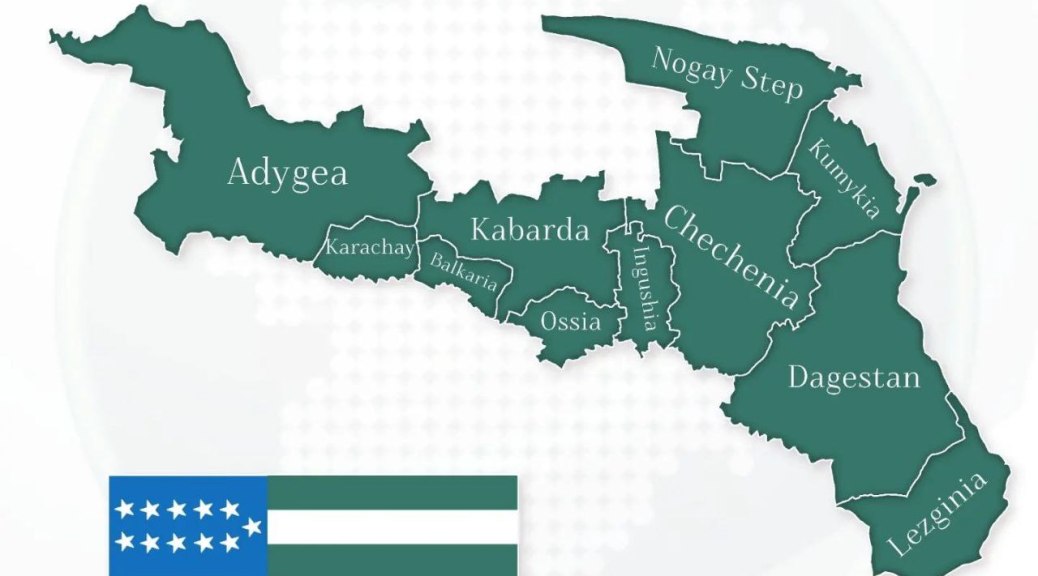
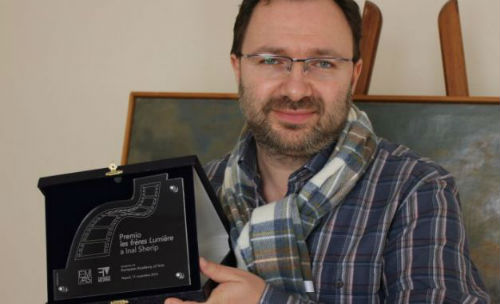

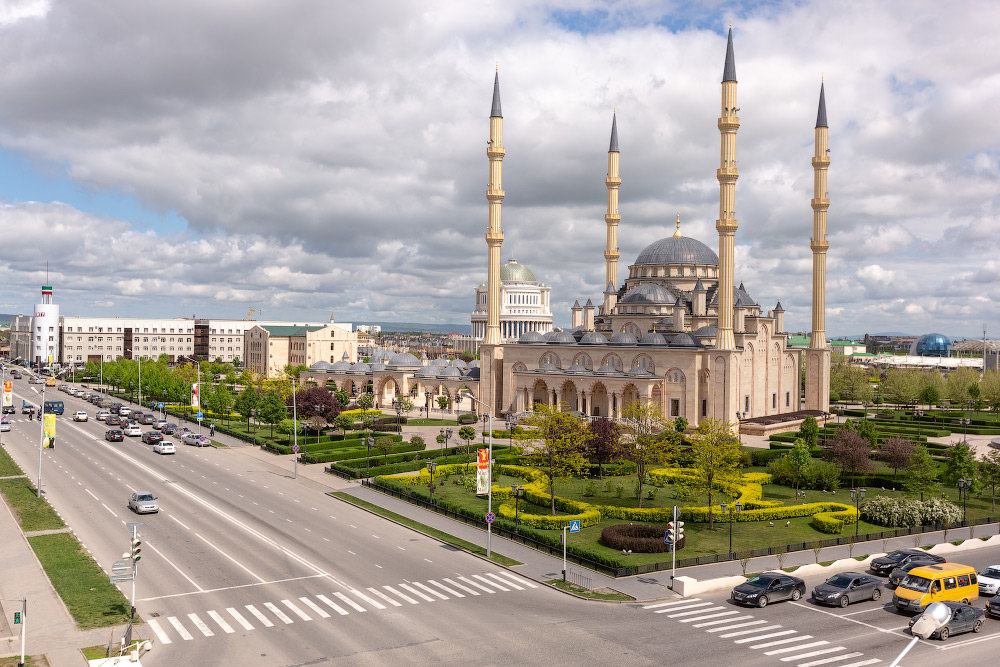

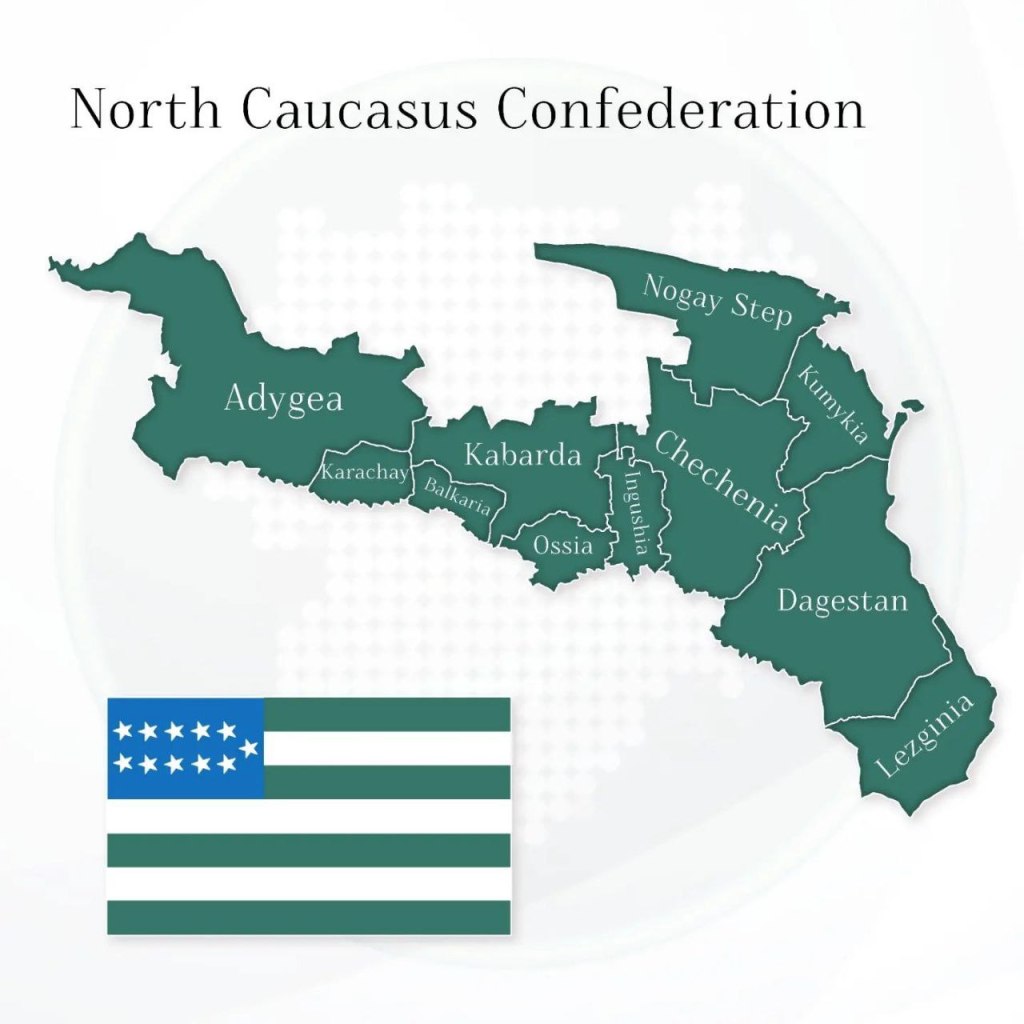

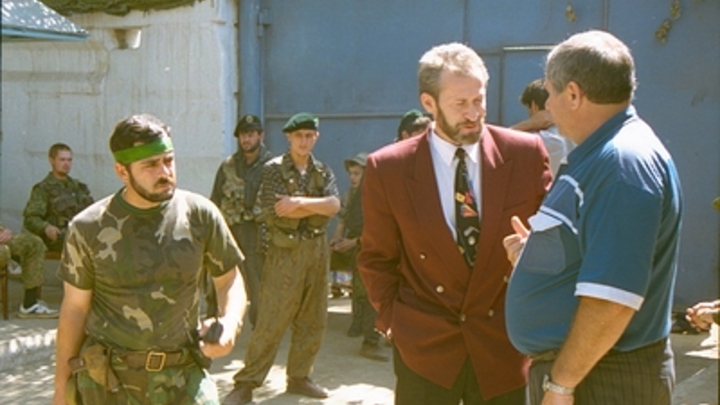


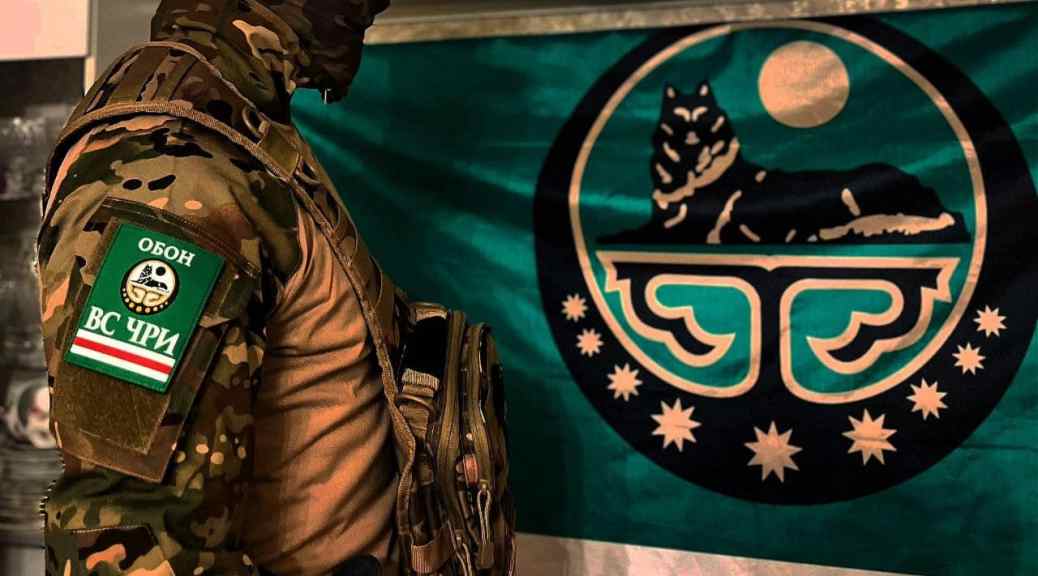

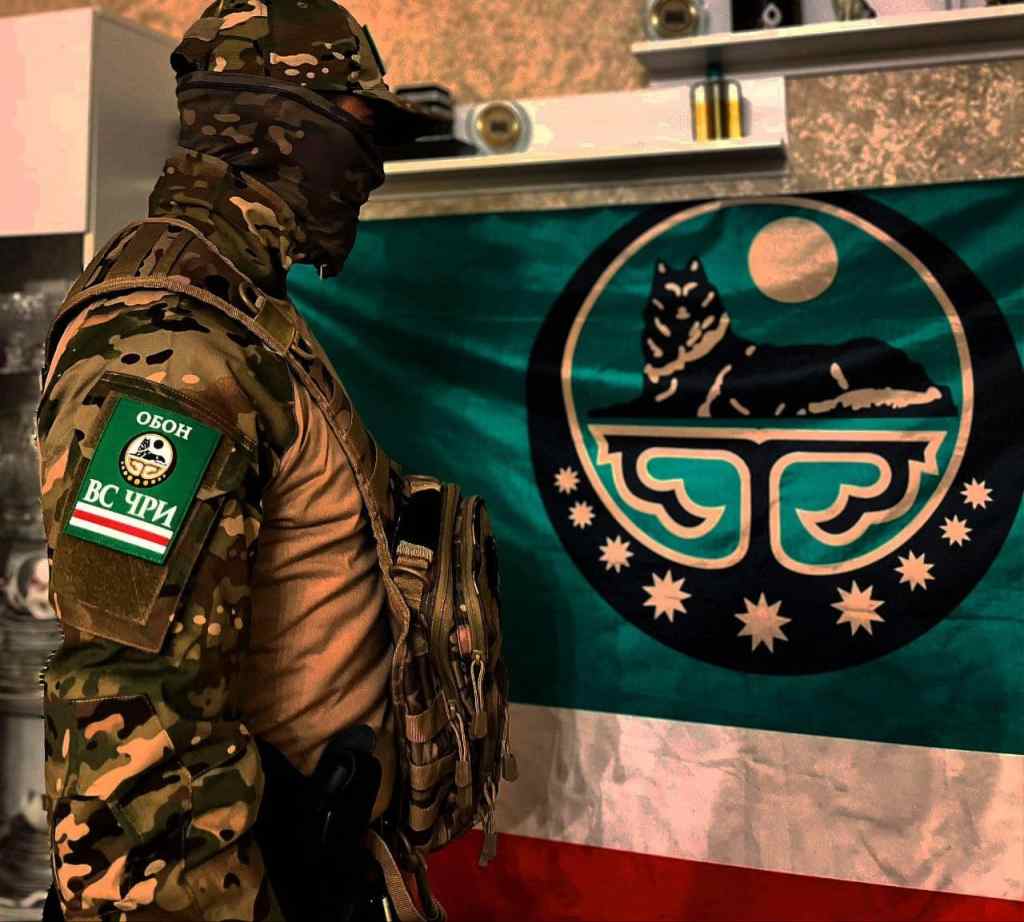


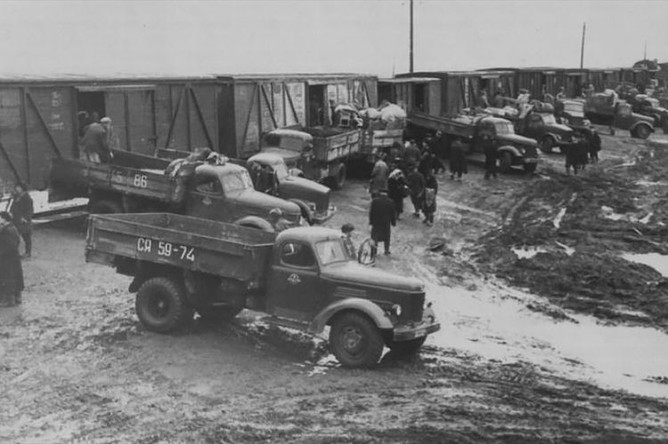
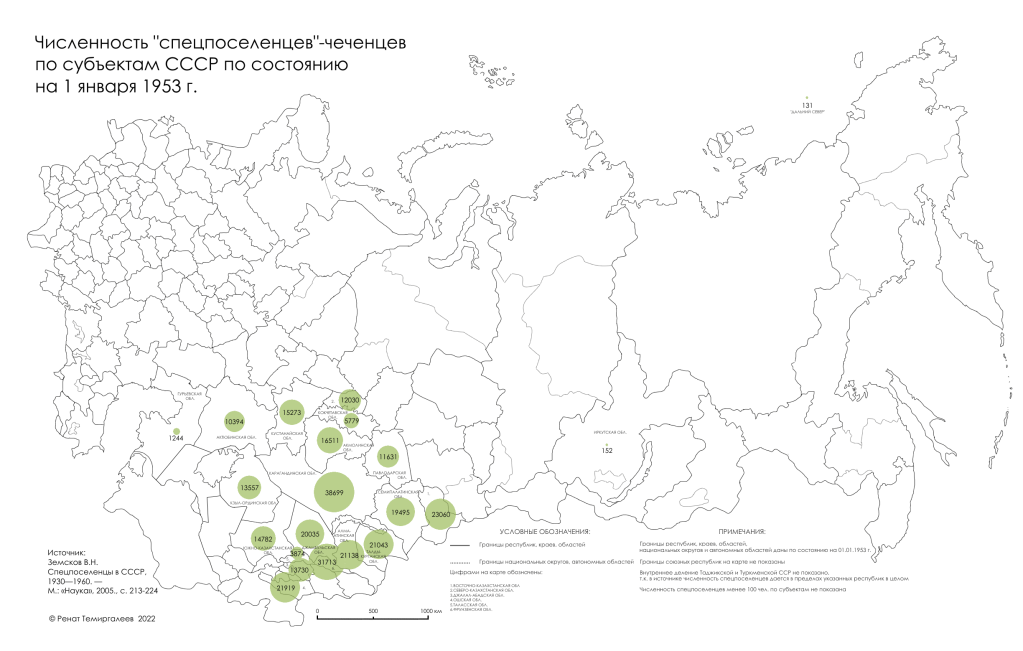


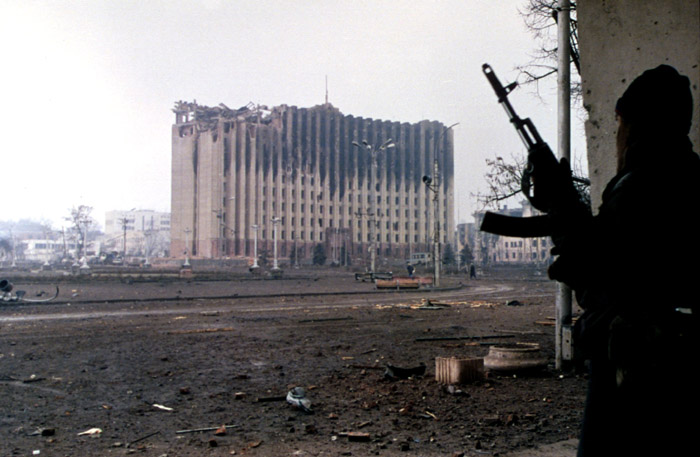
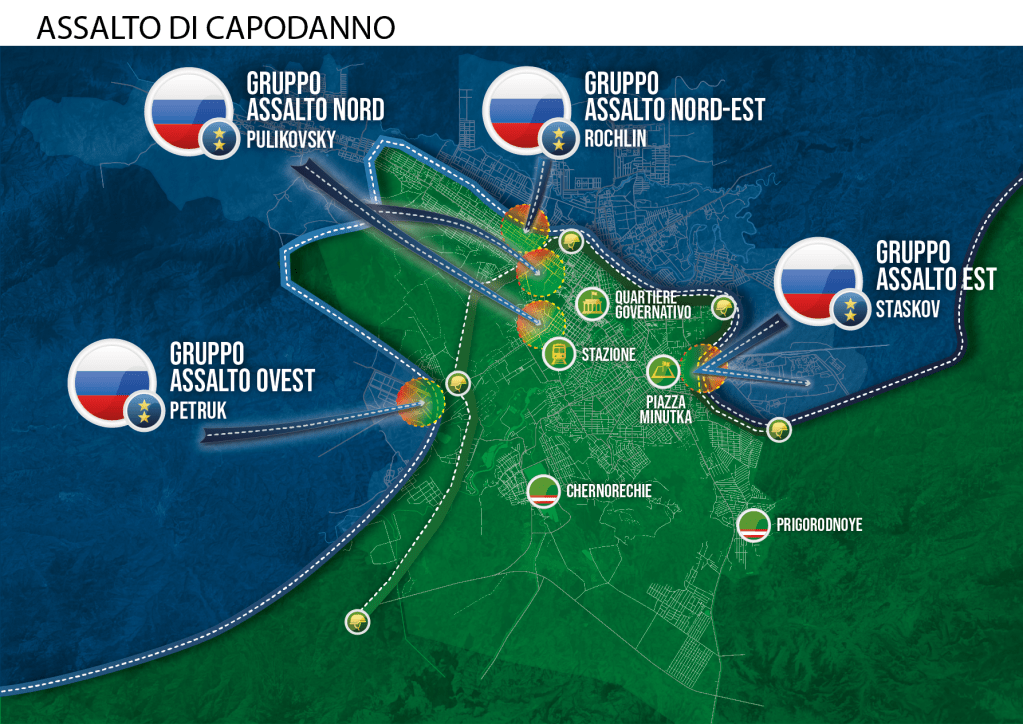

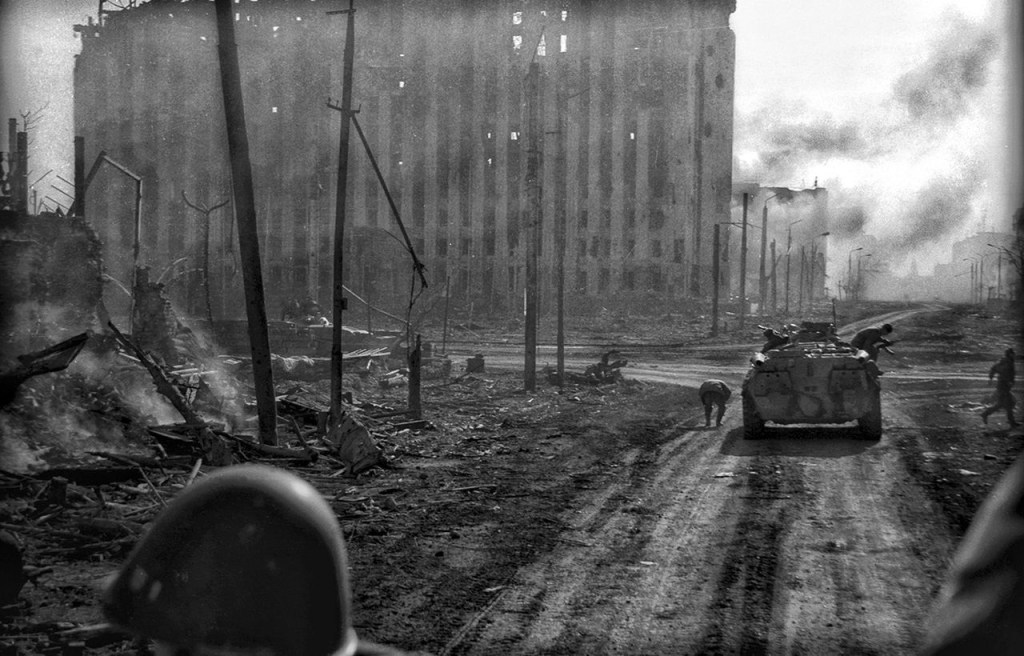


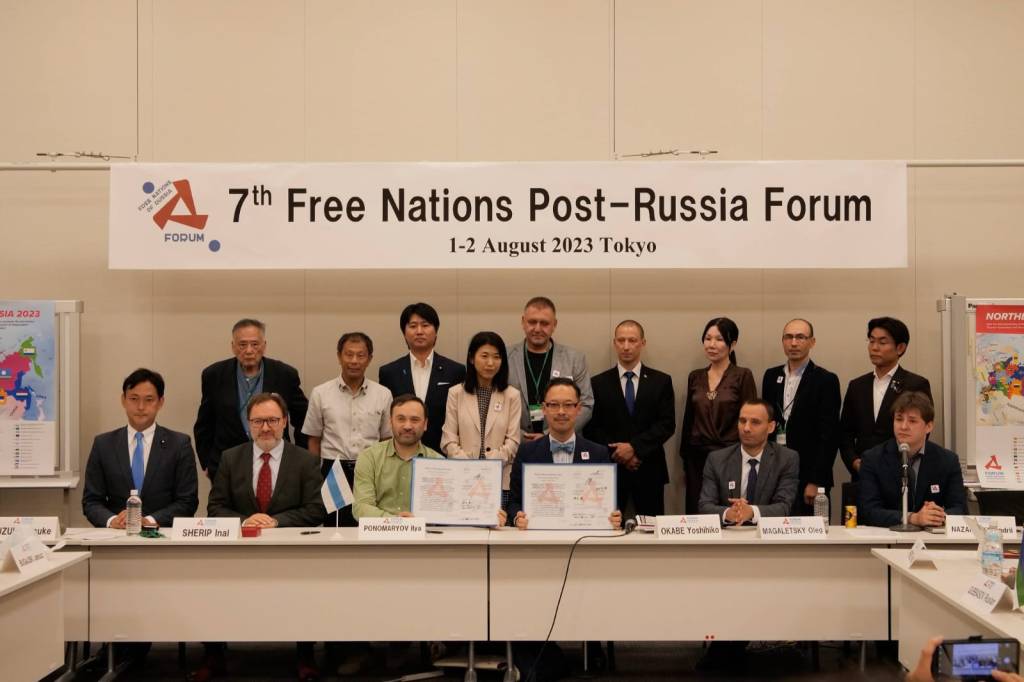



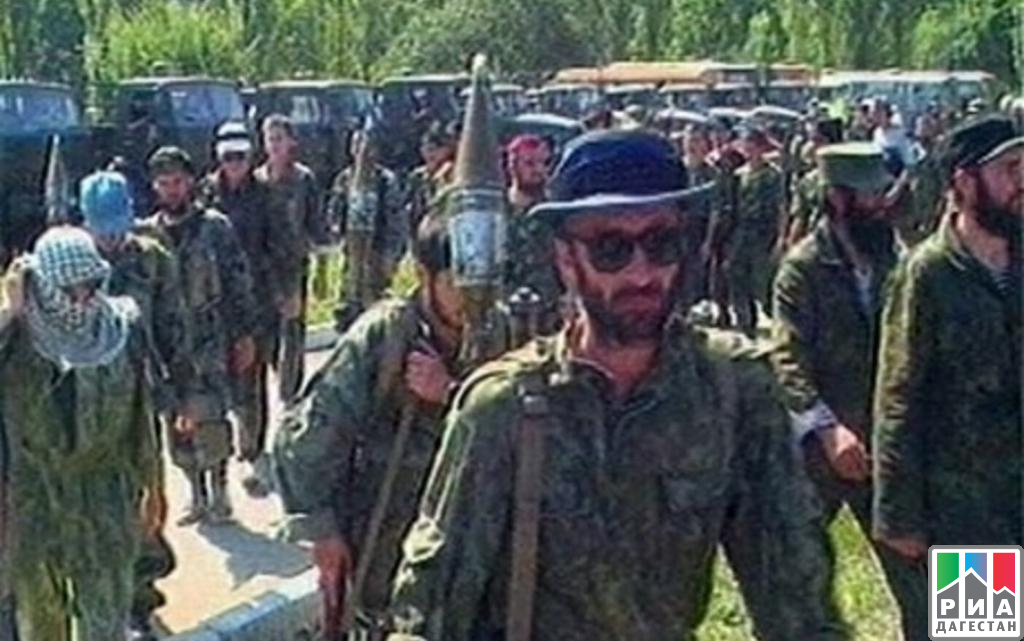
 Ichkeria Digital Archive