Archivi tag: Grozny

THE GENERAL OF NAUR: MEMORIES OF APTI BATALOV (Part III)

Defending Grozny

When the federal forces reached Grozny, my men and I were in Gudermes, where we had quartered to form an organized unit made up entirely of men from the Naur District . On January 4th , a runner sent by Maskhadov was placed in our command post. He gave me the order to converge on our capital with all the men at my disposal. Once in the city, I met a young volunteer, who made himself available to organize our group and put it in coordination with the other fighting units. It is called Turpal Ali Atgeriev. In conversation with him, I learned that he had taken part in the war in Abkhazia and that he had some fighting experience. There was not a single war veteran among us, starting with me: I was in desperate need of someone with combat experience. For this I asked Atgiriev to become my deputy, and he accepted my proposal. Since he didn’t have a weapon, I handed him an RPK-74 machine gun. Someone criticized my decision, accusing me of having appointed a stranger as my deputy. I was not interested in this gossip and intrigue, I was worried about only one thing itself: saving lives and at the same time beating the enemy.

We were deployed in defense of the Pedagogical Institute. A regiment of Russian marines had targeted the building: if this had been taken, it would have been possible to easily reach Maskhadov’s headquarters, which was literally fifty meters from our position, under the Presidential Palace. The Russians tried to break through our defenses almost every day, until January 19 , 1994, but without success. In these attacks they lost many soldiers, whose corpses remained in the middle of the road, in no man’s land, prey to stray dogs. We tried to remove them, to save their bodies, but without a respite we could not have prevented them from being eaten. Several times, during the fighting, our command and the Russian one reached an agreement for a 48-hour truce, precisely to clean the streets of the corpses of Russian soldiers. During these truces we talked to the Russian patrols stationed on the side streets. I remember one of these conversations with a Russian captain, to whom I had thrown a pack of cigarettes: Guys he said, quit, you will not win, because you are not fighting the police, but the army. His voice was not arrogant, he was a simple Russian peasant. That battle was also difficult because to supply our armories we had to capture weapons and ammunition from the Russians. In every disabled armored transport vehicle we found a heap of weapons, cartridges and grenades, which we looted. Later the Russians became more careful, and we didn’t find much in their means. On the other hand, their vehicles were stuffed with all sorts of carpets, dishes and other goods looted from the population.

January 19 , when it became clear that the defense of the Pedagogical Institute would no longer slow down the fall of the Presidential Palace, we withdrew. I was ordered to organize the defense of the Trampark area , and we occupied positions on Novya Street Buachidze . Trampark changed hands several times, and there were fierce battles until February 7th . Right in via Novya Buachidze suffered a shock from a tank bullet which, entering the window of the room where I was with some of my men, hit two of them in full, killing them. This shock still undermines my health. Finally, on the evening of February 7 , a messenger from Maskhadov handed me a note in which I was ordered to leave the position, join Basayev in Chernorechie and leave the city. I should have assumed the defense in the parking area in Via 8 Marzo, where the departments were concentrating to prepare for the exit from the city. Once there we counted all those present: also considering the staff of the Headquarters, we were 320 men. Obviously some departments were not present: detached units fought in other areas of the city, and besides them there were the so-called “Indians”, armed gangs who did not obey anyone, they fought when it was favorable gold and along the way they plundered everything that they could find. When Maskhadov lined up us in the square, he told us that our descendants would be proud of us, that the victory would be ours, that we were leaving Grozny only to return one day. The night between 7 and 8 Fenbbraio we left the capital.

The Naursk Battalion

It was after the retreat from Grozny that my unit, still an amalgam of more or less organized groups, began to become a real tactical unit. This same process was also taking place in the other units that had formed spontaneously at the beginning of the war. Moreover, in the Chechen resistance there were no military units and formations in the classical sense of the term: “battalions”, “regiments” and “fronts” were symbolic terms that did not correspond to a battle order in the classical sense. For example, what was called the “Argun Regiment” was an association of several groups, often poorly armed, made up of a variable number of people, each of which replied to its own commander. The members of these units, all volunteers, could leave at any time, there was no precise chain of command.

Our team spirit had already been forged in the battles we had fought together, and which unfortunately had forced us to count the first fallen. The first of our men to die for the defense of Chechnya was Beshir Turluev , who fell at the Ishcherskaya Checkpoint in December 1994. Since then, other young Chechens had sacrificed their lives for their homeland. Among those who remained alive, and who fought more assiduously with me, a group of “veterans” began to form, who by character or competence acquired the role of “informal officers”. Thus, for example, a 4th year student of a medical institute, whose name was Ruslan, became the head of the medical unit, while Sheikh Khavazhi , from the village of Naurskaya , became the head of logistics. The latter was in charge of keeping in touch with the Naur region , from which the supplies for our unit came. The inhabitants collected the food intended for our livelihood and delivered it to us via a KAMAZ truck, driven by Umar, from the village of Savelieva, and his companion Alkhazur . Sometimes money was also collected, usually a small amount, which was scrupulously recorded and distributed among the men. For the needs of the battalion, for the entire period of the 1994-1996 war, I, from the central command, did not receive more than 3 thousand dollars.

Defending Argun

After we had withdrawn from Grozny, Maskhadov ordered us to fall back on Argun, to help defend the city. We quartered ourselves in the city hospital, now empty and unused. The commander of the stronghold was Khunkarpasha Israpilov, and the commander of the largest unit, the so-called “Combined Regiment”, was Aslambek Ismailov. We were deployed in the sector of the so-called “Indian village”, a front of about 350 meters along the Argun River. On our left were the so-called “Black Wolves”, characterized by wearing very dark jeans. On the other side were Alaudi ‘s men Khamzatov , guard posts on the main bridge over the Argun. In front of us was a Russian paratrooper unit. We learned that we were facing special forces from a Russian soldier whom we captured when, with his squad, he attempted a reconnaissance close to our lines. At that juncture, as soon as the other side learned that their group had been identified and attacked, the Moscow artillery launched a massive bombing on our positions, during which two of our militiamen fell: Daud, coming from the village of Kalinovsky and Rizvan , from Naurskaya . To scare us, the Russians played Vladimir Vysotsky ‘s “Hunting for Wolves” at very high volume . We responded with “Freedom or Death”. The supply of the militias in the city of Argun, as well as in Grozny, was very scarce, there was a severe shortage of ammunition, there was a catastrophic lack of machine gun cartridges, RPG-7 grenade launcher shells and only dressing bandages they were more or less in abundance among the drugs.

On the morning of March 20, the Russians began testing our defenses along the entire line of contact, simulating a force attack from our side. In reality, the main attack took place, surprisingly, at the Moskovsky state farm . We did not expect the enemy to break in from that side, and after a fierce battle during which we lost many men (including the commander of the Melkhu – Khe militia , whose name was Isa and a brave, young Lithuanian named Nicholas) we had to leave the city, to retreat to the wooded region of Nozhai – Yurt. In the defense of Argun, Abuezid , from the village of Naurskaya , Umar, Mekenskaya , Muslim, Nikolaevskaya also fell , while another ten of us were wounded. We left Argun in the night between 21st and 22nd March 1995.
LA VOCE DEL NEMICO: L’ICHKERIA SECONDO TROSHEV (PARTE 2)

IL MERCATO DEGLI SCHIAVI

Uno degli argomenti sostenuti con maggior vigore dal governo russo per giustificare la seconda invasione della Repubblica Cecena di Ichkeria era quello relativo al caos imperante negli anni successivi alla fine della Prima Guerra. Gennady Troshev nelle sue memorie circostanzia, citando le sue fonti, il contesto di illegalità diffusa e di connivenza di alcune autorità statali in crimini odiosi come la presa di ostaggi a scopo di riscatto, il traffico di droga ed il furto di petrolio. In questo paragrafo del suo racconto si parla del cosiddetto “Mercato degli schiavi”:

“Gli attacchi armati di banditi alle nostre truppe, anche fuori dalla repubblica, sono diventati regolari. Ma se già questo era un problema, il rapimento e la tratta di persone hanno assunto proporzioni senza precedenti. Senza troppe esagerazioni, possiamo dire che questa industria ha assunto proporzioni di primo piano nell’economia della repubblica. In pianura e sulle montagne, la maggior parte delle famiglie cecene aveva i propri schiavi – la propria forza lavoro gratuita.

Alle soglie del terzo millennio, nel pieno centro di Grozny, nell’area della cosiddetta piazza dei “Tre Bogatiri” per diversi anni, fino all’autunno del 1999, ha funzionato a dovere il più grande mercato di schiavi del Caucaso Settentrionale, dove uno schiavo poteva essere acquistato per tutti i gusti ad un prezzo ragionevole. E la contrattazione qui era abbastanza appropriata. Anche i bambini del posto sapevano che il prodotto più redditizio era un “non ceceno”. […] .

In cima alla scala venivano valutati gli stranieri, giornalisti famosi e politici: per loro si potevano ottenere grandi somme, fino a diversi milioni di dollari. Questi prigionieri erano tenuti in condizioni relativamente normali. Questo tuttavia non riguardava il comportamento della banda di Arbi Barayev, dove si torturavano tutti i prigionieri, anche quelli “super redditizi”. I rapitori più semplici preferivano “lavorare” con specialisti civili, E poiché c’era tensione con loro in Cecenia, gli ostaggi dovevano essere catturati nelle repubbliche vicine Inguscezia, Daghestan, Ossezia del Nord, Cabardino – Balcaria. Per questi non erano necessari i dollari, potevi concordare uno scambio di materiali da costruzione, veicoli, cibo… […].

La moneta più scarsa nel mercato degli schiavi era pagata per un soldato russo. A cause di varie circostanze questo prodotto, dopo Khasavyurt, non era protetto né dal governo federale né dal tesoro. E’ vero, alcune regioni a volte hanno cercato di tirare fuori dalla prigionia i loro connazionali. Ad esempio, l’amministrazione del Territorio di Krasnodar ha pagato cinquantamila dollari per i guardiamarina Soltukov e Moskalev, e per il rilascio di Berezhny e Vatutin i residenti di Krasnodar hanno dato 40 tonnellate di farina. Ma questi fatti sono piuttosto l’eccezione alla regola.

Centinaia di ufficiali e soldati russi, per diversi anni, hanno piegato le spalle ai padroni ceceni. Nei distretti di Vedeno e di Itum – Khale coltivavano tè di montagna; piantagioni di papaveri venivano coltivate vicino al villaggio di Alleroy, bestiame veniva pascolato nel distretto di Nozhay – Yurt e molti altri costruirono una strada per Shatili. Venivano tenuti in condizioni terribili: lavori pesanti dall’alba al tramonto, freddo, fame, percosse… non tutti resisterono a queste prove. Come ha osservato uno dei mercanti di schiavi locali: “I catturati rimarranno in prigione per molto tempo…se, naturalmente, rimarranno vivi.” Queste parole sono state confermate dalle statistiche: in dieci mesi, solo un militare che ha preso parte alle ostilità è stato rilasciato dalla prigionia cecena, mentre gli accordi di Khasavyurt prevedevano l’estradizione di tutti i prigionieri.

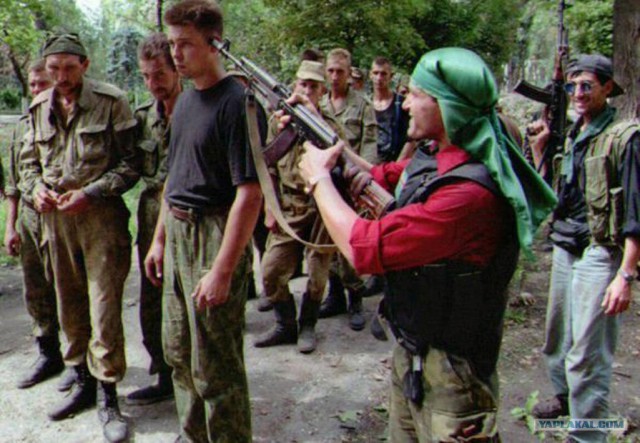
Giovani coscritti russi sotto minaccia armata di militanti separatisti

A onore del vero le affermazioni di Troshev, e in particolare quelle relative al fenomeno della cattività dei soldati russi prigionieri, non trovano riscontro nelle statistiche. Se ci fu ricorso a manodopera forzata tra i prigionieri di guerra non restituiti alla Russia, questo fu meno massiccio di quanto riferito dal Generale anche se, certamente, il fenomeno del rapimento per riscatto riguardo molte centinaia di persone, se non migliaia.

ANARCHIA E PULIZIA ETNICA NELLA CECENIA DEL DOPOGUERRA

I due tratti distintivi dell’Ichkeria postbellica furono certamente lo stato di diffusa anarchia che regnava nel paese ed il revanscismo anti – russo, a causa del quale decine di migliaia di cittadini di origine slava furono costretti ad abbandonare la città o ad accettare continue vessazioni. Ecco come Troshev descrive la situazione della Cecenia all’indomani della fine della Prima Guerra:

“Tre anni di “indipendenza” hanno portato la repubblica al disastro: le masse popolari sono stati private del diritto ad una vita dignitosa. L’approvvigionamento della popolazione è praticamente cessato, le scuole sono state chiuse, anche se gli insegnanti sono rimasti nei villaggi. Gli insegnanti non ricevettero alcuno stipendio dopo il 1995. Gli ospedali e le cliniche mancavano delle attrezzature e dei medicinali necessari, e in molti casi non c’era nulla per fornire anche il primo soccorso. Le pensioni venivano emesse in maniera estremamente irregolare. Ad esempio, l’ultima volta che i pensionati ricevettero denaro fu nel Luglio – Agosto 1997 per un importo di 300 – 350 rubli. La già difficile situazione della popolazione era aggravata dalla mancanza di elettricità e gas, che in precedenza venivano forniti dal Daghestan e dal Territorio di Stavropol. La maggior parte delle fabbriche erano inattive. E le merci che vi venivano prodotte, ad esempio, nelle zone di pianura, venivano semplicemente “espropriati” dalle autorità di Grozny.

Il bersaglio principale dei separatisti, storditi dalla permissività, erano gli “stranieri”: trecentocinquantamila russi, abbandonando ciò che avevano acquisito per anni, lasciarono la Cecenia. Chi rimase bevve a pieno il calice amaro. Quante volte abbiamo letto e sentito di massacri di “non ceceni”?

Negli ultimi anni i banditi ceceni hanno sequestrato più di centomila appartamenti e case appartenenti a russi, daghestani e persone di altre nazionalità. Quasi cinquantamila tra i loro vicini furono ridotti in schiavitù dai ceceni. E quanti “schiavi” hanno piegato le spalle alla costruzione di una strada di alta montagna attraverso la cresta principale del Caucaso fino alla Georgia, vagavano nelle raffinerie di petrolio artigianali, nelle piantagioni di papavero e canapa.

Anche in questo caso i numeri citati da Troshev fanno fatica a trovare conferma. La misura di centomila appartamenti e di cinquantamila schiavi è certamente simbolica, e non trova conferma nelle statistiche ufficiali. Certamente il “furto di appartamenti” conseguente alla distruzione dell’archivio di stato durante la guerra fu un problema endemico, e la minoranza russa ne patì i principali effetti.

La scritta “Benvenuti all’inferno” campeggia su un muro in rovina nel centro di Grozny

LA DROGA IN ICHKERIA

L’ultima frase del precedente intervento introduce un altro dei gravi problemi che afflissero il paese all’indomani della pace del 1996: il traffico ed il consumo di droga.

“Uno dei motivi per le rapine in Cecenia era e rimane la droga” ha testimoniato il giordano Khalid Al – Hayad, che è stato tra i combattenti ceceni per diversi mesi, nella banda dello stesso Gelayev. In precedenza al pari delle armi, le droghe venivano vendute nel centro di Grozny. Dopo che i russi hanno preso la città, la droga è diventata molto difficile da reperire ed i prezzi sono saliti alle stelle. I militanti, anche sotto il fuoco dell’aviazione federale e dell’artiglieria, erano pronti a portare al mercato sacchi di merci saccheggiate tutto il giorno, in modo che la sera, avendo venduto le loro cose, potessero procurarsi una siringa con una piccola dose e rilassarsi. Non si può dire che tutti i militanti fossero tossicodipendenti, ma ce n’erano abbastanza. Si iniettavano, fumavano cannabis, usavano qualsiasi cosa per ottenere uno sballo.

[…] La distrutta economia cecena, la disoccupazione ed altre questioni di natura sociale e domestica non potevano non influenzare la psiche di molti, anche di pacifici cittadini ceceni. Inoltre, è ben lungi dall’essere un segreto che nella “Ichkeria libera” la produzione di droga fosse essenzialmente un’attività legale. Un tempo gli stessi Basayev e Khattab ottennero un notevole successo in questo campo. Le piantagioni di papavero e canapa appartenevano a loro e si trovavano a Kurchaloy, nei distretti di Gudermes, Nozhai – Yurt e Vedeno. E il fratello di Shamil Basayev, Shirvani, acquistò proprio per questo motivo l’edificio della scuola numero 40 in Turgenev Street, trasformandolo in un impianto di produzione di droga. Esso venne recintato con filo spinato elettrificato. Tuttavia l’attrezzatura qui era tedesca, e professori e fermacologi indiani fungevano da consulenti […] durante il girono, a fabbrica miracolosa “intitolata ai fratelli Basayev” produceva tre chilogrammi di eroina pura. Sul mercato nero, un grammo di questa droga costa duecento dollari. I signori della droga Basayev aprirono quindi i loro “uffici” a San Pietroburgo, Volgograd, Krasnodar, Ufa, Kaluga. E il denaro scorreva verso di loro come un fiume. Le fabbriche “Ichkeria” per la produzione di oppio e la lavorazione dell’eroina erano situate anche nel sanatorio degli ingegneri energetici nel distretto di Vedeno, nel campo dei pionieri “Zorka” vicino a Shali e in altri luoghi.”

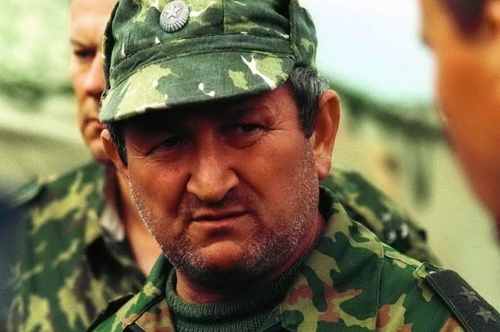
Shirvani Basayev, fratello minore di Shamil Basayev. Secondo Troshev, era uno dei signori della droga in Cecenia

Anche in questo caso le affermazioni di Troshev vanno prese con le dovute cautele. Sicuramente il consumo di eroina divenne endemico nella Cecenia del dopoguerra: molti militanti ne abusarono durante il conflitto, dove la terribile sostanza serviva a curare il dolore fisico delle ferite ed a placare lo stress della battaglia. Molti comandanti di campo ne divennero produttori e distributori, e la piaga della tossicodipendenza falcidiò lo stesso esercito separatista durante la Seconda Guerra.

per approfondire queste ed altre questioni relative ai conflitti russo – ceceni leggi “Libertà o morte! Storia della Repubblica Cecena di Ichkeria” acquistabile QUI