Archivi tag: Ardakhar

23/02/1944 – The Deportation of Chechens

Today marks the anniversary of the deportation of the Chechens by Stalin in 1944. On this occasion we publish an excerpt from the first volume of “Freedom or Death!” History of the Chechen Republic of Ichkeria

Operation Lentil

While Israilov fought his little war against the USSR in Chechnya, the world was facing the tragedy of World War II. In June 1941, Axis forces invaded Russia and were stopped at the gates of Moscow. In the summer of the following year, Hitler directed his sights on the Caucasus, trying to cut Stalin the oil supplies needed to move his armored divisions. The German avant-gardes reached the town of Malgobek, in the extreme west of the Chechen – Inguscia RSSA. Israilov issued an “appeal to the people” in which he invited the population to welcome the invaders as allies if they saw favorably the independence of the Caucasian peoples. For their part, the Germans tried to encourage the insurrection, in order to weaken the already tried Soviet defenses,[1]. However, there were contacts with the rebels, and Israilov seemed willing to collaborate with the new occupiers, making his men available against the anti-Nazi partisan resistance, in exchange for the promise of independence.

In February 1943, following the devastating defeat at Stalingrad, the Wehrmacht withdrew from the Caucasus, abandoning the Chechen rebels to their fate. Stalin’s reaction was merciless. Towards the end of 1943, when Chechnya had returned to being the rear of the front, the Soviet dictator ordered the Minister of the Interior, Lavrentji Beria to deal once and for all with that turbulent people who, in the most difficult moment of the war, had not contributed adequately to the war effort of the USSR[2]. The question of the lack of loyalty shown by the Vaynakhs during the war was not very consistent, but it was also an excellent ideological umbrella to cover an “Ermolov-like” solution to the Caucasian problem at a time when the world was not interested in looking at what was happening in that corner of Europe.
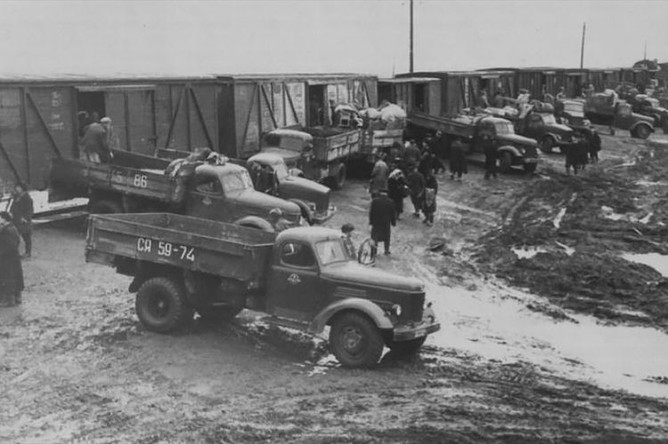
Deportation of Chechens, 1944

Beria carried out Stalin’s order with cynical professionalism: after bringing a brigade of NKVD agents to Grozny[3], ordered his men to collect evidence of the “betrayal” of the Chechens and their neighbors Ingush. The final report drawn up by the People’s Commissars cited the presence of thirty-eight active religious sects, with about twenty thousand adherents, whose purpose was to overthrow the Soviet Union. Stalin’s relentless executioner had already cut his teeth as a persecutor first in his native Transcaucasia (where he had administered the purges) then in Poland, and in the Baltic countries (where he had completed the purge of intellectuals and bourgeois) thus, after putting his military machine to the test by completing two “small” ethnic cleanings in Kabardino – Balkaria and in Karachai – Circassia, he decided to develop that of the Chechens for the end of winter.

Between December 1943 and January 1944, one hundred and twenty thousand men between soldiers and NKVD officials were stationed in Chechnya, officially to support the reconstruction and prepare the harvest. Transport vehicles and freight trains were herded in military warehouses and railway stations, while soldiers set up garrisons across the country. In the night between 22 and 23 February, the so-called Operation Lentil began, which went down in history with the Russian term of Chechevitza and the Chechen term of Ardakhar: within a day three quarters of the entire Chechen people – Ingush were loaded onto trains goods and shipped to Central Asia. In the following days the same fate struck the last quarter. Anyone unable to move or resisting was executed on the spot.

Any resistance was useless. The villages in which they occurred were set on fire, and their inhabitants slaughtered. In the south of the country, where the snow was still deep and travel difficult, communists did not have too many problems forcing the populations to march in the snow to reach their destinations. The elderly, children and the disabled ended up shot or abandoned to their fate[4]. For those who got to the trains alive, a three-week death journey began. Crammed beyond belief in leaded wagons with no toilets, they set out on a three-thousand-kilometer journey across the snowy steppe, surviving on what little they had managed to take with them.[5]. Between 10 and 20% of the deportees died during the crossing. The survivors were dumped in bulk and forced to build themselves shelters and huts on the fringes of collective farms for which they would be the lowest form of labor. The Soviet government imposed compulsory stay on them. Every month the exiles would have had to report to the authorities and declare their presence, on pain of a 20-year sentence of forced labor.
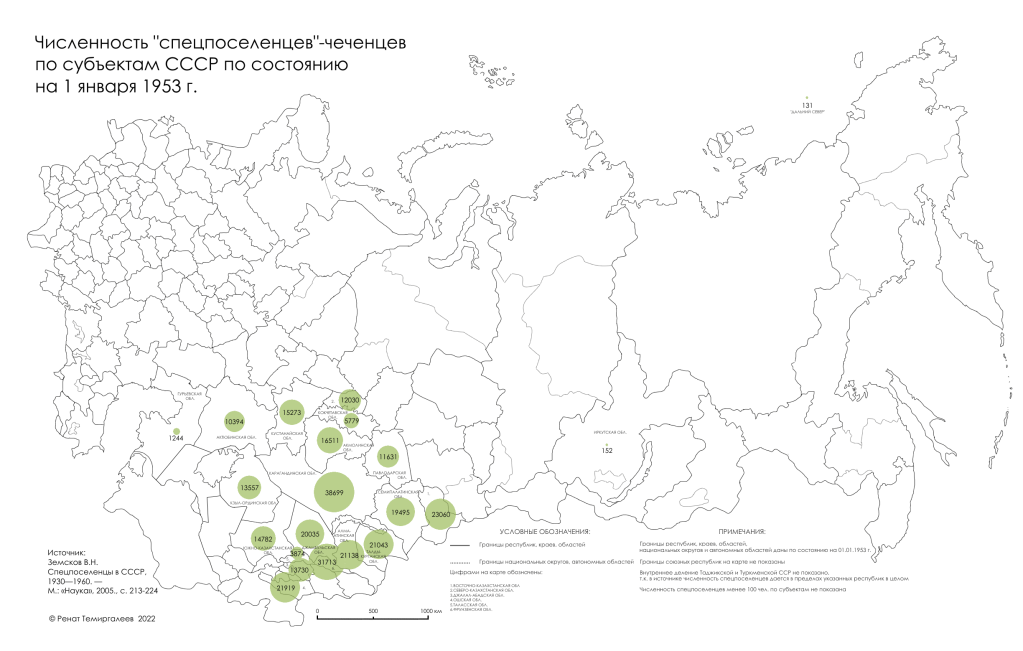
Area of deportation of Chechen people

Nothing remained of the Chechen – Ingushetia: the republic was dissolved, its districts were annexed to neighboring republics or transformed into Oblast, provinces without identity. All the cultural heritage of the Chechens was destroyed: mosques and Islamic centers were demolished, and their stones became building material. Even the stems that adorned the cemeteries were removed and used for the construction of houses, government buildings, even stables and pigsties. The tyaptari, the teip chronicles written on parchment and preserved by the elders, were burned or transferred to the Moscow archives. The depopulated country was filled with war refugees. From the regions most devastated by the conflict, hundreds of thousands of Russians were placed in a Grozny, which has now become a ghost town. Only a handful of survivors, who remained in Chechnya by chance or because they escaped their tormentors, continued to live in hiding in the Mountains. Israilov himself managed to escape arrest until December 24, 1944, when he was identified by the police and killed in a shooting. For all the others, an ordeal began that would last thirteen years, until Stalin’s death.

The deportees had to face the terrible conditions of nullity among populations who barely had to feed themselves. The death rate from disease and malnutrition soon reached dramatic levels. In the three-year period 1944 – 1947 alone, one hundred and fifty thousand people died, about a quarter of the population. The survivors lived in collective lodgings in which up to fifteen families were accommodated, mostly without stable employment and without resources. Those without a job wandered across the steppe in search of animal carcasses, or wild herbs, or tried to steal food from collective farms. Anyone who managed to get a job in one of these could hope to make ends meet:[6].

On hopes that the exile was a temporary punitive measure, and that sooner or later the central government would consider their guilt extinguished, the Supreme Soviet came to put a tombstone. In a special decree it was established that

In order to determine the accommodation regime for deported populations […] it is to be considered perpetual, with no right of return […].

The Chechens were forced to sign the decree one by one.

The deportation memorial built by Dzhokhar Dudayev. Kadyrov had it demolished in 2014. for further information, read the article on the memorial in the “approfondimenti” section

The sons of Ardakhar

Deprived of their land and their customs, the Chechens tried to preserve their identity by handing down their stories orally and entrusting themselves to the elderly, who in the absence of anything else had become the only custodians of shared memory. Thanks to the traditions transmitted from generation to generation, Adat and Islam were kept alive in the uses and customs. The Soviet government tried to eradicate both, opening schools of ideological education and infiltrating the KGB among the Islamic communities, but the national sentiment of the Chechens did not fail and indeed strengthened in the resistance to the emancipation programs launched by the authorities. The distance from the homeland and the lack of written sources produced a simplified, idealized and mythologizing story, which would become the creed of that generation that would reach maturity in the early 1990s[7].

Among the hundreds of thousands of deportees who suffered the sad fate of exile was a child named Dzhokhar. He was born on February 15, 1944, nine days before Stalin ordered the deportation of all his people. Thirteenth son of Musa Dudaev, veterinarian, and his second wife Rabiat, he lived his childhood in a pariah community, considered unworthy to participate in the great socialist project, marginalized and closed in on itself. When his father died, leaving behind a large and resourceless family, his mother was allowed to move to the city of Shymkent in southern Kazakhstan, where the climate was milder and there was greater demand for labor. Dzhokhar, who had taken the dedication to study from his father, managed to complete primary school with merit[8]. With no higher education institutions available, he tried to support the family by working where possible, to bring home something that could alleviate his mother’s fatigue. It was in this situation that the news of Stalin’s death caught him. It was March 5, 1953, and the Chechens had been in exile for nine years.

The new Soviet leader, Nikita Khrushchev, launched a series of measures aimed at softening the iron fist with which the regime had governed the USSR in recent decades, which in the following years would take the name of De-Stalinization. The first step was to get rid of Stalin’s loyalists, starting with the hateful Beria, who was tried and put to the wall within a few months to the delight of the Chechens and all the other deported peoples. The second was to forgive the enemies of the state that the tyrant had persecuted. From 1954, therefore, the status of special settler was revoked for all Chechens under the age of sixteen, allowing them for the first time to move from their forced home to work and study. In August 1955 this freedom was also recognized to teachers, to war decorated, to women married with Russians and to invalids. For all others the restrictions persisted, but the penalty for abusive abandonment of the settlements was reduced from 20 to 5 years of forced labor. The number of convictions dropped significantly, going from eight thousand in 1949 to just twenty-five in 1954.

Finally, on July 16, 1956, the long night of Ardakhar officially ended. By decree of the Supreme Soviet, the ban on returning to the lands of origin was officially lifted. On January 9 of the following year the Chechen – Ingush RSSA  was re-established, to which all the districts that made it up were re-annexed except for one, that of Prigorodny, on the border with North Ossetia.

The Soviet government, aware that a mass return of Chechens would create many problems, tried to govern the phenomenon by setting up a sort of waiting list that would stagger the resettlement, but the impatience of Chechens and Ingushes to return to their homes was not negotiable and already in 1957, in the face of 17,000 authorizations, at least fifty thousand people returned home. During 1958 the exodus became torrential, with the return of 340,000 deportees, mostly without employment, education and economic resources, and by 1959 83% of the Chechens and 72% of the Ingush were on a permanent basis within the ancient borders. Local governments were unable to handle such a massive influx of people, and district governors asked Moscow for help.[9].

The ancient inhabitants of Chechen – Ingushetia turned into “immigrants in their own homes”, ending up occupying the lowest positions of a social pyramid at the top of which were the Russians, to whom Stalin had given their houses and lands. This situation soon produced a sort of “apartheid” between the Russians, who held the monopoly of industry and administration, and the Chechens, who made up most of the agricultural labor or, at worst, were unemployed, forced to do seasonal work. underpaid and without protections[10]. It didn’t take long before the friction between the two peoples escalated into violence: on August 23, 1958, an Ingush killed a Russian in a brawl. It was the spark that ignited an anti – Chechen pogrom during which dozens of people were lynched, some public buildings were set on fire and that only the intervention of the army was able to quell.

Obviously not all Russians opposed the integration of the Chechens. Many residents made some plots of their private land available to the new arrivals, and in the schools the teachers’ efforts in the preparation of the young Chechens were great and selfless. The central government promoted the image of a Chechen – Ingushetia where cultural differences were respected and where different ethnic groups collaborated in the realization of socialism in peace and harmony. For this to be effectively achieved by Moscow, huge economic resources began to arrive for the construction of housing, schools, cultural centers and health services. In short, the budget of the Chechen-Ingush RSSA became dependent on the generous donations of Moscow, which came to represent even 80% of the public budget, triggering a phenomenon of financial dependence which, as we will see, would have given its bitter fruits thirty years later.


[1] Operation Schamil – Planned and implemented between August and September 1942, it involved sending small groups of commandos and saboteurs beyond the front lines. Their goal was to protect the oil infrastructure from planned destruction by the Red Army in the event of a withdrawal from Chechnya. In the summer of 1942 five groups of raiders, totaling 57 men, were parachuted over the front line. Some made contact with Israilov’s anti-Soviet resistance, others occupied the refineries, assuming a defensive position pending the arrival of the German armored divisions. The failure of the summer offensive in the Caucasus and the formidable defense offered by the Russians in Stalingrad prevented the Axis units from advancing to Grozny.

[2] Stalin’s judgment did not take into consideration the sacrifice of tens of thousands of Caucasians in the battles that the Red Army had fought against the Germans: Chechens had been the first fallen of the Soviet army, heroically defended the position in the siege of Brest. Chechen was Khanpasha Nuradilov, a very skilled sniper during the Battle of Stalingrad and also Chechens would have been Movlad Bisaitov, the first soldier to meet the allies on the Elbe River and Hakim Ismailov, who together with his team was the one who hoisted the red flag on the ruins of the Reichstag. Over the course of the conflict, more than 1000 Chechens would be rewarded for their fighting actions.

[3] NKVD – Narodnyj komissariat vnutrennich del (People’s Commissariat for Internal Affairs) was the organization responsible for state security during the Soviet period. Born from the ashes of the Tsarist imperial police, he took control of both detention facilities and branches of the police, including the notorious political police. The NKVD was the armed arm of Stalin’s policy of terror. In 1946 the organization was transformed into the Ministry of Internal Affairs, while its political police section was renamed the State Security Committee, known as the KGB.

[4] Particularly bloody was a massacre that many Chechens still remember today. In the village of Khaibakh, in the mountainous Galanchozh district, snow prevented any movement. But Beria’s orders were clear and rather than disappoint his superior, the NKVD officer operating in the area, Colonel Gveshiani, ordered the elimination of anyone unable to cope with the march. Hundreds of people were gathered in a barn, where they were executed.

[5] In a report to “Comrade Stalin” Beria wrote: Between 23 and 29 February 478,479 people, including 91,259 Ingush, were concentrated and loaded onto trains. 177 trains have been filled, 152 of these have already been sent to the resettlement sites. […] 6,000 Chechens from the Galanchozh district still remain not. rearranged due to heavy snow and the impracticability of the roads. However, their removal will be completed in the next two days […] During the operation 1016 anti-Soviet elements were arrested. A few days later, in a second report, Beria reported that at the end of Operation Lentil, 650,000 people had been “successfully” deported.

[6]In addition to food, there was a lack of clothes. In January 1945 the assistant to the President of the Assembly of People’s Commissars wrote in his report: The situation of the clothes and shoes of the special settlers has completely deteriorated. Even without taking into account all those who are unable to work, children are practically naked, and as a result disease causes high mortality rates. The absence of clothing prevents many of the healthy young people from being used in agricultural activities.

[7] As historians Carlotta Gall and Thomas de Waal have noted: The experience of deportation was a collective experience based on ethnic criteria […] Thirteen years of exile undoubtedly gave the Chechens, for the first time, the sense of a common identity. The proximity of the Chechens in the deportation has become legendary for themselves.

[8] Considering the fact that in those years only sixteen thousand Chechen children out of fifty thousand had access to some form of basic education, Dzhokhar Dudaev could say he was lucky to have had the opportunity to study.

[9]Even in 1958, one year after Khrushchev’s “forgiveness”, only a fifth of Chechens had managed to obtain a home. For the others, makeshift lodgings remained in industrial complexes, in dilapidated huts or in the ruins of ancient farms on the plateaus and mountains. Even at the employment level, the situation remained critical for a long time: due to low schooling, most Chechens did not possess the necessary qualifications to obtain the best jobs in the country’s factories and refineries, and the distrust with which local managers, all ethnic Russians, they looked at them made integration even more difficult. The school gap was very high: in 1959, compared to 8696 skilled workers of Russian origin, there were 177 Chechens occupying the same position,

[10] The reader who wants to deepen the question of the Chechen economic system – Ingush in the Soviet period can find two detailed insights on the blog www.ichkeria.net entitled The agricultural economy of ChRI.
I CINQUEMILA GIORNI DI ICHKERIA – PARTE 9

FEBBRAIO 1992

Febbraio

POLITICA NAZIONALE – A seguito di grosse polemiche inerenti il comportamento dei suoi membri, il Parlamento revoca lo status di “istituzione statale” al Mekhk Khel”, il Consiglio degli Anziani di medievale memoria riconosciuto dal Parlamento come un corpo dello Stato nel Dicembre 1991. Nel corso di due mesi l’istituzione, guidata dall’anziano Akhmed Adizov, si è resa odiosa tra la popolazione civile e tra i parlamentari per i metodi aggressivi con i quali tenta di imporre nomine istituzionali e garantire avanzamenti di carriera ai suoi membri nelle aziende di stato.

3 Febbraio

TENSIONI SOCIALI – a Malgobek si verifica un violento scontro a fuoco tra residenti locali. Si tratta di una resa dei conti per una serie di omicidi iniziata nel maggio dell’anno precedente, e proseguita secondo le leggi criminali della faida di sangue.

4 Febbraio

POLITICA NAZIONALE – Secondo un sondaggio pubblicato dal Servizio Stampa Presidenziale, l’81% dei cittadini ceceni si fida del Presidente della Repubblica, il 77% si fida del Parlamento eletto il 27 Ottobre 1991, mentre soltanto il 7% apprezza l’operato del Mekhk – Khel.  La maggioranza degli intervistati sostiene che quest’ultimo dovrebbe essere sciolto e rieletto. Riguardo ai rapporti con la Russia, più del 60% degli intervistati teme un intervento del governo di Mosca, mentre soltanto il 3% respinge questa ipotesi.

TENSIONI SOCIALI – Nella notte viene assaltato da ignoti un deposito della Milizia del Ministero degli Interni russo. Vengono saccheggiate tremila armi da fuoco e 184.000 cartucce, oltre a tonnellate di suppellettili e vettovaglie.

5 Febbraio

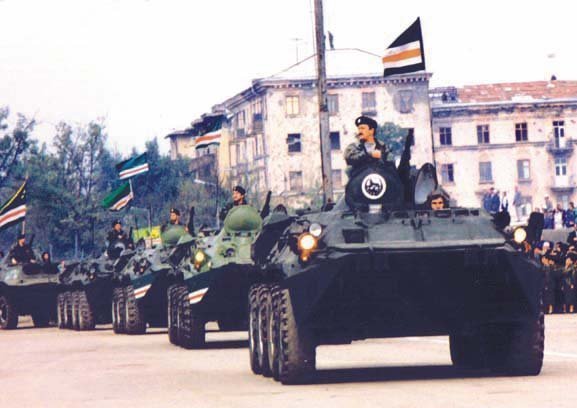
POLITICA NAZIONALE – Si svolge il giuramento solenne delle prime unità dell’esercito regolare ceceno. Con Decreto Presidenziale il Presidente Dudaev licenzia i coscritti reclutati nel 1990 ed ordina la leva 1991, per una nuova generazione di giovani militari.

Forze regolari della Repubblica Cecena di Ichkeri

6 Febbraio

POLITICA NAZIONALE – Il primo stormo aereo dell’aeronautica repubblicana, al comando del Primo Collaudatore Khairuddin Visangiriev, tiene una dimostrazione di volo sui cieli di Grozny.

POLITICA ESTERA – Tensioni al confine tra il Distretto di Nozhai – Yurt e la Repubblica del Daghestan. Residenti ceceni lamentano il fatto che alcune delle terre espropriate durante l’Ardakhar non siano mai state restituite alla Cecenia, ma permangano entro i confini del Daghestan. Le autorità Daghestane si dichiarano disposte a risolvere il problema su base negoziale inter – statale.

7 Febbraio

TENSIONI SOCIALI – Nella notte una banda armata composta da decine di uomini attacca una base militare della milizia dipendente dal Ministero degli Interni russo, riuscendo a sopraffare le guardie (LEGGI L’APPROFONDIMENTO QUI). Durante la sparatoria il deposito di munizioni della caserma esplode, provocando ingenti danni. Dieci tra gli aggressori rimangono uccisi, nessuno tra i difensori, il che lascia immaginare che l’azione sia stata in qualche modo concordata con la guarnigione a difesa del presidio. La base, rimasta senza protezione, viene invasa da una folla di centinaia di civili, ansiosi di raccogliere armi ed altri oggetti di valore. Vengono trafugati almeno 300 fucili mitragliatori, oltre ad una grande quantità di munizioni. Molti civili, nel tentativo di penetrare la base saltano su mine antiuomo poste a protezione, finendo all’ospedale in gravi condizioni. Il governo ed il parlamento ceceno accusano la Russia di aver orchestrato l’azione. Il Ministro della Stampa e dell’Informazione, Movladi Ugudov, dichiara che tali provocazioni sono riferite al previsto ritiro delle forze armate russe dal territorio ceceno. Rispetto a questo Ugudov dichiara che il governo di Grozny ha proposto un piano di ritiro ordinato delle unità militari, al quale si opporrebbero le alte gerarchie del Cremlino, desiderose di trascinare la Repubblica nel caos.

8 Febbraio

TENSIONI SOCIALI – Si registrano numerosi attacchi alle basi militari russe in Cecenia. Dudaev incolpa provocatori russi, ed in particolare il comandante della guarnigione di Grozny, Generale Sokolov. Il Parlamento concede al Presidente poteri d’emergenza per frenare il caos. Tali poteri sono accordati dall’8 Febbraio all’8 Marzo 1992.

10 Febbraio

TENSIONI SOCIALI – Dudaev impone il coprifuoco a Grozny per trenta giorni. Le formazioni militari sono messe in stato di allerta. La Guardia Nazionale viene schierata intorno al perimetro dei presidi militari, mentre il Ministro degli Interni, Umalt Alsultanov, mobilita in supporto le unità speciali della polizia antisommossa. Il Viceministro dell’Interno, Udiev, viene nominato Commissario Militare responsabile dell’attuazione del coprifuoco.

11 Febbraio

TENSIONI SOCIALI – Il comandante delle forze russe in Cecenia, Sokolov, dichiara piena adesione alle direttive del governo ceceno e “intesa completa” con il Presidente Dudaev. Egli inoltre smentisce le voci di un piano di allontanamento delle famiglie degli ufficiali da Grozny, bollandole come “bugie”.

Il Ministro della Stampa e dell’Informazione Ugudov dichiara che le recenti aggressioni alle basi militari sono frutto di un piano ordito dai resti della nomenklatura sovietica appoggiata da elementi mafiosi, con lo scopo di gettare la Repubblica nel caos e sabotare il processo di autodeterminazione del popolo ceceno.

Il Presidente della Commissione Difesa e Sicurezza del Parlamento, Ibragim Suleimenov, dichiara che le tensioni dei giorni scorsi sono da attribuirsi a “forze – ombra mafiose” che tentano di avvantaggiarsi del disordine determinato dagli eventi della Rivoluzione Cecena. Egli esclude la possibilità di un coinvolgimento esterno, dicendosi sicuro che il “nemico” sia “interno” e che non ci sia bisogno di cercarne uno fuori dai confini del paese.

Il Consiglio degli Anziani, riunitosi a Grozny, condanna le azioni violente ed invita i cittadini alla calma. L’assemblea, cui partecipano anche i capi dei villaggi rurali, rivendica il suo ruolo di agente moderatore nel riportare la popolazione alla calma ed impedire ulteriori disordini.

POLITICA NAZIONALE – Il Presidente Dudaev presenzia ai funerali del Maggior Generale dell’Aviazione inguscio Salambek Oskanov, deceduto tragicamente il 7 Febbraio scorso durante un volo di addestramento. Insieme a Dudaev intervengono il Vicepresidente della Federazione Russa Alexander Rutskoi ed il Presidente del Consiglio Distrettuale locale, Ruslan Tatiev. Il funerale dell’alto ufficiale russo è l’occasione per tutti e tre i politici per lanciare un appello alla popolazione ed alle istituzioni coinvolte nella crisi russo/cecena, affinchè il buonsenso e la collaborazione prevalgano sulle divisioni che alimentano i conflitti sociali e politici.

il Maggior Generale Sulambek Oskanov

12 Febbraio

POLITICA NAZIONALE – Il Parlamento decreta l’istituzione della Cittadinanza Cecena, attribuibile tramite uno specifico timbro sui vecchi passaporti sovietici ancora in circolazione presso la popolazione. La procedura è resa obbligatoria per tutti i funzionari pubblici.

NEGOZIATI RUSSO/CECENI – Il Consiglio Etnico della Repubblica, organo rappresentativo di tutte le minoranze del paese, invia un appello al Soviet Supremo della RSFSR Russa affinché qualsiasi decisione di Mosca nei confronti della Cecenia sia presa in accordo con le autorità di Grozny, onde evitare che tale decisione sia accolta negativamente dalla popolazione.

13 Febbraio

POLITICA NAZIONALE – In un discorso alla TV di Stato il Presidente Dudaev si scaglia contro la leadership russa, definita “Sciovinista”. Liberando il popolo russo da ogni responsabilità, Dudaev dichiara che l’attuale governo di Mosca usa il principio del “divide et impera” per mettere i popoli caucasici l’uno contro l’altro e spingerli a confrontarsi tra loro, in modo da impedire che si uniscano in un’unica grande forza regionale capace di tenere testa alle ambizioni imperiali del Cremlino. Il discorso chiude con un appello a tutti i popoli del Caucaso affinchè si costituisca un grande raggruppamento politico in grado di difendere l’indipendenza dei popoli non – russi che abitano la regione.

14 Febbraio

POLITICA NAZIONALE – Il COFEC implementa in maniera consistente i beni di prima necessità acquistabili dai cittadini con la tessera annonaria, con l’intento di combattere la crisi alimentare che si sta abbattendo sulla repubblica.

Il Presidente del COFEC, Mamodaev, dichiara che tale aumento sarà garantito da contratti di scambio tra la Repubblica Cecena, l’Ucraina ed il Territorio di Stavropol, cui verranno consegnati prodotti petroliferi in cambio di generi alimentari di base.

Il Presidente del Comitato Nazionale per la Gestione Operativa dell’Economia (COFEC) Yaragi Mamodaev

17 Febbraio

POLITICA NAZIONALE – Il Parlamento introduce la nazionalità come requisito essenziale per ricoprire incarichi pubblici. Il meccanismo per l’ottenimento della cittadinanza rimane semplificato, a causa del fatto che non sono ancora disponibili documenti ufficiali della Repubblica.

     Proseguono i negoziati politici per la costituzione del primo governo di fiducia parlamentare. Ad oggi risultano nominati una decina di ministri tra i quali il Ministro della Stampa e dell’Informazione, Ugudov, il Ministro dell’Interno, Alsultanov, il Ministro della Cultura, il famoso ballerino Mahmoud Esambaev, e il Ministro dell’Istruzione, Yandarov.

18 Febbraio

POLITICA ESTERA – Zviad Gamsakhurdia tiene una conferenza stampa a Grozny, durante la quale rivendica il suo diritto di rappresentare la Repubblica di Georgia e dichiara illegittima la giunta militare che lo ha deposto. Gamsakhurdia definisce la sua visita in Cecenia come un incontro bilaterale tra due legittimi governi, e rifiuta di riconoscersi un rifugiato politico, dichiarando invece di essere nel pieno possesso dei suoi poteri costituzionali, solo temporaneamente usurpati da una giunta golpista. Riguardo al tema del riconoscimento formale della Repubblica Cecena da parte della Georgia, Gamsakhurdia afferma di aver già predisposto un decreto presidenziale che richiederà l’approvazione del Parlamento, e si dice fiducioso che ciò avverrà non appena la situazione politica sarà pacificata.

POLITICA NAZIONALE –  nell’ottica di inquadrare nuovi coscritti nella nascente forza armata nazionale, Dudaev emette il Decreto numero 27 del Presidente della Repubblica Sulla riabilitazione delle persone che hanno abbandonato le unità militari delle forze armate dell’ex Unione Sovietica“. In esso si depenalizza il reato di diserzione per tutti i cittadini che intendono proseguire il loro servizio militare nell’esercito della Repubblica Cecena.

19 Febbraio

POLITICA ESTERA – Dudaev e Gamsakhurdia intrattengono una lunga riunione al termine della quale emettono un comunicato congiunto. Il tema centrale di tale incontro è la costituzione di una realtà politica (e militare) caucasica in grado di tutelare gli interessi dei popoli del Caucaso dalle ambizioni imperiali della Russia.

20 Febbraio

POLITICA NAZIONALE – Con Decreto Presidenziale numero 13 viene introdotta un’ulteriore misura di calmierazione dei prezzi, limitando i margini di ricavo sulla vendita di numerosi prodotti in misura oscillante tra il 4 ed il 35%, e sostenendo la calmierazione con un contributo prelevato dal budget dello Stato. Il Ministero dell’Economia, di concerto con l’associazione agricola di categoria, dovranno stabilire prezzi fissi per i prodotti agricoli di largo consumo.

Con Decreto Presidenziale numero 15 il Comitato di Stato per la Privatizzazione ed il Comitato di Stato Antimonopolio vengono soppressi, ed i loro compiti e documenti sono assorbiti dal Ministero delle Finanze. Questa misura è volta a razionalizzare la spesa pubblica in vista di ulteriori contrazioni del bilancio. I conti correnti a disposizione dei due comitati vengono assorbiti dal Fondo per la Difesa della Repubblica Cecena.

23 Febbraio

CULTURA – In tutta la Cecenia si tengono le commemorazioni per l’anniversario della deportazione del 1944. Il Parlamento vara una legge che istituisce il 23 Febbraio come giorno di lutto nazionale.

25 Febbraio

CONFLITTI SOCIALI – In una conferenza stampa il Ministero degli Interni Umalt Alsultanov comunica i risultati del coprifuoco imposto da Dudaev. Sono state sequestrate 80 armi leggere, tra le quali 23 mitragliatrici e fucili mitragliatori, 17 pistole e 9 granate. Più di 1000 persone sono state denunciate, e 40 criminali in fuga arrestati. Le operazioni hanno coinvolto unità della polizia, della guardia nazionale e volontari “afghani”, ex militari dell’esercito sovietico rientrati volontariamente in servizio. Il dato relativo ai sequestri è piuttosto modesto, ma secondo quanto dichiarato dal Ministro il numero di crimini in termini assoluti è calato di un terzo dal Novembre 1991.

POLITICA NAZIONALE –  Con il Decreto numero 34 “Sull’esecuzione delle sentenze dei tribunali e delle corti arbitrali straniere nella Repubblica Cecena”, il Presidente Dudaev diffida i giudici a dare seguito a sentenze emesse da corti di paesi i quali non hanno riconosciuto la Repubblica Cecena o con i quali la Repubblica non abbia un accordo di cooperazione giudiziaria. Con questo provvedimento si usa la Magistratura come arma coercitiva nei confronti dei governi stranieri, tentando di forzare il riconoscimento della Cecenia facendo leva sulla velata minaccia di trasformare il paese in un “buco nero giudiziario”.  

26 Febbraio

ESTERI – In risposta alle accuse di sostenere la fazione di Gamsakhurdia nella guerra civile in corso in Georgia, il Presidente Dudaev, il Ministro della Stampa e dell’Informazione Ugudov ed il Parlamento dichiarano la completa estraneità del governo ceceno a qualsiasi azione di natura violenta o terroristica.

Zviad Gamsakhurdia a Grozny nel 1992

27 Febbraio

CRISI RUSSO/CECENA – Durante un’operazione congiunta di polizia con le forze del Ministero degli Interni russo sei veicoli blindati vengono “trafugati” e “ritrovati” da un reparto della Guardia Nazionale, che li trattiene in “custodia”. Nei primi due mesi dell’anno sono state registrate molte sparizioni di materiale militare dalle basi dell’esercito russo.

NEGOZIATI RUSSO/CECENI – Il Parlamento della Repubblica autorizza l’apertura di un ciclo di negoziati con la Russia. Gli incontri si terranno a Sochi.

28 Febbraio

ECONOMIA – Un’indagine sociologica pubblicata sui principali quotidiani della Repubblica rileva che il 16% della popolazione non possiede mezzi economici necessari ad affrontare il repentino rialzo dei prezzi occorso con la liberalizzazione appena avviata. Quasi il 50% degli intervistati sostiene di avere a disposizione risorse sufficienti per un massimo di tre mesi.

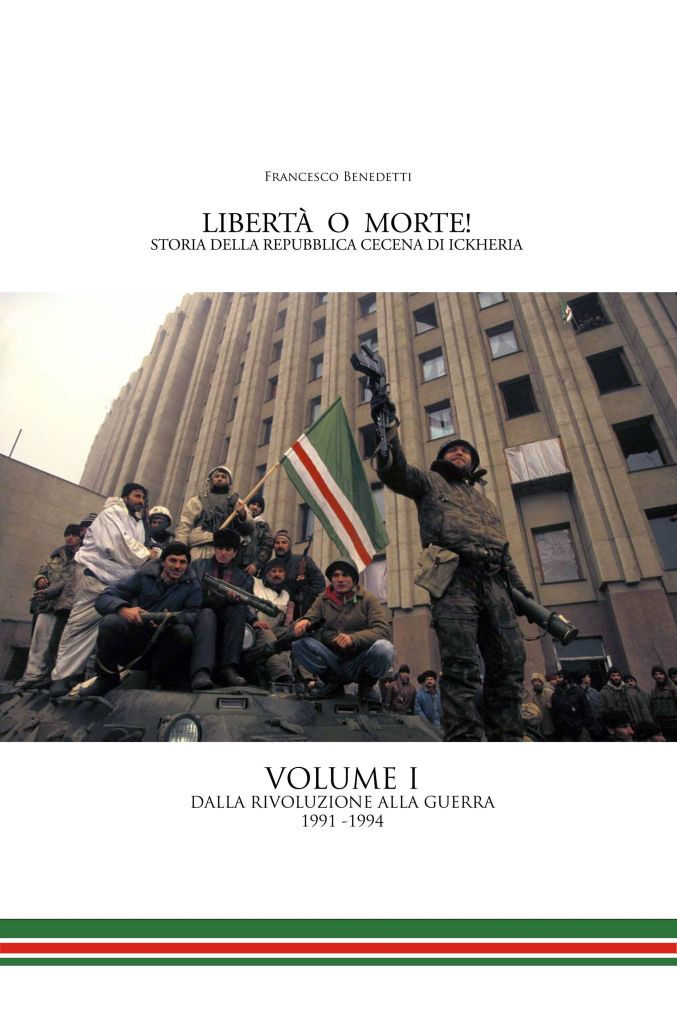
“LIBERTA’ O MORTE!” – Seconda Edizione

Siamo lieti di comunicare che da oggi è disponibile la seconda edizione del libro “Libertà o Morte! Storia della Repubblica Cecena di Ichkeria” in vendita su Amazon sia in versione cartacea che in E – Book.

Per questa seconda edizione abbiamo deciso, data la lunghezza del lavoro, di organizzarne la pubblicazione in cinque volumi: oggi esce il primo di questi, “Dalla Rivoluzione alla Guerra (1991 – 1994)”.

Il volume si compone di 340 pagine, e contiene numerose aggiunte e modifiche rispetto alla versione precedente. Dalla settimana prossima sarà possibile acquistarlo anche in lingua inglese. Buona lettura!

ACQUISTA IL LIBRO

LA CECENIA E L’INDIPENDENZA CONDIZIONATA: IL “PIANO AKHMADOV”

UN NUOVO MINISTRO DEGLI ESTERI

Ilyas Akhmadov fu appuntato Ministro degli Esteri da Maskhadov il 27 Giugno 1999, pochi mesi prima dello scoppio della Seconda Guerra Cecena. Akhmadov fu scelto per il fatto di non aver partecipato a nessuna delle azioni terroristiche (Budennovsk e Klizyar in primis) che avevano resto tristemente celebre la resistenza separatista durante il primo conflitto. In questo modo egli avrebbe potuto muoversi con maggior facilità tra le cancellerie occidentali senza incorrere nel rischio di essere arrestato per terrorismo. Nella sua veste di alto rappresentante della diplomazia cecena, Akhmadov si diresse dapprima in Turchia, poi in Belgio, poi ancora negli Stati Uniti, girando in lungo  e in largo nel tentativo di coinvolgere i governi occidentali in un negoziato trilaterale con la Federazione Russa (per approfondire, leggi il libro “Libertà o Morte! Storia della Repubblica Cecena di Ichkeria, acquistabile QUI).

Ilyas Akhmadov the Minister of Foreign Affaires for the Chechen rebel government. (Photo by Alex Smailes/Sygma via Getty Images)

Presto fu tuttavia chiaro che nessuno dei governi in grado di fare la differenza in una trattativa con la Russia sarebbe intervenuto, appoggiando tout – court la posizione dei secessionisti. Così, dal 2001, il Ministro degli Esteri si mise ad elaborare un piano di pace che ponesse in essere le premesse di una separazione senza costringere il Cremlino ad accettarla sul piano formale. Il progetto, che pubblichiamo in versione italiana (scaricabile QUI in PDF) si basava sull’idea di trasformare la Cecenia in una sorta di protettorato, sotto il mandato delle Nazioni Unite,  per un periodo di 10 o 15 anni, durante i quali il paese sarebbe stato ricostruito e le istituzioni democratiche sarebbero state implementate, sul modello di quanto stava succedendo in Kosovo ed a Timor Est. Maskhadov avrebbe rassegnato le sue dimissioni, l’esercito russo si sarebbe ritirato e le forze armate cecene avrebbero smobilitato. Una volta che la situazione si fosse stabilizzata e le istituzioni democratiche avessero iniziato a funzionare sotto la protezione delle forze armate dell’ONU, nuove elezioni avrebbero portato alla costituzione di una Cecenia indipendente.

Il piano girava tutto intorno al concetto di “indipendenza condizionata”:

“Il riconoscimento condizionato di un governo o di uno Stato è il principio che consiste nel rendere il riconoscimento dell’entità in questione soggetto all’adempimento di condizioni precedentemente convenute. Una appropriata applicazione di questo principio attraverso il meccanismo di una amministrazione internazionale può risolvere il conflitto russo – ceceno con un approccio in cui vincono entrambe le parti. L’idea è semplice: la trasformazione della Cecenia in uno Stato realmente democratico e pacifico attraverso un periodo di transizione di diversi anni di amministrazione internazionale. Questa formula può non essere un miracolo, ma fornisce un modo per risolvere la sfida di soddisfare le legittime aspirazioni della Cecenia andando simultaneamente incontro alle autentiche esigenze di sicurezza della Russia, come alle preoccupazioni relative alla sicurezza della Georgia ed alla sicurezza ed agli interessi complessivi della comunità internazionale.

UNA STRADA IN SALITA

Il piano era di difficile attuazione, perché avrebbe dovuto passare dal Consiglio di Sicurezza dell’ONU, del quale la Russia faceva parte, e difficilmente il Cremlino avrebbe accettato la presenza di forze di pace entro quelli che considerava i propri confini. Un segnale incoraggiante comunque giunse da Putin, che in relazione al piano proposto rispose: “Oggi la questione dell’indipendenza o meno della Cecenia dalla Russia è assolutamente non di fondamentale importanza. Ciò che è di fondamentale importanza per noi è soltanto una questione. Non vogliamo permettere che questo territorio venga usato ancora una volta come testa di ponte per un attacco alla Russia.” in questi termini, Putin poteva essere teoricamente disponibile a congelare nuovamente la questione dell’indipendenza in cambio della completa smilitarizzazione della Cecenia. Il piano venne sottoposto a Maskhadov qualche settimana dopo, sponsorizzato dallo scrittore francese Andrè Glucksmann e dal politico belga Olivier Dupuis, che si dissero disponibili a farsene relatori presso le autorità europee ed all’ONU. Esso tuttavia era debole per due motivi: prima di tutto la situazione della Cecenia non poteva essere assimilata a quella del Kosovo, perchè Russia non era la Serbia né in fatto di peso politico né in fatto di rapporti con l’occidente.

Vladimir Putin, Presidente della Federazione Russa. Allo scoppio della Seconda Guerra Cecena giustificò l’intervento armato come un’operazione volta a garantire la sicurezza della Russia. Il “Piano Akhmadov” muoveva dalla necessità di garantire a Putin il riconoscimento delle sue “ragioni di sicurezza” senza ledere il diritto della Cecenia all’autodeterminazione.

In secondo luogo, come spiegò Maskhadov nella sua risposta alla proposta di Akhmadov, “La mentalità della resistenza cecena era sempre più religiosa e sempre più frustrata rispetto all’Occidente ed alla democrazia, rispetto a quanto non fosse durante la prima guerra. […] dovete capire che quello che la gente vede riguardo alle democrazie occidentali sono dichiarazioni preoccupate di routine, gestualità vuote, che irritano soltanto la gente. Dovete capire che questo è tutto quello che hanno visto di codeste democrazie”. Maskhadov confidò che non sarebbe riuscito a tenere insieme il fragile fronte indipendentista se un simile piano fosse stato sponsorizzato da lui. In particolare, una simile soluzione avrebbe messo la resistenza in rotta di collisione coi suoi finanziatori, che erano per lo più comunità religiose mediorientali le quali mai avrebbero supportato finanziariamente un movimento che andava a braccetto con l’ONU, vista dai più come una sovrastruttura al servizio del potere occidentale. Rispose quindi che il piano poteva essere presentato, ma come una iniziativa personale di Akhmadov e dei suoi amici, e non come un documento ufficiale della ChRI.

IL PIANO NAUFRAGA

Anche all’interno di ciò che restava della gerarchia repubblicana, il dibattito sul piano fu acceso ed i funzionari non riuscirono a trovare un accordo.  Laddove Umar Khambiev, Ministro della Sanità ed inviato personale di Maskhadov in Europa, appoggiò entusiasticamente il piano, Akhyad Idigov, ex Presidente del Parlamento dudaevita, lo attaccò pesantemente accusando Akhmadov di voler vendere l’indipendenza della Cecenia e di attentare alla costituzione. Akhmadov propose il piano in via personale nel marzo 2003, ma proprio in quei mesi iniziò la seconda invasione americana dell’Iraq, e la questione cecena finì nelle ultime pagine dei giornali. Olivier Depuis, raccolse comunque le firme per presentare il piano alle Nazioni Unite, e per la metà del 2003 ne aveva già raccolte 30.000. L’azione di Depuis, che era un deputato del Partito Radicale Transnazionale, avrebbe portato, nel febbraio del 2004, il Parlamento Europeo a varare una risoluzione nella quale per la prima volta si riconosceva l’Ardakhar del 1944 come “genocidio”, ma oltre all’adozione di questa risoluzione, non ci sarebbe stato altro di politicamente rilevante. In ogni caso la discussione del “Piano Akhmadov” non riuscì neanche a decollare, giacché l’11 settembre 2001 Osama Bin Laden aveva lanciato il suo attacco terroristico agli Stati Uniti. Da quel momento il timore del terrorismo islamico si era impadronito delle società occidentali, ed anche i secessionisti ceceni avevano finito per essere considerati parte del fenomeno.

Alhyad Idigov, Deputato al Parlamento di I e II Convocazione e rappresentante del Parlamento all’Estero, criticò duramente il “Piano Akhmadov”, accusando il Ministro degli Esteri di voler sacrificare l’indipendenza della Cecenia, secondo il suo parere già acquisita nel 1991 e confermata nel Trattato di Pace del 1997. La mancanza di unità nel fronte secessionista fu una delle principali cause del naufragio della proposta di pace.

Come scrive Akhmadov: “Le cose sono cambiate radicalmente dopo l’11 settembre 2001, quando la maggior parte delle persone in Occidente, e certamente la maggior parte dei governi, ha iniziato a guardarci attraverso la lente dell’antiterrorismo. Il pretesto che l’uccisione di massa di civili ceceni da parte della Russia abbia contribuito alla guerra contro il terrorismo ha permesso all’Occidente di mantenere stretti rapporti con la Russia e di assolvere la sua coscienza collettiva ignorando le atrocità. Vedere questa guerra come uno dei fronti di guerra contro il terrorismo globale ha liberato l’Occidente dai suoi obblighi al rispetto dei diritti umani e del diritto internazionale nei suoi rapporti con la Russia.”. La resistenza cecena, che per parte sua aveva compiuto atti di terrorismo e che, radicalizzandosi, aveva assunto i turpi connotati del fanatismo religioso, fu pesantemente colpita dai nefasti effetti dell’azione di Al Qaeda, che gli alienarono completamente le simpatie dell’occidente, fatta eccezione per qualche giornalista, qualche associazione umanitaria e qualche uomo politico di scarso peso. Le autorità russe si resero conto di avere campo libero nel portare a termine la loro invasione e chiusero a qualsiasi negoziato che potesse portare anche soltanto ad una tregua.

Per approfondire, leggi il libro “Libertà o Morte! Storia della Repubblica Cecena di Ichkeria, acquistabile QUI.