Archivi tag: War in Chechnya

Alkhazur Abuev – The weak men of the Maskhadov’s Army

Background and education

A career officer in the Soviet Navy, Alkhazur Abuev (also transliterated as Olkhazur Abuev) was born in the Chechen-Ingush Socialist Republic in the first half of the 1950s.

In 1972, he graduated from the M. V. Frunze Higher Naval Academy in Leningrad, a prestigious Soviet Navy academy, obtaining the rank of Captain First Rank (капитан первого ранга). He served in the Black Sea Fleet and later in the Caspian Flotilla, where he held technical and staff positions.

He left his military career in the early 1990s, during the collapse of the USSR, and returned to Chechnya, apparently in March 1992, where he was immediately appointed by President Dzhokhar Dudaev to the organizational chart of the nascent Chechen national army, obtaining the position of deputy head of the Operational Directorate of the Armed Forces General Staff and, from June 1993, head of the same directorate. At the outbreak of the First Russian-Chechen War, however, Abuev did not take up arms but left the country.

Maskhadov’s Army

Upon his return to his homeland, he was called back by President Aslan Maskhadov to help reorganize the regular army, which, according to the plans of the new head of state, was to be called the National Guard and consist of eight specialized regiments. Maskhadov appointed Abuev Chief of Staff immediately after his election as President. According to Timur Muzaev’s reconstruction, on March 13, 1997, Maskhadov established the National Guard, and on May 15, 1997, Abuev signed the general reorganization of the army, abolishing the previous front commands and centralizing the chain of command.

The measures taken by the new Chief of Staff had their own abstract logic and were in line with the President’s desire to professionalize the army, but they did not take into account the important changes that had affected the armed forces during the war. Dudaev’s death had accentuated the tendency of units to rally around their field commanders, and Abuev appeared to be ‘disconnected’ from the natural hierarchies that were forming. The new General Staff’s claim to establish a professional system in an army that resembled more an advanced popular militia than a classic armed force clashed with the convictions (and interests) of many field commanders, who preferred to consider their units in ‘permanent mobilization’, both because they were convinced that war with Russia would soon resume and because they wanted to maintain the privileges and impunity that some of them had acquired.

The friction between Abuev, who was pushing for the demobilization of the armed units, and the main brigade generals, who wanted to avoid it, led to an institutional crisis that, in October 1998, resulted in Abuev’s resignation. He was replaced by Maskhadov with the “veteran” Abubakar Bantaev.

Retirement and final years

At the outbreak of the Second Chechen War (1999), Abuev retired to Baku, Azerbaijan, where he lived for almost ten years. On April 23, 2008, according to Kommersant and RBC News, he voluntarily surrendered to the Russian federal authorities, claiming that he had not participated in armed activities since 1999. The authorities confirmed that, despite having served as Chief of Staff in 1997-1998, he was not involved in war crimes. Akhmed Zakayev commented on his surrender as follows: “I don’t understand why he had to surrender. He could have returned home without announcing it, and there would have been no charges against him.” This position was confirmed by one of Abuev’s relatives, who commented: “In Chechnya, only the laziest or the illiterate are unaware that Olkhazar never fought against the federal forces […] Olkhazar was a naval officer and only arrived in Chechnya after the end of the first war, leaving before the start of the second military campaign. Why turn him into a militant commander?”

After a brief interrogation, he was released and not prosecuted.

Press sources indicated that he still lives in Chechnya under discreet surveillance, maintaining a low profile and staying out of public life.

Profile and assessment

Alkhazur Abuev was one of the most atypical figures in the Ichkerian military elite: a Soviet-trained technician, uninterested in religious or revolutionary rhetoric, focused on rebuilding a modern state military structure. He was the main architect of the attempt to transition from a guerrilla army to a regular force, which was thwarted by the fragmentation of the armed forces in 1998 and then by the second Russian invasion of Chechnya. His story—from his career in the USSR Navy to his command of the Ichkerian forces, to his retirement in Baku and surrender in 2008—reflects the trajectory of a generation of Chechen officers who sought to reconcile military professionalism and national identity, only to be crushed between the two logics.

Biographies: Supyan Abdullaev – from the Nation to the Emirate

Son of Exile

Born on November 8, 1956, in Kazakhstan to a family of deportees belonging to the Teip Thadakhara tribe originally from the village of Khatuni, Supyan Minkailovich Abdullaev was just a child when, after Khrushchev’s “Pardon,” he moved to Chechnya with his parents. His family was one of many that, during the Ardakhar, had been deported by Stalin to Kazakhstan, officially as “punishment” for not fighting the Nazi invasion of the USSR with sufficient rigor, but in reality to consolidate the colonization of the Caucasus by ethnic Russians.

Exile first, then social ghettoization after their return, had produced a strong sense of disorientation in the younger Chechen generation: for a people accustomed to living in the same land for millennia, organized into clans deeply rooted in specific territories, deportation to Central Asia and the chaotic return to their homeland thirteen years later, unable to rebuild the ancient social mosaic based on the “family-territory” relationship meant the loss of every “cardinal point of identity.” In this context, the only cultural pillar remaining to the Chechens was Islam, which until the deportation had taken root in a very ‘light’ form, often syncretic with ancient cultural values, but which now represented the only foothold for Chechens to recognize themselves in a USSR that was predominantly Orthodox and Russian-speaking.

Supyan grew up cultivating traditional Chechen customs, soon became very skilled in fighting, and studied the Koran. After graduating in 1972, he earned a degree from the Chechen-Ingush State University and found work as a physical education teacher in schools in the Vedeno district, the “ancestral land” of the Chechen nation.

From madrasas to the Islamic Battalion

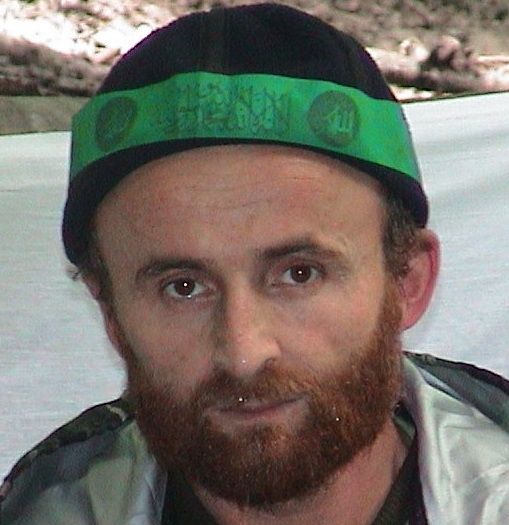
With the advent of Glasnost and the easing of censorship, Abdullaev was able to devote himself openly to religious propaganda, teaching in local madrasas, acquiring contacts throughout the Eastern Caucasus, and eventually participating in the creation of the Islamic Revival Party, the first explicitly confessional political movement in the Soviet Union. His social activism took the form of participation in the activities of the Ar-Risalya Islamic center in Grozny, where he began teaching Islamic doctrine and law, achieving the honorary title of Ustaz (Teacher). He eventually became director of the center and, in this capacity, supported the Chechen Revolution, the proclamation of independence, and the rise of Dzhokhar Dudaev to the presidency of the republic. He differed from most other teachers, who struggled to express themselves in Russian, in his almost complete lack of accent and a style of speech that would have been the envy of a university professor. He had a long red beard that reached down to his waist (hence the nickname “Supjan the Red”).

Supyan ran the Islamic center until 1994, when the Russian army entered Chechnya with the aim of reconquering the small republic. On November 26, 1994, a contingent of anti-Dudaev militiamen, mercenaries, and undercover Russian soldiers attempted to overthrow Dudaev by attacking Grozny. Abdulaev enlisted in a village militia and took part in the fighting that saw the attackers destroyed and put to flight. The group of volunteers to which Supyan belonged engaged the attackers at the Press House. According to some, it was in that battle that people first began to talk about the “Islamic Battalion.” Supyan’s bravery during the battle earned him the position of deputy commander of the battalion, a unit that would fight with honor throughout the First Chechen War (for more information, read “Freedom or Death! History of the Chechen Republic of Ichkeria,” available HERE).

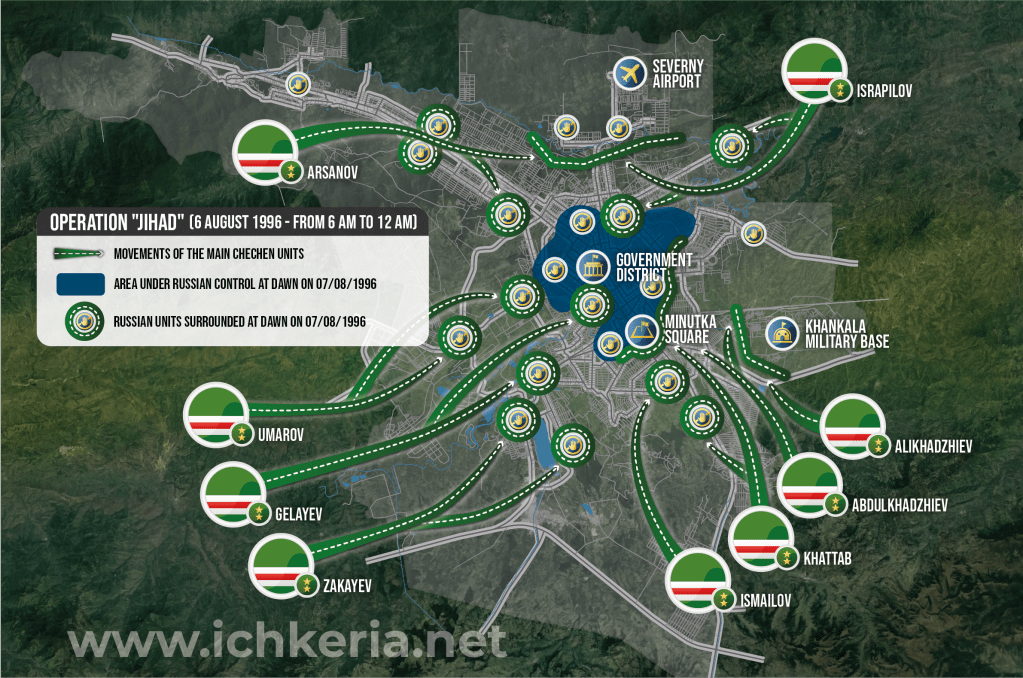
Supyan took part in Operation Jihad, the action with which the independence fighters recaptured the capital, putting the Russian army in check and forcing Moscow to withdraw from Chechnya. During the battle, he commanded several assault groups against the FSB headquarters, the “Government Palace,” the Dinamo Stadium, and other sensitive targets. For his role, he was apparently appointed ‘Brigadier General’ (a mainly honorary title, which would become rather inflated in the following years).

Islam and War

Maskhadov’s rise to power, democratically elected by the overwhelming majority of Chechens in 1997, saw Supyan align himself with the so-called “Radicals,” whose main exponent was Shamil Basayev. In the distribution of posts, seeking to please the radicals, Maskhadov appointed him Deputy Minister of Sharia for State Security, with the task of working on the ideological and religious training of officials. With the proclamation of full Sharia law (1999), Supyan’s role (recognized as one of the leading exponents of radical Islam in Chechnya alongside Movladi Ugudov) in the training of state officials grew significantly, as the Chechen legal system had no background in religious law. Thus, the few scholars available became ‘experts’ in Islamic law, even though they often lacked even a basic knowledge of the subject.

In any case, the formation of the ‘Islamised’ Chechen ruling class was soon brought to an end when Russia invaded Chechnya again at the end of 1999. Abdullaev quickly became a key figure, not only because he reconstituted his unit (renamed the ‘Jundullah’ Brigade) at the outbreak of the war, but also because, as a radical figure not only in politics but also in religion, he had access to the richest sources of foreign funding, coming from Wahhabi Islamic associations, which were happy to finance the jihad while ignoring any interest on the part of the moderate political and religious current of the Chechen government, of which Maskhadov was the expression.

During the Second Russian-Chechen War, Abdullaev first commanded the Jundullah Brigade as second-in-command, then as commander, earning himself a place in the political-military council of the Chechen resistance[1], the Majilis-Al-Shura (successor to the Committee for the Defense of the State at the head of the Republic). After taking command of the Eastern Front of the war theater (2003) centered in the territories of Vedeno and Shali (where he was wounded several times in combat[2]), on July 5, 2004, he was appointed Minister of Finance of the war government, with the aim of raising the necessary funds to continue operations and distribute them to units in the field. His work was appreciated, if it is true that Maskhadov’s successor, Sadulayev, confirmed him in his position. Among the fighters, Supyan gained the goodwill of his comrades, earning the respect of all. Despite his advanced age compared to the other commanders, he actively participated in operations and war councils, and was known for his austere religious discipline, moral authority, and charisma among the fighters.

The Emirate

On March 3, 2007, he was appointed Vice President of the Chechen Republic of Ichkeria by Dokka Umarov, a position he held until the founding of the Emirate of the Caucasus on October 7, 2007. He joined the new formation, formally abandoning the state structures of the ChRI, and took on the role of “Naib” (political successor) to the former President, now “Emir,” Umarov. When, in June 2009, unconfirmed information emerged about the alleged death of Doku Umarov, Akhmed Zakayev expressed the opinion that his closest associate, Supyan Abdullayev, would most likely become his successor. Within the Caucasus Emirate, Supyan Abdullaev maintained a leading role as Dokka Umarov’s deputy, being the de facto number two in the movement. For this reason, the Russian authorities tried in every way to capture or kill him, even arresting his son, Masud, then 22, who was deported from Egypt to Russia. Nevertheless, Supyan did not give in to blackmail and did not surrender.

He was considered the most influential of the Salafi ideologues and acted as a liaison between the various Wilayat (provinces) of the new Emirate. As an educator, he oversaw the religious and ideological training of new militants in mountain training camps. He carried out this task until March 28, 2011, when, during a raid by Russian special forces in the village of Verkhny Alkun, in the Sunzha district, the Russians hunted him down and killed him. The operation was aimed at preventing a meeting between Umarov and his staff. According to some, Umarov managed to escape, while Abdullaev was killed in a heavy air strike, following which he and several others

[1] His radio call signs were “Red Supyan” and “Chitok.”

[2] In January 2006, information appeared about Abdullaev’s elimination following a special operation in the district of Shali in Chechnya. This information was later denied, as it was his youngest nephew, field commander Adam Abdullaev, who was killed. Two other field commanders were killed along with him.

April 16, 1996: The Battle of Yarish Mardy (From “Freedom or Death! Volume II)


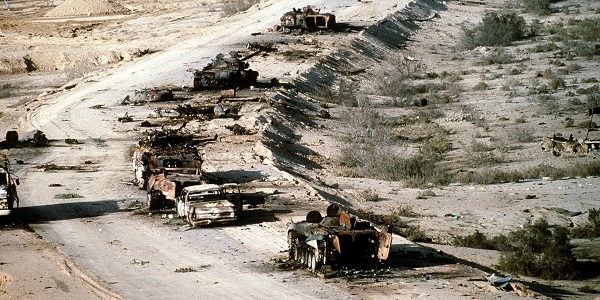
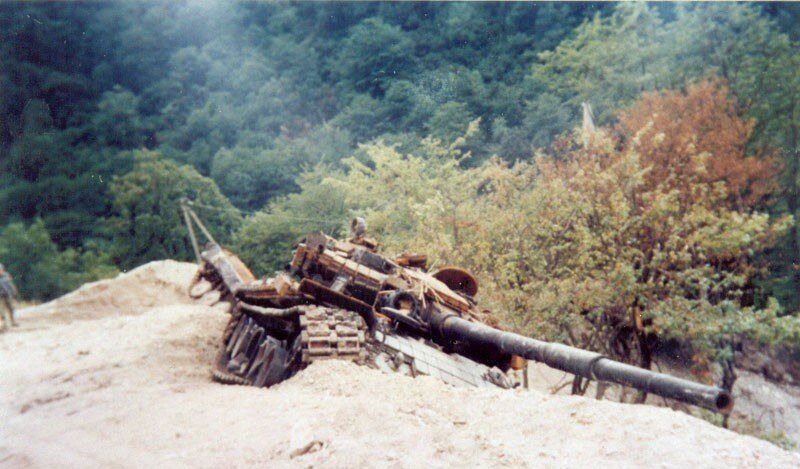
On 16 April, a few hundred meters from the village Yarish-Mardy in the Argun Gorge, the Russians suffered one of their worst setbacks. At 2:20 p.m., after a several hours’ march from Khankala Military Base, an armored column of thirty fighting vehicles,[1] four oil trucks, and numerous supply trucks, hit a bottleneck between the villages Chishki and Zony. The area was the only along the route without a permanently-manned Russian checkpoint and, due to the differences in height between the road and hills, without radio coverage too. Waiting there instead were Chechen units led by an obscure young commander of Arab origin. He had arrived in Chechnya in mid-1995 leading a small group of foreign fighters. Now with 80-160 men, his name was Samir Saleh Abdullah but went by Ibn Al Khattab.[2]

The ambushers jammed the radios of the passing unsuspecting Russians before detonating a powerful anti-tank mine, stranding the forward vehicle. The hills began spewing down on the column, now stretched for almost a kilometer and a half, destroying the leading and trailing vehicles, and a few minutes later killing the commander and deputy commander, Major Terzovets and Captain Vyatkin. Most of the infantry and vehicles were destroyed eventually too. A nearby platoon of Russian soldiers set off to investigate the explosions. Hearing the nearby explosions, a platoon of Russian soldiers set off to investigate but came under heavy fire too and took up defensive positions. The command hurriedly organized a task force with battle tanks and heavy machine guns to relieve their trapped comrades. Simultaneously, a second relief column supported by combat helicopters was racing to the south. The two rescue teams made contact with the Chechens around five o’clock and fled to the woods an hour later. They had arrived at the ambush site to the smell of a hundred of their dead comrades burning. Of the initial 30 vehicles 21 were destroyed, and of the 200 men only 13 were unharmed. The Chechens lost twenty at most.[3] This was a defeat which blew up the tottering diplomatic bridge unilaterally constructed by Yeltsin. The day after the ambush, the Russian president backtracked, vowing not to “deal with the gangsters.”  Meanwhile, Yarish-Mardy projected a hitherto unknown name, Al Khattab, onto the fresco of freedom fighters. With the advent of the internet, he had prudently brought a troupe of cameramen to record for a propaganda film, resulting in global clicks and new sympathizers for the Chechens. For the first time, footage out of Chechnya showed not helpless victims of Russian bombardment or desperate fighters, but a formidable fighting force winning true battles against Russia. The video of the Yarish-Mardy ambush evidently reached Parliament in Moscow: deputies requested an immediate report from Grachev and ordered the creation of a parliamentary commission of inquiry. As a result, formal accusations were brought against commanders of the devastated unit, but also the unified command of forces in Chechnya, for authorizing the column’s mission without properly assessing risks, even Grachev could not escape an accusation. Tough lessons went unheeded though, with another ambush on a Russian column destroying 15 combat vehicles and an unknown number of men on 5 May.

Khattab, whose fame would continue to grow with such attacks, needs to be put into context. He was a follower of Salafism, a radical current of Islam of which some fringes, called Wahhabism, openly preached global Jihad while supporting terrorist organizations such as Al Qaeda. Born in Arar, Saudi Arabia in 1969, he grew up passionate about Islam’s great figures, developing a radical vision of religious commitment that had led him to join, at seventeen years old, the Afghan Mujahedeen’s war against the Soviet Union. Earning the nom de guerre inspired by Caliph Omar Ibn Al- Khattab, he bore a permanent mark of that war after carelessly handling explosives and almost losing his entire right hand. According to his memoirs, between 1993 and 1995 he served in Tajikistan alongside the Islamic opposition and then moved to Bosnia.[4] More than just a strong fighter, he was an astute strategist and diplomat, skillfully commanding media to build a network of financiers. Cameramen captured the successes of his Jihad to show to the fringes of the Islamic world. Khattab was the first and certainly the main non-native commander to attract news in Chechnya.[5] After entering under the guise of a Jordanian journalist with his crew, he connected with Faith Al-Sistani, the commander of an Islamic battalion who led him to  Dudaev.[6] With the president’s approval he settled down with some of his followers in an old Soviet Young Pioneer camp near Serzhen-Yurt.[7] Here Khattab set up a training course using his experience on previous battlefields: guerrilla warfare, explosives, and ambushes, focusing on how to transform a band of militiamen into a deadly combat force.[8] Though, what set his and other Chechen units apart was a strict adherence to the dictates of Islam. The war planted the seeds of Islamic formations by increasingly radicalizing the rural population.[9] According to Khattab, his “Jamaat’s (literally “community”, as was customary to call Islamist guerrilla military cells) first action was an ambush near Kharachoy, feeding a Russian column through the meat grinder. The initial success attracted new blood for the Yarish-Mardy ambush already described. Inflicting this second debacle on the Russians, Khattab won respect as a field commander and a seat on the Defense Council, the executive body through which Dudaev directed his armed forces. His invitation to the Defense Council marked the beginning of the so-called “Islamization of the resistance.” Until then, nationalism had been the common denominator across Chechen military groups.

Khattab

Two overwhelming factors encouraged the gradual Islamization of the Chechen resistance: the population’s suffering and the successes of field commanders associated with Islamic radicalism. In 1996, the sectarian view of the war for independence was in its infancy but growing fast. It is unsurprising that, with most of the population displaced, ravaged by poverty, and grieving over lost loved ones, people turned to extremism. Yandarbiev’s and Ugudov’s rhetoric fed the public with a holy war of independence against “Russian infidels.” The rule of law having died, Islam was a a simple and easily understandable replacement for a nation unaccustomed to the law of war. Next, political isolation incentivized supporting Jihad as desperate tool for gaining financial support from numerous religious networks across the Arab world. In exchange, these backers demanded the Chechens fight not for simply national aspirations but divine above all.


[1]According to The War in Chechnya, the column carried 199 men, mostly contract soldiers.

[2]According to what Khattab himself later reported, his contingent did not exceed 50 people. The Polish journalist Miroslav Kuleba, who entered the independence guerrilla, declared in his book The Empire on its knees the figure of 43 men, including Khattab.

[3]As reported by Ibn Al Khattab in his book of memoirs, the Shahid (“martyrs”) were 9, and 21 were wounded. On the Russian side, Chechen losses were never ascertained with certainty. The only certain data were the bodies of 7 militants from the Shatoy District, identified on the battle site in the following days.

[4]Most of Khattab’s autobiographical notes are contained in a book of memoirs, Memories of Amir Khattab , some extracts of which can be found on www.ichkeria.net in the Insights- Memoirs section.

[5]About his choice to participate in the war in Chechnya, Khattab says: “While we were preparing for the next year, the events in Chechnya began. I watched TV: the fight against the Russians was led by the communist general Dzhokhar Dudayev, or so we imagined. We thought it was a conflict between communists, we didn’t see Islamic prospects in Chechnya. One day I went back to the rear to nurse my wounded right arm. There a Chechen Mujahideen came to me and offered to take me to Chechnya for a week or two. We looked at the map of Chechnya. It was a small republic of 16,000 square kilometers. It was even hard to find on the map. I thought its population was a thousand […].”

[6]Regarding this meeting, Khattab recalls: I met Dudayev during a visit to Sheikh Fathi. […] Dzhokhar began to ask questions. […] He asked: “Why don’t they come to help us in your area?” I replied, “The truth is that the reasons for the war are not clear, and people don’t know what we are fighting for.” He told me: “Brother […] this is an Islamic land. Isn’t that enough for you?” […] I sat down next to them (Dudayev and Al – Sistani, ed.) and asked Dudayev the first question: “What is the purpose of your battle? Do you fight for Islam?” He replied: “Every son of Chechnya and the Caucasus, oppressed for decades, dreams that one day Islam will return not only to his homeland, but to the whole Caucasus. And I am one of these children.[…].”

[7]We have already mentioned this field in the paragraph concerning the Battle of Serzhen- Yurt.

[8]Regarding the establishment of the Serzhen Yurt camp, Khattab recalls: […] I remember that at the first meeting there were more than 80 mujahideen who have now become Emirs. I remember what I told them (and Fathi translated): “If any of you want to be Emir, then he must offer his fighting program and we will obey him.” Nobody said anything. In those days the battle was approaching the mountains. So I told them, “I’m not telling you that I have knowledge. I only have combat experience in Afghanistan and Tajikistan. Maybe it’s time to get to work. I have a program staggered into three phases: preparation, arming and operations. If we are not ahead of you in battle you can shoot us. We will be in front of you after the course. After arming, we will start implementing the combat program. We will always go ahead of you, I and the brothers who are with me.”

[9]Again we quote Khattab’s recollections, contained in his memoir: The fighting soon approached our area. The young people argued whether it was a Jihad, the Sufi mullahs declared that it was not, that it was a showdown between Dzhokhar Dudayev and the Communists, and the hypocrites added fuel to the fire […]. The puppets of the Russians (the anti-Dudayevite opposition, ed.) said that this was a problem between them and Dudayev, and that we shouldn’t have intervened. […] I didn’t really know the situation because I hadn’t studied it. I had a video camera and started filming people, asking them what they were fighting for. That’s how I met Shamil Basayev. Some people thought I was a reporter. I have seen sincere people and, I swear by Allah, I cried when I asked an old woman, “How long will you bear these hardships?” and she replied: “We want to get rid of the Russians.” I asked her “What are you fighting for?” and she replied: “We want to live as Muslims and we don’t want to live with Russians.” So I asked her. “What can you give to the Mujahideen?” And she: “I have only this jacket on.” I cried: if this old woman can help by having only this, why do we allow ourselves to be afraid and doubtful? From that day I decided with my brothers to start preparing people for battle, as a first step.

First Russian – Chechen War: a Preview from “Freedom or Death” Volume II

The following is a preview of the second volume of “Freedom or Death!” just released in English. The passage deals with Russian and Chechen preparations in the days immediately preceding the outbreak of war.

Zero Hour

In 1994, Russian-backed forces in Chechnya opposing Dzhokhar Dudayev led the failed November Assault, and it was a moment of realization for everyone.[1] President Yeltsin now clearly understood he needed to do more than covertly support groups inside Chechnya. He had to officially intervene to prevent the small, historically rebellious mountain republic from seceding. The Chechen opposition’s Provisional Council itself desperately appealed to him to send troops against the Dudayevites.[2] Meanwhile, General Dudayev was hopeful for peace negotiations but took seriously the threat of Russia fully invading.

For Yeltsin and Defense Minister Pavel Grachev, victory was not an achievable objective but a ripening fact. A “small victorious war” promised to raise the administration’s ratings against the increasing popularity of nationalist parties.[3] They ignored, or pretended to ignore, the deplorable state of their military and underestimated their enemy’s determination. Meanwhile the Chechens were preparing to resist the invasion.[4] Dudayev entrusted command of the regular forces to Colonel Aslan Maskhadov,[5] who inherited ragtag units rather than an army from his former colleague Viskhan Shakhabov.[6] Throughout 1994, he attempted to structure it partly according to army reforms enacted in 1992 and based on pre-existing forces, which were comprised of veterans from wars in Afghanistan and Abkhazia. Some units were combat-ready by the beginning of December. Among such forces was the Presidential Guard commanded by Abu Arsanukaev, and its Spetnatz unit under Apti Takhaev. Next was Shamil Basayev’s Reconnaissance and Sabotage Battalion, which was composed mostly of veterans of Abkhazia. Then came Ruslan Gelayev’s Special Borz (“Wolf”) Regiment, which included a battalion led by Umalt Dashayev. Adding also the Shali Armored Regiment and other minor units, there was a nucleus of 1,500 troops joined by 1,000 men from the Ministry of the Interior and the National Security Service (police officials, riot police and state intelligence services). Maskhadov added some volunteer territorial militia battalions, such as the so-called “Islamic Regiment” under Islam Halimov and the Naursk Battalion[7] with Major Apti Batalov.[8]  Thanks to their contribution and the many other bands of volunteers who rushed to Grozny’s defense, Chechen Headquarters relied on 5,000 men at the start of Russia’s invasion. Several more formations followed Dudayev’s general mobilization proclamation on 4 December.[9] The Chechens understood however, that regardless of how they prepared they could only temporarily hold the enemy at the gates. Chechnya lacked the numbers, arms, and organization to take on enemy armored brigades directly.[10] Russia had even preemptively destroyed the modest air force on 1 December.

Russia’s initial approach to the invasion reflected its narrow aim to eliminate the leadership rather than destroy Chechnya. The average Russian solider, struggling to pin it on a map, cared even less about Chechnya. The government narrowed its invasion partly to avoid a humanitarian crisis since the wary West was watching with a hand on the money tap keeping Russia afloat. 

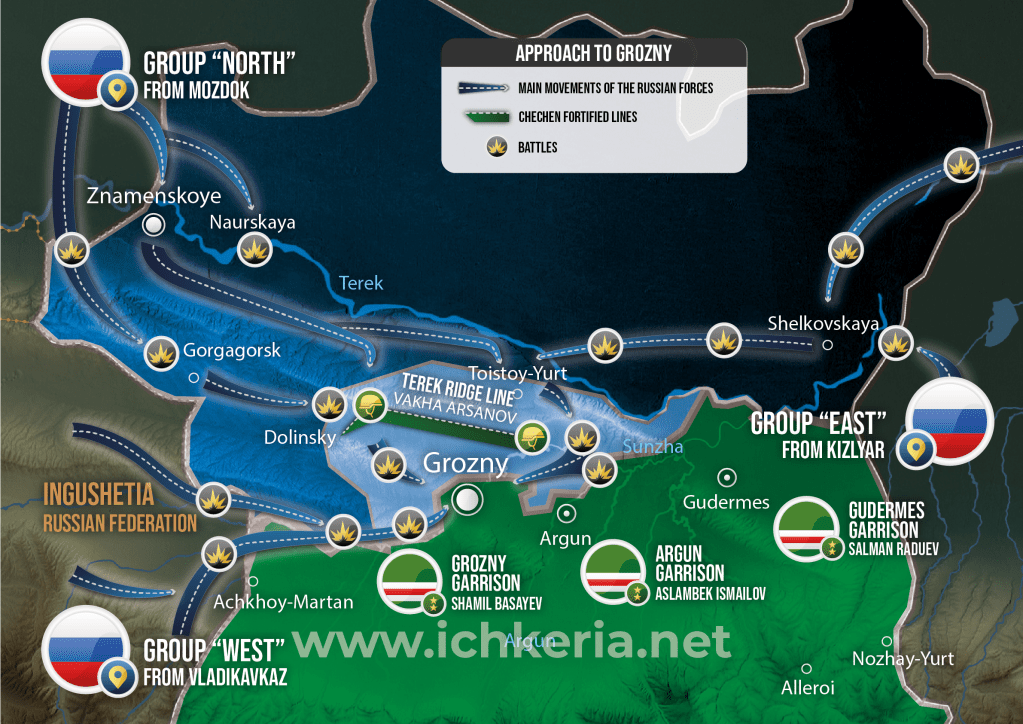
Whatever way the Russians intended to attack, the Chechens were preparing to fight and die all the same. Their plan was “to last.” They wanted to resist as long as possible and hopefully expose the Kremlin to domestic public opinion, which was still struggling with trauma from the Soviet-Afghan War. Equally important was the opinion of the West, whose conditional loans kept Russia’s economy from sinking.[11] The Chechens organized their defense in three phases. They planned to first trap the Russians inside Grozny, a “concrete forest,” and ensnarl their overwhelming armor. To entice the Russians, the Chechens yielded the defensive line to the north to create the illusion they had abandoned the capital. This line along a strip of hills running north of Grozny on the so-called Terek Ridge hinged to the west by the villages Dolinskyand Pervomaisk. It ended in the east at the height of the village Petropavlovskaya on the left bank of the Sunzha. After crossing the line and penetrating the capital, the Russians would encounter Chechnya’s best forces eagerly waiting to recreate the success they had against the anti-Dudayevites back in 26 November. This was ideally going to force Yeltsin to negotiate with Dudayev, but with far more realistic expectations, the Chechens planned to retreat south to the main centers of Achkhoy-Martan, Shatoy, Vedeno, and Nozhay Yurt.

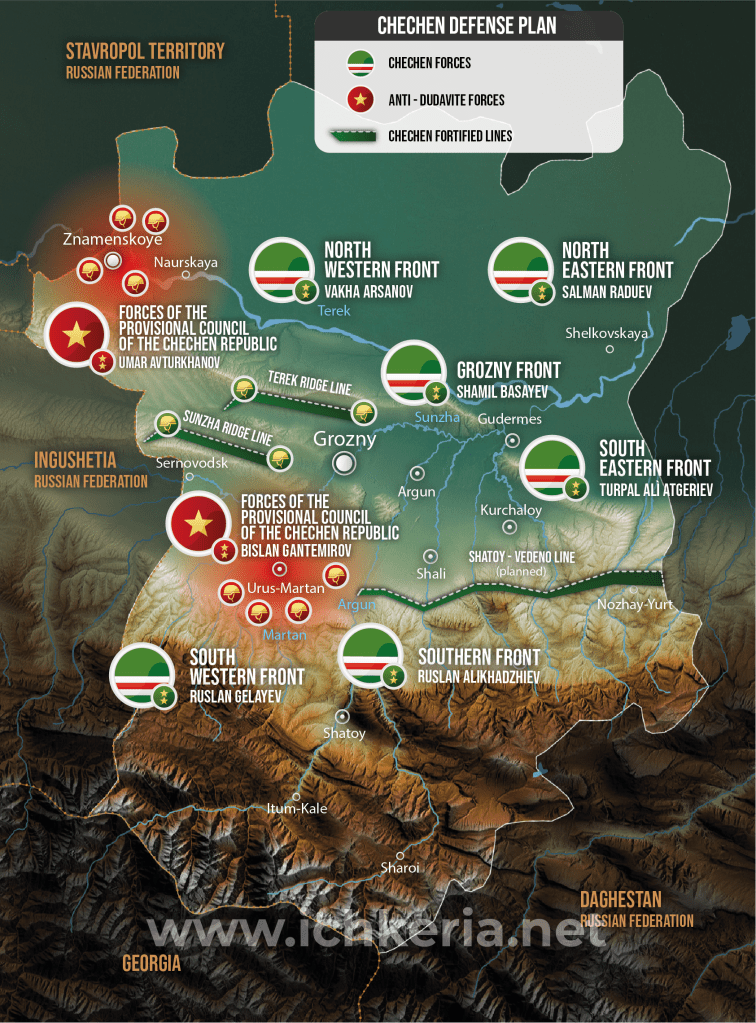
  Maskhadov divided the territory into six military districts called “Fronts” and entrusted them to his best men.[12] The loyal former police captain Vakha Arsanov held the Terek Ridge Line. Ruslan Gelayev was charged with the South-Western Front, a quadrilateral defined by the villages Assinovskaya, Novy-Sharoy, Achkhoy-Martan, and Bamut. Dudayev’s twenty-eight-year-old son-in-law Salman Raduyevcommanded the North-Eastern Front centering on the city Gudermes. CommanderRuslan Alikhadziyev[13] of the newly appointed Shali Armored Regimentled the southern front, with its main centers being Shatoyand Shali. Turpal Atgeriyev, a twenty-six-year-old veteran of the Abkhaz War and one of Raduyev’s most trusted men led the South-Eastern Front, centering on Nozhay Yurt. Finally, Shamil Basayev held Grozny. Unfortunately, the government lacked a comprehensive plan to protect the population,[14] and the situation was especially dire in Grozny. Unlike their Chechen neighbors there, the many ethnic Russian residents did not have relatives and friends in the countryside to flee to.

 The Russian Headquarters was busily gathering nineteen thousand fresh conscripts from the most diverse branches. Collectively baptized the “Joint Group of the United Forces,”[15] it also included five thousand soldiers from the Interior Ministry to comb the rear for enemies. The army was divided into the West, East, and North groups.[16] West Group started off from Vladikavkaz, North Ossetia to penetrate in three columns, taking up a position at the height of Novy-Sharoy behind the Chechen Terek RidgeLine. From Klizyar, Dagestan, East Group was to reach Tolstoy-Yurt along the Terek River. Finally, North Group in Mozdok, North Ossetia would cross the pro-Russian occupied plains of northern Chechnya to link up with East Group north of Grozny. With one hundred kilometers to the objectives, the operation had a schedule of a couple days. The high command of the Russian military prepared to issue an ultimatum to the leadership and offer amnesty to Chechen troops who surrendered.[17] Afterwards, artillery would clear the way for tanks to finally crush the rest of Dudayev’s “little rebellion”.

 However, the commander of the Russian operation Colonel General Eduard Vorobyov refused to lead the plan,[18] dismissing it as “madness”and a dishonor to send the military against citizens Russian considered its own.[19] Grachev promptly dismissed and investigated him, and instead tapped the unquestioning General Anatoly Kvashnin. Vorobyov’s forced resignation quickly led to the replacement of the Military Command of the Caucasus, further disrupting the chain of command which, on the eve of the invasion, was completely “purged.”

There were also important fringes of Parliament, including in the majority, opposed to military intervention. Yegor Gaidar, one of Yeltsin’s closest allies and chairman of the pro-government Democratic Choice of Russia Party,[20] spoke out and brought others from his faction with him.[21] Galina Starovoytova from the Democratic Russia Party was also opposed. Many moderates remained ambivalent though: the newly established center-left Yabloko Party saw heated internal debate between skeptics and those that supported the invasion “in principle” if not in execution.[22] On the right, nationalist movements beat the war drums, particularly Vadim Zhirinovsky’s Liberal Democratic Party. Opponents argued that using the military was unconstitutional without the government declaring a state of emergency and imposing martial law. According to Article 102 of the Constitution, the president had to consult Parliament to issue the provision, which would likely have been rejected. Supporters of military action, on the other hand, pointed to Articles 80 and 86 as support for Yeltsin’s right to lead the military and his duty to “safeguard the sovereignty” and “integrity of the state.”[23] A public debate could perhaps have steered tanks away from the Caucasus, especially as concerned newspapers all over the world began to cover the matter.[24] But the die was cast, and Yelstin was moving his pieces towards Chechnya.


[1] For more on the November Assault and the events preceding the outbreak of the First Russo-Chechen War, see Volume I of this work.

[2] In a conversation with the author, Ilyas Akhmadov recalled a telegram from the Provisional Council explicitly requesting Yeltsin to intervene. It was signed by Umar Avturkhanov and arrived in Moscow in the first days of December 1994.

[3] One analysis of the beginning of Yeltsin’s political shift: “With the controversial decision to use force to stop the secession of a small ‘province’ of his empire, Yeltsin himself also crossed a political ‘Rubicon,’ from which it will be difficult to go back: that of the alliance with the democratic forces that had supported him from the dissolution of the USSR in 1991 to the bloody battle against the rebel parliament in ’93. . . . After the victory of nationalists and communists in the legislative elections of December ’93, Yeltsin assumed new positions in foreign policy and in the management of economic reforms, thus trying to pander to the opposition, regain popular consent, and maintain power at the next electoral appointments, the legislative ones in a year, the presidential elections in a year and a half.” (Enrico Franceschini, “A Peace Party in Moscow,” La Repubblica, December 19, 1994).

[4] Chechen Foreign Minister Shamsouddin Youssef responded to news of Russia’s likely invasion by demanding Russia to recognize Chechnya’s independence. Otherwise, the Chechens would “fight, and bring war in the Russian Federation.” On the same day, Aslan Maskhadov added that Moscow risked fighting a “new Afghanistan.” First Name Last Name, “Title,” La Repubblica, May 12, 1994. 

[5]Aslan Alievich Maskhadov, introduced in Volume I of this work, was born in Shakai, Kazakh Soviet Socialist Republic, and returned to Chechnya with his family in 1957. He enrolled at the Artillery School of Tbilisi in 1972, then perfected himself at the High School of Kalinin Artillery in Leningrad. After his service in Hungary, he transferred to Vilnius and witnessed the Lithuanian independence uprisings. After resigning in 1992, he returned to Chechnya again and entered Dudayev’s service. In November 1993, he replaced Viskhan Sakhabov as chief of the general staff, first on an interim basis, then permanently beginning in March 1994. For a comprehensive biography written by his son Anzor, see Frihetskjemperen: Min far, Tsjetsjenias president.

[6] As Musa Temishev shared in a conversation with the author, Viskhan Shakhabov (extensively discussed in Volume I of this work) could not organize the nascent Chechen armed forces as a result of frictions with President Dudayev that arose between 1992 and 1993. Their disagreements on the methods of acquisition and use of Soviet arsenals paralyzed the Ministry of Defense, which was never officially established, leading to Shakhabov’s resignation.

[7] To be precise, Aslan Maskhadov christened the unit “Naursk Battalion” only in January 1995, during a live television broadcast on the presidential channel. The nom de guerre was a eulogy to Batalov’s units who had fought during the siege of Grozny. According to the commander, the regiment was still a “people’s militia”until the Battle for Grozny: “There were no cadres, there were no officers, there were only groups of people from different villages, commanded by people elected by them, totally on a voluntary basis. People came and went, and no one could order anything from them.”To read more about Apti Batalov and the Naursk Battalion, see the series of articles The General of Naur: Memoirs of Apti Batalov at www.ichkeria.net.

[8] Apti Batalov Aldamovich, born in Kyrgyzstan on October 19, 1956, returned to Chechnya and graduated from the Petroleum Institute of Grozny as a civil engineer. After entering the police force, he served as part of the Ishcherskaya Militia in the Naursk district, becoming its commander on June 20 1994. According to our conversations, until early August he served under District Military Commander Duta Muzaev, Dudayev’s son-in-law. After Muzaev’s return to Gronzy, Batalov became of head of the military administration of the Naursk and Nadterechny districts on September 16, 1994. He was tasked with organizing their defense against raids by the pro-Russia armed opposition.

[9] On 4 December, President Dudayev proclaimed a total mobilization of reservists. All male citizens between the ages of 15 and 60 were summoned, too many to realistically arm and train for the regular forces. Most were sent back to their villages of origin with the task of setting up self-defense militias using light weapons or resorting to hunting weapons.

Regarding the composition and nature of these militias, Ilyas Akhmadov recalled in a conversation with the author in 2022: “During the war there were many local volunteer groups consisting of five or six people, sometimes related to each other. It was very important to find a band that you knew. If you were with someone from your village, street, block, or family, you had a 90% guarantee that they wouldn’t leave your body if killed or injured. If they didn’t know you, they didn’t want you. This was mutually understandable to all: If something happened they would not be able to find the relatives, and for us it was very important to be returned to our families.”

[10] To learn more about the ChRI Air Force and its eventual destruction by Russia, see the in-depth study Green Wolf Stars: the ChRI Air Force on the website www.ichkria.net and consult Volume I of this work.

[11] United States Congress opened debates on 11 December 1994, on financially leveraging Russia to discourage war. Senators John McCain and Joseph Lieberan asked for aid to be reevaluated. Their colleague Alfonse D’Amato, argued on 3 January, that this could “send the wrong signal,”although he felt it necessary to express US displeasure at the civilian losses caused by the invasion.

[12] To view the Chechen defense plan, see thematic map A.

[13] Ruslan Alikhadzhiev was born in 1961 in Shali. After completing his military service with the rank of Sergeant, he returned to Chechnya in 1992. He took command of the Shali Armored Regiment in the autumn of 1994, replacing Isa Dalkhaev. At the outbreak of hostilities he organized the recruitment of militia in the Shali district (the “Shali Regiment”).

[14] Anatol Lieven’s first-hand account: “A government plan to feed the population and evacuate the children if the Russians started a siege? I don’t know of any such thing, but if President Dudayev said so, of course it is true,” an official told me in early December 1994, sitting in his deserted office in the municipal offices of the central district of Grozny, . . . “Anyway, it doesn’t matter. We Chechens are such strong people, we will be able to feed ourselves no matter what happens. Is it my responsibility? What do you mean by this? I’m here in my office, right? Don’t you think I will fight to the death to defend my country?” With that he let out a gasp, blowing a breath of vodka in our direction, and with wet fingers lifted a piece of greyish meat from a glass jar on his knees, and fed it to his cat.” Anatol Lieven, Chechnya: Tombstone of Russian Power (New Haven: Yale University Press, 1998), 34.

[15] The unpreparedness of the federal forces was well known to the military commands, and to the Minister of Defense himself. A few days before the start of the military campaign, Grachev read a top secret directive (No. D-0010) which described “unpreparedness for action of fighting.” Stazys Knezys and Romana Sedlickas, The War in Chechnya, (College Station: Texas A&M University Press, 1999).

The assessment report drawn up by the office of the North Caucasus Military Region was similar: “Most of the officers are not only unfamiliar with the required combat readiness requirements set out in the control documents, but also do not know how to recognize their personal duties, or what they should do in times of peace or war. Watch officers and units, in most formations inspected, are poorly trained to take practical actions in response to combat commands. The instructions and other control documents are prepared in gross violation of the requirements of the General Staff.” Knezys and Sedlickas,  War in Chechnya.

[16] To view the Russian invasion plan, see thematic map B.

[17] The Duma approved a resolution to this effect 13 December 1994.

[18] Grachev’s plan was entirely based on the assumption that a massive deployment of forces would disperse the separatists: “Grachev’s plan and timetable reflect expectations of limited resistance. Little intelligence used and bad planning were to blame… The planning also ignored the experience of loyalist Chechen forces [i.e. thread . Russians] who had attempted to storm Grozny in August , October and November 1994. If that experience had been studied, the Russian command would have been aware of the dangers that faced tank columns in Grozny.”Olga Oliker, Russia’s Chechen wars 1994-2000: Lessons from Urban Combat (Santa Monica: RAND, 2001) 11-12.  

[19] As Eduard Vorobjev said in an interview with journalist Vitaly Moiseev: “I was shocked by the situation, the units that arrived were completely unprepared, the commanders did not know their subordinates, many of the fighters did not have the necessary professional skills. I turned to the Chief of the General Staff: ‘If you think that a change of command will change the situation for the better, then you are wrong. It’s not about the commander, it’s about the adventurous approach. . . . Approaching me, the Minister of Defense said ‘I am disappointed in you, Colonel General, and I think you should submit your letter of resignation.’ I replied ‘I have it.’… It was not easy for me, a person who served in the armed forces for 38 years, who constantly answered ‘Yes!’ I was faced with a choice: to make a deal with my conscience and deal with completely unprepared people, to conduct an operation not planned by me, or to leave the armed forces, which meant the end of my military career.… It seems to me that Grachev underestimated the moral and psychological state of the Chechens, which had reached fanaticism. The operation was designed to intimidate: they thought that Dudayev would get scared when he saw hundreds of units and thousands of soldiers, and surrender to the victor’s mercy. Indeed, the Chechen side clearly knew where our troops were, what they were doing—information was spreading in all directions.”

[20] To the press Gaidar declared: “I appeal to Yeltsin not to allow a military escalation in Chechnya. The intervention was a tragic mistake. Taking Grozny will cost huge human losses. It will worsen the internal political situation in Russia, it will be a blow to the integrity of the nation, to our democratic achievements, to everything we have achieved in recent years.” Franceschini, “A Peace Party in Moscow.” 

[21] Deputy of Democratic Choice Dimitrij Golkogonov’s response to “Why are you against the invasion?”: “Because my party, Choice of Russia, led by the ex-Prime Minister Gajdar, is against violence, against the use of force to solve political problems. In Chechnya there is a leader, Dudayev, who does not want to lose power, thanks to whom he has enriched himself and his friends with the trade of oil. Independence has nothing to do with it. But to attack Dudayev is to make a criminal a popular hero. . . . A negotiation had to be opened. If Yeltsin had invited the Chechens to Moscow, they would have come running.” Enrico Franceschini, “‘Yeltsin Made Wrong Move in Invading But Remains Leader of Russia,’” La Repubblica, December 15, 1994.

[22] Vladimir Lukin, former ambassador to the United States and prominent member of Yabloko, in his January 24, 1995 speech in the Nezavisimaya Gazeta wrote: “The executive branch has shown itself and society that it can act independently, regardless of and in spite of political pressures . . . In an ideal world, the preposterous and dangerous idea that the military should not be used for internal conflicts should be driven out of the heads of our armed forces. . . . Using the army inside the country in extreme situations, when threats to the state appear, is the norm in democratic states. Nezavisimaya Gazeta.

[23] For careful study of this topic see Stuart Goldman and Jim Nichol, Russian Conflict in Chechnya and Implications for the United States (DC: Congressional Research Service, 1995).See also Victoria A. Malko, The Chechen Wars: Responses in Russia and the United States(Lambert Academic Publishing, 2015).  

[24]  An example from an Italian newspaper: “In the end, like a mountain annoyed by a daredevil mouse, Yeltsin ordered the direct intervention of his troops. Moscow claims that Chechnya is part of Russia, therefore it is its right to occupy it to restore order. For the moment, Western public opinion seems aligned with this position, considering yesterday’s events as an “internal matter” for Russia: for which there are no international complaints, unlike what happened with the invasion of Afghanistan. But if we look at the substance of the Russian military expedition in Chechnya, some resemblance to the Soviet invasion fifteen years ago emerges. . . . The fact remains that Yeltsin does not hesitate to use tanks when he sees that other means (negotiation, economic pressure, support for the local opposition) do not produce results. The propensity to resolve political crises militarily, as a year ago in the tug of war with the rebel Parliament, is a hallmark of his presidency. The future will tell whether Russia needed a “strongman” to become a civilized and democratic nation”. Enrico Franceschini,“Moscow Fears the Kabul Syndrome,” La Repubblica, December 12, 1994.

Past, present and future – Francesco Benedetti Interviews Inal Sharip (Part 1)

Inal Sharip is the Minister of Foreign Affairs of Ichkeria. Born in 1971, he is a chess champion, a film director and producer, and between the first and second Chechen wars he was Deputy Minister of Culture and head of the Film Department.

Being born in 1971, You had the opportunity to observe the evolution of the situation in Chechnya from the independence until the outbreak of the war in 1994. What was the climate in the country in those years? And what impression did you have of Dudaev’s government?

I lived in Grozny until I graduated from university in 1993. Then I went to Moscow to take my first steps in the cinema.  I remember Grozny as an ordinary post-Soviet city no different from other cities in the former USSR or Eastern Europe. As in other cities of the post-Soviet space there was an economic difficult situation. But Dzhokhar Dudayev began to stimulate medium and small businesses and abolished taxes and duties on imported goods. Direct flights were also established from Grozny to cities in the United Arab Emirates and other cities in eastern countries from where the goods were transported. Thanks to this Grozny became in a short time the trade center of the North Caucasus.

When the war started, I was in Moscow, taking my first steps in documentary filmmaking. Many things fade from memory, but what I remember well is the anxiety of realizing that terrible events were coming. Many of my feelings were portrayed in one of my first movies, “My Grozny City”.  The piercing pain of what was done to my hometown, which remained only in my memory.

How did you spend the two years of war? And what did you do after?

At the first opportunity I came to Grozny. I established a secret connection with Akhmed Zakayev. (I met Akhmed Zakayev when I was writing music for the theater, in 1992. We were introduced by our mutual friend, Hussein Guzuev, a theater director. Before the war, Dzhokhar Dudayev appointed him director of television and he was one of the first to be killed at the beginning of the First Chechen War. Akhmed was then a theater artist and became at first chairman of the Chechen Union of Theater Workers. A few months before the war started, Dzhokhar Dudayev appointed Zakayev Minister of Culture. When the war started, Akhmed led the people’s militia.) And he coordinated his activities while in Moscow and Grozny. After the first war, Akhmed returned to work as Minister of Culture and invited me to be Deputy Minister.

Akhmed appointed me head of the Department of Cinematography of the Chechen Republic with the rank of Deputy Minister of Culture. I worked there for about a year. Maskhadov then created a commission on education, science and culture (a prototype of the UNESCO commission) to work on accession and cooperation with UNESCO, and to search for and return cultural property from museums that the Russians had illegally exported to Russia in violation of all international conventions. I was appointed head of this commission. Before leaving Chechnya, I was in charge of this commission.

I was the only member of the commission. It was I who initiated the creation of this commission, because we had to enter international organizations, and UNESCO was an organization we could enter, although without the right to vote in this organization at the first stage. In addition, the Russians have taken many museum exhibits out of Chechnya. Including paintings, a collection of 17th-18th century edged weapons, etc. It was necessary to track them down and return them. The international UNESCO conventions that regulate this kind of situation were an ideal tool, given that Russia had ratified all UNESCO conventions. Maskhadov wrote a decree creating this commission and appointing me to head it. Other than that, I received nothing, no funding, no office, nothing. Few among the military at that time understood the significance of this organization. At that time, everything was focused on the military aspect. That’s why I couldn’t hire people. I could work without a salary, other people could not.

Speaking of the period between 1996 and 1999, what was your impression of the situation? In your opinion, was the Maskhadov government doing a good job? What was the general opinion of the people, in your opinion?

This is one of the most difficult periods in the history of modern Chechnya. Of course, Maskhadov’s government was not ideal, but we must understand the situation it found itself in. Russia was secretly preparing for a second war. It was actively recruiting agents from among the supporters of independence. It was deliberately corrupting Chechen officials. Russian special services were in direct contact with independent commanders of military units, persuading them to commit criminal acts. Russian agents in the Middle East, who specialize in working in the Islamic world, were redirected to Chechnya to split Chechen society along religious lines. In the conditions of post-war devastation and economic crisis, Russia managed to split Chechen society. Of course, at that time few people understood what was really happening. I also did not understand and did not like many things, so in 1998 I left Chechnya and returned to film production.

Now that we have collected information, we see how many FSB agents have infiltrated Chechen society, and we can draw conclusions. Suffice it to say that the Chief Mufti of Chechnya Kadyrov was an FSB agent, but no one talked about it at the time, and the leaders of Chechnya trusted him. In addition, it should be noted that few in Maskhadov’s government understood how world politics actually worked, both in the West and in the East, since there was no international experience. There was no information, no Internet. There was great trust in the Muslim world, based on the myth of the Muslim Brotherhood, but there was no understanding that the governments and intelligence services of most Muslim countries were using religion for their own political and geopolitical interests. Perhaps historians will analyze this period of Chechen history more deeply in the future, but today we can say for sure that Maskhadov was under great pressure from all sides, primarily with the goal of splitting Chechen society.

In 1999, Russia invaded Chechnya for the second time. Shortly before, Vladimir Putin had appeared on the political scene. Do you remember how public opinion experienced his rise to power?

At that time, Russians were tired of crime, corruption and disorder. It seems that discrimination against democracy was deliberate and directed by someone. Of course, what happened in Russia in the nineties has nothing to do with democracy, but it was presented to the people as democratic processes. That is why the people began to miss a strong authoritarian leader, like Stalin, Andropov and others who were leaders of the USSR. A situation was created when the people wanted to get their master back, who would determine their fate for them. In exchange, the new master had to restore order and feed the people. That is why the explosions of apartment buildings, Putin’s harsh rhetoric, all this is part of the scenario of creating a new authoritarian leader of Russia. It should be noted, I say this as a director, that Putin was not the best candidate for this role. He does not have natural charisma. But the circumstances developed in such a way that he was chosen as a collective decision of several influential groups in the Kremlin.

Putin, at the beginning of his career, was a compromise figure for different Kremlin clans. Every Russian billionaire or oligarch has a KGB-FSB general as his head of security. The KGB-FSB nominated three presidential candidates: Primakov, Stepashin, Putin. All of them were from the KGB and all of them were presidential candidates. The least known person, who did not have his own team and was considered harmless for different clans, was Putin, and he was elected. In 25 years, he created his clan, dealt with other clans and now he is the undisputed master in the Kremlin. The problem is that over these 25 years, Russian propaganda has been cultivating Great Russian chauvinism in the people. Chauvinism is constantly present in the Russian people, so cultivating Great Russian chauvinism in the people was not difficult. Putin has created for himself a Putin electorate, which was created for the greatness of Russia, the successor of the tsarist empire, the Soviet empire. Therefore, having removed one tsar, the people will in any case want another tsar and demand revenge for the defeat in Ukraine. Quite recently, Putin said in an interview that the collapse of the USSR is a great geopolitical tragedy. He said this because this is the mood of the people and he expressed the opinion of the Russian people. Therefore, the matter is much more complicated than in one person.

Yes, for a period of time for several years the war may stop, but then preparations for a military revenge in Ukraine will begin. Russians will never forgive the defeat in Ukraine. Just as they could not forgive the defeat from Chechnya in 1996. When they signed a peace treaty with Chechnya, at the same moment they began to prepare for the Second Chechen War. The same will happen in Ukraine. Russia must lose and transform into another democratic state. For example, the leader of the Russian opposition Navalny, who was killed in prison, did not recognize Crimea as Ukrainian. Because in the future he planned to participate in the presidential election campaign, and he must be guided by the opinion of the people. And 90 percent of the population of Russia considers Crimea to be Russia.

So, if I understand correctly, power in Russia is organized as an alliance of clans, and the President is the one who “moderates” the relations between clans. And in this system the FSB is a “clanized” apparatus or is it in competition with these clans?

This was the case before the war in Ukraine. Each major clan had its own people in the FSB leadership. But there was also an FSB clan that included both former and current FSB officers. All this was done with Putin’s approval. Putin was interested in creating a situation where different clans opposed him, and he was at the center of this structure and was an arbiter. In this way, he ensures his own security, and the clans were interested in Putin. But the war in Ukraine changed the balance of power in Russia. Prigozhin’s march on Moscow had a particular impact on these changes. Today, the FSB controls almost everything in Russia. With Shoigu’s departure from the Ministry of Defense, the FSB began a purge of generals and thus the FSB took control of the army. The only person the FSB cannot defeat yet is Kadyrov. Putin supports Kadyrov so that at least someone inside Russia would oppose the FSB. But I assume that the FSB will achieve its goal, and sooner or later the FSB will defeat Kadyrov.

Why, in your opinion, does it (the FSB) not control Kadyrov?

Because Putin is interested in this. Putin knows what the KGB and the FSB are, and he knows that they can play their game at any moment. Putin and his clan have stolen hundreds of billions of dollars. Some “patriotic” generals may not like this, and they may try to stage a coup. Therefore, he is trying to minimize the risks. To do this, he must separate the different clans and do everything so that they do not unite. There are Chechen generals in the FSB who have always served Russia and whom the FSB would like to put in charge of Chechnya. But the FSB is not succeeding, because Putin has placed his bet on Kadyrov, whom he allows to commit any crimes, which helps strengthen him. The FSB was counting on the fact that Ramzan Kadyrov and his father are temporary workers, whom they are temporarily using to transfer the Chechen people’s struggle for independence from Russia into a civil war between Chechens. Kadyrov is not a career FSB employee, he is pursuing his own independent policy in the republic, which the FSB does not like.

In this regard, clashes between the FSB and Kadyrov’s men are constantly taking place in Russia, in which Putin has to act as an arbitrator. But so far there has not been a single situation where Putin has infringed on Kadyrov’s interests. The FSB expects that Putin will have to hand over Kadyrov sooner or later. But there is no doubt that Putin will have to choose between the FSB and Kadyrov. The FSB is getting stronger because of the war in Ukraine and is a state-forming institution, so I have no doubt that they will defeat Kadyrov in the future.

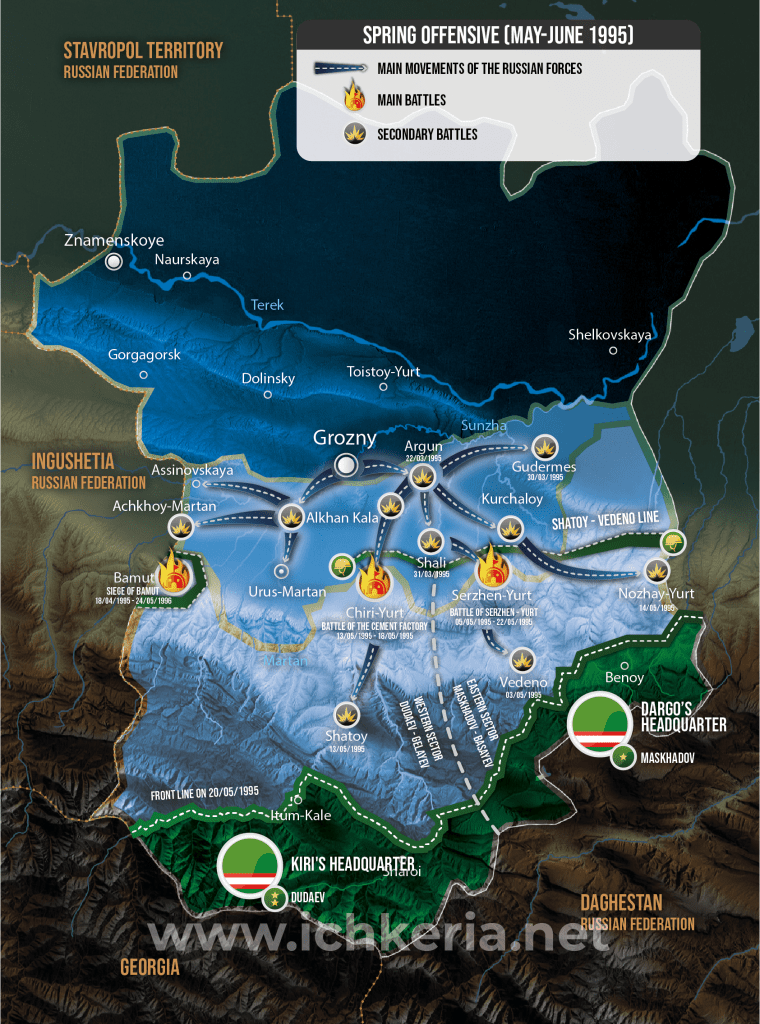
The English maps of the second volume are online

In view of the upcoming publication of the second volume of “Freedom or Death! History of the Chechen Republic of Ichkeria” we are publishing the maps in English, which will be available to readers via the QR code printed in the book.

ICHKERIA GENERATION – Francesco Benedetti interviews Aset Sabdulaeva (part 1)

Aset Sabdulaeva was born in 1991 in Grozny. Her mother is the People’s Artist of Chechen Republic of Ichkeria, Birlyant Ramzaeva. She composed music for many famous Chechen songs « The Knight of Honour », « The time of Heros », « Don’t leave the mountains ». Her father is poet and playwright Makkal Sabdulaev. He is the author of lyrics of most of Ramzaeva’s songs. He also wrote famous theatrical play « Rejected heroes » (Махкана совбевлла к1ентий). From 1996-2000 he worked as the 1st Deputy minister of Culture of CRI. In 2000, Sabdulaev was abducted by russian soldiers in Grozny on a checkpoint. He is considered missing.

Aset lives in Canada, where she arrived when she was 13 years old, in 2004. Aset has a BA in education and she is currently completing MA in education. Aset holds the position of Vice-Minister of Foreign Affairs of Chechen Republic of Ichkeria.

We can say that you belong to a generation that we could define as the “Ichkeria Generation”, that is, those kids who were born close to independence, and who became adults during the period of independent Chechnya. The first question I would like to ask you is: what is the first memory you associate with “being Chechen”? Do you remember how you became aware of who you were, as a member of the Chechen nation? And what feeling did you associate with this thought?

I was raised on the songs of my mother and on the poems of my father that always praised freedom, honor, dignity, good manners, our culture, our native language, our struggle for independence, our heroes and the tragic history of our people.

 The Chechen identity was constructed in me by the art of my parents. Since my childhood, I was aware of who I am. I was three years old, in 1994, when on the Eve of the First Russo-Chechen war, huge demonstrations took place on the Liberty Square. The Chechen people were asking Russians to stop the aggression and provocations against the Chechen state. People used to invite my mother to sing for them at the demonstrations on Liberty Square and she took me with her. My people have gone through horrors and injustice, two bloody wars, genocide and isolation. Chechens defended themselves although they were abandoned by the entire world and thrown in the claws of Yeltsin and Putin. But our spirit never surrendered to Russia. The history of my people taught me that no matter how big the conqueror is, we always have to resist. Today, Chechnya is under Russian occupation and my people are living under Putin’s dictatorship, yet, we continue to resist.

Thanks for your answer, Aset, which in a way anticipates my second question.  You were just a child when Russia invaded Chechnya.  What do you remember about those terrible times?  How did you experience the years of occupation as a child?

I remember a lot of things. In 1994, Yeltsin started a full land and air attack against the Independent Chechen State. During the bombing, my mother, my sister and I used to hide in the shelter (basement of our house). My mother played Pondar (chechen accordion) very loud, so that my sister and I couldn’t hear Russian military planes and irritating sounds of missiles. My father never came to the shelter. He always stayed either upstairs or outside. 

 I remember that one day a group of Chechen warriors were walking on our street, very brave and humble men. They knocked on our door and asked for water. They seemed to be exhausted because it was the moment when Grozny was surrounded by Russians. My mother invited the entire group to our yard, prepared some food and she played our national anthem. Our warriors were smiling. But they didn’t eat anything. They just drank water and left, smiling. I will never forget these beautiful faces.

I also remember ruins. The entire city was in ruins. The doors of our house were with bullet holes. I remember our dog Borzik. It was a huge white dog. Very kind and friendly dog. Everytime it heard Russian helicopters or missiles, Borzik used to run in my sister’s room and hide under the bed. When helicopters left, we always had a hard time getting Borzik out of the room because it was too big and refused to move.

Thank you, Aset. Then the war ended with the escape of the Russians in August 1996. Do you remember those days? What did they say in your family?

When the Chechen government and Russian government signed the Khasavyurt Accord in 1996 marking the end of the first Russo-Chechen war, it was a huge celebration for our people. My parents were very happy because it meant the end of a nightmare. Our nation elected in fair and democratic elections the third President Aslan Maskhadov and we truly thought that we will finally start building our prosperous state. After the victory in the unequal struggle for freedom, Chechens gained popularity in Russian public opinion and in the world. We were perceived as heroes. However, things changed when Putin got appointed as the head of the KGB in Moscow. The entire KDG machine was directed to destroy our state, our society and our reputation. The KGB’s aim was to destroy the image of Chechen heroes.

Putin opened doors for so-called middle eastern “investors” and facilitated their arrival to Chechnya through Moscow. These emissaries from the Middle East brought a lot of money and invested it in the opposition movements that were against our government. This opposition was mainly led by Movladi Udugov and his ideological comrades from Arab countries spreading fundamentalist religious beliefs that were in complete discord with the Chechen culture and adats (customs). On the other hand, Akhmad-Hadji Kadyrov, who was appointed as Chechen mufti (main imam), praised traditional Islam that was in opposition to Udugov’s “pure Islam”. These two religious individuals preached their versions of Islam on TV channels. Their destructive teachings divided Chechen society that was already in a very miserable economic situation. Both Udugov and Kadyrov were working for Russian intelligence, and they aimed to destroy our state and divide our people. They were financed by Russia. I’ve read a lot of things about these events in the book of Akhmed Zakaev, “Subjugate or Exterminate” published by Washington Press. Also, it is very important to note that these Arab emissaries, under the umbrella of Russian intelligence, were directly involved in kidnappings of civilians, international aid workers, journalists and engineers. For example, the person who kidnaped British engineers Apti Abitaev, was a KGB agent, and our government arrested them. The person who initiated “fatwa” (ruling) to behead these poor British engineers was Abu Djunid, an Arab emissary. This barbaric murder of British engineers was a triumph for Russian intelligence. It succeeded in sending the message to the world that Chechens were criminals and kidnappers. Yet, the Chechen people had nothing to do with these criminal acts. Also, on 23 July 1998, an attempt was made to assassinate our President Maskhadov by blowing up the truck close to Maskhadov’s car. Two security officers of Maskhadov were killed. Later, our government found out that the “fatwa” (ruling) to kill our legitimately and democratically elected president Maskhadov was made by the same Abu Djunid, an Arab emissary that was in very close ties with Udugov.

 Indeed, I think that the period from 1996-1999, was a very difficult time for our State. But not because our government was incompetent, as some individuals claim, but because we were in complete economic/political blockade and our enemy was unproportionally powerful and malicious. Every state at the beginning of its statehood goes through difficulties. For instance, Georgia went through political turmoil at the beginning of its existence. Unlike Georgia, Chechnya was in complete blockade with no access to any political support from the West. Therefore, Russia crushed our state in the worst manner. Zakaev makes a very good point in his book about the situation in Chechnya during that period: “Crime, the gradual impoverishment of population, corruption within the government, the economic crisis, all were due mainly, of course, to Russia’s failure to honor its obligations to restore the republic’s economic infrastructure, destroyed in a war it had unleashed. Ultimately, however, in the eyes of the public the person to blame for all our troubles and economic difficulties was President Aslan Maskhadov” (2018, p.346) Russia kept us in economic blockage, infiltrated her agents from Middle East, injected Wahhabi religious ideology that was alien to us, divided our society, discredited our government, destroyed our reputation and, later, perpetrated genocide against our people.

Aset Sabdulaeva with hes mother and her father

About the end of the first war, and the feelings you felt among your family.  Was there a particular commander among those who fought for independence who was considered a hero, or a greater hero than the others?  Did little Aset have a Chechen hero who made her proud?

I remember when my mom used to take me to a demonstration, older women sang songs “zikr” (traditional style music with lyrics) praising Djokhar Dudaev, Aslan Maskhadov and Ahmed Zakaev. As a child, I didn’t have a particular admiration for a specific commander. I admired all our warriors. However, when I started to grow up and to be more conscious, I understood the real value of our heroes. I love Djokhar Dudaev because he left a legacy to our nation, I deeply respect Zelimkhan Yandarbiev because he behaved in a beautiful manner in Kremlin when Yeltsin refused to sit around the table on equal terms; Zelimkhan wrote beautiful poems in Chechen language that I enjoy reading. I appreciate Aslan Maskhadov because he was a true diplomat and is the leader that signed the Peace Treaty with the Russian Federation in May 1997. I admire Abdulhalim Sadulaev because he was a very wise leader. I truly appreciate Akhmed Zakaev because he left treasure to our nation in terms of two books that he wrote. He is the witness of all historical and political processes that occurred in Chechnya. I admire them all. They dedicated their lives, so that we can be free. In the bottom of my heart, of course, my eternal hero is my father, Makkhal. He believed in freedom and justice. He wanted to build an independent and democratic state. I became who I am, because of him.

Thinking about your father, how did you feel knowing that he was participating in building the independent state that Chechens had long desired? Were your family members proud of him, or was their fear that something bad might happen to him prevail?

I felt very happy actually. After school, I used to go to the Ministry, where my father worked as 1st Deputy Minister of Culture, and run all over it. I ran and jumped so much that sometimes the workers of the Ministry complained to my father. When he brought me home, he used to talk to me for a long time explaining how important it is to behave in a good manner.  My family members were proud of my father. I remember when he came back from work, he spent hours and hours writing articles, reports and projects. Given the fact that our Republic was in complete economic blockade and Russia didn’t pay the reparations for all the damage it had done in Chechnya, Chechen government lacked funds, and it could not pay salaries to its workers. I still have my father’s certificate where it’s written that the government owes him 18 000 rubles in salary for 6 months of work. He worked for the well-being of our country because he knew that to nourish national self-conscience in young people, it’s important to elevate the culture, teach the Chechen language in schools, promote Chechen folk music, publish Chechen literature, encourage young artists and writers to write in Chechen language and share the history of our people through poems and plays.  My father opposed all radical elements infiltrated in our society by Russian intelligence. These elements retarded the development of our state.

When the second war started in Chechnya, in 1999, the Ministry of Culture stopped functioning, so my father joined Aslan Maskhadov’s media team, and he was reporting all atrocities that were perpetrated by Russians in Chechnya. He knew that it was becoming very dangerous for him to stay there. Three days before his capture, he called my mother, who was at that time in Georgia. She asked him to leave Chechnya. He refused and said: “What is happening here is a genocide. I can’t leave.” One day before his capture, his friend Dalkhan Hojaev, a chechen historian was captured by Russians and killed. The next day, they took my father when he was crossing a Russian check- point (block-post).  My father disappeared without a trace. When my mother learned that my father was captured, she returned to Chechnya in hope to find him. One of the Russian generals told her that my father was taken to Khankala, a russian military base where russian soldiers tortured and killed chechen civilians.

Do you remember any activities organized by the Ministry for the Promotion of Culture during the interwar period?

I remember that on every 6th September, the Independence Day of Chechnya, the Ministry of Culture, under my father’s supervision, used to organize big concerts in Dinamo Stadium. He also initiated a plan to repair all our libraries and update the collection of books.   Under his supervision, our Ministry organized the competition of folk performers (singers and instrumentalists) in all villages and at the end of competition, the best folk performers were gathered in Grozny and they performed on a Gala Concert where they received special prices.

What happened after you heard of your father’s passing? Did your mother decide to take you to the West?

In 2000, my father insisted that we (my mother, my sister and me) go to Georgia. We were refugees in Georgia. In July, the same year, my father was kidnapped. When my mother learned that my father was captured, she returned to Chechnya and started searching for him everywhere, even in mass graves. At that time, it was possible to pay a bribe to Russian soldiers, they gave access to the mass grave. My mother appealed to every possible instance. Yet, she couldn’t find him. In 2002, she left Chechnya because Russians came to our house looking for her. She managed to escape through the backyard and hide in a neighbor’s house. Russians didn’t like that she was determined and eager to find out where my father was and she gathered too much attention. She had no choice but to leave Chechnya.

We stayed in Georgia until 2004. In 2004, Canada opened a program in Georgia for accepting chechen refugees through UNHCR. We applied for immigration, passed an interview and Canada accepted our file.  We left Georgia.

What do you remember about your time in Georgia? What was that life like, from the eyes of a little girl?

When we arrived in Georgia, we were afraid to say that we are Chechens because Russia spread horrible propaganda about Chechen people and the entire nation was demonized and presented on most Russian TV channels as terrorists and bandits.

The second problem was that I didn’t go to school for almost two years because of war. As a kid, in my learning process, I was getting behind the children of my age. My sister had to enroll me in school as soon as possible. At that time, we didn’t have official papers recognizing us as refugees in Georgia.  She approached one teacher in the school #44 in Tbilisi, on the mount Mtacminda, and talked to her about my case.  Gora Alexandrovna (teacher) agreed to take me in her class without any hesitation, although we didn’t have papers. The director of the school, Nana, approved my admission right away, and I was enrolled in 3d grade.  I remember Georgia as a country with very hospitable and kind people. Certainly, I remember all my teachers. They helped me so much to catch other kids. Gora Alexandrovna,Tamara Iradionovna, Nana Mas, Greta Stepanovna, Viola Mas, they were Georgian and Armenians, they taught me even during summer.

When we came to Georgia, President Shevardnadze was still in power. The country was poor and suffocating in corruption and bribery. Shervarnadze was a good friend of Putin. I remember 13 Chechens were deported to Moscow. It was an unjust decision made by Shevardnazde to deport our men. He knew that Putin is conducting an illegal war in Chechnya and that our people are suffering from this barbaric aggression. When Russians completed their mission in Chechnya, they came to Georgia in 2008 and annexed Georgian territories.

 I also remember that my sister and I participated at the demonstrations during the Rose Revolution to support Mikhail Saakashvili. I noticed that when Georgian people are fed up, they mobilize quite quickly and express their political will. As time passed, it was difficult to live in Georgia. My family couldn’t afford living there. We had to leave.
BIOGRAPHIES – Umalt Yakhubovich Dashaev  

The work on this biography is carried out in collaboration with the Instagram page “Qoman Sij”, based on information received from the former deputy of the Minister of Foreign Affairs of the Chechen Republic of Ichkeria, Ilyas Musaev, verified with the sources at our disposal.

Born in Prigorodnoye (?/?/1956)

Died in Khankala (12/28/1994)

Native of the Varanda teip, he participated in the actions of the International Brigades during the Georgian – Abkhaz war, distinguishing himself for valor on numerous occasions, in particular during the Battle of Gagra (September 1992) and Sukhumi (September 1993). Wounded several times, after the war he returned to Chechnya, where he placed himself at the disposal of the nascent National Guard, operating in the Separate Battalion for Special Purposes “Borz”.

In November 1994 he participated in the operations to defend Grozny from the attack launched by Bislan Gantemirov’s forces. At the outbreak of the First Chechen War he mobilized his unit to defend Grozny, being wounded several times, until he lost an eye.

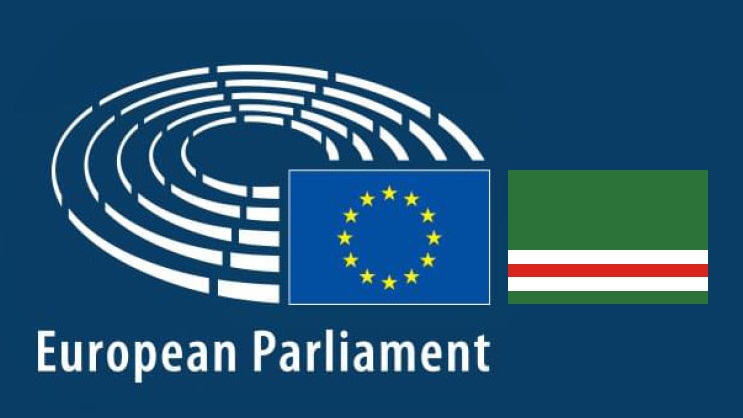
Umalt Dashaev with Khamzat Khankarov in Abkhazia

At the end of December 1994 he was sent by the Chief of Staff, Maskhadov, to defend the Khanakala airport from the federal troops who were about to occupy it. He led the Chechen contingent in the Battle of Khankala, during which, after being wounded several times, he died. According to the chronicles, he fought to his last breath against the attacking forces, earning the state award of Qoman Turpal (“Warrior of the Nation”).Riguardo la sua morte:

Eyewitnesses say that the seriously wounded Umalt Dashaev continued to lead his soldiers, urging them to conduct grenade launcher fire at Russian tanks. Umalt Dashaev was a born warrior, who did not know what fear is and was selflessly devoted to the ideas of freedom and independence of the Chechen people. From the first days of the beginning of the national liberation movement of the Chechen people, he took part in the hottest spots of the confrontation between Chechen soldiers and Russian mercenaries, destroying the enemies of the Chechen state. (Qoman Sij)

Umalt Dashaev with Shamil Basayev in Abkhazia, 1992

Freedom for Chechnya – European Recognition for the Chechen Republic of Ichkeria

The failure to recognize an independent Chechnya was the West’s first concession to Russian imperialism.

Today Chechnya is occupied, and the dictator who governs it represents the denial of the values on which the European Union is founded

Correcting this error of perspective means rewinding the tape of history, to restore credibility to the Western world

SIGN THE PETITION HEREhttps://www.change.org/p/freedom-for-chechnya-european-recognition-for-the-chechen-republic-of-ichkeria

21/04/1996, La Morte di Dudaev – Estratto da “Libertà o Morte! Storia della Repubblica Cecena di Ichkeria”

il 21 Aprile 1996 Dhokhar Dudaev, primo Presidente della Repubblica Cecena di Ichkeria, fu assassinato dall’FSB. Nell’anniversario nel ventottesimo anniversario della sua morte, pubblichiamo un brano tratto dal secondo volume di “Libertà o Morte! Storia della Repubblica Cecena di Ichkeria” (Link)

Nell’aprile del 1996 i ceceni potevano dirsi vicini a raggiungere la vittoria: l’esercito federale era in piena crisi, ed Eltsin aveva un disperato bisogno di pace per vincere le elezioni presidenziali[1]. Le cancellerie europee, rimaste sul chi va là di fronte al “Piano di pace” presentato dal presidente russo, dopo aver inutilmente atteso l’avvio di negoziati tra le parti, erano tornate a tormentarlo con richieste pressanti di interrompere le azioni militari, lamentando la violazione della Convenzione di Ginevra e minacciando un ulteriore slittamento dell’accordo di partenariato tra Mosca e Bruxelles, che ormai languiva dalla primavera del 1994. La Commissione politica dell’Assemblea Parlamentare del Consiglio d’Europa aveva approvato un documento nel quale si diffidava la Russia a procedere alla immediata attuazione del piano di pace, o di qualsiasi altro piano specificando che qualsiasi soluzione negoziale avrebbe potuto avere successo soltanto se tutte le parti in conflitto, compreso Dudaev, vi partecipano. Il documento conteneva una condanna senza riserve delle violazioni dei diritti umani in Cecenia, commessi sia dalle truppe federali che dai combattenti ceceni. Riguardo al comportamento dei primi, la risoluzione riteneva inadeguato ed ingiustificato il massiccio ricorso alla forza da parte delle truppe di Mosca, e riconosceva che tali mezzi erano la prova tangibile del mancato rispetto da parte della Federazione Russa degli obblighi assunti col Consiglio d’Europa. Infine, proponeva la mediazione dell’OSCE in un negoziato che portasse alla ricomposizione del conflitto.  Il tempo giocava a favore di Dudaev, e presto o tardi i russi avrebbero dovuto scendere a patti con lui. Sempre che, ovviamente, non riuscissero ad ucciderlo prima.

Dzhokhar Dudaev

Fin dall’inizio delle ostilità l’FSK aveva investito ingenti risorse nel rintracciare il presidente ceceno. La prima azione per trovare ed arrestare Dudaev era stata messa in atto dal Procuratore Generale russo il 1° febbraio 1995 quando, all’indomani del fallito assalto a Grozny, la magistratura di Mosca aveva emesso un mandato d’arresto  a suo carico. Il suo caso includeva quattro capi d’accusa: tentativo di usurpare intenzionalmente il potere, sabotaggio delle attività del governo costituzionalmente eletto, incitamento pubblico ad azioni terroristiche e istigazione all’antagonismo nazionale sociale e religioso. L’FSK aveva promesso di prendere Dudaev nel giro di qualche giorno, ma non era riuscito neanche a capire dove potesse nascondersi. Alla fine di aprile era stata costituita una task force che individuasse Dudaev e lo prendesse, vivo o morto. Nel corso del 1995 i russi avevano tentato di eliminarlo quattro volte, ma il Generale non era mai caduto in trappola. L’aeronautica russa bombardava sistematicamente tutti i villaggi dove girava voce che si trovasse, senza mai riuscire a colpirlo. Il 21 aprile 1996, tuttavia, Dudaev commise un errore fatale. Il suo convoglio si trovava nei pressi del villaggio di Gekhi – Chu, diretto ad una vicina collina ben coperta dai boschi dove il Generale avrebbe dovuto intrattenere conversazioni telefoniche via satellite. Insieme a lui viaggiavano il suo assistente, Vakha Ibragimov, il Procuratore Militare Magomed Zhaniev ed il Rappresentante di Dudaev a Mosca, Chamid Kurbanov. Nel convoglio erano presenti anche sua moglie, Alla, ed un nutrito seguito di guardie. Mentre Dudaev stava parlando al telefono un aereo militare apparve dal cielo e lanciò un missile aria-terra che colpì con grande precisione l’auto sulla quale viaggiava. Da tre mesi i servizi segreti russi tentavano di triangolare la sua linea telefonica, utilizzando come riferimento un telefono dello stesso tipo che Salman Raduev aveva abbandonato a Pervomaiskoje. In altre quattro occasioni erano quasi riusciti ad individuare Dudaev, ma la repentina chiusura delle comunicazioni aveva impedito ai missili di intercettare in tempo il segnale, mancando il bersaglio. Il missile che fece centro quel fatidico 21 aprile era progettato per dirigersi verso una fonte radio, e non appena ne fu rilevata una (in quegli anni non erano molti i telefoni dotati di una simile tecnologia in Cecenia) puntò la sorgente. Per evitare questo genere di rischi Dudaev aveva stabilito che il suo assistente avrebbe dovuto cronometrare le conversazioni e, qualora queste superassero una certa durata avrebbe dovuto immediatamente chiuderle, anche contro il suo volere. Anche in questa occasione pare che Ibragimov avesse fatto scrupolosamente il suo dovere, interrompendo la conversazione dopo pochi minuti. Ma quel giorno erano previste due telefonate a distanza ravvicinata, il che permise ai servizi russi di non perdere il segnale. Inoltre il cavo dell’antenna si era rotto, costringendo Ibragimov a sistemarla direttamente sul tettino dell’auto. Per favorire l’individuazione del segnale, nelle settimane precedenti, le autorità federali avevano causato volontariamente una serie di blackout nella rete elettrica locale, spegnendo tutte le sorgenti radio e tracciando così la posizione del telefono. Il primo ad usare l’apparecchio fu Kurbanov, per leggere un comunicato. Subito dopo fu il turno di Dudaev, per una conversazione con il deputato russo Kostantin Borovoj. I due parlarono per tre o quattro minuti, poi la conversazione fu bruscamente interrotta dall’impatto del missile.

Commemorazione della morte di Dudaev sul luogo del suo omicidio, 1997

Dopo l’esplosione Alla Dudaeva, sbalzata in avanti dallo spostamento d’aria, corse al relitto fumante dell’auto, coperto di terra. Kurbanov e Zhaniev erano rimasti uccisi sul colpo mentre Ibragimov, che al momento dell’esplosione era in ginocchio davanti all’automobile, era stato sbalzato dall’esplosione ed era gravemente ferito. Dudaev giaceva poco lontano dalla macchina, coperto di terra e ferito superficialmente dalle schegge. Quando Alla prese la sua testa tra le mani, scoprì che dietro la nuca aveva una profonda ferita, che lo aveva ucciso sul colpo. Trasportato nel vicino villaggio, il suo corpo venne lavato e vestito di bianco. Alla avrebbe voluto seppellirlo in un cimitero, ma il mattino seguente l’aviazione federale bombardò tutti i cimiteri nei pressi del luogo dell’attacco, devastandoli. Così, per mantenere l’integrità del suo corpo, venne deciso di seppellirlo in un luogo nascosto, dove nessuno potesse trovarlo[2].  Una cerimonia pubblica fu comunque tenuta nel villaggio di Salazhi, alla presenza della maggior parte dei capi militari dell’esercito. Le esequie politiche del presidente furono tenute da Yandarbiev, il quale assunse ad interim i poteri di capo dello stato in qualità di Vicepresidente[3]. Parlando ai giornalisti, il braccio destro di Dudaev dichiarò: La morte del primo presidente ceceno non ha piegato il popolo, che è pronto a proseguire la sua battaglia per la libertà[4].

Morendo, Dzhokhar Dudaev lasciava un’eredità politica controversa. I suoi nemici lo avevano descritto come un dittatore attaccato al potere e responsabile delle peggiori atrocità. Dudaev fu più volte accusato di contrabbandare armi e petrolio, di alimentare attività finanziarie illegali. In molti paesi dell’Europa Orientale, come l’Estonia, fu invece considerato un eroe, al punto che gli furono dedicate strade, piazze e targhe. Nei paesi che avevano fatto parte dell’Unione Sovietica, e che avevano subito particolarmente la pervasiva presenza russa, il suo sacrificio fu pianto da molti: soprattutto in Ucraina, la notizia della sua morte fu accompagnata da manifestazioni di lutto pubblico. Perfino in Russia ci fu chi lo pianse: il 24 Aprile, tre giorni dopo la sua morte, fu fatto circolare un necrologio firmato dal Consiglio di Coordinamento del partito dell’Unione Democratica, nel quale si leggeva: Esprimiamo le nostre più sentite condoglianze al governo della Repubblica cecena di Ichkeria e al popolo ceceno in occasione della tragica morte del presidente di Ichkeria, Dzhokhar Musaevich Dudayev. Il suo nome rimarrà per sempre nella storia tra i nomi dei grandi combattenti per la liberazione nazionale dei popoli. Ricordiamo il suo dignitoso rifiuto di prendere parte alle repressioni contro il popolo estone nel 1991. Non abbiamo dubbi che la giusta lotta di liberazione nazionale del popolo ceceno non si estinguerà finché almeno un invasore calpesterà la terra di Ichkeria. Gloria all’eroe della resistenza cecena!

Per parte sua, Eltsin, che in quei giorni si trovava a Khabarovsk ed era in partenza per una visita a Pechino, commentò: Con o senza Dudaev, faremo comunque finire tutto in Cecenia con la Pace. Gli abbiamo proposto più volte di metterci al tavolo negoziale, ma lui ha voluto la guerra. Ebbene, la guerra non ci sarà più. Se l’uomo è morto, pazienza. […][5].

 Chi fu, dunque, l’uomo che tenne in pugno il destino del popolo ceceno, che lo guidò all’indipendenza e poi lo trascinò nella catastrofe? Valery Tyshkov nel suo “Chechnya: Life in a War – Torn society” scrive: “Per comprendere l’emergere dei leader nel periodo post – sovietico è necessario affrontare le seguenti domande: come è nata una nuova generazione di “leader nazionali” dalla liberalizzazione? In che modo la popolazione post – sovietica li percepiva, e perché le masse seguivano tali leader? Su questa domanda ci concentreremo più da vicino, poiché l’impatto del ruolo di leader di Dudaev nel determinare gli eventi in Cecenia non può essere sopravvalutato. Un’idea comunemente sentita nel discorso accademico e pubblico della Russia è che quando le civiltà sono in conflitto, nel corso naturale delle cose, i gruppi etnici o i popoli, di cui sono composte, assumono leader che esprimono la loro volontà collettiva di realizzare un obiettivo storicamente predestinato. In altre parole, se Dudaev non fosse salito al potere, lo avrebbe fatto qualcun altro e tutto sarebbe andato in modo simile. Come ha osservato l’ex compagno di servizio di Dudaev, A.N. Osipenko, “Non fu lui a scegliere l’idea nazionale, fu quell’idea a scegliere lui”. […] Raramente è ammesso che un leader crei, o almeno influenzi in modo significativo il cosiddetto “movimento rivoluzionario” da solo. In realtà, il quadro è molto più complicato.” Dudaev si contese la leadership della Cecenia con personaggi che per molti versi erano più avvezzi di lui alla lotta per il potere. Politici come Zavgaev e Khasbulatov, personaggi pubblici come Hadjiev, sapevano come gestire il consenso, come divincolarsi tra le pieghe della volubile opinione pubblica, possedevano ottimi agganci ed avevano accesso a grandi capitali. Eppure fu lui, e non gli altri, a dirigere il gioco fin dalla sua discesa nell’arena. Se non avesse accettato l’invito a prendere le redini del fronte nazionalista, quest’ultimo non sarebbe stato in grado di percorrere lo stesso sentiero, e probabilmente la Repubblica Cecena di Ichkeria non sarebbe mai esistita. Dudaev seppe fare politica e seppe costruire un solido consenso intorno alla sua figura, seppe polarizzare le passioni di un popolo in cerca di riscatto e libertà sovrapponendo a queste due parole il suo volto[6]. A differenza di tutti gli altri, Dudaev seppe far sognare le masse. Se Zavgaev cercò di comprarsele col clientelismo, e Khasbulatov cercò di conquistarle con l’assennatezza dei suoi discorsi, Dudaev seppe far loro immaginare un futuro. E poco importa se nel pratico si dimostrasse una persona poco adatta all’amministrazione dello stato: era un leader visionario che proiettava tutto intorno a sé un’aura di eroismo, una padronanza di sé, la consapevolezza di essere il condottiero del suo popolo[7]. E questo, alla fine, era quello che la maggior parte dei ceceni si aspettava da lui. Alla sua morte egli fu oggetto di una vera e propria venerazione collettiva, e la notizia della sua dipartita fu presa da molti come falsa, tanto che il plenipotenziario di negoziati del governo, Yarikhanov, dovette fare una dichiarazione pubblica per confermarne il decesso[8], e lo stesso dovettero fare Maskhadov e Basayev, apparendo pubblicamente sul “canale presidenziale”[9]. Ciononostante molti ceceni continuarono a rifiutarsi di credere che Dudaev fosse davvero morto, incoraggiati dalle parole del genero Salman Raduev (il quale giurò sul Corano che fosse ancora vivo) nonché di altri personaggi che facevano parte della sua cerchia ristretta[10], ma anche dallo stesso scetticismo di alcuni alti ufficiali russi[11]. Inizialmente, infatti, le autorità militari russe in Cecenia negarono di aver portato a termine un’azione volta ad uccidere il presidente ceceno, anche se i giornali riportarono svariate “fughe di notizie” dal quartier generale, secondo le quali l’eliminazione di Dudaev fosse uno degli obiettivi primari dell’intelligence del Cremlino[12].

Dare un giudizio di merito su Dzhokhar Dudaev non è facile, e forse non è neanche così utile. Chi lo vide come un capo fu ispirato dalla sua figura, e nel suo nome combatté e morì. Chi lo vide come un tiranno fece di tutto per abbatterlo. Sicuramente fu un leader capace di mobilitare il popolo ceceno come nessun altro aveva mai fatto dai tempi dell’Imam Shamil. Fu un uomo coraggioso, che abbandonò la prospettiva di una lunga e rispettata vecchiaia da illustre graduato dell’esercito per combattere la sua battaglia ideale. Fu anche un abile stratega sul campo di battaglia: sfidò la Russia con un esercito di volontari e riuscì ad umiliare il prestigio di uno degli eserciti più potenti del pianeta. Per contro fu un pessimo amministratore, ed un miope negoziatore politico. La sua riluttanza a scendere a qualsiasi compromesso, se pure rese la sua figura affascinante e romantica, condusse il paese alla distruzione. La sua scelta di gettare la sua patria nel carnaio della guerra totale provocò al suo popolo immani lutti e sofferenze, il suo supporto indiretto alle azioni terroristiche lo portò a sdoganare una tattica militare odiosa, che alienò ai ceceni la simpatia del mondo occidentale.

La morte di Dudaev lasciò un vuoto incolmabile. Per quanto questi avesse da tempo organizzato la successione del potere in caso di sua dipartita, non c’era nessuno in grado di ereditare il peso politico della sua persona. Soltanto grazie a lui le numerose e composite anime dell’indipendentismo ceceno erano rimaste unite sotto la bandiera della ChRI evitando, per il momento, l’esplodere di una guerra tra bande. Il numero 2 del regime, Zelimkhan Yandarbiev, era pronto a farsi carico delle sue responsabilità, ma il suo compito non era facile. L’indipendentismo aveva sempre avuto un solo eroe, e adesso questo eroe era morto. La Repubblica Cecena di Ichkeria non aveva più il suo punto di riferimento e rischiava di spaccarsi in una galassia di piccoli potentati in guerra per la successione al potere. A complicare le cose giunse l’annuncio, falso, da parte del governo Zavgaev che lo stesso Yandarbiev era stato ucciso. Ci vollero alcuni giorni prima che fosse chiaro che a cadere non era stato il Vice – Presidente, ma un suo nipote, e nel frattempo i media specularono su chi avrebbe dovuto raccogliere il suo testimone, ipotizzando addirittura una guerra civile tra le forze indipendentiste[13]. Quando l’equivoco fu ufficialmente chiarito, Yandarbiev si mise all’opera, prima di tutto per ottenere la lealtà dei principali comandanti sul campo. Maskhadov, Basayev, Gelayev, Alikhadziev, Atgeriev, tutti i principali leader della resistenza riconobbero il suo primato politico, in attesa che la fine della guerra portasse ad una ridefinizione dei rapporti di potere[14]. D’altra parte la nomina di un capo era fondamentale: la morte di Dudaev, per quanto tragica, rimuoveva il principale ostacolo all’apertura di un canale diplomatico con le autorità russe. Non che fossero in molti a credere ad una soluzione negoziale della guerra: i militari russi temevano che un’altra tregua avrebbe nuovamente avvantaggiato i ceceni, permettendo loro di ricompattarsi e di lanciare una nuova ondata di attacchi. I comandanti sul campo ceceni, dal canto loro, non si aspettavano niente, considerato com’era andata fino ad allora. Il capo del governo filorusso, Zavgaev, non aveva alcuna intenzione di parteciparvi, essendo intenzionato a capitalizzare il massimo risultato politico derivante dalla morte del suo avversario. In concomitanza con la morte del generale rispolverò addirittura il Congresso del Popolo Ceceno, indicendone un’assemblea straordinaria. L’evento vide la partecipazione di 400 delegati, reclutati tra i rappresentanti delle comunità favorevoli ad un accordo con la Russia. Davanti a loro, Zavgaev chiese ed ottenne il mandato per l’organizzazione di nuove elezioni parlamentari, tramite le quali consolidare la propria posizione e disfarsi, almeno in parte, dell’ingombrante supporto derivante dalla nomina d’imperio ottenuta da Mosca nell’autunno dell’anno precedente. In quell’occasione, una voce si levò contro il “Capo della Repubblica”: quella dell’ex sindaco di Grozny (ora Vice Primo Ministro) Bislan Gantamirov. Intervenuto all’assemblea, si dichiarò insoddisfatto del lavoro di Zavgaev, sostenne che la sua figura non avrebbe facilitato il processo di pace e si dissociò dalla sua politica collaborazionista. Come vedremo, questa posizione gli sarebbe costata cara.


[1] A metà Aprile il governo russo sembrava intenzionato a riprendere i colloqui con Dudaev. Secondo quanto riferito da Kommersant il 18 Aprile 1996, Eltsin aveva dato mandato al Ministro per le Nazionalità, Mikhailov ed al Consigliere Presidenziale Emil Pain di riattivare i contatti, negoziando il ritiro delle forze federali e la normalizzazione della Cecenia. All’iniziativa, ancora informale, aveva fatto eco la dichiarazione pubblica del Ministro della Giustizia russo, Valentin Kovaljov, il quale aveva ventilato il ritiro delle accuse formali a Dudaev a seconda dell’esito dei colloqui, segno evidente che la leadership del Cremlino era disponibile ad accomodarsi pur di presentare all’opinione pubblica un piano di pace credibile. Per parte sua Dudaev aveva chiesto l’intervento quali mediatori del Presidente della Turchia, o del Re di Giordania, dando a intendere di essere disposto a raggiungere un accordo di massima con Mosca.

[2] Pochissimi sanno ancora oggi dove si trovi la sua tomba. Certamente ne fu a conoscenza il Vicepresidente, Zelimkhan Yandarbiev, che dopo la sua morte assunse la carica di Presidente ad interim. In un’intervista rilasciata a Peter Grokhmalski nel Luglio del 1996 disse: Il mondo intero vede il comportamento degli aggressori russi. Niente è sacro per loro. Non vogliamo che profanino i resti di Dudaev. Un ceceno che si fa beffe del corpo del suo nemico, che tortura un prigioniero, cade in disgrazia. Per i russi, questo è motivo di orgoglio. Pertanto, oltre a me, solo poche persone conoscono il luogo di sepoltura di Dudaev.

[3] In realtà, secondo quanto riporta Ilyas Akhmadov in The Chechen Struggle, al momento della morte di Dudaev non esisteva, o non era più reperibile, un decreto legittimo che attestasse la nomina di Yandarbiev alla carica di Vicepresidente. Secondo quanto raccontato dall’autore, quindi, venne redatto un provvedimento predatato per  legittimare il passaggio dei poteri.

[4] La Repubblica, edizione del 25/04/1996.

[5] La Repubblica, edizione del 25/04/1996.

[6] Un contadino di Vedeno di 18 anni, intervistato sul suo rapporto con la figura di Dudaev, raccontò: “Quando Dudaev salì al potere ero studente di una scuola islamica. Il nostro insegnante ci disse che Dudaev era stato mandato dal cielo, che il suo vero nome era Dzhovkhar (“Perle” in ceceno) e che il suo avvento era stato predetto dall’antica tradizione. In quel momento si svolgevano molti raduni e tutti urlavano “Allah Akhbar”. Poi abbiamo iniziato a scandire “Dzhovkhar! Dzhovkhar!”. Anche il nostro insegnante, che era il Mullah della nostra scuola, venne alle manifestazioni. Quando gli ho chiesto chi fossero i nostri nemici, ha risposto “gli infedeli”. Ha anche detto che in un sogno aveva visto Dudaev scendere dal cielo su delle ali. Disse: “Con un leader del genere siamo invincibili!”. Tutto ciò di cui la gente parlava sempre più spesso era la guerra. E anch’io volevo andare in guerra.” Una ragazza cecena, ricordando il giorno della sua nomina a Presidente, riferì: WRicordo il giorno dell’investitura di Dudaev. […] Ha prestato giuramento al teatro e poi è andato al palazzo del governo in mezzo alla gente, una folla enorme. E’ stato straordinario, ho sentito che stava succedendo qualcosa di importante. Non posso dire di essermi votata a Dudaev proprio in quel momento, ma da allora qualcosa è cambiato in me. Era così bello nella sua splendida divisa da generale! Ho detto agli amici: “Andiamo a vederlo, non ci perdoneremo mai di non averlo fatto se ce lo perdiamo!”

[7] Sempre citando Tyshkov: Dudaev era il tipico carismatico “non sistemico” il cui potere risiedeva nella concezione di progetti irrealizzabili […] nell’ignorare soluzioni ai problemi pratici. Come scrive M.A. Sivertsev “Il leader carismatico che cerca una risposta alle sfide di un tempo di transizione e instabile deve affrontarlo in un orizzonte visionario: deve ripristinare i legami di lunga durata con le basi idealizzate della vita. Questa capacità (il suo carisma) di ripristinare l’esperienza sacrale conferisce al leader la legittimazione delle sue azioni. Il suo malfunzionamento e le sue insignificanti carenze nella sfera formalizzata – razionale sono perdonati e persino considerati come un’ulteriore prova di forza carismatica […].” Rivolgendosi ai miti della lotta e della vittoria, all’animosità e alla vendetta, il leader carismatico modella le percezioni dei suoi seguaci e da quel successo la sua immagine eroica personale acquisisce la necessaria stabilità. Quindi, costruisce una sottocultura chiusa che sviluppa la propria lingua, il proprio codice e le proprie pratiche, con connessioni minime verso il mondo esterno.

[8] Secondo quanto riferito da Kommersant, il 23 Aprile Yarikhanov dichiarò alla ITAR – TASS: Dudaev è stato ucciso, non c’è dubbio. Insieme a Dudaev, sono state uccise diverse persone della sua cerchia ristretta, incluso il suo assistente Vakha Ibragimov, così come il Procuratore Militare Magomed Zhaniev. In realtà Ibragimov non era morto, ma giaceva in condizioni critiche in un letto d’ospedale. Si sarebbe ripreso nel giro di qualche mese, tornando a partecipare alla vita politica della Repubblica una volta finita la guerra, tra le file dei nazionalisti radicali.

[9] Il canale televisivo presidenziale era una trasmissione prodotta da una rete di emittenti artigianali gestite dai sostenitori dell’indipendenza. Trasmetteva principalmente dai centri a Sud di Grozny, ed era in grado di rendersi visibile nella capitale ed in buona parte del Sud del paese.

[10] Interrogato sull’argomento, il segretario personale di Dudaev, Sapuddin Khasanov, dichiarò che Dudaev stava lavorando normalmente e che le voci sul suo assassinio erano totalmente infondate.

[11] Secondo quanto riporta Kommersant del 25/04/1996 il Presidente del Comitato per la Sicurezza della Duma, Viktor Iluychin, affermò di essere disposto a credere alla morte di Dudaev soltanto dopo che il suo presunto cadavere fosse stato riesumato, mentre lo stesso comandante in capo delle forze federali in Cecenia, Tikhomirov, dichiarò che le truppe di Mosca non avevano assolutamente niente a che fare con la morte di Dudaev, contraddicendo la versione ufficiale, secondo la quale il presidente ceceno sarebbe caduto vittima di un attacco missilistico. D’altra parte altri alti ufficiali dell’esercito confermavano la presenza di cacciabombardieri a Sud di Urus – Martan, intenti ad attaccare bersagli in ricerca libera come rappresaglia per i recenti attacchi ceceni alle colonne russe.

[12] Secondo quanto riportato da La Repubblica del 25/04/1996: «l’azione punitiva» è stata finalmente rivendicata da un rappresentante altolocato del ministero dell’Interno.Ci siamo vendicati per l’agguato ad una colonna di automezzi russi che ha provocato la morte di decine di soldati e ufficiali” ha detto, e “abbiamo distrutto a colpi dì missili sette sedi segrete di Dudaev di cui sapevamo l’ubicazione”. Una di quelle sedi si trovava a Ghekhi-Chu dove è stato centrato il bersaglio principale. Fonti dei servizi segreti a Groznij sono state ancora più esplicite: “Si è trattato di un quinto tentativo, stavolta riuscito, nei giro degli ultimi 2-3 mesi”.

[13] Sul Kommersant del 30/04/1996 appare un lungo articolo che specula sull’ipotesi di uno “scisma” tra Maskhadov e Basayev. In quel frangente la versione del quotidiano russo fu prontamente smentita dai protagonisti, ma il confronto tra i due si sarebbe consumato davvero, pochi anni più tardi, portando la Repubblica ad un passo dall’autodistruzione. Molto probabilmente in quel momento, nel pieno del conflitto, più che di “scisma” si poteva parlare di “concorrenza”. Riportando le parole usate da Ilyas Akhmadov in una delle nostre conversazioni: Sfiducia” è una parola troppo forte per descrivere la loro relazione in quel momento. C’era sicuramente una certa concorrenza tra loro però. Non era pubblicamente riconosciuto, solo coloro che erano nei circoli privati di Basayev e Maskhadov erano a conoscenza. Alla fine, i due hanno lavorato insieme meravigliosamente. Ci sono stati anche alcuni disaccordi sugli incaricati di Maskhadov . Maskhadov è venuto nella regione natale di Shamil e stava nominando delle persone. Ma durante la guerra c’era una legge non scritta secondo cui un comandante, quando si trovava nella sua regione d’origine, era il principale responsabile. […].Ma come ho detto, a parte poche persone, la competizione tra Shamil e Maskhadov era quasi invisibile agli occhi del pubblico. […] A quel tempo, la tensione tra Shamil e Maskhadov non era grande. Era divertente, a volte quando Shamil voleva dire qualcosa a Maskhadov me lo diceva e viceversa. […] È possibile che nel tempo la competizione abbia portato a disaccordi molto più pubblici durante le elezioni. Ma durante la guerra, sebbene avessero alcuni disaccordi, erano più personali e non divennero un problema pubblico.

[14] Tale decisione fu assunta dal consesso dei comandanti militari in una riunione straordinaria del Comitato per la Difesa dello Stato (GKO) tenutasi a Roshni – Chu subito dopo la morte del presidente ceceno, durante la quale venne avanzata anche l’ipotesi di nominare Maskhadov al posto di Yandarbiev, considerato il contesto bellico nel quale la successione avrebbe dovuto svolgersi. Maskhadov tuttavia rifiutò, invitando i convenuti a rispettare quanto previsto dalla Costituzione.