Zakayev: “quanto accade in Ucraina è ennesima tappa del colonialismo russo, iniziato negli anni ’90 da Eltsin. Putin deve essere giudicato all’Aja per i suoi crimini; non per vendetta ma per giustizia”.
Si è tenuto al “Polo del ‘900” di Torino il convegno “Dalla Cecenia all’Ucraina”, in cui è intervenuto anche il primo ministro in esilio della Repubblica cecena di Ickeria, Akhmed Zakayev, per la prima volta a Torino. Insieme a lui lo storico Francesco Benedetti e il giornalista Andrea Braschayko.
Nel suo intervento Zakayev ha ripercorso in modo analitico e preciso tutte le aggressioni militari compiute già negli anni ’90 del secolo scorso dalla Federazione Russa contro gli Stati vicini (Inguscezia, Azerbaigian, Moldova, Cecenia, Georgia); le guerre coloniali russe di Eltsin furono la riproposizione dell’imperialismo sovietico, senza alcuna soluzione di continuità. Putin ha preso il testimone da Eltsin e ha continuato l’opera: seconda guerra cecena, occupazione del 20% della Georgia, occupazione del 20% dell’Ucraina (senza dimenticare il fondamentale appoggio militare al regime siriano del criminale Assad).
Zakayev ha poi ribadito che la Corte Penale Internazionale dell’Aia deve processare Vladimir Putin per i suoi crimini, “non per vendetta ma per impedire a Putin di commettere altri crimini e per impedire ad altri di imitare Putin”. E a proposito di crimini russi, al termine del suo intervento, Zakayev ha consegnato nelle mani di Igor Boni (presidente di Europa Radicale) la piu’ alta onorificenza cecena, assegnata (alla memoria) ad Antonio Russo, giornalista di Radio Radicale, ucciso barbaramente in Georgia nel 2000 mentre stava documentando i crimini russi nella vicina Cecenia.
Igor Boni e Silvja Manzi hanno dichiarato:
“Dobbiamo ringraziare Akhmed Zakayev tre volte. La prima perché, dopo oltre trent’anni di lotta incessante per il diritto alla vita del suo Paese, non ha perso una briciola della sua intelligenza politica e della sua passione civile.La seconda per i riconoscimenti reiterati all’impegno dei radicali per la difesa dei valori di libertà e democrazia dalla minaccia putiniana.
Ma soprattutto ringraziamo Zakayev per non avere dimenticato Antonio Russo, “un radicale giornalista” (come lo definì Pannella). E questo proprio nel momento in cui Radio Radicale lotta per la propria sopravvivenza, che è la sopravvivenza di un enorme patrimonio di informazione e conoscenza. Consegneremo l’onorificenza alla direzione di Radio Radicale, per arricchire tale patrimonio”.
The story of Salman Abuev – a Chechen soldier and official – embodies the contradictions of Chechnya in the 1990s. A distinguished fighter in the First Chechen War, Abuev was honored as a national hero of the Chechen Republic of Ichkeria, only to be branded a traitor after joining the pro-Russian side. He became a key collaborator of Akhmat Kadyrov during the Second Chechen War, and was killed in an ambush in September 2001. Below is a biographical profile that traces his career, contextualizing it within the Chechen conflict and reporting the assessments of both sides.
Background and Education
Salman Abuev was likely born in 1962, originally from the village of Alleroy in the Kurchaloy district. We lack detailed information on his early education, but his figure emerged during the First Russo-Chechen War (1994-1996). Abuev immediately joined the pro-independence camp and fought in the Ichkerian Army, reaching the rank of colonel. He distinguished himself for his military merits during the conflict, earning the respect of the state’s leaders: at the end of the war, the new president, Aslan Maskhadov, promoted him to the rank of Brigadier General and awarded him the “Honor of the Nation” decoration, one of the ChRI’s highest decorations. This decoration—conferred personally by Maskhadov—attested to Abuev’s courage and dedication in the struggle for independence.
Aslan Maskhadov (right) and Alexander Lebed (left) at the sign of Khasavyurt Accords (30 August 1996)
With the peace that followed the Khasavürt Accords and the election of Maskhadov (1997), Abuev initially became involved in the power structures of the newly independent republic. For a short time, he served as chief of the Kurchaloy district police, his home region. Subsequently, in the spring of 1997, Maskhadov promoted him to a more senior role, appointing him head of the Department for the Protection of State Property, an office primarily responsible for combating oil theft and illegal refining, endemic scourges of the postwar Chechen economy. This position, also known by its Russian acronym DOGO, was particularly prestigious, as it placed Abuev in charge of protecting the entire national oil sector. In this capacity, he also commanded an armed unit tasked with guarding extraction facilities and suppressing illicit trafficking.
Military and Political Career
Despite his prominent role in post-war Ichkeria, Abuev clashed with some of Maskhadov’s leadership. In particular, according to Russian sources, he openly criticized Maskhadov for the growing tolerance of radical Islamist groups (the “Wahhabites”) in Chechnya in the late 1990s. These political frictions strained his relationship with the president. On April 5, 1999, Abuev was dismissed from his post as head of the State Property Department by Maskhadov, because he was deemed “incapable of putting an end to oil theft.” As a result, he was demoted to lower-level positions: Maskhadov transferred him to head a district police department (according to some sources in the Gudermes district, according to others back in Kurchaloy). During this period, operating in the field far from the capital, Abuev encountered the climate of growing instability and became better acquainted with Akhmat Kadyrov, then Mufti of Chechnya. In Gudermes, Kadyrov—despite being part of Maskhadov’s government—was taking increasingly critical stances and paving the way for a possible agreement with Moscow.
In August 1999, the situation escalated: the armed incursions of commanders Shamil Basayev and Emir Khattab into Dagestan drew a clear condemnation from Kadyrov. Kadyrov and Abuev, now allies, issued a political ultimatum to Maskhadov, declaring that they would cease supporting him unless he publicly condemned the actions of the guerrillas who had entered Dagestan. This was the breaking point: at the outbreak of the Second Russo-Chechen War (October 1999), Abuev made his final choice, siding with Akhmat Kadyrov on the Russian side.
Akhmat (left) and Ramzan (right) Kadyrov
In the fall of 1999, Abuev—now Brigadier General—and Sulim Yamadaev (another influential local commander) withdrew their units from Gudermes, allowing Russian troops to take control without a fight. This act amounted to a surrender of Chechen territory’s second largest city and was a key event: in response, President Maskhadov accused Kadyrov, Abuev, and the Yamadaev brothers of treason, while the Ichkeria Sharia Court sentenced them in absentia to death for high treason. Abuev switched sides in the conflict: he publicly repudiated Maskhadov in the very first days of the Russian operation and declared his support for Mufti Kadyrov, who would become the head of the pro-Russian interim administration in June 2000.
Within the nascent collaborationist government, Abuev soon became one of the few former high-ranking separatist commanders to switch sides. Moscow, however, did not place complete trust in these figures: in 2000, Abuev was even arrested by the federal military, perhaps on suspicion of double-dealing. Akhmat Kadyrov had to intervene at the highest levels—apparently with the direct support of the Kremlin—to secure his release. This demonstrates the ambiguity of Abuev’s position in those months: by now unwelcome to the separatists, he was not yet fully integrated into the new pro-Russian system. Kadyrov, however, considered him a highly valued collaborator and personal friend; he took him with him on sensitive political missions, such as a trip to Strasbourg to the Council of Europe, where Abuev and Kadyrov appeared side by side to denounce the Maskhadov government. Abuev also championed a conciliatory stance: he appeared on local TV urging Chechen guerrillas to lay down their arms and return to civilian life, following the Kremlin’s previously dictated strategy of thinning out separatist lines through calls for reconciliation and individual amnesties.
Sulim Yamadaev
Shift to the pro-Russian front
In the second half of 2000, with Russian control over lowland Chechnya consolidated, Kadyrov began appointing his own trusted personnel to local administrations. Salman Abuev, though disliked by his former comrades, had military experience and knowledge of the territory, as well as personal ties with Kadyrov. Kadyrov lobbied for a prominent role in the new apparatus: after much persuasion, in August 2001 he obtained Moscow’s approval to appoint Abuev as head of the Internal Affairs Department (OVD) for the Kurchaloy district. Paradoxically, Abuev found himself holding almost the same position he had held under Maskhadov (head of the district police), but this time within the pro-Russian administration.
According to local accounts, a dramatic event convinced Abuev to accept this assignment and become actively involved in the field: in August 2001, during a large-scale “zachistka” (anti-partisan roundup) operation conducted by federal forces in his home village of Alleroy, many civilians were subjected to abuse and violence. Shocked by what had happened to his community, Abuev decided to take over the leadership of the district police to protect the local population and restore a modicum of order. As a former commander known and feared in the area, he acted with a certain autonomy towards both Maskhadov’s men and the federal military, attempting to apply the law impartially. During the few weeks he was in charge in Kurchaloy, he took courageous initiatives: for example, he ordered the temporary detention facility (IVS) to be moved from the military komendatura base—where civilians were often mistreated—to a building under the civilian jurisdiction of his OVD, “as required by law.” He also insisted on dismantling a notorious military checkpoint between Kurchaloy and the nearby village of Mayrtup, notorious for extorting passersby. These moves earned him the favor of some residents, tired of the security forces’ excesses, but angered some elements of the federal apparatus, whose presence guaranteed Abuev a modicum of protection.
Shortly before his death, Abuev had a public clash with the local FSB chief: as witnesses in Alleroy reported, the Chechen general rebuked the FSB officer for his brutal methods against civilians and declared that he would not tolerate further abuse, threatening to turn directly to FSB director Nikolai Patrushev in Moscow if necessary. This episode highlights how Abuev was balancing two fronts: on the one hand, he sought to demonstrate loyalty to the Russians by ensuring order; on the other, he maintained a firm stance in defending the population, attracting enmity both among the separatist ranks and among some circles of the federal forces.
Kurchaloy District (in red)
Death
On the evening of September 20, 2001, about a month after taking office in Kurchaloy, Salman Abuev was ambushed. While driving home with his younger brother and several fellow police officers, his vehicle was attacked by a group of armed, masked men near the road between Kurchaloy and Mayrtup. The attackers opened fire at close range, riddling the car with bullets and killing Abuev instantly along with six people accompanying him. Among the victims were Salman’s brother, Ayub Abuev (18), and several officers originally from Alleroy (Sultan Temirbulatov, Sultan Usmanov, Yusup Darshaev), as well as two other local police officers. According to some reports, Abuev attempted to retaliate by firing several shots with his service pistol, possibly wounding one of the attackers, but was overwhelmed by the crossfire. A few minutes later, other OVD officers from Kurchaloy arrived, but they too were ambushed.
Abuev’s elimination was a severe blow to Akhmat Kadyrov: Salman was one of the very few former commanders of the ChRI army who had defected to his side. Kadyrov personally visited the village for the funeral, but the ceremony was marked by tensions – Russian soldiers at the Alleroy checkpoint blocked access to the funeral procession for a long time, leaving dozens of people who had come to pay their respects stranded. Abuev’s murder by the rebels was part of a spiral of targeted violence against pro-Moscow administration officials: just six days later, Kurchaloy’s deputy district commander, Sheikh Dugaev, was also assassinated, and in the following weeks, other local officials suffered the same fate. This campaign had a specific purpose: to intimidate and “morally” undermine Akhmat Kadyrov, systematically depriving him of his most valuable collaborators and discouraging any further defectors.
Historical Assessment
On the political and propaganda levels, Salman Abuev was viewed diametrically opposed by the two warring sides. For the Republic of Ichkeria, Abuev was now a renegade: the Maskhadov government formally removed him from all ranks and honors previously awarded to him, including revoking his title of “Honor of the Nation” and posthumously demoting him. As already mentioned, an Islamic court had sentenced him to death in 1999, and his killing was greeted by separatists as the execution of a traitor. On the pro-Russian side, however, Abuev was presented as an example of a Chechen patriot who had abandoned the extremist cause to embrace the path of peace under the Federation.
Ramzan Kadyrov on Abuev’s grave
Akhmat Kadyrov publicly mourned his passing, calling it a grave personal and political loss, and praised Abuev’s courage in fighting the “terrorists” to the point of ultimate sacrifice. Local government sources emphasized that Abuev had died “in the line of duty” while resisting an ambush by a numerically superior terrorist group. In subsequent years, Chechen officials remembered Abuev as a “hero,” and commemorations in his honor were held in Kurchaloy; Ramzan Kadyrov himself (Akhmat’s son) visited his grave.
The opinion piece published by the Kyiv Post under the title “Kadyrov and Chechnya – Putin’s Black Swans” offers a critical reading of the growing vulnerability of Vladimir Putin’s regime in light of the “Kadyrov factor” and Russia’s internal political condition.
The author, Inal Sherip — a cultural studies scholar and political figure within the Chechen diaspora — argues that Ramzan Kadyrov should no longer be seen merely as a loyal ally of the Kremlin, but increasingly as a source of fragility for Putin’s system itself. The article opens by examining the recent “surprises” (so-called black swans) confronting Putin — diplomatic failures, international pressure, and military deadlock — and explains how, in this context, Kadyrov’s role has become increasingly problematic.
Inal Sharip, Foreign Minister of the Chechen Republic of Ichkeria
Sherip traces the evolution of the political project that, over the years, led to the construction of a personal power apparatus around Kadyrov — initially designed as a tool for Moscow’s control over the Caucasus — and shows how this same apparatus now risks turning into a “toxic asset.” The reasons are multiple: the growing cultural and religious autonomy of Chechnya’s leadership from Russia’s official narrative, its ties with Gulf states, and the ostentatious concentration of power and wealth.
At the core of the analysis lies the hypothesis that the potential disappearance or weakening of Kadyrov — whether due to health issues or internal conflict — could trigger a chain reaction capable of undermining Russia’s internal power balances themselves: from the redistribution of federal security forces, to an intense succession struggle within Kadyrov’s inner circle, to the opening of new spaces for intervention by Russia’s central security services, such as the FSB.
Ultimately, Sherip advances a non-conventional but compelling interpretation: Putin’s dependence on figures like Kadyrov is no longer merely a coercive advantage, but a potential breaking point for the stability of his own system of power — an internal “black swan” that could accelerate far broader dynamics of instability.
A career officer in the Soviet Navy, Alkhazur Abuev (also transliterated as Olkhazur Abuev) was born in the Chechen-Ingush Socialist Republic in the first half of the 1950s.
In 1972, he graduated from the M. V. Frunze Higher Naval Academy in Leningrad, a prestigious Soviet Navy academy, obtaining the rank of Captain First Rank (капитан первого ранга). He served in the Black Sea Fleet and later in the Caspian Flotilla, where he held technical and staff positions.
He left his military career in the early 1990s, during the collapse of the USSR, and returned to Chechnya, apparently in March 1992, where he was immediately appointed by President Dzhokhar Dudaev to the organizational chart of the nascent Chechen national army, obtaining the position of deputy head of the Operational Directorate of the Armed Forces General Staff and, from June 1993, head of the same directorate. At the outbreak of the First Russian-Chechen War, however, Abuev did not take up arms but left the country.
Maskhadov’s Army
Upon his return to his homeland, he was called back by President Aslan Maskhadov to help reorganize the regular army, which, according to the plans of the new head of state, was to be called the National Guard and consist of eight specialized regiments. Maskhadov appointed Abuev Chief of Staff immediately after his election as President. According to Timur Muzaev’s reconstruction, on March 13, 1997, Maskhadov established the National Guard, and on May 15, 1997, Abuev signed the general reorganization of the army, abolishing the previous front commands and centralizing the chain of command.
The Chechen National Guard in 1997
The measures taken by the new Chief of Staff had their own abstract logic and were in line with the President’s desire to professionalize the army, but they did not take into account the important changes that had affected the armed forces during the war. Dudaev’s death had accentuated the tendency of units to rally around their field commanders, and Abuev appeared to be ‘disconnected’ from the natural hierarchies that were forming. The new General Staff’s claim to establish a professional system in an army that resembled more an advanced popular militia than a classic armed force clashed with the convictions (and interests) of many field commanders, who preferred to consider their units in ‘permanent mobilization’, both because they were convinced that war with Russia would soon resume and because they wanted to maintain the privileges and impunity that some of them had acquired.
The friction between Abuev, who was pushing for the demobilization of the armed units, and the main brigade generals, who wanted to avoid it, led to an institutional crisis that, in October 1998, resulted in Abuev’s resignation. He was replaced by Maskhadov with the “veteran” Abubakar Bantaev.
Retirement and final years
At the outbreak of the Second Chechen War (1999), Abuev retired to Baku, Azerbaijan, where he lived for almost ten years. On April 23, 2008, according to Kommersant and RBC News, he voluntarily surrendered to the Russian federal authorities, claiming that he had not participated in armed activities since 1999. The authorities confirmed that, despite having served as Chief of Staff in 1997-1998, he was not involved in war crimes. Akhmed Zakayev commented on his surrender as follows: “I don’t understand why he had to surrender. He could have returned home without announcing it, and there would have been no charges against him.” This position was confirmed by one of Abuev’s relatives, who commented: “In Chechnya, only the laziest or the illiterate are unaware that Olkhazar never fought against the federal forces […] Olkhazar was a naval officer and only arrived in Chechnya after the end of the first war, leaving before the start of the second military campaign. Why turn him into a militant commander?”
After a brief interrogation, he was released and not prosecuted.
Press sources indicated that he still lives in Chechnya under discreet surveillance, maintaining a low profile and staying out of public life.
The Chechen National Guard in 1999
Profile and assessment
Alkhazur Abuev was one of the most atypical figures in the Ichkerian military elite: a Soviet-trained technician, uninterested in religious or revolutionary rhetoric, focused on rebuilding a modern state military structure. He was the main architect of the attempt to transition from a guerrilla army to a regular force, which was thwarted by the fragmentation of the armed forces in 1998 and then by the second Russian invasion of Chechnya. His story—from his career in the USSR Navy to his command of the Ichkerian forces, to his retirement in Baku and surrender in 2008—reflects the trajectory of a generation of Chechen officers who sought to reconcile military professionalism and national identity, only to be crushed between the two logics.
Russian ambition is vulnerable in what has always been the Empire’s soft underbelly: the North Caucasus. A conference in Kyiv sets a framework for opposition to Moscow’s imperialist legacy.
The following article was written by the Minister of Foreign Affairs of the Chechen Republic of Ichkeria, Inal Sharip, and published in the Kyiv Post at the following link:
The Kyiv conference “The North Caucasus as Europe’s Security Frontier” was timed to the third anniversary of Verkhovna Rada Resolution No. 2672-IX on the temporary occupation of the territory of the Chechen Republic of Ichkeria (ChRI). Its core conclusion is that Europe’s stability is inseparable from the fate of the peoples of the North Caucasus; therefore, the “Caucasus track” must move from declarations to a managed policy with institutional tools and clearly defined addressees.
The lineup underscored the political weight and attention to the topic. Participants included Verkhovna Rada Speaker Ruslan Stefanchuk and First Deputy Speaker Oleksandr Korniyenko; Ukraine’s third President Viktor Yushchenko; Mykhailo Podolyak, advisor to the Head of the Office of the President of Ukraine; Prime Minister of the ChRI Akhmed Zakayev; MEP Rasa Jukneviciene (former Lithuanian Minister of Defense, Vice-Chair of the EPP Group in the European Parliament); former Polish Foreign Minister Anna Fotyga; as well as members of the Ukrainian parliament and international experts. Such a roster widens the frame from a national to a pan-European and transatlantic level, signaling that the North Caucasus is entering the security mainstream.
Prime Minister of ChRI Akhmed Zakayev with the third President of the Republic of Ukraine, Viktor Andrijovych Yushchenko
The normative direction of the discussion was set by the adopted Kyiv Declaration.
First, it fixes a strategic lens: the North Caucasus is a critical link in pan-European security; the threats are transnational (hybrid aggression, repression, deportations, disinformation) and require coordinated international responses. This turn implies abandoning the “all-Russia prism” in favor of viewing the North Caucasus as a distinct macro-region with its own elites and trajectory.
Second, the declaration sets an operational framework – a four-track roadmap, which makes the conversation reproducible within EU/NATO policy and at national levels:
Legal (universal jurisdiction, documentation of crimes, support for applications to international courts);
Sanctions (expansion of personal and sectoral measures for repression, mobilization, deportations, and cultural erasure);
Humanitarian (protection of refugees and political prisoners, access to medical and psychological care, preservation of language and culture);
Communications (countering disinformation, supporting independent media and expert analysis).
Third, much attention was dedicated to the Ukrainian pillar. Participants called on the Verkhovna Rada to take steps enabling “Ichkerian entities” to function within Ukraine’s legal field: recognize ChRI citizenship; provide for representation of ChRI citizens in third countries pending international recognition; grant the State Committee for the De-Occupation of the ChRI official status as an organ of national-liberation struggle; and launch a regular parliamentary dialogue. They also propose energizing cross-party caucuses and supporting draft law No. 11402 on engagement with national movements of the Russian Federation’s colonized peoples. Taken together, this moves moral-political declarations toward legally operable mechanisms.
ChRI Prime Minister Akhmed Zakayev with the Speaker of the Ukrainian Parliament, Ruslan Stefanchuk
External addressees are divided into two groups. The first – the European Parliament, PACE/NATO PA, and national parliaments – are urged to strengthen the parliamentary dimension of de-occupation policy, initiate public hearings and evidence-gathering missions, establish systematic dialogue with national-liberation movements, and expand sanctions lists, including accountability for the use of North Caucasus natives in Russia’s war against Ukraine. The second – governments and institutions of the EU/UK/Canada/US – are encouraged to integrate North Caucasus issues into strategic reviews and deterrence plans, and to support human rights, cultural heritage, and the languages of the Caucasus peoples.
A key infrastructural outcome was the decision to build an expert network and a public monitoring panel, Caucasus Watch – a tool that links human-rights reporting, sanctions tracking, and analysis, thereby reducing information asymmetries for policymakers and regulators. A dedicated grant track is envisioned for researchers working on law, security, and culture in the North Caucasus.
The tone of the discussion was well captured by remarks from Laura Lindermann of the United States (Senior Fellow at the Atlantic Council’s Eurasia Center and Director of Programs at the Central Asia – Caucasus Institute at the American Foreign Policy Council). She noted Russia’s “strategic retrenchment” from the South Caucasus, the shift in the mediation architecture, and the vulnerability of three pillars of control in the North – hyper-securitization, budget transfers, and personal patronage networks (including the “Kadyrov model”). The weakening of these pillars increases the risks of local conflicts and terrorism, as well as the play of external actors; hence integrating the “Caucasus track” into the core of Euro-Atlantic strategies is a matter of prevention, not reaction.
From here flows the practical logic of the Kyiv Declaration: institutionalizing subjecthood, standardizing sanctions-legal work, producing verifiable data, and advancing parliamentary diplomacy. The expected outputs fall into three baskets:
Legal (building out universal-jurisdiction cases and treaty-based procedures);
Political (consolidating inter-parliamentary formats, including channels to movements and diasporas);
Informational (reducing reliance on fragmentary testimony through a single data window (Caucasus Watch)).
The risks are evident: sanctions fatigue and bureaucratization; limited access to sources and witness security; competing external agendas. However, the very shift to an operational framework with clear addressees and instruments is already significant. The political will of parliaments and the cohesion of expert networks will be the key variables – both for implementing the Ukrainian pillar (including decisions on ChRI citizenship and the State Committee’s status) and for embedding the “Caucasus track” in EU/NATO strategies.
Kyiv has offered new arguments as well as a policy infrastructure, from legislation to enforcement. The trajectory ahead will be measured not by the volume of statements but by the speed of institutional steps and the quality of interagency coordination.
The views expressed in this opinion article are the author’s and not necessarily those of Kyiv Post.
The text of the Declaration signed in Kyiv is available in English, Russian and Ukrainian at this link
Taymaz Taysumovich Abubakarov was born on April 16, 1948 in Kazakhstan, where his family had been deported alongside the entire Chechen nation under Stalin’s 1944 mass deportations. After the rehabilitation of the Chechen people, his family returned to Chechnya, where he grew up in Grozny.
He initially worked as a mechanic at Grozny’s TETs-2 thermal power plant before pursuing higher education in economics at Moscow State University (MGU). He completed his studies with distinction and later earned the academic degree of Candidate of Economic Sciences. Upon returning to Grozny, Abubakarov embarked on an academic career at the Chechen-Ingush State University, rising to the post of First Vice-Rector. His research specialized in the economic and demographic dynamics of the North Caucasus, earning him respect as a regional development expert.
Entry into Politics and Early Career
During the period of perestroika, Abubakarov became involved in the Chechen national movement. As early as 1985, he was an active member of the organizations “Dosh” and “Nokhchicho”, which advocated Chechen sovereignty. He briefly served in the economic administration under Doku Zavgaev during the final phase of the Soviet administration in the Chechen-Ingush Autonomous Republic.
After General Dzhokhar Dudaev led the Chechen Republic to declare independence in 1991, Abubakarov was appointed Minister of Economy and Finance on October 27, 1991. His appointment was part of Dudaev’s strategy to balance revolutionary legitimacy with the need for capable technocratic leadership.
Doku Zavgaev
Economic Policies and Challenges
As minister, Abubakarov faced the enormous challenge of establishing an independent economic system in a collapsing post-Soviet environment. He proposed a mixed economy model: allowing private ownership while maintaining state control over key strategic sectors. This approach aimed to stabilize Ichkeria’s fragile economy and shield it from Russia’s impending blockade.
However, tensions soon emerged between Abubakarov and Dudaev, particularly over economic control. Dudaev maintained tight personal oversight over sectors such as oil exports. Abubakarov also opposed Dudaev’s attempts to launch a national currency (The “Nahar”), which were instead handled by Central Bank Governor Usman Imaev. In his memoirs (The Dudaev Regime: Truth and Lies, available HERE), Abubakarov describes the severe economic crisis gripping the republic in 1992-1993, including hyperinflation, speculative black-market pricing, and the collapse of state revenues. Attempts by Dudaev to subsidize basic food items proved unsustainable, aggravating the fiscal strain.
The Chechen national currency project, the Nahar
Involvement in Pre-War Diplomacy (1994)
In December 1994, with tensions escalating towards open war, Dudaev appointed Abubakarov to lead Ichkeria’s delegation in negotiations with Russian representatives in Vladikavkaz. Despite his position as Finance Minister rather than Foreign Minister, Abubakarov was chosen based on Dudaev’s personal trust and pragmatism. The Chechen delegation offered major concessions, including dismantling irregular armed formations, provided Russia agreed to withdraw its military forces first. Meanwhile, Moscow supported both negotiations and an escalating military buildup, leading Abubakarov to accuse Russia of duplicity.
The talks were further complicated by the presence of a second, pro-Moscow Chechen delegation representing the so-called “Provisional Council.” Figures like Bektimar Baskhanov and Bislan Gantamirov appeared at the negotiations, highlighting Moscow’s attempt to foster an alternative Chechen leadership.
On December 14, 1994, as head of the Chechen Working Commission, Abubakarov signed an official statement reaffirming Chechnya’s position: disarmament would proceed only after full Russian troop withdrawal. Nevertheless, the negotiations collapsed, and Russia launched its full-scale invasion on December 11, 1994. Shortly thereafter, Abubakarov was replaced in the negotiation team by Prosecutor General Usman Imaev.
The Council of Ministers of the Chechen Republic of Ichkeria (formerly “Sovmin”)
Corruption Allegations and Dismissal
As the war unfolded, accusations of corruption began to surround Abubakarov:
Prominent Chechen politician Musa Temishev accused him of massive misappropriation of state resources, calling him “one of Ichkeria’s most notorious looters.”
Russian journalist Yuri Shchekochikhin reported on a 1993 contract in which Abubakarov authorized the purchase of five metric tons of pure gold from Yakutia for 2.78 billion rubles, raising serious suspicions regarding the transaction’s legitimacy.
Abubakarov increasingly centralized control over export licenses, oil contracts, credit allocation, and financial institutions.
In 1995, President Dudaev dismissed Abubakarov on charges of financial misconduct. Following his removal, Abubakarov relocated to Moscow, where he lived in quiet exile, completely withdrawing from public life.
Memoirs and Historical Testimony
In 1998, Abubakarov published his memoirs, The Dudaev Regime: Truth and Lies, offering valuable firsthand insights into Ichkeria’s early governance, internal conflicts, and economic policies. The book serves both as a crucial historical source and as his personal defense against corruption allegations.
Later Life and Current Status
Following his exile, Abubakarov disappeared from the public scene. According to public real estate records, since 1998 he has owned an apartment in Moscow. As of 2024, no official records of his death exist. He is presumed alive at age 77. He has not participated in political, media, or social activities since the late 1990s.
Extensive searches in Russian archives, media, and historical forums confirm that no verified photographs of Abubakarov are publicly available. His image remains absent from media databases, official archives, and the Ichkeria.net Name Index.
Final Remarks
Taymaz Abubakarov’s personal journey exemplifies the turbulent fate of many Ichkerian leaders. From academia to state-building under extreme conditions, from internal power struggles to exile, his career reflects the complex realities of Ichkeria’s struggle for independence. Decades later, his role remains significant for historians analyzing the republic’s internal political dynamics and its economic challenges in the face of overwhelming adversity.
There are very little information about him in the press, and we were unable to find a personal photo of him. All we know about him is that he was born in 1954, that he graduated from Voronezh State University with a degree in law, and that, according to our sources, he is still alive.
Before Chechnya’s independence, Abdulkharimov worked as a law enforcement officer in the Chechen-Ingush Autonomous Soviet Socialist Republic. During the period between 1991 and 1994, he had the opportunity to establish himself in the oil business, acquiring skills and contacts that earned him the government’s interest.
It is not known what his political position was with respect to the issue of Chechen independence, and whether or not he participated (and if so in what form) in the defense of the country during the First Russo-Chechen War. It is known, however, that after the withdrawal of Russian troops from the country, he moved closer to government positions, beginning a notable political rise.
Institutional roles
Presidential Advisor for Oil Production (since 1996): After the end of the First Chechen War and the election of Aslan Maskhadov, Abdulkharimov was appointed Presidential Advisor for Oil Production, taking on a key role in managing the country’s energy resources.
Minister of Oil Production and Energy (03/07/1998 – 10/10/1998): During this short period, he headed the ministry responsible for energy policies, in a context of reconstruction and political instability.
First Deputy Chairman of the Cabinet of Ministers with responsibility for oil production (since 10/10/1998): Subsequently, he was promoted to First Deputy Chairman of the Cabinet of Ministers, maintaining responsibility for oil production.
Director of the State Enterprise “ChechenTEK” (since September 1998): He took over the management of ChechenTEK, the state enterprise responsible for the management of the oil sector, at a time when Chechnya was trying to consolidate its economy.
Member of the collaborationist government
After the conquest of Chechnya by the Russian army and the installation of the collaborationist government of Ramzan Kadyrov, Abdulkharimov was appointed Minister of Industry and Energy, by nomination of Kadyrov himself, replacing Amadi Temishev.
Temishev had repeatedly criticized the policy of “plunder” carried out by the Russian state oil company, Rosneft, complaining about the systematic violation of the contractual agreements signed in 2002 between the company and the collaborationist government, at the time led by Akhmat Kadyrov, Ramzan’s father, the disinterest of the Russian administration in the economic and environmental fate of the Republic, and the lack of investment in the restoration of Chechen industrial infrastructure. His last public interview, dated October 11, 2006, was an explicit indictment of Moscow. It is not surprising, therefore, that in April 2007 Ramzan Kadyrov (newly elected President of the Chechen Republic by decree of Vladimir Putin) decided to remove him from government, replacing him with a figure supposedly less cumbersome and more “available” towards the Russian imperial center.
On 16 April, a few hundred meters from the village Yarish-Mardy in the Argun Gorge, the Russians suffered one of their worst setbacks. At 2:20 p.m., after a several hours’ march from Khankala Military Base, an armored column of thirty fighting vehicles,[1] four oil trucks, and numerous supply trucks, hit a bottleneck between the villages Chishki and Zony. The area was the only along the route without a permanently-manned Russian checkpoint and, due to the differences in height between the road and hills, without radio coverage too. Waiting there instead were Chechen units led by an obscure young commander of Arab origin. He had arrived in Chechnya in mid-1995 leading a small group of foreign fighters. Now with 80-160 men, his name was Samir Saleh Abdullah but went by Ibn Al Khattab.[2]
The ambushers jammed the radios of the passing unsuspecting Russians before detonating a powerful anti-tank mine, stranding the forward vehicle. The hills began spewing down on the column, now stretched for almost a kilometer and a half, destroying the leading and trailing vehicles, and a few minutes later killing the commander and deputy commander, Major Terzovets and Captain Vyatkin. Most of the infantry and vehicles were destroyed eventually too. A nearby platoon of Russian soldiers set off to investigate the explosions. Hearing the nearby explosions, a platoon of Russian soldiers set off to investigate but came under heavy fire too and took up defensive positions. The command hurriedly organized a task force with battle tanks and heavy machine guns to relieve their trapped comrades. Simultaneously, a second relief column supported by combat helicopters was racing to the south. The two rescue teams made contact with the Chechens around five o’clock and fled to the woods an hour later. They had arrived at the ambush site to the smell of a hundred of their dead comrades burning. Of the initial 30 vehicles 21 were destroyed, and of the 200 men only 13 were unharmed. The Chechens lost twenty at most.[3] This was a defeat which blew up the tottering diplomatic bridge unilaterally constructed by Yeltsin. The day after the ambush, the Russian president backtracked, vowing not to “deal with the gangsters.” Meanwhile, Yarish-Mardy projected a hitherto unknown name, Al Khattab, onto the fresco of freedom fighters. With the advent of the internet, he had prudently brought a troupe of cameramen to record for a propaganda film, resulting in global clicks and new sympathizers for the Chechens. For the first time, footage out of Chechnya showed not helpless victims of Russian bombardment or desperate fighters, but a formidable fighting force winning true battles against Russia. The video of the Yarish-Mardy ambush evidently reached Parliament in Moscow: deputies requested an immediate report from Grachev and ordered the creation of a parliamentary commission of inquiry. As a result, formal accusations were brought against commanders of the devastated unit, but also the unified command of forces in Chechnya, for authorizing the column’s mission without properly assessing risks, even Grachev could not escape an accusation. Tough lessons went unheeded though, with another ambush on a Russian column destroying 15 combat vehicles and an unknown number of men on 5 May.
Khattab, whose fame would continue to grow with such attacks, needs to be put into context. He was a follower of Salafism, a radical current of Islam of which some fringes, called Wahhabism, openly preached global Jihad while supporting terrorist organizations such as Al Qaeda. Born in Arar, Saudi Arabia in 1969, he grew up passionate about Islam’s great figures, developing a radical vision of religious commitment that had led him to join, at seventeen years old, the Afghan Mujahedeen’s war against the Soviet Union. Earning the nom de guerre inspired by Caliph Omar Ibn Al- Khattab, he bore a permanent mark of that war after carelessly handling explosives and almost losing his entire right hand. According to his memoirs, between 1993 and 1995 he served in Tajikistan alongside the Islamic opposition and then moved to Bosnia.[4] More than just a strong fighter, he was an astute strategist and diplomat, skillfully commanding media to build a network of financiers. Cameramen captured the successes of his Jihad to show to the fringes of the Islamic world. Khattab was the first and certainly the main non-native commander to attract news in Chechnya.[5] After entering under the guise of a Jordanian journalist with his crew, he connected with Faith Al-Sistani, the commander of an Islamic battalion who led him to Dudaev.[6] With the president’s approval he settled down with some of his followers in an old Soviet Young Pioneer camp near Serzhen-Yurt.[7] Here Khattab set up a training course using his experience on previous battlefields: guerrilla warfare, explosives, and ambushes, focusing on how to transform a band of militiamen into a deadly combat force.[8] Though, what set his and other Chechen units apart was a strict adherence to the dictates of Islam. The war planted the seeds of Islamic formations by increasingly radicalizing the rural population.[9] According to Khattab, his “Jamaat’s (literally “community”, as was customary to call Islamist guerrilla military cells) first action was an ambush near Kharachoy, feeding a Russian column through the meat grinder. The initial success attracted new blood for the Yarish-Mardy ambush already described. Inflicting this second debacle on the Russians, Khattab won respect as a field commander and a seat on the Defense Council, the executive body through which Dudaev directed his armed forces. His invitation to the Defense Council marked the beginning of the so-called “Islamization of the resistance.” Until then, nationalism had been the common denominator across Chechen military groups.
Khattab
Two overwhelming factors encouraged the gradual Islamization of the Chechen resistance: the population’s suffering and the successes of field commanders associated with Islamic radicalism. In 1996, the sectarian view of the war for independence was in its infancy but growing fast. It is unsurprising that, with most of the population displaced, ravaged by poverty, and grieving over lost loved ones, people turned to extremism. Yandarbiev’s and Ugudov’s rhetoric fed the public with a holy war of independence against “Russian infidels.” The rule of law having died, Islam was a a simple and easily understandable replacement for a nation unaccustomed to the law of war. Next, political isolation incentivized supporting Jihad as desperate tool for gaining financial support from numerous religious networks across the Arab world. In exchange, these backers demanded the Chechens fight not for simply national aspirations but divine above all.
[1]According to The War in Chechnya, the column carried 199 men, mostly contract soldiers.
[2]According to what Khattab himself later reported, his contingent did not exceed 50 people. The Polish journalist Miroslav Kuleba, who entered the independence guerrilla, declared in his book The Empire on its knees the figure of 43 men, including Khattab.
[3]As reported by Ibn Al Khattab in his book of memoirs, the Shahid (“martyrs”) were 9, and 21 were wounded. On the Russian side, Chechen losses were never ascertained with certainty. The only certain data were the bodies of 7 militants from the Shatoy District, identified on the battle site in the following days.
[4]Most of Khattab’s autobiographical notes are contained in a book of memoirs, Memories of Amir Khattab , some extracts of which can be found on www.ichkeria.net in the Insights- Memoirs section.
[5]About his choice to participate in the war in Chechnya, Khattab says: “While we were preparing for the next year, the events in Chechnya began. I watched TV: the fight against the Russians was led by the communist general Dzhokhar Dudayev, or so we imagined. We thought it was a conflict between communists, we didn’t see Islamic prospects in Chechnya. One day I went back to the rear to nurse my wounded right arm. There a Chechen Mujahideen came to me and offered to take me to Chechnya for a week or two. We looked at the map of Chechnya. It was a small republic of 16,000 square kilometers. It was even hard to find on the map. I thought its population was a thousand […].”
[6]Regarding this meeting, Khattab recalls: I met Dudayev during a visit to Sheikh Fathi. […] Dzhokhar began to ask questions. […] He asked: “Why don’t they come to help us in your area?” I replied, “The truth is that the reasons for the war are not clear, and people don’t know what we are fighting for.” He told me: “Brother […] this is an Islamic land. Isn’t that enough for you?” […] I sat down next to them (Dudayev and Al – Sistani, ed.) and asked Dudayev the first question: “What is the purpose of your battle? Do you fight for Islam?” He replied: “Every son of Chechnya and the Caucasus, oppressed for decades, dreams that one day Islam will return not only to his homeland, but to the whole Caucasus. And I am one of these children.[…].”
[7]We have already mentioned this field in the paragraph concerning the Battle of Serzhen- Yurt.
[8]Regarding the establishment of the Serzhen Yurt camp, Khattab recalls: […] I remember that at the first meeting there were more than 80 mujahideen who have now become Emirs. I remember what I told them (and Fathi translated): “If any of you want to be Emir, then he must offer his fighting program and we will obey him.” Nobody said anything. In those days the battle was approaching the mountains. So I told them, “I’m not telling you that I have knowledge. I only have combat experience in Afghanistan and Tajikistan. Maybe it’s time to get to work. I have a program staggered into three phases: preparation, arming and operations. If we are not ahead of you in battle you can shoot us. We will be in front of you after the course. After arming, we will start implementing the combat program. We will always go ahead of you, I and the brothers who are with me.”
[9]Again we quote Khattab’s recollections, contained in his memoir: The fighting soon approached our area. The young people argued whether it was a Jihad, the Sufi mullahs declared that it was not, that it was a showdown between Dzhokhar Dudayev and the Communists, and the hypocrites added fuel to the fire […]. The puppets of the Russians (the anti-Dudayevite opposition, ed.) said that this was a problem between them and Dudayev, and that we shouldn’t have intervened. […] I didn’t really know the situation because I hadn’t studied it. I had a video camera and started filming people, asking them what they were fighting for. That’s how I met Shamil Basayev. Some people thought I was a reporter. I have seen sincere people and, I swear by Allah, I cried when I asked an old woman, “How long will you bear these hardships?” and she replied: “We want to get rid of the Russians.” I asked her “What are you fighting for?” and she replied: “We want to live as Muslims and we don’t want to live with Russians.” So I asked her. “What can you give to the Mujahideen?” And she: “I have only this jacket on.” I cried: if this old woman can help by having only this, why do we allow ourselves to be afraid and doubtful? From that day I decided with my brothers to start preparing people for battle, as a first step.
Born in the Union of Soviet Socialist Republics, Efim Sandler is a veteran of the Israeli Defence Force Armoured Corps and is currently living in the USA. An enthusiastic historian since his youth, he developed a deep interest in the armoured warfare of the Arab–Israeli Wars and conflicts in the former USSR, and has been collecting related information for decades. He is the co-author of the Lebanese Civil War series, and after posting several articles about the Chechen Wars he wrote Battle for Grozny: Prelude and the Way to the City, 1994. Next January the second volume of his work, Battle for Grozny: The First Chechen War and the Battle of 31 December 1994-january 1995 will be avaiable.
Your work on the First Russian-Chechen War, released in 2023, is the first in a series of essays whose next volume will be released in January next year
Yes, originally there was a plan for 2-3 volumes but it looks there will be at least 4 or even 5. The publishing house is not able to release the next one till spring 2025. Thus it is not really connected to when my books ready but to the availability of publisher resources.
Efim Sandler
Why did you decide to take such an in-depth interest in the First Russian – Chechen War?
It is kind of personal. I left Soviet Union in 1989 when I was 15 and by 1994 I was already in IDF. I cannot say we were following the war but the New Year assault on Grozny was pretty much discussed. We were shown the pictures of destroyed Russian tanks and killed Russian soldiers. Of cause there was not much details but the feeling was pretty bad. I felt bad for the whole situation in general, political stupidity and carelessness, poor condition of Russian army and the destruction that was coming upon Chechens. I had absolutely no doubt that Russia would grinder Chechnya despite the losses. At the top nobody ever cared about the losses. I visited Moscow in early 1995 and there were talks about the war was all about money and power. Some people blamed Yeltsin, others blamed Dudaev. There was no real censoring and you could see all the chaos of Grozny on various TV channels. I remember watching the footage of burning Russian armor and was thinking – how lucky I am for not being there! Many years later, when I started to develop my interest in military history one of my major directions were modern wars of USSR/Russia and the two big ones fell right into it: Afghanistan and Chechnya.
Did you find difficulties in the preliminary research work?
Obviously. There were several problems. At first there were not many sources and those available basically were telling the same story. It looked “fishy” as it was basically supporting the formal version that I did not believe. It took me a while to arrange a decent collection of sources including books, periodicals, videos and internet resources. Secondly there was barely any mention of particular units besides the ill-famed 131st and 81st. Majority of the sources gave very high level picture of the events. I had to approach this issue like assembling a puzzle. The phenomena of so-called ‘joint units’ added complexity as, for example, on veteran forums sometimes people were using their original units and not the ones they were assigned to.Chechen side was mostly covered by Russian version that was copied from one source to another. Especially pre-war period. I found a lot of stuff in Chechen History group on FB and later in your book. I also had to go over video footage from western news channels like AP and Reuters.I used veteran memories as well though many of them were kind of misleading. This is pretty obvious as people do not memorize everything in order but fetch some most vivid pieces. Some of the accounts I was able to cross-check, some I treated as ‘probable’. I also used a lot of my personal experience and logic to decide if the account is valid for the research.
What were your main sources?
This is a hard question as I do not have any major source for the whole period. For example to work on the Russian advance from 11 till 31 December I used the blog of Konstantin Yuk (botter) for the general structure then added information from several other sources like the books I am Kaliber 10, Win or Disappear, Life and Death of a General, Moloch of Grozny, Tanks in Grozny, Fangs of the Lone Wolf, First Chechen War, Soldier of Fortune and Bratishka magazines, and others. The videos also did some good job especially the news feeds as I was able to identify military units by the markings on the vehicles.
As a former – soldier and an expert in military history, what aspect, in your opinion, is particularly interesting in this war?
First of all I do not consider myself ‘an expert’ but an enthusiast of military history. I know a thing or two and I’ve developed my own method to make a research and tell the story in a way that is not as boring as pure academic history papers. Besides personal factors that I mentioned above, I think that the Battle for Grozny was the first and only massive urban clash of such a scale since WWII. It was asymmetric engagement where the advantage of firepower was minimized by mobility, experience and training. It is also interesting to see how Russian forces got themselves adapted to the very unfamiliar type of war and managed to take over the city. At last this war is barely explored and this makes it even more interesting – probably this is the major reason for me personally.
What experience, from the military side, do you think the First Russian-Chechen War brought?
Talking about military side we need to accept the fact that not all Russian units were devastated as common narrative tells us. There were many that fought well and got themselves adapted very quickly. I am talking not only about Lev Rokhlin and his troops. The major issue was at the top. As I tried to show it in my first book the whole management of preparations was a failure. This was the reason that I spent so much on describing the issues in details. I called it ‘a show of absurd’. Personally I was so horrified by learning the actual picture that I could not simply pass by. Thus my most important message – each operation should be carefully prepared from the top to the bottom.
Having studied this topic in depth, do you think that the Russian army has effectively learned from that experience, considering the operational fields in which it has competed in the following years, especially in Ukraine?
I don’t really know the operational details of the battles in Ukraine but we can look at the Second Chechen war (1999-2000) for example. I do believe that Russians learned something and tried to apply to certain extent. In general the Russian military remained on the low level of training and equipment while the higher command remained disconnected from the situation on the ground with some exceptions. Speaking about later conflicts like 5-Day (2008) it looked like there was some improvement in level of training but there still were issues with coordination.
One of the certainly most interesting aspects of this war is the fact that its asymmetrical nature has overwhelmingly benefited the militarily less strong faction, going so far as to force the Russian invasion army to retreat, recognizing a factual victory for the armed forces of the Chechen Republic of Ichkeria. How do you, as an expert, interpret this unexpected Chechen victory against the Russians?
Well, I believe there are two answers – simple and not very obvious. As I mentioned above Russians had upper hand in firepower but it was minimized by mobility, experience and training of Chechen units. What is not obvious is the fact that Russians were totally unprepared for fighting while the whole operation was taken as ‘show of force’ by the higher command with the exception of Group North-East commander, Lev Rokhlin. In large Chechens managed to repel Russian assault on the night of 31 Dec – 1 Jan due to neglectance and carelessness of top Russian commanders. There is no sense to compare types of firearms or other equipment. The tank is a tank and it can fire and kill. The problem is when the tank crew is unprepared and unit commander has no idea where he is and who is from the right and who is from the left – this is a problem. Squeezing dozens of armored vehicles into the small railway station area – this is a problem. Having not enough troops to perform proper sweeping and organize defensive perimeter – this is a problem. This will sound strange but I will say like this: Chechens did not win the New Year night, Russians lost it by giving them the lead. I hope I will be able to prove it in my coming book.
Regarding your next volume, what could you tell us to make the reader curious to read it? What could he find “unpublished”, compared to the superficial narrative that often fills the internet about this topic?
First of all let’s agree that there are only a few comprehensive publications available to western audience. All of them give a relatively decent overview of the events that led to the war (mostly from Chechen side) but poorly describe military activities. Sometimes the authors fill the gap with their own fantasies making the story look spicy. My job is to present the events in a most realistic way. Describing military actions I will go as deep as I can down to single unit level – battalion, company, platoon or even a team. I am combining various types of sources like publications, books, forum discussions, documentaries, personal memories, blogs, raw footage, news channels. Of cause majority of such sources are Russian and less of Chechen. Your books give good insight on the Chechen side.
Did you have the opportunity to interview war veterans, or eyewitnesses of these events? If yes, what impression did you get from their words?
As I mentioned above, I mostly used published accounts. I tried to interview a couple of times but it did not go well. Too many emotions. Can not blame them.
Have you had any difficulties talking to veterans? Do you remember a conversation that particularly impressed you?
Most of the veterans that I tried to contact declined after learning that I am living in USA. Several conversations I had were not very impressive and gave almost no additional details while switching to emotions. After Russia launched its intervention into Ukraine I lost all my contacts in Russia.
Two years later, do you feel that the public still retains a strong interest in this topic?
You means since the release of first book? I think the War in Ukraine invoked additional interest in everything connected to modern Russia. I cannot estimate to what extent though. Just to mention that general interest in Chechen wars was very low and this is the reason there so few serious publications about it. Need to mention that in early mid 1990s there were several major events that completely overshadowed what was going in Chechnya. Gulf War, collapse of Soviet Union, rearrangement of Eastern Europe just to name few. There were also numerous local conflicts like Balkans, Somalia, Lebanon, Tajikistan, Transnistria, Abkhazia, NKAO, etc. Thus for western observer 1st Chechen War was just one of them. Talking about Russians – they are trying to forget it due to their reasons.
Trying to bring the First Russian-Chechen War into the present day: do you think there are any similarities, or points of contact, between the invasion of Chechnya in 1994 and that Of Ukraine in 2022?
To my personal knowledge of the events in Ukraine (and I definitely can’t consider myself an expert there), the situation is pretty much different. Starting from the point that Ukraine is an independent country, and not a part of Russia trying to separate itself. Russians prepared the invasion and it looked they started to work on it well in advance. Russian military at least at first showed pretty much organization, equipment and training. Similar to Chechnya Ukrainian local population showed their dedication to resist invading troops and in my opinion that was the major factor that caused Russian advance to stall. In Chechnya Russians managed to suppress such resistance with numbers and firepower have almost no issues with supplies. In Ukraine this did not work. Western weapons also played some role in Ukraine while Chechens relied mostly on what they inherited from Russian units located in Chechnya prior to 1992. Of cause this is only a couple of examples but I tend not to compare these two wars. On the other hand the conflict in Donbass (2014-15) can be compared to Chechen War.
The following is a preview of the second volume of “Freedom or Death!” just released in English. The passage deals with Russian and Chechen preparations in the days immediately preceding the outbreak of war.
Zero Hour
In 1994, Russian-backed forces in Chechnya opposing Dzhokhar Dudayev led the failed November Assault, and it was a moment of realization for everyone.[1] President Yeltsin now clearly understood he needed to do more than covertly support groups inside Chechnya. He had to officially intervene to prevent the small, historically rebellious mountain republic from seceding. The Chechen opposition’s Provisional Council itself desperately appealed to him to send troops against the Dudayevites.[2] Meanwhile, General Dudayev was hopeful for peace negotiations but took seriously the threat of Russia fully invading.
For Yeltsin and Defense Minister Pavel Grachev, victory was not an achievable objective but a ripening fact. A “small victorious war” promised to raise the administration’s ratings against the increasing popularity of nationalist parties.[3] They ignored, or pretended to ignore, the deplorable state of their military and underestimated their enemy’s determination. Meanwhile the Chechens were preparing to resist the invasion.[4] Dudayev entrusted command of the regular forces to Colonel Aslan Maskhadov,[5] who inherited ragtag units rather than an army from his former colleague Viskhan Shakhabov.[6] Throughout 1994, he attempted to structure it partly according to army reforms enacted in 1992 and based on pre-existing forces, which were comprised of veterans from wars in Afghanistan and Abkhazia. Some units were combat-ready by the beginning of December. Among such forces was the Presidential Guard commanded by Abu Arsanukaev, and its Spetnatz unit under Apti Takhaev. Next was Shamil Basayev’s Reconnaissance and Sabotage Battalion, which was composed mostly of veterans of Abkhazia. Then came Ruslan Gelayev’s Special Borz (“Wolf”) Regiment, which included a battalion led by Umalt Dashayev. Adding also the Shali Armored Regiment and other minor units, there was a nucleus of 1,500 troops joined by 1,000 men from the Ministry of the Interior and the National Security Service (police officials, riot police and state intelligence services). Maskhadov added some volunteer territorial militia battalions, such as the so-called “Islamic Regiment” under Islam Halimov and the Naursk Battalion[7] with Major Apti Batalov.[8] Thanks to their contribution and the many other bands of volunteers who rushed to Grozny’s defense, Chechen Headquarters relied on 5,000 men at the start of Russia’s invasion. Several more formations followed Dudayev’s general mobilization proclamation on 4 December.[9] The Chechens understood however, that regardless of how they prepared they could only temporarily hold the enemy at the gates. Chechnya lacked the numbers, arms, and organization to take on enemy armored brigades directly.[10] Russia had even preemptively destroyed the modest air force on 1 December.
Russia’s initial approach to the invasion reflected its narrow aim to eliminate the leadership rather than destroy Chechnya. The average Russian solider, struggling to pin it on a map, cared even less about Chechnya. The government narrowed its invasion partly to avoid a humanitarian crisis since the wary West was watching with a hand on the money tap keeping Russia afloat.
Whatever way the Russians intended to attack, the Chechens were preparing to fight and die all the same. Their plan was “to last.” They wanted to resist as long as possible and hopefully expose the Kremlin to domestic public opinion, which was still struggling with trauma from the Soviet-Afghan War. Equally important was the opinion of the West, whose conditional loans kept Russia’s economy from sinking.[11] The Chechens organized their defense in three phases. They planned to first trap the Russians inside Grozny, a “concrete forest,” and ensnarl their overwhelming armor. To entice the Russians, the Chechens yielded the defensive line to the north to create the illusion they had abandoned the capital. This line along a strip of hills running north of Grozny on the so-called Terek Ridge hinged to the west by the villages Dolinskyand Pervomaisk. It ended in the east at the height of the village Petropavlovskaya on the left bank of the Sunzha. After crossing the line and penetrating the capital, the Russians would encounter Chechnya’s best forces eagerly waiting to recreate the success they had against the anti-Dudayevites back in 26 November. This was ideally going to force Yeltsin to negotiate with Dudayev, but with far more realistic expectations, the Chechens planned to retreat south to the main centers of Achkhoy-Martan, Shatoy, Vedeno, and Nozhay Yurt.
Maskhadov divided the territory into six military districts called “Fronts” and entrusted them to his best men.[12] The loyal former police captain Vakha Arsanov held the Terek Ridge Line. Ruslan Gelayev was charged with the South-Western Front, a quadrilateral defined by the villages Assinovskaya, Novy-Sharoy, Achkhoy-Martan, and Bamut. Dudayev’s twenty-eight-year-old son-in-law Salman Raduyevcommanded the North-Eastern Front centering on the city Gudermes. CommanderRuslan Alikhadziyev[13]of the newly appointed Shali Armored Regimentled the southern front, with its main centers being Shatoyand Shali. Turpal Atgeriyev, a twenty-six-year-old veteran of the Abkhaz War and one of Raduyev’s most trusted men led the South-Eastern Front, centering on Nozhay Yurt. Finally, Shamil Basayev held Grozny. Unfortunately, the government lacked a comprehensive plan to protect the population,[14] and the situation was especially dire in Grozny. Unlike their Chechen neighbors there, the many ethnic Russian residents did not have relatives and friends in the countryside to flee to.
The Russian Headquarters was busily gathering nineteen thousand fresh conscripts from the most diverse branches. Collectively baptized the “Joint Group of the United Forces,”[15] it also included five thousand soldiers from the Interior Ministry to comb the rear for enemies. The army was divided into the West, East, and North groups.[16] West Group started off from Vladikavkaz, North Ossetia to penetrate in three columns, taking up a position at the height of Novy-Sharoy behind the Chechen Terek RidgeLine. From Klizyar, Dagestan, East Group was to reach Tolstoy-Yurt along the Terek River. Finally, North Group in Mozdok, North Ossetia would cross the pro-Russian occupied plains of northern Chechnya to link up with East Group north of Grozny. With one hundred kilometers to the objectives, the operation had a schedule of a couple days. The high command of the Russian military prepared to issue an ultimatum to the leadership and offer amnesty to Chechen troops who surrendered.[17] Afterwards, artillery would clear the way for tanks to finally crush the rest of Dudayev’s “little rebellion”.
However, the commander of the Russian operation Colonel General Eduard Vorobyov refused to lead the plan,[18] dismissing it as “madness”and a dishonor to send the military against citizens Russian considered its own.[19] Grachev promptly dismissed and investigated him, and instead tapped the unquestioning General Anatoly Kvashnin. Vorobyov’s forced resignation quickly led to the replacement of the Military Command of the Caucasus, further disrupting the chain of command which, on the eve of the invasion, was completely “purged.”
There were also important fringes of Parliament, including in the majority, opposed to military intervention. Yegor Gaidar, one of Yeltsin’s closest allies and chairman of the pro-government Democratic Choice of Russia Party,[20] spoke out and brought others from his faction with him.[21] Galina Starovoytova from the Democratic Russia Party was also opposed. Many moderates remained ambivalent though: the newly established center-left Yabloko Party saw heated internal debate between skeptics and those that supported the invasion “in principle” if not in execution.[22] On the right, nationalist movements beat the war drums, particularly Vadim Zhirinovsky’s Liberal Democratic Party. Opponents argued that using the military was unconstitutional without the government declaring a state of emergency and imposing martial law. According to Article 102 of the Constitution, the president had to consult Parliament to issue the provision, which would likely have been rejected. Supporters of military action, on the other hand, pointed to Articles 80 and 86 as support for Yeltsin’s right to lead the military and his duty to “safeguard the sovereignty” and “integrity of the state.”[23] A public debate could perhaps have steered tanks away from the Caucasus, especially as concerned newspapers all over the world began to cover the matter.[24] But the die was cast, and Yelstin was moving his pieces towards Chechnya.
[1] For more on the November Assault and the events preceding the outbreak of the First Russo-Chechen War, see Volume I of this work.
[2] In a conversation with the author, Ilyas Akhmadov recalled a telegram from the Provisional Council explicitly requesting Yeltsin to intervene. It was signed by Umar Avturkhanov and arrived in Moscow in the first days of December 1994.
[3] One analysis of the beginning of Yeltsin’s political shift: “With the controversial decision to use force to stop the secession of a small ‘province’ of his empire, Yeltsin himself also crossed a political ‘Rubicon,’ from which it will be difficult to go back: that of the alliance with the democratic forces that had supported him from the dissolution of the USSR in 1991 to the bloody battle against the rebel parliament in ’93. . . . After the victory of nationalists and communists in the legislative elections of December ’93, Yeltsin assumed new positions in foreign policy and in the management of economic reforms, thus trying to pander to the opposition, regain popular consent, and maintain power at the next electoral appointments, the legislative ones in a year, the presidential elections in a year and a half.” (Enrico Franceschini, “A Peace Party in Moscow,” La Repubblica, December 19, 1994).
[4] Chechen Foreign Minister Shamsouddin Youssef responded to news of Russia’s likely invasion by demanding Russia to recognize Chechnya’s independence. Otherwise, the Chechens would “fight, and bring war in the Russian Federation.” On the same day, Aslan Maskhadov added that Moscow risked fighting a “new Afghanistan.” First Name Last Name, “Title,” La Repubblica, May 12, 1994.
[5]Aslan Alievich Maskhadov, introduced in Volume I of this work, was born in Shakai, Kazakh Soviet Socialist Republic, and returned to Chechnya with his family in 1957. He enrolled at the Artillery School of Tbilisi in 1972, then perfected himself at the High School of Kalinin Artillery in Leningrad. After his service in Hungary, he transferred to Vilnius and witnessed the Lithuanian independence uprisings. After resigning in 1992, he returned to Chechnya again and entered Dudayev’s service. In November 1993, he replaced Viskhan Sakhabov as chief of the general staff, first on an interim basis, then permanently beginning in March 1994. For a comprehensive biography written by his son Anzor, see Frihetskjemperen: Min far, Tsjetsjenias president.
[6] As Musa Temishev shared in a conversation with the author, Viskhan Shakhabov (extensively discussed in Volume I of this work) could not organize the nascent Chechen armed forces as a result of frictions with President Dudayev that arose between 1992 and 1993. Their disagreements on the methods of acquisition and use of Soviet arsenals paralyzed the Ministry of Defense, which was never officially established, leading to Shakhabov’s resignation.
[7] To be precise, Aslan Maskhadov christened the unit “Naursk Battalion” only in January 1995, during a live television broadcast on the presidential channel. The nom de guerre was a eulogy to Batalov’s units who had fought during the siege of Grozny. According to the commander, the regiment was still a “people’s militia”until the Battle for Grozny: “There were no cadres, there were no officers, there were only groups of people from different villages, commanded by people elected by them, totally on a voluntary basis. People came and went, and no one could order anything from them.”To read more about Apti Batalov and the Naursk Battalion, see the series of articles The General of Naur: Memoirs of Apti Batalov at www.ichkeria.net.
[8] Apti Batalov Aldamovich, born in Kyrgyzstan on October 19, 1956, returned to Chechnya and graduated from the Petroleum Institute of Grozny as a civil engineer. After entering the police force, he served as part of the Ishcherskaya Militia in the Naursk district, becoming its commander on June 20 1994. According to our conversations, until early August he served under District Military Commander Duta Muzaev, Dudayev’s son-in-law. After Muzaev’s return to Gronzy, Batalov became of head of the military administration of the Naursk and Nadterechny districts on September 16, 1994. He was tasked with organizing their defense against raids by the pro-Russia armed opposition.
[9] On 4 December, President Dudayev proclaimed a total mobilization of reservists. All male citizens between the ages of 15 and 60 were summoned, too many to realistically arm and train for the regular forces. Most were sent back to their villages of origin with the task of setting up self-defense militias using light weapons or resorting to hunting weapons.
Regarding the composition and nature of these militias, Ilyas Akhmadov recalled in a conversation with the author in 2022: “During the war there were many local volunteer groups consisting of five or six people, sometimes related to each other. It was very important to find a band that you knew. If you were with someone from your village, street, block, or family, you had a 90% guarantee that they wouldn’t leave your body if killed or injured. If they didn’t know you, they didn’t want you. This was mutually understandable to all: If something happened they would not be able to find the relatives, and for us it was very important to be returned to our families.”
[10] To learn more about the ChRI Air Force and its eventual destruction by Russia, see the in-depth study Green Wolf Stars: the ChRI Air Force on the website www.ichkria.netand consult Volume I of this work.
[11] United States Congress opened debates on 11 December 1994, on financially leveraging Russia to discourage war. Senators John McCain and Joseph Lieberan asked for aid to be reevaluated. Their colleague Alfonse D’Amato, argued on 3 January, that this could “send the wrong signal,”although he felt it necessary to express US displeasure at the civilian losses caused by the invasion.
[12] To view the Chechen defense plan, see thematic map A.
[13] Ruslan Alikhadzhiev was born in 1961 in Shali. After completing his military service with the rank of Sergeant, he returned to Chechnya in 1992. He took command of the Shali Armored Regiment in the autumn of 1994, replacing Isa Dalkhaev. At the outbreak of hostilities he organized the recruitment of militia in the Shali district (the “Shali Regiment”).
[14] Anatol Lieven’s first-hand account: “A government plan to feed the population and evacuate the children if the Russians started a siege? I don’t know of any such thing, but if President Dudayev said so, of course it is true,” an official told me in early December 1994, sitting in his deserted office in the municipal offices of the central district of Grozny, . . . “Anyway, it doesn’t matter. We Chechens are such strong people, we will be able to feed ourselves no matter what happens. Is it my responsibility? What do you mean by this? I’m here in my office, right? Don’t you think I will fight to the death to defend my country?” With that he let out a gasp, blowing a breath of vodka in our direction, and with wet fingers lifted a piece of greyish meat from a glass jar on his knees, and fed it to his cat.” Anatol Lieven, Chechnya: Tombstone of Russian Power (New Haven: Yale University Press, 1998), 34.
[15] The unpreparedness of the federal forces was well known to the military commands, and to the Minister of Defense himself. A few days before the start of the military campaign, Grachev read a top secret directive (No. D-0010) which described “unpreparedness for action of fighting.” Stazys Knezys and Romana Sedlickas, The War in Chechnya, (College Station: Texas A&M University Press, 1999).
The assessment report drawn up by the office of the North Caucasus Military Region was similar: “Most of the officers are not only unfamiliar with the required combat readiness requirements set out in the control documents, but also do not know how to recognize their personal duties, or what they should do in times of peace or war. Watch officers and units, in most formations inspected, are poorly trained to take practical actions in response to combat commands. The instructions and other control documents are prepared in gross violation of the requirements of the General Staff.” Knezys and Sedlickas, War in Chechnya.
[16] To view the Russian invasion plan, see thematic map B.
[17] The Duma approved a resolution to this effect 13 December 1994.
[18] Grachev’s plan was entirely based on the assumption that a massive deployment of forces would disperse the separatists: “Grachev’s plan and timetable reflect expectations of limited resistance. Little intelligence used and bad planning were to blame… The planning also ignored the experience of loyalist Chechen forces [i.e. thread . Russians] who had attempted to storm Grozny in August , October and November 1994. If that experience had been studied, the Russian command would have been aware of the dangers that faced tank columns in Grozny.”Olga Oliker, Russia’s Chechen wars 1994-2000: Lessons from Urban Combat (Santa Monica: RAND, 2001) 11-12.
[19] As Eduard Vorobjev said in an interview with journalist Vitaly Moiseev: “I was shocked by the situation, the units that arrived were completely unprepared, the commanders did not know their subordinates, many of the fighters did not have the necessary professional skills. I turned to the Chief of the General Staff: ‘If you think that a change of command will change the situation for the better, then you are wrong. It’s not about the commander, it’s about the adventurous approach. . . . Approaching me, the Minister of Defense said ‘I am disappointed in you, Colonel General, and I think you should submit your letter of resignation.’ I replied ‘I have it.’… It was not easy for me, a person who served in the armed forces for 38 years, who constantly answered ‘Yes!’ I was faced with a choice: to make a deal with my conscience and deal with completely unprepared people, to conduct an operation not planned by me, or to leave the armed forces, which meant the end of my military career.… It seems to me that Grachev underestimated the moral and psychological state of the Chechens, which had reached fanaticism. The operation was designed to intimidate: they thought that Dudayev would get scared when he saw hundreds of units and thousands of soldiers, and surrender to the victor’s mercy. Indeed, the Chechen side clearly knew where our troops were, what they were doing—information was spreading in all directions.”
[20] To the press Gaidar declared: “I appeal to Yeltsin not to allow a military escalation in Chechnya. The intervention was a tragic mistake. Taking Grozny will cost huge human losses. It will worsen the internal political situation in Russia, it will be a blow to the integrity of the nation, to our democratic achievements, to everything we have achieved in recent years.” Franceschini, “A Peace Party in Moscow.”
[21] Deputy of Democratic Choice Dimitrij Golkogonov’s response to “Why are you against the invasion?”: “Because my party, Choice of Russia, led by the ex-Prime Minister Gajdar, is against violence, against the use of force to solve political problems. In Chechnya there is a leader, Dudayev, who does not want to lose power, thanks to whom he has enriched himself and his friends with the trade of oil. Independence has nothing to do with it. But to attack Dudayev is to make a criminal a popular hero. . . . A negotiation had to be opened. If Yeltsin had invited the Chechens to Moscow, they would have come running.” Enrico Franceschini, “‘Yeltsin Made Wrong Move in Invading But Remains Leader of Russia,’” La Repubblica, December 15, 1994.
[22] Vladimir Lukin, former ambassador to the United States and prominent member of Yabloko, in his January 24, 1995 speech in the Nezavisimaya Gazeta wrote: “The executive branch has shown itself and society that it can act independently, regardless of and in spite of political pressures . . . In an ideal world, the preposterous and dangerous idea that the military should not be used for internal conflicts should be driven out of the heads of our armed forces. . . . Using the army inside the country in extreme situations, when threats to the state appear, is the norm in democratic states. Nezavisimaya Gazeta.
[23] For careful study of this topic see Stuart Goldman and Jim Nichol, Russian Conflict in Chechnya and Implications for the United States (DC: Congressional Research Service, 1995).See also Victoria A. Malko, The Chechen Wars: Responses in Russia and the United States(Lambert Academic Publishing, 2015).
[24] An example from an Italian newspaper: “In the end, like a mountain annoyed by a daredevil mouse, Yeltsin ordered the direct intervention of his troops. Moscow claims that Chechnya is part of Russia, therefore it is its right to occupy it to restore order. For the moment, Western public opinion seems aligned with this position, considering yesterday’s events as an “internal matter” for Russia: for which there are no international complaints, unlike what happened with the invasion of Afghanistan. But if we look at the substance of the Russian military expedition in Chechnya, some resemblance to the Soviet invasion fifteen years ago emerges. . . . The fact remains that Yeltsin does not hesitate to use tanks when he sees that other means (negotiation, economic pressure, support for the local opposition) do not produce results. The propensity to resolve political crises militarily, as a year ago in the tug of war with the rebel Parliament, is a hallmark of his presidency. The future will tell whether Russia needed a “strongman” to become a civilized and democratic nation”. Enrico Franceschini,“Moscow Fears the Kabul Syndrome,” La Repubblica, December 12, 1994.

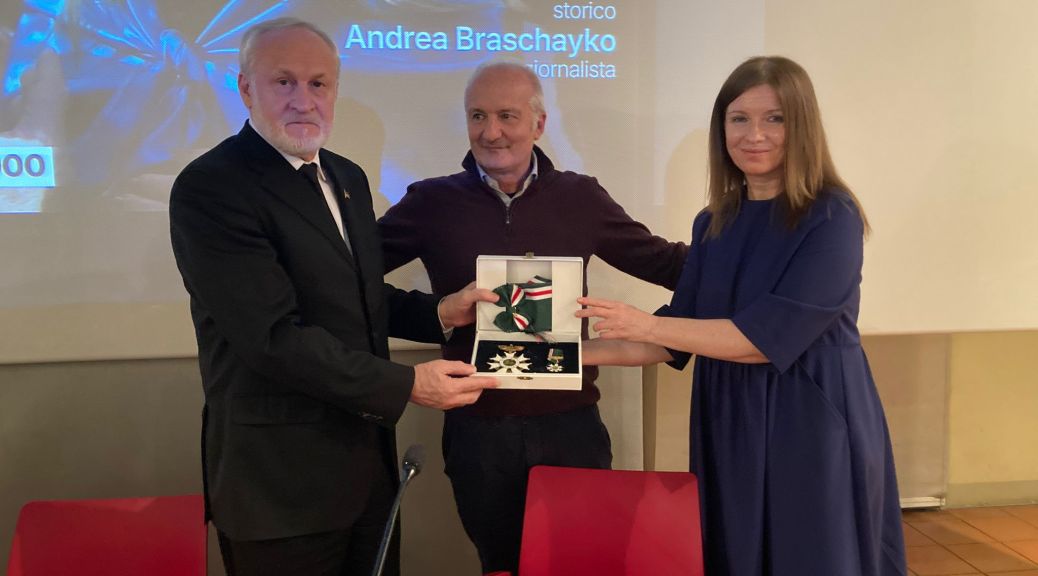
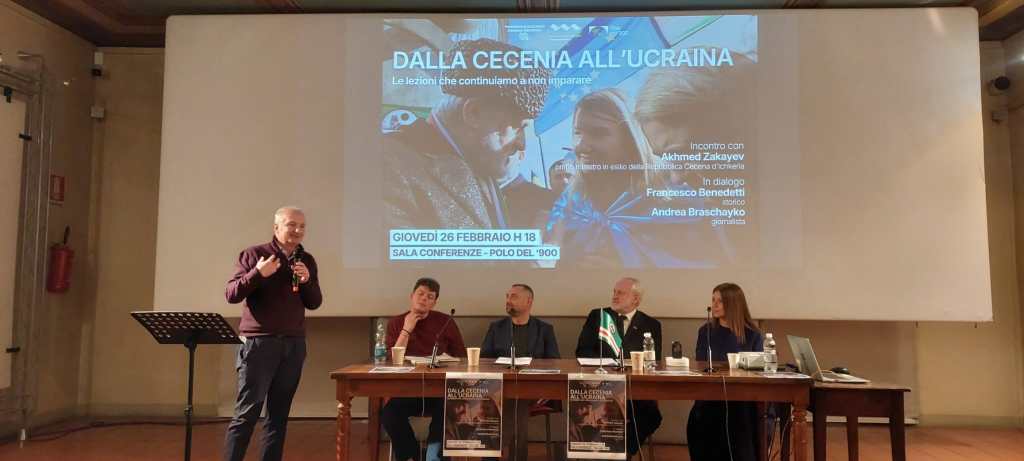
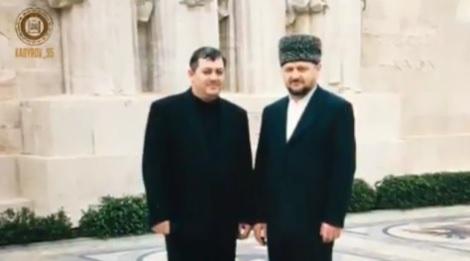
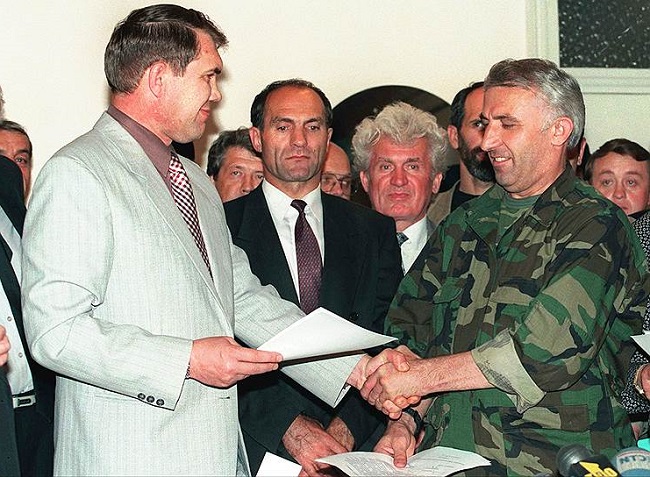
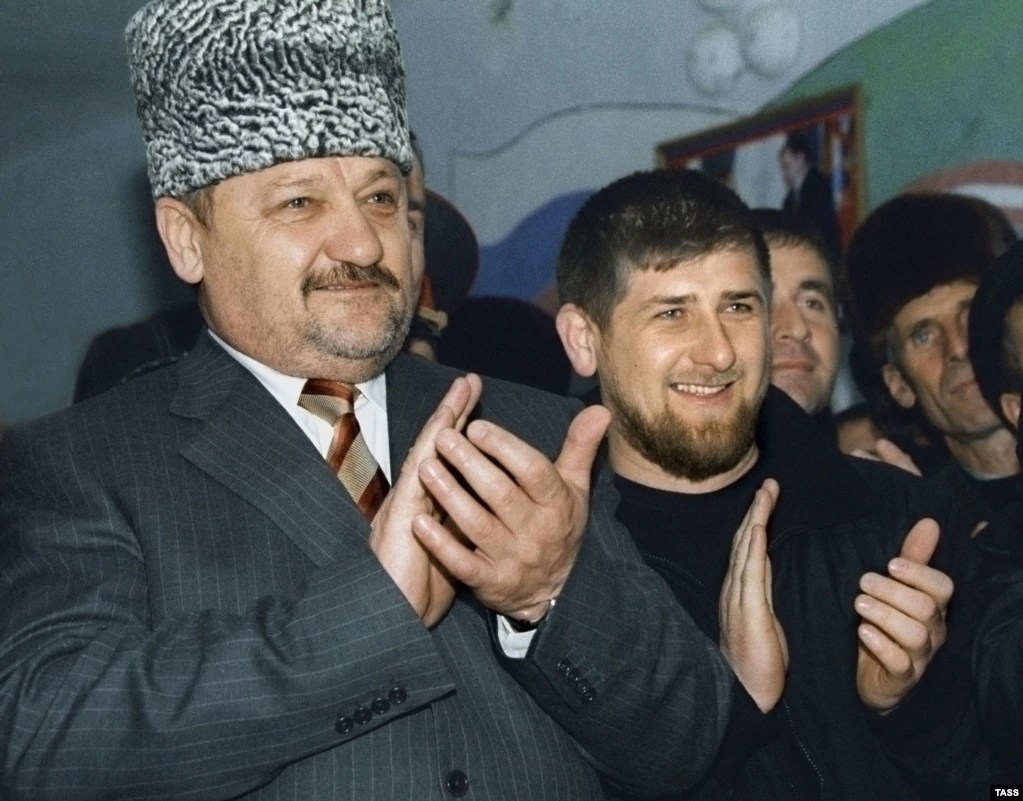
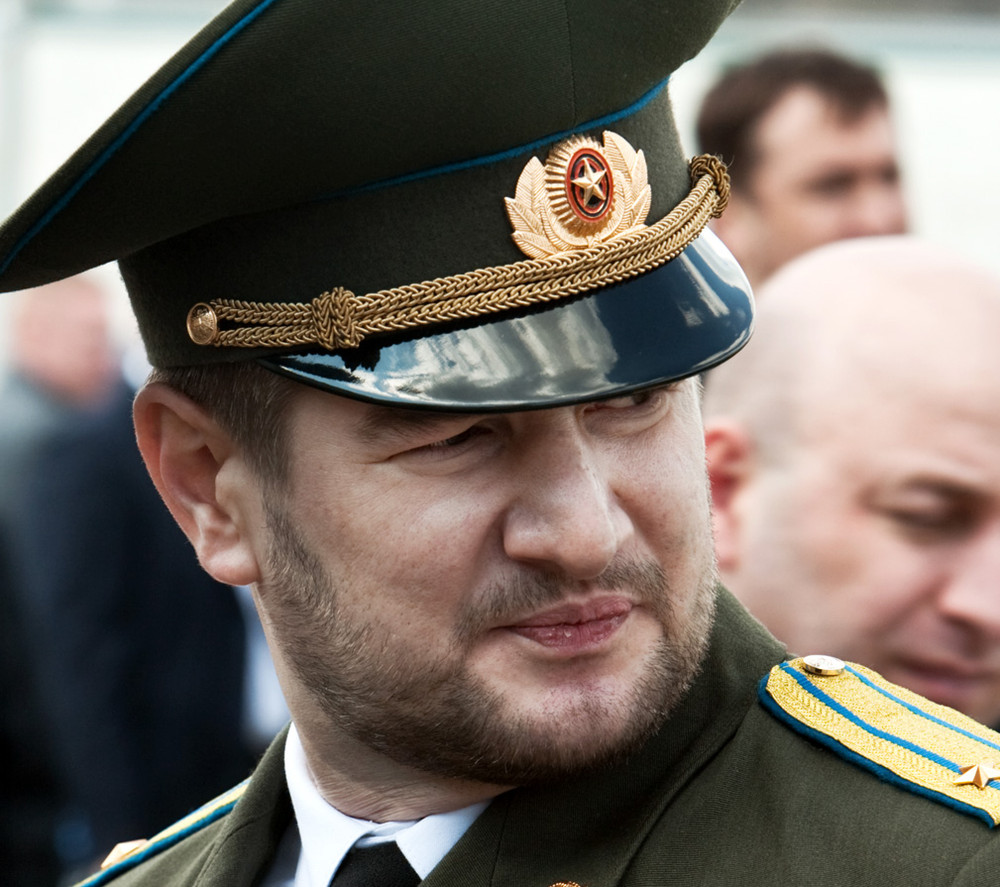
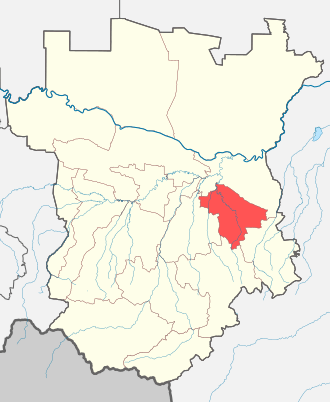
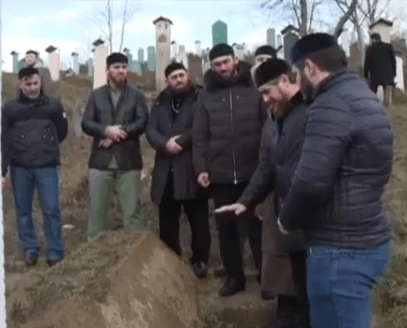
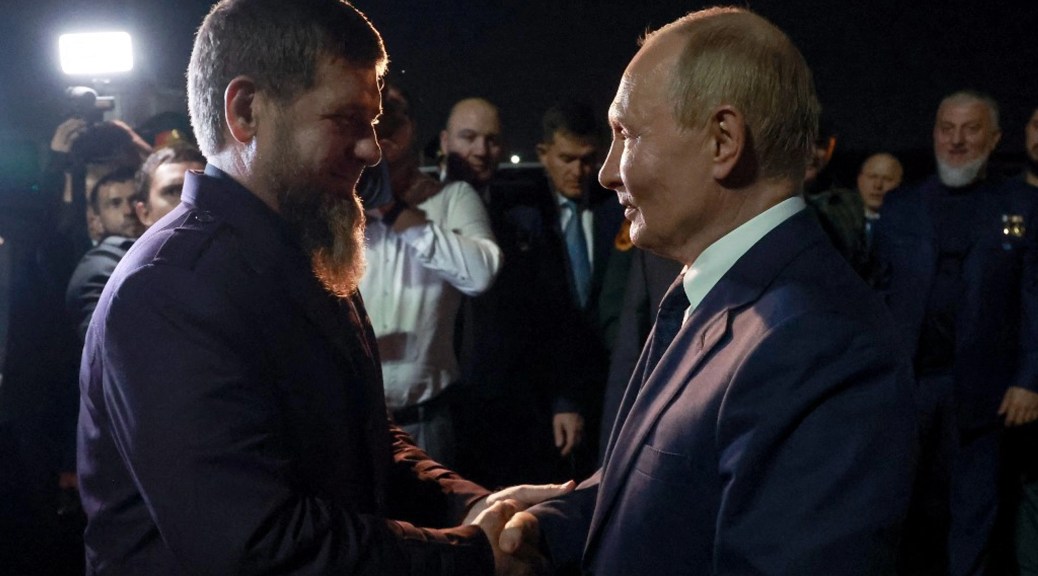

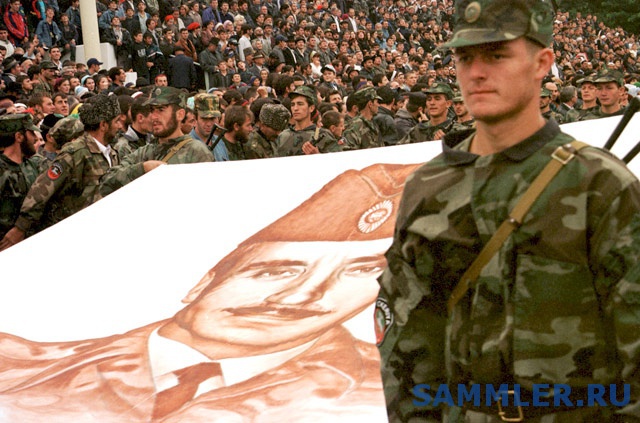



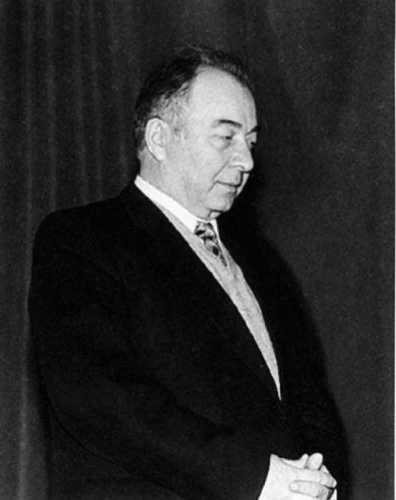
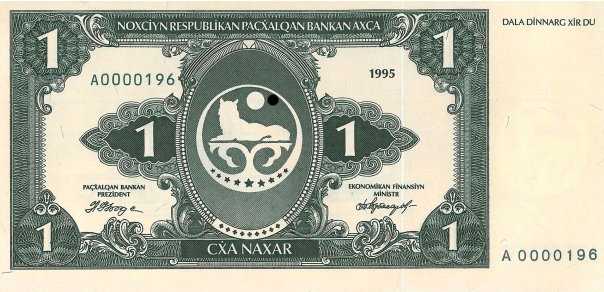


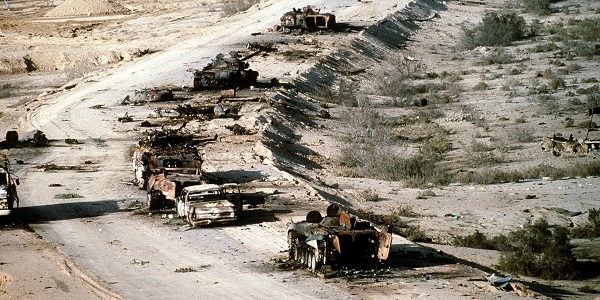
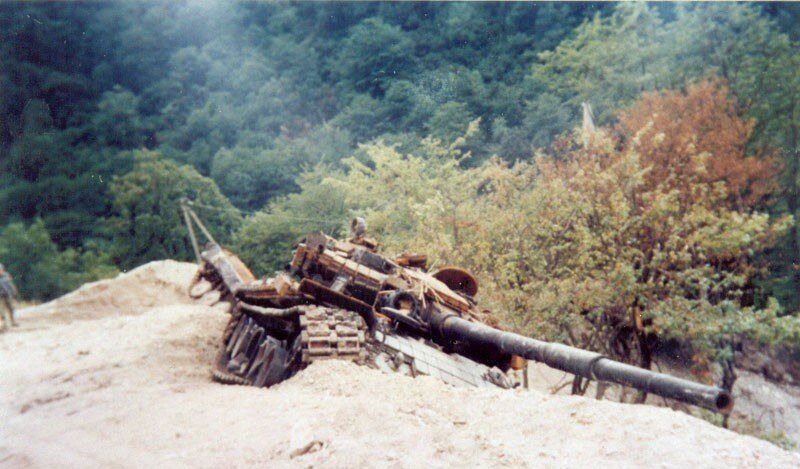
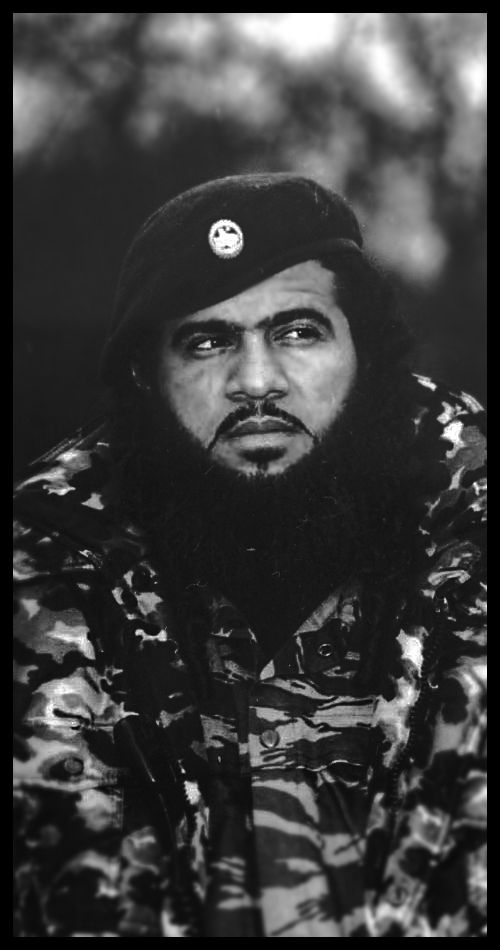
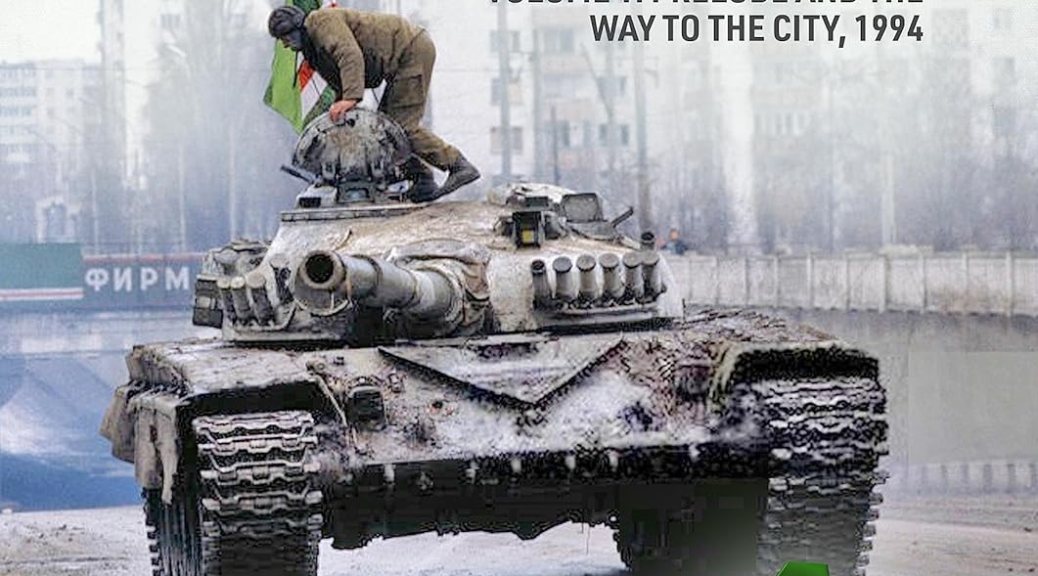

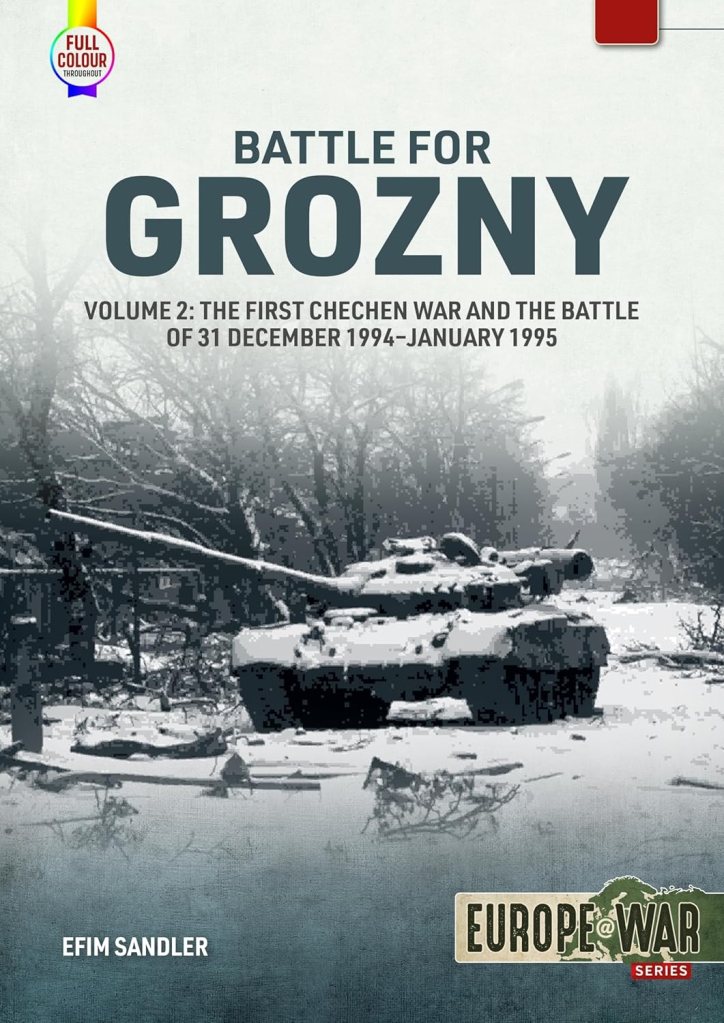


 Ichkeria Digital Archive