Taymaz Taysumovich Abubakarov was born on April 16, 1948 in Kazakhstan, where his family had been deported alongside the entire Chechen nation under Stalin’s 1944 mass deportations. After the rehabilitation of the Chechen people, his family returned to Chechnya, where he grew up in Grozny.
He initially worked as a mechanic at Grozny’s TETs-2 thermal power plant before pursuing higher education in economics at Moscow State University (MGU). He completed his studies with distinction and later earned the academic degree of Candidate of Economic Sciences. Upon returning to Grozny, Abubakarov embarked on an academic career at the Chechen-Ingush State University, rising to the post of First Vice-Rector. His research specialized in the economic and demographic dynamics of the North Caucasus, earning him respect as a regional development expert.
Entry into Politics and Early Career
During the period of perestroika, Abubakarov became involved in the Chechen national movement. As early as 1985, he was an active member of the organizations “Dosh” and “Nokhchicho”, which advocated Chechen sovereignty. He briefly served in the economic administration under Doku Zavgaev during the final phase of the Soviet administration in the Chechen-Ingush Autonomous Republic.
After General Dzhokhar Dudaev led the Chechen Republic to declare independence in 1991, Abubakarov was appointed Minister of Economy and Finance on October 27, 1991. His appointment was part of Dudaev’s strategy to balance revolutionary legitimacy with the need for capable technocratic leadership.
Doku Zavgaev
Economic Policies and Challenges
As minister, Abubakarov faced the enormous challenge of establishing an independent economic system in a collapsing post-Soviet environment. He proposed a mixed economy model: allowing private ownership while maintaining state control over key strategic sectors. This approach aimed to stabilize Ichkeria’s fragile economy and shield it from Russia’s impending blockade.
However, tensions soon emerged between Abubakarov and Dudaev, particularly over economic control. Dudaev maintained tight personal oversight over sectors such as oil exports. Abubakarov also opposed Dudaev’s attempts to launch a national currency (The “Nahar”), which were instead handled by Central Bank Governor Usman Imaev. In his memoirs (The Dudaev Regime: Truth and Lies, available HERE), Abubakarov describes the severe economic crisis gripping the republic in 1992-1993, including hyperinflation, speculative black-market pricing, and the collapse of state revenues. Attempts by Dudaev to subsidize basic food items proved unsustainable, aggravating the fiscal strain.
The Chechen national currency project, the Nahar
Involvement in Pre-War Diplomacy (1994)
In December 1994, with tensions escalating towards open war, Dudaev appointed Abubakarov to lead Ichkeria’s delegation in negotiations with Russian representatives in Vladikavkaz. Despite his position as Finance Minister rather than Foreign Minister, Abubakarov was chosen based on Dudaev’s personal trust and pragmatism. The Chechen delegation offered major concessions, including dismantling irregular armed formations, provided Russia agreed to withdraw its military forces first. Meanwhile, Moscow supported both negotiations and an escalating military buildup, leading Abubakarov to accuse Russia of duplicity.
The talks were further complicated by the presence of a second, pro-Moscow Chechen delegation representing the so-called “Provisional Council.” Figures like Bektimar Baskhanov and Bislan Gantamirov appeared at the negotiations, highlighting Moscow’s attempt to foster an alternative Chechen leadership.
On December 14, 1994, as head of the Chechen Working Commission, Abubakarov signed an official statement reaffirming Chechnya’s position: disarmament would proceed only after full Russian troop withdrawal. Nevertheless, the negotiations collapsed, and Russia launched its full-scale invasion on December 11, 1994. Shortly thereafter, Abubakarov was replaced in the negotiation team by Prosecutor General Usman Imaev.
The Council of Ministers of the Chechen Republic of Ichkeria (formerly “Sovmin”)
Corruption Allegations and Dismissal
As the war unfolded, accusations of corruption began to surround Abubakarov:
Prominent Chechen politician Musa Temishev accused him of massive misappropriation of state resources, calling him “one of Ichkeria’s most notorious looters.”
Russian journalist Yuri Shchekochikhin reported on a 1993 contract in which Abubakarov authorized the purchase of five metric tons of pure gold from Yakutia for 2.78 billion rubles, raising serious suspicions regarding the transaction’s legitimacy.
Abubakarov increasingly centralized control over export licenses, oil contracts, credit allocation, and financial institutions.
In 1995, President Dudaev dismissed Abubakarov on charges of financial misconduct. Following his removal, Abubakarov relocated to Moscow, where he lived in quiet exile, completely withdrawing from public life.
Memoirs and Historical Testimony
In 1998, Abubakarov published his memoirs, The Dudaev Regime: Truth and Lies, offering valuable firsthand insights into Ichkeria’s early governance, internal conflicts, and economic policies. The book serves both as a crucial historical source and as his personal defense against corruption allegations.
Later Life and Current Status
Following his exile, Abubakarov disappeared from the public scene. According to public real estate records, since 1998 he has owned an apartment in Moscow. As of 2024, no official records of his death exist. He is presumed alive at age 77. He has not participated in political, media, or social activities since the late 1990s.
Extensive searches in Russian archives, media, and historical forums confirm that no verified photographs of Abubakarov are publicly available. His image remains absent from media databases, official archives, and the Ichkeria.net Name Index.
Final Remarks
Taymaz Abubakarov’s personal journey exemplifies the turbulent fate of many Ichkerian leaders. From academia to state-building under extreme conditions, from internal power struggles to exile, his career reflects the complex realities of Ichkeria’s struggle for independence. Decades later, his role remains significant for historians analyzing the republic’s internal political dynamics and its economic challenges in the face of overwhelming adversity.
Born on November 8, 1956, in Kazakhstan to a family of deportees belonging to the Teip Thadakhara tribe originally from the village of Khatuni, Supyan Minkailovich Abdullaev was just a child when, after Khrushchev’s “Pardon,” he moved to Chechnya with his parents. His family was one of many that, during the Ardakhar, had been deported by Stalin to Kazakhstan, officially as “punishment” for not fighting the Nazi invasion of the USSR with sufficient rigor, but in reality to consolidate the colonization of the Caucasus by ethnic Russians.
Exile first, then social ghettoization after their return, had produced a strong sense of disorientation in the younger Chechen generation: for a people accustomed to living in the same land for millennia, organized into clans deeply rooted in specific territories, deportation to Central Asia and the chaotic return to their homeland thirteen years later, unable to rebuild the ancient social mosaic based on the “family-territory” relationship meant the loss of every “cardinal point of identity.” In this context, the only cultural pillar remaining to the Chechens was Islam, which until the deportation had taken root in a very ‘light’ form, often syncretic with ancient cultural values, but which now represented the only foothold for Chechens to recognize themselves in a USSR that was predominantly Orthodox and Russian-speaking.
Supyan grew up cultivating traditional Chechen customs, soon became very skilled in fighting, and studied the Koran. After graduating in 1972, he earned a degree from the Chechen-Ingush State University and found work as a physical education teacher in schools in the Vedeno district, the “ancestral land” of the Chechen nation.
From madrasas to the Islamic Battalion
With the advent of Glasnost and the easing of censorship, Abdullaev was able to devote himself openly to religious propaganda, teaching in local madrasas, acquiring contacts throughout the Eastern Caucasus, and eventually participating in the creation of the Islamic Revival Party, the first explicitly confessional political movement in the Soviet Union. His social activism took the form of participation in the activities of the Ar-Risalya Islamic center in Grozny, where he began teaching Islamic doctrine and law, achieving the honorary title of Ustaz (Teacher). He eventually became director of the center and, in this capacity, supported the Chechen Revolution, the proclamation of independence, and the rise of Dzhokhar Dudaev to the presidency of the republic. He differed from most other teachers, who struggled to express themselves in Russian, in his almost complete lack of accent and a style of speech that would have been the envy of a university professor. He had a long red beard that reached down to his waist (hence the nickname “Supjan the Red”).
Supyan ran the Islamic center until 1994, when the Russian army entered Chechnya with the aim of reconquering the small republic. On November 26, 1994, a contingent of anti-Dudaev militiamen, mercenaries, and undercover Russian soldiers attempted to overthrow Dudaev by attacking Grozny. Abdulaev enlisted in a village militia and took part in the fighting that saw the attackers destroyed and put to flight. The group of volunteers to which Supyan belonged engaged the attackers at the Press House. According to some, it was in that battle that people first began to talk about the “Islamic Battalion.” Supyan’s bravery during the battle earned him the position of deputy commander of the battalion, a unit that would fight with honor throughout the First Chechen War (for more information, read “Freedom or Death! History of the Chechen Republic of Ichkeria,” available HERE).
Supyan took part in Operation Jihad, the action with which the independence fighters recaptured the capital, putting the Russian army in check and forcing Moscow to withdraw from Chechnya. During the battle, he commanded several assault groups against the FSB headquarters, the “Government Palace,” the Dinamo Stadium, and other sensitive targets. For his role, he was apparently appointed ‘Brigadier General’ (a mainly honorary title, which would become rather inflated in the following years).
Islam and War
Maskhadov’s rise to power, democratically elected by the overwhelming majority of Chechens in 1997, saw Supyan align himself with the so-called “Radicals,” whose main exponent was Shamil Basayev. In the distribution of posts, seeking to please the radicals, Maskhadov appointed him Deputy Minister of Sharia for State Security, with the task of working on the ideological and religious training of officials. With the proclamation of full Sharia law (1999), Supyan’s role (recognized as one of the leading exponents of radical Islam in Chechnya alongside Movladi Ugudov) in the training of state officials grew significantly, as the Chechen legal system had no background in religious law. Thus, the few scholars available became ‘experts’ in Islamic law, even though they often lacked even a basic knowledge of the subject.
In any case, the formation of the ‘Islamised’ Chechen ruling class was soon brought to an end when Russia invaded Chechnya again at the end of 1999. Abdullaev quickly became a key figure, not only because he reconstituted his unit (renamed the ‘Jundullah’ Brigade) at the outbreak of the war, but also because, as a radical figure not only in politics but also in religion, he had access to the richest sources of foreign funding, coming from Wahhabi Islamic associations, which were happy to finance the jihad while ignoring any interest on the part of the moderate political and religious current of the Chechen government, of which Maskhadov was the expression.
During the Second Russian-Chechen War, Abdullaev first commanded the Jundullah Brigade as second-in-command, then as commander, earning himself a place in the political-military council of the Chechen resistance[1], the Majilis-Al-Shura (successor to the Committee for the Defense of the State at the head of the Republic). After taking command of the Eastern Front of the war theater (2003) centered in the territories of Vedeno and Shali (where he was wounded several times in combat[2]), on July 5, 2004, he was appointed Minister of Finance of the war government, with the aim of raising the necessary funds to continue operations and distribute them to units in the field. His work was appreciated, if it is true that Maskhadov’s successor, Sadulayev, confirmed him in his position. Among the fighters, Supyan gained the goodwill of his comrades, earning the respect of all. Despite his advanced age compared to the other commanders, he actively participated in operations and war councils, and was known for his austere religious discipline, moral authority, and charisma among the fighters.
The Emirate
On March 3, 2007, he was appointed Vice President of the Chechen Republic of Ichkeria by Dokka Umarov, a position he held until the founding of the Emirate of the Caucasus on October 7, 2007. He joined the new formation, formally abandoning the state structures of the ChRI, and took on the role of “Naib” (political successor) to the former President, now “Emir,” Umarov. When, in June 2009, unconfirmed information emerged about the alleged death of Doku Umarov, Akhmed Zakayev expressed the opinion that his closest associate, Supyan Abdullayev, would most likely become his successor. Within the Caucasus Emirate, Supyan Abdullaev maintained a leading role as Dokka Umarov’s deputy, being the de facto number two in the movement. For this reason, the Russian authorities tried in every way to capture or kill him, even arresting his son, Masud, then 22, who was deported from Egypt to Russia. Nevertheless, Supyan did not give in to blackmail and did not surrender.
He was considered the most influential of the Salafi ideologues and acted as a liaison between the various Wilayat (provinces) of the new Emirate. As an educator, he oversaw the religious and ideological training of new militants in mountain training camps. He carried out this task until March 28, 2011, when, during a raid by Russian special forces in the village of Verkhny Alkun, in the Sunzha district, the Russians hunted him down and killed him. The operation was aimed at preventing a meeting between Umarov and his staff. According to some, Umarov managed to escape, while Abdullaev was killed in a heavy air strike, following which he and several others
[1] His radio call signs were “Red Supyan” and “Chitok.”
[2] In January 2006, information appeared about Abdullaev’s elimination following a special operation in the district of Shali in Chechnya. This information was later denied, as it was his youngest nephew, field commander Adam Abdullaev, who was killed. Two other field commanders were killed along with him.
The following is a preview of the second volume of “Freedom or Death!” just released in English. The passage deals with Russian and Chechen preparations in the days immediately preceding the outbreak of war.
Zero Hour
In 1994, Russian-backed forces in Chechnya opposing Dzhokhar Dudayev led the failed November Assault, and it was a moment of realization for everyone.[1] President Yeltsin now clearly understood he needed to do more than covertly support groups inside Chechnya. He had to officially intervene to prevent the small, historically rebellious mountain republic from seceding. The Chechen opposition’s Provisional Council itself desperately appealed to him to send troops against the Dudayevites.[2] Meanwhile, General Dudayev was hopeful for peace negotiations but took seriously the threat of Russia fully invading.
For Yeltsin and Defense Minister Pavel Grachev, victory was not an achievable objective but a ripening fact. A “small victorious war” promised to raise the administration’s ratings against the increasing popularity of nationalist parties.[3] They ignored, or pretended to ignore, the deplorable state of their military and underestimated their enemy’s determination. Meanwhile the Chechens were preparing to resist the invasion.[4] Dudayev entrusted command of the regular forces to Colonel Aslan Maskhadov,[5] who inherited ragtag units rather than an army from his former colleague Viskhan Shakhabov.[6] Throughout 1994, he attempted to structure it partly according to army reforms enacted in 1992 and based on pre-existing forces, which were comprised of veterans from wars in Afghanistan and Abkhazia. Some units were combat-ready by the beginning of December. Among such forces was the Presidential Guard commanded by Abu Arsanukaev, and its Spetnatz unit under Apti Takhaev. Next was Shamil Basayev’s Reconnaissance and Sabotage Battalion, which was composed mostly of veterans of Abkhazia. Then came Ruslan Gelayev’s Special Borz (“Wolf”) Regiment, which included a battalion led by Umalt Dashayev. Adding also the Shali Armored Regiment and other minor units, there was a nucleus of 1,500 troops joined by 1,000 men from the Ministry of the Interior and the National Security Service (police officials, riot police and state intelligence services). Maskhadov added some volunteer territorial militia battalions, such as the so-called “Islamic Regiment” under Islam Halimov and the Naursk Battalion[7] with Major Apti Batalov.[8] Thanks to their contribution and the many other bands of volunteers who rushed to Grozny’s defense, Chechen Headquarters relied on 5,000 men at the start of Russia’s invasion. Several more formations followed Dudayev’s general mobilization proclamation on 4 December.[9] The Chechens understood however, that regardless of how they prepared they could only temporarily hold the enemy at the gates. Chechnya lacked the numbers, arms, and organization to take on enemy armored brigades directly.[10] Russia had even preemptively destroyed the modest air force on 1 December.
Russia’s initial approach to the invasion reflected its narrow aim to eliminate the leadership rather than destroy Chechnya. The average Russian solider, struggling to pin it on a map, cared even less about Chechnya. The government narrowed its invasion partly to avoid a humanitarian crisis since the wary West was watching with a hand on the money tap keeping Russia afloat.
Whatever way the Russians intended to attack, the Chechens were preparing to fight and die all the same. Their plan was “to last.” They wanted to resist as long as possible and hopefully expose the Kremlin to domestic public opinion, which was still struggling with trauma from the Soviet-Afghan War. Equally important was the opinion of the West, whose conditional loans kept Russia’s economy from sinking.[11] The Chechens organized their defense in three phases. They planned to first trap the Russians inside Grozny, a “concrete forest,” and ensnarl their overwhelming armor. To entice the Russians, the Chechens yielded the defensive line to the north to create the illusion they had abandoned the capital. This line along a strip of hills running north of Grozny on the so-called Terek Ridge hinged to the west by the villages Dolinskyand Pervomaisk. It ended in the east at the height of the village Petropavlovskaya on the left bank of the Sunzha. After crossing the line and penetrating the capital, the Russians would encounter Chechnya’s best forces eagerly waiting to recreate the success they had against the anti-Dudayevites back in 26 November. This was ideally going to force Yeltsin to negotiate with Dudayev, but with far more realistic expectations, the Chechens planned to retreat south to the main centers of Achkhoy-Martan, Shatoy, Vedeno, and Nozhay Yurt.
Maskhadov divided the territory into six military districts called “Fronts” and entrusted them to his best men.[12] The loyal former police captain Vakha Arsanov held the Terek Ridge Line. Ruslan Gelayev was charged with the South-Western Front, a quadrilateral defined by the villages Assinovskaya, Novy-Sharoy, Achkhoy-Martan, and Bamut. Dudayev’s twenty-eight-year-old son-in-law Salman Raduyevcommanded the North-Eastern Front centering on the city Gudermes. CommanderRuslan Alikhadziyev[13]of the newly appointed Shali Armored Regimentled the southern front, with its main centers being Shatoyand Shali. Turpal Atgeriyev, a twenty-six-year-old veteran of the Abkhaz War and one of Raduyev’s most trusted men led the South-Eastern Front, centering on Nozhay Yurt. Finally, Shamil Basayev held Grozny. Unfortunately, the government lacked a comprehensive plan to protect the population,[14] and the situation was especially dire in Grozny. Unlike their Chechen neighbors there, the many ethnic Russian residents did not have relatives and friends in the countryside to flee to.
The Russian Headquarters was busily gathering nineteen thousand fresh conscripts from the most diverse branches. Collectively baptized the “Joint Group of the United Forces,”[15] it also included five thousand soldiers from the Interior Ministry to comb the rear for enemies. The army was divided into the West, East, and North groups.[16] West Group started off from Vladikavkaz, North Ossetia to penetrate in three columns, taking up a position at the height of Novy-Sharoy behind the Chechen Terek RidgeLine. From Klizyar, Dagestan, East Group was to reach Tolstoy-Yurt along the Terek River. Finally, North Group in Mozdok, North Ossetia would cross the pro-Russian occupied plains of northern Chechnya to link up with East Group north of Grozny. With one hundred kilometers to the objectives, the operation had a schedule of a couple days. The high command of the Russian military prepared to issue an ultimatum to the leadership and offer amnesty to Chechen troops who surrendered.[17] Afterwards, artillery would clear the way for tanks to finally crush the rest of Dudayev’s “little rebellion”.
However, the commander of the Russian operation Colonel General Eduard Vorobyov refused to lead the plan,[18] dismissing it as “madness”and a dishonor to send the military against citizens Russian considered its own.[19] Grachev promptly dismissed and investigated him, and instead tapped the unquestioning General Anatoly Kvashnin. Vorobyov’s forced resignation quickly led to the replacement of the Military Command of the Caucasus, further disrupting the chain of command which, on the eve of the invasion, was completely “purged.”
There were also important fringes of Parliament, including in the majority, opposed to military intervention. Yegor Gaidar, one of Yeltsin’s closest allies and chairman of the pro-government Democratic Choice of Russia Party,[20] spoke out and brought others from his faction with him.[21] Galina Starovoytova from the Democratic Russia Party was also opposed. Many moderates remained ambivalent though: the newly established center-left Yabloko Party saw heated internal debate between skeptics and those that supported the invasion “in principle” if not in execution.[22] On the right, nationalist movements beat the war drums, particularly Vadim Zhirinovsky’s Liberal Democratic Party. Opponents argued that using the military was unconstitutional without the government declaring a state of emergency and imposing martial law. According to Article 102 of the Constitution, the president had to consult Parliament to issue the provision, which would likely have been rejected. Supporters of military action, on the other hand, pointed to Articles 80 and 86 as support for Yeltsin’s right to lead the military and his duty to “safeguard the sovereignty” and “integrity of the state.”[23] A public debate could perhaps have steered tanks away from the Caucasus, especially as concerned newspapers all over the world began to cover the matter.[24] But the die was cast, and Yelstin was moving his pieces towards Chechnya.
[1] For more on the November Assault and the events preceding the outbreak of the First Russo-Chechen War, see Volume I of this work.
[2] In a conversation with the author, Ilyas Akhmadov recalled a telegram from the Provisional Council explicitly requesting Yeltsin to intervene. It was signed by Umar Avturkhanov and arrived in Moscow in the first days of December 1994.
[3] One analysis of the beginning of Yeltsin’s political shift: “With the controversial decision to use force to stop the secession of a small ‘province’ of his empire, Yeltsin himself also crossed a political ‘Rubicon,’ from which it will be difficult to go back: that of the alliance with the democratic forces that had supported him from the dissolution of the USSR in 1991 to the bloody battle against the rebel parliament in ’93. . . . After the victory of nationalists and communists in the legislative elections of December ’93, Yeltsin assumed new positions in foreign policy and in the management of economic reforms, thus trying to pander to the opposition, regain popular consent, and maintain power at the next electoral appointments, the legislative ones in a year, the presidential elections in a year and a half.” (Enrico Franceschini, “A Peace Party in Moscow,” La Repubblica, December 19, 1994).
[4] Chechen Foreign Minister Shamsouddin Youssef responded to news of Russia’s likely invasion by demanding Russia to recognize Chechnya’s independence. Otherwise, the Chechens would “fight, and bring war in the Russian Federation.” On the same day, Aslan Maskhadov added that Moscow risked fighting a “new Afghanistan.” First Name Last Name, “Title,” La Repubblica, May 12, 1994.
[5]Aslan Alievich Maskhadov, introduced in Volume I of this work, was born in Shakai, Kazakh Soviet Socialist Republic, and returned to Chechnya with his family in 1957. He enrolled at the Artillery School of Tbilisi in 1972, then perfected himself at the High School of Kalinin Artillery in Leningrad. After his service in Hungary, he transferred to Vilnius and witnessed the Lithuanian independence uprisings. After resigning in 1992, he returned to Chechnya again and entered Dudayev’s service. In November 1993, he replaced Viskhan Sakhabov as chief of the general staff, first on an interim basis, then permanently beginning in March 1994. For a comprehensive biography written by his son Anzor, see Frihetskjemperen: Min far, Tsjetsjenias president.
[6] As Musa Temishev shared in a conversation with the author, Viskhan Shakhabov (extensively discussed in Volume I of this work) could not organize the nascent Chechen armed forces as a result of frictions with President Dudayev that arose between 1992 and 1993. Their disagreements on the methods of acquisition and use of Soviet arsenals paralyzed the Ministry of Defense, which was never officially established, leading to Shakhabov’s resignation.
[7] To be precise, Aslan Maskhadov christened the unit “Naursk Battalion” only in January 1995, during a live television broadcast on the presidential channel. The nom de guerre was a eulogy to Batalov’s units who had fought during the siege of Grozny. According to the commander, the regiment was still a “people’s militia”until the Battle for Grozny: “There were no cadres, there were no officers, there were only groups of people from different villages, commanded by people elected by them, totally on a voluntary basis. People came and went, and no one could order anything from them.”To read more about Apti Batalov and the Naursk Battalion, see the series of articles The General of Naur: Memoirs of Apti Batalov at www.ichkeria.net.
[8] Apti Batalov Aldamovich, born in Kyrgyzstan on October 19, 1956, returned to Chechnya and graduated from the Petroleum Institute of Grozny as a civil engineer. After entering the police force, he served as part of the Ishcherskaya Militia in the Naursk district, becoming its commander on June 20 1994. According to our conversations, until early August he served under District Military Commander Duta Muzaev, Dudayev’s son-in-law. After Muzaev’s return to Gronzy, Batalov became of head of the military administration of the Naursk and Nadterechny districts on September 16, 1994. He was tasked with organizing their defense against raids by the pro-Russia armed opposition.
[9] On 4 December, President Dudayev proclaimed a total mobilization of reservists. All male citizens between the ages of 15 and 60 were summoned, too many to realistically arm and train for the regular forces. Most were sent back to their villages of origin with the task of setting up self-defense militias using light weapons or resorting to hunting weapons.
Regarding the composition and nature of these militias, Ilyas Akhmadov recalled in a conversation with the author in 2022: “During the war there were many local volunteer groups consisting of five or six people, sometimes related to each other. It was very important to find a band that you knew. If you were with someone from your village, street, block, or family, you had a 90% guarantee that they wouldn’t leave your body if killed or injured. If they didn’t know you, they didn’t want you. This was mutually understandable to all: If something happened they would not be able to find the relatives, and for us it was very important to be returned to our families.”
[10] To learn more about the ChRI Air Force and its eventual destruction by Russia, see the in-depth study Green Wolf Stars: the ChRI Air Force on the website www.ichkria.netand consult Volume I of this work.
[11] United States Congress opened debates on 11 December 1994, on financially leveraging Russia to discourage war. Senators John McCain and Joseph Lieberan asked for aid to be reevaluated. Their colleague Alfonse D’Amato, argued on 3 January, that this could “send the wrong signal,”although he felt it necessary to express US displeasure at the civilian losses caused by the invasion.
[12] To view the Chechen defense plan, see thematic map A.
[13] Ruslan Alikhadzhiev was born in 1961 in Shali. After completing his military service with the rank of Sergeant, he returned to Chechnya in 1992. He took command of the Shali Armored Regiment in the autumn of 1994, replacing Isa Dalkhaev. At the outbreak of hostilities he organized the recruitment of militia in the Shali district (the “Shali Regiment”).
[14] Anatol Lieven’s first-hand account: “A government plan to feed the population and evacuate the children if the Russians started a siege? I don’t know of any such thing, but if President Dudayev said so, of course it is true,” an official told me in early December 1994, sitting in his deserted office in the municipal offices of the central district of Grozny, . . . “Anyway, it doesn’t matter. We Chechens are such strong people, we will be able to feed ourselves no matter what happens. Is it my responsibility? What do you mean by this? I’m here in my office, right? Don’t you think I will fight to the death to defend my country?” With that he let out a gasp, blowing a breath of vodka in our direction, and with wet fingers lifted a piece of greyish meat from a glass jar on his knees, and fed it to his cat.” Anatol Lieven, Chechnya: Tombstone of Russian Power (New Haven: Yale University Press, 1998), 34.
[15] The unpreparedness of the federal forces was well known to the military commands, and to the Minister of Defense himself. A few days before the start of the military campaign, Grachev read a top secret directive (No. D-0010) which described “unpreparedness for action of fighting.” Stazys Knezys and Romana Sedlickas, The War in Chechnya, (College Station: Texas A&M University Press, 1999).
The assessment report drawn up by the office of the North Caucasus Military Region was similar: “Most of the officers are not only unfamiliar with the required combat readiness requirements set out in the control documents, but also do not know how to recognize their personal duties, or what they should do in times of peace or war. Watch officers and units, in most formations inspected, are poorly trained to take practical actions in response to combat commands. The instructions and other control documents are prepared in gross violation of the requirements of the General Staff.” Knezys and Sedlickas, War in Chechnya.
[16] To view the Russian invasion plan, see thematic map B.
[17] The Duma approved a resolution to this effect 13 December 1994.
[18] Grachev’s plan was entirely based on the assumption that a massive deployment of forces would disperse the separatists: “Grachev’s plan and timetable reflect expectations of limited resistance. Little intelligence used and bad planning were to blame… The planning also ignored the experience of loyalist Chechen forces [i.e. thread . Russians] who had attempted to storm Grozny in August , October and November 1994. If that experience had been studied, the Russian command would have been aware of the dangers that faced tank columns in Grozny.”Olga Oliker, Russia’s Chechen wars 1994-2000: Lessons from Urban Combat (Santa Monica: RAND, 2001) 11-12.
[19] As Eduard Vorobjev said in an interview with journalist Vitaly Moiseev: “I was shocked by the situation, the units that arrived were completely unprepared, the commanders did not know their subordinates, many of the fighters did not have the necessary professional skills. I turned to the Chief of the General Staff: ‘If you think that a change of command will change the situation for the better, then you are wrong. It’s not about the commander, it’s about the adventurous approach. . . . Approaching me, the Minister of Defense said ‘I am disappointed in you, Colonel General, and I think you should submit your letter of resignation.’ I replied ‘I have it.’… It was not easy for me, a person who served in the armed forces for 38 years, who constantly answered ‘Yes!’ I was faced with a choice: to make a deal with my conscience and deal with completely unprepared people, to conduct an operation not planned by me, or to leave the armed forces, which meant the end of my military career.… It seems to me that Grachev underestimated the moral and psychological state of the Chechens, which had reached fanaticism. The operation was designed to intimidate: they thought that Dudayev would get scared when he saw hundreds of units and thousands of soldiers, and surrender to the victor’s mercy. Indeed, the Chechen side clearly knew where our troops were, what they were doing—information was spreading in all directions.”
[20] To the press Gaidar declared: “I appeal to Yeltsin not to allow a military escalation in Chechnya. The intervention was a tragic mistake. Taking Grozny will cost huge human losses. It will worsen the internal political situation in Russia, it will be a blow to the integrity of the nation, to our democratic achievements, to everything we have achieved in recent years.” Franceschini, “A Peace Party in Moscow.”
[21] Deputy of Democratic Choice Dimitrij Golkogonov’s response to “Why are you against the invasion?”: “Because my party, Choice of Russia, led by the ex-Prime Minister Gajdar, is against violence, against the use of force to solve political problems. In Chechnya there is a leader, Dudayev, who does not want to lose power, thanks to whom he has enriched himself and his friends with the trade of oil. Independence has nothing to do with it. But to attack Dudayev is to make a criminal a popular hero. . . . A negotiation had to be opened. If Yeltsin had invited the Chechens to Moscow, they would have come running.” Enrico Franceschini, “‘Yeltsin Made Wrong Move in Invading But Remains Leader of Russia,’” La Repubblica, December 15, 1994.
[22] Vladimir Lukin, former ambassador to the United States and prominent member of Yabloko, in his January 24, 1995 speech in the Nezavisimaya Gazeta wrote: “The executive branch has shown itself and society that it can act independently, regardless of and in spite of political pressures . . . In an ideal world, the preposterous and dangerous idea that the military should not be used for internal conflicts should be driven out of the heads of our armed forces. . . . Using the army inside the country in extreme situations, when threats to the state appear, is the norm in democratic states. Nezavisimaya Gazeta.
[23] For careful study of this topic see Stuart Goldman and Jim Nichol, Russian Conflict in Chechnya and Implications for the United States (DC: Congressional Research Service, 1995).See also Victoria A. Malko, The Chechen Wars: Responses in Russia and the United States(Lambert Academic Publishing, 2015).
[24] An example from an Italian newspaper: “In the end, like a mountain annoyed by a daredevil mouse, Yeltsin ordered the direct intervention of his troops. Moscow claims that Chechnya is part of Russia, therefore it is its right to occupy it to restore order. For the moment, Western public opinion seems aligned with this position, considering yesterday’s events as an “internal matter” for Russia: for which there are no international complaints, unlike what happened with the invasion of Afghanistan. But if we look at the substance of the Russian military expedition in Chechnya, some resemblance to the Soviet invasion fifteen years ago emerges. . . . The fact remains that Yeltsin does not hesitate to use tanks when he sees that other means (negotiation, economic pressure, support for the local opposition) do not produce results. The propensity to resolve political crises militarily, as a year ago in the tug of war with the rebel Parliament, is a hallmark of his presidency. The future will tell whether Russia needed a “strongman” to become a civilized and democratic nation”. Enrico Franceschini,“Moscow Fears the Kabul Syndrome,” La Repubblica, December 12, 1994.
The work on this biography is carried out in collaboration with the Instagram page “Qoman Sij”, based on information received from the former deputy of the Minister of Foreign Affairs of the Chechen Republic of Ichkeria, Ilyas Musaev, verified with the sources at our disposal.
Born in Germenchuk in 04/12/1962, Aslanbek Abdulkhadzhiev joined the National Guard in 1991, during the Chechen Revolution. Volunteer in Abhazhia between 1992 and 1993, he served in the International Brigades of the Confederation of Peoples of the Caucasus, becoming Shamil Basayev’s trusted man. Appointed by the President Dudayev as Military Commander of the Shali District at the outbreak of the First Russian – Chechen war, he commanded a large detachment.
Aslanbek Abdulkhadzhiev, nicknamed “Big Aslanbek”
Nicknamed “Big Aslanbek” (in recognition of his comrade in arms Islanbek Ismailov, nicknamed “Little Aslanbek”) Abdulkhadzhiev was one of the main organizers of the historic raid by Chechen fighters on the Russian city of Budennovsk in June 1995, which forced the Russian authorities to agree to a temporary cessation of the war and the beginning of peace negotiations. For this military operation, among the first, he was awarded the highest state order of the CHRI Qoman Sij (Honor of the Nation), by the first President of the Chechen Republic of Ichkeria, Dzhokhar Dudayev.
One of the main commanders in the Battle of Pervomaiskoye (January 1996) in the Operation Retribution (March 1996) and in the Operation Jihad (August 1996), after the reconquest of Grozny he was appointed military commander of he Capital as Military Commissioner. For his war merits he was appointed Brigader General and decorated with the Honor of the Nation.
Elected Deputy in the parliamentary elections of January 1997, he attempted to gain the presidency of the assembly, but was overtaken by the pro-government candidate Ruslan Alikhadzhiev. Supporter of the nazional – radical party, he promoted the “Law of lustration” with which it was intended to remove from public officies all those who had collaborated with the pro – Russian government during the war. The delays in the approval of this law were the cause of his resignation in 1998.
Preident of the state company Chechenkontrakt since June 1997, at the outbreak of the Second Russian – Chechen War he formed an unit of around 80 men, with whom he fought in the Siege of Dzhokhar (1999 – 2000). After the fall of the city in Russian’s hands, he retreated in the Argun Gorge, leading the partisan fight.
On August 26, 2002, following a denunciation by a Russian informer, the house in the city of Shali, where Aslanbek Abdulkhadzhiev was hiding, was surrounded by Russian occupiers and local collaborators.
Aslanbek Abdulkhadzhiev attends a press conference together with Shamil Basayev (center) and Aslanbek Ismailov (“Little Aslanbek”, right). June 1995
According to the reports of his death:
The senior FSB officer leading the Russian occupiers through a loudspeaker told the Chechen commander to surrender, to which there was an immediate response from a Stechkin submachine gun. In response, Russian punitive forces began firing grenade launchers and machine guns. Having used up all his ammunition, the Chechen commander began throwing grenades and lemons at the invaders. In turn, the aggressors opened fire from heavy machine guns located on armored personnel carriers. This actually predetermined the outcome of the unequal battle. Aslanbek was seriously wounded. The enemies, having learned about this, tried to take him alive.
However, the Russian punitive forces were not destined to mock the wounded Chechen commander. Aslanbek, who was losing consciousness, at the last moment managed to pull out the pin of the grenade, which exploded in his hands. The blast wave generated by the grenade explosion carried away several occupiers who were close to the Chechen commander. According to Shali residents, at least four occupiers were killed and seven wounded during the night battle in the city of Shali. This is how the life of 41-year-old Chechen general Aslanbek Abdulkhadzhiev heroically ended.
The work on this biography is carried out in collaboration with the Instagram page “Qoman Sij”, based on information received from the former deputy of the Minister of Foreign Affairs of the Chechen Republic of Ichkeria, Ilyas Musaev, verified with the sources at our disposal
Aidmar Timurovich Abalaev, a Chechen statesman and military leader, served as the Minister of Internal Affairs and the Sharia Security Council of the Chechen Republic of Ichkeria. Born in Nozhai Yurt in 1964, he belonged to the Chechen teip (Clan) Saysano. A descendant of Alibek-Khadzhi Aldamov, the imam of the North Caucasus and the initiator of the 1877 uprising in Chechnya and Dagestan. During the First Chechen War, he fought in his native village Nozhai-Yurt region, commanding the Mountain Rifle Unit of the Reconnaissance and Sabotage Battalion, and also participated in the defense of Grozny.
On January 9, 1996, on the personal instructions of Dzhokhar Dudayev, units under the command of Salman Raduev, along with other well-known Commanders: Khunkar Israpilov, Turpal-Ali Atgeriyev, he took an active part in the raid in the city of Kizlyar. In 1996, he also participated in the successful military Counter-Attack operation to recapture Grozny from the Russian Terrorists. After the battle, Abalaev was awarded the highest Order of the CHRI “Qoman Sij” (Honor of the Nation) and received the rank of Brigadier General. He was a presidential candidate in the 1997 elections in the CRI and received slightly less than 1% of the votes.
At the end of 1998, he was appointed Minister of Internal Affairs and Minister of the Sharia Security of the ChRI in the government of Aslan Maskhadov. After a meeting of the Military Council of the Armed Forces of the ChRI, held on April 30, 2002, under the leadership of the President of the ChRI, Aslan Maskhadov, Aidamir Abalaev, along with other Chechen commanders, was sent to one of his military bases.
On May 1, 2002, Abalaev’s unit was ambushed by fighters from Yamadayev’s terror gang for special operations together with the Russian unit of the FSB Directorate. Aidamir Abalaev, field commanders Colonel Vashev and Major Uvaisaev offered the Russian intelligence officers to surrender without a fight. The Chechen commanders responded with fire from machine guns and grenade launchers. The battle occurred near the village of Sayasan, Nozhai-Yurtovsky district (his native village). According to FSB Colonel Shubalkin, Abalaev’s corpse was identified by his relatives. He died from a bullet wound received in the left side of the chest. Military doctors tried to help him, but Abalaev, without regaining consciousness, died half an hour after being wounded on May 1, 2002.
Do you know what basic conditions were constantly and ambiguously put forward by the West in almost all negotiations with state leaders of the USSR in 1989 – 1991, when it came to providing credit and charitable assistance, and this was not publicized in the Union press? Yes, the creation of that very financial oligarchy (5-10% of the population), capable of controlling up to 60% of the country’s total potential, with the guaranteed establishment of the institution of private property and protection of large-scale foreign investments and foreign property!
Then, strangely enough, the first to realize it and tried to take it into account, albeit limitedly. N.Nazarbayev, but M.Gorbachev for a long time was floundering and hesitated, grasping for various alternatives that were saving in his opinion, but miraculous, as it turned out later, until the whole feud with GKChP broke out, mainly because of irreconcilable differences of opinion among his entourage….
As long as the society reforming towards collegial privatcapitalism does not decisively overcome the transition stage of non-authoritarian state capitalism, which is dangerous because of its instability and centrifugal forces, chaos, crime, economic collapse and general ungovernability in public spheres may reach its peak, followed by monstrous armed conflicts and historically irreversible processes. The example of the collapse of the USSR, the “critical boiling points” in Russia and the CIS countries, and, thank God, only sensitive echoes in the Chechen Republic serve as impressive proof of this.
Dzhokhar Dudaev
Back then, in 1984, nothing seemed to foreshadow that such a powerful empire could collapse in such a short period of time by historical standards. And only the highest echelons of power were aware of the fact that the cumbersome and non-adaptive to the ever-increasing demands of the country’s economy management system was failing more and more catastrophically every year, its “slippages” were throwing the USSR further and further away from the advanced countries of the capitalist world in terms of economic development. The “cosmetic repairs” of the state apparatus did not save it, nor did the desperate reshuffling of personnel in it produce any results. That is why, finally, M. Gorbachev, relying on the brave and radical wing of his entourage, decided to reform the state structure. The general public is well aware of the deplorable results of the experiment for the President of the USSR. But what was M. Gorbachev’s mistake, why did he fail to skip the dangerous stage of non-authoritarian state capitalism, even introducing elements of private property and legalizing entrepreneurial activity? Were the centrifugal forces so strong, and the aspirants to the future “financial aces” were still just playing “nursery cooperatives”? Yes, probably. But this was not the only factor.
If one imagines authoritarian state capitalism in the form of the famous Ostankino TV tower, the stability of which is created by the extremely tight steel rope running through it, then the “cable of political stability” of the former USSR consisted of many strands of “unfreedoms” that created the necessary strength. In his attempt to throw the rope bridge from the “top of the Soviet system” to the “Western model”, M. Gorbachev weakened to a greater or lesser extent many of the steel strings, such as freedom of speech, press, information, expression of will, national self-expression…. and even entrepreneurial activity, while leaving the “inviolable” but coveted private property 100% tightened. And while the West was feverishly winding some ropes on its “bay of democracy”, the construction of the Soviet tower staggered and collapsed. The ropes that had already been thrown over did not help; they sagged and plunged us all into the swamp of collegial state capitalism.
The main and also fatal mistake of M. Gorbachev (if only this ERROR!?), was in the FOLLOWING loosening of the strings stretched on the “soviet fingerboard”. The example of “communist China” is clear evidence of this. They do the opposite there and apparently play the “guitar of economic reforms” quite well.
WHAT is the fate of the Russian Federation now? Will “Yeltsin’s sappers” be able to overcome the unfortunate”minefield”for the Union, or is the explosion imminent? Or maybe “Khasbulatov’s” frightened parliament will be able to pull everything back to more familiar circles? What if it all comes back to bite us in Chechnya? Nowadays, few people probably remember the December 1991 speech of Boris Yeltsin. His program speech, made on the 28th after the famous Belovezhskoe deed, although it was verified in parliamentary language and slightly diplomatically veiled for potential Russian tycoons, shone a long-awaited green light as a signal for the most active actions, as an indulgence for the ideals of private property. Behind it stood the little-known fact that the current processes in the Russian Empire (USSR, CIS and the Russian Federation proper) were financed. And it was done by target purpose “under Yeltsin”, who unlike M. Gorbachev, who was bluffing. He gave his consent to the West for the birth of the Russian Financial Oligarchy! International capital already then paid for the first stage, when a person who cannot swim is thrown into the water, seducing him with the pleasure of market relations, which can be obtained on an equal footing with others who have previously mastered swimming in the sea of capital. If he doesn’t drown at once and continues to swim, we will help him a little more, but if he goes to the bottom, we will always find another candidate. It makes no difference who will continue the line of M.Gorbachev and B.G.Yeltsin, be it L.Rutskoy or R.Khasbulatov, but they will not give up what they have, c’est la vie, but that is the logic of the powerful.
Another, and by no means unimportant factor is the fact that Russia has significant healthy forces, high intellectual potential, desire and means to complete the radical reforms that have been initiated. That is, a complete set – Stimulus, Motive, Means and Power.
That is why, summarizing, we can say with great confidence that the young Moscow guild of capitalists, which is emerging and growing stronger day by day, coupled with a foreign armada of “associates”, together with Boris Yeltsin’s team, although rather shabby in battles, but resilient, will bring the matter to its logical conclusion. What is in store for us? Will the mutant virus of the management tools of authoritarian state capitalism (last time in our country it had a variation under the name of “Soviet partam pa ratnoy”), which is stubbornly fighting for living space in the Parliament of the Chechen Republic, as well as in the Supreme Soviet of the Russian Federation, still give rise to incurable metastasis. After all, such a cancerous contagion inevitably dooms the representative bodies of the authorities to become a kind of “reanimated Chechen regional party committee”, taking over from its deceased predecessor the rudimentary functions of control, management and distribution in the sphere of production and consumption, and usurping the right of “the only connoisseur of the interests and problems of the people”.
MIkhail Gorbachev
So what should be our priorities? How, what forces and means should we use in the first place? These are not easy questions, but there are visible answers to them.
Let us first of all realize once and for all one simple axiom. Not a single Parliament of the world and not a single President, sitting in their palaces or residences and issuing only laws and decrees, have not fed a single nation or created commodity abundance for anyone in the history of the world. The welfare of their people is brought, usually by special initiative people (large organizers and entrepreneurs, businessmen and business scientists) who, thanks to their efforts, abilities and talent, often at their own expense and at their own risk and risk, create in society special mechanisms of social and state development, known to them alone and, at first, only understood by them, using as a creative driving force the factor of satisfying the interests of the largest and most productive part of the population. Exactly they, using the personal factor of Means, through the Motive of the attracted specialists, maximally include the factor of Interest of the Producer People, strengthening the factor of Power of the State, which in turn contributes to the next similar cycle, but already at a higher level. As a result, new jobs and guaranteed wages appear in the country, the share of “buy-and-sell” business begins to give way to creative and service business, etc. In short, it is what is called “economic recovery”, the main thing is to legally allow them to do it! And if we can’t do anything to help, it is important not to hinder it, shielding this saving layer of society from aggressive attacks of the “socialist virus” of equality without the rich and hatred of “bloodsuckers”.
That is why there is no more important task for us today than to create the most possible conditions for the intensive development of the business class, from which domestic Vainakh tycoons of financial and industrial capital will inevitably emerge, the future flagships of the Chechen ship, the guarantors of stability and prosperity of society. It is all the more urgent because, unfortunately, unlike Russia, no one will finance us. Believe me, to the great joy of the Metropolis and not without its handiwork, there are no countries in the world that at this stage would fill the empty niche of the Chechen financial oligarchy as an external friend. The vectors of geostrategic interests of Russia and those states that could actually do it are very different in their directions. The dominant Russian factor of Power and its known unpredictability leaves no one in doubt here. There is no alternative “adrenaline” for us today, and unfortunately there is no minimum necessary start-up capital. At one time we missed a very important moment when COUNCH could have made timid steps and prerequisites for the creation of oligarchic structures, but in the Parliament of the Chechen Republic we defeated the syndrome of the mental deficit acquired from the Bolsheviks. There were other missed opportunities. However, there is a deep conviction, based again on the laws and examples of social development, that the Vainakh people, having unlimited potential reserves, will be able to dispose of them rationally, that a part of the excessive willpower of the present Chechen population will necessarily transform into the missing factors and compensate for any emerging inhibitory moments on its way. And there is no other Alternative to this!
Finally, the last hot topic of discussion of the day is the legitimacy of the current form and content of the state structure of the Chechen Republic. This is a kind of self-branded tablecloth for our political cooks who are losers. Grief-experts of both the domestic and Moscow variety go to what extremes and grave extremes, looking for a speck in someone else’s eye. In order to prevent the “worm of doubt” about the legality of Chechnya from tormenting some people and to finally knock the labeled “trump card” out of the hands of others, the following clarifications are required. If we take a dialectical approach, then legal professionals know that a reference to any law of any country can always be challenged, whether on historical, legal, moral and ethical, or other aspects, due to the fact that jurisprudence is essentially eclectic, i.e. “no wisdom is simple enough”, since one can always find a counterargument to any argument if desired.
It is impossible to create any small-minded code of laws without explicit or implicit contradictions. Humanity has not yet developed a universally-identified, logically adequate and legally sterile language, like computer linguistics, free from such shortcomings. And then on the scales of the disputing parties, in principle, there will always be strong enough competent justifications in their favor, but the adoption of judicial, arbitration, socio-political or any other “legal” decision depends predominantly on the balance of forces and opinions in society, on the power and force positions of the disputing and verdict parties, finally, on the prevailing realities. This has always been the case everywhere, at any level, from the “village council” to the UN General Assembly,
Boris Eltsin
There is no doubt that Russia has not been able to “crush” us after the 1991 secession, but it is also indisputable that Chechnya has not yet won back its position in this dispute. Today we are like two tired wrestlers on the mat who, having entered the clinch, have taken a wait-and-see stance for the final victory throw. A difficult precarious balance for the country. But, remember that Unrecognized Permanent Reality tends to be legitimized sooner or later. It is only a question of time and stamina, and the effort to make it happen. Apparently, just as scientists pharmacists take a long time to reach the required prescription for a new and unexpected disease, our way of choosing the establishment and implementation of rationally effective public administration is also long. It is just that a sick person always wants to get well as soon as possible.
Personally, I see us in collegial privatcapitalism, which, of course, has nationally distinctive features, and I am convinced that the Chechen state has not only a history, but also a real, “not banana” big future, all we need to do is to set the “good Gene Capital” free. If we don’t do it, others will do it.
In closing, I would like to remind you of one thing. Do not forget. The TRUTH is like an infinite mosaic panel consisting of innumerable pieces of “truths”. Truth is one, cognizance of all the immense depth of which, apparently, is not given to a mere mortal, to know it in its entirety is destined only to the Almighty Himself. We are destined to perceive only its separate fragments. Each individual has his own set of “truths”, from which he can make his own part of the canvas of truth. How much of it will he really display, of what components is it composed of, and what should they be? These and other similar questions, have not yet been identified in our society.But I believe in the collective Vainakh capabilities, in the Chechen Stimulus and Motive, capable of painting the necessary picture of the Truth, however small in size and large in number its components may be, because behind each of them stands our Man with his priceless destiny
That is why the archaic for modern foreign political science linguistics terminology “good, honest, decent, fair”, etc. as applied to our new power structures does not have even approximately unambiguously identified semantic content, because a million people will give exactly a million different interpretations to it. For some reason, for example, when speaking about the performing skills of a musician, we use quite natural and characteristic definitions such as “talented” or “skillful”, but not at all “virtuous” or “crystal honest”. This, as they say, is from a different opera.
Why is it that in politics everything is put upside down and professionalism is advanced to the “good guy”? Any specialist is very jealous of dilettantish talks about the subtleties of his profession. In politics, strangely enough, everything is allowed.
If we give in to the verbal exercises and tempting enticements of the rather proliferated “elementary educated” and use as state-building material such abstracted criteria thrown by Satan himself, we will probably not build anything good…ANY community of people at all times is differentiated, and the real basis of its division is the multiplicity of human aspirations, principles of behavior, potentialities and influential moments. Integrating by one or another criteria into groups and categories, they constitute those real natural forces and movements in society. In this connection, it is probably worth recalling that the formation and development of the state, which is also true for any individual, is based on these four characteristic driving factors, conventionally named: STIMULUS, MOTIVE, POWER AND FACILITIES.
STIMULUS is usually understood as a value reflecting the vector sum of its components, such as all kinds of Interests, Desires, Feelings, etc. MOTIVE is a potential value integrating Intellect, Knowledge, Experience, Know-How, etc. Another vector value is POWER, which integrates Power and Strength. And finally, FACILITIES is another potential value, the components of which are Money, Resources, Funds, etc. Predominantly operating with such concepts, which are “political bricks, mortar, armature and concrete”, and not with dilettantish abstract ones – “honesty, decency” or even “competence”, will always help any statesman and not only him to get a sufficiently objective dialectically verified analytical picture of any socio-political processes, to have the basis that does not allow making inexcusable and irreparable mistakes of political nature. The tools used for dismantling and destruction, as a rule, are unsuitable for construction and creation. That is why all appeals to “reason, brotherhood, understanding, unity, consensus…” etc. are useless. Only those who will be able to satisfy the Stimulus of the people, using the Means through the Motive of specialists, will be able to increase the Power of the state. Further. Many people thought, and are still strongly convinced of it, that it is worth to adopt the external attributes of the so-called civilized democracies, i.e. to elect a Parliament, a President and a Constitutional Court, delegating there the “best” representatives of the people, and all problems are solved. This is a monstrous misconception, and in conditions of collegial state capitalism, which today is certainly not only the Chechen Republic, but also Russia, these institutions turn out to be nothing more than the well-known “Hottabych’s telephone!” Absolutely identical to the prototype in all externally visible parameters and banally completely empty inside, without the electronic and mechanical stuffing that makes the apparatus work. We think, i.e. “call”, that we govern, while the people live under the influence of their objective social laws of evolutionary development.
Photo of a voucher (privatization check, 1992) with an indication of the place where the monogram of the artist Igor Krylkov is located on the banknote (letters I and K in an oval).
Parliaments, Senates, Congresses, as a rule, are only a symbol of POWER in the hands of the explicit (authoritarianism) or implicit (non-authoritarianism) MASTER and, at best, serve as a laboratory practice for practicing the legislature set by the Master or giving legitimate form to his wishes.
As for the Presidential Structures, Cabinets or Councils of Ministers, other possible state bodies of executive power, they, as a rule, fulfill the function of these Wishes. Naturally, any form of state governance is characterized by a greater or lesser divergence in the directions of vectors of interests of the Master and the People. Except that in authoritarian state capitalism the change of the direction of the latter in its direction is performed by the Master mainly at the expense of the Power component of the Power factor, and in collegial private capitalism through the predominant use of the components of the Means factor. Unfortunately, and this is probably characteristic of most citizens of the former USSR, we are still in the deep captivity of nostalgic illusions about that executive power, which was exercised thanks to years of clearly defined totalitarian system, which had a wide range of appropriate tools: from fiscal bodies for suppression of dissent to institutions for “ideological straightening of brains”, from the stick to the carrot. Even the most ardent Western “anti-Sovietists” recognized at the time that totalitarianism ensured greater efficiency, discipline, and order. This is achieved, of course, at the expense of such characteristically dominant in authoritarian state capitalism worst components of the Stimulus, such as fear, fear, a sense of hopelessness, powerlessness, etc. Another question, of course, is what we have come to as a result of all this….
Let’s imagine hypothetically that the notorious Power overnight completely and completely passes into one hands: either the President, or the Parliament, or someone else. And let us be ruled by the ideal in each case, either presidential X. or the many-faced parliamentary Y, or nameless Z. What does this mean in practice? And that in this case all the national wealth, all the country’s resources and all its economic potential “falls under the monopoly of X. Y-a, or Z. That is, they will manage and distribute what they personally do not really own, but the owner – the people have very ephemeral economic rights! Together with the entire ministerial team, the governing echelon of the government can hardly constitute even one tenth of a percent of the population. But the psychology of behavior and programmed attitude of any manager – non-private co-owner, especially in the conditions of decline in economic production and deterioration of living standards of the poor part of the population, consists in instinctive efforts to keep the place under the sun by justifying the motives of their activities, referring to the difficulties of objective and subjective plan, as well as criticism of various formal and informal objects that create allegedly insurmountable problems. Remember N. Ryzhkov, V. Pavlov or T. Gaidar. V.Chernomyrdin is bound to follow this path.
Boris Eltsin
Naturally, and it is inherent in human nature, that the dissatisfied and offended, “who know better how the country should be run and what the people need”, necessarily starting with derogatory criticism, can move on to much more serious and active actions to “restore justice”. What is the response for the ruling elite? To tighten the screws? But this is a return to totalitarianism, from which they fled and have not yet had time to catch their breath. Make personnel reshuffles? Nothing will change significantly. Then the System itself must be replaced! But, as it seems, we changed it by dismantling the “unified party-parameter room” and creating a modernized one with “separate warheads”. This is where another stumbling block turned out to be. Having flown out at first in one “anti-imperial missile”, we ended up like those “swan, crayfish and pike”, with our spatially differently oriented vectors of Stimulus and Power, different baggage of Motive and Means.
Yes, sometimes power is divisible. And its rank gradation is possible both vertically and horizontally. But on a national scale, it always has pyramidal differentiation, strengthening from the base to the top. And two or even three pyramids in a country is a competition of authoritarian authorities. Reasonable peace or peaceful compromise in such unnatural conditions is nonsense. Artificial attempts of horizontal separation of powers, i.e. to make several Masters at the same time, is an objective doom for “family-economic” strife, which will continue until the unstable balance will not take its more natural stable state, peculiar only under one definite Master, until the divided pyramids will finally merge into one. Many people mistakenly see the antagonism of “divided powers” as a personal factor. Then imagine, for example, that we swapped places with the Chairman of the Parliament of the Chechen Republic. In half a year, if not sooner, having mastered and gotten up to speed, having been in a “different skin”, each of us will defend new positions, noticing a grain of sand in someone else’s eye and not seeing a log in our own. And there is nothing surprising or tragic in this, it is simply the natural nature of a person to defend the interests of a certain (“his”) group and category of people or, if you like, a part of society. I am sure that the same metamorphosis would have happened if B. Yeltsin and R. Khasbulatov had been swapped.
Former Soviet Parliament Chairman Ruslan Khasbulatov, seen here second-left in 1993
What then is the reason for stability in the collegial private capitalist camp? Is their “collective economy” quiet and smooth and God’s grace? Not at all. And here interests and motives may differ greatly, and various storms and tsunamis may occur. But in the world, where “the dominance of private property” rules, the communicative language of business invariably develops a mutually acceptable solution, which, having passed through “their” structures of power, is always implemented, as it is refined by the filter of economic expediency and the state Guarantor of Private capital. The only way of civilized solution to any conflict, which has been worked out for centuries, is to make it more profitable for the disputing parties to stop the conflict than to continue it. We have yet to master such methods.
Thus, implying a change of the System, in fact we have changed only its external Form, its Attributes. The System itself remained inviolable – state-capitalist! To finally dispel the last illusions about its viability, let us consider the question: “Will such a competitive government be able to effectively realize its management mission in the period of transition to market relations, so that the sheep would be safe and the wolves would be fed? What, in general, is its potential future, if neither M. Gorbachev and the Union Parliament, nor B. Yeltsin and the Supreme Soviet of the Russian Federation, nor other CIS republics have been able to do so so far – one does not need to go far for examples….
Today marks the anniversary of the deportation of the Chechens by Stalin in 1944. On this occasion we publish an excerpt from the first volume of “Freedom or Death!” History of the Chechen Republic of Ichkeria
Operation Lentil
While Israilov fought his little war against the USSR in Chechnya, the world was facing the tragedy of World War II. In June 1941, Axis forces invaded Russia and were stopped at the gates of Moscow. In the summer of the following year, Hitler directed his sights on the Caucasus, trying to cut Stalin the oil supplies needed to move his armored divisions. The German avant-gardes reached the town of Malgobek, in the extreme west of the Chechen – Inguscia RSSA. Israilov issued an “appeal to the people” in which he invited the population to welcome the invaders as allies if they saw favorably the independence of the Caucasian peoples. For their part, the Germans tried to encourage the insurrection, in order to weaken the already tried Soviet defenses,[1]. However, there were contacts with the rebels, and Israilov seemed willing to collaborate with the new occupiers, making his men available against the anti-Nazi partisan resistance, in exchange for the promise of independence.
In February 1943, following the devastating defeat at Stalingrad, the Wehrmacht withdrew from the Caucasus, abandoning the Chechen rebels to their fate. Stalin’s reaction was merciless. Towards the end of 1943, when Chechnya had returned to being the rear of the front, the Soviet dictator ordered the Minister of the Interior, Lavrentji Beria to deal once and for all with that turbulent people who, in the most difficult moment of the war, had not contributed adequately to the war effort of the USSR[2]. The question of the lack of loyalty shown by the Vaynakhs during the war was not very consistent, but it was also an excellent ideological umbrella to cover an “Ermolov-like” solution to the Caucasian problem at a time when the world was not interested in looking at what was happening in that corner of Europe.
Deportation of Chechens, 1944
Beria carried out Stalin’s order with cynical professionalism: after bringing a brigade of NKVD agents to Grozny[3], ordered his men to collect evidence of the “betrayal” of the Chechens and their neighbors Ingush. The final report drawn up by the People’s Commissars cited the presence of thirty-eight active religious sects, with about twenty thousand adherents, whose purpose was to overthrow the Soviet Union. Stalin’s relentless executioner had already cut his teeth as a persecutor first in his native Transcaucasia (where he had administered the purges) then in Poland, and in the Baltic countries (where he had completed the purge of intellectuals and bourgeois) thus, after putting his military machine to the test by completing two “small” ethnic cleanings in Kabardino – Balkaria and in Karachai – Circassia, he decided to develop that of the Chechens for the end of winter.
Between December 1943 and January 1944, one hundred and twenty thousand men between soldiers and NKVD officials were stationed in Chechnya, officially to support the reconstruction and prepare the harvest. Transport vehicles and freight trains were herded in military warehouses and railway stations, while soldiers set up garrisons across the country. In the night between 22 and 23 February, the so-called Operation Lentil began, which went down in history with the Russian term of Chechevitza and the Chechen term of Ardakhar: within a day three quarters of the entire Chechen people – Ingush were loaded onto trains goods and shipped to Central Asia. In the following days the same fate struck the last quarter. Anyone unable to move or resisting was executed on the spot.
Any resistance was useless. The villages in which they occurred were set on fire, and their inhabitants slaughtered. In the south of the country, where the snow was still deep and travel difficult, communists did not have too many problems forcing the populations to march in the snow to reach their destinations. The elderly, children and the disabled ended up shot or abandoned to their fate[4]. For those who got to the trains alive, a three-week death journey began. Crammed beyond belief in leaded wagons with no toilets, they set out on a three-thousand-kilometer journey across the snowy steppe, surviving on what little they had managed to take with them.[5]. Between 10 and 20% of the deportees died during the crossing. The survivors were dumped in bulk and forced to build themselves shelters and huts on the fringes of collective farms for which they would be the lowest form of labor. The Soviet government imposed compulsory stay on them. Every month the exiles would have had to report to the authorities and declare their presence, on pain of a 20-year sentence of forced labor.
Area of deportation of Chechen people
Nothing remained of the Chechen – Ingushetia: the republic was dissolved, its districts were annexed to neighboring republics or transformed into Oblast, provinces without identity. All the cultural heritage of the Chechens was destroyed: mosques and Islamic centers were demolished, and their stones became building material. Even the stems that adorned the cemeteries were removed and used for the construction of houses, government buildings, even stables and pigsties. The tyaptari, the teip chronicles written on parchment and preserved by the elders, were burned or transferred to the Moscow archives. The depopulated country was filled with war refugees. From the regions most devastated by the conflict, hundreds of thousands of Russians were placed in a Grozny, which has now become a ghost town. Only a handful of survivors, who remained in Chechnya by chance or because they escaped their tormentors, continued to live in hiding in the Mountains. Israilov himself managed to escape arrest until December 24, 1944, when he was identified by the police and killed in a shooting. For all the others, an ordeal began that would last thirteen years, until Stalin’s death.
The deportees had to face the terrible conditions of nullity among populations who barely had to feed themselves. The death rate from disease and malnutrition soon reached dramatic levels. In the three-year period 1944 – 1947 alone, one hundred and fifty thousand people died, about a quarter of the population. The survivors lived in collective lodgings in which up to fifteen families were accommodated, mostly without stable employment and without resources. Those without a job wandered across the steppe in search of animal carcasses, or wild herbs, or tried to steal food from collective farms. Anyone who managed to get a job in one of these could hope to make ends meet:[6].
On hopes that the exile was a temporary punitive measure, and that sooner or later the central government would consider their guilt extinguished, the Supreme Soviet came to put a tombstone. In a special decree it was established that
In order to determine the accommodation regime for deported populations […] it is to be considered perpetual, with no right of return […].
The Chechens were forced to sign the decree one by one.
The deportation memorial built by Dzhokhar Dudayev. Kadyrov had it demolished in 2014. for further information, read the article on the memorial in the “approfondimenti” section
The sons of Ardakhar
Deprived of their land and their customs, the Chechens tried to preserve their identity by handing down their stories orally and entrusting themselves to the elderly, who in the absence of anything else had become the only custodians of shared memory. Thanks to the traditions transmitted from generation to generation, Adat and Islam were kept alive in the uses and customs. The Soviet government tried to eradicate both, opening schools of ideological education and infiltrating the KGB among the Islamic communities, but the national sentiment of the Chechens did not fail and indeed strengthened in the resistance to the emancipation programs launched by the authorities. The distance from the homeland and the lack of written sources produced a simplified, idealized and mythologizing story, which would become the creed of that generation that would reach maturity in the early 1990s[7].
Among the hundreds of thousands of deportees who suffered the sad fate of exile was a child named Dzhokhar. He was born on February 15, 1944, nine days before Stalin ordered the deportation of all his people. Thirteenth son of Musa Dudaev, veterinarian, and his second wife Rabiat, he lived his childhood in a pariah community, considered unworthy to participate in the great socialist project, marginalized and closed in on itself. When his father died, leaving behind a large and resourceless family, his mother was allowed to move to the city of Shymkent in southern Kazakhstan, where the climate was milder and there was greater demand for labor. Dzhokhar, who had taken the dedication to study from his father, managed to complete primary school with merit[8]. With no higher education institutions available, he tried to support the family by working where possible, to bring home something that could alleviate his mother’s fatigue. It was in this situation that the news of Stalin’s death caught him. It was March 5, 1953, and the Chechens had been in exile for nine years.
The new Soviet leader, Nikita Khrushchev, launched a series of measures aimed at softening the iron fist with which the regime had governed the USSR in recent decades, which in the following years would take the name of De-Stalinization. The first step was to get rid of Stalin’s loyalists, starting with the hateful Beria, who was tried and put to the wall within a few months to the delight of the Chechens and all the other deported peoples. The second was to forgive the enemies of the state that the tyrant had persecuted. From 1954, therefore, the status of special settler was revoked for all Chechens under the age of sixteen, allowing them for the first time to move from their forced home to work and study. In August 1955 this freedom was also recognized to teachers, to war decorated, to women married with Russians and to invalids. For all others the restrictions persisted, but the penalty for abusive abandonment of the settlements was reduced from 20 to 5 years of forced labor. The number of convictions dropped significantly, going from eight thousand in 1949 to just twenty-five in 1954.
Finally, on July 16, 1956, the long night of Ardakhar officially ended. By decree of the Supreme Soviet, the ban on returning to the lands of origin was officially lifted. On January 9 of the following year the Chechen – Ingush RSSA was re-established, to which all the districts that made it up were re-annexed except for one, that of Prigorodny, on the border with North Ossetia.
The Soviet government, aware that a mass return of Chechens would create many problems, tried to govern the phenomenon by setting up a sort of waiting list that would stagger the resettlement, but the impatience of Chechens and Ingushes to return to their homes was not negotiable and already in 1957, in the face of 17,000 authorizations, at least fifty thousand people returned home. During 1958 the exodus became torrential, with the return of 340,000 deportees, mostly without employment, education and economic resources, and by 1959 83% of the Chechens and 72% of the Ingush were on a permanent basis within the ancient borders. Local governments were unable to handle such a massive influx of people, and district governors asked Moscow for help.[9].
The ancient inhabitants of Chechen – Ingushetia turned into “immigrants in their own homes”, ending up occupying the lowest positions of a social pyramid at the top of which were the Russians, to whom Stalin had given their houses and lands. This situation soon produced a sort of “apartheid” between the Russians, who held the monopoly of industry and administration, and the Chechens, who made up most of the agricultural labor or, at worst, were unemployed, forced to do seasonal work. underpaid and without protections[10]. It didn’t take long before the friction between the two peoples escalated into violence: on August 23, 1958, an Ingush killed a Russian in a brawl. It was the spark that ignited an anti – Chechen pogrom during which dozens of people were lynched, some public buildings were set on fire and that only the intervention of the army was able to quell.
Obviously not all Russians opposed the integration of the Chechens. Many residents made some plots of their private land available to the new arrivals, and in the schools the teachers’ efforts in the preparation of the young Chechens were great and selfless. The central government promoted the image of a Chechen – Ingushetia where cultural differences were respected and where different ethnic groups collaborated in the realization of socialism in peace and harmony. For this to be effectively achieved by Moscow, huge economic resources began to arrive for the construction of housing, schools, cultural centers and health services. In short, the budget of the Chechen-Ingush RSSA became dependent on the generous donations of Moscow, which came to represent even 80% of the public budget, triggering a phenomenon of financial dependence which, as we will see, would have given its bitter fruits thirty years later.
[1]Operation Schamil – Planned and implemented between August and September 1942, it involved sending small groups of commandos and saboteurs beyond the front lines. Their goal was to protect the oil infrastructure from planned destruction by the Red Army in the event of a withdrawal from Chechnya. In the summer of 1942 five groups of raiders, totaling 57 men, were parachuted over the front line. Some made contact with Israilov’s anti-Soviet resistance, others occupied the refineries, assuming a defensive position pending the arrival of the German armored divisions. The failure of the summer offensive in the Caucasus and the formidable defense offered by the Russians in Stalingrad prevented the Axis units from advancing to Grozny.
[2] Stalin’s judgment did not take into consideration the sacrifice of tens of thousands of Caucasians in the battles that the Red Army had fought against the Germans: Chechens had been the first fallen of the Soviet army, heroically defended the position in the siege of Brest. Chechen was Khanpasha Nuradilov, a very skilled sniper during the Battle of Stalingrad and also Chechens would have been Movlad Bisaitov, the first soldier to meet the allies on the Elbe River and Hakim Ismailov, who together with his team was the one who hoisted the red flag on the ruins of the Reichstag. Over the course of the conflict, more than 1000 Chechens would be rewarded for their fighting actions.
[3] NKVD – Narodnyj komissariat vnutrennich del (People’s Commissariat for Internal Affairs) was the organization responsible for state security during the Soviet period. Born from the ashes of the Tsarist imperial police, he took control of both detention facilities and branches of the police, including the notorious political police. The NKVD was the armed arm of Stalin’s policy of terror. In 1946 the organization was transformed into the Ministry of Internal Affairs, while its political police section was renamed the State Security Committee, known as the KGB.
[4] Particularly bloody was a massacre that many Chechens still remember today. In the village of Khaibakh, in the mountainous Galanchozh district, snow prevented any movement. But Beria’s orders were clear and rather than disappoint his superior, the NKVD officer operating in the area, Colonel Gveshiani, ordered the elimination of anyone unable to cope with the march. Hundreds of people were gathered in a barn, where they were executed.
[5] In a report to “Comrade Stalin” Beria wrote: Between 23 and 29 February 478,479 people, including 91,259 Ingush, were concentrated and loaded onto trains. 177 trains have been filled, 152 of these have already been sent to the resettlement sites. […] 6,000 Chechens from the Galanchozh district still remain not. rearranged due to heavy snow and the impracticability of the roads. However, their removal will be completed in the next two days […] During the operation 1016 anti-Soviet elements were arrested. A few days later, in a second report, Beria reported that at the end of Operation Lentil, 650,000 people had been “successfully” deported.
[6]In addition to food, there was a lack of clothes. In January 1945 the assistant to the President of the Assembly of People’s Commissars wrote in his report: The situation of the clothes and shoes of the special settlers has completely deteriorated. Even without taking into account all those who are unable to work, children are practically naked, and as a result disease causes high mortality rates. The absence of clothing prevents many of the healthy young people from being used in agricultural activities.
[7] As historians Carlotta Gall and Thomas de Waal have noted: The experience of deportation was a collective experience based on ethnic criteria […] Thirteen years of exile undoubtedly gave the Chechens, for the first time, the sense of a common identity. The proximity of the Chechens in the deportation has become legendary for themselves.
[8] Considering the fact that in those years only sixteen thousand Chechen children out of fifty thousand had access to some form of basic education, Dzhokhar Dudaev could say he was lucky to have had the opportunity to study.
[9]Even in 1958, one year after Khrushchev’s “forgiveness”, only a fifth of Chechens had managed to obtain a home. For the others, makeshift lodgings remained in industrial complexes, in dilapidated huts or in the ruins of ancient farms on the plateaus and mountains. Even at the employment level, the situation remained critical for a long time: due to low schooling, most Chechens did not possess the necessary qualifications to obtain the best jobs in the country’s factories and refineries, and the distrust with which local managers, all ethnic Russians, they looked at them made integration even more difficult. The school gap was very high: in 1959, compared to 8696 skilled workers of Russian origin, there were 177 Chechens occupying the same position,
[10] The reader who wants to deepen the question of the Chechen economic system – Ingush in the Soviet period can find two detailed insights on the blog www.ichkeria.net entitled The agricultural economy of ChRI.
Leggere sui giornali i tragici fatti di sangue che stanno avvenendo in Palestina è come assistere al remake di un film che l’umanità ha già visto molte volte, lungo quella terribile scia di sangue che è la storia dell’imperialismo. Chi conosce la storia recente della Cecenia non potrà non individuare le analogie tra la guerra scatenata dalla Russia contro l’Ichkeria nel 1999 e quella scatenata da Israele contro la Palestina pochi giorni fa. Genesi e sviluppo di entrambi questi prodotti dell’imperialismo sembrano essere quasi sovrapponibili.
La Cecenia è incuneata nella Federazione Russa, e possiede un solo confine alternativo, con la Georgia, attraverso un ripido passo di montagna
Partiamo della geografia. La Striscia di Gaza confina per due parti con lo Stato di Israele, per un altro col Mar Mediterraneo ed infine con l’Egitto, tramite il varco di Rafah. Come sappiamo, Israele ha bloccato sia i confini terrestri che quello marittimo, costringendo Gaza in un assedio di fatto tramite il quale Tel Aviv mantiene letteralmente il diritto di vita e di morte sui due milioni e mezzo di palestinesi che vi abitano. Anche la Cecenia del 1999 era nella stessa situazione: circondata da tre lati su quattro dalla Federazione Russa, poteva contare soltanto su una precaria strada di montagna, l’autostrada Itum Khale – Shatili, per eludere il blocco economico cui Mosca aveva sottoposto il paese fin dal 1997.
Da un punto di vista politico La Striscia di Gaza dovrebbe far parte di uno stato palestinese indipendente, riconosciuto da Israele e dall’ONU, ma ancora oggi il governo di Tel Aviv (Secondo gli israeliani ed i loro protettori americani, Gerusalemme) non ha compiuto alcun passo in questo senso, preferendo considerare quel territorio una sorta di “terra di nessuno” da amministrare con periodiche incursioni militari di “pacificazione”. Anche la Cecenia del ’99 viveva in uno stato “sospeso” simile a quello di Gaza. La Federazione Russa, che pure aveva firmato con il governo ceceno un Trattato di Pace, non aveva mai ratificato l’indipendenza del paese, e si ostinava a considerarlo un soggetto della federazione, minacciando di gravi ritorsioni qualsiasi governo ponesse in essere una procedura di riconoscimento dell’indipendenza di Ichkeria.
Gaza è incuneata nello Stato di Israele, e possiede un solo confine alternativo, con l’Egitto, tramite il valico di Rafah
Dal 2008 la Striscia di Gaza è governata di fatto da Hamas. Si tratta di un partito estremista, responsabile di numerose azioni terroristiche già prima dell’Ottobre 2023, e considerato organizzazione terroristica dalla maggior parte dei paesi occidentali. Il suo potere si fonda essenzialmente sulla disperazione nella quale Israele tiene artificialmente la popolazione palestinese, costretta a vivere in uno stato di grave sovraffollamento, con un reddito inferiore di circa 75 volte a quello dei cittadini israeliani, costretta a razionare acqua, cibo, medicine ed energia elettrica ed a pregare gli occupanti israeliani per poter uscire da quel “grande ghetto” che è la Striscia. Una situazione molto simile a quella che si sperimentava nella Cecenia del ’99, quando il debole governo Maskhadov, democraticamente eletto, operava sotto il ricatto di milizie armate di orientamento islamista, senza poter contrapporre al bellicismo dei signori della guerra le politiche sociali necessarie a risollevare le sorti della popolazione ed allontanarle dalle lusinghe dei più radicali. Anche in questo caso l’invasore di turno, la Russia, non erogando le riparazioni di guerra per ripristinare l’economia che essa stessa aveva devastato con l’invasione del 1994 – 1996, ritardando o bloccando il pagamento delle pensioni e delle indennità ai cittadini ceceni e, come nel caso di Gaza, rendendo il paese dipendente dalle forniture di energia elettrica, fomentava una popolazione ridotta alla miseria, spingendola tra le braccia del fondamentalismo.
Esattamente come successo ad Ottobre 2023 a Gaza, nell’Agosto del 1999 un piccolo esercito di guastatori, guidato dal comandante di campo ceceno Shamil Basayev, compì un raid in profondità nel Daghestan, con l’intenzione di promuovere una sollevazione generale contro il potere russo ed instaurare un emirato islamico. In questo caso gli obiettivi sono leggermente diversi (Hamas ha dichiarato che l’azione era volta unicamente a colpire l’esercito israeliano ed a dimostrare la vulnerabilità dello Stato di Israele) ma la dinamica è sorprendentemente simile: penetrati quasi senza incontrare resistenza, evidentemente a causa di un allentamento delle misure di sicurezza che sembra quasi provocato intenzionalmente, gli uomini di Basayev, al pari di quelli di Hamas, avanzarono per parecchi chilometri prima di essere bloccati da un veloce (forse troppo) dispiegamento militare e ricacciati in Cecenia. Un’azione “suicida” che sembrava fatta apposta per dare un casus belli alla Russia, e giustificare una nuova invasione. A completare il quadro giunsero una serie di attentati terroristici ai danni di condomini in svariate città russe (rispetto alle quali ancora non è stato chiarito chi e perché li abbia condotti) che provocarono la morte di trecento persone ed il ferimento di altre 1000, suscitando un’ondata di indignazione popolare che l’astro nascente della politica russa, Vladimir Putin, seppe cavalcare abilmente, conquistandosi la presidenza della Federazione sulla promessa di “ammazzare i terroristi anche al cesso”.
Militanti di Hamas
A ben guardare anche la terribile strage compiuta da Hamas ha i suoi “beneficiari politici”. Stupisce che, anche in questo caso, i leggendari servizi di sicurezza di Tel Aviv abbiano fallito in modo così eclatante nell’impedire l’attacco, loro che sono sempre stati così solerti nell’infiltrare spie, nel dare la caccia ai nemici dello stato in qualunque parte del globo, e nel prevenire azioni ostili contro Israele. Mentre stupisce meno, ahimè, il vantaggio politico conseguito dal premier Netanyahu, in piena crisi di consensi fino a pochi giorni prima, ed ora di nuovo in sella con un “governo di emergenza” che finalmente può avere mano libera nel “risolvere” il problema palestinese con i metodi più affini al gretto nazionalismo che il Primo Ministro rappresenta.
Ma le analogie non finiscono qui: l’operazione militare scatenata da Israele per vendicare i suoi morti ha una sproporzione che è assimilabile soltanto a quella usata da Putin contro la Cecenia. Oggi come allora, dopo un blocco totale dei confini ed una campagna terroristica contro la popolazione civile (con missili lanciati sui mercati, colonne di profughi bersagliati, servizi idrici ed elettrici tagliati, aiuti umanitari bloccati) si dichiara che lo scopo non è punire un popolo ed attuare un genocidio, ma “creare una zona cuscinetto”, un “cordone sanitario” che salvaguardi l’attaccante dalla risposta dell’attaccato. E nel frattempo si avvisa la popolazione civile di “andarsene”. Dove? Non è importante. Per quello che valgono le vite dei civili, possono andare a morire di sete in qualche scantinato. Se il Ministro della Difesa israeliano ha definito genericamente “animali umani” l’obiettivo dell’invasione, al Cremlino i ceceni non erano visti in modo diverso.
Le milizie di Basayev in procinto di penetrare in Daghestan, 1999
C’è una cosa che Gaza e Grozny non hanno in comune: il nome di chi le ha distrutte. Eppure il motivo alla base del martirio di ceceni e palestinesi è lo stesso: l’arroganza di un popolo che pretende di schiacciarne un altro, mettendo in atto tutti gli strumenti, leciti e illeciti, morali ed immorali, per perseguire il suo scopo. Che poi non è nient’altro che imperialismo, sublimazione politica della prepotenza, del cinismo, dell’egoismo elevato a culto di sé, capace di piegare, deformandola, ogni virtù politica, civile e morale. In questi giorni quel Putin che ha scatenato il genocidio dei ceceni si indigna per il genocidio palestinese scatenato dagli israeliani, i quali a loro volta si erano indignati quando Putin bombardava i profughi o li torturava dei campi di filtraggio. Ognuno di questi personaggi, a Mosca come a Tel Aviv, a Pechino come a Washington, accusa gli altri di essere “L’impero del male”. Ma la verità è che l’Impero è esso stesso “il male”, e che non esistono “imperi buoni”.
Nel trentaduesimo anniversario dell’indipendenza cecena, pubblichiamo un estratto del primo volume di “Libertà o Morte! Storia della Repubblica Cecena di Ichkeria” nella quale si ripercorrono i fatti che portarono allo scioglimento del Soviet Supremo Ceceno – Inguscio, ed alla proclamazione dell’indipendenza cecena.
——————
Ai primi di Settembre l’eco del Putsch di Agosto iniziò ad attenuarsi a Mosca e nelle principali città russe, ed Eltsin poté tornare a posare lo sguardo sulle turbolente periferie dell’impero. La Cecenia era passata in stato di agitazione, ma il presidente russo non dava troppo peso ai rapporti allarmanti provenienti dal Soviet Supremo locale. Egli era convinto che tutto quel baccano altro non fosse che un rigurgito anticasta come se ne erano visti tanti in quel periodo nell’URSS. Pensò che sarebbe bastato sostituire Zavgaev con qualcun altro per poter placare gli animi della gente e riportare la Cecenia – Inguscezia alla pace sociale. Così pensò a Salambek Hadjiev, un professore che era salito agli onori della cronaca qualche mese prima, quando era stato nominato Ministro dell’Industria Chimica e del Petrolio del governo sovietico. Nato in Kazakhistan, Hadjiev si era conquistato una posizione in ambito accademico, diplomandosi all’Istituto Petrolifero di Grozny e poi lavorandoci fino a diventarne direttore. Prolifico ricercatore, era membro dell’Accademia delle Scienze, nonché uno dei massimi esperti del settore petrolchimico di tutta la Russia. Noto per essere un moderato antimilitarista (era capo del Comitato per le armi chimiche ed il disarmo) rappresentava a tutti gli effetti l’alter ego “maturo” del capopopolo Dudaev. Eltsin lo apprezzava perché sapeva parlare sia agli intellettuali che agli imprenditori, aveva una visione moderna dello Stato ed era un gran lavoratore. Sembrava avere tutte le carte in regola per competere con il Generale, il quale dalle sua aveva la sua bella divisa, una buona retorica e poco altro. L’idea di sostituire Zavgaev con Hadjiev piacque anche al Presidente del Soviet Supremo Khasbulatov, che come abbiamo visto non aveva certo in simpatia l’attuale Primo Segretario. Hadjiev invece era uomo di alte qualità intellettuali come lui (che era professore) e come lui aveva una visione moderata e riformista. Sistemare uno dei “suoi” al potere in Cecenia gli avrebbe fatto anche comodo in chiave elettorale, quindi si adoperò affinché il cambio avvenisse il prima possibile.
Doku Zavgaev
Khasbulatov si diresse quindi in Cecenia per assicurarsi un indolore cambio della guardia. La sua notorietà, ora che era al vertice dello stato sovietico, la sua cultura e la sua capacità politica gli avrebbero permesso di spodestare l’odioso rivale e di installare una valida alternativa che scongiurasse la guerra civile e favorisse la sua posizione. Tuttavia c’era da fare i conti con i nazionalisti, cresciuti all’ombra della crisi ed insorti durante il colpo di stato.
Per sgominarli Khasbulatov elaborò un piano. Dal suo punto di vista i nazionalisti erano un amalgama di disillusi, disperati e opportunisti, tenuto insieme da un’avanguardia di giovani idealisti incapaci di governare la bestia che stavano allevando. Affrontati sul terreno del dibattito politico, molto probabilmente avrebbero finito per ridursi ad una frazione residuale. Solo il contesto, secondo lui, permetteva loro di occupare la scena. Disperazione e mancanza di alternative erano gli ingredienti della miscela che rischiava di far scoppiare la rivoluzione. Per neutralizzare la minaccia bisognava “cambiare aria”: l’opposizione si era rafforzata contro Zavgaev ed il suo regime corrotto, toglierlo di mezzo era il primo passo da fare. C’era da sostituirlo con qualcuno che avesse dei buoni numeri. E Hadjiev sembrava quello giusto. La soluzione, tuttavia, non poteva calare dall’alto. Era necessario costituire un fronte di consenso alternativo a Dudaev e per questo serviva tempo. I nazionalisti avevano conquistato le piazze cavalcando l’onda della crisi istituzionale. Impantanarli in una diatriba politica lasciando passare il tempo, mentre la situazione si normalizzava, avrebbe tolto ai dudaeviti (così iniziavano a chiamarsi i sostenitori del Generale) il terreno sotto ai piedi. Man mano che le condizioni sociopolitiche si fossero stabilizzate i disperati sarebbero stati sempre meno disperati, i disillusi sempre meno disillusi. La gente avrebbe prestato orecchio a chi invocava la calma e le riforme anziché la rivoluzione e la guerra, ed i radicali sarebbero stati marginalizzati. Infine, con una bella elezione democratica i moderati avrebbero vinto e i rivoluzionari avrebbero perso. Fine della partita.
Un piano perfetto, nella teoria, che però si basava su due variabili non da poco. La Pima: che Dudaev ed i suoi avessero troppa paura di forzare la mano, lasciando così l’iniziativa a lui. La seconda: che a Mosca la situazione non degenerasse ulteriormente. E Khasbulatov, purtroppo per lui, non poteva controllare né la prima né la seconda. Eppure da qualche parte si doveva pur cominciare e così, dal 23 Agosto, il Presidente del Soviet Supremo si recò a Grozny, accompagnato da Hadjiev, con l’intenzione di far fuori Zavgaev. In una turbolenta riunione del Presidium del Soviet Supremo, al Primo Segretario che lo supplicava di autorizzare la proclamazione dello stato di emergenza e di disperdere l’opposizione, Khasbulatov rispose che il ricorso alla forza era tassativamente da evitare, e che la soluzione della crisi avrebbe dovuto essere assolutamente politica, il che significava una cosa sola: dimissioni.
Dopo aver messo Zavgaev con le spalle al muro, si recò a saggiare il suo avversario. Il suo primo colloquio con Dudaev sembrò essere promettente: il Generale lo accolse con affabilità ed accondiscese alla sua proposta di sciogliere il Soviet Supremo e sostituirlo con un’amministrazione provvisoria che traghettasse il Paese elle elezioni. Soddisfatto, rientrò a Mosca convinto di aver portato a casa un bel punto. Il vero obiettivo, tuttavia, lo aveva raggiunto proprio il leader dei nazionalisti. Scoprendo le carte di Khasbulatov, egli aveva ormai chiaro che nessuno avrebbe alzato un dito per difendere il legittimo governo della Cecenia – Inguscezia: sarebbe bastato un casus belli per forzare la mano e prendere il controllo delle istituzioni. Così, mentre a Mosca si brindava alla felice soluzione della crisi, a Grozny i dudaeviti prendevano il controllo della città ed assediavano il governo, ormai privo di un esercito che lo difendesse. Ciononostante Zavgaev non intendeva darsi per vinto. La sua abdicazione avrebbe potuto essere imposta soltanto da un voto del Soviet Supremo, e quasi nessuno dei deputati aveva intenzione di avallarlo, considerato che un attimo dopo lo stesso Soviet sarebbe stato sciolto. Così la situazione rimase in stallo per alcuni giorni, con il governo che non si dimetteva ed i nazionalisti che non abbandonavano le strade.
Dzhokhar Dudaev, circondato dai suoi sostenitori
Tra il 28 ed il 30 Agosto Dudaev iniziò a testare le reazioni di Mosca: la Guardia Nazionale irruppe in numerosi edifici pubblici, occupandoli e sloggiando chiunque vi si opponesse. Da Mosca non giunse un fiato. Allora il Generale ordinò la costituzione di ronde armate che presidiassero le strade, e ancora una volta non vi fu alcuna reazione. Il caos si stava impadronendo del Paese e sembrava che a nessuno importasse più di tanto[1].
Il 1 Settembre Dudaev convocò la terza sessione del Congresso. La Guardia Nazionale presidiava l’assemblea. Tutto intorno volontari armati erigevano barricate. Un gruppo di miliziani penetrò nel Sovmin, lo occupò ed ammainò la bandiera della RSSA Ceceno – Inguscia, issando al suo posto il drappo verde dell’Islam. Dei moderati non c’era più traccia: estromessi nella sessione di Giugno, erano ormai incapaci di condizionare in qualsiasi modo l’opinione pubblica. La scena era tutta per il grande capo, il quale esortò l’Ispolkom a decretare decaduto il Soviet Supremo e ad attribuirsi i pieni poteri. I delegati prontamente aderirono alla proposta, e dichiararono il Comitato Esecutivo unica autorità legittima in Cecenia. Ancora una volta, da Mosca, le reazioni furono tiepide, e per lo più di facciata. Lo stesso Khasbulatov, sottostimando la gravità della situazione, pensò che la sostituzione di Zavgaev sarebbe stata sufficiente a spaccare in due il fronte nazionalista. Adesso, secondo lui, sarebbe bastato costringere Zavgaev ad andarsene e sostituirlo con Hadjiev, o con qualcun altro, per mettere in minoranza i radicali. In realtà quello che stava succedendo a Grozny era qualcosa di molto più serio rispetto al gioco politico che Khasbulatov pensava di portare avanti. Dudaev aveva dalla sua parte quasi tutta l’opinione pubblica, aveva le sue guardie armate e stava costituendo un vero e proprio governo.
La cosa era assolutamente chiara al Primo Segretario, e lo fu ancora di più quando il 3 Settembre, ignorando le direttive di Mosca, egli tentò di introdurre lo stato di emergenza tramite una risoluzione del Presidium del Soviet Supremo: nessun reparto della polizia o dell’esercito rispose alla chiamata. Se molti uomini della Milizia del Ministero degli Interni avevano già cambiato bandiera, quelli che non avevano preso posizione semplicemente evitarono di muoversi. Nuovamente sconfitto, Zavgaev rimase rintanato nella Casa dell’Educazione Politica, dove si era asserragliato coi suoi seguaci. La sera del 6 Settembre, infine, la Guardia Nazionale irruppe anche là dentro: un manipolo di uomini guidato dal Vicepresidente dell’Ispolkom Yusup Soslambekov penetrò nell’edificio. Non si sa se fu un’azione premeditata o il salire dell’agitazione, fatto sta che la folla seguì i miliziani e si mise a devastare ogni cosa. I deputati furono pestati e ridotti al silenzio. Soslambekov mise davanti ad ognuno di loro un foglio ed una penna, ed ordinò che scrivessero le loro dimissioni di proprio pugno. Uno ad uno, tutti i deputati firmarono. Sotto la minaccia di essere giustiziato sul posto Zavgaev firmò un atto di rinuncia nel quale abbandonava “volontariamente” tutti gli incarichi pubblici. Soltanto il Presidente del Consiglio Comunale di Grozny, Vitaly Kutsenko, si rifiutò di firmare. Interrogato da Soslambekov, rispose: Non firmerò. Quello che stai facendo è illegale, è un colpo di Stato! Qualche attimo dopo Kutsenko volò dal terzo piano, schiantandosi al suolo. Più tardi sarebbe stato ricoverato in ospedale, dove sarebbe morto tra atroci sofferenze[2]. I moderati condannarono l’assalto, si dissociarono pubblicamente e fuoriuscirono dal Movimento Nazionale, costituendo una Tavola Rotonda alternativa al Congresso. Zavgaev fu cacciato da Grozny e si rifugiò nell’Alto Terek, sua terra natale. A Grozny l’Ispolkom iniziò ad operare come un vero e proprio governo, costituendo commissioni, emanando decreti ed occupando gli edifici pubblici.
Isa Akhyadov, futuro deputato al Parlamento di seconda convocazione, sulla statua di Lenin abbattuta
A Mosca la notizia dell’insurrezione fu accolta quasi con disinteresse. Ci vollero quattro giorni prima che una delegazione governativa, formata dal Segretario di Stato, Barbulis, e dal Ministro della Stampa e dell’Informazione, Poltoranin, giungesse in Cecenia per provare a ricomporre la crisi. Con Dudaev i due tentarono un approccio “alla sovietica”: negli anni ruggenti dell’URSS, quando un personaggio rappresentava un pericolo per il Partito e non lo si poteva inviare in un gulag a schiarirsi le idee, lo si promuoveva e lo si teneva buono. Poltoranin e Barbulis pensarono che se avessero offerto un ruolo di primo piano a Dudaev questi forse avrebbe colto la possibilità di uscire da quel casino in cambio di un buon posto ed una lauta pensione. Purtroppo per loro il Generale non era solo più furbo di quanto pensassero, ma era anche più coraggioso e determinato, ed in una Cecenia indipendente ci credeva davvero. Così l’incontro si risolse in un nulla di fatto.
Khasbulatov nel frattempo era rientrato in Cecenia, dove sperava di riprendere i negoziati con Dudaev dove li aveva lasciati. L’incontro tra i due si risolse con un nuovo progetto di accordo: il Soviet Supremo “decaduto” sarebbe stato sciolto, e al suo posto si sarebbe costituito un Soviet “provvisorio” che si occupasse dell’ordinaria amministrazione in attesa di nuove elezioni. A questo esecutivo avrebbero partecipato anche esponenti del Congresso. Confortato dall’apparente concessione del leader nazionalista, il Presidente del Soviet Supremo Russo parlò alle masse assiepate in Piazza Lenin. Davanti ad una nutrita folla (che chi addirittura parlò di centomila manifestanti) invitò tutti alla calma, chiese l’interruzione delle manifestazioni ed addossò tutta la colpa a Zavgaev, intimandogli in contumacia di non rifarsi vivo a meno che non volesse essere portato a Mosca in una gabbia di ferro. Infine, convocata un’assemblea straordinaria del Soviet Supremo, indusse i deputati a dimettersi ed a costituire un Soviet Provvisorio di 32 membri, alcuni provenienti dalla vecchia assemblea e alcuni dalle file del Comitato Esecutivo. L’ultimo atto del Soviet Supremo Ceceno – Inguscio fu un decreto con il quale si indicevano nuove elezioni per il 17 Novembre successivo.
Ancora una volta sembrò che la situazione fosse stata recuperata all’ultimo minuto, e Khasbulatov si accinse a tornare ai suoi doveri a Mosca non prima di aver avuto piena raccomandazione, da parte di Dudaev, del rispetto degli accordi. Non ebbe neanche il tempo di atterrare nella capitale russa che fu accolto da una delibera del Comitato Esecutivo del Congresso, appena fatta votare da Dudaev, nella quale l’Ispolkom riconosceva il Soviet Provvisorio come espressione della volontà del Congresso, e lo si diffidava ad andare contro la volontà espressa da esso[3]. La dichiarazione conteneva anche un calendario elettorale diverso da quello concordato: timorosi che la normalizzazione avrebbe indebolito la loro posizione, i nazionalisti decretarono che le elezioni si sarebbero svolte il 19 ed il 27 Ottobre, rispettivamente per le istituzioni del Presidente della Repubblica e del Parlamento. Di quale presidente e di quale parlamento si stesse parlando, a Mosca nessuno lo sapeva con certezza: la Costituzione della RSSA Ceceno – Inguscia non prevedeva nessuna di queste istituzioni. Dal tono della dichiarazione era ormai evidente che il Congresso Nazionale aveva intenzione di proclamare la piena indipendenza.
L’edificio che ospitava il Presidium del Soviet Supremo Ceceno – Inguscio
[1] I disordini esplosi a seguito del Putsch di Agosto avevano portato alla paralisi dei dicasteri governativi, la quale iniziava a mostrare i suoi primi effetti nefasti sulla vita di tutti i giorni. Il 28 Agosto circa quattrocento detenuti della colonia penale di Naursk insorsero, attaccando la guarnigione di presidio, dando alle fiamme le torri di guardia devastando i locali di servizio ed occupando la struttura penitenziaria. Ancora due giorni dopo cinquanta di loro, armati di coltelli ed armi artigianali occupavano un’ala dell’edificio. Tutti gli altri erano evasi, disperdendosi tra i manifestanti.
[2] Non è chiaro se Kutsenko si lanciò dal palazzo in un attacco di panico o se fu deliberatamente defenestrato. Secondo alcuni fu lui stesso a buttarsi di sotto, battendo la testa contro un tombino di ghisa. Altre versioni parlano di una guardia di Dudaev, o dello stesso Soslambekov, il quale lo avrebbe scaraventato contro una finestra al suo rifiuto di firmare le sue dimissioni. Anche riguardo al suo ricovero le testimonianze sono discordanti. Secondo alcuni la folla inferocita si accanì su di lui riempiendolo di calci e sputi. Altri, come lo stesso Yandarbiev nelle sue memorie raccontano che Kutsenko venne prontamente raccolto e portato in ospedale, ma si rifiutò di farsi visitare da qualsiasi medico ceceno per paura di essere finito. Non essendoci medici russi a disposizione finì in coma, per poi spirare qualche giorno dopo. Le indagini riguardo la morte di Kutsenko non avrebbero comunque acclarato nessuna responsabilità. La versione ufficiale riportata dalla Procura fu che il Presidente del Consiglio Comunale di Grozny si era volontariamente buttato di sotto, impaurito dalla calca.
[3] Il testo della dichiarazione, organizzato in sedici punti programmatici, iniziava condannando il Soviet Supremo, colpevole di aver perduto il diritto di esercitare il potere legislativo, di aver compiuto un tradimento degli interessi del popolo e di aver voluto favorire il colpo di Stato. Al Soviet Provvisorio venivano nominati alcuni dei principali esponenti politici del Congresso (Hussein Akhmadov come Presidente, oltre ad altri nazionalisti scelti tra le file del VDP). Il Soviet avrebbe operato nel rispetto del mandato affidatogli dal Congresso: se si fosse verificata una crisi di fiducia questo sarebbe stato ricusato dal Comitato Esecutivo e prontamente sciolto. Si invocava inoltre la solidarietà dei Parlamenti di tutto il mondo e dei paesi appena usciti dall’URSS, in opposizione al tentativo delle forze imperiali di interferire e continuare il genocidio contro il popolo ceceno.


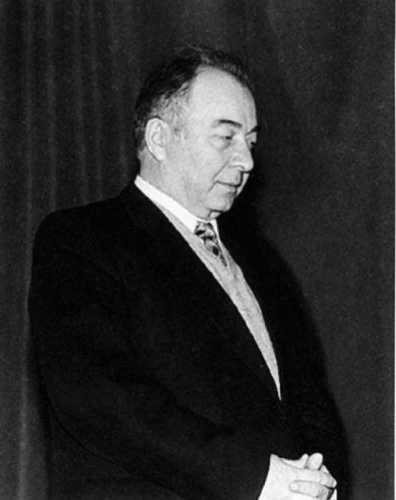
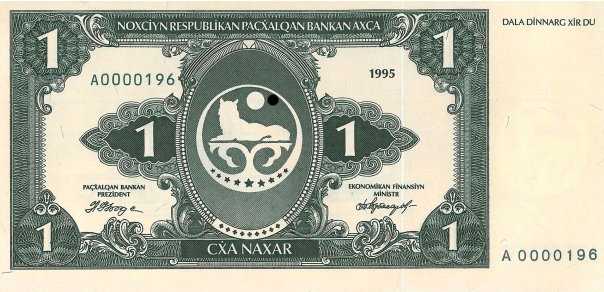


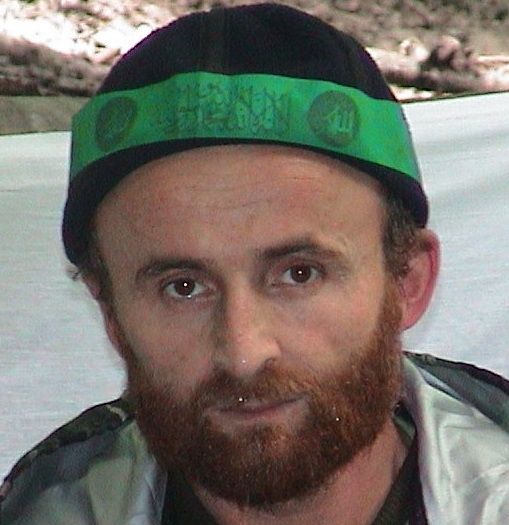
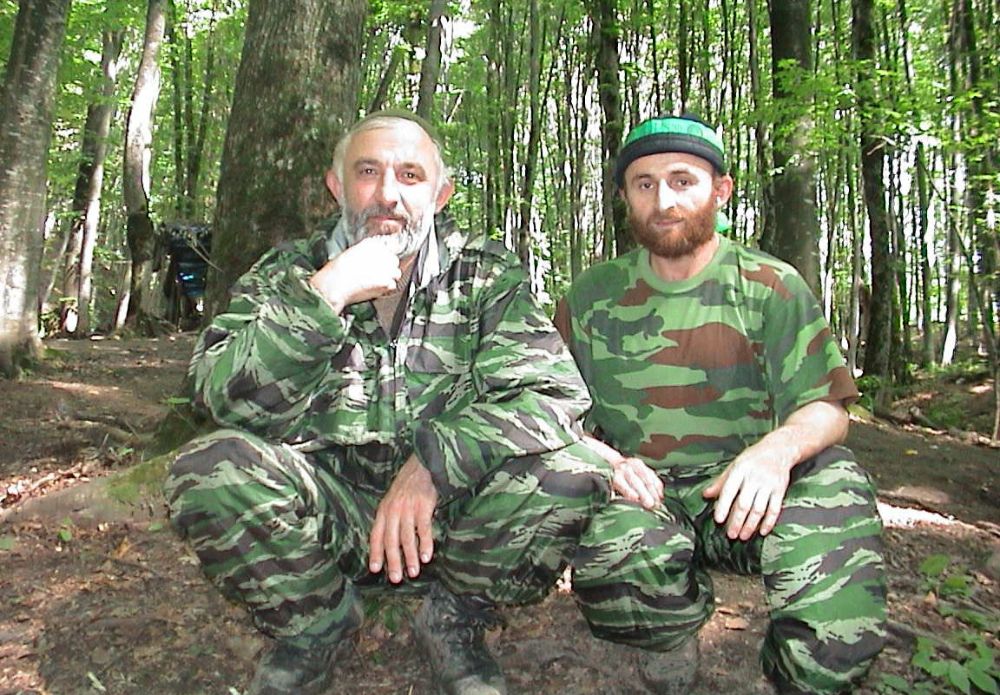
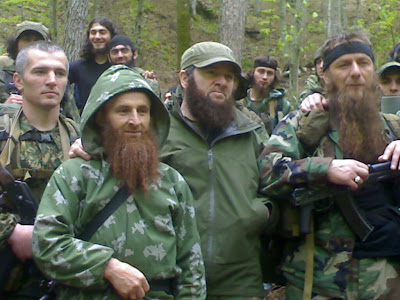


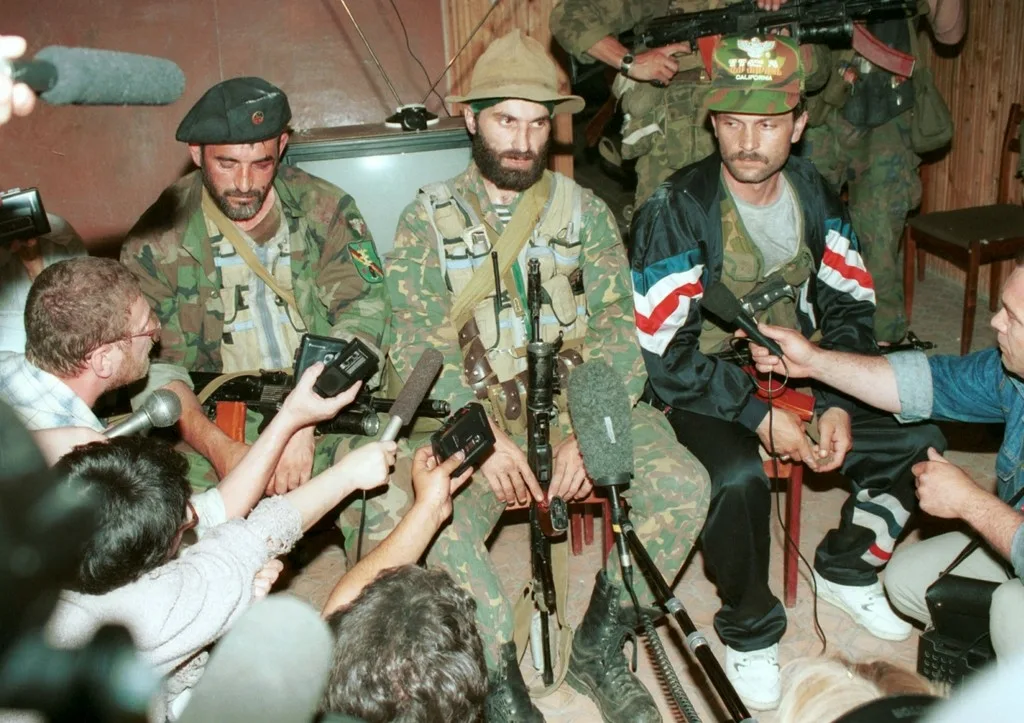


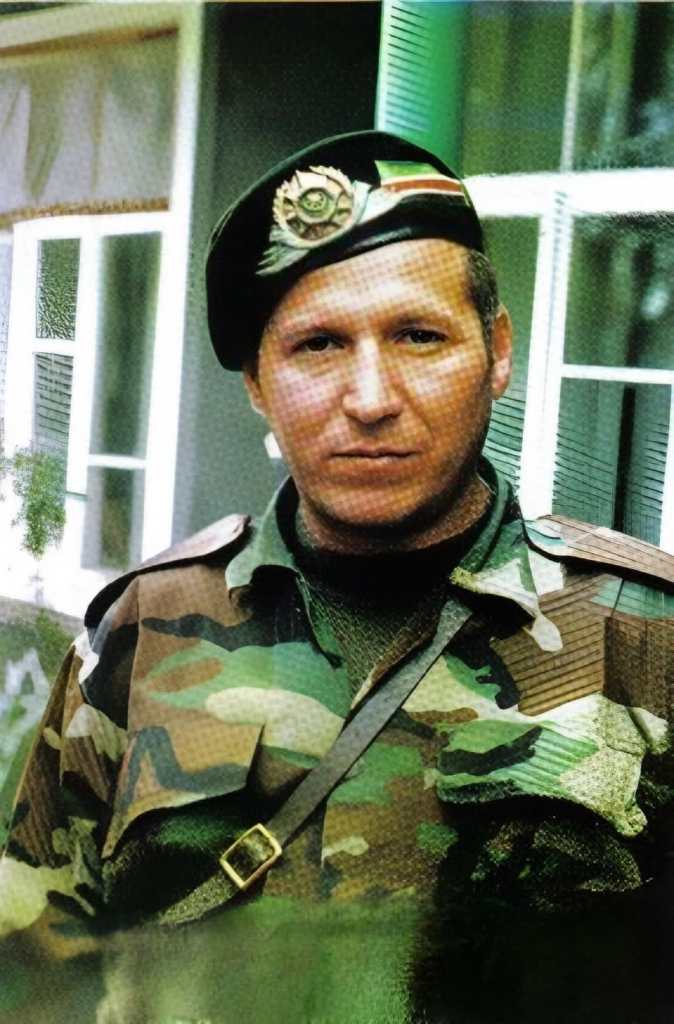


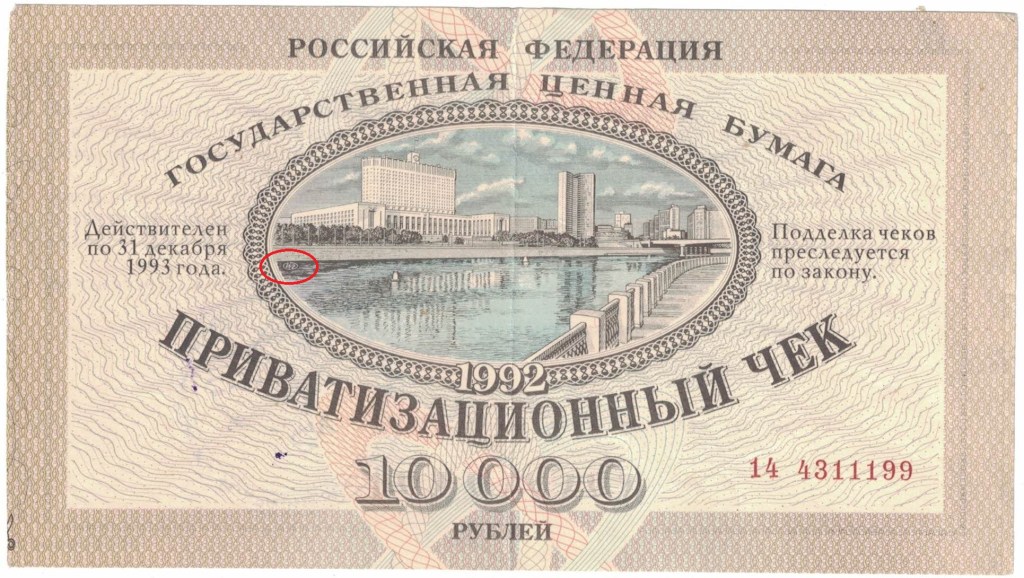


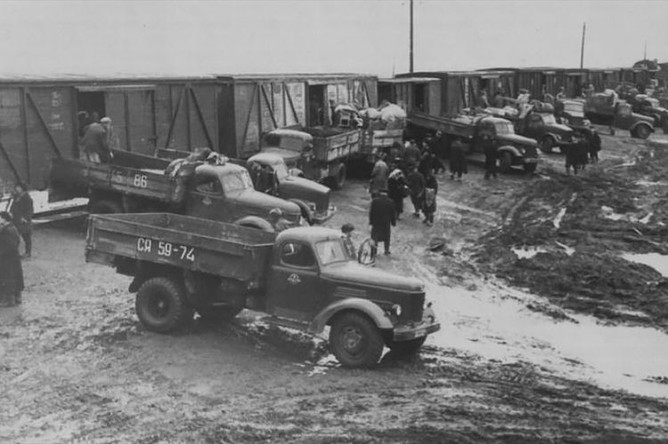
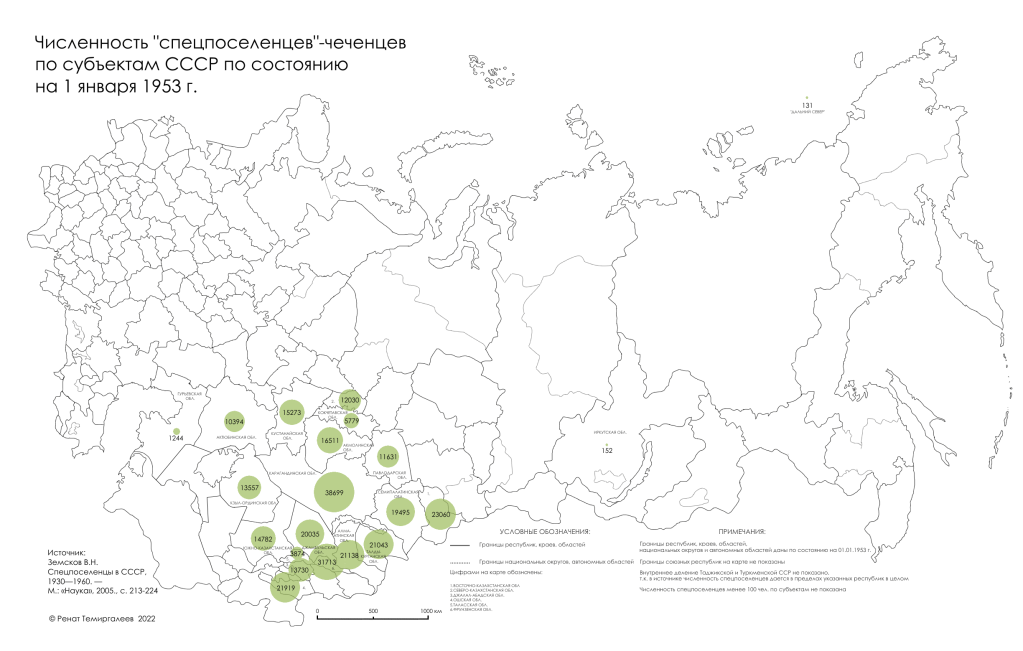


 Ichkeria Digital Archive