Archivi tag: Dudayev

September 6, 1991 – Assault to the Supreme Soviet

On the thirty-second anniversary of Chechen independence, we publish an excerpt from the first volume of “Freedom or Death! History of the Chechen Republic of Ichkeria” which retraces the events that led to the dissolution of the Chechen-Ingush Supreme Soviet, and the proclamation of independence.

————–

In early September, the echo of the August Putsch began to fade in Moscow and the main Russian cities, and Yeltsin was able to return to rest his gaze on the turbulent peripheries of the empire. Chechnya had gone into a state of turmoil, but the Russian president did not give too much weight to the alarming reports from the local Supreme Soviet. He was convinced that all that noise was nothing more than an anti-caste regurgitation as had been seen so many at that time in the USSR. He thought that it would be enough to replace Zavgaev with someone else to be able to calm the hearts of the people and restore Chechnya – Ingushetia to social peace. So he thought of Salambek Hadjiev, a professor who had made headlines a few months earlier, when he was appointed Minister of Chemical and Oil Industry of the Soviet government. Born in Kazakhstan, Hadjiev had earned a position in academia, graduating from the Grozny Petroleum Institute and then working on it until he became its director. A prolific researcher, he was a member of the Academy of Sciences, as well as one of the leading experts in the petrochemical sector in all of Russia. Known for being a moderate anti-militarist (he was head of the Committee for Chemical Weapons and Disarmament) he represented in all respects the “mature” alter ego of the leader Dudaev. Yeltsin appreciated him because he could speak to both intellectuals and entrepreneurs, had a modern vision of the state and was a hard worker. He seemed to have all the credentials to compete with the General, who had his nice uniform, good rhetoric and little else on his side. The idea of ​​replacing Zavgaev with Hadjiev also pleased the President of the Supreme Soviet Khasbulatov, who, as we have seen, certainly did not like the current First Secretary. Hadjiev, on the other hand, was a man of high intellectual qualities like him (who was a professor) and like him he had a moderate and reformist vision. Arranging one of “his” people in power in Chechnya would also have been convenient for him in terms of elections, so he worked to ensure that the change took place as soon as possible.

Khasbulatov then headed to Chechnya to secure a painless changing of the guard. His notoriety, now that he was at the top of the Soviet state, his culture and his political ability would have allowed him to oust his hateful rival and to install a viable alternative that averted civil war and favored his position. However, there was to be reckoned with the nationalists, who grew up in the shadow of the crisis and rebelled during the coup.

To vanquish them, Khasbulatov drew up a plan. From his point of view, the nationalists were an amalgam of disillusioned, desperate and opportunists, held together by a vanguard of young idealists unable to rule the beast they were raising. Faced on the terrain of political debate, most likely they would have ended up being reduced to a residual fraction. Only the context, according to him, allowed them to occupy the scene. Despair and lack of alternatives were the ingredients of the mixture that threatened to break out the revolution. To neutralize the threat it was necessary to “change the air”: the opposition had strengthened against Zavgaev and his corrupt regime, getting him out of the way was the first step. There was to replace him with someone who had good numbers. And Hadjiev seemed the right one. The solution, however, he could not descend from above. It was necessary to establish an alternative consensus front to Dudaev and for this it took time. The nationalists had conquered the streets riding the wave of the institutional crisis. Getting them bogged down in a political diatribe by letting time pass, while the situation normalized, would have deprived the Dudaevites (as the supporters of the General began to call themselves) the ground under their feet. As socio-political conditions stabilized, the desperate would be less and less desperate, the disillusioned less and less disillusioned. People would have listened to those who called for calm and reforms rather than revolution and war, and the radicals would be marginalized. Finally, with a good democratic election, the moderates would have won and the revolutionaries would have lost.

Doku Zavgayev

A perfect plan, in theory, which, however, was based on two significant variables. The first: that Dudaev and his people were too afraid to force their hand, thus leaving the initiative to him. The second: that the situation in Moscow did not degenerate further. And Khasbulatov, unfortunately for him, could not control either the first or the second. Yet somewhere we had to start and so, from 23 August, the President of the Supreme Soviet went to Grozny, accompanied by Hadjiev, with the intention of killing Zavgaev. In a turbulent meeting of the Presidium of the Supreme Soviet, to the First Secretary who begged him to authorize the proclamation of a state of emergency and to disperse the opposition, Khasbulatov replied that the use of force was absolutely to be avoided, and that the solution of the crisis should be political, which meant only one thing: resignation.

Having cornered Zavgaev, he went to test his opponent. His first conversation with Dudaev seemed to be promising: the General welcomed him with affability and agreed to his proposal to dissolve the Supreme Soviet and replace it with a provisional administration to ferry the country into the elections. Satisfied, he returned to Moscow convinced that he had brought home a good point. The real goal, however, was achieved by the leader of the nationalists. Discovering Khasbulatov’s cards, he was now clear that no one would raise a finger to defend the legitimate government of Chechnya – Ingushetia: a casus belli would be enough to force the hand and take control of the institutions. Thus, while Moscow was toasting to the happy solution of the crisis, in Grozny the Dudaevites took control of the city and besieged the government, now without an army to defend it. Nevertheless, Zavgaev did not intend to give up. His abdication could only have been imposed by a vote of the Supreme Soviet, and almost none of the deputies had any intention of endorsing it, considering that a moment later the Soviet itself would be dissolved. Thus the situation remained at a standstill for a few days, with the government not resigning and the nationalists not abandoning the streets.

Between 28 and 30 August Dudaev began to test Moscow’s reactions: the National Guard broke into numerous public buildings, occupying them and displacing anyone who opposed them. Not a breath came from Moscow. Then the General ordered the establishment of armed patrols to guard the streets, and once again there was no reaction. Chaos was taking over the country and nobody seemed to care that much[1].

On September 1, Dudaev called the third session of the Congress. The National Guard presided over the assembly. Armed volunteers erected barricades all around. A group of militiamen entered in the Sovmin, occupied it and lowered the flag of the Chechen-Ingush RSSA, hoisting the green banner of Islam in its place. There was no trace of the moderates: ousted in the June session, they were now unable to influence public opinion in any way. The scene was all for the great leader, who exhorted Ispolkom to declare the Supreme Soviet lapsed. The delegates promptly agreed to the proposal and declared the Executive Committee the only legitimate authority in Chechnya. Once again, the reactions from Moscow were tepid, and mostly superficial. Khasbulatov himself, underestimating the gravity of the situation, he thought that Zavgaev’s replacement would be enough to split the nationalist front in two. Now, according to him, it would be sufficient to force Zavgaev to leave and replace him with Hadjiev, or someone else, to put the radicals in the minority. In reality, what was happening in Grozny was something much more serious than the political game that Khasbulatov thought he was playing. Dudaev had almost all public opinion on his side, he had his armed guards and was setting up a real government.

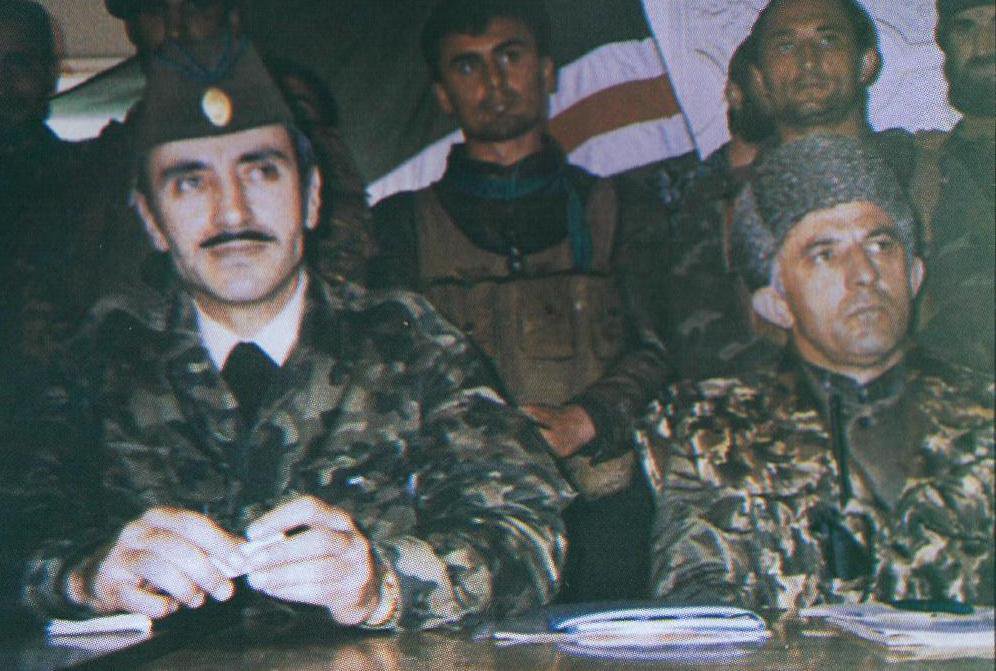
Dzhokhar Dudayev surrounded by his supporters

This was absolutely clear to the First Secretary, and it was even more so when on September 3, ignoring the directives of Moscow, he attempted to introduce a state of emergency through a resolution of the Presidium of the Supreme Soviet: no police or army department answered the call. While many of the Interior Ministry Militia men had already changed sides, those who had not taken a position simply avoided moving. Defeated again, Zavgaev remained holed up in the House of Political Education, where he had barricaded himself with his followers. Finally, on the evening of September 6, the National Guard also broke in there: a handful of men led by the Vice-President of Ispolkom Yusup Soslambekov entered the building. It is not known whether it was a premeditated action or the rise of agitation, the fact is that the crowd followed the militiamen and began to devastate everything. The deputies were beaten and silenced. Soslambekov placed in front of each of them a sheet and a pen and ordered them to write their resignations in their own hand. One by one, all the deputies signed. Under the threat of being executed on the spot, Zavgaev signed a waiver in which he “voluntarily” abandoned all public offices. Only the President of the Grozny City Council, Vitaly Kutsenko, refused to sign. When questioned by Soslambekov, he replied: I will not sign. What you are doing is illegal, it is a coup! Moments later Kutsenko flew from the third floor, crashing to the ground. He would later be hospitalized, where he would die in excruciating suffering[2]. The moderates condemned the assault, disassociated themselves publicly and withdrew from the National Movement, constituting an alternative Round Table to Congress. Zavgaev was driven out of Grozny and took refuge in Upper Terek District, his native land. In Grozny, Ispolkom began to operate as a real government, setting up commissions, issuing decrees and occupying public buildings.

In Moscow the news of the insurrection was received almost with disinterest. It took four days before a government delegation, made up of the Secretary of State, Barbulis, and the Minister of Press and Information, Poltoranin, arrived in Chechnya to try to resolve the crisis. With Dudaev, the two tried a “Soviet” approach: in the roaring years of the USSR, when a person represented a danger to the Party and could not be sent to a gulag to clear his mind, he was promoted and kept good. Poltoranin and Barbulis thought that if they offered Dudaev a leading role, he might take the chance to get out of that mess in exchange for a good job and a hefty pension. Unfortunately for them the General wasn’t just smarter than they thought, but he was also more courageous and determined, and he really believed in an independent Chechnya. So the meeting ended in a stalemate.

Khasbulatov meanwhile had returned to Chechnya, where he hoped to resume negotiations with Dudaev where he had left them. The meeting between the two was resolved with a new draft agreement: the “fallen” Supreme Soviet would be dissolved, and in its place a “provisional” Soviet would be established to deal with ordinary administration pending new elections. Representatives of Congress would also have participated in this executive. Comforted by the apparent concession of the nationalist leader, the President of the Russian Supreme Soviet spoke to the masses thronged in Lenin Square. In front of a large crowd (who even spoke of a hundred thousand demonstrators) invited everyone to calm down, asked for the demonstrations to be stopped and put all the blame on Zavgaev, ordering him in absentia not to show up unless he wanted to be taken to Moscow in an iron cage. Finally, when an extraordinary assembly of the Supreme Soviet was convened, he induced the deputies to resign and to establish a Provisional Soviet of 32 members, some from the old assembly and some from the ranks of the Executive Committee. The last act of the Chechen-Ingush Supreme Soviet was a decree calling for new elections for the following 17 November.
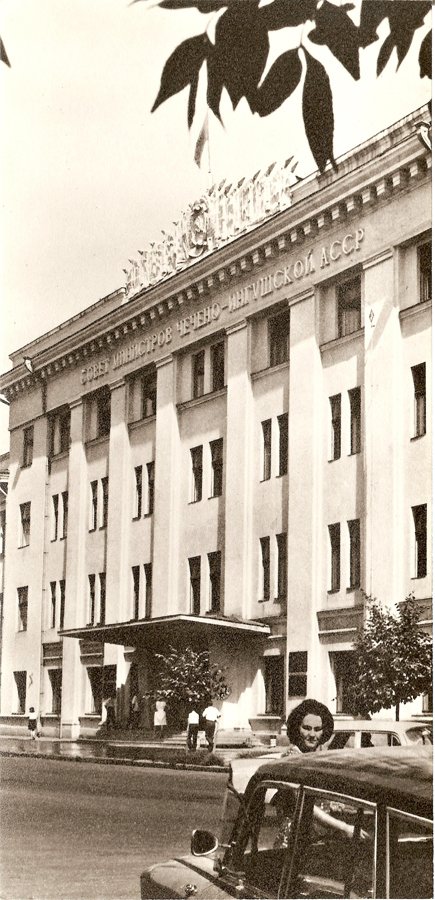
The building that housed the Presidium of the Chechen – Ingush Supreme Soviet

Once again it seemed that the situation had been recovered at the last minute, and Khasbulatov set about returning to his duties in Moscow not before Dudaev had fully recommended that the agreements be respected. He did not even have time to land in the Russian capital, which was greeted by a resolution of the Executive Committee of the Congress, just made to vote by Dudaev, in which Ispolkom recognized the Provisional Soviet as an expression of the will of the Congress, and warned him to go against the will expressed by it[3]. The declaration also contained an electoral calendar different from the one agreed: fearful that normalization would weaken their position, the nationalists decreed that elections would take place on October 19 and 27, respectively for the institutions of the President of the Republic and Parliament. Nobody in Moscow knew for sure which president and which parliament they were talking about: the Constitution of the Chechen-Ingush RSSA did not provide for any of these institutions. From the tone of the declaration it was now clear that the National Congress intended to proclaim full independence.


[1]The riots that broke out following the August Putsch had led to the paralysis of government departments, which was beginning to show its first harmful effects on everyday life. On August 28, about 400 inmates from the Naursk penal colony rose up, attacking the garrison of garrison, setting fire to the watchtowers, devastating the service rooms and occupying the prison facility. Two days later fifty of them, armed with handcrafted knives and weapons, occupied a wing of the building. All the others had escaped, dispersing among the demonstrators.

[2]It is unclear whether Kutsenko threw himself from the palace in a panic attack or was deliberately ousted. According to some, it was he who threw himself downstairs, beating his head against a cast iron manhole. Other versions speak of a guard of Dudaev, or of Soslambekov himself, who would have thrown him against a window when he refused to sign his resignation. Even regarding his hospitalization, the testimonies are conflicting. According to some, the angry mob attacked him, filling him with kicks and spit. Others, like Yandarbiev himself in his memoirs, say that Kutsenko was promptly picked up and taken to hospital, but he refused to be examined by any Chechen doctor for fear of being finished. As there were no Russian doctors available, he ended up in a coma, only to expire a few days later. However, the investigation into Kutsenko’s death would not have established any responsibility. The official version reported by the Prosecutor’s Office was that the President of the Grozny City Council voluntarily threw himself downstairs, frightened by the crowd.

[3]The text of the declaration, organized in sixteen programmatic points, began by condemning the Supreme Soviet, guilty of having lost the right to exercise legislative power, of having committed a betrayal of the interests of the people and of having wanted to favor the coup d’état. Some of the main political exponents of the Congress were appointed to the Provisional Soviet (Hussein Akhmadov as President, as well as other nationalists chosen from the ranks of the VDP). The Soviet would have operated in compliance with the mandate entrusted to it by Congress: if a crisis of confidence had occurred, this would have been rejected by the Executive Committee and promptly dissolved. The solidarity of parliaments around the world and of the countries that have just left the USSR was also invoked, in opposition to the attempt by the imperial forces to continue the genocide against the Chechen people.

06/09/1991 – Assalto al Soviet Supremo

Nel trentaduesimo anniversario dell’indipendenza cecena, pubblichiamo un estratto del primo volume di “Libertà o Morte! Storia della Repubblica Cecena di Ichkeria” nella quale si ripercorrono i fatti che portarono allo scioglimento del Soviet Supremo Ceceno – Inguscio, ed alla proclamazione dell’indipendenza cecena.

——————

Ai primi di Settembre l’eco del Putsch di Agosto iniziò ad attenuarsi a Mosca e nelle principali città russe, ed Eltsin poté tornare a posare lo sguardo sulle turbolente periferie dell’impero. La Cecenia era passata in stato di agitazione, ma il presidente russo non dava troppo peso ai rapporti allarmanti provenienti dal Soviet Supremo locale. Egli era convinto che tutto quel baccano altro non fosse che un rigurgito anticasta come se ne erano visti tanti in quel periodo nell’URSS. Pensò che sarebbe bastato sostituire Zavgaev con qualcun altro per poter placare gli animi della gente e riportare la Cecenia – Inguscezia alla pace sociale. Così pensò a Salambek Hadjiev, un professore che era salito agli onori della cronaca qualche mese prima, quando era stato nominato Ministro dell’Industria Chimica e del Petrolio del governo sovietico. Nato in Kazakhistan, Hadjiev si era conquistato una posizione in ambito accademico, diplomandosi all’Istituto Petrolifero di Grozny e poi lavorandoci fino a diventarne direttore. Prolifico ricercatore, era membro dell’Accademia delle Scienze, nonché uno dei massimi esperti del settore petrolchimico di tutta la Russia. Noto per essere un moderato antimilitarista (era capo del Comitato per le armi chimiche ed il disarmo) rappresentava a tutti gli effetti l’alter ego “maturo” del capopopolo Dudaev. Eltsin lo apprezzava perché sapeva parlare sia agli intellettuali che agli imprenditori, aveva una visione moderna dello Stato ed era un gran lavoratore. Sembrava avere tutte le carte in regola per competere con il Generale, il quale dalle sua aveva la sua bella divisa, una buona retorica e poco altro. L’idea di sostituire Zavgaev con Hadjiev piacque anche al Presidente del Soviet Supremo Khasbulatov, che come abbiamo visto non aveva certo in simpatia l’attuale Primo Segretario. Hadjiev invece era uomo di alte qualità intellettuali come lui (che era professore) e come lui aveva una visione moderata e riformista. Sistemare uno dei “suoi” al potere in Cecenia gli avrebbe fatto anche comodo in chiave elettorale, quindi si adoperò affinché il cambio avvenisse il prima possibile.

Doku Zavgaev

Khasbulatov si diresse quindi in Cecenia per assicurarsi un indolore cambio della guardia. La sua notorietà, ora che era al vertice dello stato sovietico, la sua cultura e la sua capacità politica gli avrebbero permesso di spodestare l’odioso rivale e di installare una valida alternativa che scongiurasse la guerra civile e favorisse la sua posizione. Tuttavia c’era da fare i conti con i nazionalisti, cresciuti all’ombra della crisi ed insorti durante il colpo di stato.

Per sgominarli Khasbulatov elaborò un piano. Dal suo punto di vista i nazionalisti erano un amalgama di disillusi, disperati e opportunisti, tenuto insieme da un’avanguardia di giovani idealisti incapaci di governare la bestia che stavano allevando. Affrontati sul terreno del dibattito politico, molto probabilmente avrebbero finito per ridursi ad una frazione residuale. Solo il contesto, secondo lui, permetteva loro di occupare la scena. Disperazione e mancanza di alternative erano gli ingredienti della miscela che rischiava di far scoppiare la rivoluzione. Per neutralizzare la minaccia bisognava “cambiare aria”: l’opposizione si era rafforzata contro Zavgaev ed il suo regime corrotto, toglierlo di mezzo era il primo passo da fare. C’era da sostituirlo con qualcuno che avesse dei buoni numeri. E Hadjiev sembrava quello giusto. La soluzione, tuttavia, non poteva calare dall’alto. Era necessario costituire un fronte di consenso alternativo a Dudaev e per questo serviva tempo. I nazionalisti avevano conquistato le piazze cavalcando l’onda della crisi istituzionale. Impantanarli in una diatriba politica lasciando passare il tempo, mentre la situazione si normalizzava, avrebbe tolto ai dudaeviti (così iniziavano a chiamarsi i sostenitori del Generale) il terreno sotto ai piedi. Man mano che le condizioni sociopolitiche si fossero stabilizzate i disperati sarebbero stati sempre meno disperati, i disillusi sempre meno disillusi. La gente avrebbe prestato orecchio a chi invocava la calma e le riforme anziché la rivoluzione e la guerra, ed i radicali sarebbero stati marginalizzati. Infine, con una bella elezione democratica i moderati avrebbero vinto e i rivoluzionari avrebbero perso. Fine della partita.

Un piano perfetto, nella teoria, che però si basava su due variabili non da poco. La Pima: che Dudaev ed i suoi avessero troppa paura di forzare la mano, lasciando così l’iniziativa a lui. La seconda: che a Mosca la situazione non degenerasse ulteriormente. E Khasbulatov, purtroppo per lui, non poteva controllare né la prima né la seconda. Eppure da qualche parte si doveva pur cominciare e così, dal 23 Agosto, il Presidente del Soviet Supremo si recò a Grozny, accompagnato da Hadjiev, con l’intenzione di far fuori Zavgaev. In una turbolenta riunione del Presidium del Soviet Supremo, al Primo Segretario che lo supplicava di autorizzare la proclamazione dello stato di emergenza e di disperdere l’opposizione, Khasbulatov rispose che il ricorso alla forza era tassativamente da evitare, e che la soluzione della crisi avrebbe dovuto essere assolutamente politica, il che significava una cosa sola: dimissioni.

Dopo aver messo Zavgaev con le spalle al muro, si recò a saggiare il suo avversario. Il suo primo colloquio con Dudaev sembrò essere promettente: il Generale lo accolse con affabilità ed accondiscese alla sua proposta di sciogliere il Soviet Supremo e sostituirlo con un’amministrazione provvisoria che traghettasse il Paese elle elezioni. Soddisfatto, rientrò a Mosca convinto di aver portato a casa un bel punto. Il vero obiettivo, tuttavia, lo aveva raggiunto proprio il leader dei nazionalisti. Scoprendo le carte di Khasbulatov, egli aveva ormai chiaro che nessuno avrebbe alzato un dito per difendere il legittimo governo della Cecenia – Inguscezia: sarebbe bastato un casus belli per forzare la mano e prendere il controllo delle istituzioni. Così, mentre a Mosca si brindava alla felice soluzione della crisi, a Grozny i dudaeviti prendevano il controllo della città ed assediavano il governo, ormai privo di un esercito che lo difendesse. Ciononostante Zavgaev non intendeva darsi per vinto. La sua abdicazione avrebbe potuto essere imposta soltanto da un voto del Soviet Supremo, e quasi nessuno dei deputati aveva intenzione di avallarlo, considerato che un attimo dopo lo stesso Soviet sarebbe stato sciolto. Così la situazione rimase in stallo per alcuni giorni, con il governo che non si dimetteva ed i nazionalisti che non abbandonavano le strade.

Dzhokhar Dudaev, circondato dai suoi sostenitori

Tra il 28 ed il 30 Agosto Dudaev iniziò a testare le reazioni di Mosca: la Guardia Nazionale irruppe in numerosi edifici pubblici, occupandoli e sloggiando chiunque vi si opponesse. Da Mosca non giunse un fiato. Allora il Generale ordinò la costituzione di ronde armate che presidiassero le strade, e ancora una volta non vi fu alcuna reazione. Il caos si stava impadronendo del Paese e sembrava che a nessuno importasse più di tanto[1].

Il 1 Settembre Dudaev convocò la terza sessione del Congresso. La Guardia Nazionale presidiava l’assemblea. Tutto intorno volontari armati erigevano barricate. Un gruppo di miliziani penetrò nel Sovmin, lo occupò ed ammainò la bandiera della RSSA Ceceno – Inguscia, issando al suo posto il drappo verde dell’Islam. Dei moderati non c’era più traccia: estromessi nella sessione di Giugno, erano ormai incapaci di condizionare in qualsiasi modo l’opinione pubblica. La scena era tutta per il grande capo, il quale esortò l’Ispolkom a decretare decaduto il Soviet Supremo e ad attribuirsi i pieni poteri. I delegati prontamente aderirono alla proposta, e dichiararono il Comitato Esecutivo unica autorità legittima in Cecenia. Ancora una volta, da Mosca, le reazioni furono tiepide, e per lo più di facciata. Lo stesso Khasbulatov, sottostimando la gravità della situazione, pensò che la sostituzione di Zavgaev sarebbe stata sufficiente a spaccare in due il fronte nazionalista. Adesso, secondo lui, sarebbe bastato costringere Zavgaev ad andarsene e sostituirlo con Hadjiev, o con qualcun altro, per mettere in minoranza i radicali. In realtà quello che stava succedendo a Grozny era qualcosa di molto più serio rispetto al gioco politico che Khasbulatov pensava di portare avanti. Dudaev aveva dalla sua parte quasi tutta l’opinione pubblica, aveva le sue guardie armate e stava costituendo un vero e proprio governo.

La cosa era assolutamente chiara al Primo Segretario, e lo fu ancora di più quando il 3 Settembre, ignorando le direttive di Mosca, egli tentò di introdurre lo stato di emergenza tramite una risoluzione del Presidium del Soviet Supremo: nessun reparto della polizia o dell’esercito rispose alla chiamata. Se molti uomini della Milizia del Ministero degli Interni avevano già cambiato bandiera, quelli che non avevano preso posizione semplicemente evitarono di muoversi. Nuovamente sconfitto, Zavgaev rimase rintanato nella Casa dell’Educazione Politica, dove si era asserragliato coi suoi seguaci. La sera del 6 Settembre, infine, la Guardia Nazionale irruppe anche là dentro: un manipolo di uomini guidato dal Vicepresidente dell’Ispolkom Yusup Soslambekov penetrò nell’edificio. Non si sa se fu un’azione premeditata o il salire dell’agitazione, fatto sta che la folla seguì i miliziani e si mise a devastare ogni cosa. I deputati furono pestati e ridotti al silenzio. Soslambekov mise davanti ad ognuno di loro un foglio ed una penna, ed ordinò che scrivessero le loro dimissioni di proprio pugno. Uno ad uno, tutti i deputati firmarono. Sotto la minaccia di essere giustiziato sul posto Zavgaev firmò un atto di rinuncia nel quale abbandonava “volontariamente” tutti gli incarichi pubblici. Soltanto il Presidente del Consiglio Comunale di Grozny, Vitaly Kutsenko, si rifiutò di firmare. Interrogato da Soslambekov, rispose: Non firmerò. Quello che stai facendo è illegale, è un colpo di Stato! Qualche attimo dopo Kutsenko volò dal terzo piano, schiantandosi al suolo. Più tardi sarebbe stato ricoverato in ospedale, dove sarebbe morto tra atroci sofferenze[2]. I moderati condannarono l’assalto, si dissociarono pubblicamente e fuoriuscirono dal Movimento Nazionale, costituendo una Tavola Rotonda alternativa al Congresso. Zavgaev fu cacciato da Grozny e si rifugiò nell’Alto Terek, sua terra natale. A Grozny l’Ispolkom iniziò ad operare come un vero e proprio governo, costituendo commissioni, emanando decreti ed occupando gli edifici pubblici.

Isa Akhyadov, futuro deputato al Parlamento di seconda convocazione, sulla statua di Lenin abbattuta

A Mosca la notizia dell’insurrezione fu accolta quasi con disinteresse. Ci vollero quattro giorni prima che una delegazione governativa, formata dal Segretario di Stato, Barbulis, e dal Ministro della Stampa e dell’Informazione, Poltoranin, giungesse in Cecenia per provare a ricomporre la crisi. Con Dudaev i due tentarono un approccio “alla sovietica”: negli anni ruggenti dell’URSS, quando un personaggio rappresentava un pericolo per il Partito e non lo si poteva inviare in un gulag a schiarirsi le idee, lo si promuoveva e lo si teneva buono. Poltoranin e Barbulis pensarono che se avessero offerto un ruolo di primo piano a Dudaev questi forse avrebbe colto la possibilità di uscire da quel casino in cambio di un buon posto ed una lauta pensione. Purtroppo per loro il Generale non era solo più furbo di quanto pensassero, ma era anche più coraggioso e determinato, ed in una Cecenia indipendente ci credeva davvero. Così l’incontro si risolse in un nulla di fatto.

Khasbulatov nel frattempo era rientrato in Cecenia, dove sperava di riprendere i negoziati con Dudaev dove li aveva lasciati. L’incontro tra i due si risolse con un nuovo progetto di accordo: il Soviet Supremo “decaduto” sarebbe stato sciolto, e al suo posto si sarebbe costituito un Soviet “provvisorio” che si occupasse dell’ordinaria amministrazione in attesa di nuove elezioni. A questo esecutivo avrebbero partecipato anche esponenti del Congresso. Confortato dall’apparente concessione del leader nazionalista, il Presidente del Soviet Supremo Russo parlò alle masse assiepate in Piazza Lenin. Davanti ad una nutrita folla (che chi addirittura parlò di centomila manifestanti) invitò tutti alla calma, chiese l’interruzione delle manifestazioni ed addossò tutta la colpa a Zavgaev, intimandogli in contumacia di non rifarsi vivo a meno che non volesse essere portato a Mosca in una gabbia di ferro. Infine, convocata un’assemblea straordinaria del Soviet Supremo, indusse i deputati a dimettersi ed a costituire un Soviet Provvisorio di 32 membri, alcuni provenienti dalla vecchia assemblea e alcuni dalle file del Comitato Esecutivo. L’ultimo atto del Soviet Supremo Ceceno – Inguscio fu un decreto con il quale si indicevano nuove elezioni per il 17 Novembre successivo.

Ancora una volta sembrò che la situazione fosse stata recuperata all’ultimo minuto, e Khasbulatov si accinse a tornare ai suoi doveri a Mosca non prima di aver avuto piena raccomandazione, da parte di Dudaev, del rispetto degli accordi. Non ebbe neanche il tempo di atterrare nella capitale russa che fu accolto da una delibera del Comitato Esecutivo del Congresso, appena fatta votare da Dudaev, nella quale l’Ispolkom riconosceva il Soviet Provvisorio come espressione della volontà del Congresso, e lo si diffidava ad andare contro la volontà espressa da esso[3]. La dichiarazione conteneva anche un calendario elettorale diverso da quello concordato: timorosi che la normalizzazione avrebbe indebolito la loro posizione, i nazionalisti decretarono che le elezioni si sarebbero svolte il 19 ed il 27 Ottobre, rispettivamente per le istituzioni del Presidente della Repubblica e del Parlamento. Di quale presidente e di quale parlamento si stesse parlando, a Mosca nessuno lo sapeva con certezza: la Costituzione della RSSA Ceceno – Inguscia non prevedeva nessuna di queste istituzioni. Dal tono della dichiarazione era ormai evidente che il Congresso Nazionale aveva intenzione di proclamare la piena indipendenza.

L’edificio che ospitava il Presidium del Soviet Supremo Ceceno – Inguscio

[1] I disordini esplosi a seguito del Putsch di Agosto avevano portato alla paralisi dei dicasteri governativi, la quale iniziava a mostrare i suoi primi effetti nefasti sulla vita di tutti i giorni. Il 28 Agosto circa quattrocento detenuti della colonia penale di Naursk insorsero, attaccando la guarnigione di presidio, dando alle fiamme le torri di guardia devastando i locali di servizio ed occupando la struttura penitenziaria. Ancora due giorni dopo cinquanta di loro, armati di coltelli ed armi artigianali occupavano un’ala dell’edificio. Tutti gli altri erano evasi, disperdendosi tra i manifestanti.

[2] Non è chiaro se Kutsenko si lanciò dal palazzo in un attacco di panico o se fu deliberatamente defenestrato. Secondo alcuni fu lui stesso a buttarsi di sotto, battendo la testa contro un tombino di ghisa. Altre versioni parlano di una guardia di Dudaev, o dello stesso Soslambekov, il quale lo avrebbe scaraventato contro una finestra al suo rifiuto di firmare le sue dimissioni. Anche riguardo al suo ricovero le testimonianze sono discordanti. Secondo alcuni la folla inferocita si accanì su di lui riempiendolo di calci e sputi. Altri, come lo stesso Yandarbiev nelle sue memorie raccontano che Kutsenko venne prontamente raccolto e portato in ospedale, ma si rifiutò di farsi visitare da qualsiasi medico ceceno per paura di essere finito. Non essendoci medici russi a disposizione finì in coma, per poi spirare qualche giorno dopo. Le indagini riguardo la morte di Kutsenko non avrebbero comunque acclarato nessuna responsabilità. La versione ufficiale riportata dalla Procura fu che il Presidente del Consiglio Comunale di Grozny si era volontariamente buttato di sotto, impaurito dalla calca.

[3] Il testo della dichiarazione, organizzato in sedici punti programmatici, iniziava condannando il Soviet Supremo, colpevole di aver perduto il diritto di esercitare il potere legislativo, di aver compiuto un tradimento degli interessi del popolo e di aver voluto favorire il colpo di Stato. Al Soviet Provvisorio venivano nominati alcuni dei principali esponenti politici del Congresso (Hussein Akhmadov come Presidente, oltre ad altri nazionalisti scelti tra le file del VDP). Il Soviet avrebbe operato nel rispetto del mandato affidatogli dal Congresso: se si fosse verificata una crisi di fiducia questo sarebbe stato ricusato dal Comitato Esecutivo e prontamente sciolto. Si invocava inoltre la solidarietà dei Parlamenti di tutto il mondo e dei paesi appena usciti dall’URSS, in opposizione al tentativo delle forze imperiali di interferire e continuare il genocidio contro il popolo ceceno.

War Memories: Francesco Benedetti interviews Akhmed Zakayev (Part 1)

The following is the transcript of the first part of the interview between Francesco Benedetti and Akhmed Zakayev conducted by Inna Kurochkina for INEWS (we attach the link to the original video, which will soon be accompanied by English and Italian subtitles)

1. On December 6, 1994, a few days before the federal army invaded Chechnya, a delegation appointed by Dudayev went to Vladikavkaz to confer with the Russian Minister for Nationalities, Mikhailov. In your memoirs you say that a certain number of oil entrepreneurs joined the delegation led by the Minister of Economy Abubakarov. What do you think was the purpose of their presence? Is it possible that among the proposals that the delegation should have presented was an agreement on the exploitation of Chechen oil, or on the exploitation of Chechen refineries?

At that moment and during that period, the presence in this delegation of the Minister of Economy and Finance Abubakarov, Deputy Prime Minister Amaliyev, was not associated with any possible agreements on the operation of oil refineries. They were then our representatives and proxies of Dzhokhar Dudayev. Not only did they “join”, they were included in this delegation. And from there they went from Kizlyar to Moscow, to further study the issue of preventing military aggression from Russia, to prevent a war. Dzhokhar did everything possible to prevent the outbreak of hostilities in Chechnya. And practically our delegation was in Moscow, headed by Tyushi Amaliyev, with Abubakarov, the Minister of Finance and Economy, and when Russia began to bomb Grozny. On December 11, despite everything, Yeltsin signed a decree on the introduction of troops and the start of a military campaign. Therefore, at that moment and in that period, it was not about the operation of oil wells, or rather, the use of oil refineries, or the Chechen oil that was produced at that time.

2. At the outbreak of war you placed yourself in the service of President Dudayev, and within a few months you were given the task of setting up an autonomous front. At the time you were the Minister of Culture, certainly no one expected you to take up arms and fight a war. Why did you decide to enlist?

(laughs)

The fact is that I did not go to the service of Dudayev. I was appointed Minister of Culture of the Chechen Republic of Ichkeria by Dudayev’s decree. No one served anyone or anyone. We worked for our state, and Dzhokhar Dudayev, as president, had the authority to appoint and dismiss. My appointment was in October, when Dzhokhar Dudayev offered me to work in his team. I accepted it despite everything that happened. I just say in my book that for me there was no difference, it was absolutely obvious that there would be a war. And I told to Dzhokhar: “Dzhokhar, it makes no difference to me in whose capacity I will defend our fatherland, my place is here, with my people. Whether a janitor, whether a minister .. ” And Dzhokhar then said, I remember his words, I just wrote about it. He said: “No, there will be no war. The world will not allow this. I won’t allow it. There will be no war, we need to do creative work. And your place is exactly in this direction. And so you must accept my offer.” I accepted this offer. I returned to the republic, and already on the first day, November 18, I officially went to work, and on November 26 the war began. In principle, this is the first invasion of Russian troops under the pretext of the “Chechen opposition” into the city of Grozny, where they were defeated.

And now for the second part of the question. The fact is that according to our legislation, I think that it is the same in Italy, the same laws, members of the Government, if a war starts, they become liable for military service, regardless of their positions. Culture, or art, it doesn’t matter, everyone becomes liable for military service. I, in principle, before I was appointed commander of the seventh front, I joined the people’s militia. I remember that day, December 28, when my office of the Ministry of Culture, in the Mayor’s Office building, was bombed, and on the same day I… There were people on the square who signed up as volunteers for the people’s militia. I signed up for this people’s militia, and only on January 11, Dzhokhar recalled me from my position as Minister of Culture, because a meeting of the Government was scheduled. And I returned from my positions to the Government meeting on January 11. And on this day Dzhokhar entrusted me with another task, I also wrote about this in my memoirs, and later, already in March, when the city was abandoned and we retreated to the foothills, at that time Dzhokhar signed the Decree on the creation of the Seventh Front and appointed me Commander. That is, we began to form this front, in general, from scratch.

3. After the fall of Grozny in Russian hands, and the withdrawal of the Chechen forces on the mountain defense line, the government was reorganized in order to make up for the defections of some senior officials, but also to function more streamlined in a context of total war. This “war government”  continued to function throughout the duration of the conflict, and overcame the death of Dudayev, placing itself at the disposal of the Interim President, Yandarbiev. How did this government operate, and how did it manage to meet, to keep in touch with the President?

The Military Government, what you call the Military Government, was the State Defense Committee, which was formed by Presidential Decree when the military aggression began. And this body was the Supreme State Organ. Parliament stopped its legislative activity. The government had already been transferred to a military footing, and the State Defense Committee was formed as the Supreme Body of State Power. It included members of the Government, members of Parliament, the Leading Military Command represented by the General Staff, and Commanders of Fronts and Directions. And this Government functioned all this period. How were the meetings? Naturally, we all knew where the Supreme Commander-in-Chief was located, in which part of the republic. And periodically he convened a meeting of the State Defense Committee, and we discussed issues related to the continuation of resistance, with defense. Questions of a military nature were discussed in connection with the preparation of military operations or attacks on enemy territory.

All these points were discussed at the meeting of the State Defense Committee, and it functioned very effectively. It was a small number of people, but they were people who were directly involved in all processes – political, military, economic issues. These questions were also not the last ones, because providing the units with the necessary provisions, this was also within the competence, the questions of the State Defense Committee. And all these issues were discussed and functioned very effectively due precisely to the fact that Dzhokhar Dudayev did not go into deep underground, into forests, into the mountains, where it would be impossible to get him, he held personal meetings with all units, not only with the State Defense Committee but also with military units. He went to the front line, to the front line, met with ordinary soldiers. And now all our defense and all our resistance fighters, they all took a very responsible attitude to which side Dzhokhar Dudayev was on. I mean, along the front line, where active hostilities are taking place, the soldiers knew that behind them, behind their shoulders, there was already the Headquarters of the Supreme Commander. Or they disputed, along the Argun River, when he crossed over to the other side, those parts of the resistance, the Armed Forces took it for pride, proudly announced that the Supreme Commander was now on our side of the front. There was a very friendly atmosphere. When I remember these times, this period, despite all the difficulties that we then experienced, there was a war, but the people were different. We were different. The Chechens were completely different. They were different from today’s Chechens, who live in the territory and who are outside. And all this was connected, I think, with the fact that we were under Soviet occupation for seventy years, and for the first time we had a chance to build our own state. Independent state. And now the leader of this movement and the state, and later the leader of the Defense and the leader of the national liberation movement, he inspired in many ways and not only the fighters, but the entire Chechen people to resist and repel aggression. These were simply amazing times in the history of the Chechen people, when the whole people actually accomplished a feat. It was thanks to the feat of the Chechen people that we managed then to preserve both the power structures and what we were doing. And basically win.

4. Between March and May 1995, according to what you refer in your memoirs, you were in charge of setting up, in record time and with almost non-existent resources, the so-called “Seventh Front” south of Urus – Martan, which would serve as a point of contact between the stronghold of Bamut and the rest of the Chechen deployment. In your book you tell how the Seventh Front was born. Could you explain how it developed, which units made it up, and which operations it carried out until June 1995?

This happened in March, Dzhokhar Dudayev signed a decree. By this time, all our units had moved to the foothills, when the flat part was already mainly under the control of the Russian aggressors, and the foothills remained, starting from Bamut and to Alkhazurov, in this direction, and there further up, to the Grozny region, Chishki, Dacha Borzoi. This side was not yet occupied by the Russians, and it was necessary to create a unified defense in this direction, from Bamut to Alkhazurov. And the consciousness of the Seventh Front, and the task of the Seventh Front, was precisely this. And it practically turned out basically, this is the so-called Urus – Martanovsky district, it was believed that this area was loyal to Russia, the Russian aggressors, because the occupation regime functioned there, the occupation power structures, headed by Yusup Elmurzaev, the then prefect, who was appointed occupation mode. The creation of this front and the main task was the creation of military bases in the three gorges. These are Martan Chu, Tangi Chu, Roshni Chu. It was in these three gorges that we formed three military bases in just a few months. Although at the time when the decree was signed, there were practically no military units there. There were only militias, people who were part of the people’s militia, but there was no centralized command, and we in a short time, from those units, from those people’s militias that were then in this region, we created this Seventh Front, and a centralized military unit, under the centralized command of the Supreme Commander-in-Chief Dzhokhar Dudayev. Subsequently, this Seventh Front was already transformed into Sectors – the South-Western Front and Three Sectors – the First, Second, Third Sector. These sectors were under my responsibility.

Later I was in charge of the Third Sector of the Southwestern Front. Speaking by surname, these are, in principle, our young middle-level commanders, Dokka Makhaev, Dokka Umarov, Khamzat Labazanov, Isa Munaev, all these guys … Akhyad (I will not name him by his last name, because he is alive and is on the territory), Khusein Isabaev, these guys, then the middle link of commanders who headed these Sectors, and this Direction. Although it was already such a single military unit, which was part of the Armed Forces and had already been structured into the General Staff of the Armed Forces of the CRI.

5. In the spring of 1995 you could consider yourself one of the main army officers of the ChRI, therefore you were definitely monitored by the FSB, and by the intelligence of the Russian army. How did federal forces try to stop you and other senior officers from participating in the resistance? And how did you manage to evade Russian attempts to track you down?

First of all, God protected us. And, secondly, it is the Chechens and the Chechen people. We were at home. We were in our native villages, in our native settlements. And of course, the Chechen people, in fact, were the main protection of those who were then in the Armed Forces. And President Dzhokhar Dudayev, you know, the republic is small, all this time he was among the Chechens, he was in different settlements, and every village where the fighters stopped, although there were also opposition-minded and cowardly people, but in general, our supporters, supporters and independence, and those who supported our national liberation movement, they were much stronger and were much more numerous. They managed to prevent both assassination attempts and those ambushes that set not only me, but also those who were then involved and were listed in the ranks, as you said, in the highest composition of the Command, and all of them were protected by the Chechen people. And, of course, not everything was under the control of either the FSB or the Russians. Life and death are in the hands of God. And those reasons, those actions that were taken by us in order to survive, and what the Chechens did with us, the Chechen people, protecting their commanders, people who defended their homeland, their fatherland and themselves.

Memorie di Guerra: Francesco Benedetti intervista Akhmed Zakayev (Parte 1)

Quella che segue è la trascrizione della prima parte dell’intervista tra Francesco Benedetti ed Akhmed Zakayev realizzata da Inna Kurochkina per INEWS (alleghiamo il link al video originale, che presto sarà accompagnato da sottotitoli in inglese ed italiano)

1. Il 6 dicembre 1994, pochi giorni prima che l’esercito federale invadesse la Cecenia, una delegazione nominata da Dudayev si recò a Vladikavkaz per conferire con il ministro russo per le Nazionalità, Mikhailov. Nelle sue memorie lei dice che un certo numero di imprenditori petroliferi si è unito alla delegazione guidata dal ministro dell’Economia Abubakarov. Quale pensa fosse lo scopo della loro presenza? È possibile che tra le proposte che la delegazione avrebbe dovuto presentare ci fosse un accordo sullo sfruttamento del petrolio ceceno o sullo sfruttamento delle raffinerie cecene?

In quel momento e durante quel periodo, la presenza in questa delegazione del Ministro dell’Economia e delle Finanze Abubakarov, e del Vice Primo Ministro Amaliyev, non era associata ad alcun possibile accordo sul funzionamento delle raffinerie di petrolio. Erano i nostri rappresentanti e delegati di Dzhokhar Dudayev. Non solo hanno “aderito”, ma sono stati inclusi in questa delegazione. E da lì sono andati da Kizlyar a Mosca, per approfondire la questione della prevenzione dell’aggressione militare dalla Russia, per prevenire una guerra. Dzhokhar ha fatto tutto il possibile per prevenire lo scoppio delle ostilità in Cecenia. E praticamente la nostra delegazione era a Mosca, guidata da Tyushi Amaliyev, con Abubakarov, il ministro delle finanze e dell’economia, quando la Russia ha iniziato a bombardare Grozny. L’11 dicembre, nonostante tutto, Eltsin ha firmato un decreto sull’introduzione delle truppe e l’inizio di una campagna militare. Quindi, in quel momento e in quel periodo, non si trattava del funzionamento dei pozzi petroliferi, o meglio, dell’utilizzo delle raffinerie di petrolio, o del petrolio ceceno che si produceva in quel momento.

2. Allo scoppio della guerra lei si è messo al servizio del presidente Dudayev e nel giro di pochi mesi le è stato affidato il compito di allestire un fronte autonomo. All’epoca lei era Ministro della Cultura, di certo nessuno si aspettava che prendesse le armi e facesse la guerra. Perché ha deciso di arruolarsi?

(ride)

Il fatto è che non sono andato al servizio di Dudayev. Sono stato nominato ministro della cultura della Repubblica cecena di Ichkeria con decreto di Dudayev. Nessuno ha servito nessuno. Abbiamo lavorato per il nostro stato e Dzhokhar Dudayev, in qualità di presidente, aveva l’autorità di nominare e revocare. La mia nomina fu in ottobre, quando Dzhokhar Dudayev mi ha offerto di lavorare nella sua squadra. L’ho accettata nonostante tutto quello che è successo. Dico solo nel mio libro che per me non c’era differenza, era assolutamente ovvio che ci sarebbe stata una guerra. E ho detto a Dzhokhar: “Dzhokhar, non fa differenza per me in quale veste difenderò la nostra patria, il mio posto è qui, con la mia gente. Come un bidello, o come un ministro .. ” Dzhokhar ha poi detto, ricordo le sue parole, ne ho appena scritto. Egli ha detto: “No, non ci sarà nessuna guerra. Il mondo non lo permetterà. Non lo permetterò. Non ci sarà la guerra, dobbiamo fare un lavoro creativo. E il tuo posto è esattamente in questa direzione. E quindi devi accettare la mia offerta. Ho accettato questa offerta. Sono tornato nella repubblica e già il primo giorno, il 18 novembre, sono andato ufficialmente a lavorare e il 26 novembre è iniziata la guerra.

In linea di principio, questa è la prima invasione delle truppe russe con il pretesto della ‘”opposizione cecena” nella città di Grozny, dove furono sconfitte. E ora per la seconda parte della domanda. Il fatto è che secondo la nostra legislazione, penso che sia lo stesso in Italia, i membri del governo, se inizia una guerra, diventano responsabili del servizio militare, indipendentemente dalla loro posizione. Cultura, o arte, non importa, tutti diventano responsabili del servizio militare. Io, in linea di principio, prima di essere nominato comandante del settimo fronte, mi sono unito alla milizia popolare. Ricordo quel giorno, il 28 dicembre, quando fu bombardato il mio ufficio del Ministero della Cultura, nel palazzo del Sindaco, e lo stesso giorno io… C’era gente in piazza che si arruolava volontaria nella milizia popolare. Mi sono iscritto alla milizia e solo l’11 gennaio Dzhokhar mi ha richiamato dalla carica di ministro della Cultura, perché era prevista una riunione del governo. E sono tornato dalle mie posizioni alla riunione del governo l’11 gennaio. E in questo giorno Dzhokhar mi ha affidato un altro compito, ne ho scritto anche nelle mie memorie, e poi, già a marzo, quando la città è stata abbandonata e ci siamo ritirati a piedi, a quel tempo Dzhokhar firmò il Decreto sulla creazione del Settimo Fronte e mi nominò Comandante. Cioè, abbiamo iniziato a formare questo fronte, in generale, da zero.

3. Dopo la caduta di Grozny in mano russa, e il ritiro delle forze cecene sulla linea di difesa della montagna, il governo è stato riorganizzato per sopperire alle defezioni di alcuni alti funzionari, ma anche per funzionare in modo più snello in un contesto di guerra totale. Questo “governo di guerra” ha continuato a funzionare per tutto il durata del conflitto, e superò la morte di Dudayev, mettendosi a disposizione del Presidente ad interim, Yandarbiev. Come ha operato questo governo, e come è riuscito a incontrarsi, a tenersi in contatto con il Presidente?

Il Governo Militare, quello che tu chiami il Governo Militare, era il Comitato di Difesa dello Stato, formatosi con Decreto Presidenziale quando iniziò l’aggressione militare. E questo corpo era l’organo supremo dello Stato. Il Parlamento ha interrotto la sua attività legislativa. Il governo era già stato trasferito su una base militare e il Comitato di difesa dello Stato era stato formato come Organo supremo del potere statale. Comprendeva membri del Governo, membri del Parlamento, il Comando Militare Principale rappresentato dallo Stato Maggiore Generale, i Comandanti di Fronti e Direzioni. E questo governo ha funzionato per tutto questo periodo. Come sono stati gli incontri? Naturalmente, sapevamo tutti dove si trovava il comandante in capo supremo, in quale parte della repubblica. E periodicamente convocava una riunione del Comitato per la difesa dello Stato, e discutevamo questioni relative alla continuazione della resistenza. Sono state discusse questioni di natura militare in relazione alla preparazione di operazioni militari o attacchi al territorio nemico. Tutti questi punti sono stati discussi durante la riunione del Comitato per la difesa dello Stato, che ha funzionato in modo molto efficace. Era un piccolo numero di persone, ma erano persone direttamente coinvolte in tutti i processi: questioni politiche, militari, economiche. Questi compiti non erano gli unici che avevamo, perché dovevamo anche fornire alle unità le disposizioni necessarie, anche questo era di competenza del Comitato per la difesa dello Stato. E tutte queste questioni sono state discusse e hanno funzionato in modo molto efficace proprio per il fatto che Dzhokhar Dudayev non è andato sottoterra, nelle foreste, nelle montagne, dove sarebbe stato impossibile rintracciarlo, ma ha tenuto incontri personali con tutte le unità, no solo con il Comitato di Difesa dello Stato ma anche con le unità militari. È andato in prima linea, al fronte, ha incontrato soldati ordinari. E tutta la nostra difesa e tutti i nostri combattenti della resistenza, hanno assunto un atteggiamento molto responsabile perché dietro di loro c’era Dzhokhar Dudayev. Voglio dire, lungo la linea del fronte, dove si svolgevano le ostilità attive, i soldati sapevano che dietro di loro, dietro le loro spalle, c’era già il quartier generale del comandante supremo.

Quando [Dudaev] attraversava l’Argun, andando dall’altra parte, le Forze Armate [che operavano lì] hanno annunciato con orgoglio che il Comandante Supremo era ora dalla loro  parte del fronte. C’era un’atmosfera molto amichevole. Quando ricordo questi tempi, questo periodo, noto che nonostante tutte le difficoltà che abbiamo vissuto allora, c’era una guerra, ma le persone erano diverse. Eravamo diversi. I ceceni erano completamente diversi. Erano diversi dai ceceni di oggi, quelli che vivono nel territorio e quelli che sono fuori. E tutto ciò era collegato, credo, al fatto che siamo stati sotto l’occupazione sovietica per settant’anni e per la prima volta abbiamo avuto la possibilità di costruire il nostro stato. Stato indipendente. E il leader di questo movimento e dello stato, e in seguito il leader della Difesa e il leader del movimento di liberazione nazionale, ha ispirato in molti modi e non solo i combattenti, ma l’intero popolo ceceno a resistere e respingere l’aggressione. Erano tempi semplicemente fantastici nella storia del popolo ceceno, quando l’intero popolo ha effettivamente compiuto un’impresa. È stato grazie all’impresa del popolo ceceno che siamo riusciti a preservare le strutture di potere che ciò che stavamo costruendo. E fondamentalmente a vincere.

4. Tra marzo e maggio 1995, secondo quanto lei riferisce nelle sue memorie, lei si è occupato di allestire, a tempo di record e con mezzi pressoché inesistenti, il cosiddetto “Settimo fronte” a sud di Urus – Martan, che avrebbe dovuto essere il punto di contatto tra la roccaforte di Bamut e il resto dello schieramento ceceno. Nel suo libro racconta di come è nato il Settimo Fronte. Potrebbe spiegarci come si è sviluppato, quali unità lo componevano e quali operazioni ha svolto fino al giugno 1995?

Questo è successo a marzo, Dzhokhar Dudayev ha firmato un decreto. A questo punto tutte le nostre unità si erano spostate ai piedi delle montagne, perchè la parte pianeggiante era già principalmente sotto il controllo degli aggressori russi, e rimanevano i contrafforti, a partire da Bamut e ad Alkhazurovo, in questa direzione, e lì più in alto, verso la regione di Grozny, a Chishki, a Dacha Borzoi. Questa parte non era ancora occupata dai russi, ed era necessario creare una difesa unificata in questa direzione, da Bamut ad Alkhazurovo. E lo scopo del Settimo Fronte, il compito del Settimo Fronte, era proprio questo. Questo è il cosiddetto distretto di Urus – Martanovsky. Si credeva che quest’area fosse fedele alla Russia, agli aggressori russi, perché lì funzionava il regime di occupazione, le strutture del potere di occupazione, guidate da Yusup Elmurzaev, l’allora prefetto, che fu nominato dalle autorità di occupazione. Il compito principale  di questo fronte era la creazione di basi militari in tre gole: Martan Chu, Tangi Chu, Roshni Chu. Fu in queste tre gole che in pochi mesi formammo tre basi militari. Sebbene al momento della firma del decreto, non vi fossero praticamente unità militari (c’erano solo milizie, persone che facevano parte della milizia popolare, ma non c’era un comando centralizzato) noi in breve tempo, da quelle unità, da quelle milizie popolari che erano allora in questa regione, creammo questo Settimo Fronte, e un’unità militare centralizzata, sotto il comando del Comandante in Capo Supremo Dzhokhar Dudayev. Successivamente, questo Settimo Fronte fu trasformato in Settori del Fronte Sud-Occidentale: Il Primo, il Secondo, e ilTerzo Settore. Questi settori erano sotto la mia responsabilità. Successivamente sono stato responsabile del Terzo Settore del Fronte Sudoccidentale. Citando i cognomi, questi sono, in linea di massima, i nostri giovani comandanti di medio livello, Dokka Makhaev, Dokka Umarov, Khamzat Labazanov, Isa Munaev, questi ragazzi …

Akhyad (non lo chiamerò con il suo cognome, perché è vivo ed è sul territorio), Khusein Isabaev, erano questi ragazzi l’anello intermedio dei comandanti che guidavano questi settori e questa direzione. Sebbene fosse già un’unica unità militare, che faceva parte delle Forze Armate ed era già stata strutturata nello Stato Maggiore delle Forze Armate della CRI.

5. Nella primavera del 1995 lei poteva considerarsi uno dei principali ufficiali dell’esercito della ChRI, ed era sicuramente monitorato dall’FSB e dall’intelligence dell’esercito russo. In che modo le forze federali hanno cercato di impedire a lei e ad altri alti ufficiali di partecipare alla resistenza? E come siete riusciti a eluderle?

Prima di tutto, Dio ci ha protetti. E, in secondo luogo, sono stati i ceceni e il popolo ceceno. Eravamo a casa. Eravamo nei nostri villaggi nativi, nei nostri insediamenti nativi. E, naturalmente, il popolo ceceno era la principale protezione di coloro che erano allora nelle forze armate. E il presidente Dzhokhar Dudayev, sai, la repubblica è piccola, per tutto questo tempo è stato tra i ceceni, era in diversi insediamenti, in ogni villaggio dove i combattenti si sono fermati, anche se c’erano anche persone di mentalità opposta e codarde. Ma in generale, i nostri sostenitori, sostenitori e indipendenza, e coloro che hanno sostenuto il nostro movimento di liberazione nazionale, erano molto più forti ed erano molto più numerosi. Riuscirono a sventare sia i tentativi di assassinio che quegli agguati che tesero non solo me, ma anche coloro che allora furono coinvolti ed erano inseriti nei ranghi, come hai detto, nella più alta composizione del Comando. Tutti erano protetti dal Popolo ceceno. E, naturalmente, non tutto era sotto il controllo né dell’FSB né dei russi. La vita e la morte sono nelle mani di Dio. E quelle ragioni, quelle azioni che sono state intraprese da noi per sopravvivere, e cosa hanno fatto i ceceni con noi, il popolo ceceno, proteggendo i loro comandanti, le persone che hanno difeso la loro patria, la loro patria e se stesse.

Freedom or death! History of the Chechen Republic of Ichkeria: The second volume in Italian is out today

The war in Ukraine started in Chechnya. It may seem like a provocation. Yet, this is the reality that the pages of this second volume reveal, entirely dedicated to the First Russo-Chechen War. The genesis, development and unfolding of this bloody conflict seem to be the draft of the script that the world has been witnessing in recent months between the Donbass and the Crimea.

Even then, as now, Russia invaded a free state, disguising the war it was waging behind the label of a “special operation.”

Even then, as now, the enemy of the Russian state had been labeled and demonized: if Zelensky and his government are called “Nazis” today, Dudayev and his ministers were then called “bandits”.

Even then, as today, convinced of their superiority, the military commands marched on the capital, claiming to bend a people to their will, as they had done several times in Soviet times. But even then, as now, they were forced to withdraw, only to unleash a bloody all-out war, the most devastating European war since 1945.

The First Russo-Chechen War was the first tragic product of Russian revanchism: the “zero point” of a parable that from Grozny leads to Kiev, passing through Georgia, Crimea, Belarus and Donbass. With one substantial difference: that the Russians lost that first war against Chechnya. Their imperial ambitions, resting on the worn foundations of a crumbling empire, ended up frustrated by the stubbornness of a nation immensely inferior in number and means, to that of Ukraine, which today defends its land from the war unleashed by Putin.

This story can teach those who have the patience to read it two important lessons: what happens when you indulge the ambitions of an empire, and how do you defeat it. If it is already too late to put the first into practice, we still have time for the second.

Purchase the volume here:

https://www.amazon.it/Libert%C3%A0-Storia-Repubblica-Cecena-Ichkeria/dp/B0BMSY666Y/ref=sr_1_4?crid=379QYOJIF1LQJ&keywords=libert%C3%A0+o+morte&qid=1670606213&sprefix=%2Caps %2C76&sr=8-4