The work on this biography is carried out in collaboration with the Instagram page “Qoman Sij”, based on information received from the former deputy of the Minister of Foreign Affairs of the Chechen Republic of Ichkeria, Ilyas Musaev, verified with the sources at our disposal
Aidmar Timurovich Abalaev, a Chechen statesman and military leader, served as the Minister of Internal Affairs and the Sharia Security Council of the Chechen Republic of Ichkeria. Born in Nozhai Yurt in 1964, he belonged to the Chechen teip (Clan) Saysano. A descendant of Alibek-Khadzhi Aldamov, the imam of the North Caucasus and the initiator of the 1877 uprising in Chechnya and Dagestan. During the First Chechen War, he fought in his native village Nozhai-Yurt region, commanding the Mountain Rifle Unit of the Reconnaissance and Sabotage Battalion, and also participated in the defense of Grozny.
On January 9, 1996, on the personal instructions of Dzhokhar Dudayev, units under the command of Salman Raduev, along with other well-known Commanders: Khunkar Israpilov, Turpal-Ali Atgeriyev, he took an active part in the raid in the city of Kizlyar. In 1996, he also participated in the successful military Counter-Attack operation to recapture Grozny from the Russian Terrorists. After the battle, Abalaev was awarded the highest Order of the CHRI “Qoman Sij” (Honor of the Nation) and received the rank of Brigadier General. He was a presidential candidate in the 1997 elections in the CRI and received slightly less than 1% of the votes.
At the end of 1998, he was appointed Minister of Internal Affairs and Minister of the Sharia Security of the ChRI in the government of Aslan Maskhadov. After a meeting of the Military Council of the Armed Forces of the ChRI, held on April 30, 2002, under the leadership of the President of the ChRI, Aslan Maskhadov, Aidamir Abalaev, along with other Chechen commanders, was sent to one of his military bases.
On May 1, 2002, Abalaev’s unit was ambushed by fighters from Yamadayev’s terror gang for special operations together with the Russian unit of the FSB Directorate. Aidamir Abalaev, field commanders Colonel Vashev and Major Uvaisaev offered the Russian intelligence officers to surrender without a fight. The Chechen commanders responded with fire from machine guns and grenade launchers. The battle occurred near the village of Sayasan, Nozhai-Yurtovsky district (his native village). According to FSB Colonel Shubalkin, Abalaev’s corpse was identified by his relatives. He died from a bullet wound received in the left side of the chest. Military doctors tried to help him, but Abalaev, without regaining consciousness, died half an hour after being wounded on May 1, 2002.
Do you know what basic conditions were constantly and ambiguously put forward by the West in almost all negotiations with state leaders of the USSR in 1989 – 1991, when it came to providing credit and charitable assistance, and this was not publicized in the Union press? Yes, the creation of that very financial oligarchy (5-10% of the population), capable of controlling up to 60% of the country’s total potential, with the guaranteed establishment of the institution of private property and protection of large-scale foreign investments and foreign property!
Then, strangely enough, the first to realize it and tried to take it into account, albeit limitedly. N.Nazarbayev, but M.Gorbachev for a long time was floundering and hesitated, grasping for various alternatives that were saving in his opinion, but miraculous, as it turned out later, until the whole feud with GKChP broke out, mainly because of irreconcilable differences of opinion among his entourage….
As long as the society reforming towards collegial privatcapitalism does not decisively overcome the transition stage of non-authoritarian state capitalism, which is dangerous because of its instability and centrifugal forces, chaos, crime, economic collapse and general ungovernability in public spheres may reach its peak, followed by monstrous armed conflicts and historically irreversible processes. The example of the collapse of the USSR, the “critical boiling points” in Russia and the CIS countries, and, thank God, only sensitive echoes in the Chechen Republic serve as impressive proof of this.
Dzhokhar Dudaev
Back then, in 1984, nothing seemed to foreshadow that such a powerful empire could collapse in such a short period of time by historical standards. And only the highest echelons of power were aware of the fact that the cumbersome and non-adaptive to the ever-increasing demands of the country’s economy management system was failing more and more catastrophically every year, its “slippages” were throwing the USSR further and further away from the advanced countries of the capitalist world in terms of economic development. The “cosmetic repairs” of the state apparatus did not save it, nor did the desperate reshuffling of personnel in it produce any results. That is why, finally, M. Gorbachev, relying on the brave and radical wing of his entourage, decided to reform the state structure. The general public is well aware of the deplorable results of the experiment for the President of the USSR. But what was M. Gorbachev’s mistake, why did he fail to skip the dangerous stage of non-authoritarian state capitalism, even introducing elements of private property and legalizing entrepreneurial activity? Were the centrifugal forces so strong, and the aspirants to the future “financial aces” were still just playing “nursery cooperatives”? Yes, probably. But this was not the only factor.
If one imagines authoritarian state capitalism in the form of the famous Ostankino TV tower, the stability of which is created by the extremely tight steel rope running through it, then the “cable of political stability” of the former USSR consisted of many strands of “unfreedoms” that created the necessary strength. In his attempt to throw the rope bridge from the “top of the Soviet system” to the “Western model”, M. Gorbachev weakened to a greater or lesser extent many of the steel strings, such as freedom of speech, press, information, expression of will, national self-expression…. and even entrepreneurial activity, while leaving the “inviolable” but coveted private property 100% tightened. And while the West was feverishly winding some ropes on its “bay of democracy”, the construction of the Soviet tower staggered and collapsed. The ropes that had already been thrown over did not help; they sagged and plunged us all into the swamp of collegial state capitalism.
The main and also fatal mistake of M. Gorbachev (if only this ERROR!?), was in the FOLLOWING loosening of the strings stretched on the “soviet fingerboard”. The example of “communist China” is clear evidence of this. They do the opposite there and apparently play the “guitar of economic reforms” quite well.
WHAT is the fate of the Russian Federation now? Will “Yeltsin’s sappers” be able to overcome the unfortunate”minefield”for the Union, or is the explosion imminent? Or maybe “Khasbulatov’s” frightened parliament will be able to pull everything back to more familiar circles? What if it all comes back to bite us in Chechnya? Nowadays, few people probably remember the December 1991 speech of Boris Yeltsin. His program speech, made on the 28th after the famous Belovezhskoe deed, although it was verified in parliamentary language and slightly diplomatically veiled for potential Russian tycoons, shone a long-awaited green light as a signal for the most active actions, as an indulgence for the ideals of private property. Behind it stood the little-known fact that the current processes in the Russian Empire (USSR, CIS and the Russian Federation proper) were financed. And it was done by target purpose “under Yeltsin”, who unlike M. Gorbachev, who was bluffing. He gave his consent to the West for the birth of the Russian Financial Oligarchy! International capital already then paid for the first stage, when a person who cannot swim is thrown into the water, seducing him with the pleasure of market relations, which can be obtained on an equal footing with others who have previously mastered swimming in the sea of capital. If he doesn’t drown at once and continues to swim, we will help him a little more, but if he goes to the bottom, we will always find another candidate. It makes no difference who will continue the line of M.Gorbachev and B.G.Yeltsin, be it L.Rutskoy or R.Khasbulatov, but they will not give up what they have, c’est la vie, but that is the logic of the powerful.
Another, and by no means unimportant factor is the fact that Russia has significant healthy forces, high intellectual potential, desire and means to complete the radical reforms that have been initiated. That is, a complete set – Stimulus, Motive, Means and Power.
That is why, summarizing, we can say with great confidence that the young Moscow guild of capitalists, which is emerging and growing stronger day by day, coupled with a foreign armada of “associates”, together with Boris Yeltsin’s team, although rather shabby in battles, but resilient, will bring the matter to its logical conclusion. What is in store for us? Will the mutant virus of the management tools of authoritarian state capitalism (last time in our country it had a variation under the name of “Soviet partam pa ratnoy”), which is stubbornly fighting for living space in the Parliament of the Chechen Republic, as well as in the Supreme Soviet of the Russian Federation, still give rise to incurable metastasis. After all, such a cancerous contagion inevitably dooms the representative bodies of the authorities to become a kind of “reanimated Chechen regional party committee”, taking over from its deceased predecessor the rudimentary functions of control, management and distribution in the sphere of production and consumption, and usurping the right of “the only connoisseur of the interests and problems of the people”.
MIkhail Gorbachev
So what should be our priorities? How, what forces and means should we use in the first place? These are not easy questions, but there are visible answers to them.
Let us first of all realize once and for all one simple axiom. Not a single Parliament of the world and not a single President, sitting in their palaces or residences and issuing only laws and decrees, have not fed a single nation or created commodity abundance for anyone in the history of the world. The welfare of their people is brought, usually by special initiative people (large organizers and entrepreneurs, businessmen and business scientists) who, thanks to their efforts, abilities and talent, often at their own expense and at their own risk and risk, create in society special mechanisms of social and state development, known to them alone and, at first, only understood by them, using as a creative driving force the factor of satisfying the interests of the largest and most productive part of the population. Exactly they, using the personal factor of Means, through the Motive of the attracted specialists, maximally include the factor of Interest of the Producer People, strengthening the factor of Power of the State, which in turn contributes to the next similar cycle, but already at a higher level. As a result, new jobs and guaranteed wages appear in the country, the share of “buy-and-sell” business begins to give way to creative and service business, etc. In short, it is what is called “economic recovery”, the main thing is to legally allow them to do it! And if we can’t do anything to help, it is important not to hinder it, shielding this saving layer of society from aggressive attacks of the “socialist virus” of equality without the rich and hatred of “bloodsuckers”.
That is why there is no more important task for us today than to create the most possible conditions for the intensive development of the business class, from which domestic Vainakh tycoons of financial and industrial capital will inevitably emerge, the future flagships of the Chechen ship, the guarantors of stability and prosperity of society. It is all the more urgent because, unfortunately, unlike Russia, no one will finance us. Believe me, to the great joy of the Metropolis and not without its handiwork, there are no countries in the world that at this stage would fill the empty niche of the Chechen financial oligarchy as an external friend. The vectors of geostrategic interests of Russia and those states that could actually do it are very different in their directions. The dominant Russian factor of Power and its known unpredictability leaves no one in doubt here. There is no alternative “adrenaline” for us today, and unfortunately there is no minimum necessary start-up capital. At one time we missed a very important moment when COUNCH could have made timid steps and prerequisites for the creation of oligarchic structures, but in the Parliament of the Chechen Republic we defeated the syndrome of the mental deficit acquired from the Bolsheviks. There were other missed opportunities. However, there is a deep conviction, based again on the laws and examples of social development, that the Vainakh people, having unlimited potential reserves, will be able to dispose of them rationally, that a part of the excessive willpower of the present Chechen population will necessarily transform into the missing factors and compensate for any emerging inhibitory moments on its way. And there is no other Alternative to this!
Finally, the last hot topic of discussion of the day is the legitimacy of the current form and content of the state structure of the Chechen Republic. This is a kind of self-branded tablecloth for our political cooks who are losers. Grief-experts of both the domestic and Moscow variety go to what extremes and grave extremes, looking for a speck in someone else’s eye. In order to prevent the “worm of doubt” about the legality of Chechnya from tormenting some people and to finally knock the labeled “trump card” out of the hands of others, the following clarifications are required. If we take a dialectical approach, then legal professionals know that a reference to any law of any country can always be challenged, whether on historical, legal, moral and ethical, or other aspects, due to the fact that jurisprudence is essentially eclectic, i.e. “no wisdom is simple enough”, since one can always find a counterargument to any argument if desired.
It is impossible to create any small-minded code of laws without explicit or implicit contradictions. Humanity has not yet developed a universally-identified, logically adequate and legally sterile language, like computer linguistics, free from such shortcomings. And then on the scales of the disputing parties, in principle, there will always be strong enough competent justifications in their favor, but the adoption of judicial, arbitration, socio-political or any other “legal” decision depends predominantly on the balance of forces and opinions in society, on the power and force positions of the disputing and verdict parties, finally, on the prevailing realities. This has always been the case everywhere, at any level, from the “village council” to the UN General Assembly,
Boris Eltsin
There is no doubt that Russia has not been able to “crush” us after the 1991 secession, but it is also indisputable that Chechnya has not yet won back its position in this dispute. Today we are like two tired wrestlers on the mat who, having entered the clinch, have taken a wait-and-see stance for the final victory throw. A difficult precarious balance for the country. But, remember that Unrecognized Permanent Reality tends to be legitimized sooner or later. It is only a question of time and stamina, and the effort to make it happen. Apparently, just as scientists pharmacists take a long time to reach the required prescription for a new and unexpected disease, our way of choosing the establishment and implementation of rationally effective public administration is also long. It is just that a sick person always wants to get well as soon as possible.
Personally, I see us in collegial privatcapitalism, which, of course, has nationally distinctive features, and I am convinced that the Chechen state has not only a history, but also a real, “not banana” big future, all we need to do is to set the “good Gene Capital” free. If we don’t do it, others will do it.
In closing, I would like to remind you of one thing. Do not forget. The TRUTH is like an infinite mosaic panel consisting of innumerable pieces of “truths”. Truth is one, cognizance of all the immense depth of which, apparently, is not given to a mere mortal, to know it in its entirety is destined only to the Almighty Himself. We are destined to perceive only its separate fragments. Each individual has his own set of “truths”, from which he can make his own part of the canvas of truth. How much of it will he really display, of what components is it composed of, and what should they be? These and other similar questions, have not yet been identified in our society.But I believe in the collective Vainakh capabilities, in the Chechen Stimulus and Motive, capable of painting the necessary picture of the Truth, however small in size and large in number its components may be, because behind each of them stands our Man with his priceless destiny
That is why the archaic for modern foreign political science linguistics terminology “good, honest, decent, fair”, etc. as applied to our new power structures does not have even approximately unambiguously identified semantic content, because a million people will give exactly a million different interpretations to it. For some reason, for example, when speaking about the performing skills of a musician, we use quite natural and characteristic definitions such as “talented” or “skillful”, but not at all “virtuous” or “crystal honest”. This, as they say, is from a different opera.
Why is it that in politics everything is put upside down and professionalism is advanced to the “good guy”? Any specialist is very jealous of dilettantish talks about the subtleties of his profession. In politics, strangely enough, everything is allowed.
If we give in to the verbal exercises and tempting enticements of the rather proliferated “elementary educated” and use as state-building material such abstracted criteria thrown by Satan himself, we will probably not build anything good…ANY community of people at all times is differentiated, and the real basis of its division is the multiplicity of human aspirations, principles of behavior, potentialities and influential moments. Integrating by one or another criteria into groups and categories, they constitute those real natural forces and movements in society. In this connection, it is probably worth recalling that the formation and development of the state, which is also true for any individual, is based on these four characteristic driving factors, conventionally named: STIMULUS, MOTIVE, POWER AND FACILITIES.
STIMULUS is usually understood as a value reflecting the vector sum of its components, such as all kinds of Interests, Desires, Feelings, etc. MOTIVE is a potential value integrating Intellect, Knowledge, Experience, Know-How, etc. Another vector value is POWER, which integrates Power and Strength. And finally, FACILITIES is another potential value, the components of which are Money, Resources, Funds, etc. Predominantly operating with such concepts, which are “political bricks, mortar, armature and concrete”, and not with dilettantish abstract ones – “honesty, decency” or even “competence”, will always help any statesman and not only him to get a sufficiently objective dialectically verified analytical picture of any socio-political processes, to have the basis that does not allow making inexcusable and irreparable mistakes of political nature. The tools used for dismantling and destruction, as a rule, are unsuitable for construction and creation. That is why all appeals to “reason, brotherhood, understanding, unity, consensus…” etc. are useless. Only those who will be able to satisfy the Stimulus of the people, using the Means through the Motive of specialists, will be able to increase the Power of the state. Further. Many people thought, and are still strongly convinced of it, that it is worth to adopt the external attributes of the so-called civilized democracies, i.e. to elect a Parliament, a President and a Constitutional Court, delegating there the “best” representatives of the people, and all problems are solved. This is a monstrous misconception, and in conditions of collegial state capitalism, which today is certainly not only the Chechen Republic, but also Russia, these institutions turn out to be nothing more than the well-known “Hottabych’s telephone!” Absolutely identical to the prototype in all externally visible parameters and banally completely empty inside, without the electronic and mechanical stuffing that makes the apparatus work. We think, i.e. “call”, that we govern, while the people live under the influence of their objective social laws of evolutionary development.
Photo of a voucher (privatization check, 1992) with an indication of the place where the monogram of the artist Igor Krylkov is located on the banknote (letters I and K in an oval).
Parliaments, Senates, Congresses, as a rule, are only a symbol of POWER in the hands of the explicit (authoritarianism) or implicit (non-authoritarianism) MASTER and, at best, serve as a laboratory practice for practicing the legislature set by the Master or giving legitimate form to his wishes.
As for the Presidential Structures, Cabinets or Councils of Ministers, other possible state bodies of executive power, they, as a rule, fulfill the function of these Wishes. Naturally, any form of state governance is characterized by a greater or lesser divergence in the directions of vectors of interests of the Master and the People. Except that in authoritarian state capitalism the change of the direction of the latter in its direction is performed by the Master mainly at the expense of the Power component of the Power factor, and in collegial private capitalism through the predominant use of the components of the Means factor. Unfortunately, and this is probably characteristic of most citizens of the former USSR, we are still in the deep captivity of nostalgic illusions about that executive power, which was exercised thanks to years of clearly defined totalitarian system, which had a wide range of appropriate tools: from fiscal bodies for suppression of dissent to institutions for “ideological straightening of brains”, from the stick to the carrot. Even the most ardent Western “anti-Sovietists” recognized at the time that totalitarianism ensured greater efficiency, discipline, and order. This is achieved, of course, at the expense of such characteristically dominant in authoritarian state capitalism worst components of the Stimulus, such as fear, fear, a sense of hopelessness, powerlessness, etc. Another question, of course, is what we have come to as a result of all this….
Let’s imagine hypothetically that the notorious Power overnight completely and completely passes into one hands: either the President, or the Parliament, or someone else. And let us be ruled by the ideal in each case, either presidential X. or the many-faced parliamentary Y, or nameless Z. What does this mean in practice? And that in this case all the national wealth, all the country’s resources and all its economic potential “falls under the monopoly of X. Y-a, or Z. That is, they will manage and distribute what they personally do not really own, but the owner – the people have very ephemeral economic rights! Together with the entire ministerial team, the governing echelon of the government can hardly constitute even one tenth of a percent of the population. But the psychology of behavior and programmed attitude of any manager – non-private co-owner, especially in the conditions of decline in economic production and deterioration of living standards of the poor part of the population, consists in instinctive efforts to keep the place under the sun by justifying the motives of their activities, referring to the difficulties of objective and subjective plan, as well as criticism of various formal and informal objects that create allegedly insurmountable problems. Remember N. Ryzhkov, V. Pavlov or T. Gaidar. V.Chernomyrdin is bound to follow this path.
Boris Eltsin
Naturally, and it is inherent in human nature, that the dissatisfied and offended, “who know better how the country should be run and what the people need”, necessarily starting with derogatory criticism, can move on to much more serious and active actions to “restore justice”. What is the response for the ruling elite? To tighten the screws? But this is a return to totalitarianism, from which they fled and have not yet had time to catch their breath. Make personnel reshuffles? Nothing will change significantly. Then the System itself must be replaced! But, as it seems, we changed it by dismantling the “unified party-parameter room” and creating a modernized one with “separate warheads”. This is where another stumbling block turned out to be. Having flown out at first in one “anti-imperial missile”, we ended up like those “swan, crayfish and pike”, with our spatially differently oriented vectors of Stimulus and Power, different baggage of Motive and Means.
Yes, sometimes power is divisible. And its rank gradation is possible both vertically and horizontally. But on a national scale, it always has pyramidal differentiation, strengthening from the base to the top. And two or even three pyramids in a country is a competition of authoritarian authorities. Reasonable peace or peaceful compromise in such unnatural conditions is nonsense. Artificial attempts of horizontal separation of powers, i.e. to make several Masters at the same time, is an objective doom for “family-economic” strife, which will continue until the unstable balance will not take its more natural stable state, peculiar only under one definite Master, until the divided pyramids will finally merge into one. Many people mistakenly see the antagonism of “divided powers” as a personal factor. Then imagine, for example, that we swapped places with the Chairman of the Parliament of the Chechen Republic. In half a year, if not sooner, having mastered and gotten up to speed, having been in a “different skin”, each of us will defend new positions, noticing a grain of sand in someone else’s eye and not seeing a log in our own. And there is nothing surprising or tragic in this, it is simply the natural nature of a person to defend the interests of a certain (“his”) group and category of people or, if you like, a part of society. I am sure that the same metamorphosis would have happened if B. Yeltsin and R. Khasbulatov had been swapped.
Former Soviet Parliament Chairman Ruslan Khasbulatov, seen here second-left in 1993
What then is the reason for stability in the collegial private capitalist camp? Is their “collective economy” quiet and smooth and God’s grace? Not at all. And here interests and motives may differ greatly, and various storms and tsunamis may occur. But in the world, where “the dominance of private property” rules, the communicative language of business invariably develops a mutually acceptable solution, which, having passed through “their” structures of power, is always implemented, as it is refined by the filter of economic expediency and the state Guarantor of Private capital. The only way of civilized solution to any conflict, which has been worked out for centuries, is to make it more profitable for the disputing parties to stop the conflict than to continue it. We have yet to master such methods.
Thus, implying a change of the System, in fact we have changed only its external Form, its Attributes. The System itself remained inviolable – state-capitalist! To finally dispel the last illusions about its viability, let us consider the question: “Will such a competitive government be able to effectively realize its management mission in the period of transition to market relations, so that the sheep would be safe and the wolves would be fed? What, in general, is its potential future, if neither M. Gorbachev and the Union Parliament, nor B. Yeltsin and the Supreme Soviet of the Russian Federation, nor other CIS republics have been able to do so so far – one does not need to go far for examples….
On April 29, 1993, the newspaper “Ichkeria” published a long article by Dzhokhar Dudayev, in which the President of the Chechen Republic framed the political context in which the Republic found itself, and proposed a long and detailed reflection on the direction that the new state of the Chechens he could have taken. We are publishing the first part today, translated into English.
On the question of the state-political structure of the Chechen Republic of Ichkeria
Front page of the newspaper “Ichkeria”
The reason for writing this article was my sincere conviction of the need for an urgent, comprehensively balanced and thorough conversation about our long overdue and pressing issues. Almost a year and a half has already passed since the proclamation of the independent Chechen Republic. What seemed a few years ago to be a centuries-old pipe dream for the Chechen people is today, in spite of everything, an objective reality. We have not only freed ourselves from imperial dictate, but also proclaimed the task of building a new social formation on the model of developed capitalist countries, calling it “secular civilized”. Of course, it seemed to many people before that everything was much easier, it was enough to remove odious figures, to break or dismantle some things, to give up something and everything else would go on as usual, we could not afford any problems. Moreover, we had almost no doubts about WHAT exactly we wanted to build and HOW exactly we wanted to live in it. It seemed to us, and even now we are strongly convinced of it, that we should only adopt the external attributes of civilized democracies, i.e. elect a Parliament, a President and a Constitutional Court, implementing the so-called “separation of powers”, delegating the best representatives of the people to these structures, and all the issues will be solved by themselves. But the future, as it turns out, always makes its unexpected adjustments.
The “revolutionary” euphoria gradually passes, unfamiliar and ear-slashing word combinations become commonplace and familiar, and every day’s life puts before us all new problems and questions, and each time more and more complicated. And with time we become wiser. Even a cursory retrospective look at the recent “our beginning” allows us to rethink many things in a new way, highlighting the blunders and mistakes. Add to this the fact that the chronic failure to solve some of the main problems of economic nature for our society in this transitional period often gives rise to nihilistic moods, feelings of dissatisfaction and pessimism, sometimes turning into defeatist or even aggressive rejection of everything that has been done. But there is nothing tragic in this, believe me, nor is there any reason for panic. This is the dialectic of the natural course of complex reformist transformations. It is said that a man rejoices twice – when he “buys” and then when he “sells”. We have already experienced the first, and we have obviously come close to the second. But it has become difficult to revise what we have acquired, what we can still use, and what it is time to consign to the dustbin of history.
The statue of Lenin torn down in the square of the same name in Grozny, renamed “Sheikh Mansur Square”
However, in the modern era of information and political boils and maximum conditions for the politicization of society, it is indeed extremely difficult to understand objectively the intense events taking place around us and to give them an unambiguous analytical assessment. Even the Chechen “political elite” is not ready for this. The absence of effective methodological tools in its “portfolio baggage” has not only put us all in an erroneous dead-end position, but has also failed to outline a sufficiently effective way out of the crisis. Today we can name several myths and basic misconceptions that have had a devastating effect on the process of the formation of the Chechen state and which can be conditionally characterized as follows:
1) uncertainty of the state-legal status of the Czech Republic; 2) false premise of “separation of powers”; 3) myth of “good leaders”; 4) choice of the form of economic development
The most fierce disputes and discussions that hamper our progressive course are connected with the ambiguous assessment of the socio-political and socio-economic formation that is now called the Chechen Republic. Today there is no shortage of all sorts of definitions and attempts to characterize all the diseases of our state, no shortage of “authoritative diagnoses” and plenty of “alternative-free prescriptions”. That is why a logically adequate interpretation of the investigative processes surrounding the current stage of the Vainakh people’s historical development is becoming very relevant. In my opinion, only the anatomy of the disintegration processes of the Russian Empire’s transformation, on the one hand, and the influence of the laws of evolutionary development of human society, on the other hand, can provide such a tomographic picture of a profound understanding of the problems of the formation of a sovereign Chechen state.
According to Western scientific standards, modern history knows two types of state structure: authoritarian and collegial. The former is usually understood as a regime of unity of power, when a PERSON (chief, leader, etc.) rules. The second is understood when the country is ruled collegially by representatives of different forces of society. Each of these forms of state structure can have, pronounced variations, state-capitalism and private capitalism. That is, there are four main modifications:
authoritarian state capitalism: 2) collegiate private capitalism; 3) authoritarian private capitalism; 4) collegiate state
We would like to warn, first, that often used definitions such as: totalitarianism, dictatorship, democracy, etc. should be used very carefully, because, often and especially in the context of the issue under consideration, they do not really reflect either the essence or the content of the state structure, which will be explained below. And, secondly, although this classification does not claim to be true in the first instance, it is a simple and reliable pilot map among the reefs of “Noev’s” political science terminology. As is known, the former USSR of the “pre-Gorbachev period” was one of the classic examples of the authoritarian state capitalism regime with all the necessary attributes of pyramidal comprehensive and all-encompassing power and executive discipline. This was a necessary and sufficient basis for the adopted centralized scheme of management of the national economy of the country. A vivid example of the opposite and antagonistic state system is the collegial private capitalism of the USA. At the same time, the predominant characteristic of the private capitalist system lies in its inherent ability to self-regulation, which is inherent within it and inherent only to it, and which is tuned to the level of the highest social efficiency and economic expediency, penetrating the state structure in the opposite direction – from the micro to the macro level.
The flag of the Soviet Union, an example of “State Authoritarian Capitalism” cited by Dudayev
It is clear that they have more differences than similarities. And this is quite common knowledge. But the main fact is that in the first case, the role of the owner of the country is played by a specific person (general secretary, president, chairman…), and in the second case – by the FINANCIAL OLIGARCHY. It is the true, though not explicitly expressed, real “master of the situation” in the capitalist world, and not the president, senate or congress, as many sincerely delude themselves. Presidents come and go, but the financial oligarchy remains. This field should be known and always remembered! In the capitalist world, the parliamentary and presidential institutions, which today are fashionably but dilettantishly nodded to in various arguments, are nothing more than an officious facade of the “powers that be”: financial tycoons, military-industrial magnates, royal dynasties, and sometimes even the mafia. If THEY do not wish it, no ideal law issued by the parliament or presidential decree will have a life. If the “officios” step out of the conditioned framework and break the taboos, it ends his career politically or even physically. The assassination of John F. Kennedy is a vivid example of this. If a political crisis breaks out in a developed capitalist country, for example, Italy or South Korea, and the government is urgently changed, you can be absolutely sure that in the “quiet family circle” of the financial oligarchy there is an outwardly unremarkable, but very significant for this country new balance of power and balance of interests of spheres of influence.
Flag of the United States of America, example of a “collegiate private capitalism” cited by Dudayev
The third, very few, group of countries of authoritarian private capitalism includes, for example, the Sultanate of Brunei and some “banana kingdoms”. Being an inherently unstable entity, this form is characterized by frequent regime changes and patrimonial coups d’état. However, if international capital enters such a country under the influence of its interests, achieving the necessary level of balance of internal forces through financial and forceful support of one of the parties, then the authoritarian private capitalism is provided with a long “life”.
Finally, the fourth, also unstable (due to the uncertainty of a single master) form of state structure, which is usually a transitional stage either from collegial private capitalism to authoritarian state capitalism (1917 in Russia), or vice versa (current processes in the “socialist” countries). It is clear that in this classification, which, although conditional, is very effective and illustrative, the Chechen Republic is not in the first formation, from which it fled under the flag of anti-imperialist sentiments, but it is clearly not in the second one, to which it is not clear how long we have to run. We are also far from the third “dignitary” camp by nature. Well, the last thing left is collegial state capitalism! That’s where our forced landing is and the stove from which we are obliged to dance. Another pernicious factor for the Chechen state is the unanimity that the absolute majority of people believe that it is necessary and sufficient for the republic to have “good leadership and a good parliament”, which could supposedly improve the life of the people. At the same time, practically everyone has his or her own version of “good” candidates for leadership positions.
The dangerous consequences of such and other similar, outwardly very attractive and seemingly only true, approaches lie in the methodological incompetence that has struck our society. Unfortunately, we very often, one could say, often lump everything into one pile and do not make special distinctions between concepts, terms, phraseology. Expressing ourselves with the same words, we perceive their different contents.
Today marks the anniversary of the deportation of the Chechens by Stalin in 1944. On this occasion we publish an excerpt from the first volume of “Freedom or Death!” History of the Chechen Republic of Ichkeria
Operation Lentil
While Israilov fought his little war against the USSR in Chechnya, the world was facing the tragedy of World War II. In June 1941, Axis forces invaded Russia and were stopped at the gates of Moscow. In the summer of the following year, Hitler directed his sights on the Caucasus, trying to cut Stalin the oil supplies needed to move his armored divisions. The German avant-gardes reached the town of Malgobek, in the extreme west of the Chechen – Inguscia RSSA. Israilov issued an “appeal to the people” in which he invited the population to welcome the invaders as allies if they saw favorably the independence of the Caucasian peoples. For their part, the Germans tried to encourage the insurrection, in order to weaken the already tried Soviet defenses,[1]. However, there were contacts with the rebels, and Israilov seemed willing to collaborate with the new occupiers, making his men available against the anti-Nazi partisan resistance, in exchange for the promise of independence.
In February 1943, following the devastating defeat at Stalingrad, the Wehrmacht withdrew from the Caucasus, abandoning the Chechen rebels to their fate. Stalin’s reaction was merciless. Towards the end of 1943, when Chechnya had returned to being the rear of the front, the Soviet dictator ordered the Minister of the Interior, Lavrentji Beria to deal once and for all with that turbulent people who, in the most difficult moment of the war, had not contributed adequately to the war effort of the USSR[2]. The question of the lack of loyalty shown by the Vaynakhs during the war was not very consistent, but it was also an excellent ideological umbrella to cover an “Ermolov-like” solution to the Caucasian problem at a time when the world was not interested in looking at what was happening in that corner of Europe.
Deportation of Chechens, 1944
Beria carried out Stalin’s order with cynical professionalism: after bringing a brigade of NKVD agents to Grozny[3], ordered his men to collect evidence of the “betrayal” of the Chechens and their neighbors Ingush. The final report drawn up by the People’s Commissars cited the presence of thirty-eight active religious sects, with about twenty thousand adherents, whose purpose was to overthrow the Soviet Union. Stalin’s relentless executioner had already cut his teeth as a persecutor first in his native Transcaucasia (where he had administered the purges) then in Poland, and in the Baltic countries (where he had completed the purge of intellectuals and bourgeois) thus, after putting his military machine to the test by completing two “small” ethnic cleanings in Kabardino – Balkaria and in Karachai – Circassia, he decided to develop that of the Chechens for the end of winter.
Between December 1943 and January 1944, one hundred and twenty thousand men between soldiers and NKVD officials were stationed in Chechnya, officially to support the reconstruction and prepare the harvest. Transport vehicles and freight trains were herded in military warehouses and railway stations, while soldiers set up garrisons across the country. In the night between 22 and 23 February, the so-called Operation Lentil began, which went down in history with the Russian term of Chechevitza and the Chechen term of Ardakhar: within a day three quarters of the entire Chechen people – Ingush were loaded onto trains goods and shipped to Central Asia. In the following days the same fate struck the last quarter. Anyone unable to move or resisting was executed on the spot.
Any resistance was useless. The villages in which they occurred were set on fire, and their inhabitants slaughtered. In the south of the country, where the snow was still deep and travel difficult, communists did not have too many problems forcing the populations to march in the snow to reach their destinations. The elderly, children and the disabled ended up shot or abandoned to their fate[4]. For those who got to the trains alive, a three-week death journey began. Crammed beyond belief in leaded wagons with no toilets, they set out on a three-thousand-kilometer journey across the snowy steppe, surviving on what little they had managed to take with them.[5]. Between 10 and 20% of the deportees died during the crossing. The survivors were dumped in bulk and forced to build themselves shelters and huts on the fringes of collective farms for which they would be the lowest form of labor. The Soviet government imposed compulsory stay on them. Every month the exiles would have had to report to the authorities and declare their presence, on pain of a 20-year sentence of forced labor.
Area of deportation of Chechen people
Nothing remained of the Chechen – Ingushetia: the republic was dissolved, its districts were annexed to neighboring republics or transformed into Oblast, provinces without identity. All the cultural heritage of the Chechens was destroyed: mosques and Islamic centers were demolished, and their stones became building material. Even the stems that adorned the cemeteries were removed and used for the construction of houses, government buildings, even stables and pigsties. The tyaptari, the teip chronicles written on parchment and preserved by the elders, were burned or transferred to the Moscow archives. The depopulated country was filled with war refugees. From the regions most devastated by the conflict, hundreds of thousands of Russians were placed in a Grozny, which has now become a ghost town. Only a handful of survivors, who remained in Chechnya by chance or because they escaped their tormentors, continued to live in hiding in the Mountains. Israilov himself managed to escape arrest until December 24, 1944, when he was identified by the police and killed in a shooting. For all the others, an ordeal began that would last thirteen years, until Stalin’s death.
The deportees had to face the terrible conditions of nullity among populations who barely had to feed themselves. The death rate from disease and malnutrition soon reached dramatic levels. In the three-year period 1944 – 1947 alone, one hundred and fifty thousand people died, about a quarter of the population. The survivors lived in collective lodgings in which up to fifteen families were accommodated, mostly without stable employment and without resources. Those without a job wandered across the steppe in search of animal carcasses, or wild herbs, or tried to steal food from collective farms. Anyone who managed to get a job in one of these could hope to make ends meet:[6].
On hopes that the exile was a temporary punitive measure, and that sooner or later the central government would consider their guilt extinguished, the Supreme Soviet came to put a tombstone. In a special decree it was established that
In order to determine the accommodation regime for deported populations […] it is to be considered perpetual, with no right of return […].
The Chechens were forced to sign the decree one by one.
The deportation memorial built by Dzhokhar Dudayev. Kadyrov had it demolished in 2014. for further information, read the article on the memorial in the “approfondimenti” section
The sons of Ardakhar
Deprived of their land and their customs, the Chechens tried to preserve their identity by handing down their stories orally and entrusting themselves to the elderly, who in the absence of anything else had become the only custodians of shared memory. Thanks to the traditions transmitted from generation to generation, Adat and Islam were kept alive in the uses and customs. The Soviet government tried to eradicate both, opening schools of ideological education and infiltrating the KGB among the Islamic communities, but the national sentiment of the Chechens did not fail and indeed strengthened in the resistance to the emancipation programs launched by the authorities. The distance from the homeland and the lack of written sources produced a simplified, idealized and mythologizing story, which would become the creed of that generation that would reach maturity in the early 1990s[7].
Among the hundreds of thousands of deportees who suffered the sad fate of exile was a child named Dzhokhar. He was born on February 15, 1944, nine days before Stalin ordered the deportation of all his people. Thirteenth son of Musa Dudaev, veterinarian, and his second wife Rabiat, he lived his childhood in a pariah community, considered unworthy to participate in the great socialist project, marginalized and closed in on itself. When his father died, leaving behind a large and resourceless family, his mother was allowed to move to the city of Shymkent in southern Kazakhstan, where the climate was milder and there was greater demand for labor. Dzhokhar, who had taken the dedication to study from his father, managed to complete primary school with merit[8]. With no higher education institutions available, he tried to support the family by working where possible, to bring home something that could alleviate his mother’s fatigue. It was in this situation that the news of Stalin’s death caught him. It was March 5, 1953, and the Chechens had been in exile for nine years.
The new Soviet leader, Nikita Khrushchev, launched a series of measures aimed at softening the iron fist with which the regime had governed the USSR in recent decades, which in the following years would take the name of De-Stalinization. The first step was to get rid of Stalin’s loyalists, starting with the hateful Beria, who was tried and put to the wall within a few months to the delight of the Chechens and all the other deported peoples. The second was to forgive the enemies of the state that the tyrant had persecuted. From 1954, therefore, the status of special settler was revoked for all Chechens under the age of sixteen, allowing them for the first time to move from their forced home to work and study. In August 1955 this freedom was also recognized to teachers, to war decorated, to women married with Russians and to invalids. For all others the restrictions persisted, but the penalty for abusive abandonment of the settlements was reduced from 20 to 5 years of forced labor. The number of convictions dropped significantly, going from eight thousand in 1949 to just twenty-five in 1954.
Finally, on July 16, 1956, the long night of Ardakhar officially ended. By decree of the Supreme Soviet, the ban on returning to the lands of origin was officially lifted. On January 9 of the following year the Chechen – Ingush RSSA was re-established, to which all the districts that made it up were re-annexed except for one, that of Prigorodny, on the border with North Ossetia.
The Soviet government, aware that a mass return of Chechens would create many problems, tried to govern the phenomenon by setting up a sort of waiting list that would stagger the resettlement, but the impatience of Chechens and Ingushes to return to their homes was not negotiable and already in 1957, in the face of 17,000 authorizations, at least fifty thousand people returned home. During 1958 the exodus became torrential, with the return of 340,000 deportees, mostly without employment, education and economic resources, and by 1959 83% of the Chechens and 72% of the Ingush were on a permanent basis within the ancient borders. Local governments were unable to handle such a massive influx of people, and district governors asked Moscow for help.[9].
The ancient inhabitants of Chechen – Ingushetia turned into “immigrants in their own homes”, ending up occupying the lowest positions of a social pyramid at the top of which were the Russians, to whom Stalin had given their houses and lands. This situation soon produced a sort of “apartheid” between the Russians, who held the monopoly of industry and administration, and the Chechens, who made up most of the agricultural labor or, at worst, were unemployed, forced to do seasonal work. underpaid and without protections[10]. It didn’t take long before the friction between the two peoples escalated into violence: on August 23, 1958, an Ingush killed a Russian in a brawl. It was the spark that ignited an anti – Chechen pogrom during which dozens of people were lynched, some public buildings were set on fire and that only the intervention of the army was able to quell.
Obviously not all Russians opposed the integration of the Chechens. Many residents made some plots of their private land available to the new arrivals, and in the schools the teachers’ efforts in the preparation of the young Chechens were great and selfless. The central government promoted the image of a Chechen – Ingushetia where cultural differences were respected and where different ethnic groups collaborated in the realization of socialism in peace and harmony. For this to be effectively achieved by Moscow, huge economic resources began to arrive for the construction of housing, schools, cultural centers and health services. In short, the budget of the Chechen-Ingush RSSA became dependent on the generous donations of Moscow, which came to represent even 80% of the public budget, triggering a phenomenon of financial dependence which, as we will see, would have given its bitter fruits thirty years later.
[1]Operation Schamil – Planned and implemented between August and September 1942, it involved sending small groups of commandos and saboteurs beyond the front lines. Their goal was to protect the oil infrastructure from planned destruction by the Red Army in the event of a withdrawal from Chechnya. In the summer of 1942 five groups of raiders, totaling 57 men, were parachuted over the front line. Some made contact with Israilov’s anti-Soviet resistance, others occupied the refineries, assuming a defensive position pending the arrival of the German armored divisions. The failure of the summer offensive in the Caucasus and the formidable defense offered by the Russians in Stalingrad prevented the Axis units from advancing to Grozny.
[2] Stalin’s judgment did not take into consideration the sacrifice of tens of thousands of Caucasians in the battles that the Red Army had fought against the Germans: Chechens had been the first fallen of the Soviet army, heroically defended the position in the siege of Brest. Chechen was Khanpasha Nuradilov, a very skilled sniper during the Battle of Stalingrad and also Chechens would have been Movlad Bisaitov, the first soldier to meet the allies on the Elbe River and Hakim Ismailov, who together with his team was the one who hoisted the red flag on the ruins of the Reichstag. Over the course of the conflict, more than 1000 Chechens would be rewarded for their fighting actions.
[3] NKVD – Narodnyj komissariat vnutrennich del (People’s Commissariat for Internal Affairs) was the organization responsible for state security during the Soviet period. Born from the ashes of the Tsarist imperial police, he took control of both detention facilities and branches of the police, including the notorious political police. The NKVD was the armed arm of Stalin’s policy of terror. In 1946 the organization was transformed into the Ministry of Internal Affairs, while its political police section was renamed the State Security Committee, known as the KGB.
[4] Particularly bloody was a massacre that many Chechens still remember today. In the village of Khaibakh, in the mountainous Galanchozh district, snow prevented any movement. But Beria’s orders were clear and rather than disappoint his superior, the NKVD officer operating in the area, Colonel Gveshiani, ordered the elimination of anyone unable to cope with the march. Hundreds of people were gathered in a barn, where they were executed.
[5] In a report to “Comrade Stalin” Beria wrote: Between 23 and 29 February 478,479 people, including 91,259 Ingush, were concentrated and loaded onto trains. 177 trains have been filled, 152 of these have already been sent to the resettlement sites. […] 6,000 Chechens from the Galanchozh district still remain not. rearranged due to heavy snow and the impracticability of the roads. However, their removal will be completed in the next two days […] During the operation 1016 anti-Soviet elements were arrested. A few days later, in a second report, Beria reported that at the end of Operation Lentil, 650,000 people had been “successfully” deported.
[6]In addition to food, there was a lack of clothes. In January 1945 the assistant to the President of the Assembly of People’s Commissars wrote in his report: The situation of the clothes and shoes of the special settlers has completely deteriorated. Even without taking into account all those who are unable to work, children are practically naked, and as a result disease causes high mortality rates. The absence of clothing prevents many of the healthy young people from being used in agricultural activities.
[7] As historians Carlotta Gall and Thomas de Waal have noted: The experience of deportation was a collective experience based on ethnic criteria […] Thirteen years of exile undoubtedly gave the Chechens, for the first time, the sense of a common identity. The proximity of the Chechens in the deportation has become legendary for themselves.
[8] Considering the fact that in those years only sixteen thousand Chechen children out of fifty thousand had access to some form of basic education, Dzhokhar Dudaev could say he was lucky to have had the opportunity to study.
[9]Even in 1958, one year after Khrushchev’s “forgiveness”, only a fifth of Chechens had managed to obtain a home. For the others, makeshift lodgings remained in industrial complexes, in dilapidated huts or in the ruins of ancient farms on the plateaus and mountains. Even at the employment level, the situation remained critical for a long time: due to low schooling, most Chechens did not possess the necessary qualifications to obtain the best jobs in the country’s factories and refineries, and the distrust with which local managers, all ethnic Russians, they looked at them made integration even more difficult. The school gap was very high: in 1959, compared to 8696 skilled workers of Russian origin, there were 177 Chechens occupying the same position,
[10] The reader who wants to deepen the question of the Chechen economic system – Ingush in the Soviet period can find two detailed insights on the blog www.ichkeria.net entitled The agricultural economy of ChRI.
Last November 8th Francesco Benedetti was called to speak at the conference “The Future of the Northern Caucasus”, organized by the MEP Anna Fotyga. Below we report his speech, filmed by @INEWS cameras
Over the past decade, a series of political and military crises have crossed the world. Visualizing them on the map, we can identify a “line of friction” that starting from Finland runs from North to South through Eastern Europe, reaches the Caucasus, crosses the Middle East and then wedges into Africa, cutting it from East to West. If the hot spots on this front are currently Ukraine, Nagorno Karabakh, Syria and Palestine, no less concern is aroused by its secondary segments, such as the Russian Federation, Belarus, Georgia, Iraq, Libya and the West African Republics. The Caucasus is one of the pieces of this front.
The war unleashed by Putin in February 2022 against Ukraine has exposed the Russian Federation to the risk of a collapse. This would give the North Caucasus republics an opportunity to reassess their position in a regional association along the lines of the North Caucasus Mountain Republic. Similar projects, after all, were theorized as early as the late 1980s and early 1990s, notably by Dzhokhar Dudaev and Zviad Gamsakhurdia, and with them a vast movement of opinion that had animated debates, discussions, and projects. I can try to make a modest contribution by bringing to your attention my own experience as a citizen of a member state of a supranational union, at whose main institution, the European Parliament, we find ourselves right now.
European Union has been established, given itself a Parliament, created legislative, governing and supervisory bodies, procedures and regulations of all kinds, social, economic and cultural projects of the highest order. However, at this very moment, when a solid and strong Europe, capable of influencing the course of world events and protecting the interests of European citizens would be needed more than ever, the Union is revealing some difficulties.
Personally, I believe that the problem lies mainly in the fact that even today, seventy-four years after the establishment of the Council of Europe, the European Union does not have a “Mission.” European citizens feel part of a larger community than that of the nation to which they belong, but they do not know how to recognize its “depth,” so they call themselves first “French” “Spanish” “German,” then “European.” Precisely from this problem I try to translate the discussion to the North Caucasus.
A union of North – Caucasian republics can be a viable curb on the imperial pretensions of neighboring powers, and Russia in particular. Moreover, it could grant the republics that would compose it greater specific weight in international fora, and start a process of building a Caucasian identity that, as an outside observer, I trace already exists in a rather pronounced way. A defensive purpose, however, cannot be a sufficient “mission.”
I believe that the project of a unification of the North Caucasus, fascinating and potentially successful in itself, must be accompanied by deep reflection regarding what its “mission” in history should be. If until a few decades ago new states arose out of opportunity, embodying the national ambitions of peoples, today we are witnessing the emergence of new states out of necessity. The end of the U.S.-led unipolar world, the rise of new world powers, and the agglomeration of economic power and demographic weight makes the “small homelands” so irrelevant that they are forced to consort if they want to avoid becoming pawns in the great international power games.
What need, then, should guide the creation of a Confederation of the Peoples of the North Caucasus? What historical mission should it set itself? What added value should it bring to the Caucasian community, and to the human community at large? On what distinctive features should it be articulated? To put it even more simply: how will a citizen of Dzhokhar, Magas, or Machackala feel honored to be a Citizen of the Caucasus? I believe that the ability of the peoples of the North Caucasus to erect a solid institution, capable of guaranteeing them a future of freedom and prosperity, will depend on the attention paid to these questions.
Oleg Magaletsky is a specialist in strategic development, organizational changes, innovations, scaling and management of organizations, teams and ideas (both in commercial and non-commercial segments) Since childhood, he has been interested in history, economics, psychology, literature, political science, and social geography.
Oleg Magaletsky
When and how did the idea of a forum of free nations arise?
The idea to create a platform of the Free Nations Post-Russia Forum arose as a reflection on the beginning of the full-scale aggression of imperial Muscovy against Ukraine on February 24, 2022, as a result of the analysis of the situation, the confidence increased that the only real option to achieve long-term peace in Europe (and all of Northern Eurasia) is maximally controlled , non-violent and complete Decolonization of the last European empire (currently in the form of a terrorist state, the so-called “Russian Federation”)
From your point of view, Russia is a “nineteenth-century” colonial empire, comparable to the European ones dismantled after the Second World War. In what sense can the Russian Federation be defined as a “colonial empire”?
Although according to the form and declarations de jure imperial Muscovy is the (Russian) Federation (according to the “Constitution”), where the regions have subjectivity and citizens have equal rights, in fact de facto, by all outward signs Muscovy is just a classic continental empire model of the second half of the 19th century, with a clear empire, a metropolis (Moscow) and the rest of the territories (both conventionally “internal” and external) – colonies, whose resources are only exploited by the metropolis for its own “shine” and external aggressions, exercising effective control over the colonies, making it impossible there is sustainable economic development, holding back continuous progress, prohibiting linguistic, cultural and national development/identification. In fact, the only thing that today unites Sakha and Cherkessia, Buryatia and Ingushetia ets. – this is only a repressive apparatus (“vertical”) and colonial exploitation by the Kremlin. There are no substantive horizontal connections, which is also characteristic of the imperialism of the past century, the last example of which in Europe today remains Russia.
Does supporting the reasons of the nations subjected to Russian colonial rule mean, in your opinion, denying the existence of Russia as such?
To some extent. The concept of “Russia” is a hybrid, a simulacrum, created purely for propaganda purposes, to justify imperialism and the enslavement of inferior nations and regions. The de-imperialization of Muscovy will also liberate it, allowing it to turn into a number of independent, compatible and free national and/or regional entities, some of which will be able to return to their own, primarily Finno-Hungarian, roots in their own identification.
the post – Russian space according to the Forum
Is there, in your opinion, a part of Russian society that would be willing to do without its empire in favor of a community of free nations in a nuclear-free “post-Russian” area?
Yes, there are such people, moreover, their number is not only growing, the very “quality” composition of supporters of the corresponding views and actions is important: these are intellectual, organizational and managerial elites (in the good sense of the word), these are people capable of analysis and understanding cause-and-effect relationships. It is obvious to them that Putin is not the cause, but the consequence of the problems, and their very essence lies precisely in the imperial nature of the modern “Russian” statehood, which can be changed only by radical (and not cosmetic profanation) changes through de-imperialization and decolonization.
What would be, in your opinion, the advantages for the international community in dismantling the Russian Federation? Isn’t there a risk that Moscow’s enormous nuclear arsenal would end up in the hands of many smaller countries, some of which could become small “North Koreas”?
A huge number of advantages (attaching a separate file with their thesis description), with a proactive approach and controllability of the process of Decolonization of Russia, it will be the most positive geopolitical event since the collapse of the USSR 30 years ago. As for the “spread” of nuclear weapons, this is one of the main horrors of imperial propaganda, but as the experience of the collapse of the USSR shows – all this can be easily avoided, although free countries are not interested in having nuclear weapons (it is very expensive and impractical), only empires need them. Both the first and the second factor were devoted to our latest public events, in particular the 8th Free Nations Post-Russia Forum in London and Paris on October 12-14 (attach its summary declaration below)
The flags of some of the nations participating in the Forum
You introduced the theme of the different behavior of empires compared to nations. Based on the reflections made for Russia, do you think it is correct to say that all empires, albeit in different forms, share the same “original sin”, and that in some way also a certain “imperial mission” which is at the origin of the state of generalized war in which most of the planet finds itself? And if so, do you think it would be appropriate to apply the same “weakening” of imperial ambitions to other “empires” too?
Of course, there are certain general characteristics, but mainly – everything depends on the specific context (time, conditions, system) and is quite individual. At a certain historical stage, the creation of colonies (in their original form and essence during the times of ancient Greece and Rome) was a progressive and relatively positive phenomenon. But already at the end of the 19th and the beginning of the 20th century, the creation of colonies in the format of the policy of imperialism with all the rationalizations like “The White Man’s Burden” took on much more grotesque and negative forms (the Belgian Congo can be mentioned as an apotheosis). Therefore, what Muscovy is doing in the 21st year on the huge expanses from Sakha in the north to Kalmykia in the south, from Keninsberg in the west and to the occupied part of Karafuto in the east – this is an absolutely unacceptable retrograde policy for the time being, which will deal with internal repression and external military expansion from the outside. Currently, there is no other similar state in the world, but if imperial Muscovy is not stopped now, China, Iran, etc. will most likely follow its example, that is, it may be the beginning of a renaissance of the most disgusting practices of colonial exploitation, authoritarianism and imperialism. Therefore, it is the complete and final decolonization (preferably controlled and maximally non-leadership) of the so-called “Russian Federation” that is the key to a new architecture of collective sustainable security and peace in the entire northern hemisphere (and an effective method to stop the Moscow-Beijing-Tehran-Pyongyang MBTP Axis as a de facto already existing alliance of tyrants + their satellite regimes Maduro, Lukashenko, Assad, Hamas, Hezbollah, Taliban etc.)
Talking about the benefits that the divestment of the Russian Federation could bring to the world. Russia has been on the brink of collapse several times over the last century. And yet what appears to be its main enemy, the United States, has always acted to preserve its unity. Why do you think there is this strange relationship (if you believe it exists) between these two historical enemies, yet linked by an apparent relationship of mutual necessity? And how could the United States’ point of view on this issue change?
This is not so characteristic of US politics, as it is of bureaucracy and politicians in general – they are a priori extremely inert, not inclined to change and seek to preserve the status quo, even if it is negative (and changes are positive), in particular, this was the case during the collapse of the USSR, when the Bush administration (as well as Reagan before that) did everything possible and impossible to save this communist Frankenstein as a single state. But they were not the only ones who did this (the rest of the free states, from France and Britain to Japan and Canada, acted in fact in the same direction), besides, at that time the USSR was not so much an enemy as a former opponent (and in 1917- 1920 was not an enemy of the USA at all) i.e., the situation with the desire to “leave Russia united and indivisible” is not an exception (as is the attitude of the US Department of State to this issue), but rather a geopolitical (unfortunately) “rule”: a similar attitude was applied to the division of Yugoslavia (even to Croatia and Slovenia’s “European friends” tried to prevent it from gaining independence), as we see now with regard to the enemies of the free world, China and Iran – the independence of Kurdistan is not recognized, Taiwan is in an unclear status, occupied Tiber and Eastern Turkestan are not being helped, etc. That is, it is sad. But there is also a positive – regardless of the desire of an inert and spineless bureaucracy and blind politicians without a vision and strategy – the dynamics and logic of history determine the determinism of certain processes, such as the entropy of weak and large empires, so – they are doomed to be dismantled (regardless of the wishes of Bush, Kissinger, Sullivan, Burns, etc.)
The speakers at the seventh forum held in Japan last August
What would be the fate of the Russian communities in the new subjects that would be born following the dismantling of the Russian Federation?
Probably, it will be different. Future independent states will have different paths and structures, very different from each other, there will be significant regional integration (with current neighbors outside the perimeter) Probably, the main trend will be integration and the creation of new political nations, where ethnic origin will not play a key role, and the main factor will be precisely citizenship and values;
Recent history presents us with numerous scenarios of civil war, or wars between states that arose following the collapse of the Soviet system throughout Eastern Europe, as well as in the former USSR. How would it be possible, from your point of view, to prevent the crumbling of the Russian empire from causing a myriad of these small conflicts, or ethnic cleansing against the old Russophile elites who governed, and partly still govern, the territory?
In fact, by the standards of history, the collapse of the USSR was virtually bloodless, violence was minimal. And where it was (as in the case of Bosnia and Kosovo during the breakup of Yugoslavia), their source and cause was precisely the revanchism of the former metropolis (Serbia and Russia, respectively). Some conflicts in which Russia did not take an open and direct part (such as the Armenian-Azebarjan war) were deepened and artificially supported by it (divide and conquer), so as soon as there were opportunities to reduce its influence, the conflicts quickly escalated (what we actually observe there now). There are no panaceas, but there are definitely conditions that can reduce the likelihood of conflicts (because the new states are not interested in this, they need to deal with their own state building and development, in particular: 1. Maximum integration of new states into both global and regional institutions with the participation of the leading states of the region (which can be temporary “moderators” in case of problems) 2. Eliminating the grounds for revanchism in the former metropolis through (double-parallel) both economic integration and military deterrence 3. Comprehensive involvement of the free world in the reconstruction programs of the newly independent states of the post-Russian space.
Based on the statements, the forum identifies itself as a non-violent, democratic, anti-authoritarian, as well as anti-imperialist organization. Let’s start from the first of the characteristics mentioned, non-violence as an approach to political struggle. How do you think you will be able to convince the Moscow government to recognize the reasons of the subjugated nations, through the instrument of non-violence?
Many recipes and tools demonstrate the experience of liberating both Central European states and the USSR from communism 30 years ago. At the same time, our emphasis on nonviolent actions (which have a significant arsenal of acts of sabotage, strikes, manifestos, etc.) does not exclude some elements of violent resistance, but we are talking about the fact that the corresponding acts of direct (in particular, violent) countermeasures should be maximally limited, controlled, justified, effective and targeted. One of the best ways to do this is the synchronization and coordination of the actions of national liberation and anti-colonial movements – alternate losses in the war against Ukraine and its own size – the empire simply cannot physically prevent simultaneous secessions.
8) The Forum defines itself, as we were saying, as an organization based on respect for democratic principles. What does it mean, from your point of view, to carry out a “democratic” fight against Russian imperialism?
We consider it unnecessary to “reinvent the wheel”, that is, we share all the main liberal and humanistic values characteristic (and underlying) of NATO and the EU (with the exception, unfortunately, of Turkey and Hungary, whose authoritarian governments are increasingly in the opposite direction), in particular – freedom of will, freedom of speech, presumption of innocence, distribution of branches of power, limitation of terms of tenure in public positions, civil and civil accountability, prerogative of international law, absence of censorship, etc.
Being anti-authoritarian is certainly identified among the founding values of the Forum. This is particularly evident in your policy document, in which the forum states that “post-Russian” countries would seek cooperation from all countries, except China, which is currently under an authoritarian regime. How can the Forum ensure that some of the political realities that emerge from the fragmentation of the Russian Federation do not end up becoming bridgeheads for Chinese authoritarianism instead?
Of course, we cannot provide guarantees, as the future is uncertain and realities are dynamic. However, we can support the existing opportunities and conditions, which is that now the leaders of the national liberation and anti-colonial movements have an anti-China position, and if the states of the free world will maintain open political, economic and cultural ties with it, their integration into global/regional markets and institutions, they will not have no reason to drift away from cooperation with the EU, USA, NATO, Japan, etc. in the direction of the PRC.
One of the most interesting themes regarding your program is that of replacing the “territorial” element, which often inspires policies of greatness to the detriment of neighboring countries, with a system of international law based on populations and on compromise between nations, oriented towards the well-being of peoples rather than nationalist claims. Could you explain this “revolutionary” point of your program better?
In our opinion, it is important to learn from previous experience, trying to avoid repeating mistakes. A very eloquent example is the refancism and revisionism of Serbia, which affected not only Bosnia and Kosovo, but above all itself, after the breakup of Yugoslavia. In the modern post-industrial world, the size and resources actually do not matter (and if they do, the bigger they are, the more difficult it is), because the main capital is people and their intellectual potential. At the same time, good neighborly relations and open borders create much more opportunities than an additional piece of “historic land” where people will die, military expenditures will increase, and trade will be complicated. In addition, the very concept of “historical lands”, like “historical justice”, is very subjective and ambiguous, in contrast to international law and already existing borders (in particular, still “internal” administrative ones, as in the case of the Russian Federation), that is, if to summarize, our view is directed to the future, not the past, to collective security and cooperation (in particular with/within the EU and NATO), and not to ethnic irredentism.
Do you believe that the solution of replacing the Russian Federation with an open confederation, modeled on the European Union, for example, or directly integrated into it, could solve the problem of irredentism? And could Moskovia be part of this subject, in your opinion, without returning to hegemonise it in the long term?
Since Russia itself is a 100% artificial and unnatural entity, any attempt to change this Frankenstein will bring the same results. Post-Russian spaces (in the plural), as well as their future independent states, are completely different and distinct, and each will have its own path – for Buryatia, Sakha, the Pacific Federation, interaction with Japan, Mongolia, Korea, etc. is much more natural, and not Moscow for Bashkortostan, Tatarstan, Astrakhan – with Kazakhstan and Turkey, not Moscow, Ingria and Keningsberg are part of the Baltic region, some states (including the Federation of Zalesye, which will include Moscow as a former metropolis if it chooses Austria as a “benchmark” example) may eventually become members of the EU and NATO, – this is a very likely way)
Another cornerstone of the thought behind the Forum is the rejection of the so-called “Realpolitik”, which leads democratic and liberal regimes to enter into agreements of convenience with authoritarian, or fundamentalist, regimes for tactical purposes. Does the rejection of realpolitik therefore mean embracing a system of ethical values? If so, what could these values be?
Exactly. In the pursuit of minor tactical advantages, cooperating with dictators, murderers and tyrants, we all lose much more by legitimizing and aiding their aggressive and dangerous (especially for the free world, not only their own citizens) systems. The ethical principles of both internal and external politics have long been formed, this is the basis of our (Western civilization), which has its roots in Athens and Rome, through the Renaissance and, above all, the political ideas of the Enlightenment (Locke, Kant, Montexieu, etc.) to the New Age with the General Declarations and human rights and the founding documents of the United Nations. To be very general and to cut short, the categorical imperatives formed by Kant should apply to states, as well as to individuals.
Reading in the newspapers about the tragic bloody events that are taking place in Palestine is like watching the remake of a film that humanity has already seen many times, along that terrible trail of blood that is the history of imperialism. Anyone who knows the recent history of Chechnya will be able to identify the similarities between the war unleashed by Russia against Ichkeria in 1999 and the one unleashed by Israel against Palestine a few days ago. The genesis and development of both these products of imperialism seem to be almost overlapping.
Let’s start with geography. The Gaza Strip borders on two parts with the State of Israel, on another with the Mediterranean Sea and finally with Egypt, via the Rafah crossing. As we know, Israel has blocked both the land and sea borders, forcing Gaza into a de facto siege through which Tel Aviv literally maintains the right of life and death over the two and a half million Palestinians who live there. Chechnya in 1999 was also in the same situation: surrounded on three out of four sides by the Russian Federation, it could only count on a precarious mountain road, the Itum Khale – Shatili highway, to evade the economic blockade to which Moscow had subjected the country since since 1997.
Chechnya is closed on three sides by Russia, and has only one alternative border, with Georgia, via a narrow mountain pass
From a political point of view, the Gaza Strip should be part of an independent Palestinian state, recognized by Israel and the UN, but even today the government in Tel Aviv (According to the Israelis and their American protectors, Jerusalem) has not accomplished no step in this direction, preferring to consider that territory a sort of “no man’s land” to be administered with periodic military “pacification” incursions. Chechnya in 1999 also lived in a “suspended” state similar to that of Gaza. The Russian Federation, which had signed a Peace Treaty with the Chechen government, had never ratified the country’s independence, and persisted in considering it a subject of the federation, threatening any government that implemented a recognition procedure with serious retaliation. of the independence of Ichkeria.
Since 2008, the Gaza Strip has been de facto governed by Hamas. It is an extremist party, responsible for numerous terrorist actions already before October 2023, and considered a terrorist organization by most Western countries. Its power is essentially based on the desperation in which Israel artificially keeps the Palestinian population, forced to live in a state of severe overcrowding, with an income approximately 75 times lower than that of Israeli citizens, forced to ration water, food, medicines and electricity and to pray to the Israeli occupiers to be able to leave that “large ghetto” that is the Strip. A situation very similar to that experienced in Chechnya in 1999, when the weak Maskhadov government, democratically elected, operated under the blackmail of armed militias of Islamist orientation, without being able to counter the warlords’ belligerence with the social policies necessary to revive the fate of the population and distance them from the flattery of the more radicals. Also in this case the invader of the moment, Russia, did not provide war reparations to restore the economy that it had devastated with the invasion of 1994 – 1996, delaying or blocking the payment of pensions and allowances to citizens Chechens and, as in the case of Gaza, by making the country dependent on electricity supplies, it fomented a population reduced to poverty, pushing it into the arms of fundamentalism.
Gaza is closed on three sides by Israel, and has only one alternative border, with Egypt, via the Rafah crossing
Exactly as happened in October 2023 in Gaza, in August 1999 a small army of sappers, led by the Chechen field commander Shamil Basayev, carried out a raid deep into Dagestan, with the intention of promoting a general uprising against Russian power and establish an Islamic emirate. In this case the objectives are slightly different (Hamas declared that the action was aimed solely at hitting the Israeli army and demonstrating the vulnerability of the State of Israel) but the dynamics are surprisingly similar: penetrated almost without encountering resistance, evidently to due to a relaxation of security measures that almost seems to have been caused intentionally, Basayev’s men, like those of Hamas, advanced for several kilometers before being blocked by a rapid (perhaps too) rapid military deployment and driven back into Chechnya. A “suicidal” action that seemed tailor-made to give Russia a casus belli and justify a new invasion. To complete the picture came a series of terrorist attacks against condominiums in various Russian cities (for which it has not yet been clarified who and why carried them out) which caused the death of three hundred people and the wounding of another 1000, causing a wave of popular indignation that the rising star of Russian politics, Vladimir Putin, was able to skilfully ride, winning the presidency of the Federation on the promise of “killing terrorists even in the toilet”.
Hamas militants
Upon closer inspection, even the terrible massacre carried out by Hamas has its “political beneficiaries”. It is surprising that, even in this case, Tel Aviv’s legendary security services failed so spectacularly to prevent the attack, they who have always been so diligent in infiltrating spies, in hunting down enemies of the state in any part of the globe, and in preventing hostile actions against Israel. While less surprising, unfortunately, is the political advantage achieved by Prime Minister Netanyahu, in the midst of a crisis of consensus until a few days earlier, and now back in the saddle with an “emergency government” that can finally have a free hand in “resolving” the problem Palestinian with the methods most similar to the narrow nationalism that the Prime Minister represents.
But the analogies do not end here: the military operation unleashed by Israel to avenge its deaths has a disproportion that is comparable only to that used by Putin against Chechnya. Today as then, after a total blockade of the borders and a terrorist campaign against the civilian population (with missiles launched on the markets, columns of refugees targeted, water and electricity services cut, humanitarian aid blocked) it is declared that the aim is not to punish a people and carry out a genocide, but “create a buffer zone”, a “cordon sanitaire” that safeguards the attacker from the response of the attacked. And in the meantime the civilian population is advised to “leave”. Where? It’s not important. For what civilian lives are worth, they can go and die of thirst in some basement. If the Israeli Defense Minister generically defined the target of the invasion as “human animals”, in the Kremlin the Chechens were seen no differently.
Basayev’s militiamen about to invade Dagestan
There is one thing that Gaza and Grozny do not have in common: the name of those who destroyed them. Yet the reason behind the martyrdom of Chechens and Palestinians is the same: the arrogance of a people that claims to crush another, implementing all the tools, legal and illicit, moral and immoral, to pursue its goal. Which is nothing other than imperialism, the political sublimation of arrogance, of cynicism, of selfishness elevated to a cult of the self, capable of bending and deforming every political, civil and moral virtue. These days, the Putin who unleashed the genocide of the Chechens is outraged by the Palestinian genocide unleashed by the Israelis, who in turn were outraged when Putin bombed refugees or tortured them in the filter camps. Each of these characters, in Moscow as in Tel Aviv, in Beijing as in Washington, accuses the others of being “the evil empire”. But the truth is that the Empire is itself “evil”, and that there are no “good empires”.
CONFLITTI SOCIALI – Allo scopo di interrompere le indebite appropriazioni di beni pubblici, soprattutto quelli afferenti ai magazzini della Protezione Civile, o la loro rivendita illegale da parte dei funzionari pubblici, con il Decreto Presidenziale numero 17 il Presidente della Repubblica ordina un censimento generale delle proprietà ed un nuovo protocollo di autorizzazione per il loro utilizzo attraverso speciali permessi presidenziali.
POLITICA NAZIONALE – Con Decreto Presidenziale numero 16, recependo un’iniziativa del Parlamento della Repubblica, il Presidente Dudaev assegna un edificio precedentemente a disposizione del KGB ad un’unità medico – diagnostica a disposizione della popolazione infantile e femminile della Repubblica.
2 Marzo
POLITICA LOCALE – Su iniziativa del Sindaco di Grozny Bislan Gantamirov vengono aperti in città quattro negozi “sociali” destinati alla raccolta ed alla distribuzione di cibo e vestiario agli indigenti. Tale misura è volta a sostenere le fasce deboli della popolazione, sempre più colpita dal rialzo dei prezzi e dalla crisi economica generale.
Bislan Gantamirov (in abiti civili) presenzia ad un’ispezione insieme a Dzhokhar Dudaev (in mimetica)
3 Marzo
NEGOZIATI RUSSO/CECENI – I rappresentanti russi e ceceni si incontrano a Sochi per iniziare un ciclo di negoziati. Dal governo russo arriva la disponibilità a continuare nel limite del possibile il trasferimento dei fondi necessario al pagamento degli stipendi pubblici e dei salari.
5 Marzo
POLITICA NAZIONALE – In ordine a garantire locali adeguati alle strutture del comparto giudiziario della Repubblica, con il Decreto Presidenziale numero 19 “Misure per migliorare le condizioni di lavoro dei tribunali distrettuali della Repubblica Cecena” il Presidente Dudaev ordina che gli edifici, le risorse ed il mobilio appartenute al disciolto Partito Comunista dell’Unione Sovietica siano ceduti in uso alle corti di giustizia.
6 Marzo
CRISI POLITICA IN CECENIA – Umar Avturkhanov, Governatore dell’Alto Terek e principale leader dell’opposizione a Dudaev, pubblica un appello al popolo ceceno nel quale invita i suoi concittadini a non ubbidire al governo indipendentista.
CONFLITTI SOCIALI – A Grozny i rappresentanti dei dipendenti pubblici minacciano uno sciopero generale se il governo non assicurerà il pagamento degli stipendi.
POLITICA ESTERA – Dudaev invia una dichiarazione ai governi di Azerbaijian, Tatarstan, Baskhortostan e Turkmenistan proponendo un’unione monetaria alternativa al rublo, considerato uno strumento imperialista di destabilizzazione per le repubbliche “produttrici di petrolio”.
CRISI RUSSO/CECENA – Reagendo al blocco economico in atto da parte della Federazione Russa, Dudaev dichiara il blocco alle esportazioni dei prodotti strategici (in particolare dei lubrificanti per aerei, dei quali la Cecenia è produttore – leader con il 90% del fabbisogno di tutta la Russia) fin quando Mosca non riaprirà le frontiere.
ECONOMIA E FINANZA– La situazione economica nel paese peggiora di giorno in giorno. Il governo non ha le risorse necessarie a garantire il regolare pagamento degli stipendi. Insegnanti e forze dell’ordine non hanno ricevuto né lo stipendio di Gennaio, né lo stipendio di Marzo, e minacciano di scioperare.
10 Marzo
POLITICA NAZIONALE – Al fine di garantire le risorse necessarie al suo funzionamento, con il Decreto Presidenziale numero 18 il Presidente Dudaev alloca la somma di 200.000 rubli per le spese correnti della neocostituita Corte Suprema della Repubblica. Tale misura dovrà essere implementata con la costituzione di un’apposita voce nel bilancio statale.
12 Marzo
POLITICA NAZIONALE – Con la Legge numero 108/1992Il Parlamento promulga la Costituzione della Repubblica Cecena. La nuova carta fondamentale, ispirata alle costituzioni occidentali, identifica lo Stato come una repubblica democratica di tipo parlamentare, fondata sul rispetto dei diritti della persona, dei diritti civili e della tolleranza religiosa.
Con Decreto Presidenziale numero 23 il Presidente Dudaev riforma la Protezione Civile Nazionale, assumendo il potere di nomina dei suoi massimi rappresentanti e delegando al Sindaco di Grozny la gestione della protezione civile nella capitale.
POLITICA ESTERA – La delegazione cecena, guidata dal Ministro degli Esteri Shamil Beno giunge a Dagomys, in Abkhazia, dove incontra la controparte russa per iniziare i negoziati tra i governi di Grozny e di Mosca.
Le tre più alte cariche del Parlamento di prima convocazione: Il Presidente del Parlamento, Akhmadov (Al centro) ed i due Vicepresidenti, Mezhidov (a sinistra) e Gushakayev (a destra)
12 Marzo
POLITICA ESTERA – Settanta deputati provenienti dalla Georgia vengono ospitati in sessione dalle autorità cecene, alla presenza dell’ex presidente georgiano Gamsakhurdia e del Capo dello Stato ceceno, Dudaev. Con questo gesto il Presidente della Repubblica Cecena prende una chiara posizione politica in favore dell’ormai decaduto leader georgiano.
12 Marzo
NEGOZIATI RUSSO/CECENI –I negoziati tra Federazione Russa e Repubblica Cecena portano alla sottoscrizione di un documento condiviso nel quale si identificano alcune aree di integrazione politica ed economica tra i due paesi.
I negoziati proseguono mentre la Federazione Russa indice per il 31 Marzo la cerimonia di firma di un nuovo Trattato Federativo con il quale tutti i soggetti federati della Russia fisseranno i loro rapporti con il governo centrale. I moderati ceceni spingono perché la Cecenia firmi il Trattato, ma Dudaev ed i nazionalisti pretendono che prima la Federazione Russa riconosca l’indipendenza della Cecenia.
15 Marzo
NEGOZIATI RUSSO/CECENI –Di ritorno dalla sessione negoziale nella cittadina di Dagomys, la delegazione cecena comunica che il prossimo incontro si terrà a Mosca, e che la delegazione russa ha promesso di allentare il blocco finanziario della Repubblica Cecena se questa ricomincerà ad esportare i prodotti derivanti dalla lavorazione degli idrocarburi.
16 Marzo
POLITICA NAZIONALE – Per favorire gli investimenti nella repubblica il Parlamento vara una moratoria sull’imposta sul reddito, e la abolisce per l’anno di imposta 1992. La misura serve anche a rottamare una enorme quantità di debiti privati nei confronti della pubblica amministrazione, cui la maggior parte dei ceceni non riesce più a far fronte, o che non intende pagare.
CONFLITTI SOCIALI – Continua lo sciopero degli insegnanti e di altri dipendenti del pubblico impiego a causa dei ritardi nel pagamento degli stipendi. In particolare gli insegnanti lamentano il fatto di non aver ancora ricevuto lo stipendio di Gennaio. Il governo assicura che presto i pagamenti riprenderanno regolari, a seguito di accordi per la vendita di prodotti petroliferi che dovrebbero portare alle casse dello Stato la liquidità necessaria a mettere il tesoro in pari con i pagamenti.
17 Marzo
CONFLITTI SOCIALI – Intere categorie di lavoratori pubblici entrano in sciopero a causa del mancato pagamento dei salari. Le scuole, colpite dall’astensione lavorativa degli insegnanti, rimangono chiuse. Il Ministro dell’Economia Taymaz Abubakarov promette che il tesoro ricomincerà a pagare regolarmente gli stipendi non appena la Russia interromperà il blocco dei trasferimenti finanziari.
POLITICA NAZIONALE – Il Parlamento della Repubblica approva una legge con la quale reintroduce l’alfabeto latino in funzione di quello cirillico, imposto dall’Unione Sovietica negli anni ’30. Secondo il parere dei deputati, questo è più aderente alla fonetica della lingua cecena.
CRISI POLITICA IN CECENIA – l’opposizione anti – dudaevita fa circolare volantini nei quali si chiedono le dimissioni di Dudaev. Gruppi armati antidudaeviti prendono posizione nei dintorni di Grozny.
Uno dei leader dell’opposizione antidudaevita, Umar Avturkhanov
20 Marzo
POLITICA ESTERA – Con Decreto Presidenziale il Presidente Dudaev ordina al Ministero degli Esteri di stabilire regolari relazioni diplomatiche con la Repubblica di Georgia “non appena l’ordine costituzionale sarà ripristinato”. Il provvedimento è essenzialmente un gesto di amicizia politica al decaduto presidente georgiano Gamsakhurdia, il quale attualmente risiede a Grozny e lavora alla riconquista del potere sostenuto da numerosi ex esponenti del Soviet Supremo Georgiano, anch’esso disperso a seguito del colpo di stato dell’anno precedente.
20 Marzo
POLITICA NAZIONALE – Dudaev promulga il Decreto “Sulle aliquote di dazio statale da addebitarsi sulle domande e sui reclami presentati in tribunale, nonché sulle imposte degli atti notarili e dello stato civile” con il quale calmiera i prezzi degli atti pubblici, agevolando la popolazione vessata dalla crisi economica ma riducendo al minimo gli introiti a disposizione del comparto della giustizia, il quale già versa in una cronica carenza di risorse per poter funzionare.
24 Marzo
POLITICA NAZIONALE – In ordine a razionalizzare i servizi sanitari della Repubblica, con il Decreto Presidenziale numero 30 Dudaev stabilisce la conversione del centro medico del Ministero degli Interni in ospedale policlinico al servizio dei dipendenti pubblici e delle forze dell’ordine, decretando che tale struttura sarà finanziata da specifiche voci di bilancio a carico delle istituzioni statali che utilizzeranno la struttura.
25 Marzo
MOVIMENTI POLITICI – Il Congresso Nazionale del Popolo Ceceno (OKChN) dal quale sono emerse le forze che hanno scatenato la Rivoluzione Cecena, delibera una nuova sessione da tenersi in Maggio. La Costituzione appena approvata non ha riconosciuto al Congresso alcuno spazio istituzionale, ed i nuovi rappresentanti dell’organizzazione, emersi dal “travaso” di molti dei suoi leaders nelle istituzioni della Repubblica, rivendicano il ruolo centrale che a loro parere il Congresso dovrebbe avere nella Cecenia indipendente.
Yaragi Mamodaev, di ritorno da un viaggio privato in Giappone, relaziona riguardo ai suoi contatti con il Ministero degli Esteri del Sol Levante e con alcuni industriali, i quali si sono detti disponibili a saggiare le possibilità di una collaborazione economica.
A latere della sua conferenza stampa Mamodaev suggerisce che il Parlamento, dei cui 41 deputati soltanto uno (Gleb Bunin) è russo e nessuno appartiene ad alcuna delle minoranze che abitano la repubblica, dovrebbe sciogliersi e ricostituirsi secondo un criterio etnicamente più rappresentativo.
26 Marzo
TENSIONI SOCIALI – Sciopero dei vigili del fuoco, i quali lamentano ritardi di tre mesi nel pagamento degli stipendi. L’allentamento delle tensioni con la Russia ha fatto si che da Mosca siano arrivati 150 milioni di rubli per il pagamento di stipendi e pensioni, ma queste risorse sono ampiamente insufficienti a coprire gli ammanchi delle casse statali.
POLITICA NAZIONALE – In un incontro con l’Associazione dell’Intellighenzia della Repubblica Cecena, il Presidente Dudaev afferma che l’indipendenza del Paese non è in discussione, mentre lo sono tutti i suoi aspetti “collaterali”, come eventuali accordi di cooperazione economica con la Federazione Russa e con i paesi produttori di petrolio. In questo modo Dudaev ribadisce la propria totale contrarietà a qualsiasi negoziato di tipo federativo con Mosca, eventualità ventilata sia dagli stessi intellettuali, sia da correnti interne al Parlamento.
28 Marzo
TERRORISMO – Una banda di sequestratori provenienti dal Territorio di Stavropol chiede asilo al governo ceceno, ma questo lo nega ed ordina l’arresto dei sequestratori, ed il rilascio degli ostaggi. I terroristi vengono da prima tradotti nell’edificio del Ministero degli Interni, poi in una caserma della Guardia Nazionale.
28 Marzo
CRISI POLITICA IN CECENIA –La polizia antisommossa, dipendente dal Ministero degli Interni, è in stato di agitazione e chiede che il Ministero abbia riconosciuta una guida ufficiale, mentre adesso si trova diretto da un Ministro “de facto”, Umals Alsultanov, peraltro inattivo. Egli, già Ministro negli ultimi mesi di vita della ASSR Ceceno – Inguscia, era stato esautorato a causa della sua sospetta collaborazione con il Comitato di Emergenza responsabile del Putsch di Agosto e sostituito da Vakha Ibragimov, ma Dudaev lo ha riconfermato alla guida del dicastero nel suo “governo provvisorio”. Al momento della sua presentazione al Parlamento non ha ottenuto i voti necessari, pertanto si è posto in stato di riposo in attesa di dare le dimissioni in favore del suo successore. I funzionari del Ministero sono quindi divisi tra coloro che premono per una sua riconferma e coloro che chiedono la nomina di Ibragimov.
30 Marzo
CRISI POLITICA IN CECENIA – Milizie armate antidudaevite si radunano nei sobborghi di Grozny. In alcuni villaggi si segnala la distribuzione di armi a volontari disposti a mettere a segno un colpo di mano per estromettere il Presidente Dudaev e riportare la Cecenia nella Federazione Russa.
Vita quotidiana a Grozny nell’estate del 1992
31 Marzo
COLPO DI STATO DI MARZO – Un gruppo di ex funzionari della RSSA Ceceno – Inguscia ed alcuni rappresentanti dell’opposizione, favorevoli alla federazione con la Russia tenta un colpo di Stato. Milizie armate e reparti inquadrati nella Guardia Nazionale occupano la TV e la Radio. Un “Comitato di Emergenza” si riunisce per costituire un governo di transizione che porti la Cecenia ad un Referendum sull’adesione alla Federazione Russa e successivamente a nuove elezioni parlamentari. Le unità del Ministero degli Interni, in questo momento prive di un Ministro e dirette dal Viceministro degli Interni, Udiev, rimangono acquartierate nelle caserme.
Dopo alcune ore di sbandamento una folla di sostenitori dell’indipendenza si raduna davanti al Palazzo Presidenziale, dove il Presidente del Parlamento Akhmadov legge la mozione dell’assemblea che condanna il colpo di stato in atto ed il Presidente Dudaev si appella al popolo affinché difenda l’indipendenza appena conquistata.
Nel corso del Pomeriggio la Guardia Nazionale riprende il controllo della città, espugna l’edificio della TV di Stato e costringe gli insorti ad abbandonare Grozny. Nelle sparatorie muoiono almeno quindici persone, ed una quarantina sono i feriti. L’opposizione moderata, critica verso il governo Dudaev, condanna parimenti le azioni del Comitato d’Emergenza, gridando ad un complotto ordito dalla leadership russa per provocare una guerra civile nel paese.
In serata il Parlamento torna a riunirsi in assemblea, mentre il Deputato e leader del VDP Zelimkhan Yandarbiev condanna i “nemici insidiosi del popolo ceceno” i quali, anziché accettare l’offerta di mediazione pubblicamente fatta dal Parlamento alcuni giorni fa, hanno deciso di prendere le armi contro lo Stato con ,’intento di rovesciarlo.
On the thirty-second anniversary of Chechen independence, we publish an excerpt from the first volume of “Freedom or Death! History of the Chechen Republic of Ichkeria” which retraces the events that led to the dissolution of the Chechen-Ingush Supreme Soviet, and the proclamation of independence.
————–
In early September, the echo of the August Putsch began to fade in Moscow and the main Russian cities, and Yeltsin was able to return to rest his gaze on the turbulent peripheries of the empire. Chechnya had gone into a state of turmoil, but the Russian president did not give too much weight to the alarming reports from the local Supreme Soviet. He was convinced that all that noise was nothing more than an anti-caste regurgitation as had been seen so many at that time in the USSR. He thought that it would be enough to replace Zavgaev with someone else to be able to calm the hearts of the people and restore Chechnya – Ingushetia to social peace. So he thought of Salambek Hadjiev, a professor who had made headlines a few months earlier, when he was appointed Minister of Chemical and Oil Industry of the Soviet government. Born in Kazakhstan, Hadjiev had earned a position in academia, graduating from the Grozny Petroleum Institute and then working on it until he became its director. A prolific researcher, he was a member of the Academy of Sciences, as well as one of the leading experts in the petrochemical sector in all of Russia. Known for being a moderate anti-militarist (he was head of the Committee for Chemical Weapons and Disarmament) he represented in all respects the “mature” alter ego of the leader Dudaev. Yeltsin appreciated him because he could speak to both intellectuals and entrepreneurs, had a modern vision of the state and was a hard worker. He seemed to have all the credentials to compete with the General, who had his nice uniform, good rhetoric and little else on his side. The idea of replacing Zavgaev with Hadjiev also pleased the President of the Supreme Soviet Khasbulatov, who, as we have seen, certainly did not like the current First Secretary. Hadjiev, on the other hand, was a man of high intellectual qualities like him (who was a professor) and like him he had a moderate and reformist vision. Arranging one of “his” people in power in Chechnya would also have been convenient for him in terms of elections, so he worked to ensure that the change took place as soon as possible.
Khasbulatov then headed to Chechnya to secure a painless changing of the guard. His notoriety, now that he was at the top of the Soviet state, his culture and his political ability would have allowed him to oust his hateful rival and to install a viable alternative that averted civil war and favored his position. However, there was to be reckoned with the nationalists, who grew up in the shadow of the crisis and rebelled during the coup.
To vanquish them, Khasbulatov drew up a plan. From his point of view, the nationalists were an amalgam of disillusioned, desperate and opportunists, held together by a vanguard of young idealists unable to rule the beast they were raising. Faced on the terrain of political debate, most likely they would have ended up being reduced to a residual fraction. Only the context, according to him, allowed them to occupy the scene. Despair and lack of alternatives were the ingredients of the mixture that threatened to break out the revolution. To neutralize the threat it was necessary to “change the air”: the opposition had strengthened against Zavgaev and his corrupt regime, getting him out of the way was the first step. There was to replace him with someone who had good numbers. And Hadjiev seemed the right one. The solution, however, he could not descend from above. It was necessary to establish an alternative consensus front to Dudaev and for this it took time. The nationalists had conquered the streets riding the wave of the institutional crisis. Getting them bogged down in a political diatribe by letting time pass, while the situation normalized, would have deprived the Dudaevites (as the supporters of the General began to call themselves) the ground under their feet. As socio-political conditions stabilized, the desperate would be less and less desperate, the disillusioned less and less disillusioned. People would have listened to those who called for calm and reforms rather than revolution and war, and the radicals would be marginalized. Finally, with a good democratic election, the moderates would have won and the revolutionaries would have lost.
Doku Zavgayev
A perfect plan, in theory, which, however, was based on two significant variables. The first: that Dudaev and his people were too afraid to force their hand, thus leaving the initiative to him. The second: that the situation in Moscow did not degenerate further. And Khasbulatov, unfortunately for him, could not control either the first or the second. Yet somewhere we had to start and so, from 23 August, the President of the Supreme Soviet went to Grozny, accompanied by Hadjiev, with the intention of killing Zavgaev. In a turbulent meeting of the Presidium of the Supreme Soviet, to the First Secretary who begged him to authorize the proclamation of a state of emergency and to disperse the opposition, Khasbulatov replied that the use of force was absolutely to be avoided, and that the solution of the crisis should be political, which meant only one thing: resignation.
Having cornered Zavgaev, he went to test his opponent. His first conversation with Dudaev seemed to be promising: the General welcomed him with affability and agreed to his proposal to dissolve the Supreme Soviet and replace it with a provisional administration to ferry the country into the elections. Satisfied, he returned to Moscow convinced that he had brought home a good point. The real goal, however, was achieved by the leader of the nationalists. Discovering Khasbulatov’s cards, he was now clear that no one would raise a finger to defend the legitimate government of Chechnya – Ingushetia: a casus belli would be enough to force the hand and take control of the institutions. Thus, while Moscow was toasting to the happy solution of the crisis, in Grozny the Dudaevites took control of the city and besieged the government, now without an army to defend it. Nevertheless, Zavgaev did not intend to give up. His abdication could only have been imposed by a vote of the Supreme Soviet, and almost none of the deputies had any intention of endorsing it, considering that a moment later the Soviet itself would be dissolved. Thus the situation remained at a standstill for a few days, with the government not resigning and the nationalists not abandoning the streets.
Between 28 and 30 August Dudaev began to test Moscow’s reactions: the National Guard broke into numerous public buildings, occupying them and displacing anyone who opposed them. Not a breath came from Moscow. Then the General ordered the establishment of armed patrols to guard the streets, and once again there was no reaction. Chaos was taking over the country and nobody seemed to care that much[1].
On September 1, Dudaev called the third session of the Congress. The National Guard presided over the assembly. Armed volunteers erected barricades all around. A group of militiamen entered in the Sovmin, occupied it and lowered the flag of the Chechen-Ingush RSSA, hoisting the green banner of Islam in its place. There was no trace of the moderates: ousted in the June session, they were now unable to influence public opinion in any way. The scene was all for the great leader, who exhorted Ispolkom to declare the Supreme Soviet lapsed. The delegates promptly agreed to the proposal and declared the Executive Committee the only legitimate authority in Chechnya. Once again, the reactions from Moscow were tepid, and mostly superficial. Khasbulatov himself, underestimating the gravity of the situation, he thought that Zavgaev’s replacement would be enough to split the nationalist front in two. Now, according to him, it would be sufficient to force Zavgaev to leave and replace him with Hadjiev, or someone else, to put the radicals in the minority. In reality, what was happening in Grozny was something much more serious than the political game that Khasbulatov thought he was playing. Dudaev had almost all public opinion on his side, he had his armed guards and was setting up a real government.
Dzhokhar Dudayev surrounded by his supporters
This was absolutely clear to the First Secretary, and it was even more so when on September 3, ignoring the directives of Moscow, he attempted to introduce a state of emergency through a resolution of the Presidium of the Supreme Soviet: no police or army department answered the call. While many of the Interior Ministry Militia men had already changed sides, those who had not taken a position simply avoided moving. Defeated again, Zavgaev remained holed up in the House of Political Education, where he had barricaded himself with his followers. Finally, on the evening of September 6, the National Guard also broke in there: a handful of men led by the Vice-President of Ispolkom Yusup Soslambekov entered the building. It is not known whether it was a premeditated action or the rise of agitation, the fact is that the crowd followed the militiamen and began to devastate everything. The deputies were beaten and silenced. Soslambekov placed in front of each of them a sheet and a pen and ordered them to write their resignations in their own hand. One by one, all the deputies signed. Under the threat of being executed on the spot, Zavgaev signed a waiver in which he “voluntarily” abandoned all public offices. Only the President of the Grozny City Council, Vitaly Kutsenko, refused to sign. When questioned by Soslambekov, he replied: I will not sign. What you are doing is illegal, it is a coup! Moments later Kutsenko flew from the third floor, crashing to the ground. He would later be hospitalized, where he would die in excruciating suffering[2]. The moderates condemned the assault, disassociated themselves publicly and withdrew from the National Movement, constituting an alternative Round Table to Congress. Zavgaev was driven out of Grozny and took refuge in Upper Terek District, his native land. In Grozny, Ispolkom began to operate as a real government, setting up commissions, issuing decrees and occupying public buildings.
In Moscow the news of the insurrection was received almost with disinterest. It took four days before a government delegation, made up of the Secretary of State, Barbulis, and the Minister of Press and Information, Poltoranin, arrived in Chechnya to try to resolve the crisis. With Dudaev, the two tried a “Soviet” approach: in the roaring years of the USSR, when a person represented a danger to the Party and could not be sent to a gulag to clear his mind, he was promoted and kept good. Poltoranin and Barbulis thought that if they offered Dudaev a leading role, he might take the chance to get out of that mess in exchange for a good job and a hefty pension. Unfortunately for them the General wasn’t just smarter than they thought, but he was also more courageous and determined, and he really believed in an independent Chechnya. So the meeting ended in a stalemate.
Khasbulatov meanwhile had returned to Chechnya, where he hoped to resume negotiations with Dudaev where he had left them. The meeting between the two was resolved with a new draft agreement: the “fallen” Supreme Soviet would be dissolved, and in its place a “provisional” Soviet would be established to deal with ordinary administration pending new elections. Representatives of Congress would also have participated in this executive. Comforted by the apparent concession of the nationalist leader, the President of the Russian Supreme Soviet spoke to the masses thronged in Lenin Square. In front of a large crowd (who even spoke of a hundred thousand demonstrators) invited everyone to calm down, asked for the demonstrations to be stopped and put all the blame on Zavgaev, ordering him in absentia not to show up unless he wanted to be taken to Moscow in an iron cage. Finally, when an extraordinary assembly of the Supreme Soviet was convened, he induced the deputies to resign and to establish a Provisional Soviet of 32 members, some from the old assembly and some from the ranks of the Executive Committee. The last act of the Chechen-Ingush Supreme Soviet was a decree calling for new elections for the following 17 November.
The building that housed the Presidium of the Chechen – Ingush Supreme Soviet
Once again it seemed that the situation had been recovered at the last minute, and Khasbulatov set about returning to his duties in Moscow not before Dudaev had fully recommended that the agreements be respected. He did not even have time to land in the Russian capital, which was greeted by a resolution of the Executive Committee of the Congress, just made to vote by Dudaev, in which Ispolkom recognized the Provisional Soviet as an expression of the will of the Congress, and warned him to go against the will expressed by it[3]. The declaration also contained an electoral calendar different from the one agreed: fearful that normalization would weaken their position, the nationalists decreed that elections would take place on October 19 and 27, respectively for the institutions of the President of the Republic and Parliament. Nobody in Moscow knew for sure which president and which parliament they were talking about: the Constitution of the Chechen-Ingush RSSA did not provide for any of these institutions. From the tone of the declaration it was now clear that the National Congress intended to proclaim full independence.
[1]The riots that broke out following the August Putsch had led to the paralysis of government departments, which was beginning to show its first harmful effects on everyday life. On August 28, about 400 inmates from the Naursk penal colony rose up, attacking the garrison of garrison, setting fire to the watchtowers, devastating the service rooms and occupying the prison facility. Two days later fifty of them, armed with handcrafted knives and weapons, occupied a wing of the building. All the others had escaped, dispersing among the demonstrators.
[2]It is unclear whether Kutsenko threw himself from the palace in a panic attack or was deliberately ousted. According to some, it was he who threw himself downstairs, beating his head against a cast iron manhole. Other versions speak of a guard of Dudaev, or of Soslambekov himself, who would have thrown him against a window when he refused to sign his resignation. Even regarding his hospitalization, the testimonies are conflicting. According to some, the angry mob attacked him, filling him with kicks and spit. Others, like Yandarbiev himself in his memoirs, say that Kutsenko was promptly picked up and taken to hospital, but he refused to be examined by any Chechen doctor for fear of being finished. As there were no Russian doctors available, he ended up in a coma, only to expire a few days later. However, the investigation into Kutsenko’s death would not have established any responsibility. The official version reported by the Prosecutor’s Office was that the President of the Grozny City Council voluntarily threw himself downstairs, frightened by the crowd.
[3]The text of the declaration, organized in sixteen programmatic points, began by condemning the Supreme Soviet, guilty of having lost the right to exercise legislative power, of having committed a betrayal of the interests of the people and of having wanted to favor the coup d’état. Some of the main political exponents of the Congress were appointed to the Provisional Soviet (Hussein Akhmadov as President, as well as other nationalists chosen from the ranks of the VDP). The Soviet would have operated in compliance with the mandate entrusted to it by Congress: if a crisis of confidence had occurred, this would have been rejected by the Executive Committee and promptly dissolved. The solidarity of parliaments around the world and of the countries that have just left the USSR was also invoked, in opposition to the attempt by the imperial forces to continue the genocideagainst the Chechen people.


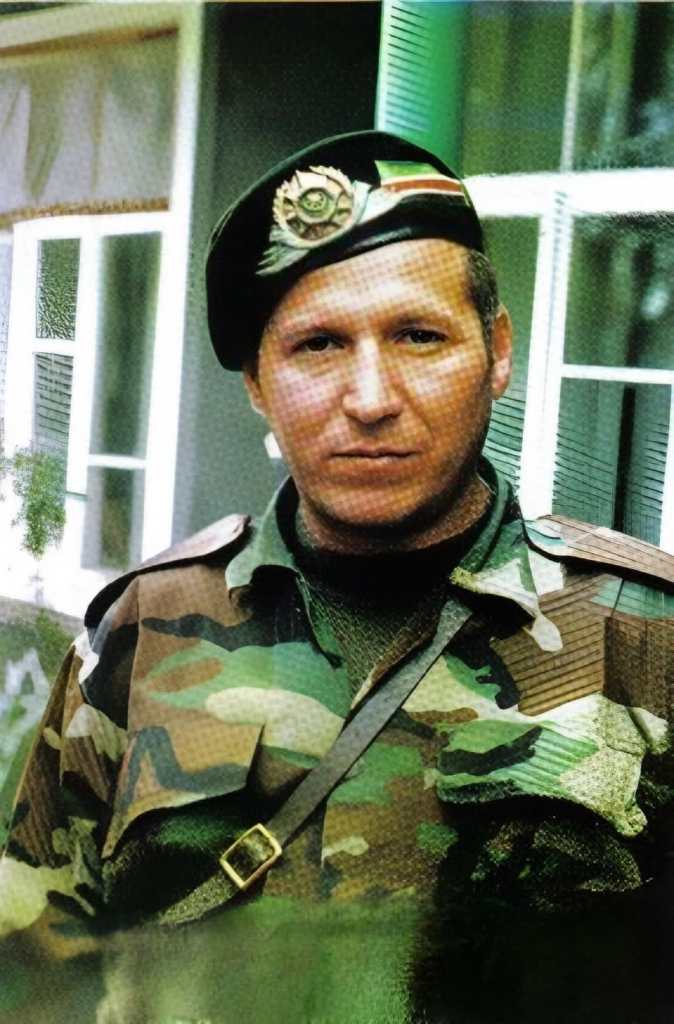


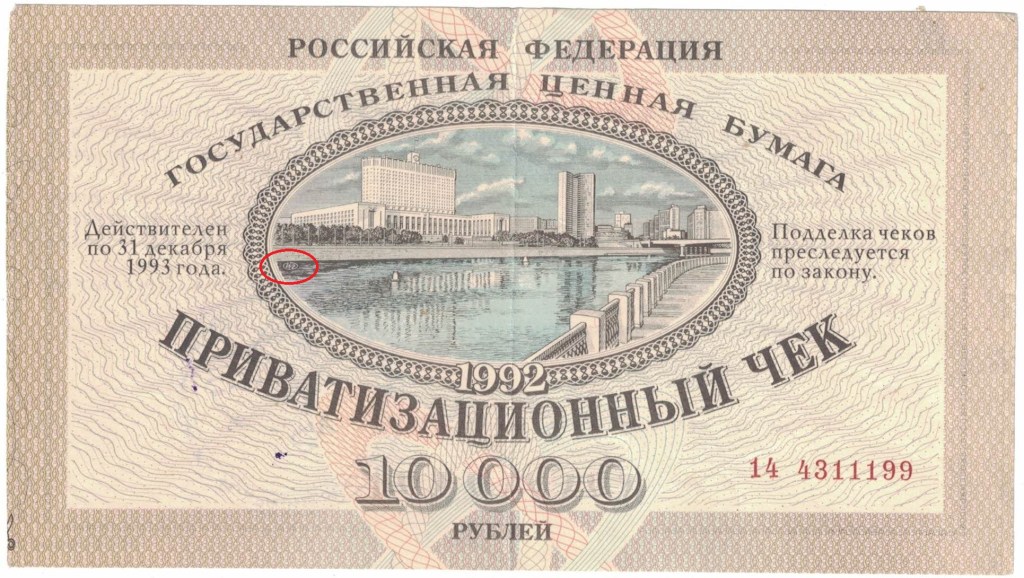


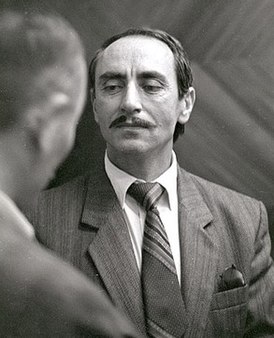




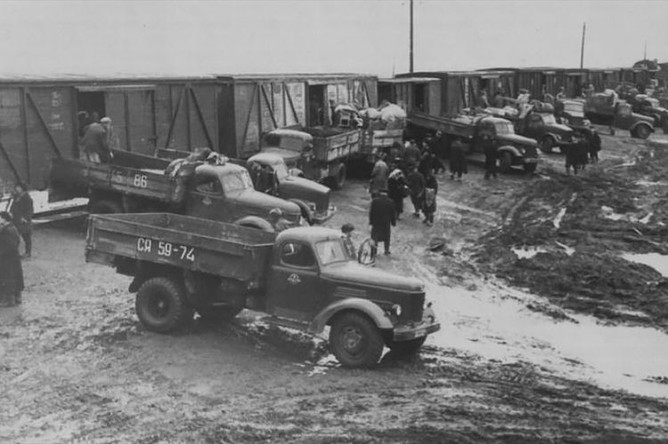
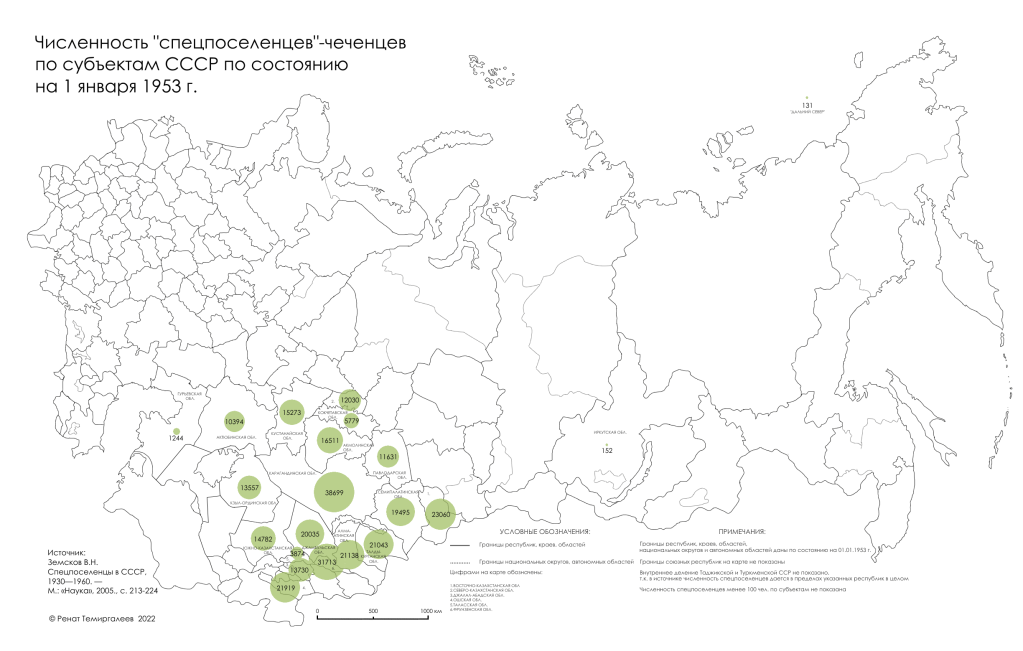


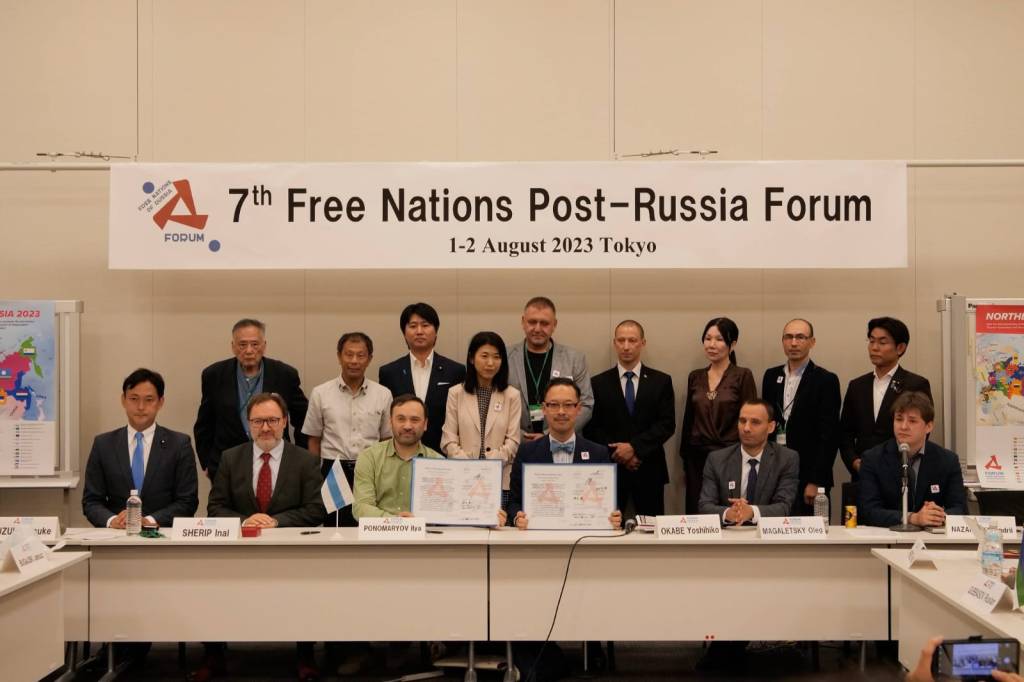



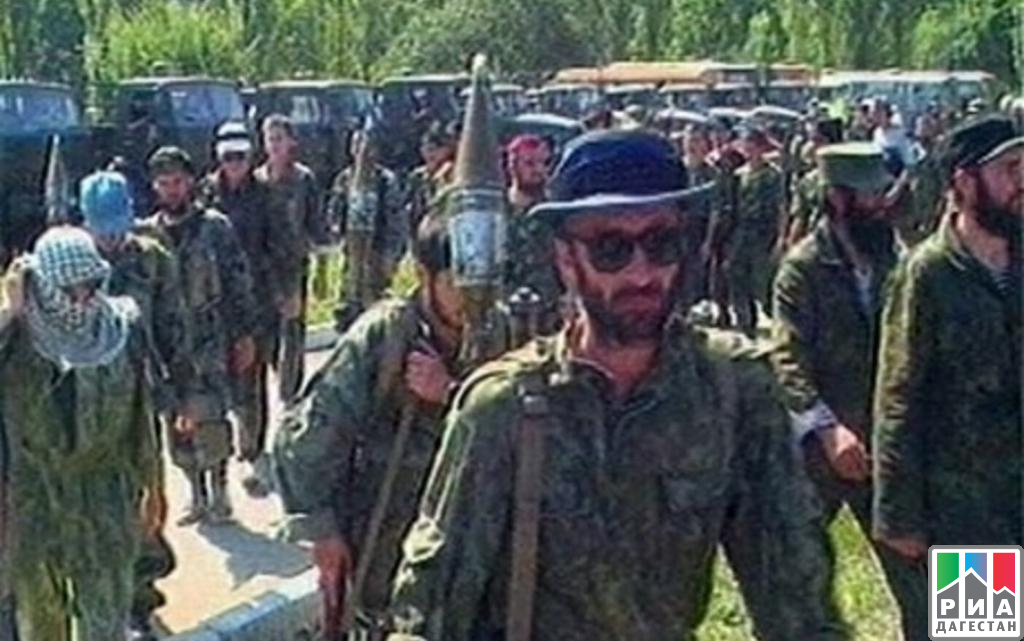


 Ichkeria Digital Archive