The opinion piece published by the Kyiv Post under the title “Kadyrov and Chechnya – Putin’s Black Swans” offers a critical reading of the growing vulnerability of Vladimir Putin’s regime in light of the “Kadyrov factor” and Russia’s internal political condition.
The author, Inal Sherip — a cultural studies scholar and political figure within the Chechen diaspora — argues that Ramzan Kadyrov should no longer be seen merely as a loyal ally of the Kremlin, but increasingly as a source of fragility for Putin’s system itself. The article opens by examining the recent “surprises” (so-called black swans) confronting Putin — diplomatic failures, international pressure, and military deadlock — and explains how, in this context, Kadyrov’s role has become increasingly problematic.
Inal Sharip, Foreign Minister of the Chechen Republic of Ichkeria
Sherip traces the evolution of the political project that, over the years, led to the construction of a personal power apparatus around Kadyrov — initially designed as a tool for Moscow’s control over the Caucasus — and shows how this same apparatus now risks turning into a “toxic asset.” The reasons are multiple: the growing cultural and religious autonomy of Chechnya’s leadership from Russia’s official narrative, its ties with Gulf states, and the ostentatious concentration of power and wealth.
At the core of the analysis lies the hypothesis that the potential disappearance or weakening of Kadyrov — whether due to health issues or internal conflict — could trigger a chain reaction capable of undermining Russia’s internal power balances themselves: from the redistribution of federal security forces, to an intense succession struggle within Kadyrov’s inner circle, to the opening of new spaces for intervention by Russia’s central security services, such as the FSB.
Ultimately, Sherip advances a non-conventional but compelling interpretation: Putin’s dependence on figures like Kadyrov is no longer merely a coercive advantage, but a potential breaking point for the stability of his own system of power — an internal “black swan” that could accelerate far broader dynamics of instability.
Let’s go back to 1999. When Russia invaded Chechnya for the second time, where were you? Were you still studying?
At that time I was working in Moscow, at the Central Documentary Film Studio. I was making documentaries. When the war started, I returned to Chechnya to make a film about the war. It was my most dangerous experience, because the aggression was in full swing, they were ready to destroy the entire Chechen people. When Russian troops saw journalists, human rights activists or documentary filmmakers, they hated them and put up all sorts of obstacles, because they were telling the whole world about the atrocities that the Russians were committing in Chechnya. And when the Russian military found out that I was a Chechen, they were ready to shoot me. Several times I was a millimeter away from death. After finishing work on the film, the film was selected at a film festival in North Carolina (USA). In 2000, I left for the USA, where my film received high reviews in the professional community. After that, I began negotiations with American producers about working on a documentary series about the centuries-long struggle of the Chechen people for independence: from Sheikh Mansur to the present day.
nail Sharip collects the Award for the International Festival of Independent Cinema of Naples
What was the American public’s involvement with what was happening in Chechnya?
Ordinary people knew little about Chechnya. They heard something about the war, but knew nothing specific. Journalists and human rights activists knew well. Most Americans are not interested in what is happening outside the United States. According to statistics, only a few percent of voters care about the presidential candidate’s pre-election position on U.S. foreign policy.
In the rhetoric of the current regime of Ramzan Kadyrov I have often heard references to the fact that the independence that was regained then cost the Chechens so much, that even talking about it today is to be considered synonymous with “extremism”. In your opinion, how much did all this weigh in strengthening the Chechens’ support for Kadyrov?
The question of how the values associated with independence and loss influence the support for Ramzan Kadyrov’s regime in Chechnya leads us to deeper reflections on human ideals and motivations. The phrase indicating that independence “cost” the Chechen people too much and that preserving this memory has become synonymous with “extremism” touches upon complex issues of identity and self-awareness. For peoples who have endured wars and trauma, collective ideals are often intertwined with historical memory, built on suffering and struggle. For many Chechens, the memory of war and independence is not merely a historical fact but a part of their identity that legitimizes their sense of community and belonging. However, this perception can become a tool of power when fear and loss are employed to validate authority.
This raises a philosophical question: Do individuals truly hold higher ideals for which they are willing to sacrifice everything, including their lives? In the past, values such as honor, dignity, and justice served as catalysts for revolutions and social changes. In the 18th and 19th centuries, such ideals inspired people to make selfless acts. Yet in the modern world, filled with logic of consumerism and individualism, these ideals may appear indifferent. Nonetheless, those ideals have not disappeared; rather, they have transformed. When facing crises or difficulties, individuals unconsciously seek not only justifications for their actions but also profound values that could support them in those moments. For some, this may be family; for others, freedom; and for some, belonging to their nation and its history. However, under an authoritarian regime like Kadyrov’s, such searches are permeated by fear. The ability to openly defend ideals born from suffering can lead to repression, making individuals more inclined towards conformity.
Ramzan Kadyrov, leader of the Russian province of Chechnya gestures speaking in Chechnya’s regional capital of Grozny, Russia, Tuesday, March 29, 2022. (AP Photo)
Thus, Kadyrov’s support can be viewed as a product of psychological defense, built before external threats. This does not always indicate ideological support for the ruler; rather, it is a strategic adaptation driven by the desire for survival. Society needs to protect itself from challenges, and at times, supporting an established authority becomes a means of preserving identity and collective memory. Therefore, while the era of high ideals may give way to more pragmatic considerations, the very idea of self-sacrifice and the search for meaning in life remains an inseparable part of human existence. Ultimately, the answer to the question of what drives a person regarding higher ideals largely depends on personal choice, background, and existing context. In this sense, support for Kadyrov is not merely support for a regime, but a complex and multifaceted process where fear, memory, and the search for identity converge.
A splendid reflection, which brings us to another question: can all those who collaborate with Kadyrov be considered “traitors”?
Thank you for your question. This is indeed a very complex issue that touches upon moral and ethical considerations regarding collaboration with a regime. Historical experience shows that different contexts and eras have led to various responses to such situations. During World War II, for example, those who collaborated with the occupiers were often executed immediately. In contrast, in the Baltic countries—Latvia, Estonia, and Lithuania—after over 50 years of occupation, there were no mass executions in 1991. This was largely because a new generation had grown up without knowing life outside the Soviet Union, highlighting how sensitive the topic of survival under occupation is.
Your reflections on who exactly can be considered a “Kadyrovite” are indeed critical. It is essential to emphasize that we cannot label ordinary people, who are forced to survive in difficult conditions and have no connection to the crimes committed by Kadyrov’s gang, as “Kadyrovites.” On the contrary, they are victims of this regime, subjected to the abuses of Kadyrov and his associates. In my view, those who have committed crimes should primarily be held accountable. It is especially important to bring religious leaders who justify Kadyrov’s actions to justice, as their influence on the minds and souls of people can be far more destructive than that of the perpetrators themselves. This is a multifaceted issue, and addressing it requires careful consideration of numerous factors.
In your answer you specifically mentioned “religious leaders”. How are Islamic clergy supporting Kadyrov’s regime?
In various countries, the relationship between the state and the clergy can vary: they either work closely together or, as in the case of Russia, the state uses religious institutions to advance its interests. In Russia, government agencies deploy their agents into the religious sphere, helping them build careers within spiritual organizations. These state representatives are legitimized in religious circles, while the clergy, in turn, serves the interests of the state. This practice is widespread globally, although there may be exceptions. The first official Muslim organization in Russia was established by the decree of Catherine the Great in 1788. The position of the Mufti, the head of Russian Muslims, was created, and the candidate had to be approved by the emperor after being elected by the Muslim community. In the decree, it was explicitly stated that this organization was established in the interest of the Russian state. Since then, little has changed: just as the state controlled the religious life of its citizens in the past, it continues to do so today.
Before the 1917 revolution, Russian intelligence services infiltrated their agents into religious institutions, and after the revolution, the Soviet government created its own educational institutions—Orthodox seminaries and Islamic madrasas—where future preachers, often intelligence officers, were trained. It was impossible to receive a religious education in the Soviet Union without KGB approval. Those who believe Russia has lost its grip in this area are mistaken. In fact, Russia has expanded its influence: for example, graduates of the Islamic faculty at the University of Damascus in Syria are under the control of Russian intelligence, particularly the GRU. It’s no secret that the GRU has a base in Syria, and it’s no surprise that several dozen graduates of this university work within Ramzan Kadyrov’s circle, justifying his actions both in Chechnya and in Ukraine from a religious perspective. Undoubtedly, this situation needs to change, and the Islamic world is in dire need of reforms. However, those who benefit from the current state of affairs will fiercely defend it. A striking example is the case of Saudi journalist Jamal Khashoggi, who was forced to flee due to threats to his life for his political views. He was brutally murdered and dismembered at the Saudi consulate in Turkey when he came to obtain a new passport. His last tweet was deeply symbolic: “The Islamic world is in great need of democratic reforms.”
The central Mosque of Grozny
So, if the Islamic clergy is all, more or less, infiltrated or managed by the secret services, does this mean that Islam cannot be a unifying force in the movement for the independence of the North Caucasus? And if so, what force, in your opinion, can be a unifying element?
There’s no need to invent a new unifying idea for the peoples of the North Caucasus in their struggle for independence. That idea has long existed and remains clear. Just as 100 years ago, when the Confederation of the Peoples of the Caucasus, the Mountain Republic, was created, today the peoples of the North Caucasus simply want to live freely on their own land, in accordance with their traditions and culture. It is the national liberation movement of different peoples that unites them in this struggle, just as it did a century ago. This deeply rooted desire for self-determination and the preservation of their identity continues to be the strongest unifying force. The fight for freedom and sovereignty has always been the common thread binding the diverse peoples of the region. The historical past of the struggle against occupation, repression, and genocide by the Russian Empire is indeed a key unifying factor for the peoples of the Caucasus. This past is connected to numerous tragic events and struggles for survival, creating a common platform for the recognition of themselves as oppressed peoples.
Common Experience of Oppression: All the peoples of the Caucasus have faced similar confrontations with imperial power, fostering a sense of solidarity. Memories of brutal repression, genocide, and occupation deepen the understanding of a shared fate and suffering.
Identity and Memory: Preserving the historical memory of the struggle against colonial oppression strengthens the identity of each people. In this context, shared history becomes the foundation for recognizing their rights and striving for freedom.
Culture and Language: Common cultural elements, folklore, and language also serve as connecting links. These aspects often bring a sense of unity to the fight for justice and independence.Historical memory serves as motivation for consolidating efforts to protect rights and freedoms.
Thus, the shared historical experience of fighting against oppression becomes a solid basis for forming a united front among the peoples of the Caucasus, allowing them to focus on common goals without sacrificing the interests of one people to the detriment of another.
Every project for the birth of a new state needs its own intrinsic “usefulness” for those governments that, from the outside, should give it legitimacy with their recognition. In this sense, what “usefulness” do you see for a Confederation of the peoples of the Northern Caucasus?
The answer to the question about the purpose of establishing a government in exile for the Confederation of the North Caucasus starts with recognizing the limitations of the independent Chechen Republic of Ichkeria. It is a small territory that cannot play a significant role in shaping global geopolitics. In today’s world, if you are not part of a larger force shaping the future geopolitical landscape, it is nearly impossible to change existing borders in a way that would grant independence to the Chechen people. The Chechen Republic lacks access to the Black Sea and does not occupy any strategically important transport corridors, which is why our struggle for independence did not fall within the interests of major geopolitical players. However, our struggle has been subject to political manipulation. For example, Saudi Arabia tried to leverage the Chechen issue for its own interests, offering Putin a deal to resolve the Chechen independence question in exchange for Russian withdrawal from Syria. This demonstrates how external powers can exploit national movements for their own agendas.
But when we talk about the creation of the Confederation of the North Caucasus, the geopolitical calculus changes dramatically. Such a state becomes highly attractive because it addresses several key geopolitical problems that have emerged during the war in Ukraine. If the Confederation of the North Caucasus is formed, Russia would lose access to the Black Sea, which directly aligns with Ukraine’s interests. Without its naval base in the Black Sea, Russia would no longer pose a constant maritime threat to Ukraine. Europe and the U.S. are also interested in this outcome, as they do not wish to see the total collapse of Russia, which could lead to China’s expansion into the Far East and further strengthen its influence. The West is also concerned about the potential chaos that could arise from Russia’s breakup, especially given that Russia is the largest country in the world, covering more than 10% of the world’s land area. Furthermore, there is fear over Russia’s nuclear facilities and, most critically, the risk that nuclear materials could fall into the hands of third-party states or terrorist organizations.
The creation of the Confederation of the North Caucasus would address several of these challenges at once. By losing access to the Black Sea, Russia would be reduced from a global power to a regional one, which is something the entire world is interested in. A regional Russia would be forced to focus on containing China and managing its nuclear arsenal. Without nuclear weapons, Russia would not be able to effectively counter China’s influence. Additionally, Ukraine would no longer face the threat of Russia’s naval base in the Black Sea, and Turkey would emerge as the dominant power in the region. In this way, the establishment of the Confederation of the North Caucasus aligns with the interests of multiple countries, including the U.S., Europe, Ukraine, and Turkey, all of whom share a vested interest in transforming Russia from a global to a regional power. This shift is crucial for maintaining stability and ensuring a balanced global order.
Could a confederation of the North Caucasus also be an opportunity for Russia?
The separation of the North Caucasus from Russia can indeed be seen as an opportunity for a new Russia. This scenario could facilitate the necessary transformation of the country towards a democratic state, which is urgently needed. Moreover, the separation of the Caucasus could increase the rating of those Russian politicians who manage to implement such a course. Given the growing anti-Caucasian sentiments in society, the separation of the region might be perceived as a populist step, allowing them to garner support among a segment of Russian citizens dissatisfied with the current situation.
Couldn’t an independent Caucasus easily become a client state of Türkiye?
Turkey is certainly an important player in the region with whom we will establish partnership relations, but at this stage other NATO countries are also helping us in the implementation of this project. Naturally, in the future we hope to become part of NATO, and with the partners who will help in the implementation of this project, we will have allied relations.
What role did Aushev play in the restoration of the Ingush state? And how is he seen today?
Aushev is a military man and obeys orders. The first thing he did when he became president was to ban all political organizations and establish a barracks regime in the republic. He created the conditions for corruption. He divided the Ingush people into three parts: the “Ingush” Ingush, who lived on the uncontested part of the land, the “Chechen” Ingush, who were forced to leave Grozny, and the “Ossetian” Ingush, who were expelled from North Ossetia after the ethnocide by the Russian army.
He violated Article 11 of the Constitution of the Republic of Ingushetia: he gave up the ancestral territories of Ingushetia and the city of Vladikavkaz by signing the so-called “Kislovodsk Treaties”. He did this under pressure from Yeltsin, who threatened to remove him from the presidency for the next term. There is video evidence of this. I don’t remember exactly when I wrote this comment on Facebook, but it concerns Aushev.
“All those who criticize Aushev for the Kislovodsk/Nalchik agreement, for the pocket parliament, for the barracks regime, for dancing at Ossetian government meetings, for abandoning the right bank of Vladikavkaz, for corruption, for jumping off personnel, for populism …. First of all, everyone has the right to criticize, because he is not a private person, but a public person, and every public person is subject to criticism; secondly, or rather, above all, all critics are right, because they tell the TRUTH. He led the republic built by us, the ancients, not as a general, but as a sergeant. Aushev was a talented but uneducated man, and that is why he drove all serious and worthy, educated and professional Ingush out of politics and business, placing himself alongside sycophants and other amateurs.”
Ruslan Aushev
So Aushev “sold” legitimate Ingush claims in order to avoid a conflict with Moscow. Considering what you told me about Dudayev’s decision not to pander to Yeltsin, don’t you think Aushev’s decision was wiser than Dudayev’s? A compromise to avoid ethnocide? Or do you think it could have been done differently?
Aushev took office after the ethnocide. It is very difficult to negotiate with the imperial Kremlin. It is necessary to be politically flexible. A good example of this was the President of Tatarstan Shaimiev Mintimer Sharipovich. Aushev violated Article 11 of the Constitution of the Republic of Ingushetia in order to retain his office as president, or more precisely, to extend it for a second term. Dudayev opted for open confrontation in the hope of gaining international support. Both generals knew how to wage war.
Aushev was in Afghanistan as an infantryman and put himself in real danger. Dudayev was the commander of a squadron of strategic bombers from the “carpet bombing” era, but neither of them understood anything about politics. As Krylov’s fable says: “It’s a disaster when a cobbler starts baking cakes and a baker starts grinding boots.”
Do you therefore think that the leadership in both the case of Ingushetia and Chechnya was not the right one to achieve “separation” from Moscow? Do you think that there were better people at the time who could have handled the situation better?
Yes, certainly. For example, Salambek Naibovich Khadzhiev in Chechnya and Bembulat Bersovich Bogatyrev in Ingushetia. I knew Khadzhiyev personally. An academic, an intellectual. An experienced person who didn’t need to improve his image because he was a seasoned personality. It is the hotheads who slander him. Unlike many others, Khadzhiyev was “capable of judgment” (according to Kant), and he never followed the euphoric, apparent freedom of the Chechens and did not declare independence, but used his authority to improve the lives of his people step by step, taking more and more powers away from Moscow… until the empire weakened. Khadzhiyev would not have sacrificed the Chechen people to the Russian barbarians.
The empire has never allowed people who were not loyal to it to lead the colonies. I said at the beginning of our conversation that I consider the declaration of independence to be a tragic mistake that was a catastrophe not only for the Chechen people, but also for the entire national and liberation movement in the Caucasus.
The military should not interfere in politics: it usually ends badly. But you can’t change it, history doesn’t tolerate the subjunctive. With the right tactics towards Moscow, the people I mentioned would have achieved results slowly, without losses, gradually gaining more and more independence, distancing themselves from the Kremlin and gaining strength, coordinating their actions with other peoples in the Caucasus and taking the path of DECOLONIZATION.
Do you believe that Salambek Khadzhiyev really wanted Chechnya to be independent? And as for the need to avoid a break with Moscow: Don’t you think that, given the way things developed in the following years, Chechnya’s independence would have been impossible to achieve if Russia had overcome its period of weakness?
You and I are talking about what could have been. In principle, this is only necessary in order to understand the processes that have taken place. The past must be known for the future. That is clear. Besides, it makes no sense to compare Dudayev and Khadzhiyev. We are talking about facts here. It is a fact that the Chechens declared independence under the leadership of Dudayev! Did they achieve it? NO. This is an indisputable fact.
As it turned out later in his interview, he knew very well what would happen in the future and even predicted it. He knew that a military confrontation with Russia was unwinnable. He knew that, and yet he took the risk. Dudayev did not achieve his goal! The Chechen people suffered heavy losses and fell under the yoke of Kadyrov, who was loyal to the Kremlin. The Russian empire was not weak in the years 1991-1998. Its economy was weak but its imperial face remained unchanged, although Yeltsin managed to fool the world into believing that Russia could be a democratic state. This will never happen.
The Russian empire will only get weaker now that it has gone to war against Ukraine. Now is the time when the colonized peoples, if they work together in harmony, can embark on the path of decolonization with the support of the Western democratic world. This includes the creation of a sovereign state. Thirty years ago, this was still impossible.
Salambek Khadzhiyev
More about Khadzhiyev. After Dudayev came to power, Khadzhiyev represented the opposition and led the “collaboration government” with Moscow for a while during the war. Do you think this was the right choice for him? Wouldn’t it have been better not to lead this government?
Khadzhiyev, who knew the history of the Russian Empire well and understood that a tragic mistake had been made that would inflict great losses on the Chechen people and thwart the dream of freedom for many years, could not remain indifferent to the tragedy that was rapidly approaching his people and tried everything to prevent this catastrophe. But a man in a stately general’s uniform, who spoke in a confident and authoritarian voice about the freedom of the Chechen spirit and called for death in the fight for it, was more attractive than a thoughtful intellectual who called for a cautious confrontation with the monster that had oppressed many peoples for many years.
The calm voice and the calls of the thinking people for sensible action were easily drowned out by the general’s slogan “Freedom or death”. Intoxicated by the apparent proximity of long-awaited freedom, the crowd chose death. Khadzhiyev was not a collaborator. Like me and many other thinking Chechens, he was sure that this monster could not be defeated alone and tried to save his people from disaster.
On October 23, 1995, Khadzhiyev resigned from the government he had formed and was replaced by Zavgaev. In light of this event, do you not believe that Khadzhiyev (without judging the nobility of his soul) was more a pawn of Moscow than an asset to the Chechen people? Under his rule, the federal forces committed numerous atrocities, which Khadzhiyev apparently had to endure, and after him, power passed to the old head of the Chechen Republic, who, as far as I know, was now hated by everyone.
Khadzhiyev did not allow himself to be manipulated by anyone. He was a true Chechen for whom the terms “honor” and “human dignity” were not empty words. In September 1991, S. Khadzhiyev led the movement for democratic reforms in Chechnya-Ingushetia and on the eve of the first presidential elections of the Chechen Republic in November 1991 was considered Dudayev’s main rival, but refused to take part in the elections and subsequently work in the government formed by the Chechen National Congress (OKCHN). In 1992, he again turned down the OKCHN’s offer to become Prime Minister of the Chechen government. This was because he was against Dudayev and Yandarbiyev, who were driving the people to tragedy. Khadzhiyev tried to prevent the impending catastrophe. A few days before the Russian aggression began, he tried to end the unrest and chaos in Chechnya and lead the government. But the federal troops, as you rightly pointed out, committed atrocities. Precisely because he refused to be manipulated by Moscow, he was replaced by Zavgaev.
Zavgaev was there before Khadzhiev. The Moscow puppet was ready to carry out any order from the Kremlin. In 1991, I headed the Ingush State Theater, which I had founded, and Zavgaev wanted me to join his team, invited me to run as a deputy for the Supreme Council of the Chechen-Ingush Republic, but in 1989, at the Second Ingush People’s Congress, I withdrew and distanced myself from political activity because I did not agree with the path I had chosen. But that’s another topic.
Doku Zavgaev
Doku Zavgaev: What do you think of him? Is he a man who tried to save Chechnya from war, or a weak politician who just wanted to exploit the situation for his own personal gain?
Zavgaev was an obedient lackey of Moscow. He was only interested in himself. He tried to get anyone who was popular with the people on his side. In short, he bought those who could be bought.
Back to the war. How did the Ingush deal with the Russian invasion of Chechnya? Didn’t the Ingush also declare independence after the end of the invasion in 1996 with the withdrawal of the Moscow army?
Ingushetia served as logistical support for the Chechen resistance fighters. The families of the Chechen resistance fighters were safe in Ingushetia. Wounded resistance fighters were treated in Ingushetia. Although the Republic of Ingushetia officially belonged to Russia, the Ingush strongly supported the Chechen resistance and their Chechen brothers. Individual Ingush also took part in the war against the Russian occupiers on the side of the Chechens.
What were the relations between Ingushetia and Chechnya between the end of the first and the beginning of the second war? Did the scourge of abductions also affect Ingushetia? Were there crises during this period because the borders between Ingushetia and Ichkeria could not be defined?
Despite constant provocations and attempts by the colonial authorities to divide and divide these two related peoples, all their efforts were in vain. The Chechen and Ingush people learned not to transfer the actions of politicians and the government, the lackeys of the Kremlin, to the relations between Chechens and Ingush. These attempts have continued throughout the ages, starting with the Russo-Caucasian War.
The merits of Presidents Dudayev and Aushev can be seen in the fact that they did not raise the issue of the border and postponed the resolution of these questions until better times. Chechen resistance fighters who had entered the territory of Ingushetia were arrested by the Ingushetian army and police and transferred to Chechnya with the request not to transfer the fight with the Russians to the territory of Ingushetia.
For two years, Russia has succeeded in changing the mood of the Western community from sympathy to antipathy towards the Chechens through “special operations” with hostage-taking, especially of foreign aid organizations. Who would sympathize with bandits who cut off the heads of people who wanted to help them? In the period between the first and second wars, I was often in Chechnya with German doctors. We brought wounded children to Germany to be treated free of charge. When we visited the Chechen Republic, Maskhadov, whom I knew personally, always gave us an armed escort. In a country devastated by war, there were always people who took hostages for money. Moscow provided considerable resources for this. There were no mass hostage-takings for ransom in Ingushetia.
Although the Dudayev government did not help the Ingush with either people or weapons during the ethnocide of the Ingush people in 1992, although it sent and received a delegation to North Ossetia twice and assured the Ossetian leadership of non-interference … basically betrayed the fraternal people and got them into trouble … there were no complaints or reproaches from the Ingush other than resentment. On the contrary, everyone understood that the Chechens had been provoked.
Dzhokhar Dudaev
You have described the hostage crisis in Chechnya as an instrument controlled by Russia to distance Chechnya from the West. In your opinion, were the apartment explosions of 1999, which justified the second invasion of Chechnya, also organized by the Russian government?
Yes, it was an initiative of the Russian secret services to discredit the Chechens. Irena Brezna, a Swiss writer of Slovakian origin, published a memo from the Analytical Center of the Russian Federation, in which the necessity and methods of discrediting the Chechen people and their struggle for freedom were pointed out. There were direct instructions on how to proceed and that no expense should be spared. One of the well-known facts confirming these methods is the murder of a humanitarian affairs expert from the American Soros Foundation, US citizen Fred Cuney, his translator Galina Oleynik and two employees of the Russian Committee of the Red Cross who were accompanying them. The Chechen State Security Service was held responsible for the murder.
In the interwar period, I witnessed such propaganda activities at the Russian embassy in Germany, where a video was shown of Chechens cutting off the heads of Russian mercenaries. This video certainly had a shocking effect on the German public.
Yes, of course houses in Russia were blown up by the FSB itself. There is a book by KGB officer Alexander Litvinenko, who was murdered by Putin in London with polonium, and by historian Yuri Felshtinsky entitled “The FSB blows up Russia”.
Akhmat Kadyrov. What kind of person was he? Did the Ingush know him? What was their opinion of him and how did it change over time?
As a rule, the spiritual leaders in Russia were KGB officers. I don’t know whether Akhmat Kadyrov was one. After he became the spiritual leader of the people, he first called for the killing of Russians. He promised paradise to anyone who killed as many Russian attackers as possible. And then he sided with the Russians and became the first president of the already conquered Chechnya? Strange metamorphosis!
As far as I know, the Ingush had no time for Mufti Kadyrov. In any case, Kadyrov senior betrayed the Chechen people or, in the opinion of others, saved the Chechen people from annihilation. I don’t know. The Ingush, like all other peoples of the world, have the same attitude towards traitors.
Kadyrov senior asked for money to rebuild the destroyed city of Grozny under his control (I heard him talk about it personally on a TV program). Moscow wanted to manage the money itself… Akhmat Kadyrov became an uncomfortable figure; he was too independent. The empire doesn’t need such people, so they liquidated him and installed Kadyrov Jr. who hadn’t even finished school. Kadyrov Jr. became Putin’s loyal ‘foot soldier’, killing his enemies (Politkovskaya, Nemtsov) and terrorizing the Chechen people!
Akhmat Kadyrov with Vladimir Putin
After the death of Akhmat Kadyrov, power in Chechnya passed to his son Ramzan after a brief interregnum. How did relations between Ingush and Chechens develop during his dictatorship?
The Kremlin and Kadyrov, as well as Ingush appointees such as FSB General Zyazikov and GRU General Yevkurov, have done the bidding of their masters in the Kremlin. They have tried to sow enmity between our peoples. In Chechnya, for example, information has been spread at government level that the Ingush are profiting from Chechen refugees by renting unsuitable premises for accommodation for hundreds of dollars, etc.
In 2018, on the Kremlin’s instructions, they carried out a provocation to cede Ingush territories to the Chechen Republic. It’s not just a question of land. It is about the history of the people, the graves of their ancestors and everything that is important for the self-confidence of the Ingush. Yevkurov and Kadyrov reached an agreement and drew the border between Ingush and Chechens, so that an original part of Ingushetia went to Chechnya. The protests of the Ingush were widely felt. The Kremlin had long wanted to shed blood to separate these two peoples. But the Ingush police did not allow any retaliatory measures to be taken against the demonstrators. This happened in 2018, and the leaders of this protest were sentenced to draconian punishments and are in prison. And there is no one in world public opinion who cares about this injustice.
Of course, this provocation has not left both peoples unscathed, and relations between Chechens and Ingush have become more difficult.
But the Chechens, Ingush and other colonized peoples of the Caucasus must unite and establish their own state.
The empire does not tolerate any criticism, let alone any demands from colonized peoples.
The Empire is afraid of the unification of the colonized peoples and their national freedom movement and will therefore do everything to ensure that the peoples of the Caucasus have reason not to trust each other. Even better if they come into conflict with each other.
It is time for all the colonized peoples of the Caucasus to realize that they are not full and equal citizens of Russia. When we realize this, we will want to free ourselves from this oppression. The genetic inability to be a slave forces us to resist the position of a slave. The national liberation struggle will begin. The Chechens have tried to go it alone, have shown courage and will, have suffered heavy losses and have not reached the goal. All the peoples of the Caucasus must unite and take the path of decolonization together, because this is the path to the creation of a common independent pan-Caucasian state.
In view of the upcoming publication of the second volume of “Freedom or Death! History of the Chechen Republic of Ichkeria” we are publishing the maps in English, which will be available to readers via the QR code printed in the book.
Surho Sugaipov was born and raised in Grozny. At the age of fifteen, Surho arrived in Germany after his family had to flee from Grozny during the Second Chechen War. After graduating from high school in the city of Würselen, NRW, he worked in the family business until he enrolled in university. As a student of the Faculty of Economics at the University of Cologne, he simultaneously dedicated himself to his great passion – acting. His first major role was as one of the main characters in the French film “Le grand homme” (2014) directed by Sarah Leonor.
You can learn more about his creative work in cinema in Germany and France on his Wikipedia page:
A member of the Chechen Democratic Party, one of its co-founders and spokespersons, Surho lives with his wife and three children in Cologne.
We can say that you belong to a generation that we could define as the “Ichkeria Generation”, that is, those kids who were born close to independence, and who became adults during the period of independent Chechnya. What memories do you have about the first Russian invasion of Chechnya?
I was 9 years old, and of course, I remember how my life suddenly transformed from a childhood playground into a serious, loss-filled adult life, where the main goal became to survive in the conditions of a full-scale war.
Children play in the streets of Grozny destroyed by bombing
How did you perceive your “being Chechen”? Speaking with many older witnesses, they told me how they had to deal with a certain “induced” sense of guilt following the deportation and the legend of the “betrayal”. You were born in a different context: did you also experience this sense of humiliation?
It started when we moved to a neighboring republic where we were registered as refugees. We, the children from the Chechen Republic, were assigned to one school. Our mother tried several times to enroll my sister and me in the city lyceum, but each time, after another inspection, we were expelled based on our nationality—I remember these moments well. By the time of the open invasion of the territory of the Chechen Republic, which had legally declared its independence based on international law, a powerful propaganda campaign had been launched throughout the Russian Federation, portraying Chechens as bandits, terrorists, and a threat to the civilized world. Chechens were blamed for all the negative consequences of the collapse of the Soviet Union as an empire. Brazen false propaganda was carried out continuously 24/7.
Organized, armed groups were sent to the republic to discredit the entire population and portray us in an extremely negative light to the world. Talking to older people who became victims of the genocide of Chechens during the deportation of Chechens to Kazakhstan in 1944, under the false accusation of betrayal and collaboration of the entire population with enemy forces, the situation was similar—people were accused of collaborating with the enemy army before a single Wehrmacht soldier had set foot on the territory of the republic. The elders spoke of how they had to fight against the imposed sense of guilt for the “betrayal” of the people.
The Russians have always used the story of betrayal. They said, “The Chechens have always betrayed us.” What nonsense – an empire that is surprised why its victims do not surrender and remain beaten, but dare to resist
How did you experience the period of the first war? How did your family deal with the situation?
I mainly remember the first war through the emotions of a child, who, holding his mother’s hand, was fleeing from the war. After the first war ended, we returned to Grozny and rebuilt our house, at least to a livable condition, and started anew, from scratch, among mountains of ruins and destruction. But two years later, the second war began. Many in Chechnya understood that the war was not over even before the start of the second one, as military groups operated on the principle of “the worse, the better,” preparing the ground for the return of Russian troops by turning public opinion against Maskhadov’s government, carrying out public corporal punishments, and even executions, which worked against independence. The FSB’s plan to destabilize the situation in the republic worked precisely, giving the Russian army time to escalate its forces anew. As expected, Russia attacked with a much stronger army, seeking revenge for the humiliation they experienced from their defeat in the first war. People in the republic understood that while we were trying to heal our wounds and rebuild the destroyed infrastructure, Russia was quickly assembling a new army and preparing for a new attack.
Chechens, left to their fate, fragmented by internal conflicts artificially created by Russian special services, could not keep up with such a huge empire, with its ability to play political games, its capability to escalate the military race, and adequately prepare for the inevitable war, which was obvious to many at that time. While Russia received billions in its treasury from the sale of oil and gas to the West, Chechnya was in a state of absolute economic collapse, unable to get back on its feet without external assistance, which never came. The reasons for sacrificing us, leaving us to a senseless and brutal fate at the hands of the aggressor, in the form of the Russian Federation, will likely become the subject of many historical studies. Declaring the destruction of an ethnic group as an internal matter of Russia, the international community fed a monster that had already gone wild, threatening everyone with nuclear retribution if they interfered with its new plans. As a result, we had an absolutely impoverished, fragmented, weakened region subjected to religious pressure after the first war, left to be devoured by the predator.
Grozny Hospital, 1999
When the war ended and the Russians retreated, how did you feel? Who was your heroes?
First of all, Dzhokhar Dudayev and all the resistance fighters were our heroes.
In your head as a young Chechen, how did you visualize Aslan Maskhadov? Was there any leader you didn’t like?
Maskhadov was also a hero. But his politics had many weak points that people did not like. Mainly, it concerned his friendliness towards the Russians. He perceived this war as a misunderstanding that arose under certain circumstances. Being an officer of the Soviet army, he did not fully realize that the imperial policy of Russia had not changed since the Caucasian War. Russia was using us at that moment; first, as a sacrificial victim to scare the international community with its military power. Second, to distract the population inside the country from the total plundering of the USSR’s wealth, seized during the collapse of the Union. Russia unilaterally separated itself from all the union republics to avoid sharing common property with them and, declaring itself the sole successor of the Union’s legacy, appropriated the common wealth. Aslan Maskhadov, instead of reaching out to the international level, establishing relations with the West and America, and securing their support, believed Russia’s promises that the war was over, that reparations would be paid, and that good neighborly relations would be established between two free states.
Another fatal mistake he made was his inability to resist radicalism, artificially introduced into the republic from the East, controlled by the Kremlin, and imposed on the Chechens through the activities of intelligence agents already operating widely in the Chechen Republic at that time.
Aslan Maskhadov
What happened after the second Russian invasion? How did you decide to reach Germany?
My father worked in the Ministry of Justice of the Chechen Republic of Ichkeria. After the start of the Second Chechen War, he brought us back to Nalchik, where we lived during the first war. A year later, he came for us and said that this war was more brutal, and after it, everyone who worked for their republic would be sent through filtration camps, and those who were shot immediately would be the lucky ones, envied by those who would be tortured to death in the camps. The survivors would be imprisoned, and only a few crippled people would return, while the majority would never come back. Just as he said, it happened. The situation was worse than ever. Therefore, we decided to move to Europe.
How did you personally experience arriving in Germany? Was it difficult for you to integrate with the Germans? Were there other Chechen families who helped you?
To imagine what we felt when we were settled in the dormitory, you need to at least partially understand all the persecutions we went through, the fears we experienced, and the expectations of worse scenarios that had accompanied us for years. We didn’t speak German, we couldn’t work yet, but the children were immediately sent to school. Of course, we ended up in Hauptschule at first. After a couple of years, my school teacher Fred Tribbels wrote a letter to the NRW district with a request to transfer me to HHG (Gymnasium). And that’s not all, he realized that I was struggling with physics, so he arranged for the physics teacher to tutor me additionally in this subject. We were among the first Chechens to move to Europe; there were few Chechens living in Germany, and no one who could quickly explain to us how to integrate. In any case, it wasn’t that difficult, because for any question that arose, we could contact certain institutions and always received the help and support we needed. We felt protected, it was a lifesaving support for us. Adapting to the local mentality was not difficult, it coincided with ours. The hardest part was before our arrival in Germany.
Surho Sugaipov
After you reached Germany, how were you integrated into the social system? Were the Germans kind to you? Were you able to attend school?
We have received a lot of support and understanding. Being a young boy, a teenager I obviously maintained good and less good relationships with my peers, but German society showed itself to be open, tolerant, available to help us. I can only say good things about how I was accepted. I just had the normal problems as a teenager, like everyone else at this age.
When did you decide to start doing political activity? And what kind of political vision have you developed regarding Chechnya?
I think I was never apolitical because of my early acquaintance with war and the occupation of my land. In the war in Ukraine, I saw a historic moment to resume the discussion of the situation in the Chechen Republic of Ichkeria, to raise the topic of independence, which is once again banned from discussion in Russia.
Impunity and the killing of one-third of the republic’s population allowed the leadership of the Russian Federation to continue its imperialist expansionist policy by attacking a sovereign state recognized by the entire world – Ukraine. The international community must go back 30 years to 1994 and hold the Russian Federation criminally responsible for the genocide of the Chechen people and for all the crimes committed by Russia on the territory of the Chechen Republic to destroy the Chechen ethnicity. It must help the Chechen people de-occupy their homeland and restore statehood based on the principles of democracy and secularism, where religion should be separated from the state, where any citizen has the right to practice any religion or not practice any at all, where citizens’ rights are protected by the state, and where the people are the rightful owners of their ancestral territory.
We must return to the democratic secular state that the Chechens proclaimed to the whole world, taking advantage of the moment when the Supreme Soviet of the USSR issued Law No. 1409-I of April 3, 1990, “On the Procedure for Resolving Issues Related to the Withdrawal of a Union Republic from the USSR.” In Article 3, it is stated that autonomous republics within a union republic have the right to independently decide whether to remain in the USSR or stay with the seceding union republic. The Chechen Republic, by referendum, remained in the USSR and thus became another union republic within the USSR. Consequently, when the Russian Federation declared its withdrawal from the USSR, the Chechen Republic remained within the USSR and automatically gained independence following the dissolution of the USSR on December 26, 1991.
The Chechen Republic declared its independence in July 1991, and on November 1, 1991, Dzhokhar Dudayev signed his first decree on the state sovereignty of the independent democratic state. Thus, taking advantage of the political moment during the dissolution of the Soviet Union and based on international law, the Chechen Republic seceded from the Russian Federation, declaring its independence. The Russian Federation declared its independence from the union treaty significantly later than us. The Constitution of the Chechen Republic of Ichkeria was adopted one year earlier than the Constitution of the Russian Federation. This means that the Russian Federation attacked an independent state whose people declared their independence to the whole world, exercising their right to self-determination. None of the democratic states dared to recognize our independence, fearing the wrath of the Russian Federation. For this reason, I have become more active in recent years, but I have never been silent.
My political vision is clear. There can be nothing but a democratic, secular state, as recorded in our 1992 Constitution. This state must be de-occupied with the help of the international community.
Banner of the Chechen Democratic Party
You have found a political point of reference in the Chechen Democratic Party. The first question regarding this: is there a line of political continuity between the Chechen Democratic Party and the Vaynakh Democratic Party, founded by Yandarbiev and the main proponent of Chechen independence in 1991?
We have nothing in common with the Vainakh Democratic Party, which has deviated towards radical ideologies, either by conviction or out of convenience, probably to seize power in Chechnya. Yandarbiyev changed his position to a radical idea; I don’t know if he really believed in it, but he completely transformed from a democrat to a radical. We do not agree with his point of view and have nothing in common with his party.
So, the Chechen Democratic Party supports an independent, democratic, secularized Chechnya, founded on the rule of law. What political program does the party intend to follow to achieve this objective? Starting from the current situation, what steps do you think the Party should take?
We want to de-occupy our territory, demand full restitution for the moral and material damage inflicted on our people, the extradition of all war criminals and their prosecution in an international court. We also demand the removal of all radon nuclear waste sites established by the Russian Federation on the territory of our republic and the restoration of the ecological damage caused to the republic.
Our goal is also to strengthen democratic institutions in our society, primarily the protection of the rights and freedoms of the republic’s citizens, the separation of religion from the state, and the establishment of healthy international relations, both political and economic, and trade relations. We aim to join the EU as full members. Our goal also includes reconciling and uniting all segments of our fragmented society based on the Declaration of Freedom and Independence of the Chechen Republic and the Constitution of the Chechen Republic of 1992.
I am one of those Westerners who strongly supports the independence of Chechnya): why, in your opinion, should the so-called “West” be interested in supporting the independence of Chechnya? What benefit would get from this situation?
The civilized world, logically, should be interested in the multiplication and prosperity of as many democratic states as possible on the planet. We believe that Russia will soon cease to exist in its current form because it does not fit into the civilized international community of states. Wars, attacks on neighboring countries, and the seizure of foreign territories as a healthy coexistence of state entities have completely exhausted themselves. Humanity created nuclear weapons to become a deterrent from wars that take millions of human lives. The civilized world must be able to manage the world to prevent its collapse. Russia uses enslaved peoples as cannon fodder or radical terrorist organizations and groups that pose a danger to peaceful coexistence. Therefore, it is unacceptable to allow a platform or a training ground to be created on the territory of the Chechen Republic where people capable of harming peaceful creation will be trained. Our time is a time of international trade, global international environmental protection programs, and the peaceful coexistence of people as a single whole. It is time to engage in the rapprochement of religious confessions instead of inciting national or religious enmity. Our program is aimed at progress, and we, who have never known slavery or social inequality, raised on the ideals of freedom and nobility, are created precisely for peaceful purposes. This is our natural state, and we want to return to our normal human essence. We are essentially creators, farmers who accept peaceful labor as the most noble behavior of a person.
An image of barbarians, mentally deficient warriors, and desperate villains has been created of us. We will have to prove for a long time that this was never the case and cannot continue to be. If the West helps the Chechens build their own democratic, reliable state and acts as its guarantor, it will gain a reliable, experienced military and economic partner in the Caucasus, at the crossroads of Europe and Asia.
If this does not happen and the West allows the situation to unfold without intervention, there is a risk that radical elements within our population, financed by the Kremlin, will seize power. These elements can inevitably create something similar to ISIS 2.0 or a scenario reminiscent of modern Afghanistan. All this, of course, will play into the hands of the Kremlin, which has been promoting the narrative of wild, radical Chechens for decades, thereby constantly getting a green light for aggression from the West.
The most tragic thing is that we will disappear from the face of the earth as an ethnic group. For 30 years, the Russian Federation has been conducting the primitivization of our people through the occupation authorities on the territory of the republic, and this is yielding its sad fruits. According to statistics (from open sources), there are 500 schools and 1,500 mosques operating in the republic.
Symbol of the Chechen Democratic Party
Do you believe that in this sense, the activity of the Chechen battalions fighting on the front line in Ukraine, in support of the Kiev army, could be useful in convincing Europe to support the independence of Chechnya?
No, I don’t think so. I respect these people’s decision and understand their desire to fight for Ukraine and its freedom. They follow the call of vengeance that they have carried within themselves for decades. I understand their desire to take revenge for the hell that the Russians created on our land. Nevertheless, I don’t see a great future in this approach. The predominance of radical rhetoric in their behavior gives their struggle more of a “sacred” religious significance. We never fought for religion; we fought for our land and freedom. Every time the Chechens raised their banner for freedom, volunteers from the East appeared, bringing their flags and coloring our struggle for freedom with their own colors, subordinating our interests to their own. This has happened every single time. We kept making the same mistake over and over.
I don’t think civilized society needs small, fragmented Chechen battalions. Ukraine already has its own professional army. Chechen volunteers need to join the regular Ukrainian army. A state that creates private military companies (PMCs) on its territory is doomed because the privilege of legal violence belongs to the state. The West needs reasonable, reliable, and educated people with whom they can engage in dialogue and make agreements based on international law.
So, what do you think Chechens living in Europe can do to support the cause of creating an independent Chechen state? And how can they reach the Chechens in their homeland?
Engage with European governments, political and public organizations, form alliances with other diasporas, communities, and international organizations that support self-determination and human rights. We must create our own political and non-profit public associations. Chechens living in Europe should also raise their awareness about our political situation and share it from all public platforms, helping more and more compatriots become politically educated. Organize and participate in conferences, seminars, and public demonstrations to provide more information about the situation in Chechen society.
Hold cultural events, exhibitions, and festivals to preserve and promote Chechen culture and identity in the diaspora. People in Chechnya are currently hostages; they cannot do anything. They live in constant fear under state terror. People outside Chechnya must do something to help them. We must revive our society, politicize it once again, and show the path we need to take to achieve our goals. First of all, we must revive our spirituality; it has always been of great importance to us. Chechens have traditionally avoided marrying not only within close family circles but even distant ones, observing the norms prohibiting marriage between relatives up to the seventh generation, meaning that if the seventh grandfather is common, it was not possible. In Chechen society, children were considered children until the age of 15. At 15, boys were allowed to wear a belt, signifying the right to carry a weapon, and girls could emphasize their waist. A man would not enter a house if the master of the house was not at home. Ensuring the safety of a woman and accompanying her to her destination was the duty of any man. These things are important and respected to this day.
What are the main problems you are facing in the political education of Chechen society? And what have been the main successes you have achieved to date?
Our main problem is the low level of education and the high level of radicalization among a significant part of our population. There are many reasons for this, including the deliberate actions of the Kremlin, which has repeatedly used this tool, as well as the numerous severe traumas that people have experienced, often leading them to turn to religion.
I consider our great success to be the removal of the taboo on discussing political Islam. Now society is free to discuss and share opinions on topics that just a few years ago seemed almost closed and forbidden. Overall, we have made significant progress in combating political illiteracy in a short period of time. Many people support us and our views, and this number is growing every day. Many remain silent and quietly listen because they fear for themselves and their relatives. However, we receive a lot of feedback in support, which clearly indicates that people are listening and supporting us.
Surho Sugaipov
In your opinion, is the phenomenon of radicalization also involving Chechens living in the European diaspora? Or is it a phenomenon that occurs only in Chechnya? And what role does Kadyrov have in promoting this radical culture?
As I mentioned earlier, I believe there are two reasons for the radicalization of some Chechens. More precisely, the main reason is the Kremlin and its deliberate efforts to radicalize the youth for subsequent control and use for its purposes. The fact that they have been “successful” is a consequence of the trauma of two brutal wars, the post-war policy of severe terror, humiliation, and open attacks on honor and public humiliation, combined with the inherent naivety and trustfulness of the Chechens.
Kadyrov, in turn, started by fighting against radicals and explained his switch to the Russian side precisely for this reason. Today, Kadyrov himself has become a force that is radicalizing our society by leaps and bounds. I don’t know if this radicalization is ideological or a direct order from the Kremlin. However, I would rather assume the latter.
Just think about it: in such a small Chechen Republic, 1,400 mosques have been built. They are not building schools, kindergartens, hospitals, factories, or plants where people could work and earn a living, developing the economy. Sermons are held every day, and people are indoctrinated with the idea that they should be obedient, accept their fate, and strive for paradise, forgetting about their earthly life. This is the same old trick that has been used for thousands of years, and people still fall for it. All these newly built mosques are transmitters of propaganda. If it weren’t beneficial to them, the Kremlin wouldn’t allow a single mosque to be built.
what would you say to the European public to encourage their support for the independence of Chechnya?
If we understand that there are only two camps of countries in the world—democratic countries based on citizens’ rights to freedom and self-determination on one side, and tyrannies that usurp power and maintain it through force, violence, and total id
eological brainwashing of their population on the other side—then it will not be difficult for us to understand why it is absolutely logical for the West to help the democratic forces of Chechnya build a state that will become a reliable, strong, and dedicated ally to the entire civilized world, rather than allowing the opposite to happen. Furthermore, passively allowing the extermination and erasure of a civilized, advanced, and spiritually rich people from the face of the earth is, at the very least, inhumane. We live in a world where even cruel treatment of animals is unacceptable.
Riportiamo di seguito un’intervista rilasciata il 7 Marzo 2022 da Umkhan Avtaev, nome di battaglia Muslim Cheberloevsky, comandante del Battaglione Sheikh Mansur, schierato in Ucraina dalla parte del governo di Kiev fin dal 2014. L’intervista è stata rilasciata a Kavkaz Realii, testata on line specializzata sull’attualità del Caucaso.
PREMESSA
In Ucraina si sta formando un nuovo distaccamento di ceceni, che resisterà all’aggressione militare russa. Le già esistenti formazioni di volontari armati intitolate allo sceicco Mansur e intitolate a Dzhokhar Dudayev hanno rilasciato dichiarazioni sulla loro partecipazione alla guerra a fianco dell’esercito ucraino. Ciò non poteva che suscitare l’indignazione del funzionario Grozny: il capo della Cecenia, Ramzan Kadyrov, ha chiesto ai volontari di deporre le armi, e ha anche promesso mezzo milione di dollari per i capi dei capi delle formazioni.
Il musulmano Cheberloevsky, comandante del battaglione Sheikh Mansur, in un’intervista a Kavkaz.Realii, ha detto chi è il suo nemico, perché non prende sul serio Kadyrov e perché non ci si dovrebbe fidare dei dati di Mosca sui funzionari della sicurezza ceceni uccisi durante la guerra.
– Ramzan Kadyrov promette 500mila dollari per la tua testa. Come hai reagito a questo?
– Lo sento dire per la prima volta, non ho tempo per ascoltare storie del genere. Manda qui questi ragazzi per essere massacrati, mentre lui stesso si siede e assegna qualche soldo per le loro teste. Diceva sempre di essere il fante di Putin, lo schiavo di Putin, il soldato di Putin e pronto ad andare in qualsiasi parte del mondo a combattere per Putin. Perciò non mandi qui questi ragazzi per essere trucidati, ma porti con sé i suoi cari, i signori (intende il presidente del parlamento ceceno Magomed Daudov, ndr ). E poi decideremo con lui cosa e perché.
Quante persone ci sono nella tua squadra? Chi sono questi combattenti?
“Quanti di noi, non posso dirlo. Ma il battaglione è stato creato nel 2014, quando c’era ancora quella guerra [nel Donbass]. Durante l’addestramento, la maggioranza era costituita da ceceni, ecco perché l’abbiamo chiamato così: “Battaglione ceceno intitolato allo sceicco Mansur“. Poi si aggiunsero persone provenienti da tutto il Caucaso: Ingusci, Daghestani, Cabardini, Balcari, Circassi, Azeri, Osseti. Ma non ce ne sono così tanti: da ogni nazione ci sono alcune persone o diverse dozzine, sono venute e sono andate. Ora molti hanno risposto da tutto il mondo, dall’Europa, molte persone si stanno arruolando. Pertanto, stiamo preparando nuovi gruppi. Sono pronti per incontrare Putin, Kadyrov, Hitler, Lukashenko… Chi altro c’è?
– A te, ceceno, musulmano: perché questa guerra?
– Se ce lo chiedi, non abbiamo bisogno di questa guerra per un solo minuto in nessuna parte del mondo. Questa guerra ci è stata imposta. La Repubblica Cecena di Ichkeria, come altre repubbliche che si sono separate dall’Unione Sovietica durante il crollo, ha dichiarato la propria indipendenza e sovranità. Da quel momento, abbiamo problemi con la Russia. Nel 1991-92 iniziarono sabotaggi, gli attentati, le esplosioni. E da allora sono stato coinvolto in tutto questo. Nel 1994, ufficialmente, la Russia, avendo perso la speranza in questi oppositori filo-russi in Cecenia, che erano stati riforniti e opposti alla nostra leadership, ci ha attaccata l’11 dicembre 1994. È passato molto tempo, ma la guerra continua.
Abbiamo vinto la prima guerra, il mondo intero lo sa. Con la seconda guerra, nel 1999, hanno tenuto conto dei loro errori, delle loro carenze, della coesione del popolo ceceno … Sebbene siano stati firmati accordi diversi, hanno firmato l’indipendenza l’uno dell’altro. Siamo stati costretti a lasciare la Cecenia per vari motivi. Abbiamo perso quattro presidenti! L’intero stato maggiore, i sopravvissuti, hanno lasciato la Cecenia. Alcuni sono tornati.
E quando è scoppiata la guerra in Ucraina nel 2014, abbiamo deciso di partecipare al fianco dell’Ucraina e battere il nostro nemico comune.
– Dopo il conflitto del 2014, qualche anno dopo, le persone che erano nella tua rosa hanno iniziato ad avere problemi. Sono stati inseriti negli elenchi delle sanzioni . Ci sono garanzie per loro dall’Ucraina ora?
– No. Stiamo ora cercando di elaborare una sorta di accordo in modo che tutto ciò sia legale. In modo che non ci siano domande. Sappiamo perché quelle situazioni si sono genere.
Miliziano del Battaglione Sheikh Mansur con un’arma anticarro sul fronte orientale (2022)
– Per cosa?
Putin stava pianificando un attacco a Kiev e al resto dell’Ucraina. Pertanto, quando è stata annunciata una tregua a Minsk nel 2016-17, gli accordi, per tutto questo tempo si stavano preparando per un grande attacco. Anche se abbiamo detto ai nostri militari e al Servizio di sicurezza dell’Ucraina: non finirà così, si sono presi una pausa per i preparativi, l’abbiamo vissuto sul nostro territorio, nelle nostre guerre, non potete crederci per un secondo, dovete prepararvi.
Tutto questo è stato ignorato dal servizio di sicurezza dell’Ucraina: dissero: “lo sappiamo, stiamo verificando” ma non c’era una preparazione specifica. E loro, oltre ai preparativi, volevano ripulire l’Ucraina dall’interno da noi, in modo che non aiutassimo, in modo che i volontari non si unissero a noi. Hanno corrotto qualcuno in alcuni livelli della SBU o della polizia. Volevano sbarazzarsi di noi con le loro mani. Sappiamo che ci sono molti soldi in mezzo. A loro è stato affidato il compito: accusare queste persone di quello che vogliono ed espellerle. Nel 2018-20, i servizi speciali ucraini hanno consegnato due dei nostri combattenti alla Russia. Si aspettavano che se avessero cominciato a tradirci, il resto sarebbe scappato, se ne sarebbe andato, si sarebbe offeso. C’era una scommessa su questo.
Ma non siamo scappati, rendendoci conto che si trattava di un’operazione speciale dell’FSB, abbiamo cercato di spiegarlo agli ufficiali della SBU e siamo rimasti qui. Abbiamo detto: “Se siamo colpevoli, dimostrateci la nostra colpa”. Non hanno dimostrato, non c’erano prove. Quando hanno iniziato a cercare chi ci metteva in queste liste, non riuscivano a trovarne le generalità. Gli ufficiali della SBU dicevano: “Non vi abbiamo messo noi in queste liste”. La polizia, la guardia di frontiera, il servizio di immigrazione dicevano la stessa cosa. Questo processo è andato avanti negli ultimi sei mesi e non è stata trovata l’ultima risorsa, ma sappiamo che questo è il lavoro dell’FSB e di Kadyrov. Rendendoci conto di questo, non siamo andati da nessuna parte. Ci è stato detto: “Andate in Turchia, in Europa, non vi impediamo di farlo”. Non siamo andati da nessuna parte, siamo rimasti, sapendo che stavano arrivando i guai. Ora siamo pronti a difenderci insieme agli ucraini. A difendere l’Ucraina, Kiev.
– Chi sono i tuoi nemici? Russia, russi, Kadyrov, Putin?
– A questo punto per me il principale nemico è Putin, il suo regime e il suo entourage. Chi è Kadyrov? Voi giornalisti avete gonfiato l’importanza di Kadyrov, come se fosse una persona indipendente! Kadyrov è lo schiavo di Putin. Certo, ci offendiamo quando dicono: i ceceni hanno attaccato l’Ucraina, i ceceni ci hanno invasi. I ceceni non hanno invaso e non hanno attaccato. Mai nella storia i ceceni hanno avuto inimicizia con l’Ucraina. E non l’avranno neanche adesso. Questi sono bastardi che si definiscono ceceni… E noi, ceceni purosangue, siamo un po’ offesi. La Cecenia, che ha combattuto con la Russia in due guerre, ha perso 300mila abitanti su un milione! Altre 300.000 persone sono sfollate e vivono fuori dalla Cecenia. Questi sono i ceceni che possono definirsi veri ceceni. E questi bastardi sono gli scagnozzi di Putin.
Se Kadyrov può definirsi ceceno, perché si trova nel territorio della Cecenia, che è più piccolo della regione di Lugansk, sorvegliato da 100.000 soldati russi? Senza di loro, non è nessuno. La sua gente comune che è tenuta in ostaggio sul territorio della Cecenia lo sputerebbe semplicemente e lo ucciderebbe se ci fosse un’opportunità e il libero arbitrio. Ma davanti a Kadyrov c’è un esercito russo di centomila uomini. Sta dietro di loro, si nasconde e dice che è ceceno e sta restaurando la repubblica.
– Perché gli uomini di Kadyrov ora appaiono ovunque?
– Perché nel 2008, quando la Russia ha attaccato la Georgia, la 56a armata è poi entrata a Tskhinvali, i georgiani hanno reagito, non li hanno lasciati entrare, hanno combattuto. Quindi i Kadyroviti furono ammessi lì, il battaglione Vostok, prese Tskhinvali. Da quel momento furono addestrati come cani da combattimento.
– Sì. Che importa? Era a capo del battaglione, ma era anche un kadyrovita, l’uomo di Putin. Con l’aiuto degli Yamadayev e di altri, i Kadyroviti salirono al potere, si rafforzarono e in seguito li uccisero loro stessi . È importante. Gli Yamadayev furono usati. La famiglia Kadyrov non ha avuto tali opportunità e gli Yamadayev hanno combattuto la prima guerra dalla nostra parte. C’erano cinque o sei fratelli, erano molto coraggiosi.
[…] Erano pochi, 200-300 persone. Sono stati colpiti, hanno perso l’appetito e sono stati ritirati. Ma non per ritirarsi completamente dall’Ucraina, ma per prepararsi meglio. Sono stati inviati in Siria, dove si svolgevano i combattimenti. Sono stati addestrati, preparati per essere gettati qui. La scommessa principale di Putin era su di loro: sarebbero arrivati i Kadyroviti, tutti si sarebbero dati alla fuga e avrebbero portato tutto in movimento. Quello che sta succedendo oggi, lo vediamo. Sono portati come polli in questi campi. Non si arrendono e ne lanciano sempre di nuovi. E non ci sono solo ceceni. Hanno reclutato da tutto il Caucaso, hanno portato tutti qui sotto il marchio dei Kadyroviti.
Perché Putin ha permesso l’illegalità della gente di Kadyrov in tutta la Russia? Vengono in qualsiasi città: qualsiasi sindaco, deputato si scusa con loro. [….
– Come hai reagito all’informazione che un altro, già il terzo battaglione di volontari, che includerà euro-Ichkeriani , si sta formando vicino a Leopoli?
– Prendiamo con noi persone che conosciamo personalmente o persone di cui ci fidiamo al 100%. Non prendiamo nessun’altro. Pertanto, abbiamo semplicemente rifiutato e rifiutiamo molti. Questo è probabilmente il motivo per cui coloro che volevano unirsi a noi si sono rivolti da qualche altra parte. In ogni caso non interferisce. Che ci sia un’altra squadra. Più è meglio è, sarà solo più facile per noi.
– Comunichiamo su alcuni problemi per telefono. Sì, ha invitato i volontari a unirsi ai distaccamenti, lo abbiamo sostenuto, siamo pienamente d’accordo con questo. L’unico punto: correre da qualche parte è una cosa, ma devi concludere una sorta di accordo in modo che dopo non ci siano problemi.
Nel 2014 siamo arrivati frettolosamente, tutto era verbale, non c’erano documenti. Quelli che ci hanno chiamato qui per chiedere aiuto – i servizi segreti, si potrebbe dire, quelli ucraini – che si sono licenziati, che sono stati trasferiti. Senza documenti ufficiali, abbiamo una situazione del genere. Per evitare che ciò accada di nuovo, stiamo cercando di elaborare questo momento – in modo che tutto sia conforme alla legge, in modo che ci sia ordine. In modo che alcune persone incomprensibili sotto questo marchio non arrivino qui. Per potersi fidare l’uno dell’altro.
Al raduno “Ichkeria è viva!” a Kiev, Piazza Indipendenza, 13 agosto 2017. Nella foto – un membro di uno dei battaglioni ceceni con le strisce delle bandiere di Ichkeria e Ucraina
– Hai informazioni sul numero di ceceni morti nell’esercito russo?
– Non abbiamo informazioni specifiche, ma quello che dicono ufficialmente in Cecenia sul numero delle persone uccise non ha senso. Centinaia di loro sono stati mandati qui. Sono nascosti in Bielorussia, negli obitori , non vengono mandati a casa. Ecco perché diciamo a Kadyrov: se vuoi farla finita con noi o qualcun altro, vieni qui tu stesso. Costi a nascondi lì, codardo? Stai mandando questi ragazzi al macello.
– Ha detto che aveva 70mila persone pronte a partire in qualsiasi momento, in qualsiasi parte del mondo, se necessario.
– Bene! Che raccolga questi 70mila, ma che vada lui stesso in testa. Mandarli tutti qui e restare tu stesso a casa: questo può essere solo opera dell’ultimo dei codardi. Non mando i miei combattenti da qualche parte. Sono in trincea con loro! Mangio quello che mangiano loro, dormo dove dormono loro. Esco con loro in ricognizione, non li mando da soli, anche se sono molto più giovani e veloci, è difficile per me stare al passo con loro, ma comunque lo faccio. Non posso sedermi a casa, mandare le persone da qualche parte, poi aspettare chi di loro tornerà e chi no. E questo ateo sta seduto a casa, manda queste persone. Glielo dico personalmente: è un codardo, perché sta a casa e non viene qui, ma manda questi ragazzi. Se è un devoto fanti di Putin, allora lascia che tutti i 70mila suoi e 100mila soldati russi prendano e vadano qui. Siamo qui! Lo stiamo aspettando, siamo a posto, non siamo scappati, non ci siamo ritirati.
– In alcuni articoli scrivono di te che ripaghi l’Ucraina per il fatto che gli ucraini hanno difeso l’indipendenza di Ichkeria. C’erano molti di questi ucraini?
Non ho alcun debito con nessuno. Non l’ho detto da nessuna parte, e non lo farò. Gli ucraini sono venuti di loro spontanea volontà in Cecenia nel 1994 e hanno aiutato in ogni modo possibile. Quando il compianto Sashko Bely ( Alexander Muzychko – guidò il distaccamento ucraino filo-Ichkeriano durante la guerra in Cecenia), da qualche parte su Internet dovrebbe esserci questo video era in Cecenia con il suo distacco, quindi gli è stata posta la domanda: “I ceceni sono musulmani, voi siete cristiani. Cosa vi lega? Perché siete venuti ad aiutare i ceceni?” Ha risposto: “Siamo venuti qui perché se la guerra in Cecenia non fosse iniziata, i russi avrebbero attaccato l’Ucraina. Con questa guerra, la Cecenia ha salvato l’Ucraina, ha ritardato la guerra su se stessa, siamo obbligati ad aiutare”. Questo è quello che hanno detto nel 1994-95.
Quando tutto questo è iniziato qui, non siamo venuti qui sotto le bandiere di Zelensky o Poroshenko, non per sostenere qualche presidente o partito. Siamo venuti qui per aiutare il popolo ucraino, in modo che l’Ucraina non cadesse sotto l’influenza della Russia e fosse indipendente. Oggi qui si decide una svolta molto importante. Se l’Ucraina cade, cadranno tutte le repubbliche dell’ex URSS. I paesi indipendenti intorno alla Russia perderanno la loro possibilità di libertà. Oggi, se l’Ucraina sopravvive, questa è un’opportunità per tutti. Comprendendo tutto questo, guardiamo oltre e vediamo oltre. Non siamo mai stati nemici e non credo che lo saremo in futuro. Speriamo di spezzare la schiena a questo regime del Cremlino. E questo inizierà la liberazione del nostro Caucaso e di tutto il popolo oppresso dalla Russia!
Can you tell your personal story? How did you get to Hamburg from Chechnya?
Since 2001 my parents lived in Germany, in Hamburg, they left to escape the Russian occupation, and in 2015 I chose to leave Russia so as not to be imprisoned, or killed, because of my human rights activities and my beliefs. policies.
If you like, could you tell us what pressures did you face in Russia?
There were “kind” warnings, then direct threats, constant (in my opinion) surveillance of me, then there was a “random” attack with attempted murder.
When did you come up with the idea of creating the Ichkeria Human Rights Center?
The idea of creating a human rights organization dates back a long time, when I saw how human rights organizations in Moscow disguised their activities. For me, as a representative of a nation that has survived or, more precisely, is experiencing genocide, it was vital for me to create at least one human rights organization that is honest and truly capable of protecting our people. Our organization (in the process of registration) is called the Human Rights Center of Ichkeria, I thought the word “Ichkeria” should be rehabilitated, as the Reds have made a lot of effort trying to discredit it. Of course, we help everyone, not just the citizens of Ichkeria.
What behaviors of human rights organizations in Moscow did you dislike? How, then, does the Human Rights Center of Ichkeria want to differentiate itself?
Corruption, lack of assistance on all issues (Chechen issues), hypocrisy, lies, xenophobia. This shouldn’t exist in our Center.
What is the main focus of the center?
We help refugees, monitoring the rights situation in the temporarily occupied Chechen Republic of Ichkeria, promoting anti-extremist propaganda, educating young people, disseminating and explaining the principles of democracy, organizing demonstrations and other actions, conducting an information fight against fakes on the internet and also bringing them closer to the United States and the NATO bloc.
What is the extremist message that the Center tries to fight?
Any form of extremism is unacceptable to us, we are not speaking only of our Center, but of the Chechen nation as a whole. Chechen society has always been democratic, but after the genocide, and with skillful manipulation, we were presented as terrorists, fascists, extremists and Putinists , which is absolutely not true!
Islamic fundamentalism is a problem for the Chechen community in the West
Islamic radicalism is a problem for the Chechen community not only in the West, but throughout the world.
I noticed that you used the term “radicalism” instead of “fundamentalism”. The European media often use these two words as synonyms. Do you think there are differences between these two terms?
In Russian, radicalism is the rejection of an alternative point of view, intransigence and fundamentalism are basic principles, in this case religion, that is, its supporting structure, in my opinion, is not the same thing.
What are the main challenges facing the center?
Threats from Russian special services to myself, attempts to discredit its activities, as well as a shortage of qualified young personnel. Certain human resources exist, but due to the threat of pressure on relatives, many are not ready to openly help us.
Do the authorities of the Chechen Republic of Ichkeria support the activities of the center?
No, quite the opposite!
Why, if you want to talk about it, are the authorities in Ichkeria not supporting an organization with such an important purpose for the Chechen people?
Apparently they do not consider (we are talking about the Zakayev government) that this is an important goal for the Chechen people.
How many Chechens live in Europe today and in the so-called “West” in general?
I can’t say for sure, but there is information that speaks of more than three hundred thousand people.
What challenges do you think the Chechen diaspora faces in the West?
The first, in my opinion, is the lack of due and legitimate attention on the part of the countries that have accepted us, for example, the sensitivity of not calling us “Russians”, as there is no legal basis for this. This attitude is perceived by the Chechens as complicity with Russia in their actions against us. Secondly, the infiltration of Russian agents into our community under the pretext of carrying out anti – Russian activities.
Does the fact that European countries do not recognize Chechens as refugees from an occupied country, but as Russian emigrants, does it have any legal consequences for Chechens? I am thinking of the forced returns to Chechnya, where it seems that many dissidents in the current government are made to disappear, or brutally punished.
Obviously. Firstly, as you rightly noted, the deportation to Russia for torture and the possible extrajudicial execution of a political opponent of Russia, and secondly, this is in accordance with the policy of genocide of the Chechen people and the denial of legitimate right of Chechens to have their own state. Furthermore, by accepting more than 300,000 Chechen refugees, and then recognizing us as Russians, that is, as our mortal enemies, the West creates fertile ground for identifying Chechens as enemies. For example, it is no secret that the Russian special services continue to recruit them under the guise of Islamists, and continue to do so.
What do Chechens living in Europe now think about the situation in their country?
Most Chechens dream of returning to their homeland after the withdrawal of the occupying troops from Ichkeria. The Russian regime in Chechnya is considered inhumane and barbaric.
What do you think of what is happening in Chechnya right now? What are your hopes for the future?
The genocide of the Chechen people continues in the temporarily occupied Chechen Republic of Ichkeria. I am absolutely certain that we will gain freedom and prosecute, in accordance with international law, at least the best known criminals.
What is practically the genocide of the Chechen people at home today? In your opinion, does Ramzan Kadyrov not intend to protect the Chechen people in his own way?
Kadyrov defends himself not in his own way, but in the Russian way, that is, whatever the Russian order, he will carry it out. For example, the “Kadirovites” in 1944 helped to load people on cattle wagons for genocide, under the pretext of deportation. Now in Chechnya the physical destruction of people continues (Chechnya ranks first for oncological diseases and coronavirus mortality) is underway also the cultural, linguistic, legal genocide, the replacement of historical memory.
VERSIONE ITALIANA
Puoi raccontare la tua storia personale? Come sei arrivato ad Amburgo dalla Cecenia?
Dal 2001 i miei genitori vivevano in Germania, ad Amburgo, sono partiti per sfuggire all’occupazione russa, e nel 2015 ho scelto di lasciare la Russia per non essere imprigionato, o ucciso, a causa delle mie attività sui diritti umani e delle mie convinzioni politiche.
Se ti va, potresti raccontare quali pressioni hai subito in Russia?
Ci sono stati avvertimenti “gentili”, poi minacce dirette, una costante (secondo me) sorveglianza su di me, poi c’è stato un attacco “casuale” con un tentato omicidio.
Quando ti è venuta l’idea di creare il Centro Diritti Umani Ichkeria?
L’idea di creare un’organizzazione per i diritti umani risale a molto tempo fa, è nata quando ho visto come le organizzazioni per i diritti umani a Mosca dissimulavano le loro attività. Per me, in quanto rappresentante di una nazione sopravvissuta o, più precisamente, che sta vivendo un genocidio, era di vitale importanza per me creare almeno un’organizzazione per i diritti umani onesta e realmente in grado di proteggere la nostra gente. La nostra organizzazione (in fase di registrazione) si chiama Human Rights Center of Ichkeria, ho pensato che la parola “Ichkeria” dovesse essere riabilitata, poiché i rossi hanno fatto molti sforzi cercando di screditarla. Certo, aiutiamo tutti, non solo i cittadini di Ichkeria.
Quali comportamenti tenuti dalle organizzazioni dei diritti umani a Mosca non hai apprezzato? In cosa, quindi, vuole differenziarsi la Human Rights Center of Ichkeria?
Corruzione, mancata assistenza su tutte le questioni (tematiche cecene) ipocrisia, bugie, xenofobia. Questo non dovrebbe esistere nel nostro Centro.
Qual è il focus principale del centro?
Ci impegniamo ad aiutare i rifugiati, monitorare la situazione dei diritti nella Repubblica Cecena di Ichkeria temporaneamente occupata, fare propaganda anti – estremista, educare i giovani, divulgare e spiegare i principi della democrazia, organizzare manifestazioni ed altre azioni, condurre una lotta informativa contro i falsi su internet ed anche avvicinando loro agli Stati Uniti ed al blocco NATO.
In cosa consiste il messaggio estremista che il Centro cerca di combattere?
Qualsiasi forma di estremismo è per noi inaccettabile, non stiamo parlando solo del nostro Centro, ma della nazione cecena nel suo insieme. La società cecena è sempre stata democratica, ma dopo il genocidio, e con l’abile manipolazione, siamo stati presentati come terroristi, fascisti, estremisti e putinisti, il che non è assolutamente vero!
Il fondamentalismo islamico è un problema per la comunità cecena in Occidente
Il radicalismo islamico è un problema per la comunità cecena non solo in Occidente, ma nel mondo intero.
Ho notato che hai usato il termine “radicalismo” anziché “fondamentalismo”. I media europei spesso utilizzano queste due parole come sinonimi. Pensi che esistano differenze tra questi due termini?
In russo, il radicalismo è il rifiuto di un punto di vista alternativo, l’intransigenza e il fondamentalismo sono principi di base, in questo caso la religione, cioè la sua struttura portante, secondo me, non è la stessa cosa.
Quali sono le principali sfide che deve affrontare il centro?
Minacce personali da parte servizi speciali russi, tentativi di screditare le sue attività, nonché la carenza di personale giovane qualificato. Certe risorse umane esistono, ma a causa della minaccia di pressioni sui parenti, molti non sono pronti ad aiutarci apertamente.
Le autorità della Repubblica Cecena di Ichkeria sostengono le attività del centro?
No, anzi, il contrario!
Perché, se ti va di parlarne, le autorità di Ichkeria non sostengono un’organizzazione con un fine così importante per il popolo ceceno?
A quanto pare non considerano (stiamo parlando del governo Zakayev) che questo sia un obiettivo importante per il popolo ceceno.
Quanti ceceni vivono oggi in Europa e in generale nel cosiddetto “Occidente”?
Non posso dirlo con certezza, ma ci sono informazioni che parlano di più di trecentomila persone.
Quali sfide pensi che la diaspora cecena debba affrontare in Occidente?
La prima, a mio avviso, è la mancanza della dovuta e legittima attenzione da parte dei paesi che ci hanno accettati, ad esempio, la sensibilità di non chiamarci “russi”, non essendoci alcuna base giuridica per questo. Questo atteggiamento è percepito dai ceceni come una complicità con la Russia nelle azioni contro di noi. In secondo luogo, l’infiltrazione di agenti russi nella nostra comunità con il pretesto di svolgere attività anti – russe.
Il fatto che i paesi europei non riconoscano i ceceni come rifugiati di un paese occupato, ma come emigranti russi determina delle conseguenze legali per i ceceni? Penso ai rimpatri forzati in Cecenia, dove pare che molti dissidenti all’attuale governo vengano fatti sparire, o brutalmente puniti.
Ovviamente. In primo luogo, come hai giustamente notato, la deportazione in Russia per tortura e la possibile esecuzione extragiudiziale di un oppositore politico della Russia, e in secondo luogo, questo è in accordo con la politica di genocidio del popolo ceceno e della negazione del legittimo diritto dei ceceni ad avere un proprio stato. Inoltre, accettando più di 300.000 profughi ceceni, e poi riconoscendoci come russi, cioè come i nostri nemici mortali, l’Occidente crea un terreno fertile per identificare i ceceni come nemici. Ad esempio, non è un segreto che i servizi speciali russi continuino a reclutarli sotto le spoglie di islamisti, e continuino a farlo.
Cosa pensano ora i ceceni che vivono in Europa della situazione nel loro paese?
La maggior parte dei ceceni sogna di tornare in patria dopo il ritiro delle truppe occupanti da Ichkeria. Il regime russo in Cecenia è considerato disumano e barbaro.
Cosa ne pensi di ciò che sta accadendo in Cecenia adesso? Quali sono le tue speranze per il futuro?
Il genocidio del popolo ceceno continua nella Repubblica Cecena di Ichkeria, temporaneamente occupata. Sono assolutamente certo che otterremo la libertà e perseguiremo, in conformità con il diritto internazionale, almeno i criminali più noti.
In cosa si concretizza, praticamente, il genocidio del popolo ceceno in patria, oggi? Ramzan Kadyrov non intende, secondo te, proteggere a modo suo il popolo ceceno?
Kadyrov si difende non a modo suo, ma al modo russo, cioè qualsiasi sia l’ordine dei russi, egli lo eseguirà. Ad esempio, i “kadiroviti” nel 1944 aiutarono a caricare persone sui carri bestiame per il genocidio, con il pretesto della deportazione Ora in Cecenia prosegue la distruzione fisica delle persone (La Cecenia è al primo posto per malattie oncologiche e mortalità da coronavirus) è in atto anche il genocidio culturale, linguistico, legale, la sostituzione della memoria storica.

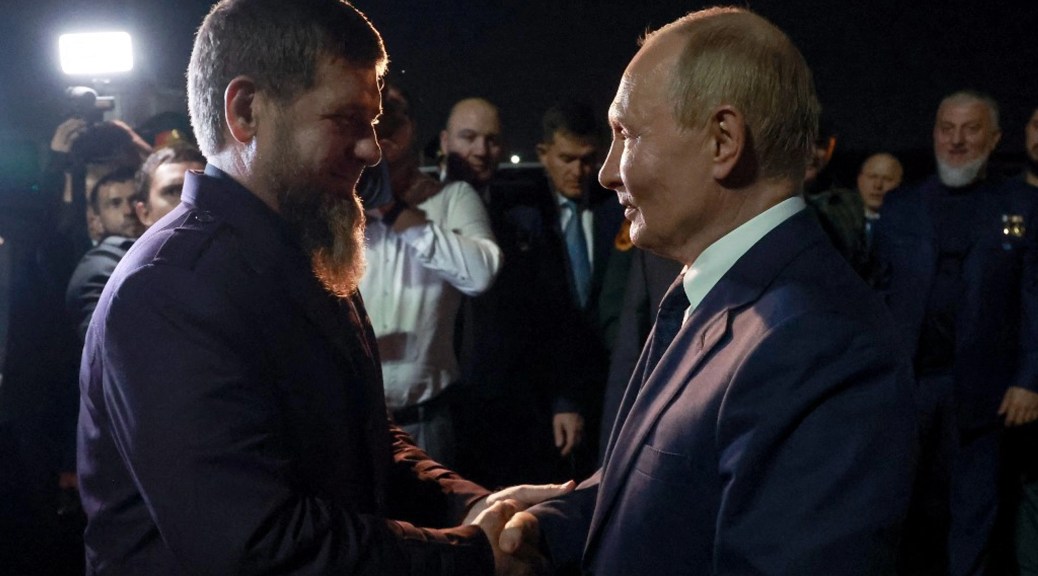

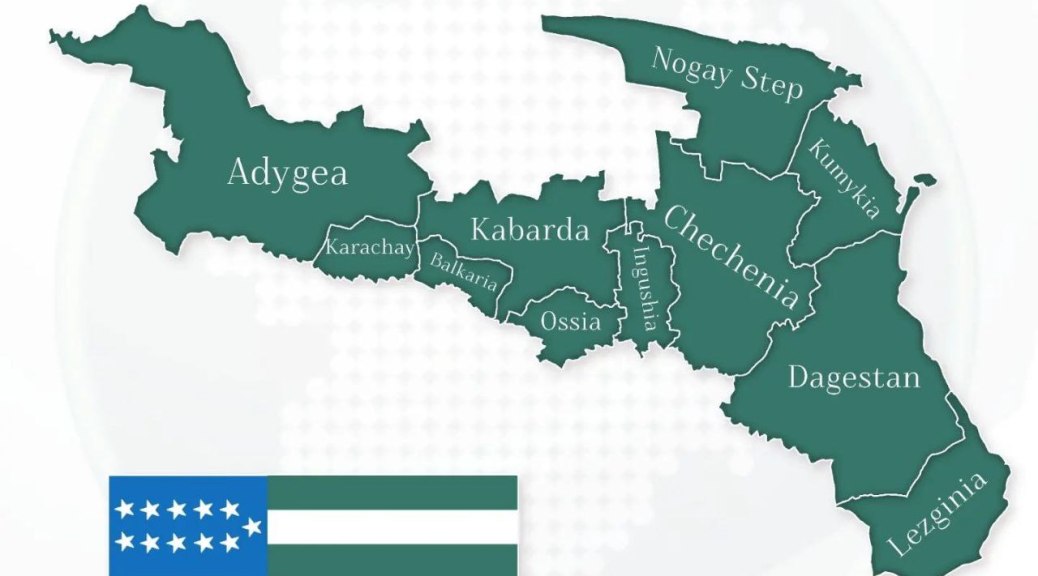
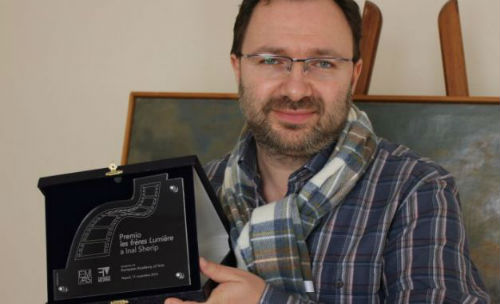

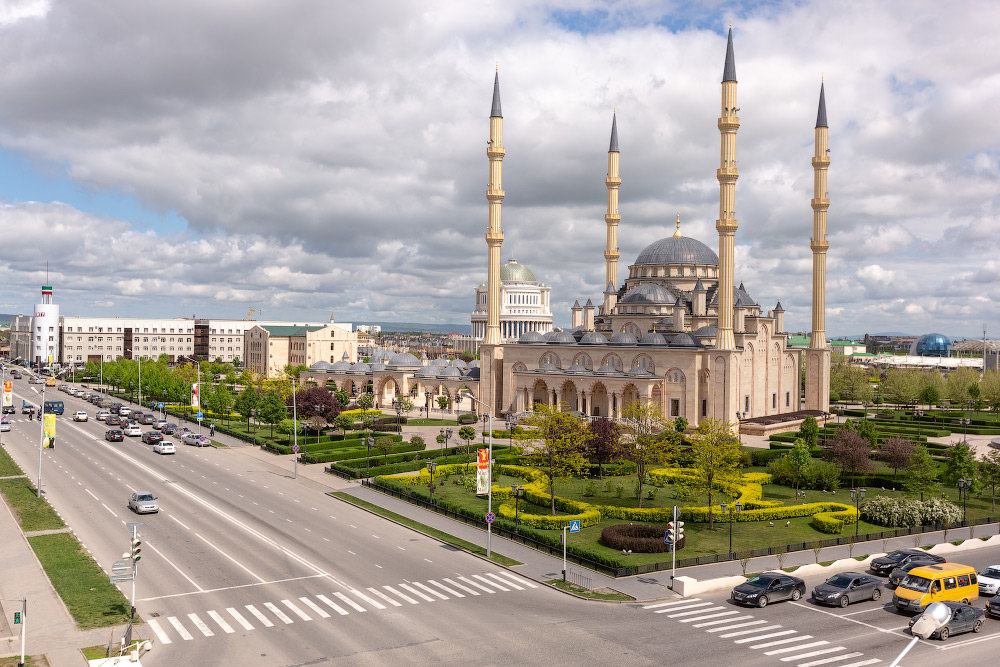

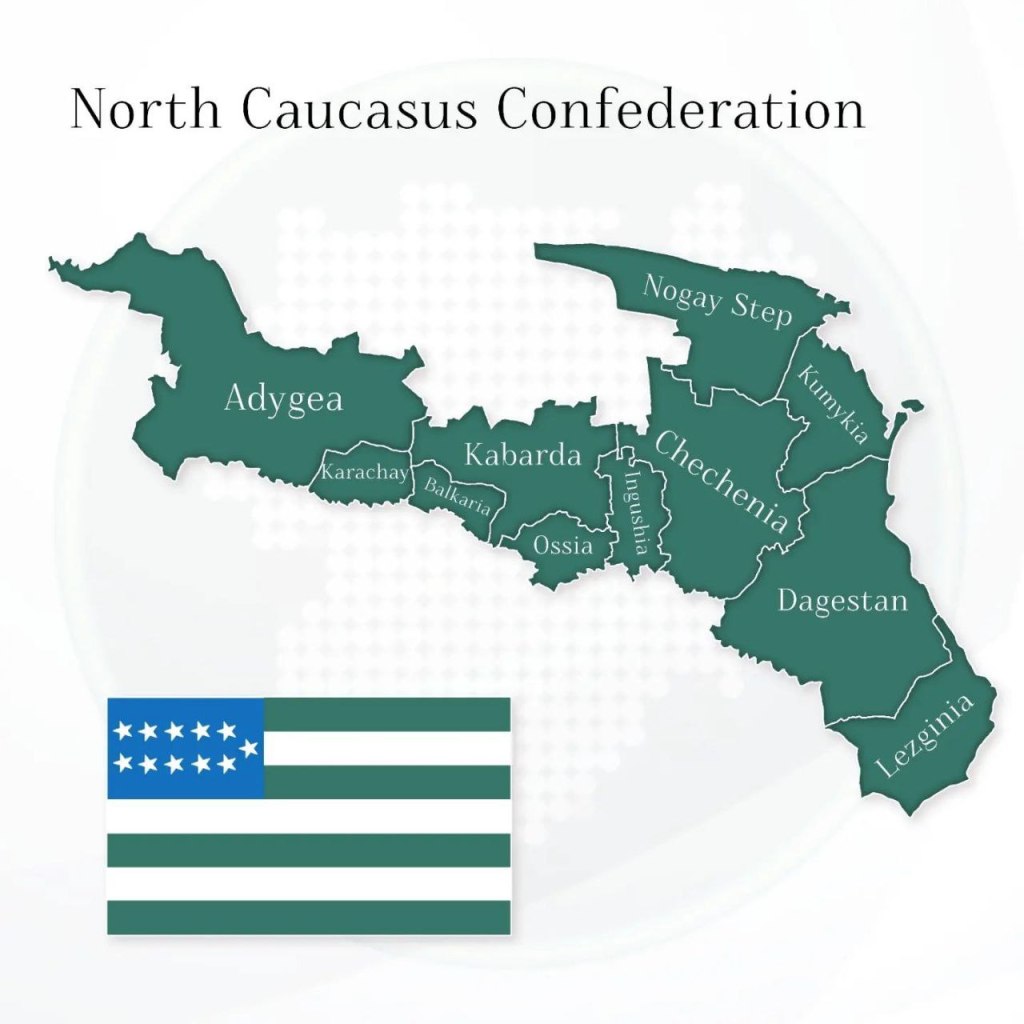


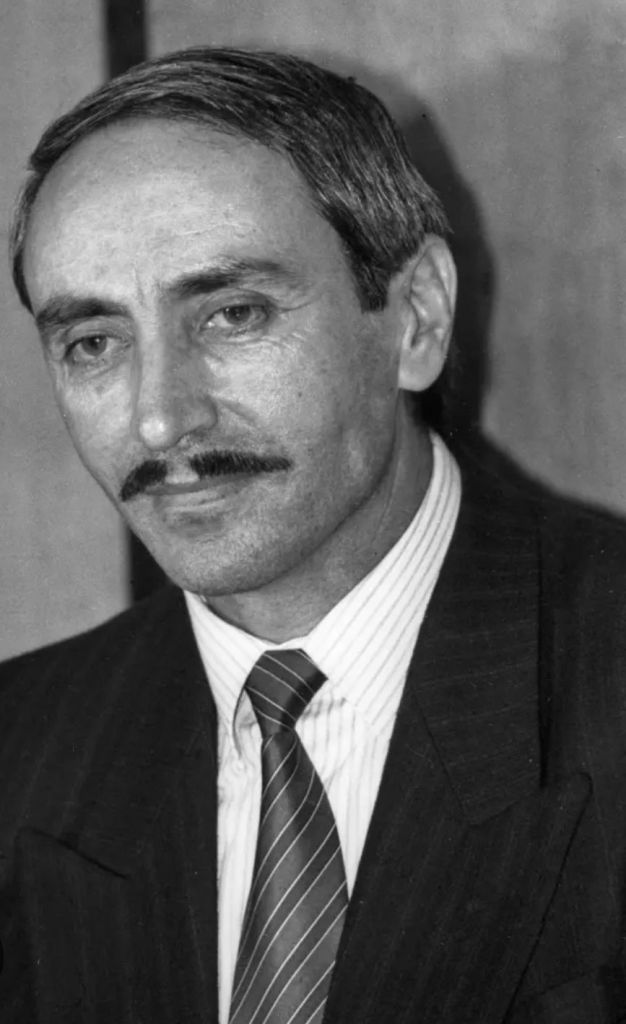


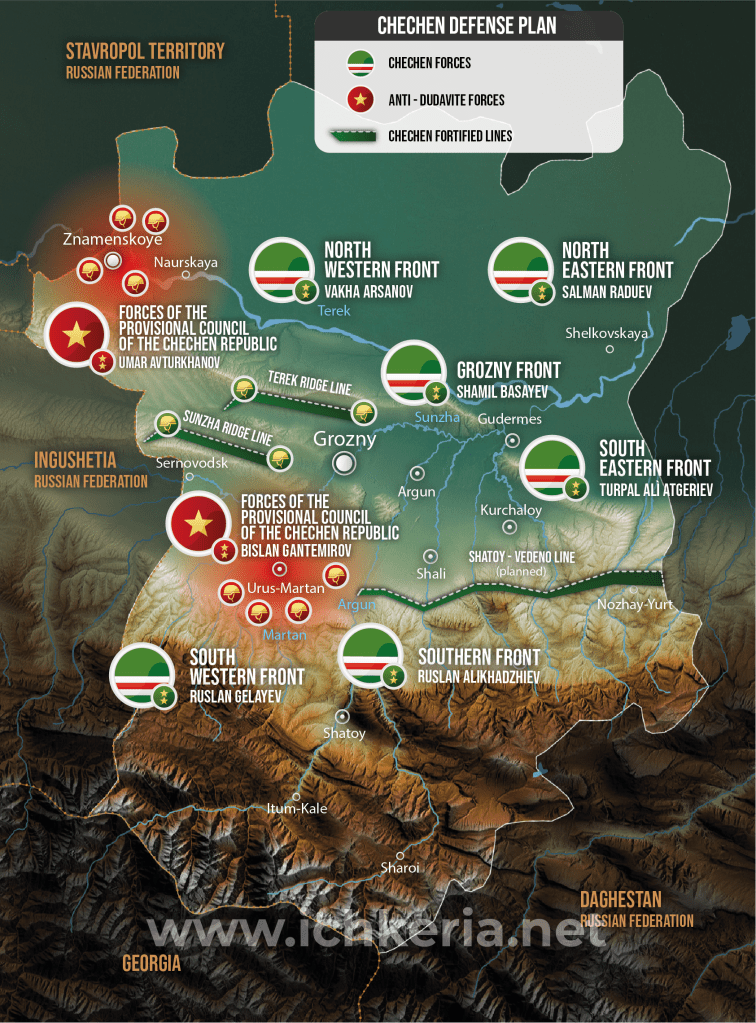

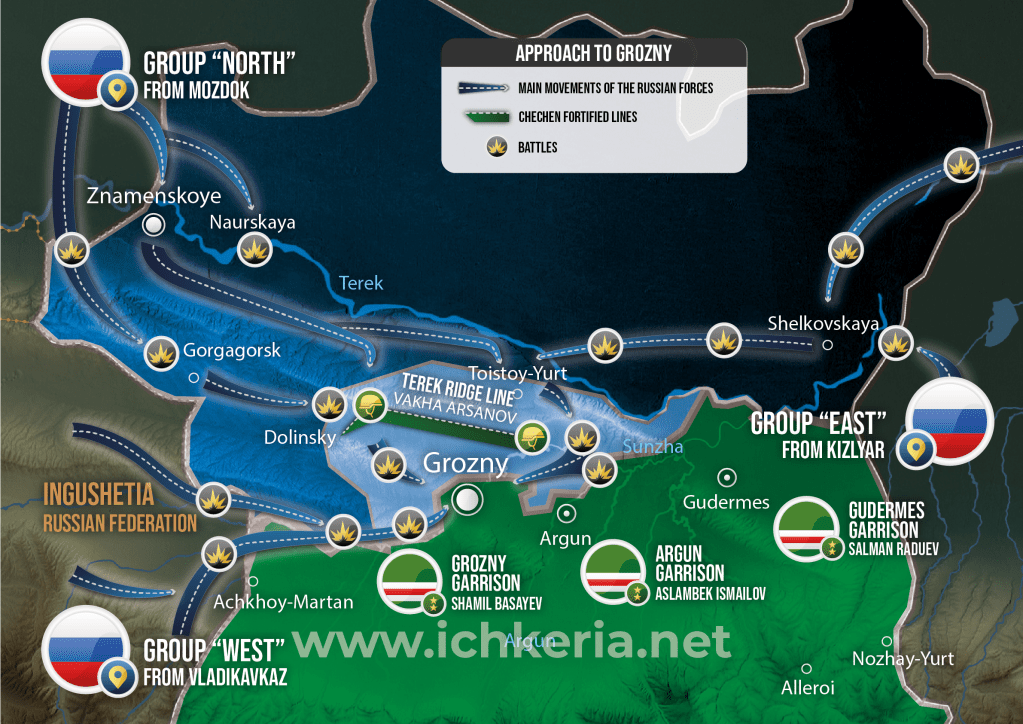


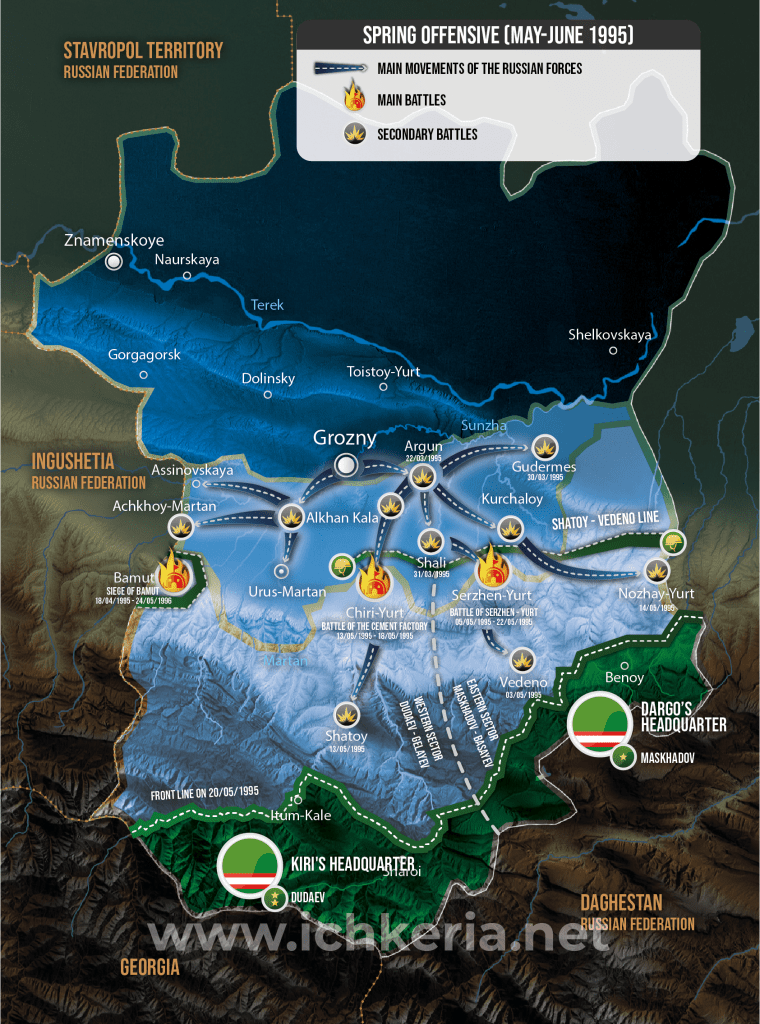
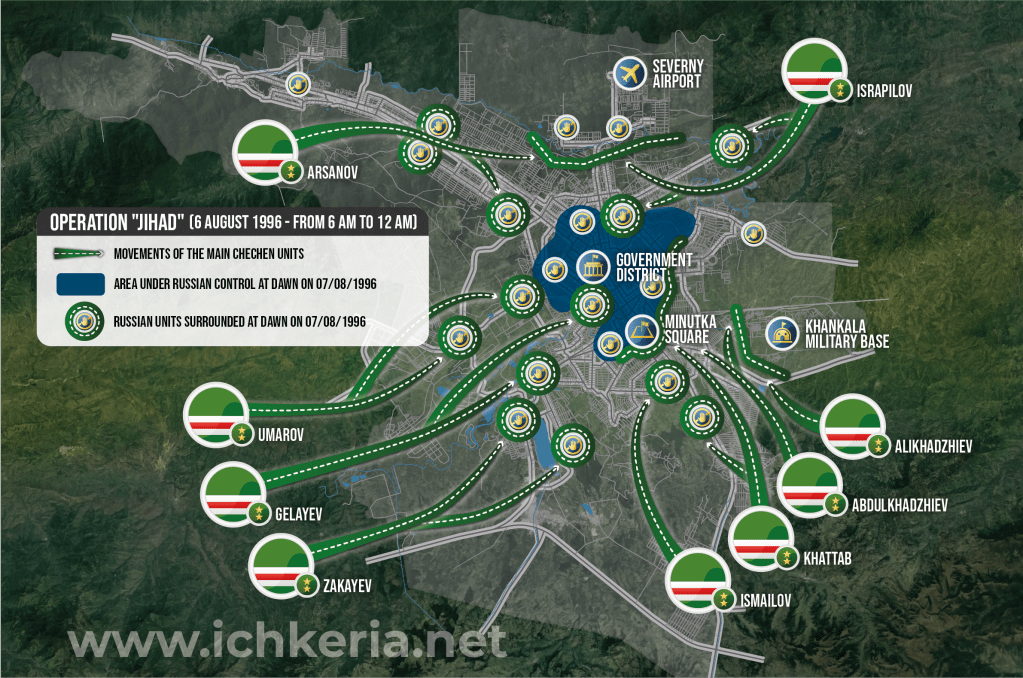


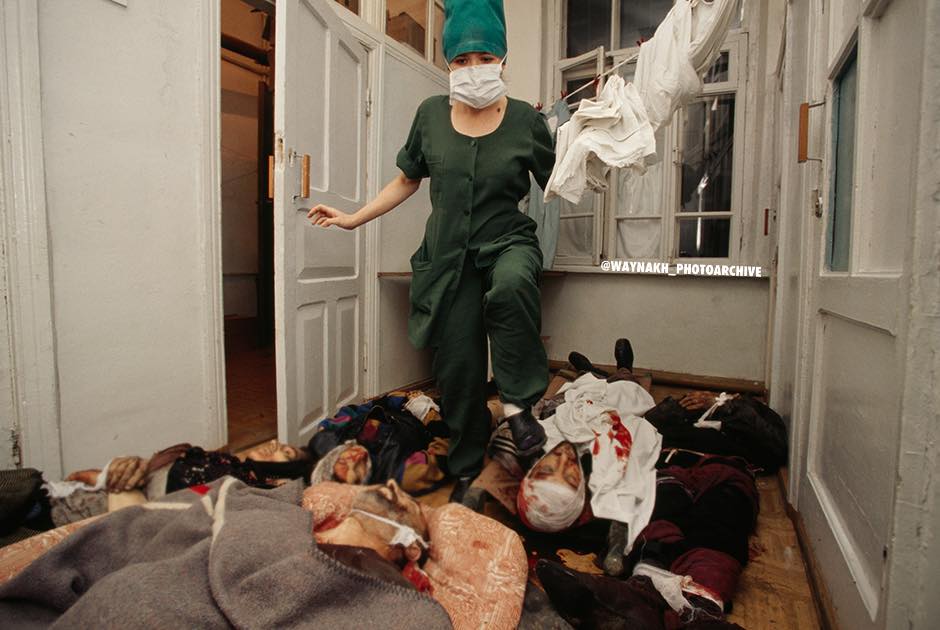



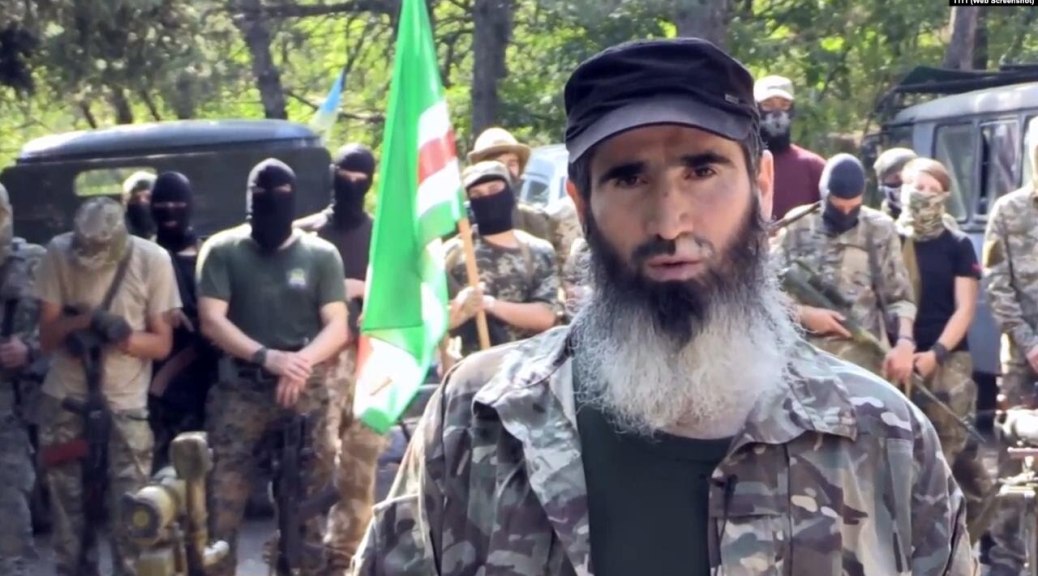

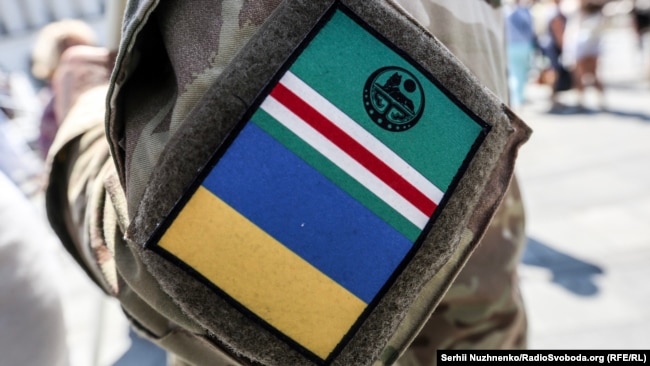

 Ichkeria Digital Archive