Public events concerning the Chechen Republic of Ichkeria, including official participation, conferences, discussions, commemorations, and event reports.
Historical Event Record | 27 October 1991 | Chechnya
On 27 October 1991, presidential and parliamentary elections were held in Chechnya in the midst of the political upheaval surrounding the collapse of Soviet institutions. The electoral process had been called by the Chechen national movement after a confrontation with the republic’s existing authorities. Former Soviet general Dzhokhar Dudayev was declared the winner of the presidential vote, and a new parliament emerged from the election.
Institutional and political context
The vote followed the rise of the All-National Congress of the Chechen People and a struggle over the legitimacy of the existing republican institutions. It became a foundational event in the development of the institutions subsequently associated with the Chechen Republic of Ichkeria. Dudayev issued a declaration of Chechen independence on 1 November 1991.
Contested electoral legitimacy
The elections were not accepted as legal by the Russian republican authorities. Contemporary human-rights reporting records accusations of fraud and a dispute over the electoral process. Accordingly, this archive records the holding of the elections and Dudayev’s declared victory without treating the official turnout or electoral legitimacy as independently established. The 1991 vote should not be confused with the January 1997 presidential and parliamentary elections, which involved international observation by the OSCE.
Editorial note: Institutional origin and political legitimacy are historically contested. Sources with differing institutional perspectives are identified separately.
Historical Event Record | 31 August 1996 | Khasavyurt, Dagestan
On 31 August 1996, Russian and Chechen representatives signed the Khasavyurt Joint Declaration and Principles for Mutual Relations, a key step in the negotiations that ended the First Russo-Chechen War. The agreement was concluded in Khasavyurt, Dagestan, after intense fighting and successive ceasefire talks.
Participants and institutional roles
The text records the signatures of Aleksandr Lebed and Aslan Maskhadov, alongside B. Khartamov and S. Abumuslimov. Tim Guldimann, head of the OSCE Assistance Group to Chechnya, signed in the capacity indicated by the document as being present at the signing. This does not make the OSCE a party to the treaty.
What the agreement established
The declaration set out principles for further relations between the Russian Federation and the Chechen Republic. The accompanying principles envisaged a subsequent agreement on the basis of relations by 31 December 2001 and proposed a joint commission addressing troop withdrawal, security and reconstruction. The document referred to the right of peoples to self-determination and to internationally recognised principles and norms of law; it did not itself definitively settle the contested political status of Chechnya.
Dating note: The archival text bears the date 31 August 1996, while some contemporary press coverage places the conclusion of the negotiations during the night of 30–31 August. This record follows the date printed on the signed agreement.
Editorial classification: Historical institutional event. This entry documents the meeting and the agreement; it does not imply that the signing resolved subsequent disputes about statehood or recognition.
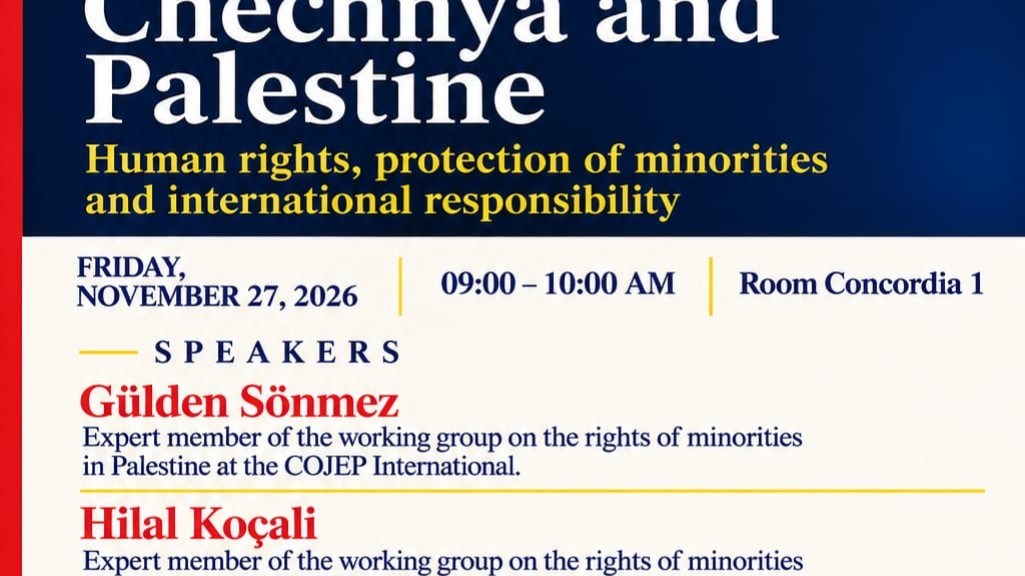
Geneva, 27 November 2026 — Roza Dunajeva, Human Rights Commissioner of the Chechen Republic of Ichkeria, is scheduled to address an international discussion on minority protection and human rights at the Palais des Nations in Geneva.
The discussion, organized by COJEP International, is entitled “From Europe to Chechnya and Palestine: Human Rights, Minority Protection and International Responsibility.” It will take place on Friday, 27 November 2026, from 09:00 to 10:00 (Geneva time) in Room Concordia 1, alongside the 19th United Nations Forum on Minority Issues.
The event is listed in the official United Nations Indico programme of Forum side events. It is a civil-society event organized by COJEP International, rather than a plenary session of the UN Forum or an official statement by the United Nations.
Chechen human rights on the international agenda
According to the organizers’ announcement and event poster, Dunajeva will speak about the situation of the Chechen people. Her participation places Chechen human rights concerns in a wider discussion involving communities from Europe, Palestine, the Balkans, the western Caucasus and the Uyghur diaspora.
Dunajeva, whose surname is also transliterated as Dunayeva, has been identified as the Chechen Republic of Ichkeria’s Human Rights Commissioner in earlier reporting by its Ministry of Foreign Affairs. Her human-rights work has included advocacy concerning the treatment of Chechen refugees and people at risk of deportation.
Speakers and themes
The event poster names Gülden Sönmez on Palestine, Hilal Koçali on minorities in Europe, Roza Dunajeva on Chechnya, Erdem Eren on Turkish minorities in the western Caucasus and the Balkans, and Abdurahman Tohti on the Uyghur minority. The accompanying announcement also identifies Celil Yilmaz as moderator. Speaker names and descriptions are drawn from organizers’ materials; the UN programme confirms the side event but does not independently list its speakers.
In its accompanying statement, COJEP International also describes a proposal to develop a long-term platform for cooperation among advocates of human rights and minority communities. The organizers envisage four meetings a year: three in connection with sessions of the UN Human Rights Council and one alongside the annual Forum on Minority Issues. This remains an organizational proposal, not an announced programme of the United Nations.
For Ichkerian human-rights advocates, the COJEP side event offers an opportunity to bring the situation of the Chechen people before an international audience, while building connections with other communities seeking stronger protections. Its inclusion in the UN side-event schedule should not be understood as diplomatic recognition of the Chechen Republic of Ichkeria by the United Nations.
Florence, 1 November 2026 | Ichkeria.net — Government Activities
An international conference held in Florence on 1 November brought together Chechen, Ukrainian and Italian voices to examine the historical connections between Russia’s wars in Chechnya and Ukraine, and the response of European governments over the past three decades.
Entitled “From Chechnya to Ukraine: Russia’s Long War Against Europe”, the event was organised by Ichkeria.net, Europa Radicale and the Representation of the Chechen Republic of Ichkeria in Italy.
The conference was moderated by Francesco Benedetti and featured Adriano Sofri, Igor Boni, Oles Horodetskyy and Akhmed Zakayev, Head of the Government of the Chechen Republic of Ichkeria in exile. Vice-President of the European Parliament Pina Picierno contributed a recorded video message, while Yuliya Muts also addressed the gathering.
A historical argument: from Grozny to Kyiv
The conference opened with a historical presentation tracing developments from the dissolution of the Soviet Union in 1991 through the wars in Chechnya, Russia’s military intervention in Georgia in 2008, the annexation of Crimea in 2014, the war in eastern Ukraine and the full-scale invasion of February 2022.
The presentation advanced a central argument: Russia’s war against Ukraine should be understood within a longer history of military intervention, coercion and attempts to maintain influence over neighbouring territories.
A second part examined statements made by European political leaders during these decades, raising questions about how Western governments interpreted and responded to successive Russian military actions. The opening concluded with the question: “What lesson does Europe still need to learn?”
Chechnya and Ukraine: historical memory and political responsibility
Italian writer and journalist Adriano Sofri took part in a discussion on the wars in Chechnya and Ukraine, their historical parallels and the way both conflicts have been perceived by Italian public opinion.
Igor Boni, President of Europa Radicale, participated in a conversation on solidarity with Ukraine and the longstanding involvement of the Radical political tradition in defending human rights and the Chechen cause.
Pina Picierno, Vice-President of the European Parliament, contributed through a recorded video message.
Oles Horodetskyy, President of the Christian Association of Ukrainians in Italy, joined the discussion on Ukrainian national identity, European values and the relationship between the Ukrainian and Chechen struggles for self-determination.
The discussion also recalled the Ukrainian Parliament’s October 2022 resolution recognising the Chechen Republic of Ichkeria as temporarily occupied by the Russian Federation.
Akhmed Zakayev and the continuing struggle for Ichkeria
A central part of the conference was dedicated to Akhmed Zakayev, Head of the Government of the Chechen Republic of Ichkeria in exile. The discussion placed his political experience within the broader history of Chechnya’s struggle for independence, from the wars of the 1990s to the years of exile and continued international advocacy.
The interview was structured around three fundamental questions: the meaning of homeland, the meaning of courage and the meaning of freedom. Zakayev’s participation brought the perspective of the Chechen independence movement directly into a discussion about Europe’s security, historical memory and political future.
A public record of the conference
The event also included an address by Yuliya Muts. The entire conference was recorded by Radio Radicale, which has made the video and audio available through its public archive. The recording provides a lasting documentary record of the dialogue between representatives of the Chechen independence movement, Ukrainian civil society and European political and intellectual figures.
Chechen activists gathered outside the German Embassy in Vienna on 21 October to protest the threatened deportation of Chechen asylum seekers from Germany and other European countries, according to Caucasian Knot.
The demonstration was organised by activists associated with Roza Dunaeva, representative of the Chechen Republic of Ichkeria in Austria. According to the organisers, Chechen, Ukrainian and Austrian activists took part in the protest.
Participants warned that returning certain Chechen asylum seekers to Russia could expose them to political persecution, torture or forced recruitment into Russia’s war against Ukraine.
According to Dunaeva, an appeal concerning several individuals and families facing possible deportation was handed to the German Embassy. Independent confirmation of its formal receipt has not been obtained.
The demonstrators urged European authorities to assess asylum applications individually, considering each person’s circumstances and the current human-rights situation in Chechnya.
Why it matters
The Vienna demonstration is part of a wider campaign by Chechen diaspora activists concerned about European deportation policies.
Earlier reporting by OC Media, based on German parliamentary documentation, showed that the asylum recognition rate for ethnic Chechen applicants in Germany fell from 21.1% in 2023 to 3.9% in the available 2025 data (through November).
The latest protest also illustrates the continuing involvement of representatives of Ichkeria’s institutions in exile in European refugee-protection campaigns.
Zakayev: “quanto accade in Ucraina è ennesima tappa del colonialismo russo, iniziato negli anni ’90 da Eltsin. Putin deve essere giudicato all’Aja per i suoi crimini; non per vendetta ma per giustizia”.
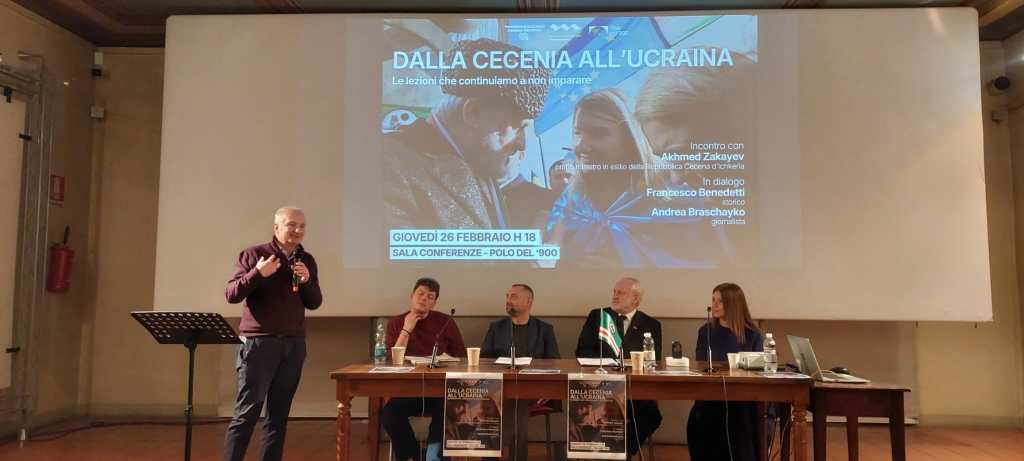
Si è tenuto al “Polo del ‘900” di Torino il convegno “Dalla Cecenia all’Ucraina”, in cui è intervenuto anche il primo ministro in esilio della Repubblica cecena di Ickeria, Akhmed Zakayev, per la prima volta a Torino. Insieme a lui lo storico Francesco Benedetti e il giornalista Andrea Braschayko.
Nel suo intervento Zakayev ha ripercorso in modo analitico e preciso tutte le aggressioni militari compiute già negli anni ’90 del secolo scorso dalla Federazione Russa contro gli Stati vicini (Inguscezia, Azerbaigian, Moldova, Cecenia, Georgia); le guerre coloniali russe di Eltsin furono la riproposizione dell’imperialismo sovietico, senza alcuna soluzione di continuità. Putin ha preso il testimone da Eltsin e ha continuato l’opera: seconda guerra cecena, occupazione del 20% della Georgia, occupazione del 20% dell’Ucraina (senza dimenticare il fondamentale appoggio militare al regime siriano del criminale Assad).
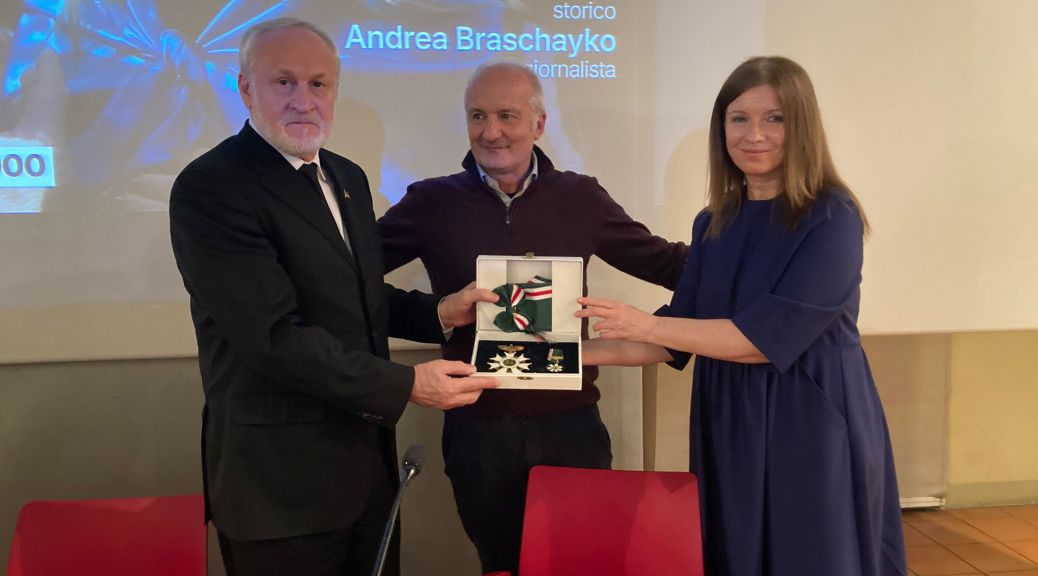
Zakayev ha poi ribadito che la Corte Penale Internazionale dell’Aia deve processare Vladimir Putin per i suoi crimini, “non per vendetta ma per impedire a Putin di commettere altri crimini e per impedire ad altri di imitare Putin”. E a proposito di crimini russi, al termine del suo intervento, Zakayev ha consegnato nelle mani di Igor Boni (presidente di Europa Radicale) la piu’ alta onorificenza cecena, assegnata (alla memoria) ad Antonio Russo, giornalista di Radio Radicale, ucciso barbaramente in Georgia nel 2000 mentre stava documentando i crimini russi nella vicina Cecenia.
Igor Boni e Silvja Manzi hanno dichiarato:
“Dobbiamo ringraziare Akhmed Zakayev tre volte. La prima perché, dopo oltre trent’anni di lotta incessante per il diritto alla vita del suo Paese, non ha perso una briciola della sua intelligenza politica e della sua passione civile.La seconda per i riconoscimenti reiterati all’impegno dei radicali per la difesa dei valori di libertà e democrazia dalla minaccia putiniana.
Ma soprattutto ringraziamo Zakayev per non avere dimenticato Antonio Russo, “un radicale giornalista” (come lo definì Pannella). E questo proprio nel momento in cui Radio Radicale lotta per la propria sopravvivenza, che è la sopravvivenza di un enorme patrimonio di informazione e conoscenza. Consegneremo l’onorificenza alla direzione di Radio Radicale, per arricchire tale patrimonio”.
Russian ambition is vulnerable in what has always been the Empire’s soft underbelly: the North Caucasus. A conference in Kyiv sets a framework for opposition to Moscow’s imperialist legacy.
The following article was written by the Minister of Foreign Affairs of the Chechen Republic of Ichkeria, Inal Sharip, and published in the Kyiv Post at the following link:
The Kyiv conference “The North Caucasus as Europe’s Security Frontier” was timed to the third anniversary of Verkhovna Rada Resolution No. 2672-IX on the temporary occupation of the territory of the Chechen Republic of Ichkeria (ChRI). Its core conclusion is that Europe’s stability is inseparable from the fate of the peoples of the North Caucasus; therefore, the “Caucasus track” must move from declarations to a managed policy with institutional tools and clearly defined addressees.
The lineup underscored the political weight and attention to the topic. Participants included Verkhovna Rada Speaker Ruslan Stefanchuk and First Deputy Speaker Oleksandr Korniyenko; Ukraine’s third President Viktor Yushchenko; Mykhailo Podolyak, advisor to the Head of the Office of the President of Ukraine; Prime Minister of the ChRI Akhmed Zakayev; MEP Rasa Jukneviciene (former Lithuanian Minister of Defense, Vice-Chair of the EPP Group in the European Parliament); former Polish Foreign Minister Anna Fotyga; as well as members of the Ukrainian parliament and international experts. Such a roster widens the frame from a national to a pan-European and transatlantic level, signaling that the North Caucasus is entering the security mainstream.
Prime Minister of ChRI Akhmed Zakayev with the third President of the Republic of Ukraine, Viktor Andrijovych Yushchenko
The normative direction of the discussion was set by the adopted Kyiv Declaration.
First, it fixes a strategic lens: the North Caucasus is a critical link in pan-European security; the threats are transnational (hybrid aggression, repression, deportations, disinformation) and require coordinated international responses. This turn implies abandoning the “all-Russia prism” in favor of viewing the North Caucasus as a distinct macro-region with its own elites and trajectory.
Second, the declaration sets an operational framework – a four-track roadmap, which makes the conversation reproducible within EU/NATO policy and at national levels:
Legal (universal jurisdiction, documentation of crimes, support for applications to international courts);
Sanctions (expansion of personal and sectoral measures for repression, mobilization, deportations, and cultural erasure);
Humanitarian (protection of refugees and political prisoners, access to medical and psychological care, preservation of language and culture);
Communications (countering disinformation, supporting independent media and expert analysis).
Third, much attention was dedicated to the Ukrainian pillar. Participants called on the Verkhovna Rada to take steps enabling “Ichkerian entities” to function within Ukraine’s legal field: recognize ChRI citizenship; provide for representation of ChRI citizens in third countries pending international recognition; grant the State Committee for the De-Occupation of the ChRI official status as an organ of national-liberation struggle; and launch a regular parliamentary dialogue. They also propose energizing cross-party caucuses and supporting draft law No. 11402 on engagement with national movements of the Russian Federation’s colonized peoples. Taken together, this moves moral-political declarations toward legally operable mechanisms.
ChRI Prime Minister Akhmed Zakayev with the Speaker of the Ukrainian Parliament, Ruslan Stefanchuk
External addressees are divided into two groups. The first – the European Parliament, PACE/NATO PA, and national parliaments – are urged to strengthen the parliamentary dimension of de-occupation policy, initiate public hearings and evidence-gathering missions, establish systematic dialogue with national-liberation movements, and expand sanctions lists, including accountability for the use of North Caucasus natives in Russia’s war against Ukraine. The second – governments and institutions of the EU/UK/Canada/US – are encouraged to integrate North Caucasus issues into strategic reviews and deterrence plans, and to support human rights, cultural heritage, and the languages of the Caucasus peoples.
A key infrastructural outcome was the decision to build an expert network and a public monitoring panel, Caucasus Watch – a tool that links human-rights reporting, sanctions tracking, and analysis, thereby reducing information asymmetries for policymakers and regulators. A dedicated grant track is envisioned for researchers working on law, security, and culture in the North Caucasus.
The tone of the discussion was well captured by remarks from Laura Lindermann of the United States (Senior Fellow at the Atlantic Council’s Eurasia Center and Director of Programs at the Central Asia – Caucasus Institute at the American Foreign Policy Council). She noted Russia’s “strategic retrenchment” from the South Caucasus, the shift in the mediation architecture, and the vulnerability of three pillars of control in the North – hyper-securitization, budget transfers, and personal patronage networks (including the “Kadyrov model”). The weakening of these pillars increases the risks of local conflicts and terrorism, as well as the play of external actors; hence integrating the “Caucasus track” into the core of Euro-Atlantic strategies is a matter of prevention, not reaction.
From here flows the practical logic of the Kyiv Declaration: institutionalizing subjecthood, standardizing sanctions-legal work, producing verifiable data, and advancing parliamentary diplomacy. The expected outputs fall into three baskets:
Legal (building out universal-jurisdiction cases and treaty-based procedures);
Political (consolidating inter-parliamentary formats, including channels to movements and diasporas);
Informational (reducing reliance on fragmentary testimony through a single data window (Caucasus Watch)).
The risks are evident: sanctions fatigue and bureaucratization; limited access to sources and witness security; competing external agendas. However, the very shift to an operational framework with clear addressees and instruments is already significant. The political will of parliaments and the cohesion of expert networks will be the key variables – both for implementing the Ukrainian pillar (including decisions on ChRI citizenship and the State Committee’s status) and for embedding the “Caucasus track” in EU/NATO strategies.
Kyiv has offered new arguments as well as a policy infrastructure, from legislation to enforcement. The trajectory ahead will be measured not by the volume of statements but by the speed of institutional steps and the quality of interagency coordination.
The views expressed in this opinion article are the author’s and not necessarily those of Kyiv Post.
The text of the Declaration signed in Kyiv is available in English, Russian and Ukrainian at this link
As Prime Minister of the Government and Chairman of the State Committee for the De-Occupation of the Chechen Republic of Ichkeria, I would like to express my sincere gratitude for the invitation and the opportunity to participate in this conference. Your work in organizing this important event deserves the highest praise. Your efforts contribute to the strengthening of international cooperation and exchange of experience, which is especially important in our times. I am confident that the results of our joint work will contribute to further progress and strengthening of international relations.
Today I want to begin my speech not with the history of the centuries-long struggle of the Chechen people for independence, but with the war in Ukraine, from which I came to this conference yesterday.
This crisis is not a local problem. It affects the entire international community because it threatens the foundations of a world order based on respect for sovereignty, territorial integrity and human rights. Russia, using military force, has invaded a sovereign State, violating principles that we all have an obligation to defend.
Russia’s military action in Ukraine has resulted in countless human suffering. Thousands of civilians have been killed, millions have been forced to flee their homes, towns and villages have been destroyed. This is a humanitarian catastrophe that requires an immediate and decisive response from the international community.
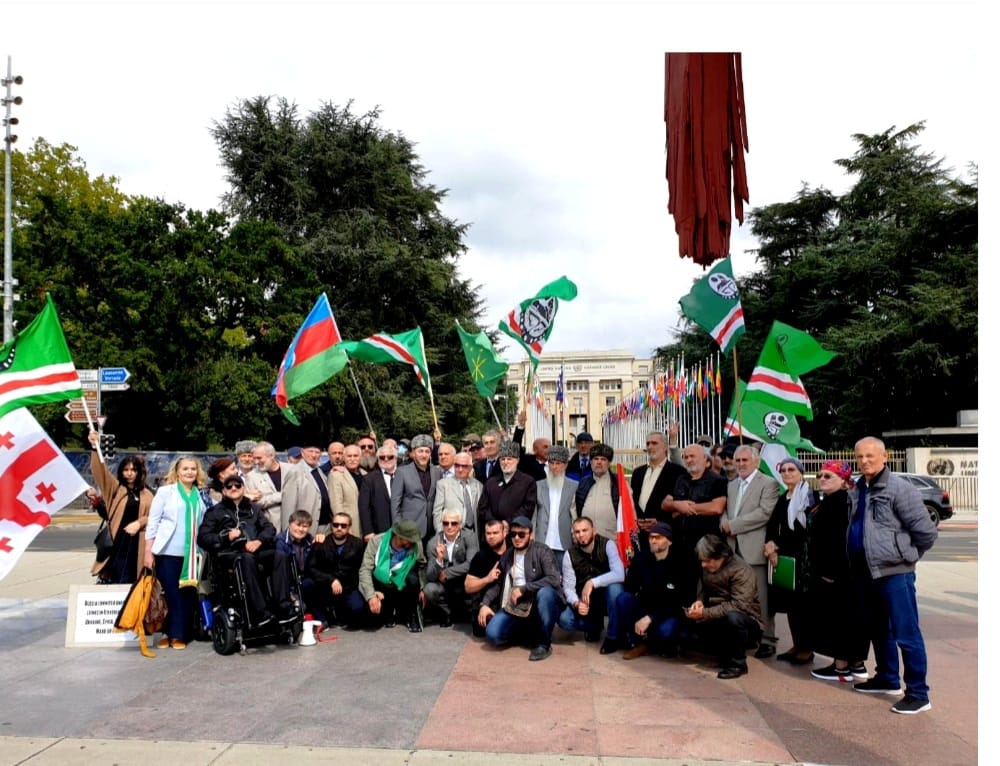
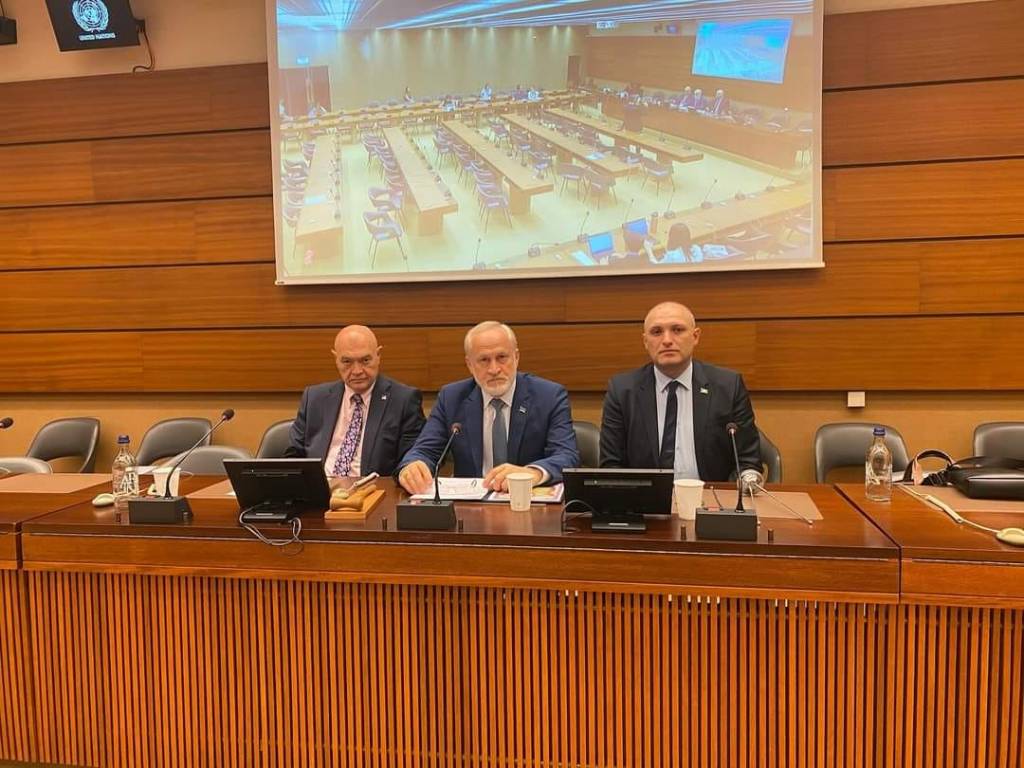
The Chechen delegation at United Nations in Geneva
For us Chechens, this situation is particularly painful. We know what it means to suffer aggression, violence and occupation. We know the price of freedom and independence, and we cannot stand aside when another people is experiencing similar tragedies. Our hearts and thoughts are with the people of Ukraine, who are showing incredible courage and resilience in this struggle.
Units of the Chechen Republic of Ichkeria are today fighting as part of the international legion of the Armed Forces of Ukraine. Although our homeland is under temporary occupation, we are fighting in Ukraine because it is there that the fate of all humanity is being decided. We realize that today’s world is divided, just as it was during the Second World War. The world after this war will no longer be the same as it was after the Second World War. We are on the threshold of great changes, and we must be ready for them.
Democratic reforms in Russia went downhill not yesterday and not today. We all witnessed how Russia began its departure from democratic reforms after it attacked the Chechen Republic of Ichkeria. Some 300,000 people died in that brutal war, 42,000 of whom were children. The Western world, following its morality and logic, believed that this was a forced measure in the process of developing democracy in Russia. However, this was a delusion. The world did not realize that this was the essence of the Russian empire, which was alien to democratic reforms. It only needed time and Western resources for rebirth and revenge.
Today we can say that there is, in fact, a third world war going on. This conflict affects not only Ukraine and Russia, but the whole world. In many countries there is an economic recession, instability is growing, social and political tensions are increasing. The conflict is expanding and taking on increasingly global proportions.
The world, and the United Nations in particular, must think today about the future of humankind. We need to rethink and strengthen international institutions so that they can effectively prevent such conflicts in the future. We need to create conditions in which aggression and violence will not be possible.
Our struggle, the struggle of the Chechen people, is reminiscent of the Resistance movement led by Charles de Gaulle in France during the Second World War. Back then, the true voice of France was heard through de Gaulle, who was accepted into the anti-Hitler coalition despite his lack of control over the territory. The collaborationist Vichy government collaborated with Hitler, but the true voice of France was de Gaulle’s.
Today, we, Chechens under occupation but fighting in the anti-Putin coalition, are also the true voice of the Chechen people. We hope that here, in the UN building, this voice will sound special and will be heard by all members of the United Nations.
After Russia failed to execute a blitzkrieg and take Kiev in three days, the war dragged on for two and a half years with no clear victories for Russia. As the military campaign continued, Russia faced increased Western coalition support for Ukraine. Under these circumstances, Russia has an interest in destabilizing the world to divert international attention from supporting the Ukrainian people.
One of the clearest examples of such destabilization was the recent conflict in the Middle East. It is quite obvious that the beneficiary of this destabilization is Vladimir Putin. The situation in the Middle East has contributed to the redistribution of resources and attention of the world community, which ultimately weakened the focus on the events in Ukraine.
Using and supporting extremist groups fits into the Kremlin’s long-term strategy of creating chaos and disunity on a global scale. This not only distracts the international community from the war in Ukraine, but also weakens the West by forcing it to allocate forces and resources to several conflicts simultaneously.
In pursuit of global destabilization, Russia is counting on decreased support for Ukraine and the possibility of improving its position in this protracted conflict. However, such actions lead to an even greater escalation of tensions in the world, jeopardizing the security and stability of multiple regions.
From left to right: Iyad Youghar, Akhmed Zakayev, Burak Otzas
We are following with deep concern the unfolding humanitarian catastrophe in Gaza. The violence and suffering endured by civilians require an immediate and decisive response. We are opposed to any form of violence and terror, regardless of the slogans or justifications behind it. Its victims are civilians, including the elderly, women and children. Such actions not only fail to resolve the conflict, but also cause irreparable damage to human life and dignity. We call on all parties to respect international humanitarian law and to cease hostilities immediately.
The way out of this long-standing conflict in the Middle East may be the implementation of the UN resolution on the establishment of a Palestinian state. This solution will not only resolve the long-standing Israeli-Palestinian conflict, but also reduce the level of tension in the region, which in turn will reduce the opportunities for external players to use the situation to their advantage. The establishment of a Palestinian State will be an important step towards peace and stability in the Middle East.
The government of the Chechen Republic of Ichkeria has reasonable suspicions that Vladimir Putin used Ramzan Kadyrov to finance terrorist organizations. These suspicions are supported by the fact that Kadyrov has concentrated significant financial resources in the Middle East, including billions of dollars that could be used to support extremist groups.
Ramzan Kadyrov and his religious extremist sect Akhmat are accused of committing crimes against humanity in the Chechen Republic of Ichkeria and in Ukraine. Their actions include gross human rights violations, murder and torture of civilians, and financing of terrorist groups.
We welcome the International Criminal Court’s (ICC) announcement of the international wanted list for high-ranking Russian figures such as Vladimir Putin, Sergei Shoigu, and Valery Gerasimov. The decision reflects the serious allegations made against these individuals in the context of international crimes. Such a decision inevitably provokes strong political reactions both in Russia and in the international arena, emphasizing the importance of international justice and the principle that even high-ranking leaders are not immune from prosecution for serious crimes. It should be remembered that a wanted notice is the initial stage of the judicial process. In any case, this event emphasizes the importance of the rule of law in the international arena and the desire of the world community for accountability for serious crimes.
In this regard, we hope that the political leadership of Ukraine will soon decide to establish an international tribunal against Ramzan Kadyrov and his terrorist religious sect Akhmat. We call for the appointment of a special representative with whom we will work to coordinate efforts to bring these criminals to justice. The establishment of an international tribunal is an important step towards restoring justice and ensuring peace and security in the region. We stand ready to provide all necessary information and to cooperate with international organizations to achieve that goal.
The international community must unite and take decisive action to stop this aggression. We must strengthen sanctions, provide the necessary support to Ukraine and send a clear message: aggression will never go unanswered. We must do everything possible to restore peace and justice.
History teaches us that evil triumphs when good people fail to act. We cannot afford the luxury of inaction. We must act now to protect our common home, planet Earth, from the destructive forces of aggression and violence.
As I stand here in the United Nations building, I feel a deep sense of gratitude to the Verkhovna Rada of Ukraine. This respected institution has taken a historic step that will go down in the history of the Chechen people by recognizing the territory of the Chechen Republic of Ichkeria as temporarily occupied by Russia.
This act of recognition is an important and courageous step towards justice and freedom for the Chechen people. It symbolizes international solidarity and support in the struggle for human rights and self-determination.
I urge all UN members to support this initiative of the Verkhovna Rada of Ukraine and also recognize the occupation of the Chechen Republic of Ichkeria. Your recognition and support will send an important signal of the international community’s unwavering commitment to the principles of justice, freedom and respect for the sovereignty of peoples.
Recognition of the temporary occupation of the Chechen Republic of Ichkeria would not only underline the importance of international law, but would also be an act of solidarity with the Chechen people, who have been fighting for their freedom and independence for many years.
In conclusion, I would like to express my deep gratitude to all those countries and peoples who support Ukraine in these difficult times. Your solidarity and support is a source of hope and strength for all of us. Let us work together to create a better future where peace, justice and respect for every human being prevail.
Thank you for your attention.
Akhmed Zakayev, Chairman of the Government of the Chechen Republic of Ichkeria
Last November 8th Francesco Benedetti was called to speak at the conference “The Future of the Northern Caucasus”, organized by the MEP Anna Fotyga. Below we report his speech, filmed by @INEWS cameras
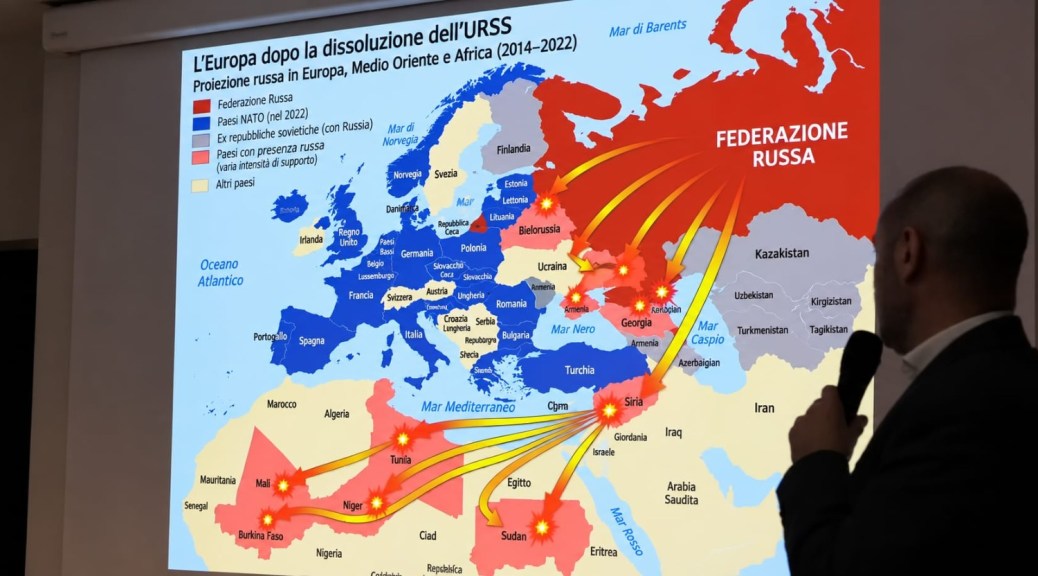
Over the past decade, a series of political and military crises have crossed the world. Visualizing them on the map, we can identify a “line of friction” that starting from Finland runs from North to South through Eastern Europe, reaches the Caucasus, crosses the Middle East and then wedges into Africa, cutting it from East to West. If the hot spots on this front are currently Ukraine, Nagorno Karabakh, Syria and Palestine, no less concern is aroused by its secondary segments, such as the Russian Federation, Belarus, Georgia, Iraq, Libya and the West African Republics. The Caucasus is one of the pieces of this front.
The war unleashed by Putin in February 2022 against Ukraine has exposed the Russian Federation to the risk of a collapse. This would give the North Caucasus republics an opportunity to reassess their position in a regional association along the lines of the North Caucasus Mountain Republic. Similar projects, after all, were theorized as early as the late 1980s and early 1990s, notably by Dzhokhar Dudaev and Zviad Gamsakhurdia, and with them a vast movement of opinion that had animated debates, discussions, and projects. I can try to make a modest contribution by bringing to your attention my own experience as a citizen of a member state of a supranational union, at whose main institution, the European Parliament, we find ourselves right now.
European Union has been established, given itself a Parliament, created legislative, governing and supervisory bodies, procedures and regulations of all kinds, social, economic and cultural projects of the highest order. However, at this very moment, when a solid and strong Europe, capable of influencing the course of world events and protecting the interests of European citizens would be needed more than ever, the Union is revealing some difficulties.
Personally, I believe that the problem lies mainly in the fact that even today, seventy-four years after the establishment of the Council of Europe, the European Union does not have a “Mission.” European citizens feel part of a larger community than that of the nation to which they belong, but they do not know how to recognize its “depth,” so they call themselves first “French” “Spanish” “German,” then “European.” Precisely from this problem I try to translate the discussion to the North Caucasus.
A union of North – Caucasian republics can be a viable curb on the imperial pretensions of neighboring powers, and Russia in particular. Moreover, it could grant the republics that would compose it greater specific weight in international fora, and start a process of building a Caucasian identity that, as an outside observer, I trace already exists in a rather pronounced way. A defensive purpose, however, cannot be a sufficient “mission.”
I believe that the project of a unification of the North Caucasus, fascinating and potentially successful in itself, must be accompanied by deep reflection regarding what its “mission” in history should be. If until a few decades ago new states arose out of opportunity, embodying the national ambitions of peoples, today we are witnessing the emergence of new states out of necessity. The end of the U.S.-led unipolar world, the rise of new world powers, and the agglomeration of economic power and demographic weight makes the “small homelands” so irrelevant that they are forced to consort if they want to avoid becoming pawns in the great international power games.
What need, then, should guide the creation of a Confederation of the Peoples of the North Caucasus? What historical mission should it set itself? What added value should it bring to the Caucasian community, and to the human community at large? On what distinctive features should it be articulated? To put it even more simply: how will a citizen of Dzhokhar, Magas, or Machackala feel honored to be a Citizen of the Caucasus? I believe that the ability of the peoples of the North Caucasus to erect a solid institution, capable of guaranteeing them a future of freedom and prosperity, will depend on the attention paid to these questions.