Tutti gli articoli di maceriadmin

Past, present and future – Francesco Benedetti Interviews Inal Sharip (Part 2)

Let’s go back to 1999. When Russia invaded Chechnya for the second time, where were you? Were you still studying?

At that time I was working in Moscow, at the Central Documentary Film Studio. I was making documentaries. When the war started, I returned to Chechnya to make a film about the war. It was my most dangerous experience, because the aggression was in full swing, they were ready to destroy the entire Chechen people. When Russian troops saw journalists, human rights activists or documentary filmmakers, they hated them and put up all sorts of obstacles, because they were telling the whole world about the atrocities that the Russians were committing in Chechnya. And when the Russian military found out that I was a Chechen, they were ready to shoot me. Several times I was a millimeter away from death. After finishing work on the film, the film was selected at a film festival in North Carolina (USA). In 2000, I left for the USA, where my film received high reviews in the professional community. After that, I began negotiations with American producers about working on a documentary series about the centuries-long struggle of the Chechen people for independence: from Sheikh Mansur to the present day.

What was the American public’s involvement with what was happening in Chechnya?

Ordinary people knew little about Chechnya. They heard something about the war, but knew nothing specific. Journalists and human rights activists knew well. Most Americans are not interested in what is happening outside the United States. According to statistics, only a few percent of voters care about the presidential candidate’s pre-election position on U.S. foreign policy.

In the rhetoric of the current regime of Ramzan Kadyrov I have often heard references to the fact that the independence that was regained then cost the Chechens so much, that even talking about it today is to be considered synonymous with “extremism”. In your opinion, how much did all this weigh in strengthening the Chechens’ support for Kadyrov?          

The question of how the values associated with independence and loss influence the support for Ramzan Kadyrov’s regime in Chechnya leads us to deeper reflections on human ideals and motivations. The phrase indicating that independence “cost” the Chechen people too much and that preserving this memory has become synonymous with “extremism” touches upon complex issues of identity and self-awareness. For peoples who have endured wars and trauma, collective ideals are often intertwined with historical memory, built on suffering and struggle. For many Chechens, the memory of war and independence is not merely a historical fact but a part of their identity that legitimizes their sense of community and belonging. However, this perception can become a tool of power when fear and loss are employed to validate authority.

This raises a philosophical question: Do individuals truly hold higher ideals for which they are willing to sacrifice everything, including their lives? In the past, values such as honor, dignity, and justice served as catalysts for revolutions and social changes. In the 18th and 19th centuries, such ideals inspired people to make selfless acts. Yet in the modern world, filled with logic of consumerism and individualism, these ideals may appear indifferent. Nonetheless, those ideals have not disappeared; rather, they have transformed. When facing crises or difficulties, individuals unconsciously seek not only justifications for their actions but also profound values that could support them in those moments. For some, this may be family; for others, freedom; and for some, belonging to their nation and its history. However, under an authoritarian regime like Kadyrov’s, such searches are permeated by fear. The ability to openly defend ideals born from suffering can lead to repression, making individuals more inclined towards conformity.

Thus, Kadyrov’s support can be viewed as a product of psychological defense, built before external threats. This does not always indicate ideological support for the ruler; rather, it is a strategic adaptation driven by the desire for survival. Society needs to protect itself from challenges, and at times, supporting an established authority becomes a means of preserving identity and collective memory. Therefore, while the era of high ideals may give way to more pragmatic considerations, the very idea of self-sacrifice and the search for meaning in life remains an inseparable part of human existence. Ultimately, the answer to the question of what drives a person regarding higher ideals largely depends on personal choice, background, and existing context. In this sense, support for Kadyrov is not merely support for a regime, but a complex and multifaceted process where fear, memory, and the search for identity converge.

A splendid reflection, which brings us to another question: can all those who collaborate with Kadyrov be considered “traitors”?

Thank you for your question. This is indeed a very complex issue that touches upon moral and ethical considerations regarding collaboration with a regime. Historical experience shows that different contexts and eras have led to various responses to such situations. During World War II, for example, those who collaborated with the occupiers were often executed immediately. In contrast, in the Baltic countries—Latvia, Estonia, and Lithuania—after over 50 years of occupation, there were no mass executions in 1991. This was largely because a new generation had grown up without knowing life outside the Soviet Union, highlighting how sensitive the topic of survival under occupation is.

Your reflections on who exactly can be considered a “Kadyrovite” are indeed critical. It is essential to emphasize that we cannot label ordinary people, who are forced to survive in difficult conditions and have no connection to the crimes committed by Kadyrov’s gang, as “Kadyrovites.” On the contrary, they are victims of this regime, subjected to the abuses of Kadyrov and his associates. In my view, those who have committed crimes should primarily be held accountable. It is especially important to bring religious leaders who justify Kadyrov’s actions to justice, as their influence on the minds and souls of people can be far more destructive than that of the perpetrators themselves. This is a multifaceted issue, and addressing it requires careful consideration of numerous factors.

In your answer you specifically mentioned “religious leaders”. How are Islamic clergy supporting Kadyrov’s regime?

In various countries, the relationship between the state and the clergy can vary: they either work closely together or, as in the case of Russia, the state uses religious institutions to advance its interests. In Russia, government agencies deploy their agents into the religious sphere, helping them build careers within spiritual organizations. These state representatives are legitimized in religious circles, while the clergy, in turn, serves the interests of the state. This practice is widespread globally, although there may be exceptions. The first official Muslim organization in Russia was established by the decree of Catherine the Great in 1788. The position of the Mufti, the head of Russian Muslims, was created, and the candidate had to be approved by the emperor after being elected by the Muslim community. In the decree, it was explicitly stated that this organization was established in the interest of the Russian state. Since then, little has changed: just as the state controlled the religious life of its citizens in the past, it continues to do so today.

Before the 1917 revolution, Russian intelligence services infiltrated their agents into religious institutions, and after the revolution, the Soviet government created its own educational institutions—Orthodox seminaries and Islamic madrasas—where future preachers, often intelligence officers, were trained. It was impossible to receive a religious education in the Soviet Union without KGB approval. Those who believe Russia has lost its grip in this area are mistaken. In fact, Russia has expanded its influence: for example, graduates of the Islamic faculty at the University of Damascus in Syria are under the control of Russian intelligence, particularly the GRU. It’s no secret that the GRU has a base in Syria, and it’s no surprise that several dozen graduates of this university work within Ramzan Kadyrov’s circle, justifying his actions both in Chechnya and in Ukraine from a religious perspective. Undoubtedly, this situation needs to change, and the Islamic world is in dire need of reforms. However, those who benefit from the current state of affairs will fiercely defend it. A striking example is the case of Saudi journalist Jamal Khashoggi, who was forced to flee due to threats to his life for his political views. He was brutally murdered and dismembered at the Saudi consulate in Turkey when he came to obtain a new passport. His last tweet was deeply symbolic: “The Islamic world is in great need of democratic reforms.”

So, if the Islamic clergy is all, more or less, infiltrated or managed by the secret services, does this mean that Islam cannot be a unifying force in the movement for the independence of the North Caucasus? And if so, what force, in your opinion, can be a unifying element?

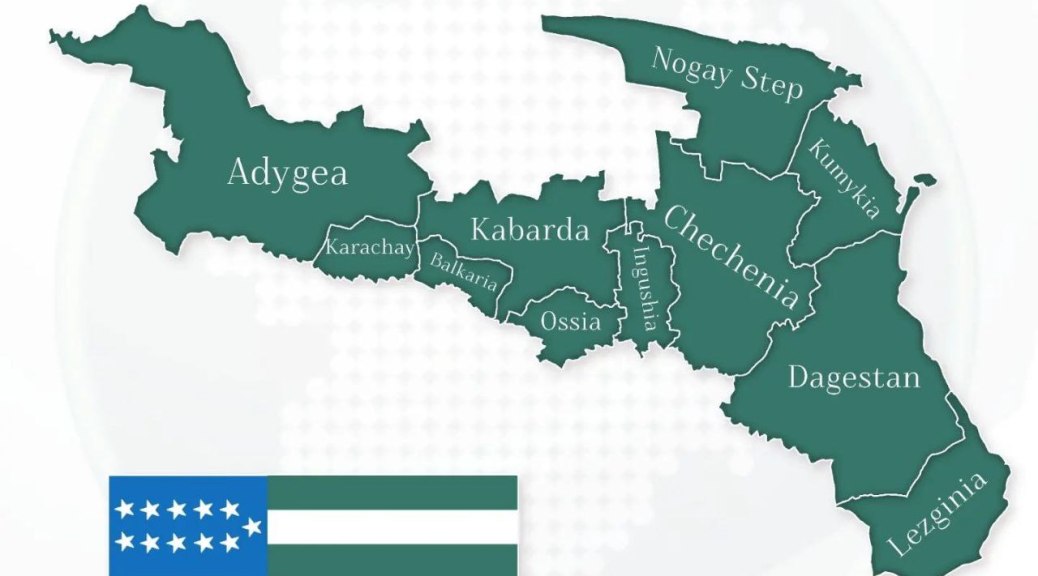
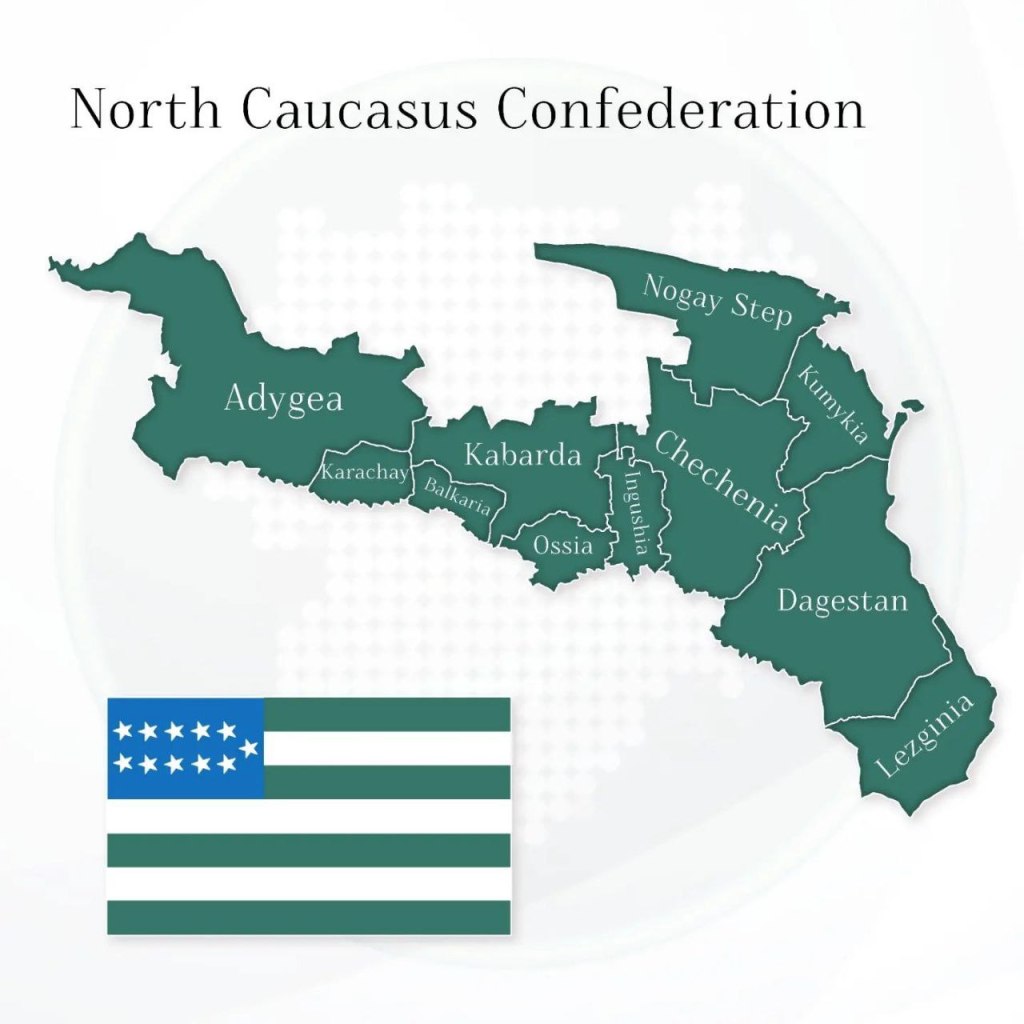
There’s no need to invent a new unifying idea for the peoples of the North Caucasus in their struggle for independence. That idea has long existed and remains clear. Just as 100 years ago, when the Confederation of the Peoples of the Caucasus, the Mountain Republic, was created, today the peoples of the North Caucasus simply want to live freely on their own land, in accordance with their traditions and culture. It is the national liberation movement of different peoples that unites them in this struggle, just as it did a century ago. This deeply rooted desire for self-determination and the preservation of their identity continues to be the strongest unifying force. The fight for freedom and sovereignty has always been the common thread binding the diverse peoples of the region. The historical past of the struggle against occupation, repression, and genocide by the Russian Empire is indeed a key unifying factor for the peoples of the Caucasus. This past is connected to numerous tragic events and struggles for survival, creating a common platform for the recognition of themselves as oppressed peoples.

Common Experience of Oppression: All the peoples of the Caucasus have faced similar confrontations with imperial power, fostering a sense of solidarity. Memories of brutal repression, genocide, and occupation deepen the understanding of a shared fate and suffering.

Identity and Memory: Preserving the historical memory of the struggle against colonial oppression strengthens the identity of each people. In this context, shared history becomes the foundation for recognizing their rights and striving for freedom.

Culture and Language: Common cultural elements, folklore, and language also serve as connecting links. These aspects often bring a sense of unity to the fight for justice and independence.Historical memory serves as motivation for consolidating efforts to protect rights and freedoms.

Thus, the shared historical experience of fighting against oppression becomes a solid basis for forming a united front among the peoples of the Caucasus, allowing them to focus on common goals without sacrificing the interests of one people to the detriment of another.

Every project for the birth of a new state needs its own intrinsic “usefulness” for those governments that, from the outside, should give it legitimacy with their recognition. In this sense, what “usefulness” do you see for a Confederation of the peoples of the Northern Caucasus?

The answer to the question about the purpose of establishing a government in exile for the Confederation of the North Caucasus starts with recognizing the limitations of the independent Chechen Republic of Ichkeria. It is a small territory that cannot play a significant role in shaping global geopolitics. In today’s world, if you are not part of a larger force shaping the future geopolitical landscape, it is nearly impossible to change existing borders in a way that would grant independence to the Chechen people. The Chechen Republic lacks access to the Black Sea and does not occupy any strategically important transport corridors, which is why our struggle for independence did not fall within the interests of major geopolitical players. However, our struggle has been subject to political manipulation. For example, Saudi Arabia tried to leverage the Chechen issue for its own interests, offering Putin a deal to resolve the Chechen independence question in exchange for Russian withdrawal from Syria. This demonstrates how external powers can exploit national movements for their own agendas.

But when we talk about the creation of the Confederation of the North Caucasus, the geopolitical calculus changes dramatically. Such a state becomes highly attractive because it addresses several key geopolitical problems that have emerged during the war in Ukraine. If the Confederation of the North Caucasus is formed, Russia would lose access to the Black Sea, which directly aligns with Ukraine’s interests. Without its naval base in the Black Sea, Russia would no longer pose a constant maritime threat to Ukraine. Europe and the U.S. are also interested in this outcome, as they do not wish to see the total collapse of Russia, which could lead to China’s expansion into the Far East and further strengthen its influence. The West is also concerned about the potential chaos that could arise from Russia’s breakup, especially given that Russia is the largest country in the world, covering more than 10% of the world’s land area. Furthermore, there is fear over Russia’s nuclear facilities and, most critically, the risk that nuclear materials could fall into the hands of third-party states or terrorist organizations.

The creation of the Confederation of the North Caucasus would address several of these challenges at once. By losing access to the Black Sea, Russia would be reduced from a global power to a regional one, which is something the entire world is interested in. A regional Russia would be forced to focus on containing China and managing its nuclear arsenal. Without nuclear weapons, Russia would not be able to effectively counter China’s influence. Additionally, Ukraine would no longer face the threat of Russia’s naval base in the Black Sea, and Turkey would emerge as the dominant power in the region. In this way, the establishment of the Confederation of the North Caucasus aligns with the interests of multiple countries, including the U.S., Europe, Ukraine, and Turkey, all of whom share a vested interest in transforming Russia from a global to a regional power. This shift is crucial for maintaining stability and ensuring a balanced global order.

Could a confederation of the North Caucasus also be an opportunity for Russia?

The separation of the North Caucasus from Russia can indeed be seen as an opportunity for a new Russia. This scenario could facilitate the necessary transformation of the country towards a democratic state, which is urgently needed. Moreover, the separation of the Caucasus could increase the rating of those Russian politicians who manage to implement such a course. Given the growing anti-Caucasian sentiments in society, the separation of the region might be perceived as a populist step, allowing them to garner support among a segment of Russian citizens dissatisfied with the current situation.

Couldn’t an independent Caucasus easily become a client state of Türkiye?

Turkey is certainly an important player in the region with whom we will establish partnership relations, but at this stage other NATO countries are also helping us in the implementation of this project. Naturally, in the future we hope to become part of NATO, and with the partners who will help in the implementation of this project, we will have allied relations.

Past, present and future – Francesco Benedetti Interviews Inal Sharip (Part 1)

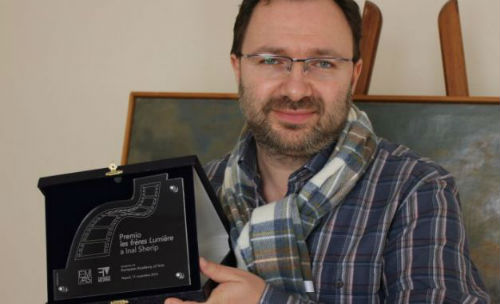
Inal Sharip is the Minister of Foreign Affairs of Ichkeria. Born in 1971, he is a chess champion, a film director and producer, and between the first and second Chechen wars he was Deputy Minister of Culture and head of the Film Department.

Being born in 1971, You had the opportunity to observe the evolution of the situation in Chechnya from the independence until the outbreak of the war in 1994. What was the climate in the country in those years? And what impression did you have of Dudaev’s government?
I lived in Grozny until I graduated from university in 1993. Then I went to Moscow to take my first steps in the cinema.  I remember Grozny as an ordinary post-Soviet city no different from other cities in the former USSR or Eastern Europe. As in other cities of the post-Soviet space there was an economic difficult situation. But Dzhokhar Dudayev began to stimulate medium and small businesses and abolished taxes and duties on imported goods. Direct flights were also established from Grozny to cities in the United Arab Emirates and other cities in eastern countries from where the goods were transported. Thanks to this Grozny became in a short time the trade center of the North Caucasus.

When the war started, I was in Moscow, taking my first steps in documentary filmmaking. Many things fade from memory, but what I remember well is the anxiety of realizing that terrible events were coming. Many of my feelings were portrayed in one of my first movies, “My Grozny City”.  The piercing pain of what was done to my hometown, which remained only in my memory.

How did you spend the two years of war? And what did you do after?

At the first opportunity I came to Grozny. I established a secret connection with Akhmed Zakayev. (I met Akhmed Zakayev when I was writing music for the theater, in 1992. We were introduced by our mutual friend, Hussein Guzuev, a theater director. Before the war, Dzhokhar Dudayev appointed him director of television and he was one of the first to be killed at the beginning of the First Chechen War. Akhmed was then a theater artist and became at first chairman of the Chechen Union of Theater Workers. A few months before the war started, Dzhokhar Dudayev appointed Zakayev Minister of Culture. When the war started, Akhmed led the people’s militia.) And he coordinated his activities while in Moscow and Grozny. After the first war, Akhmed returned to work as Minister of Culture and invited me to be Deputy Minister.

Akhmed appointed me head of the Department of Cinematography of the Chechen Republic with the rank of Deputy Minister of Culture. I worked there for about a year. Maskhadov then created a commission on education, science and culture (a prototype of the UNESCO commission) to work on accession and cooperation with UNESCO, and to search for and return cultural property from museums that the Russians had illegally exported to Russia in violation of all international conventions. I was appointed head of this commission. Before leaving Chechnya, I was in charge of this commission.

I was the only member of the commission. It was I who initiated the creation of this commission, because we had to enter international organizations, and UNESCO was an organization we could enter, although without the right to vote in this organization at the first stage. In addition, the Russians have taken many museum exhibits out of Chechnya. Including paintings, a collection of 17th-18th century edged weapons, etc. It was necessary to track them down and return them. The international UNESCO conventions that regulate this kind of situation were an ideal tool, given that Russia had ratified all UNESCO conventions. Maskhadov wrote a decree creating this commission and appointing me to head it. Other than that, I received nothing, no funding, no office, nothing. Few among the military at that time understood the significance of this organization. At that time, everything was focused on the military aspect. That’s why I couldn’t hire people. I could work without a salary, other people could not.

Speaking of the period between 1996 and 1999, what was your impression of the situation? In your opinion, was the Maskhadov government doing a good job? What was the general opinion of the people, in your opinion?

This is one of the most difficult periods in the history of modern Chechnya. Of course, Maskhadov’s government was not ideal, but we must understand the situation it found itself in. Russia was secretly preparing for a second war. It was actively recruiting agents from among the supporters of independence. It was deliberately corrupting Chechen officials. Russian special services were in direct contact with independent commanders of military units, persuading them to commit criminal acts. Russian agents in the Middle East, who specialize in working in the Islamic world, were redirected to Chechnya to split Chechen society along religious lines. In the conditions of post-war devastation and economic crisis, Russia managed to split Chechen society. Of course, at that time few people understood what was really happening. I also did not understand and did not like many things, so in 1998 I left Chechnya and returned to film production.

Now that we have collected information, we see how many FSB agents have infiltrated Chechen society, and we can draw conclusions. Suffice it to say that the Chief Mufti of Chechnya Kadyrov was an FSB agent, but no one talked about it at the time, and the leaders of Chechnya trusted him. In addition, it should be noted that few in Maskhadov’s government understood how world politics actually worked, both in the West and in the East, since there was no international experience. There was no information, no Internet. There was great trust in the Muslim world, based on the myth of the Muslim Brotherhood, but there was no understanding that the governments and intelligence services of most Muslim countries were using religion for their own political and geopolitical interests. Perhaps historians will analyze this period of Chechen history more deeply in the future, but today we can say for sure that Maskhadov was under great pressure from all sides, primarily with the goal of splitting Chechen society.

In 1999, Russia invaded Chechnya for the second time. Shortly before, Vladimir Putin had appeared on the political scene. Do you remember how public opinion experienced his rise to power?

At that time, Russians were tired of crime, corruption and disorder. It seems that discrimination against democracy was deliberate and directed by someone. Of course, what happened in Russia in the nineties has nothing to do with democracy, but it was presented to the people as democratic processes. That is why the people began to miss a strong authoritarian leader, like Stalin, Andropov and others who were leaders of the USSR. A situation was created when the people wanted to get their master back, who would determine their fate for them. In exchange, the new master had to restore order and feed the people. That is why the explosions of apartment buildings, Putin’s harsh rhetoric, all this is part of the scenario of creating a new authoritarian leader of Russia. It should be noted, I say this as a director, that Putin was not the best candidate for this role. He does not have natural charisma. But the circumstances developed in such a way that he was chosen as a collective decision of several influential groups in the Kremlin.

Putin, at the beginning of his career, was a compromise figure for different Kremlin clans. Every Russian billionaire or oligarch has a KGB-FSB general as his head of security. The KGB-FSB nominated three presidential candidates: Primakov, Stepashin, Putin. All of them were from the KGB and all of them were presidential candidates. The least known person, who did not have his own team and was considered harmless for different clans, was Putin, and he was elected. In 25 years, he created his clan, dealt with other clans and now he is the undisputed master in the Kremlin. The problem is that over these 25 years, Russian propaganda has been cultivating Great Russian chauvinism in the people. Chauvinism is constantly present in the Russian people, so cultivating Great Russian chauvinism in the people was not difficult. Putin has created for himself a Putin electorate, which was created for the greatness of Russia, the successor of the tsarist empire, the Soviet empire. Therefore, having removed one tsar, the people will in any case want another tsar and demand revenge for the defeat in Ukraine. Quite recently, Putin said in an interview that the collapse of the USSR is a great geopolitical tragedy. He said this because this is the mood of the people and he expressed the opinion of the Russian people. Therefore, the matter is much more complicated than in one person.

Yes, for a period of time for several years the war may stop, but then preparations for a military revenge in Ukraine will begin. Russians will never forgive the defeat in Ukraine. Just as they could not forgive the defeat from Chechnya in 1996. When they signed a peace treaty with Chechnya, at the same moment they began to prepare for the Second Chechen War. The same will happen in Ukraine. Russia must lose and transform into another democratic state. For example, the leader of the Russian opposition Navalny, who was killed in prison, did not recognize Crimea as Ukrainian. Because in the future he planned to participate in the presidential election campaign, and he must be guided by the opinion of the people. And 90 percent of the population of Russia considers Crimea to be Russia.

So, if I understand correctly, power in Russia is organized as an alliance of clans, and the President is the one who “moderates” the relations between clans. And in this system the FSB is a “clanized” apparatus or is it in competition with these clans?

This was the case before the war in Ukraine. Each major clan had its own people in the FSB leadership. But there was also an FSB clan that included both former and current FSB officers. All this was done with Putin’s approval. Putin was interested in creating a situation where different clans opposed him, and he was at the center of this structure and was an arbiter. In this way, he ensures his own security, and the clans were interested in Putin. But the war in Ukraine changed the balance of power in Russia. Prigozhin’s march on Moscow had a particular impact on these changes. Today, the FSB controls almost everything in Russia. With Shoigu’s departure from the Ministry of Defense, the FSB began a purge of generals and thus the FSB took control of the army. The only person the FSB cannot defeat yet is Kadyrov. Putin supports Kadyrov so that at least someone inside Russia would oppose the FSB. But I assume that the FSB will achieve its goal, and sooner or later the FSB will defeat Kadyrov.

Why, in your opinion, does it (the FSB) not control Kadyrov?

Because Putin is interested in this. Putin knows what the KGB and the FSB are, and he knows that they can play their game at any moment. Putin and his clan have stolen hundreds of billions of dollars. Some “patriotic” generals may not like this, and they may try to stage a coup. Therefore, he is trying to minimize the risks. To do this, he must separate the different clans and do everything so that they do not unite. There are Chechen generals in the FSB who have always served Russia and whom the FSB would like to put in charge of Chechnya. But the FSB is not succeeding, because Putin has placed his bet on Kadyrov, whom he allows to commit any crimes, which helps strengthen him. The FSB was counting on the fact that Ramzan Kadyrov and his father are temporary workers, whom they are temporarily using to transfer the Chechen people’s struggle for independence from Russia into a civil war between Chechens. Kadyrov is not a career FSB employee, he is pursuing his own independent policy in the republic, which the FSB does not like.

In this regard, clashes between the FSB and Kadyrov’s men are constantly taking place in Russia, in which Putin has to act as an arbitrator. But so far there has not been a single situation where Putin has infringed on Kadyrov’s interests. The FSB expects that Putin will have to hand over Kadyrov sooner or later. But there is no doubt that Putin will have to choose between the FSB and Kadyrov. The FSB is getting stronger because of the war in Ukraine and is a state-forming institution, so I have no doubt that they will defeat Kadyrov in the future.

The Ingush perspective: Francesco Benedetti interviews Mustafa Bekov (Part II)

What role did Aushev play in the restoration of the Ingush state? And how is he seen today?

Aushev is a military man and obeys orders. The first thing he did when he became president was to ban all political organizations and establish a barracks regime in the republic. He created the conditions for corruption. He divided the Ingush people into three parts: the “Ingush” Ingush, who lived on the uncontested part of the land, the “Chechen” Ingush, who were forced to leave Grozny, and the “Ossetian” Ingush, who were expelled from North Ossetia after the ethnocide by the Russian army.

He violated Article 11 of the Constitution of the Republic of Ingushetia: he gave up the ancestral territories of Ingushetia and the city of Vladikavkaz by signing the so-called “Kislovodsk Treaties”. He did this under pressure from Yeltsin, who threatened to remove him from the presidency for the next term. There is video evidence of this. I don’t remember exactly when I wrote this comment on Facebook, but it concerns Aushev.

“All those who criticize Aushev for the Kislovodsk/Nalchik agreement, for the pocket parliament, for the barracks regime, for dancing at Ossetian government meetings, for abandoning the right bank of Vladikavkaz, for corruption, for jumping off personnel, for populism …. First of all, everyone has the right to criticize, because he is not a private person, but a public person, and every public person is subject to criticism; secondly, or rather, above all, all critics are right, because they tell the TRUTH. He led the republic built by us, the ancients, not as a general, but as a sergeant. Aushev was a talented but uneducated man, and that is why he drove all serious and worthy, educated and professional Ingush out of politics and business, placing himself alongside sycophants and other amateurs.”

So Aushev “sold” legitimate Ingush claims in order to avoid a conflict with Moscow. Considering what you told me about Dudayev’s decision not to pander to Yeltsin, don’t you think Aushev’s decision was wiser than Dudayev’s? A compromise to avoid ethnocide? Or do you think it could have been done differently?

Aushev took office after the ethnocide. It is very difficult to negotiate with the imperial Kremlin. It is necessary to be politically flexible. A good example of this was the President of Tatarstan Shaimiev Mintimer Sharipovich. Aushev violated Article 11 of the Constitution of the Republic of Ingushetia in order to retain his office as president, or more precisely, to extend it for a second term. Dudayev opted for open confrontation in the hope of gaining international support. Both generals knew how to wage war.

Aushev was in Afghanistan as an infantryman and put himself in real danger. Dudayev was the commander of a squadron of strategic bombers from the “carpet bombing” era, but neither of them understood anything about politics. As Krylov’s fable says: “It’s a disaster when a cobbler starts baking cakes and a baker starts grinding boots.”

Do you therefore think that the leadership in both the case of Ingushetia and Chechnya was not the right one to achieve “separation” from Moscow? Do you think that there were better people at the time who could have handled the situation better?

Yes, certainly. For example, Salambek Naibovich Khadzhiev in Chechnya and Bembulat Bersovich Bogatyrev in Ingushetia. I knew Khadzhiyev personally. An academic, an intellectual. An experienced person who didn’t need to improve his image because he was a seasoned personality. It is the hotheads who slander him. Unlike many others, Khadzhiyev was “capable of judgment” (according to Kant), and he never followed the euphoric, apparent freedom of the Chechens and did not declare independence, but used his authority to improve the lives of his people step by step, taking more and more powers away from Moscow… until the empire weakened. Khadzhiyev would not have sacrificed the Chechen people to the Russian barbarians.

The empire has never allowed people who were not loyal to it to lead the colonies. I said at the beginning of our conversation that I consider the declaration of independence to be a tragic mistake that was a catastrophe not only for the Chechen people, but also for the entire national and liberation movement in the Caucasus.

The military should not interfere in politics: it usually ends badly. But you can’t change it, history doesn’t tolerate the subjunctive. With the right tactics towards Moscow, the people I mentioned would have achieved results slowly, without losses, gradually gaining more and more independence, distancing themselves from the Kremlin and gaining strength, coordinating their actions with other peoples in the Caucasus and taking the path of DECOLONIZATION.

Do you believe that Salambek Khadzhiyev really wanted Chechnya to be independent? And as for the need to avoid a break with Moscow: Don’t you think that, given the way things developed in the following years, Chechnya’s independence would have been impossible to achieve if Russia had overcome its period of weakness?

You and I are talking about what could have been. In principle, this is only necessary in order to understand the processes that have taken place. The past must be known for the future. That is clear. Besides, it makes no sense to compare Dudayev and Khadzhiyev. We are talking about facts here. It is a fact that the Chechens declared independence under the leadership of Dudayev! Did they achieve it? NO. This is an indisputable fact.

As it turned out later in his interview, he knew very well what would happen in the future and even predicted it. He knew that a military confrontation with Russia was unwinnable. He knew that, and yet he took the risk. Dudayev did not achieve his goal! The Chechen people suffered heavy losses and fell under the yoke of Kadyrov, who was loyal to the Kremlin.  The Russian empire was not weak in the years 1991-1998. Its economy was weak but its imperial face remained unchanged, although Yeltsin managed to fool the world into believing that Russia could be a democratic state. This will never happen.

The Russian empire will only get weaker now that it has gone to war against Ukraine. Now is the time when the colonized peoples, if they work together in harmony, can embark on the path of decolonization with the support of the Western democratic world. This includes the creation of a sovereign state. Thirty years ago, this was still impossible.

More about Khadzhiyev. After Dudayev came to power, Khadzhiyev represented the opposition and led the “collaboration government” with Moscow for a while during the war. Do you think this was the right choice for him? Wouldn’t it have been better not to lead this government?

Khadzhiyev, who knew the history of the Russian Empire well and understood that a tragic mistake had been made that would inflict great losses on the Chechen people and thwart the dream of freedom for many years, could not remain indifferent to the tragedy that was rapidly approaching his people and tried everything to prevent this catastrophe. But a man in a stately general’s uniform, who spoke in a confident and authoritarian voice about the freedom of the Chechen spirit and called for death in the fight for it, was more attractive than a thoughtful intellectual who called for a cautious confrontation with the monster that had oppressed many peoples for many years.

The calm voice and the calls of the thinking people for sensible action were easily drowned out by the general’s slogan “Freedom or death”. Intoxicated by the apparent proximity of long-awaited freedom, the crowd chose death. Khadzhiyev was not a collaborator. Like me and many other thinking Chechens, he was sure that this monster could not be defeated alone and tried to save his people from disaster.

On October 23, 1995, Khadzhiyev resigned from the government he had formed and was replaced by Zavgaev. In light of this event, do you not believe that Khadzhiyev (without judging the nobility of his soul) was more a pawn of Moscow than an asset to the Chechen people? Under his rule, the federal forces committed numerous atrocities, which Khadzhiyev apparently had to endure, and after him, power passed to the old head of the Chechen Republic, who, as far as I know, was now hated by everyone.

Khadzhiyev did not allow himself to be manipulated by anyone. He was a true Chechen for whom the terms “honor” and “human dignity” were not empty words. In September 1991, S. Khadzhiyev led the movement for democratic reforms in Chechnya-Ingushetia and on the eve of the first presidential elections of the Chechen Republic in November 1991 was considered Dudayev’s main rival, but refused to take part in the elections and subsequently work in the government formed by the Chechen National Congress (OKCHN). In 1992, he again turned down the OKCHN’s offer to become Prime Minister of the Chechen government. This was because he was against Dudayev and Yandarbiyev, who were driving the people to tragedy. Khadzhiyev tried to prevent the impending catastrophe. A few days before the Russian aggression began, he tried to end the unrest and chaos in Chechnya and lead the government. But the federal troops, as you rightly pointed out, committed atrocities. Precisely because he refused to be manipulated by Moscow, he was replaced by Zavgaev.

Zavgaev was there before Khadzhiev. The Moscow puppet was ready to carry out any order from the Kremlin. In 1991, I headed the Ingush State Theater, which I had founded, and Zavgaev wanted me to join his team, invited me to run as a deputy for the Supreme Council of the Chechen-Ingush Republic, but in 1989, at the Second Ingush People’s Congress, I withdrew and distanced myself from political activity because I did not agree with the path I had chosen. But that’s another topic.

Doku Zavgaev: What do you think of him? Is he a man who tried to save Chechnya from war, or a weak politician who just wanted to exploit the situation for his own personal gain?

Zavgaev was an obedient lackey of Moscow. He was only interested in himself. He tried to get anyone who was popular with the people on his side. In short, he bought those who could be bought.

Back to the war. How did the Ingush deal with the Russian invasion of Chechnya? Didn’t the Ingush also declare independence after the end of the invasion in 1996 with the withdrawal of the Moscow army?

Ingushetia served as logistical support for the Chechen resistance fighters. The families of the Chechen resistance fighters were safe in Ingushetia. Wounded resistance fighters were treated in Ingushetia. Although the Republic of Ingushetia officially belonged to Russia, the Ingush strongly supported the Chechen resistance and their Chechen brothers. Individual Ingush also took part in the war against the Russian occupiers on the side of the Chechens.

What were the relations between Ingushetia and Chechnya between the end of the first and the beginning of the second war? Did the scourge of abductions also affect Ingushetia? Were there crises during this period because the borders between Ingushetia and Ichkeria could not be defined?

Despite constant provocations and attempts by the colonial authorities to divide and divide these two related peoples, all their efforts were in vain. The Chechen and Ingush people learned not to transfer the actions of politicians and the government, the lackeys of the Kremlin, to the relations between Chechens and Ingush. These attempts have continued throughout the ages, starting with the Russo-Caucasian War.

The merits of Presidents Dudayev and Aushev can be seen in the fact that they did not raise the issue of the border and postponed the resolution of these questions until better times. Chechen resistance fighters who had entered the territory of Ingushetia were arrested by the Ingushetian army and police and transferred to Chechnya with the request not to transfer the fight with the Russians to the territory of Ingushetia.

For two years, Russia has succeeded in changing the mood of the Western community from sympathy to antipathy towards the Chechens through “special operations” with hostage-taking, especially of foreign aid organizations. Who would sympathize with bandits who cut off the heads of people who wanted to help them? In the period between the first and second wars, I was often in Chechnya with German doctors. We brought wounded children to Germany to be treated free of charge. When we visited the Chechen Republic, Maskhadov, whom I knew personally, always gave us an armed escort. In a country devastated by war, there were always people who took hostages for money. Moscow provided considerable resources for this. There were no mass hostage-takings for ransom in Ingushetia.

Although the Dudayev government did not help the Ingush with either people or weapons during the ethnocide of the Ingush people in 1992, although it sent and received a delegation to North Ossetia twice and assured the Ossetian leadership of non-interference … basically betrayed the fraternal people and got them into trouble … there were no complaints or reproaches from the Ingush other than resentment. On the contrary, everyone understood that the Chechens had been provoked.

You have described the hostage crisis in Chechnya as an instrument controlled by Russia to distance Chechnya from the West. In your opinion, were the apartment explosions of 1999, which justified the second invasion of Chechnya, also organized by the Russian government?

Yes, it was an initiative of the Russian secret services to discredit the Chechens. Irena Brezna, a Swiss writer of Slovakian origin, published a memo from the Analytical Center of the Russian Federation, in which the necessity and methods of discrediting the Chechen people and their struggle for freedom were pointed out. There were direct instructions on how to proceed and that no expense should be spared.  One of the well-known facts confirming these methods is the murder of a humanitarian affairs expert from the American Soros Foundation, US citizen Fred Cuney, his translator Galina Oleynik and two employees of the Russian Committee of the Red Cross who were accompanying them. The Chechen State Security Service was held responsible for the murder.

In the interwar period, I witnessed such propaganda activities at the Russian embassy in Germany, where a video was shown of Chechens cutting off the heads of Russian mercenaries. This video certainly had a shocking effect on the German public.

Yes, of course houses in Russia were blown up by the FSB itself. There is a book by KGB officer Alexander Litvinenko, who was murdered by Putin in London with polonium, and by historian Yuri Felshtinsky entitled “The FSB blows up Russia”.

Akhmat Kadyrov. What kind of person was he? Did the Ingush know him? What was their opinion of him and how did it change over time?

As a rule, the spiritual leaders in Russia were KGB officers. I don’t know whether Akhmat Kadyrov was one. After he became the spiritual leader of the people, he first called for the killing of Russians. He promised paradise to anyone who killed as many Russian attackers as possible. And then he sided with the Russians and became the first president of the already conquered Chechnya? Strange metamorphosis!

As far as I know, the Ingush had no time for Mufti Kadyrov. In any case, Kadyrov senior betrayed the Chechen people or, in the opinion of others, saved the Chechen people from annihilation. I don’t know. The Ingush, like all other peoples of the world, have the same attitude towards traitors.

Kadyrov senior asked for money to rebuild the destroyed city of Grozny under his control (I heard him talk about it personally on a TV program). Moscow wanted to manage the money itself… Akhmat Kadyrov became an uncomfortable figure; he was too independent. The empire doesn’t need such people, so they liquidated him and installed Kadyrov Jr. who hadn’t even finished school. Kadyrov Jr. became Putin’s loyal ‘foot soldier’, killing his enemies (Politkovskaya, Nemtsov) and terrorizing the Chechen people!

After the death of Akhmat Kadyrov, power in Chechnya passed to his son Ramzan after a brief interregnum. How did relations between Ingush and Chechens develop during his dictatorship?

The Kremlin and Kadyrov, as well as Ingush appointees such as FSB General Zyazikov and GRU General Yevkurov, have done the bidding of their masters in the Kremlin. They have tried to sow enmity between our peoples. In Chechnya, for example, information has been spread at government level that the Ingush are profiting from Chechen refugees by renting unsuitable premises for accommodation for hundreds of dollars, etc.

In 2018, on the Kremlin’s instructions, they carried out a provocation to cede Ingush territories to the Chechen Republic. It’s not just a question of land. It is about the history of the people, the graves of their ancestors and everything that is important for the self-confidence of the Ingush. Yevkurov and Kadyrov reached an agreement and drew the border between Ingush and Chechens, so that an original part of Ingushetia went to Chechnya. The protests of the Ingush were widely felt. The Kremlin had long wanted to shed blood to separate these two peoples. But the Ingush police did not allow any retaliatory measures to be taken against the demonstrators. This happened in 2018, and the leaders of this protest were sentenced to draconian punishments and are in prison. And there is no one in world public opinion who cares about this injustice.  

Of course, this provocation has not left both peoples unscathed, and relations between Chechens and Ingush have become more difficult.

But the Chechens, Ingush and other colonized peoples of the Caucasus must unite and establish their own state.

The empire does not tolerate any criticism, let alone any demands from colonized peoples.

The Empire is afraid of the unification of the colonized peoples and their national freedom movement and will therefore do everything to ensure that the peoples of the Caucasus have reason not to trust each other. Even better if they come into conflict with each other.

It is time for all the colonized peoples of the Caucasus to realize that they are not full and equal citizens of Russia. When we realize this, we will want to free ourselves from this oppression. The genetic inability to be a slave forces us to resist the position of a slave. The national liberation struggle will begin. The Chechens have tried to go it alone, have shown courage and will, have suffered heavy losses and have not reached the goal. All the peoples of the Caucasus must unite and take the path of decolonization together, because this is the path to the creation of a common independent pan-Caucasian state.

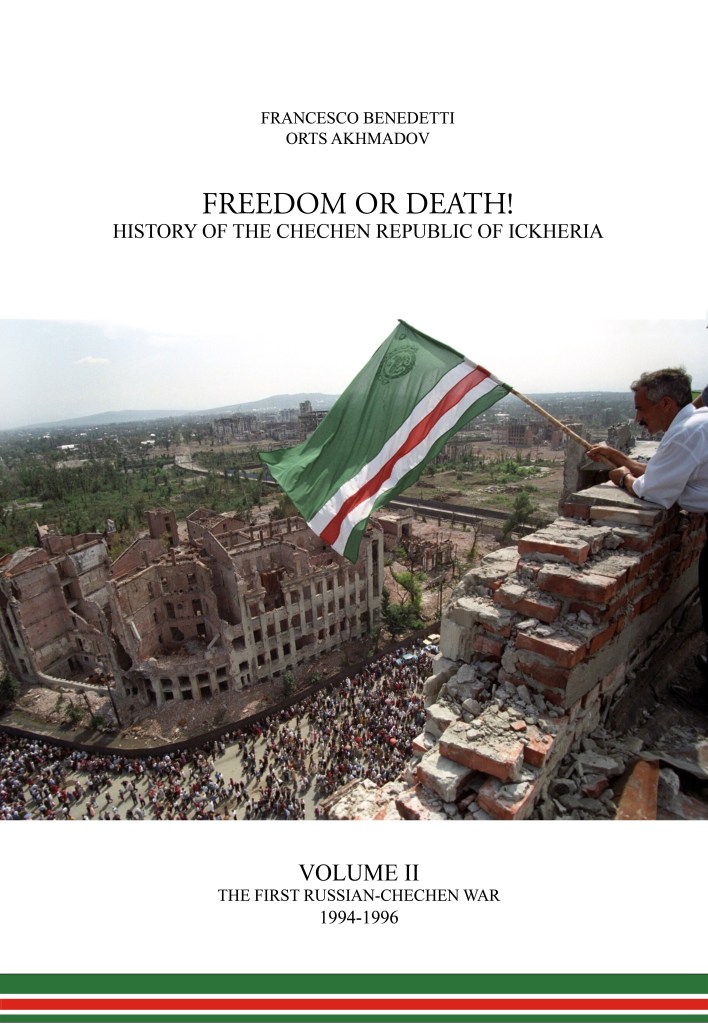
“Freedom or Death!” Volume II Out Today in English

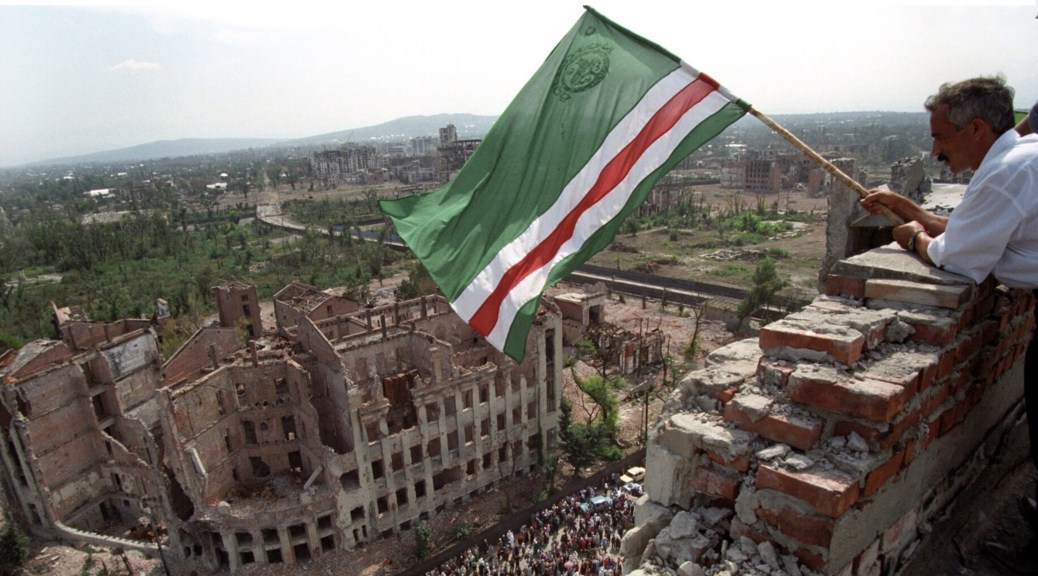
After a long work of translation, verification of sources and restyling of the text, we are pleased to announce the release of the English version of Volume II of “Freedom or Death! History of the Chechen Republic of Ichkeria”.

You can find the book on Amazon (CLICK HERE) Or in our dedicated website, http://www.freedomordeath.net (CLICK HERE).

With this volume, Orts Akhamdov officially joins the team. Read his presentation on www.freedomordeath.net !

With the introduction to the book, we wish you a good read.

The war in Ukraine began in Chechnya.

It may seem like a provocation. Yet, it is the reality that the pages of this second volume, entirely dedicated to the First Russo-Chechen War, reveal. The genesis, development and unfolding of this bloody conflict seem like the draft of the script that the world is witnessing in these months between Donbass and Crimea. Even then, as today, Russia invaded a free state, masking the war it was unleashing behind the definition of a ‘special operation’. Even then, as today, the enemy of the Russian state had been labelled and demonised: if Zelensky and his government are called ‘Nazis’ today, Dudaev and his ministers were called ‘bandits’ back then. Even then, as today, convinced of their superiority, the military commands marched on the capital, claiming to bend a people to their will, as they had done several times in the Soviet era. But even then, as today, they were forced to retreat, only to unleash a bloody total war, the most devastating European war since 1945.

The First Russo-Chechen War was the first tragic product of Russian revanchism: the ‘zero point’ of a parabola that leads from Grozny to Kiev, passing through Georgia, Crimea, Belarus and Donbass. With one substantial difference: that the Russians lost that first war against Chechnya. Their ambitions, based on the worn foundations of a crumbling empire, ended up frustrated by the stubbornness of a nation immensely inferior, in numbers and means, to the Ukrainian one, which today defends its land from the war unleashed by Putin.

This story can teach those who have the patience to read it two important lessons: what happens when you indulge the ambitions of an empire, and how to defeat it. If it is already too late to put the first into practice, for the second we are still in time

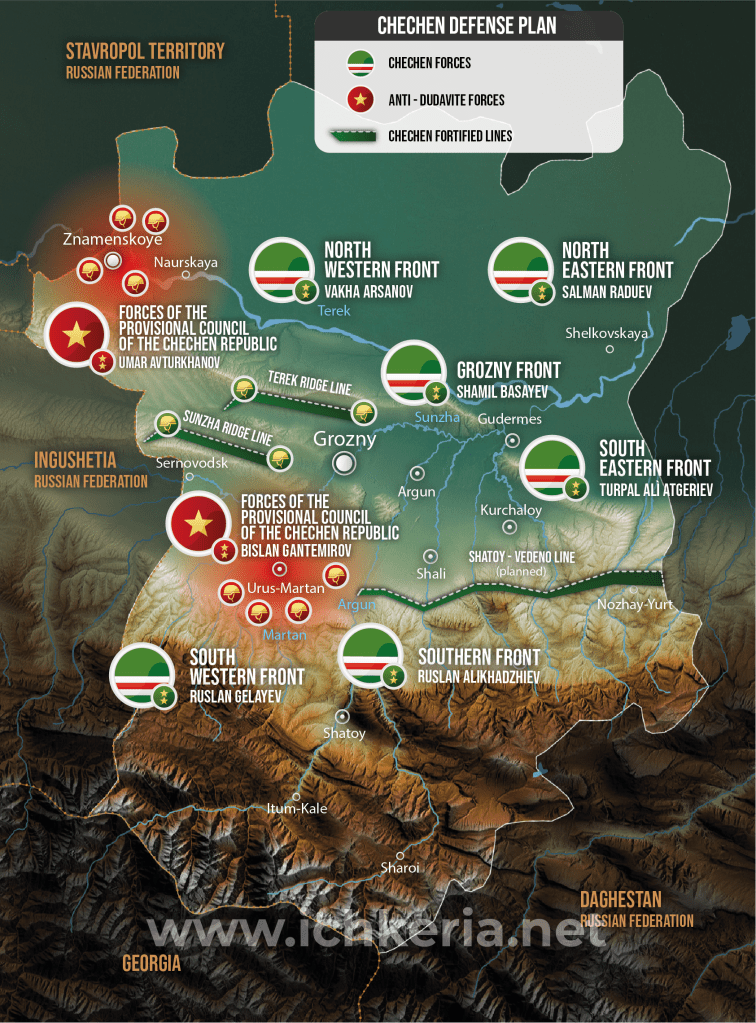
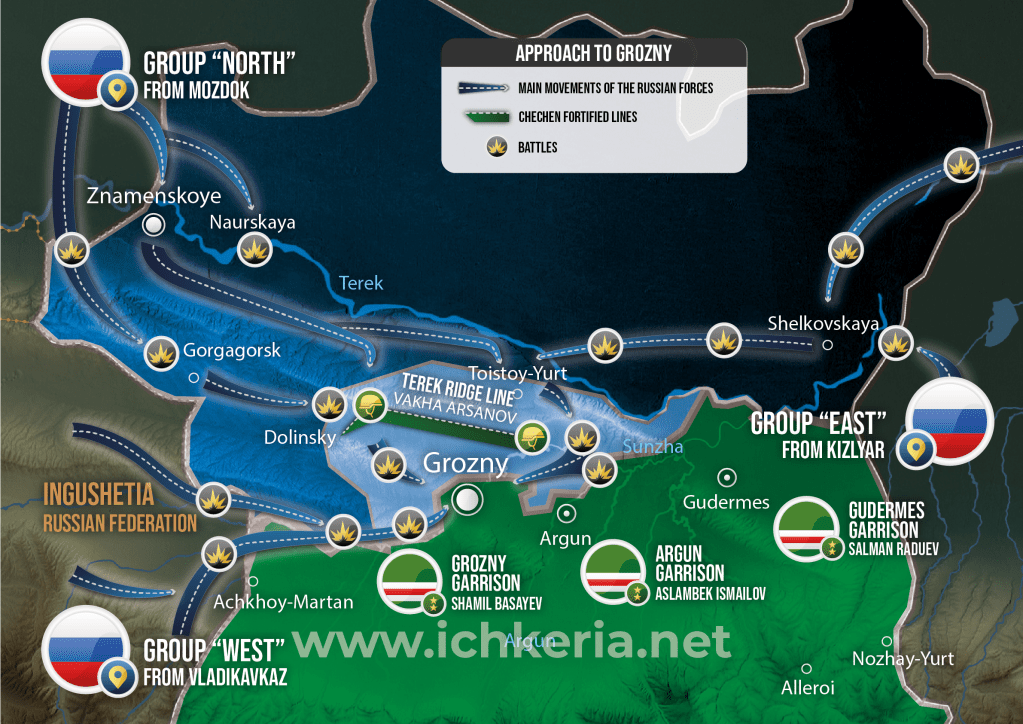
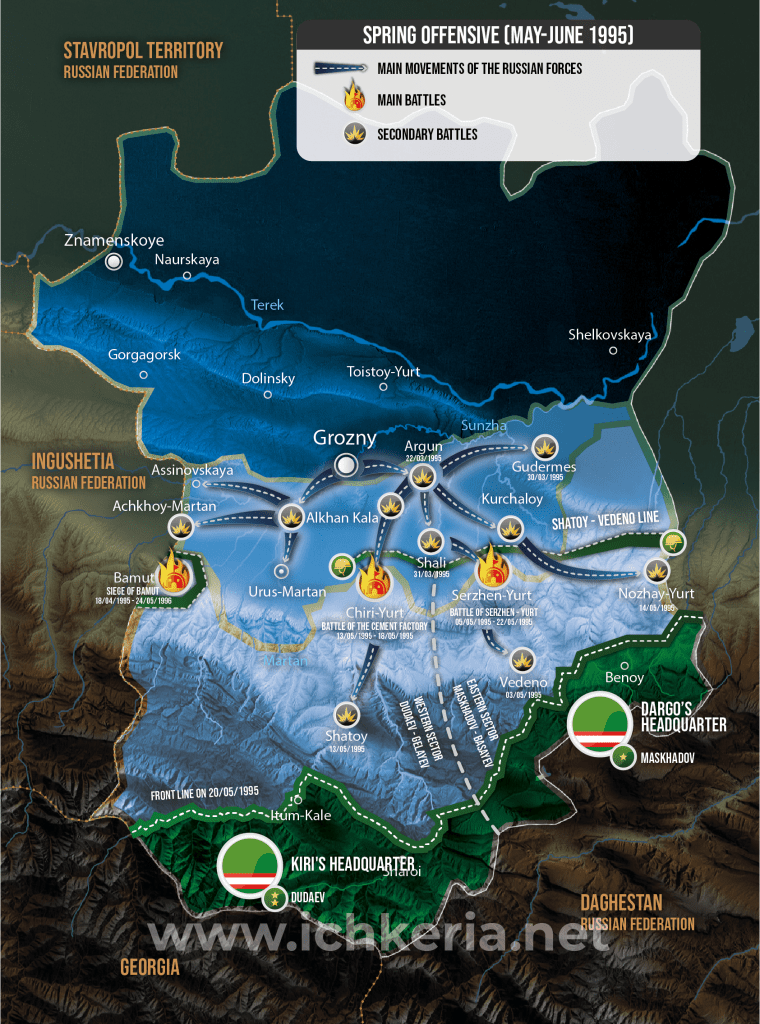
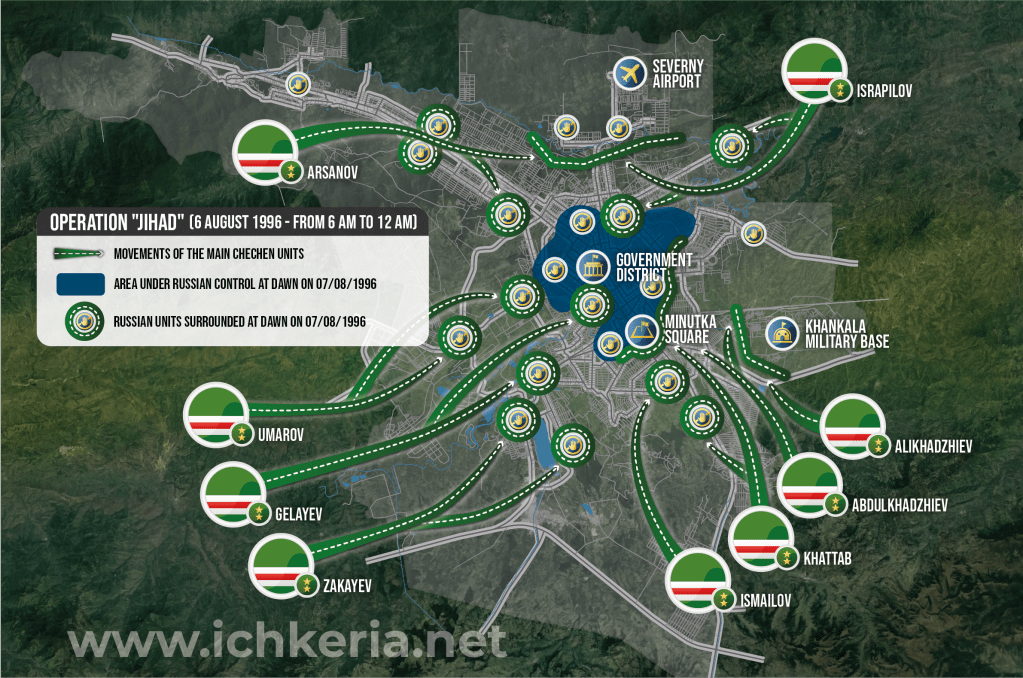
The English maps of the second volume are online

In view of the upcoming publication of the second volume of “Freedom or Death! History of the Chechen Republic of Ichkeria” we are publishing the maps in English, which will be available to readers via the QR code printed in the book.

Errata corrige: Some clarifications on the history of Reskom

Following a conversation with journalist Maria Katysheva, we publish her corrections, as a further summary of the article on the Presidential Palace.

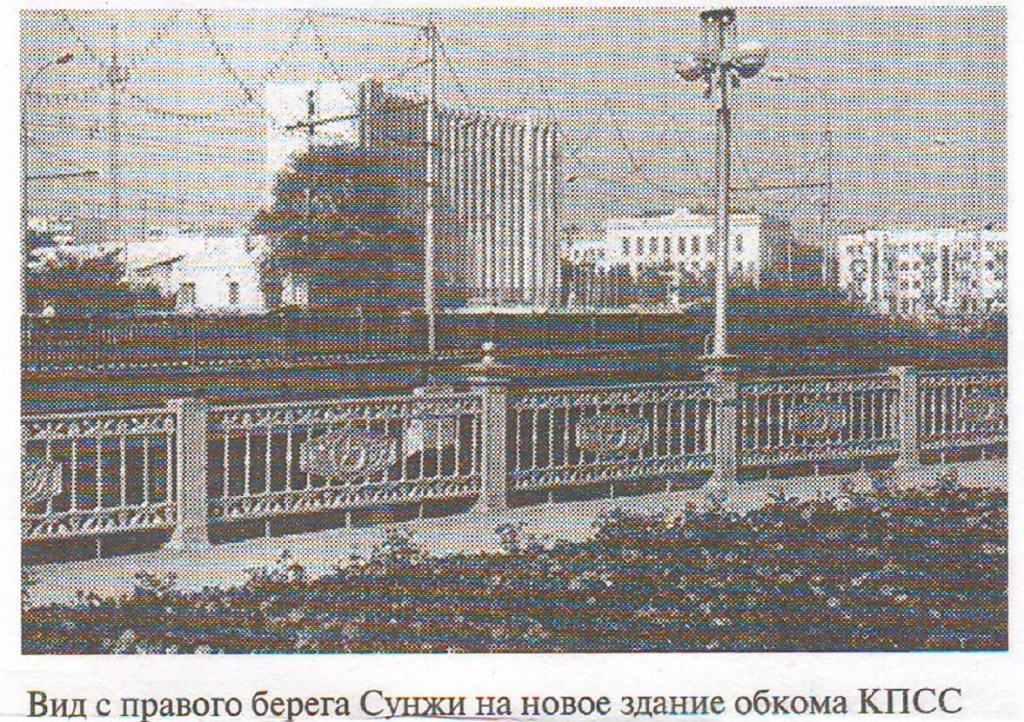
“The article on the presidential palace is generally interesting and informative, the symbolic meaning of this object is revealed very accurately; I have comments only on the paragraph concerning the history of the construction : ” THE RESCOM With the return of Chechens and Ingush from the 1944 deportation, the new leaders of Chechen-Ingush launched an ambitious urban plan in the city of Grozny to accommodate the hundreds of thousands of former – exiles who were returning to the country. The centerpiece of this building project was the Communist Party Palace, called in acronym Reskom: a ream of Moldovan architects and engineers was recruited to build it…”

   The wording of this text raises questions. It follows that the grandiose development of Grozny, the main element of which was RESCOM , is associated with the return and placement of exiles, that is, it began in 1957. It turns out that Reskom also began construction at the same time. In fact, it went differently. Let’s look at it in order:

  With the return of Chechens and Ingush from deportation in 1944 , the new leaders of Chechen-Ingush began to implement an ambitious urban plan in the city of Grozny to accommodate the hundreds of thousands of former exiles who were returning to the 1944 , the new leaders of Chechen-Ingush launched an ambitious urban plan in the city of Grozny to accommodate the hundreds of thousands of former – exiles who were returning to the country).  

    There are two mixed phases here. One is from the 1950s -’60s. The second is the 1970s -’80s. During these periods the republic was ruled by different peoples and the historical situation developed differently.

     1950s-60s. Chechens returned from deportation in 1957. There was no urban development plan specifically designed to “accommodate hundreds of thousands of former exiles.” On the contrary, Chechen-Ingush leaders at that time were opposed to the restoration of the republic and organized mass protests themselves against the return of the exiles. They were Stalinists, they did not like the policies pursued by Khrushchev, later some of them even participated in his overthrow. With their approach to the issue of the restoration of the Chechen-Ingush Republic, they could not accommodate the former exiles and take care of their accommodation, so very few Chechens settled in Grozny. In the late 1950s and early 1970s, these leaders pursued a disastrous national policy and did so many stupid things that they were removed from the leadership of the republic. Of course, in those years construction was under way. But to call the development ambitious, especially to accommodate the exiles, would be an exaggeration.

    1970s – 1980s. New leaders ( new leaders) arrived in the republic only in the mid-1970s : the first secretary of the regional party committee A. Vlasov and the first secretary of the Grozny city party committee N. Semenov. Thus they began the grandiose restructuring of Grozny. They looked at the capital of the republic with new eyes and saw that the largest industrial center in the North Caucasus, with developed industry, looked like a large village. At that time, entire neighborhoods consisted of brick houses, even in the center huts from the days of the Grozny fortress were preserved. Then an ambitious plan to rebuild the city appeared. (Great new leaders of Chechen-Ingush launched an ambitious urban plan in the city of Grozny.) But this had nothing to do with the placement of the former exiles: by then they had already settled down.

2. The centerpiece of this building project was the Communist Party Building , called by the acronym Reskom: ( The centerpiece of this building project was the Communist Party Building , called in acronym Reskom ) .

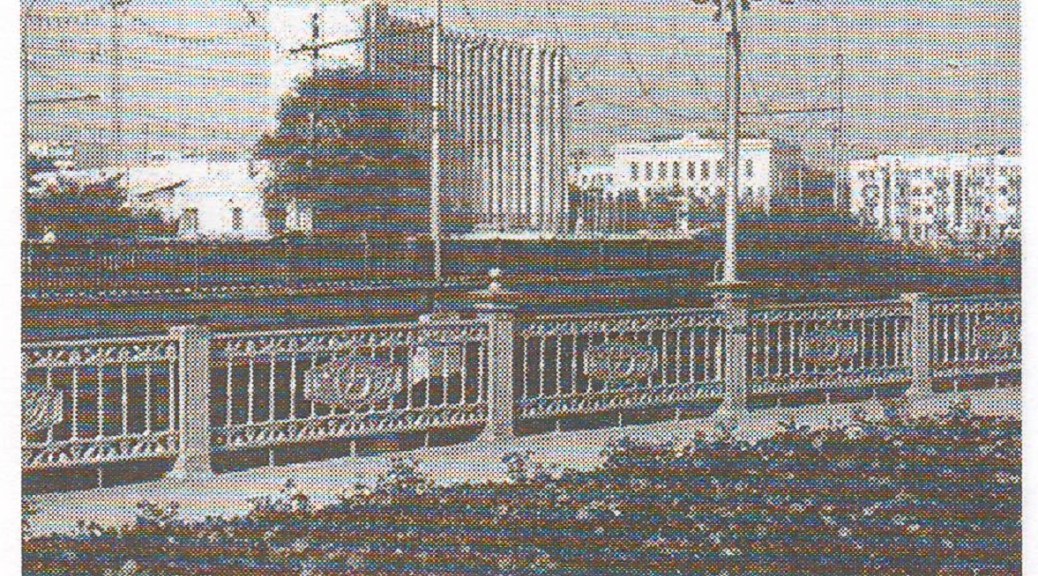
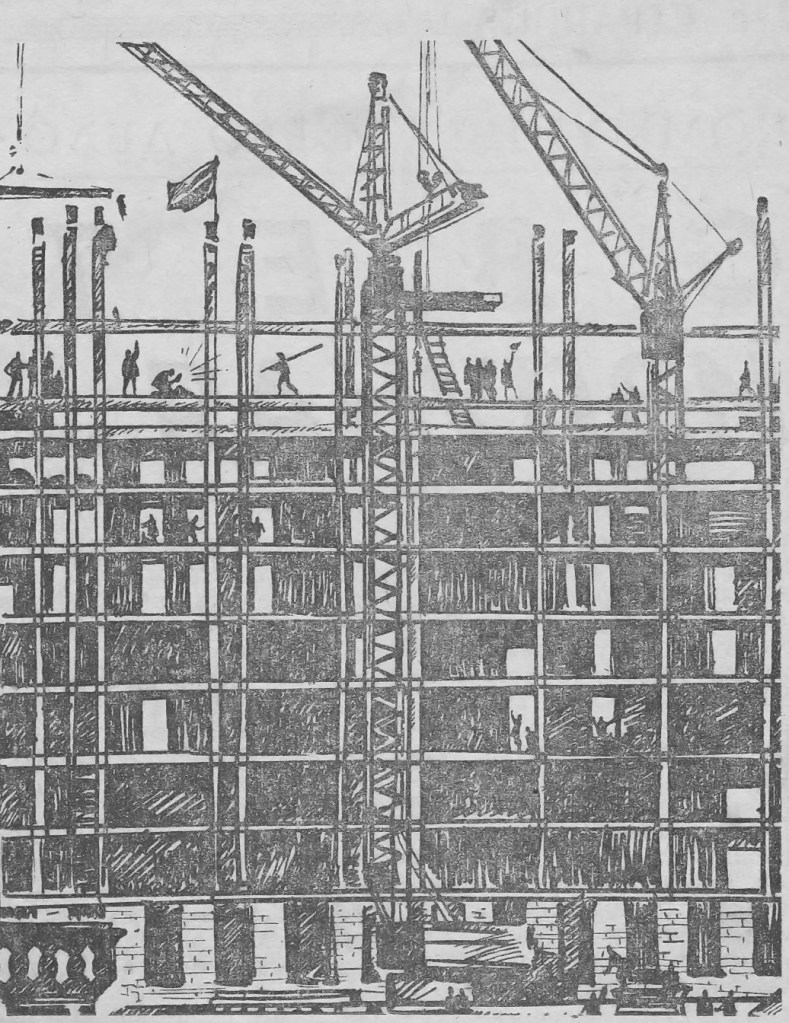
     There were several mainstays of Grozny’s reconstruction plan in the late 1970s and early 1980s: Minutka Square, a public garden near the main post office, a theater and adjacent square, the station square, and much more. Grozny then turned into a huge construction site. The main focus was in fact Resk. Previously, the office of the PCUS regional committee was located in a small old building designed in the Oriental style. Once upon a time, in pre-revolutionary times, financial and commercial facilities were located here. Neither its appearance nor its history corresponded in any way to the important position occupied by the Communist Party in the Soviet Union. The material embodiment of its power and significance, the personification of its inviolability should have been a truly grand and imposing building. The new leaders of the republic, A. Vlasov and N. Semenov, set out to build it.

    3. …a team of Moldovan architects and engineers was recruited for its construction. ( A ream of Moldovan architects and engineers was recruited to build it).

     Yes, you can find the following information on the Internet: ” Reskom was built in the early 1980s according to a standard design by Chisinau architects.”

    It appears from this text that it was Moldovan architects and builders who worked on this object from start to finish, as if there were no specialists in the corresponding field in Chechnya. This is wrong. 

    Vlasov and Semenov, in fact, entrusted the implementation of their idea to the architects of the Chechinggrazhdanproekt design institute, but they were not satisfied with the result of the work. Just at this time, two independent masters with extensive experience in urban planning came up with a counterproject: sculptor-monumentalist Alexander Safronov and architect Yakov Berkovich. The project they proposed was unconditionally approved, as it corresponded in all respects to the clients’ plans. Further work on this project was carried out at the Chechinggrazhdanproekt Institute, and Safronov and Berkovich were included in the staff, the entire detailed development process taking place with their direct participation; It is possible that at some point Moldovan architects and engineers were involved , but this can in no way serve as a basis for claiming that they “built the Reskom in Grozny.” In the design documentation, the authors were Safronov and Berkovich.

    It is worth noting this point here. The fact is that in the Soviet Union objects of similar importance were built according to standard designs. Perhaps Moldovan architects were precisely the originators of a standard design, but that does not make them the builders of the Grozny administrative center.  

    A standard blueprint is a kind of base that architects can rely on while executing a specific order. Relying does not mean copying. The specific characteristics of each region require individual development and not mechanical adherence to the recommendations set in the standard design. If one compares the Grozny Reskom with the PCUS office in Chisinau (it was definitely built by Chisinau architects), one sees that despite some similarities, these are completely different objects. With different character, so to speak. The same ambitious political and propaganda idea in Chisinau and Grozny has different figurative incarnations. Because the authors are different.

           When Doku Zavgaev became head of the Chechen-Ingush Republic, he returned the administrative center to the old office with oriental architecture. The Reskom building was transferred to the diagnostic and therapeutic center.

Maria Katysheva’s biography

Thirty years of journalist Maria Katysheva’s life were spent in Chechen-Ingushia, almost twenty of them – as a correspondent for the republican newspapers “Komsomol Tribe” (renamed: “Republic”) and “groznensky worker” (renamed: “Voice of Chechen-Ingushia” – “Voice of the Chechen Republic”). She has authored and organized topical publications on socio-political and historical issues. And the discussion conducted at her initiative and with her participation among Chechen-Ingush and North Ossetian scientists on controversial territorial issues had a particularly wide resonance: a detailed account of this discussion received the value of the paper.

From 1991 to 1993, M. Katysheva was a columnist for Voice of the Chechen Republic, a newspaper that was really the voice of the Parliament of the first convocation of the Chechen Republic. After the Parliament dispersed in 1993, she worked for some time in Moscow in the Federal Ministry for Nationalities and traveled repeatedly to Grozny during the period of hostilities.

In Soviet times, M. Katysheva’s essays on people of an interesting fate were included in collections published by the Chechen-Ingush book publishing house, and her poems were published in the collective poetry collections “Time runs,” “a meeting on the road,” “Lyrica-90.” In the mid-1990s, she participated in the realization of the literary project “Celebrated Chechens” by writer Musa Geshaev. She is also the author-compiler of the four-volume documentary and journalistic book “Chechen lessons” (collection of materials for 1988-1999, to date only the first book has been published). Based on the results of the work for 1990, M. Katysheva was recognized as journalist of the year and received the first Aslanbek Sheripov award. In 1994, by a decision of a special commission approved by the government of the Chechen Republic, she was stats presented for the award “for merit to the people.”

Fighting for a new “August 6”: Francesco Benedetti interviews Aset Sabdulaeva (Part II of “Ichkeria Generation”)

You told me that you moved to Canada in 2004. Where did you go to live?  Has the Canadian government helped you find accommodation and a form of livelihood?

Given the fact that our files were accepted by Canadian immigration authorities, we received the permanent residence cards right away when we landed in the Canadian airport. We landed in Halifax. Two weeks later upon our arrival, we moved to Québec because my mother knew Canadian filmmaker Helen Doyle. Helen was working on a documentary movie about my mother that was released in 2008. The name of the documentary is Birlyant, a chechen story.

When we arrived in Canada, the government gave us 4 000 cad$. But we had to pay back to the government the amount for plane tickets. We rented an apartment, and I was enrolled into a special language class, classe d’accueil.

The first time, I must admit, was very difficult. We had to start everything from zero. I didn’t have friends at school, I didn’t speak French at all. The first week of school, I had a conflict with one Russian guy, Maxim, who used to call me a “terrorist” every time he passed in the corridor during break-time. I went to complain to the director of the school. Later, my sister and my mother came – he stopped his verbal harassment. Even now, when I think about this guy, I feel awkward.

I spent 2 years in classe d’accueil, then I was transferred into regular class. It was very hard to study the French language. When I finally graduated from school and then from Cegep (French collage), I started to appreciate my years in university. I met wonderful people and wonderful professors.

Was Canadian society aware of what was happening in Chechnya? How did people you know react to your situation? Have you found people’s willingness to support you in your integration journey?

Canadian society was aware of what was happening in Chechnya. For example, in daily free journals “Metro” that were distributed every morning in the subway and in public buses to people, I often read short articles about Chechnya. However, I didn’t see any concrete steps made by Canadian society or the Canadian government to help Chechnya. Canadian society had a distant look on everything. Even now, Canadians think that their “far away” geography will protect them from any threat. They seem to lack understanding in geopolitics.

Canada has a history of immigration. It has organizations that deal with immigrants. There are government programs that grant social housing and social aid. People are generally open to immigrants, and they react to immigration as a normal process. The filmmaker, Helen, who knew my mom helped us. She and her husband helped me to get enrolled into a very good high school. I’m grateful to them. Apart from them, no one. My family dealt with everything on its own.

When did you start to feel the need to engage in politics, serving the cause of Chechen independence?

I was always on the side of Ichkeria. However, I started to actively take part in politicssince 2022, the year when Russia illegally invaded Ukraine.

The result of the war in Ukraine will change the balance of power in Eastern Europe. When Russia loses this war, it will be the end of the Russian Empire and the beginning of decolonization of captive nations. Without concrete changes in the center of the Empire, the Chechen Republic won’t be able to reestablish its democratic state because our people don’t have enough resources and capabilities for that. But our government can support Ukraine and is supporting Ukraine in all possible terms and that will help the process of disintegration of the Russian Empire. I want to contribute to the process of de-occupation of my motherland and disintegration of the Russian Empire and that is why I’m motivated to work for the government of Ichkeria.

Also, I know that the truth is on our side. The Chechen government of Ichkeria in exile is defending the legitimate right to self-determination of our people. The Chechen people already made a choice to build a sovereign country, and this choice was democratically articulated in the referendum in 1990. When the USSR made legislative reforms recognizing the right to self-determination of peoples, the Supreme Soviet of Checheno-Ingush republic adopted the Declaration of State Sovereignty on 27 November 1990. Our sovereignty was proclaimed in full accordance with USSR laws and with norms and principles of international law.  The statehood of the Chechen Republic of Ichkeria is crystally clear and undoubtedly legitimate. The legitimacy of our state was further reinforced, when the Russian Federation and Chechen Republic of Ichkeria concluded the Peace Treaty in 1997 where both parties were designated as subjects of international law. The Peace Treaty is published on the official website of the United Nations (UN).

If I had any doubt about the legitimate struggle of our people, I would step down right away. Our land is occupied, our people are being held hostage by the Russian Empire that until today keeps over 100 000 Russian soldiers on chechen soil. The way Chechen people are treated is completely unjust and unacceptable and that is why I find it  is important to defend our country, people and freedom.

What benefits do you think the deployment of ChRI armed forces alongside Ukrainian fighters can bring to the cause of independent Chechnya? And how can the Chechen diaspora in the West support their action?

The Armed Forces of Chechen Republic of Ichkeria play a key role in our resistance and they are fighting not only for Ukrainian victory and for the legitimate right to self-determination of Chechen people, but they are also fighting for the peace and security in Eastern Europe.

Russia threatens international security and is trying to destroy a sovereign Ukrainian state, Ukrainian identity, language and culture. If Russia is not stopped in Ukraine, it will expand its boundaries to other European countries. If Hitler was not stopped in 1945, the world would be dominated by fascism. If Putin is not stopped in Ukraine, Russian chauvinism, that Djokhar Dudaev called russism, will reach other European countries. Lenin wanted to build a Soviet Empire where communism was the absolute ideal and where all captive nations were insignificant subjects all fused into a one big Russian nation. Putin wants to keep this Empire but replace communism with russism and exploit captive nations and their territories the same way as Soviets did.

The fact that Chechen armed forces are fighting alongside Ukrainian fighters sends a powerful message to the world: the Chechen resistance is still alive and Chechens defend Ukraine to help Ukrainian people to defeat the Russian Empire that is threatening international security. The Ukrainian Army is training our troops with high military technology. Ukraine is helping our army to update war skills, use advanced military technology and increase expertise. The Chechen Army is becoming more efficient. Our Army is paving the way for the de-occupation of Ichkeria.

The Armed Forces of Chechen Republic of Ichkeria consist of very brave men that love freedom. Most of the soldiers in our Armed Forces belong to my generation (born in 1990 +). They are doing the best they can to liberate our motherland, to stop the Russian Empire, to help Ukraine and establish peace and security in Eastern Europe. I truly admire them the same way I admire those who defended and liberated Grozny on 6 august 1996.

The chechen diaspora can do a lot of things to help our army. The first and very important thing is to raise awareness about our troops because most people in the West know about Kadyrovtsy, russian puppets fighting within Russian Army against Ukraine, but do not know much about the Armed Forces of the Chechen Republic of Ichkeria. The diaspora should be more open to speak about our army, about our state, about our national tragedy. Also, I find that it is important to give moral support to our troops that are sacrificing their lives for the better future of our nation. Lastly, financial aid is crucial because military and transportation equipment costs money and this equipment is necessary for efficient warfare.

What activities do you mainly do in Canada, in support of Chechen independence? And what are the main problems of the Chechen diaspora in the West?

My role as a Vice Minister of Foreign Affairs is to connect with different people and politicians, seek their support and talk to them about Chechnya. We need diplomatic support from Western countries. On 18 October 2022, Verkhovna Rada of Ukraine recognized that Chechen Republic of Ichkeria is a territory temporarily occupied by Russia. The main goal of our foreign policy is to find support from Western Countries and invite them to follow the example of Ukraine and recognize the occupation of the Chechen State.

The major problem of our diaspora is the lack of expression of political will. The fear of denouncing injustice, oppression and Russian occupation is  justifiable. We all have relatives in Chechnya. When Chechens express political opinions and speak against the Russian regime, the puppets of the Russian administration, kadyrovtsy, kidnap or kill relatives. Fear I think is the biggest problem. Yet, the truth is that if we want to change the status- quo of our occupied State, we must rise here, in the West.

What activities can the Chechen diaspora in the West do to influence Western society and governments, in your opinion?

The best thing that the diaspora can do is support its local Chechen leaders that are trying to get into local governments. The involvement of our local leaders into governments will help us to make hear our voices within western political establishments. For instance, soon there will be elections in Austria. We have a Chechen candidate running for a deputy office. His name is Laziz Vagaev. I’ve listened to his videos. He is highly educated person.  It is an excellent opportunity for Chechens to elect a local leader that will represent them and be capable of making hear our voice in Austrian parlement.

Last year, Chechen diaspora in Belgium had a chance to vote for a Chechen candidate. Unfortunately, our diaspora didn’t participate much in elections. Our people should support local Chechen candidates and vote for them.

Some Chechens say that one of the main risks for Chechens living abroad is Islamic radicalism, and that the government is not doing enough to distance itself from this phenomenon. Do you agree that Chechens in Europe and America are at risk of radicalization? And what is your position as a member of the government on this issue?

I disagree with this statement. Our government  is a democratic government and the rule of law is a core principle of our state.

The Russian intelligence agency (FSB) tries to drag some Chechens into radicalism, but our government is working on this problem, together with European governmental institutions. Chechens have a lot of educated and talented young people who live, work and study in Western schools, universities and companies. So I do not think that radicalization is a major problem.

It is true that we do not share the aggressive secularism of some Chechen social activists, but it does not mean that we support radicalism. Democracy gives a person the opportunity to live according to laws adopted by the majority of society. Democracy is not new to Chechen culture; it is part of our culture, and we inherited it since the 16th and 17th centuries. Chechen people lived in democracy, and we didn’t have any monarchs or social classes.  While other European nations were subjects of monarchs that had absolute power over them, Chechens lived in mountains on equal terms, with equal rights and elected the executive Council of Elders. French writer Ernest Chantre writes about this in his book “Recherches Antropologiques: Le Caucase ” (1886).

Therefore, democratic principles exist in the Chechen cultural code. But some pseudo-democrats who live today in European countries are trying to replace democracy with liberalism. Democracy is a form of government that is the basis of Chechen statehood. These individuals do not make any distinction between liberal ideology and democracy. As you know, in Europe there are a lot of political parties that build their programs/manifesto on  Christian values and ethics.

The Christian Democratic parties exist throughout the world. These parties successfully operate in Belgium, Germany, Great Britain, Italy, etc. The European People’s Party (Christian Democrats) won the elections to the European Parliament. This is normal in democracy. There is an insignificant minority of Chechen society that has not yet really understood democratic principles and is trying to impose strict secularism on the state and people. Their opinion is marginal not only for the Chechen people, but also for most European democratic countries.

How does the government act to keep the attention of the Chechen diaspora around the world on its activities?

Our government is transparent. We inform our diaspora about all the work we do through media resources such as Ichkeria News YouTube channel and the official government’s website www.thechechenpress.com. Also, we have the Council of Elders in Europe and official representation offices that keep close ties with local communities in different countries. 

And it is true that we do not force anything on anyone because we believe that to serve our state is a matter of honor, dignity and free choice.

ICHKERIA GENERATION – Francesco Benedetti interviews Aset Sabdulaeva (part 1)

Aset Sabdulaeva was born in 1991 in Grozny. Her mother is the People’s Artist of Chechen Republic of Ichkeria, Birlyant Ramzaeva. She composed music for many famous Chechen songs « The Knight of Honour », « The time of Heros », « Don’t leave the mountains ». Her father is poet and playwright Makkal Sabdulaev. He is the author of lyrics of most of Ramzaeva’s songs. He also wrote famous theatrical play « Rejected heroes » (Махкана совбевлла к1ентий). From 1996-2000 he worked as the 1st Deputy minister of Culture of CRI. In 2000, Sabdulaev was abducted by russian soldiers in Grozny on a checkpoint. He is considered missing.

Aset lives in Canada, where she arrived when she was 13 years old, in 2004. Aset has a BA in education and she is currently completing MA in education. Aset holds the position of Vice-Minister of Foreign Affairs of Chechen Republic of Ichkeria.

We can say that you belong to a generation that we could define as the “Ichkeria Generation”, that is, those kids who were born close to independence, and who became adults during the period of independent Chechnya. The first question I would like to ask you is: what is the first memory you associate with “being Chechen”? Do you remember how you became aware of who you were, as a member of the Chechen nation? And what feeling did you associate with this thought?

I was raised on the songs of my mother and on the poems of my father that always praised freedom, honor, dignity, good manners, our culture, our native language, our struggle for independence, our heroes and the tragic history of our people.

 The Chechen identity was constructed in me by the art of my parents. Since my childhood, I was aware of who I am. I was three years old, in 1994, when on the Eve of the First Russo-Chechen war, huge demonstrations took place on the Liberty Square. The Chechen people were asking Russians to stop the aggression and provocations against the Chechen state. People used to invite my mother to sing for them at the demonstrations on Liberty Square and she took me with her. My people have gone through horrors and injustice, two bloody wars, genocide and isolation. Chechens defended themselves although they were abandoned by the entire world and thrown in the claws of Yeltsin and Putin. But our spirit never surrendered to Russia. The history of my people taught me that no matter how big the conqueror is, we always have to resist. Today, Chechnya is under Russian occupation and my people are living under Putin’s dictatorship, yet, we continue to resist.

Thanks for your answer, Aset, which in a way anticipates my second question.  You were just a child when Russia invaded Chechnya.  What do you remember about those terrible times?  How did you experience the years of occupation as a child?

I remember a lot of things. In 1994, Yeltsin started a full land and air attack against the Independent Chechen State. During the bombing, my mother, my sister and I used to hide in the shelter (basement of our house). My mother played Pondar (chechen accordion) very loud, so that my sister and I couldn’t hear Russian military planes and irritating sounds of missiles. My father never came to the shelter. He always stayed either upstairs or outside. 

 I remember that one day a group of Chechen warriors were walking on our street, very brave and humble men. They knocked on our door and asked for water. They seemed to be exhausted because it was the moment when Grozny was surrounded by Russians. My mother invited the entire group to our yard, prepared some food and she played our national anthem. Our warriors were smiling. But they didn’t eat anything. They just drank water and left, smiling. I will never forget these beautiful faces.

I also remember ruins. The entire city was in ruins. The doors of our house were with bullet holes. I remember our dog Borzik. It was a huge white dog. Very kind and friendly dog. Everytime it heard Russian helicopters or missiles, Borzik used to run in my sister’s room and hide under the bed. When helicopters left, we always had a hard time getting Borzik out of the room because it was too big and refused to move.

Thank you, Aset. Then the war ended with the escape of the Russians in August 1996. Do you remember those days? What did they say in your family?

When the Chechen government and Russian government signed the Khasavyurt Accord in 1996 marking the end of the first Russo-Chechen war, it was a huge celebration for our people. My parents were very happy because it meant the end of a nightmare. Our nation elected in fair and democratic elections the third President Aslan Maskhadov and we truly thought that we will finally start building our prosperous state. After the victory in the unequal struggle for freedom, Chechens gained popularity in Russian public opinion and in the world. We were perceived as heroes. However, things changed when Putin got appointed as the head of the KGB in Moscow. The entire KDG machine was directed to destroy our state, our society and our reputation. The KGB’s aim was to destroy the image of Chechen heroes.

Putin opened doors for so-called middle eastern “investors” and facilitated their arrival to Chechnya through Moscow. These emissaries from the Middle East brought a lot of money and invested it in the opposition movements that were against our government. This opposition was mainly led by Movladi Udugov and his ideological comrades from Arab countries spreading fundamentalist religious beliefs that were in complete discord with the Chechen culture and adats (customs). On the other hand, Akhmad-Hadji Kadyrov, who was appointed as Chechen mufti (main imam), praised traditional Islam that was in opposition to Udugov’s “pure Islam”. These two religious individuals preached their versions of Islam on TV channels. Their destructive teachings divided Chechen society that was already in a very miserable economic situation. Both Udugov and Kadyrov were working for Russian intelligence, and they aimed to destroy our state and divide our people. They were financed by Russia. I’ve read a lot of things about these events in the book of Akhmed Zakaev, “Subjugate or Exterminate” published by Washington Press. Also, it is very important to note that these Arab emissaries, under the umbrella of Russian intelligence, were directly involved in kidnappings of civilians, international aid workers, journalists and engineers. For example, the person who kidnaped British engineers Apti Abitaev, was a KGB agent, and our government arrested them. The person who initiated “fatwa” (ruling) to behead these poor British engineers was Abu Djunid, an Arab emissary. This barbaric murder of British engineers was a triumph for Russian intelligence. It succeeded in sending the message to the world that Chechens were criminals and kidnappers. Yet, the Chechen people had nothing to do with these criminal acts. Also, on 23 July 1998, an attempt was made to assassinate our President Maskhadov by blowing up the truck close to Maskhadov’s car. Two security officers of Maskhadov were killed. Later, our government found out that the “fatwa” (ruling) to kill our legitimately and democratically elected president Maskhadov was made by the same Abu Djunid, an Arab emissary that was in very close ties with Udugov.

 Indeed, I think that the period from 1996-1999, was a very difficult time for our State. But not because our government was incompetent, as some individuals claim, but because we were in complete economic/political blockade and our enemy was unproportionally powerful and malicious. Every state at the beginning of its statehood goes through difficulties. For instance, Georgia went through political turmoil at the beginning of its existence. Unlike Georgia, Chechnya was in complete blockade with no access to any political support from the West. Therefore, Russia crushed our state in the worst manner. Zakaev makes a very good point in his book about the situation in Chechnya during that period: “Crime, the gradual impoverishment of population, corruption within the government, the economic crisis, all were due mainly, of course, to Russia’s failure to honor its obligations to restore the republic’s economic infrastructure, destroyed in a war it had unleashed. Ultimately, however, in the eyes of the public the person to blame for all our troubles and economic difficulties was President Aslan Maskhadov” (2018, p.346) Russia kept us in economic blockage, infiltrated her agents from Middle East, injected Wahhabi religious ideology that was alien to us, divided our society, discredited our government, destroyed our reputation and, later, perpetrated genocide against our people.

Aset Sabdulaeva with hes mother and her father

About the end of the first war, and the feelings you felt among your family.  Was there a particular commander among those who fought for independence who was considered a hero, or a greater hero than the others?  Did little Aset have a Chechen hero who made her proud?

I remember when my mom used to take me to a demonstration, older women sang songs “zikr” (traditional style music with lyrics) praising Djokhar Dudaev, Aslan Maskhadov and Ahmed Zakaev. As a child, I didn’t have a particular admiration for a specific commander. I admired all our warriors. However, when I started to grow up and to be more conscious, I understood the real value of our heroes. I love Djokhar Dudaev because he left a legacy to our nation, I deeply respect Zelimkhan Yandarbiev because he behaved in a beautiful manner in Kremlin when Yeltsin refused to sit around the table on equal terms; Zelimkhan wrote beautiful poems in Chechen language that I enjoy reading. I appreciate Aslan Maskhadov because he was a true diplomat and is the leader that signed the Peace Treaty with the Russian Federation in May 1997. I admire Abdulhalim Sadulaev because he was a very wise leader. I truly appreciate Akhmed Zakaev because he left treasure to our nation in terms of two books that he wrote. He is the witness of all historical and political processes that occurred in Chechnya. I admire them all. They dedicated their lives, so that we can be free. In the bottom of my heart, of course, my eternal hero is my father, Makkhal. He believed in freedom and justice. He wanted to build an independent and democratic state. I became who I am, because of him.

Thinking about your father, how did you feel knowing that he was participating in building the independent state that Chechens had long desired? Were your family members proud of him, or was their fear that something bad might happen to him prevail?

I felt very happy actually. After school, I used to go to the Ministry, where my father worked as 1st Deputy Minister of Culture, and run all over it. I ran and jumped so much that sometimes the workers of the Ministry complained to my father. When he brought me home, he used to talk to me for a long time explaining how important it is to behave in a good manner.  My family members were proud of my father. I remember when he came back from work, he spent hours and hours writing articles, reports and projects. Given the fact that our Republic was in complete economic blockade and Russia didn’t pay the reparations for all the damage it had done in Chechnya, Chechen government lacked funds, and it could not pay salaries to its workers. I still have my father’s certificate where it’s written that the government owes him 18 000 rubles in salary for 6 months of work. He worked for the well-being of our country because he knew that to nourish national self-conscience in young people, it’s important to elevate the culture, teach the Chechen language in schools, promote Chechen folk music, publish Chechen literature, encourage young artists and writers to write in Chechen language and share the history of our people through poems and plays.  My father opposed all radical elements infiltrated in our society by Russian intelligence. These elements retarded the development of our state.

When the second war started in Chechnya, in 1999, the Ministry of Culture stopped functioning, so my father joined Aslan Maskhadov’s media team, and he was reporting all atrocities that were perpetrated by Russians in Chechnya. He knew that it was becoming very dangerous for him to stay there. Three days before his capture, he called my mother, who was at that time in Georgia. She asked him to leave Chechnya. He refused and said: “What is happening here is a genocide. I can’t leave.” One day before his capture, his friend Dalkhan Hojaev, a chechen historian was captured by Russians and killed. The next day, they took my father when he was crossing a Russian check- point (block-post).  My father disappeared without a trace. When my mother learned that my father was captured, she returned to Chechnya in hope to find him. One of the Russian generals told her that my father was taken to Khankala, a russian military base where russian soldiers tortured and killed chechen civilians.

Do you remember any activities organized by the Ministry for the Promotion of Culture during the interwar period?

I remember that on every 6th September, the Independence Day of Chechnya, the Ministry of Culture, under my father’s supervision, used to organize big concerts in Dinamo Stadium. He also initiated a plan to repair all our libraries and update the collection of books.   Under his supervision, our Ministry organized the competition of folk performers (singers and instrumentalists) in all villages and at the end of competition, the best folk performers were gathered in Grozny and they performed on a Gala Concert where they received special prices.

What happened after you heard of your father’s passing? Did your mother decide to take you to the West?

In 2000, my father insisted that we (my mother, my sister and me) go to Georgia. We were refugees in Georgia. In July, the same year, my father was kidnapped. When my mother learned that my father was captured, she returned to Chechnya and started searching for him everywhere, even in mass graves. At that time, it was possible to pay a bribe to Russian soldiers, they gave access to the mass grave. My mother appealed to every possible instance. Yet, she couldn’t find him. In 2002, she left Chechnya because Russians came to our house looking for her. She managed to escape through the backyard and hide in a neighbor’s house. Russians didn’t like that she was determined and eager to find out where my father was and she gathered too much attention. She had no choice but to leave Chechnya.

We stayed in Georgia until 2004. In 2004, Canada opened a program in Georgia for accepting chechen refugees through UNHCR. We applied for immigration, passed an interview and Canada accepted our file.  We left Georgia.

What do you remember about your time in Georgia? What was that life like, from the eyes of a little girl?

When we arrived in Georgia, we were afraid to say that we are Chechens because Russia spread horrible propaganda about Chechen people and the entire nation was demonized and presented on most Russian TV channels as terrorists and bandits.

The second problem was that I didn’t go to school for almost two years because of war. As a kid, in my learning process, I was getting behind the children of my age. My sister had to enroll me in school as soon as possible. At that time, we didn’t have official papers recognizing us as refugees in Georgia.  She approached one teacher in the school #44 in Tbilisi, on the mount Mtacminda, and talked to her about my case.  Gora Alexandrovna (teacher) agreed to take me in her class without any hesitation, although we didn’t have papers. The director of the school, Nana, approved my admission right away, and I was enrolled in 3d grade.  I remember Georgia as a country with very hospitable and kind people. Certainly, I remember all my teachers. They helped me so much to catch other kids. Gora Alexandrovna,Tamara Iradionovna, Nana Mas, Greta Stepanovna, Viola Mas, they were Georgian and Armenians, they taught me even during summer.

When we came to Georgia, President Shevardnadze was still in power. The country was poor and suffocating in corruption and bribery. Shervarnadze was a good friend of Putin. I remember 13 Chechens were deported to Moscow. It was an unjust decision made by Shevardnazde to deport our men. He knew that Putin is conducting an illegal war in Chechnya and that our people are suffering from this barbaric aggression. When Russians completed their mission in Chechnya, they came to Georgia in 2008 and annexed Georgian territories.

 I also remember that my sister and I participated at the demonstrations during the Rose Revolution to support Mikhail Saakashvili. I noticed that when Georgian people are fed up, they mobilize quite quickly and express their political will. As time passed, it was difficult to live in Georgia. My family couldn’t afford living there. We had to leave.

Speech by the Chairman of the Cabinet of Ministers of the Chechen Republic of Ichkeria at the United Nations meeting

Geneva, 8 July 2024

Dear ladies and gentlemen!

As Prime Minister of the Government and Chairman of the State Committee for the De-Occupation of the Chechen Republic of Ichkeria, I would like to express my sincere gratitude for the invitation and the opportunity to participate in this conference. Your work in organizing this important event deserves the highest praise. Your efforts contribute to the strengthening of international cooperation and exchange of experience, which is especially important in our times. I am confident that the results of our joint work will contribute to further progress and strengthening of international relations.

Today I want to begin my speech not with the history of the centuries-long struggle of the Chechen people for independence, but with the war in Ukraine, from which I came to this conference yesterday.

This crisis is not a local problem. It affects the entire international community because it threatens the foundations of a world order based on respect for sovereignty, territorial integrity and human rights. Russia, using military force, has invaded a sovereign State, violating principles that we all have an obligation to defend.

Russia’s military action in Ukraine has resulted in countless human suffering. Thousands of civilians have been killed, millions have been forced to flee their homes, towns and villages have been destroyed. This is a humanitarian catastrophe that requires an immediate and decisive response from the international community.

The Chechen delegation at United Nations in Geneva

For us Chechens, this situation is particularly painful. We know what it means to suffer aggression, violence and occupation. We know the price of freedom and independence, and we cannot stand aside when another people is experiencing similar tragedies. Our hearts and thoughts are with the people of Ukraine, who are showing incredible courage and resilience in this struggle.

Units of the Chechen Republic of Ichkeria are today fighting as part of the international legion of the Armed Forces of Ukraine. Although our homeland is under temporary occupation, we are fighting in Ukraine because it is there that the fate of all humanity is being decided. We realize that today’s world is divided, just as it was during the Second World War. The world after this war will no longer be the same as it was after the Second World War. We are on the threshold of great changes, and we must be ready for them.

Democratic reforms in Russia went downhill not yesterday and not today. We all witnessed how Russia began its departure from democratic reforms after it attacked the Chechen Republic of Ichkeria. Some 300,000 people died in that brutal war, 42,000 of whom were children. The Western world, following its morality and logic, believed that this was a forced measure in the process of developing democracy in Russia. However, this was a delusion. The world did not realize that this was the essence of the Russian empire, which was alien to democratic reforms. It only needed time and Western resources for rebirth and revenge.

Today we can say that there is, in fact, a third world war going on. This conflict affects not only Ukraine and Russia, but the whole world. In many countries there is an economic recession, instability is growing, social and political tensions are increasing. The conflict is expanding and taking on increasingly global proportions.

The world, and the United Nations in particular, must think today about the future of humankind. We need to rethink and strengthen international institutions so that they can effectively prevent such conflicts in the future. We need to create conditions in which aggression and violence will not be possible.

Our struggle, the struggle of the Chechen people, is reminiscent of the Resistance movement led by Charles de Gaulle in France during the Second World War. Back then, the true voice of France was heard through de Gaulle, who was accepted into the anti-Hitler coalition despite his lack of control over the territory. The collaborationist Vichy government collaborated with Hitler, but the true voice of France was de Gaulle’s.

Today, we, Chechens under occupation but fighting in the anti-Putin coalition, are also the true voice of the Chechen people. We hope that here, in the UN building, this voice will sound special and will be heard by all members of the United Nations.

After Russia failed to execute a blitzkrieg and take Kiev in three days, the war dragged on for two and a half years with no clear victories for Russia. As the military campaign continued, Russia faced increased Western coalition support for Ukraine. Under these circumstances, Russia has an interest in destabilizing the world to divert international attention from supporting the Ukrainian people.

One of the clearest examples of such destabilization was the recent conflict in the Middle East. It is quite obvious that the beneficiary of this destabilization is Vladimir Putin. The situation in the Middle East has contributed to the redistribution of resources and attention of the world community, which ultimately weakened the focus on the events in Ukraine.

Using and supporting extremist groups fits into the Kremlin’s long-term strategy of creating chaos and disunity on a global scale. This not only distracts the international community from the war in Ukraine, but also weakens the West by forcing it to allocate forces and resources to several conflicts simultaneously.

In pursuit of global destabilization, Russia is counting on decreased support for Ukraine and the possibility of improving its position in this protracted conflict. However, such actions lead to an even greater escalation of tensions in the world, jeopardizing the security and stability of multiple regions.

From left to right: Iyad Youghar, Akhmed Zakayev, Burak Otzas

We are following with deep concern the unfolding humanitarian catastrophe in Gaza. The violence and suffering endured by civilians require an immediate and decisive response. We are opposed to any form of violence and terror, regardless of the slogans or justifications behind it. Its victims are civilians, including the elderly, women and children. Such actions not only fail to resolve the conflict, but also cause irreparable damage to human life and dignity. We call on all parties to respect international humanitarian law and to cease hostilities immediately.

The way out of this long-standing conflict in the Middle East may be the implementation of the UN resolution on the establishment of a Palestinian state. This solution will not only resolve the long-standing Israeli-Palestinian conflict, but also reduce the level of tension in the region, which in turn will reduce the opportunities for external players to use the situation to their advantage. The establishment of a Palestinian State will be an important step towards peace and stability in the Middle East.

The government of the Chechen Republic of Ichkeria has reasonable suspicions that Vladimir Putin used Ramzan Kadyrov to finance terrorist organizations. These suspicions are supported by the fact that Kadyrov has concentrated significant financial resources in the Middle East, including billions of dollars that could be used to support extremist groups.

Ramzan Kadyrov and his religious extremist sect Akhmat are accused of committing crimes against humanity in the Chechen Republic of Ichkeria and in Ukraine. Their actions include gross human rights violations, murder and torture of civilians, and financing of terrorist groups.

We welcome the International Criminal Court’s (ICC) announcement of the international wanted list for high-ranking Russian figures such as Vladimir Putin, Sergei Shoigu, and Valery Gerasimov. The decision reflects the serious allegations made against these individuals in the context of international crimes. Such a decision inevitably provokes strong political reactions both in Russia and in the international arena, emphasizing the importance of international justice and the principle that even high-ranking leaders are not immune from prosecution for serious crimes. It should be remembered that a wanted notice is the initial stage of the judicial process. In any case, this event emphasizes the importance of the rule of law in the international arena and the desire of the world community for accountability for serious crimes.

In this regard, we hope that the political leadership of Ukraine will soon decide to establish an international tribunal against Ramzan Kadyrov and his terrorist religious sect Akhmat. We call for the appointment of a special representative with whom we will work to coordinate efforts to bring these criminals to justice. The establishment of an international tribunal is an important step towards restoring justice and ensuring peace and security in the region. We stand ready to provide all necessary information and to cooperate with international organizations to achieve that goal.

The international community must unite and take decisive action to stop this aggression. We must strengthen sanctions, provide the necessary support to Ukraine and send a clear message: aggression will never go unanswered. We must do everything possible to restore peace and justice.

History teaches us that evil triumphs when good people fail to act. We cannot afford the luxury of inaction. We must act now to protect our common home, planet Earth, from the destructive forces of aggression and violence.

As I stand here in the United Nations building, I feel a deep sense of gratitude to the Verkhovna Rada of Ukraine. This respected institution has taken a historic step that will go down in the history of the Chechen people by recognizing the territory of the Chechen Republic of Ichkeria as temporarily occupied by Russia.

This act of recognition is an important and courageous step towards justice and freedom for the Chechen people. It symbolizes international solidarity and support in the struggle for human rights and self-determination.

I urge all UN members to support this initiative of the Verkhovna Rada of Ukraine and also recognize the occupation of the Chechen Republic of Ichkeria. Your recognition and support will send an important signal of the international community’s unwavering commitment to the principles of justice, freedom and respect for the sovereignty of peoples.

Recognition of the temporary occupation of the Chechen Republic of Ichkeria would not only underline the importance of international law, but would also be an act of solidarity with the Chechen people, who have been fighting for their freedom and independence for many years.

In conclusion, I would like to express my deep gratitude to all those countries and peoples who support Ukraine in these difficult times. Your solidarity and support is a source of hope and strength for all of us. Let us work together to create a better future where peace, justice and respect for every human being prevail.

Thank you for your attention.

Akhmed Zakayev, Chairman of the Government of the Chechen Republic of Ichkeria

The Ingush perspective: Francesco Benedetti interviews Mustafa Bekov (Part I)

Mustafa Bekov (artistic name: Mac Bekov) is an Ingush theater and film director, founder of the National Theatre of Ingushetia, Caucasian politician at the end of the 20th century, plenipotentiary representative of Ingushetia in the UNPO (unrepresetitive nationals and people organization) in The Hague from 1993.

As the son of parents who were deported to Kazakhstan in 1944, he was born in exile and had to live with the awareness of being considered an enemy since childhood. “Even before I could read and write, I was aware of the conflict surrounding my identity. Without really knowing why, I was clearly told that I was considered a criminal”. At the age of eleven, Mac received his first lessons in theater and life from the famous director Arsenij Ridal, initially a student and later assistant of Max Reinhard. Ridal introduced him to the methods of Stanislavski, Meyerhold, Vakhtangov and Michael Chekhov and helped him to develop a passion for art. Mac lived for several years in what was then Leningrad, “where Pushkin lived and Dostoyevsky swam”, and studied acting and directing at the Academy for Film, Theater and Music, as well as theater studies, psychology, philosophy and theater business. His professors were Irina Meyerhold (daughter of the famous W. Meyerhold) and Mar Vladimirovich Sulimov.

After many successful years as an in-house director, senior director and artistic director of theaters throughout the former Soviet Union, the National Theater in Grozny offered him the opportunity to bring his ideas to the stage. In this way, he brought his observations on human existence and political realities to a wide audience in artistic form. When the USSR collapsed in 1991, his artistic work was marginalized and Mac moved to Germany. In more than 40 years as a director and lecturer, he has created more than 50 plays and trained numerous actors and directors. His repertoire includes Shakespeare and Chekhov, Schiller and Gorky, Brecht and Lorca, Tennesse Williams and Mrozek, as well as many
other authors. Mac has directed plays, tragedies, comedies, musicals and rock operas in many major theaters.

Ingush and Chechens lived together for a long time, they were deported together and consider themselves “brother peoples”. Why do you think they decided to separate in 1991? Do you think it was the right decision more than 30 years later?


This is not entirely true. Chechens and Ingush have always lived side by side, not together. In 1934, the regions of Chechnya and Ingushetia were united, and in 1936 the Soviet Socialist Republic was given the name “Chechen-Ingush Autonomy”. Prior to this, in 1928, the city of Vladikavkaz and later the areas adjacent to the city, the cradle of the Ingush people, were taken away from the Ingush. Previously Vladikavkaz was a fortress on Ingush soil during the Russo-Caucasian War. On November 1, 1991, President Dzhokhar Dudayev issued his first decree, the Decree on the Statehood of the Chechen Republic. On September 4, 1991, at a session of the Chechen parliament chaired and attended by President Dzhokhar Dudayev, elected at the Chechen People’s Congress, and party leader Selimkhan Yandarbiyev, I asked the Chechens not to declare their independence. I warned that the Russian political elite was not ready to give freedom to the colonized peoples and that this would already cause a great tragedy. I also said that the Russians consider us to be one people, although we are two fraternal peoples. The Chechens’ declaration of sovereignty would not help Ingush to restore statehood and achieve the return of the land by parliamentary means. The euphoria of the seemingly tangible long-awaited freedom drowned out my words. Then the decision was
made.

Map showing territories claimed by the Ingush in 1992


After 33 years, I still believe that the Chechens’ decision was wrong. I still think it was right that the Ingush did not go the way of the Chechens.
The Chechens declared their independence 33 years ago. This hasty and ill-considered decision cost them dearly. Did they achieve independence? No. Instead of independence, there were destroyed cities, three hundred thousand dead, forty-two thousand of them children. Destroyed farms and factories, a large number of refugees. Chechen refugees scattered all over the world. Those who stayed ended up under the oppression of Putin’s servant Kadyrov. But that’s not all: new generations have grown up, plagued by Putin’s ideology. Dudaev said that 70% would die, but 30% would be free. Where is the freedom? Thirtythree years have passed and the goal has become even more distant. The Ingush have regained their statehood, albeit only a pseudo-statehood. On June 4, 1992, the Republic of Ingushetia was founded as part of the Russian Federation. If the Ingush had joined the Chechens in 1991, they would no longer exist today. At that time, the population was less than 200,000 people.


In his own words, Dudayev was a bad general and a bad politician: “A good general does not go into a battle that he knows he will lose, and the Soviet general Dudayev knew exactly what the military capabilities of the Russians were. A good politician protects his people from rash decisions. All colonized peoples of the Caucasus should embark on the path of decolonization together. Going it alone is doomed to failure.

In your opinion, the independence of the peoples of the Caucasus from Russia can only be achieved if they all rise up at the same time. Don’t you think this possibility is utopian and don’t you believe that the Russian government is setting the people against each other to prevent this?


Each empire pursues the same policy with the peoples of the territories and resources it has conquered. It assimilates the peoples and plays them off against each other. This is confirmed by the famous saying “Devide er impera”. The Russian empire is no exception. But unlike other empires, the Russians claim that they did not come to conquer, but to
liberate. And they suggest to the peoples that they have joined Russia voluntarily. Following the collapse of the Russian Empire after the February and October Revolutions, a mountain republic was founded in the North Caucasus from 1917 onwards, which existed until 1918/19. It had already taken place, so it was not a utopian idea. With the war against Ukraine, the Russian Empire is well on the way to dissolving itself. It is important that the Caucasian peoples overcome the obstacles created by the empire and reach an agreement.

In my opinion, even the Prime Minister of the Chechen government-in-exile, Zakaev, has understood this and is now talking about the confederation of the Caucasian peoples. With Gamsakhurdia, we issued the motto “The Caucasus is our common home” back in 1986. The path to the liberation of the Caucasus could therefore be that of a general uprising under one banner.

Akhmed Zakayev, Prime Minister of the Chechen Republic of Ichkeria, promoter of the project for the reconstitution of the Republic of the North Caucasus.

The restoration of a single republic in the North Caucasus was already theorized in the early 1990s. Dudayev himself was working on the establishment of a “Caucasian house”, if my sources are correct. Why do you think this project was not realized?


As I have already mentioned, the slogan “Caucasus – our common home” entered the political lexicon even before Dudayev, in 1986. The initiator was the dissident Gamsakhurdia. But the idea and the feeling for the need for unity among the colonized peoples of the Caucasus came from Visangirei Dzhabagiev. Deputy of the Tsarist State Duma, politician of the early 20th century. Considering the fact that the Caucasus was home to various peoples with common but also differentiated characteristics, Dzhabagiev recognized the need for a community and therefore emphasized: “Caucasianism is our nationality”.


Why did it not come about? The mass consciousness of the peoples of the Caucasus, clouded by communist ideology, was not yet ready for unity. In addition, Chechen politicians loudly emphasized the leading role of the Chechen people. This had a negative effect on the other peoples. Nobody wanted another Chechen “big brother” in place of the Russian one have a “big brother”. The empire also actively resisted this idea. And then came the war.

Recently, Akhmed Zakayev, together with other representatives of Caucasian communities, launched the project to establish a republic in the North Caucasus. What do you think of this project?


In principle, I support the initiative to create a pan-Caucasian state. As I said before, this is the only way to get rid of the Russian Empire and at the same time ensure that our peoples preserve their identity. I know Ahmed personally from my time in the theater. Ahmed was a gifted actor. He went through a difficult school of losses and, in my opinion, became a serious politician. The fact that he sent his son to defend Ukraine instills great respect and shows the seriousness of his convictions.


I believe that this project deserves support and has a future. I don’t know the details of the project, but I think Ahmed knows that the free peoples of the Caucasus do not tolerate inequality. Therefore, it is important what form of statehood is envisaged in this project. Whether a nation is large or small, everyone should feel free and have equal rights. The peoples of the Caucasus will not accept the establishment of a caliphate, an imamate and other forms of despotism.

At the end of the 1980s, the idea of founding a Chechen-Ingush federation was born in the intellectual part of Grozny’s population. Unfortunately, it was quickly buried again. As already mentioned, the idea of integrating the Ingush ethnic group into the Chechen ethnic group gained the upper hand, and so Zelimkhan Yanderbiev, a passionate Ingushophobe, became chairman of the VDR (Vainakh Democratic Party) and headed for independence. The Ingush realized that this was a deadly path for the Ingush (in those years there were no more than 200,000 Ingush), and I think that the Ingush did not agree to a war with the Russian Empire out of a self-preservation instinct. Time has shown that the Ingush acted wisely.

Isa Kodzoev


One of the most interesting personalities on the Ingush side is Isa Kodzoev. He was a dissident of Soviet power before the collapse of the USSR. The population was initially very positive towards him, but then favored a “moderate” current, which then negotiated the establishment of a federal republic with Moscow. Do you remember Kodzoev? Are there any other personalities (apart from Aushev, who we will talk about later) who you think deserve attention?


Of course I remember Isa Kodzoev and I knew him very, very well. He was not a “dissident” in the classical sense of the word. He was sentenced to four years in prison for his text “Diary of Kazakhstan”, in which he revealed the truth about the lives of the deported people. He returned from exile and settled in the village of Kantyshevo under KGB surveillance, where he taught in a local school. He was the chairman of the organization we had founded in 1986/87, the socio-political movement “Niisho”. I was one of its founders. Its aim was to restore Ingush statehood, to return the Ingush ancestral lands, to create conditions for the development of the national language, culture and art.

What did you think of the Ossetians? Did you regard them as members of the Caucasian community or as foreign bodies?


Before the 1917 revolution, relations between Ossetians and Ingush were not exactly fraternal, but they were not openly hostile either. There were many inter-ethnic marriages. And entire clans with mixed surnames were formed. After the revolution, relations became hostile. No Caucasian people considers the Ossetians to be members of the Caucasian community; the Ossetian elites themselves have tried to do so. The Ossetians are not natives of the Caucasus, but foreign tribes of modern Iran.

Muslim Ingush civilians stand among the wreckage of their destroyed home in predominantly Christian North Ossetia during the East Prigorodny Conflict, 1992. (Photo by Robert Nickelsberg/Getty Images)

But don’t you think that the Ossetians should somehow be included in the hypothesis of a general uprising in the Caucasus? Or are they not included in the “Caucasian House” project?


If we rely on historical experience, there is little hope that the Ossetians will join the other Caucasian peoples. Rather, they will side with whoever has a stronger position. They helped the 9th and 11th Bolshevik armies to bloodily drown Georgia, which declared its independence, in 1921. I don’t think we can rely on the Ossetians. Most likely, the Ossetians will wait and see and then join the victors. In 1921 and 2008 in Georgia and in 1992 in Ingushetia, they made a very negative impression. The wounds that the Ossetians inflicted on the Georgians and Ingush in those years have not yet healed. That is a problem. But I think it can be solved.

We come to the war between Ossetians and Ingush. The reason for this war, if I have understood correctly, was the Prigorodny district. But what led to the outbreak of tensions between the two peoples? Who fanned the flames of war and why?

The USSR, heir to the Russian Empire, made sure that the peoples of the occupied territories were included in the conflicts. In our case, it expelled the Ingush from and ceded the land to the Ossetians, along with the city that was the capital of both autonomies. Under the conditions of land scarcity, this was reason enough for hostilities between Ossetians and Ingush. After the deportation of the Ingush, the remaining territories were ceded to the Ossetians, part of the mountainous regions to the Georgians and part to the Dagestani. After the repatriation, both the Dagestani and the Georgians voluntarily returned their lands to the Ingush, along with their houses and even equipment; the Georgians also left some of their pets behind. The Ossetians, on the other hand, prevented the Ingush from returning to their former homes. Even when the owner of the house returned and wanted to buy his own house, he was forbidden to do so by the leadership of the republic.

For many years, the Ingush returned to their homeland by hook or by crook. At the beginning of the 1990s, 70,000 Ingush lived in these areas. The Ossetian authorities organized various provocations and suppressed the Ingush at all possible levels. They were accused of all sins. They contributed in every possible way to increasing hatred and intolerance between the peoples. The Ingush living in the city of Vladikavkaz and the Prigorodny district were discriminated against by the Ossetian authorities in all areas of life. This escalation of hatred between Ossetians and Ingush was systematic and was carried out by the leadership of North Ossetia with the approval of Moscow. All appeals to the Kremlin remained unanswered or were not in the interests of the Ingush people. In January 1973, a peaceful demonstration of thousands of Ingush took place in Grozny. The Ingush expressed their distrust of the local authorities and demanded to be heard by Moscow. I was a young man of 21 at the time, took part in this demonstration and witnessed how and what happened there. I mention this because the participants in the demonstration were later persecuted for alleged anti-Soviet activities. The Chechen residents of Grozny supported the demonstrating Ingush en masse. The doors of Chechen apartments and houses were open for the demonstrators to warm up, for prayers and there was hot food for everyone. Temperatures in January are above -25 °C.


I personally experienced the intolerance and prejudice of the Ossetian authorities towards the Ingush people. In 1980, after I had received my diploma, I was sent to the Russian State Theater in Vladikavkaz. I was not allowed to direct a single play. The North Ossetian party headquarters obstructed me and forced me to leave Vladikavkaz. They couldn’t allow
an Ingush to work as a director in the theater. From their point of view, the Ingush were an inferior race.

As is known, the Ingush people achieved the restoration of their statehood through parliamentary work, and on June 4, 1992, the Republic of Ingushetia was established as part of the Russian Federation. As a result of the parliamentary work of our deputies, with the support of the population The Law of the Russian Federation “On the Rehabilitation of Victims of Political Repressions” of October 18, 1991 N 1761-1 was also adopted. The Ossetian authorities were aware that the path to territorial rehabilitation was not far off. Moreover, Article 11 of
the Constitution of the Republic of Ingushetia (The return of territories illegally expropriated from Ingushetia by political means and the preservation of the territorial integrity of the Republic of Ingushetia is the most important task of the state) left no doubt that the Ingushetian people would fight for the return of the annexed territories.