Archivi tag: Ramzan Kadyrov

Biographies: Olkhazar Abdulkarimov – From Ichkeria to Kadyrov, following the river of oil

There are very little information about him in the press, and we were unable to find a personal photo of him. All we know about him is that he was born in 1954, that he graduated from Voronezh State University with a degree in law, and that, according to our sources, he is still alive.

Before Chechnya’s independence, Abdulkharimov worked as a law enforcement officer in the Chechen-Ingush Autonomous Soviet Socialist Republic.​ During the period between 1991 and 1994, he had the opportunity to establish himself in the oil business, acquiring skills and contacts that earned him the government’s interest.

It is not known what his political position was with respect to the issue of Chechen independence, and whether or not he participated (and if so in what form) in the defense of the country during the First Russo-Chechen War. It is known, however, that after the withdrawal of Russian troops from the country, he moved closer to government positions, beginning a notable political rise.

Institutional roles

Presidential Advisor for Oil Production (since 1996): After the end of the First Chechen War and the election of Aslan Maskhadov, Abdulkharimov was appointed Presidential Advisor for Oil Production, taking on a key role in managing the country’s energy resources.

Minister of Oil Production and Energy (03/07/1998 – 10/10/1998): During this short period, he headed the ministry responsible for energy policies, in a context of reconstruction and political instability.

First Deputy Chairman of the Cabinet of Ministers with responsibility for oil production (since 10/10/1998): Subsequently, he was promoted to First Deputy Chairman of the Cabinet of Ministers, maintaining responsibility for oil production.

Director of the State Enterprise “ChechenTEK” (since September 1998): He took over the management of ChechenTEK, the state enterprise responsible for the management of the oil sector, at a time when Chechnya was trying to consolidate its economy.

Member of the collaborationist government

After the conquest of Chechnya by the Russian army and the installation of the collaborationist government of Ramzan Kadyrov, Abdulkharimov was appointed Minister of Industry and Energy, by nomination of Kadyrov himself, replacing Amadi Temishev.

Temishev had repeatedly criticized the policy of “plunder” carried out by the Russian state oil company, Rosneft, complaining about the systematic violation of the contractual agreements signed in 2002 between the company and the collaborationist government, at the time led by Akhmat Kadyrov, Ramzan’s father, the disinterest of the Russian administration in the economic and environmental fate of the Republic, and the lack of investment in the restoration of Chechen industrial infrastructure. His last public interview, dated October 11, 2006, was an explicit indictment of Moscow. It is not surprising, therefore, that in April 2007 Ramzan Kadyrov (newly elected President of the Chechen Republic by decree of Vladimir Putin) decided to remove him from government, replacing him with a figure supposedly less cumbersome and more “available” towards the Russian imperial center.

Past, present and future – Francesco Benedetti Interviews Inal Sharip (Part 1)

Inal Sharip is the Minister of Foreign Affairs of Ichkeria. Born in 1971, he is a chess champion, a film director and producer, and between the first and second Chechen wars he was Deputy Minister of Culture and head of the Film Department.

Being born in 1971, You had the opportunity to observe the evolution of the situation in Chechnya from the independence until the outbreak of the war in 1994. What was the climate in the country in those years? And what impression did you have of Dudaev’s government?

I lived in Grozny until I graduated from university in 1993. Then I went to Moscow to take my first steps in the cinema.  I remember Grozny as an ordinary post-Soviet city no different from other cities in the former USSR or Eastern Europe. As in other cities of the post-Soviet space there was an economic difficult situation. But Dzhokhar Dudayev began to stimulate medium and small businesses and abolished taxes and duties on imported goods. Direct flights were also established from Grozny to cities in the United Arab Emirates and other cities in eastern countries from where the goods were transported. Thanks to this Grozny became in a short time the trade center of the North Caucasus.

When the war started, I was in Moscow, taking my first steps in documentary filmmaking. Many things fade from memory, but what I remember well is the anxiety of realizing that terrible events were coming. Many of my feelings were portrayed in one of my first movies, “My Grozny City”.  The piercing pain of what was done to my hometown, which remained only in my memory.

How did you spend the two years of war? And what did you do after?

At the first opportunity I came to Grozny. I established a secret connection with Akhmed Zakayev. (I met Akhmed Zakayev when I was writing music for the theater, in 1992. We were introduced by our mutual friend, Hussein Guzuev, a theater director. Before the war, Dzhokhar Dudayev appointed him director of television and he was one of the first to be killed at the beginning of the First Chechen War. Akhmed was then a theater artist and became at first chairman of the Chechen Union of Theater Workers. A few months before the war started, Dzhokhar Dudayev appointed Zakayev Minister of Culture. When the war started, Akhmed led the people’s militia.) And he coordinated his activities while in Moscow and Grozny. After the first war, Akhmed returned to work as Minister of Culture and invited me to be Deputy Minister.

Akhmed appointed me head of the Department of Cinematography of the Chechen Republic with the rank of Deputy Minister of Culture. I worked there for about a year. Maskhadov then created a commission on education, science and culture (a prototype of the UNESCO commission) to work on accession and cooperation with UNESCO, and to search for and return cultural property from museums that the Russians had illegally exported to Russia in violation of all international conventions. I was appointed head of this commission. Before leaving Chechnya, I was in charge of this commission.

I was the only member of the commission. It was I who initiated the creation of this commission, because we had to enter international organizations, and UNESCO was an organization we could enter, although without the right to vote in this organization at the first stage. In addition, the Russians have taken many museum exhibits out of Chechnya. Including paintings, a collection of 17th-18th century edged weapons, etc. It was necessary to track them down and return them. The international UNESCO conventions that regulate this kind of situation were an ideal tool, given that Russia had ratified all UNESCO conventions. Maskhadov wrote a decree creating this commission and appointing me to head it. Other than that, I received nothing, no funding, no office, nothing. Few among the military at that time understood the significance of this organization. At that time, everything was focused on the military aspect. That’s why I couldn’t hire people. I could work without a salary, other people could not.

Speaking of the period between 1996 and 1999, what was your impression of the situation? In your opinion, was the Maskhadov government doing a good job? What was the general opinion of the people, in your opinion?

This is one of the most difficult periods in the history of modern Chechnya. Of course, Maskhadov’s government was not ideal, but we must understand the situation it found itself in. Russia was secretly preparing for a second war. It was actively recruiting agents from among the supporters of independence. It was deliberately corrupting Chechen officials. Russian special services were in direct contact with independent commanders of military units, persuading them to commit criminal acts. Russian agents in the Middle East, who specialize in working in the Islamic world, were redirected to Chechnya to split Chechen society along religious lines. In the conditions of post-war devastation and economic crisis, Russia managed to split Chechen society. Of course, at that time few people understood what was really happening. I also did not understand and did not like many things, so in 1998 I left Chechnya and returned to film production.

Now that we have collected information, we see how many FSB agents have infiltrated Chechen society, and we can draw conclusions. Suffice it to say that the Chief Mufti of Chechnya Kadyrov was an FSB agent, but no one talked about it at the time, and the leaders of Chechnya trusted him. In addition, it should be noted that few in Maskhadov’s government understood how world politics actually worked, both in the West and in the East, since there was no international experience. There was no information, no Internet. There was great trust in the Muslim world, based on the myth of the Muslim Brotherhood, but there was no understanding that the governments and intelligence services of most Muslim countries were using religion for their own political and geopolitical interests. Perhaps historians will analyze this period of Chechen history more deeply in the future, but today we can say for sure that Maskhadov was under great pressure from all sides, primarily with the goal of splitting Chechen society.

In 1999, Russia invaded Chechnya for the second time. Shortly before, Vladimir Putin had appeared on the political scene. Do you remember how public opinion experienced his rise to power?

At that time, Russians were tired of crime, corruption and disorder. It seems that discrimination against democracy was deliberate and directed by someone. Of course, what happened in Russia in the nineties has nothing to do with democracy, but it was presented to the people as democratic processes. That is why the people began to miss a strong authoritarian leader, like Stalin, Andropov and others who were leaders of the USSR. A situation was created when the people wanted to get their master back, who would determine their fate for them. In exchange, the new master had to restore order and feed the people. That is why the explosions of apartment buildings, Putin’s harsh rhetoric, all this is part of the scenario of creating a new authoritarian leader of Russia. It should be noted, I say this as a director, that Putin was not the best candidate for this role. He does not have natural charisma. But the circumstances developed in such a way that he was chosen as a collective decision of several influential groups in the Kremlin.

Putin, at the beginning of his career, was a compromise figure for different Kremlin clans. Every Russian billionaire or oligarch has a KGB-FSB general as his head of security. The KGB-FSB nominated three presidential candidates: Primakov, Stepashin, Putin. All of them were from the KGB and all of them were presidential candidates. The least known person, who did not have his own team and was considered harmless for different clans, was Putin, and he was elected. In 25 years, he created his clan, dealt with other clans and now he is the undisputed master in the Kremlin. The problem is that over these 25 years, Russian propaganda has been cultivating Great Russian chauvinism in the people. Chauvinism is constantly present in the Russian people, so cultivating Great Russian chauvinism in the people was not difficult. Putin has created for himself a Putin electorate, which was created for the greatness of Russia, the successor of the tsarist empire, the Soviet empire. Therefore, having removed one tsar, the people will in any case want another tsar and demand revenge for the defeat in Ukraine. Quite recently, Putin said in an interview that the collapse of the USSR is a great geopolitical tragedy. He said this because this is the mood of the people and he expressed the opinion of the Russian people. Therefore, the matter is much more complicated than in one person.

Yes, for a period of time for several years the war may stop, but then preparations for a military revenge in Ukraine will begin. Russians will never forgive the defeat in Ukraine. Just as they could not forgive the defeat from Chechnya in 1996. When they signed a peace treaty with Chechnya, at the same moment they began to prepare for the Second Chechen War. The same will happen in Ukraine. Russia must lose and transform into another democratic state. For example, the leader of the Russian opposition Navalny, who was killed in prison, did not recognize Crimea as Ukrainian. Because in the future he planned to participate in the presidential election campaign, and he must be guided by the opinion of the people. And 90 percent of the population of Russia considers Crimea to be Russia.

So, if I understand correctly, power in Russia is organized as an alliance of clans, and the President is the one who “moderates” the relations between clans. And in this system the FSB is a “clanized” apparatus or is it in competition with these clans?

This was the case before the war in Ukraine. Each major clan had its own people in the FSB leadership. But there was also an FSB clan that included both former and current FSB officers. All this was done with Putin’s approval. Putin was interested in creating a situation where different clans opposed him, and he was at the center of this structure and was an arbiter. In this way, he ensures his own security, and the clans were interested in Putin. But the war in Ukraine changed the balance of power in Russia. Prigozhin’s march on Moscow had a particular impact on these changes. Today, the FSB controls almost everything in Russia. With Shoigu’s departure from the Ministry of Defense, the FSB began a purge of generals and thus the FSB took control of the army. The only person the FSB cannot defeat yet is Kadyrov. Putin supports Kadyrov so that at least someone inside Russia would oppose the FSB. But I assume that the FSB will achieve its goal, and sooner or later the FSB will defeat Kadyrov.

Why, in your opinion, does it (the FSB) not control Kadyrov?

Because Putin is interested in this. Putin knows what the KGB and the FSB are, and he knows that they can play their game at any moment. Putin and his clan have stolen hundreds of billions of dollars. Some “patriotic” generals may not like this, and they may try to stage a coup. Therefore, he is trying to minimize the risks. To do this, he must separate the different clans and do everything so that they do not unite. There are Chechen generals in the FSB who have always served Russia and whom the FSB would like to put in charge of Chechnya. But the FSB is not succeeding, because Putin has placed his bet on Kadyrov, whom he allows to commit any crimes, which helps strengthen him. The FSB was counting on the fact that Ramzan Kadyrov and his father are temporary workers, whom they are temporarily using to transfer the Chechen people’s struggle for independence from Russia into a civil war between Chechens. Kadyrov is not a career FSB employee, he is pursuing his own independent policy in the republic, which the FSB does not like.

In this regard, clashes between the FSB and Kadyrov’s men are constantly taking place in Russia, in which Putin has to act as an arbitrator. But so far there has not been a single situation where Putin has infringed on Kadyrov’s interests. The FSB expects that Putin will have to hand over Kadyrov sooner or later. But there is no doubt that Putin will have to choose between the FSB and Kadyrov. The FSB is getting stronger because of the war in Ukraine and is a state-forming institution, so I have no doubt that they will defeat Kadyrov in the future.

The Ingush perspective: Francesco Benedetti interviews Mustafa Bekov (Part II)

What role did Aushev play in the restoration of the Ingush state? And how is he seen today?

Aushev is a military man and obeys orders. The first thing he did when he became president was to ban all political organizations and establish a barracks regime in the republic. He created the conditions for corruption. He divided the Ingush people into three parts: the “Ingush” Ingush, who lived on the uncontested part of the land, the “Chechen” Ingush, who were forced to leave Grozny, and the “Ossetian” Ingush, who were expelled from North Ossetia after the ethnocide by the Russian army.

He violated Article 11 of the Constitution of the Republic of Ingushetia: he gave up the ancestral territories of Ingushetia and the city of Vladikavkaz by signing the so-called “Kislovodsk Treaties”. He did this under pressure from Yeltsin, who threatened to remove him from the presidency for the next term. There is video evidence of this. I don’t remember exactly when I wrote this comment on Facebook, but it concerns Aushev.

“All those who criticize Aushev for the Kislovodsk/Nalchik agreement, for the pocket parliament, for the barracks regime, for dancing at Ossetian government meetings, for abandoning the right bank of Vladikavkaz, for corruption, for jumping off personnel, for populism …. First of all, everyone has the right to criticize, because he is not a private person, but a public person, and every public person is subject to criticism; secondly, or rather, above all, all critics are right, because they tell the TRUTH. He led the republic built by us, the ancients, not as a general, but as a sergeant. Aushev was a talented but uneducated man, and that is why he drove all serious and worthy, educated and professional Ingush out of politics and business, placing himself alongside sycophants and other amateurs.”

So Aushev “sold” legitimate Ingush claims in order to avoid a conflict with Moscow. Considering what you told me about Dudayev’s decision not to pander to Yeltsin, don’t you think Aushev’s decision was wiser than Dudayev’s? A compromise to avoid ethnocide? Or do you think it could have been done differently?

Aushev took office after the ethnocide. It is very difficult to negotiate with the imperial Kremlin. It is necessary to be politically flexible. A good example of this was the President of Tatarstan Shaimiev Mintimer Sharipovich. Aushev violated Article 11 of the Constitution of the Republic of Ingushetia in order to retain his office as president, or more precisely, to extend it for a second term. Dudayev opted for open confrontation in the hope of gaining international support. Both generals knew how to wage war.

Aushev was in Afghanistan as an infantryman and put himself in real danger. Dudayev was the commander of a squadron of strategic bombers from the “carpet bombing” era, but neither of them understood anything about politics. As Krylov’s fable says: “It’s a disaster when a cobbler starts baking cakes and a baker starts grinding boots.”

Do you therefore think that the leadership in both the case of Ingushetia and Chechnya was not the right one to achieve “separation” from Moscow? Do you think that there were better people at the time who could have handled the situation better?

Yes, certainly. For example, Salambek Naibovich Khadzhiev in Chechnya and Bembulat Bersovich Bogatyrev in Ingushetia. I knew Khadzhiyev personally. An academic, an intellectual. An experienced person who didn’t need to improve his image because he was a seasoned personality. It is the hotheads who slander him. Unlike many others, Khadzhiyev was “capable of judgment” (according to Kant), and he never followed the euphoric, apparent freedom of the Chechens and did not declare independence, but used his authority to improve the lives of his people step by step, taking more and more powers away from Moscow… until the empire weakened. Khadzhiyev would not have sacrificed the Chechen people to the Russian barbarians.

The empire has never allowed people who were not loyal to it to lead the colonies. I said at the beginning of our conversation that I consider the declaration of independence to be a tragic mistake that was a catastrophe not only for the Chechen people, but also for the entire national and liberation movement in the Caucasus.

The military should not interfere in politics: it usually ends badly. But you can’t change it, history doesn’t tolerate the subjunctive. With the right tactics towards Moscow, the people I mentioned would have achieved results slowly, without losses, gradually gaining more and more independence, distancing themselves from the Kremlin and gaining strength, coordinating their actions with other peoples in the Caucasus and taking the path of DECOLONIZATION.

Do you believe that Salambek Khadzhiyev really wanted Chechnya to be independent? And as for the need to avoid a break with Moscow: Don’t you think that, given the way things developed in the following years, Chechnya’s independence would have been impossible to achieve if Russia had overcome its period of weakness?

You and I are talking about what could have been. In principle, this is only necessary in order to understand the processes that have taken place. The past must be known for the future. That is clear. Besides, it makes no sense to compare Dudayev and Khadzhiyev. We are talking about facts here. It is a fact that the Chechens declared independence under the leadership of Dudayev! Did they achieve it? NO. This is an indisputable fact.

As it turned out later in his interview, he knew very well what would happen in the future and even predicted it. He knew that a military confrontation with Russia was unwinnable. He knew that, and yet he took the risk. Dudayev did not achieve his goal! The Chechen people suffered heavy losses and fell under the yoke of Kadyrov, who was loyal to the Kremlin.  The Russian empire was not weak in the years 1991-1998. Its economy was weak but its imperial face remained unchanged, although Yeltsin managed to fool the world into believing that Russia could be a democratic state. This will never happen.

The Russian empire will only get weaker now that it has gone to war against Ukraine. Now is the time when the colonized peoples, if they work together in harmony, can embark on the path of decolonization with the support of the Western democratic world. This includes the creation of a sovereign state. Thirty years ago, this was still impossible.

More about Khadzhiyev. After Dudayev came to power, Khadzhiyev represented the opposition and led the “collaboration government” with Moscow for a while during the war. Do you think this was the right choice for him? Wouldn’t it have been better not to lead this government?

Khadzhiyev, who knew the history of the Russian Empire well and understood that a tragic mistake had been made that would inflict great losses on the Chechen people and thwart the dream of freedom for many years, could not remain indifferent to the tragedy that was rapidly approaching his people and tried everything to prevent this catastrophe. But a man in a stately general’s uniform, who spoke in a confident and authoritarian voice about the freedom of the Chechen spirit and called for death in the fight for it, was more attractive than a thoughtful intellectual who called for a cautious confrontation with the monster that had oppressed many peoples for many years.

The calm voice and the calls of the thinking people for sensible action were easily drowned out by the general’s slogan “Freedom or death”. Intoxicated by the apparent proximity of long-awaited freedom, the crowd chose death. Khadzhiyev was not a collaborator. Like me and many other thinking Chechens, he was sure that this monster could not be defeated alone and tried to save his people from disaster.

On October 23, 1995, Khadzhiyev resigned from the government he had formed and was replaced by Zavgaev. In light of this event, do you not believe that Khadzhiyev (without judging the nobility of his soul) was more a pawn of Moscow than an asset to the Chechen people? Under his rule, the federal forces committed numerous atrocities, which Khadzhiyev apparently had to endure, and after him, power passed to the old head of the Chechen Republic, who, as far as I know, was now hated by everyone.

Khadzhiyev did not allow himself to be manipulated by anyone. He was a true Chechen for whom the terms “honor” and “human dignity” were not empty words. In September 1991, S. Khadzhiyev led the movement for democratic reforms in Chechnya-Ingushetia and on the eve of the first presidential elections of the Chechen Republic in November 1991 was considered Dudayev’s main rival, but refused to take part in the elections and subsequently work in the government formed by the Chechen National Congress (OKCHN). In 1992, he again turned down the OKCHN’s offer to become Prime Minister of the Chechen government. This was because he was against Dudayev and Yandarbiyev, who were driving the people to tragedy. Khadzhiyev tried to prevent the impending catastrophe. A few days before the Russian aggression began, he tried to end the unrest and chaos in Chechnya and lead the government. But the federal troops, as you rightly pointed out, committed atrocities. Precisely because he refused to be manipulated by Moscow, he was replaced by Zavgaev.

Zavgaev was there before Khadzhiev. The Moscow puppet was ready to carry out any order from the Kremlin. In 1991, I headed the Ingush State Theater, which I had founded, and Zavgaev wanted me to join his team, invited me to run as a deputy for the Supreme Council of the Chechen-Ingush Republic, but in 1989, at the Second Ingush People’s Congress, I withdrew and distanced myself from political activity because I did not agree with the path I had chosen. But that’s another topic.

Doku Zavgaev: What do you think of him? Is he a man who tried to save Chechnya from war, or a weak politician who just wanted to exploit the situation for his own personal gain?

Zavgaev was an obedient lackey of Moscow. He was only interested in himself. He tried to get anyone who was popular with the people on his side. In short, he bought those who could be bought.

Back to the war. How did the Ingush deal with the Russian invasion of Chechnya? Didn’t the Ingush also declare independence after the end of the invasion in 1996 with the withdrawal of the Moscow army?

Ingushetia served as logistical support for the Chechen resistance fighters. The families of the Chechen resistance fighters were safe in Ingushetia. Wounded resistance fighters were treated in Ingushetia. Although the Republic of Ingushetia officially belonged to Russia, the Ingush strongly supported the Chechen resistance and their Chechen brothers. Individual Ingush also took part in the war against the Russian occupiers on the side of the Chechens.

What were the relations between Ingushetia and Chechnya between the end of the first and the beginning of the second war? Did the scourge of abductions also affect Ingushetia? Were there crises during this period because the borders between Ingushetia and Ichkeria could not be defined?

Despite constant provocations and attempts by the colonial authorities to divide and divide these two related peoples, all their efforts were in vain. The Chechen and Ingush people learned not to transfer the actions of politicians and the government, the lackeys of the Kremlin, to the relations between Chechens and Ingush. These attempts have continued throughout the ages, starting with the Russo-Caucasian War.

The merits of Presidents Dudayev and Aushev can be seen in the fact that they did not raise the issue of the border and postponed the resolution of these questions until better times. Chechen resistance fighters who had entered the territory of Ingushetia were arrested by the Ingushetian army and police and transferred to Chechnya with the request not to transfer the fight with the Russians to the territory of Ingushetia.

For two years, Russia has succeeded in changing the mood of the Western community from sympathy to antipathy towards the Chechens through “special operations” with hostage-taking, especially of foreign aid organizations. Who would sympathize with bandits who cut off the heads of people who wanted to help them? In the period between the first and second wars, I was often in Chechnya with German doctors. We brought wounded children to Germany to be treated free of charge. When we visited the Chechen Republic, Maskhadov, whom I knew personally, always gave us an armed escort. In a country devastated by war, there were always people who took hostages for money. Moscow provided considerable resources for this. There were no mass hostage-takings for ransom in Ingushetia.

Although the Dudayev government did not help the Ingush with either people or weapons during the ethnocide of the Ingush people in 1992, although it sent and received a delegation to North Ossetia twice and assured the Ossetian leadership of non-interference … basically betrayed the fraternal people and got them into trouble … there were no complaints or reproaches from the Ingush other than resentment. On the contrary, everyone understood that the Chechens had been provoked.

You have described the hostage crisis in Chechnya as an instrument controlled by Russia to distance Chechnya from the West. In your opinion, were the apartment explosions of 1999, which justified the second invasion of Chechnya, also organized by the Russian government?

Yes, it was an initiative of the Russian secret services to discredit the Chechens. Irena Brezna, a Swiss writer of Slovakian origin, published a memo from the Analytical Center of the Russian Federation, in which the necessity and methods of discrediting the Chechen people and their struggle for freedom were pointed out. There were direct instructions on how to proceed and that no expense should be spared.  One of the well-known facts confirming these methods is the murder of a humanitarian affairs expert from the American Soros Foundation, US citizen Fred Cuney, his translator Galina Oleynik and two employees of the Russian Committee of the Red Cross who were accompanying them. The Chechen State Security Service was held responsible for the murder.

In the interwar period, I witnessed such propaganda activities at the Russian embassy in Germany, where a video was shown of Chechens cutting off the heads of Russian mercenaries. This video certainly had a shocking effect on the German public.

Yes, of course houses in Russia were blown up by the FSB itself. There is a book by KGB officer Alexander Litvinenko, who was murdered by Putin in London with polonium, and by historian Yuri Felshtinsky entitled “The FSB blows up Russia”.

Akhmat Kadyrov. What kind of person was he? Did the Ingush know him? What was their opinion of him and how did it change over time?

As a rule, the spiritual leaders in Russia were KGB officers. I don’t know whether Akhmat Kadyrov was one. After he became the spiritual leader of the people, he first called for the killing of Russians. He promised paradise to anyone who killed as many Russian attackers as possible. And then he sided with the Russians and became the first president of the already conquered Chechnya? Strange metamorphosis!

As far as I know, the Ingush had no time for Mufti Kadyrov. In any case, Kadyrov senior betrayed the Chechen people or, in the opinion of others, saved the Chechen people from annihilation. I don’t know. The Ingush, like all other peoples of the world, have the same attitude towards traitors.

Kadyrov senior asked for money to rebuild the destroyed city of Grozny under his control (I heard him talk about it personally on a TV program). Moscow wanted to manage the money itself… Akhmat Kadyrov became an uncomfortable figure; he was too independent. The empire doesn’t need such people, so they liquidated him and installed Kadyrov Jr. who hadn’t even finished school. Kadyrov Jr. became Putin’s loyal ‘foot soldier’, killing his enemies (Politkovskaya, Nemtsov) and terrorizing the Chechen people!

After the death of Akhmat Kadyrov, power in Chechnya passed to his son Ramzan after a brief interregnum. How did relations between Ingush and Chechens develop during his dictatorship?

The Kremlin and Kadyrov, as well as Ingush appointees such as FSB General Zyazikov and GRU General Yevkurov, have done the bidding of their masters in the Kremlin. They have tried to sow enmity between our peoples. In Chechnya, for example, information has been spread at government level that the Ingush are profiting from Chechen refugees by renting unsuitable premises for accommodation for hundreds of dollars, etc.

In 2018, on the Kremlin’s instructions, they carried out a provocation to cede Ingush territories to the Chechen Republic. It’s not just a question of land. It is about the history of the people, the graves of their ancestors and everything that is important for the self-confidence of the Ingush. Yevkurov and Kadyrov reached an agreement and drew the border between Ingush and Chechens, so that an original part of Ingushetia went to Chechnya. The protests of the Ingush were widely felt. The Kremlin had long wanted to shed blood to separate these two peoples. But the Ingush police did not allow any retaliatory measures to be taken against the demonstrators. This happened in 2018, and the leaders of this protest were sentenced to draconian punishments and are in prison. And there is no one in world public opinion who cares about this injustice.  

Of course, this provocation has not left both peoples unscathed, and relations between Chechens and Ingush have become more difficult.

But the Chechens, Ingush and other colonized peoples of the Caucasus must unite and establish their own state.

The empire does not tolerate any criticism, let alone any demands from colonized peoples.

The Empire is afraid of the unification of the colonized peoples and their national freedom movement and will therefore do everything to ensure that the peoples of the Caucasus have reason not to trust each other. Even better if they come into conflict with each other.

It is time for all the colonized peoples of the Caucasus to realize that they are not full and equal citizens of Russia. When we realize this, we will want to free ourselves from this oppression. The genetic inability to be a slave forces us to resist the position of a slave. The national liberation struggle will begin. The Chechens have tried to go it alone, have shown courage and will, have suffered heavy losses and have not reached the goal. All the peoples of the Caucasus must unite and take the path of decolonization together, because this is the path to the creation of a common independent pan-Caucasian state.

“Il mio principale nemico è Putin”. Intervista al comandante del battaglione ceceno in Ucraina, Muslim Cheberloevsky

Riportiamo di seguito un’intervista rilasciata il 7 Marzo 2022 da Umkhan Avtaev, nome di battaglia Muslim Cheberloevsky, comandante del Battaglione Sheikh Mansur, schierato in Ucraina dalla parte del governo di Kiev fin dal 2014. L’intervista è stata rilasciata a Kavkaz Realii, testata on line specializzata sull’attualità del Caucaso.

PREMESSA

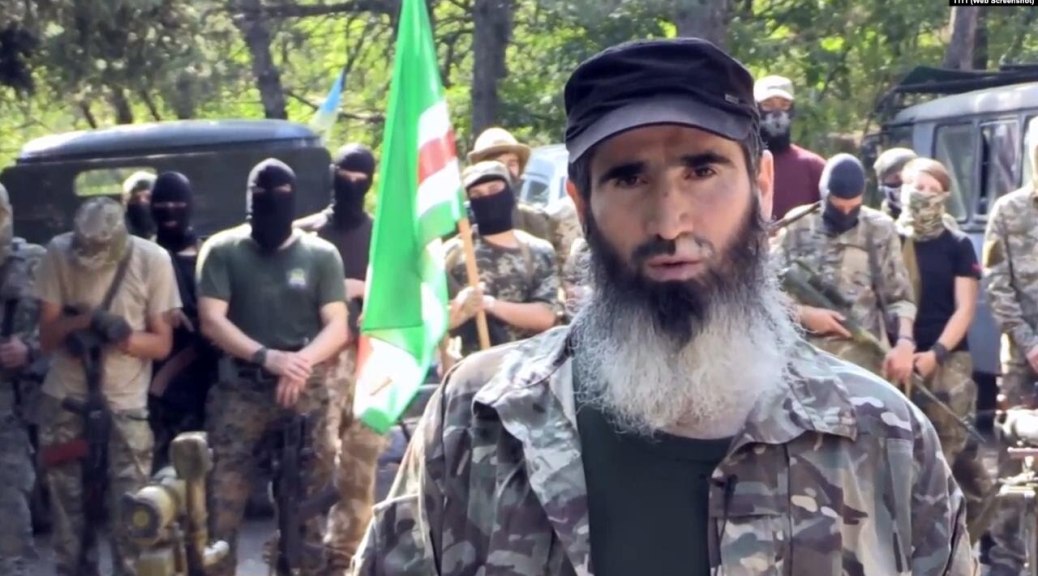
In Ucraina si sta formando un nuovo distaccamento di ceceni, che resisterà all’aggressione militare russa. Le già esistenti formazioni di volontari armati intitolate allo sceicco Mansur e intitolate a Dzhokhar Dudayev hanno rilasciato dichiarazioni sulla loro partecipazione alla guerra a fianco dell’esercito ucraino. Ciò non poteva che suscitare l’indignazione del funzionario Grozny: il capo della Cecenia, Ramzan Kadyrov, ha chiesto ai volontari di deporre le armi, e ha anche promesso mezzo milione di dollari per i capi dei capi delle formazioni.

Il musulmano Cheberloevsky, comandante del battaglione Sheikh Mansur, in un’intervista a Kavkaz.Realii, ha detto chi è il suo nemico, perché non prende sul serio Kadyrov e perché non ci si dovrebbe fidare dei dati di Mosca sui funzionari della sicurezza ceceni uccisi durante la guerra.

– Ramzan Kadyrov promette 500mila dollari per la tua testa. Come hai reagito a questo?

– Lo sento dire per la prima volta, non ho tempo per ascoltare storie del genere. Manda qui questi ragazzi per essere massacrati, mentre lui stesso si siede e assegna qualche soldo per le loro teste. Diceva sempre di essere il fante di Putin, lo schiavo di Putin, il soldato di Putin e pronto ad andare in qualsiasi parte del mondo a combattere per Putin. Perciò non mandi qui questi ragazzi per essere trucidati, ma porti con sé i suoi cari, i signori (intende il presidente del parlamento ceceno Magomed Daudov, ndr ). E poi decideremo con lui cosa e perché.

Quante persone ci sono nella tua squadra? Chi sono questi combattenti?

“Quanti di noi, non posso dirlo. Ma il battaglione è stato creato nel 2014, quando c’era ancora quella guerra [nel Donbass]. Durante l’addestramento, la maggioranza era costituita da ceceni, ecco perché l’abbiamo chiamato così: “Battaglione ceceno intitolato allo sceicco Mansur“. Poi si aggiunsero persone provenienti da tutto il Caucaso: Ingusci, Daghestani, Cabardini, Balcari, Circassi, Azeri, Osseti. Ma non ce ne sono così tanti: da ogni nazione ci sono alcune persone o diverse dozzine, sono venute e sono andate. Ora molti hanno risposto da tutto il mondo, dall’Europa, molte persone si stanno arruolando. Pertanto, stiamo preparando nuovi gruppi. Sono pronti per incontrare Putin, Kadyrov, Hitler, Lukashenko… Chi altro c’è?

– A te, ceceno, musulmano: perché questa guerra?

– Se ce lo chiedi, non abbiamo bisogno di questa guerra per un solo minuto in nessuna parte del mondo. Questa guerra ci è stata imposta. La Repubblica Cecena di Ichkeria, come altre repubbliche che si sono separate dall’Unione Sovietica durante il crollo, ha dichiarato la propria indipendenza e sovranità. Da quel momento, abbiamo problemi con la Russia. Nel 1991-92 iniziarono sabotaggi, gli attentati, le esplosioni. E da allora sono stato coinvolto in tutto questo. Nel 1994, ufficialmente, la Russia, avendo perso la speranza in questi oppositori filo-russi in Cecenia, che erano stati riforniti e opposti alla nostra leadership, ci ha attaccata l’11 dicembre 1994. È passato molto tempo, ma la guerra continua.

Abbiamo vinto la prima guerra, il mondo intero lo sa. Con la seconda guerra, nel 1999, hanno tenuto conto dei loro errori, delle loro carenze, della coesione del popolo ceceno … Sebbene siano stati firmati accordi diversi, hanno firmato l’indipendenza l’uno dell’altro. Siamo stati costretti a lasciare la Cecenia per vari motivi. Abbiamo perso quattro presidenti! L’intero stato maggiore, i sopravvissuti, hanno lasciato la Cecenia. Alcuni sono tornati.

E quando è scoppiata la guerra in Ucraina nel 2014, abbiamo deciso di partecipare al fianco dell’Ucraina e battere il nostro nemico comune.

– Dopo il conflitto del 2014, qualche anno dopo, le persone che erano nella tua rosa hanno iniziato ad avere problemi. Sono stati inseriti negli elenchi delle sanzioni . Ci sono garanzie per loro dall’Ucraina ora?

– No. Stiamo ora cercando di elaborare una sorta di accordo in modo che tutto ciò sia legale. In modo che non ci siano domande. Sappiamo perché quelle situazioni si sono genere.

Miliziano del Battaglione Sheikh Mansur con un’arma anticarro sul fronte orientale (2022)

– Per cosa?

Putin stava pianificando un attacco a Kiev e al resto dell’Ucraina. Pertanto, quando è stata annunciata una tregua a Minsk nel 2016-17, gli accordi, per tutto questo tempo si stavano preparando per un grande attacco. Anche se abbiamo detto ai nostri militari e al Servizio di sicurezza dell’Ucraina: non finirà così, si sono presi una pausa per i preparativi, l’abbiamo vissuto sul nostro territorio, nelle nostre guerre, non potete crederci per un secondo, dovete prepararvi.

Tutto questo è stato ignorato dal servizio di sicurezza dell’Ucraina: dissero: “lo sappiamo, stiamo verificando” ma non c’era una preparazione specifica. E loro, oltre ai preparativi, volevano ripulire l’Ucraina dall’interno da noi, in modo che non aiutassimo, in modo che i volontari non si unissero a noi. Hanno corrotto qualcuno in alcuni livelli della SBU o della polizia. Volevano sbarazzarsi di noi con le loro mani. Sappiamo che ci sono molti soldi in mezzo. A loro è stato affidato il compito: accusare queste persone di quello che vogliono ed espellerle. Nel 2018-20, i servizi speciali ucraini hanno consegnato due dei nostri combattenti alla Russia. Si aspettavano che se avessero cominciato a tradirci, il resto sarebbe scappato, se ne sarebbe andato, si sarebbe offeso. C’era una scommessa su questo.

Ma non siamo scappati, rendendoci conto che si trattava di un’operazione speciale dell’FSB, abbiamo cercato di spiegarlo agli ufficiali della SBU e siamo rimasti qui. Abbiamo detto: “Se siamo colpevoli, dimostrateci la nostra colpa”. Non hanno dimostrato, non c’erano prove. Quando hanno iniziato a cercare chi ci metteva in queste liste, non riuscivano a trovarne le generalità. Gli ufficiali della SBU dicevano: “Non vi abbiamo messo noi in queste liste”. La polizia, la guardia di frontiera, il servizio di immigrazione dicevano la stessa cosa. Questo processo è andato avanti negli ultimi sei mesi e non è stata trovata l’ultima risorsa, ma sappiamo che questo è il lavoro dell’FSB e di Kadyrov. Rendendoci conto di questo, non siamo andati da nessuna parte. Ci è stato detto: “Andate in Turchia, in Europa, non vi impediamo di farlo”. Non siamo andati da nessuna parte, siamo rimasti, sapendo che stavano arrivando i guai. Ora siamo pronti a difenderci insieme agli ucraini. A difendere l’Ucraina, Kiev.

– Chi sono i tuoi nemici? Russia, russi, Kadyrov, Putin?

– A questo punto per me il principale nemico è Putin, il suo regime e il suo entourage. Chi è Kadyrov? Voi giornalisti avete gonfiato l’importanza di Kadyrov, come se fosse una persona indipendente! Kadyrov è lo schiavo di Putin. Certo, ci offendiamo quando dicono: i ceceni hanno attaccato l’Ucraina, i ceceni ci hanno invasi. I ceceni non hanno invaso e non hanno attaccato. Mai nella storia i ceceni hanno avuto inimicizia con l’Ucraina. E non l’avranno neanche adesso. Questi sono bastardi che si definiscono ceceni… E noi, ceceni purosangue, siamo un po’ offesi. La Cecenia, che ha combattuto con la Russia in due guerre, ha perso 300mila abitanti su un milione! Altre 300.000 persone sono sfollate e vivono fuori dalla Cecenia. Questi sono i ceceni che possono definirsi veri ceceni. E questi bastardi sono gli scagnozzi di Putin.

Se Kadyrov può definirsi ceceno, perché si trova nel territorio della Cecenia, che è più piccolo della regione di Lugansk, sorvegliato da 100.000 soldati russi? Senza di loro, non è nessuno. La sua gente comune che è tenuta in ostaggio sul territorio della Cecenia lo sputerebbe semplicemente e lo ucciderebbe se ci fosse un’opportunità e il libero arbitrio. Ma davanti a Kadyrov c’è un esercito russo di centomila uomini. Sta dietro di loro, si nasconde e dice che è ceceno e sta restaurando la repubblica.

– Perché gli uomini di Kadyrov ora appaiono ovunque?

– Perché nel 2008, quando la Russia ha attaccato la Georgia, la 56a armata è poi entrata a Tskhinvali, i georgiani hanno reagito, non li hanno lasciati entrare, hanno combattuto. Quindi i Kadyroviti furono ammessi lì, il battaglione Vostok, prese Tskhinvali. Da quel momento furono addestrati come cani da combattimento.

– Ma “Vostok” allora era degli Yamadaev .

– Sì. Che importa? Era a capo del battaglione, ma era anche un kadyrovita, l’uomo di Putin. Con l’aiuto degli Yamadayev e di altri, i Kadyroviti salirono al potere, si rafforzarono e in seguito li uccisero loro stessi . È importante. Gli Yamadayev furono usati. La famiglia Kadyrov non ha avuto tali opportunità e gli Yamadayev hanno combattuto la prima guerra dalla nostra parte. C’erano cinque o sei fratelli, erano molto coraggiosi.

[…] Erano pochi, 200-300 persone. Sono stati colpiti, hanno perso l’appetito e sono stati ritirati. Ma non per ritirarsi completamente dall’Ucraina, ma per prepararsi meglio. Sono stati inviati in Siria, dove si svolgevano i combattimenti. Sono stati addestrati, preparati per essere gettati qui. La scommessa principale di Putin era su di loro: sarebbero arrivati ​​i Kadyroviti, tutti si sarebbero dati alla fuga e avrebbero portato tutto in movimento. Quello che sta succedendo oggi, lo vediamo. Sono portati come polli in questi campi. Non si arrendono e ne lanciano sempre di nuovi. E non ci sono solo ceceni. Hanno reclutato da tutto il Caucaso, hanno portato tutti qui sotto il marchio dei Kadyroviti.

Perché Putin ha permesso l’illegalità della gente di Kadyrov in tutta la Russia? Vengono in qualsiasi città: qualsiasi sindaco, deputato si scusa con loro. [….

– Come hai reagito all’informazione che un altro, già il terzo battaglione di volontari, che includerà euro-Ichkeriani , si sta formando vicino a Leopoli?

– Prendiamo con noi persone che conosciamo personalmente o persone di cui ci fidiamo al 100%. Non prendiamo nessun’altro. Pertanto, abbiamo semplicemente rifiutato e rifiutiamo molti. Questo è probabilmente il motivo per cui coloro che volevano unirsi a noi si sono rivolti da qualche altra parte. In ogni caso non interferisce. Che ci sia un’altra squadra. Più è meglio è, sarà solo più facile per noi.

– Akhmed Zakaev, il primo ministro di Ichkeria in esilio , ha chiesto di unirsi a tali distaccamenti. Sei in contatto con loro?

– Comunichiamo su alcuni problemi per telefono. Sì, ha invitato i volontari a unirsi ai distaccamenti, lo abbiamo sostenuto, siamo pienamente d’accordo con questo. L’unico punto: correre da qualche parte è una cosa, ma devi concludere una sorta di accordo in modo che dopo non ci siano problemi.

Nel 2014 siamo arrivati ​​frettolosamente, tutto era verbale, non c’erano documenti. Quelli che ci hanno chiamato qui per chiedere aiuto – i servizi segreti, si potrebbe dire, quelli ucraini – che si sono licenziati, che sono stati trasferiti. Senza documenti ufficiali, abbiamo una situazione del genere. Per evitare che ciò accada di nuovo, stiamo cercando di elaborare questo momento – in modo che tutto sia conforme alla legge, in modo che ci sia ordine. In modo che alcune persone incomprensibili sotto questo marchio non arrivino qui. Per potersi fidare l’uno dell’altro.

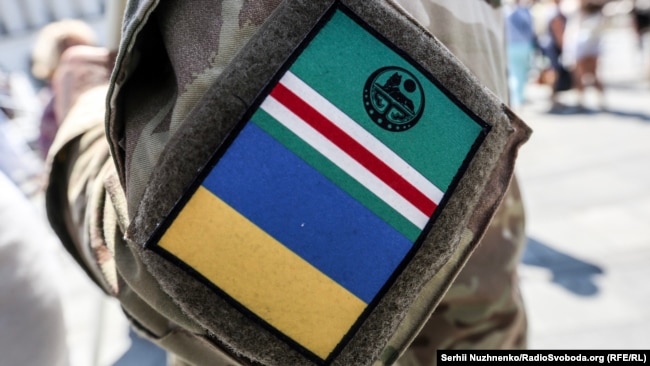
Al raduno "Ichkeria è viva!"  a Kiev, Piazza Indipendenza, 13 agosto 2017.  Nella foto - un membro di uno dei battaglioni ceceni con le strisce delle bandiere di Ichkeria e Ucraina
Al raduno “Ichkeria è viva!” a Kiev, Piazza Indipendenza, 13 agosto 2017. Nella foto – un membro di uno dei battaglioni ceceni con le strisce delle bandiere di Ichkeria e Ucraina

– Hai informazioni sul numero di ceceni morti nell’esercito russo?

– Non abbiamo informazioni specifiche, ma quello che dicono ufficialmente in Cecenia sul numero delle persone uccise non ha senso. Centinaia di loro sono stati mandati qui. Sono nascosti in Bielorussia, negli obitori , non vengono mandati a casa. Ecco perché diciamo a Kadyrov: se vuoi farla finita con noi o qualcun altro, vieni qui tu stesso. Costi a nascondi lì, codardo? Stai mandando questi ragazzi al macello.

– Ha detto che aveva 70mila persone pronte a partire in qualsiasi momento, in qualsiasi parte del mondo, se necessario.

– Bene! Che raccolga questi 70mila, ma che vada lui stesso in testa. Mandarli tutti qui e restare tu stesso a casa: questo può essere solo opera dell’ultimo dei codardi. Non mando i miei combattenti da qualche parte. Sono in trincea con loro! Mangio quello che mangiano loro, dormo dove dormono loro. Esco con loro in ricognizione, non li mando da soli, anche se sono molto più giovani e veloci, è difficile per me stare al passo con loro, ma comunque lo faccio. Non posso sedermi a casa, mandare le persone da qualche parte, poi aspettare chi di loro tornerà e chi no. E questo ateo sta seduto a casa, manda queste persone. Glielo dico personalmente: è un codardo, perché sta a casa e non viene qui, ma manda questi ragazzi. Se è un devoto fanti di Putin, allora lascia che tutti i 70mila suoi e 100mila soldati russi prendano e vadano qui. Siamo qui! Lo stiamo aspettando, siamo a posto, non siamo scappati, non ci siamo ritirati.

– In alcuni articoli scrivono di te che ripaghi l’Ucraina per il fatto che gli ucraini hanno difeso l’indipendenza di Ichkeria. C’erano molti di questi ucraini?

Non ho alcun debito con nessuno. Non l’ho detto da nessuna parte, e non lo farò. Gli ucraini sono venuti di loro spontanea volontà in Cecenia nel 1994 e hanno aiutato in ogni modo possibile. Quando il compianto Sashko Bely ( Alexander Muzychko – guidò il distaccamento ucraino filo-Ichkeriano durante la guerra in Cecenia), da qualche parte su Internet dovrebbe esserci questo video era in Cecenia con il suo distacco, quindi gli è stata posta la domanda: “I ceceni sono musulmani, voi siete cristiani. Cosa vi lega? Perché siete venuti ad aiutare i ceceni?” Ha risposto: “Siamo venuti qui perché se la guerra in Cecenia non fosse iniziata, i russi avrebbero attaccato l’Ucraina. Con questa guerra, la Cecenia ha salvato l’Ucraina, ha ritardato la guerra su se stessa, siamo obbligati ad aiutare”. Questo è quello che hanno detto nel 1994-95.

Quando tutto questo è iniziato qui, non siamo venuti qui sotto le bandiere di Zelensky o Poroshenko, non per sostenere qualche presidente o partito. Siamo venuti qui per aiutare il popolo ucraino, in modo che l’Ucraina non cadesse sotto l’influenza della Russia e fosse indipendente. Oggi qui si decide una svolta molto importante. Se l’Ucraina cade, cadranno tutte le repubbliche dell’ex URSS. I paesi indipendenti intorno alla Russia perderanno la loro possibilità di libertà. Oggi, se l’Ucraina sopravvive, questa è un’opportunità per tutti. Comprendendo tutto questo, guardiamo oltre e vediamo oltre. Non siamo mai stati nemici e non credo che lo saremo in futuro. Speriamo di spezzare la schiena a questo regime del Cremlino. E questo inizierà la liberazione del nostro Caucaso e di tutto il popolo oppresso dalla Russia!