Archivi tag: Gaza

GAZA COME GROZNY: L’IMPERIALISMO HA UN SOLO VOLTO

Leggere sui giornali i tragici fatti di sangue che stanno avvenendo in Palestina è come assistere al remake di un film che l’umanità ha già visto molte volte, lungo quella terribile scia di sangue che è la storia dell’imperialismo. Chi conosce la storia recente della Cecenia non potrà non individuare le analogie tra la guerra scatenata dalla Russia contro l’Ichkeria nel 1999 e quella scatenata da Israele contro la Palestina pochi giorni fa. Genesi e sviluppo di entrambi questi prodotti dell’imperialismo sembrano essere quasi sovrapponibili.

La Cecenia è incuneata nella Federazione Russa, e possiede un solo confine alternativo, con la Georgia, attraverso un ripido passo di montagna

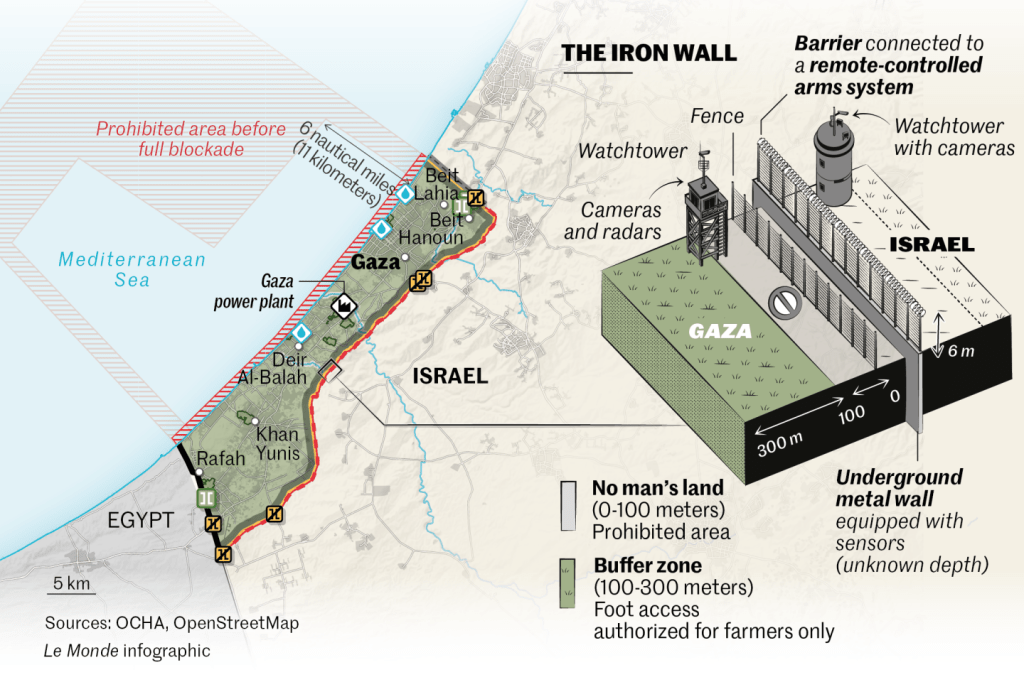
Partiamo della geografia. La Striscia di Gaza confina per due parti con lo Stato di Israele, per un altro col Mar Mediterraneo ed infine con l’Egitto, tramite il varco di Rafah. Come sappiamo, Israele ha bloccato sia i confini terrestri che quello marittimo, costringendo Gaza in un assedio di fatto tramite il quale Tel Aviv mantiene letteralmente il diritto di vita e di morte sui due milioni e mezzo di palestinesi che vi abitano. Anche la Cecenia del 1999 era nella stessa situazione: circondata da tre lati su quattro dalla Federazione Russa, poteva contare soltanto su una precaria strada di montagna, l’autostrada Itum Khale – Shatili, per eludere il blocco economico cui Mosca aveva sottoposto il paese fin dal 1997.

Da un punto di vista politico La Striscia di Gaza dovrebbe far parte di uno stato palestinese indipendente, riconosciuto da Israele e dall’ONU, ma ancora oggi il governo di Tel Aviv (Secondo gli israeliani ed i loro protettori americani, Gerusalemme) non ha compiuto alcun passo in questo senso, preferendo considerare quel territorio una sorta di “terra di nessuno” da amministrare con periodiche incursioni militari di “pacificazione”. Anche la Cecenia del ’99 viveva in uno stato “sospeso” simile a quello di Gaza. La Federazione Russa, che pure aveva firmato con il governo ceceno un Trattato di Pace, non aveva mai ratificato l’indipendenza del paese, e si ostinava a considerarlo un soggetto della federazione, minacciando di gravi ritorsioni qualsiasi governo ponesse in essere una procedura di riconoscimento dell’indipendenza di Ichkeria.

Gaza è incuneata nello Stato di Israele, e possiede un solo confine alternativo, con l’Egitto, tramite il valico di Rafah

Dal 2008 la Striscia di Gaza è governata di fatto da Hamas. Si tratta di un partito estremista, responsabile di numerose azioni terroristiche già prima dell’Ottobre 2023, e considerato organizzazione terroristica dalla maggior parte dei paesi occidentali. Il suo potere si fonda essenzialmente sulla disperazione nella quale Israele tiene artificialmente la popolazione palestinese, costretta a vivere in uno stato di grave sovraffollamento, con un reddito inferiore di circa 75 volte a quello dei cittadini israeliani, costretta a razionare acqua, cibo, medicine ed energia elettrica ed a pregare gli occupanti israeliani per poter uscire da quel “grande ghetto” che è la Striscia. Una situazione molto simile a quella che si sperimentava nella Cecenia del ’99, quando il debole governo Maskhadov, democraticamente eletto, operava sotto il ricatto di milizie armate di orientamento islamista, senza poter contrapporre al bellicismo dei signori della guerra le politiche sociali necessarie a risollevare le sorti della popolazione ed allontanarle dalle lusinghe dei più radicali. Anche in questo caso l’invasore di turno, la Russia, non erogando le riparazioni di guerra per ripristinare l’economia che essa stessa aveva devastato con l’invasione del 1994 – 1996, ritardando o bloccando il pagamento delle pensioni e delle indennità ai cittadini ceceni e, come nel caso di Gaza, rendendo il paese dipendente dalle forniture di energia elettrica, fomentava una popolazione ridotta alla miseria, spingendola tra le braccia del fondamentalismo.

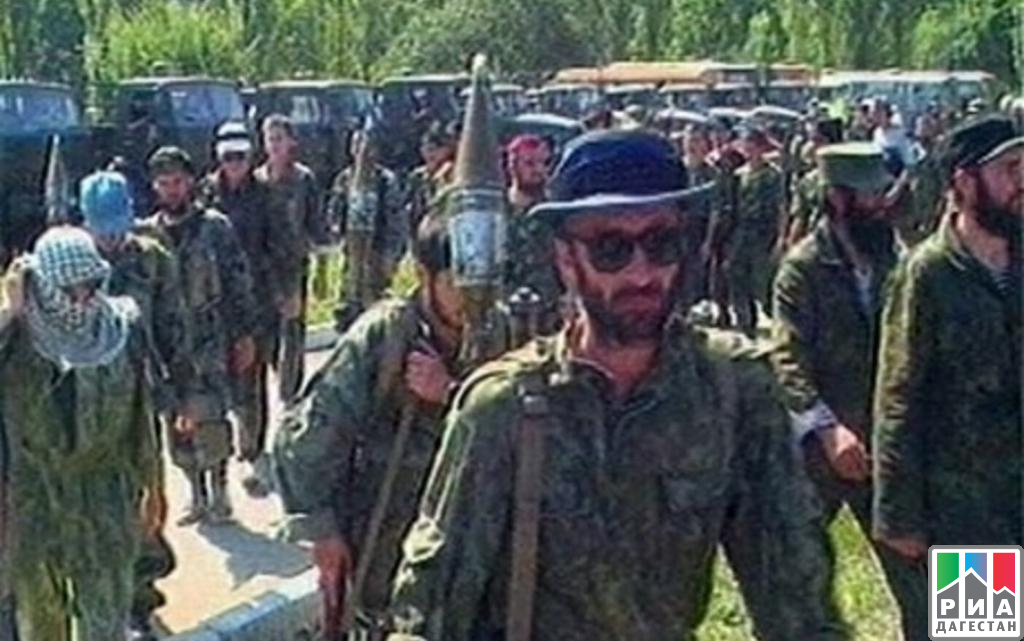
Esattamente come successo ad Ottobre 2023 a Gaza, nell’Agosto del 1999 un piccolo esercito di guastatori, guidato dal comandante di campo ceceno Shamil Basayev, compì un raid in profondità nel Daghestan, con l’intenzione di promuovere una sollevazione generale contro il potere russo ed instaurare un emirato islamico. In questo caso gli obiettivi sono leggermente diversi (Hamas ha dichiarato che l’azione era volta unicamente a colpire l’esercito israeliano ed a dimostrare la vulnerabilità dello Stato di Israele) ma la dinamica è sorprendentemente simile: penetrati quasi senza incontrare resistenza, evidentemente a causa di un allentamento delle misure di sicurezza che sembra quasi provocato intenzionalmente, gli uomini di Basayev, al pari di quelli di Hamas, avanzarono per parecchi chilometri prima di essere bloccati da un veloce (forse troppo) dispiegamento militare e ricacciati in Cecenia. Un’azione “suicida” che sembrava fatta apposta per dare un casus belli alla Russia, e giustificare una nuova invasione. A completare il quadro giunsero una serie di attentati terroristici ai danni di condomini in svariate città russe (rispetto alle quali ancora non è stato chiarito chi e perché li abbia condotti) che provocarono la morte di trecento persone ed il ferimento di altre 1000, suscitando un’ondata di indignazione popolare che l’astro nascente della politica russa, Vladimir Putin, seppe cavalcare abilmente, conquistandosi la presidenza della Federazione sulla promessa di “ammazzare i terroristi anche al cesso”.

Militanti di Hamas

A ben guardare anche la terribile strage compiuta da Hamas ha i suoi “beneficiari politici”. Stupisce che, anche in questo caso, i leggendari servizi di sicurezza di Tel Aviv abbiano fallito in modo così eclatante nell’impedire l’attacco, loro che sono sempre stati così solerti nell’infiltrare spie, nel dare la caccia ai nemici dello stato in qualunque parte del globo, e nel prevenire azioni ostili contro Israele. Mentre stupisce meno, ahimè, il vantaggio politico conseguito dal premier Netanyahu, in piena crisi di consensi fino a pochi giorni prima, ed ora di nuovo in sella con un “governo di emergenza” che finalmente può avere mano libera nel “risolvere” il problema palestinese con i metodi più affini al gretto nazionalismo che il Primo Ministro rappresenta.

Ma le analogie non finiscono qui: l’operazione militare scatenata da Israele per vendicare i suoi morti ha una sproporzione che è assimilabile soltanto a quella usata da Putin contro la Cecenia. Oggi come allora, dopo un blocco totale dei confini ed una campagna terroristica contro la popolazione civile (con missili lanciati sui mercati, colonne di profughi bersagliati, servizi idrici ed elettrici tagliati, aiuti umanitari bloccati) si dichiara che lo scopo non è punire un popolo ed attuare un genocidio, ma “creare una zona cuscinetto”, un “cordone sanitario” che salvaguardi l’attaccante dalla risposta dell’attaccato. E nel frattempo si avvisa la popolazione civile di “andarsene”. Dove? Non è importante. Per quello che valgono le vite dei civili, possono andare a morire di sete in qualche scantinato. Se il Ministro della Difesa israeliano ha definito genericamente “animali umani” l’obiettivo dell’invasione, al Cremlino i ceceni non erano visti in modo diverso.

Le milizie di Basayev in procinto di penetrare in Daghestan, 1999

C’è una cosa che Gaza e Grozny non hanno in comune: il nome di chi le ha distrutte. Eppure il motivo alla base del martirio di ceceni e palestinesi è lo stesso: l’arroganza di un popolo che pretende di schiacciarne un altro, mettendo in atto tutti gli strumenti, leciti e illeciti, morali ed immorali, per perseguire il suo scopo. Che poi non è nient’altro che imperialismo, sublimazione politica della prepotenza, del cinismo, dell’egoismo elevato a culto di sé, capace di piegare, deformandola, ogni virtù politica, civile e morale. In questi giorni quel Putin che ha scatenato il genocidio dei ceceni si indigna per il genocidio palestinese scatenato dagli israeliani, i quali a loro volta si erano indignati quando Putin bombardava i profughi o li torturava dei campi di filtraggio. Ognuno di questi personaggi, a Mosca come a Tel Aviv, a Pechino come a  Washington, accusa gli altri di essere “L’impero del male”. Ma la verità è che l’Impero è esso stesso “il male”, e che non esistono “imperi buoni”.

GAZA LIKE GROZNY: IMPERIALISM HAS ONLY ONE FACE


Reading in the newspapers about the tragic bloody events that are taking place in Palestine is like watching the remake of a film that humanity has already seen many times, along that terrible trail of blood that is the history of imperialism. Anyone who knows the recent history of Chechnya will be able to identify the similarities between the war unleashed by Russia against Ichkeria in 1999 and the one unleashed by Israel against Palestine a few days ago. The genesis and development of both these products of imperialism seem to be almost overlapping.


Let’s start with geography. The Gaza Strip borders on two parts with the State of Israel, on another with the Mediterranean Sea and finally with Egypt, via the Rafah crossing. As we know, Israel has blocked both the land and sea borders, forcing Gaza into a de facto siege through which Tel Aviv literally maintains the right of life and death over the two and a half million Palestinians who live there. Chechnya in 1999 was also in the same situation: surrounded on three out of four sides by the Russian Federation, it could only count on a precarious mountain road, the Itum Khale – Shatili highway, to evade the economic blockade to which Moscow had subjected the country since since 1997.

Chechnya is closed on three sides by Russia, and has only one alternative border, with Georgia, via a narrow mountain pass


From a political point of view, the Gaza Strip should be part of an independent Palestinian state, recognized by Israel and the UN, but even today the government in Tel Aviv (According to the Israelis and their American protectors, Jerusalem) has not accomplished no step in this direction, preferring to consider that territory a sort of “no man’s land” to be administered with periodic military “pacification” incursions. Chechnya in 1999 also lived in a “suspended” state similar to that of Gaza. The Russian Federation, which had signed a Peace Treaty with the Chechen government, had never ratified the country’s independence, and persisted in considering it a subject of the federation, threatening any government that implemented a recognition procedure with serious retaliation. of the independence of Ichkeria.

Since 2008, the Gaza Strip has been de facto governed by Hamas. It is an extremist party, responsible for numerous terrorist actions already before October 2023, and considered a terrorist organization by most Western countries. Its power is essentially based on the desperation in which Israel artificially keeps the Palestinian population, forced to live in a state of severe overcrowding, with an income approximately 75 times lower than that of Israeli citizens, forced to ration water, food, medicines and electricity and to pray to the Israeli occupiers to be able to leave that “large ghetto” that is the Strip. A situation very similar to that experienced in Chechnya in 1999, when the weak Maskhadov government, democratically elected, operated under the blackmail of armed militias of Islamist orientation, without being able to counter the warlords’ belligerence with the social policies necessary to revive the fate of the population and distance them from the flattery of the more radicals. Also in this case the invader of the moment, Russia, did not provide war reparations to restore the economy that it had devastated with the invasion of 1994 – 1996, delaying or blocking the payment of pensions and allowances to citizens Chechens and, as in the case of Gaza, by making the country dependent on electricity supplies, it fomented a population reduced to poverty, pushing it into the arms of fundamentalism.

Gaza is closed on three sides by Israel, and has only one alternative border, with Egypt, via the Rafah crossing


Exactly as happened in October 2023 in Gaza, in August 1999 a small army of sappers, led by the Chechen field commander Shamil Basayev, carried out a raid deep into Dagestan, with the intention of promoting a general uprising against Russian power and establish an Islamic emirate. In this case the objectives are slightly different (Hamas declared that the action was aimed solely at hitting the Israeli army and demonstrating the vulnerability of the State of Israel) but the dynamics are surprisingly similar: penetrated almost without encountering resistance, evidently to due to a relaxation of security measures that almost seems to have been caused intentionally, Basayev’s men, like those of Hamas, advanced for several kilometers before being blocked by a rapid (perhaps too) rapid military deployment and driven back into Chechnya. A “suicidal” action that seemed tailor-made to give Russia a casus belli and justify a new invasion. To complete the picture came a series of terrorist attacks against condominiums in various Russian cities (for which it has not yet been clarified who and why carried them out) which caused the death of three hundred people and the wounding of another 1000, causing a wave of popular indignation that the rising star of Russian politics, Vladimir Putin, was able to skilfully ride, winning the presidency of the Federation on the promise of “killing terrorists even in the toilet”.

Hamas militants

Upon closer inspection, even the terrible massacre carried out by Hamas has its “political beneficiaries”. It is surprising that, even in this case, Tel Aviv’s legendary security services failed so spectacularly to prevent the attack, they who have always been so diligent in infiltrating spies, in hunting down enemies of the state in any part of the globe, and in preventing hostile actions against Israel. While less surprising, unfortunately, is the political advantage achieved by Prime Minister Netanyahu, in the midst of a crisis of consensus until a few days earlier, and now back in the saddle with an “emergency government” that can finally have a free hand in “resolving” the problem Palestinian with the methods most similar to the narrow nationalism that the Prime Minister represents.


But the analogies do not end here: the military operation unleashed by Israel to avenge its deaths has a disproportion that is comparable only to that used by Putin against Chechnya. Today as then, after a total blockade of the borders and a terrorist campaign against the civilian population (with missiles launched on the markets, columns of refugees targeted, water and electricity services cut, humanitarian aid blocked) it is declared that the aim is not to punish a people and carry out a genocide, but “create a buffer zone”, a “cordon sanitaire” that safeguards the attacker from the response of the attacked. And in the meantime the civilian population is advised to “leave”. Where? It’s not important. For what civilian lives are worth, they can go and die of thirst in some basement. If the Israeli Defense Minister generically defined the target of the invasion as “human animals”, in the Kremlin the Chechens were seen no differently.

Basayev’s militiamen about to invade Dagestan


There is one thing that Gaza and Grozny do not have in common: the name of those who destroyed them. Yet the reason behind the martyrdom of Chechens and Palestinians is the same: the arrogance of a people that claims to crush another, implementing all the tools, legal and illicit, moral and immoral, to pursue its goal. Which is nothing other than imperialism, the political sublimation of arrogance, of cynicism, of selfishness elevated to a cult of the self, capable of bending and deforming every political, civil and moral virtue. These days, the Putin who unleashed the genocide of the Chechens is outraged by the Palestinian genocide unleashed by the Israelis, who in turn were outraged when Putin bombed refugees or tortured them in the filter camps. Each of these characters, in Moscow as in Tel Aviv, in Beijing as in Washington, accuses the others of being “the evil empire”. But the truth is that the Empire is itself “evil”, and that there are no “good empires”.