
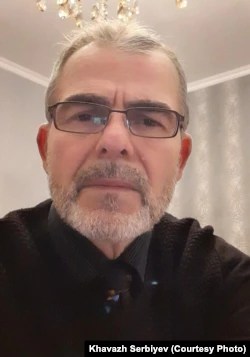
Khavazh Serbiev served as the Prosecutor General of the Chechen Republic of Ichkeria during the period between the first and second Russian invasions of the country. In June 2022 he gave an interview to Ukraina Today ( https://ukrainatoday.com.ua/ ) about the parallels between the ongoing war and those fought by the Chechens. Below is the translation of the interview.
You investigated the crimes of the Russian army. If we compare the actions of the Russian army in Chechnya and what they did in Ukraine, is there anything more similar or different?
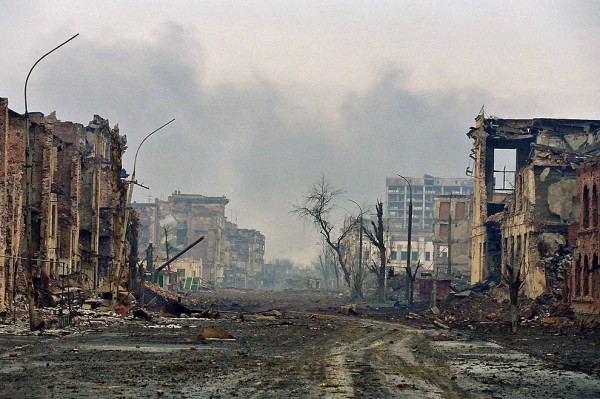
In Ukraine, nothing new has happened, nor is it happening, compared to what has been done in the Chechen Republic. Everything is mirrored: only the scale is different, because your people (the Ukrainians, Ed ) are many times more numerous than the Chechens, and the territory is vaster. Everything else is the same. This is so familiar to us that we are even surprised: nothing changes in the policy of the Russian state and in the actions of its army!
Why did the world community react rather slowly to statements about Russian war crimes in Chechnya? Why was it considered an internal affair of Russia, or why did Russian propaganda manage to dehumanize the Chechens, saying that terrorists were fighting there?
Of course, the whole world believed that the Chechen territory and the Chechen people were subjects of the Russian Federation. And nobody wanted to change that. Although in November 1990, according to the laws of the USSR, the Chechen Republic was actually brought on an equal footing with other union republics (the republics that made up the USSR, ed. ) . But nobody wanted to change that. Also, Russia is a large nuclear state. It seems to me that this factor played a leading role.
In the end, everyone at that moment had their own problems. Ukraine, Belarus and other states had left the USSR. They didn’t even want to ask this question. And the rest of the world – the West and other states – for them this business was happening in a distant place, they didn’t care. The Chechen side was accused of using unacceptable methods. That is, they blamed the victim and the abuser by the same standards. There was some kind of fear or reluctance to intervene in this problem.
Is it important to involve foreign experts in war crimes investigations or is it enough to use our own forces?
It is very important to involve foreign experts. Because in a dialogue with Russia it is unrealistic to do something yourself. Naturally, the basis is created on site. It’s easier for you Ukrainians, but for us it was practically impossible. I believe the whole world should be involved in this process. It is important to have an international opinion, an international investigation. This is the only way it can work.
How did war crimes investigations unfold after the first Chechen war?
A criminal case for genocide was initiated in the Attorney General’s Office. The material, collected in every district of our territory, was conveyed to the apparatus of the General Prosecutor’s Office. Evidence of Russian military genocide and war crimes was investigated in every district. And it all came together in a common criminal case, which reached 64 volumes. Each volume is at least 400 pages. This is what we have been able to cover. Before the start of the second Russian aggression, however, we were unable to transfer a certain amount of this material to an international authority, such as the Hague Tribunal.
Why?
Because Russia has created huge problems inside Chechnya, events have overlapped one another in wave after wave. Law enforcement agencies and, of course, the Prosecutor General’s Office simply did not have time to bring at least part of this case of war crimes of the Russian army in the Chechen Republic to a conclusion. We just didn’t make it. By the time the second attack had begun, we handed over part of the materials to the Tribunal in The Hague. Approximately 12 volumes of materials have been delivered. Some were returned because they were considered irrelevant under international law. We had no experience. There are only 6 volumes left. Meanwhile, active hostilities began again and soon the whole territory was completely occupied. And any further process was suspended again.

During the first war, which Moscow lost, Russian troops brought a lot of trouble to the Chechens. How could it be that during the Second World War Moscow found relatively many allies among the Chechens? In particular, Kadyrov supported them.
The Russian regime, the relevant authorities and services involved in the Chechen Republic have taken into account their previous mistakes. The “hat toss” dominated the minds of politicians and military during their first campaign. As a result, they took these moments into account and did a huge undercover work to attract new members to this agent network, and also launched powerful propaganda within Russia itself.
Imagine when the second campaign began: immediately on the state television of Russia sounded “Get up, the country is huge!” (popular song written during WWII to mobilize the masses against the German invasion, Ed. ) as it sounded during WWII when Hitler attacked the USSR. I’ve heard it myself. You get goosebumps when you hear this song. Imagine that against the tiny Chechen Republic, which some can’t even find on the map! And then suddenly the Chechens became a “fascist force”. The same thing that has now been done against Ukraine.
The Second Chechen War was preceded by terrorist attacks on the territory of Russia, in which the Chechens were blamed. What do you know about it?
Solid disinformation, which has been played a lot not only in Russia, but throughout the world. Many believed it. Why was it so masterfully presented using the regime controlled media. It was so obvious to us that this was a lie that we were just taken aback. There was a lot of evidence that these were provocations, that this was done by the Russian special services. But there was simply no one to listen to us. And the materials that we tried to smuggle overseas through the media in the West simply disappeared. They were broadcast, they were reported, but there was no response.

There was another reason for the second war – the invasion of Shamil Basayev’s detachment in Dagestan. Why did it happen?
Yes, there was an encroachment of some groups, there were Chechens even on the territory of Dagestan. This cannot be denied. If you knew how different these groups were! There were people from all over the North Caucasus, including Dagestan. Bagautdin alone (one of the leaders of the “Islamic Shura of Dagestan” – ed. ) brought 2,000 people to our territory. And the people got the impression that it was the Chechens who were moving like an avalanche across the territory of Dagestan with the aim of occupying, assaulting, etc. It looked completely different than what eyewitnesses saw. Everyone, of course, saw what they wanted to see. But I assure you, not even half of the Chechens were there. Most of them were people from other republics, there were also volunteers from the Middle East … Naturally, President Aslan Maskhadov, from the very beginning, when information began to pour in, was categorically against it. And this was not the action of the armed units of the Chechen Republic of Ichkeria. Under no circumstances! These were volunteers who made their choice and took part in this operation.
Did President Maskhadov have the opportunity to stop Basayev’s action?
At that time, on the borders of the Chechen Republic, throughout the North Caucasus, there was a massive concentration of Russian troops, huge. Why were they concentrated in these places? We didn’t have troops on our borders, there wasn’t even the possibility to do that. For example, there was no conscription in the army as such. And to contain the volunteers or Basayev himself, who acted alone, would have meant an intra-Chechen military confrontation. The transition to the territory of Dagestan took place in a matter of days. I believe that for Maskhadov it was, on the one hand, unexpected and that in any case there were no adequate forces to organize some kind of barrier to prevent this encroachment.
Among the Russian soldiers who died in Ukraine, there are many people from Dagestan. How to explain it?
Dagestan is mostly a mountainous area. There are many high-altitude villages that live independently. We can say that the main reason is poverty. In the Russian Federation, this is a common phenomenon in the outback. And in Dagestan there is poverty, and therefore …
 Ichkeria Digital Archive