Archivi tag: Chechen Diaspora

Fighting for a new “August 6”: Francesco Benedetti interviews Aset Sabdulaeva (Part II of “Ichkeria Generation”)

You told me that you moved to Canada in 2004. Where did you go to live?  Has the Canadian government helped you find accommodation and a form of livelihood?

Given the fact that our files were accepted by Canadian immigration authorities, we received the permanent residence cards right away when we landed in the Canadian airport. We landed in Halifax. Two weeks later upon our arrival, we moved to Québec because my mother knew Canadian filmmaker Helen Doyle. Helen was working on a documentary movie about my mother that was released in 2008. The name of the documentary is Birlyant, a chechen story.

When we arrived in Canada, the government gave us 4 000 cad$. But we had to pay back to the government the amount for plane tickets. We rented an apartment, and I was enrolled into a special language class, classe d’accueil.

The first time, I must admit, was very difficult. We had to start everything from zero. I didn’t have friends at school, I didn’t speak French at all. The first week of school, I had a conflict with one Russian guy, Maxim, who used to call me a “terrorist” every time he passed in the corridor during break-time. I went to complain to the director of the school. Later, my sister and my mother came – he stopped his verbal harassment. Even now, when I think about this guy, I feel awkward.

I spent 2 years in classe d’accueil, then I was transferred into regular class. It was very hard to study the French language. When I finally graduated from school and then from Cegep (French collage), I started to appreciate my years in university. I met wonderful people and wonderful professors.

Was Canadian society aware of what was happening in Chechnya? How did people you know react to your situation? Have you found people’s willingness to support you in your integration journey?

Canadian society was aware of what was happening in Chechnya. For example, in daily free journals “Metro” that were distributed every morning in the subway and in public buses to people, I often read short articles about Chechnya. However, I didn’t see any concrete steps made by Canadian society or the Canadian government to help Chechnya. Canadian society had a distant look on everything. Even now, Canadians think that their “far away” geography will protect them from any threat. They seem to lack understanding in geopolitics.

Canada has a history of immigration. It has organizations that deal with immigrants. There are government programs that grant social housing and social aid. People are generally open to immigrants, and they react to immigration as a normal process. The filmmaker, Helen, who knew my mom helped us. She and her husband helped me to get enrolled into a very good high school. I’m grateful to them. Apart from them, no one. My family dealt with everything on its own.

When did you start to feel the need to engage in politics, serving the cause of Chechen independence?

I was always on the side of Ichkeria. However, I started to actively take part in politicssince 2022, the year when Russia illegally invaded Ukraine.

The result of the war in Ukraine will change the balance of power in Eastern Europe. When Russia loses this war, it will be the end of the Russian Empire and the beginning of decolonization of captive nations. Without concrete changes in the center of the Empire, the Chechen Republic won’t be able to reestablish its democratic state because our people don’t have enough resources and capabilities for that. But our government can support Ukraine and is supporting Ukraine in all possible terms and that will help the process of disintegration of the Russian Empire. I want to contribute to the process of de-occupation of my motherland and disintegration of the Russian Empire and that is why I’m motivated to work for the government of Ichkeria.

Also, I know that the truth is on our side. The Chechen government of Ichkeria in exile is defending the legitimate right to self-determination of our people. The Chechen people already made a choice to build a sovereign country, and this choice was democratically articulated in the referendum in 1990. When the USSR made legislative reforms recognizing the right to self-determination of peoples, the Supreme Soviet of Checheno-Ingush republic adopted the Declaration of State Sovereignty on 27 November 1990. Our sovereignty was proclaimed in full accordance with USSR laws and with norms and principles of international law.  The statehood of the Chechen Republic of Ichkeria is crystally clear and undoubtedly legitimate. The legitimacy of our state was further reinforced, when the Russian Federation and Chechen Republic of Ichkeria concluded the Peace Treaty in 1997 where both parties were designated as subjects of international law. The Peace Treaty is published on the official website of the United Nations (UN).

If I had any doubt about the legitimate struggle of our people, I would step down right away. Our land is occupied, our people are being held hostage by the Russian Empire that until today keeps over 100 000 Russian soldiers on chechen soil. The way Chechen people are treated is completely unjust and unacceptable and that is why I find it  is important to defend our country, people and freedom.

What benefits do you think the deployment of ChRI armed forces alongside Ukrainian fighters can bring to the cause of independent Chechnya? And how can the Chechen diaspora in the West support their action?

The Armed Forces of Chechen Republic of Ichkeria play a key role in our resistance and they are fighting not only for Ukrainian victory and for the legitimate right to self-determination of Chechen people, but they are also fighting for the peace and security in Eastern Europe.

Russia threatens international security and is trying to destroy a sovereign Ukrainian state, Ukrainian identity, language and culture. If Russia is not stopped in Ukraine, it will expand its boundaries to other European countries. If Hitler was not stopped in 1945, the world would be dominated by fascism. If Putin is not stopped in Ukraine, Russian chauvinism, that Djokhar Dudaev called russism, will reach other European countries. Lenin wanted to build a Soviet Empire where communism was the absolute ideal and where all captive nations were insignificant subjects all fused into a one big Russian nation. Putin wants to keep this Empire but replace communism with russism and exploit captive nations and their territories the same way as Soviets did.

The fact that Chechen armed forces are fighting alongside Ukrainian fighters sends a powerful message to the world: the Chechen resistance is still alive and Chechens defend Ukraine to help Ukrainian people to defeat the Russian Empire that is threatening international security. The Ukrainian Army is training our troops with high military technology. Ukraine is helping our army to update war skills, use advanced military technology and increase expertise. The Chechen Army is becoming more efficient. Our Army is paving the way for the de-occupation of Ichkeria.

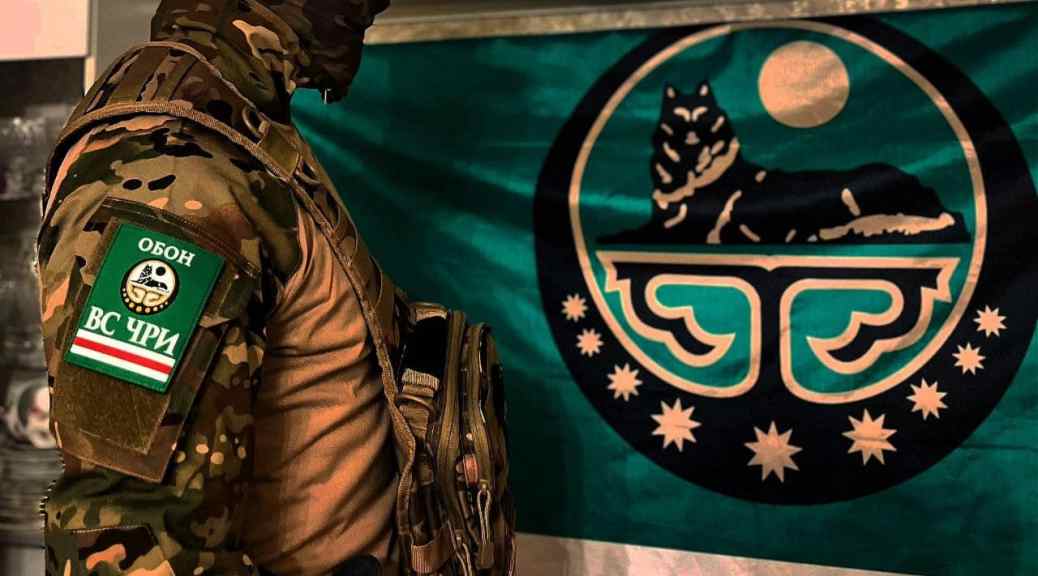
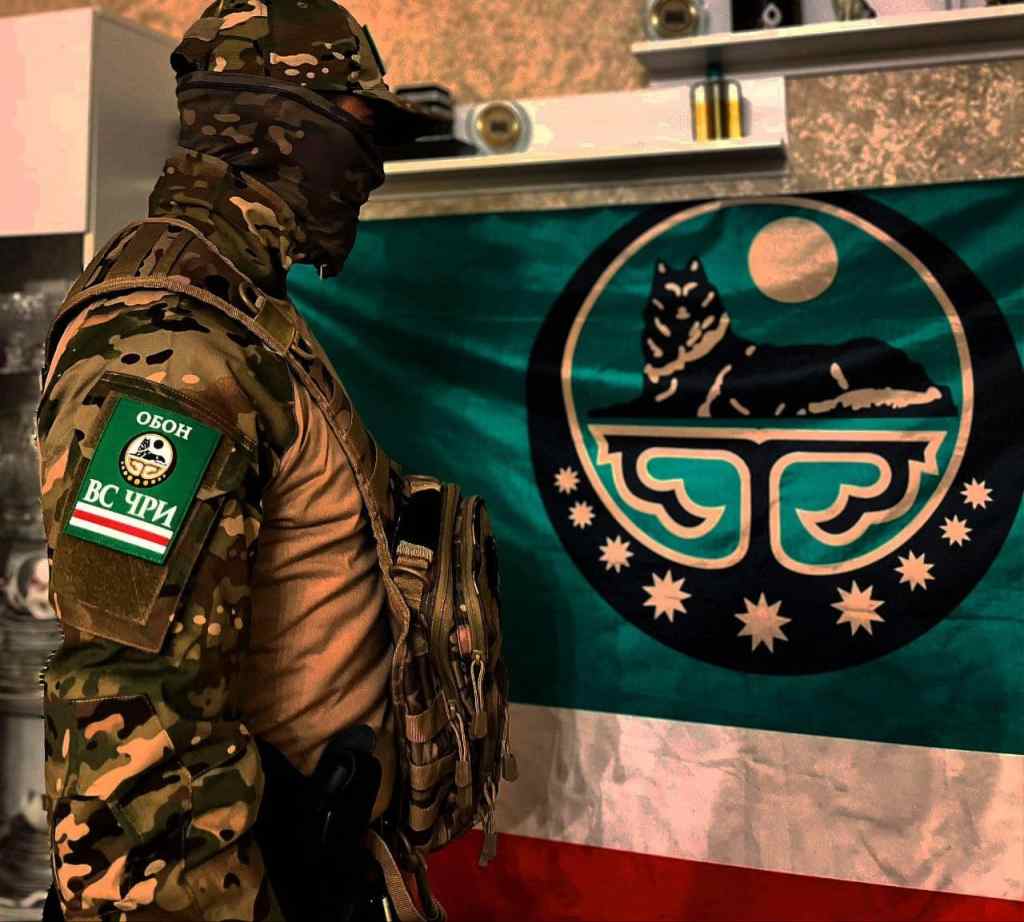
The Armed Forces of Chechen Republic of Ichkeria consist of very brave men that love freedom. Most of the soldiers in our Armed Forces belong to my generation (born in 1990 +). They are doing the best they can to liberate our motherland, to stop the Russian Empire, to help Ukraine and establish peace and security in Eastern Europe. I truly admire them the same way I admire those who defended and liberated Grozny on 6 august 1996.

The chechen diaspora can do a lot of things to help our army. The first and very important thing is to raise awareness about our troops because most people in the West know about Kadyrovtsy, russian puppets fighting within Russian Army against Ukraine, but do not know much about the Armed Forces of the Chechen Republic of Ichkeria. The diaspora should be more open to speak about our army, about our state, about our national tragedy. Also, I find that it is important to give moral support to our troops that are sacrificing their lives for the better future of our nation. Lastly, financial aid is crucial because military and transportation equipment costs money and this equipment is necessary for efficient warfare.
What activities do you mainly do in Canada, in support of Chechen independence? And what are the main problems of the Chechen diaspora in the West?

My role as a Vice Minister of Foreign Affairs is to connect with different people and politicians, seek their support and talk to them about Chechnya. We need diplomatic support from Western countries. On 18 October 2022, Verkhovna Rada of Ukraine recognized that Chechen Republic of Ichkeria is a territory temporarily occupied by Russia. The main goal of our foreign policy is to find support from Western Countries and invite them to follow the example of Ukraine and recognize the occupation of the Chechen State.

The major problem of our diaspora is the lack of expression of political will. The fear of denouncing injustice, oppression and Russian occupation is  justifiable. We all have relatives in Chechnya. When Chechens express political opinions and speak against the Russian regime, the puppets of the Russian administration, kadyrovtsy, kidnap or kill relatives. Fear I think is the biggest problem. Yet, the truth is that if we want to change the status- quo of our occupied State, we must rise here, in the West.

What activities can the Chechen diaspora in the West do to influence Western society and governments, in your opinion?

The best thing that the diaspora can do is support its local Chechen leaders that are trying to get into local governments. The involvement of our local leaders into governments will help us to make hear our voices within western political establishments. For instance, soon there will be elections in Austria. We have a Chechen candidate running for a deputy office. His name is Laziz Vagaev. I’ve listened to his videos. He is highly educated person.  It is an excellent opportunity for Chechens to elect a local leader that will represent them and be capable of making hear our voice in Austrian parlement.

Last year, Chechen diaspora in Belgium had a chance to vote for a Chechen candidate. Unfortunately, our diaspora didn’t participate much in elections. Our people should support local Chechen candidates and vote for them.

Some Chechens say that one of the main risks for Chechens living abroad is Islamic radicalism, and that the government is not doing enough to distance itself from this phenomenon. Do you agree that Chechens in Europe and America are at risk of radicalization? And what is your position as a member of the government on this issue?

I disagree with this statement. Our government  is a democratic government and the rule of law is a core principle of our state.

The Russian intelligence agency (FSB) tries to drag some Chechens into radicalism, but our government is working on this problem, together with European governmental institutions. Chechens have a lot of educated and talented young people who live, work and study in Western schools, universities and companies. So I do not think that radicalization is a major problem.

It is true that we do not share the aggressive secularism of some Chechen social activists, but it does not mean that we support radicalism. Democracy gives a person the opportunity to live according to laws adopted by the majority of society. Democracy is not new to Chechen culture; it is part of our culture, and we inherited it since the 16th and 17th centuries. Chechen people lived in democracy, and we didn’t have any monarchs or social classes.  While other European nations were subjects of monarchs that had absolute power over them, Chechens lived in mountains on equal terms, with equal rights and elected the executive Council of Elders. French writer Ernest Chantre writes about this in his book “Recherches Antropologiques: Le Caucase ” (1886).

Therefore, democratic principles exist in the Chechen cultural code. But some pseudo-democrats who live today in European countries are trying to replace democracy with liberalism. Democracy is a form of government that is the basis of Chechen statehood. These individuals do not make any distinction between liberal ideology and democracy. As you know, in Europe there are a lot of political parties that build their programs/manifesto on  Christian values and ethics.

The Christian Democratic parties exist throughout the world. These parties successfully operate in Belgium, Germany, Great Britain, Italy, etc. The European People’s Party (Christian Democrats) won the elections to the European Parliament. This is normal in democracy. There is an insignificant minority of Chechen society that has not yet really understood democratic principles and is trying to impose strict secularism on the state and people. Their opinion is marginal not only for the Chechen people, but also for most European democratic countries.

How does the government act to keep the attention of the Chechen diaspora around the world on its activities?

Our government is transparent. We inform our diaspora about all the work we do through media resources such as Ichkeria News YouTube channel and the official government’s website www.thechechenpress.com. Also, we have the Council of Elders in Europe and official representation offices that keep close ties with local communities in different countries. 

And it is true that we do not force anything on anyone because we believe that to serve our state is a matter of honor, dignity and free choice.

Ichkeria Generation – Francesco Benedetti interviews Surho Sugaipov

Surho Sugaipov was born and raised in Grozny. At the age of fifteen, Surho arrived in Germany after his family had to flee from Grozny during the Second Chechen War. After graduating from high school in the city of Würselen, NRW, he worked in the family business until he enrolled in university. As a student of the Faculty of Economics at the University of Cologne, he simultaneously dedicated himself to his great passion – acting. His first major role was as one of the main characters in the French film “Le grand homme” (2014) directed by Sarah Leonor.

You can learn more about his creative work in cinema in Germany and France on his Wikipedia page:

https://de.m.wikipedia.org/wiki/Surho_Sugaipov).

A member of the Chechen Democratic Party, one of its co-founders and spokespersons, Surho lives with his wife and three children in Cologne.

We can say that you belong to a generation that we could define as the “Ichkeria Generation”, that is, those kids who were born close to independence, and who became adults during the period of independent Chechnya. What memories do you have about the first Russian invasion of Chechnya?

I was 9 years old, and of course, I remember how my life suddenly transformed from a childhood playground into a serious, loss-filled adult life, where the main goal became to survive in the conditions of a full-scale war.

Children play in the streets of Grozny destroyed by bombing

How did you perceive your “being Chechen”?   Speaking with many older witnesses, they told me how they had to deal with a certain “induced” sense of guilt following the deportation and the legend of the “betrayal”.  You were born in a different context: did you also experience this sense of humiliation?

It started when we moved to a neighboring republic where we were registered as refugees. We, the children from the Chechen Republic, were assigned to one school. Our mother tried several times to enroll my sister and me in the city lyceum, but each time, after another inspection, we were expelled based on our nationality—I remember these moments well. By the time of the open invasion of the territory of the Chechen Republic, which had legally declared its independence based on international law, a powerful propaganda campaign had been launched throughout the Russian Federation, portraying Chechens as bandits, terrorists, and a threat to the civilized world. Chechens were blamed for all the negative consequences of the collapse of the Soviet Union as an empire. Brazen false propaganda was carried out continuously 24/7.

Organized, armed groups were sent to the republic to discredit the entire population and portray us in an extremely negative light to the world. Talking to older people who became victims of the genocide of Chechens during the deportation of Chechens to Kazakhstan in 1944, under the false accusation of betrayal and collaboration of the entire population with enemy forces, the situation was similar—people were accused of collaborating with the enemy army before a single Wehrmacht soldier had set foot on the territory of the republic. The elders spoke of how they had to fight against the imposed sense of guilt for the “betrayal” of the people.

The Russians have always used the story of betrayal. They said, “The Chechens have always betrayed us.” What nonsense – an empire that is surprised why its victims do not surrender and remain beaten, but dare to resist

How did you experience the period of the first war? How did your family deal with the situation?

I mainly remember the first war through the emotions of a child, who, holding his mother’s hand, was fleeing from the war. After the first war ended, we returned to Grozny and rebuilt our house, at least to a livable condition, and started anew, from scratch, among mountains of ruins and destruction. But two years later, the second war began. Many in Chechnya understood that the war was not over even before the start of the second one, as military groups operated on the principle of “the worse, the better,” preparing the ground for the return of Russian troops by turning public opinion against Maskhadov’s government, carrying out public corporal punishments, and even executions, which worked against independence. The FSB’s plan to destabilize the situation in the republic worked precisely, giving the Russian army time to escalate its forces anew. As expected, Russia attacked with a much stronger army, seeking revenge for the humiliation they experienced from their defeat in the first war. People in the republic understood that while we were trying to heal our wounds and rebuild the destroyed infrastructure, Russia was quickly assembling a new army and preparing for a new attack.

Chechens, left to their fate, fragmented by internal conflicts artificially created by Russian special services, could not keep up with such a huge empire, with its ability to play political games, its capability to escalate the military race, and adequately prepare for the inevitable war, which was obvious to many at that time. While Russia received billions in its treasury from the sale of oil and gas to the West, Chechnya was in a state of absolute economic collapse, unable to get back on its feet without external assistance, which never came. The reasons for sacrificing us, leaving us to a senseless and brutal fate at the hands of the aggressor, in the form of the Russian Federation, will likely become the subject of many historical studies. Declaring the destruction of an ethnic group as an internal matter of Russia, the international community fed a monster that had already gone wild, threatening everyone with nuclear retribution if they interfered with its new plans. As a result, we had an absolutely impoverished, fragmented, weakened region subjected to religious pressure after the first war, left to be devoured by the predator.

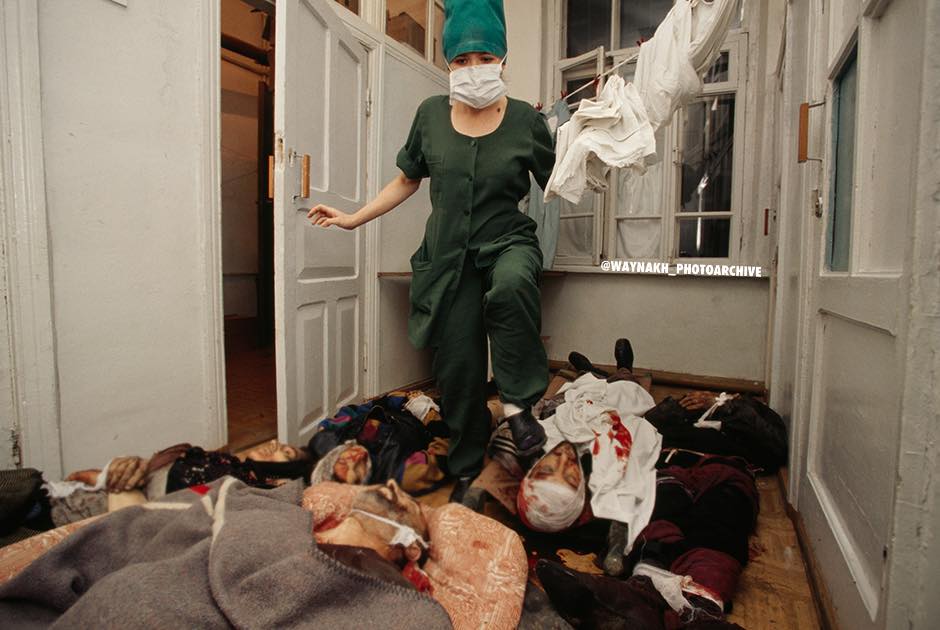
Grozny Hospital, 1999

When the war ended and the Russians retreated, how did you feel? Who was your heroes?

First of all, Dzhokhar Dudayev and all the resistance fighters were our heroes.

In your head as a young Chechen, how did you visualize Aslan Maskhadov?   Was there any leader you didn’t like?

Maskhadov was also a hero. But his politics had many weak points that people did not like. Mainly, it concerned his friendliness towards the Russians. He perceived this war as a misunderstanding that arose under certain circumstances. Being an officer of the Soviet army, he did not fully realize that the imperial policy of Russia had not changed since the Caucasian War. Russia was using us at that moment; first, as a sacrificial victim to scare the international community with its military power. Second, to distract the population inside the country from the total plundering of the USSR’s wealth, seized during the collapse of the Union. Russia unilaterally separated itself from all the union republics to avoid sharing common property with them and, declaring itself the sole successor of the Union’s legacy, appropriated the common wealth. Aslan Maskhadov, instead of reaching out to the international level, establishing relations with the West and America, and securing their support, believed Russia’s promises that the war was over, that reparations would be paid, and that good neighborly relations would be established between two free states.

Another fatal mistake he made was his inability to resist radicalism, artificially introduced into the republic from the East, controlled by the Kremlin, and imposed on the Chechens through the activities of intelligence agents already operating widely in the Chechen Republic at that time.

Aslan Maskhadov

What happened after the second Russian invasion? How did you decide to reach Germany?

My father worked in the Ministry of Justice of the Chechen Republic of Ichkeria. After the start of the Second Chechen War, he brought us back to Nalchik, where we lived during the first war. A year later, he came for us and said that this war was more brutal, and after it, everyone who worked for their republic would be sent through filtration camps, and those who were shot immediately would be the lucky ones, envied by those who would be tortured to death in the camps. The survivors would be imprisoned, and only a few crippled people would return, while the majority would never come back. Just as he said, it happened. The situation was worse than ever. Therefore, we decided to move to Europe.

How did you personally experience arriving in Germany? Was it difficult for you to integrate with the Germans? Were there other Chechen families who helped you?

To imagine what we felt when we were settled in the dormitory, you need to at least partially understand all the persecutions we went through, the fears we experienced, and the expectations of worse scenarios that had accompanied us for years. We didn’t speak German, we couldn’t work yet, but the children were immediately sent to school. Of course, we ended up in Hauptschule at first. After a couple of years, my school teacher Fred Tribbels wrote a letter to the NRW district with a request to transfer me to HHG (Gymnasium). And that’s not all, he realized that I was struggling with physics, so he arranged for the physics teacher to tutor me additionally in this subject. We were among the first Chechens to move to Europe; there were few Chechens living in Germany, and no one who could quickly explain to us how to integrate. In any case, it wasn’t that difficult, because for any question that arose, we could contact certain institutions and always received the help and support we needed. We felt protected, it was a lifesaving support for us. Adapting to the local mentality was not difficult, it coincided with ours. The hardest part was before our arrival in Germany.

Surho Sugaipov

After you reached Germany, how were you integrated into the social system?  Were the Germans kind to you?  Were you able to attend school?

We have received a lot of support and understanding. Being a young boy, a teenager I obviously maintained good and less good relationships with my peers, but German society showed itself to be open, tolerant, available to help us. I can only say good things about how I was accepted. I just had the normal problems as a teenager, like everyone else at this age.

When did you decide to start doing political activity?  And what kind of political vision have you developed regarding Chechnya?

I think I was never apolitical because of my early acquaintance with war and the occupation of my land. In the war in Ukraine, I saw a historic moment to resume the discussion of the situation in the Chechen Republic of Ichkeria, to raise the topic of independence, which is once again banned from discussion in Russia.

Impunity and the killing of one-third of the republic’s population allowed the leadership of the Russian Federation to continue its imperialist expansionist policy by attacking a sovereign state recognized by the entire world – Ukraine. The international community must go back 30 years to 1994 and hold the Russian Federation criminally responsible for the genocide of the Chechen people and for all the crimes committed by Russia on the territory of the Chechen Republic to destroy the Chechen ethnicity. It must help the Chechen people de-occupy their homeland and restore statehood based on the principles of democracy and secularism, where religion should be separated from the state, where any citizen has the right to practice any religion or not practice any at all, where citizens’ rights are protected by the state, and where the people are the rightful owners of their ancestral territory.

We must return to the democratic secular state that the Chechens proclaimed to the whole world, taking advantage of the moment when the Supreme Soviet of the USSR issued Law No. 1409-I of April 3, 1990, “On the Procedure for Resolving Issues Related to the Withdrawal of a Union Republic from the USSR.” In Article 3, it is stated that autonomous republics within a union republic have the right to independently decide whether to remain in the USSR or stay with the seceding union republic. The Chechen Republic, by referendum, remained in the USSR and thus became another union republic within the USSR. Consequently, when the Russian Federation declared its withdrawal from the USSR, the Chechen Republic remained within the USSR and automatically gained independence following the dissolution of the USSR on December 26, 1991.

The Chechen Republic declared its independence in July 1991, and on November 1, 1991, Dzhokhar Dudayev signed his first decree on the state sovereignty of the independent democratic state. Thus, taking advantage of the political moment during the dissolution of the Soviet Union and based on international law, the Chechen Republic seceded from the Russian Federation, declaring its independence. The Russian Federation declared its independence from the union treaty significantly later than us. The Constitution of the Chechen Republic of Ichkeria was adopted one year earlier than the Constitution of the Russian Federation. This means that the Russian Federation attacked an independent state whose people declared their independence to the whole world, exercising their right to self-determination. None of the democratic states dared to recognize our independence, fearing the wrath of the Russian Federation. For this reason, I have become more active in recent years, but I have never been silent.

My political vision is clear. There can be nothing but a democratic, secular state, as recorded in our 1992 Constitution. This state must be de-occupied with the help of the international community.

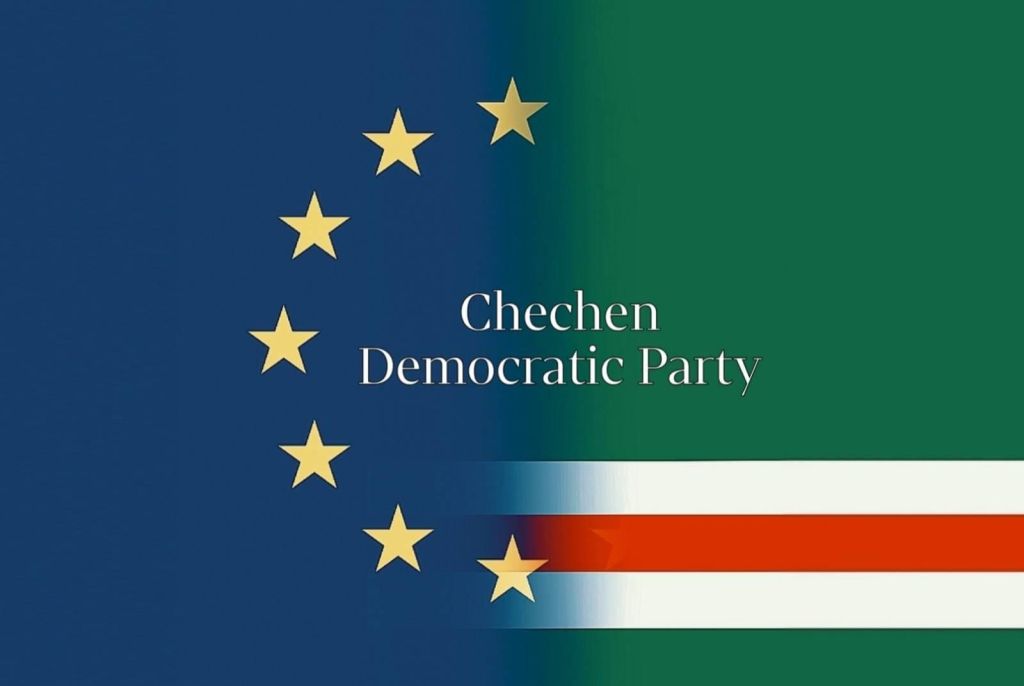
Banner of the Chechen Democratic Party

You have found a political point of reference in the Chechen Democratic Party.  The first question regarding this: is there a line of political continuity between the Chechen Democratic Party and the Vaynakh Democratic Party, founded by Yandarbiev and the main proponent of Chechen independence in 1991?

We have nothing in common with the Vainakh Democratic Party, which has deviated towards radical ideologies, either by conviction or out of convenience, probably to seize power in Chechnya. Yandarbiyev changed his position to a radical idea; I don’t know if he really believed in it, but he completely transformed from a democrat to a radical. We do not agree with his point of view and have nothing in common with his party.

So, the Chechen Democratic Party supports an independent, democratic, secularized Chechnya, founded on the rule of law.  What political program does the party intend to follow to achieve this objective? Starting from the current situation, what steps do you think the Party should take?

We want to de-occupy our territory, demand full restitution for the moral and material damage inflicted on our people, the extradition of all war criminals and their prosecution in an international court. We also demand the removal of all radon nuclear waste sites established by the Russian Federation on the territory of our republic and the restoration of the ecological damage caused to the republic.

Our goal is also to strengthen democratic institutions in our society, primarily the protection of the rights and freedoms of the republic’s citizens, the separation of religion from the state, and the establishment of healthy international relations, both political and economic, and trade relations. We aim to join the EU as full members. Our goal also includes reconciling and uniting all segments of our fragmented society based on the Declaration of Freedom and Independence of the Chechen Republic and the Constitution of the Chechen Republic of 1992.

I am one of those Westerners who strongly supports the independence of Chechnya): why, in your opinion, should the so-called “West” be interested in supporting the independence of Chechnya? What benefit would get from this situation?

The civilized world, logically, should be interested in the multiplication and prosperity of as many democratic states as possible on the planet. We believe that Russia will soon cease to exist in its current form because it does not fit into the civilized international community of states. Wars, attacks on neighboring countries, and the seizure of foreign territories as a healthy coexistence of state entities have completely exhausted themselves. Humanity created nuclear weapons to become a deterrent from wars that take millions of human lives. The civilized world must be able to manage the world to prevent its collapse. Russia uses enslaved peoples as cannon fodder or radical terrorist organizations and groups that pose a danger to peaceful coexistence. Therefore, it is unacceptable to allow a platform or a training ground to be created on the territory of the Chechen Republic where people capable of harming peaceful creation will be trained. Our time is a time of international trade, global international environmental protection programs, and the peaceful coexistence of people as a single whole. It is time to engage in the rapprochement of religious confessions instead of inciting national or religious enmity. Our program is aimed at progress, and we, who have never known slavery or social inequality, raised on the ideals of freedom and nobility, are created precisely for peaceful purposes. This is our natural state, and we want to return to our normal human essence. We are essentially creators, farmers who accept peaceful labor as the most noble behavior of a person.

An image of barbarians, mentally deficient warriors, and desperate villains has been created of us. We will have to prove for a long time that this was never the case and cannot continue to be. If the West helps the Chechens build their own democratic, reliable state and acts as its guarantor, it will gain a reliable, experienced military and economic partner in the Caucasus, at the crossroads of Europe and Asia.

If this does not happen and the West allows the situation to unfold without intervention, there is a risk that radical elements within our population, financed by the Kremlin, will seize power. These elements can inevitably create something similar to ISIS 2.0 or a scenario reminiscent of modern Afghanistan. All this, of course, will play into the hands of the Kremlin, which has been promoting the narrative of wild, radical Chechens for decades, thereby constantly getting a green light for aggression from the West.

The most tragic thing is that we will disappear from the face of the earth as an ethnic group. For 30 years, the Russian Federation has been conducting the primitivization of our people through the occupation authorities on the territory of the republic, and this is yielding its sad fruits. According to statistics (from open sources), there are 500 schools and 1,500 mosques operating in the republic.

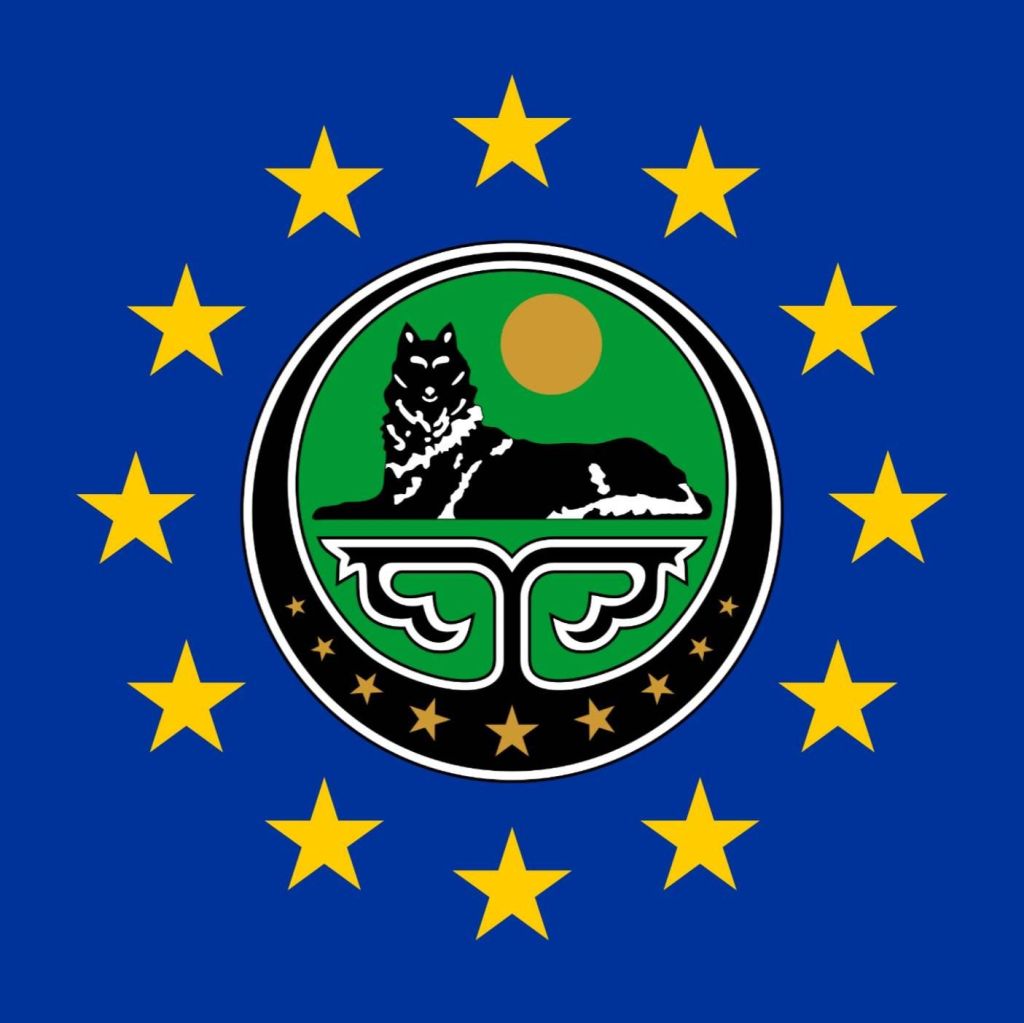
Symbol of the Chechen Democratic Party

Do you believe that in this sense, the activity of the Chechen battalions fighting on the front line in Ukraine, in support of the Kiev army, could be useful in convincing Europe to support the independence of Chechnya?

No, I don’t think so. I respect these people’s decision and understand their desire to fight for Ukraine and its freedom. They follow the call of vengeance that they have carried within themselves for decades. I understand their desire to take revenge for the hell that the Russians created on our land. Nevertheless, I don’t see a great future in this approach. The predominance of radical rhetoric in their behavior gives their struggle more of a “sacred” religious significance. We never fought for religion; we fought for our land and freedom. Every time the Chechens raised their banner for freedom, volunteers from the East appeared, bringing their flags and coloring our struggle for freedom with their own colors, subordinating our interests to their own. This has happened every single time. We kept making the same mistake over and over.

I don’t think civilized society needs small, fragmented Chechen battalions. Ukraine already has its own professional army. Chechen volunteers need to join the regular Ukrainian army. A state that creates private military companies (PMCs) on its territory is doomed because the privilege of legal violence belongs to the state. The West needs reasonable, reliable, and educated people with whom they can engage in dialogue and make agreements based on international law.

So, what do you think Chechens living in Europe can do to support the cause of creating an independent Chechen state? And how can they reach the Chechens in their homeland?

Engage with European governments, political and public organizations, form alliances with other diasporas, communities, and international organizations that support self-determination and human rights. We must create our own political and non-profit public associations. Chechens living in Europe should also raise their awareness about our political situation and share it from all public platforms, helping more and more compatriots become politically educated. Organize and participate in conferences, seminars, and public demonstrations to provide more information about the situation in Chechen society.

Hold cultural events, exhibitions, and festivals to preserve and promote Chechen culture and identity in the diaspora. People in Chechnya are currently hostages; they cannot do anything. They live in constant fear under state terror. People outside Chechnya must do something to help them. We must revive our society, politicize it once again, and show the path we need to take to achieve our goals. First of all, we must revive our spirituality; it has always been of great importance to us. Chechens have traditionally avoided marrying not only within close family circles but even distant ones, observing the norms prohibiting marriage between relatives up to the seventh generation, meaning that if the seventh grandfather is common, it was not possible. In Chechen society, children were considered children until the age of 15. At 15, boys were allowed to wear a belt, signifying the right to carry a weapon, and girls could emphasize their waist. A man would not enter a house if the master of the house was not at home. Ensuring the safety of a woman and accompanying her to her destination was the duty of any man. These things are important and respected to this day.

What are the main problems you are facing in the political education of Chechen society? And what have been the main successes you have achieved to date?

Our main problem is the low level of education and the high level of radicalization among a significant part of our population. There are many reasons for this, including the deliberate actions of the Kremlin, which has repeatedly used this tool, as well as the numerous severe traumas that people have experienced, often leading them to turn to religion.

I consider our great success to be the removal of the taboo on discussing political Islam. Now society is free to discuss and share opinions on topics that just a few years ago seemed almost closed and forbidden. Overall, we have made significant progress in combating political illiteracy in a short period of time. Many people support us and our views, and this number is growing every day. Many remain silent and quietly listen because they fear for themselves and their relatives. However, we receive a lot of feedback in support, which clearly indicates that people are listening and supporting us.

Surho Sugaipov

In your opinion, is the phenomenon of radicalization also involving Chechens living in the European diaspora?  Or is it a phenomenon that occurs only in Chechnya?  And what role does Kadyrov have in promoting this radical culture?

As I mentioned earlier, I believe there are two reasons for the radicalization of some Chechens. More precisely, the main reason is the Kremlin and its deliberate efforts to radicalize the youth for subsequent control and use for its purposes. The fact that they have been “successful” is a consequence of the trauma of two brutal wars, the post-war policy of severe terror, humiliation, and open attacks on honor and public humiliation, combined with the inherent naivety and trustfulness of the Chechens.

Kadyrov, in turn, started by fighting against radicals and explained his switch to the Russian side precisely for this reason. Today, Kadyrov himself has become a force that is radicalizing our society by leaps and bounds. I don’t know if this radicalization is ideological or a direct order from the Kremlin. However, I would rather assume the latter.

Just think about it: in such a small Chechen Republic, 1,400 mosques have been built. They are not building schools, kindergartens, hospitals, factories, or plants where people could work and earn a living, developing the economy. Sermons are held every day, and people are indoctrinated with the idea that they should be obedient, accept their fate, and strive for paradise, forgetting about their earthly life. This is the same old trick that has been used for thousands of years, and people still fall for it. All these newly built mosques are transmitters of propaganda. If it weren’t beneficial to them, the Kremlin wouldn’t allow a single mosque to be built.

what would you say to the European public to encourage their support for the independence of Chechnya?

If we understand that there are only two camps of countries in the world—democratic countries based on citizens’ rights to freedom and self-determination on one side, and tyrannies that usurp power and maintain it through force, violence, and total id

eological brainwashing of their population on the other side—then it will not be difficult for us to understand why it is absolutely logical for the West to help the democratic forces of Chechnya build a state that will become a reliable, strong, and dedicated ally to the entire civilized world, rather than allowing the opposite to happen. Furthermore, passively allowing the extermination and erasure of a civilized, advanced, and spiritually rich people from the face of the earth is, at the very least, inhumane. We live in a world where even cruel treatment of animals is unacceptable.

Interview with Aslan Artsuev, Director of the Human Rights Centre Ichkeria (HRCI)

ENGLISH VERSION

Can you tell your personal story? How did you get to Hamburg from Chechnya?

Since 2001 my parents lived in Germany, in Hamburg, they left to escape the Russian occupation, and in 2015 I chose to leave Russia so as not to be imprisoned, or killed, because of my human rights activities and my beliefs. policies.

If you like, could you tell us what pressures did you face in Russia?

There were “kind” warnings, then direct threats, constant (in my opinion) surveillance of me, then there was a “random” attack with attempted murder.

When did you come up with the idea of ​​creating the Ichkeria Human Rights Center?

The idea of ​​creating a human rights organization dates back a long time, when I saw how human rights organizations in Moscow disguised their activities. For me, as a representative of a nation that has survived or, more precisely, is experiencing genocide, it was vital for me to create at least one human rights organization that is honest and truly capable of protecting our people. Our organization (in the process of registration) is called the Human Rights Center of Ichkeria, I thought the word “Ichkeria” should be rehabilitated, as the Reds have made a lot of effort trying to discredit it. Of course, we help everyone, not just the citizens of Ichkeria.

What behaviors of human rights organizations in Moscow did you dislike? How, then, does the Human Rights Center of Ichkeria want to differentiate itself?

Corruption, lack of assistance on all issues (Chechen issues), hypocrisy, lies, xenophobia. This shouldn’t exist in our Center.

What is the main focus of the center?

We help refugees, monitoring the rights situation in the temporarily occupied Chechen Republic of Ichkeria, promoting anti-extremist propaganda, educating young people, disseminating and explaining the principles of democracy, organizing demonstrations and other actions, conducting an information fight against fakes on the internet and also bringing them closer to the United States and the NATO bloc.

What is the extremist message that the Center tries to fight?

Any form of extremism is unacceptable to us, we are not speaking only of our Center, but of the Chechen nation as a whole. Chechen society has always been democratic, but after the genocide, and with skillful manipulation, we were presented as terrorists, fascists, extremists and Putinists , which is absolutely not true!

Islamic fundamentalism is a problem for the Chechen community in the West

Islamic radicalism is a problem for the Chechen community not only in the West, but throughout the world.

I noticed that you used the term “radicalism” instead of “fundamentalism”. The European media often use these two words as synonyms. Do you think there are differences between these two terms?

In Russian, radicalism is the rejection of an alternative point of view, intransigence and fundamentalism are basic principles, in this case religion, that is, its supporting structure, in my opinion, is not the same thing.

What are the main challenges facing the center?

Threats from Russian special services to myself, attempts to discredit its activities, as well as a shortage of qualified young personnel. Certain human resources exist, but due to the threat of pressure on relatives, many are not ready to openly help us.

Do the authorities of the Chechen Republic of Ichkeria support the activities of the center?

No, quite the opposite!

Why, if you want to talk about it, are the authorities in Ichkeria not supporting an organization with such an important purpose for the Chechen people?

Apparently they do not consider (we are talking about the Zakayev government) that this is an important goal for the Chechen people.

How many Chechens live in Europe today and in the so-called “West” in general?

I can’t say for sure, but there is information that speaks of more than three hundred thousand people.

What challenges do you think the Chechen diaspora faces in the West?

The first, in my opinion, is the lack of due and legitimate attention on the part of the countries that have accepted us, for example, the sensitivity of not calling us “Russians”, as there is no legal basis for this. This attitude is perceived by the Chechens as complicity with Russia in their actions against us. Secondly, the infiltration of Russian agents into our community under the pretext of carrying out anti – Russian activities.

Does the fact that European countries do not recognize Chechens as refugees from an occupied country, but as Russian emigrants, does it have any legal consequences for Chechens? I am thinking of the forced returns to Chechnya, where it seems that many dissidents in the current government are made to disappear, or brutally punished.

Obviously. Firstly, as you rightly noted, the deportation to Russia for torture and the possible extrajudicial execution of a political opponent of Russia, and secondly, this is in accordance with the policy of genocide of the Chechen people and the denial of legitimate right of Chechens to have their own state. Furthermore, by accepting more than 300,000 Chechen refugees, and then recognizing us as Russians, that is, as our mortal enemies, the West creates fertile ground for identifying Chechens as enemies. For example, it is no secret that the Russian special services continue to recruit them under the guise of Islamists, and continue to do so.

What do Chechens living in Europe now think about the situation in their country?

Most Chechens dream of returning to their homeland after the withdrawal of the occupying troops from Ichkeria. The Russian regime in Chechnya is considered inhumane and barbaric.

What do you think of what is happening in Chechnya right now? What are your hopes for the future?

The genocide of the Chechen people continues in the temporarily occupied Chechen Republic of Ichkeria. I am absolutely certain that we will gain freedom and prosecute, in accordance with international law, at least the best known criminals.

What is practically the genocide of the Chechen people at home today? In your opinion, does Ramzan Kadyrov not intend to protect the Chechen people in his own way?

Kadyrov defends himself not in his own way, but in the Russian way, that is, whatever the Russian order, he will carry it out. For example, the “Kadirovites” in 1944 helped to load people on cattle wagons for genocide, under the pretext of deportation. Now in Chechnya the physical destruction of people continues (Chechnya ranks first for oncological diseases and coronavirus mortality) is underway also the cultural, linguistic, legal genocide, the replacement of historical memory.

VERSIONE ITALIANA

Puoi raccontare la tua storia personale? Come sei arrivato ad Amburgo dalla Cecenia?

Dal 2001 i miei genitori vivevano in Germania, ad Amburgo, sono partiti per sfuggire all’occupazione russa, e nel 2015 ho scelto di lasciare la Russia per non essere imprigionato, o ucciso, a causa delle mie attività sui diritti umani e delle mie convinzioni politiche.

Se ti va, potresti raccontare quali pressioni hai subito in Russia?

Ci sono stati avvertimenti “gentili”, poi minacce dirette, una costante (secondo me) sorveglianza su di me, poi c’è stato un attacco “casuale” con un tentato omicidio.

Quando ti è venuta l’idea di creare il Centro Diritti Umani Ichkeria?

L’idea di creare un’organizzazione per i diritti umani risale a molto tempo fa, è nata quando ho visto come le organizzazioni per i diritti umani a Mosca dissimulavano le loro attività. Per me, in quanto rappresentante di una nazione sopravvissuta o, più precisamente, che sta vivendo un genocidio, era di vitale importanza per me creare almeno un’organizzazione per i diritti umani onesta e realmente in grado di proteggere la nostra gente. La nostra organizzazione (in fase di registrazione) si chiama Human Rights Center of Ichkeria, ho pensato che la parola “Ichkeria” dovesse essere riabilitata, poiché i rossi hanno fatto molti sforzi cercando di screditarla. Certo, aiutiamo tutti, non solo i cittadini di Ichkeria.

Quali comportamenti tenuti dalle organizzazioni dei diritti umani a Mosca non hai apprezzato? In cosa, quindi, vuole differenziarsi la Human Rights Center of Ichkeria?

Corruzione, mancata assistenza su tutte le questioni (tematiche cecene) ipocrisia, bugie, xenofobia. Questo non dovrebbe esistere nel nostro Centro.

Qual è il focus principale del centro?

Ci impegniamo ad aiutare i rifugiati, monitorare la situazione dei diritti nella Repubblica Cecena di Ichkeria temporaneamente occupata, fare propaganda anti – estremista, educare i giovani, divulgare e spiegare i principi della democrazia, organizzare manifestazioni ed altre azioni, condurre una lotta informativa contro i falsi su internet ed anche avvicinando loro agli Stati Uniti ed al blocco NATO.

In cosa consiste il messaggio estremista che il Centro cerca di combattere?

Qualsiasi forma di estremismo è per noi inaccettabile, non stiamo parlando solo del nostro Centro, ma della nazione cecena nel suo insieme. La società cecena è sempre stata democratica, ma dopo il genocidio, e con l’abile manipolazione, siamo stati presentati come terroristi, fascisti, estremisti e putinisti, il che non è assolutamente vero!

Il fondamentalismo islamico è un problema per la comunità cecena in Occidente

Il radicalismo islamico è un problema per la comunità cecena non solo in Occidente, ma nel mondo intero.

Ho notato che hai usato il termine “radicalismo” anziché “fondamentalismo”. I media europei spesso utilizzano queste due parole come sinonimi. Pensi che esistano differenze tra questi due termini?

In russo, il radicalismo è il rifiuto di un punto di vista alternativo, l’intransigenza e il fondamentalismo sono principi di base, in questo caso la religione, cioè la sua struttura portante, secondo me, non è la stessa cosa.

Quali sono le principali sfide che deve affrontare il centro?

Minacce personali da parte servizi speciali russi, tentativi di screditare le sue attività, nonché la carenza di personale giovane qualificato. Certe risorse umane esistono, ma a causa della minaccia di pressioni sui parenti, molti non sono pronti ad aiutarci apertamente.

Le autorità della Repubblica Cecena di Ichkeria sostengono le attività del centro?

No, anzi, il contrario!

Perché, se ti va di parlarne, le autorità di Ichkeria non sostengono un’organizzazione con un fine così importante per il popolo ceceno?

A quanto pare non considerano (stiamo parlando del governo Zakayev) che questo sia un obiettivo importante per il popolo ceceno.

Quanti ceceni vivono oggi in Europa e in generale nel cosiddetto “Occidente”?

Non posso dirlo con certezza, ma ci sono informazioni che parlano di più di trecentomila persone.

Quali sfide pensi che la diaspora cecena debba affrontare in Occidente?

La prima, a mio avviso, è la mancanza della dovuta e legittima attenzione da parte dei paesi che ci hanno accettati, ad esempio, la sensibilità di non chiamarci “russi”, non essendoci alcuna base giuridica per questo. Questo atteggiamento è percepito dai ceceni come una complicità con la Russia nelle azioni contro di noi. In secondo luogo, l’infiltrazione di agenti russi nella nostra comunità con il pretesto di svolgere attività anti – russe.

Il fatto che i paesi europei non riconoscano i ceceni come rifugiati di un paese occupato, ma come emigranti russi determina delle conseguenze legali per i ceceni? Penso ai rimpatri forzati in Cecenia, dove pare che molti dissidenti all’attuale governo vengano fatti sparire, o brutalmente puniti.

Ovviamente. In primo luogo, come hai giustamente notato, la deportazione in Russia per tortura e la possibile esecuzione extragiudiziale di un oppositore politico della Russia, e in secondo luogo, questo è in accordo con la politica di genocidio del popolo ceceno e della negazione del legittimo diritto dei ceceni ad avere un proprio stato. Inoltre, accettando più di 300.000 profughi ceceni, e poi riconoscendoci come russi, cioè come i nostri nemici mortali, l’Occidente crea un terreno fertile per identificare i ceceni come nemici. Ad esempio, non è un segreto che i servizi speciali russi continuino a reclutarli sotto le spoglie di islamisti, e continuino a farlo.

Cosa pensano ora i ceceni che vivono in Europa della situazione nel loro paese?

La maggior parte dei ceceni sogna di tornare in patria dopo il ritiro delle truppe occupanti da Ichkeria. Il regime russo in Cecenia è considerato disumano e barbaro.

Cosa ne pensi di ciò che sta accadendo in Cecenia adesso? Quali sono le tue speranze per il futuro?

Il genocidio del popolo ceceno continua nella Repubblica Cecena di Ichkeria, temporaneamente occupata. Sono assolutamente certo che otterremo la libertà e perseguiremo, in conformità con il diritto internazionale, almeno i criminali più noti.

In cosa si concretizza, praticamente, il genocidio del popolo ceceno in patria, oggi? Ramzan Kadyrov non intende, secondo te, proteggere a modo suo il popolo ceceno?

Kadyrov si difende non a modo suo, ma al modo russo, cioè qualsiasi sia l’ordine dei russi, egli lo eseguirà. Ad esempio, i “kadiroviti” nel 1944 aiutarono a caricare persone sui carri bestiame per il genocidio, con il pretesto della deportazione Ora in Cecenia prosegue la distruzione fisica delle persone (La Cecenia è al primo posto per malattie oncologiche e mortalità da coronavirus) è in atto anche il genocidio culturale, linguistico, legale, la sostituzione della memoria storica.