

Son of Exile
Born on November 8, 1956, in Kazakhstan to a family of deportees belonging to the Teip Thadakhara tribe originally from the village of Khatuni, Supyan Minkailovich Abdullaev was just a child when, after Khrushchev’s “Pardon,” he moved to Chechnya with his parents. His family was one of many that, during the Ardakhar, had been deported by Stalin to Kazakhstan, officially as “punishment” for not fighting the Nazi invasion of the USSR with sufficient rigor, but in reality to consolidate the colonization of the Caucasus by ethnic Russians.
Exile first, then social ghettoization after their return, had produced a strong sense of disorientation in the younger Chechen generation: for a people accustomed to living in the same land for millennia, organized into clans deeply rooted in specific territories, deportation to Central Asia and the chaotic return to their homeland thirteen years later, unable to rebuild the ancient social mosaic based on the “family-territory” relationship meant the loss of every “cardinal point of identity.” In this context, the only cultural pillar remaining to the Chechens was Islam, which until the deportation had taken root in a very ‘light’ form, often syncretic with ancient cultural values, but which now represented the only foothold for Chechens to recognize themselves in a USSR that was predominantly Orthodox and Russian-speaking.
Supyan grew up cultivating traditional Chechen customs, soon became very skilled in fighting, and studied the Koran. After graduating in 1972, he earned a degree from the Chechen-Ingush State University and found work as a physical education teacher in schools in the Vedeno district, the “ancestral land” of the Chechen nation.
From madrasas to the Islamic Battalion
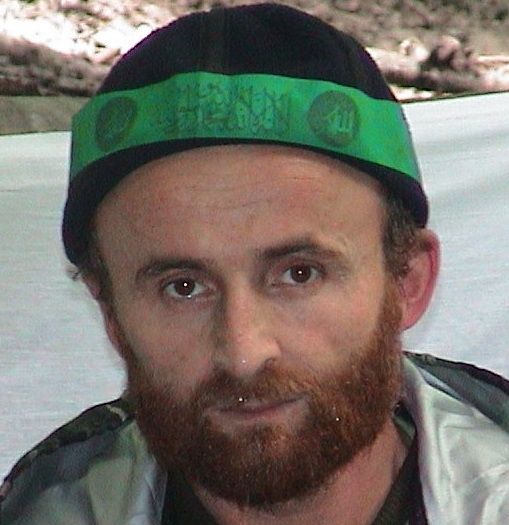
With the advent of Glasnost and the easing of censorship, Abdullaev was able to devote himself openly to religious propaganda, teaching in local madrasas, acquiring contacts throughout the Eastern Caucasus, and eventually participating in the creation of the Islamic Revival Party, the first explicitly confessional political movement in the Soviet Union. His social activism took the form of participation in the activities of the Ar-Risalya Islamic center in Grozny, where he began teaching Islamic doctrine and law, achieving the honorary title of Ustaz (Teacher). He eventually became director of the center and, in this capacity, supported the Chechen Revolution, the proclamation of independence, and the rise of Dzhokhar Dudaev to the presidency of the republic. He differed from most other teachers, who struggled to express themselves in Russian, in his almost complete lack of accent and a style of speech that would have been the envy of a university professor. He had a long red beard that reached down to his waist (hence the nickname “Supjan the Red”).
Supyan ran the Islamic center until 1994, when the Russian army entered Chechnya with the aim of reconquering the small republic. On November 26, 1994, a contingent of anti-Dudaev militiamen, mercenaries, and undercover Russian soldiers attempted to overthrow Dudaev by attacking Grozny. Abdulaev enlisted in a village militia and took part in the fighting that saw the attackers destroyed and put to flight. The group of volunteers to which Supyan belonged engaged the attackers at the Press House. According to some, it was in that battle that people first began to talk about the “Islamic Battalion.” Supyan’s bravery during the battle earned him the position of deputy commander of the battalion, a unit that would fight with honor throughout the First Chechen War (for more information, read “Freedom or Death! History of the Chechen Republic of Ichkeria,” available HERE).
Supyan took part in Operation Jihad, the action with which the independence fighters recaptured the capital, putting the Russian army in check and forcing Moscow to withdraw from Chechnya. During the battle, he commanded several assault groups against the FSB headquarters, the “Government Palace,” the Dinamo Stadium, and other sensitive targets. For his role, he was apparently appointed ‘Brigadier General’ (a mainly honorary title, which would become rather inflated in the following years).
Islam and War
Maskhadov’s rise to power, democratically elected by the overwhelming majority of Chechens in 1997, saw Supyan align himself with the so-called “Radicals,” whose main exponent was Shamil Basayev. In the distribution of posts, seeking to please the radicals, Maskhadov appointed him Deputy Minister of Sharia for State Security, with the task of working on the ideological and religious training of officials. With the proclamation of full Sharia law (1999), Supyan’s role (recognized as one of the leading exponents of radical Islam in Chechnya alongside Movladi Ugudov) in the training of state officials grew significantly, as the Chechen legal system had no background in religious law. Thus, the few scholars available became ‘experts’ in Islamic law, even though they often lacked even a basic knowledge of the subject.
In any case, the formation of the ‘Islamised’ Chechen ruling class was soon brought to an end when Russia invaded Chechnya again at the end of 1999. Abdullaev quickly became a key figure, not only because he reconstituted his unit (renamed the ‘Jundullah’ Brigade) at the outbreak of the war, but also because, as a radical figure not only in politics but also in religion, he had access to the richest sources of foreign funding, coming from Wahhabi Islamic associations, which were happy to finance the jihad while ignoring any interest on the part of the moderate political and religious current of the Chechen government, of which Maskhadov was the expression.
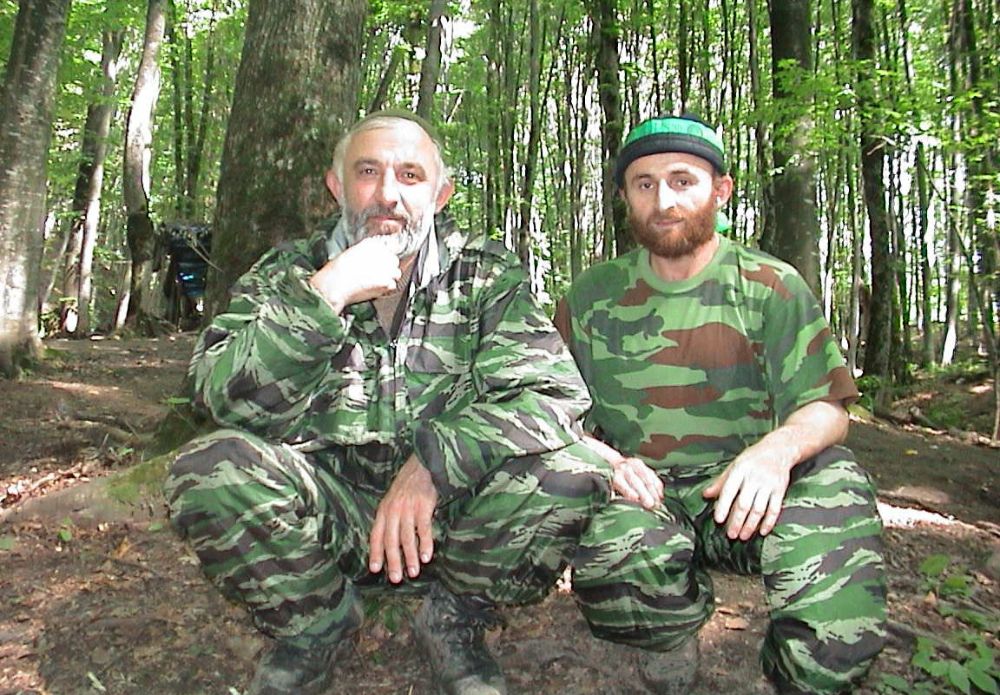
During the Second Russian-Chechen War, Abdullaev first commanded the Jundullah Brigade as second-in-command, then as commander, earning himself a place in the political-military council of the Chechen resistance[1], the Majilis-Al-Shura (successor to the Committee for the Defense of the State at the head of the Republic). After taking command of the Eastern Front of the war theater (2003) centered in the territories of Vedeno and Shali (where he was wounded several times in combat[2]), on July 5, 2004, he was appointed Minister of Finance of the war government, with the aim of raising the necessary funds to continue operations and distribute them to units in the field. His work was appreciated, if it is true that Maskhadov’s successor, Sadulayev, confirmed him in his position. Among the fighters, Supyan gained the goodwill of his comrades, earning the respect of all. Despite his advanced age compared to the other commanders, he actively participated in operations and war councils, and was known for his austere religious discipline, moral authority, and charisma among the fighters.
The Emirate
On March 3, 2007, he was appointed Vice President of the Chechen Republic of Ichkeria by Dokka Umarov, a position he held until the founding of the Emirate of the Caucasus on October 7, 2007. He joined the new formation, formally abandoning the state structures of the ChRI, and took on the role of “Naib” (political successor) to the former President, now “Emir,” Umarov. When, in June 2009, unconfirmed information emerged about the alleged death of Doku Umarov, Akhmed Zakayev expressed the opinion that his closest associate, Supyan Abdullayev, would most likely become his successor. Within the Caucasus Emirate, Supyan Abdullaev maintained a leading role as Dokka Umarov’s deputy, being the de facto number two in the movement. For this reason, the Russian authorities tried in every way to capture or kill him, even arresting his son, Masud, then 22, who was deported from Egypt to Russia. Nevertheless, Supyan did not give in to blackmail and did not surrender.
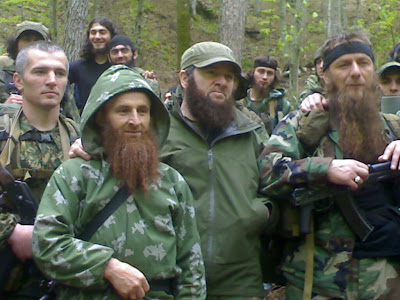
He was considered the most influential of the Salafi ideologues and acted as a liaison between the various Wilayat (provinces) of the new Emirate. As an educator, he oversaw the religious and ideological training of new militants in mountain training camps. He carried out this task until March 28, 2011, when, during a raid by Russian special forces in the village of Verkhny Alkun, in the Sunzha district, the Russians hunted him down and killed him. The operation was aimed at preventing a meeting between Umarov and his staff. According to some, Umarov managed to escape, while Abdullaev was killed in a heavy air strike, following which he and several others
[1] His radio call signs were “Red Supyan” and “Chitok.”
[2] In January 2006, information appeared about Abdullaev’s elimination following a special operation in the district of Shali in Chechnya. This information was later denied, as it was his youngest nephew, field commander Adam Abdullaev, who was killed. Two other field commanders were killed along with him.
 Ichkeria Digital Archive