Archivi tag: Aset Sabdulaeva

Fighting for a new “August 6”: Francesco Benedetti interviews Aset Sabdulaeva (Part II of “Ichkeria Generation”)

You told me that you moved to Canada in 2004. Where did you go to live?  Has the Canadian government helped you find accommodation and a form of livelihood?

Given the fact that our files were accepted by Canadian immigration authorities, we received the permanent residence cards right away when we landed in the Canadian airport. We landed in Halifax. Two weeks later upon our arrival, we moved to Québec because my mother knew Canadian filmmaker Helen Doyle. Helen was working on a documentary movie about my mother that was released in 2008. The name of the documentary is Birlyant, a chechen story.

When we arrived in Canada, the government gave us 4 000 cad$. But we had to pay back to the government the amount for plane tickets. We rented an apartment, and I was enrolled into a special language class, classe d’accueil.

The first time, I must admit, was very difficult. We had to start everything from zero. I didn’t have friends at school, I didn’t speak French at all. The first week of school, I had a conflict with one Russian guy, Maxim, who used to call me a “terrorist” every time he passed in the corridor during break-time. I went to complain to the director of the school. Later, my sister and my mother came – he stopped his verbal harassment. Even now, when I think about this guy, I feel awkward.

I spent 2 years in classe d’accueil, then I was transferred into regular class. It was very hard to study the French language. When I finally graduated from school and then from Cegep (French collage), I started to appreciate my years in university. I met wonderful people and wonderful professors.

Was Canadian society aware of what was happening in Chechnya? How did people you know react to your situation? Have you found people’s willingness to support you in your integration journey?

Canadian society was aware of what was happening in Chechnya. For example, in daily free journals “Metro” that were distributed every morning in the subway and in public buses to people, I often read short articles about Chechnya. However, I didn’t see any concrete steps made by Canadian society or the Canadian government to help Chechnya. Canadian society had a distant look on everything. Even now, Canadians think that their “far away” geography will protect them from any threat. They seem to lack understanding in geopolitics.

Canada has a history of immigration. It has organizations that deal with immigrants. There are government programs that grant social housing and social aid. People are generally open to immigrants, and they react to immigration as a normal process. The filmmaker, Helen, who knew my mom helped us. She and her husband helped me to get enrolled into a very good high school. I’m grateful to them. Apart from them, no one. My family dealt with everything on its own.

When did you start to feel the need to engage in politics, serving the cause of Chechen independence?

I was always on the side of Ichkeria. However, I started to actively take part in politicssince 2022, the year when Russia illegally invaded Ukraine.

The result of the war in Ukraine will change the balance of power in Eastern Europe. When Russia loses this war, it will be the end of the Russian Empire and the beginning of decolonization of captive nations. Without concrete changes in the center of the Empire, the Chechen Republic won’t be able to reestablish its democratic state because our people don’t have enough resources and capabilities for that. But our government can support Ukraine and is supporting Ukraine in all possible terms and that will help the process of disintegration of the Russian Empire. I want to contribute to the process of de-occupation of my motherland and disintegration of the Russian Empire and that is why I’m motivated to work for the government of Ichkeria.

Also, I know that the truth is on our side. The Chechen government of Ichkeria in exile is defending the legitimate right to self-determination of our people. The Chechen people already made a choice to build a sovereign country, and this choice was democratically articulated in the referendum in 1990. When the USSR made legislative reforms recognizing the right to self-determination of peoples, the Supreme Soviet of Checheno-Ingush republic adopted the Declaration of State Sovereignty on 27 November 1990. Our sovereignty was proclaimed in full accordance with USSR laws and with norms and principles of international law.  The statehood of the Chechen Republic of Ichkeria is crystally clear and undoubtedly legitimate. The legitimacy of our state was further reinforced, when the Russian Federation and Chechen Republic of Ichkeria concluded the Peace Treaty in 1997 where both parties were designated as subjects of international law. The Peace Treaty is published on the official website of the United Nations (UN).

If I had any doubt about the legitimate struggle of our people, I would step down right away. Our land is occupied, our people are being held hostage by the Russian Empire that until today keeps over 100 000 Russian soldiers on chechen soil. The way Chechen people are treated is completely unjust and unacceptable and that is why I find it  is important to defend our country, people and freedom.

What benefits do you think the deployment of ChRI armed forces alongside Ukrainian fighters can bring to the cause of independent Chechnya? And how can the Chechen diaspora in the West support their action?

The Armed Forces of Chechen Republic of Ichkeria play a key role in our resistance and they are fighting not only for Ukrainian victory and for the legitimate right to self-determination of Chechen people, but they are also fighting for the peace and security in Eastern Europe.

Russia threatens international security and is trying to destroy a sovereign Ukrainian state, Ukrainian identity, language and culture. If Russia is not stopped in Ukraine, it will expand its boundaries to other European countries. If Hitler was not stopped in 1945, the world would be dominated by fascism. If Putin is not stopped in Ukraine, Russian chauvinism, that Djokhar Dudaev called russism, will reach other European countries. Lenin wanted to build a Soviet Empire where communism was the absolute ideal and where all captive nations were insignificant subjects all fused into a one big Russian nation. Putin wants to keep this Empire but replace communism with russism and exploit captive nations and their territories the same way as Soviets did.

The fact that Chechen armed forces are fighting alongside Ukrainian fighters sends a powerful message to the world: the Chechen resistance is still alive and Chechens defend Ukraine to help Ukrainian people to defeat the Russian Empire that is threatening international security. The Ukrainian Army is training our troops with high military technology. Ukraine is helping our army to update war skills, use advanced military technology and increase expertise. The Chechen Army is becoming more efficient. Our Army is paving the way for the de-occupation of Ichkeria.

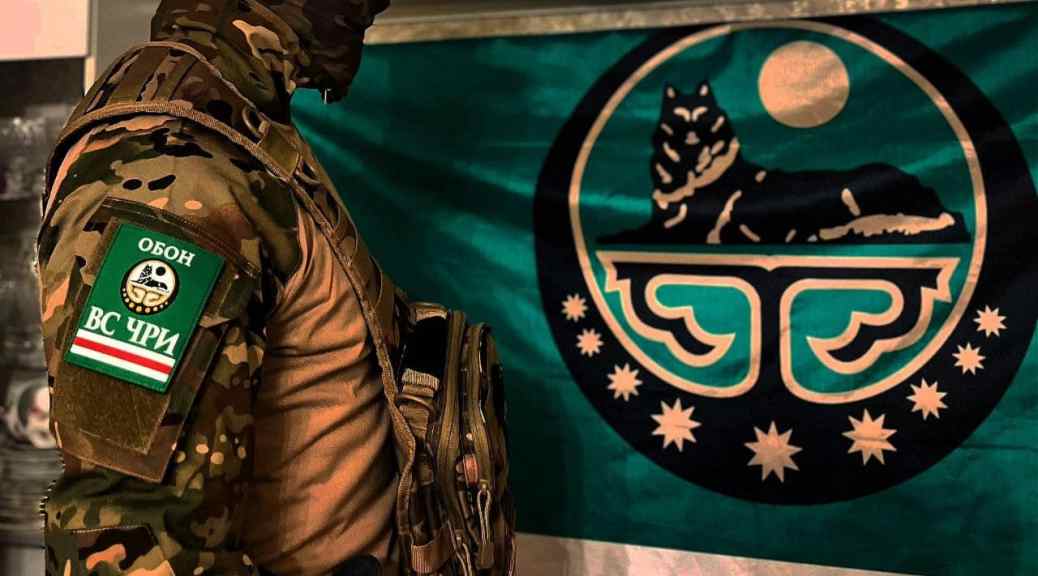
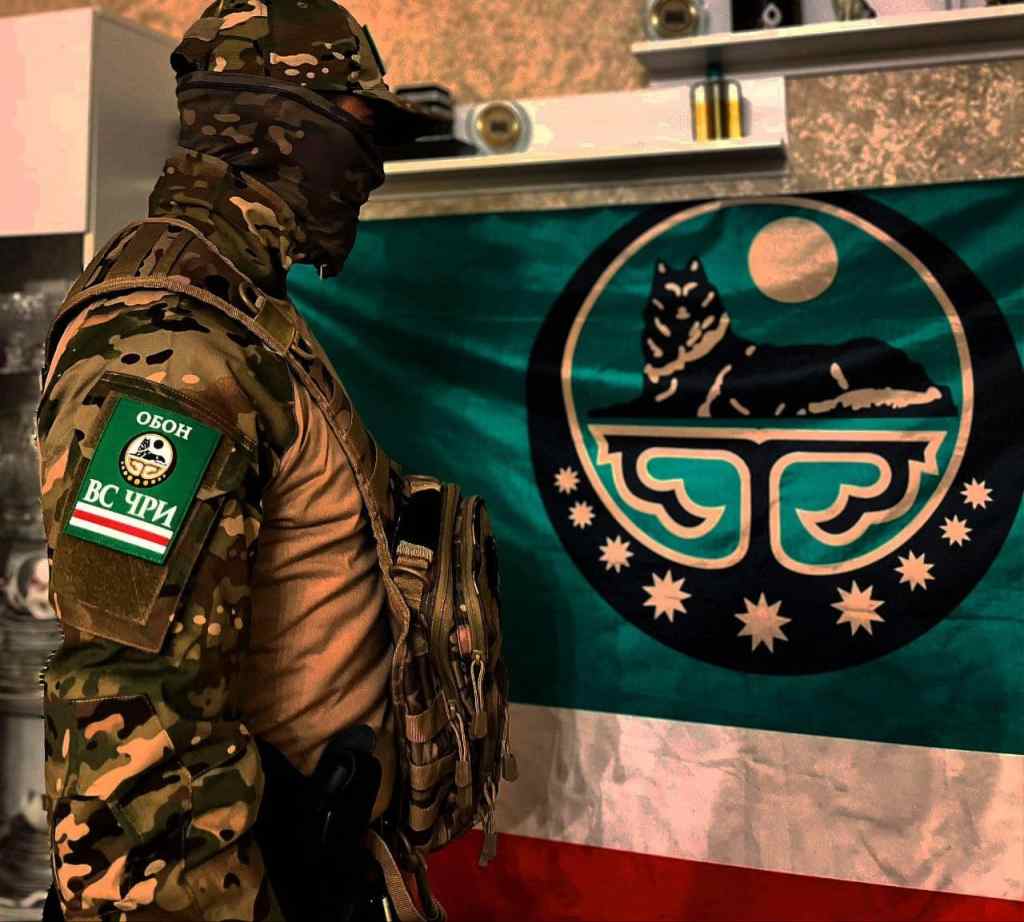
The Armed Forces of Chechen Republic of Ichkeria consist of very brave men that love freedom. Most of the soldiers in our Armed Forces belong to my generation (born in 1990 +). They are doing the best they can to liberate our motherland, to stop the Russian Empire, to help Ukraine and establish peace and security in Eastern Europe. I truly admire them the same way I admire those who defended and liberated Grozny on 6 august 1996.

The chechen diaspora can do a lot of things to help our army. The first and very important thing is to raise awareness about our troops because most people in the West know about Kadyrovtsy, russian puppets fighting within Russian Army against Ukraine, but do not know much about the Armed Forces of the Chechen Republic of Ichkeria. The diaspora should be more open to speak about our army, about our state, about our national tragedy. Also, I find that it is important to give moral support to our troops that are sacrificing their lives for the better future of our nation. Lastly, financial aid is crucial because military and transportation equipment costs money and this equipment is necessary for efficient warfare.
What activities do you mainly do in Canada, in support of Chechen independence? And what are the main problems of the Chechen diaspora in the West?

My role as a Vice Minister of Foreign Affairs is to connect with different people and politicians, seek their support and talk to them about Chechnya. We need diplomatic support from Western countries. On 18 October 2022, Verkhovna Rada of Ukraine recognized that Chechen Republic of Ichkeria is a territory temporarily occupied by Russia. The main goal of our foreign policy is to find support from Western Countries and invite them to follow the example of Ukraine and recognize the occupation of the Chechen State.

The major problem of our diaspora is the lack of expression of political will. The fear of denouncing injustice, oppression and Russian occupation is  justifiable. We all have relatives in Chechnya. When Chechens express political opinions and speak against the Russian regime, the puppets of the Russian administration, kadyrovtsy, kidnap or kill relatives. Fear I think is the biggest problem. Yet, the truth is that if we want to change the status- quo of our occupied State, we must rise here, in the West.

What activities can the Chechen diaspora in the West do to influence Western society and governments, in your opinion?

The best thing that the diaspora can do is support its local Chechen leaders that are trying to get into local governments. The involvement of our local leaders into governments will help us to make hear our voices within western political establishments. For instance, soon there will be elections in Austria. We have a Chechen candidate running for a deputy office. His name is Laziz Vagaev. I’ve listened to his videos. He is highly educated person.  It is an excellent opportunity for Chechens to elect a local leader that will represent them and be capable of making hear our voice in Austrian parlement.

Last year, Chechen diaspora in Belgium had a chance to vote for a Chechen candidate. Unfortunately, our diaspora didn’t participate much in elections. Our people should support local Chechen candidates and vote for them.

Some Chechens say that one of the main risks for Chechens living abroad is Islamic radicalism, and that the government is not doing enough to distance itself from this phenomenon. Do you agree that Chechens in Europe and America are at risk of radicalization? And what is your position as a member of the government on this issue?

I disagree with this statement. Our government  is a democratic government and the rule of law is a core principle of our state.

The Russian intelligence agency (FSB) tries to drag some Chechens into radicalism, but our government is working on this problem, together with European governmental institutions. Chechens have a lot of educated and talented young people who live, work and study in Western schools, universities and companies. So I do not think that radicalization is a major problem.

It is true that we do not share the aggressive secularism of some Chechen social activists, but it does not mean that we support radicalism. Democracy gives a person the opportunity to live according to laws adopted by the majority of society. Democracy is not new to Chechen culture; it is part of our culture, and we inherited it since the 16th and 17th centuries. Chechen people lived in democracy, and we didn’t have any monarchs or social classes.  While other European nations were subjects of monarchs that had absolute power over them, Chechens lived in mountains on equal terms, with equal rights and elected the executive Council of Elders. French writer Ernest Chantre writes about this in his book “Recherches Antropologiques: Le Caucase ” (1886).

Therefore, democratic principles exist in the Chechen cultural code. But some pseudo-democrats who live today in European countries are trying to replace democracy with liberalism. Democracy is a form of government that is the basis of Chechen statehood. These individuals do not make any distinction between liberal ideology and democracy. As you know, in Europe there are a lot of political parties that build their programs/manifesto on  Christian values and ethics.

The Christian Democratic parties exist throughout the world. These parties successfully operate in Belgium, Germany, Great Britain, Italy, etc. The European People’s Party (Christian Democrats) won the elections to the European Parliament. This is normal in democracy. There is an insignificant minority of Chechen society that has not yet really understood democratic principles and is trying to impose strict secularism on the state and people. Their opinion is marginal not only for the Chechen people, but also for most European democratic countries.

How does the government act to keep the attention of the Chechen diaspora around the world on its activities?

Our government is transparent. We inform our diaspora about all the work we do through media resources such as Ichkeria News YouTube channel and the official government’s website www.thechechenpress.com. Also, we have the Council of Elders in Europe and official representation offices that keep close ties with local communities in different countries. 

And it is true that we do not force anything on anyone because we believe that to serve our state is a matter of honor, dignity and free choice.

ICHKERIA GENERATION – Francesco Benedetti interviews Aset Sabdulaeva (part 1)

Aset Sabdulaeva was born in 1991 in Grozny. Her mother is the People’s Artist of Chechen Republic of Ichkeria, Birlyant Ramzaeva. She composed music for many famous Chechen songs « The Knight of Honour », « The time of Heros », « Don’t leave the mountains ». Her father is poet and playwright Makkal Sabdulaev. He is the author of lyrics of most of Ramzaeva’s songs. He also wrote famous theatrical play « Rejected heroes » (Махкана совбевлла к1ентий). From 1996-2000 he worked as the 1st Deputy minister of Culture of CRI. In 2000, Sabdulaev was abducted by russian soldiers in Grozny on a checkpoint. He is considered missing.

Aset lives in Canada, where she arrived when she was 13 years old, in 2004. Aset has a BA in education and she is currently completing MA in education. Aset holds the position of Vice-Minister of Foreign Affairs of Chechen Republic of Ichkeria.

We can say that you belong to a generation that we could define as the “Ichkeria Generation”, that is, those kids who were born close to independence, and who became adults during the period of independent Chechnya. The first question I would like to ask you is: what is the first memory you associate with “being Chechen”? Do you remember how you became aware of who you were, as a member of the Chechen nation? And what feeling did you associate with this thought?

I was raised on the songs of my mother and on the poems of my father that always praised freedom, honor, dignity, good manners, our culture, our native language, our struggle for independence, our heroes and the tragic history of our people.

 The Chechen identity was constructed in me by the art of my parents. Since my childhood, I was aware of who I am. I was three years old, in 1994, when on the Eve of the First Russo-Chechen war, huge demonstrations took place on the Liberty Square. The Chechen people were asking Russians to stop the aggression and provocations against the Chechen state. People used to invite my mother to sing for them at the demonstrations on Liberty Square and she took me with her. My people have gone through horrors and injustice, two bloody wars, genocide and isolation. Chechens defended themselves although they were abandoned by the entire world and thrown in the claws of Yeltsin and Putin. But our spirit never surrendered to Russia. The history of my people taught me that no matter how big the conqueror is, we always have to resist. Today, Chechnya is under Russian occupation and my people are living under Putin’s dictatorship, yet, we continue to resist.

Thanks for your answer, Aset, which in a way anticipates my second question.  You were just a child when Russia invaded Chechnya.  What do you remember about those terrible times?  How did you experience the years of occupation as a child?

I remember a lot of things. In 1994, Yeltsin started a full land and air attack against the Independent Chechen State. During the bombing, my mother, my sister and I used to hide in the shelter (basement of our house). My mother played Pondar (chechen accordion) very loud, so that my sister and I couldn’t hear Russian military planes and irritating sounds of missiles. My father never came to the shelter. He always stayed either upstairs or outside. 

 I remember that one day a group of Chechen warriors were walking on our street, very brave and humble men. They knocked on our door and asked for water. They seemed to be exhausted because it was the moment when Grozny was surrounded by Russians. My mother invited the entire group to our yard, prepared some food and she played our national anthem. Our warriors were smiling. But they didn’t eat anything. They just drank water and left, smiling. I will never forget these beautiful faces.

I also remember ruins. The entire city was in ruins. The doors of our house were with bullet holes. I remember our dog Borzik. It was a huge white dog. Very kind and friendly dog. Everytime it heard Russian helicopters or missiles, Borzik used to run in my sister’s room and hide under the bed. When helicopters left, we always had a hard time getting Borzik out of the room because it was too big and refused to move.

Thank you, Aset. Then the war ended with the escape of the Russians in August 1996. Do you remember those days? What did they say in your family?

When the Chechen government and Russian government signed the Khasavyurt Accord in 1996 marking the end of the first Russo-Chechen war, it was a huge celebration for our people. My parents were very happy because it meant the end of a nightmare. Our nation elected in fair and democratic elections the third President Aslan Maskhadov and we truly thought that we will finally start building our prosperous state. After the victory in the unequal struggle for freedom, Chechens gained popularity in Russian public opinion and in the world. We were perceived as heroes. However, things changed when Putin got appointed as the head of the KGB in Moscow. The entire KDG machine was directed to destroy our state, our society and our reputation. The KGB’s aim was to destroy the image of Chechen heroes.

Putin opened doors for so-called middle eastern “investors” and facilitated their arrival to Chechnya through Moscow. These emissaries from the Middle East brought a lot of money and invested it in the opposition movements that were against our government. This opposition was mainly led by Movladi Udugov and his ideological comrades from Arab countries spreading fundamentalist religious beliefs that were in complete discord with the Chechen culture and adats (customs). On the other hand, Akhmad-Hadji Kadyrov, who was appointed as Chechen mufti (main imam), praised traditional Islam that was in opposition to Udugov’s “pure Islam”. These two religious individuals preached their versions of Islam on TV channels. Their destructive teachings divided Chechen society that was already in a very miserable economic situation. Both Udugov and Kadyrov were working for Russian intelligence, and they aimed to destroy our state and divide our people. They were financed by Russia. I’ve read a lot of things about these events in the book of Akhmed Zakaev, “Subjugate or Exterminate” published by Washington Press. Also, it is very important to note that these Arab emissaries, under the umbrella of Russian intelligence, were directly involved in kidnappings of civilians, international aid workers, journalists and engineers. For example, the person who kidnaped British engineers Apti Abitaev, was a KGB agent, and our government arrested them. The person who initiated “fatwa” (ruling) to behead these poor British engineers was Abu Djunid, an Arab emissary. This barbaric murder of British engineers was a triumph for Russian intelligence. It succeeded in sending the message to the world that Chechens were criminals and kidnappers. Yet, the Chechen people had nothing to do with these criminal acts. Also, on 23 July 1998, an attempt was made to assassinate our President Maskhadov by blowing up the truck close to Maskhadov’s car. Two security officers of Maskhadov were killed. Later, our government found out that the “fatwa” (ruling) to kill our legitimately and democratically elected president Maskhadov was made by the same Abu Djunid, an Arab emissary that was in very close ties with Udugov.

 Indeed, I think that the period from 1996-1999, was a very difficult time for our State. But not because our government was incompetent, as some individuals claim, but because we were in complete economic/political blockade and our enemy was unproportionally powerful and malicious. Every state at the beginning of its statehood goes through difficulties. For instance, Georgia went through political turmoil at the beginning of its existence. Unlike Georgia, Chechnya was in complete blockade with no access to any political support from the West. Therefore, Russia crushed our state in the worst manner. Zakaev makes a very good point in his book about the situation in Chechnya during that period: “Crime, the gradual impoverishment of population, corruption within the government, the economic crisis, all were due mainly, of course, to Russia’s failure to honor its obligations to restore the republic’s economic infrastructure, destroyed in a war it had unleashed. Ultimately, however, in the eyes of the public the person to blame for all our troubles and economic difficulties was President Aslan Maskhadov” (2018, p.346) Russia kept us in economic blockage, infiltrated her agents from Middle East, injected Wahhabi religious ideology that was alien to us, divided our society, discredited our government, destroyed our reputation and, later, perpetrated genocide against our people.

Aset Sabdulaeva with hes mother and her father

About the end of the first war, and the feelings you felt among your family.  Was there a particular commander among those who fought for independence who was considered a hero, or a greater hero than the others?  Did little Aset have a Chechen hero who made her proud?

I remember when my mom used to take me to a demonstration, older women sang songs “zikr” (traditional style music with lyrics) praising Djokhar Dudaev, Aslan Maskhadov and Ahmed Zakaev. As a child, I didn’t have a particular admiration for a specific commander. I admired all our warriors. However, when I started to grow up and to be more conscious, I understood the real value of our heroes. I love Djokhar Dudaev because he left a legacy to our nation, I deeply respect Zelimkhan Yandarbiev because he behaved in a beautiful manner in Kremlin when Yeltsin refused to sit around the table on equal terms; Zelimkhan wrote beautiful poems in Chechen language that I enjoy reading. I appreciate Aslan Maskhadov because he was a true diplomat and is the leader that signed the Peace Treaty with the Russian Federation in May 1997. I admire Abdulhalim Sadulaev because he was a very wise leader. I truly appreciate Akhmed Zakaev because he left treasure to our nation in terms of two books that he wrote. He is the witness of all historical and political processes that occurred in Chechnya. I admire them all. They dedicated their lives, so that we can be free. In the bottom of my heart, of course, my eternal hero is my father, Makkhal. He believed in freedom and justice. He wanted to build an independent and democratic state. I became who I am, because of him.

Thinking about your father, how did you feel knowing that he was participating in building the independent state that Chechens had long desired? Were your family members proud of him, or was their fear that something bad might happen to him prevail?

I felt very happy actually. After school, I used to go to the Ministry, where my father worked as 1st Deputy Minister of Culture, and run all over it. I ran and jumped so much that sometimes the workers of the Ministry complained to my father. When he brought me home, he used to talk to me for a long time explaining how important it is to behave in a good manner.  My family members were proud of my father. I remember when he came back from work, he spent hours and hours writing articles, reports and projects. Given the fact that our Republic was in complete economic blockade and Russia didn’t pay the reparations for all the damage it had done in Chechnya, Chechen government lacked funds, and it could not pay salaries to its workers. I still have my father’s certificate where it’s written that the government owes him 18 000 rubles in salary for 6 months of work. He worked for the well-being of our country because he knew that to nourish national self-conscience in young people, it’s important to elevate the culture, teach the Chechen language in schools, promote Chechen folk music, publish Chechen literature, encourage young artists and writers to write in Chechen language and share the history of our people through poems and plays.  My father opposed all radical elements infiltrated in our society by Russian intelligence. These elements retarded the development of our state.

When the second war started in Chechnya, in 1999, the Ministry of Culture stopped functioning, so my father joined Aslan Maskhadov’s media team, and he was reporting all atrocities that were perpetrated by Russians in Chechnya. He knew that it was becoming very dangerous for him to stay there. Three days before his capture, he called my mother, who was at that time in Georgia. She asked him to leave Chechnya. He refused and said: “What is happening here is a genocide. I can’t leave.” One day before his capture, his friend Dalkhan Hojaev, a chechen historian was captured by Russians and killed. The next day, they took my father when he was crossing a Russian check- point (block-post).  My father disappeared without a trace. When my mother learned that my father was captured, she returned to Chechnya in hope to find him. One of the Russian generals told her that my father was taken to Khankala, a russian military base where russian soldiers tortured and killed chechen civilians.

Do you remember any activities organized by the Ministry for the Promotion of Culture during the interwar period?

I remember that on every 6th September, the Independence Day of Chechnya, the Ministry of Culture, under my father’s supervision, used to organize big concerts in Dinamo Stadium. He also initiated a plan to repair all our libraries and update the collection of books.   Under his supervision, our Ministry organized the competition of folk performers (singers and instrumentalists) in all villages and at the end of competition, the best folk performers were gathered in Grozny and they performed on a Gala Concert where they received special prices.

What happened after you heard of your father’s passing? Did your mother decide to take you to the West?

In 2000, my father insisted that we (my mother, my sister and me) go to Georgia. We were refugees in Georgia. In July, the same year, my father was kidnapped. When my mother learned that my father was captured, she returned to Chechnya and started searching for him everywhere, even in mass graves. At that time, it was possible to pay a bribe to Russian soldiers, they gave access to the mass grave. My mother appealed to every possible instance. Yet, she couldn’t find him. In 2002, she left Chechnya because Russians came to our house looking for her. She managed to escape through the backyard and hide in a neighbor’s house. Russians didn’t like that she was determined and eager to find out where my father was and she gathered too much attention. She had no choice but to leave Chechnya.

We stayed in Georgia until 2004. In 2004, Canada opened a program in Georgia for accepting chechen refugees through UNHCR. We applied for immigration, passed an interview and Canada accepted our file.  We left Georgia.

What do you remember about your time in Georgia? What was that life like, from the eyes of a little girl?

When we arrived in Georgia, we were afraid to say that we are Chechens because Russia spread horrible propaganda about Chechen people and the entire nation was demonized and presented on most Russian TV channels as terrorists and bandits.

The second problem was that I didn’t go to school for almost two years because of war. As a kid, in my learning process, I was getting behind the children of my age. My sister had to enroll me in school as soon as possible. At that time, we didn’t have official papers recognizing us as refugees in Georgia.  She approached one teacher in the school #44 in Tbilisi, on the mount Mtacminda, and talked to her about my case.  Gora Alexandrovna (teacher) agreed to take me in her class without any hesitation, although we didn’t have papers. The director of the school, Nana, approved my admission right away, and I was enrolled in 3d grade.  I remember Georgia as a country with very hospitable and kind people. Certainly, I remember all my teachers. They helped me so much to catch other kids. Gora Alexandrovna,Tamara Iradionovna, Nana Mas, Greta Stepanovna, Viola Mas, they were Georgian and Armenians, they taught me even during summer.

When we came to Georgia, President Shevardnadze was still in power. The country was poor and suffocating in corruption and bribery. Shervarnadze was a good friend of Putin. I remember 13 Chechens were deported to Moscow. It was an unjust decision made by Shevardnazde to deport our men. He knew that Putin is conducting an illegal war in Chechnya and that our people are suffering from this barbaric aggression. When Russians completed their mission in Chechnya, they came to Georgia in 2008 and annexed Georgian territories.

 I also remember that my sister and I participated at the demonstrations during the Rose Revolution to support Mikhail Saakashvili. I noticed that when Georgian people are fed up, they mobilize quite quickly and express their political will. As time passed, it was difficult to live in Georgia. My family couldn’t afford living there. We had to leave.