
THE EVOLUTION OF CHECHEN STATEHOOD — PART I
The Chechen Revolution of 1991 represented a radical break with Soviet political authority, but not necessarily with Soviet institutional culture. The emerging independent republic inherited much of the administrative experience of its Soviet predecessor, while also appearing to adopt organisational models that were taking shape in Moscow during the final years of the USSR.
The Soviet institutional legacy
When the movement for Chechen independence emerged in the late 1980s, it did not develop in an institutional vacuum.
Restored in 1957 following the deportation of the Chechen and Ingush peoples, the Chechen-Ingush Autonomous Soviet Socialist Republic possessed a relatively sophisticated administrative apparatus within the Russian Soviet Federative Socialist Republic.
Its Constitution, adopted on 26 May 1978, established a Supreme Soviet, a Presidium, a Council of Ministers, a Supreme Court, ministries, state committees and local administrative bodies. Political authority, however, remained concentrated within the regional organisation of the Communist Party.
Although the autonomous republic lacked the constitutional right of secession enjoyed by the Union republics, it possessed many of the organisational structures associated with statehood.
Decades of Soviet administration had also produced a class of local officials, administrators, engineers, economists and legal professionals whose experience would become an important resource in the construction of the independent republic.
Two paths towards sovereignty
The reforms introduced by Mikhail Gorbachev progressively undermined the political monopoly of the Communist Party and opened the way to competing projects of national sovereignty.
In July 1989, Doku Zavgayev became First Secretary of the regional Communist Party. In March 1990, he was elected Chairman of the Supreme Soviet, bringing the two principal centres of republican political authority under his leadership.
Under Zavgayev, the existing institutions attempted to redefine the republic’s relationship with Moscow.
On 27 November 1990, the Supreme Soviet adopted the Declaration of State Sovereignty of the Chechen-Ingush Republic, asserting its political authority and expressing the ambition to establish a democratic state governed by law.
Meanwhile, an alternative centre of political representation had emerged.
Between 23 and 25 November 1990, the First Chechen National Congress assembled in Grozny. Its delegates established an Executive Committee, chaired by Soviet Air Force General Dzhokhar Dudayev.
Two competing institutional projects were thus taking shape: one sought to transform the existing Chechen-Ingush Republic through its constitutional institutions; the other increasingly sought to establish a sovereign Chechen state through a national constituent process.
The Ispolkom: from national movement to revolutionary authority
The Executive Committee of the Chechen National Congress was commonly known by its Russian abbreviation, Ispolkom.
The term was deeply rooted in Soviet administrative language, where it traditionally designated the executive committees of local Soviets. Its adoption by the Chechen national movement illustrates how revolutionary organisations could reproduce institutional forms inherited from the political system they were challenging.
The Congress developed a permanent leadership, a Presidium, specialised committees and territorial organisations. Some of these bodies progressively assumed responsibilities extending beyond political mobilisation.
During its second session, on 8–9 June 1991, the organisation became known as the All-National Congress of the Chechen People (OKChN).
The Congress proclaimed the Chechen Republic of Nokhchichö and challenged the authority of the existing Soviet institutions. Its Executive Committee was entrusted with responsibilities relating to the establishment of a new political and administrative order.
The Ispolkom was becoming more than the executive body of a national movement. It was emerging as a competing authority claiming the right to organise the future state.
Several of its leading members, including Yusup Soslambekov, Zelimkhan Yandarbiev, Hussein Akhmadov and Movladi Udugov, would subsequently occupy important positions within the independent republic.
The institutional transition of September 1991
The failed Soviet coup of August 1991 accelerated the collapse of the existing political order in Grozny.
Following the confrontation between the national movement and the republican authorities, the Supreme Soviet dissolved itself on 15 September. A Provisional Supreme Council was established, initially under the chairmanship of Hussein Akhmadov.
This transitional arrangement attempted to reconcile the institutional legacy of the former Supreme Soviet with the revolutionary legitimacy claimed by the National Congress.
The Ispolkom’s resolution of 17 September 1991 is particularly revealing. While asserting the authority of the national movement, it recognised the temporary legislative functions of the Provisional Supreme Council and allowed the continued application of existing legislation insofar as it was compatible with the sovereignty claimed by the republic.
The revolution was therefore accompanied by a degree of legal and administrative continuity.
At the same time, the Ingush national movement pursued its own institutional future within Russia, progressively bringing the common Chechen-Ingush political framework to an end.
Independence and institutional emulation
The emerging Chechen state did not merely inherit the institutions of the former autonomous republic. It also appears to have drawn inspiration from the new organisational models being developed elsewhere in the disintegrating Soviet Union.
One particularly revealing example was the Committee for the Operational Management of the National Economy, known by its Russian abbreviation, KOUNKh.
In Moscow, a committee bearing the same name was entrusted in September 1991 with the economic and social administrative responsibilities previously exercised by the Soviet Cabinet of Ministers.
In Chechnya, a corresponding body headed by Yaragi Mamodayev performed transitional governmental functions. Following the presidential and parliamentary elections, Dudayev confirmed the committee’s administrative role in November 1991, pending the establishment of a more permanent executive structure.
The parallel is striking.
Other developments, including the emergence of the presidency as the central institution of executive authority, similarly reflected transformations taking place across the Soviet and post-Soviet political space.
These institutional similarities do not necessarily demonstrate direct imitation in every individual case. They do, however, reveal the extent to which the political elites emerging from the Soviet system continued to share a common administrative language and organisational experience.
A new state built upon familiar foundations
On 27 October 1991, presidential and parliamentary elections were held in Chechnya. Dzhokhar Dudayev was declared elected President, although the legitimacy of the elections was disputed by the Russian authorities and domestic opponents.
On 1 November, Dudayev issued his decree proclaiming the state sovereignty of the Chechen Republic, marking its assertion of independence.
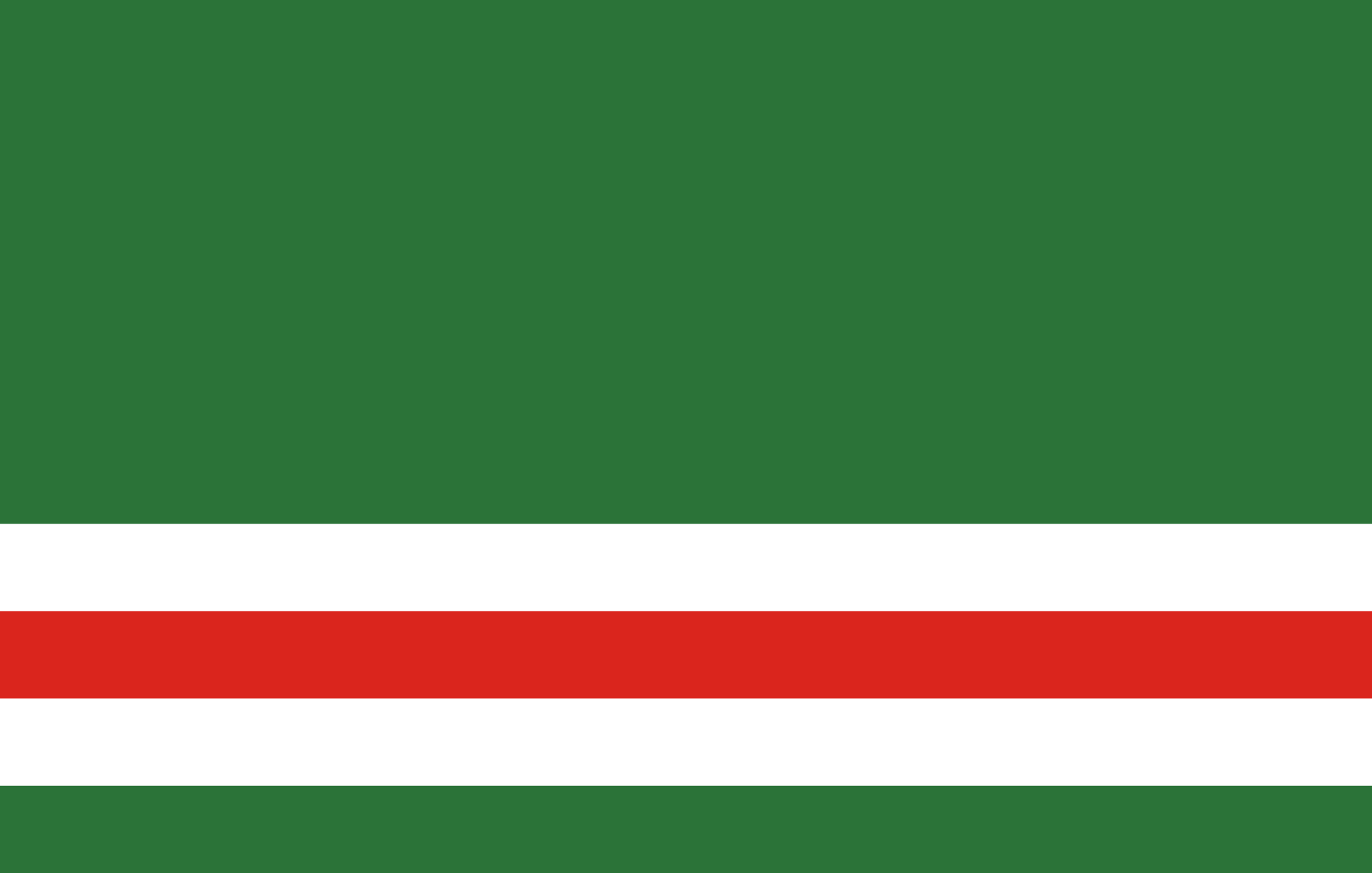
The revolution had brought a new source of political legitimacy into existence: the national right to self-determination and the electoral mandate claimed by the newly established republican institutions.
Yet the administrative machinery of the former autonomous republic, the organisational experience of the Soviet period and the institutional innovations of the late Soviet era remained important foundations upon which the new state was built.
Political emancipation had preceded institutional emancipation.
The history of the Chechen Republic would subsequently be shaped by the interaction between this inherited administrative culture and the ambition to establish an independent constitutional order.
The adoption of the Constitution of March 1992 would mark the beginning of the next phase of this process.
This article is the first instalment of The Evolution of Chechen Statehood, a six-part historical series examining the transformation of Chechen political and administrative institutions from the Soviet period to the government in exile.
Next article: Building the Independent Republic (1991–1994).
Sources and further reading
Constitution of the Chechen-Ingush ASSR, 26 May 1978.
Declaration of State Sovereignty of the Chechen-Ingush Republic, 27 November 1990; Resolution of the All-National Congress of the Chechen People, 8 June 1991; Resolution of the Executive Committee of the OKChN, 17 September 1991. See the collection of documents on Chechen history.
Decree of the President of the USSR No. UP-2528, 6 September 1991.
Decree of the President of the Chechen Republic on State Sovereignty, 1 November 1991.
Timur Muzaev and Zurab Todua, The New Chechen-Ingushetia, 1992.
Taymaz Abubakarov, The Regime of Dzhokhar Dudayev, 1998.
Francesco Benedetti, Freedom or Death! History of the Chechen Republic of Ichkeria, Volume I, 2021.
Cover image: Grozny, Chechen-Ingush State Theatre, 1979. Soviet postal stationery, reproduced in its entirety. Wikimedia Commons, public domain (PD-RU-exempt).


