
Let’s go back to 1999. When Russia invaded Chechnya for the second time, where were you? Were you still studying?
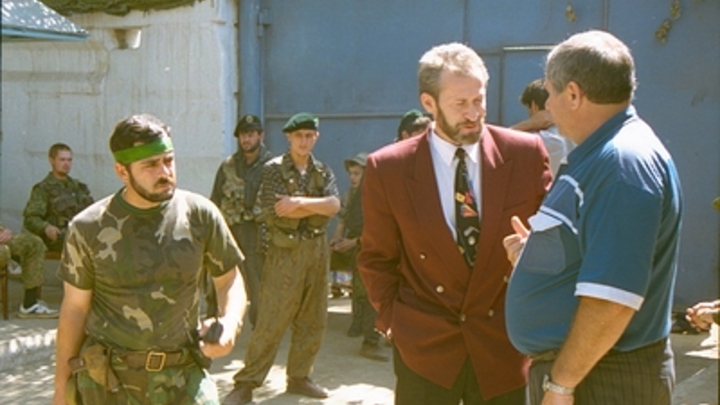
At that time I was working in Moscow, at the Central Documentary Film Studio. I was making documentaries. When the war started, I returned to Chechnya to make a film about the war. It was my most dangerous experience, because the aggression was in full swing, they were ready to destroy the entire Chechen people. When Russian troops saw journalists, human rights activists or documentary filmmakers, they hated them and put up all sorts of obstacles, because they were telling the whole world about the atrocities that the Russians were committing in Chechnya. And when the Russian military found out that I was a Chechen, they were ready to shoot me. Several times I was a millimeter away from death. After finishing work on the film, the film was selected at a film festival in North Carolina (USA). In 2000, I left for the USA, where my film received high reviews in the professional community. After that, I began negotiations with American producers about working on a documentary series about the centuries-long struggle of the Chechen people for independence: from Sheikh Mansur to the present day.

What was the American public’s involvement with what was happening in Chechnya?
Ordinary people knew little about Chechnya. They heard something about the war, but knew nothing specific. Journalists and human rights activists knew well. Most Americans are not interested in what is happening outside the United States. According to statistics, only a few percent of voters care about the presidential candidate’s pre-election position on U.S. foreign policy.
In the rhetoric of the current regime of Ramzan Kadyrov I have often heard references to the fact that the independence that was regained then cost the Chechens so much, that even talking about it today is to be considered synonymous with “extremism”. In your opinion, how much did all this weigh in strengthening the Chechens’ support for Kadyrov?
The question of how the values associated with independence and loss influence the support for Ramzan Kadyrov’s regime in Chechnya leads us to deeper reflections on human ideals and motivations. The phrase indicating that independence “cost” the Chechen people too much and that preserving this memory has become synonymous with “extremism” touches upon complex issues of identity and self-awareness. For peoples who have endured wars and trauma, collective ideals are often intertwined with historical memory, built on suffering and struggle. For many Chechens, the memory of war and independence is not merely a historical fact but a part of their identity that legitimizes their sense of community and belonging. However, this perception can become a tool of power when fear and loss are employed to validate authority.
This raises a philosophical question: Do individuals truly hold higher ideals for which they are willing to sacrifice everything, including their lives? In the past, values such as honor, dignity, and justice served as catalysts for revolutions and social changes. In the 18th and 19th centuries, such ideals inspired people to make selfless acts. Yet in the modern world, filled with logic of consumerism and individualism, these ideals may appear indifferent. Nonetheless, those ideals have not disappeared; rather, they have transformed. When facing crises or difficulties, individuals unconsciously seek not only justifications for their actions but also profound values that could support them in those moments. For some, this may be family; for others, freedom; and for some, belonging to their nation and its history. However, under an authoritarian regime like Kadyrov’s, such searches are permeated by fear. The ability to openly defend ideals born from suffering can lead to repression, making individuals more inclined towards conformity.

Thus, Kadyrov’s support can be viewed as a product of psychological defense, built before external threats. This does not always indicate ideological support for the ruler; rather, it is a strategic adaptation driven by the desire for survival. Society needs to protect itself from challenges, and at times, supporting an established authority becomes a means of preserving identity and collective memory. Therefore, while the era of high ideals may give way to more pragmatic considerations, the very idea of self-sacrifice and the search for meaning in life remains an inseparable part of human existence. Ultimately, the answer to the question of what drives a person regarding higher ideals largely depends on personal choice, background, and existing context. In this sense, support for Kadyrov is not merely support for a regime, but a complex and multifaceted process where fear, memory, and the search for identity converge.
A splendid reflection, which brings us to another question: can all those who collaborate with Kadyrov be considered “traitors”?
Thank you for your question. This is indeed a very complex issue that touches upon moral and ethical considerations regarding collaboration with a regime. Historical experience shows that different contexts and eras have led to various responses to such situations. During World War II, for example, those who collaborated with the occupiers were often executed immediately. In contrast, in the Baltic countries—Latvia, Estonia, and Lithuania—after over 50 years of occupation, there were no mass executions in 1991. This was largely because a new generation had grown up without knowing life outside the Soviet Union, highlighting how sensitive the topic of survival under occupation is.
Your reflections on who exactly can be considered a “Kadyrovite” are indeed critical. It is essential to emphasize that we cannot label ordinary people, who are forced to survive in difficult conditions and have no connection to the crimes committed by Kadyrov’s gang, as “Kadyrovites.” On the contrary, they are victims of this regime, subjected to the abuses of Kadyrov and his associates. In my view, those who have committed crimes should primarily be held accountable. It is especially important to bring religious leaders who justify Kadyrov’s actions to justice, as their influence on the minds and souls of people can be far more destructive than that of the perpetrators themselves. This is a multifaceted issue, and addressing it requires careful consideration of numerous factors.
In your answer you specifically mentioned “religious leaders”. How are Islamic clergy supporting Kadyrov’s regime?
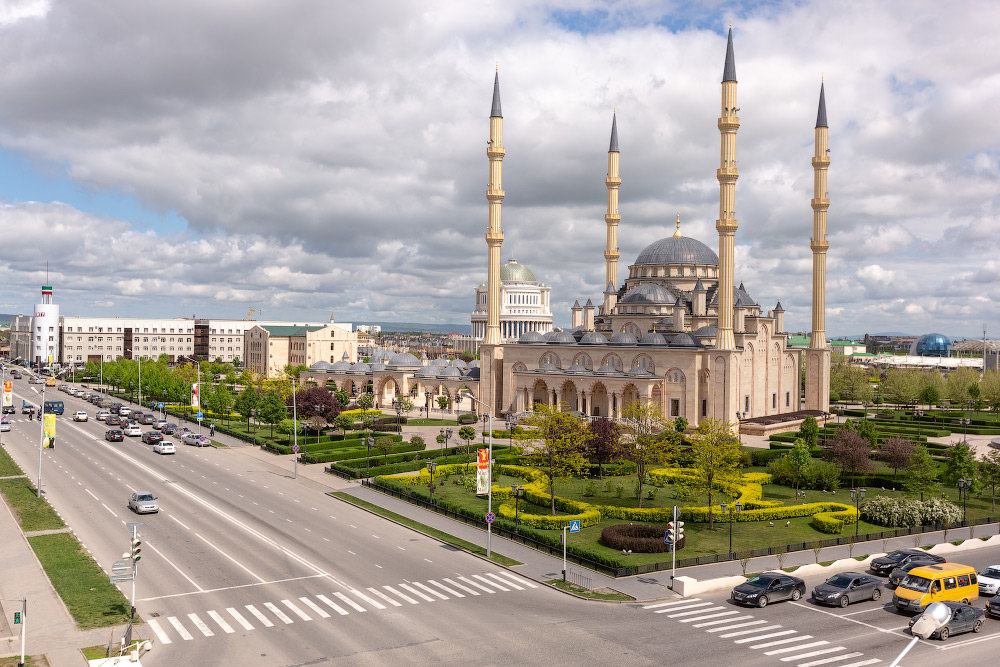
In various countries, the relationship between the state and the clergy can vary: they either work closely together or, as in the case of Russia, the state uses religious institutions to advance its interests. In Russia, government agencies deploy their agents into the religious sphere, helping them build careers within spiritual organizations. These state representatives are legitimized in religious circles, while the clergy, in turn, serves the interests of the state. This practice is widespread globally, although there may be exceptions. The first official Muslim organization in Russia was established by the decree of Catherine the Great in 1788. The position of the Mufti, the head of Russian Muslims, was created, and the candidate had to be approved by the emperor after being elected by the Muslim community. In the decree, it was explicitly stated that this organization was established in the interest of the Russian state. Since then, little has changed: just as the state controlled the religious life of its citizens in the past, it continues to do so today.
Before the 1917 revolution, Russian intelligence services infiltrated their agents into religious institutions, and after the revolution, the Soviet government created its own educational institutions—Orthodox seminaries and Islamic madrasas—where future preachers, often intelligence officers, were trained. It was impossible to receive a religious education in the Soviet Union without KGB approval. Those who believe Russia has lost its grip in this area are mistaken. In fact, Russia has expanded its influence: for example, graduates of the Islamic faculty at the University of Damascus in Syria are under the control of Russian intelligence, particularly the GRU. It’s no secret that the GRU has a base in Syria, and it’s no surprise that several dozen graduates of this university work within Ramzan Kadyrov’s circle, justifying his actions both in Chechnya and in Ukraine from a religious perspective. Undoubtedly, this situation needs to change, and the Islamic world is in dire need of reforms. However, those who benefit from the current state of affairs will fiercely defend it. A striking example is the case of Saudi journalist Jamal Khashoggi, who was forced to flee due to threats to his life for his political views. He was brutally murdered and dismembered at the Saudi consulate in Turkey when he came to obtain a new passport. His last tweet was deeply symbolic: “The Islamic world is in great need of democratic reforms.”
So, if the Islamic clergy is all, more or less, infiltrated or managed by the secret services, does this mean that Islam cannot be a unifying force in the movement for the independence of the North Caucasus? And if so, what force, in your opinion, can be a unifying element?
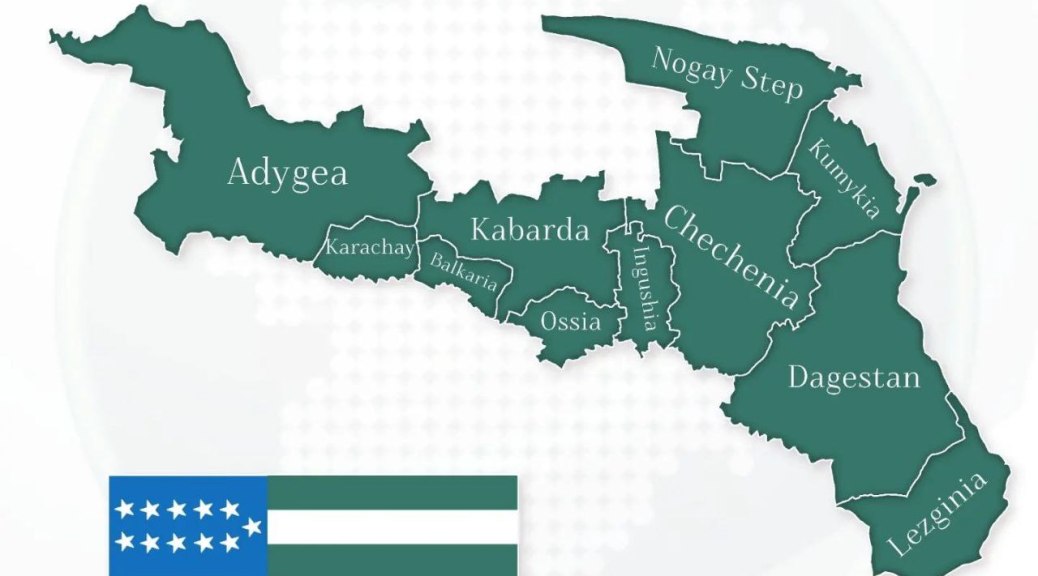
There’s no need to invent a new unifying idea for the peoples of the North Caucasus in their struggle for independence. That idea has long existed and remains clear. Just as 100 years ago, when the Confederation of the Peoples of the Caucasus, the Mountain Republic, was created, today the peoples of the North Caucasus simply want to live freely on their own land, in accordance with their traditions and culture. It is the national liberation movement of different peoples that unites them in this struggle, just as it did a century ago. This deeply rooted desire for self-determination and the preservation of their identity continues to be the strongest unifying force. The fight for freedom and sovereignty has always been the common thread binding the diverse peoples of the region. The historical past of the struggle against occupation, repression, and genocide by the Russian Empire is indeed a key unifying factor for the peoples of the Caucasus. This past is connected to numerous tragic events and struggles for survival, creating a common platform for the recognition of themselves as oppressed peoples.
Common Experience of Oppression: All the peoples of the Caucasus have faced similar confrontations with imperial power, fostering a sense of solidarity. Memories of brutal repression, genocide, and occupation deepen the understanding of a shared fate and suffering.
Identity and Memory: Preserving the historical memory of the struggle against colonial oppression strengthens the identity of each people. In this context, shared history becomes the foundation for recognizing their rights and striving for freedom.
Culture and Language: Common cultural elements, folklore, and language also serve as connecting links. These aspects often bring a sense of unity to the fight for justice and independence.Historical memory serves as motivation for consolidating efforts to protect rights and freedoms.
Thus, the shared historical experience of fighting against oppression becomes a solid basis for forming a united front among the peoples of the Caucasus, allowing them to focus on common goals without sacrificing the interests of one people to the detriment of another.
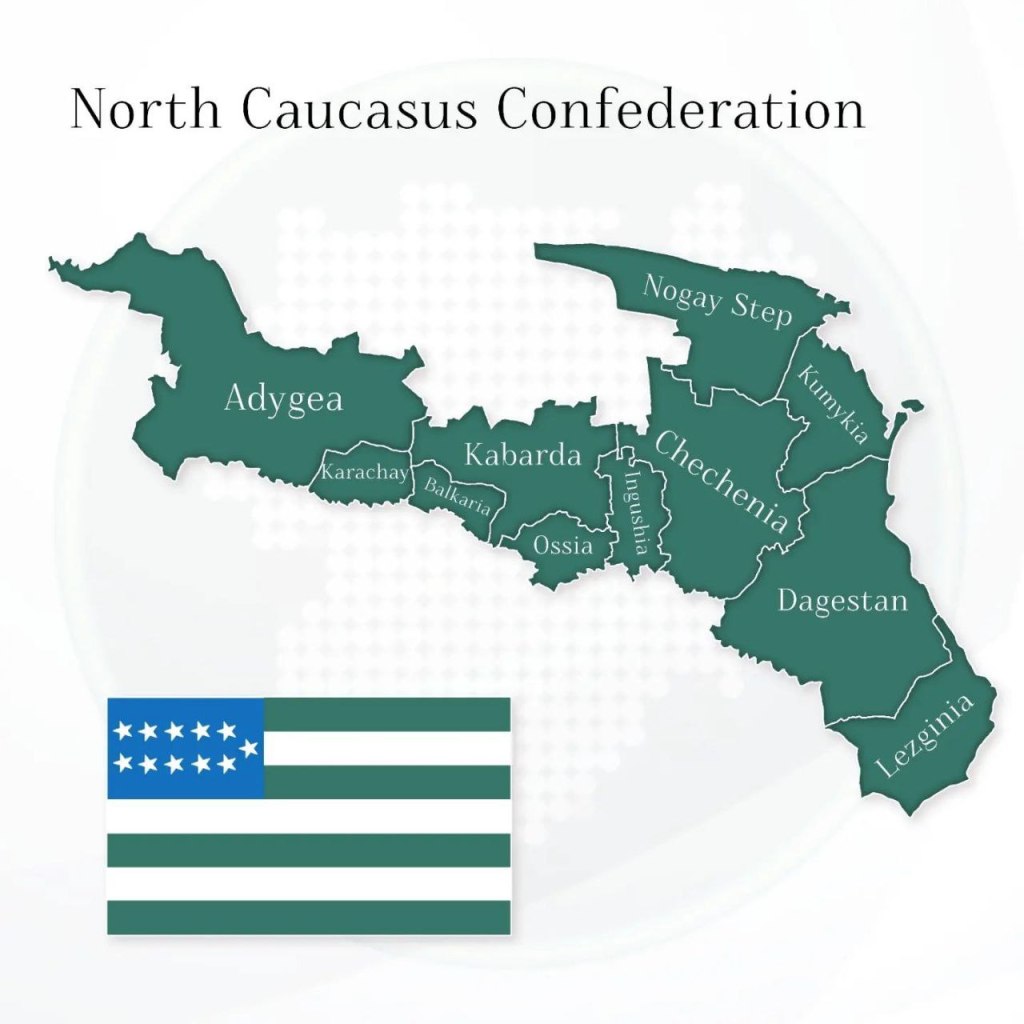
Every project for the birth of a new state needs its own intrinsic “usefulness” for those governments that, from the outside, should give it legitimacy with their recognition. In this sense, what “usefulness” do you see for a Confederation of the peoples of the Northern Caucasus?
The answer to the question about the purpose of establishing a government in exile for the Confederation of the North Caucasus starts with recognizing the limitations of the independent Chechen Republic of Ichkeria. It is a small territory that cannot play a significant role in shaping global geopolitics. In today’s world, if you are not part of a larger force shaping the future geopolitical landscape, it is nearly impossible to change existing borders in a way that would grant independence to the Chechen people. The Chechen Republic lacks access to the Black Sea and does not occupy any strategically important transport corridors, which is why our struggle for independence did not fall within the interests of major geopolitical players. However, our struggle has been subject to political manipulation. For example, Saudi Arabia tried to leverage the Chechen issue for its own interests, offering Putin a deal to resolve the Chechen independence question in exchange for Russian withdrawal from Syria. This demonstrates how external powers can exploit national movements for their own agendas.

But when we talk about the creation of the Confederation of the North Caucasus, the geopolitical calculus changes dramatically. Such a state becomes highly attractive because it addresses several key geopolitical problems that have emerged during the war in Ukraine. If the Confederation of the North Caucasus is formed, Russia would lose access to the Black Sea, which directly aligns with Ukraine’s interests. Without its naval base in the Black Sea, Russia would no longer pose a constant maritime threat to Ukraine. Europe and the U.S. are also interested in this outcome, as they do not wish to see the total collapse of Russia, which could lead to China’s expansion into the Far East and further strengthen its influence. The West is also concerned about the potential chaos that could arise from Russia’s breakup, especially given that Russia is the largest country in the world, covering more than 10% of the world’s land area. Furthermore, there is fear over Russia’s nuclear facilities and, most critically, the risk that nuclear materials could fall into the hands of third-party states or terrorist organizations.
The creation of the Confederation of the North Caucasus would address several of these challenges at once. By losing access to the Black Sea, Russia would be reduced from a global power to a regional one, which is something the entire world is interested in. A regional Russia would be forced to focus on containing China and managing its nuclear arsenal. Without nuclear weapons, Russia would not be able to effectively counter China’s influence. Additionally, Ukraine would no longer face the threat of Russia’s naval base in the Black Sea, and Turkey would emerge as the dominant power in the region. In this way, the establishment of the Confederation of the North Caucasus aligns with the interests of multiple countries, including the U.S., Europe, Ukraine, and Turkey, all of whom share a vested interest in transforming Russia from a global to a regional power. This shift is crucial for maintaining stability and ensuring a balanced global order.
Could a confederation of the North Caucasus also be an opportunity for Russia?
The separation of the North Caucasus from Russia can indeed be seen as an opportunity for a new Russia. This scenario could facilitate the necessary transformation of the country towards a democratic state, which is urgently needed. Moreover, the separation of the Caucasus could increase the rating of those Russian politicians who manage to implement such a course. Given the growing anti-Caucasian sentiments in society, the separation of the region might be perceived as a populist step, allowing them to garner support among a segment of Russian citizens dissatisfied with the current situation.
Couldn’t an independent Caucasus easily become a client state of Türkiye?
Turkey is certainly an important player in the region with whom we will establish partnership relations, but at this stage other NATO countries are also helping us in the implementation of this project. Naturally, in the future we hope to become part of NATO, and with the partners who will help in the implementation of this project, we will have allied relations.



 Ichkeria Digital Archive