
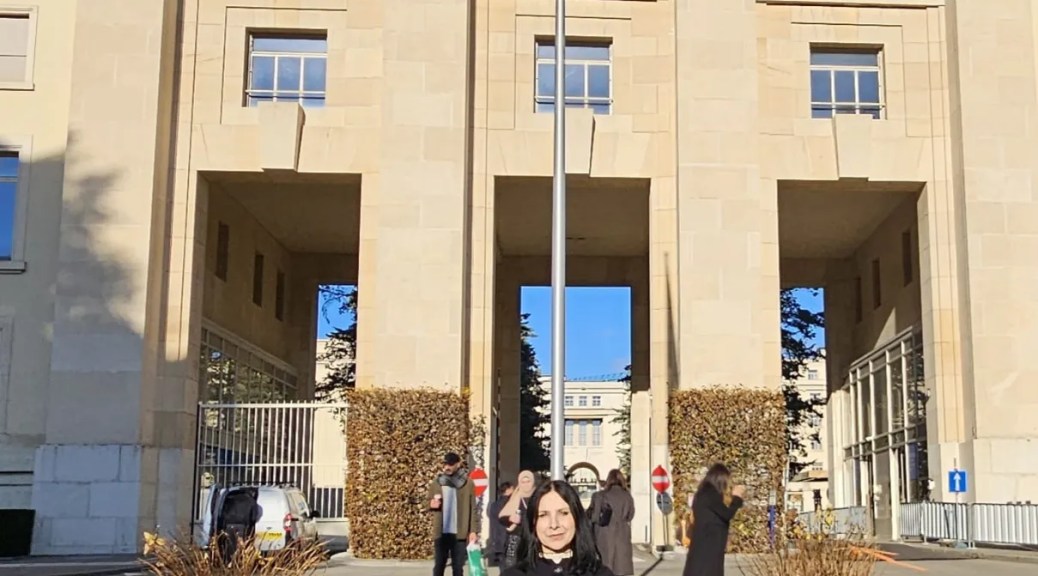
GENEVA, 28 November 2026 — Roza Dunajeva, Human Rights Ombudsperson of the Chechen Republic of Ichkeria government in exile, has reported taking part in two international discussions at the Palais des Nations in Geneva on 26–27 November, presenting concerns about alleged abuses in Chechnya, forced military mobilisation and the protection of Chechen asylum seekers in Europe.
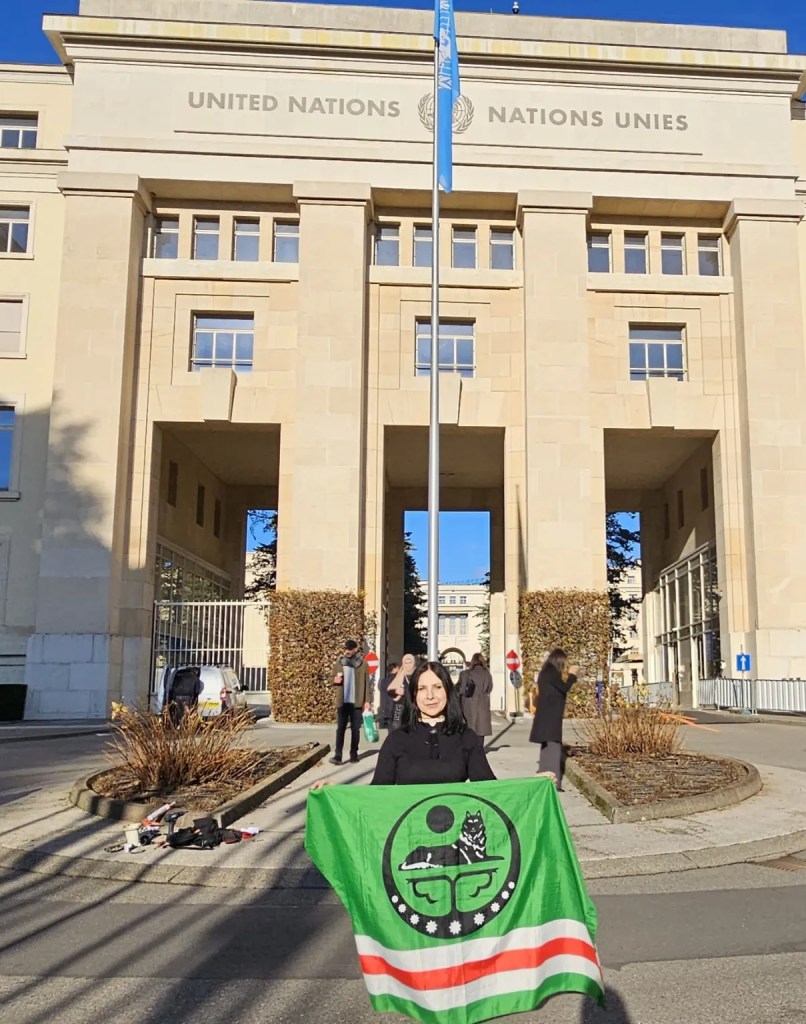
The 19th United Nations Forum on Minority Issues was held on 26 and 27 November at the Palais des Nations. Its dates and venue are confirmed by the official UN programme. Dunajeva’s description of her individual participation comes from a communiqué she sent directly to Ichkeria.net on 28 November; the material available to us does not include an authenticated UN transcript or a receipt for the submission she describes.
Human-rights concerns raised by the Ichkerian representative
According to her statement, Dunajeva attended plenary and thematic discussions, presented a report on the human-rights situation in Chechnya, and submitted materials to United Nations representatives. She said the documentation concerned reports of repression, torture, violence, persecution of relatives, and the forced mobilisation of Chechens for Russia’s war against Ukraine.
A central part of her account concerned people from Chechnya facing deportation from European states, particularly Germany. Dunajeva argued that returning individuals who sought refuge from persecution could expose them to detention, ill-treatment or other grave harm, and called for individual protection assessments. Her communication refers to identifiable cases, but their names are withheld from this public report because the individuals’ consent and the potential risk of further exposure have not been independently evaluated.
Dunajeva also invoked Articles 49 and 51 of the Fourth Geneva Convention, which regulate prohibited transfers from occupied territory and the conscription of protected persons by an occupying power. Whether those provisions apply to a particular case requires a distinct legal assessment. European deportation decisions are additionally governed by refugee law, human-rights obligations and the principle of non-refoulement; no judgment on an individual asylum case is implied by this report.
A separate event organised by COJEP International
On Friday 27 November, Dunajeva also reports delivering a presentation at From Europe to Chechnya and Palestine: Human Rights, Minority Protection and International Responsibility, a separate event organised by COJEP International. The UN Indico side-event programme lists the session for 09:00–10:00 in room Concordia 1 at the Palais des Nations.
Dunajeva said the COJEP discussion brought together participants concerned with minority protection, political repression, displacement, self-determination and human rights in different regions. In her own intervention, she described Chechen concerns about repression and refugee removals, and argued that protection should not depend on political convenience. Those descriptions are her account of the proceedings; the complete participant list, exact remarks and full recording have not been independently authenticated.
The distinction between the two events matters. The main Forum was a United Nations event; the COJEP discussion was a civil-society side event included in the UN venue’s programme. Neither a presentation at the Forum nor participation in a side event should be represented as a UN determination on the claims, endorsement of the speaker’s political position, or diplomatic recognition of Ichkeria.
Documentation and next steps
For its historical archive, Ichkeria.net has published separate sourced entries documenting the two engagements, together with the original programme links. The 28 November communiqué remains the primary source for Dunajeva’s reported personal activities. A signed report, a registered UN submission, a session recording or another independently corroborating record would allow the archive to strengthen that account.
New primary source: Read Roza Dunajeva’s communiqué of 27 November 2026 in the Document Archive (public redacted transcription). This record preserves the participant’s wording while withholding the names of individual asylum seekers for privacy and safety.

