
Trade Unionism in Chechnya Between the Soviet System, State Collapse, and War (1989–2001)
From socialist welfare management to institutional breakdown: the trajectory of a social actor in conditions of systemic collapse.
Introduction
Trade unionism in Chechnya during the 1990s represents one of the most anomalous cases in the post-Soviet space. Unlike other former Soviet republics, where trade unions underwent a relatively linear transformation into representative labor organizations, in Chechnya they operated under conditions of extreme state discontinuity: the dissolution of the Soviet order, the emergence of a non-recognized state, systemic economic collapse, internal political conflict, and eventually full-scale war.
In this context, trade unions ceased to function as stable social actors and instead assumed a hybrid and unstable role, oscillating between welfare administration, political mobilization, and institutional survival.
The Soviet Legacy
By the late 1980s, trade unions in the Chechen-Ingush ASSR were fully integrated into the Soviet system. They did not represent workers against power; rather, they operated within the state apparatus, performing functions such as:
-welfare management (sanatoriums, vacations, housing)
-distribution of social benefits
-administrative mediation
-organizational and disciplinary control
Their model was structurally non-confrontational.[1]
In 1990, this system was reorganized into what would become the Federation of Independent Trade Unions of Russia (FNPR), which inherited the institutional structure and assets of Soviet trade unionism.[2] However, with the collapse of the USSR, the fundamental premise — the state as employer — disappeared.
1991–1992: Suspension and Restoration
With the rise of Dzhokhar Dudayev and the proclamation of Chechen independence, trade unions were perceived as ambiguous institutions: remnants of the Soviet past, yet also potentially autonomous centers of power. According to union sources, in 1991 the Chechen Parliament formally suspended trade union activity [3]. Only on 1 September 1992, following a legal dispute, were trade unions allowed to resume operations. In July 1992, the Third Congress of Trade Unions elected Ramzan Ampukaev as chairman of the Federation. Among the emerging leaders was Magomed Mamatiev, who would later play a key role in attempts to reconstruct the union movement.
1993: From Social Conflict to Political Crisis
The economic crisis of 1993 — marked by unpaid wages, pension arrears, and financial instability — pushed trade unions into a more active role. After a three-day strike, a demonstration was organized in Grozny on 15 April 1993. According to Mamatiev: “We organized a one-day protest… then the demonstration was taken over by others.”[4] Other sources suggest that the protest quickly escalated into a political confrontation, with demands for the resignation of the president and institutional reform.[5] The consequences were decisive:
-loss of union control over social insurance
-depletion of resources
-political marginalization
Thus, 1993 marked the transition of trade unions from social actors to politically contested institutions.
War and Disintegration (1994–1996)
The First Chechen War led to the near-total collapse of trade union structures.
Organizations survived only in residual form:
-reduced administrative capacity
-passive management of assets
-absence of effective representation
Nevertheless, minimal organizational continuity allowed for later reconstruction attempts.
1996–1999: Failed Reconstruction
Following the Khasavyurt Accords (1996) and the presidency of Aslan Maskhadov, efforts were made to rebuild state institutions. Magomed Mamatiev emerged as a central figure in attempts to revive trade unionism. However, these efforts faced structural constraints:
-lack of a functioning economy
-weak state institutions
-increasing militarization of society
In 1999, Mamatiev’s group promoted the creation of a non-sectoral trade union structure (bezotraslevoy sovprof), attempting to move beyond the Soviet model. This initiative, supported by figures such as Khusein Akhmadov, led to the emergence of the so-called “mamatievtsy”, representing the last organized attempt to establish autonomous trade unionism in Ichkeria.[6]
Trade Unions and Sharia
In 1998, during the institutional introduction of Sharia law, a parliamentary commission proposed the dissolution of trade unions. Their survival was ensured by the intervention of the Muftiate led by Akhmad Kadyrov, which declared trade union statutes compatible with Islamic law.[7] This episode highlights the precarious position of trade unions:
-not fully integrated into the state
-required to justify their legitimacy in a shifting normative framework
1999–2001: Forced Reintegration
With the outbreak of the Second Chechen War, trade union activity was again suspended. In November 1999, Russian military authorities ordered the abolition of Ichkerian legislation and the suspension of social organizations. In April 2000, trade unions were re-registered under Russian law, initiating reintegration into the FNPR framework[8]. However, internal divisions persisted, and activities were restricted. In 2001, congresses were banned within Chechnya. Trade unions survived, but without political autonomy.
Mamatiev and Unionism Without a Base
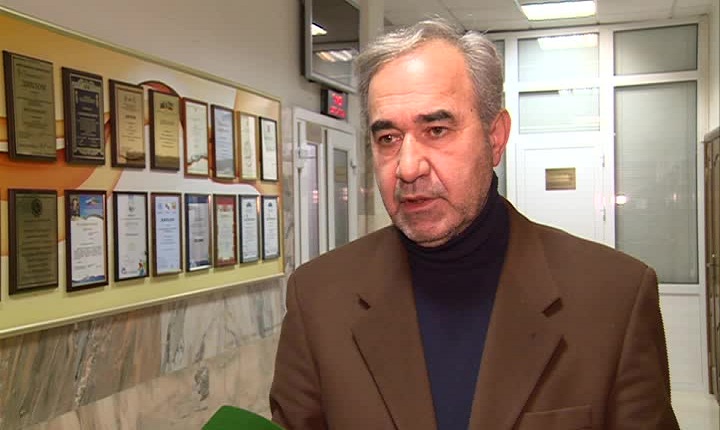
Magomed Mamatiev’s trajectory encapsulates the contradictions of Chechen trade unionism.
Key features:
-Soviet professional background
-social orientation
-support for Maskhadov’s state-building project
-Structural limitations:
-absence of economic base
-institutional fragility
-dominance of military actors
Mamatiev represents an attempt to transform trade unionism into a socio-political actor in a context where the material conditions for such transformation did not exist.
Conclusion
Chechen trade unionism in the 1990s cannot be understood as either a continuation of the Soviet model or a transition toward Western labor representation. It constitutes a distinct phenomenon: trade unionism under conditions of state collapse. Its defining characteristics include:
-loss of economic function
-temporary politicization
-progressive marginalization
-eventual reintegration into an external system (FNPR)
This trajectory reflects the critical traits of the state-building in Chechnya: even deeply rooted institutions failed to survive the combined pressures of economic collapse, political conflict, and war.
Yet within this process, figures such as Mamatiev embody an alternative vision — one that sought to construct not only a sovereign state, but a social state.
Notes
[^1]: On the structure and function of Soviet trade unions, see general literature on Soviet labor institutions and welfare distribution mechanisms.
[^2]: Federation of Independent Trade Unions of Russia (FNPR), institutional continuity from Soviet trade unions.
[^3]: Internal Chechen trade union historical accounts (post-2000 publications).
[^4]: Interview with Magomed Mamatiev, Golos Chechenskoy Respubliki, No. 3 (20995), 24–31 January 1997.
[^5]: Accounts of the April 15, 1993 Grozny demonstration in Russian-language sources.
[^6]: Trade union historical publications (post-2000) referencing the “mamatievtsy” initiative.
[^7]: Trade union histories documenting interaction with Islamic legal institutions in late Ichkeria.
[^8]: Post-2000 accounts of trade union re-registration under Russian administration.
 Ichkeria Digital Archive