

A complete list of parties and movements active in Chechnya between 1991 and 1999 is available in the “Parties of the Past” section HERE
The Political Evolution of Chechnya
(1991–1999)
Revolution and Independence (1990–1992)
The story of Chechen politics begins in the wave of revolutionary fervor that swept across the collapsing Soviet Union. Under the leadership of Dzhokhar Dudayev and the All-National Congress of the Chechen People, the Chechen people rose to assert their right to self-determination.
On November 1, 1991, the Chechen Republic of Ichkeria declared full independence from Moscow. During this early phase, politics was driven by populist enthusiasm and the charisma of revolutionary figures.
Various patriotic movements emerged, united more by the common goal of freedom than by structured political platforms. The primary political objective was clear: to consolidate independence and seek international recognition, establishing the foundations of a sovereign Chechen state.
Internal Tensions and Fragile Statehood (1992–1994)
Following the triumph of independence, internal divisions quickly surfaced. Different visions for Chechnya’s future collided: some leaders envisioned a secular, democratic republic, while others leaned towards building an Islamic state. Alongside ideological conflicts, traditional clan structures and new warlords began asserting their influence.
The lack of strong institutions, combined with worsening economic conditions and a deteriorating security situation, led to an erosion of the young republic’s stability. By 1994, Chechnya was already facing deep political fragmentation, making it increasingly vulnerable to external intervention.
War and National Unity (1994–1996)
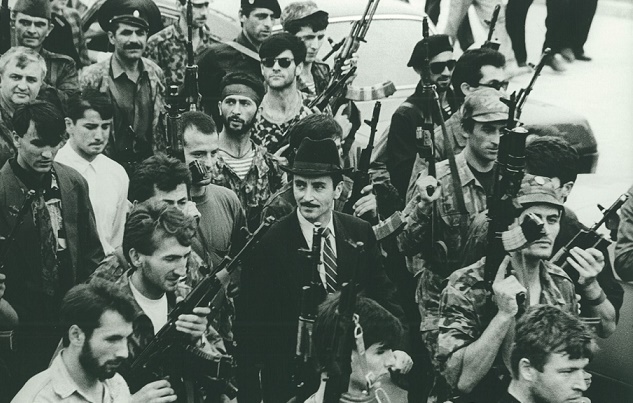
In December 1994, Russia launched a full-scale military invasion, triggering the First Chechen War. The existential threat posed by Russian aggression temporarily restored national unity. Political parties, clan leaders, and military commanders rallied together to defend the republic’s independence.
During these years, political life became militarized: the distinction between political leadership and military command blurred. The idea of the state itself fused with the armed struggle for survival, and the legitimacy of leaders was increasingly measured by their role in the resistance.
Rebuilding Politics and the Search for Normalization (1996–1998)
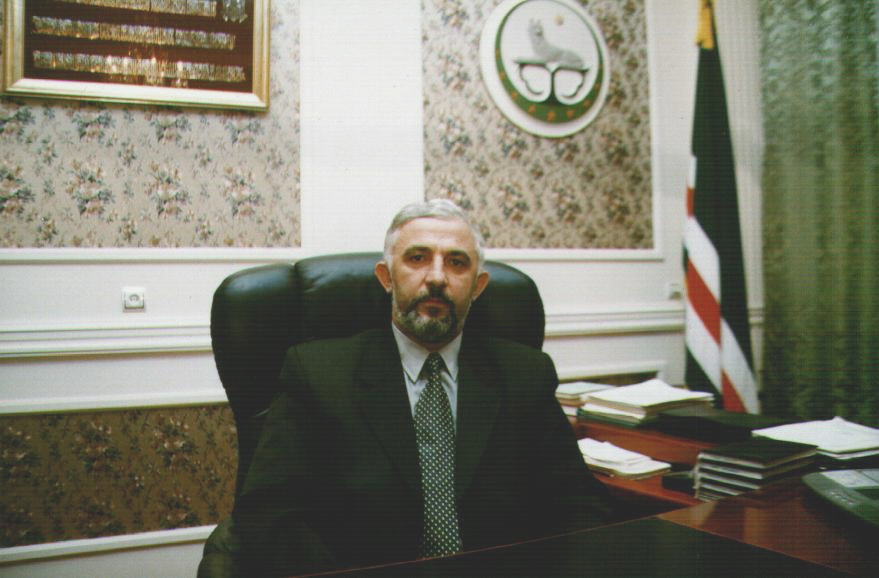
With the signing of the Khasavyurt Accord and the withdrawal of Russian forces, Chechnya entered a new phase: a fragile and uncertain peace. Democratic elections were held in January 1997, bringing Aslan Maskhadov – former Chief of Staff of the Chechen Armed Forces – to the presidency.
A new attempt was made to establish functioning state institutions: a constitution was adopted, a parliament was formed, and a government was put in place. However, internal tensions quickly resurfaced. While Maskhadov sought to build a secular and modern state, many regional warlords and Islamist factions resisted the central government’s authority. The state’s control over the territory remained partial and precarious, and the international community hesitated to recognize Chechnya’s independence, leaving the republic politically isolated.
Radicalization and Collapse (1998–1999)
The final phase of Chechnya’s de facto independence was marked by radicalization and internal disintegration. Economic hardship, widespread insecurity, and the population’s growing frustration created fertile ground for Islamist groups to expand their influence.
Maskhadov, under pressure, introduced elements of Islamic law (sharia) in an attempt to appease the radicals, but it proved insufficient to restore order. Power increasingly slipped away from the central government, as local commanders and Islamist leaders established their own spheres of control.
In the summer of 1999, a group of radical fighters invaded neighboring Dagestan, provoking a new Russian military intervention. The Second Chechen War had begun, sealing the fate of the Chechen Republic of Ichkeria and ending its brief and tumultuous period of independence.
Between 1991 and 1999, Chechnya’s political trajectory followed a tragic arc: from the dream of national liberation, through the painful attempts to build a functioning state, to the devastating collapse into internal strife and renewed occupation. The Chechen experience during these years remains a poignant example of how revolutionary hopes can be undermined by internal weakness, external pressure, and the brutal logic of war.
Dokka Umarov and the Proclamation of the Caucasus Emirate
Following the assassination of President Aslan Maskhadov in March 2005 , and that of his successor, Abdul Hakim Sadulayev, Dokka Umarov assumed leadership of the Chechen separatist movement. In 2007, Umarov proclaimed the creation of the Caucasus Emirate, declaring himself Emir and transforming the Chechen Republic of Ichkeria (ChRI) into one of its provinces. This marked a dramatic ideological shift toward radical Islamism and was rejected by many Chechen leaders and fighters who considered it a betrayal of Ichkeria’s original nationalist and secular goals.
Present: The Government-in-Exile Led by Akhmed Zakayev
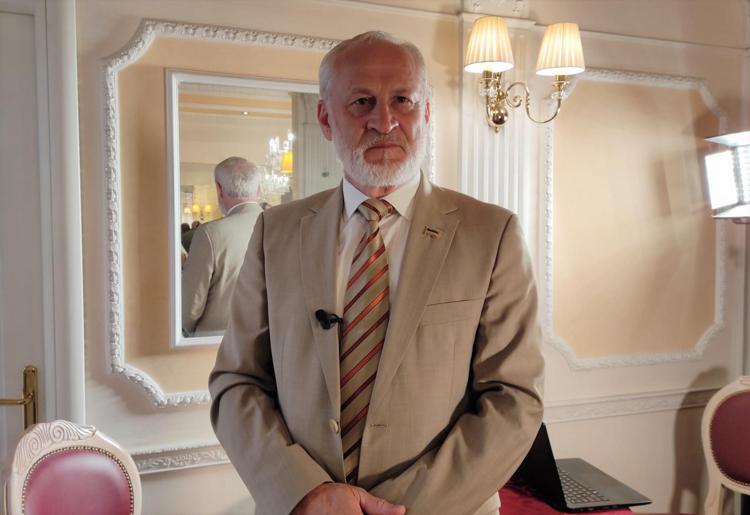
In response to Umarov’s declaration, Akhmed Zakayev—former Foreign Minister of the ChRI—rejected the Emirate and declared himself Prime Minister of the Ichkerian government-in-exile in November 2007. Based in London, Zakayev has sought to keep the Chechen independence cause alive through diplomacy and political advocacy, promoting a secular and democratic vision for Ichkeria.
However, his leadership has not been unanimously recognized within the Chechen diaspora. Some groups have questioned the legitimacy of his government, leading to internal divisions. Despite this, Zakayev has remained the most visible international representative of the Chechen Republic of Ichkeria.
Recognition by Ukraine
Amid Russia’s full-scale invasion of Ukraine, the Ukrainian parliament officially recognized the Chechen Republic of Ichkeria as a territory “temporarily occupied” by the Russian Federation in October 2022.
This recognition served as a major symbolic victory for the exiled Ichkerian government and a strategic opportunity to reintroduce the Chechen issue on the international stage.
 Ichkeria Digital Archive